Ghee, clarified butter and rendered fats
Butter heated until most water leaves and the milk solids separate, giving a fat that keeps far longer than butter. Rendering applies the same heat to animal tissue to make lard and tallow.
 FermenteaWhere food goes to change
Modern method
Multigrain millet dosa uses a source-specific naturally fermented grain and urad batter, then cooks it by griddling. The creator leaves some process measures unquantified.
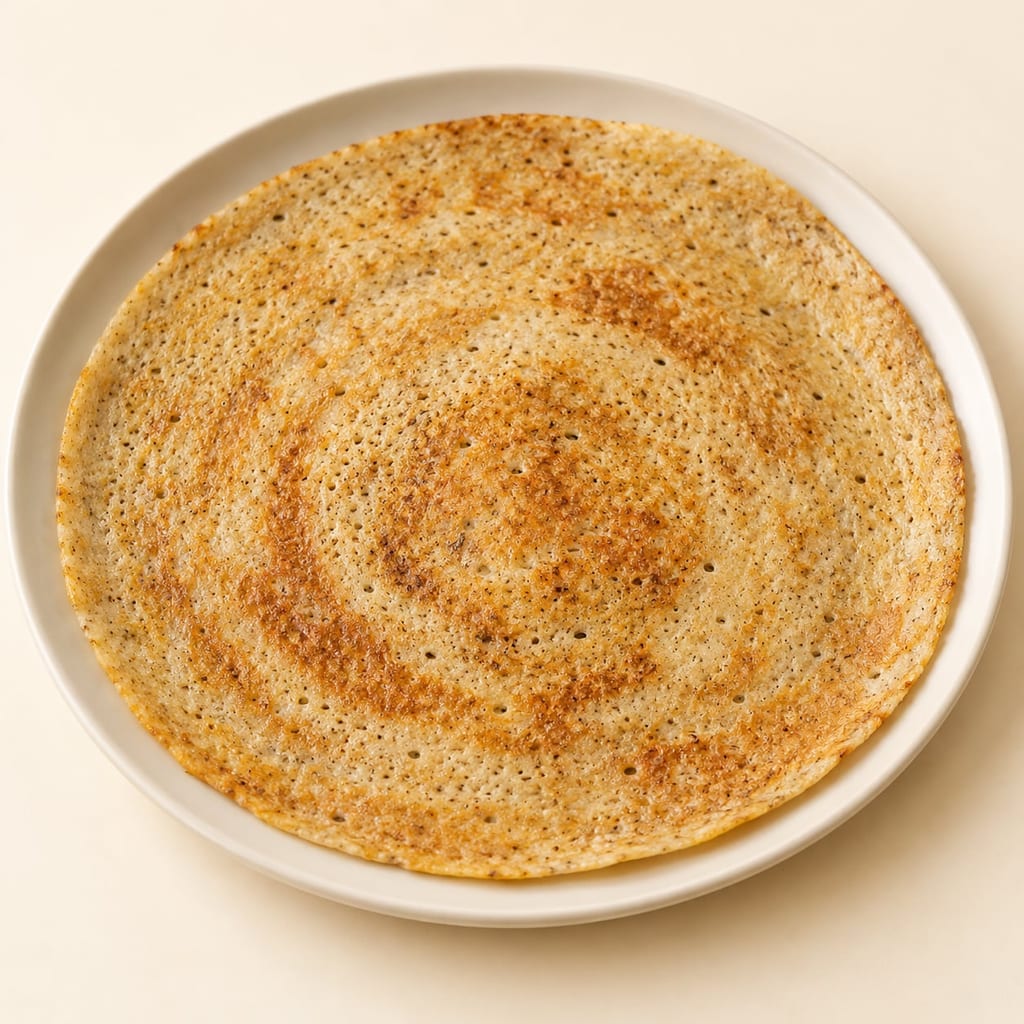
Multigrain millet dosa is a griddled preparation made from several cereal grains and urad dal.
The grains are soaked, ground and fermented into a batter, then spread on a hot griddle and cooked until set.
The finished product resembles a conventional dosa but usually has a darker colour and a more pronounced grain flavour.
This recipe uses jowar, ragi, bajra, white rice, idli rice and whole black gram.
The original cooking video demonstrates making one dry mix and using its fermented batter for several preparations.
The multigrain idli and multigrain dosa therefore share the same initial ingredients and fermentation method.
The distinction is the cooking.
Idli is steamed to make a soft, aerated cake.
Dosa is spread across a hot surface and cooked with fat, producing a thin sheet that may become crisp at the edges.
The broad Tamil description is சிறுதானிய தோசை (sirudhāniya dosai), referring to millet dosa.
The modern commercial phrase மல்டிகிரெய்ன் தோசை is a transliteration of multigrain dosa.
The principal grains are:
Name: Jowar / sorghum — Scientific identification: Sorghum bicolor
Name: Ragi / finger millet — Scientific identification: Eleusine coracana
Name: Bajra / pearl millet — Scientific identification: Cenchrus americanus
Name: White or dosa rice — Scientific identification: Oryza sativa
Name: Idli rice — Scientific identification: Oryza sativa
Name: Whole black gram — Scientific identification: Vigna mungo
Name: Fenugreek — Scientific identification: Trigonella foenum-graecum
This precise six-component preparation is a modern recipe. The source does not identify a unique traditional regional name for the mixture.
Parameter: Stored dry blend — Source value: 1 cup each of six ingredients
Parameter: Batter batch — Source value: 3 glasses of dry blend
Parameter: Fenugreek — Source value: 1 teaspoon
Parameter: Water for grinding — Source value: Approximately 2 small glasses; volume unknown
Parameter: Salt — Source value: Not quantified
Parameter: Ghee — Source value: As needed; amount not stated
Parameter: Soaking — Source value: 6–8 hours or overnight
Parameter: Mixing — Source value: 3–5 minutes
Parameter: Fermentation — Source value: 6–8 hours or overnight
Parameter: Fermentation temperature — Source value: Warm place; no numerical value
Parameter: Griddle cooking — Source value: No numerical time or temperature
Parameter: Yield — Source value: Not stated
Dosa is strongly associated with southern India.
Its exact historical development has attracted competing interpretations, particularly concerning the chronology of grain fermentation and the familiar thin griddled form.
The recipe's mixed-grain formulation is contemporary.
Its ingredients reflect crops with histories extending across different regions.
Sorghum and pearl millet are important in dryland agriculture.
Finger millet has long been cultivated and consumed in southern India and elsewhere.
Rice contributes a different starch profile.
Urad is important in the familiar fermented idli-and-dosa tradition.
Bringing them together in one batter is a practical culinary adaptation rather than evidence that this exact mixture was manufactured in antiquity.
The video does not establish the inventor or first date of the formula.
Sorghum contributes starch and flavour.
Depending on the variety, it may add darker colour or a noticeable grain taste.
Ragi contributes its familiar earthy flavour and coloured grain constituents.
It is not simply a neutral rice substitute.
Bajra contributes additional grain flavour and changes the batter's overall composition.
The recipe includes both white or dosa rice and idli rice.
The source does not specify whether both are parboiled or describe their precise varietal differences.
Both quantities must therefore be retained as written.
Urad contributes viscosity and nutrients for fermentation.
It is already part of the stored dry mix.
Adding a further urad portion would change the ratio of legumes to grains.
Fenugreek adds flavour and contributes to batter properties.
It is kept separate from the stored blend.
Water hydrates the grains and enables grinding.
Approximately two small glasses of water are used during grinding, with their capacity not stated.
The original recipe says to add salt as required.
No mass is given.
Ghee is clarified butterfat.
It is used for cooking the dosa, contributing flavour, heat transfer and browning.
The source does not state the amount.
A dosa made with ghee is not dairy-free.
Combine one cup each of:
Jowar
Ragi
Bajra
White or dosa rice
Idli rice
Whole black gram
Mix thoroughly.
Store the dry blend appropriately until required.
Take three glasses of the dry blend.
The size of the glass is unknown.
Do not convert it to a fixed gram quantity without measuring the original vessel.
Rinse the grains until the water runs relatively clear.
Add one teaspoon fenugreek seeds separately.
Soak for six to eight hours or overnight.
The video does not specify the soaking temperature.
For safer preparation, refrigerate the grains at 4°C or below during an extended soak.
Drain the grains.
Wet-grind, gradually adding water.
Scrape the sides and continue until the mixture is relatively smooth and airy.
The original source reports approximately two small glasses of water.
No exact volume is available.
Transfer to a large bowl.
Add salt as required.
Mix by clean hand for three to five minutes.
Cover and leave in a warm place for six to eight hours or overnight.
The creator does not supply a numerical temperature or pH endpoint.
The six-component mixture may behave differently from ordinary rice-and-urad batter.
Transfer a portion of fermented batter to a separate bowl.
Add a little water to make it suitable for spreading.
The source does not quantify the additional water.
This dilution is specifically part of preparing the dosa, rather than the idli version.
Heat a suitable flat griddle.
The original source does not specify a temperature.
Pour a portion onto the cooking surface and spread it into a thin circle.
The thickness influences the final texture.
Drizzle ghee over the dosa.
The quantity is not given.
Cook until the dosa is set and reaches the intended colour and texture.
The source gives no numerical cooking time.
Do not substitute the idli's eight-to-ten-minute steaming time as if it were the dosa cooking time.
Serve hot.
The source does not provide a final yield.
The batter undergoes a mixed-grain microbial fermentation.
The grain surfaces and urad introduce microorganisms.
Under appropriate conditions, lactic-acid bacteria become important.
They metabolize sugars, producing acids and sometimes carbon dioxide.
The resulting batter develops sourness and may increase in volume.
The starch and protein composition of sorghum, ragi, bajra and rice differs.
Each also contains compounds that can influence enzyme activity and fermentation.
The final mixture is therefore not identical to conventional rice batter.
A pH curve measured in an ordinary rice-and-urad experiment cannot be assigned directly to this multigrain formulation.
Organic acids can contribute the slightly tangy flavour.
The source does not measure final pH.
Visible bubbles are consistent with fermentation but do not establish adequate acidification.
Some microorganisms generate carbon dioxide.
This influences the structure of the batter.
For dosa, the batter need not retain as much gas as it does for a soft steamed idli, but fermentation still affects its behaviour on the griddle.
As the thin batter spreads across a hot surface, water begins evaporating.
Starch gelatinizes.
Proteins undergo structural changes.
The underside browns as the available moisture decreases and heat-driven reactions progress.
Ghee contributes fat and aroma.
The result can be crisp at the edges while remaining more flexible toward the centre.
A thin layer loses water quickly.
A thick layer retains moisture and behaves more like a pancake.
The additional water incorporated into the dosa portion must therefore be balanced against the desired thickness.
The original source does not specify a standard diameter or final batter viscosity.
Millets may contain substantial phytate, a naturally occurring phosphorus-storage compound.
Phytate can bind certain minerals.
Fermentation and other processes may change its concentration.
Research on finger millet and sorghum has demonstrated reductions during extended fermentation under controlled conditions.
But the present six-to-eight-hour recipe was not analysed for phytate.
It would be misleading to claim a fixed improvement in iron or calcium bioavailability from this particular batch.
The recipe's nutritional properties should be evaluated from its actual ingredients and serving sizes.
Some cooks use only millets and urad, omitting rice.
Others replace one cereal with foxtail, little or barnyard millet.
Some use millet flour rather than whole grains.
Instant multigrain dosa may be made without an overnight ferment.
Those methods can produce enjoyable foods, but they are not identical to the source recipe.
The exact six-ingredient blend should remain the principal formulation.
Multigrain dosa is typically served with chutneys and other South Indian accompaniments.
Coconut chutney provides a mild, rich contrast.
Tomato and chilli chutneys add acidity and heat.
Sambar contributes lentils, vegetables and spices.
The stronger cereal flavours can also work well with peanut chutney or spiced vegetable preparations.
Dosa is best served soon after cooking, particularly where a crisp texture is desired.
Batter structure, grain particle size or premature lifting can cause tearing.
The griddle surface may be unsuitable or the batter may not yet have set.
The batter may not have been diluted enough for the intended thin dosa.
The source gives no fixed dilution volume.
Excess moisture, an overly thick spread or insufficient heat can produce a soft texture.
Prolonged fermentation may have changed the batter.
Discard it.
The fermentation conditions or natural microbial community may have been unsuitable.
The absence of bubbles does not automatically establish spoilage, but neither can the batter be declared safely fermented.
The source method must be read alongside modern food-safety guidance.
The long soaking period should be carried out under refrigeration at 4°C or below.
Potable water and cleaned equipment are essential.
Fermented batter should be refrigerated rather than left indefinitely in a warm location.
The specialist dosa-and-idli guidance specifies cooking or reheating to 74°C internally for at least 15 seconds.
For commercially packaged batter, it specifies verification of pH 4.6 or below before packaging.
The recipe's fermentation duration is not a validated safety endpoint.
Nor does its use of multiple grains establish a particular medical or dietary benefit.
Multigrain dosa demonstrates how a traditional fermented-food structure can be adapted to several agricultural crops.
The fermentation depends on the combined grain mixture, not simply the amount of rice.
The final cooking emphasizes evaporation, starch gelatinization and browning.
Because the batter is also used for idli, the pair provides an especially clear comparison of two different foods produced from one fermentation.
The central culinary distinction is not the raw ingredient list alone.
It is the relationship between fermentation, batter consistency and cooking method.
The modern creator demonstration does not establish the earliest attestation or origin of this food.
Scaling: source batch only
Batter rise, bubbles, aroma, colour and texture are quality observations, not safety proof. The source does not establish measured fermentation temperature, pH or a safe storage time.
The creator does not establish this preparation’s geographic origin.
Butter heated until most water leaves and the milk solids separate, giving a fat that keeps far longer than butter. Rendering applies the same heat to animal tissue to make lard and tallow.
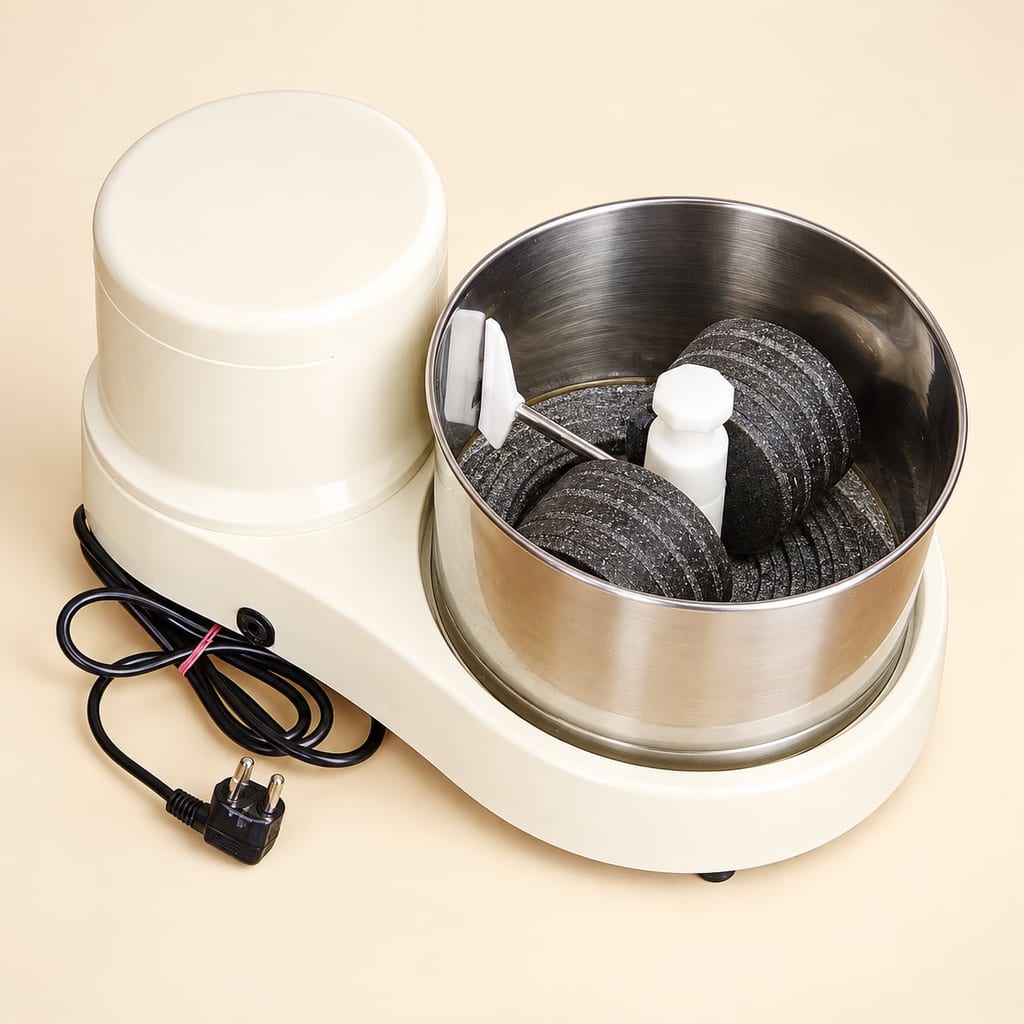
A powered mill that uses stones to grind soaked grains or pulses with water into batter or slurry. Domestic forms include conventional, tabletop and tilting models; capacities, construction and run limits vary by machine.
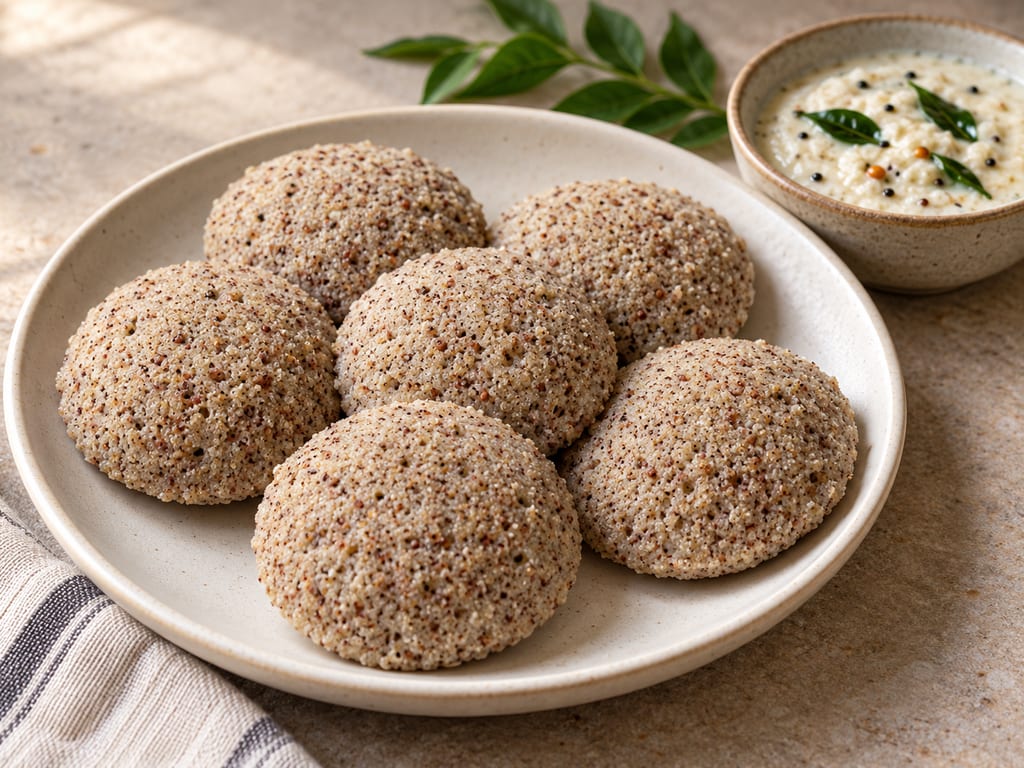
Multigrain millet idli uses a source-specific naturally fermented grain and urad batter, then cooks it by steaming in moulds. The creator leaves some process measures unquantified.
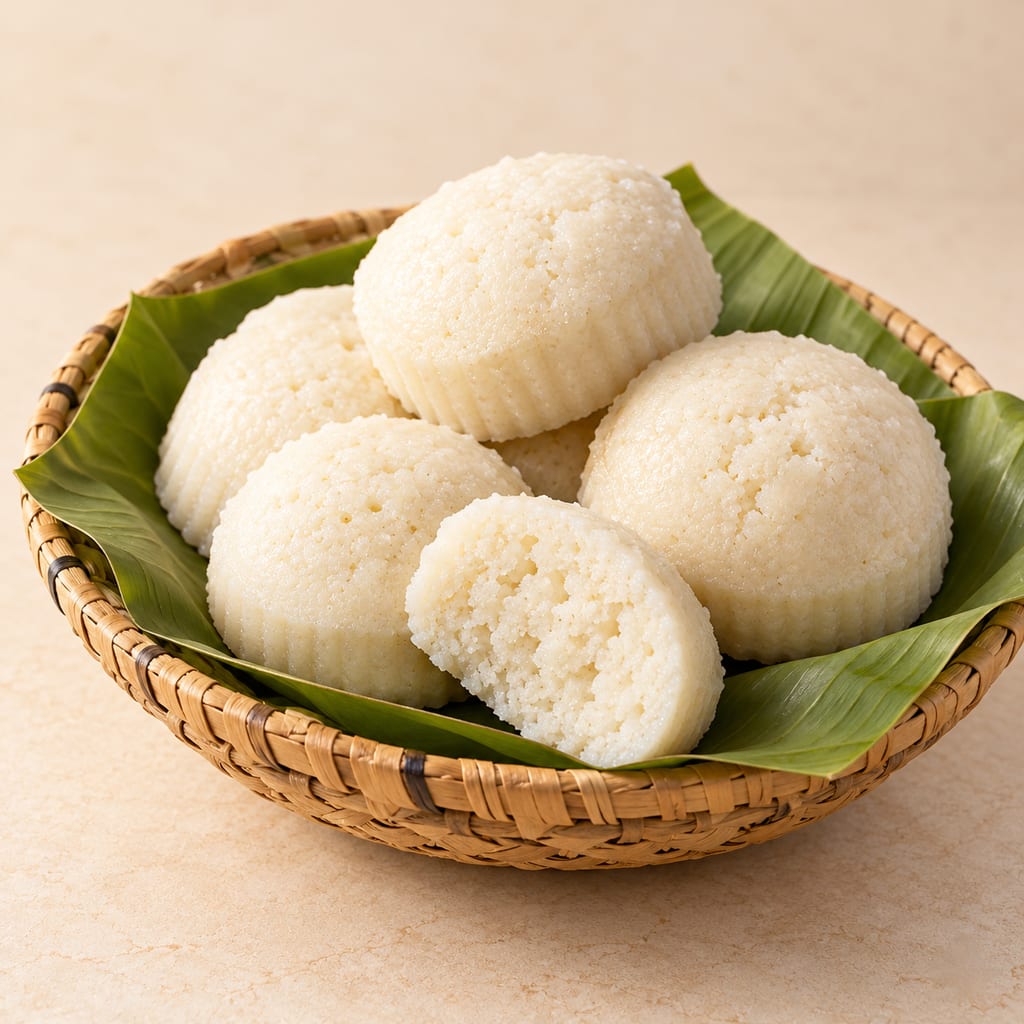
Soft, lightly tangy steamed cereal bread documented across Benin and Togo. This page gives one measured rice-flour research method; maize-based Ablo and mixed-grain versions remain distinct traditions.
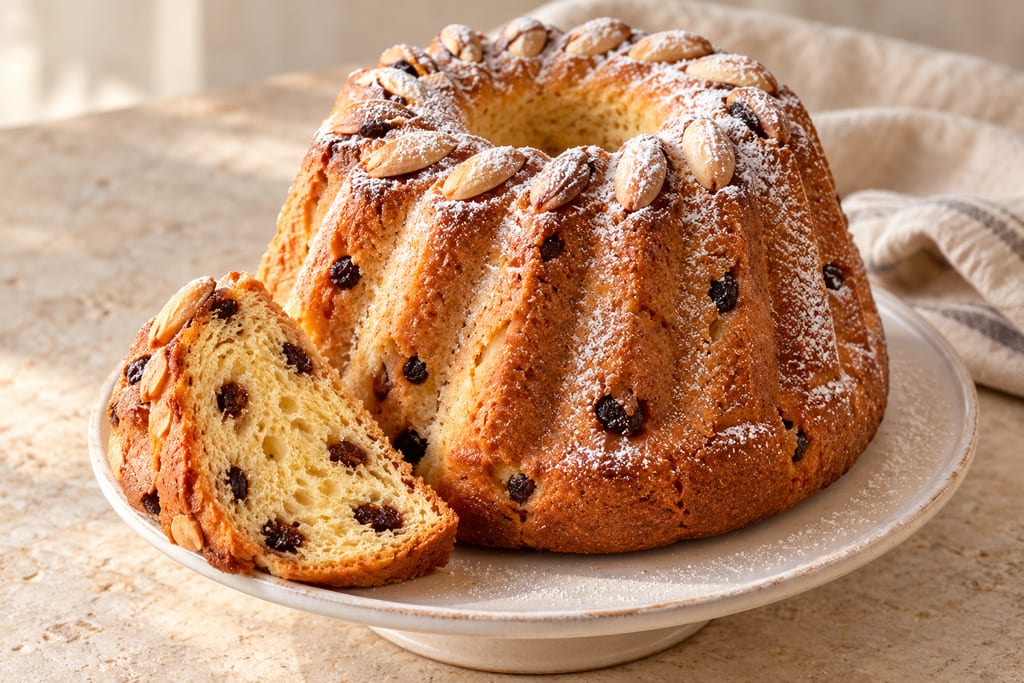
An enriched Alsatian yeast ring with raisins and almonds, kneaded with butter, proofed in a fluted mould and baked until browned.

Anpan is a soft wheat bun filled with sweet red-bean paste and finished with egg wash and black sesame. This dough rises with commercial instant yeast.
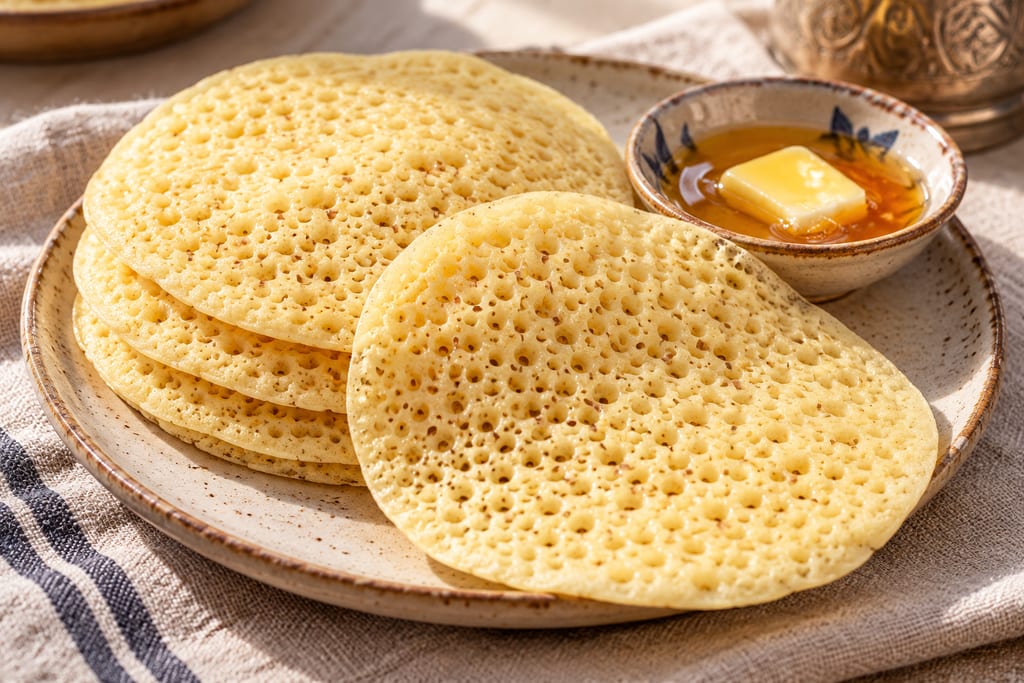
Moroccan semolina pancakes made from a thin yeast batter, rested until foamy and cooked on one side until the surface sets with a honeycomb of holes. This source-specific batch makes sixteen 5-inch pancakes.
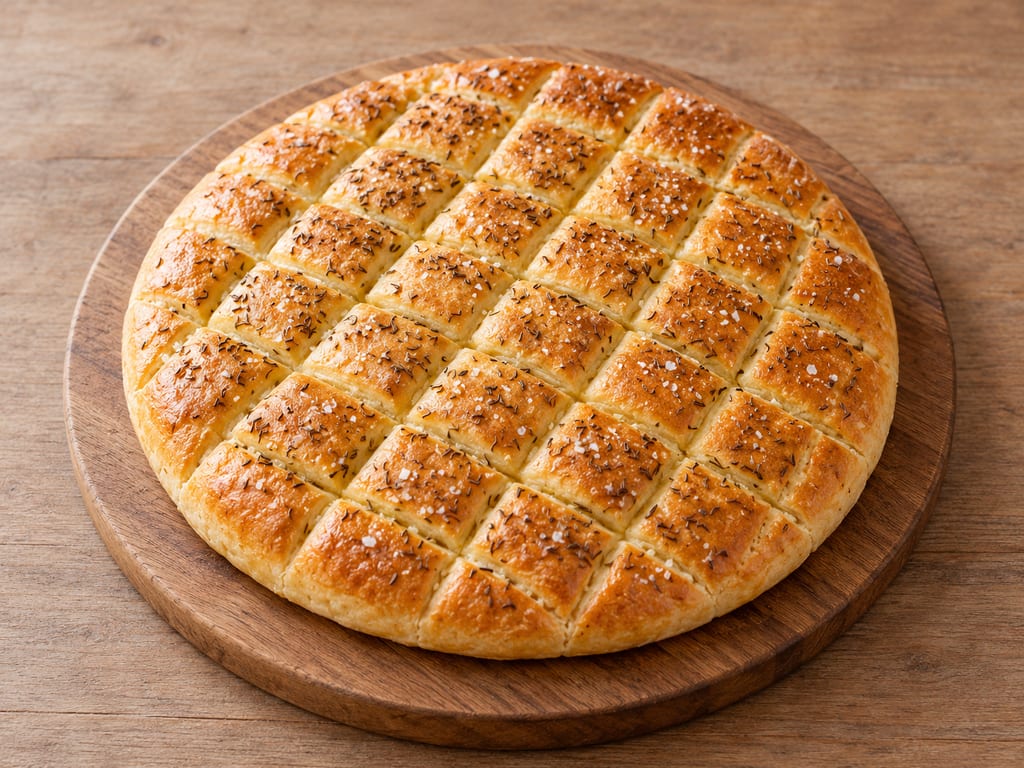
A round Slovenian flatbread scored in a grid and topped with caraway and coarse salt.
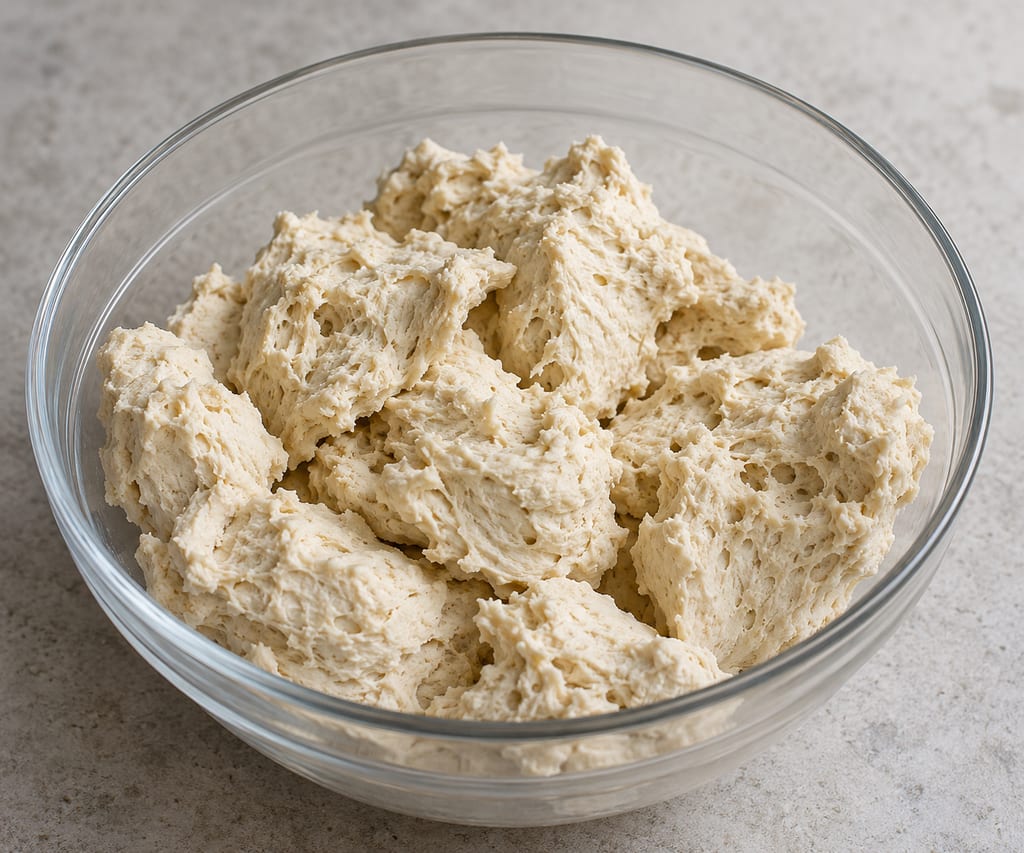
Biga is an Italian bread preferment of flour, water and a little yeast, usually a stiff unsalted mass of about 45 per cent water, fermented ahead and then mixed into the final dough.
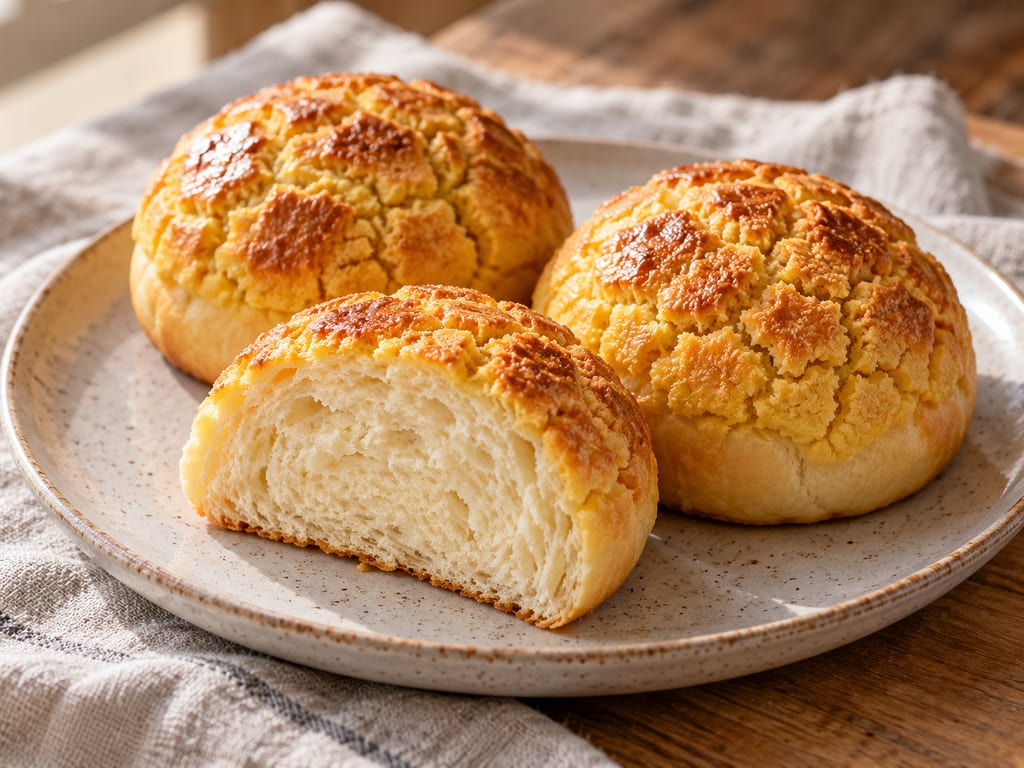
Hong Kong-style pineapple buns have soft yeast dough beneath a crisp, sweet pastry topping.
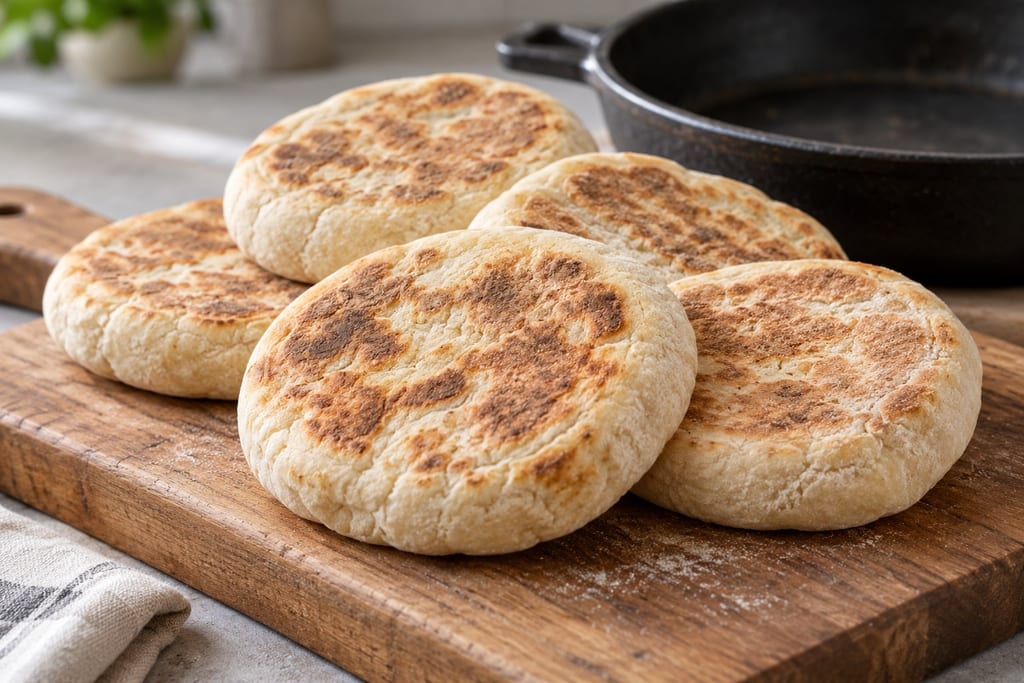
Sweet-potato wheat breads with fresh yeast, browned in a pan and finished in the oven. This is the bread component of Teleculinária's scrambled-egg dish.
No community contributions have been published for this entry yet.
Sign in to contribute. Published comments and photos are free to read.
Nisha ThajuInspiration
How to make Multigrain Millet Idli Dosa Batter at home? Tips for perfect fermentation ~ Nisha ThajuSource batch measurements
Soaking, grinding and fermentation stages
Cooking method and creator-stated endpoint
Cited in: What is multigrain millet dosa?; Names and species; Recipe at a glance; The place of multigrain dosa in Indian cooking; Sorghum — one cup in the stored mix; Finger millet — one cup; Pearl millet — one cup; Two types of rice — one cup each; Whole black gram — one cup; Fenugreek — one teaspoon; Water; Salt; Ghee; 1. Prepare the dry blend; 2. Measure a batch; 3. Wash; 4. Add fenugreek; 5. Soak; 6. Grind; 7. Add salt and mix; 8. Ferment; 9. Prepare the dosa portion; 10. Heat the griddle; 11. Spread the batter; 12. Add ghee; 13. Cook; 14. Serve; Why thickness matters; How it is eaten; The dosa breaks; It sticks to the pan; It is too thick; It is soft rather than crisp; It tastes excessively sour; The mixture has visible mould; The batter develops little gas; Why multigrain dosa matters
Cited in: 8. Ferment; How the fermentation works; Different grains, different nutrients; Acidification; Gas production; The chemistry of the griddle; The role of millet phytate; The batter develops little gas; Safety and storage
Cited in: How the fermentation works; Different grains, different nutrients; Acidification; Gas production; The chemistry of the griddle; Why thickness matters; The role of millet phytate; Why multigrain dosa matters
Cited in: 5. Soak; Safety and storage
Cited in: The place of multigrain dosa in Indian cooking; Multigrain dosa variations