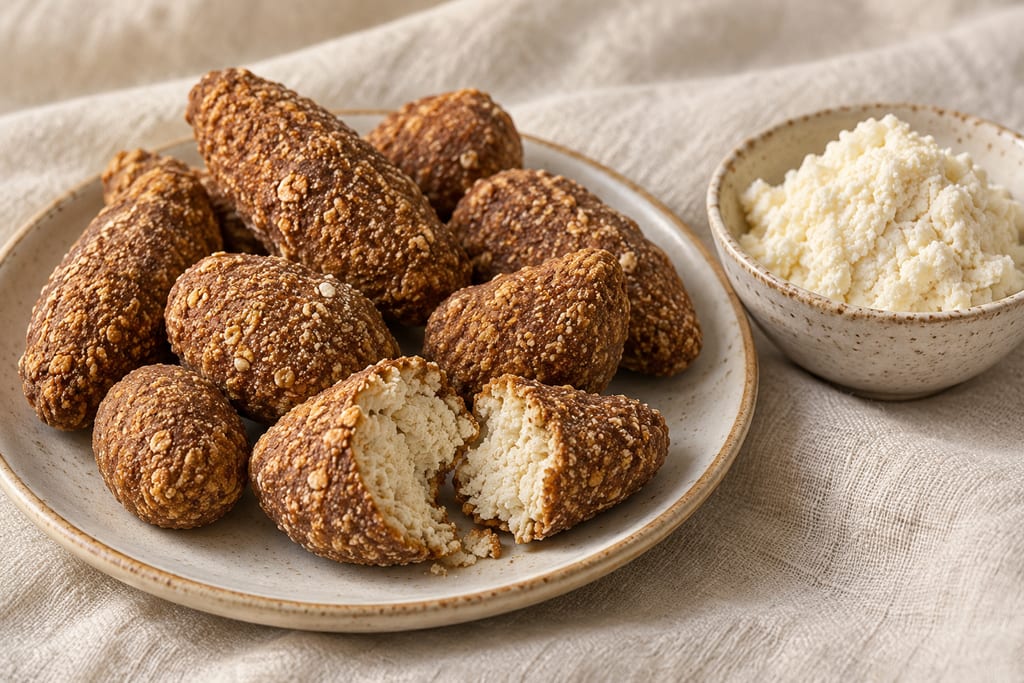
Aarchi and kurut (Altai dried curd)
A two-stage Altai dairy preparation: sour chegen is heated into soft aarchi, then portions are drained, pressed and traditionally smoked into firm kurut.
 FermenteaWhere food goes to change
Modern adaptation
Ricotta
This 2 L whole-milk acid-set batch is labelled ricotta by the creator: heat below boiling, add acid and salt, rest and drain without pressing. It is separate from whey recovery; yield is unstated.
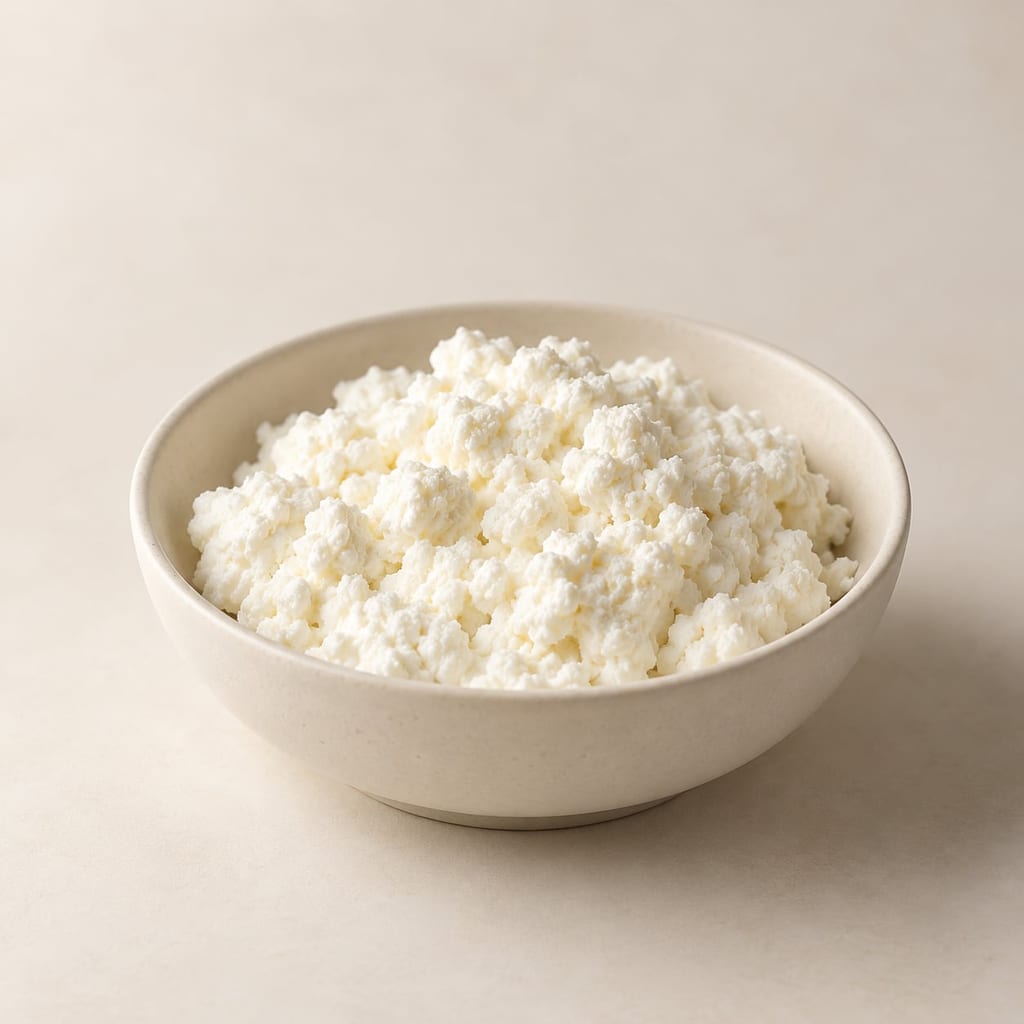
Whole-milk ricotta-style cheese is a fresh, soft dairy preparation made by heating milk, introducing an edible acid and collecting the curds that separate from the liquid.
The method is simple in principle, but its chemistry is more complex than merely making milk go sour.
Heat changes the structures of milk proteins. Acid reduces their stability in the liquid. Together, these effects cause proteins to aggregate into soft curds that can be separated and drained.
The preparation documented here uses full-fat milk, lemon juice or vinegar, and salt. It is an acid-set cheese, not a microbial fermentation.
The name ricotta is Italian and literally means recooked. Traditional Italian ricotta is commonly made by reheating whey remaining after other cheeses have been produced.
The present recipe starts with whole milk instead.
It therefore belongs more precisely to the family of fresh whole-milk ricotta-style cheeses.
This distinction should remain explicit rather than implying that whole-milk acid-set curds and traditional whey ricotta are identical.
Ricotta has a long association with Italian cheesemaking.
The traditional technique arose from the practical value of whey, the liquid remaining after curds have been separated during cheese production.
Whey still contains proteins and other nutrients.
Heating it again can recover some of those proteins as a secondary curd.
The Italian name reflects this second cooking.
The exact invention date of ricotta is not securely established.
Whey recovery belongs to a broader historical pattern of using as much of the milk as possible.
In regions where cheese was produced from sheep, goats, cows or buffalo, different whey products developed.
Ricotta became especially important in Italian regional food traditions.
It could be eaten fresh or subjected to additional processing.
However, the historical existence of whey ricotta should not be used to assign an ancient date to the specific modern two-litre whole-milk recipe in this record.
That recipe was documented through a contemporary home-cheesemaking video.
Traditional whey ricotta begins with the liquid left after another cheese has been made.
Much of the milk's casein has already been removed in the primary curd.
The remaining whey contains soluble proteins, including beta-lactoglobulin and alpha-lactalbumin.
Heating and acidification can make these proteins aggregate.
Whole milk has a different composition.
It still contains its casein micelles, whey proteins and fat globules.
When whole milk is acidified and heated, some casein can participate in coagulation alongside denatured whey proteins.
The resulting curd therefore differs from a pure whey-recovery product.
It can have a greater yield and a richer texture because more protein and fat remain available.
The Canadian Dairy Commission explicitly recognises ricotta made from whole or skim milk as a heat-and-acid-precipitated product.
The broader Italian historical tradition, however, is strongly associated with reheated whey.
For a technical reference website, both meanings should be documented without treating them as interchangeable.
The source provides no measured finished curd yield.
It also does not state whether the acid is standardised to a particular percentage.
Lemon juice varies with the fruit.
Commercial vinegar varies by type and declared acidity.
Consequently, a quarter-cup measurement does not establish one exact final milk pH.
The source uses the same nominal acid volume whether lemon juice or vinegar is selected.
The two can produce different flavour impressions and may not have identical effects on the curd.
Milk is a complex dispersion rather than a simple homogeneous liquid.
It contains water, fat globules, proteins, lactose, minerals and other substances.
Casein forms much of the protein content.
Casein proteins are organised into structures called micelles.
These are stabilised partly through interactions involving calcium phosphate and other molecular forces.
Whey proteins remain dissolved in the surrounding liquid.
Fat exists as globules surrounded by membranes.
When milk is heated and acidified, several of these structures change.
The finished curd is produced by their combined physical and chemical behaviour.
Heating can denature whey proteins.
Denaturation changes the folded structure of the proteins.
A protein that was soluble in its original state may expose regions capable of interacting with other proteins.
Beta-lactoglobulin is particularly important in studies of heat-induced milk-protein aggregation.
As milk is heated sufficiently, denatured whey proteins can interact with casein micelles.
These interactions contribute to the formation of aggregates during acidification.
The process does not require a living microbial culture.
It is driven by temperature, acidity and the composition of the milk.
The milk is heated until just below boiling.
It does not specify a numerical temperature.
Therefore it would be inaccurate to present one precise target as though it had been measured in the original video.
Milk proteins carry electrical charges that influence their stability.
At normal milk pH, casein micelles remain dispersed.
Adding acid changes the charge balance and affects mineral interactions within the micelles.
As acidity increases, the structures become less stable.
Heating and acidification together can cause proteins to aggregate.
The curds separate from a liquid phase commonly called whey.
The exact texture depends on temperature, acidity, milk composition and the way the mixture is handled.
Too much aggressive stirring after the curds form can break them into very fine particles.
Insufficient acidification may produce poor separation.
Excessive acidification can create an unpleasantly sharp flavour or a different texture.
The Canadian Dairy Commission describes a heat-and-acid ricotta process in which milk is acidified to approximately pH 5.9–6.0, followed by heating at 80–85°C for 15–30 minutes.
These are documented technical conditions for a particular dairy process.
They are not the measured parameters of the original home video.
A 2023 review in the Journal of Dairy Science describes traditional whey-ricotta coagulation using temperatures around 80–90°C, with details varying among regional products.
These figures explain the technology, but should not be silently substituted for the source's qualitative instruction to heat milk just below boiling.
The exact recipe and the broader dairy-science processes must remain distinct.
Canadian Dairy Commission
1. Measure the milk. The source uses 2 L full-fat milk.
2. Prepare the acid. Measure ¼ cup lemon juice or vinegar. The recipe treats these as alternatives rather than simultaneous additions.
3. Measure the salt. Use 1 teaspoon.
4. Heat the milk. Warm the milk until just below boiling, as described by the creator. No exact numerical temperature is established.
5. Add the acid and salt. Introduce the measured lemon juice or vinegar and the salt.
6. Allow coagulation. The milk should begin separating into curds and whey as its proteins become unstable.
7. Rest the mixture. The recorded rest is approximately 10 minutes after acid addition.
8. Prepare draining equipment. Use a suitable clean strainer or cloth capable of retaining the soft curds.
9. Separate curds and whey. Transfer the coagulated mixture carefully without unnecessary crushing.
10. Drain without pressing. The curds drain naturally rather than under applied pressure. The creator drains the curds for 20 to 30 minutes.
11. Cool and handle as a fresh dairy product. The source does not supply a validated refrigerated shelf life for the exact batch.
The method makes a soft fresh curd. Its exact yield and moisture content depend on the milk and drainage conditions.
Pressing removes liquid from a curd mass.
In hard cheeses, this may be important to develop structure and reduce moisture.
The present ricotta-style preparation aims for a soft, moist texture.
Allowing the curds to drain under their own weight preserves more moisture.
It also avoids compressing them into a dense block.
The result should remain spoonable or easily crumbled.
The actual consistency depends on drainage time and the size of the curd particles.
A longer drain generally removes more free whey.
The creator's own drain is 20 to 30 minutes.
A longer or shorter drain changes the moisture, not the method.
Both lemon juice and vinegar can supply the acidity required to destabilise milk proteins.
But they contain different principal acids.
Lemon juice contains citric acid.
Vinegar contains acetic acid.
Their aromas also differ.
Lemon juice can give the cheese a brighter citrus character.
Vinegar may introduce a recognisable vinegar note if it remains perceptible in the finished curd.
The exact outcome depends on concentration, amount and drainage.
The recipe presents the two as alternatives.
A more technically controlled process would measure pH rather than assuming they always behave identically by volume.
That distinction becomes important when scaling production.
Full-fat milk contains dispersed fat globules.
Some fat becomes trapped in the curds as the proteins aggregate.
This contributes to richness and mouthfeel.
A skim-milk version can produce a different texture and flavour.
Likewise, using cream-enriched milk changes the fat content and possibly the yield.
The source specifically uses full-fat milk.
It does not establish a version made with cream or skim milk.
For database accuracy, such alternatives should be documented as variations rather than silently included in the canonical formula.
The original record gives two litres of starting milk but no measured weight of finished cheese.
The yield depends on several factors.
Milk protein content varies.
Fat content matters.
The acidity reached during processing influences aggregation.
Heating conditions affect whey-protein denaturation.
The fineness of the curd particles influences how much material passes through the strainer.
Drainage removes different amounts of liquid according to time and equipment.
Consequently, a source without a measured finished yield cannot support an exact claim such as producing a particular number of grams of ricotta.
A related recipe may offer a yield estimate, but it should not be transferred automatically to this batch.
Several Italian regions have distinctive ricotta traditions.
Sicilian ricotta is often associated with sheep's milk whey.
It may be used in pastries and savoury foods.
Ricotta made from cow's milk whey can have a different flavour and fat profile.
Buffalo-whey ricotta is associated with parts of southern Italy.
Goat-whey preparations also exist.
In traditional production, the whey may be enriched with a relatively small quantity of milk or cream to improve yield and texture.
A 2023 dairy-science review describes milk additions of approximately 5–15% in certain traditional processes.
These are whey-based formulations, not the same as the present recipe made entirely from fresh whole milk.
Ricotta Romana has a protected geographical identity associated with Lazio.
Its specification concerns whey from sheep's milk produced within defined geographical and agricultural conditions.
The production method involves reheating whey and separating the resulting protein aggregates.
The finished product has characteristics associated with the sheep's milk and regional process.
This illustrates why the word ricotta can have both a broad culinary meaning and a narrower regulated product identity.
A homemade whole-milk curd should not be labelled Ricotta Romana PDO merely because its appearance resembles the protected product.
The same principle applies to other named regional ricotta products.
Fresh ricotta is only one branch of the wider family.
Ricotta salata is a salted, firmer product that can be grated or sliced.
Some regional ricotta is baked.
Other versions are smoked.
These additional processes change moisture, flavour and storage characteristics.
They may create products suitable for culinary uses quite different from fresh ricotta.
For example, grated ricotta salata can be used over pasta.
Fresh ricotta is more often spooned, spread or incorporated into fillings.
The present whole-milk acid-set recipe contains none of these additional preservation processes.
It should not inherit their storage properties or preparation requirements.
Fresh ricotta is useful in both sweet and savoury cooking.
It can be spread on bread or toast.
Olive oil, herbs and black pepper can accompany it.
It may be incorporated into pasta fillings, including ravioli.
Spinach and ricotta is a familiar combination.
It is also used in baked pasta dishes and other fillings.
In Sicilian culinary traditions, ricotta is especially associated with desserts such as cannoli and cassata.
However, those dishes may require particular ricotta textures or additional drainage.
A wet homemade curd may not behave identically to a professionally drained pastry ricotta.
In sweet applications, sugar, honey, citrus zest or other flavourings may be added.
The mild dairy flavour makes ricotta versatile.
The finished curds should be white or cream-coloured, soft and moist.
They may have a fine granular structure.
The flavour should be mild, with gentle acidity.
The whey should separate sufficiently to permit draining.
A completely homogeneous liquid after acid addition suggests that coagulation has not occurred as intended.
An excessively dry, rubbery or hard curd may have undergone unsuitable heating or drainage.
Strongly sour flavour may reflect excessive acidity.
A bitter or unpleasantly cooked flavour may indicate unsuitable raw material or overheating.
The exact outcome depends on the milk, acid and handling.
If curds do not appear, several variables may be involved.
The milk may not have reached a suitable temperature.
The acid quantity or concentration may be inadequate for the particular milk.
The heating sequence may not have sufficiently changed the whey proteins.
The milk itself may differ from that used in the source recipe.
If curds form but pass through the strainer, the particles may be too fine for the chosen equipment.
If the curds are crushed during transfer, they may lose the intended soft structure.
The source does not provide a detailed troubleshooting matrix or validated corrective acid additions.
Therefore no exact rescue quantities are asserted.
Fresh ricotta-style cheese contains substantial moisture and nutrients.
It is usually only mildly acidic compared with strongly acidified preserved foods.
These characteristics can support microbial growth if the product becomes contaminated.
The heat-and-acid process is important, but the cheese can be contaminated again during draining, transfer or storage.
Listeria monocytogenes is a particular concern in ready-to-eat dairy products.
Fresh dairy handling therefore requires clean equipment, suitable cooling and refrigeration.
The CDC identifies soft cheeses and dairy products as foods requiring particular attention to Listeria risk.
A high-moisture cheese should not be treated as shelf-stable.
Starting with commercially pasteurised milk provides an important additional safety measure.
The original creator's instruction to heat just below boiling is not a substitute for a validated time-and-temperature specification.
In commercial cheesemaking, thermal processing is controlled.
However, the present record provides no measured temperature or holding time at that temperature.
It also does not specify the milk's original pasteurisation status beyond identifying it as full-fat milk.
A source's culinary demonstration cannot be assumed to meet a professional dairy-processing standard.
The source gives only imprecise general advice about short refrigerated storage.
It does not provide a validated batch-specific shelf life.
Scientific studies of commercial ricotta report storage periods that depend on packaging, hygiene and production conditions.
Those results do not automatically apply to a home-prepared curd made with different equipment.
The finished product should be treated as a highly perishable fresh dairy food.
Commercial sale would require appropriate process and microbiological validation.
Contemporary creator demonstration; it does not establish an earliest attestation.
Scaling: source batch only
General context; this source batch is not independently safety-validated.
Hazard sourceCreator's general few-days storage advice is not independently validated.
The source-labelled whole-milk batch is not whey recovery; no measured yield or qualified process/safety review.
This video records a preparation but does not establish an origin or place of origin.
A two-stage Altai dairy preparation: sour chegen is heated into soft aarchi, then portions are drained, pressed and traditionally smoked into firm kurut.
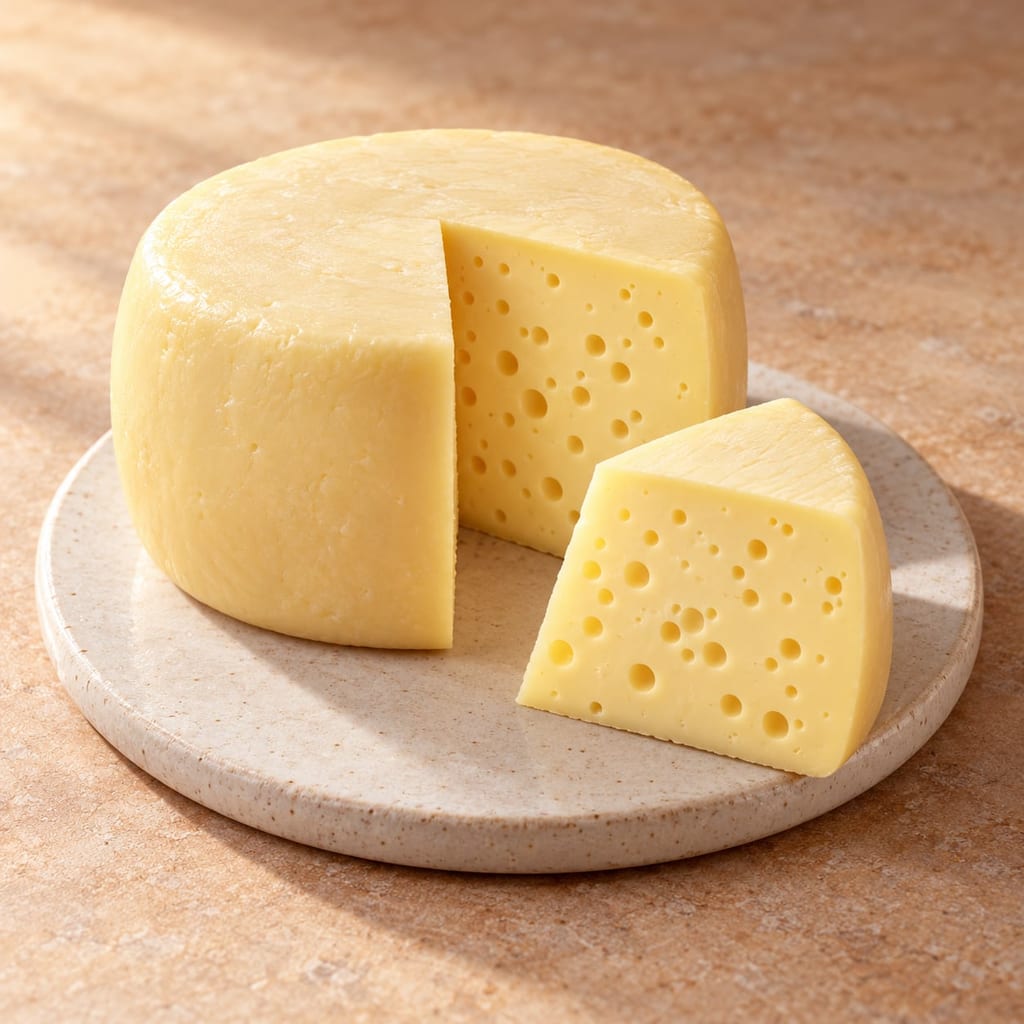
A washed-curd cheese with propionic bacteria, warmed by hot water in two steps and then held in a warm room for weeks so the bacteria can form its holes.
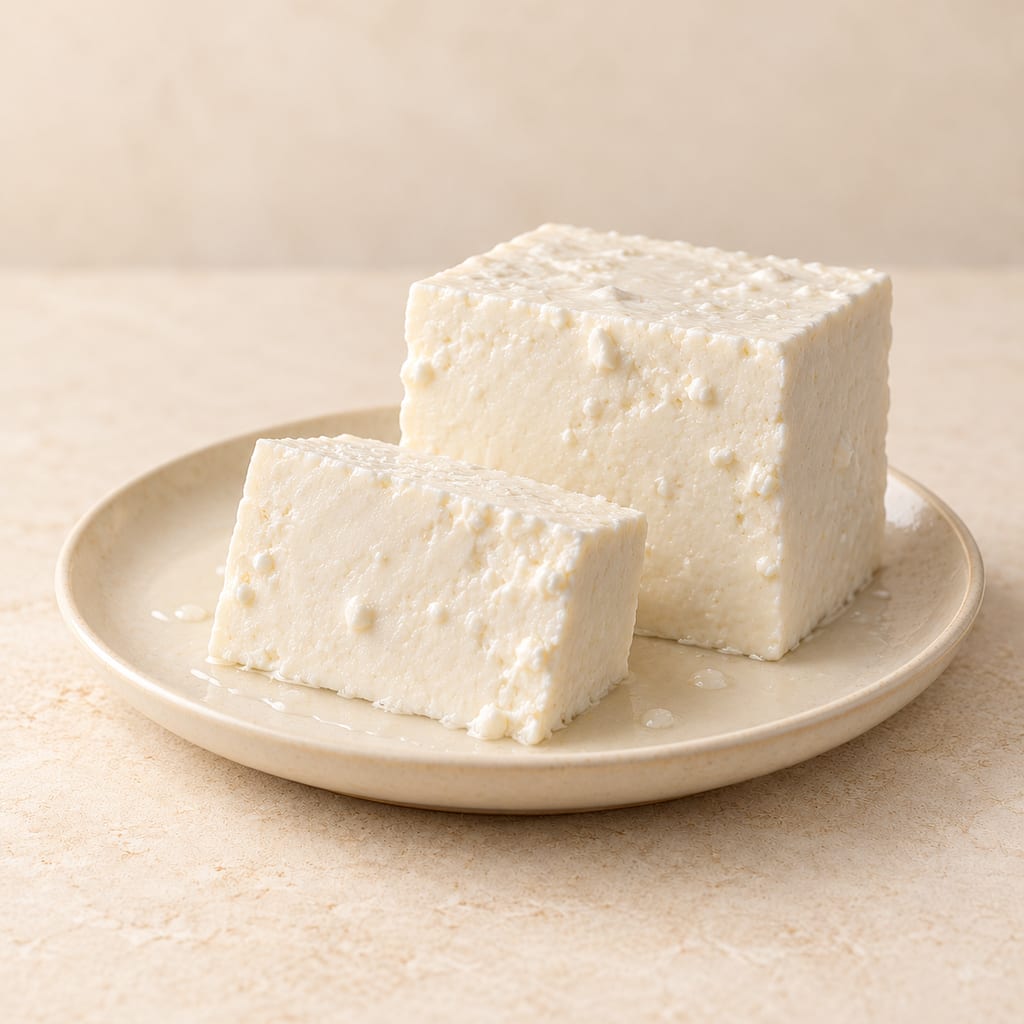
Beyaz peynir is a Turkish white cheese matured in brine. Sheep milk, alone or mixed with other milks, gives a close-textured cheese cut into blocks and packed in cans.
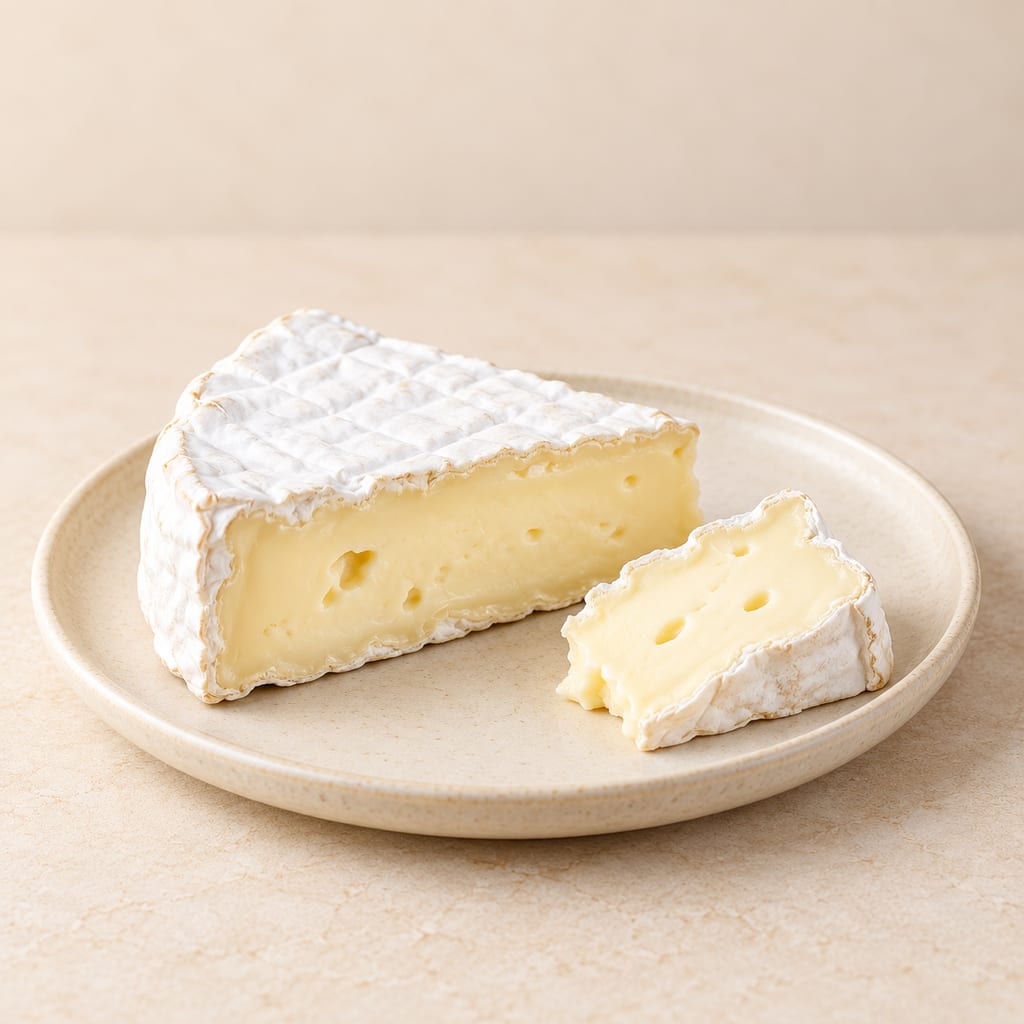
A cream-enriched Brie with a white bloomy rind and a softening center, made from pasteurized milk with lactic and surface cultures.
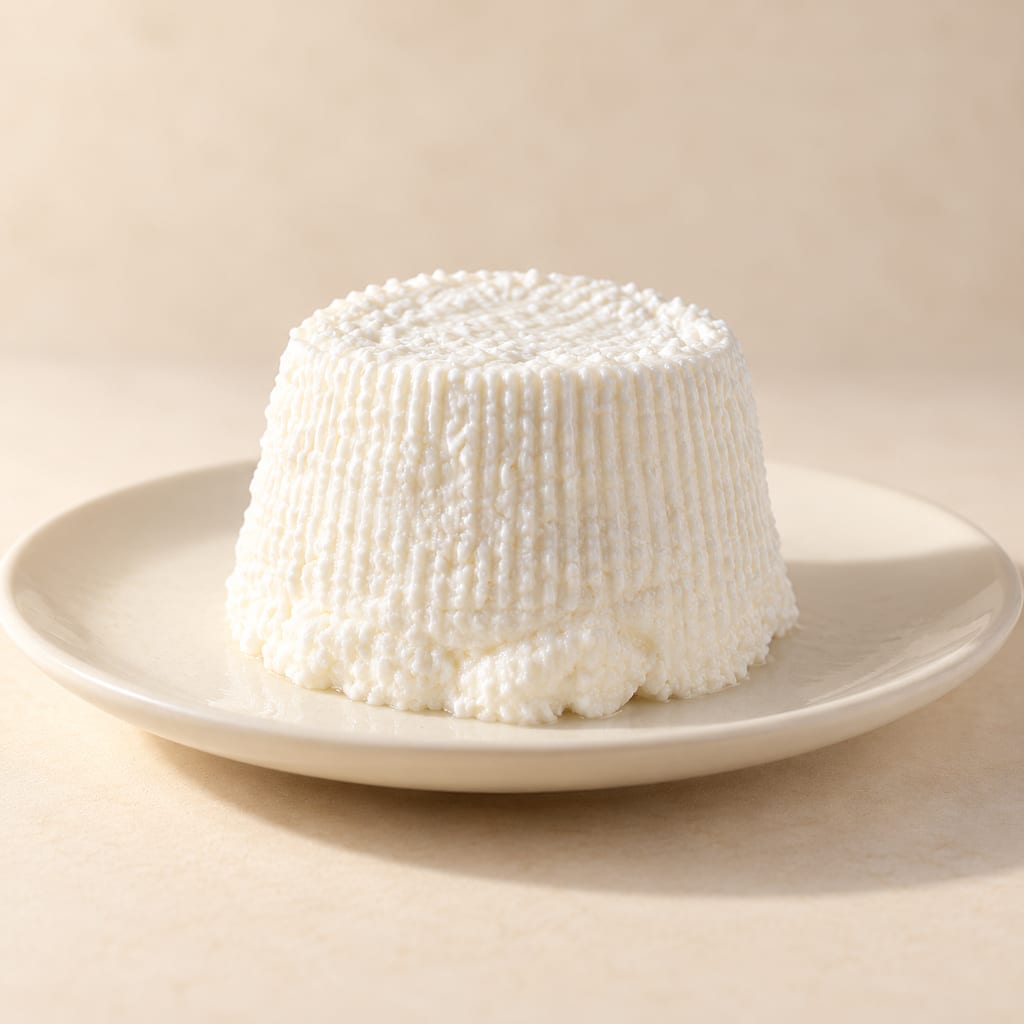
Corsican Brocciu is a whey cheese made by heating sheep's or goat's whey with whole milk and salt, then gently draining the flocculated curds. It is eaten fresh or salted and ripened as Brocciu passu.
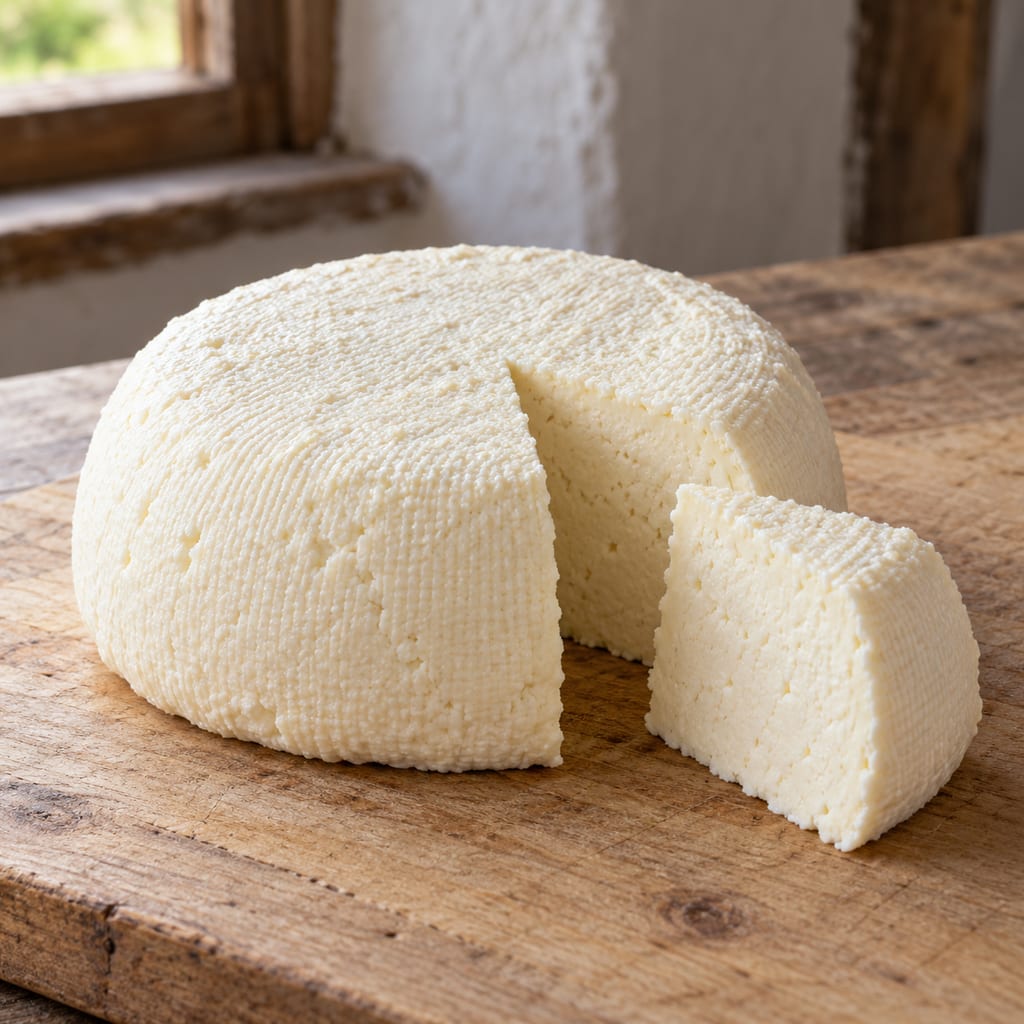
Budz is a traditional Hutsul rennet-set cheese made from sheep, cow or goat milk in the Ukrainian Carpathians, forming a fresh curd that can be eaten, smoked or processed into salted bryndza.
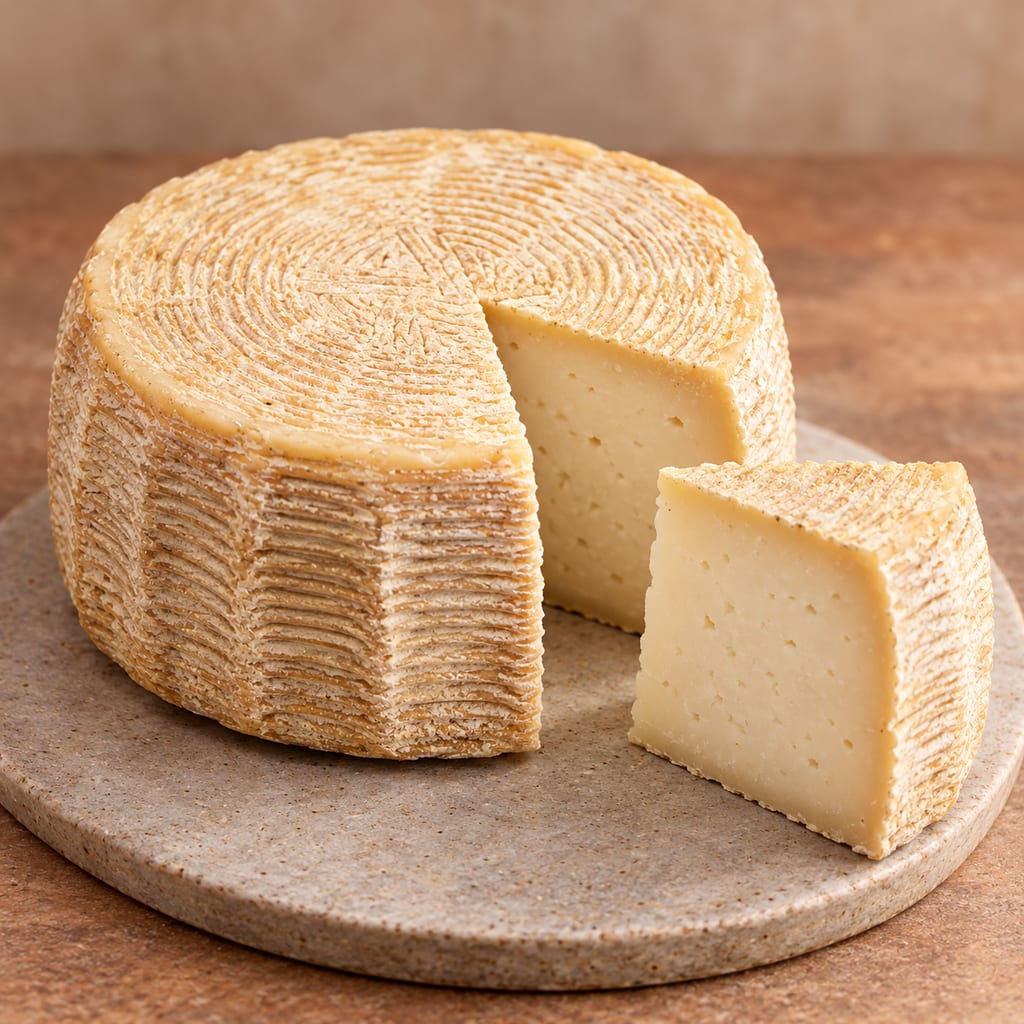
A scalded cheese moulded in baskets and re-cooked in its forms in hot whey, made alongside a ricotta from the same milk, then acidified, brined and aged for months.
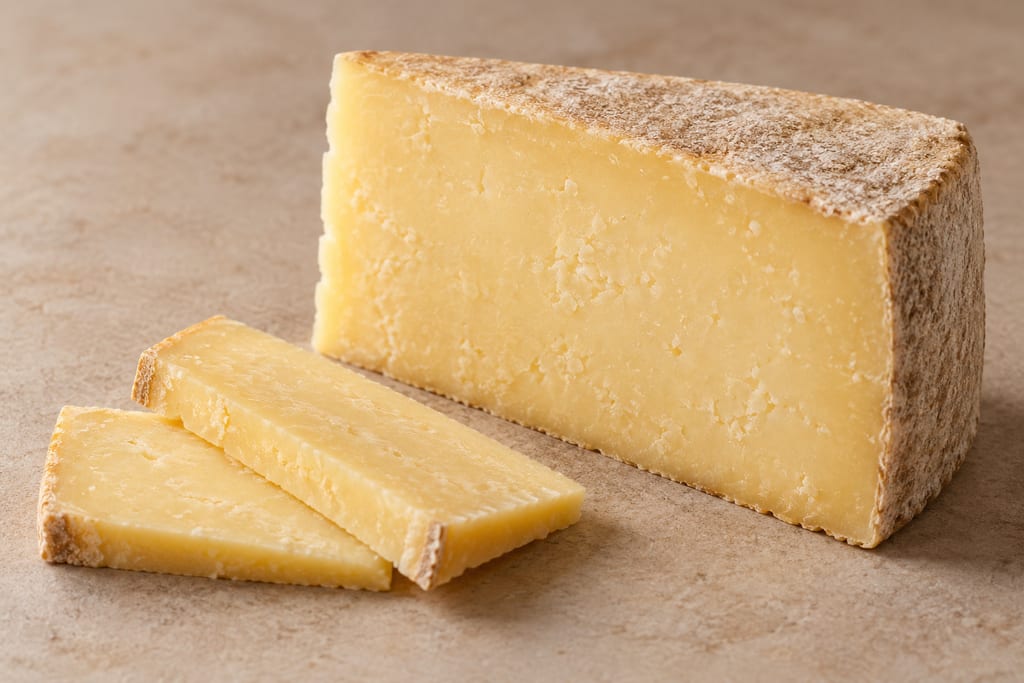
A pressed cheese whose curd is cooked slowly, then cheddared: kept warm in slabs that are turned and stacked for hours before milling, salting and pressing.
No community contributions have been published for this entry yet.
Sign in to contribute. Published comments and photos are free to read.
pb.LifestyleandCultureProcess · Ingredients
The Art of Home Cheesemaking | Fresh Paneer, Mozzarella, Ricotta & More 🧀Creator labels a separate whole-milk acid-set batch ricotta, not whey recovery: 2 L milk, heat just below boiling, 1/4 cup lemon juice or vinegar and 1 tsp salt, rest about 10 minutes, strain and drain 20–30 minutes without pressing. Suggested uses are toast, cheesecake and pasta shells. Numeric sub-boiling temperature, yield and batch-specific storage are unstated.
Archived caption JSON metadata labels language en; inspected 02:01–04:03, plus 02:01–02:21 context. Transcript only; audio and visuals were not checked; language metadata is not proof of native language.; Transcript only; this source's nomenclature is reported, not generalized as the sole definition.
Cited in: Overview; Ricotta and Italian dairy history; What distinguishes whey ricotta from whole-milk ricotta?; Ingredients — the original video batch; The chemistry of milk; What heating does to milk proteins; What acid does to milk proteins; Numerical evidence from dairy science; The documented whole-milk method; Why the curds are not pressed; Lemon juice versus vinegar; Whole milk and fat retention; Why yield is difficult to predict; Traditional whey ricotta in Italy; Ricotta Romana and protected regional production; Ricotta salata, baked and smoked varieties; How fresh ricotta is eaten; What a good fresh ricotta-style curd looks like; Troubleshooting poor coagulation; Food safety: why fresh ricotta is perishable; Pasteurised milk and heat treatment; Refrigerated storage
U.S. Centers for Disease Control and PreventionSafety
How Listeria Spread: Soft Cheeses and Raw MilkGeneral fresh-dairy context; it does not validate this source batch.
Cited in: Food safety: why fresh ricotta is perishable; Pasteurised milk and heat treatment; Refrigerated storage
Canadian Dairy CommissionContext
Canadian Dairy Commission — Ricotta CheeseCited by the written account for this record.
Cited in: What distinguishes whey ricotta from whole-milk ricotta?
Mangione et al., 2023History · Science
Mangione et al., 2023 — History, Technologies of Production and Characteristics of Ricotta Cheese, Journal of Dairy ScienceCited by the written account for this record.
Cited in: Ricotta and Italian dairy history; What distinguishes whey ricotta from whole-milk ricotta?; The chemistry of milk; What heating does to milk proteins; What acid does to milk proteins; Numerical evidence from dairy science; Traditional whey ricotta in Italy; Ricotta Romana and protected regional production; Ricotta salata, baked and smoked varieties
Safety · Science
Retrospective Study of the Hygienic Quality of Fresh Ricotta Cheeses Produced in SicilyCited by the written account for this record.
Cited in: Food safety: why fresh ricotta is perishable; Pasteurised milk and heat treatment; Refrigerated storage
Science
Characterisation and Authentication of Ricotta Whey CheesesCited by the written account for this record.
Cited in: What distinguishes whey ricotta from whole-milk ricotta?; Numerical evidence from dairy science; Traditional whey ricotta in Italy