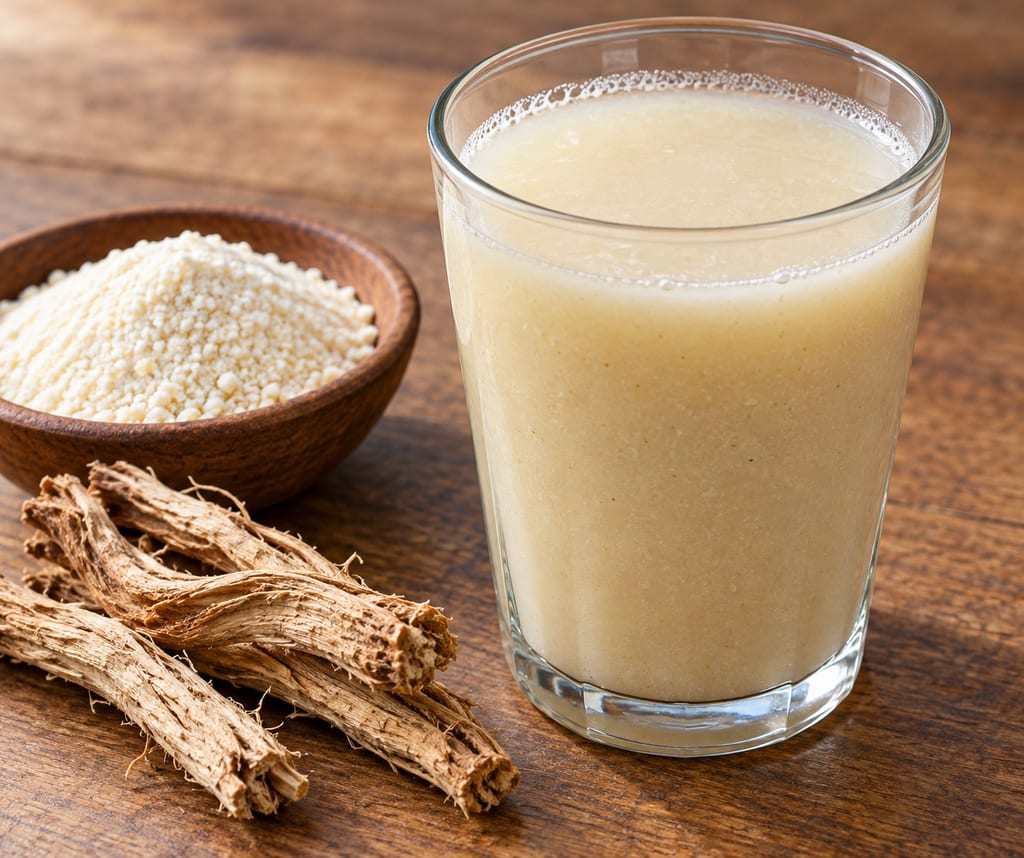
Zambian munkoyo from maize meal and munkoyo root
A creamy, mildly sour Zambian cereal drink in which the dug roots of wild legumes supply both the enzymes that break the cooked starch down and the microorganisms that then ferment it.
 FermenteaWhere food goes to change
Modern method
Chibwantu
A Zambian cereal drink built on coarse maize grits rather than meal, saccharified with an extract of wild munkoyo roots and then left to ferment spontaneously.
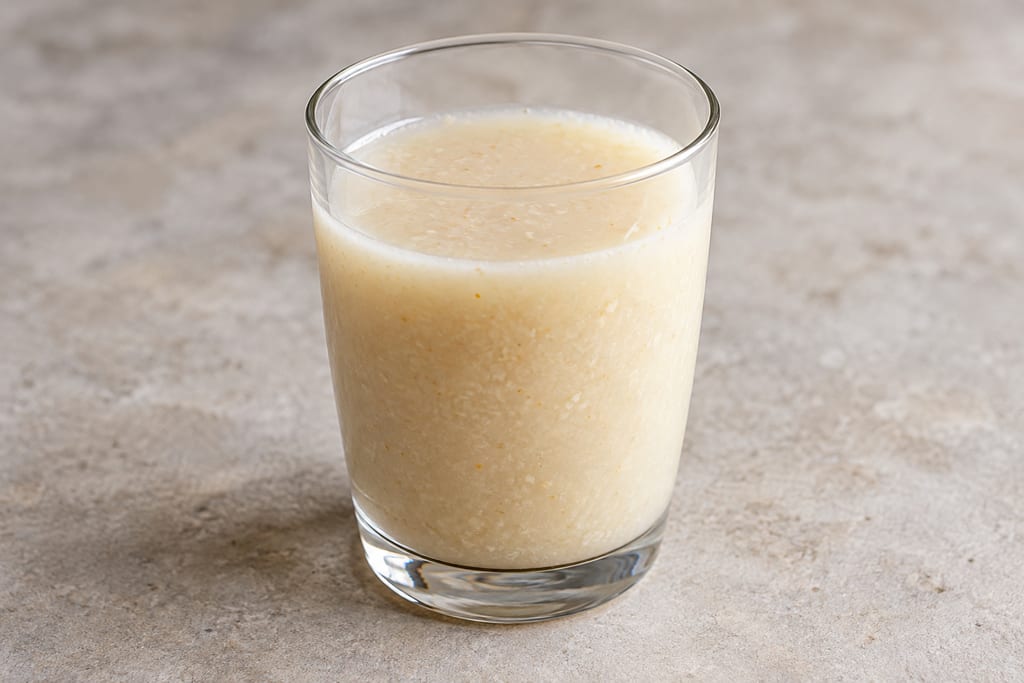
Chibwantu is a Zambian fermented cereal beverage associated particularly with central and southern parts of the country.
Like munkoyo, it relies on cereal starch, water and roots that supply amylolytic activity. The roots enable the breakdown of cooked starch into smaller sugars, which can subsequently be fermented.
The drink is nevertheless recognised under its own name and regional tradition.
It is also encountered in discussions of Zambian maheu or mahewu-type cereal beverages, although those terms may cover related commercial and traditional products that are not identical in manufacture.
The original name is Chibwantu. The principal cereal in this recorded recipe is maize, Zea mays L., supplied as grits rather than finely ground meal.
The root ingredient belongs to the group of plants collectively known as munkoyo roots. Identified species include Rhynchosia insignis, Rhynchosia heterophylla and Eminia holubii.
Unlike the previous munkoyo recipe, which begins with maize meal, this version uses coarser maize grits. That difference has a practical effect on hydration, cooking, starch accessibility and texture.
The two beverages should remain separate database records because they represent documented regional foods, not simply two spellings of one recipe.
Chibwantu is associated with central and southern Zambia, including areas around Lusaka.
Traditional knowledge encompasses household preparation, local markets and the use of drinks as refreshments during everyday life and social occasions.
The preservation of the name is important. Food identities develop through regional language, ingredients, customary serving and the knowledge of the people who make them.
Both munkoyo and chibwantu use related cereal-fermentation techniques, yet local producers and consumers distinguish them.
The earliest precise historical date for chibwantu has not been established in the research provided.
Modern evidence includes microbiological fieldwork published in 2013, which documented the two cereal beverages as related but distinct products.
A later 2024 study of Zambian traditional foodscapes also identifies chibwantu as a preparation using maize grits with munkoyo roots, particularly among participants from Southern Province.
In 2025, production-optimisation research compared measured formulations of munkoyo and chibwantu.
These publications provide independent documentation of the drink's composition and geographical identity.
They do not demonstrate that the specific 10 L research procedure was historically universal, nor that all central and southern Zambian households use identical grains and quantities.
Maize meal and maize grits come from the same plant but differ in particle size and processing.
Meal consists of relatively fine particles. Grits are coarser pieces of the grain's starchy endosperm, although commercial grading varies.
Particle size influences how quickly water enters the cereal.
Fine maize meal usually hydrates more readily and can create a smooth porridge. Coarser grits require adequate cooking to soften and expose starch.
This distinction matters because the root enzymes must access starch before they can break it down.
If grits remain insufficiently cooked, the enzymatic system may have less access to their internal starch.
The resulting drink may also retain a different particle texture.
It would therefore be incorrect to replace the grits with maize meal while claiming that the original chibwantu formula was unchanged.
Both ingredients have a place in Zambian cereal-drink production, but this recipe specifically documents the grits version.
The roots traditionally used for chibwantu contain or provide enzymes that contribute to starch breakdown.
The roots are collected from woodland plants and may be pounded, shredded or dried before processing.
During the preparation of root extract, soluble components pass into the water.
These components contribute to the saccharification of cooked cereal starch.
The enzymatic stage makes fermentable carbohydrates available, while microorganisms act later to produce organic acids and other metabolites.
The roots may also contribute microorganisms, but this depends on how they are collected, dried and extracted.
Extracting the roots in warm water is not equivalent to inoculating with a carefully quantified pure culture.
Because the root source varies geographically, traditional chibwantu may differ in flavour and fermentation performance between producers.
A scientific botanical name is therefore more than a decorative detail. It helps distinguish an authenticated ingredient from other superficially similar roots.
Chibwantu belongs to a mixed fermented-food ecosystem in which lactic acid bacteria are particularly important.
Research on Zambian traditional beverages found diverse communities of lactic acid bacteria rather than one species occurring consistently in every sample.
Lactic fermentation converts sugars into organic acids, contributing the beverage's characteristic sourness.
Yeasts may also occur and can produce ethanol and carbon dioxide.
The microbial community depends on the raw materials, vessels, preparation conditions and other influences.
Traditional calabash vessels can support established biofilms. Reusing such a vessel may introduce microorganisms from previous fermentations.
This process is often called backslopping, but the role of a microbial film on an old vessel is more complex than simply adding a measured quantity of finished starter.
The present research recipe does not deliberately add a previous batch. Its fermentation is therefore described as spontaneous.
The 2013 microbiological investigation found that products made from similar raw materials did not necessarily have more similar microbial communities than products made from different materials.
The identity of the drink cannot therefore be defined solely by one set of bacteria.
Standardised Chibwantu 1 formulation
The source also compares formulations containing 150 g root.
A separate mixed-grain version uses grits and meal in a 3:1 ratio. That variation belongs to the same beverage family but is not incorporated into the measured grits-only formula.
The final drink yield is not specified.
As with the munkoyo recipe, calling this a 10 L batch does not establish that precisely 10 L remains after combining, cooking, evaporating, filtering and fermenting.
Maize grits — 1 kg — Main cereal substrate
Water for grits — 10 L — Hydration and cooking
Dried shredded munkoyo root — 100 g — Enzyme-containing root material
Water for root extraction — 2 L — Extraction medium
A large cooking pot, thermometer, suitable stirring paddle, root-extraction container, sieve and food-safe fermentation vessel are needed.
The largest practical challenge is ensuring that the grits cook evenly.
Coarse cereal particles can settle during preparation, particularly before sufficient starch gelatinisation has occurred.
Continuous attention to stirring helps distribute the solids.
The recipe does not specify a specialised pressure cooker, mechanical agitator or traditional calabash as mandatory equipment.
A conventional clean fermentation vessel can reproduce the general physical sequence, but not necessarily the microbial ecology of a reused traditional vessel.
Research conditions: extraction 60°C for 60 minutes · cooking 60 minutes · hydrolysis 2 hours · fermentation 72 hours
Prepare the root extract. Heat 2 L potable water to 60°C. Add 100 g dried, shredded munkoyo root. Allow the roots to soak for 60 minutes, then filter out the fibrous material. Retain the extract for the later saccharification stage.
Cook the maize grits. Heat 10 L water to approximately 60°C. Introduce 1 kg maize grits gradually, stirring to distribute the particles. Cook for 60 minutes. The intended outcome is gelatinised starch and adequately hydrated cereal. The exact maximum cooking temperature is not separately documented.
Cool the cereal preparation. Bring the cooked mixture down to 50°C. Cooling matters because the root extract is introduced after the main cooking stage, rather than being exposed to the full heating process.
Combine with the root extract. Add the filtered extract and stir evenly through the cooked grits. Allow the mixture to stand for 2 hours, providing time for enzymatic hydrolysis of the starch.
Begin spontaneous fermentation. Transfer the mixture to a clean, suitable vessel and maintain the research fermentation for 72 hours at room temperature. The source does not give a numeric ambient temperature for this stage.
Evaluate the product. The investigation measured physicochemical properties including pH, acidity, viscosity and soluble solids. It did not provide a validated household endpoint or quantify the alcohol content of this batch.
The recipe uses different temperature conditions for different purposes.
The initial heating prepares the starch-containing cereal.
The separate root extraction introduces soluble material from dried roots into water.
Cooling the porridge before adding that extract creates conditions intended to support the subsequent hydrolysis.
The two-hour standing period provides time for enzymes to act.
The later room-temperature fermentation allows microorganisms to metabolise the sugars that have become available.
These stages cannot simply be collapsed into one step without changing the process.
For example, cooking the roots together with the grits for the full duration could modify or inactivate some of their enzyme activity.
Similarly, adding the root extract to inadequately cooked grits could make starch hydrolysis less effective.
The particular temperatures are the research procedure's settings, not evidence that no other traditional preparation is possible.
Chibwantu develops as starch is broken down and sugars are metabolised.
Initially, the grits contribute a relatively starchy consistency.
As the enzyme system cuts starch polymers into smaller carbohydrates, viscosity may fall or change in another measurable way.
The resulting sugars provide a substrate for lactic acid bacteria and yeasts.
Lactic acid production contributes sourness, while other metabolites influence aroma and taste.
The maize solids remain relevant to mouthfeel. Depending on preparation, the drink may not be completely smooth.
The optimisation research reported pH values across investigated beverages of 3.53–3.77 and total titratable acidity below 1%.
These values describe the research results. They must not be promoted as a guaranteed endpoint for every chibwantu fermentation.
An acidic beverage is not necessarily alcohol-free or microbiologically safe.
The similarities are substantial.
Both beverages use cooked cereal starch, a root-derived enzyme system and a period of fermentation.
Both can be made with maize and may be consumed as mildly sour refreshments.
The differences lie in regional identity, customary cereal preparation and sensory characteristics.
Chibwantu is particularly associated with central and southern Zambia, while munkoyo is more often associated with northern regions and the Copperbelt.
This study's chibwantu uses grits and the corresponding munkoyo formula uses maize meal.
That physical difference can produce distinct texture and cooking characteristics.
The names should not be merged merely because a scientific study uses a shared production diagram to describe their processing.
For a reference collection, each deserves its own page while cross-referencing their common root ingredient and fermentation technology.
Maize is the main cereal in the present recipe, but related regional preparations may incorporate millet or sorghum.
Each alternative changes the proportion and accessibility of starch, as well as the flavour of the cereal base.
Some industrial maize beverages use commercial enzymes, controlled ingredients and artificial flavourings rather than live traditional fermentation.
These can produce a product that resembles the traditional drink in taste or appearance, but the microbial and historical processes are different.
Such preparations should be labelled according to the process used.
The recorded 3:1 mixed grits-and-meal variant is another formulation option, but its presence in the same research does not justify assuming identical drying, cooking or fermentation behaviour.
Chibwantu is consumed as a cereal beverage, including at markets and as a refreshing accompaniment to daily activities.
It may be mildly sweet, sour and filling.
The cereal-derived body distinguishes it from a clarified fermented drink.
Traditional preparations can retain fine suspended solids, which contribute both texture and nutritional material.
The research does not give a standard serving temperature, cup size or accompanying dish.
It is therefore better to describe the beverage's established role as an everyday and occasional refreshment than to invent a ceremonial pairing or formal serving ritual.
Its importance also extends to the people who produce and sell it.
Traditional cereal drinks can provide income to small-scale processors, whose knowledge includes the selection of roots, cereal handling and recognising the characteristic flavour.
A successful chibwantu preparation should resemble its intended regional style in acidity, cereal texture and aroma.
Changes in viscosity can indicate starch breakdown, but they do not prove that every component has been hydrolysed.
Developing sourness is consistent with lactic fermentation, but does not alone establish the identity or safety of the microbial community.
Undesirable odours, visible mould, unusual decomposition or unexplained contamination should lead to rejection.
The absence of these signs cannot establish that the product is free from pathogens.
If the drink remains unexpectedly thick, possible explanations include incomplete cooking, unsuitable root activity or inadequate hydrolysis.
A weakly acidic result could reflect insufficient fermentable sugar, poor microbial activity or other factors.
None of these possibilities can be diagnosed definitively by appearance alone.
The use of wild roots creates an ingredient-identification hazard.
Only plant material reliably identified and supplied for the traditional preparation should be used.
Do not substitute unidentified roots or assume botanical identity from root colour alone.
The spontaneous fermentation may involve yeasts and can produce alcohol.
The research batch does not include an alcohol assay.
The 72-hour fermentation interval is not a validated household safety endpoint, and no shelf life or safe sealed-storage schedule is established.
No pressure rating for sealed bottles is provided, so secondary fermentation in sealed containers should not be assumed safe.
For commercial production, the original formulation would need validation covering microbial hazards, ingredient provenance, temperature monitoring, alcohol and finished-product stability.
Chibwantu is a Zambian cereal beverage associated with central and southern areas, distinct from Munkoyo's Copperbelt/northern association in the cited survey. This record uses the study's maize-grit-only Chibwantu 1 formula and does not treat the drinks as interchangeable names.
Scaling: source batch only
The source studies a spontaneous cereal fermentation but gives no alcohol assay or validated household safety endpoint; related research notes that extended munkoyo-family ferments may accumulate alcohol.
Hazard sourceUse the study's measured root extraction and cooking/cooling sequence, while treating its research method as unvalidated for household safety.
Control sourceClean food-contact equipment before sanitizing it; sanitation does not validate spontaneous fermentation.
Control sourceThis spontaneous beverage may contain alcohol; the study does not measure it.
The research batch does not establish a validated household storage or safety endpoint.
Use only munkoyo root identified for this preparation; the root's enzymatic and microbial roles are process-specific.
The study tests a standardized Chibwantu formulation, while a separate community survey associates Chibwantu with central and southern Zambia. No individual village is inferred.
A creamy, mildly sour Zambian cereal drink in which the dug roots of wild legumes supply both the enzymes that break the cooked starch down and the microorganisms that then ferment it.

From sour breads and milk to savoury seeds, cassava staples and living beers, African fermentation follows the crop, the community and the work of transformation.
A chilli sauce built on the African bird's eye chilli, the cultivar called piri piri, with garlic, citrus and an oily or acidic base; its origin is uncertain and linked to Portuguese trade in southern Africa.
A thick, faintly fizzy Ethiopian cereal drink in which a wheat dough is fermented, roasted dark, then fermented a second time with barley malt into a drinkable slurry.

Hi-ire is the Japanese heat treatment of finished sake, about 65 °C, used to stop re-fermentation and souring. Brewers applied it from the Muromachi era.
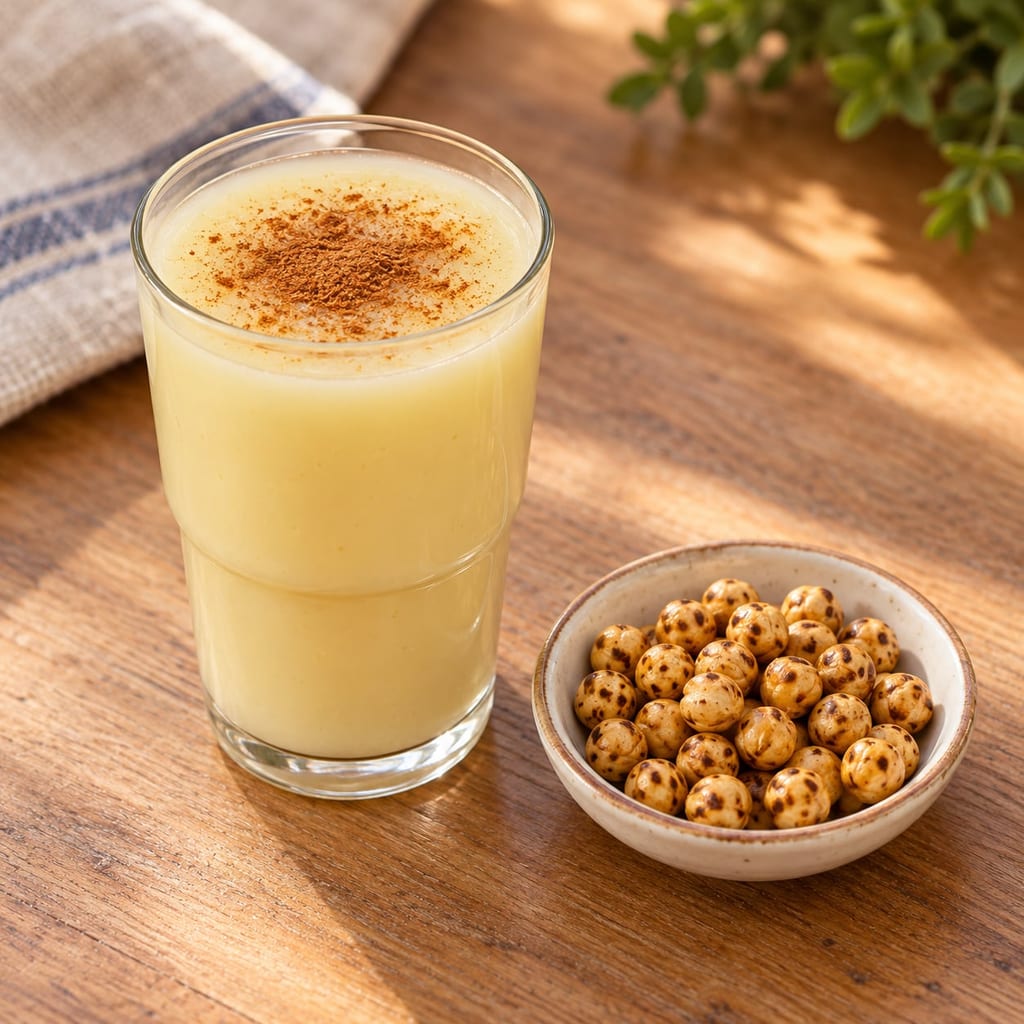
A thick, pale Turkish winter drink of bulgur and rice cooked to a soft cereal base, sweetened with grape molasses and fermented for two days.
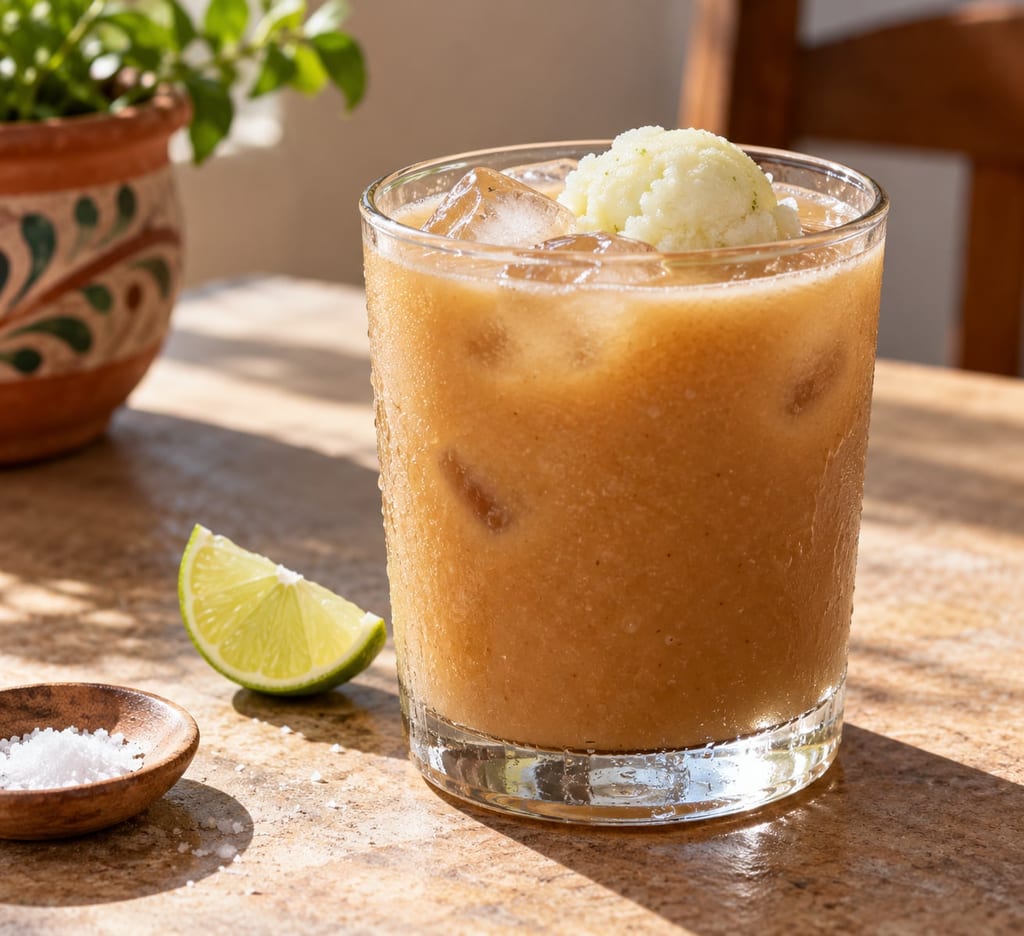
A tart, lightly fermented drink of Jalisco: nixtamalized maize masa cooked with piloncillo and limed, then diluted over ice and salted at serving.
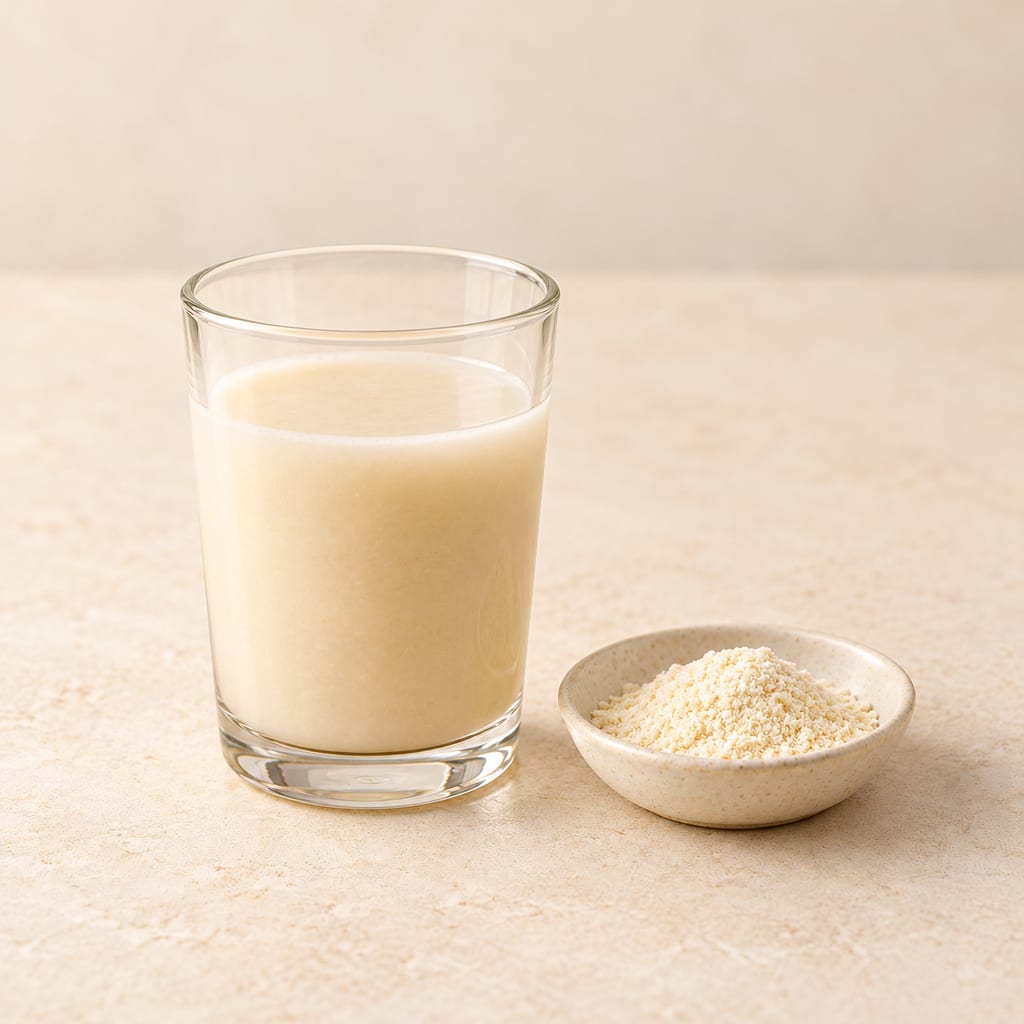
A Ugandan maize drink remade with a defined two-strain starter: roasted maize dough boiled to porridge, cooled and fermented under controlled conditions.
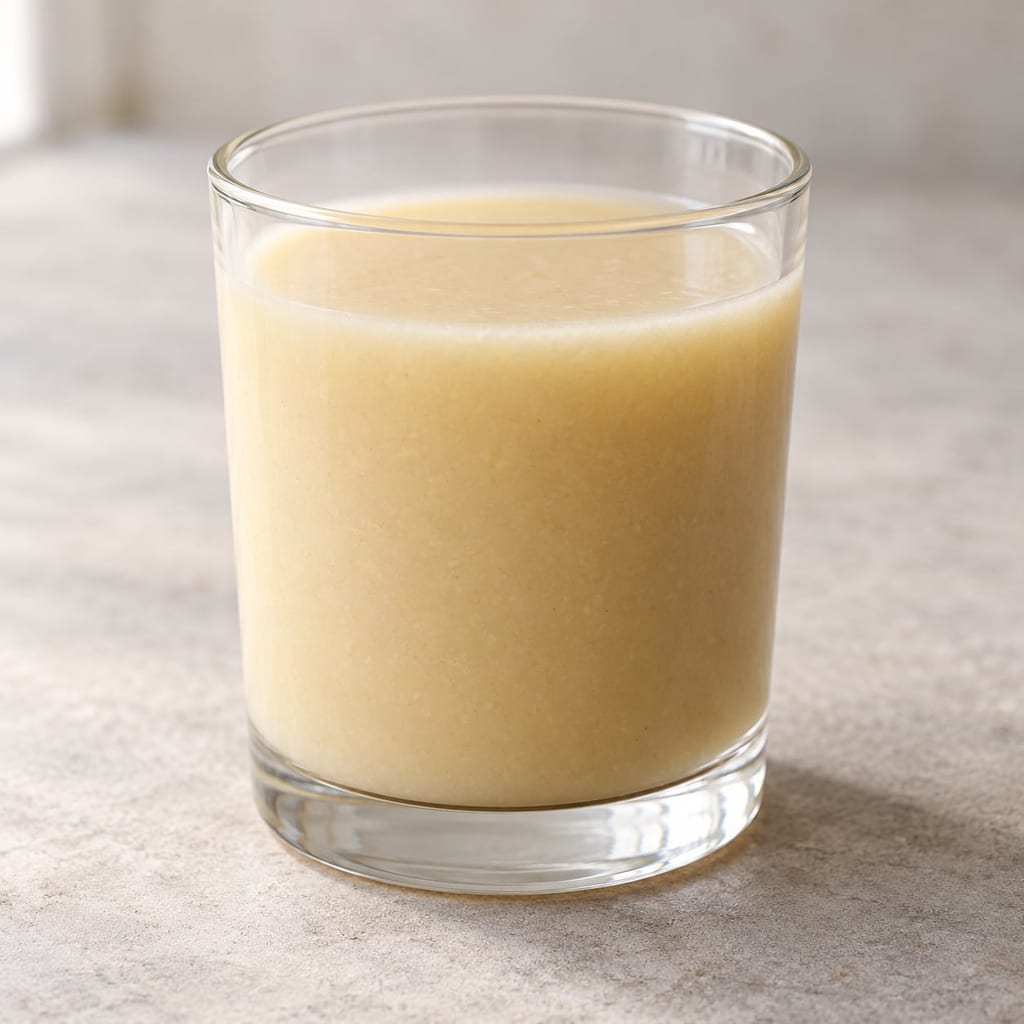
Kyrgyz Bozo is a mixed-fermented cereal drink made with ground grits, sprouted-wheat ugut and carried-over starter. This registry preparation leaves cereal selection, water and starter allocation unresolved.

A documentary entry on Latvian rye-bread kvass, preserved from a modern Latvian rye collection. It records a food tradition, not a home-fermentation method.
A documentary account of Zimbabwean mahewu and one producer's formula. Its quantities exceed the stated vessels, and research does not validate it as a safe home method.
No community contributions have been published for this entry yet.
Sign in to contribute. Published comments and photos are free to read.
Journal of Agriculture and Biomedical Sciences, University of ZambiaInspiration · Process · Location · Safety
Optimization of the Production Process and Nutritional Composition of Zambian Munkoyo and Chibwantu Non-Alcoholic BeveragesChibwantu 1 is made from 1 kg maize grits in 10 L water; the standardized process prepares a root extract from 100 g or 150 g shredded root in 2 L water, cooks for 60 minutes, cools to 50°C, hydrolyzes for 2 hours and ferments 72 hours.
The research formula is described as Chibwantu 1 from grits, distinct from Munkoyo made from meal and a separate 3:1 grit/meal formulation.
Cited in: A traditional drink with its own regional identity; Regional history; The significance of maize grits; The role of the roots; Ingredients; Equipment and preparation; Method; Why the temperature stages matter; Chibwantu versus munkoyo; Variations and modern processing; Serving and cultural use; Assessing quality; Safety, alcohol and storage
International Journal of Food Microbiology / PubMed CentralHistory · Location · Fermentation function
Microbial Community Structure of Three Traditional Zambian Fermented Products: Mabisi, Chibwantu and MunkoyoChibwantu is associated with central/southern Zambia; Munkoyo with Copperbelt/northern Zambia; root enzymes supply saccharification.
Cited in: A traditional drink with its own regional identity; Regional history; The significance of maize grits; The role of the roots; Microbiology of chibwantu; Ingredients; Equipment and preparation; Method; Why the temperature stages matter; What fermentation changes; Chibwantu versus munkoyo; Variations and modern processing; Serving and cultural use; Assessing quality
BMC Plant Biology / Springer NatureHistory · Fermentation function · Safety
Characterization and DNA Barcoding of Zambian Plant Species Used as Inoculum in the Traditional Fermentation of MunkoyoMunkoyo roots provide enzymes and microbes; prolonged fermentation can raise alcohol, so no zero-alcohol guarantee is made for this related root-based beverage.
Cited in: A traditional drink with its own regional identity; Regional history; Serving and cultural use; Safety, alcohol and storage
Clemson Cooperative ExtensionSafety
Cleaning and Sanitation for the HomebrewerHomebrew cleaning and sanitation are relevant to food-contact equipment, not process validation.
Cited in: The significance of maize grits; The role of the roots; Ingredients; Equipment and preparation; Method; Why the temperature stages matter; Chibwantu versus munkoyo; Variations and modern processing; Assessing quality; Safety, alcohol and storage
University of ZambiaMethod
University of Zambia — Optimisation of Munkoyo and Chibwantu production (2025)Optimisation of Munkoyo and Chibwantu production (2025)
pmc.ncbi.nlm.nih.govHistory
Traditional Zambian foodscapes and regional cereal beverages (2024)Traditional Zambian foodscapes and regional cereal beverages (2024)
pmc.ncbi.nlm.nih.govMicrobiology
Zambian munkoyo-root species identification (2025)Zambian munkoyo-root species identification (2025)
Cited in: Microbiology of chibwantu; What fermentation changes