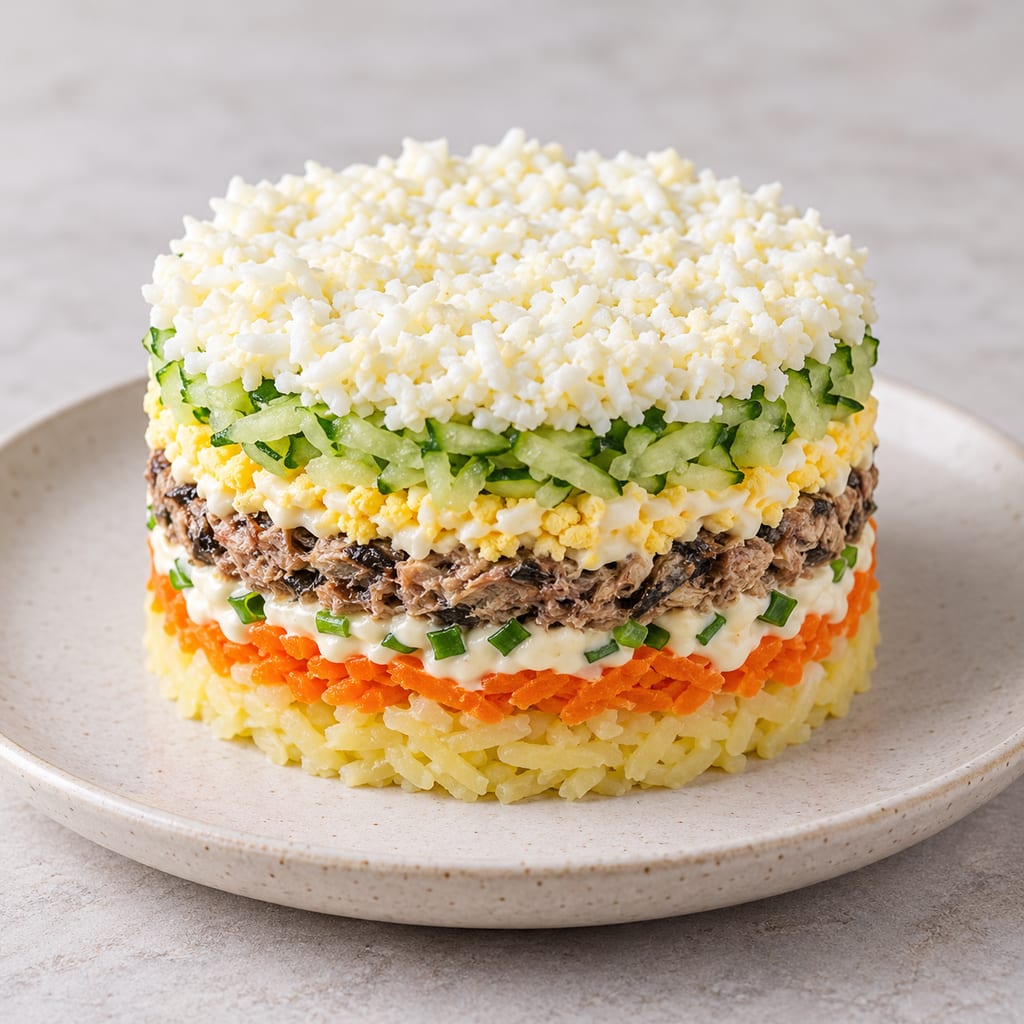
Layered salad with Latvian sprats
A Latvian Šprotes page’s layered salad uses one can of sprats in oil, grated vegetables and eggs with mayonnaise. The page gives no serving yield, can size or complete vegetable-cooking method.
 FermenteaWhere food goes to change
Modern method
Rye bread kvass
A documentary entry on Latvian rye-bread kvass, preserved from a modern Latvian rye collection. It records a food tradition, not a home-fermentation method.
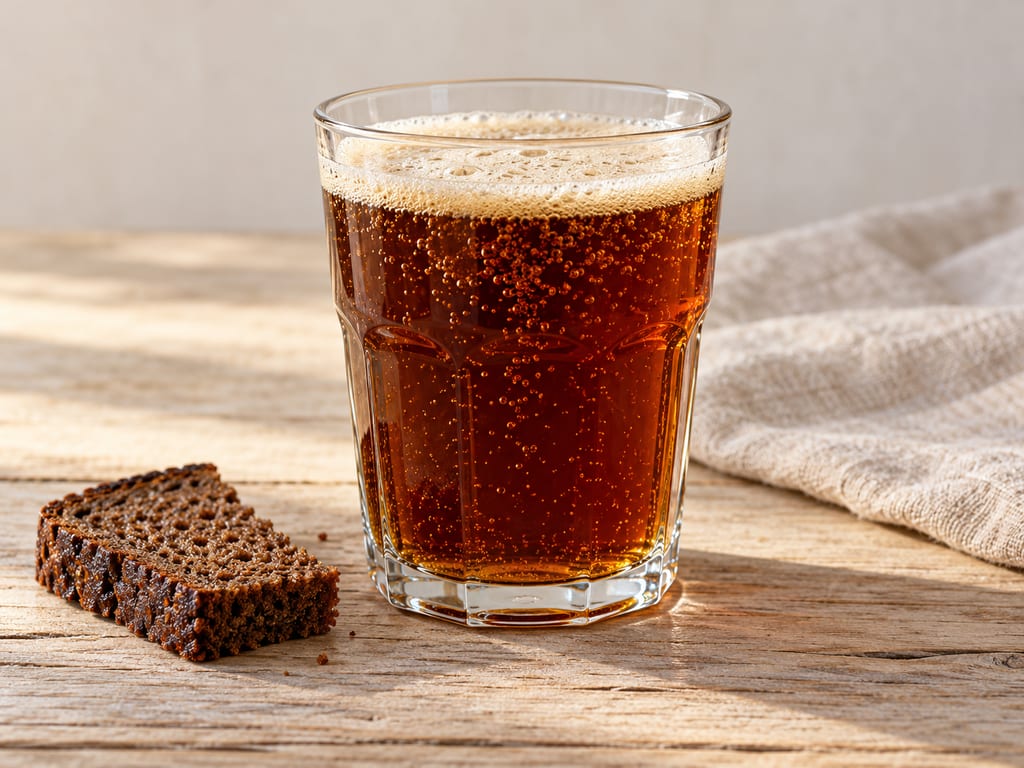
Latvian rye-bread kvass sits at the meeting point of two durable food traditions: dark rye bread and fermented cereal drinks. The drink is part of a wider family known across eastern and northern Europe, with related preparations often identified by local names such as Lithuanian gira. Similar names do not mean that every drink shares one formula or method.
Rye bread is a familiar part of Latvian food culture. It appears in everyday meals and in dishes that use bread as an ingredient, from soups and desserts to beverages. A drink made with rye bread carries its toasted grain character into a different form. Using dry bread or crusts also reflects a broader household practice of making stored bread useful beyond the loaf itself.
The Latvian Country Tourism Association's rye-recipe collection includes a preparation titled “Rye bread kvass.” It places this particular account within modern Latvian culinary documentation. The collection also describes kvass as an old drink, but it does not provide a date for the exact formula or establish one village as the point of origin.
The beverage's wider history is regional. Kvass has long been made in eastern Europe, but a single invention date or exclusive national origin is not established by the Latvian recipe. The careful distinction is between a documented Latvian preparation and a claim that the drink began in one place or at one moment.
The cited Latvian collection records a rye-bread infusion that is sweetened and fermented with baker's yeast. This entry preserves that broad identity, the Latvian source attribution and the cultural relationship between rye bread and kvass. It is deliberately presented as documentary context rather than as a set of household directions.
The source's ingredient list identifies dry rye bread or crackers, water, brown sugar and baker's yeast. The public account omits its quantities and production sequence. In particular, a confusing or incomplete amount should not be repaired by guessing, and details from other kvass recipes cannot be silently substituted into this Latvian record.
The original source describes visual changes during fermentation and a later bottle stage. Those details are part of the historical record, but they are not reproduced as instructions here. The same source warns that pressure builds in the firm-corked bottles. It does not give a validated endpoint, pressure rating, measured pressure or a tested control for that stage.
This distinction matters for a food record: describing what a source says is different from recommending that a reader repeat it. A public page can preserve the source and cultural context while withholding an unsupported operation that could create a physical hazard.
The collection names the drink as rye bread kvass. The word kvass refers to the beverage, while rupjmaize is Latvian dark rye bread; rupjmaizes kvass describes a bread-based version. These names help distinguish the documented subject from commercial drinks that may use extracts or malt rather than baked bread.
The source's ingredient list points to rye crackers, bread crusts or dry slices, water, brown sugar and baker's yeast. The bread is the defining flavor source, while the water carries soluble bread compounds into the drink. Added sugar is fermentable material, and yeast is the organism associated with the source's fermentation description. This public record names those components without reproducing their quantities or combining them with amounts from another recipe.
The source expresses the bread amount as a count of pieces without specifying piece dimensions or weight. That makes the original quantity difficult to interpret as a reproducible mass. The ambiguity is part of the documentary record, not a reason to silently replace it with a guessed gram amount.
Other kvass recipes may add raisins, honey, spices or malt. Those ingredients do not appear in the source's core list as preserved here. They belong to other versions and should not be blended into this entry merely because they occur in a related beverage.
A bread-based kvass begins from baked grain rather than a mash of raw or malted cereal. Toasted rye bread contributes an already-developed flavor profile: darker crust aromas, browned notes and the character of the loaf. Water can carry soluble sugars and flavor compounds out of the bread, while much of the bread's structure remains insoluble.
This difference matters when comparing bread kvass with beer or malt-based drinks. Brewing malt can supply enzymes that convert starch into sugars during mashing. A recipe based on fully baked bread does not automatically provide the same enzyme activity, and ordinary baker's yeast does not turn all rye starch into fermentable sugar on its own. The Latvian source does not describe a malt conversion stage, so this entry does not claim that its bread starch is fully fermented.
The source's yeast reference points to alcoholic fermentation, in which sugars can produce ethanol and carbon dioxide. That is distinct from claiming a lactic fermentation. The source does not analyze acidity or identify a mixed microbial culture, so the record describes a yeast-fermented beverage rather than assigning an unsupported lactic-bacterial role.
Flavor and appearance differ with the bread and with other recipe choices. A dark loaf or more toasted character can influence the color and aroma of the infusion, while sugar and fermentation influence the balance between sweetness and yeast-derived flavors. These observations help explain why two beverages called kvass may not look or taste the same.
The Latvian rye collection gives a contemporary written record of this preparation. Its description of kvass as an old drink is broad contextual language; it is not a date for the formula printed in the booklet. The booklet supplies no medieval manuscript, named inventor or village origin for this particular recipe.
The broader history of kvass spans multiple communities and places. Similar cereal beverages are known under different names and may be built from different ingredients. A shared family resemblance supports comparison, but not a claim that Latvian, Russian, Lithuanian or other preparations are interchangeable or have one exclusive origin.
The location attached to this entry is Latvia because the cited collection documents a Latvian recipe. It does not identify a narrower district, household or producer for the particular method. The page therefore keeps the place claim at country level.
This cautious treatment preserves what the sources establish: a modern Latvian collection records a rye-bread kvass preparation, and the drink belongs to a larger regional food family. It leaves unresolved details unresolved rather than filling them with the histories or procedures of neighboring traditions.
Baked rye contributes flavor, color and soluble material to a water-based drink. The loaf has already undergone baking, so this is not the same process as mashing malted grain for beer. Bread can provide toasted and browned aromas, along with sugars and other soluble compounds that enter an infusion.
The intensity of the bread character depends on the bread itself and how deeply it was toasted in the source's description. Darker rye bread and more pronounced roasting can produce a deeper brown appearance and a stronger crust-like aroma. These are descriptive relationships; the source does not standardize a roast level or define a visual endpoint.
Sweetness is associated with sugar added to the strained infusion in the documented recipe. The remaining sweetness of any finished beverage would depend on how much fermentable sugar yeast consumes. Since the source does not measure residual sugar or alcohol, this entry does not promise a particular sweetness, strength or alcohol level.
Rye bread kvass can be described as a beverage with toasted grain, mild sweetness, yeast character and possible effervescence. These are broad sensory features of the drink family and should not be used as a test of fermentation completion or safety.
Yeast uses fermentable sugars and can produce ethanol and carbon dioxide. How far that process proceeds depends on the ingredients and conditions. A source that gives no measured alcohol content cannot establish that its fermented drink is alcohol-free, and a short description of visible activity cannot establish the final composition.
Carbon dioxide may remain in a sealed container. If fermentation continues after sealing, pressure may rise. The Latvian source itself warns of pressure in its firm-corked bottle stage. Its visual cues and overnight refrigeration are not validated pressure measurements or proof that fermentation has stopped.
Penn State Extension's general guidance for bottled fermented beverages notes that a processing step that impedes or stops fermentation is needed. That guidance is not validation of this specific Latvian recipe; it supports the narrower point that an uncontrolled active ferment should not be treated as a safe bottled product simply because it was chilled.
Colorado State University Extension's kombucha guidance is another beverage-specific comparison: it warns that continued fermentation in sealed containers can accumulate carbon dioxide and cause an eruption or explosion. Kombucha is not kvass, and its process cannot be used to supply missing controls for this recipe. The parallel illustrates the physical pressure issue only.
No recipe-specific safe bottling method, pressure target, alcohol endpoint or shelf-life validation is present in the Latvian source. This page therefore does not give production or storage instructions and does not suggest that commercial kvass methods can be transferred to a home preparation.
Kvass is a family name used for drinks with different ingredients and production choices. Some preparations start with rye bread, while others use malt, grain extracts or combinations of ingredients. Lithuanian gira and other neighboring cereal drinks share broad affinities with kvass while retaining their own names and local contexts.
Latvian commercial products are not necessarily equivalent to the brief household recipe recorded in the rye collection. Producers may use rye malt, extracts or other ingredients. They may also control fermentation, filtration, carbonation and stabilization in ways not documented for the household preparation.
Commercial bottling and a traditional domestic recipe are different kinds of evidence. A retail product's storage behavior does not prove that a small batch made by another process will behave the same way. This page keeps those versions separate rather than blending their ingredients or controls into a single imagined formula.
A second Latvian household recipe cited as inspiration uses a different collection of ingredients and a more explicit schedule. It demonstrates variation within the broader beverage family, but it is not evidence that its measurements can fill omissions in the Latvian source documented here.
Rye-associated kvass is served as a drink in Latvia and appears alongside a wider food culture in which rye bread has a prominent role. It can accompany everyday meals, bakery foods and savory dishes, or be served on its own as a refreshment. The cited sources do not establish one required pairing for this particular recipe.
The drink's toasted bread notes make a cultural and culinary connection with Latvian rye loaves. That relationship can be discussed without claiming that every commercial or household kvass tastes the same. Bread type, roasting, fermentation choices and ingredients all vary.
Latvian bakeries and beverage makers continue to produce rye-associated kvass. Contemporary production shows that the drink is part of present-day food culture as well as a subject in modern collections of rye recipes. It does not, by itself, establish the safety of a separate uncapped or home-fermented batch.
This record is intended to make the source and cultural context legible while maintaining a clear boundary around the unsafe bottle instruction. It documents a food tradition; it does not recommend preparing, bottling, storing or consuming a batch by the source's unvalidated method.
Recipe method documented in an English-language Latvian rye recipe collection. The collection describes kvass as an old drink but does not date this recipe.
Scaling: source batch only
The source warns that pressure builds in firm-corked bottles but gives no validated endpoint, rated bottle, measured pressure or control.
Hazard sourceYeast fermentation may produce ethanol; the source does not measure alcohol content for this method.
Hazard sourceNo validated recipe-specific control for sealed-bottle pressure was found. This entry omits the bottling instructions and is not a home preparation method.
Control sourceThis page preserves cultural and source context; it is not instructions for making or bottling kvass.
The source describes firm-corked bottles and warns that pressure builds. It supplies no validated endpoint or pressure control; that bottling procedure is omitted.
The recipe does not measure alcohol content or establish a safe shelf life.
Baker's yeast — Primary fermenter
Refrigeration slows fermentation. The source states the drink does not keep long but provides no specific duration.
The Latvian Country Tourism Association documents this rye-bread kvass recipe; it gives no narrower locality or origin claim.
A Latvian Šprotes page’s layered salad uses one can of sprats in oil, grated vegetables and eggs with mayonnaise. The page gives no serving yield, can size or complete vegetable-cooking method.
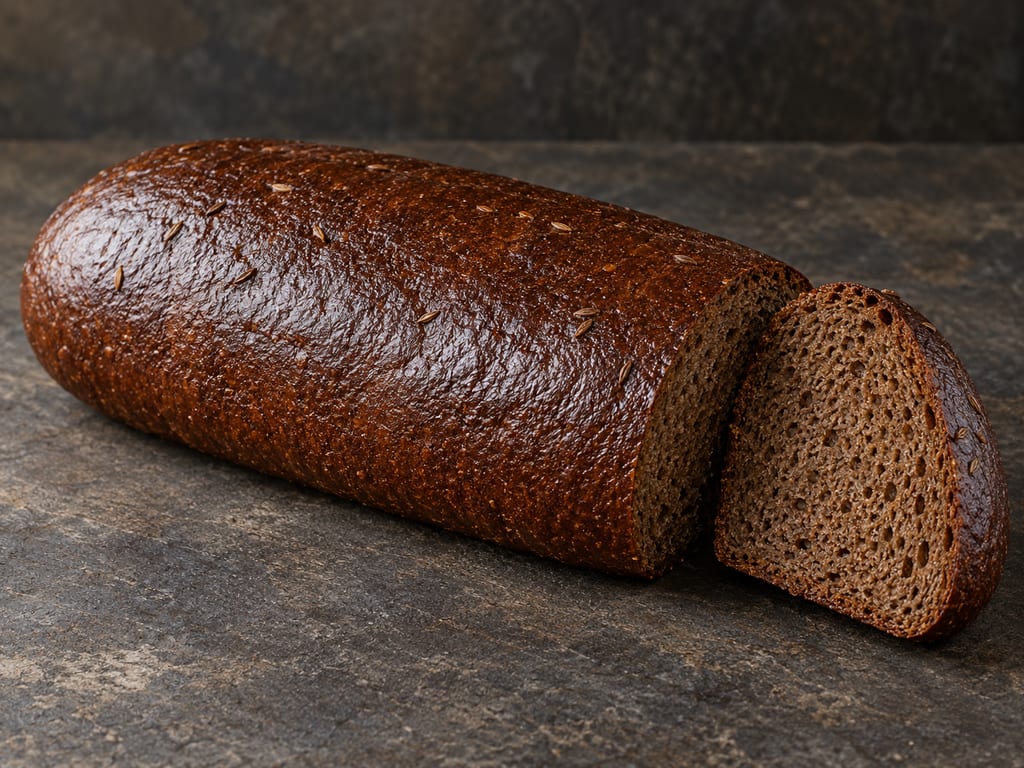
Latvian naturally leavened rye bread made with a hot-water scald of part of the flour, unfermented rye malt and caraway; shaped as long loaves and hearth-baked.
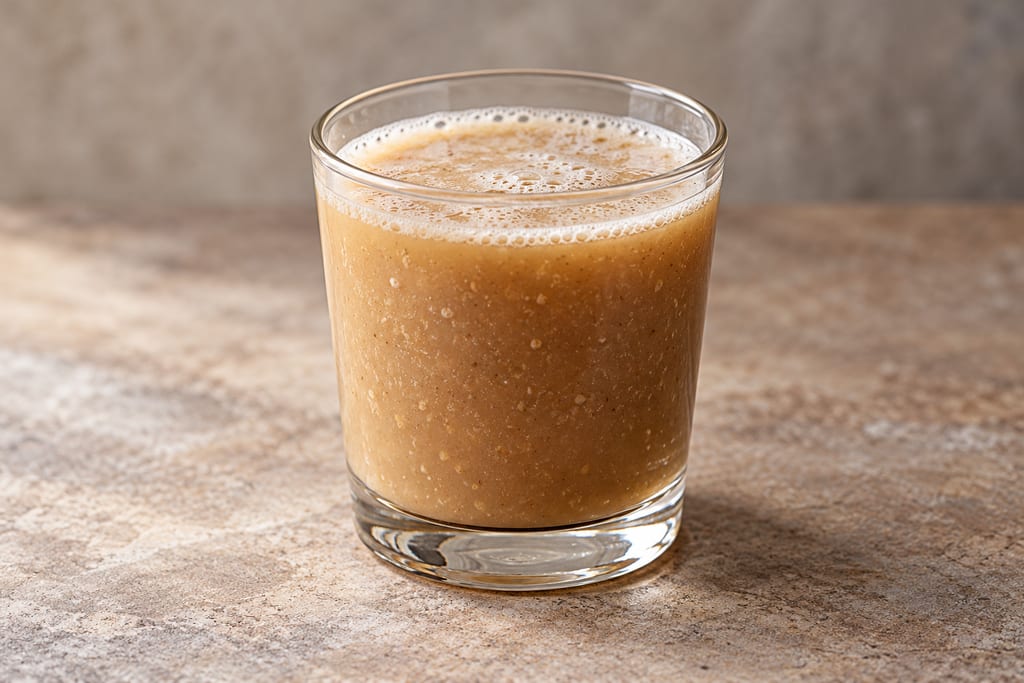
A thick, faintly fizzy Ethiopian cereal drink in which a wheat dough is fermented, roasted dark, then fermented a second time with barley malt into a drinkable slurry.

Hi-ire is the Japanese heat treatment of finished sake, about 65 °C, used to stop re-fermentation and souring. Brewers applied it from the Muromachi era.
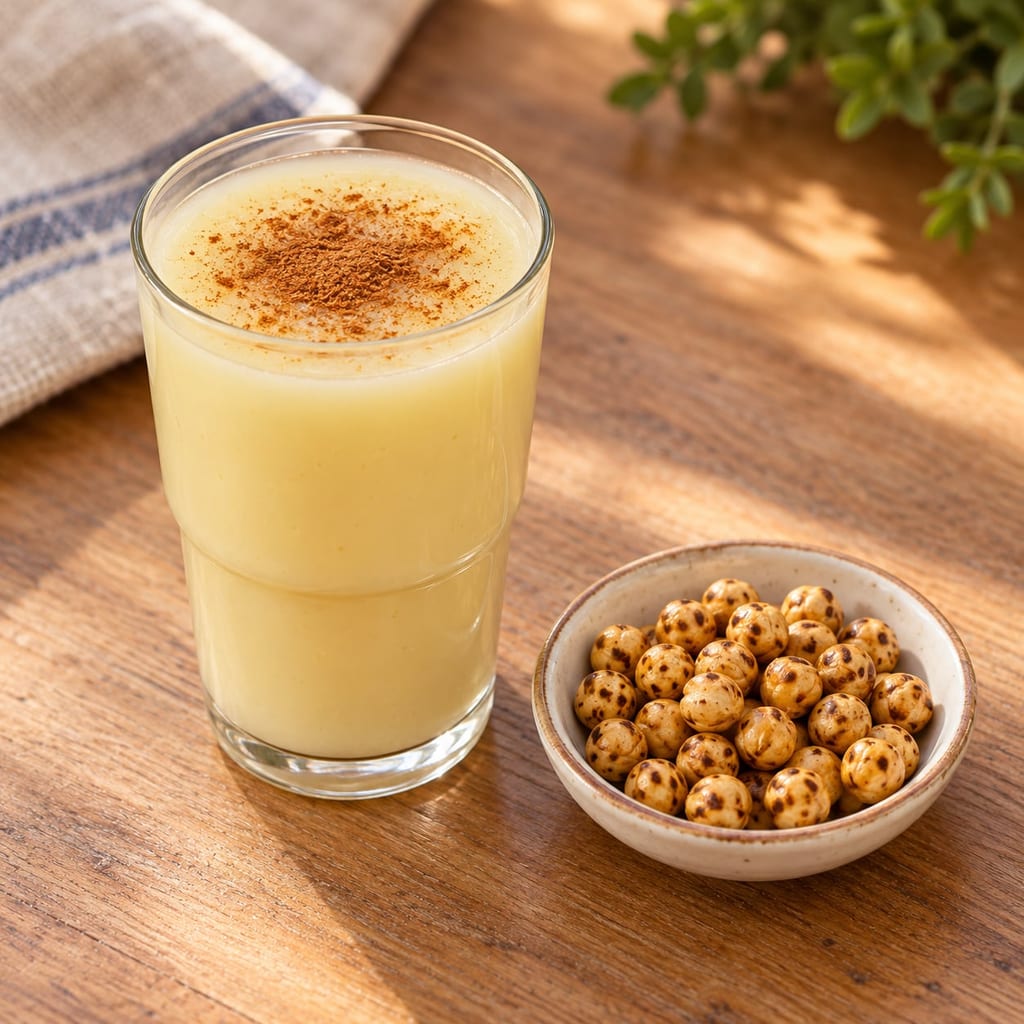
A thick, pale Turkish winter drink of bulgur and rice cooked to a soft cereal base, sweetened with grape molasses and fermented for two days.
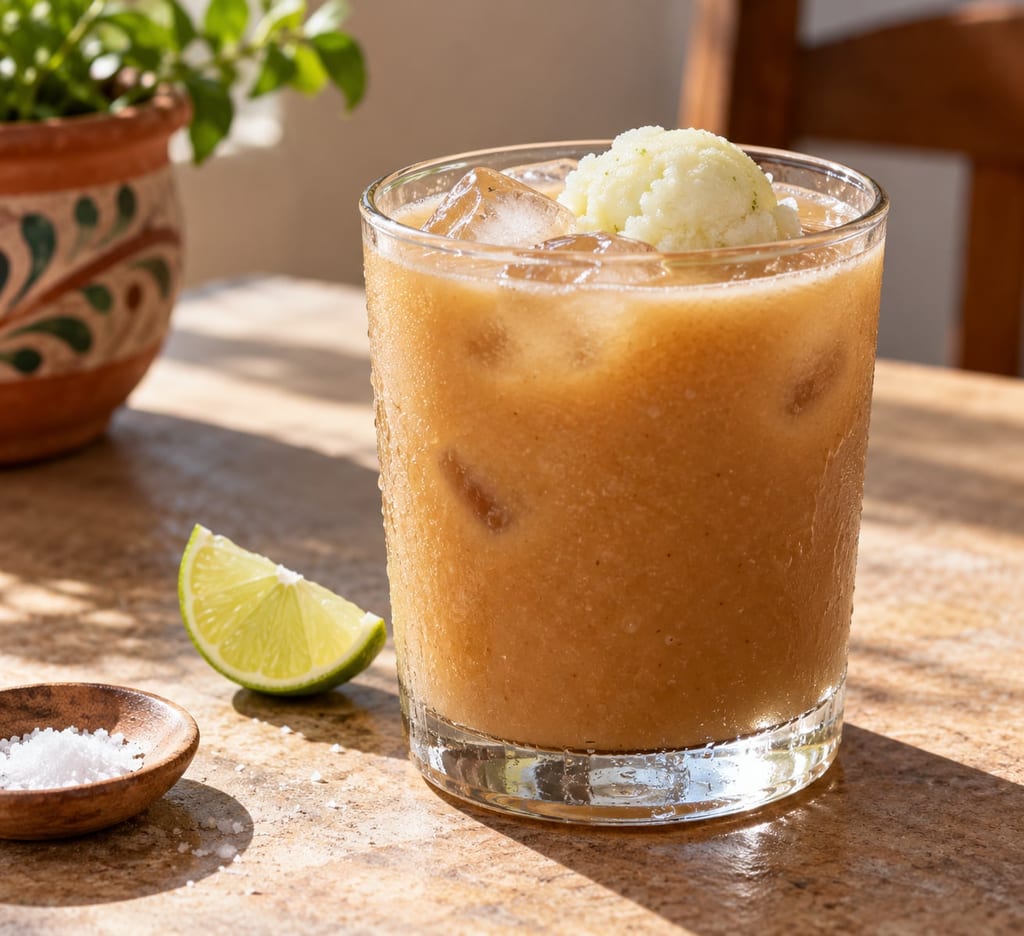
A tart, lightly fermented drink of Jalisco: nixtamalized maize masa cooked with piloncillo and limed, then diluted over ice and salted at serving.
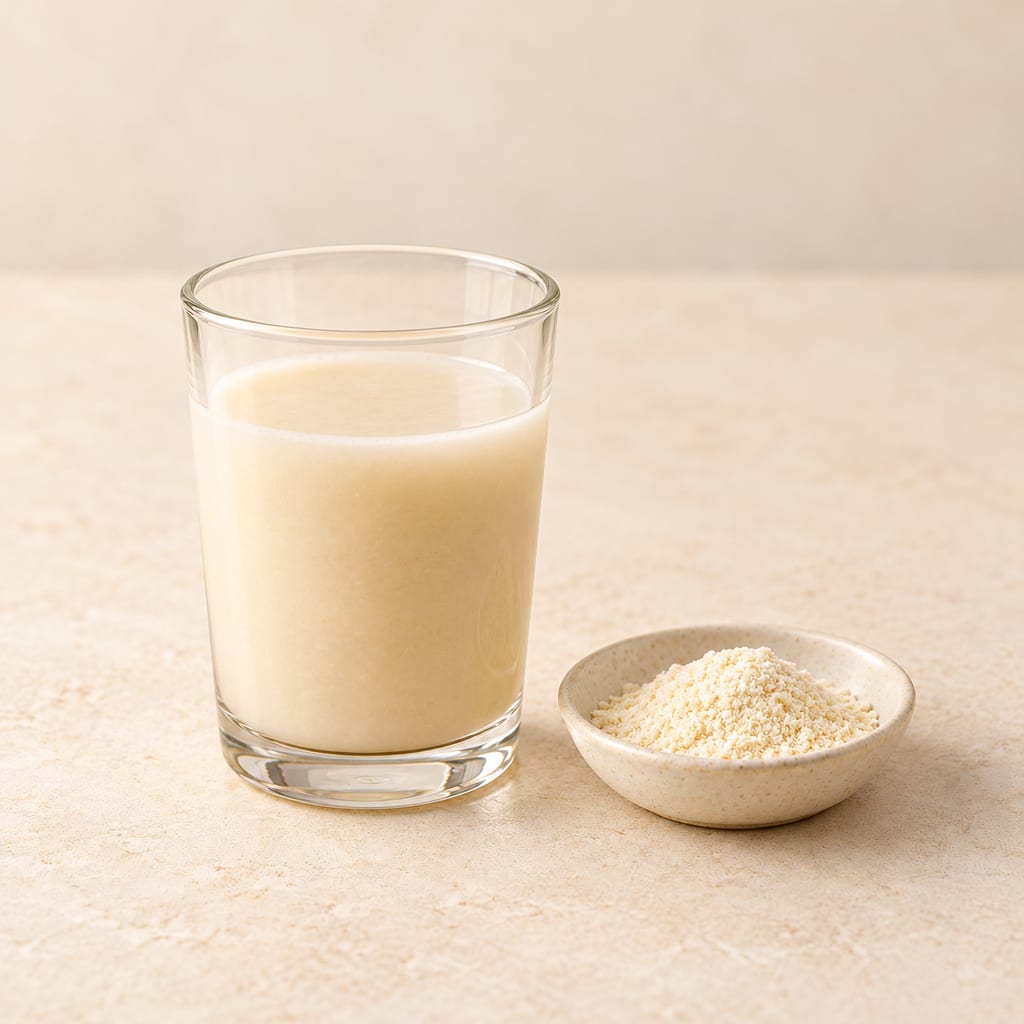
A Ugandan maize drink remade with a defined two-strain starter: roasted maize dough boiled to porridge, cooled and fermented under controlled conditions.
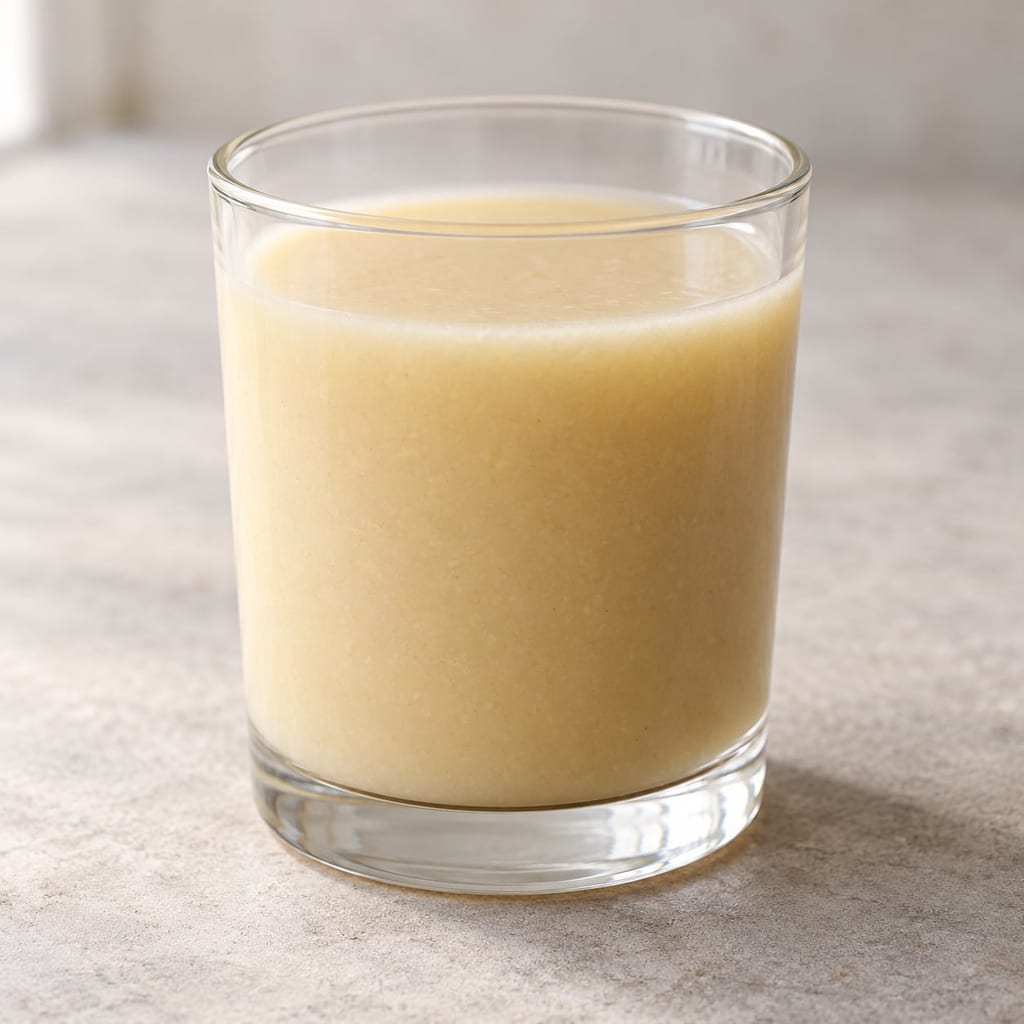
Kyrgyz Bozo is a mixed-fermented cereal drink made with ground grits, sprouted-wheat ugut and carried-over starter. This registry preparation leaves cereal selection, water and starter allocation unresolved.
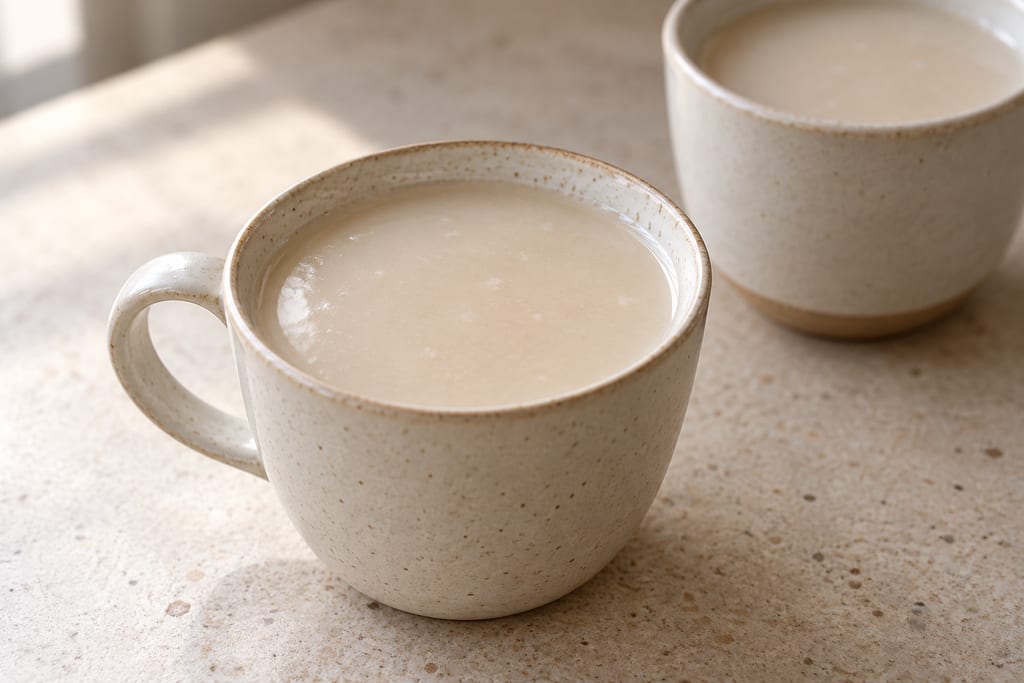
A documentary account of Zimbabwean mahewu and one producer's formula. Its quantities exceed the stated vessels, and research does not validate it as a safe home method.
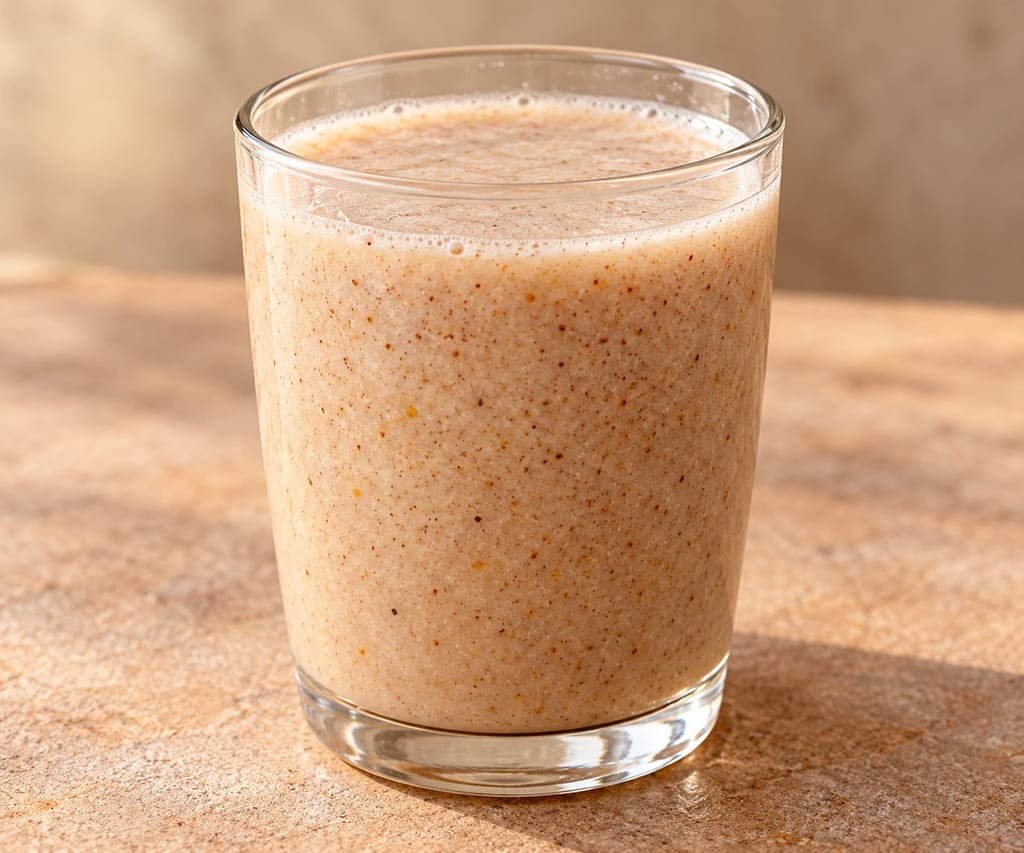
A thick, sweet-sour Malawian drink of boiled maize flour into which sorghum flour is stirred before an overnight spontaneous fermentation.

Soft, spreadable Calabrian pork sausage made with a great deal of red chilli and fatty pork, stuffed into natural casings, sometimes smoked and matured while staying soft.

A way to add independent temperature logging to an existing food dehydrator without changing its built-in controls or protections. It is a monitoring method, not a rewiring plan.

Pleurotus cystidiosus is the abalone mushroom, a cultivated oyster-type fungus with dark brown caps that grows more slowly and is more demanding than other Pleurotus species.

A dark, balanced vinegar from Emilia-Romagna made by combining cooked or concentrated grape must with wine vinegar, then acetifying and refining it in wood under a protected specification.

A living dairy inoculum that starts controlled cream fermentation, developing acidity and aroma before sour cream or cultured butter is finished.

A small electric incubator holds jars at a selected temperature for yogurt and other documented warm food preparations. Controls, capacity and vessel arrangement vary by model.

Adygean salt is a seasoned table salt associated with Adygea and the wider North Caucasian culinary tradition. Salt is blended with garlic and a variable selection of herbs and spices; the exact mix depends on the named style and maker.

The African Caesar-group mushroom, Amanita masasiensis, is a wild ectomycorrhizal species of central and southern African woodlands, eaten locally. The genus contains deadly poisonous species, so identification needs care.
No community contributions have been published for this entry yet.
Sign in to contribute. Published comments and photos are free to read.
Lauku Ceļotājs / Latvian Country Tourism Association
Rye bread kvassCited in: Rye bread and the kvass tradition; What this entry preserves; The names and ingredients in the source; Bread infusion and malt drinks; Historical description and geographic limits; Rye, extraction and flavor; Fermentation in context; Serving and cultural setting
beetsandbones.com
How to Make Russian Bread Kvass | Beets & Bonesen.wikipedia.org
Kvass - Wikipediaancestralkitchen.com
Russian Bread Kvass - Ancestral Kitchenlatvianeats.com
Rye Bread – Latvian Eatshomebrewersassociation.org
How to Make Beet Kvass | American Homebrewer's Associationtheryebaker.com
Latvian Coarse Rye/Rudzu Rupjā Maize - THE RYE BAKERbeerandbrewing.com
Kvass: The True Liquid Bread | Craft Beer & Brewingtop! LatviaInspiration
Rye Bread Kvass DrinkMeasured local variation
Cited in: The names and ingredients in the source; Bread infusion and malt drinks; Rye, extraction and flavor; Regional and commercial variations
DzērveneInspiration
Mājas rupjmaizes kvassLatvian-language household variation
Cited in: Regional and commercial variations
Liepkalni BakeryInspiration
KvassContemporary commercial rye-bread kvass
Cited in: Regional and commercial variations; Serving and cultural setting
Latvian Country Tourism AssociationInspiration
Rye RoadLatvian rye food and beverage traditions
Cited in: Rye bread and the kvass tradition; Historical description and geographic limits; Serving and cultural setting
Penn State Extension
Food for Profit: Home-Style Kitchen Food Processing (Limited Food Establishments)Cited in: Fermentation in context
Colorado State University Extension
Understanding and Making KombuchaCited in: Fermentation in context