
Latvian rye-bread kvass
A documentary entry on Latvian rye-bread kvass, preserved from a modern Latvian rye collection. It records a food tradition, not a home-fermentation method.
 FermenteaWhere food goes to change
Traditional method
Latvian scalded rye bread
Latvian naturally leavened rye bread made with a hot-water scald of part of the flour, unfermented rye malt and caraway; shaped as long loaves and hearth-baked.
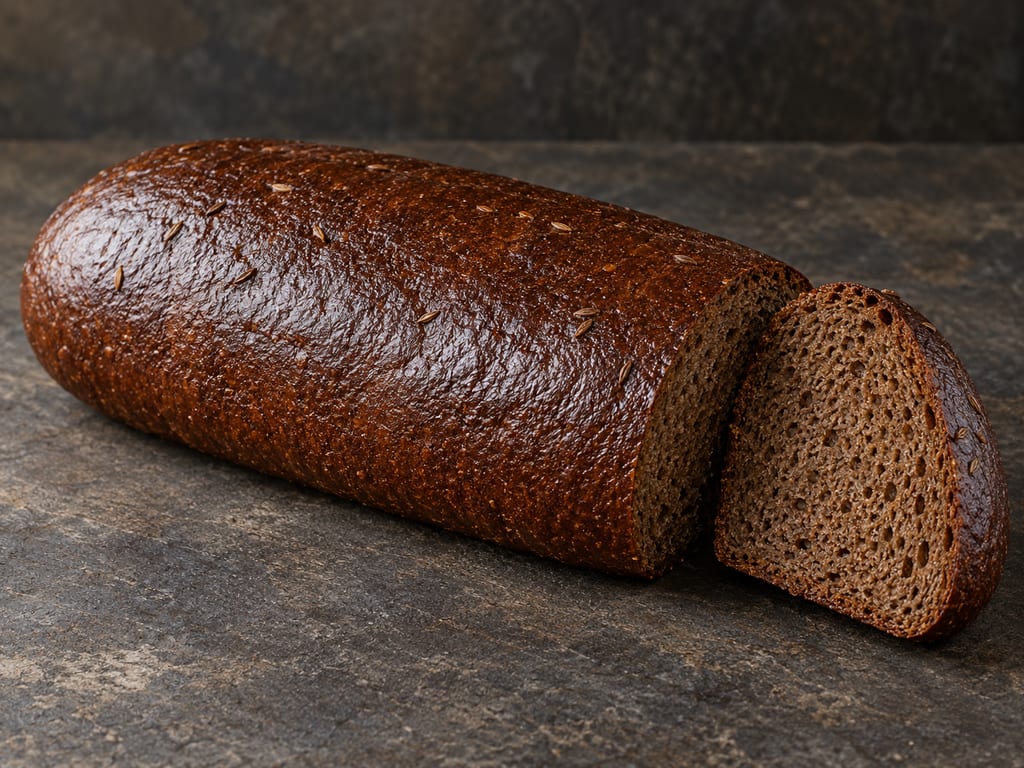
The European Union registers salinātā rudzu rupjmaize as a Traditional Speciality Guaranteed (TSG), not as a protected geographical indication (PGI). Its product specification describes a naturally leavened Latvian rye bread, with the scalded flour and final dough fermented in separate stages. Caraway and unfermented rye malt contribute to the characteristic aroma and sweet-sour taste.
The measured specification is a large production batch: it begins with 3 kg of rye flour for the scald and uses another 7–10 kg in the final dough. Its approximate yield is 15–20 kg of dough and 13–18 loaves after baking loss. This entry presents the specification-sized batch; it is not a tested household-scale adaptation or scaled-down formula. The specification requires hearth baking, so the method needs an oven that can reproduce its stated hearth temperatures.
The specification gives ranges for water, starter, flour, sugar and salt rather than one fixed formula. The recipe preserves those ranges. Its long, warm stages depend on temperature control; cool the scald before adding starter, and follow the stated fermentation windows. The source's home equipment notes are not a replacement for the defined hearth-baking process.
Flour is raw before baking. Do not taste the flour or dough, and wash hands and equipment after handling it. The source does not provide an internal loaf temperature or storage limit, so this method adds neither.
The EU specification identifies the bread as Latvian and describes a naturally leavened rye loaf with a scalded portion of flour, caraway, unfermented rye malt and a sweet-sour crumb. It notes that the term salināt was in common use in western Latvia in the eighteenth century; this linguistic attestation does not establish the first date for the complete recipe.
Scaling: source batch only
Rye flour is raw flour and the dough is handled before baking.
Hazard sourceDo not taste raw flour or dough; wash hands, tools and work surfaces after handling, and bake the loaves fully.
Control sourceThis source batch is very large and requires a hearth oven that can reach the stated baking temperatures.
Do not add sourdough starter to the scald until it has cooled to the documented fermentation range.
The EU traditional speciality specification associates the named bread with Latvia; it does not establish one birthplace.
A documentary entry on Latvian rye-bread kvass, preserved from a modern Latvian rye collection. It records a food tradition, not a home-fermentation method.
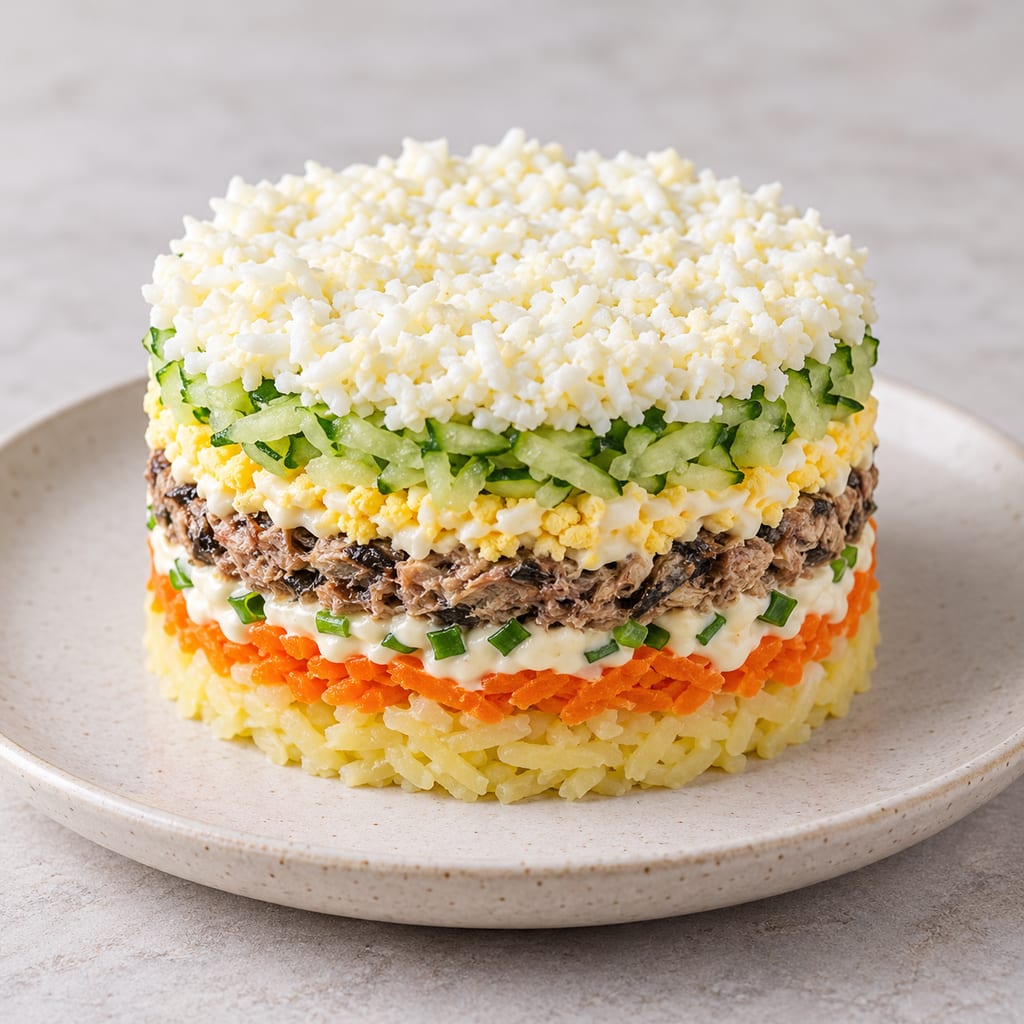
A Latvian Šprotes page’s layered salad uses one can of sprats in oil, grated vegetables and eggs with mayonnaise. The page gives no serving yield, can size or complete vegetable-cooking method.
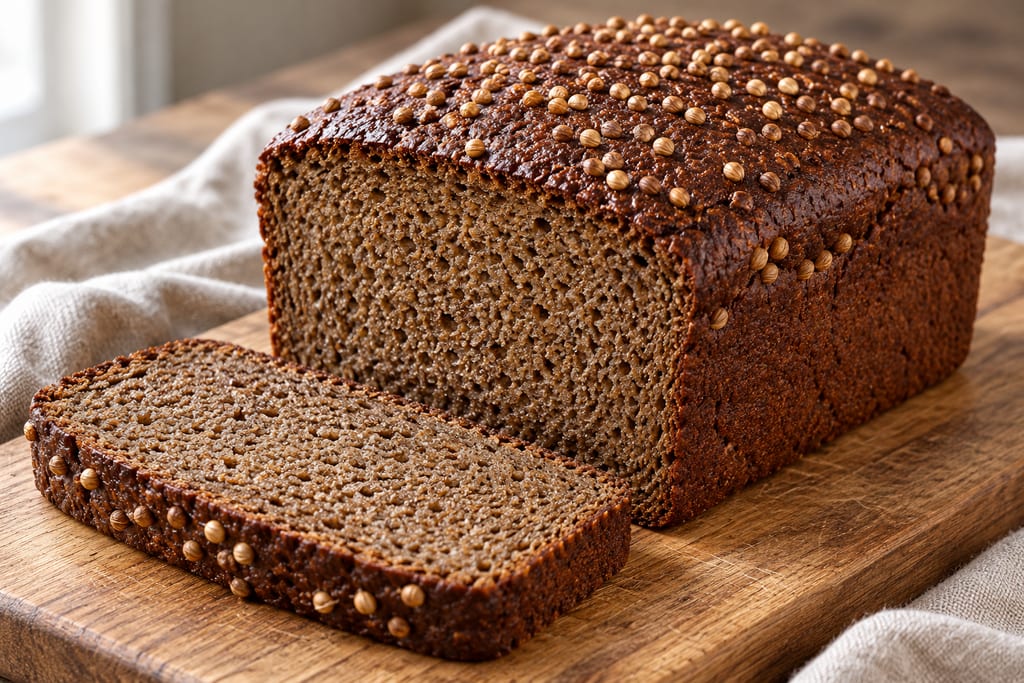
A dark rye sourdough with coriander and roasted barley-malt scald, based on Lily McCann's measured Borodinsk-ish home formula.
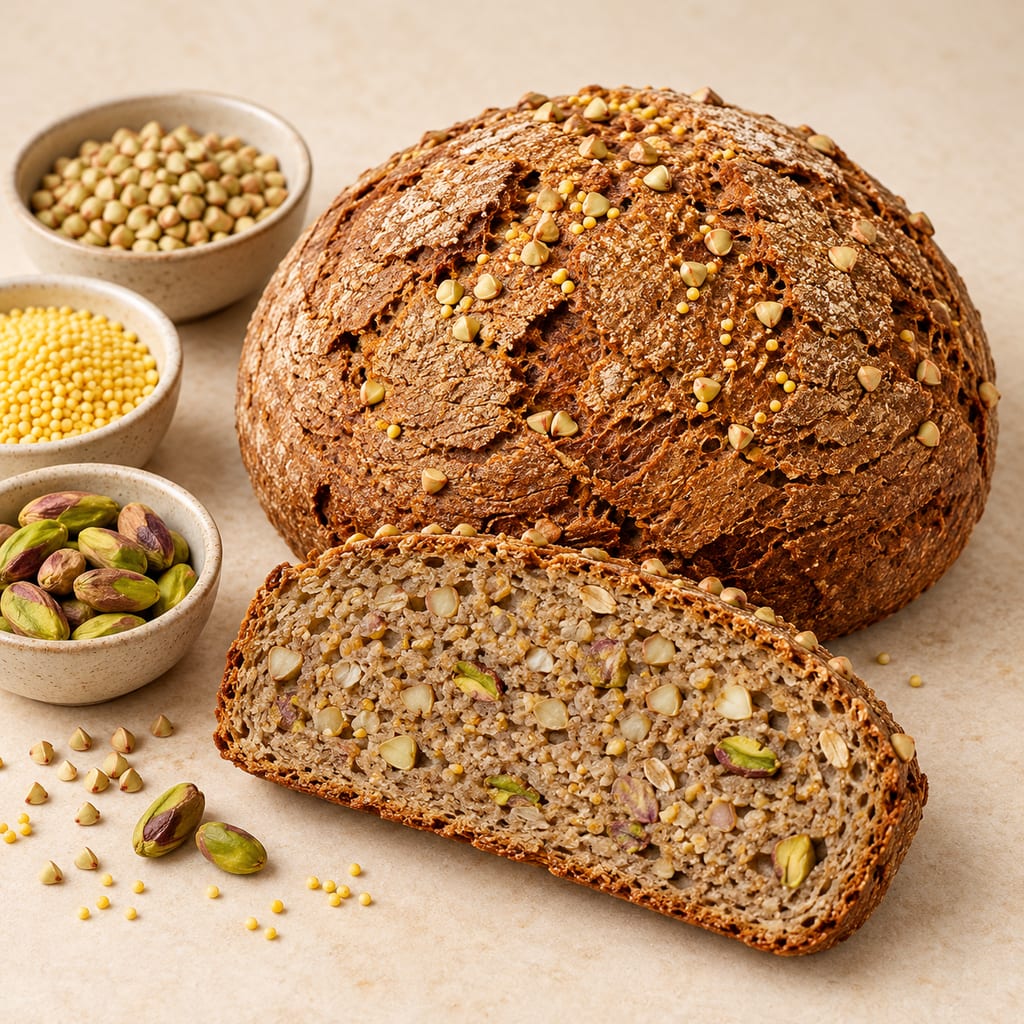
A gluten-free sourdough loaf of about 1 kg. A buckwheat and quinoa starter leavens a dough with cooked whole buckwheat groats, millet and a dark gluten-free bread mix, baked in a lidded pot.
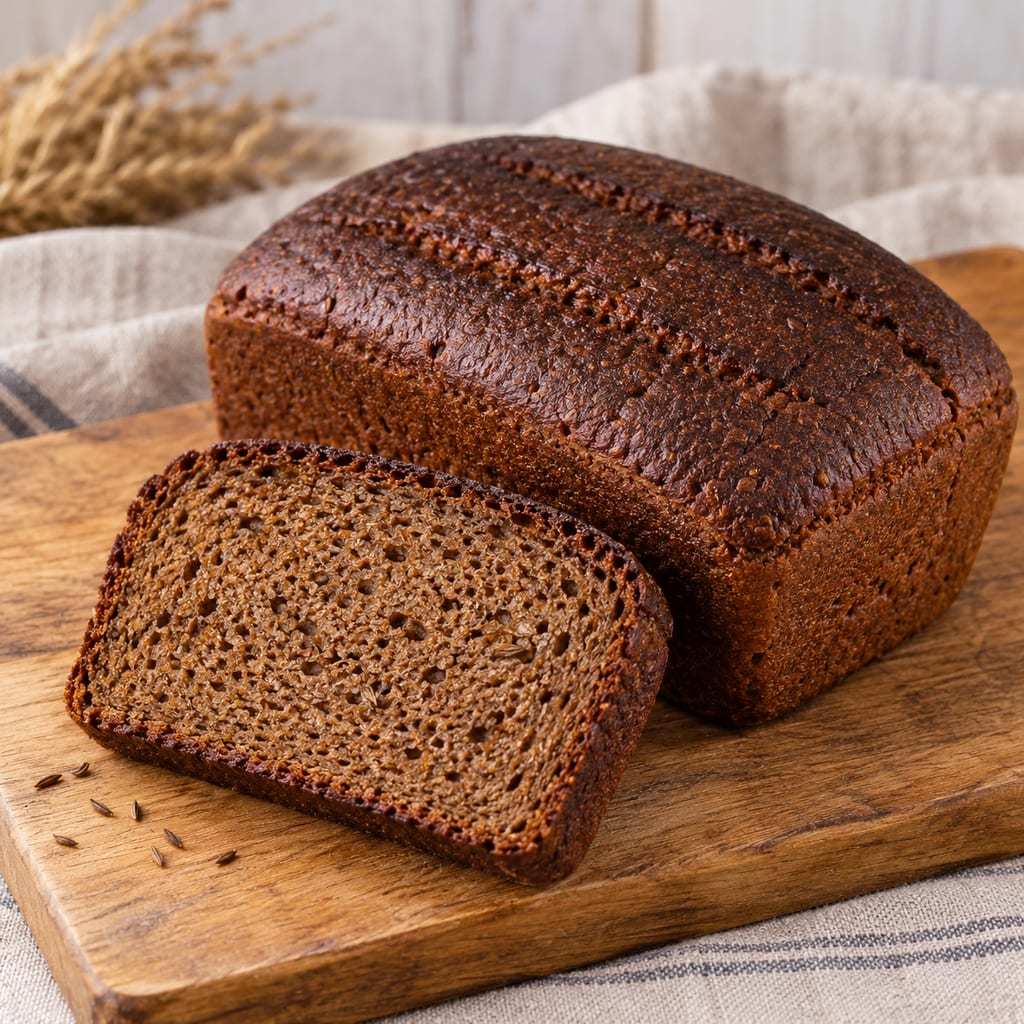
A Lithuanian dark rye loaf made with an overnight rye preferment, caraway, honey and sugar, then proofed in a loaf pan and baked in two stages.
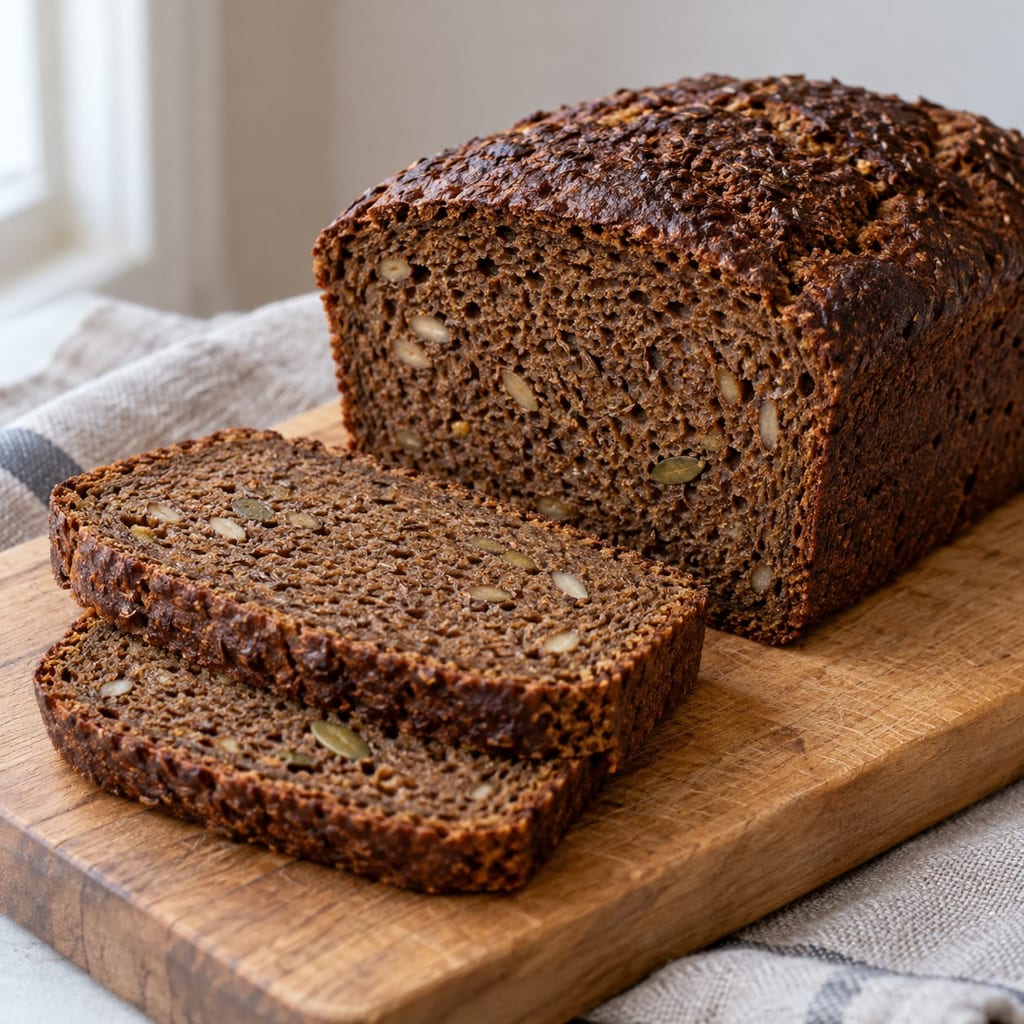
This Estonian rye loaf uses a sourdough preferment, a rye scald and soaked seeds, with a small amount of baker’s yeast. Two tins bake through a staged hot-to-moderate oven schedule.
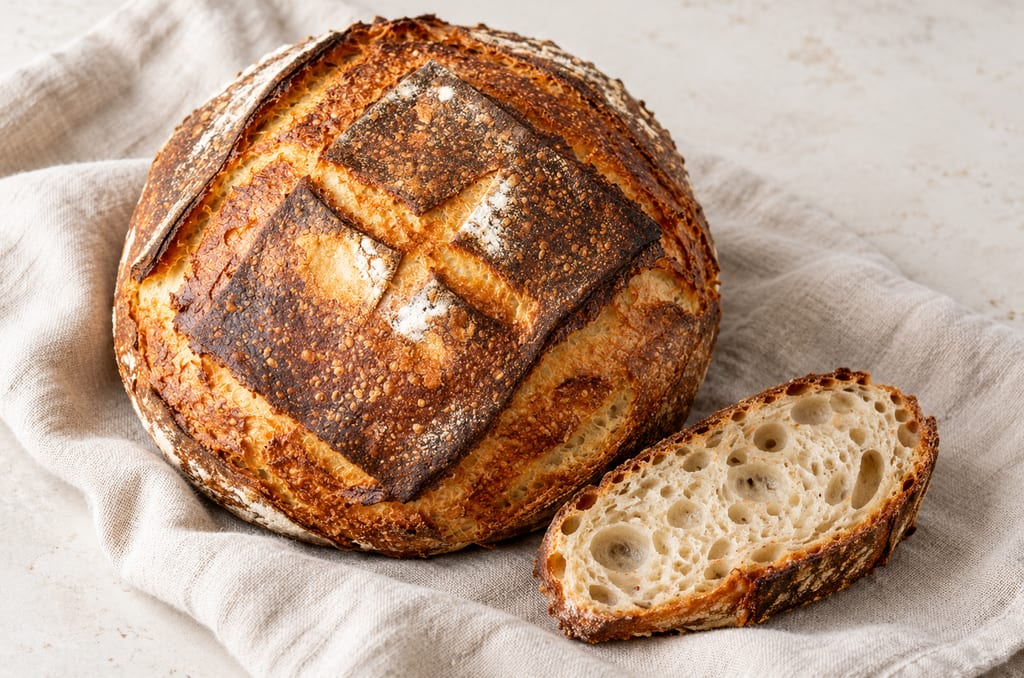
A ripe sourdough starter leavens this modern low-handling loaf. Three hourly folds organize the sticky dough before a long refrigerator rest, final proof and covered bake.
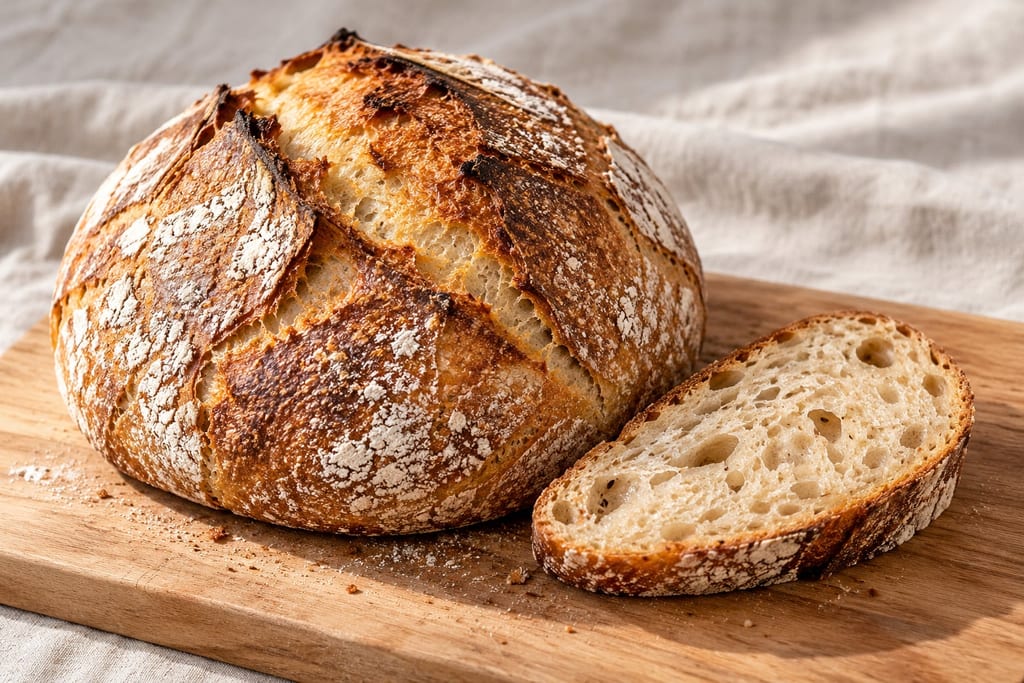
Two large French-style wheat loaves use unfed sourdough starter, whole-wheat flour, long room-temperature fermentation and a covered-pot bake.
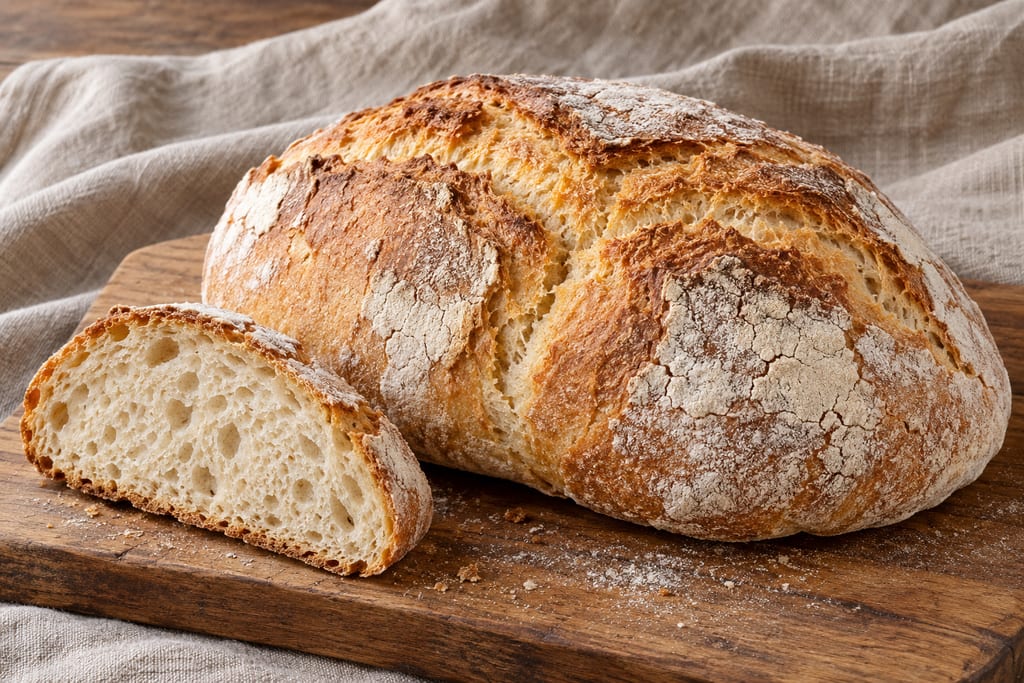
This home sourdough adaptation borrows Pan de Cea’s wheat-forward loaf and central fenda while using a domestic oven and a separately documented modern formula.
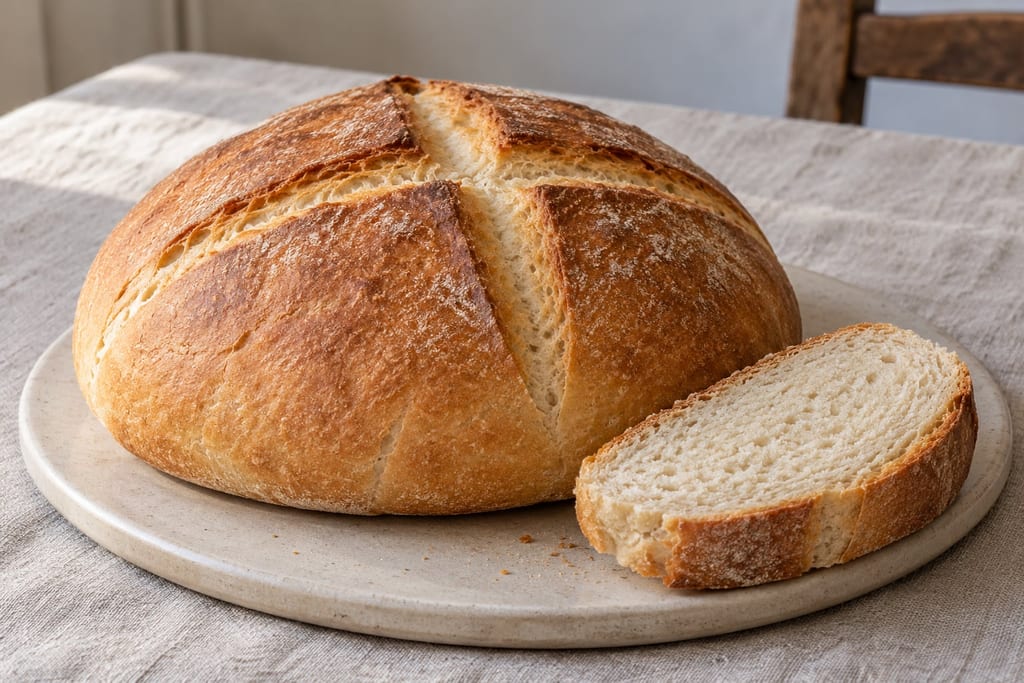
This household Pan de Cruz adaptation uses sourdough and a folded, tight-crumb wheat dough, marked with a cross and baked in a home oven.
No community contributions have been published for this entry yet.
Sign in to contribute. Published comments and photos are free to read.
European Commission, Official Journal of the European UnionMethod · Geography · History
Product specification of a traditional speciality guaranteed: Salinātā rudzu rupjmaizeThe current product specification gives the flour, caraway, water, unfermented malt, sourdough ferment, sugar and salt ranges; staged scald and fermentation temperatures and times; loaf shape and hearth-baking temperatures and duration.
The specification identifies the product as naturally leavened Latvian bread and does not use baker's yeast.
Cited in: A scalded Latvian rye loaf
Novada Garša, Latvian Rural Advisory and Training CentreMethod · History
Salināta rudzu rupjmaizeThe page reproduces a recipe attributed to Praktiskā mājturība (1931), including scald quantities and temperature, ferment amount and fermentation conditions, final dough ingredients and fermentation conditions.
The page reports a 15–20 kg dough yield and a 13–18 loaf range at about 1 kg each; it also describes 1915-era hearth baking and a 1–2 hour bake depending on loaf size.
Cited in: A scalded Latvian rye loaf
Latvijas kultūras kanons / Letonika.lvHistory · Geography
Rudzu maizeThe Latvian Cultural Canon describes rye bread and the traditional scalding of flour with boiling water, use of sourdough, hand kneading and long loaves; it records regional cultural context without a precise recipe.
Cited in: A scalded Latvian rye loaf
U.S. Food and Drug AdministrationSafety
Handling Flour Safely: What You Need to KnowFDA states flour is raw, can carry harmful bacteria, and raw flour or dough should not be tasted; hands and utensils should be washed after handling.
Cited in: A scalded Latvian rye loaf