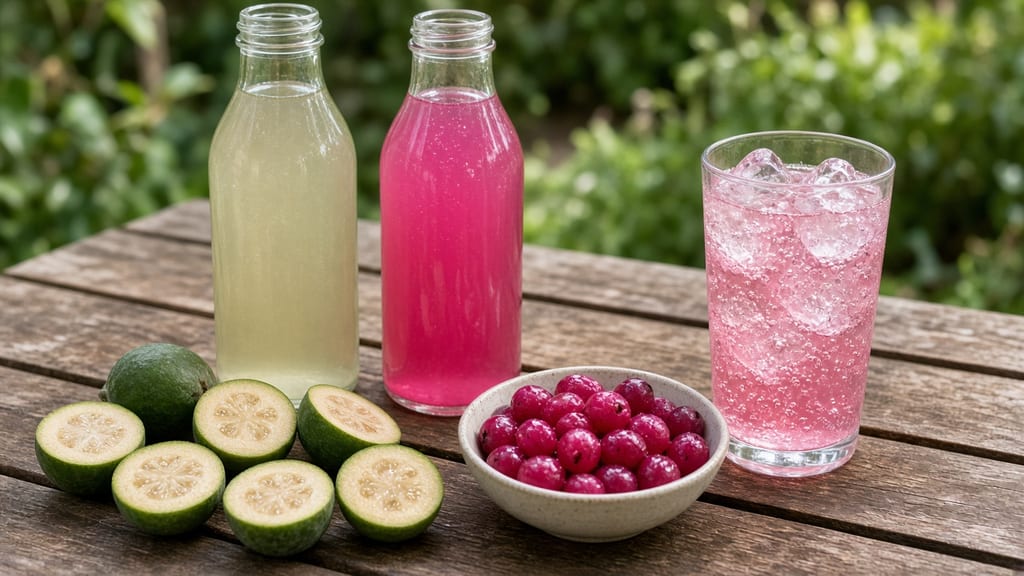
Antipodean cordials: feijoa and lilly pilly
New Zealand feijoa cordial, from the flesh or just the skins, and Australian lilly pilly cordial: fruit, water and sugar heated briefly, strained, and sharpened with lemon and tartaric or citric acid.
 FermenteaWhere food goes to change
Substrates
Lilly pillies are Australian rainforest fruits of the genus Syzygium. Maiden recorded them in 1889 as eaten by Aboriginal people; today garden fruit goes into a sharp pink cordial with lemon and tartaric acid.
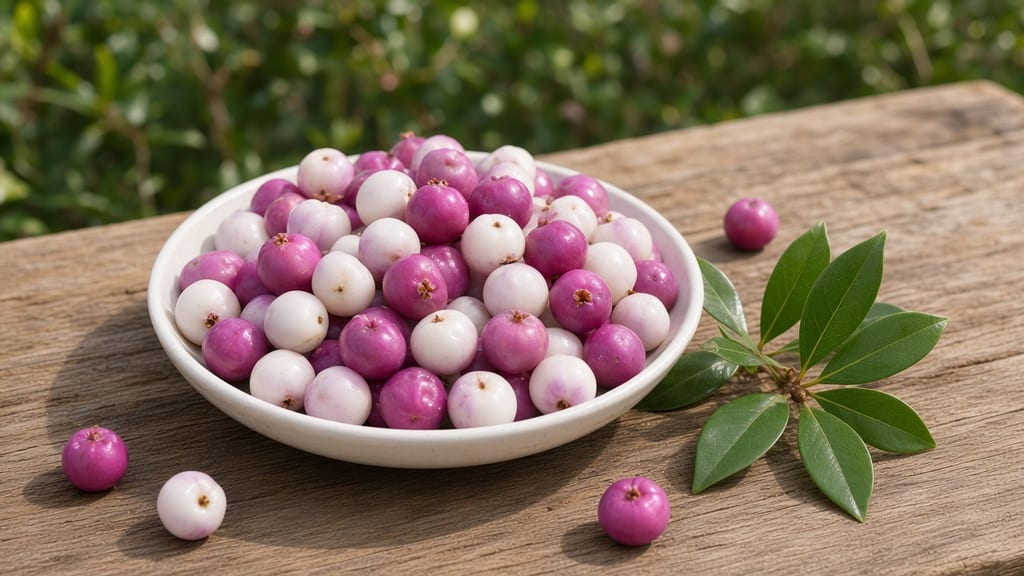
Lilly pilly is the Australian name for many rainforest trees of the genus Syzygium, in the myrtle family. The Australian Native Plants Society puts the genus at more than 1000 species across the tropical and subtropical rainforests of the world, with about 50 in Australia, from the Kimberley region of Western Australia through the Northern Territory and Queensland to northern New South Wales. The genus now includes plants once classified as Acmena and Eugenia, and many of them are called lilly pillies.
The species most often given the plain name is Syzygium smithii, long grown in gardens as Acmena smithii. In the society's profile it grows in east coast rainforests from north Queensland to Victoria and on King Island. In the wild it is a tree of 15 to 20 metres, smaller in gardens. Its fluffy cream flowers come in spring and summer and are followed by fleshy fruits, white to purple and 10 to 15 mm across. The society's verdict on them is short: edible, but not particularly palatable.
Jackie French, writing for the Burke's Backyard fact sheets, describes lilly pilly fruit as white, pink, magenta or purple depending on the tree. That range of colour is why cordials from different trees come out anywhere from pale pink to deep purple.
The oldest written account we found is in The Useful Native Plants of Australia, published in Sydney in 1889 by J. H. Maiden of the Technological Museum of New South Wales. Under Eugenia Smithii, the name then in use, Maiden records Lilly Pilly as the common colonial name. He also gives two Aboriginal names: Tdgerail, used by the Aboriginal people of Illawarra in New South Wales, and Coochin-coochin, used by some Aboriginal people in Queensland. A later entry in the same book spells the first Tdjerail.
The botanical name has its own history. The Australian Native Plants Society explains that Syzygium comes from the Greek syzygos, joined, after the paired leaves and branches of a Jamaican species, and that smithii honours Sir J. E. Smith, botanist and founder of the Linnean Society.
Maiden's entry under human foods is brief and specific. The fruits, he writes, are eaten by the Aboriginal people, by small boys and by birds. They are produced in profusion, are acidulous and wholesome, and are white with a purplish tint, up to one inch across. He gives the tree's range as Victoria to Northern Australia.
Other entries in the book show how the colonists used the rest of the tree. Citing the botanist Ferdinand von Mueller, Maiden reports that the bark contains 16.9 per cent tannic acid and 3.6 per cent gallic acid. Its timber, according to the report of the 1879 Sydney International Exhibition, is close-grained but apt to split while seasoning, and makes good axe handles; trees reached 80 to 120 feet.
The neighbouring entry, for Eugenia myrtifolia, the Brush Cherry or Native Myrtle, is just as useful to a syrup maker. Its fruit, Maiden says, is acid and makes a good preserve. He quotes the chemists De Luca and Ubaldini: the red juice contains free tartaric acid, cream of tartar, sugar and a red colouring very sensitive to acids and alkalis, and it ferments into a wine with a bouquet. The colour, they note, behaves like litmus and like the red of wine.
Maiden's 1889 list of human foods has several other entries in the same genus, then called Eugenia, and they show how many of these fruits colonists and Aboriginal people used. For Eugenia Tierneyana, a Queensland tree, he writes that settlers made jam from the fruit and that it is produced in very large quantities.
For Eugenia Jambolana, which he records under the Aboriginal name Durobbi in New South Wales and Queensland, Maiden treats the Australian tree, also listed as Eugenia Moorei, as one species with the Indian tree and quotes the forester Dietrich Brandis on it. There, Brandis wrote, the fruit is much eaten; it looks like a damson and tastes harsh but sweetish, somewhat astringent and acid, and birds and flying foxes eat it too. The Native Plants Society's count of more than 1000 Syzygium species across the tropics explains why Australian lilly pillies have relatives on other continents.
One of the lilly pillies named in Australian cordial recipes is the magenta lilly pilly, Syzygium paniculatum. The New South Wales government's threatened species profile describes it as a small to medium rainforest tree up to 8 metres tall, with shiny dark leaves and white flower clusters between November and February. Its deep magenta fruits, round or egg-shaped, ripen in May and each holds a single seed.
The same profile lists the species as Vulnerable in New South Wales and nationally. In the wild it grows only in a narrow coastal strip of New South Wales, from Upper Lansdowne to Conjola State Forest, in coastal and riverside rainforest. Its threats include small, isolated populations, fire, weeds, myrtle rust, loss of mature trees and disturbance by visitors. Laurel's recipe lists magenta lilly pillies among the fruits to use, and many people grow the species in gardens. Given its status, gather from trees you or your neighbours have planted, and leave wild stands alone.
Lilly pillies are common garden and hedge plants, which is where most cordial fruit comes from. The Australian Native Plants Society describes Syzygium smithii as very hardy, adapting to climates from tropical to temperate, growing in sun or fairly heavy shade, tolerating moderate frosts and dry spells once established, and responding well to pruning. Several cultivars are sold, among them the smaller variety minor, Hot Flush, the low Hedgemaster and Red Tip.
The society names the lilly pilly psyllid, Trioza eugeniae, as the most serious pest of lilly pillies, raising pimples on the leaves of susceptible species, and notes that Syzygium smithii is rarely affected. Propagation is from fresh seed, sown whole or after the flesh is removed, or from cuttings.
The sources agree that raw lilly pillies are thin eating. Jackie French says the raw berries do not taste very good because they contain little natural sugar, and that with sugar added they make a delicious cordial. The Native Plants Society calls them not particularly palatable. Maiden in 1889 was kinder, calling them acidulous and wholesome.
Every recipe we found adds both sugar and acid, as lemon juice plus tartaric or citric acid. French also notes that a century ago cordials were strongly alcoholic and mostly medicinal. Laurel's Traditional Australian Cookery adds that cordial is a marker of Australian English: elsewhere the word would mean a syrup or a restorative with alcohol, while in Australia it is an innocent fruit drink diluted with water.
French's recipe, republished by Local Food Connect in 2010, is the fast one. Put 2 cups of lilly pillies, 4 cups of water, 1 teaspoon of tartaric acid, 2 cups of sugar and the juice of 2 lemons into a stainless steel saucepan. Boil for about 5 minutes, until the fruit starts to soften. Mash the fruit, pour through a strainer to remove the seeds and lumps, and bottle in sterilised bottles.
Laurel's method is slower and gives a clearer, larger batch, about two 750 ml bottles. Take 1 kg of small-leaved, magenta or creek lilly pillies, wash them and simmer them, covered, in 3 cups of water for 20 minutes. Cool, then squeeze through a jelly bag or flannelette bag with the juice of 2 lemons. Bring the liquid to a rapid boil, stir in 3 cups of sugar and 3 teaspoons of citric acid until dissolved, pour through a funnel into hot clean bottles and seal. Refrigerate after opening.
Laurel also gives a yield guide for juice. Three cups of lilly pillies simmered in 2 cups of water for 20 minutes and squeezed through muslin give about 2 to 2 1/4 cups of juice. To serve, she uses a tablespoon or two of cordial in a glass of tap or soda water.
The two recipes differ in order and in acid. French boils fruit, sugar and acid together for about five minutes and strains afterwards; Laurel extracts the juice first and adds sugar and acid only at the end. French uses tartaric acid with lemon juice, Laurel citric acid with lemon juice. French's quantities give a bottle or two from 2 cups of fruit, while Laurel's kilo of fruit fills about two 750 ml bottles. Choose by how much fruit the tree has given you.
Seasons vary by species. The Native Plants Society gives spring and summer as the flowering time of Syzygium smithii, with the fruit following. The New South Wales profile gives November to February for the white flowers of the magenta lilly pilly and May for its ripe fruit. In the southern hemisphere that puts the magenta lilly pilly's flowers in summer and its fruit in late autumn, and the cordial season with it.
Watch the colour change. French's advice to pick when the fruit has only just coloured means checking the tree often once the first fruits turn. Birds eat lilly pillies too, as Maiden noted in 1889, so a tree left alone may be stripped before the cook gets there.
Both of the cordials described here appear in full on our page for antipodean cordials, next to the feijoa cordials of New Zealand. That page sets out the method they share: fruit, water and sugar heated briefly, strained, and sharpened with lemon and with tartaric or citric acid.
Timing matters more than with most fruit. French advises picking lilly pillies when they have just changed colour, and warns that fruit left to ripen too long becomes bitter. Wash the berries and pick out stems and leaves. There is no need to stone them: both recipes strain out the seeds after cooking. The magenta lilly pilly, according to the New South Wales profile, has a single seed in each fruit.
Local Food Connect says lilly pilly cordial should keep for at least a fortnight, possibly longer, but warns that it has no preservatives and belongs in the refrigerator. It recommends several small bottles in place of one or two large ones, since each bottle is opened fewer times. Laurel refrigerates after opening. The University of Maine Cooperative Extension advises storing homemade flavoured syrups in a sterilised jar in the refrigerator, labelled and dated, for up to one month; we follow that limit.
Sterilise the bottles first. Laurel pours the cordial hot into hot clean bottles and seals them straight away; French bottles hers in sterilised bottles once it has been strained.
Taste: Maiden calls the fruit acidulous and wholesome; the Native Plants Society calls it not particularly palatable; French says it tastes poor raw for lack of sugar. Size: Maiden gives up to one inch; the Native Plants Society gives 10 to 15 mm for Syzygium smithii. Keeping: Local Food Connect says at least a fortnight; the University of Maine Cooperative Extension gives up to one month for homemade syrups.
Maiden records the name Tdgerail used by the Aboriginal people of Illawarra.
Coochin-coochin, used by some Aboriginal people in Queensland.
Wild range of the magenta lilly pilly, Upper Lansdowne to Conjola.
Home lilly pilly cordial.
New Zealand feijoa cordial, from the flesh or just the skins, and Australian lilly pilly cordial: fruit, water and sugar heated briefly, strained, and sharpened with lemon and tartaric or citric acid.
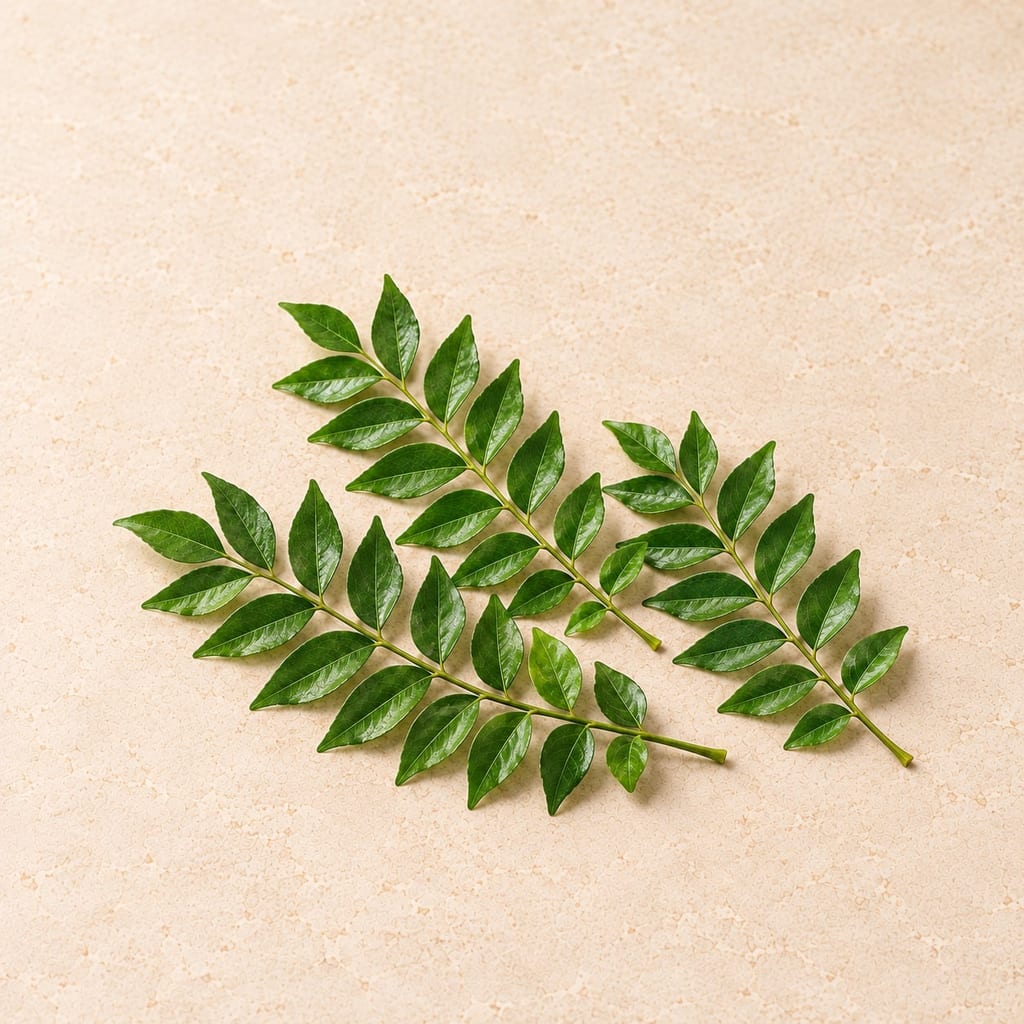
Curry leaves are the glossy compound leaves of the curry tree, Bergera koenigii, used fresh across southern India and Sri Lanka. Fried in hot oil they give a citrusy, nutty, faintly smoky note.
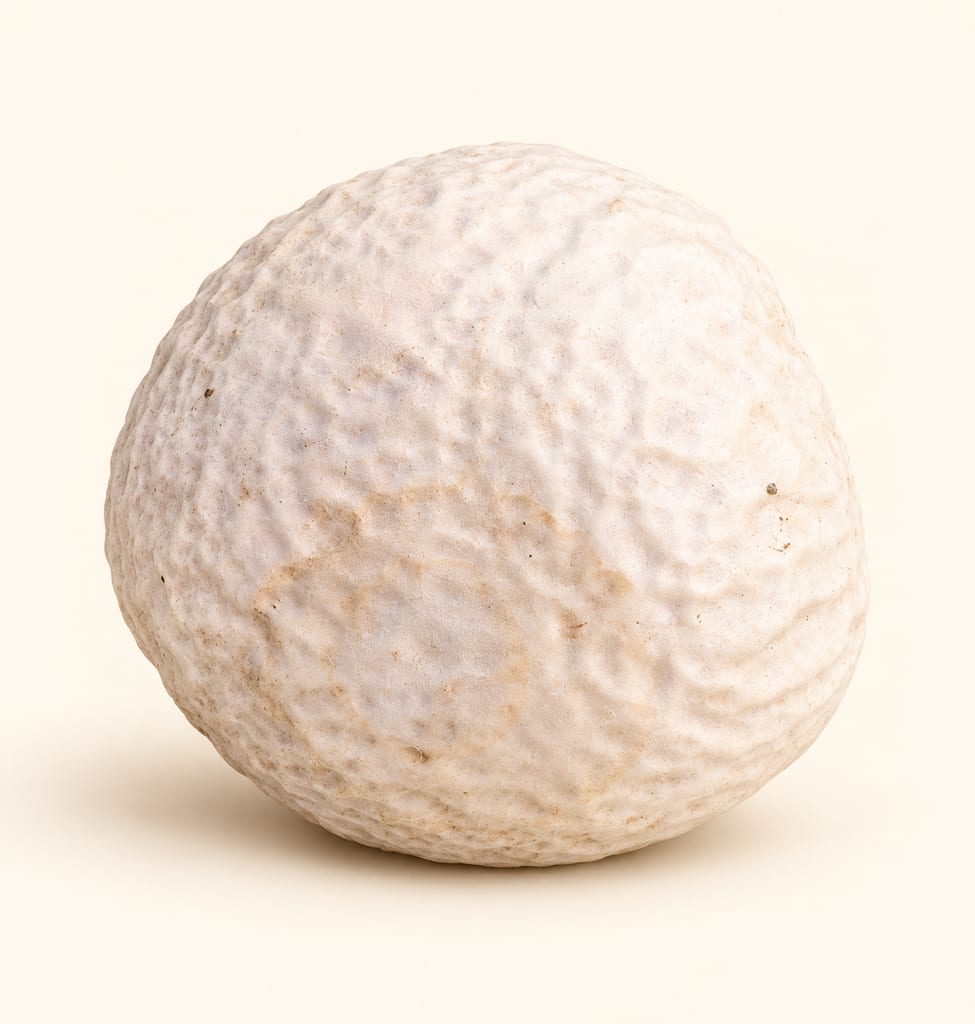
Calvatia lilacina is a lilac-tinted puffball with regional natural-history records and historical edible listings whose taxonomic and safety limits remain important.
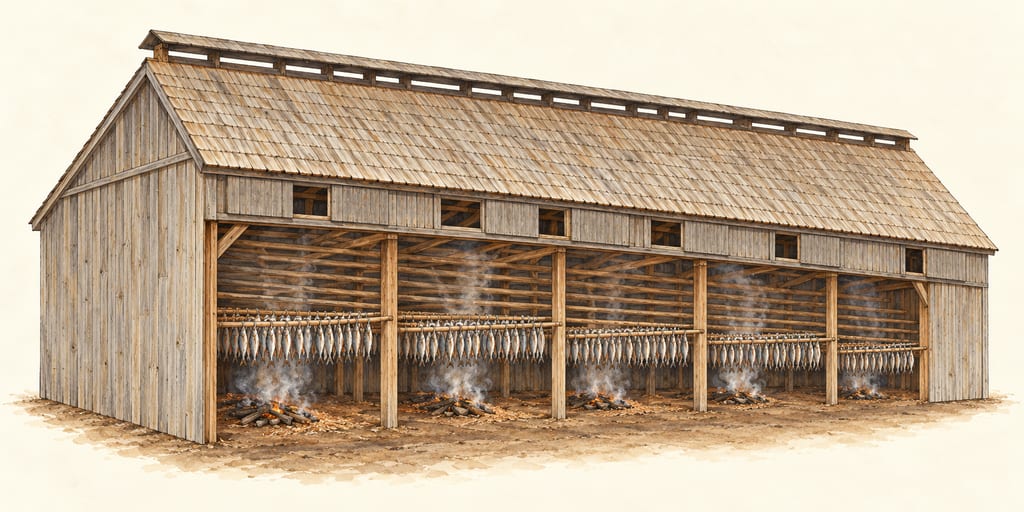
A Cap-Pelé boucanière is an Acadian herring-smoking building. The documented Willie Niles example is a one-storey wood-frame structure with a ridge smoke vent and interior bays for hanging fish-bearing cannes.
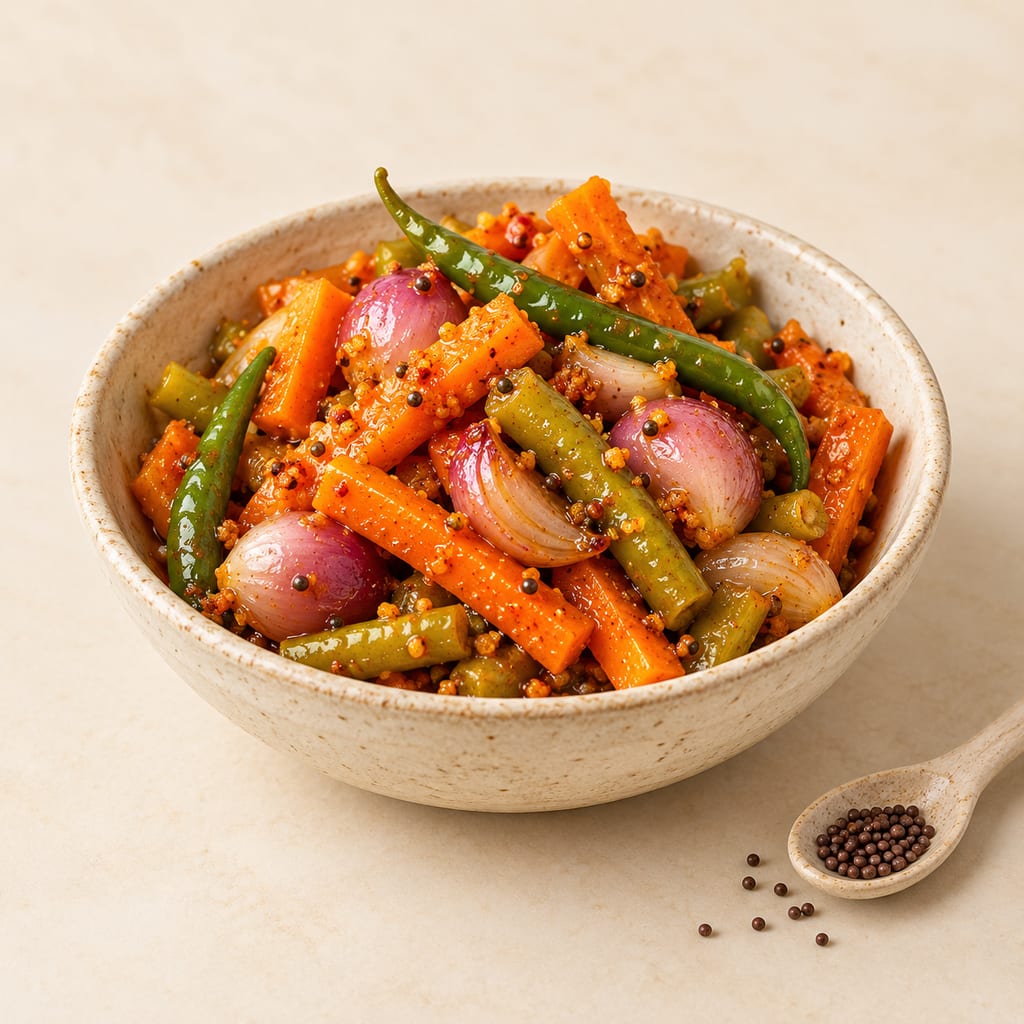
Achcharu is a family of Sri Lankan vinegar pickles made with mixed vegetables or seasonal fruit and a piquant spice dressing. This version is a quick, refrigerated, non-fermented mixed-vegetable pickle.
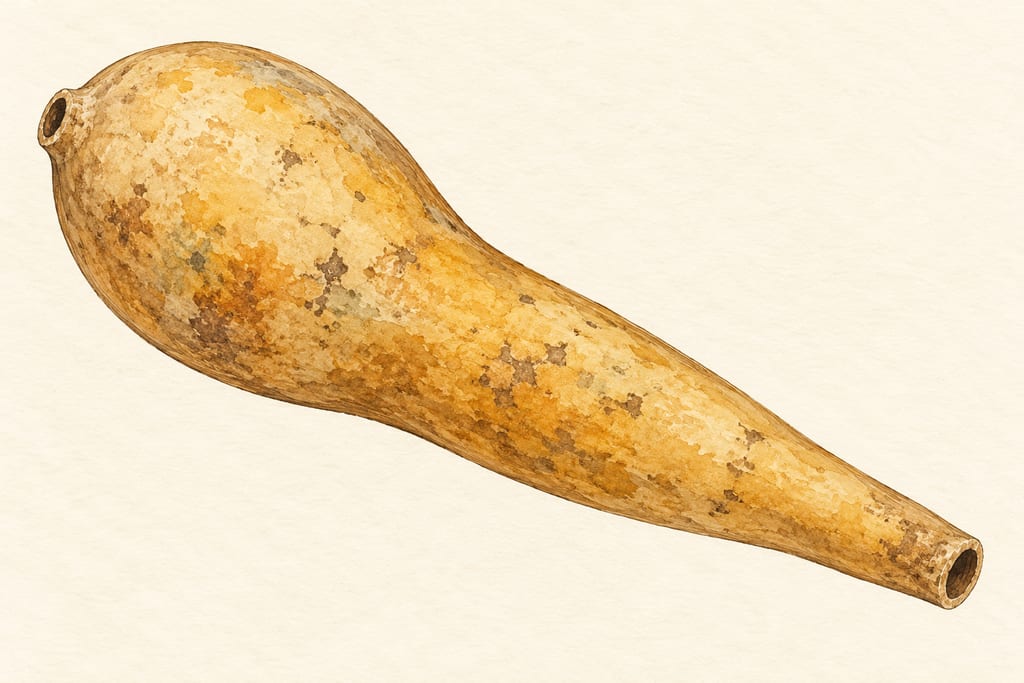
The acocote is a long, hollowed and dried gourd used to draw aguamiel from a mature maguey. It is a harvesting tool: the sap is transferred to a separate vessel before it ferments into pulque.
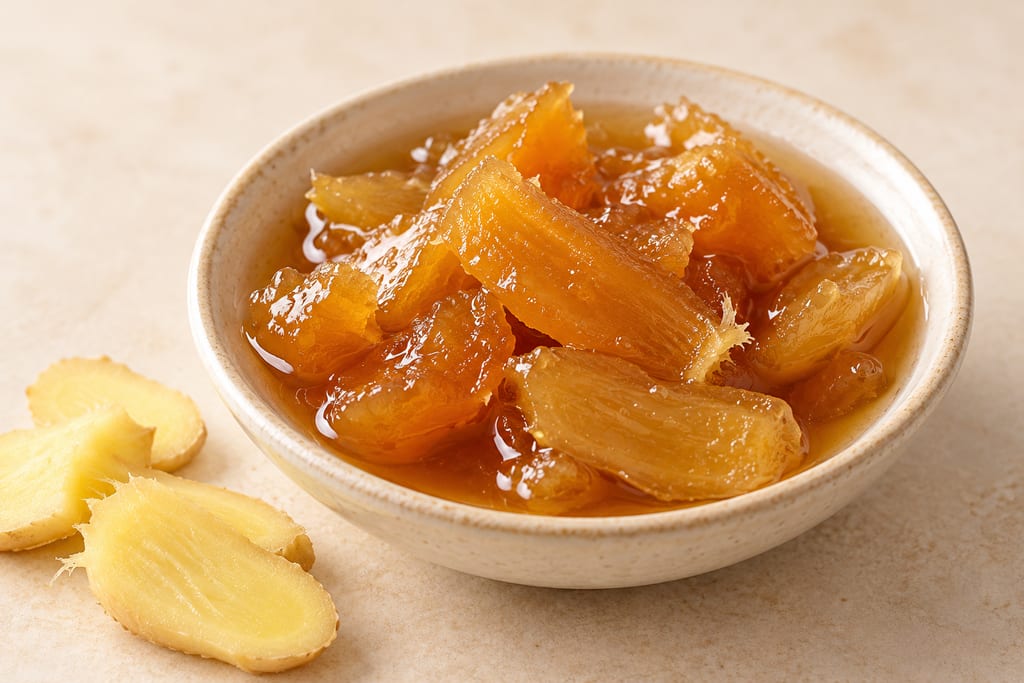
Adrak murabba preserves young ginger in sugar syrup, a sweet South Asian preparation recorded in Indian cookery and food-processing sources.
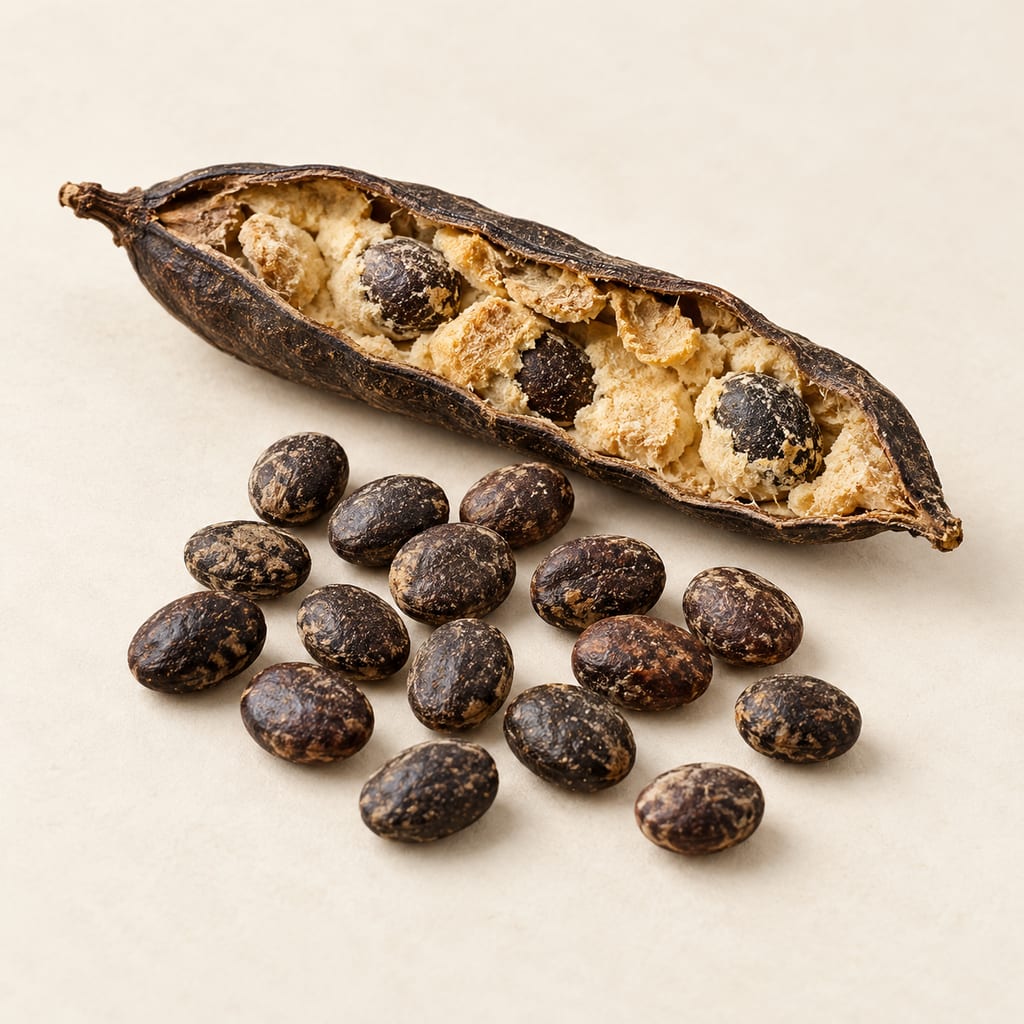
Parkia biglobosa seeds are fermented into regional West African seasonings, including nététou, iru, dawadawa and soumbala. The yellow fruit pulp is a separate food, and names and methods vary by place.
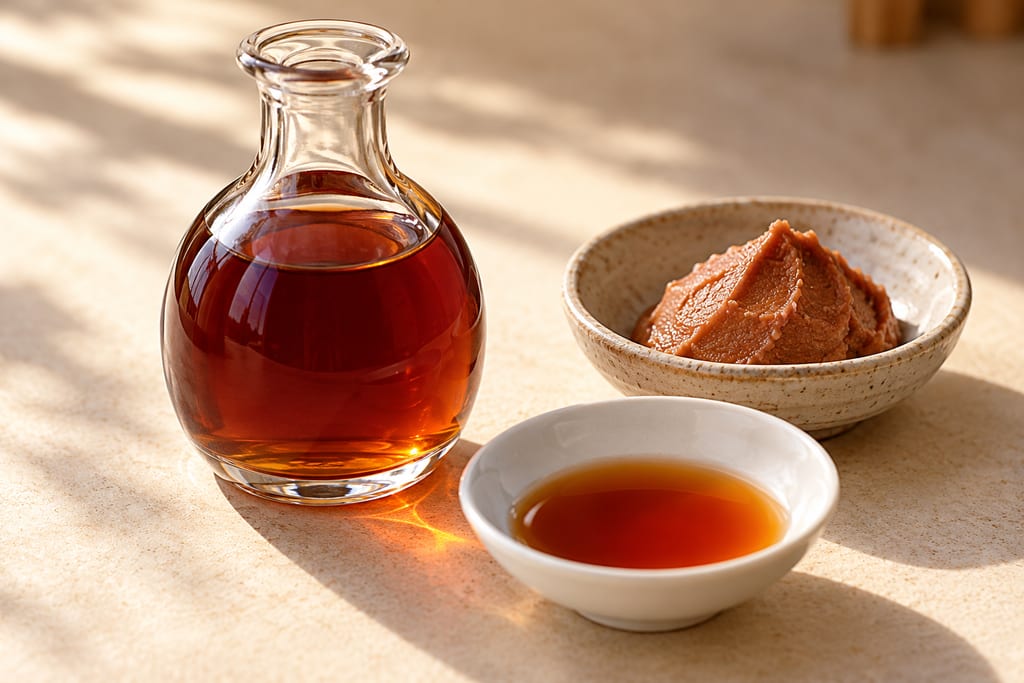
Japanese reddish-brown vinegar from sake lees matured about three years, turned to vinegar by acetic bacteria; the vinegar of Handa and Edomae sushi rice.
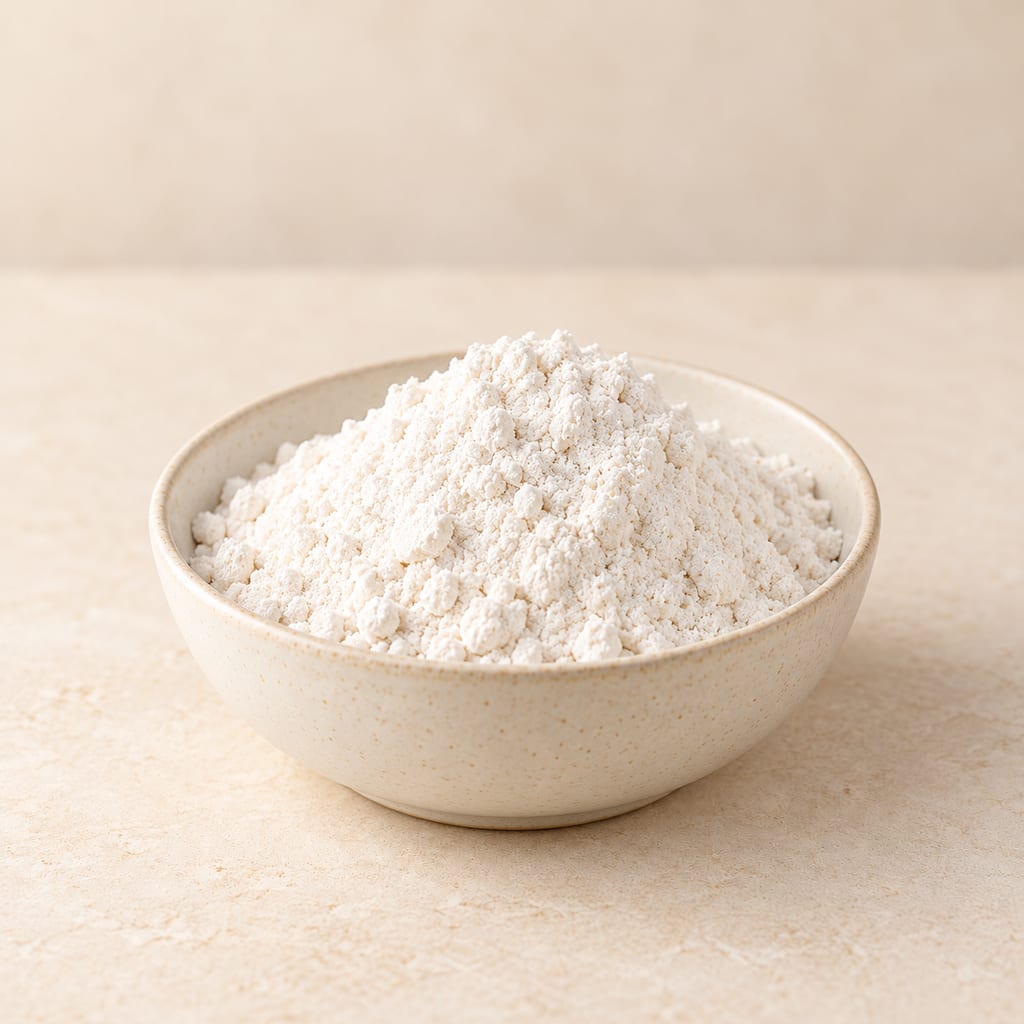
A refined common-wheat flour blended for a broad range of baking; its protein and behavior vary with wheat, milling and market.
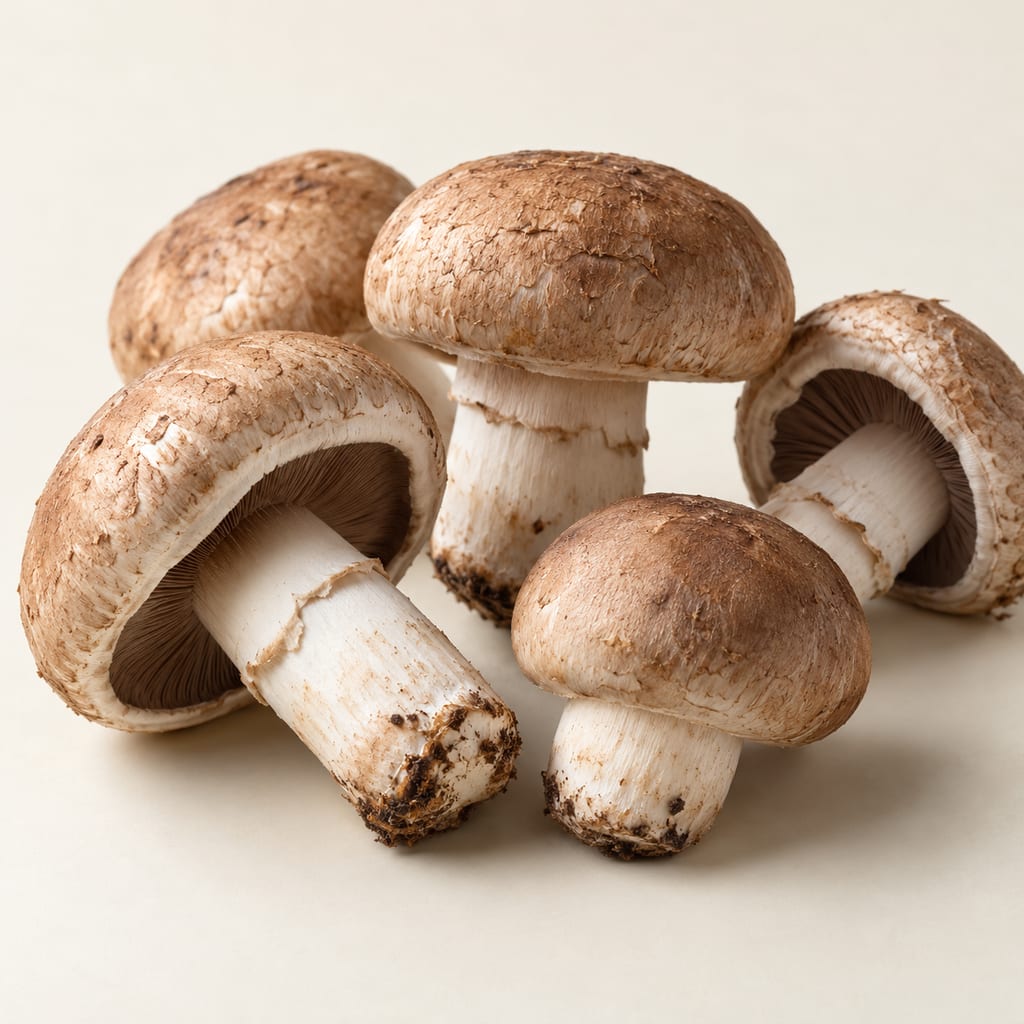
The almond mushroom, Agaricus subrufescens, was cultivated in eastern North America in the 1800s, lost its market, and returned as a cultivated mushroom from Brazil, where it is grown under several names.
No community contributions have been published for this entry yet.
Sign in to contribute. Published comments and photos are free to read.
Technological Museum of New South Wales, Sydney, 1889; Internet Archive
The Useful Native Plants of Australia (including Tasmania)Eugenia Smithii: Lilly Pilly; Tdgerail of the Aboriginal people of Illawarra, Coochin-coochin of some in Queensland; fruits eaten by Aboriginal people, small boys and birds; formed in profusion, acidulous and wholesome; white with a purplish tint, up to one inch across; Victoria to Northern Australia.
Bark 16.9 per cent tannic acid and 3.6 per cent gallic acid (Mueller); wood makes good axe handles; height 80 to 120 ft.
Eugenia Tierneyana: fruit used for jam making by the settlers, produced in very large quantities, Queensland. Eugenia Jambolana, Durobbi: Brandis quoted on India, fruit much eaten, resembles a damson, harsh but sweetish, astringent and acid, eaten by birds and flying foxes.
Eugenia myrtifolia, Brush Cherry or Native Myrtle: fruit acid, makes a good preserve; red juice contains free tartaric acid, cream of tartar and sugar, colour sensitive to acids and alkalis, ferments into wine (De Luca and Ubaldini).
Cited in: Names old and new; What Maiden recorded in 1889; Relatives in Maiden's list; Why the fruit needs sugar and acid; Where the sources disagree
Australian Native Plants Society (Australia)
Syzygium smithiiCommon name Lilly Pilly; east coast rainforests from north Queensland to Victoria and King Island; Syzygium from Greek syzygos, joined; smithii after Sir J. E. Smith.
Genus over 1000 species, about 50 in Australia; includes species formerly in Acmena and Eugenia; long cultivated as Acmena smithii.
Tree 15 to 20 m in nature; fruits fleshy, white to purple, 10 to 15 mm, edible but not particularly palatable; cultivars minor, Hot Flush, Hedgemaster, Red Tip; lilly pilly psyllid rarely affects it.
Cited in: What a lilly pilly is; Names old and new; Relatives in Maiden's list; The garden tree; Why the fruit needs sugar and acid; When the fruit is ready; Where the sources disagree
NSW Department of Climate Change, Energy, the Environment and Water, BioNet Threatened Species
Magenta Lilly Pilly - profileSyzygium paniculatum, Vulnerable in NSW and nationally; tree to 8 m; white flowers November to February; deep magenta fruits, spherical or egg-shaped, mature in May, single seed.
Found only in NSW from Upper Lansdowne to Conjola State Forest, in littoral and riverside rainforest.
Threats include small populations, fire, weeds, myrtle rust, loss of mature trees and disturbance from recreational visitors.
Cited in: The magenta lilly pilly and wild trees; When the fruit is ready; Picking and preparing
Burke's Backyard fact sheet
Lilly Pilly Cordial: The French AlternativeRaw berries do not taste very good because they contain little natural sugar; fruit white, pink, magenta or purple.
2 cups lilly pillies, 4 cups water, 1 teaspoon tartaric acid, 2 cups sugar, juice of 2 lemons; boil in stainless steel about 5 minutes; mash, strain, bottle.
Pick when just changed colour; left too long they become bitter; cordials were once alcoholic and medicinal.
Cited in: What a lilly pilly is; Why the fruit needs sugar and acid; Jackie French's quick cordial; When the fruit is ready; Lilly pilly in this series; Picking and preparing; Where the sources disagree
Local Food Connect, 1 July 2010
Lilly pilly cordialShould keep at least a fortnight, possibly longer; no preservatives, keep in the fridge; use several small bottles.
Cited in: Jackie French's quick cordial; Storage; Where the sources disagree
Laurel's Traditional Australian Cookery
Lilly Pillies1 kg small-leaved, magenta or creek lilly pillies, 3 cups water, juice of 2 lemons, 3 cups sugar, 3 teaspoons citric acid; simmer covered 20 minutes, squeeze through a jelly bag, boil with sugar and acid, bottle hot; about 2 x 750 ml.
3 cups fruit in 2 cups water give about 2 to 2 1/4 cups juice; a tablespoon or two per glass.
Cordial in Australian English is a non-alcoholic fruit drink.
Cited in: The magenta lilly pilly and wild trees; Why the fruit needs sugar and acid; Laurel's jelly-bag cordial; Lilly pilly in this series; Picking and preparing; Storage
University of Maine Cooperative Extension
Drinks from the GardenFlavoured simple syrup: label, date and store in a sterilised jar in the refrigerator for up to 1 month.
Cited in: Storage; Where the sources disagree
