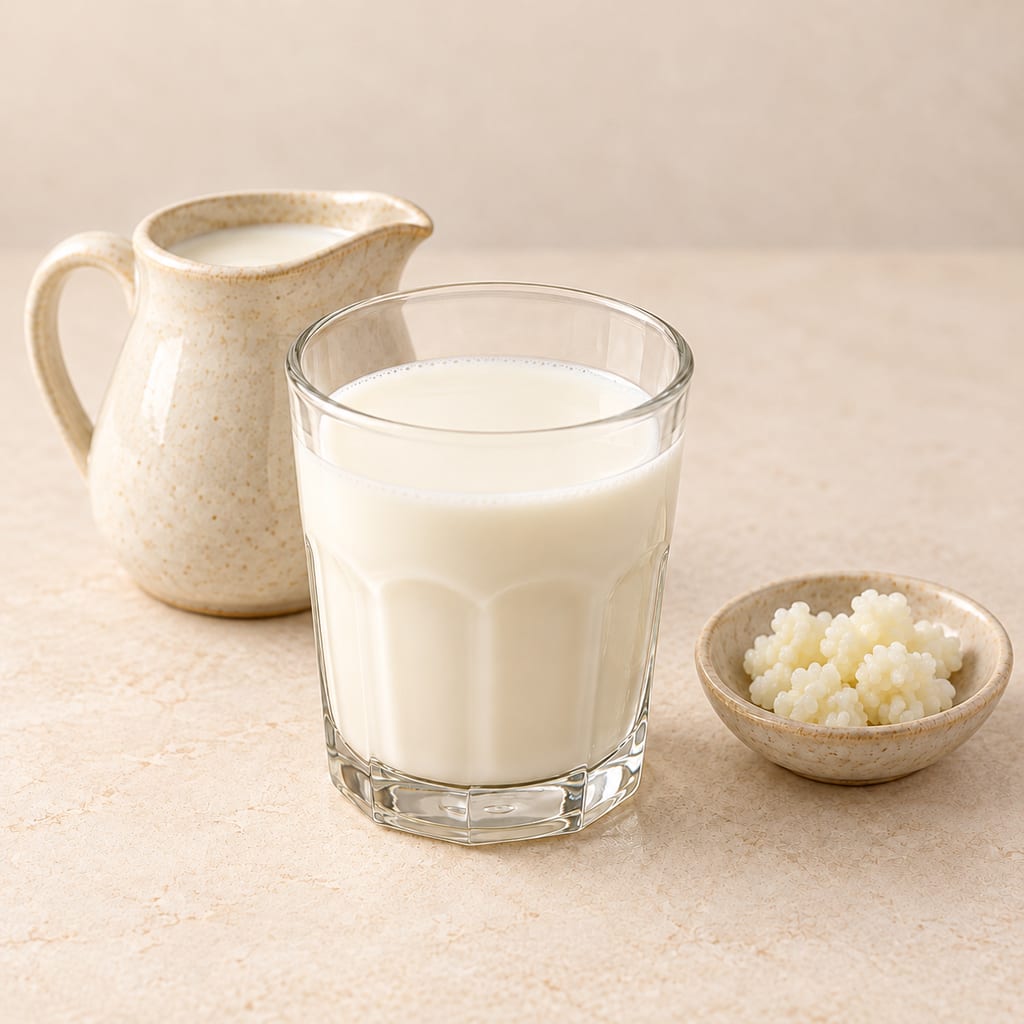
Milk kefir
Milk kefir is a tangy fermented drink made with reusable grains of bacteria and yeasts. Grain fermentation can give the milk a light fizz and some alcohol.
 FermenteaWhere food goes to change
Cultures
Milk kefir grains are a reusable mixed culture that ferments milk. The grains are a living bacterial and yeast community held in a polysaccharide matrix, distinct from cereal grains and water-kefir cultures.
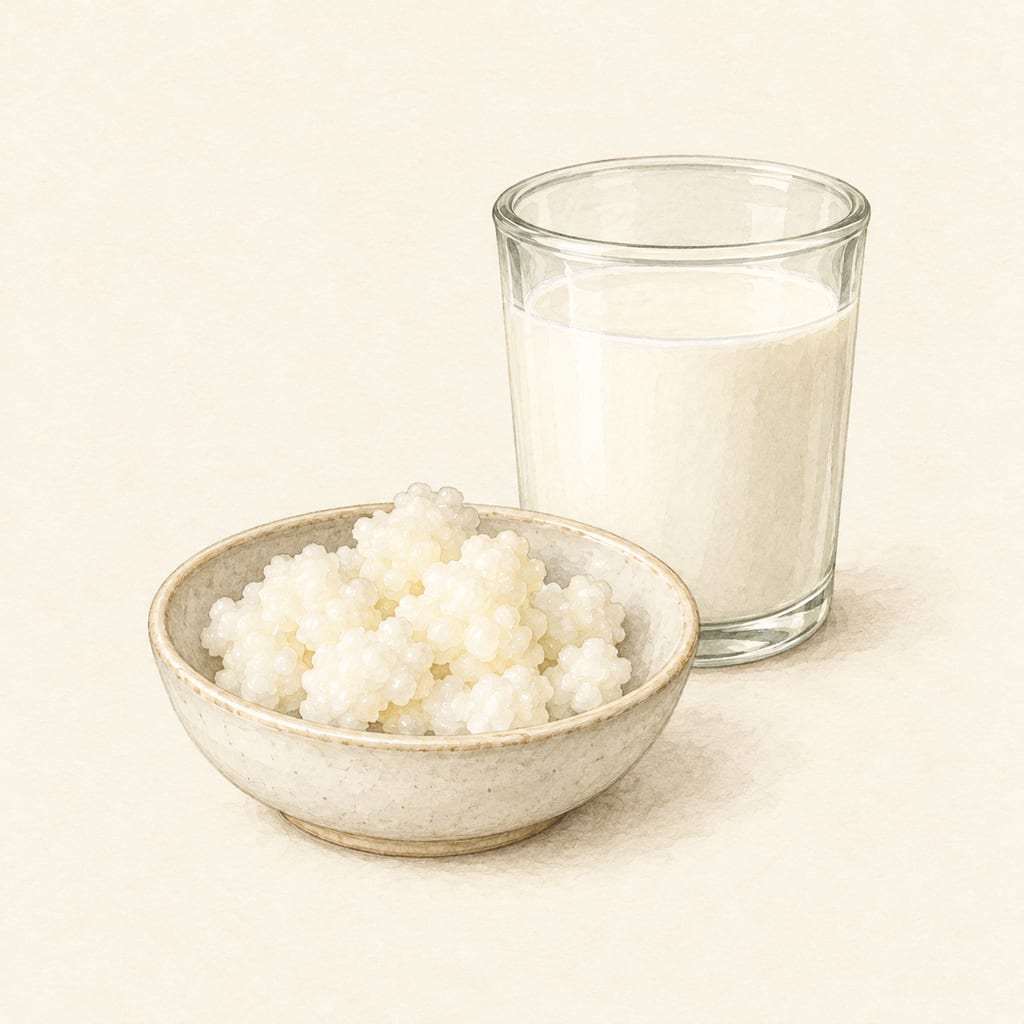
Milk kefir grains are pale, irregular clusters used to inoculate milk for kefir. They are not seeds or cereal grains. Bacteria and yeasts live together in a matrix containing the polysaccharide kefiran; the matrix gives the culture its cauliflower-like, elastic form. A grain is a reusable microbial community rather than a measured blend of individually named organisms.
Grains grow and reproduce during repeated milk fermentation, so their appearance and microbial membership can vary. The Codex definition describes kefir using a starter prepared from grains and lists representative bacteria and yeasts. That standard identifies the product category; it does not promise that every grain sample contains the same species or proportions.
An 1884 British Medical Journal report describes kefir as a long-standing drink among mountaineers near Elbruz and Kasbek. The report also says the exact origin of the kefir seed was unknown. It is evidence that kefir and its grain culture were being discussed in print by the late nineteenth century, not proof of a unique birthplace or an uninterrupted history reaching further back.
A 2025 study sampled seven household kefir-grain cultures from settlements in Karachay-Cherkessia and Kabardino-Balkaria, two republics in Russia's North Caucasus. It used 16S rRNA and ITS1 analyses to study their microbial communities. These samples document contemporary regional practice and research. Neither this sample nor the 1884 account establishes that all kefir grains descend from one identified place.
The 1884 account also describes kefir being made in a goatskin bag and records a fermentation period of roughly a day, with a stronger product after longer standing. This passage is a report of a practice observed and discussed at the time. It is not a modern instruction: the vessel, starting milk, temperature and microbial state are not controlled to current household safety standards, and its timings should not be copied as a validated process.
Kefir grains support a mixed fermentation involving lactic-acid bacteria and yeasts; some descriptions also include acetic-acid bacteria. Species detected depend on sample and method. In a 2025 culture-dependent comparison of three commercial and four household grain samples, Lactobacillus kefiranofaciens and Lentilactobacillus kefiri dominated the cultured bacteria, while Kazachstania exigua was the yeast detected. Those results describe that study, not a universal grain composition.
Milk kefir grains should also be kept distinct from water-kefir grains. The latter are maintained in a sweetened aqueous medium and are a separate culture. A shared everyday word does not make their ingredients interchangeable. Commercial kefir may use propagated starter or defined cultures; that does not make those preparations identical to a household grain community.
Household makers place active grains in milk, allow fermentation, then strain the grains from the cultured milk and use them again. The milk becomes kefir; the retained grain cluster remains the starter. The Colorado State University Extension example uses 2 tablespoons active grains for 2 cups pasteurized milk, covers the jar with cloth or filters, and ferments for 18–24 hours at 65–85°F (18–29°C) before straining. It cautions against ultra-pasteurized or UHT milk.
Those amounts and conditions belong to that extension guide. Grain activity, milk composition, temperature and equipment affect acidification, and this example alone is not a validated safety control for every kitchen. Use a tested method appropriate to local food-safety advice. The same source says live grains should be fermented or refrigerated promptly; it does not establish one storage life for every grain culture.
The Extension guide distinguishes live grains from dehydrated grains: it says live grains need prompt fermentation or refrigeration, while a dehydrated product has a longer shelf life. It does not define one shelf life that applies to every supplier or storage condition. These are different physical states of a culture, and the directions supplied with a particular culture matter. A photograph of dry-looking grains cannot establish that they are viable, correctly stored or ready to inoculate milk.
Use pasteurized milk and clean, sanitized equipment. Queensland Government guidance says milk fermentation should reach pH below 4.6 within 24 hours and that the finished product should be refrigerated. Measure pH with an appropriate method; sour smell, taste, visible separation or bubbles cannot confirm that a batch is safe. If the pH target is missed, do not rely on longer fermentation to rescue it.
Raw milk can carry disease-causing microorganisms. Health Canada advises choosing pasteurized milk; fermentation does not remove the need for that precaution. The mixed community in grains is not a sterile or species-defined starter, and an ingredient page cannot establish safety for an untested batch. Follow a proven recipe and local public-health guidance.
Milk kefir grains are maintained in milk, and the fermented product remains a milk-derived food. It is not suitable for people with milk-protein allergy unless a clinician has advised otherwise. Fermentation may change lactose content, but that does not remove milk proteins or justify a general lactose-free claim. Check the product and recipe rather than assuming an individual's tolerance.
The solids caught by a strainer are not simply the finished drink in a thicker form. Researchers compared one Irish starter grain with kefir milk fermented from it and found that their bacterial communities differed. In that sample, Lactobacillaceae were prominent in the grain, while Streptococcaceae, especially Lactococcus, were prominent in the milk. The analysis also found greater bacterial diversity in the grain interior than on its exterior. This is a study of one grain and its derivative milk, not a species list for every household culture.
This distinction helps explain why an ingredient name should refer to the retained culture rather than the full fermented milk. The milk has passed through fermentation and contains its own community shaped by the grain and the process. The grain is the transferred inoculum for another batch. Sampling the drink does not stand in for sampling the grain, and results from either should not be generalized to a new culture without evidence.
The Irish study makes another useful distinction: diversity differed within the grain itself. The researchers found more bacterial diversity in the interior than at the exterior in their sampled grain. This supports treating a grain as a structured community rather than a homogeneous pellet. A surface swab, an isolated piece or a sample of the finished milk may capture only part of the community; the paper does not show that every grain has the same internal pattern.
A laboratory study published in the Journal of Dairy Science followed kefir grains through 28 days of repeated subculture in cow milk, goat milk and whey protein concentrate. Researchers measured grain form, microbial succession and metabolites. The cow-milk treatment supported compact, stable grains; goat milk produced more filamentous, extracellular-polysaccharide-rich grains; whey protein concentrate produced fragmented structures. The study links substrate composition with observed changes under its controlled conditions. It does not establish that these outcomes will occur in every household or that whey protein concentrate is a suitable home medium.
The study also observed changes in microbial membership and metabolites as the grains were transferred. Lactobacillus kefiranofaciens became the dominant bacterium across the tested treatments, while the relative abundance and measured metabolites differed by substrate. This is evidence that a grain culture develops in relationship with its feeding medium, not an instruction to change milk type for a particular texture. The grains in the study were repeatedly subcultured under a laboratory design, so its results should not be turned into consumer handling advice.
The substrate comparison measured more than visible size. The study tracked community changes and metabolites as grains were passed through the three media, and reported that milk-derived nitrogen, peptides and free amino acids differed among treatments. These are experimental observations that help explain why milk and grain growth are connected. They do not identify a household grain from appearance, and they do not establish the nutritional composition of kefir made from every animal's milk.
In household use, the maker returns the strained grains to fresh milk. A university extension guide gives one example of this cycle: add active grains to pasteurized milk, allow the stated fermentation, strain, and start another batch. That shows why grains are described as reusable. It does not mean each transfer makes an identical beverage. Milk, temperature, culture condition, time and handling all vary, and the source's example belongs to its own recipe.
A deliberately assembled commercial culture and a household grain community answer different production needs. A 2025 study compared grains from three commercial and four household sources and tried to reconstruct grains from selected dominant organisms. The reconstructed clusters grew but remained smaller than natural grains. That result suggests that reproducing a few detected organisms did not fully reproduce the structure of the natural cultures in that experiment. It does not prove that all commercial kefir lacks grains or that no culture can ever be reconstructed.
The 2025 reconstruction study also illustrates a limit of species lists. Its researchers selected dominant organisms found across seven sources, then tested whether a culture could be rebuilt. The resulting clusters did grow, but they were smaller than naturally sourced grains. The finding is consistent with the possibility that interactions among organisms and the surrounding matrix matter to grain form. It does not prove which specific omitted organism or interaction caused the size difference.
Labels for kefir organisms have changed as bacterial taxonomy has changed, and research uses different ways to detect them. Culture-based methods only recover organisms that grow under the chosen conditions. DNA surveys detect genetic material, but a sequence result does not by itself show that each organism is alive or active in a particular grain. A named species in one article therefore belongs to that sample and method.
The Codex standard is useful for understanding kefir as a defined fermented-milk category: it associates the starter with grains and names representative groups of bacteria and yeasts. It is not a diagnostic test for an unknown culture. The exact organism proportions of a privately shared grain cannot be inferred from its shape, a photograph or the general product definition. This page keeps the culture identity at the level the sources support.
The Colorado State University Extension guide describes a household batch with active grains and pasteurized milk, then gives its own covered-jar, temperature and timing instructions. This is useful evidence that home makers maintain grains by repeated milk fermentation and straining. It is not a single worldwide method: named sources may use different milk, vessels or conditions, and their instructions should not be mixed into an improvised process.
The page treats the CSU figures as an example, while the Queensland Government advice supplies a separate food-safety criterion for its jurisdiction. A reader should use a proven process and follow the applicable safety guidance instead of selecting only the most convenient parts of different methods. A measured pH target is a process control; the sensory signs listed in a recipe cannot replace that measurement. If the specified control is not met, this ingredient profile does not support serving or salvaging the batch.
milk
The study reports seven grain samples from settlements in both republics; it documents contemporary sampling, not an exclusive origin.
The 1884 report associates kefir with mountaineers near Elbruz and Kasbek and explicitly leaves the exact seed origin unknown.
Milk kefir is a tangy fermented drink made with reusable grains of bacteria and yeasts. Grain fermentation can give the milk a light fizz and some alcohol.
Follow milk into cheese, cultured drinks, butter, dried curds and sweets: a journey through the animals, seasons and household decisions behind the world's dairy foods.
People kept, traded and steered living ferments for thousands of years before anyone saw a yeast cell. This is that history, region by region, and a guide to what a yeast strain is today.
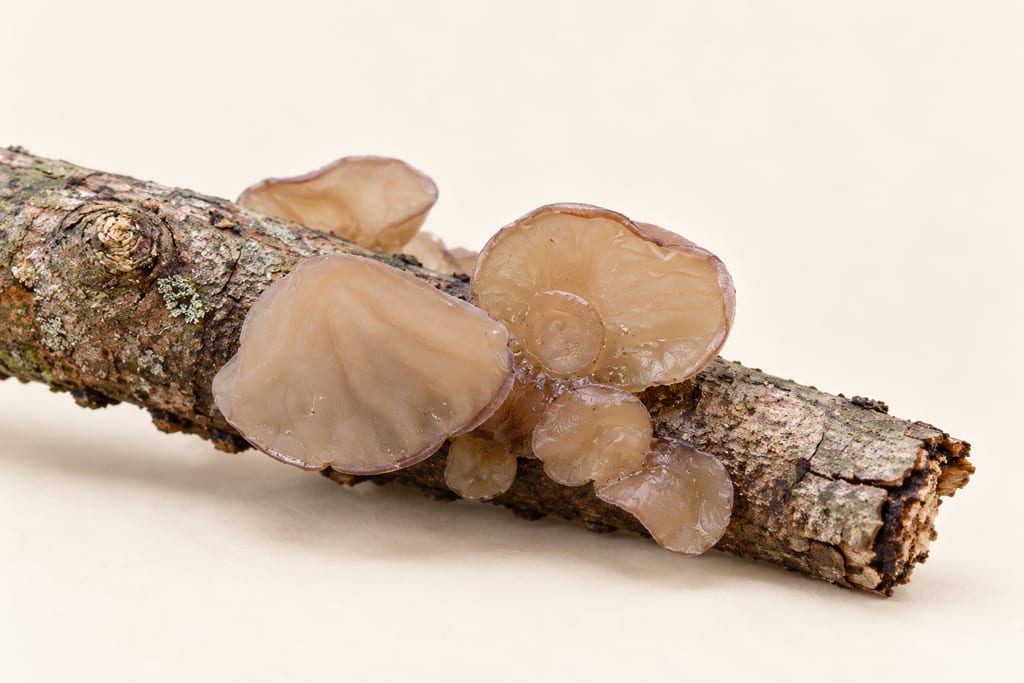
A small wood-decaying jelly fungus recognized as a distinct East Asian species. A Chinese edible-fungi catalogue lists it as edible, but species-specific preparation and safety evidence remain limited.
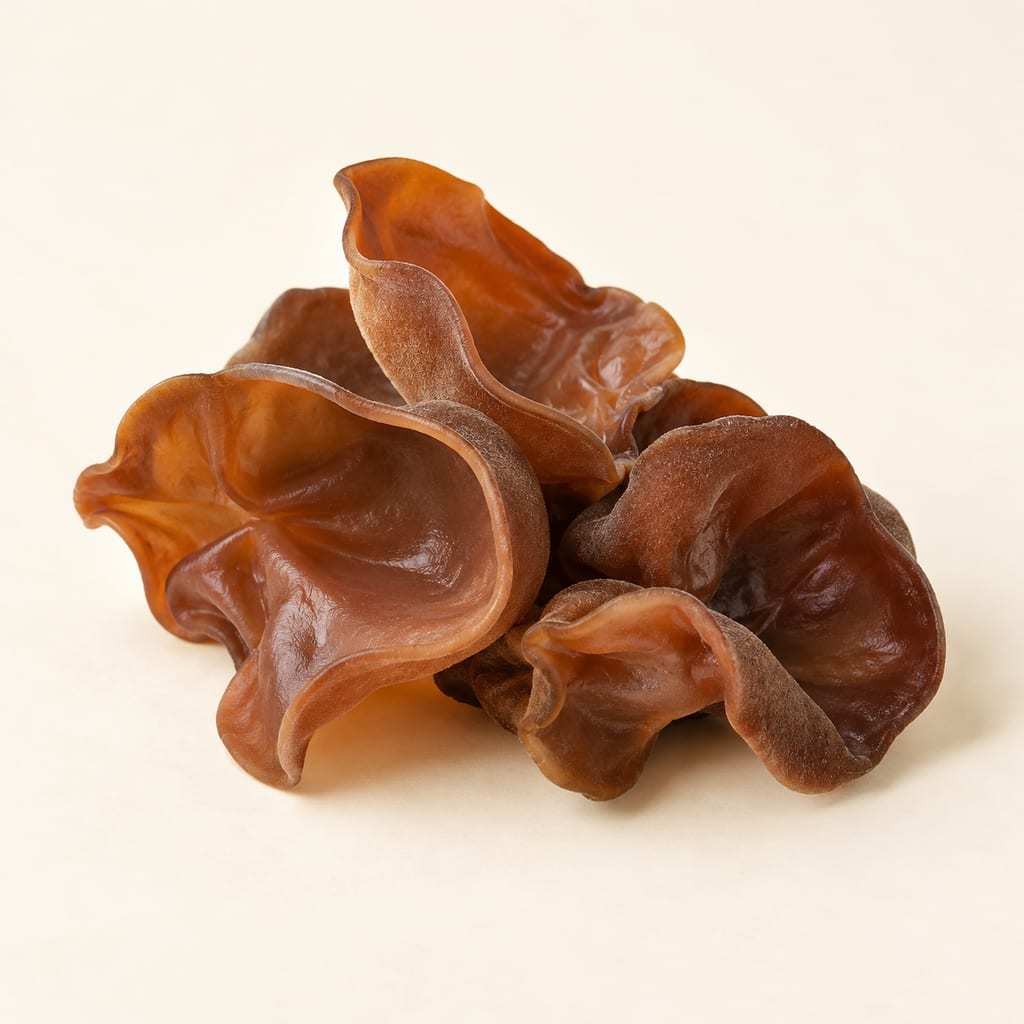
Auricularia villosula, the short-haired wood ear, is an Asian wood fungus that China lists as edible and that is cultivated in Inner Mongolia. It is easily confused with the cultivated black wood ear, so a market label does not settle the species.
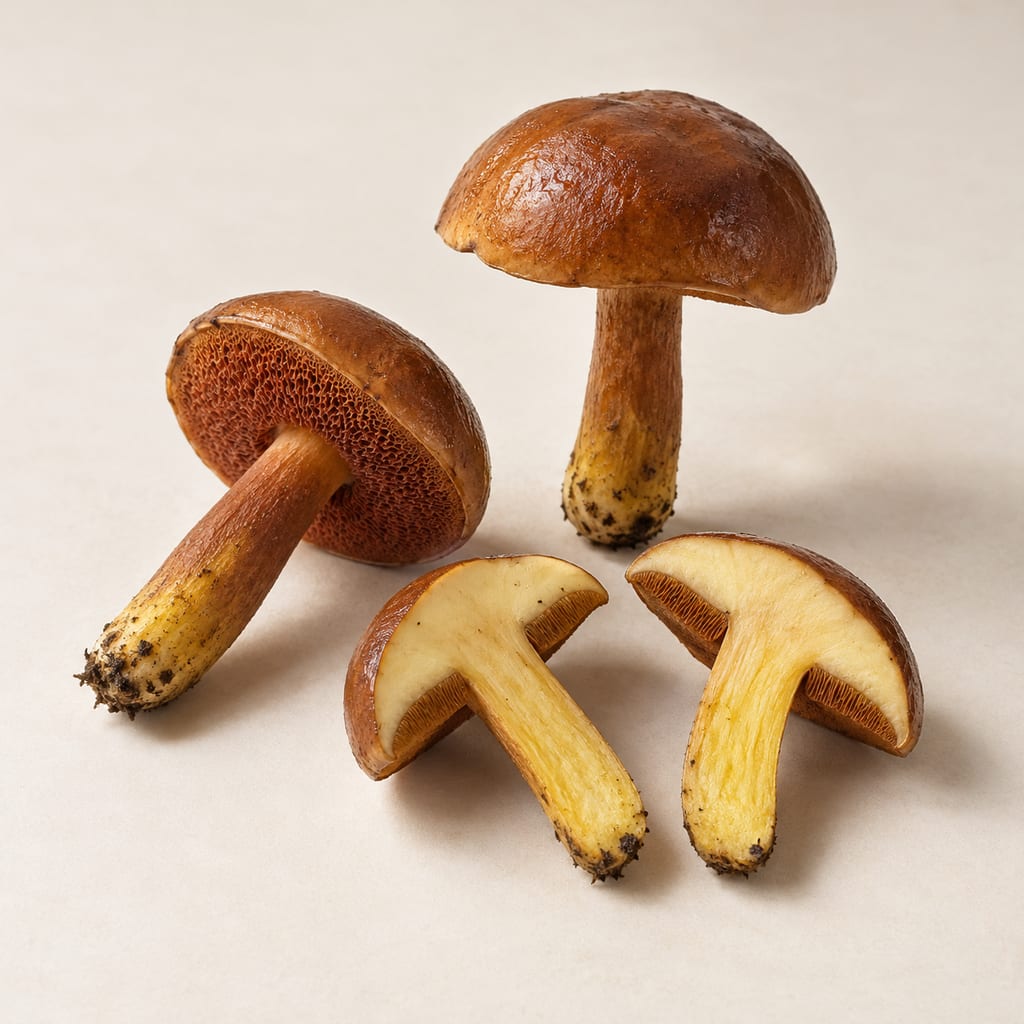
A peppery woodland bolete with historical edible labels and reported condiment use in Querétaro. Current mycological references call its edibility suspect or unestablished; this entry does not recommend consumption.
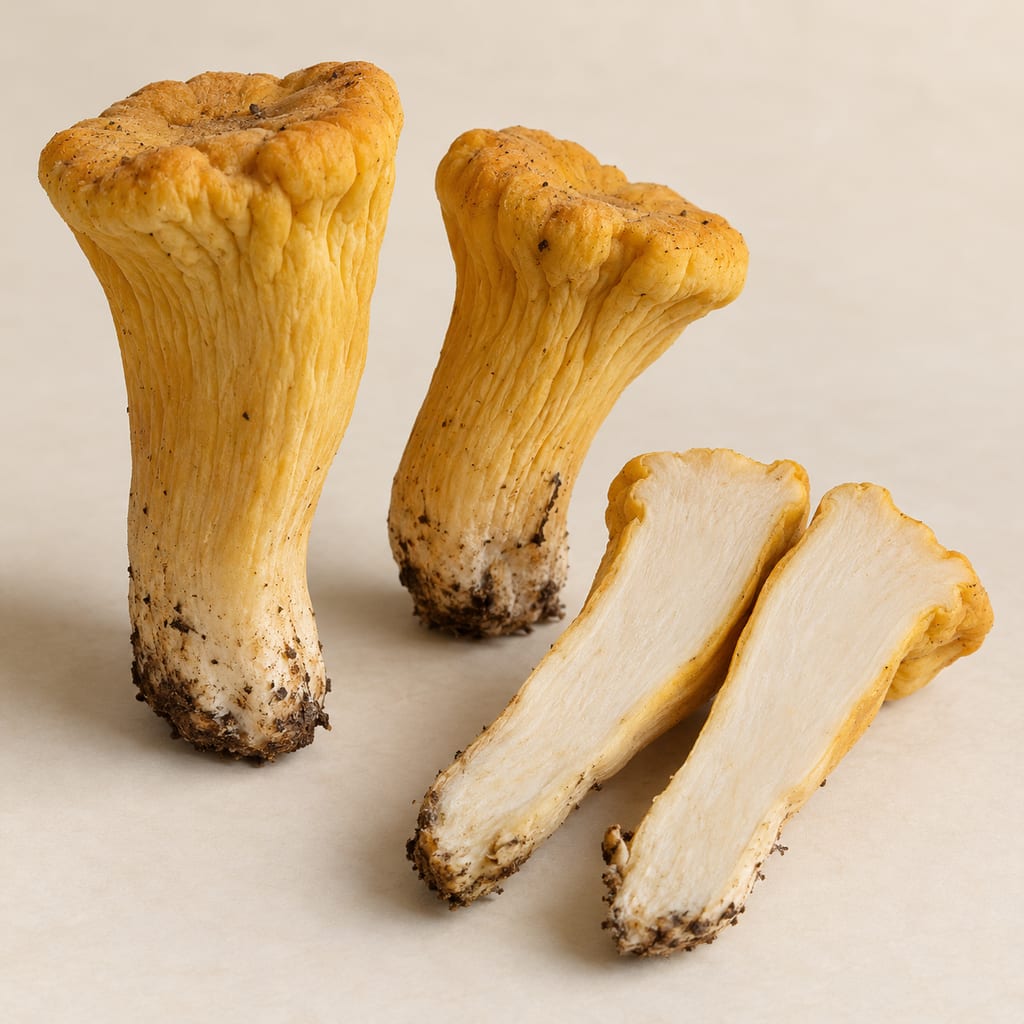
A yellow to ochre club fungus reported as food in parts of Mexico and in historical country lists. Local acceptance and taxonomy vary, and some Chinese records may refer to Clavariadelphus amplus.
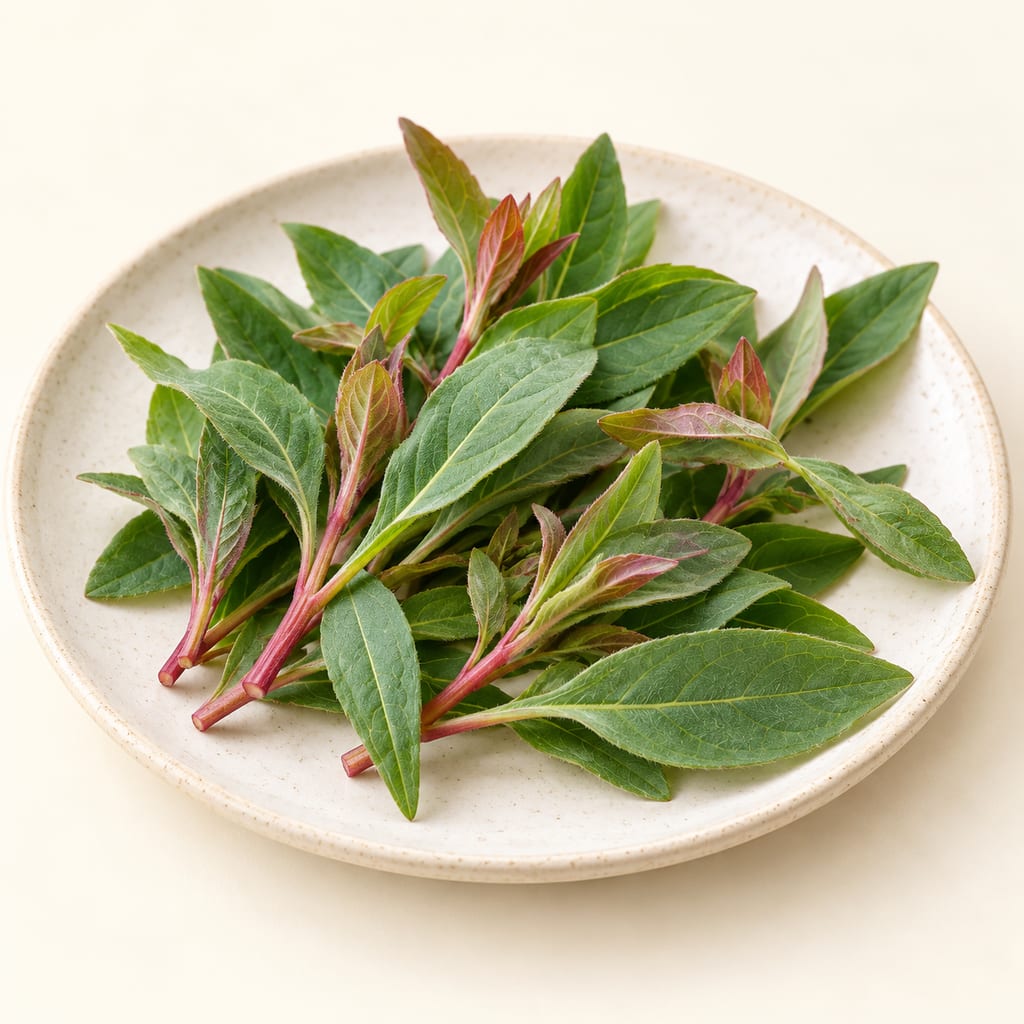
Dwarf fireweed (Epilobium latifolium) is a northern wild herb whose tender leaves and flowers appear in distinct Arctic food traditions.
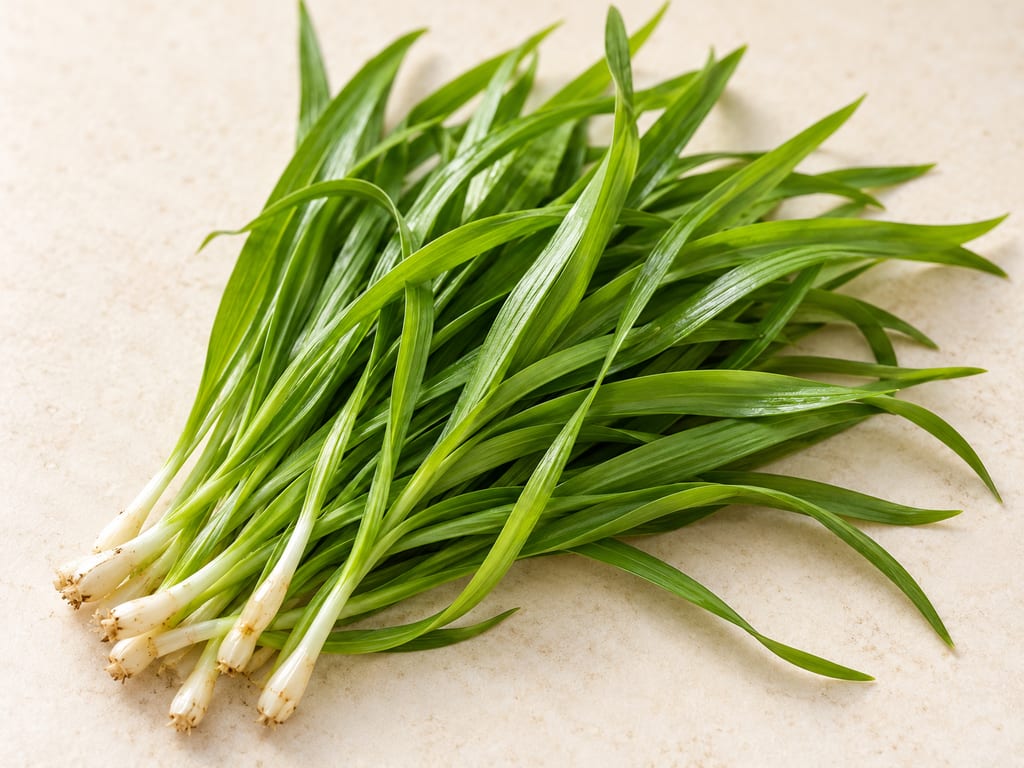
Few-flowered garlic (Allium paradoxum) is a bulbous perennial native from eastern Ukraine through the Caucasus to Iran. Its leaves and, in some documented traditions, stems, bulbs or bulbils are eaten fresh, cooked or preserved.
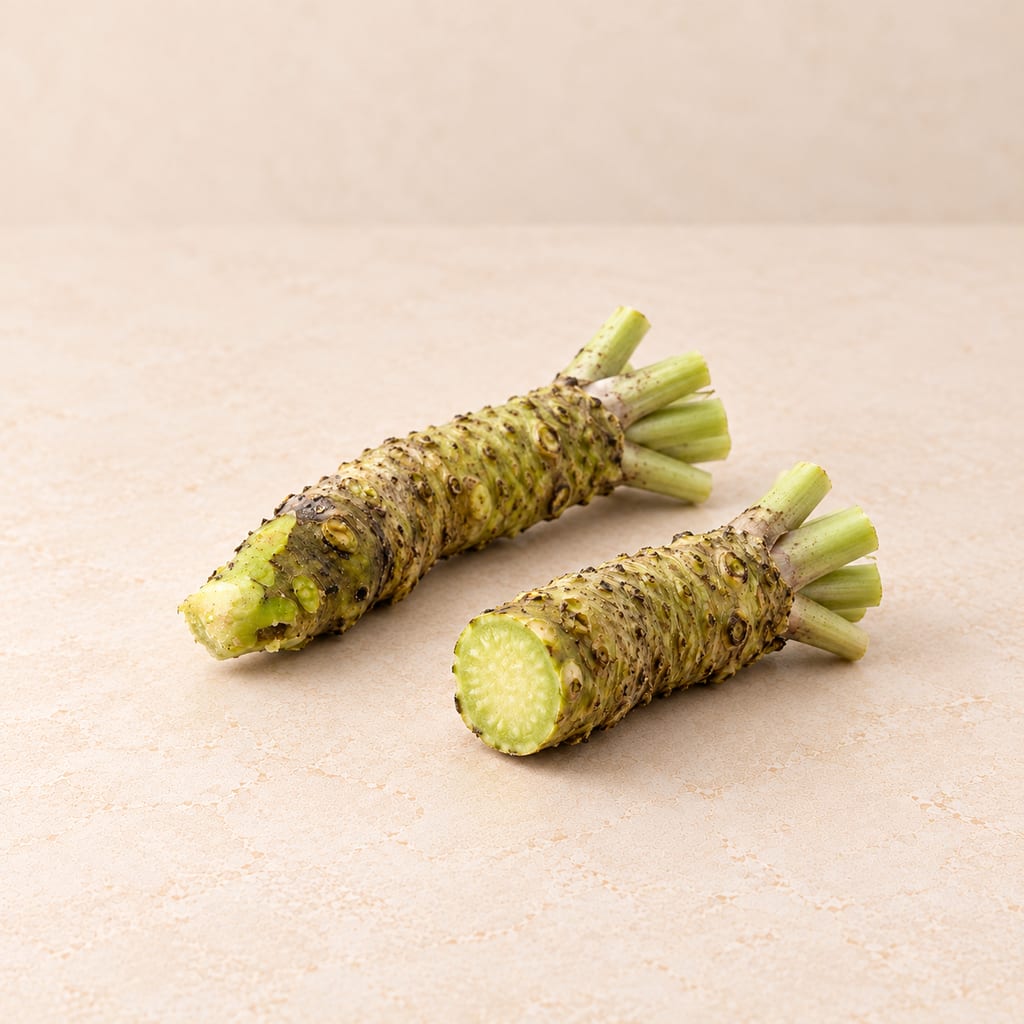
Wasabi is the enlarged stem of Eutrema japonicum, a pungent perennial in the mustard family. Fresh rhizome is grated as a Japanese condiment; powder and prepared paste are separate products.
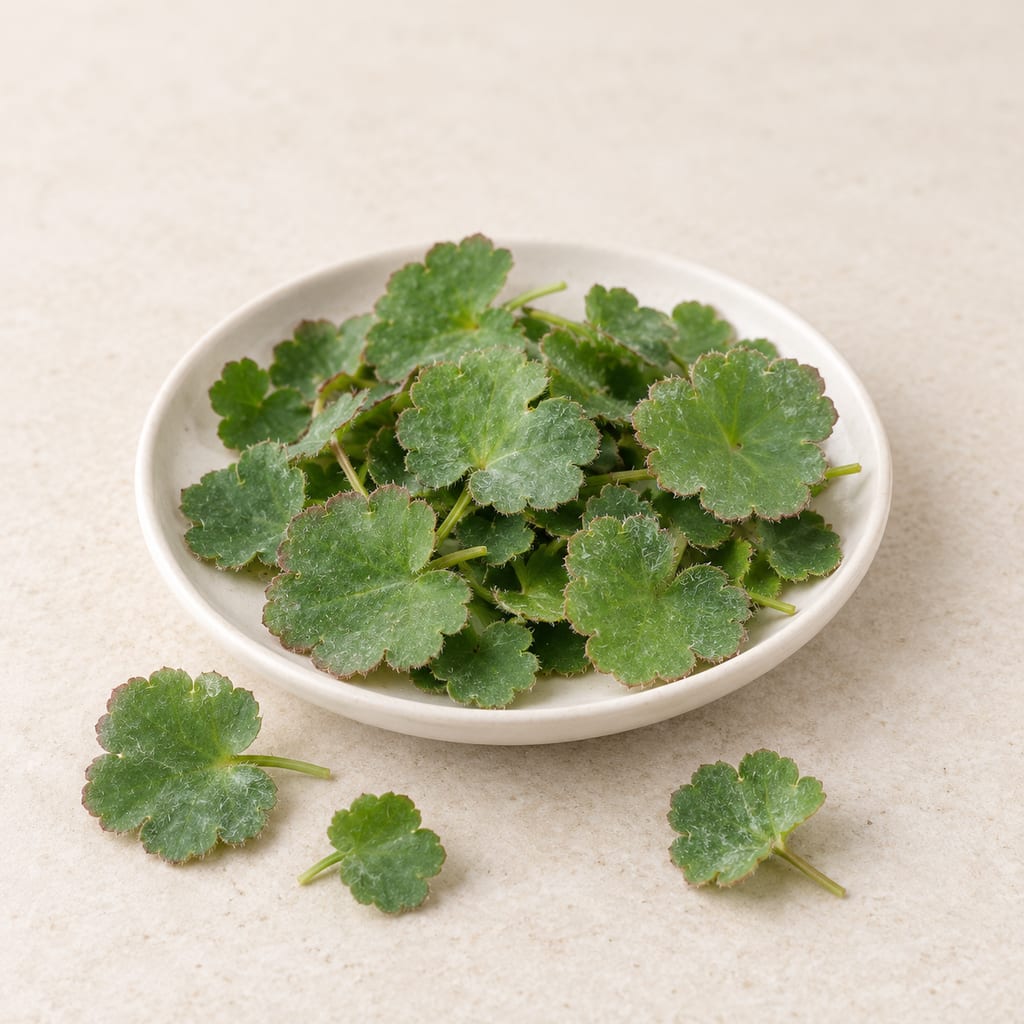
Heartleaf saxifrage is a small Arctic perennial whose soft, toothed leaves are recorded as food among Naukan and Chukchi communities. The botanical name appears as Micranthes nelsoniana and Saxifraga nelsoniana in different references.
No community contributions have been published for this entry yet.
Sign in to contribute. Published comments and photos are free to read.
Codex Alimentarius Commission, FAO/WHODefinition · Culture composition
Standard for Fermented Milks (CXS 243-2003)Section 2.1 defines kefir starter as prepared from kefir grains and describes lactic acid bacteria, Leuconostoc, Lactococcus, Acetobacter and yeasts. This product-standard definition does not identify every household grain community.
Cited in: A culture that holds its shape; Related organisms, different communities; Reading names and scientific labels carefully
Journal of Dairy ScienceMicrobiology · Culture identity
Identification of dominant species common to kefir grains from seven origins for kefir grain reconstructionThe 2025 study compares three commercial and four household grain samples. Under its culture-dependent methods, Lactobacillus kefiranofaciens and Lentilactobacillus kefiri dominated the cultured bacteria; Kazachstania exigua was the yeast detected. Reconstructed grains remained smaller than natural grains. These results are specific to this study, not a universal composition or complete reconstruction.
Cited in: A culture that holds its shape; Related organisms, different communities; What repeated use preserves—and what it cannot standardize; Reading names and scientific labels carefully
Laboratory Diagnostics Eastern EuropeGeography · Microbiology
Metagenomics of Autochthonous Kefir Grains Obtained from Mountainous Regions of Karachay-Cherkessia and Kabardino-Balkaria RepublicsThe 2025 study analyzed seven household grain samples from settlements in Karachay-Cherkessia and Kabardino-Balkaria using 16S rRNA and ITS1 approaches. Sampling documents contemporary regional grains, not a unique prehistoric origin.
Cited in: A North Caucasus history with open questions
British Medical JournalHistorical attestation
KefirThe 1884 report describes kefir as long established among mountaineers near Elbruz and Kasbek, while acknowledging that the exact origin of the seed was unknown. It is an early printed account, not proof of birthplace or a validated home method.
Cited in: A North Caucasus history with open questions
Colorado State University ExtensionDocumented preparation · Handling
Understanding and Making KefirThe extension's household example uses 2 tablespoons active grains with 2 cups pasteurized milk, cleaned equipment, a cloth cover, 18–24 hours at 65–85°F (18–29°C), straining and reuse. It excludes ultra-pasteurized/UHT milk and suggests pH strips. These are that guide's conditions, not universal validated limits.
Cited in: How the grains are used; Milk allergy and dietary context; What repeated use preserves—and what it cannot standardize; The limits of home-method evidence
Queensland GovernmentFood safety
Fermented foodsQueensland guidance says use proven recipes, clean and sanitize equipment, use only pasteurized milk, achieve pH below 4.6 within 24 hours and refrigerate the finished product. This is jurisdiction-specific guidance; smell, taste or bubbles are not substitute safety checks.
Cited in: Food-safety limits matter; The limits of home-method evidence
Health CanadaFood safety
Unpasteurized or raw milkHealth Canada warns raw milk can contain disease-causing microorganisms and recommends choosing pasteurized milk. Fermentation is not a proven home safety control for raw milk.
Cited in: Food-safety limits matter
Health CanadaAllergen context
Milk – A priority food allergenMilk is a priority food allergen. Culturing milk does not make this ingredient suitable for milk-protein allergy; lactose intolerance is a different condition.
Cited in: Milk allergy and dietary context
FEMS Microbiology Letters; PubMed recordMicrobiology · Grain versus fermentate
High-throughput sequence-based analysis of the bacterial composition of kefir and an associated kefir grainThe authors analyzed 17,416 unique 16S rRNA V4 regions from one Irish starter grain and derivative kefir milk. The grain-associated community was largely Lactobacillaceae; Streptococcaceae, primarily Lactococcus, dominated the fermentate; the grain interior had greater diversity than its exterior. This one-grain study does not establish a universal community.
Cited in: The grain and the drink are different samples; Reading names and scientific labels carefully
Journal of Dairy ScienceMicrobiology · Grain growth
Milk composition shapes structural and microbial dynamics of kefir grain formation: Linking microbiota, metabolites, and grain architectureThe 2026 study followed grain subculture for 28 days in cow milk, goat milk and whey protein concentrate. It reports substrate-associated differences in morphology and microbiota under its controlled conditions, including compact grains in cow milk, filamentous extracellular-polysaccharide-rich grains in goat milk and fragmented structures in whey protein concentrate. These results are not a universal household method.
Cited in: Milk is part of the culture's environment