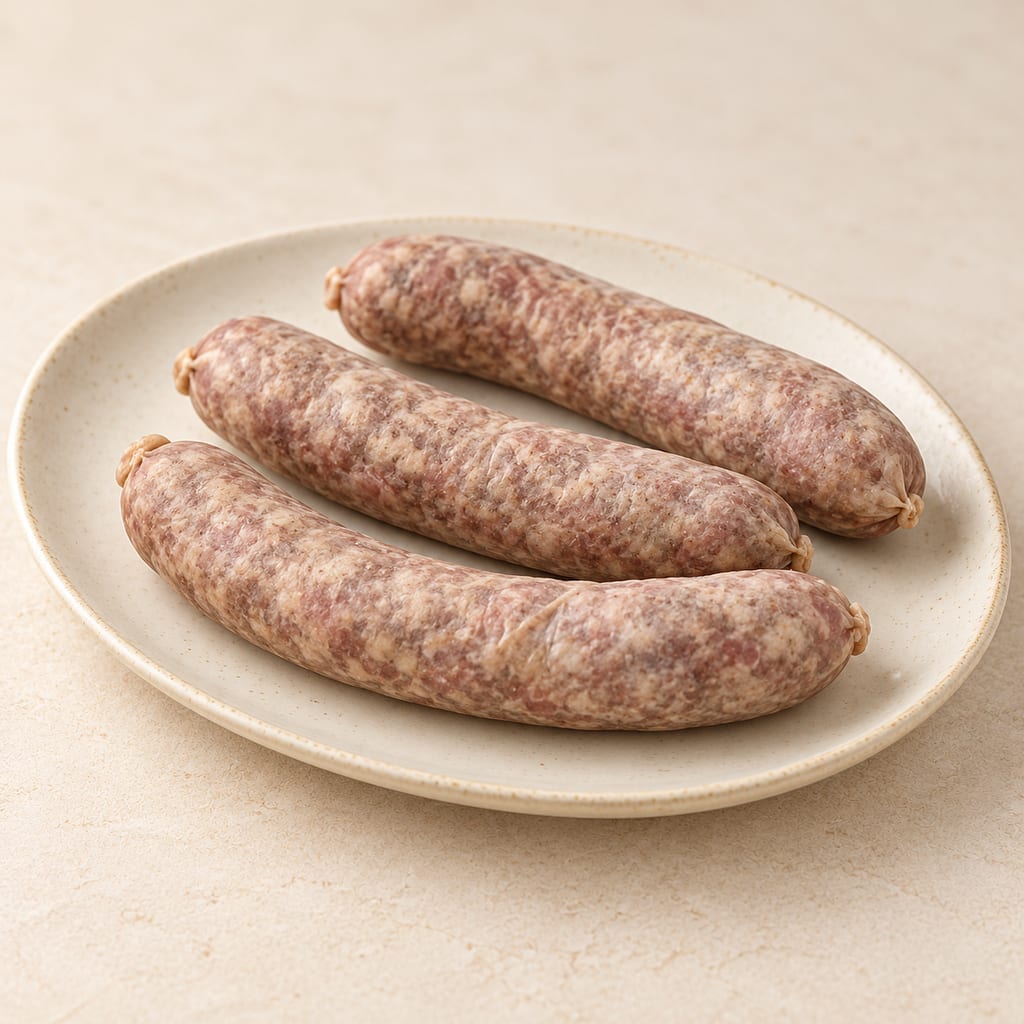
Maltese sausage, starter-cultured
A documentary account of Maltese zalzett and a contemporary starter-cultured adaptation. The cited raw-pork method lacks documented validation for pathogen reduction and is not offered as a preparation recipe.
 FermenteaWhere food goes to change
Substrates
Pork shoulder is the forequarter of the pig, divided into the upper Boston butt and the lower picnic. It is a working muscle group with connective tissue and fat, and it is the usual lean meat for sausage.
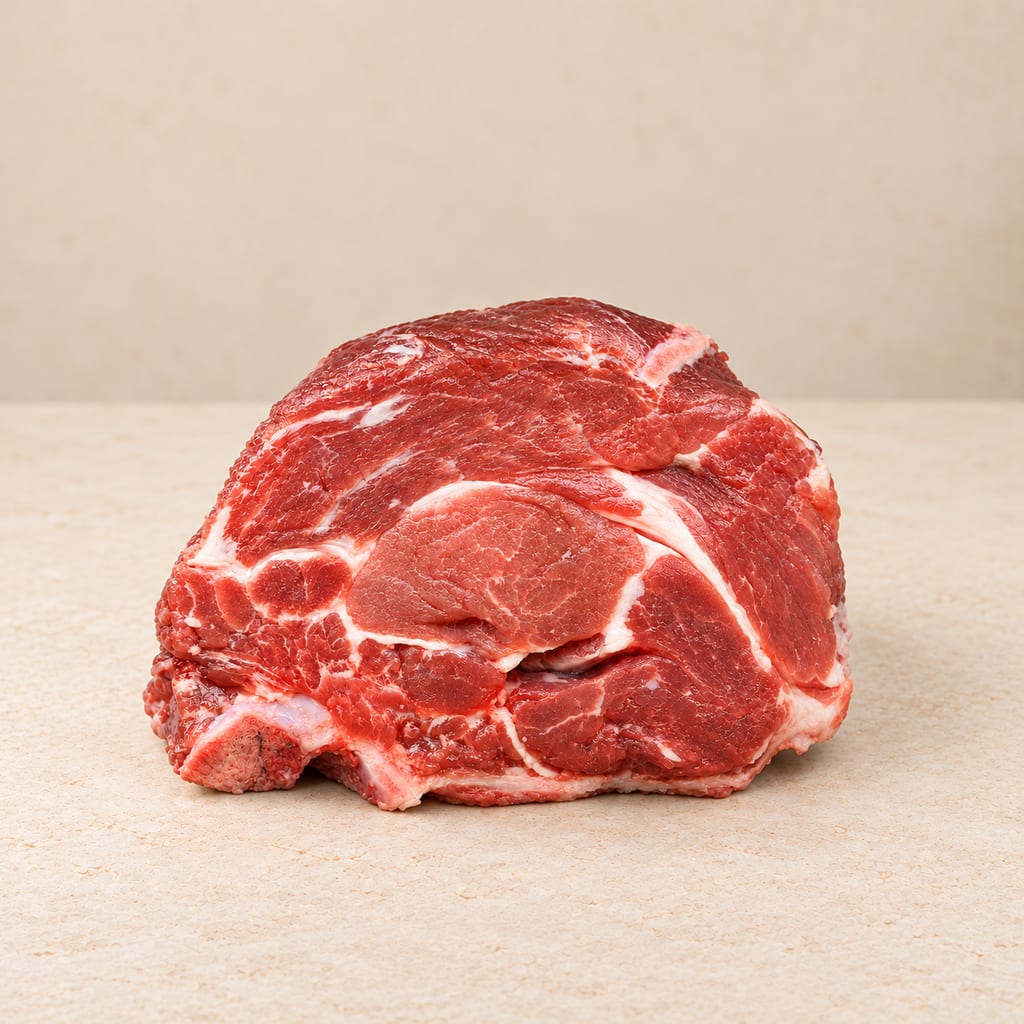
The pork shoulder is the part of the pig that carries its head and works its foreleg. It is a block of several muscles around the shoulder blade and upper arm, and butchers sell it whole, or split into two roasts, or cut down further. Its texture is coarse, because the muscles that move a foreleg are worked muscles with plenty of connective tissue and fat between them. That is why cooks reach for it when the job is a long cook or a sausage grinder, and not a quick sear.
The splitting is a matter of standard butchery. The American institutional specification for fresh pork describes the whole shoulder as separated from the side by a straight cut just behind the tip of the elbow, with the foot, jowl, neck bones and ribs taken off. A whole shoulder of this kind weighs 17 to 20 pounds or 20 to 28 pounds (about 7.7 to 9 or 9 to 12.7 kg). From it the butcher removes the picnic below and the butt above. The butt, widely called the Boston butt, carries the blade bone and comes from the upper shoulder; the picnic, or arm shoulder, is the lower part, with the arm bone and often the skin on the shank. Despite its name, the Boston butt has nothing to do with the hindquarters.
Behind the commercial names are named muscles. A boneless picnic exposes a cross-section of the cushion, the triceps brachii group, and when this cushion is removed as its own item it is a lean roast with almost no fat. The boneless butt shows the longissimus muscle at the loin end, where the shoulder joins the loin, the supraspinatus on the picnic side, and at least traces of the trapezius, which butchers call false lean. Other muscles lie among them, separated by seams of fat and connective tissue.
Seen cut, the two roasts differ. The Boston butt is a thick cut, over 2 inches (5 cm), with the blade bone exposed on two faces, some fat and connective tissue between its muscles and fat on the outer edges. The picnic is larger and has more fat and connective tissue between muscles, considerable fat on the outside, and a shank covered in skin. Both cuts suit dry or moist cooking, and the labels butt and picnic describe different anatomy, not different grades of the same meat. The federal lists place blade steaks, Boston roasts, picnic cuts and ground pork for sausage among the products of the shoulder primal. Names vary between markets, and what one counter calls a shoulder roast may be a butt, a picnic or a trimmed piece from either.
Shoulder comes from the domestic pig, Sus scrofa domesticus, the domesticated form of the Eurasian wild boar. Pigs were first domesticated in the Near East; DNA from ancient pigs shows that domestic pigs reached Europe with early farmers about 8,500 years ago, and that interbreeding with European wild boar then replaced nearly all of their original ancestry.
Commercial pigs are finished at around 170 to 200 days old and 110 to 140 kg live weight, after which the carcass is chilled and cut. A pig finished and slaughtered in Australia in a study of three supply chains had a hot carcass weight of 75 to 100 kg. Commercial pigs are usually crossbreds: the Australian supply chains used Large White by Landrace and Large White by Landrace by Duroc crosses, and the Korean belly study used (Landrace by Yorkshire) by Duroc crossbreds. Breeding and feeding programmes of recent decades aimed to produce leaner carcasses, so a modern shoulder is not the same meat as the one an eighteenth-century hog supplied. The cut depends on the pig that provides it.
Muscle is built from long fibres packed into bundles, wrapped and separated by connective tissue that anchors muscles to one another and to bone. Collagen is the main structural protein in that tissue. Muscles that work hard are more heavily wrapped, which is why the shoulder and the shank are the textbook examples of coarse-textured cuts, and why the amount and properties of collagen change from muscle to muscle and with the age of the animal. The connective tissue holds a large share of the toughness that cooking has to overcome.
A 2024 Australian study measured it. Researchers sampled the triceps brachii, a muscle of the shoulder, the longissimus thoracis et lumborum of the loin, and the biceps femoris of the leg, in crossbred pigs from three supply chains, killed in summer and winter, with carcass weights of 75 to 100 kg. The triceps brachii had the highest collagen, 7.31 mg per gram, against 5.88 for the biceps femoris and 4.07 for the loin muscle. It had the most intramuscular fat, 2.43 percent against 1.18 and 1.08 percent, and the highest pH, 5.92 against 5.77 and 5.67. Season, sex and carcass weight moved the numbers as well, and the loin results did not predict those of the other muscles. The study sampled one pig population, so its figures show the pattern that shoulder muscle is richer in collagen and fat than loin, not a value for any particular roast.
Fat appears in more than one form. Fine flecks inside muscle are intramuscular fat, fat lies in seams between muscles, and a distinct layer lies under the skin. Backfat is the separate subcutaneous layer along the back, not a name for the fat in shoulder meat, so a formula that calls for shoulder and backfat adds two different fats.
The usual treatment is slow. A Boston butt is cooked low and slow, to an internal temperature near 200 degrees F (about 93 degrees C), then shredded or pulled for pulled-pork sandwiches; it is the usual first cut for an aspiring pit master. At that temperature a muscle full of connective tissue gives up its toughness and falls apart in strands. The same cuts can be braised or roasted, dry or moist.
For safety, whole cuts of fresh pork are cooked to 145 degrees F (63 degrees C) and rested for 3 minutes, a recommendation the US Department of Agriculture adopted in 2011 after finding it as safe as the older 160 degrees F with no rest. Ground pork stays at 160 degrees F. These are cooking temperatures for fresh pork, and they are separate matters from the controls used for a raw fermented sausage, which is a different kind of process.
Shoulder is a common lean meat for sausage, and farm guides count shoulder trimmings among the usual inputs. A sausage mixture needs lean meat and fat in the proportions that suit the product. In a coarsely ground link the lean forms the larger pieces and the added fat shows as distinct particles, which gives a cut link its speckled cross-section. A finely comminuted sausage is reduced much further and relies on a stable emulsion of meat and fat. Pork subcutaneous fat is the widely used fat in sausage, and the amount depends on the type of sausage and the fat already in the meat. A modern Maltese-style fermented sausage, for example, takes its lean from shoulder at four parts to one of separately weighed backfat.
Preparation follows the cut. A USDA farm bulletin directs the processor to remove skin, bone and cartilage before sausage is made from trimmings, and records shoulder trim as one possible source, sometimes with additional fat added when a whole shoulder is used. Sinew and silverskin, the visible connective sheets, are trimmed away as well, though the fine seams among muscle bundles stay. Meat and fat are kept cold, because firm material cuts cleanly in a grinder and softened fat smears instead of remaining as distinct particles, a defect that fermented-sausage guidance names.
Older cooks followed the same logic with different materials. Late eighteenth-century Virginia receipts combine tender pork with leaf fat, seasoned with pepper, salt and sage and stuffed into cleaned skins, or leg meat with hard hog fat and herbs. Leaf fat is internal fat around the organs, backfat an external depot, so these are related practices and not a recipe line to a modern sausage.
Butchers did not always divide the pig as a modern counter does. A London butchery manual of 1816, quoted in a study of eighteenth-century Williamsburg, lists six principal portions of a pig: spare-rib, hand or shoulder, belly or spring, fore-loin, hind-loin, and leg or ham. The shoulder was one broad working category, and English cookbooks of the period spoke of the spring or hand alongside the belly or spring, so the words overlapped.
The finer vocabulary came later. By the twentieth century American farm guides divided the whole shoulder into the picnic and the blade Boston roast, and described sausage as a destination for lean and fat trimmings from several cuts, with picnic meat available to add lean. Nothing in these sources shows the term Boston butt in the eighteenth century, and modern retail lists still vary. A recipe that depends on a particular muscle, bone state or fat content has to say so, because a request for pork shoulder across borders can bring back different shapes.
Pork was a household crop. The Williamsburg study describes winter slaughter, which supplied the fresh material for sausage and blood pudding, with sausage-making tied to Christmas household work in a letter of 1736. Some cuts were eaten fresh while others were salted, smoked, pickled or potted, and cookbook examples describe meat chopped by hand or beaten in a mortar, seasoned and stuffed into natural casings.
Zalzett tal-Malti, the Maltese sausage, shows shoulder in a regional kitchen. Malta's agricultural authority has published a public-consultation entry that associates the sausage with the Maltese Islands and lists shoulder or belly among its pork options, together with roasted coriander and anise seed, pepper, salt and natural casing, with parsley or rosemary as variants. A starter-cultured modern version follows the same seasoning vocabulary with coriander, pepper, garlic and parsley. Shoulder is the choice of lean in the home recipe and one of two named in the traditional description; it does not by itself make a sausage Maltese, which comes from the name, the place and the seasoning.
The specification limits the fat on a trimmed picnic to about 1 inch (2.5 cm) and on a whole shoulder to 1.5 inches (3.8 cm), measured at the dorsal edge, which gives a buyer a way to ask for trimmed or untrimmed pieces. Bone-in butts keep the blade bone, and a boneless butt can be netted or tied. Fresh pork keeps 3 to 5 days in a refrigerator at 40 degrees F (4 degrees C) or below and 4 to 8 months frozen at 0 degrees F (-18 degrees C), for best quality.
Pork is mammalian meat, and people with alpha-gal syndrome, an allergy to a sugar found in most mammals, may react to it and are advised by clinicians to avoid it. Raw or undercooked pork can carry Trichinella, which salting, drying and smoking alone do not reliably kill.
alpha-gal (mammalian meat)
Where the domestic pig originated; a claim about the animal, not the cut.
Hog butchering and sausage receipts, including the 1816 London manual they quote.
Zalzett tal-Malti, which names shoulder or belly as pork options; not the origin of the cut.
A documentary account of Maltese zalzett and a contemporary starter-cultured adaptation. The cited raw-pork method lacks documented validation for pathogen reduction and is not offered as a preparation recipe.
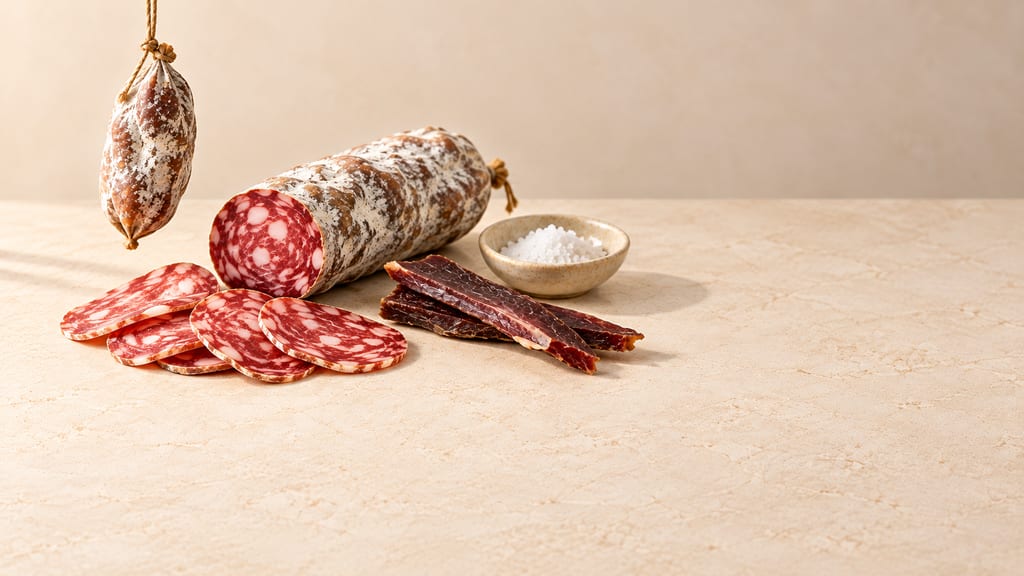
Dry salami, sour pork with rice, matured sheep and aged blubber follow different paths from animal to food. Their stories connect microbes with climate, slaughter, migration and the meals people share.

A refined common-wheat flour blended for a broad range of baking; its protein and behavior vary with wheat, milling and market.

Toasted almonds are whole sweet almond kernels dry-roasted until golden to brown. Heat replaces their marzipan note with a roasted, nutty one; they thicken and flavour romesco.
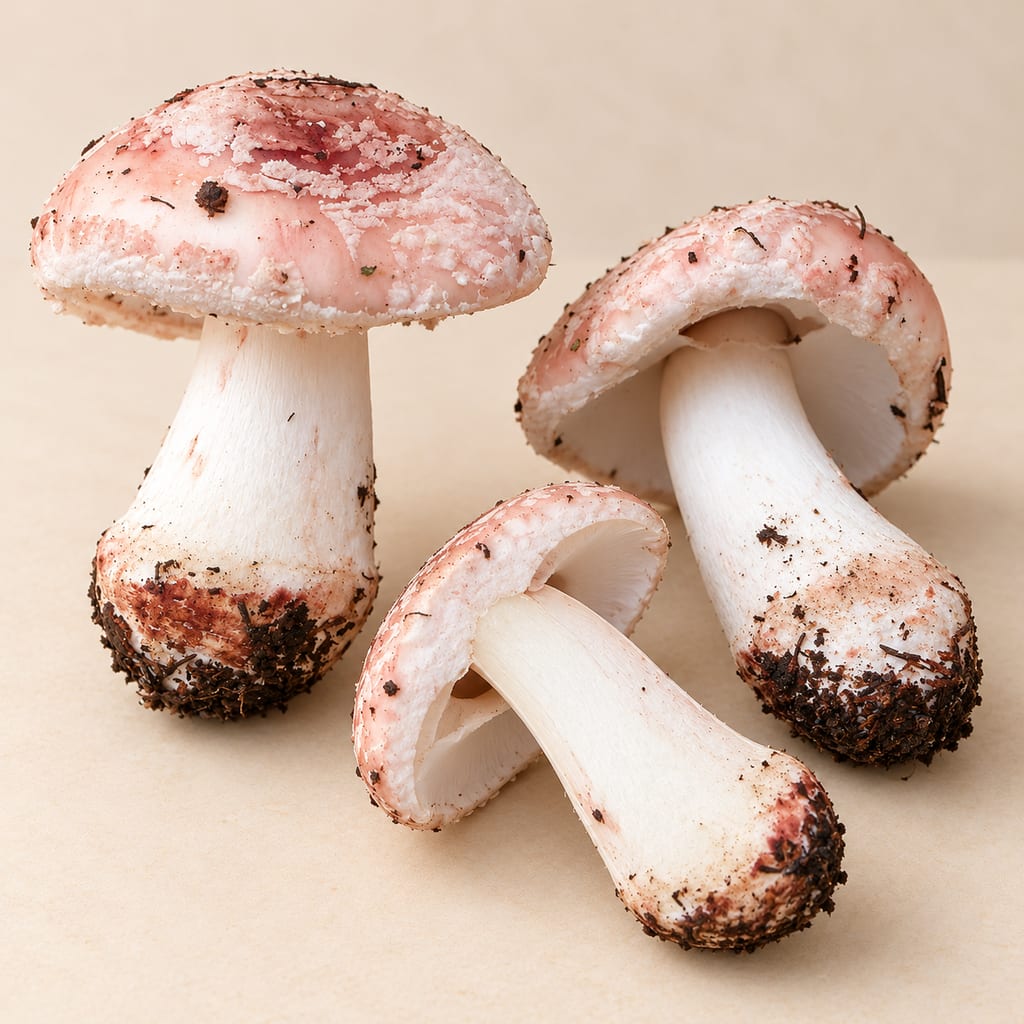
Amanita novinupta is a western North American blusher, a forest mushroom recorded as food in Mexico, and one that must be cooked because its raw flesh is toxic.
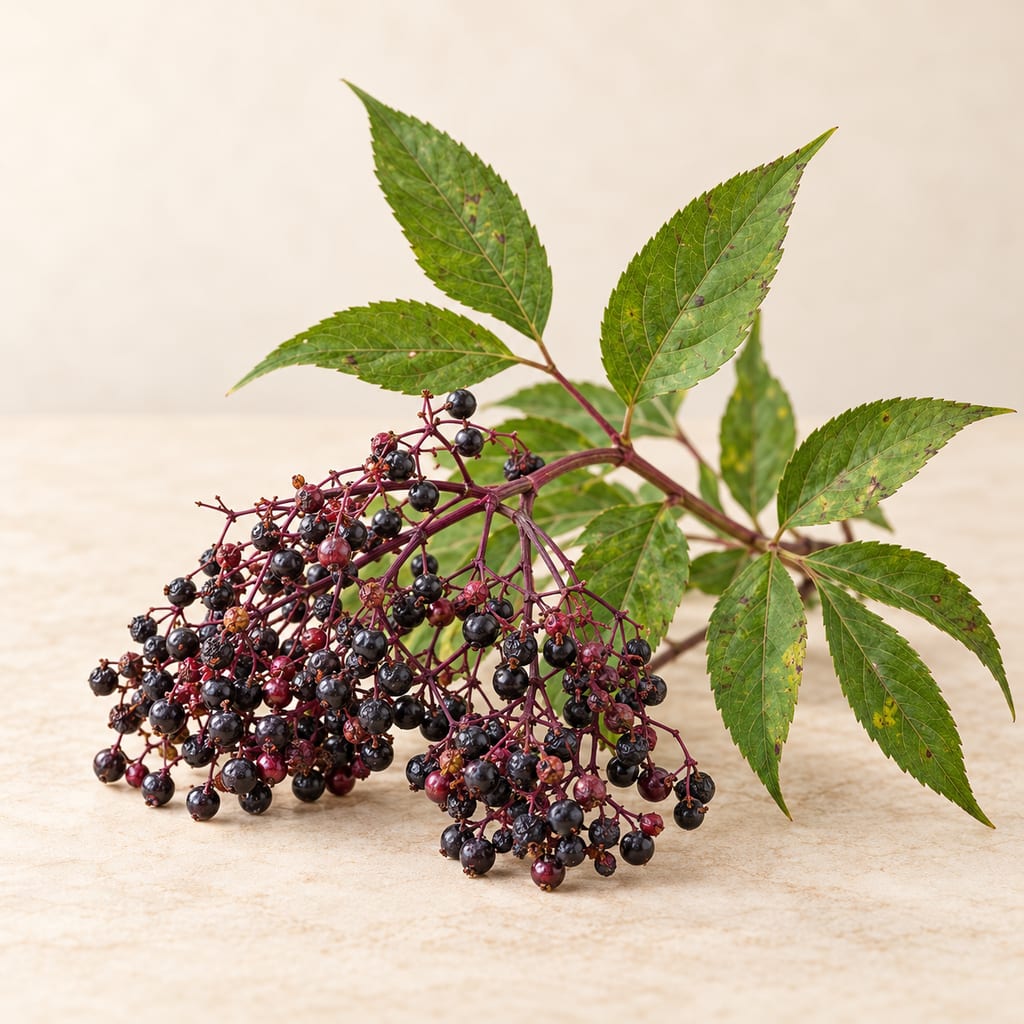
Sambucus canadensis is the accepted name used here for American elderberry. Missouri production guidance and named-cultivar studies give useful regional growing information, while food and analytical sources leave process questions open.
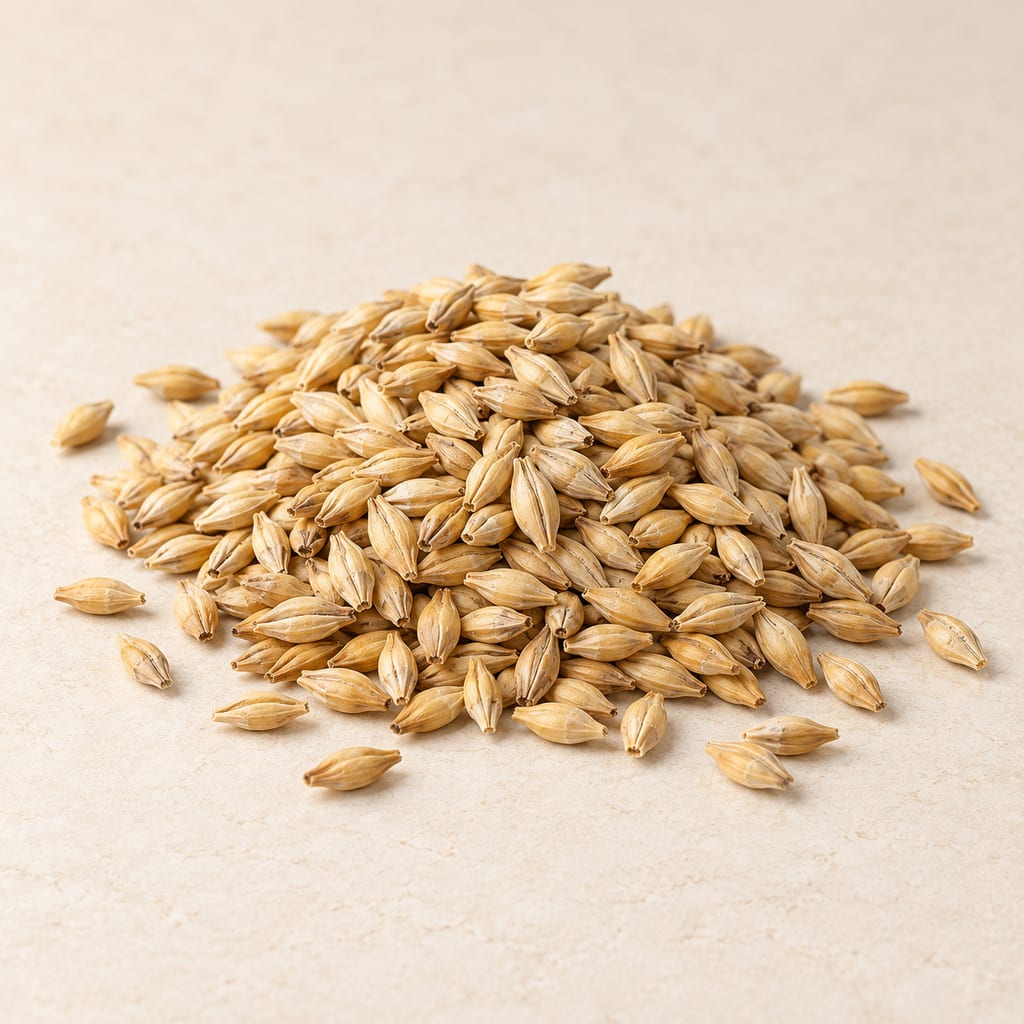
A lightly kilned brewing base made from two-row barley. It supplies starch and enzymes for the mash, with the maltster’s product and lot analysis defining its brewing properties.

Ripe avocado flesh is the soft, buttery, fat-rich pulp of Persea americana, eaten raw. It is low in acid, so it is a fresh ingredient that needs care in chilled dishes.
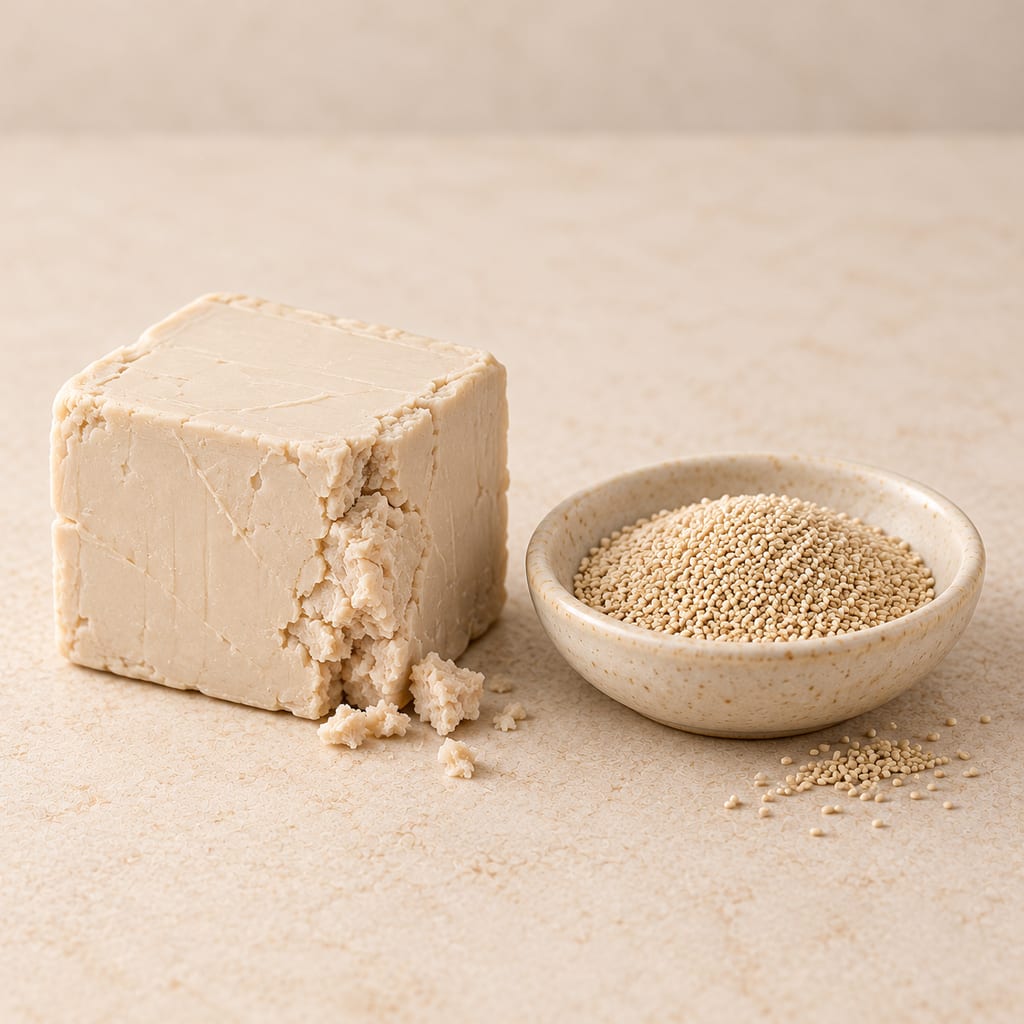
Baker's yeast is a cultivated living leavener, commonly sold fresh or dried. In dough, selected Saccharomyces cerevisiae cells make gas that can raise bread.
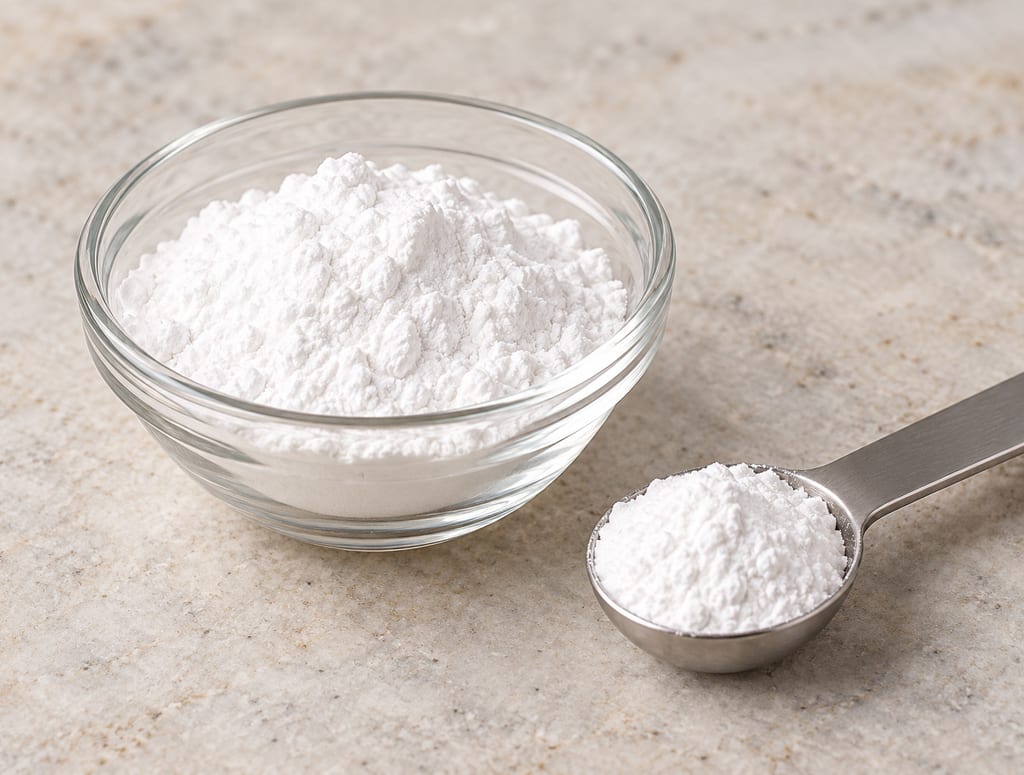
Baking powder is a dry chemical leavener that combines bicarbonate with acid-reacting ingredients and a carrier. Moisture and heat release carbon dioxide for quick breads, batters and griddle cakes.
No community contributions have been published for this entry yet.
Sign in to contribute. Published comments and photos are free to read.
USDA Food Safety and Inspection ServiceCut names
What are the cuts of fresh pork?FSIS lists the shoulder among fresh pork cuts and names its market subdivisions.
Cited in: From the hand of the hog to the Boston butt
USDA Food Safety and Inspection ServiceCooking temperatures
Fresh Pork from Farm to TableConsumer recommendations for fresh whole cuts and for ground pork.
Cited in: Cooking the shoulder
Texas A&M Meat ScienceButt anatomy · Cooking
406 Pork Shoulder, Butt, Bone InBoston butt (IMPS 406) as the upper shoulder made of many locomotion muscles with substantial connective tissue; low and slow cooking near 200 F for pulled pork.
Cited in: The forequarter of the pig; The muscles in the roast; Cooking the shoulder
University of Kentucky, Animal & Food SciencesButt and picnic
Swine Discovery: Retail CutsUpper Boston butt with blade bone and some fat and connective tissue between muscles; lower picnic with blade and arm bone, more fat and connective tissue, skin on the shank; both dry or moist cooking.
Cited in: The forequarter of the pig; The muscles in the roast
USDA Agricultural Marketing ServiceCut specification · Muscle names
Institutional Meat Purchase Specifications: Fresh Pork, Series 400 (2020 draft)Shoulder item 403, picnic 405, butt 406; weight bands; picnic cushion as M. triceps brachii group; butt shows M. longissimus, M. supraspinatus and M. trapezius (false lean); fat thickness limits.
Cited in: The forequarter of the pig; The muscles in the roast; Choosing, keeping and allergy
BCcampus Open EducationMuscle structure
Meat Fibres and Tenderness FactorsMuscle fibres, bundles and connective tissue; shoulder and shank as coarse-textured working muscles.
Cited in: What the muscles are made of
Journal of Animal Science (2024)Muscle composition
Muscle, season, sex, and carcass weight affected pork texture, collagen characteristics, and intramuscular fat contentTriceps brachii (shoulder), biceps femoris (leg) and longissimus thoracis et lumborum (loin) from 60 Australian crossbred pigs: collagen 7.31, 5.88 and 4.07 mg/g; intramuscular fat 2.43, 1.18 and 1.08 percent; pH 5.92, 5.77 and 5.67.
Cited in: Where it comes from; What the muscles are made of
Meat ScienceConnective tissue
Intramuscular connective tissue and its role in meat qualityReview of how intramuscular connective tissue contributes to meat texture, particularly after cooking.
Cited in: What the muscles are made of
Food and Agriculture Organization of the United NationsSausage processing
Guidelines for Slaughtering, Meat Cutting and Further Processing: Meat ProcessingSausage fat sources and comminution.
Cited in: The meat in the sausage
Food and Agriculture Organization of the United NationsSausage fat
Small-scale Sausage Production: Raw MaterialsSubcutaneous pork fat as a sausage ingredient; the amount depends on the sausage type and the fat in the meat.
Cited in: The meat in the sausage
USDAButchery · Sausage trimmings
Pork Slaughtering, Cutting, Preserving, and Cooking on the Farm, Farmers' Bulletin 2265Farmers' Bulletin 2265 (1978, revised 1981): shoulder divided into picnic and blade Boston roast; sausage from trimmings with skin, bone and cartilage removed.
Cited in: The meat in the sausage; From the hand of the hog to the Boston butt
Colonial Williamsburg FoundationHistory
The Butchering and Processing of Pork in Eighteenth Century WilliamsburgAn 1816 London manual listing six portions of the pig, including the hand or shoulder; winter slaughter; Virginia sausage receipts.
Cited in: The meat in the sausage; From the hand of the hog to the Boston butt
Agriculture Research & Innovation Hub, MaltaRegional use
Applications Submitted to Be Included in the Register for Traditional Agro-Food Products Open for Public ConsultationZalzett tal-Malti entry in the register of traditional agro-food products: shoulder or belly, roasted coriander and anise seed, pepper, salt, natural casing.
Cited in: Shoulder in Maltese sausage
2 Guys & A CoolerRecipe use
Maltese SausageA modern starter-cultured Maltese-style sausage using 800 g pork shoulder with 200 g backfat, coriander, pepper, garlic and parsley.
Cited in: The meat in the sausage; Shoulder in Maltese sausage
Animal Diversity Web, University of Michigan Museum of ZoologyScientific name
Sus scrofa (wild boar)Sus scrofa as the species and Sus scrofa domesticus as the domesticated subspecies.
Cited in: Where it comes from
Proceedings of the National Academy of Sciences (Frantz and colleagues, 2019)Animal history
Ancient pigs reveal a near-complete genomic turnover following their introduction to EuropeDomestic pigs reached Europe with Near Eastern farmers about 8,500 years ago and were largely replaced genetically by European wild boar lineages.
Cited in: Where it comes from
Animal Bioscience (Hoa and colleagues, 2021)Finishing age and weight
Meat quality characteristics of pork bellies in relation to fat levelCommercial pigs are finished at about 170 to 200 days and 110 to 140 kg; breeding and feeding for lean carcasses.
Cited in: Where it comes from
CIDRAP, University of Minnesota (24 May 2011)Cooking temperatures
USDA: 145 degrees is safe temp for pork145 F with a 3-minute rest for whole cuts of pork, 160 F for ground pork.
Cited in: Cooking the shoulder
British Columbia Centre for Disease ControlFat smearing · Process safety
Safety of Fermented Foods: Fermented SausageFat smearing during fermented-sausage preparation; hazards and controls of fermented sausage.
Cited in: The meat in the sausage
Minnesota Department of HealthStorage
Storing and Preserving: cold food storageFresh pork 3 to 5 days refrigerated at 40 F and 4 to 8 months frozen at 0 F.
Cited in: Choosing, keeping and allergy
Centers for Disease Control and PreventionDietary context
About Alpha-gal SyndromeAlpha-gal is found in mammalian meat, including pork; clinician-led avoidance.
Cited in: Choosing, keeping and allergy
Centers for Disease Control and PreventionSafety
About TrichinellosisRaw or undercooked pork carries Trichinella; salting, drying and smoking alone do not consistently kill it.
Cited in: Choosing, keeping and allergy