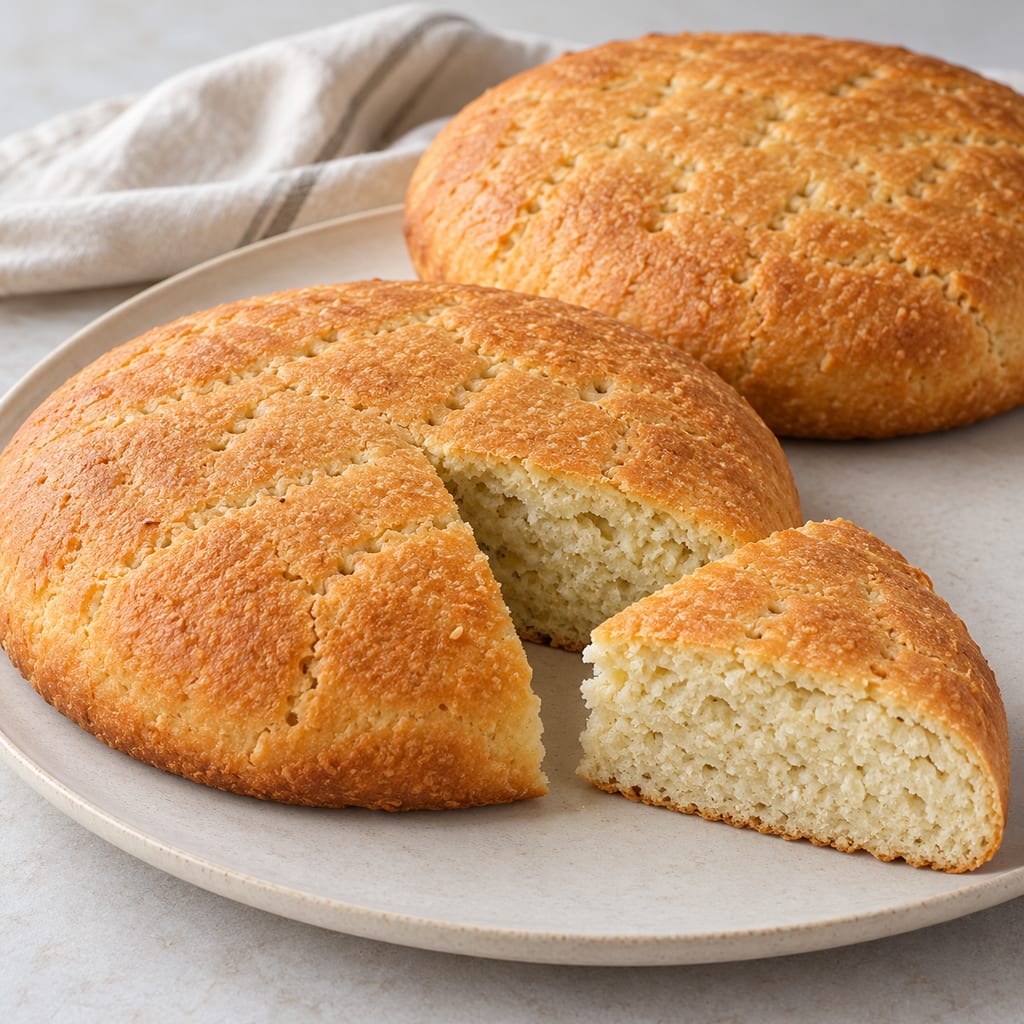
Coconut bake
A yeast-raised Trinidadian wheat bread with blended fresh coconut, baked as two thick rounds.
 FermenteaWhere food goes to change
Bara · Doubles bara · Bara for doubles
Soft Trinidad bara are thin yeast-raised wheat rounds fried briefly, then paired as two breads around channa and condiments to make doubles.
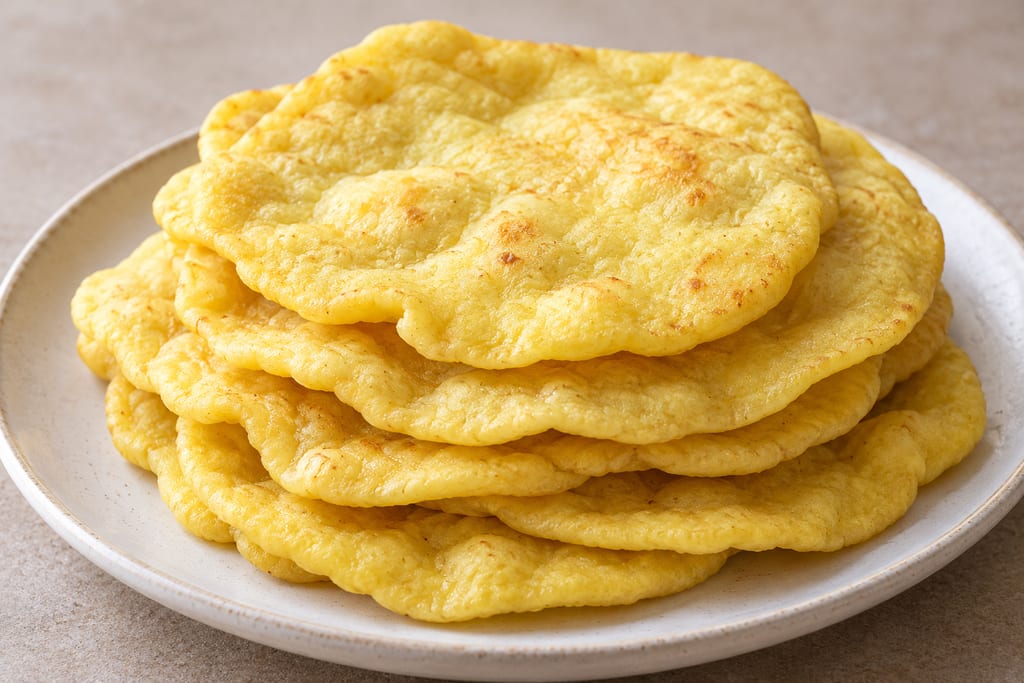
Trinidad doubles are assembled from two soft, fried breads called bara, filled with channa and finished with condiments such as chutneys and pepper sauce. Ria describes them as pliable, pillowy and slightly chewy, and says they are typically eaten hot and fresh. Tourism Trinidad likewise presents doubles as a fried flatbread filled with curried chickpeas and toppings. This entry covers the bread component only; channa and sauces are separate recipes.
The word “doubles” names the two-bara assembly, not a general category of fried breads. Other foods in the Caribbean and elsewhere may also be called bara or barah, but that shared name does not make their doughs identical. This recipe follows one Trinidad doubles formula and does not fold in pulse-flour fritters or other regional forms.
Ria’s formula starts with 2 cups all-purpose flour, which she estimates at about 284 g, plus ½ teaspoon baking powder, 1 teaspoon salt, 1 teaspoon instant yeast, 2 teaspoons sugar, and an optional ¼ teaspoon turmeric. The turmeric gives a light yellow color; the author notes that it is optional and that some doubles vendors do not use it. The dough is vegan and contains no egg or dairy.
Add lukewarm water a little at a time. The recipe card says one cup minus about three tablespoons; its troubleshooting note explains that flour cup weights vary, so stop when the dough is very soft and slightly sticky rather than forcing in all the water. Mix and knead gently, then rub the surface with a tablespoon of vegetable oil. The author cautions against over-kneading.
Cover the oiled dough and rest it for at least an hour or until doubled. Ria says a longer rest, up to six hours or overnight, makes softer bara; the source gives no controlled dough temperature. Divide the dough into 16 balls, cover them, and let them rise another hour or until doubled. The source’s card also lists vegetable oil for rubbing on the dough and for frying; oil the plate and fingers before pressing to prevent sticking.
Press each ball by hand into a round about six inches across, or very thin and nearly transparent. Ria stresses that doubles bara is thin and pliable, unlike the thicker dough of fried bake. It puffs as it cooks, so pressing too thickly changes the texture and makes a less flexible bread.
The recipe uses about two cups vegetable oil in a small pot over medium-high heat. Ria describes the oil as very hot and says each bara takes only seconds per side when the oil is hot enough; fry both sides until cooked and golden, then lift with a slotted spoon and drain on a towel. The hot breads are stacked so they steam against one another and stay soft. The source does not give a numeric oil temperature, so no thermometer setpoint is added to this formula.
Very hot oil needs active attention. The U.S. Fire Administration advises standing by the pan, switching the burner off if you leave or if oil smokes, and keeping a lid or baking sheet ready to cover a grease fire. Turn off the heat, leave the cover on until the pan cools, and never pour water on burning oil. Keep the handle toward the back of the stove and keep paper towels clear of the burner.
Bara is normally served warm in pairs around channa, with sweet, sour or hot condiments chosen to taste. Ria documents the dish as a familiar Trinidad street food and gives an account that places the creation of doubles in Princes Town in 1936. That narrative concerns doubles as an assembled food; the sources consulted here do not establish a dated first attestation for bara itself, so no origin date for the bread is claimed.
The ingredient amounts, water adjustment, proofing, shaping, oil quantity and fry method follow Ria’s Trinidad doubles recipe. Tourism Trinidad supports the street-food context and the role of bara in doubles. CDC supports raw-flour handling advice, while USFA supplies general hot-oil fire precautions. The dough is not eaten raw; the recipe has no measured frying temperature or validated internal endpoint, so the page reports the source’s cooked-and-golden cue without claiming a tested safety limit.
Ria documents bara as the fried dough paired with channa and condiments in Trinidad doubles. The article includes a 1936 Princes Town origin account for the assembled street food, but this does not establish the first date or birthplace of bara itself. No dated first attestation for the bread component was established here.
Yield 16 bara · Scaling: source batch only
Uncooked flour can carry germs; the dough must be cooked before eating.
Hazard sourceBara is lowered into very hot oil in a pot; splashing oil can burn, and unattended or overheated oil can start a fire.
Hazard sourceDo not taste raw dough. Keep it away from ready-to-eat food; wash hands, bowls, utensils, and work surfaces after handling flour or dough. Fry according to the recipe until each thin bara is cooked and golden.
Control sourceStay beside the pan while frying; turn off the burner if leaving or if the oil smokes. Keep a pan lid or baking sheet nearby for a grease fire, turn off the heat, leave the cover in place, and never pour water on burning oil.
Control sourceThe selected recipe gives no numeric frying-oil temperature or timed internal endpoint; do not assume a fixed setpoint, and cook the very thin breads until the source’s cooked-and-golden cue is reached.
The sources describe doubles as Trinidad and Tobago street food made with two fried bara breads. This country-level association supports documented use, not a precise birthplace for bara.
A yeast-raised Trinidadian wheat bread with blended fresh coconut, baked as two thick rounds.
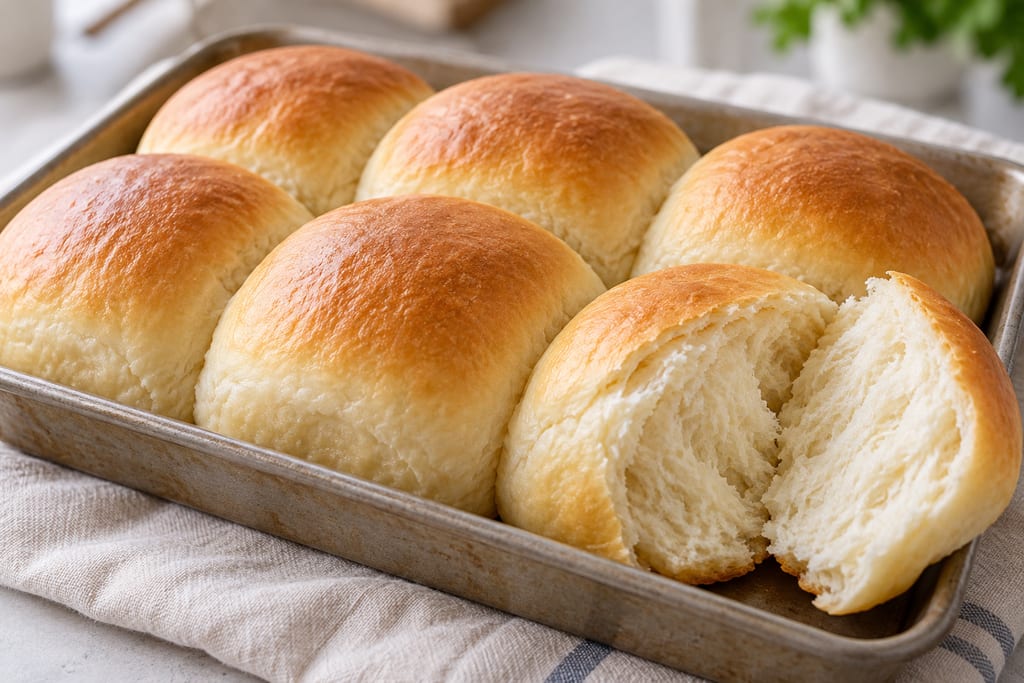
Soft, buttery yeast rolls known in Trinidad and Tobago as hops bread. This batch follows one published family method; local recipes vary in dough and baking technique.

Caribbean browning is a dark liquid of deeply caramelised sugar, used in small amounts for colour and a smoky, bitter-sweet flavour in stews and black cake.
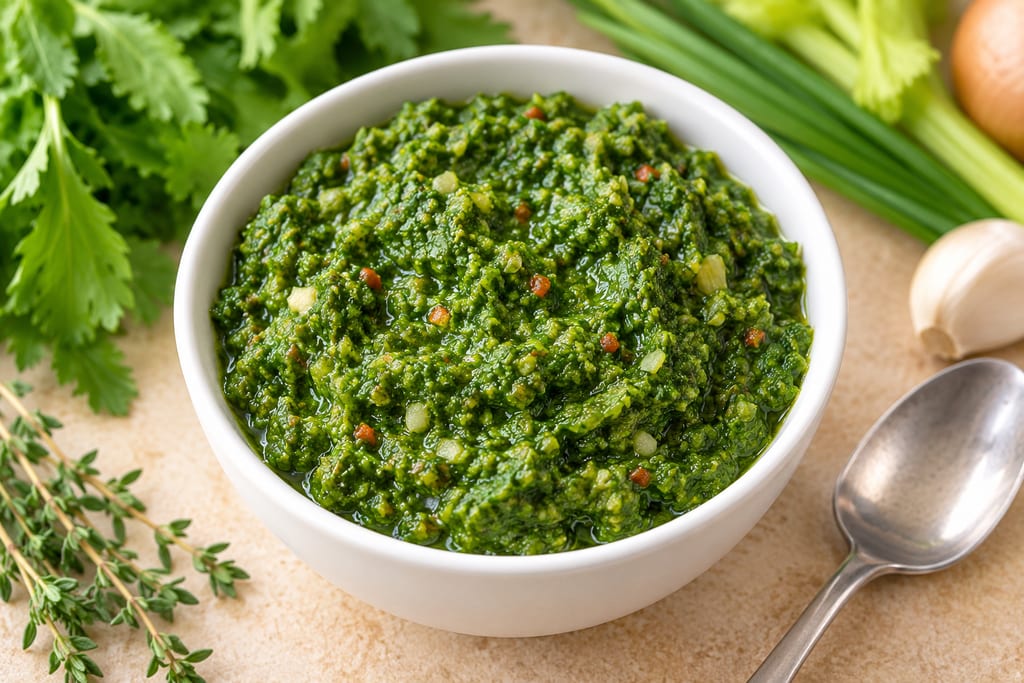
A fresh herb and aromatic paste of chadon beni (culantro), thyme, chives, celery, onion, garlic and peppers, blended with vinegar and water and used as the base for Trinidadian cooking.
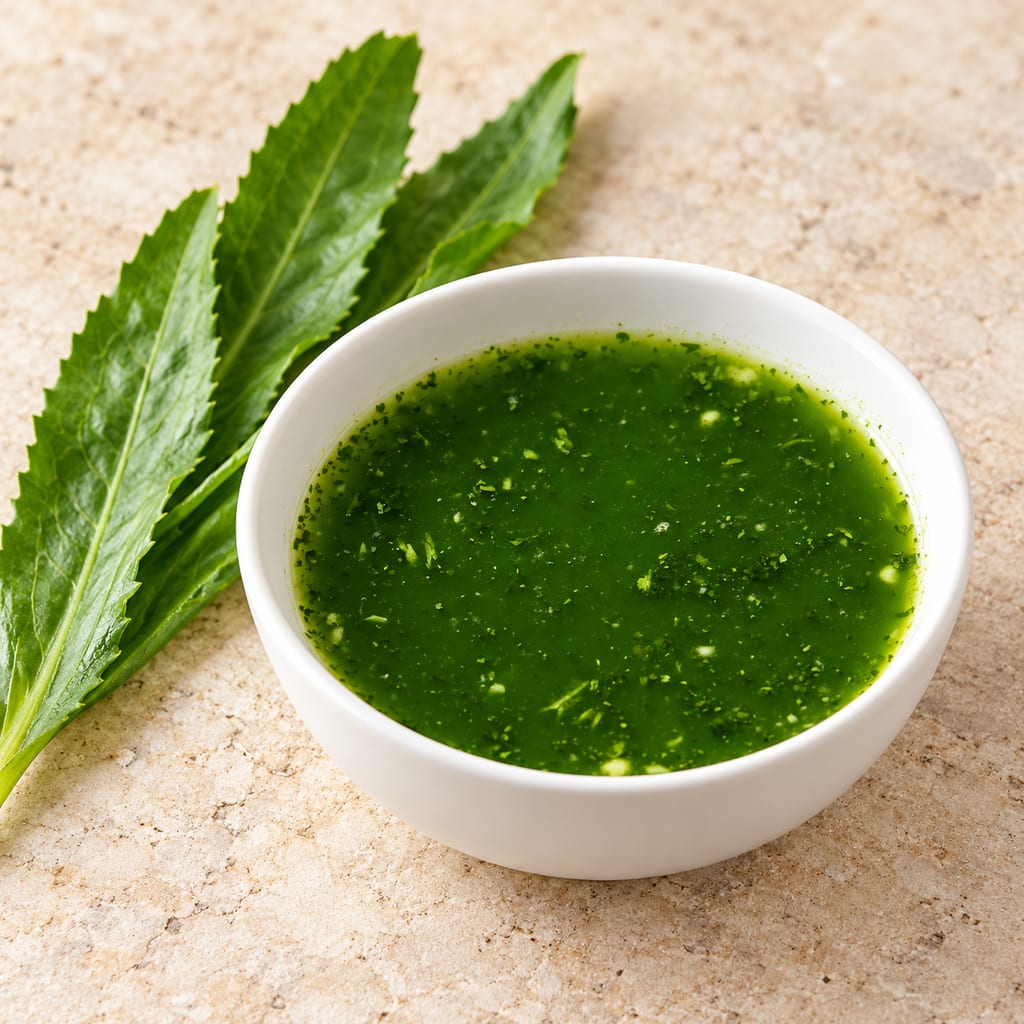
A bright green Trinidadian hot sauce of chadon beni (shado beni, culantro) with garlic, hot pepper, lime and water, blended to a pourable sauce for grilled meat, wings and eggs.
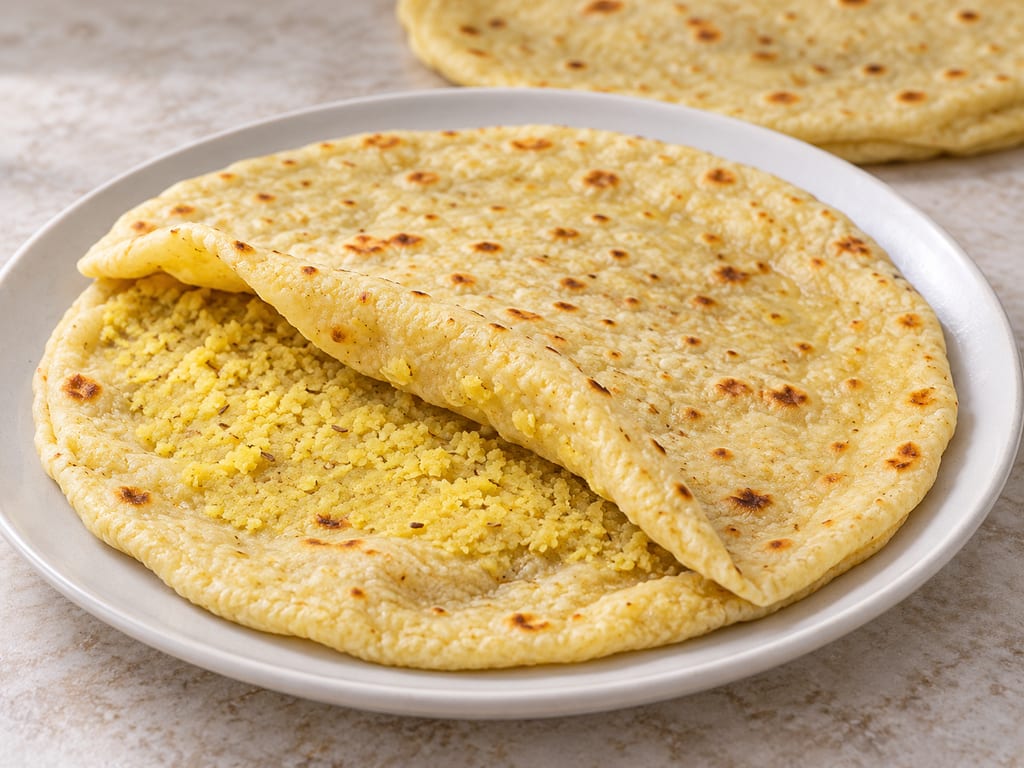
Trinidadian stuffed roti with a fine split-pea filling sealed inside soft wheat dough, rolled thin and cooked on a hot tawa.
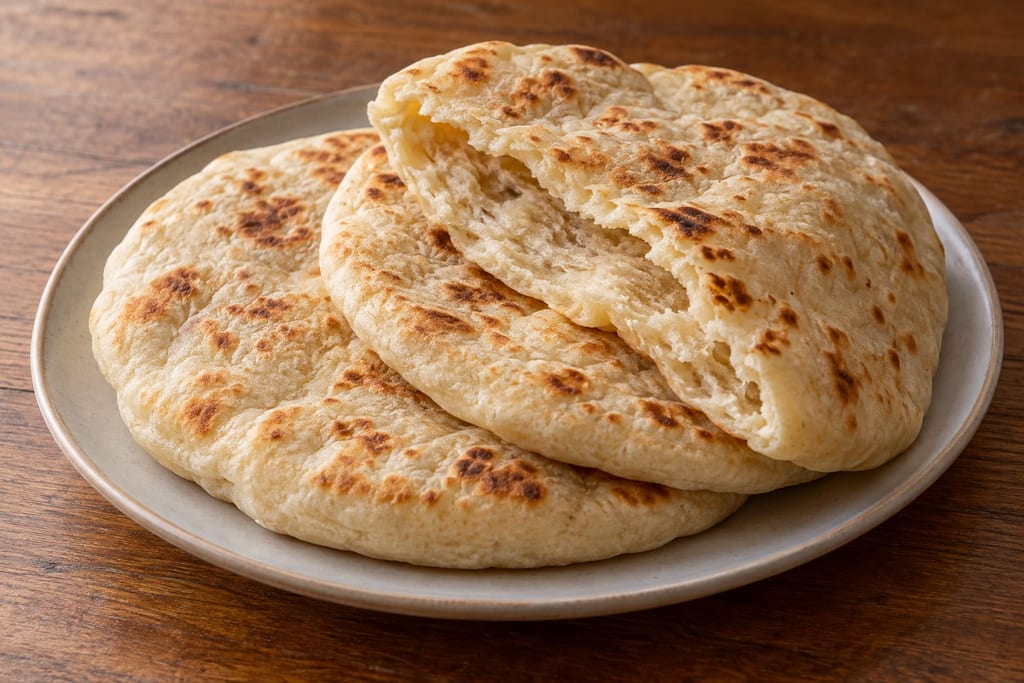
A Trinidad and Tobago baking-powder flatbread cooked on a hot stone, then briefly exposed to direct heat to puff.
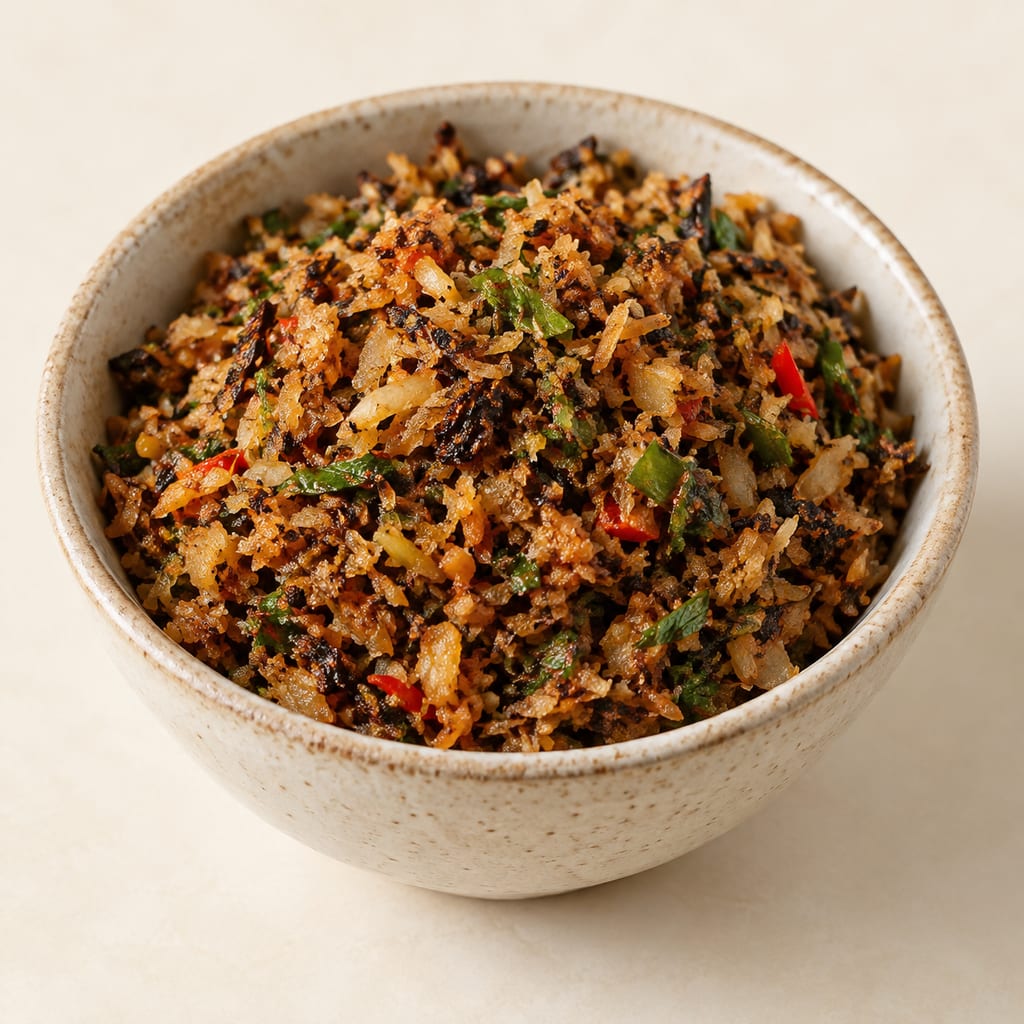
Trinidad coconut chutney is dried coconut roasted until charred, then ground on a stone with garlic, hot pepper, pimento and chadon beni to a coarse paste.
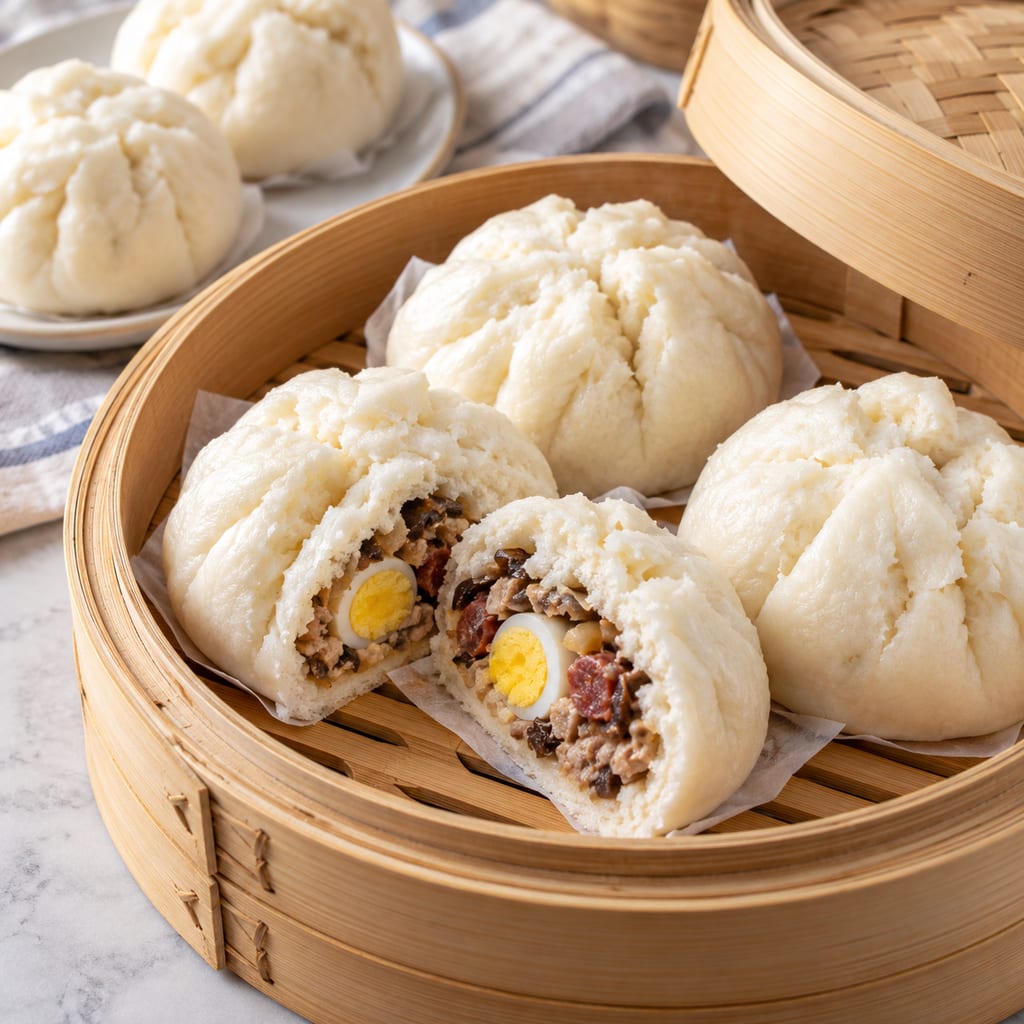
Vietnamese steamed wheat buns wrapped around seasoned pork, mushrooms, Chinese sausage and hard-boiled quail eggs. This from-scratch version uses yeast and self-rising flour.
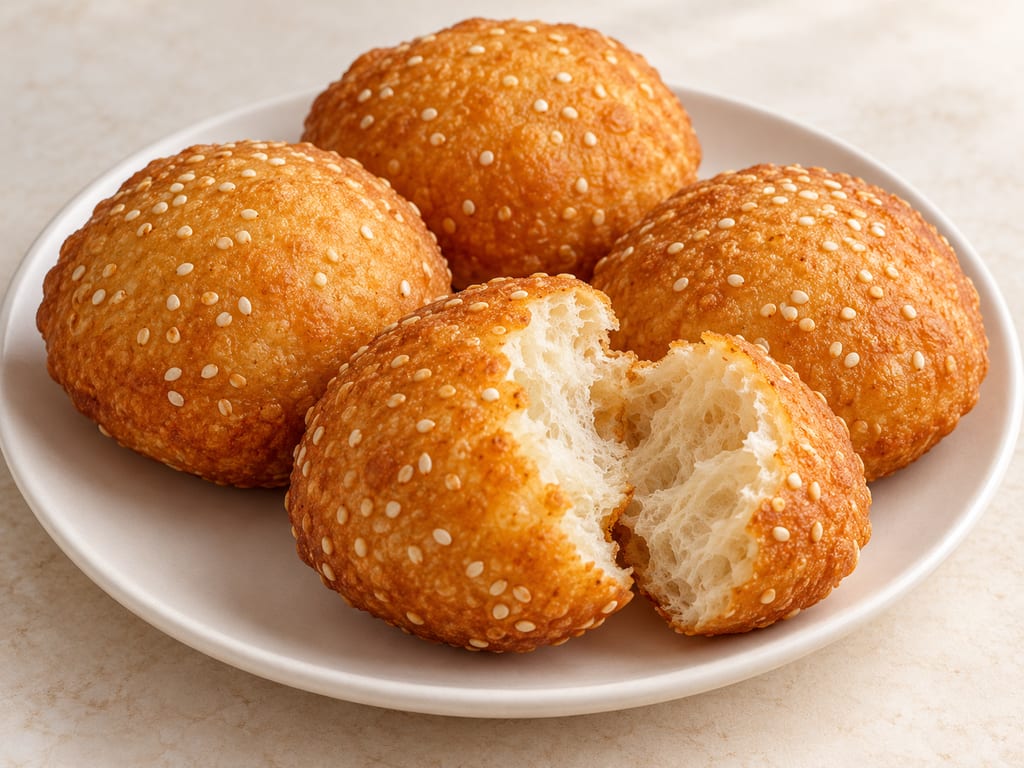
Bánh tiêu is a lightly sweet Vietnamese fried bread coated with sesame. A yeast-raised dough with baking powder is rolled into small rounds and fried until puffed and golden.
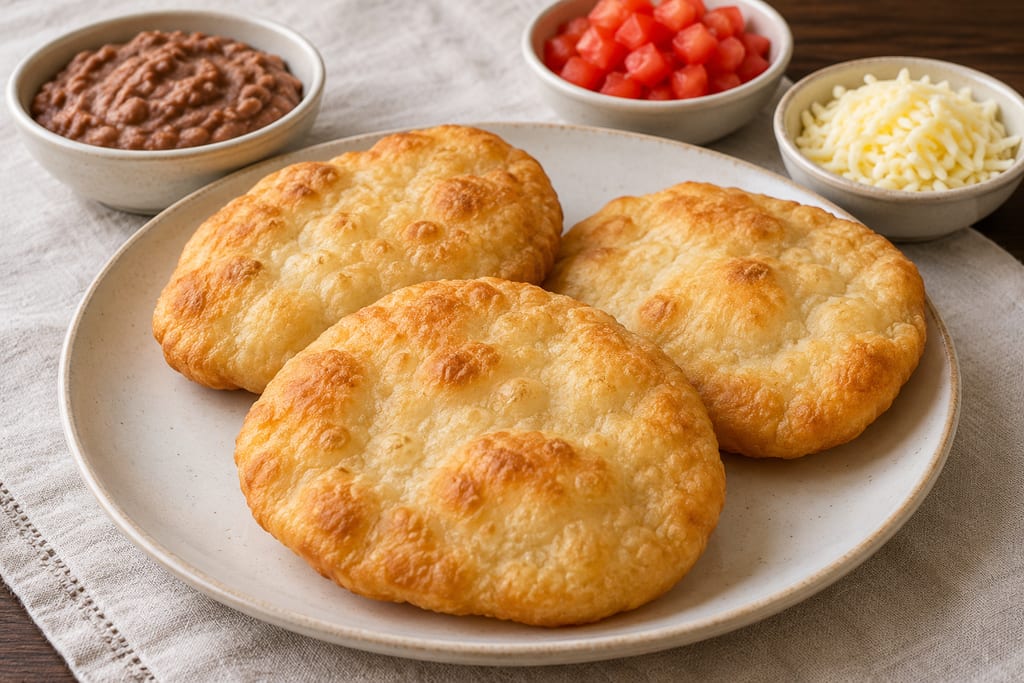
A Belizean fried breakfast bread made from baking-powder dough with evaporated milk, shaped into rounds and fried until golden.
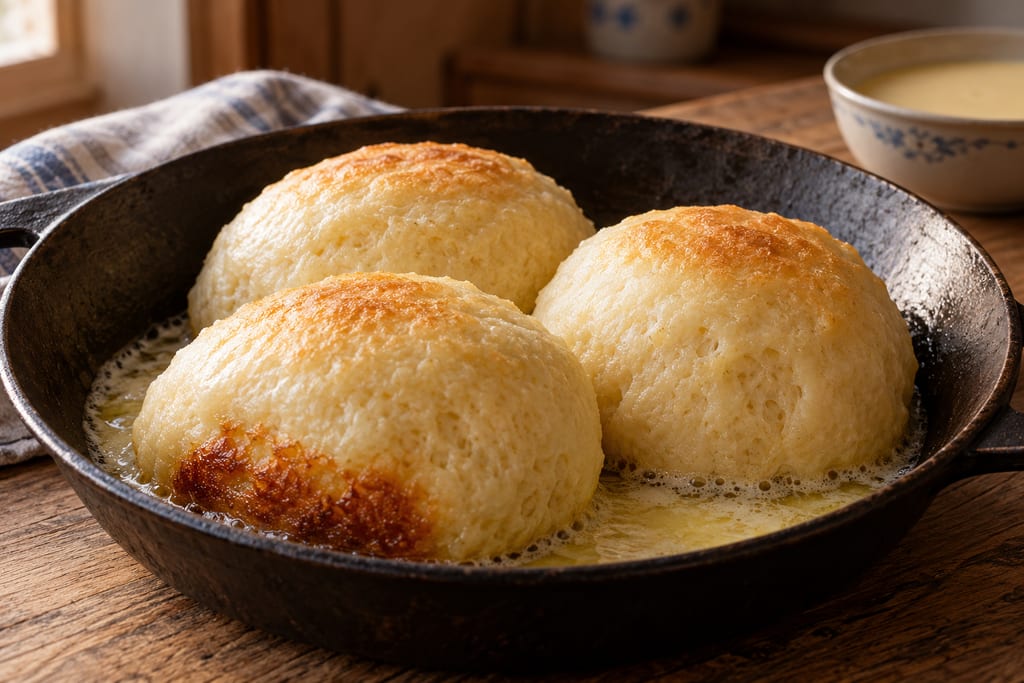
Allgäu Dampfnudeln are enriched wheat buns proofed in a covered casserole and cooked in milk and butter until the liquid nearly cooks away.
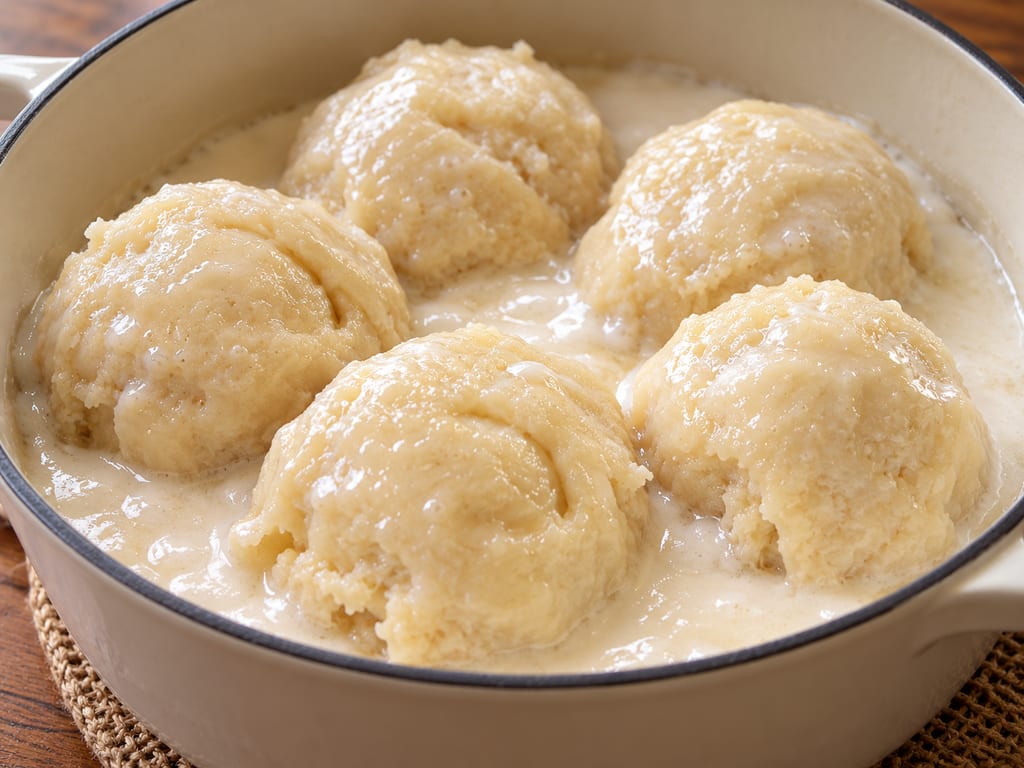
Soft yeast buns shaped by hand and simmered covered in coconut cream diluted with water in a deep pot. This Fijian home version uses a clean knife or fork inserted into the center as its doneness cue.
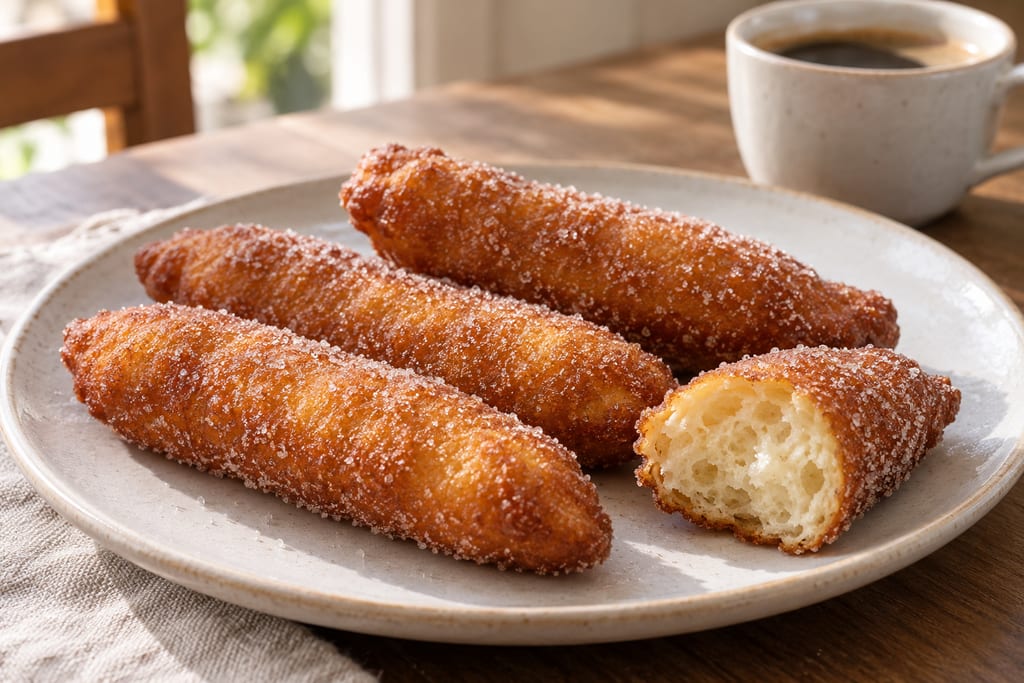
Firi firi is a yeast-raised coconut doughnut piped into long pieces and deep-fried at 170°C, traditionally eaten for breakfast or dessert in Tahiti.
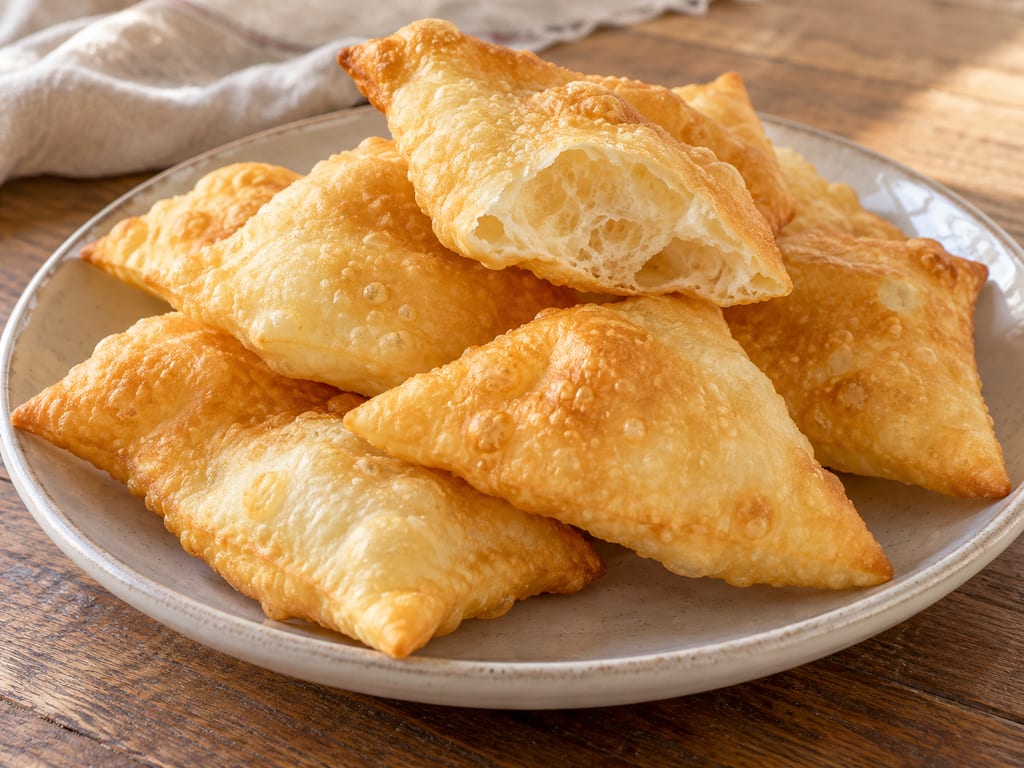
This Emilia-Romagna home version uses a measured flour-and-milk dough with yeast, shapes it into small diamonds or squares, and fries them in peanut oil.
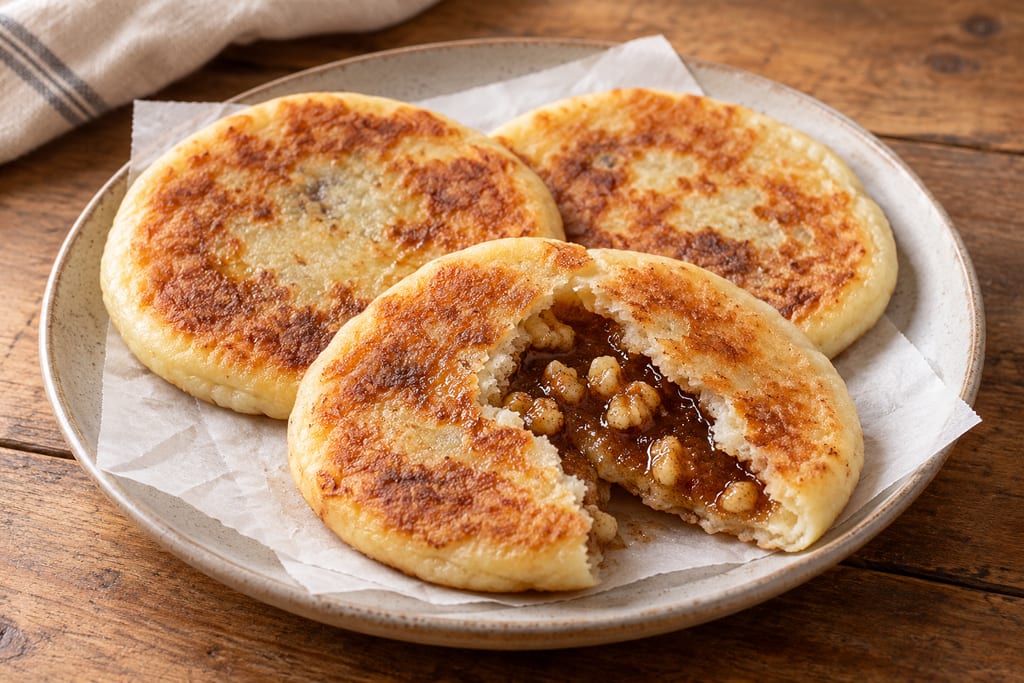
Maangchi’s eight-piece hotteok wraps a brown-sugar, cinnamon and walnut filling in yeast dough, then fries and presses the parcels in a pan.
No community contributions have been published for this entry yet.
Sign in to contribute. Published comments and photos are free to read.
Cooking with RiaMethod · Ingredients · Identity · Geography · Cultural use
How to Make Trinidad Doubles – Detailed Recipe & InstructionsRia’s 16-bara formula, 2 cups flour with author’s 284 g conversion, water adjustment, two dough rests, hand-pressed six-inch rounds and briefly fried sides.
Bara is the bread component in doubles; the assembled food pairs two baras with channa and condiments.
The author gives a 1936 Princes Town account for doubles but this does not date bara independently.
Cited in: Bara is the bread in doubles; A small, soft yeast dough; Two rises and hand-pressed rounds; Frying and home-kitchen control; Serving and historical limits; Sources and safety scope
Tourism TrinidadGeography · Cultural use
Street Food Favourites: How to Make Trini DoublesTourism Trinidad describes doubles as fried bara filled with channa and condiments and documents its availability across Trinidad.
Cited in: Bara is the bread in doubles; Serving and historical limits; Sources and safety scope
Centers for Disease Control and PreventionSafety
Raw Flour and DoughRaw flour can carry germs; CDC advises against tasting raw dough, to cook according to recipe directions, and to wash hands and utensils after handling.
Cited in: Sources and safety scope
U.S. Fire AdministrationSafety
Fire is Everyone’s Fight Community Outreach GuideFor frying, stay by the pan, switch off heat if leaving or if oil smokes, keep a lid or baking sheet ready to cover a grease fire, and never pour water on burning oil.
Cited in: Frying and home-kitchen control; Sources and safety scope