A documentary account of jameed, a traditional dried cultured-milk food. The cited sources do not provide a complete validated home process or a measurable endpoint for making it shelf-stable.
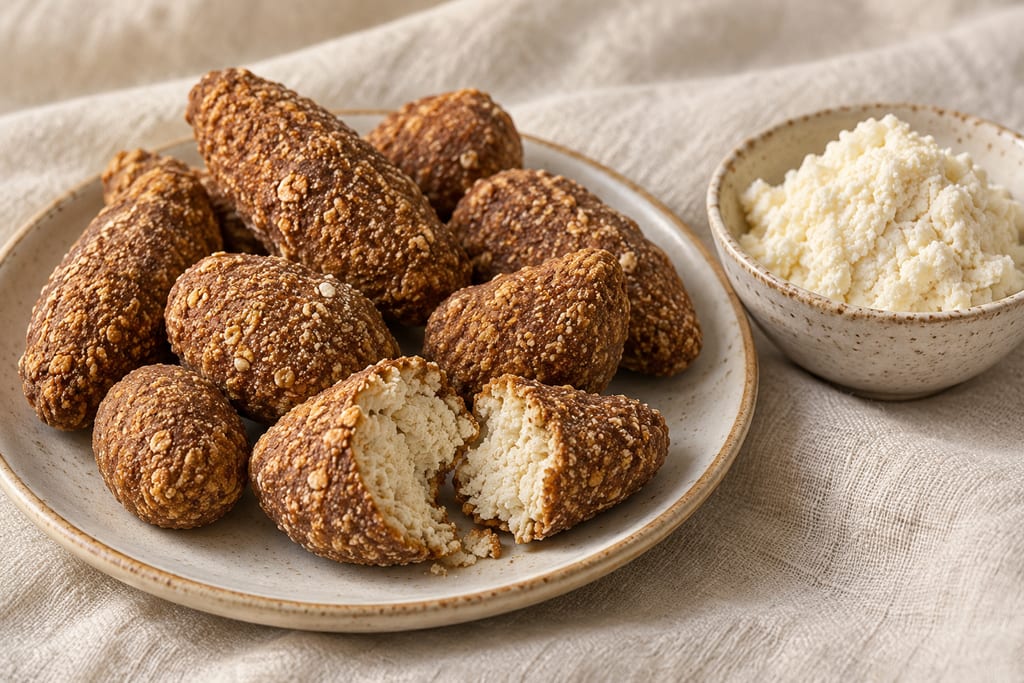
Jameed is a dried fermented dairy food associated particularly with Jordan and also known across parts of the Middle East, Central Asia and other dryland regions. It is used in dishes such as mansaf, where the reconstituted product is cooked into a sauce.
FAO's general dairy account and later jameed studies describe a broad sequence: milk is fermented, whey is removed, the curd is pressed and shaped, then dried. This is a documentary account of the food and recorded process, not a validated home preservation recipe.
The available records do not give this entry a defined starter or souring conditions, a salt ratio, controlled drying conditions, or a measurable endpoint. They therefore do not support instructions for making a shelf-stable product at home.
A 2024 survey of market jameed reports substantial variation among products and notes that moisture above 20% can increase mold risk; that observation describes tested products and is not a validation of this recipe. A HACCP study identifies drying, hygiene and other steps as control points. Do not infer room-temperature stability from a dry surface or use this page as home-preservation instructions.
Jameed belongs to a family of dried cultured-milk foods that the catalogue links to qurut, aaruul and related products. These turn seasonal milk into reserves that keep in dry form.
Ingredients
Scaling: not established by the sources.
Milksoured into a cultured milk
Amount not stated
Salt (optional)
Sometimes added
Method
Risks and precautions
Uncontrolled acidification or incomplete drying
Jameed stability depends on several controlled factors. The available recipe record does not provide a complete home process or a measurable drying endpoint.
Hazard source
Documentary entry only; not a validated home-preservation procedure.
Do not infer shelf stability from surface dryness. The available entry has no recipe-specific measurable drying endpoint or home storage duration.
A 2024 survey reports substantial process variation and increased mold risk when moisture exceeds 20%; this is not a validation of the method described here.
FAO's dairy-processing account describes curd formed from soured milk or buttermilk, with whey drained and curd pressed. The earlier process note says, “Drain off the whey and press the curd.” This is a documentary description, not a validated home instruction.
The earlier note's phrase “Dry the balls through to the centre” records a traditional aim, but does not give a measurable endpoint specific to jameed or controlled drying conditions.
Jameed is commonly crumbled or reconstituted for cooked dishes such as mansaf; this entry gives no home storage duration.
Places
Western and central Asia, Mongolia and northern Africa
Traditional preparation · Region evidence
Regional association from the FAO dairy account; no single country is named for the family.
A dehydrator turns fruit purée into leather and steamed sweet potato into hoshiimo without sun or wind; a freeze dryer works differently. Both stop microbes growing by removing water, and neither replaces a step that kills them.
Follow milk into cheese, cultured drinks, butter, dried curds and sweets: a journey through the animals, seasons and household decisions behind the world's dairy foods.
Every preserved food is a stack of barriers against microbes, enzymes, air and time. This is how they work, what a recipe's numbers measure, and how cooks worldwide build them.
A two-stage Altai dairy preparation: sour chegen is heated into soft aarchi, then portions are drained, pressed and traditionally smoked into firm kurut.
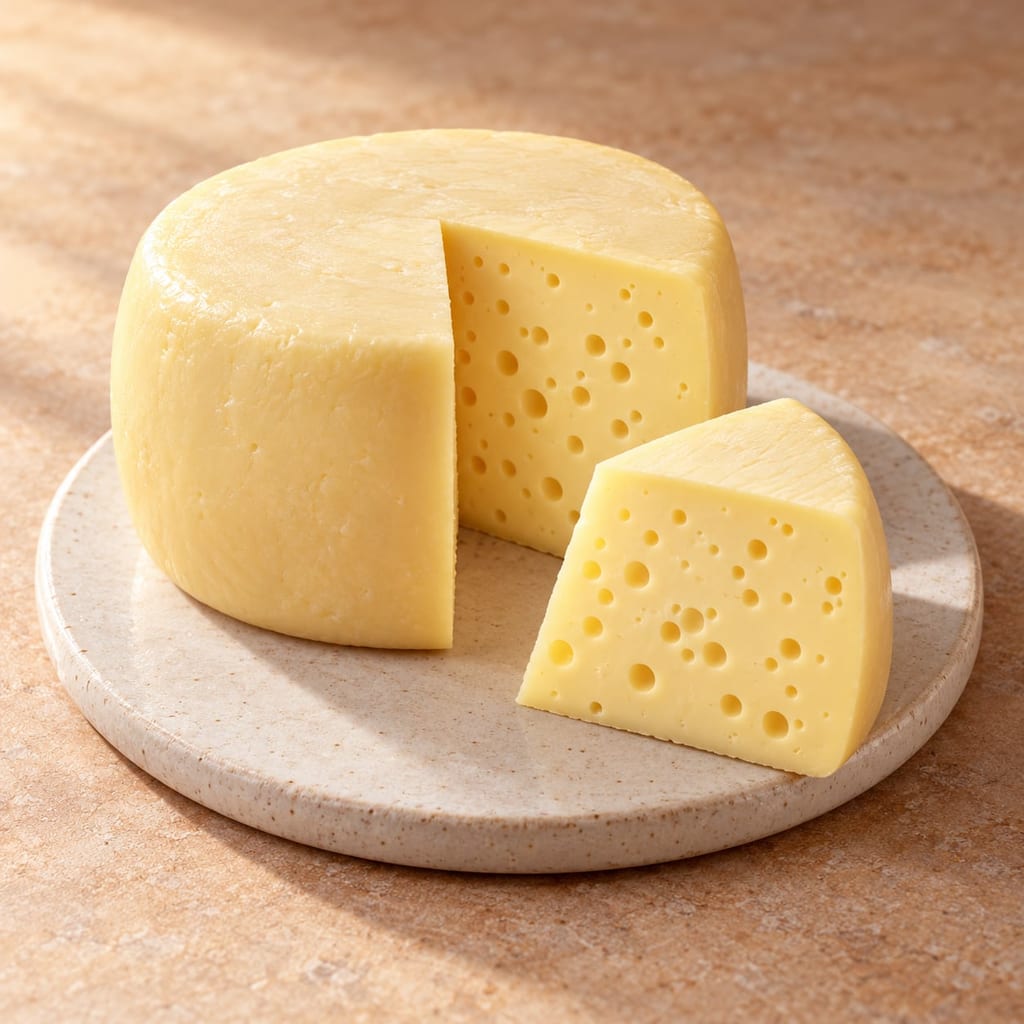
A washed-curd cheese with propionic bacteria, warmed by hot water in two steps and then held in a warm room for weeks so the bacteria can form its holes.
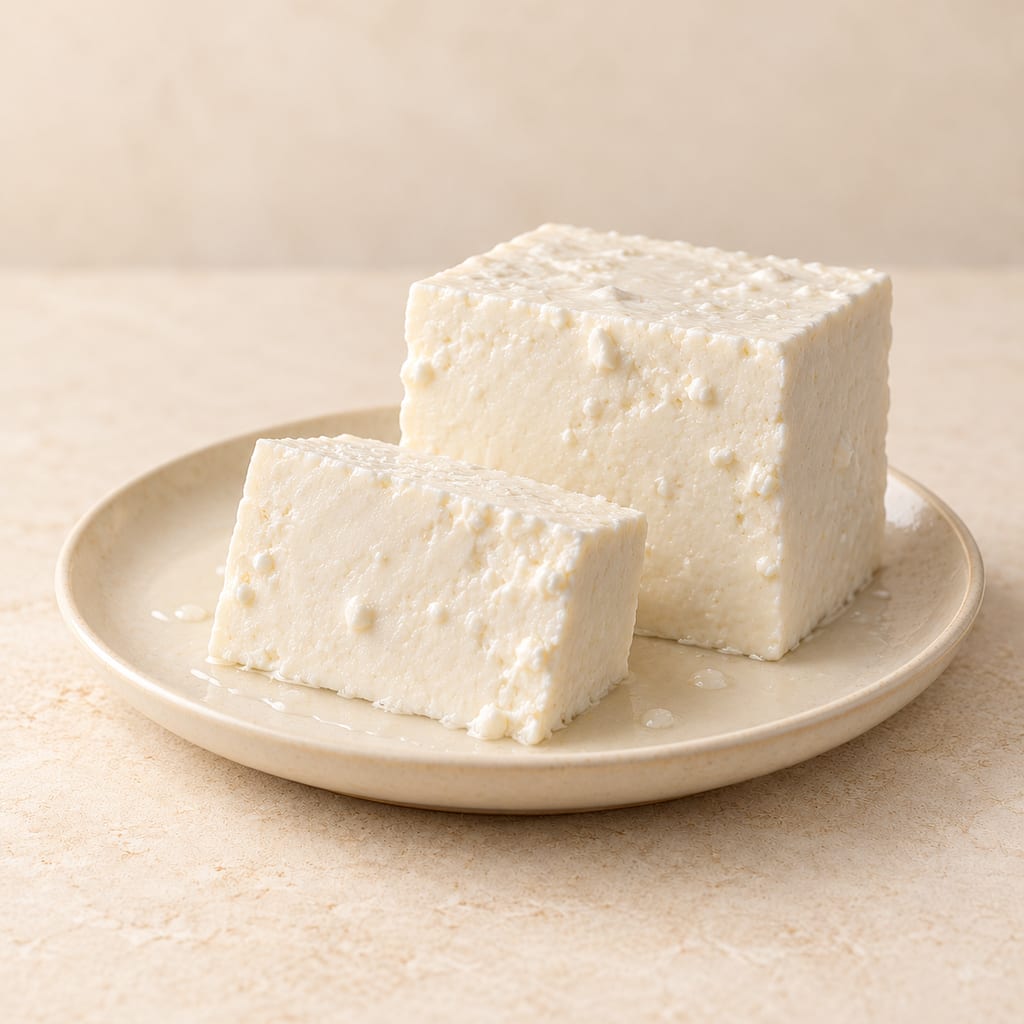
Beyaz peynir is a Turkish white cheese matured in brine. Sheep milk, alone or mixed with other milks, gives a close-textured cheese cut into blocks and packed in cans.
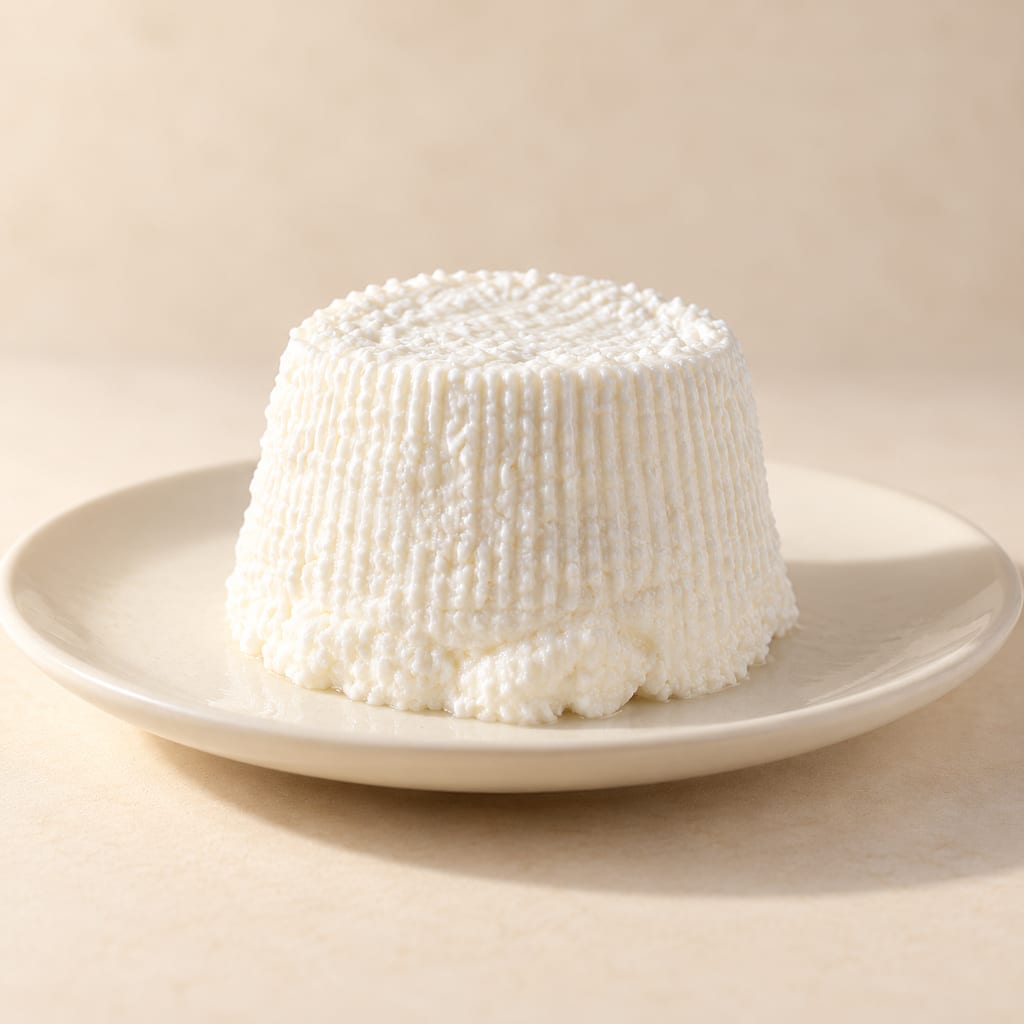
Corsican Brocciu is a whey cheese made by heating sheep's or goat's whey with whole milk and salt, then gently draining the flocculated curds. It is eaten fresh or salted and ripened as Brocciu passu.
Budz is a traditional Hutsul rennet-set cheese made from sheep, cow or goat milk in the Ukrainian Carpathians, forming a fresh curd that can be eaten, smoked or processed into salted bryndza.
A scalded cheese moulded in baskets and re-cooked in its forms in hot whey, made alongside a ricotta from the same milk, then acidified, brined and aged for months.
A pressed cheese whose curd is cooked slowly, then cheddared: kept warm in slabs that are turned and stacked for hours before milling, salting and pressing.
Community
No community contributions have been published for this entry yet.
Share what you made
Sign in to contribute. Published comments and photos are free to read.
Jameed is a traditional fermented and dried dairy product; product composition and drying processes vary; stability depends on low water activity, low pH, low moisture and salt.
Jameed's regional and cultural context; 80 market samples in Jordan showed substantial variation; study reports moisture above 20% reduces shelf life and increases mold risk.
Cited in: A traditional dairy reserve; Why this entry is not an operating method
Accessed 2026-10-29
Food Science and Technology International; Al-Saed, Al-Groum and Al-DabbasSafety
A HACCP plan identifies milk handling, pasteurization, starter, straining, hygiene, drying and packaging among control points; microbiological quality improved after HACCP implementation.
Cited in: Why this entry is not an operating method