
Masi ‘ulu (Samoan fermented breadfruit)
Masi ʻulu is a Samoan breadfruit paste fermented in a leaf-lined pit, kneaded, formed into loaves, wrapped in leaves and baked. A secondary FAO account describes the method; no household batch is established.
 FermenteaWhere food goes to change
masi fa‘i · masi fa'i · masifa‘i · banana masi
Masi fa‘i is a Western Samoan paste made by fermenting unripe banana in leaf-lined pits, later formed into loaves and baked. A secondary FAO account describes the method; no modern household batch is established.
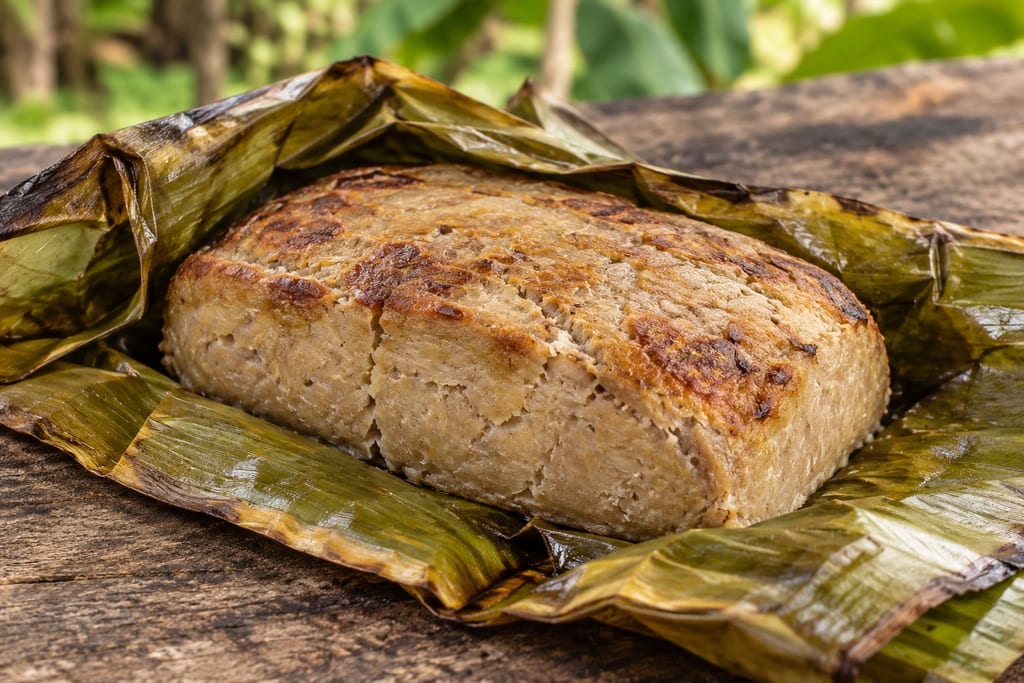
Masi fa‘i is a paste of fermented unripe banana, made in Western Samoa. The fruit is picked before it ripens, peeled and washed, and then left to ferment in a pit. The softened mass is later formed into loaves, wrapped in leaves and baked, so the finished food is a dense, bread-like starch rather than a sweet fruit dish.
Samoan banana masi fa‘i is a different product from Samoan breadfruit masi ʻulu, which uses breadfruit. Both use the same logic of pit preservation, so they are often discussed together, but the two pastes are not interchangeable and should not be confused in a recipe or a label.
The FAO account describes the process in a few steps. The peeled, washed bananas are placed in a pit lined with Heliconia paka and banana leaves. The leaves are folded over the fruit, the pit is covered with soil and rocks, and the fruit stays there for 34 days in the reported example. The fermented mass is then shaped into loaves, wrapped and baked.
The source gives no banana count or weight, no yield, no maturity measure and no pit dimensions. It names no starter culture and no microbial organisms. The sequence is therefore a historical description of one practice, not a set of directions for a kitchen.
Pit storage keeps the fruit out of the air for a long period, and the leaf lining and soil cover limit how much water and air reach it. The pit is presented as the central preservation step, with baking as the final stage that turns the paste into a food for eating.
Nothing measured inside the pit is reported, so this page does not say which microbes or enzymes act, what acid or sugar levels develop, or how the flavour forms. Those questions need a source that studies the Samoan practice directly.
The practice relies on leaves for the pit lining and for wrapping, on a pit dug into the ground, on soil and rocks for cover, and on an oven for baking. The source does not give capacities, materials or cleaning steps, and it does not suggest modern substitutes. No purpose-built apparatus is described.
The FAO account records storage beyond a year and some very old bread as historical claims. These are not a validated shelf life or a storage condition. The source gives no temperature, no moisture target and no safety endpoint. Sourness, smell and age cannot establish that a paste is safe to eat.
A household attempt would need controls that the source does not supply, so the method stays a description of a historical practice. Any future home version would need its own validated process before it could be presented as safe.
Breadfruit and banana pit preservation appear across several Pacific islands. The Samoan banana paste sits alongside Samoan breadfruit masi ʻulu and the Marquesan ma, which the Fermentea library describes separately. Each is kept as its own preparation, because the fruit, the pit and the baking vary between islands.
The fine-grained site, the season, the origin date and the present-day use of the paste are not established by the sources read here. The 1980 article on Samoan breadfruit and banana technologies is listed as a source, but its full text was not available for this record, so its details are not used.
FAO describes masi fa‘i as a Western Samoan preservation practice in which unripe bananas are fermented into paste for later use and baked into a bread-like food. The FAO account is secondary and undated, and it does not establish the food's origin, current frequency or ceremonial roles.
Scaling: source batch only
No endpoint, environmental measurement or safety control is given for the pit process.
Hazard sourceThe historical sequence is not an executable home method.
Storage beyond a year is recorded by FAO as a historical claim, not a validated shelf life.
Smell, sourness and elapsed time do not establish safety.
The FAO chapter describes the method in Western Samoa only; it does not extend it to Manuʻa or American Samoa.
Masi ʻulu is a Samoan breadfruit paste fermented in a leaf-lined pit, kneaded, formed into loaves, wrapped in leaves and baked. A secondary FAO account describes the method; no household batch is established.
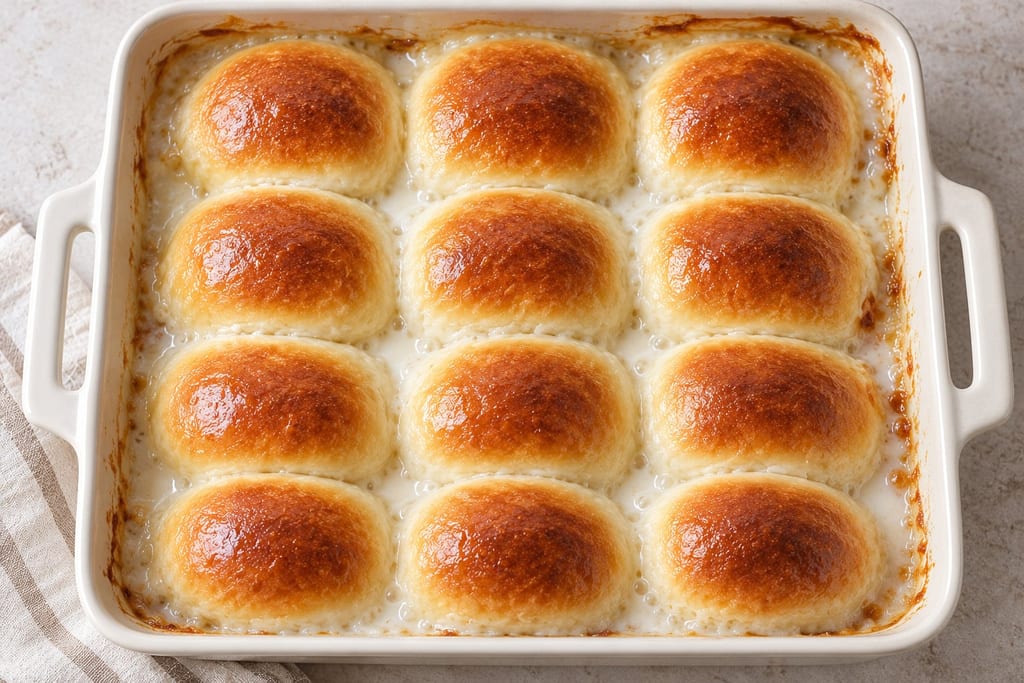
Soft yeast rolls bake beneath sweet coconut sauce in this Polynesian Cultural Center adaptation of a wheat-bread recipe, which yields twelve buns for a shared tray.
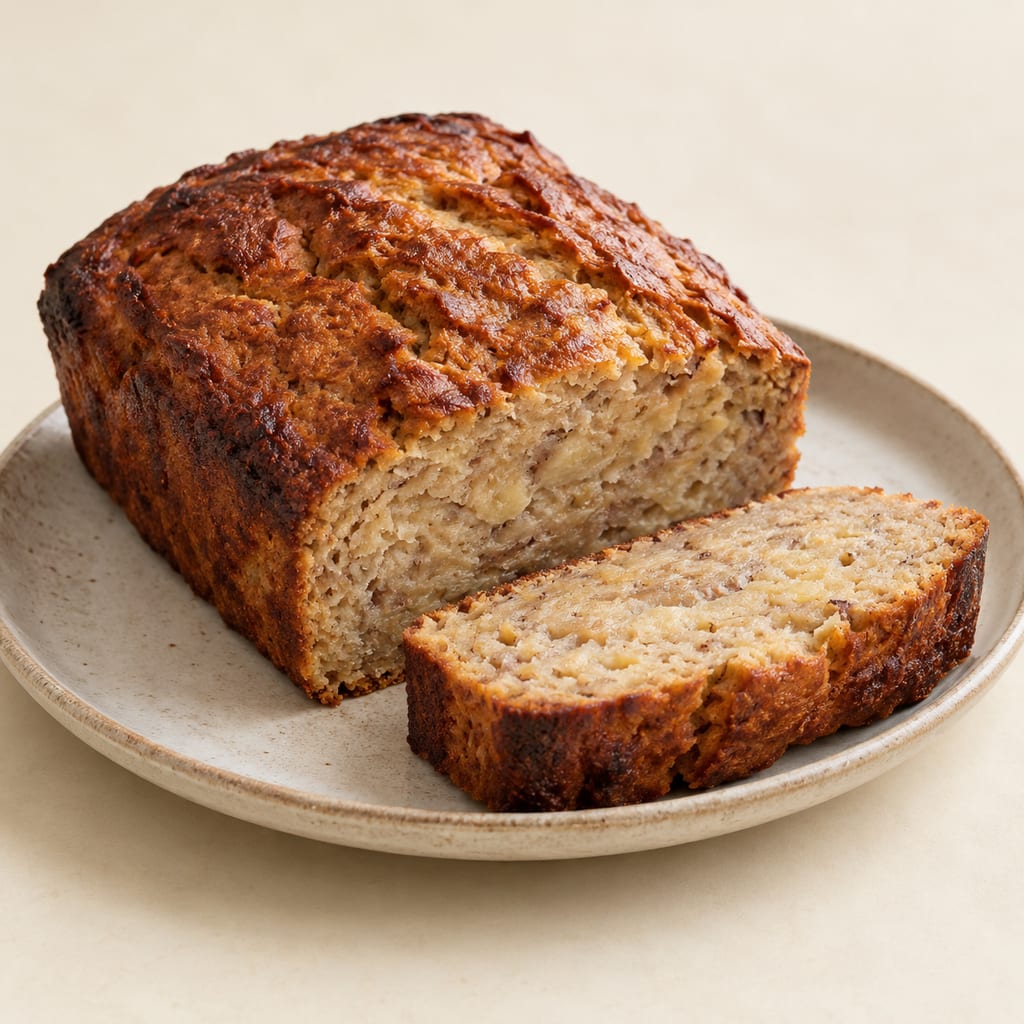
Masi faʻi is a Western Samoan food of unripe bananas preserved in a leaf-lined pit, later made into loaves and baked. The FAO account gives no storage conditions or validated process.
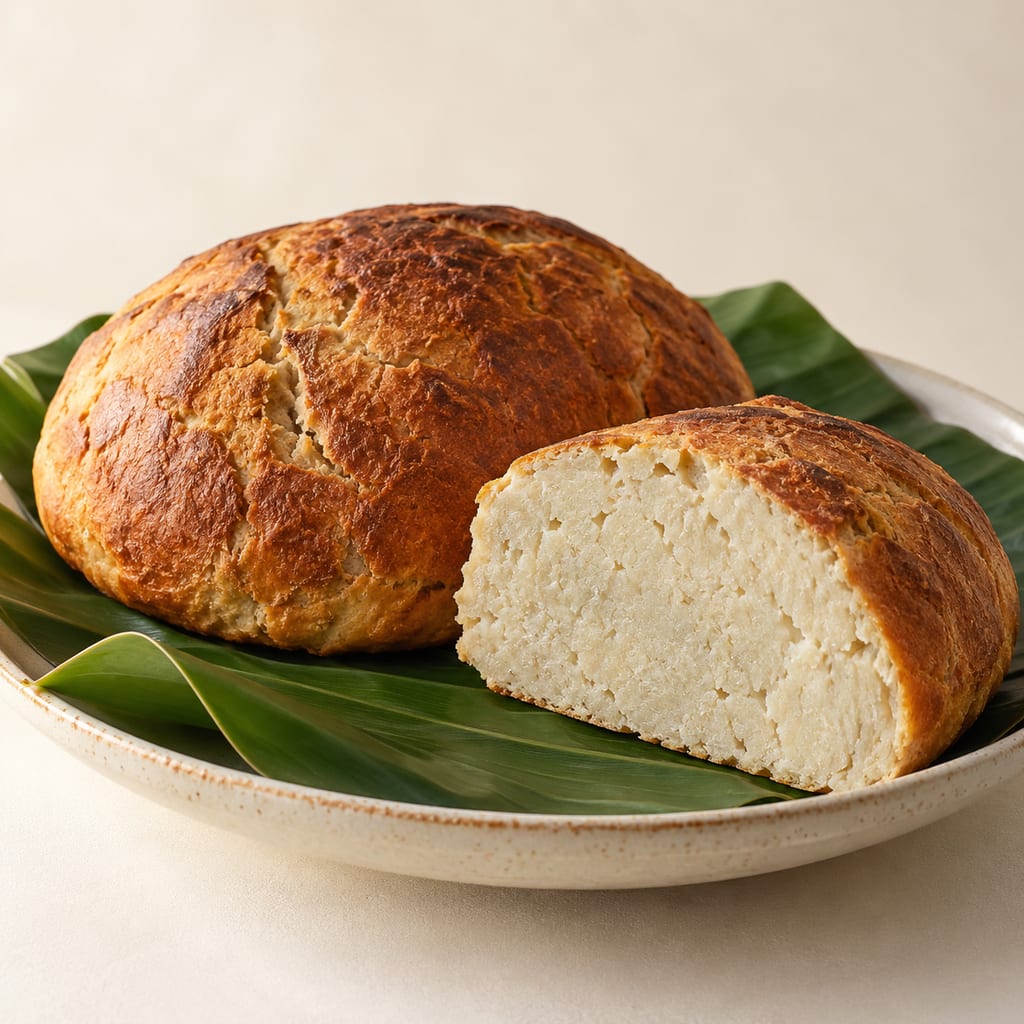
Samoan breadfruit masi is a preserved breadfruit paste kept in a leaf-lined pit, then kneaded, shaped into loaves and baked. FAO describes it at Western Samoa scale only.
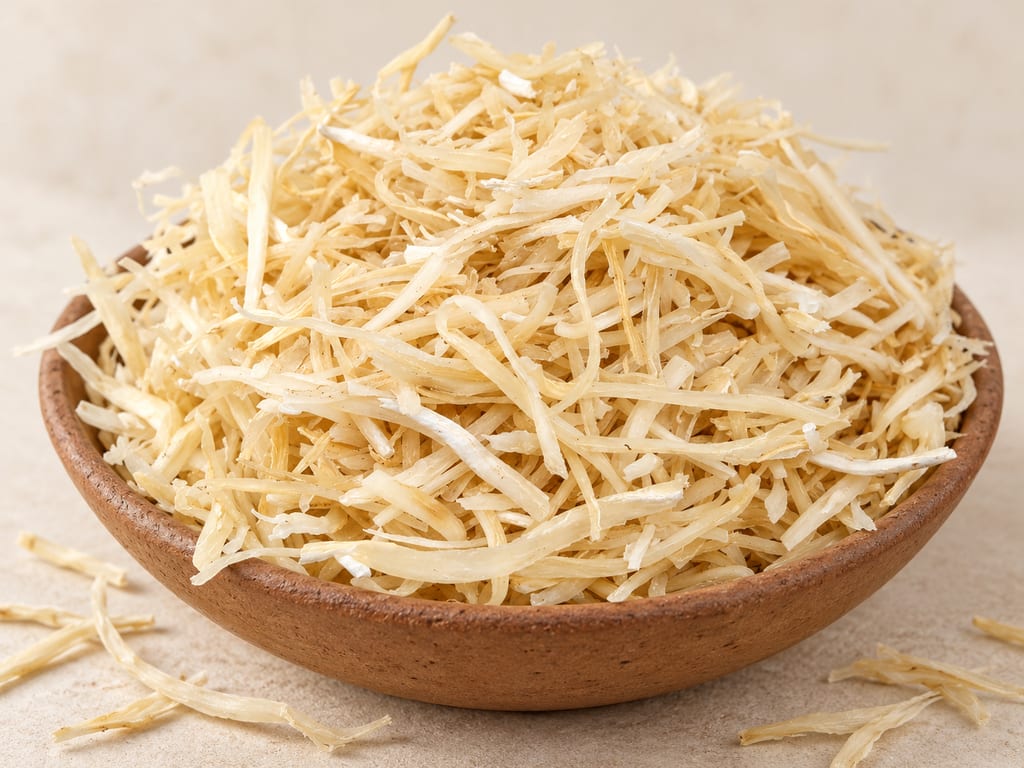
Abacha is a fermented cassava-strip preparation from southeastern Nigeria, sold wet or dried and later rehydrated for meals such as African salad.
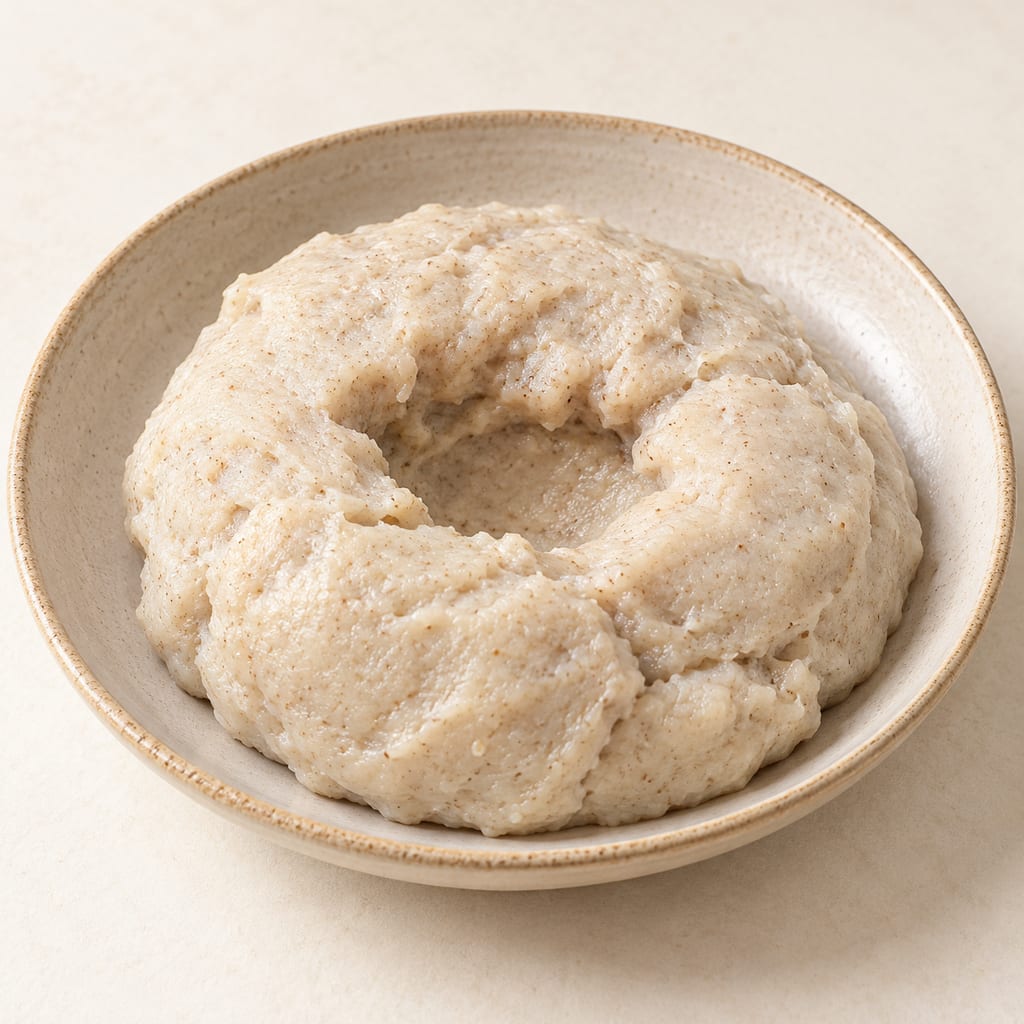
Aceda is Sudan’s firm cereal porridge, commonly made from sorghum and shaped into a smooth mound. Some versions use fermented dough; fermentation is not universal.
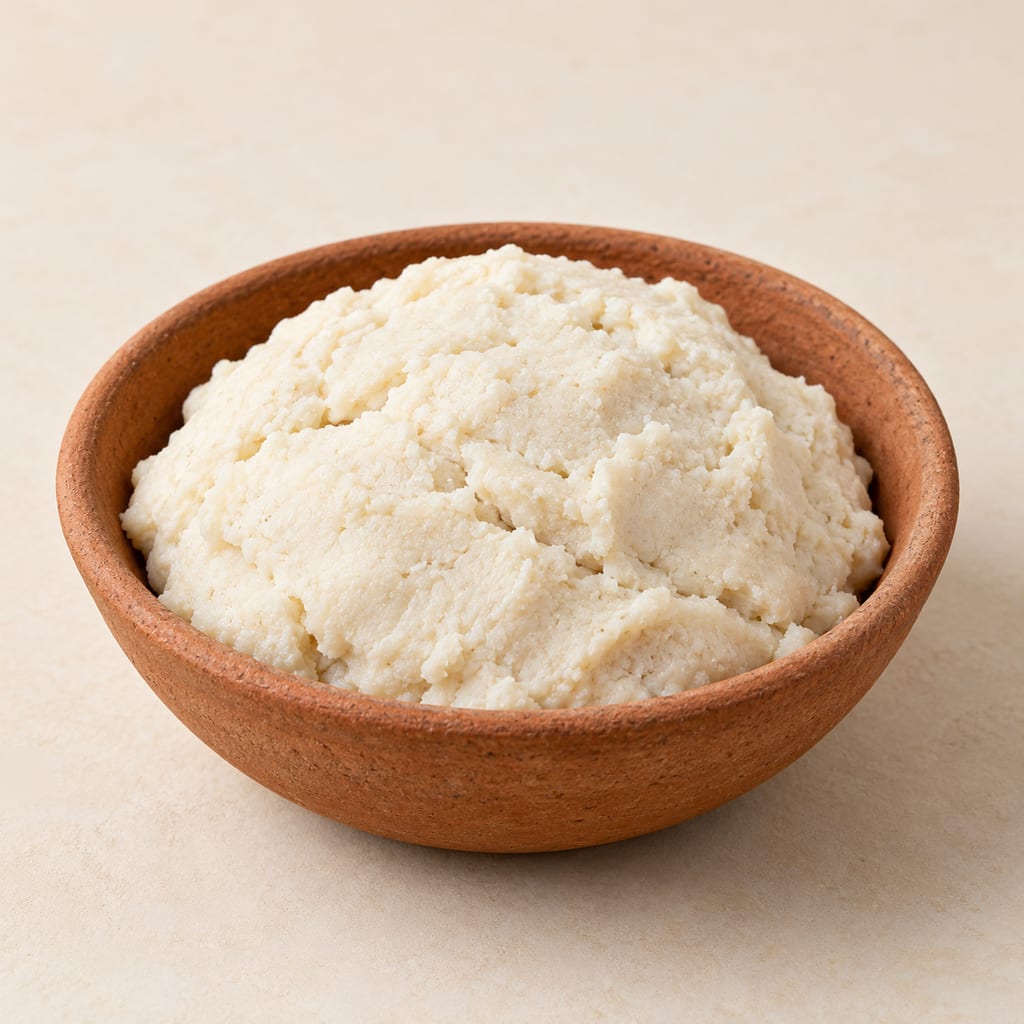
Ghanaian sour cassava dough fermented with traditional inoculum and drained during fermentation. It is used as a base for cooked foods such as banku and akple; process variants and safety outcomes differ.

Appam, or hoppers, are South Indian and Sri Lankan rice pancakes made from a fermented coconut-and-rice batter and cooked in a curved pan to a crisp lacy rim and a soft, spongy centre.
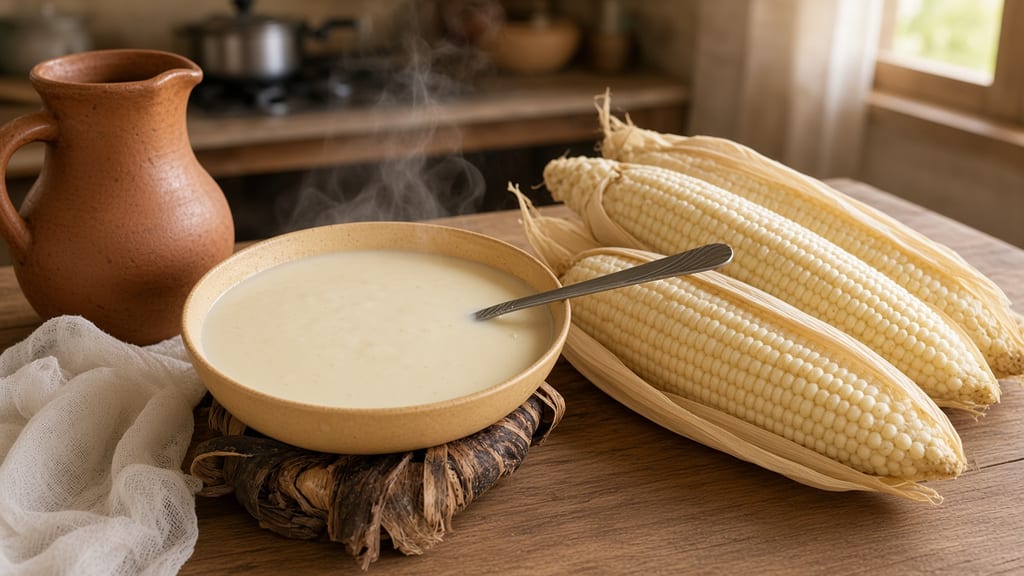
A hot, sour maize drink from Tabasco made from maize that is not lime-cooked. The ground grain sours for half a day, then makers strain it and boil it until thick.
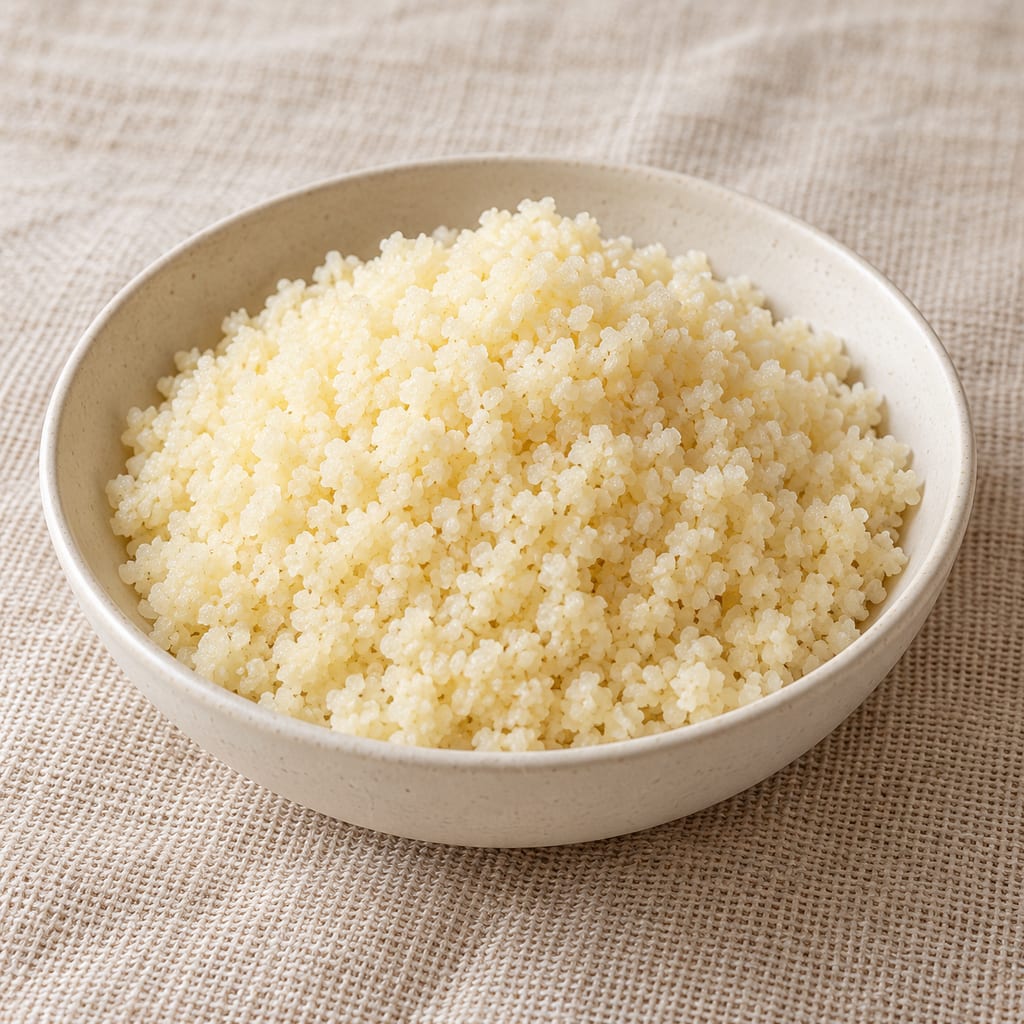
Ivorian cassava semolina: grated cassava is fermented overnight with a traditional inoculum, pressed, sieved into granules, dried and steamed. Documented in a 2006 field study; no sole original process is established.
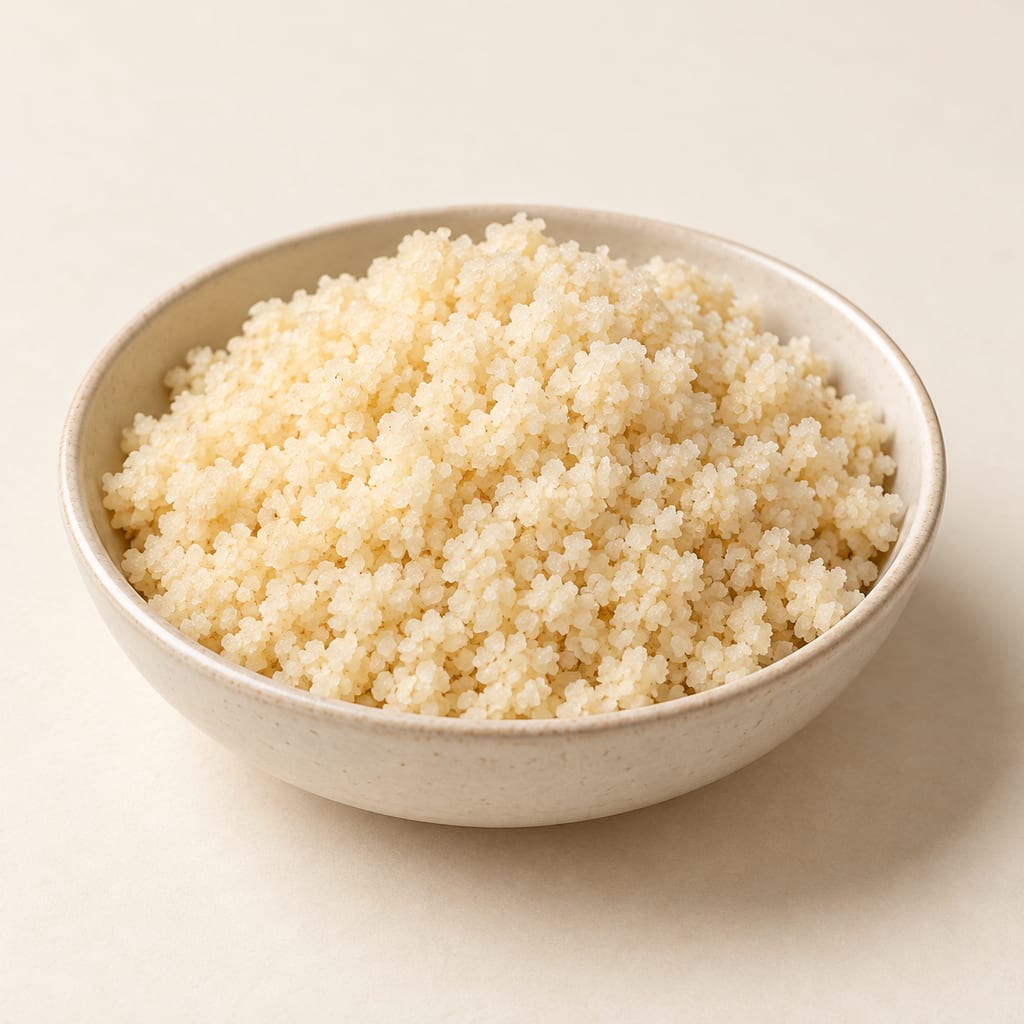
Attiéké is an Ivorian staple of grated cassava fermented with a traditional inoculum, then pressed, sieved, granulated, dried and steamed into fine couscous-like grains.

Crushed or milled barley cooked in water until the starch softens and the mixture thickens, the plainest way a northern household turned stored grain into a meal, here with apple and hazelnut.
No community contributions have been published for this entry yet.
Sign in to contribute. Published comments and photos are free to read.
Food and Agriculture Organization of the United NationsMethod · History
Traditional post-harvest technology of perishable tropical staples, Chapter 5Unripe bananas are peeled, washed and fermented in pits lined with leaves, then formed into loaves and baked.
The reported example leaves the fruit for 34 days.
Storage beyond a year is recorded as a historical claim.
Cited in: What it is; The pit and the method; Why the stages matter; Equipment and handling; Storage and limits; Related Pacific preservation
Economic Botany 34(2), pp. 181–185History · Method
Two Samoan Technologies for Breadfruit and Banana PreservationSamoan breadfruit and banana preservation technologies are described; the article body requires subscription access and was not read in full.
Cited in: Related Pacific preservation; Unresolved