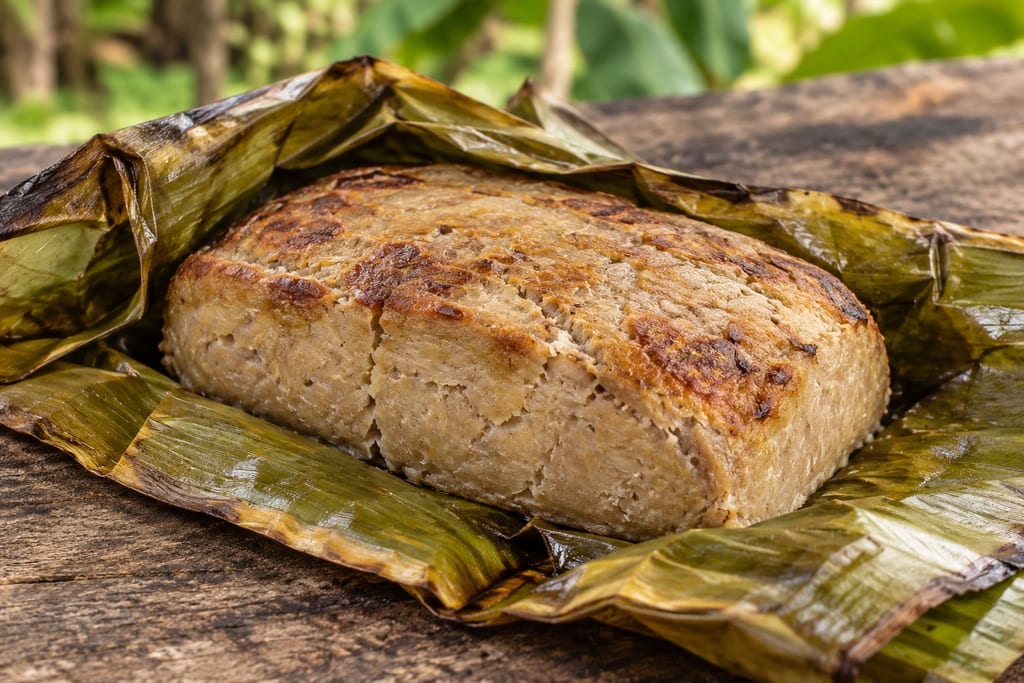
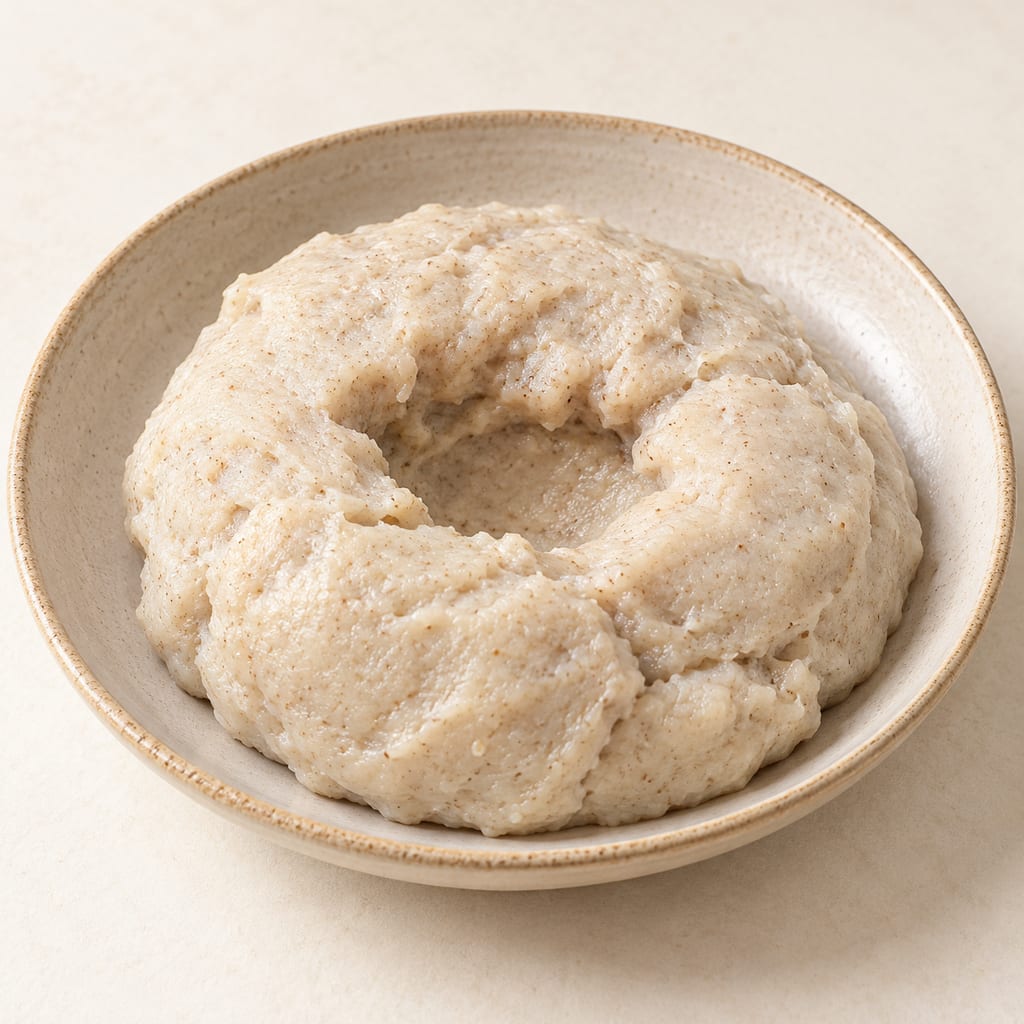
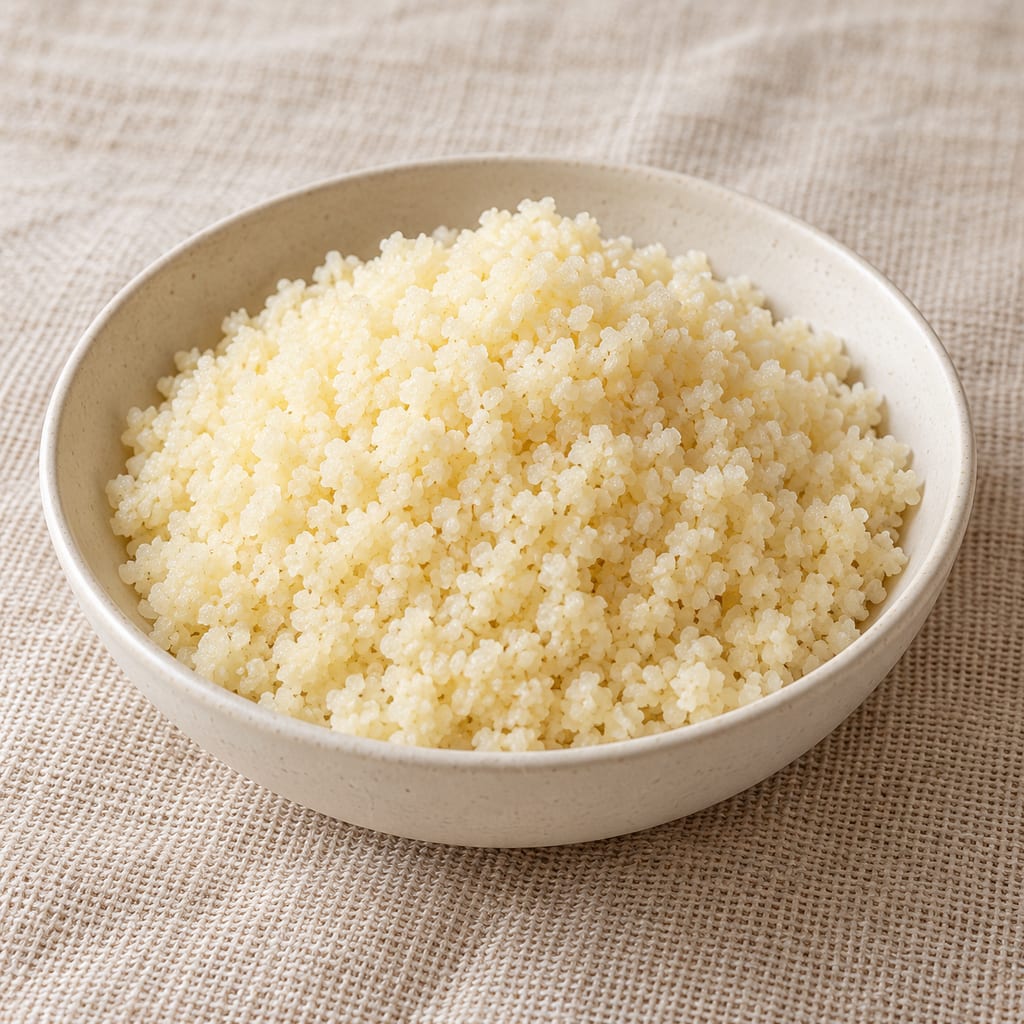
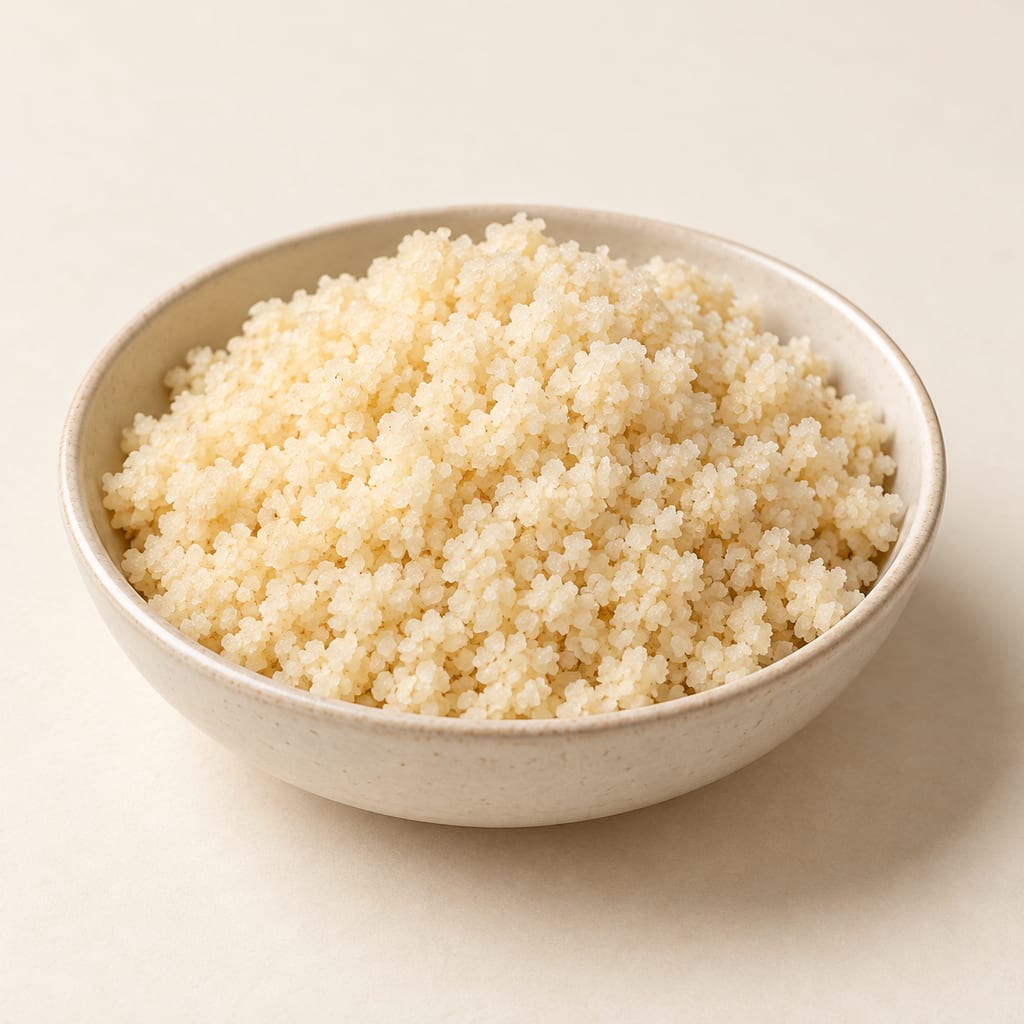
Masi ʻulu is a Samoan breadfruit paste fermented in a leaf-lined pit, kneaded, formed into loaves, wrapped in leaves and baked. A secondary FAO account describes the method; no household batch is established.
Masi ʻulu is a Samoan preservation food made from breadfruit. The fruit is fermented in a pit until it becomes a dough-like paste, which is then shaped and baked. The result is a dense, bread-like loaf that keeps far longer than fresh breadfruit.
Masi is the Samoan name for this family of pit-fermented foods. In Samoa the same term also covers a banana paste, masi faʻi, which is made from unripe banana and is a separate preparation on this site.
The FAO account describes the pit as the heart of the process. The fruit is placed in a pit lined with leaves, and the leaves are folded over it to make what the source calls a fairly airtight pocket. More leaves, soil and rocks cover the pit. The fruit is left there for 34 days in the reported example, and the enclosure keeps air and water from the fruit while the paste forms.
The source does not say what happens inside the pocket at the level of microbes or chemistry, and it names no starter. It also does not give the pit dimensions for this example. Without those details the account is a description of a traditional method rather than a set of instructions.
After the pit, the paste is uncovered and kneaded. It is formed into loaves, wrapped in leaves and baked. The baking turns the soft, sour mass into a food that can be eaten as bread, and the leaves give the loaves their wrapper.
The source gives no finished yield and no moisture or temperature target for the bake. The stages are recorded as the process reads, not as a tested sequence for a kitchen.
FAO reports that paste can stay in pits for more than a year without deterioration, and it says that success depends on the leaf type, the care taken in building the pit and local conditions. This is a historical report, not a validated shelf life, and the source gives no temperature or safety endpoint.
Smell, sourness, the 34-day interval and the reported keeping time cannot establish that a paste is safe to eat. A home version would need its own validated controls before it could be presented as a safe food.
Breadfruit pit preservation appears in several Pacific islands. Samoan masi ʻulu is kept separate from the Marquesan ma and the Pohnpeian and Kosraean breadfruit pastes on this site, because the fruit, the pit and the baking differ. Shared preservation habits do not make these foods interchangeable.
The sources read here do not date the practice, establish the village or island practice, or show current use and serving customs. The 1980 article on Samoan breadfruit and banana preservation is listed, but its body was not available for this record, so its details are not used. Samoan-authored and local-language sources would be needed for the rest.
FAO describes Samoan masi as a bread-like food made from fermented breadfruit or bananas, kept in pits for long-term preservation. The chapter is a secondary synthesis and does not date the practice or establish its origin.
Ingredients
Scaling: source batch only
Breadfruitpeeled and washed
Amount not stated
count, mass and maturity not given in the source
Leaves (Heliconia and wrapping leaves)
Amount not stated
for lining the pit, covering the fruit and wrapping loaves; amount not given
Method
Risks and precautions · Standard risk
Unvalidated pit fermentation
No endpoint, environmental measurement or safety control is given for the pit process.
Hazard source
The historical sequence is not an executable home method.
The source reports pit paste lasting over a year, but notes success depends on leaf type, pit construction and local conditions; this is not a validated shelf life.
Smell, sourness and elapsed time do not establish safety.
Breadfruit is peeled and washed.
The fruit is placed in a pit lined with leaves; leaves are folded over it to make an enclosure and covered with more leaves, soil and rocks.
The fruit stays in the pit for 34 days in the reported example.
The paste is uncovered, kneaded, formed into loaves, wrapped in leaves and baked.
Conditions
Fermentation34 days
Places
Western Samoa
Traditional preparation · Country evidence
The FAO chapter describes a Western Samoa breadfruit-pit account; it does not establish transfer to Manuʻa or American Samoa.
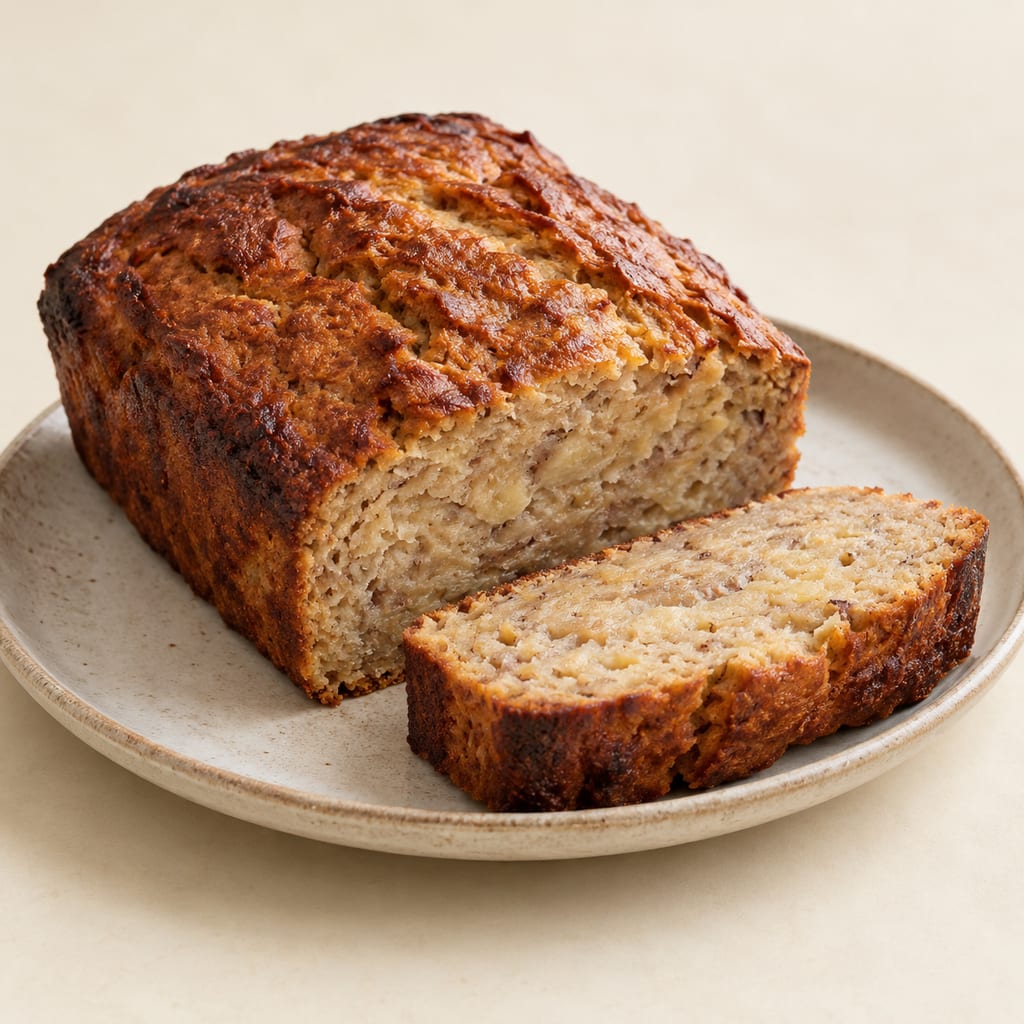
Masi fa‘i is a Western Samoan paste made by fermenting unripe banana in leaf-lined pits, later formed into loaves and baked. A secondary FAO account describes the method; no modern household batch is established.
Soft yeast rolls bake beneath sweet coconut sauce in this Polynesian Cultural Center adaptation of a wheat-bread recipe, which yields twelve buns for a shared tray.
Masi faʻi is a Western Samoan food of unripe bananas preserved in a leaf-lined pit, later made into loaves and baked. The FAO account gives no storage conditions or validated process.
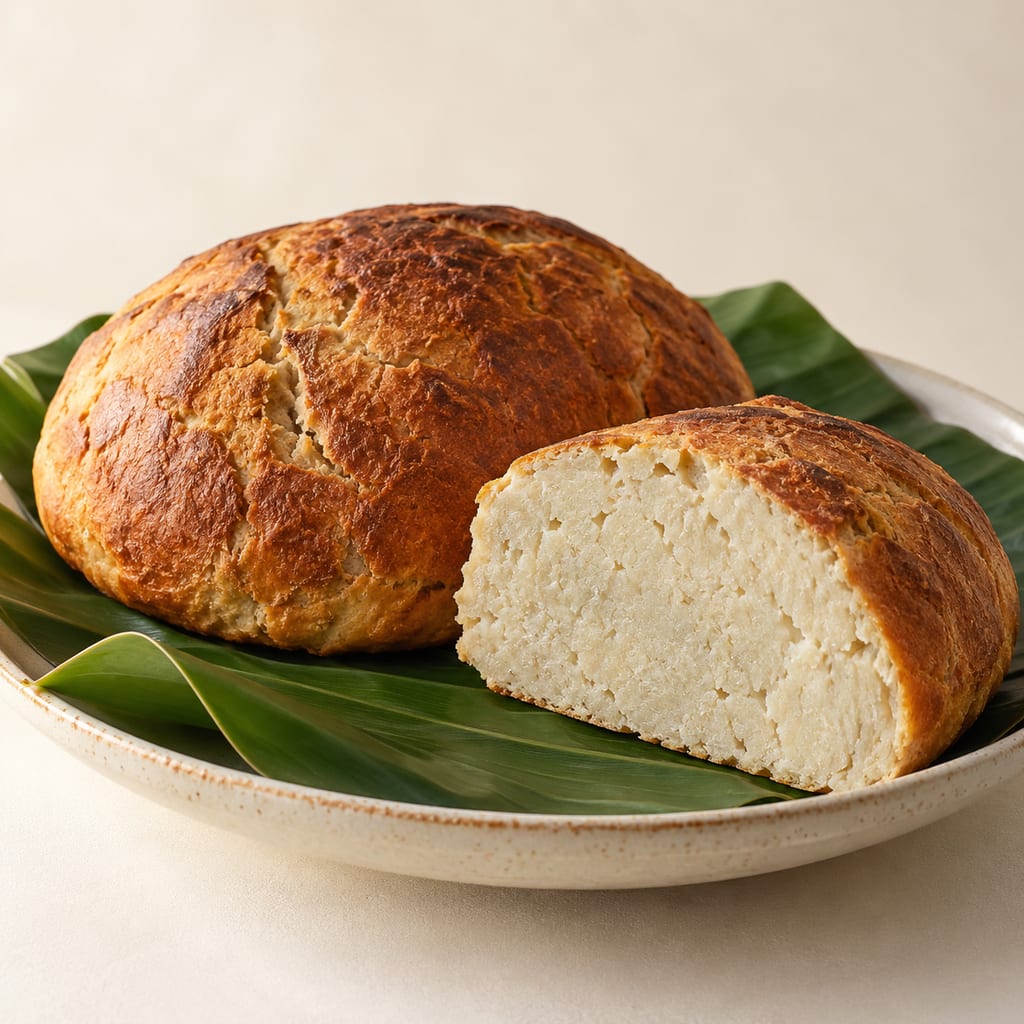
Samoan breadfruit masi is a preserved breadfruit paste kept in a leaf-lined pit, then kneaded, shaped into loaves and baked. FAO describes it at Western Samoa scale only.
Aceda is Sudan’s firm cereal porridge, commonly made from sorghum and shaped into a smooth mound. Some versions use fermented dough; fermentation is not universal.
Ghanaian sour cassava dough fermented with traditional inoculum and drained during fermentation. It is used as a base for cooked foods such as banku and akple; process variants and safety outcomes differ.
Appam, or hoppers, are South Indian and Sri Lankan rice pancakes made from a fermented coconut-and-rice batter and cooked in a curved pan to a crisp lacy rim and a soft, spongy centre.
A hot, sour maize drink from Tabasco made from maize that is not lime-cooked. The ground grain sours for half a day, then makers strain it and boil it until thick.
Ivorian cassava semolina: grated cassava is fermented overnight with a traditional inoculum, pressed, sieved into granules, dried and steamed. Documented in a 2006 field study; no sole original process is established.
Attiéké is an Ivorian staple of grated cassava fermented with a traditional inoculum, then pressed, sieved, granulated, dried and steamed into fine couscous-like grains.
Crushed or milled barley cooked in water until the starch softens and the mixture thickens, the plainest way a northern household turned stored grain into a meal, here with apple and hazelnut.
Community
No community contributions have been published for this entry yet.
Share what you made
Sign in to contribute. Published comments and photos are free to read.