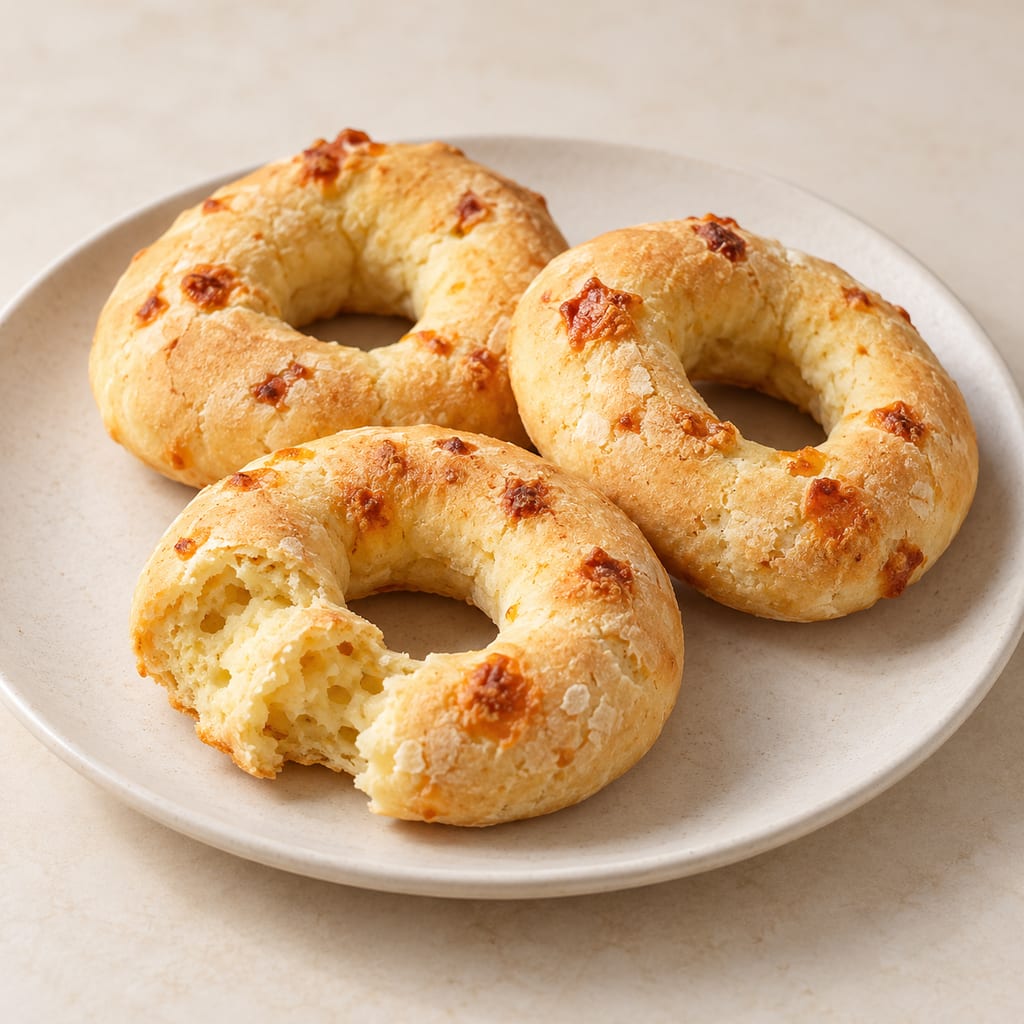
Paraguayan chipa: Laylita's version
Cassava-starch cheese rings made with mozzarella, eggs and milk, with optional anise. This modern version uses baking powder and no dough fermentation.
 FermenteaWhere food goes to change
Sopa paraguaya de harina de maíz
Sopa paraguaya is a savory Paraguayan bake made with fine maize flour, cheese, onion, eggs and milk. This flour-based cake is distinct from chipa guazú, which FUPACEL makes with fresh maize.
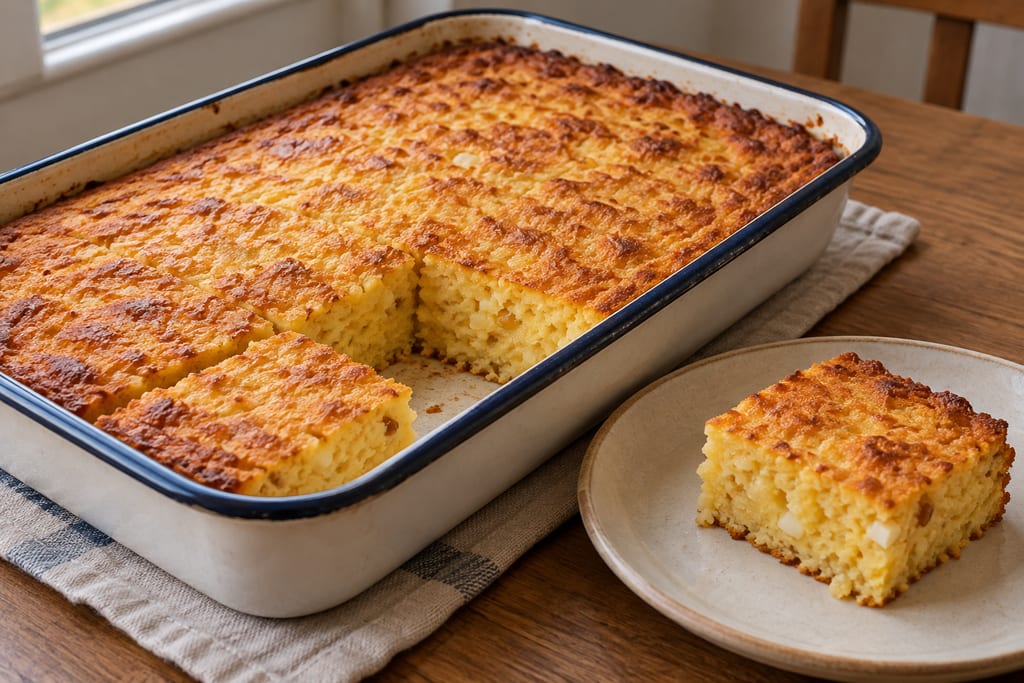
Sopa paraguaya is a savory baked preparation based on maize flour, cheese, onion, eggs and dairy. Paraguay's food and nutrition institute describes it as a traditional dish and reports that the country's National Secretariat of Culture recognized its traditional artisanal preparation as intangible cultural heritage in 2017. The same institute records more than one origin story: an oral account links its solid form to a thickened milk, cheese, egg and maize-flour soup, while another story connects the name to a Guarani phrase. These are reported traditions, not verified events; no single origin date or birthplace is established. FUPACEL's separate chipa guazú recipe starts from fresh kernels, half of them ground, rather than the maize flour used here.
Yield 12 portions · Scaling: source batch only
Flour may carry harmful bacteria, and raw eggs may carry Salmonella. Do not taste the batter; cook it thoroughly and clean hands, bowls, tools and work surfaces after handling.
Hazard sourceThe oven and dish can cause burns when the batter is baked and removed.
Hazard sourceDo not taste raw batter. Bake before eating, and wash hands, bowls, utensils and work surfaces after handling raw flour and eggs.
Control sourceUse oven mitts to handle the hot dish and place it on a stable heat-safe surface.
Control sourceThe source's oven setting, baking time, surface colour and clean-skewer cue are not an independently validated internal safety limit; no internal endpoint is established.
Paraguayan recipe sources document this flour-based bake. No local birthplace is established.
Cassava-starch cheese rings made with mozzarella, eggs and milk, with optional anise. This modern version uses baking powder and no dough fermentation.
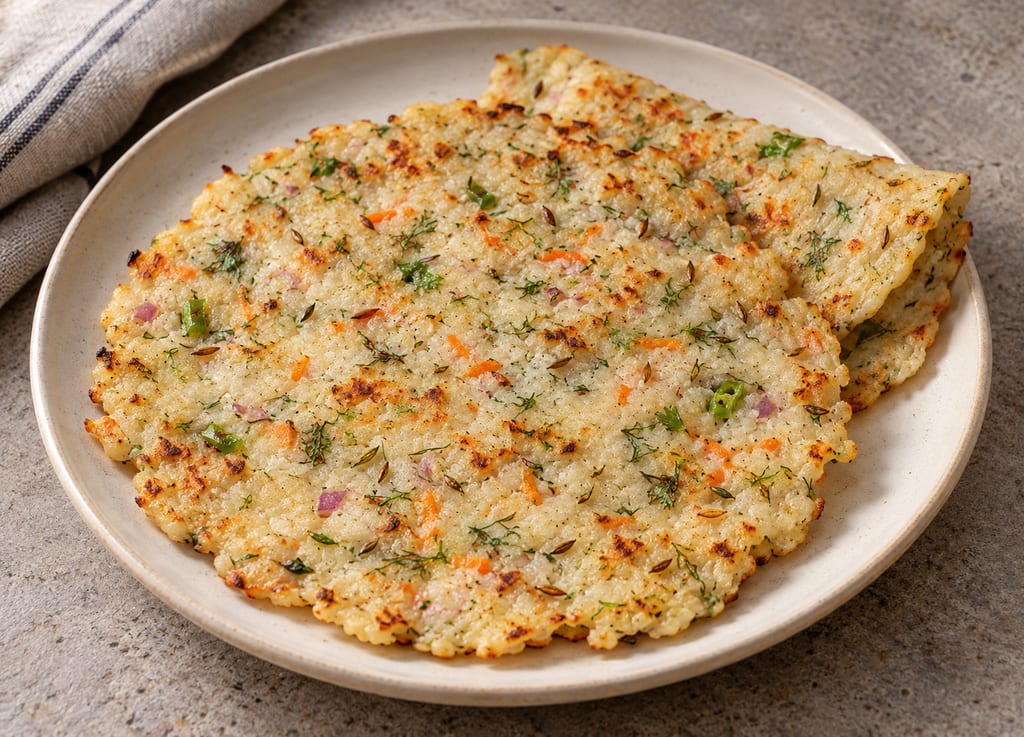
This Karnataka-style akki rotti mixes fine rice flour with vegetables, coconut, herbs and spices, then hand-pats and griddle-cooks the dough.
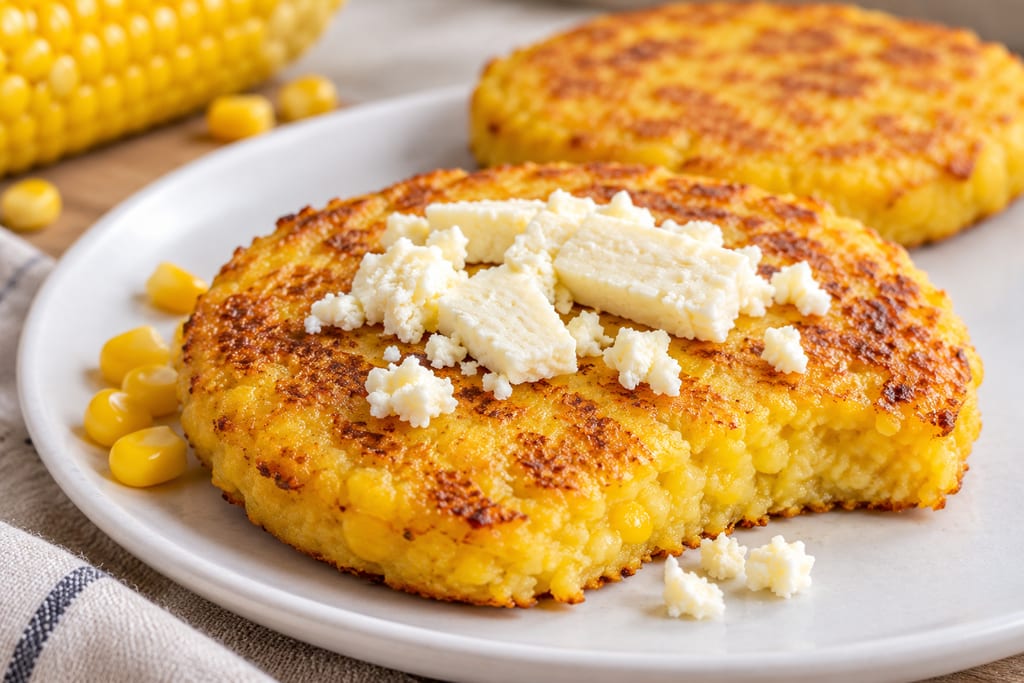
A Colombian Andean griddle cake made from fresh sweet-corn batter, cooked in butter and served with white cheese.
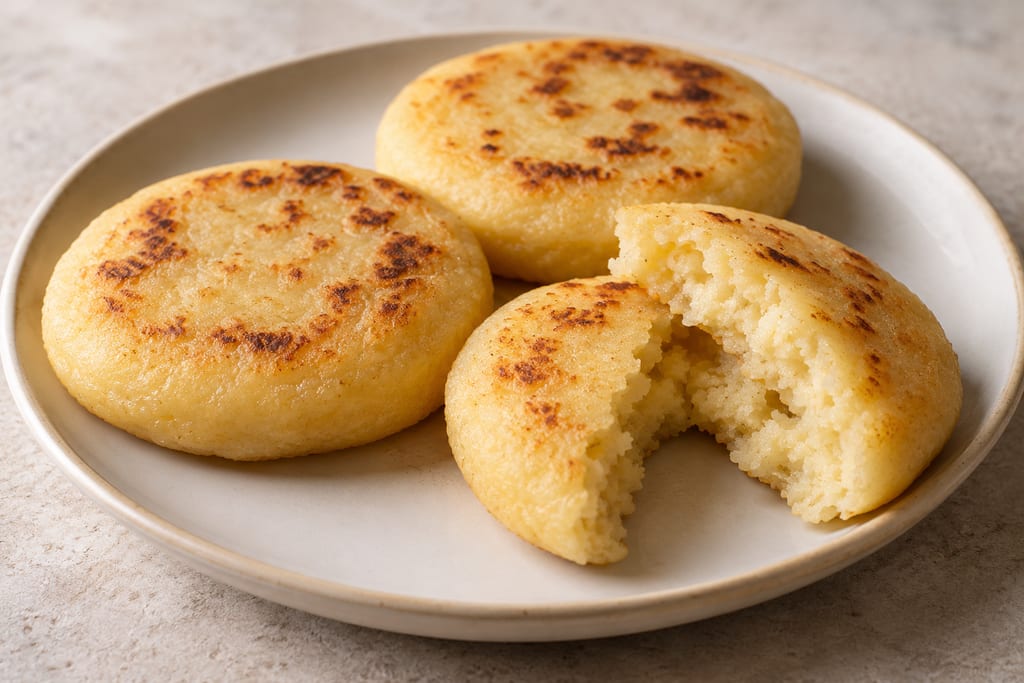
This household version combines precooked corn flour, warm water and salt, then cooks thick rounds on a lightly oiled skillet or griddle. It is one source-specific arepa method, not a universal Colombian or Venezuelan formula.
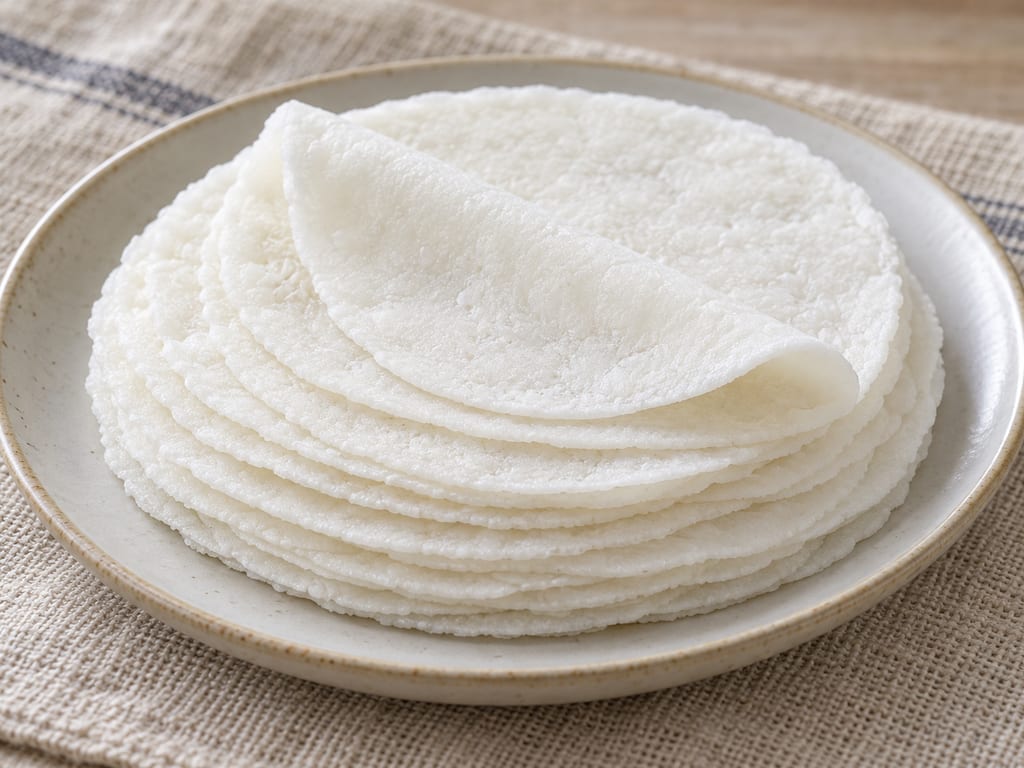
Thin Malabar rice-flour rounds made from roasted rice flour cooked into salted boiling water, kneaded after cooling, and rolled to about 1 mm. They cook on a hot griddle without taking on colour.
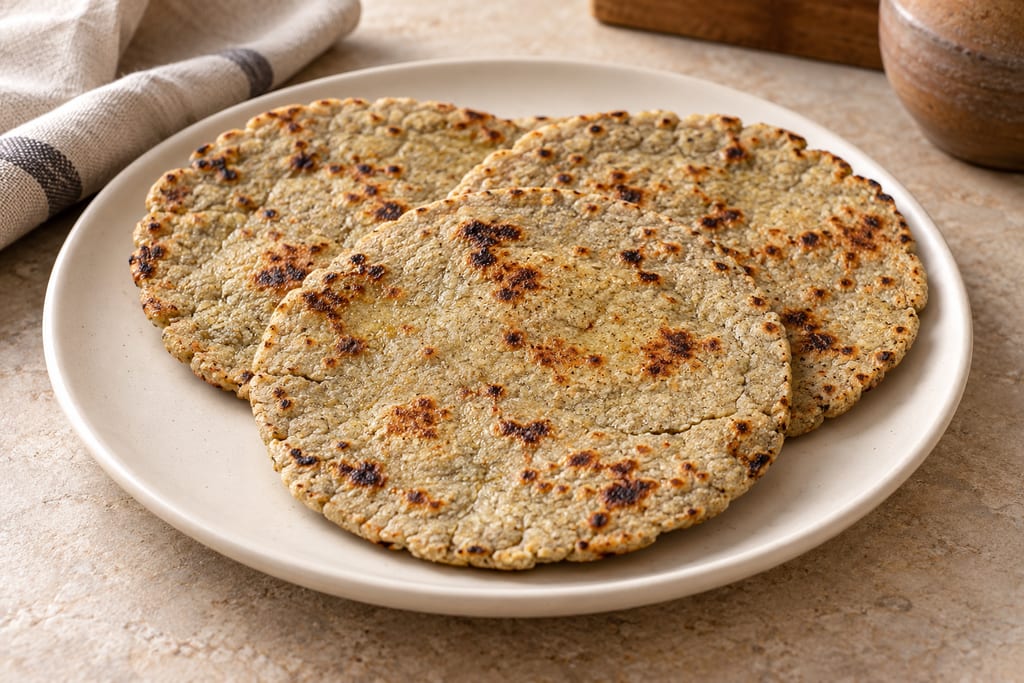
A pearl-millet flatbread shaped between sheets and cooked on a hot tawa. This home batch makes eight.
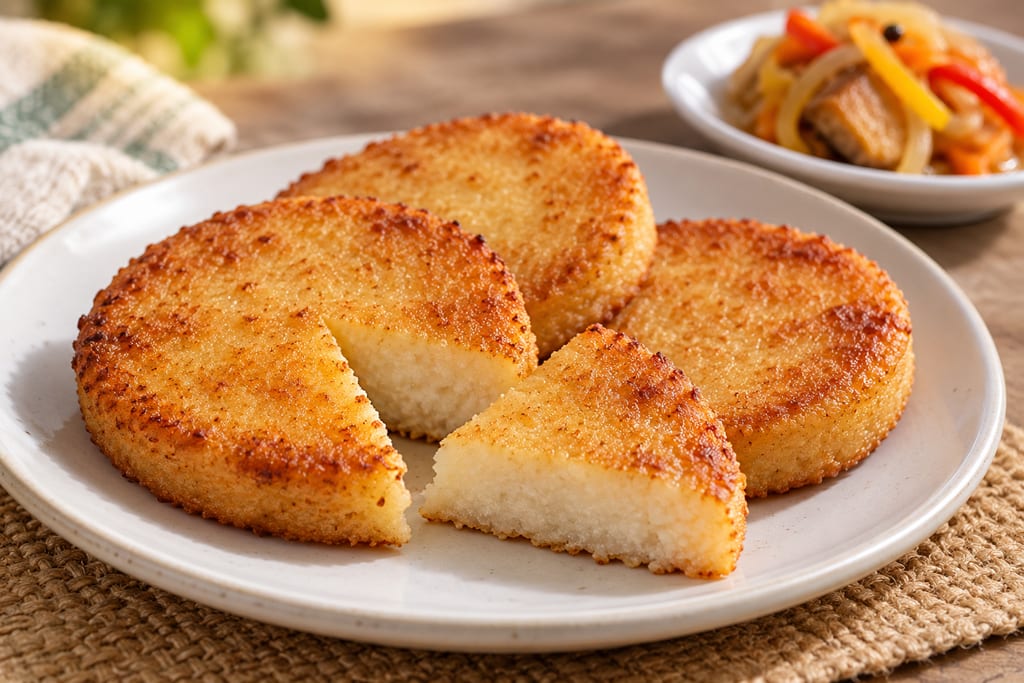
A serving method for approved, prepared bammy rounds: soak them in coconut milk and refry until golden. It does not process raw cassava.
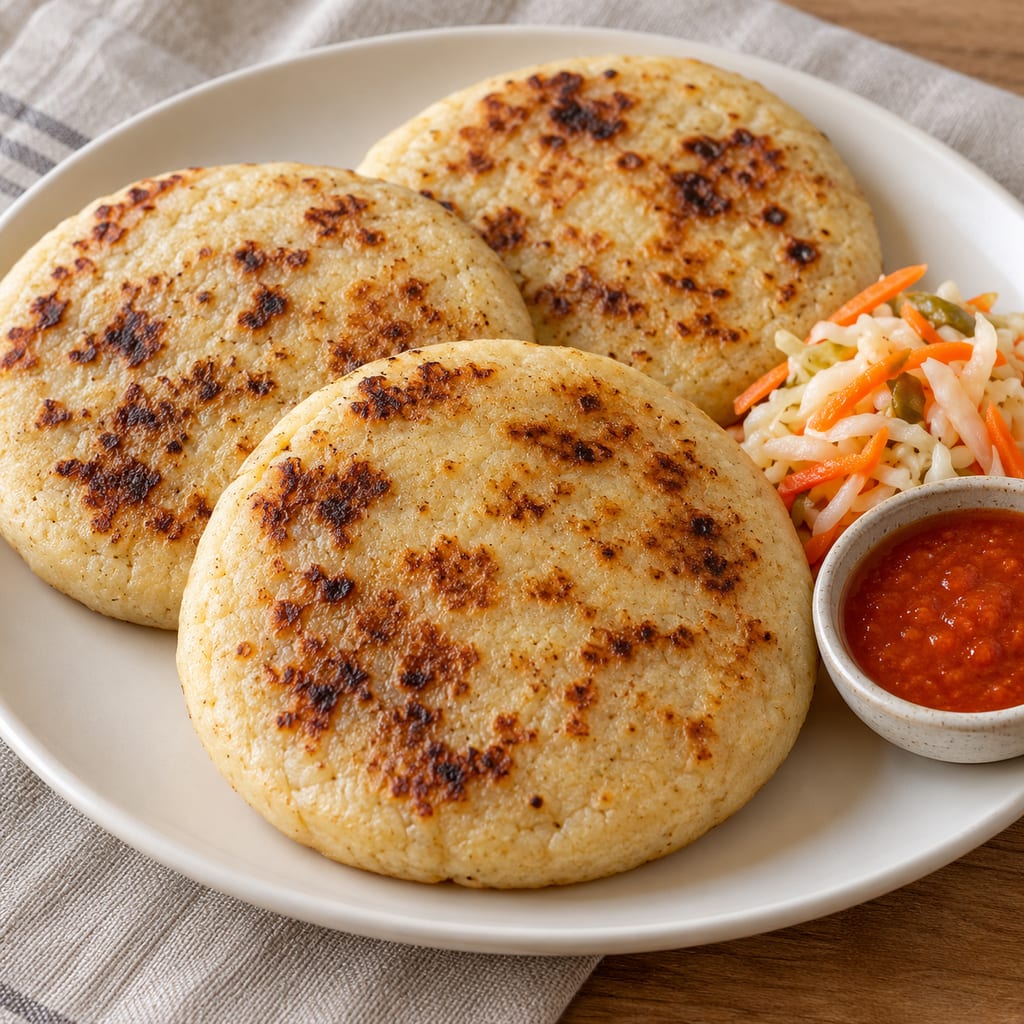
Salvadoran-style masa harina cakes filled with refried beans and cheese, sealed and cooked on an oiled skillet.
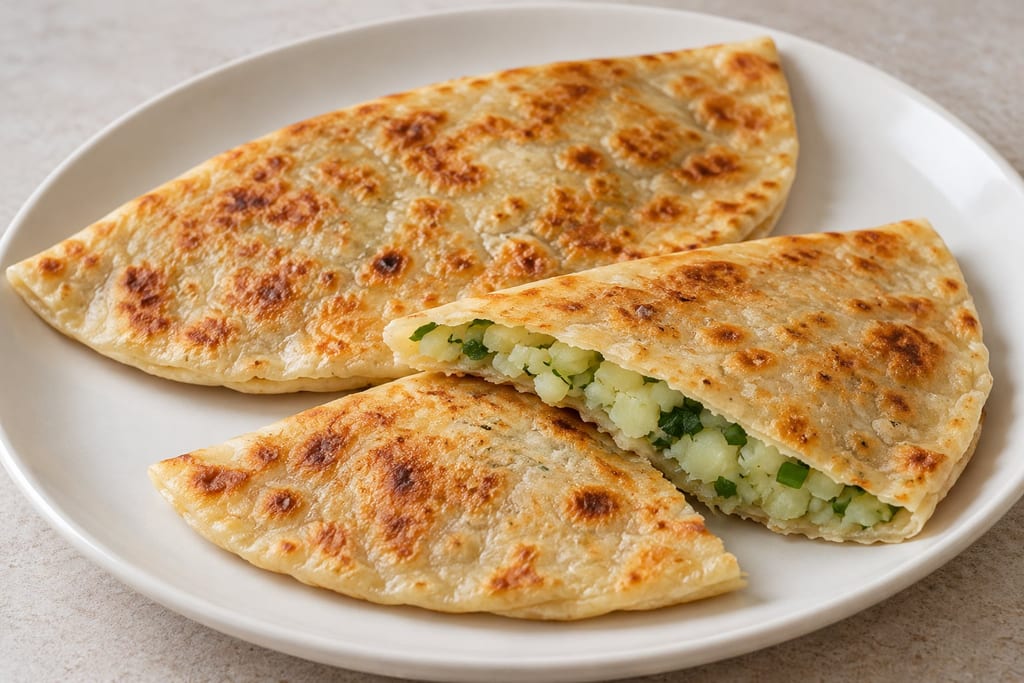
A thin, unleavened Afghan flatbread filled with mashed potato, scallion and cilantro, folded and pan-browned. This version uses a dough made from scratch.
No community contributions have been published for this entry yet.
Sign in to contribute. Published comments and photos are free to read.
comida.com.pyMethod · Inspiration
Sopa paraguaya: la receta tradicional, por kiloThe editorial recipe uses 500 g fine maize flour, 500 g Queso Paraguay, 3 medium onions, 250 ml water, one teaspoon salt, 150 g pork fat or butter, five eggs and 500 ml milk; it gives 12 portions and a 30 × 40 cm dish.
It cooks the onions with water and salt, combines a batter of butter, eggs, cheese, onions, milk and flour, rests the mix, and bakes it at 180°C for about 50 minutes before a 15-minute rest.
The page identifies fresh-maize chipa guazú as a separate related bake and describes the sopa-origin anecdote as a popular account without documentary confirmation.
Fundación Paraguaya de Celíacos (FUPACEL)Method · History
Sopa ParaguayaFUPACEL's version uses maize flour, oil, onions, coarse salt, fresh cheese, eggs and about one litre of milk; it mixes a semi-liquid batter and bakes it in an oiled pan in a hot oven for about an hour.
The formula differs in quantities from the 500 g flour recipe and is retained as a documented variation, not combined into the selected batch.
Fundación Paraguaya de Celíacos (FUPACEL)History
Chipá GuazúFUPACEL's chipa guazú uses fresh white maize kernels, with half ground and half left whole, alongside cheese, eggs, dairy, onion and fat.
This fresh-maize preparation is distinct from flour-based sopa paraguaya.
Instituto Nacional de Alimentación y Nutrición (INAN)History
Conozcamos más sobre la Sopa ParaguayaINAN calls sopa paraguaya a traditional dish associated with Paraguay and the wider Guaraní area.
It reports the National Secretariat of Culture's 2017 recognition of traditional artisanal preparation as intangible cultural heritage.
It records several origin narratives and identifies the President Carlos Antonio López story as oral tradition, not a verified event.
It describes flour-based variants with maize flour, onion, milk, cream, lard, eggs, fresh cheese, water and salt.
U.S. Food and Drug AdministrationSafety
Handling Flour Safely: What You Need to KnowRaw flour may carry harmful bacteria; do not taste raw dough or batter and cook it before eating.
Wash hands, bowls, utensils and work surfaces after handling raw flour and batter.
U.S. Food and Drug AdministrationSafety
What You Need to Know About Egg SafetyRaw eggs may carry Salmonella; wash hands and utensils after contact and cook egg-containing food thoroughly.