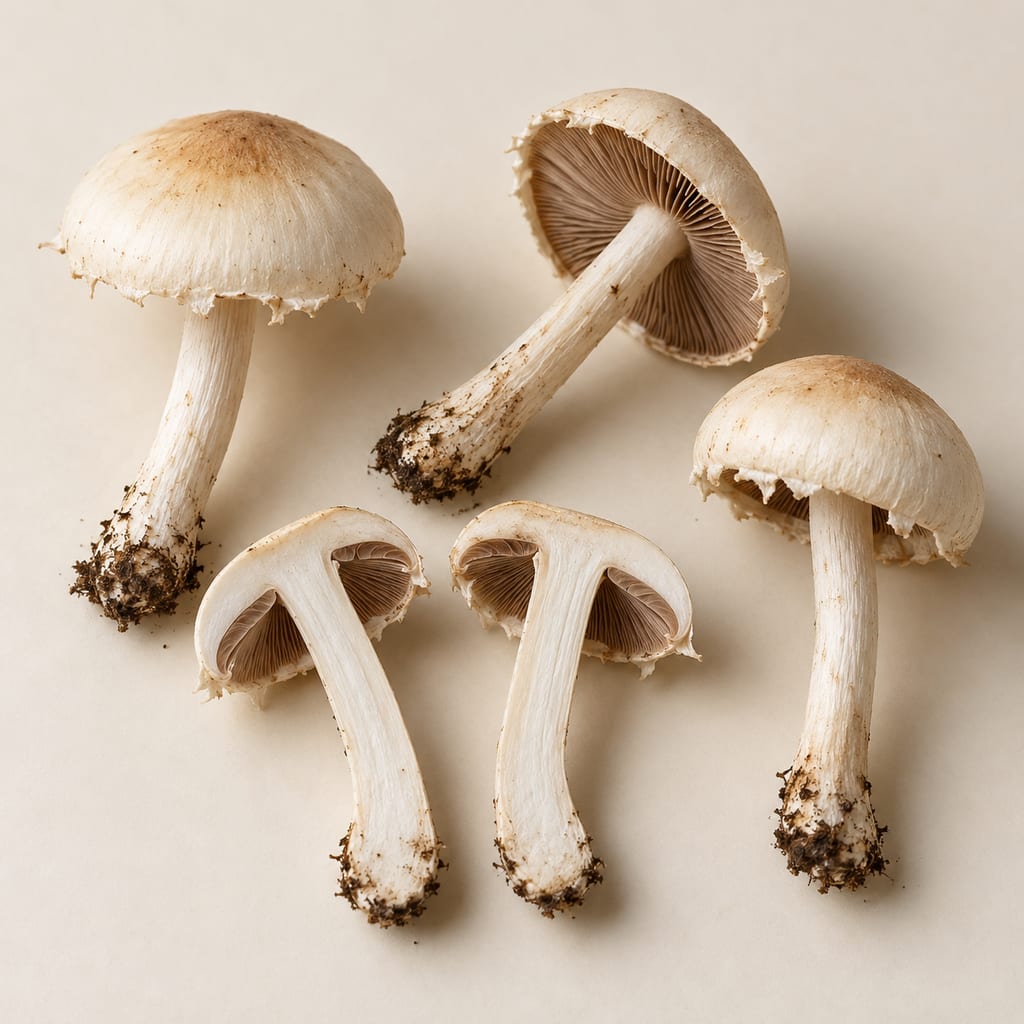
Agrocybe dura
A grassland agaric listed as edible in historical and scientific catalogues for Hong Kong and China. Taxonomic concepts and practical food value vary; the listings do not establish safe identification or culinary practice.
 FermenteaWhere food goes to change
Mushrooms
Enoki is the cultivated East Asian winter mushroom, Flammulina filiformis: a mild, crisp, slender-stemmed fungus used in soups and hot pots and best cooked thoroughly.
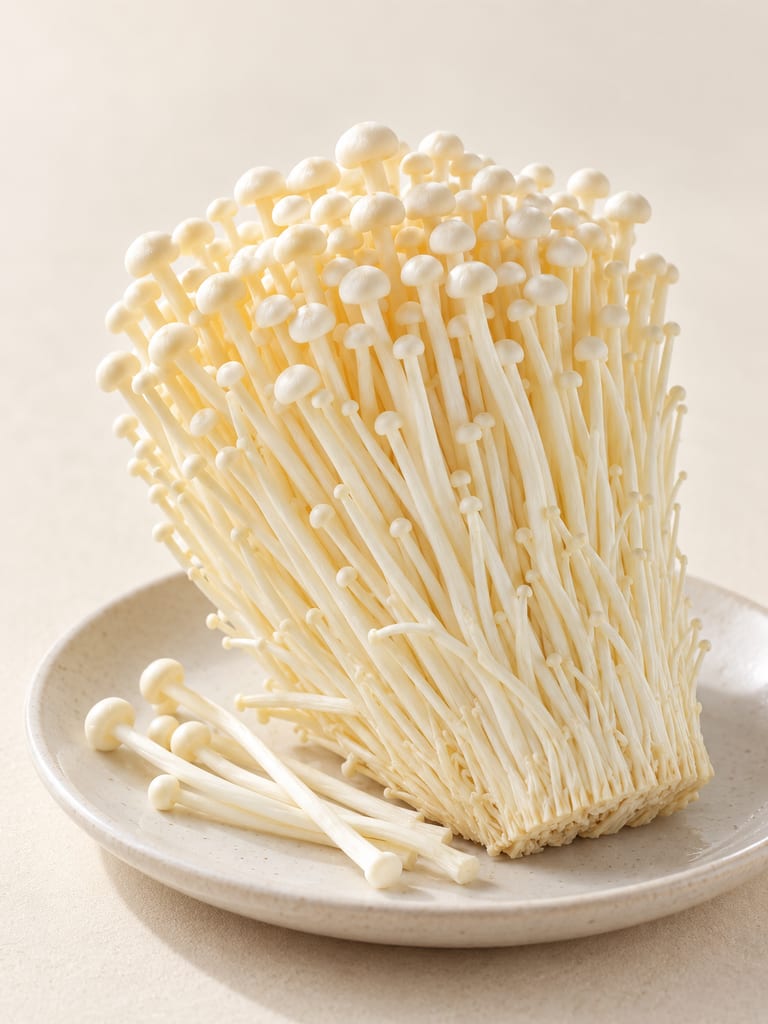
Enoki is the slender mushroom sold in compact clusters, with many fine stems rising to small caps. The cultivated Asian enoki covered here is *Flammulina filiformis*, a wood-decaying fungus in the family Physalacriaceae. Its market form is usually ivory-white, with long, narrow stems and small pale caps. It has a mild, savoury flavour and a springy, crisp bite when briefly cooked. The Japanese name is enokitake (えのきたけ); in Chinese it is often called jīnzhēngū (金针菇), or golden-needle mushroom. English markets also use golden needle, lily mushroom, seafood mushroom and futu. These names travel between markets and do not always identify a species with precision.
The name matters because European velvet shank, *Flammulina velutipes*, is a separate species. Older Asian books, food labels and genome papers often used *F. velutipes* for cultivated Asian enoki. A 2018 study compared collections from East Asia, Europe and North America using several gene regions and genetic evidence. It concluded that East Asian wild and cultivated enoki belongs to *F. filiformis*, while *F. velutipes* sensu stricto is European. The two can be difficult to separate from appearance alone, so a market name or photograph cannot establish the identity of a wild specimen. This page describes the cultivated Asian food product, not a field identification key.
Enoki also names a style of cultivation and a market form rather than one uniform strain. Breeders select cultivars for features such as cap colour and stem length. The white, narrow-stemmed clusters familiar from supermarket packs are one cultivated expression. Wild populations are typically yellow to orange-brown, with broader caps and shorter stems. The contrast can make the two forms seem like different mushrooms, but cultivation conditions and selected strain traits explain much of the difference. Not every regional or cultivated *Flammulina* specimen should be assigned to *F. filiformis* from a common name alone.
In the wild, *F. filiformis* is a saprotroph: it obtains nutrients as it decomposes dead wood, often fruiting in clusters on broadleaf stumps and fallen wood. Its season is unusual for a woodland mushroom. Published physiology research describes wild fruiting from late autumn into early spring, when temperatures are low. Cold exposure is part of the transition from vegetative growth in the substrate to primordia, the small beginnings of fruitbodies, and then mature mushrooms. This winter window is a broad seasonal pattern, not a calendar promise for every site or year; local temperature, rainfall, host wood and strain all matter.
Commercial growers reproduce the species' cold preference inside controlled rooms. Mycelium first colonises a prepared lignocellulosic substrate, a woody plant-based material supplemented with nutrients. Growers then adjust conditions to induce fruiting. Published methods vary by strain and facility: one recent study grew mycelium in a supplemented bag medium and used a cooler, humid stage to promote primordia. These research conditions illustrate the biological response; they are not a universal home-growing recipe. Industrial production controls temperature, moisture, air exchange, light and container geometry to produce a predictable crop. Enoki can therefore reach markets year-round even though wild fruitbodies are associated with the cold season.
The long, pale, tightly packed market form is not a reliable picture of how the mushroom looks outdoors. In bottle or bag production, restricted light and air conditions can lead to slender, elongated stems and a pale crop. Open-grown fruitbodies develop more visible caps and colour. A grower's chosen strain also affects stem length and cap tone. Research on cultivar pedigrees finds that many modern white lines are closely related, while yellow lines can cluster more closely with wild strains. These findings describe the strains sampled in particular studies; they do not define every cultivar or prove that colour alone reveals ancestry.
Accounts of enoki's cultivation history do not point to a single uncontested beginning. A modern cultivar paper repeats a claim that cultivation in China began in the eighth century, but it is a review of earlier accounts rather than a translation of an identified contemporary document. The same paper reports a more traceable modern breeding history: a first Chinese cultivar was reportedly domesticated from a wild isolate from Fujian in 1974, followed by the introduction of a Japanese white strain to Fujian breeders in 1983. These dates concern modern cultivars and should not be conflated with the much earlier cultivation claim.
A longer technological shift took place as growers moved from wood logs and semi-wild methods toward controlled containers and mechanised production. The cultivar literature describes bottle cultivation as increasingly important and notes a shift in global production leadership from Japan to China after the 1990s. These changes made a winter woodland fungus into a dependable crop for markets far from its native and long-cultivated regions. The sources consulted here do not settle exactly when the earliest cultivation began or which surviving historical text supports the eighth-century claim. The safer account keeps the early claim attributed and uncertain while treating modern strain and production records as more specific evidence.
Japan's Shinshu region shows how an agricultural side activity became a specialised industry. A Japanese producer describes artificial enoki cultivation spreading in Nagano as winter sideline work when outdoor farm labour was limited. It says production is now largely carried out by companies and that Nagano contributes about 60 percent of Japan's crop. The company also dates its enoki simmered condiment, nametake, to 1966. This is a producer's account of its regional business and product history, not an independent census or a full history of Japanese enoki. It documents how controlled cultivation and local processing became linked in one important production region.
Fresh enoki are commonly sold as a cluster whose stems meet at a dense base. For cooking, trim away that compact base and separate the stems into smaller bundles or strands, as the dish requires. The fine stems heat quickly. In hot pot, soup and stir-fry, cooks often add enoki near the end so it softens without losing all its spring. The thin stems can remain pleasantly firm after brief cooking; left simmering much longer, they become limp and can seem slippery. The small caps and slender stems catch broth and seasoning, adding a delicate mushroom note without taking over a dish.
Japanese cooking uses enoki in soups, hot pots and simmered dishes. A more concentrated preparation is nametake: enoki cooked down with soy sauce and sugar into a glossy, sweet-salty condiment. A producer describes it served over rice, mixed into salads or added to other cooking. This is a cooked preserve or condiment, not a fermented mushroom product. Its flavour comes from the mushroom and reduced seasoning liquid. The sources consulted here do not establish a safe home-made shelf life for nametake, so use a tested recipe and its storage directions rather than assuming a sweet-salty taste makes a jar shelf-stable.
The mildness of enoki makes it useful beside stronger broths, chilli pastes, soy-based seasonings and aromatic vegetables. Its main contribution is often texture: clustered stems give a dish a fine, noodle-like bite, while the caps and cut base contribute more mushroom body. In a short-cooked dish, separating the cluster helps heat reach the stems evenly. In a long-simmered stew, adding it later can preserve more structure. These are practical choices about texture rather than safety tests. A cooked mushroom that looks crisp or smells pleasant is not necessarily free of foodborne bacteria.
Enoki is a raw fungal ingredient, not a starter culture. It can be added to a ferment whose microbes come from the other ingredients or an established culture, but the evidence found here does not show enoki itself reliably initiating fermentation. A Korean study published in 2001 under the older species name *F. velutipes* tested enoki as an addition to kimchi fermented at 10 °C. The researchers compared formulations with different additions and reported that a 5 percent enoki treatment had lower pH and titratable acidity than the control, with higher sensory scores for colour and taste than the other treatments. In all treatments, acidity and pH changed over time, and total microbial and lactic-acid-bacteria counts peaked around day five.
That study is evidence for one experimental formulation, not a general kimchi standard. It does not establish that any quantity of enoki will improve a ferment, that the effect transfers to other vegetables or salt levels, or that the mushrooms are a source of lactic-acid bacteria. The species name in the title reflects nomenclature at the time; because the sample was described as enoki rather than identified from a preserved specimen with modern sequencing, the study cannot independently confirm that it was *F. filiformis*. The paper is most useful as a documented culinary experiment and a reminder to distinguish the ingredient's role from the organisms that carry out lactic fermentation.
In a vegetable ferment, enoki can add edible solids and change the mixture's texture and composition. The surrounding recipe still determines salt, temperature, fermentation time and microbial community. Do not copy a study's percentages or temperature into an unrelated recipe without checking the full method and safety controls. A research finding about pH or sensory ratings does not by itself establish a safe process, shelf life or preservation method. For ordinary use, treat enoki as a cooked ingredient unless a tested, reliable ferment recipe gives explicit instructions for it.
Enoki is usually sold fresh in a compact cluster, often in a package that identifies its origin and producer. Check current recall notices and follow package storage and preparation directions. Keep raw mushrooms separate from ready-to-eat foods, and wash hands, utensils and surfaces that have touched them. The important hazard documented by food-safety agencies is contamination with *Listeria monocytogenes*, not a toxin naturally produced by enoki. *Listeria* can persist in refrigerated conditions and spread from raw produce to hands, containers and other foods.
US agencies investigated enoki-linked *Listeria* outbreaks in 2020 and 2022, including contaminated products imported from East Asia. The 2022 investigation involved five illnesses in four states; all five people were hospitalized, and no deaths were reported. The outbreak was later closed. These investigations concern particular contaminated products and do not mean that every package is contaminated. They explain why CDC gives specific advice to people at greater risk of severe listeriosis: pregnant people, adults aged 65 or older, and people with weakened immune systems should avoid raw enoki and eat it only after thorough cooking. Restaurants should cook it thoroughly and keep raw enoki separate from foods that will not be cooked.
Wild *Flammulina* mushrooms are not interchangeable with a supermarket pack. The genus contains several species, and important distinctions can require microscopic or genetic evidence. Other fungi grow in similar clusters on wood, and a photograph or online description cannot establish a wild mushroom's identity or edibility. This ingredient entry concerns cultivated Asian enoki sold for food; it should not be used to identify a foraged specimen. Anyone considering a wild mushroom should seek an in-person assessment from a qualified local expert and follow local foraging rules.
Published accounts disagree on the date and place of the earliest enoki cultivation. The eighth-century China claim is retained as an attributed modern account, not established fact. The specific modern cultivar milestones are more closely described, but still reported through later literature. The 2001 kimchi study used the former name *F. velutipes*, and no voucher or sequence evidence was found here to reconcile its sample to the species named in this entry.
Cultivation and a Fujian-derived first Chinese cultivar are reported; this does not define the species' full range or prove earliest domestication.
A later cross-breeding paper reports artificial cultivation in Japan in 1928, citing earlier literature; the date is retained as an attributed historical report.
A Korean journal study documents enoki in an experimental kimchi preparation; this row does not claim traditional use or species-level verification of the historical sample.
A grassland agaric listed as edible in historical and scientific catalogues for Hong Kong and China. Taxonomic concepts and practical food value vary; the listings do not establish safe identification or culinary practice.
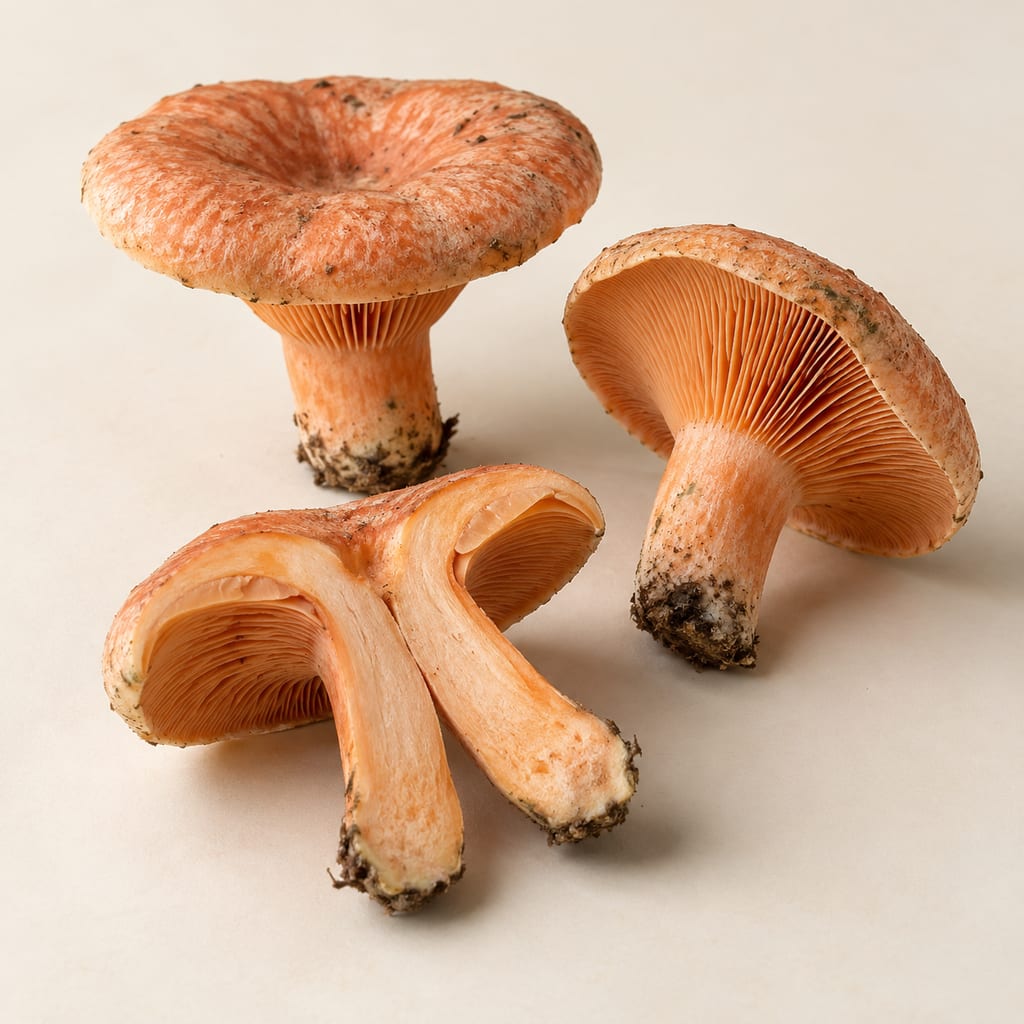
Akahatsu, Lactarius akahatsu, is a wild milkcap of East Asian pine and mixed forests that is sold in Yunnan markets, with its edibility and identity still needing species-level review.
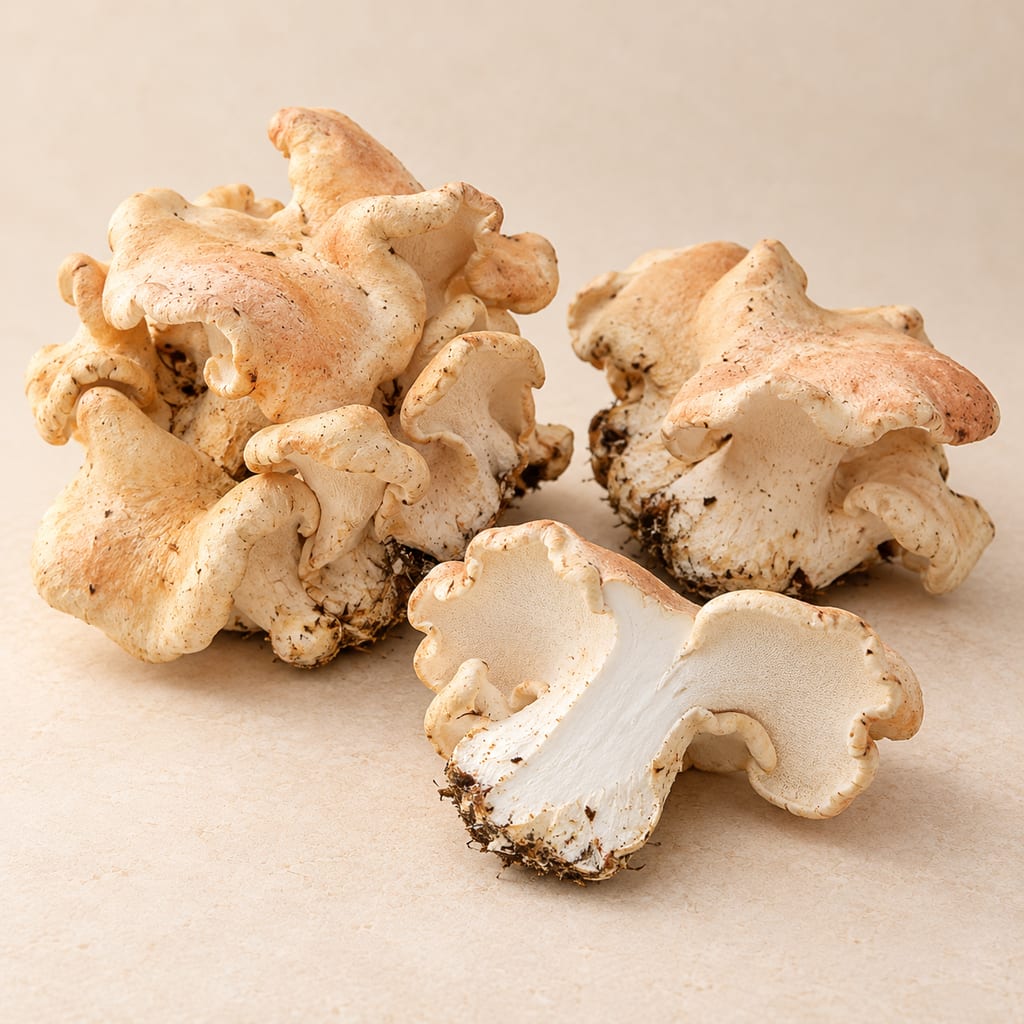
Albatrellus confluens is a ground-growing polypore with fused buff-orange caps. Sources document Chinese market use and regional edibility, but others reject it as too bitter; taxonomy also varies between Albatrellus and Albatrellopsis.
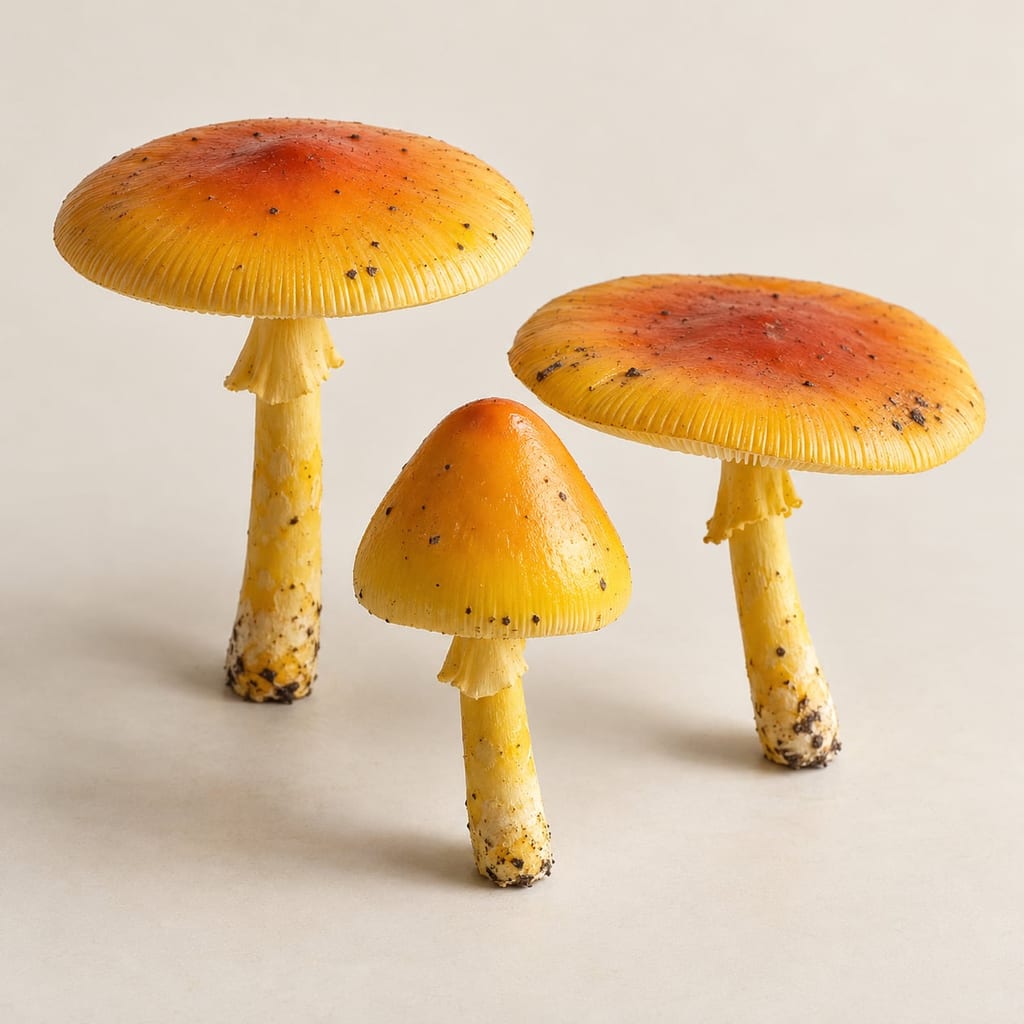
A wild Amanita recorded from China in a 2026 checklist of edible and medicinal fungi. The genus holds deadly species, so this page gives no identification or edibility verdict.
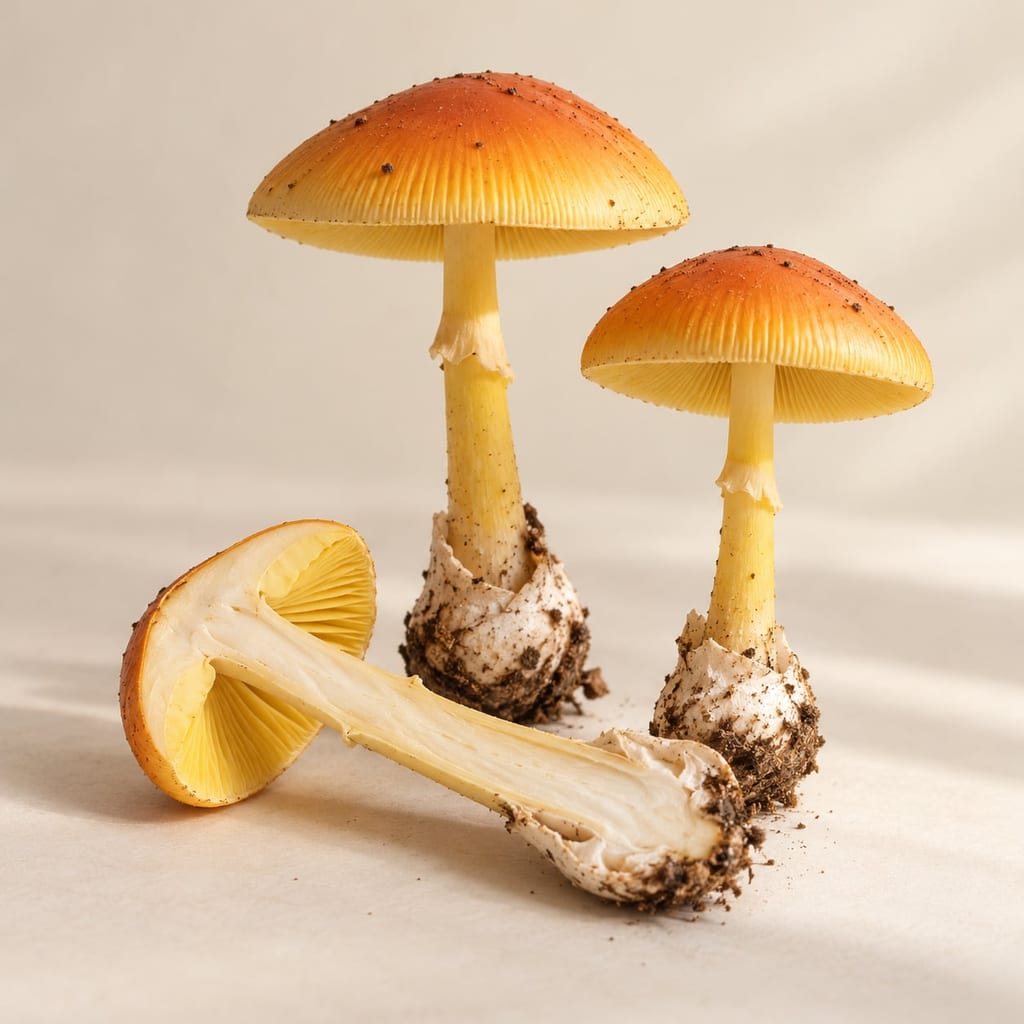
A wild Amanita of China, first reported there and listed as edible in a Yunnan ethnomycology study. The genus contains deadly species, so this page does not support identifying or eating it.
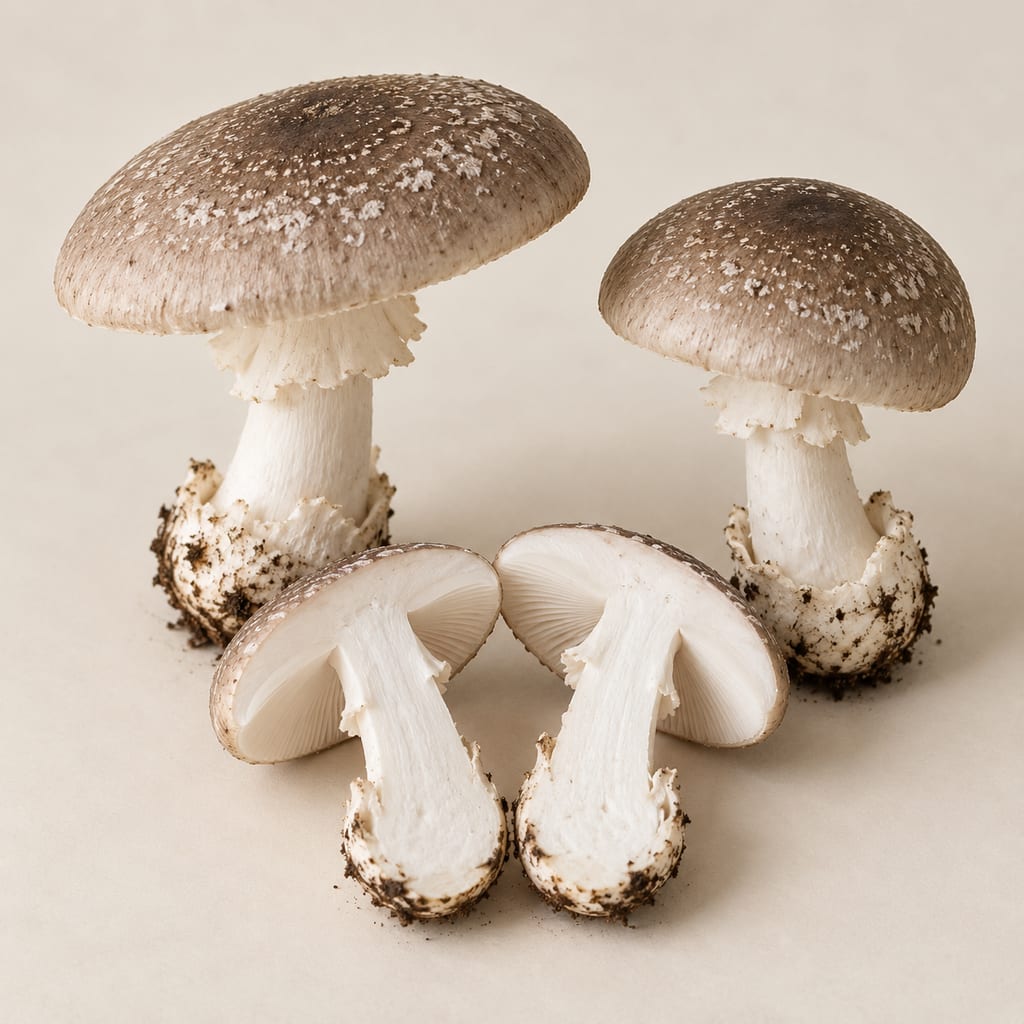
Amanita yuaniana is a Chinese Amanita that a 2023 Yanshan survey and a Yunnan ethnomycology survey list among edible species. No source tests it for safety, and the genus holds the most lethal mushrooms.
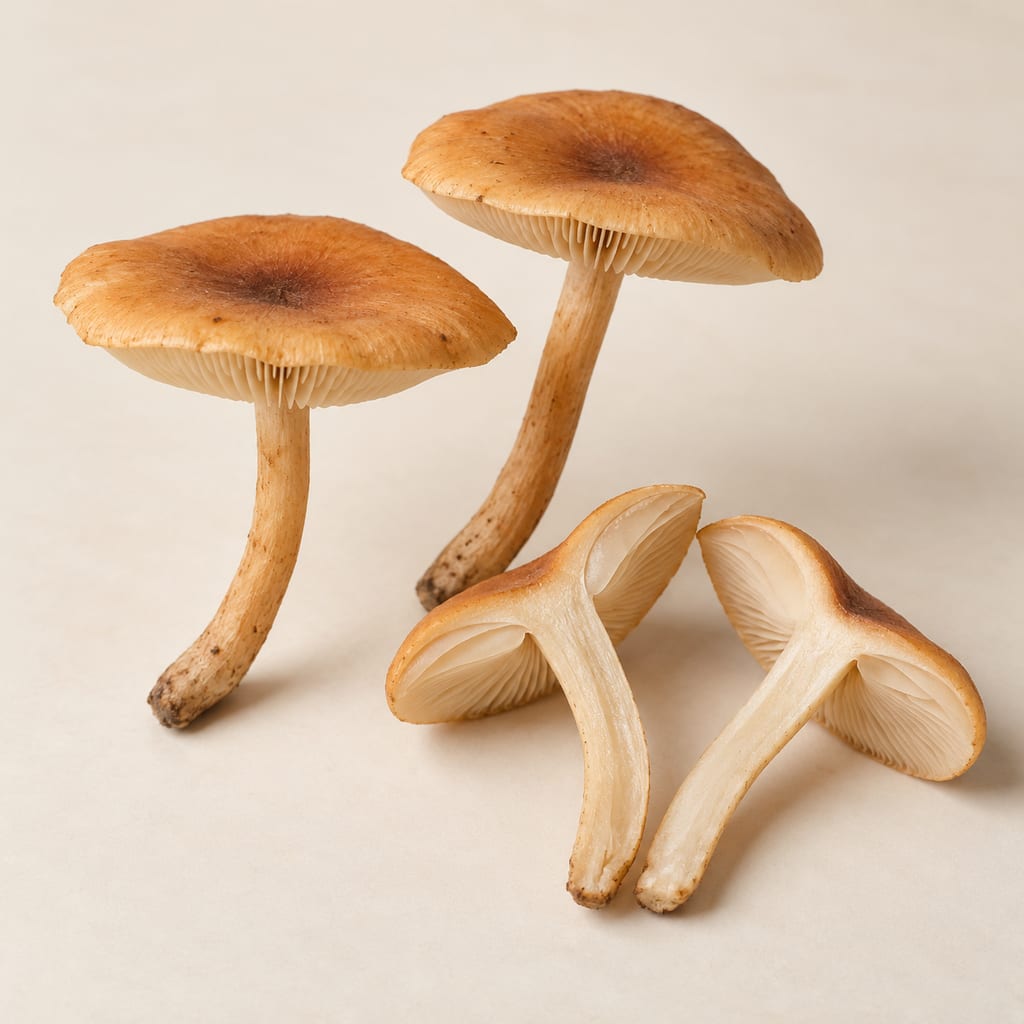
A wood-associated Armillaria recorded in Yunnan and Sichuan, China, and listed as edible in a 2026 Chinese catalogue.
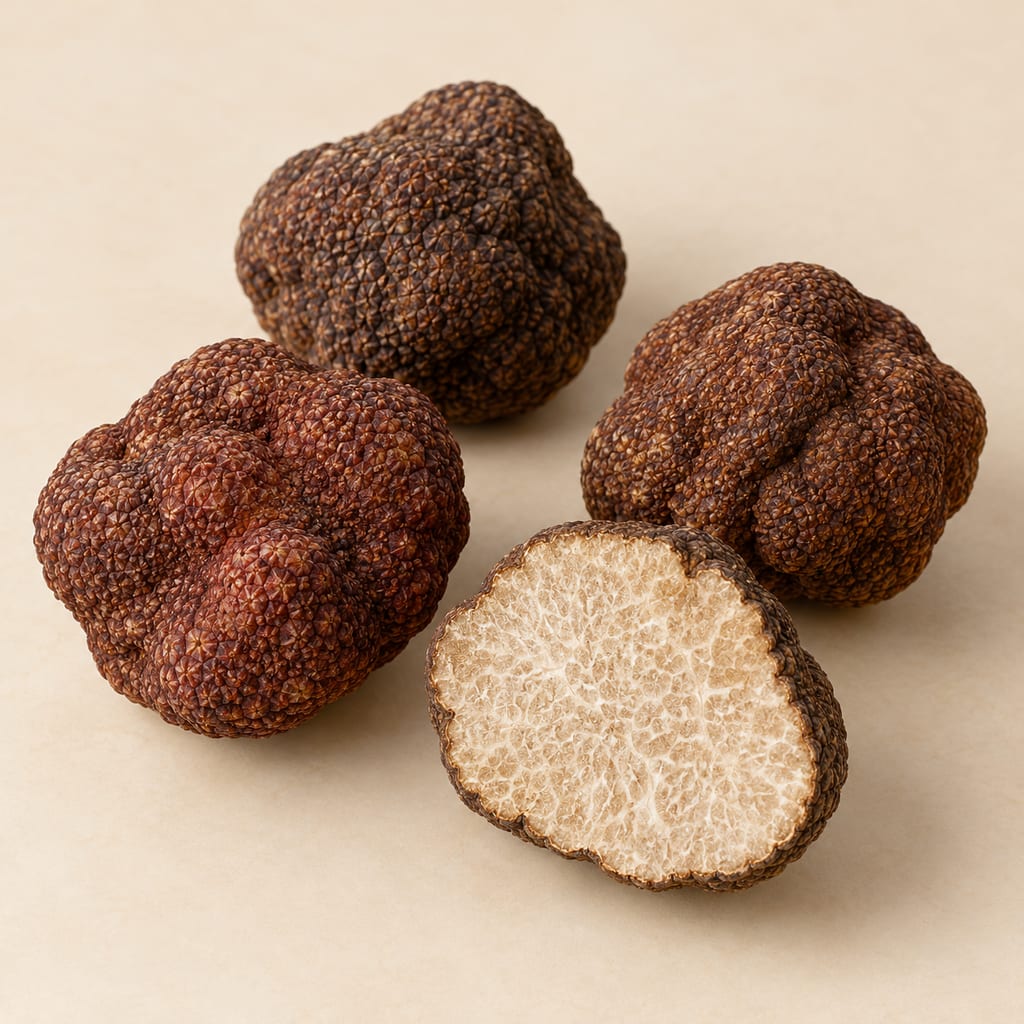
Tuber pseudohimalayense is a wild black truffle from Yunnan, China, listed as edible in a Chinese species catalogue. No independent assessment of its culinary use or safety is available.

Soft, spreadable Calabrian pork sausage made with a great deal of red chilli and fatty pork, stuffed into natural casings, sometimes smoked and matured while staying soft.

A way to add independent temperature logging to an existing food dehydrator without changing its built-in controls or protections. It is a monitoring method, not a rewiring plan.

Pleurotus cystidiosus is the abalone mushroom, a cultivated oyster-type fungus with dark brown caps that grows more slowly and is more demanding than other Pleurotus species.

A dark, balanced vinegar from Emilia-Romagna made by combining cooked or concentrated grape must with wine vinegar, then acetifying and refining it in wood under a protected specification.

A living dairy inoculum that starts controlled cream fermentation, developing acidity and aroma before sour cream or cultured butter is finished.

A small electric incubator holds jars at a selected temperature for yogurt and other documented warm food preparations. Controls, capacity and vessel arrangement vary by model.

Adygean salt is a seasoned table salt associated with Adygea and the wider North Caucasian culinary tradition. Salt is blended with garlic and a variable selection of herbs and spices; the exact mix depends on the named style and maker.

The African Caesar-group mushroom, Amanita masasiensis, is a wild ectomycorrhizal species of central and southern African woodlands, eaten locally. The genus contains deadly poisonous species, so identification needs care.
No community contributions have been published for this entry yet.
Sign in to contribute. Published comments and photos are free to read.
Mycological Progress / Springer NatureIdentity · Cultivation · Culinary use · Safety
Phylogeny and species delimitation of Flammulina: taxonomic status of winter mushroom in East Asia and a new European species identified using an integrated approachMulti-gene phylogeny and morphology distinguish East Asian winter mushroom from European F. velutipes sensu stricto; supports F. filiformis for East Asian material.
Cited in: The winter mushroom and its names; Wood, weather and a cultivated shape; Buying, handling and food safety
BMC Genomics / Springer NatureIdentity · Cultivation · Culinary use · Safety
Genome-wide analysis and prediction of genes involved in the biosynthesis of polysaccharides and bioactive secondary metabolites in high-temperature-tolerant wild Flammulina filiformisReports F. filiformis cultivation in China and first Chinese cultivar selected from wild Fujian isolate in 1974; study wild strain collected in Yunnan.
Cited in: The winter mushroom and its names; Wood, weather and a cultivated shape; A history with more than one beginning; Notes on historical evidence
PLOS ONEIdentity · Cultivation · Culinary use · Safety
Transcriptome data reveal conserved patterns of fruiting body development and response to heat stress in the mushroom-forming fungus Flammulina filiformisWild fruiting late autumn to early spring; low-temperature commercial cultivation; East Asian winter mushroom formerly called F. velutipes.
Cited in: The winter mushroom and its names; Wood, weather and a cultivated shape
Frontiers in MicrobiologyIdentity · Cultivation · Culinary use · Safety
Comprehensive Genetic Analysis of Monokaryon and Dikaryon Populations Provides Insight Into Cross-Breeding of Flammulina filiformisReports 1928 Japanese artificial-cultivation history, citing earlier literature; retain as attributed report rather than certain origin.
Cited in: A history with more than one beginning; Notes on historical evidence
Journal of the Korean Society of Food Science and Nutrition / Korean Traditional Knowledge PortalIdentity · Cultivation · Culinary use · Safety
Effect of Enoki Mushroom (Flammulina velutipes) Addition on the Quality of Kimchi during Fermentation2001 kimchi experiment at 10°C; 5% enoki had lower pH and titratable acidity than control and higher color/taste scores than other treatments; uses older F. velutipes name.
Cited in: Enoki in a ferment; Notes on historical evidence
Centers for Disease Control and PreventionIdentity · Cultivation · Culinary use · Safety
Listeria Outbreak Linked to Enoki Mushrooms - November 2022Enoki used in Japanese, Chinese and Korean food and often cooked in soups, hot pots and stir-fries; CDC advises thorough cooking, separation and hygiene, and avoidance of raw enoki by higher-risk groups.
Cited in: From trim to table; Buying, handling and food safety
U.S. Food and Drug AdministrationIdentity · Cultivation · Culinary use · Safety
FDA Expands Country-Wide Import Alert for Enoki Mushrooms to ChinaSpecific Listeria investigations/recalls linked to particular products; does not establish a natural toxin or contamination of every package.
Cited in: Buying, handling and food safety