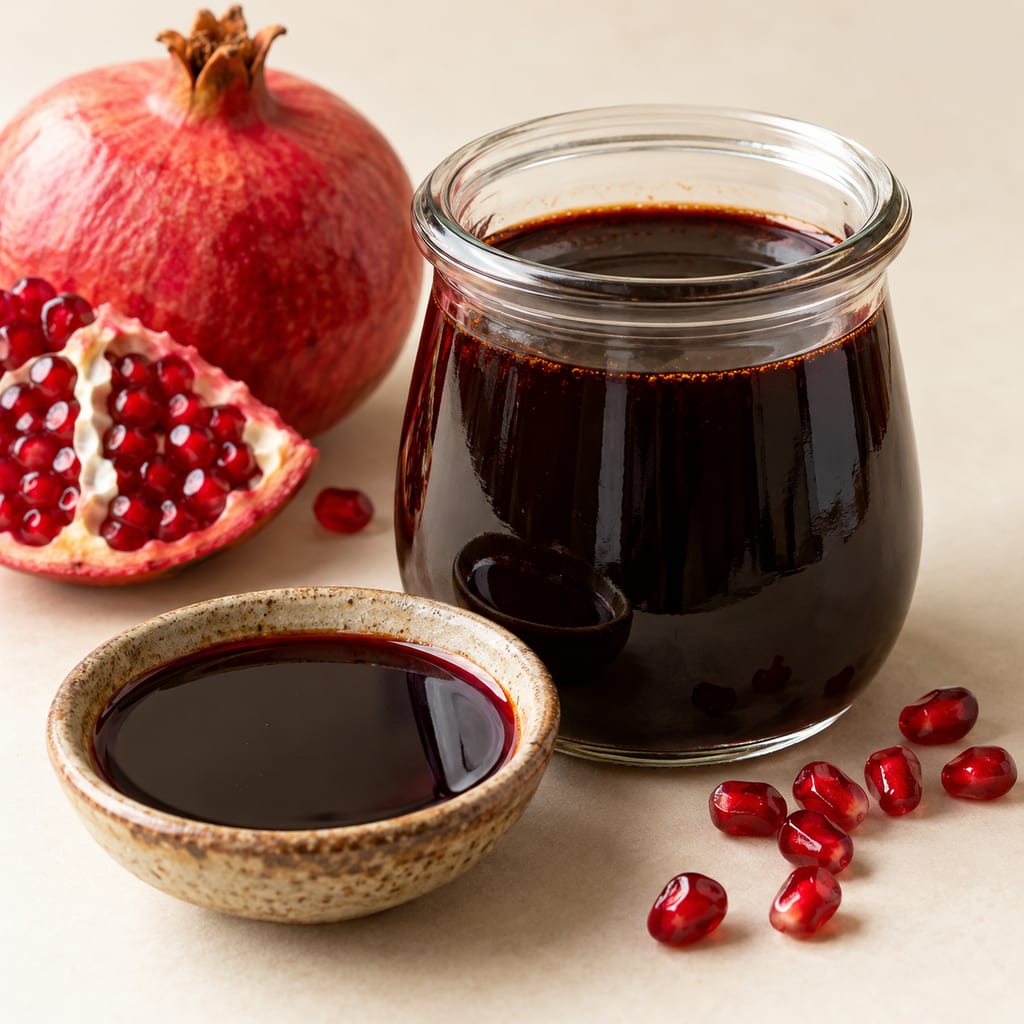
Pomegranate molasses
A thick, sour condiment made by reducing pomegranate juice over heat until it is concentrated, used across the Middle East, the South Caucasus and the Balkans in dressings, stews and grilled dishes.
 FermenteaWhere food goes to change
muhammara · Mhammara · Red pepper and walnut dip
A Syrian red pepper and walnut dip usually linked to Aleppo, thickened with breadcrumbs and sharpened with pomegranate molasses, with Aleppo pepper and cumin.
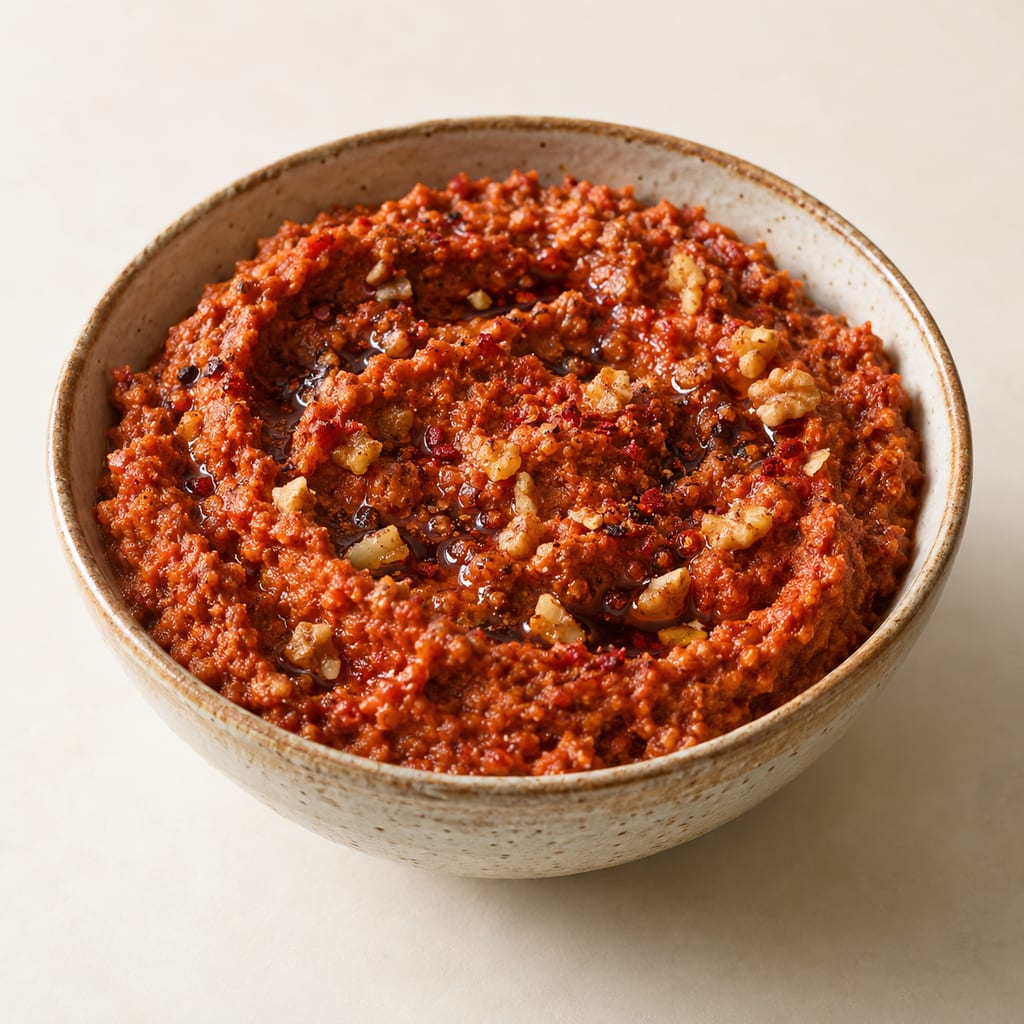
Muhammara is a red pepper and walnut dip whose name means reddened in Arabic. Wikipedia places it in Syrian cuisine and usually links it to Aleppo. That link is an attribution, not a settled birthplace: the article cites Clifford Wright (2003), who notes that Arabs reflexively credit Aleppo for dishes of this kind.
An earlier predecessor is described in a 1981 encyclopedia by Khayr al-Din al-Asadi. That account gives an appetizer of crumbled ka'ak bread, pomegranate molasses, walnuts, peppers and oil. It shows that the combination of pepper, walnut and sour molasses was known before the dip as now made, but it does not date the present recipe.
Red bell pepper gives the dip its colour and sweetness. Walnuts supply body, fat and a slightly bitter note. Pomegranate molasses gives the sour and fruity edge that most versions depend on. Breadcrumbs, or rusks in older wording, thicken the paste so it holds on bread.
Garlic, salt and olive oil are the core seasoning. Aleppo pepper or red pepper flakes give mild heat, and cumin is a common addition. Lemon juice is often used in place of, or alongside, pomegranate molasses. Red chilli paste is an optional addition in some versions.
Damascus versions sometimes add tahini. Western Turkey serves a version called acuka on meze platters. Western Armenian cuisine also has a version. Gaziantep, in Turkey, holds a geographical indication for muhammara granted by the Turkish Patent and Trademark Office in 2022, and its registered recipe uses fresh peppers or pepper flakes, olive oil, walnuts, rusks or breadcrumbs, pomegranate molasses, lemon juice, cumin and parsley or walnut halves for garnish.
Traditional makers pound or blend the peppers into a smooth but slightly chunky paste. Some use peppers that have been sun-dried or grilled rather than fresh. The sources describe no single timed method, so the steps here follow the common pattern: char or roast the peppers, grind the walnuts, blend with the seasoning, thicken with breadcrumbs and bind with oil.
Serve muhammara cold. It is commonly finished with a drizzle of olive oil, a few walnut pieces, mint or parsley, and eaten with pita or bread. It also sits on cold meze platters, tops manakish, and accompanies grilled meat, fish and vegetables.
The dip is usually linked to Aleppo, Syria. Wikipedia attributes the Aleppo link to Clifford Wright (2003), who notes that Arabs reflexively credit Aleppo. A 1981 encyclopedia by Khayr al-Din al-Asadi describes an earlier appetizer of crumbled ka'ak bread, pomegranate molasses, walnuts, peppers and oil. The earliest dated attestation is not established here.
Scaling: not stated
A moist, oil-bound dip is perishable. Keep it cold and do not leave it at room temperature.
Hazard sourceRefrigerate promptly and keep cold until served.
Control sourceWalnuts are a tree-nut allergen.
Wikipedia links the dip usually to Aleppo, and attributes that link to Clifford Wright (2003), who notes that Arabs reflexively credit Aleppo. It is an attribution, not a documented birthplace.
In 2022 the Turkish Patent and Trademark Office granted Gaziantep a geographical indication for muhammara; the registered recipe is the regional specialty, not a claim about the whole dish.
A thick, sour condiment made by reducing pomegranate juice over heat until it is concentrated, used across the Middle East, the South Caucasus and the Balkans in dressings, stews and grilled dishes.
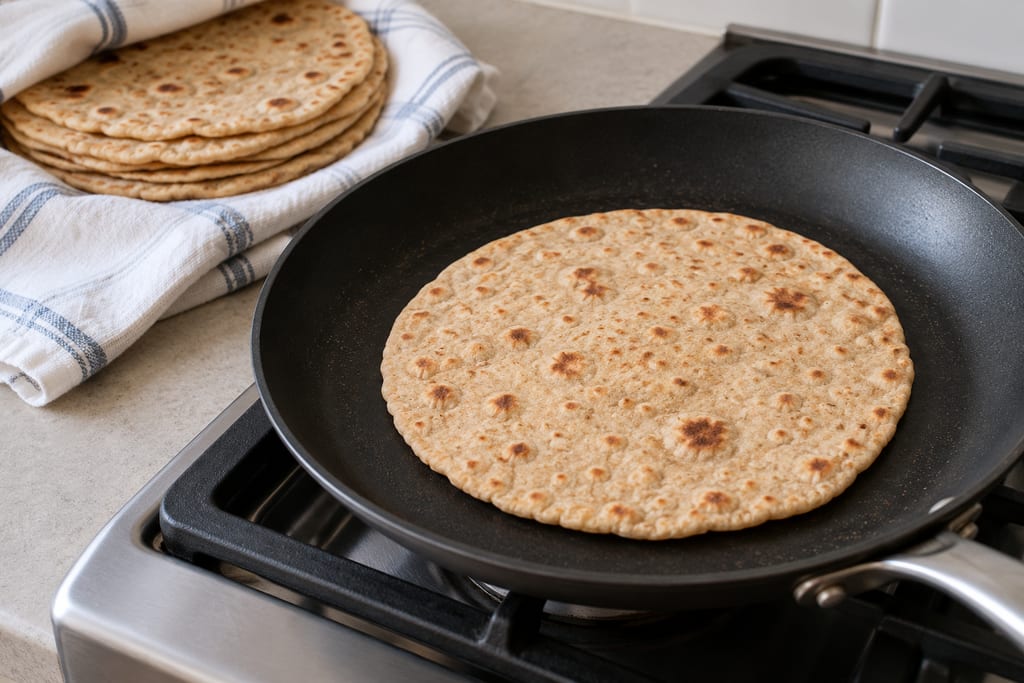
A small home-pan adaptation of Levantine markouk: rested wheat dough rolled into small rounds and cooked quickly on a hot flat pan. It is thicker and smaller than the hand-stretched sheets made on a saj.
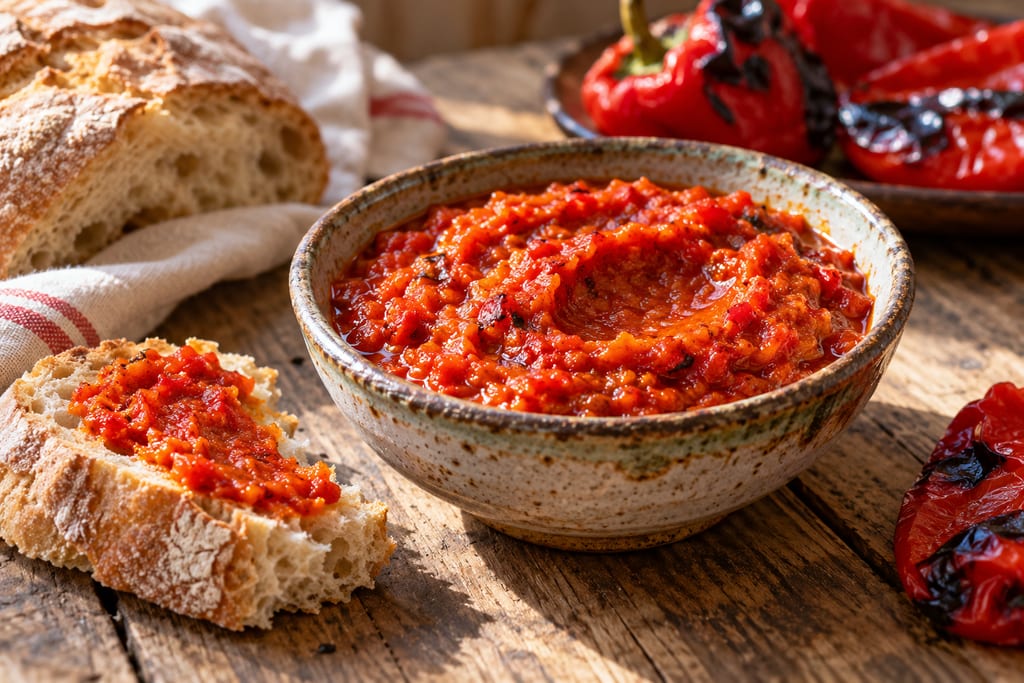
Ajvar is a cooked Balkan pepper preserve built around roasted red peppers, peeled, drained, ground and slowly fried with oil and seasoning. Leskovac’s protected version is a pepper specialty; regional versions vary.
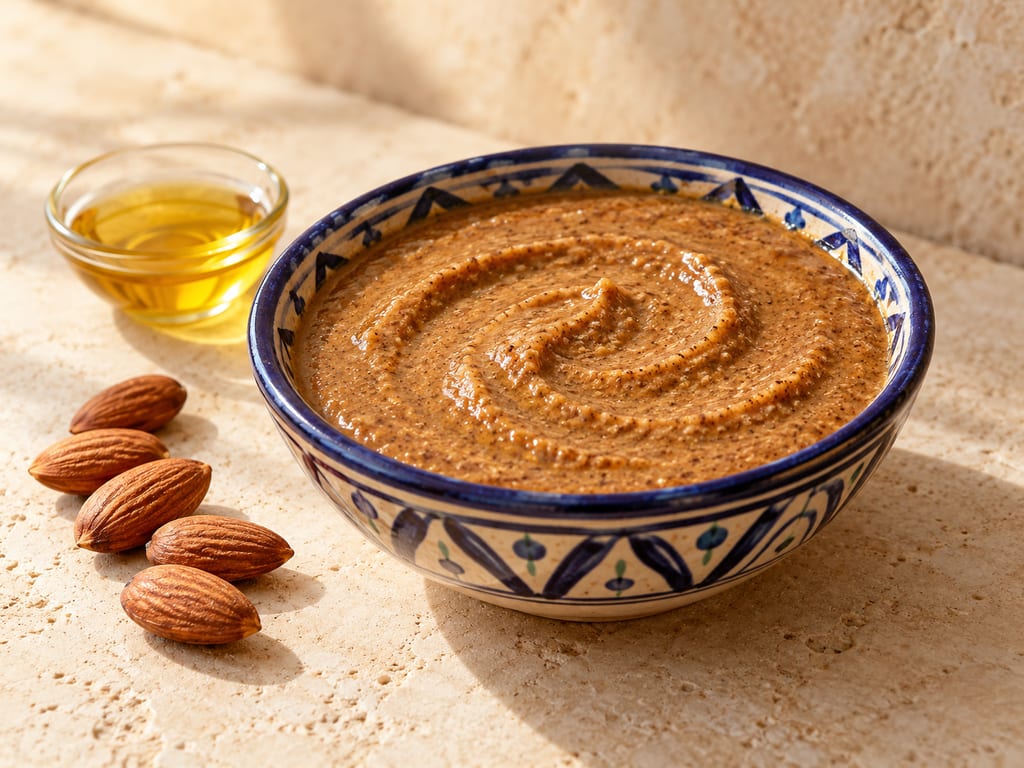
Amlou is a nutty, lightly sweet Moroccan spread of roasted almonds, culinary argan oil and honey. The almonds are ground first, then loosened with oil and sweetened; the balance can range from a thick spread to a dip.
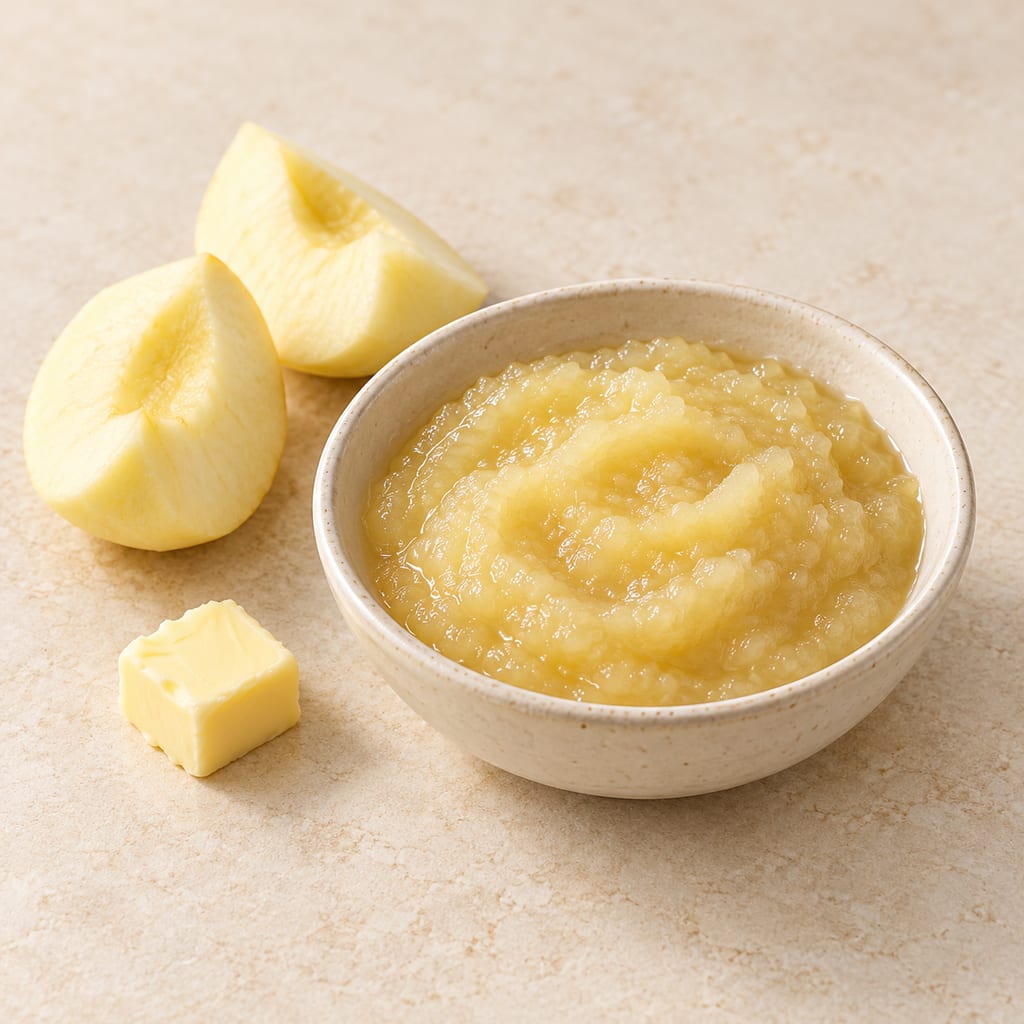
Apple sauce for goose and pork is a plain English accompaniment: cooked apples pulped with water, then sweetened with sugar and finished with a little butter.

A warm dip of garlic, anchovy and olive oil, often enriched with butter, that Piedmont serves over a flame with raw and cooked vegetables and bread.
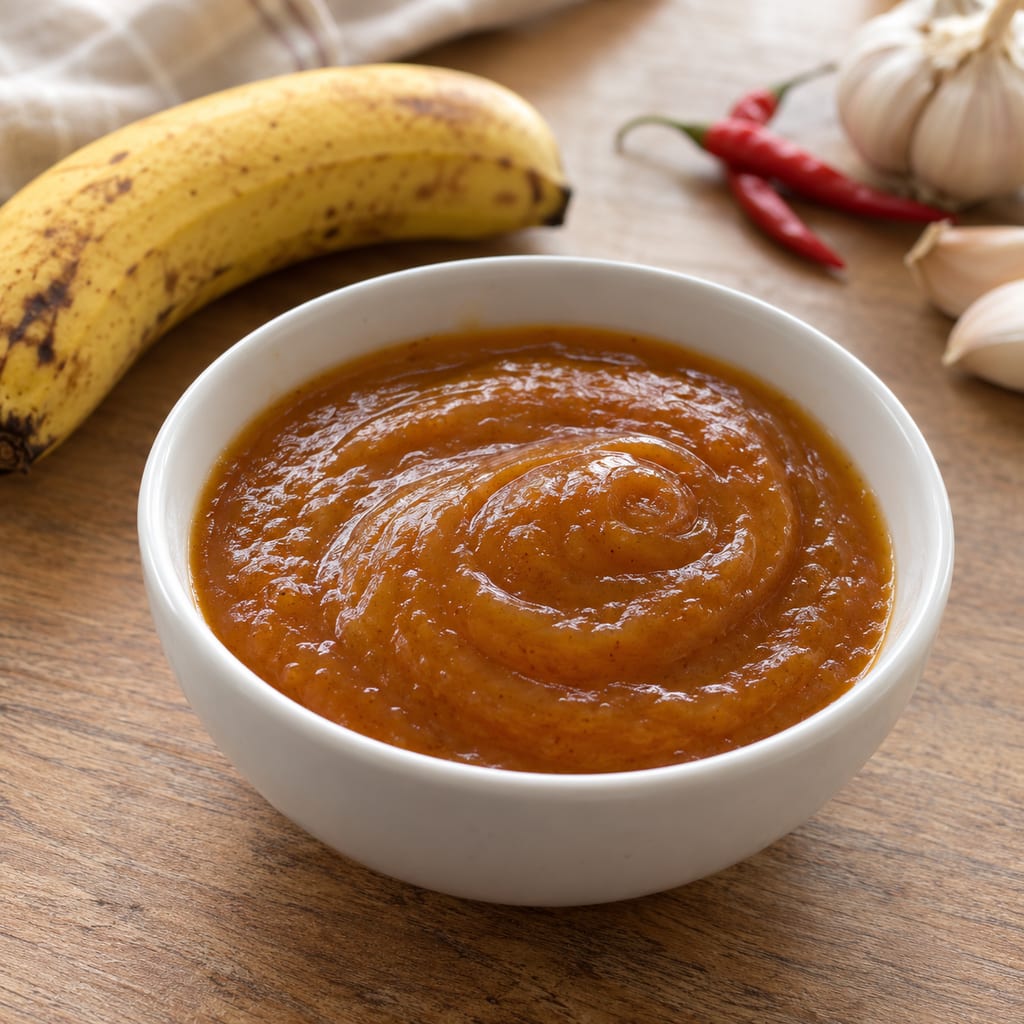
A sweet-hot table sauce of ripe banana simmered with vinegar, sugar, onion, garlic and fresh chilli, in the manner of Philippine banana ketchup. An untested development batch of about 500 g.
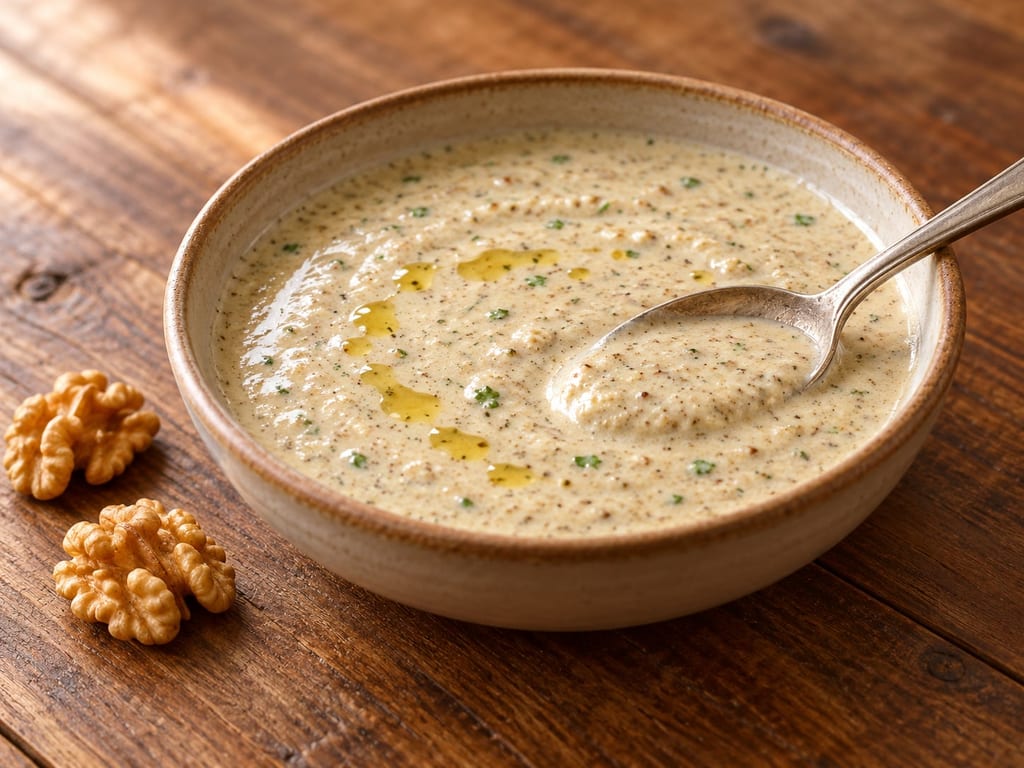
A Georgian walnut sauce of ground walnuts, garlic, vinegar and spices, thinned with water or broth. It is served with poultry, vegetables and bread, and is the sauce of the dish satsivi.
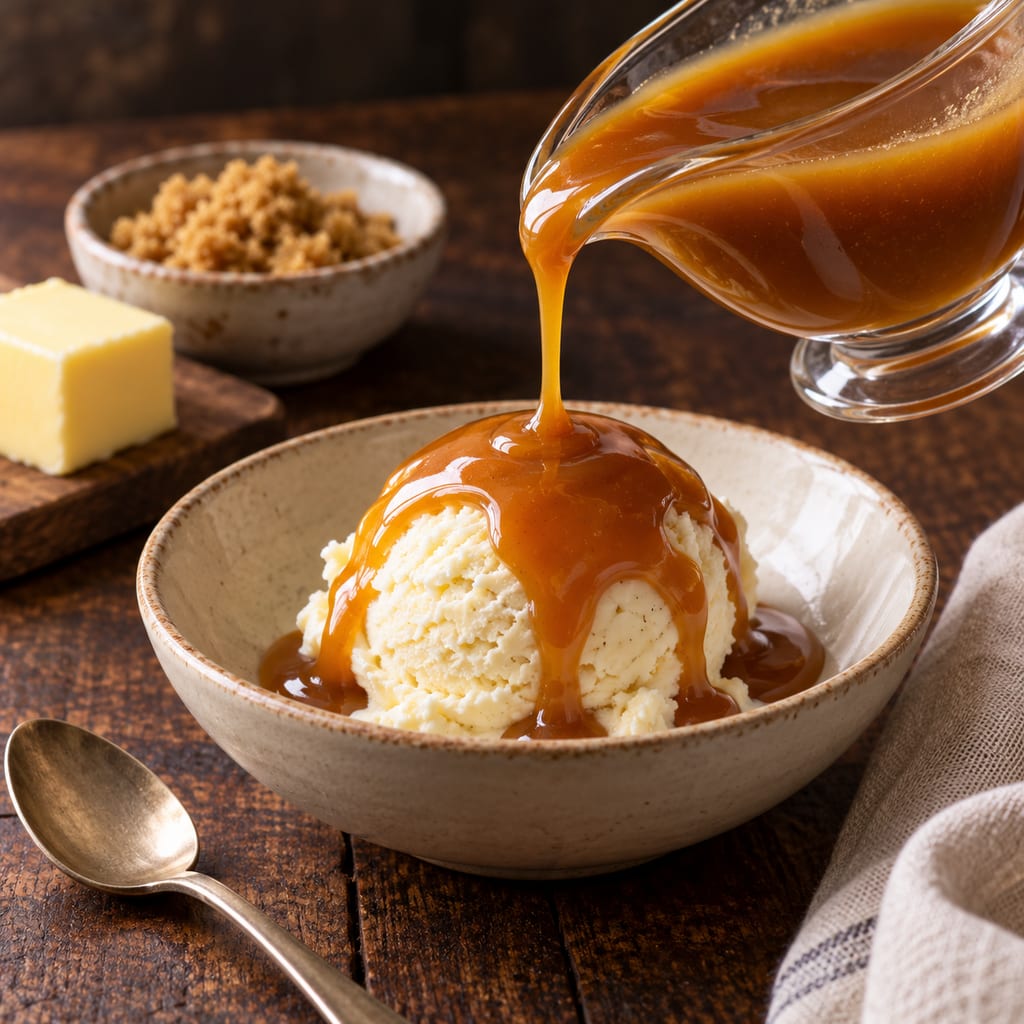
A pourable dessert sauce of brown sugar, butter and cream, with a little corn syrup and salt. It is the sauce form of the butterscotch confection and is made without water, unlike caramel.
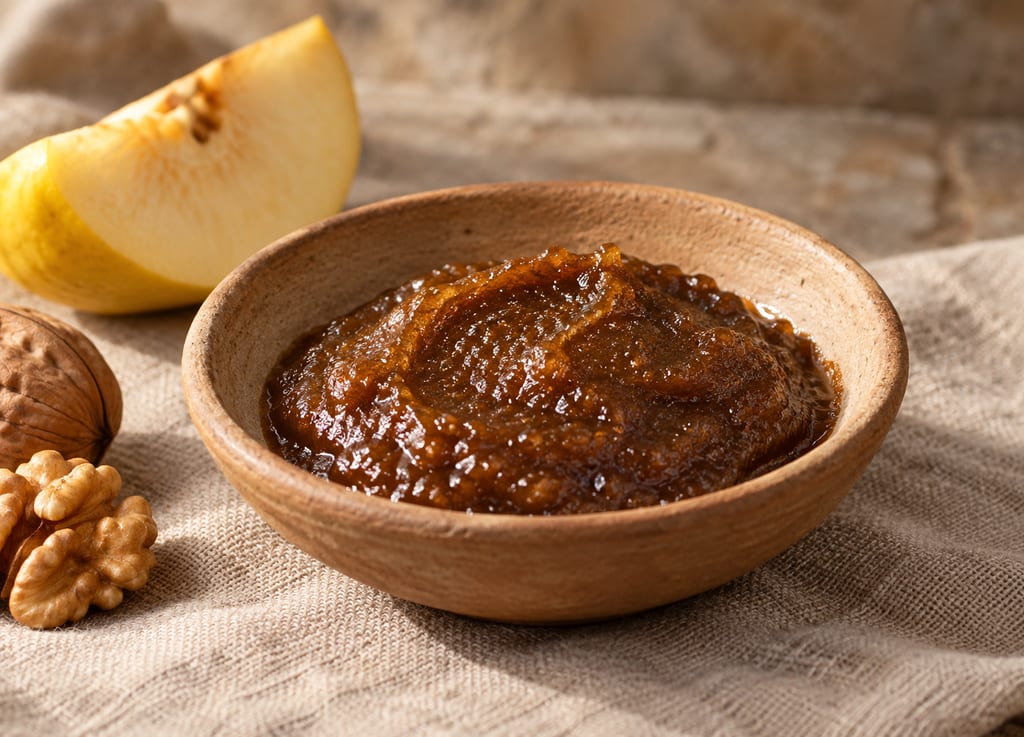
Byzantine murrī is a cooked imitation of murrī from the medieval Arabic repertoire, made from scorched honey, toasted bread, walnuts, quince, carob and spices rather than from a long grain fermentation.
No community contributions have been published for this entry yet.
Sign in to contribute. Published comments and photos are free to read.
WikipediaHistory · Method · Regional variation · Ingredients
MuhammaraSyrian dip linked to Aleppo, with the Clifford Wright (2003) attribution
1981 Khayr al-Din al-Asadi predecessor description
2022 Turkish geographical indication for Gaziantep and its registered ingredient list
Core ingredients and optional additions
Damascus tahini, acuka and Western Armenian versions
Cited in: A red pepper dip with a contested home; Ingredients and their jobs; Where the dip is made; Method, in the cook's terms
FoodSafety.govSafety
4 Steps to Food SafetyGeneral guidance to refrigerate perishable food promptly; does not validate a recipe-specific shelf life