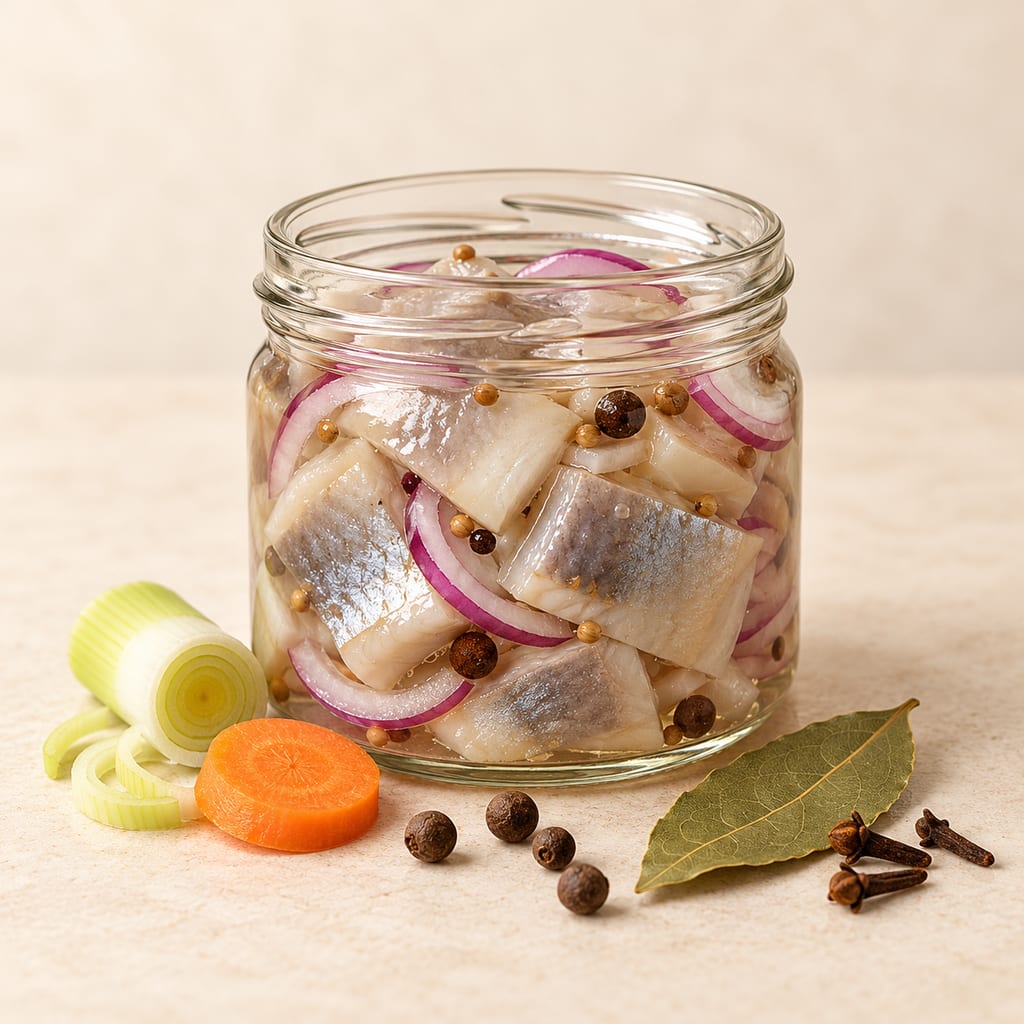
5-minuterssill
A Swedish ready-to-dress herring preparation: add the classic sliced aromatics and spices to already prepared herring, then serve or chill for fuller flavour.
 FermenteaWhere food goes to change
Traditional method
Pickling in vinegar
Food placed in an already acidic liquid, vinegar, so that acidity comes from the vinegar rather than from microbes; Roman texts document the practice, and later household books extended it to vegetables, fruit, fish and meat.
Vinegar pickling preserves food by holding it in vinegar. The acid comes from the vinegar that is added, not from bacteria that produce acid while the food ferments. That is the difference from lactic pickles, which develop their acidity in place.
Roman texts document vinegar-based preservation, and later household books extended the method to a wider range of vegetables, fruit, fish and meat. The practice is one of the oldest acid preservations in the record.
The acid lowers the pH of the food and changes the conditions for spoilage organisms. Vegetables and fruit are the common subjects of the household tradition, while the wider record also includes fish and meat.
Adding acid does not make a home pickle safe on its own. The amount and the strength of the acid, and the method of holding the food, decide the result, and the historical texts do not give tested amounts.
The sources give no vinegar strength, ratio, holding time or storage limit that a modern cook could rely on. Tested recipes set those amounts, and the historical method cannot be taken as a validated home process.
Food was placed in an already acidic liquid rather than relying on microbes to produce the acid. Roman texts document vinegar-based preservation, and later household traditions expanded the range of vegetables, fruit, fish and meat treated this way.
Scaling: source batch only
Adding acid does not make a home pickle safe on its own. The historical texts give no vinegar strength, ratio, time or storage limit.
Hazard sourceUse a tested vinegar pickling recipe that sets the acid level, ratio and storage conditions.
Control sourceThe sources record historical practice only. They are not a tested home method.
Roman texts document vinegar-based preservation; the record does not establish a single origin.
A Swedish ready-to-dress herring preparation: add the classic sliced aromatics and spices to already prepared herring, then serve or chill for fuller flavour.

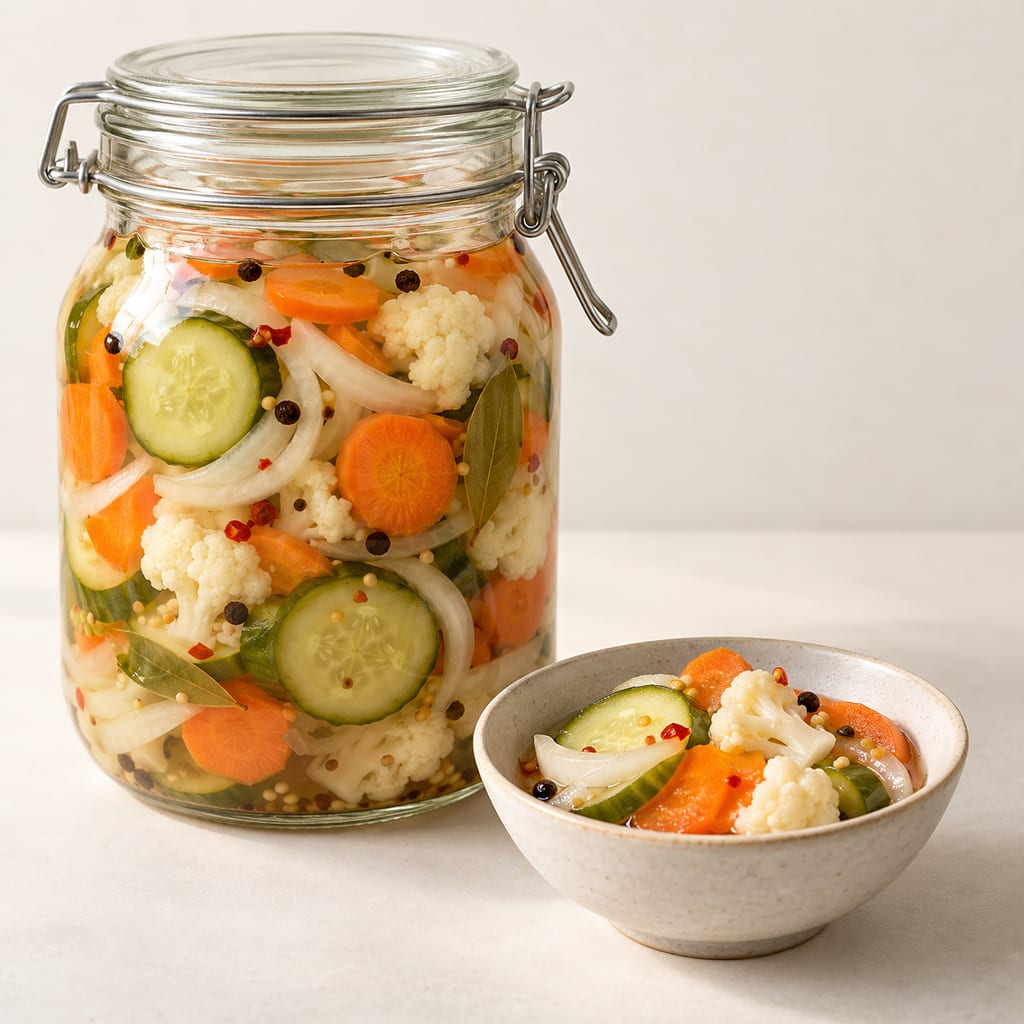
Achcharu is a family of Sri Lankan vinegar pickles made with mixed vegetables or seasonal fruit and a piquant spice dressing. This version is a quick, refrigerated, non-fermented mixed-vegetable pickle.
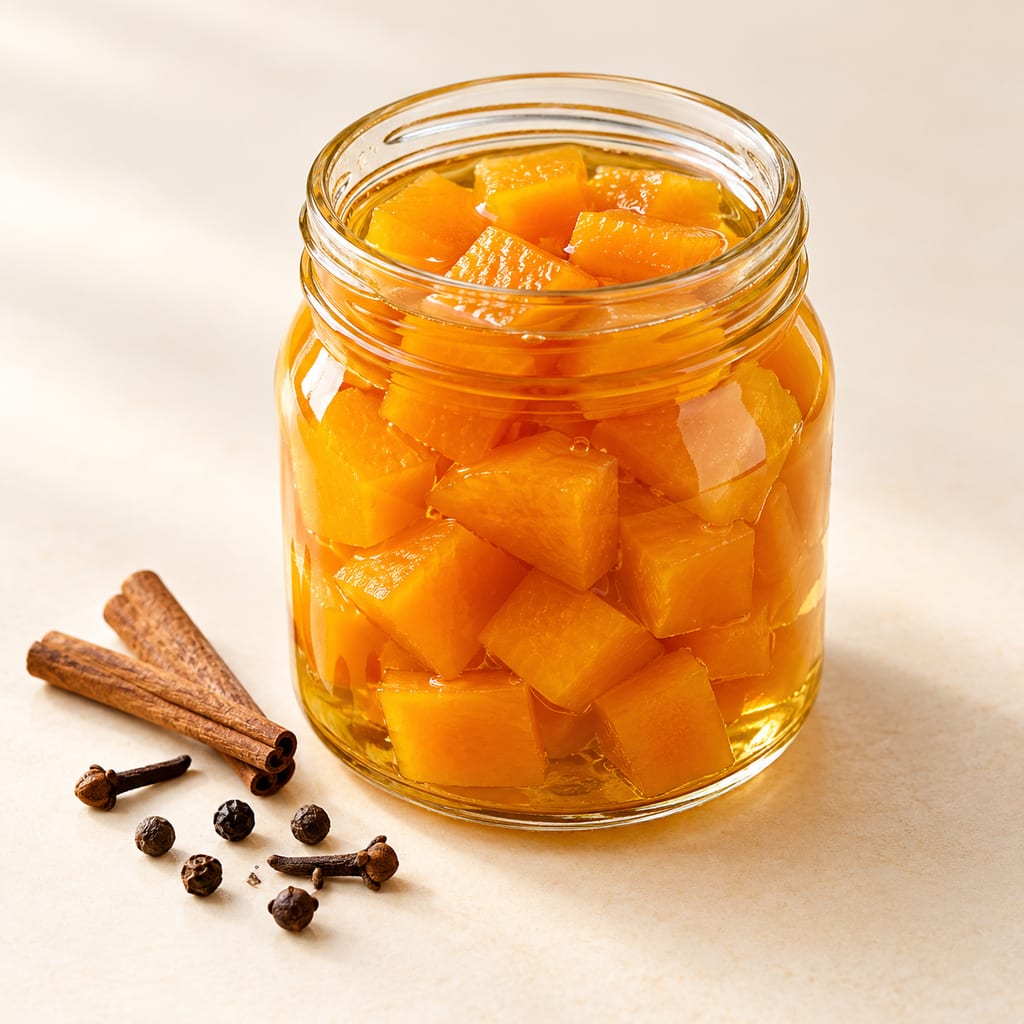
Ball sweet pumpkin pickles: Cupboard: exact published Ball formulation and water-bath process.
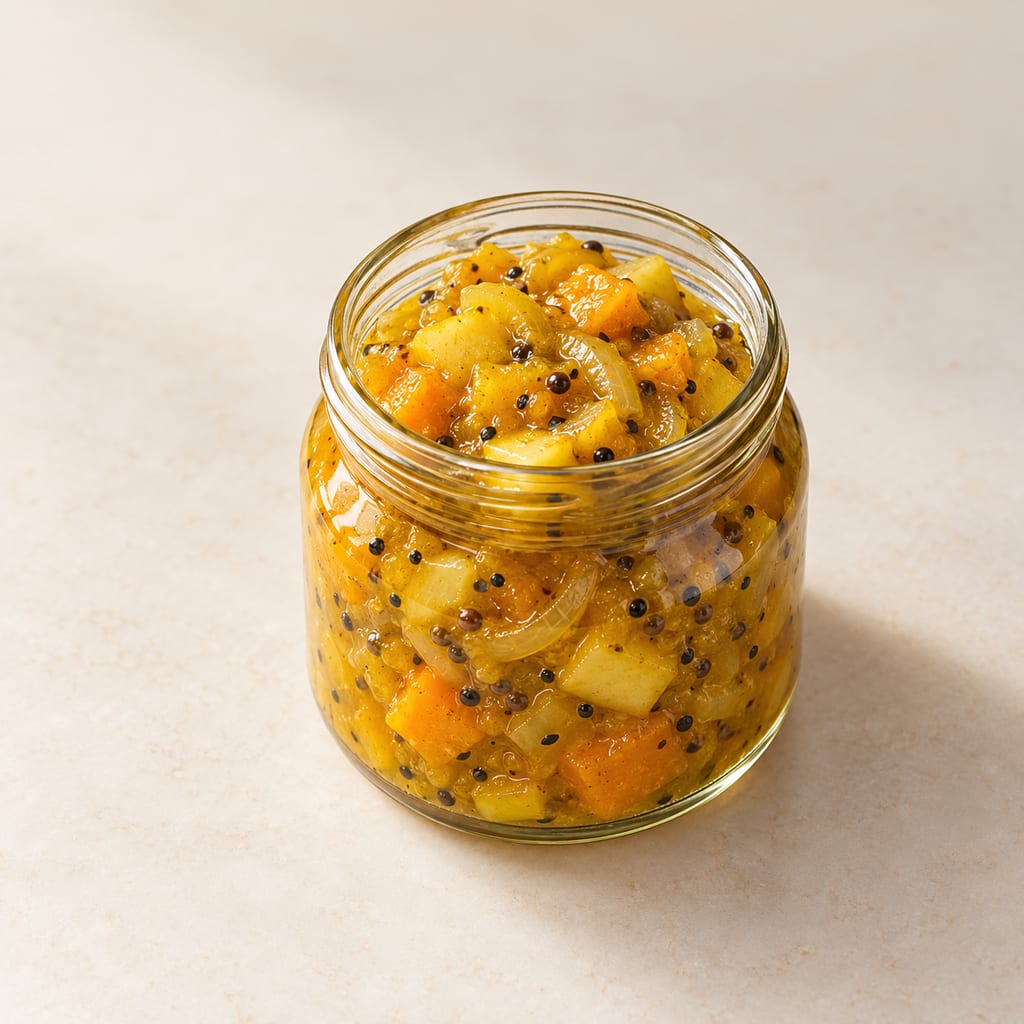
British pumpkin, apple and mustard pickle: Freeze for winter; small fresh portion refrigerated up to 48 hours.
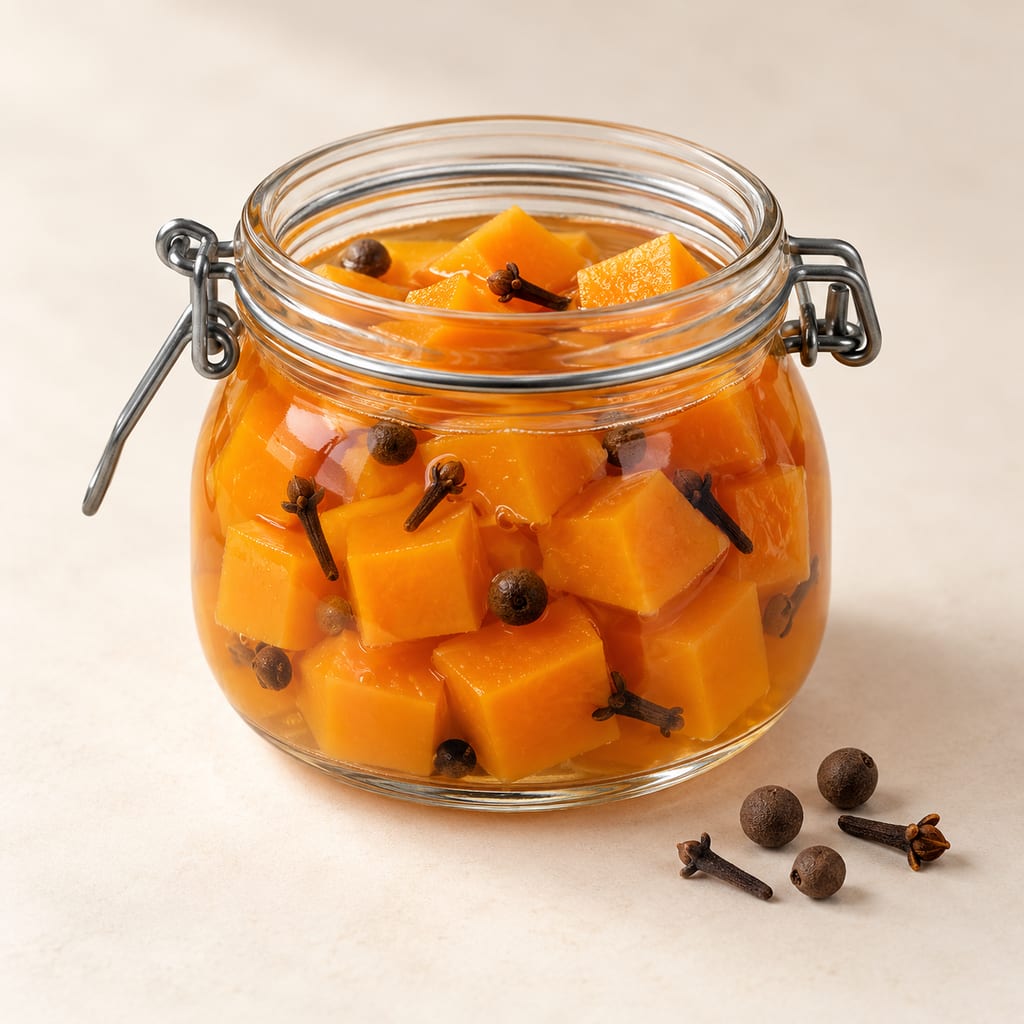
Dynia marynowana: Freeze for winter; small fresh portion refrigerated up to 48 hours.
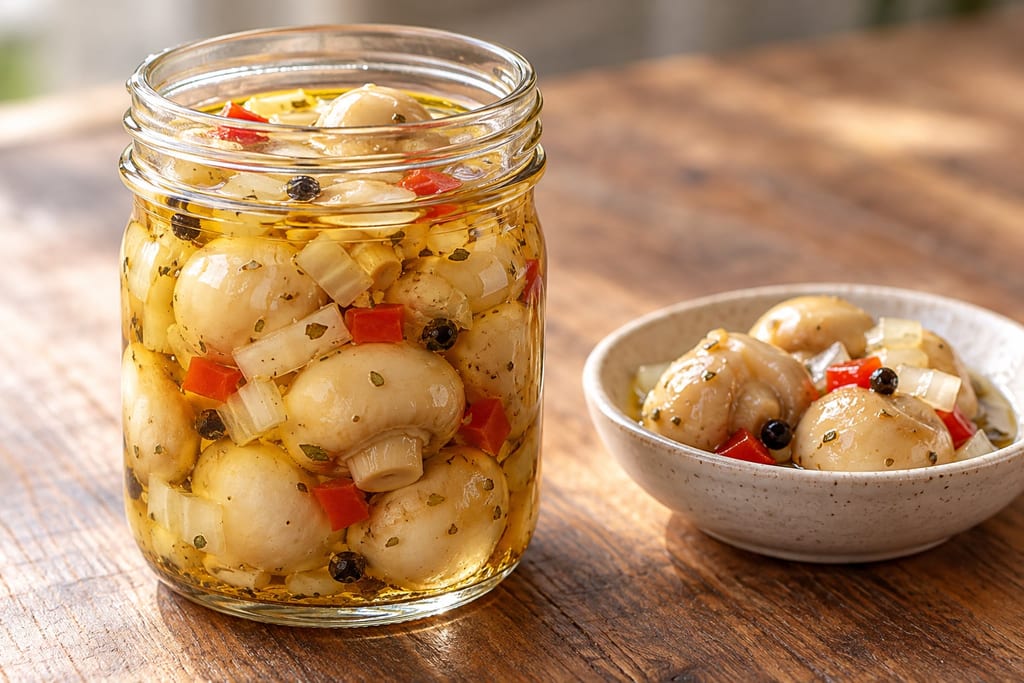
Small edible mushrooms are briefly cooked and packed in a seasoned vinegar marinade, a sweet-sour preserve served cold in Poland and neighbouring cuisines.

Fried or cooked food covered in a vinegar-based preparation, the heat and the externally supplied acid working together; a family of methods whose early form is a Roman instruction for treating fried fish with hot vinegar.
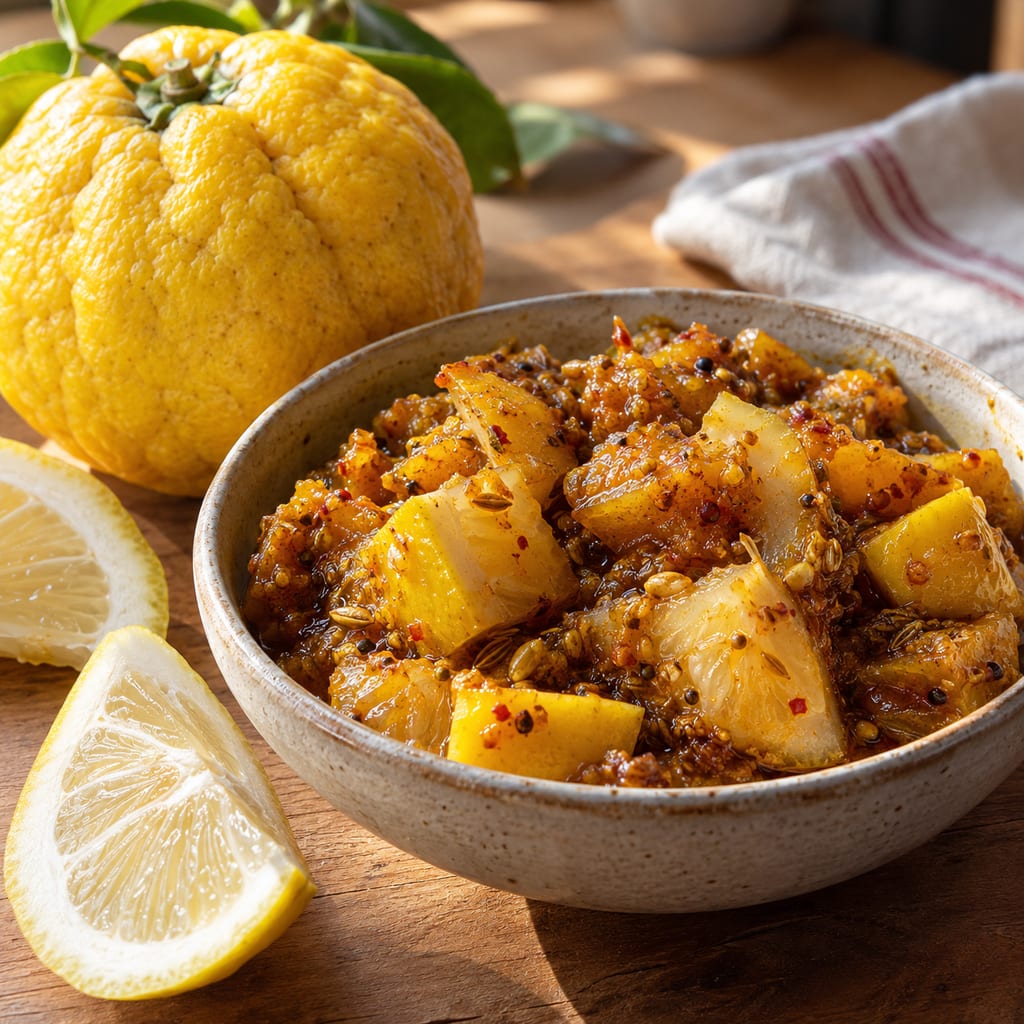
Ripe Himalayan galgal is boiled, sun-dried and cooked with mustard oil, spices and jaggery before a further rest in a ceramic jar.

At North Abydos in Egypt, a fixed early Dynastic brewery comprised parallel semi-subterranean installations with rows of ceramic mash vats; excavation reports revise their number, scale and estimated batch capacity.

Ají amarillo is the orange-yellow Peruvian chilli cultivar group of Capsicum baccatum, used to colour and season huancaína sauce and ají de gallina. Published heat estimates do not establish one range for the named cultivar.

Toasted almonds are whole sweet almond kernels dry-roasted until golden to brown. Heat replaces their marzipan note with a roasted, nutty one; they thicken and flavour romesco.

Kodiak salmon, halibut and cod cut as seg'aq and hung on an initaq rack to become tamuuq, with kac'amaasaq and kupcuunaq named as different results.

Aniseed is the dried ripe fruit of Pimpinella anisum, an aromatic Apiaceae spice commonly called a seed. It adds a sweet, warm aroma to breads such as Moroccan krachel and South African mosbolletjies, and is distinct from star anise.

A fixed Late Chalcolithic installation in Areni-1 cave combined a shallow clay pressing basin with a large jar set into the cave floor and storage vessels nearby.

Ripe avocado flesh is the soft, buttery, fat-rich pulp of Persea americana, eaten raw. It is low in acid, so it is a fresh ingredient that needs care in chilled dishes.

A portable dome and pan used over a hearth, with embers on the lid and heat from below. Regional peka and saç forms share this principle while differing in materials, pan shape and how the food is cooked.
No community contributions have been published for this entry yet.
Sign in to contribute. Published comments and photos are free to read.
Perseus Digital Library (University of Chicago)History · Method
https://penelope.uchicago.edu/Thayer/E/Roman/Texts/Apicius/1%2A.htmlRoman texts document vinegar-based preservation
Cited in: What it is; A long-running method; Why acidity matters; Limits of the record
Victorian LondonHistory
https://www.victorianlondon.org/publications7/beeton-30.htmLater household traditions extended vinegar pickling to vegetables, fruit, fish and meat