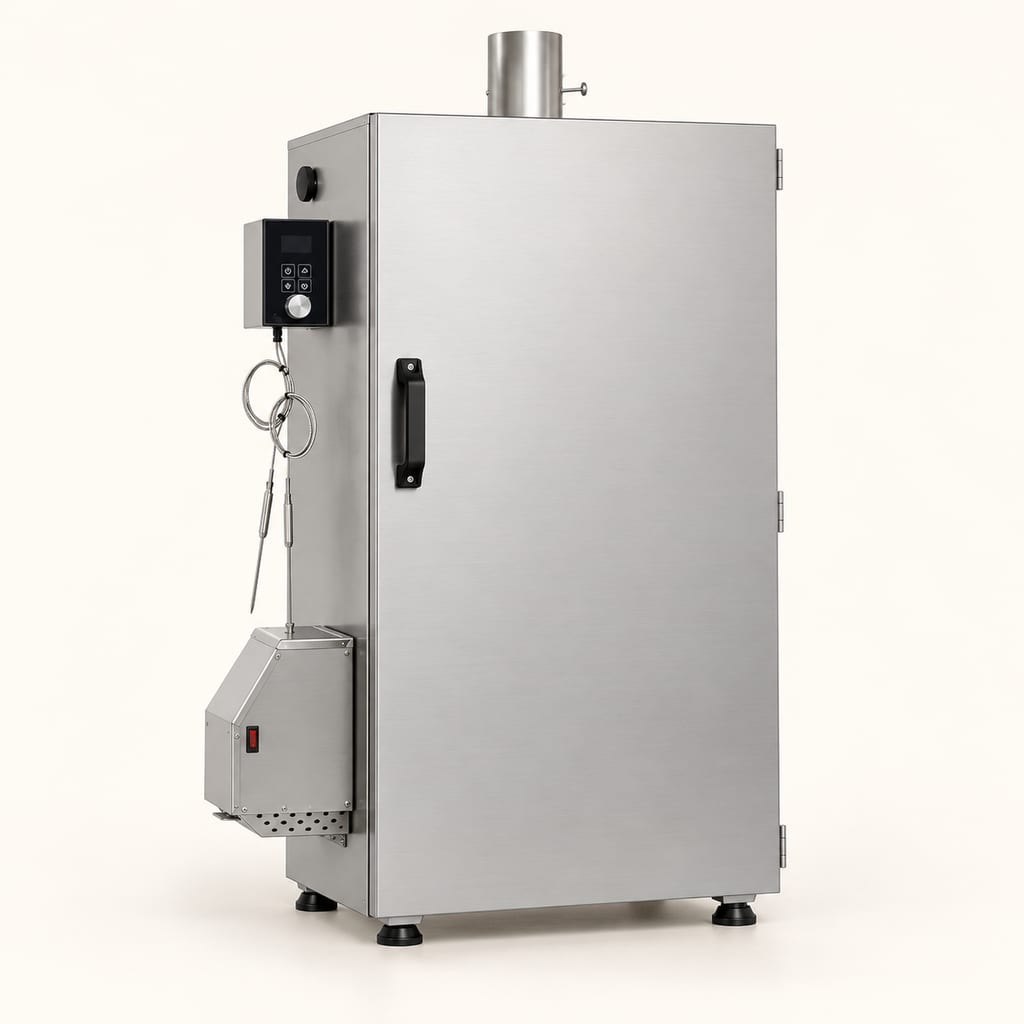
Borniak Smoker 150 BBQ INOX Wi-Fi
A 150-litre Wi-Fi electric smoking cabinet with a brushed stainless-steel exterior, automatic wood-chip smoke generator and 150°C maximum. Exact model BS150IWUK.
 FermenteaWhere food goes to change
Equipment · Barrels and casks
A coopered cask for curing and carrying salted meat, documented in seventeenth-century English shipboard writing. A modern reconstruction illustrates its use, not a surviving period artifact.
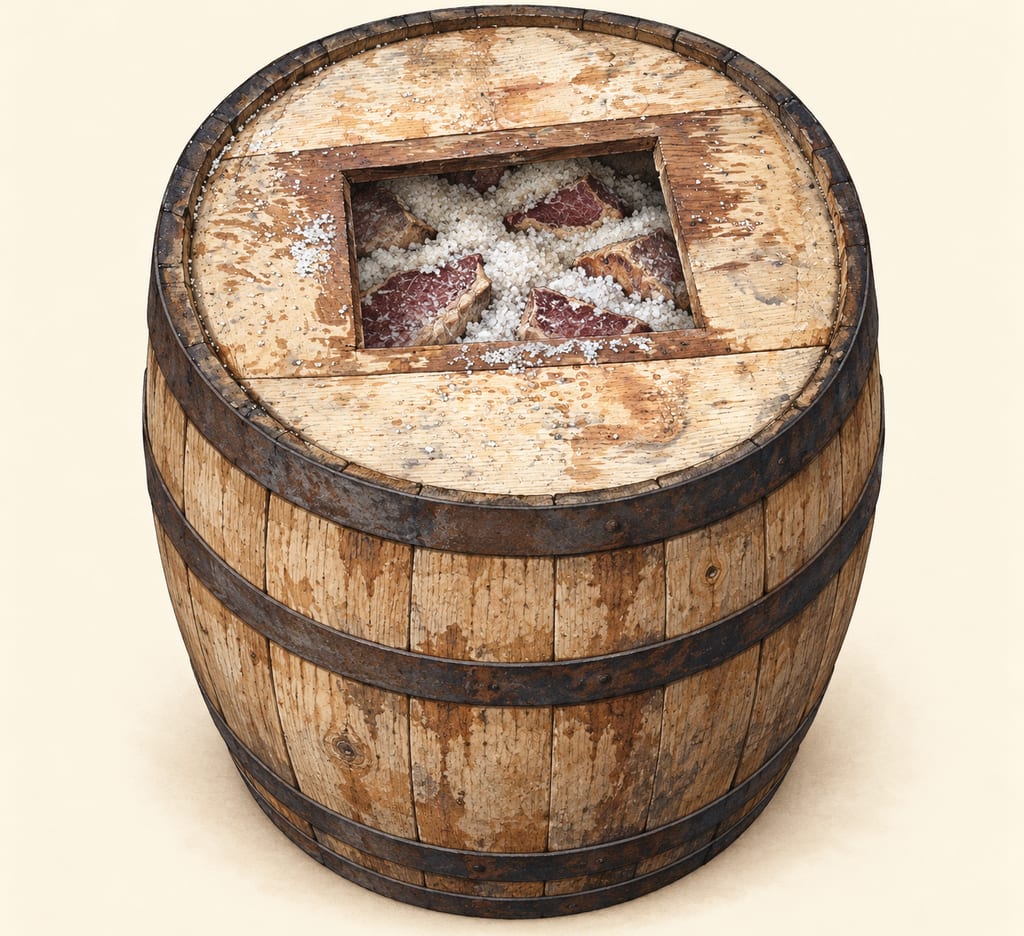
A salt-meat barrel is a portable wooden cask used to hold meat during curing and storage. In the documented shipboard example, it contains the meat and salt during an initial dry-curing stage and later holds liquid around the packed pieces. Its purpose is practical: keep a substantial supply together in a container that can be moved and stowed with other provisions.
The name describes a use of a coopered barrel, not a separate fermentation technology. The curing action comes from salt and the process around it. Microbes were measured in modern experimental meat and salt samples, but that result does not make the barrel itself a fermenter or prove that every historical batch behaved alike.
An English book published in 1682 records methods for salting flesh and preserving provisions for long keeping. A modern research project used that text alongside archaeological evidence to recreate food associated with seventeenth-century ships. The team studied animal remains from the Warwick, an English galleon wrecked in Castle Harbour, Bermuda, in 1619, and compared them with other shipwreck and historical evidence.
The National Museum of Bermuda documents a 2017 reconstruction in which beef and salt were packed in a barrel, with liquid added later. Its photograph of meat in the barrel is a record of that experiment. It should not be read as an image of an excavated 1680s barrel, nor as proof that the Warwick carried the pictured cask.
The cask acts as a container at more than one point in the reconstruction: it holds the layered meat and salt, then contains the liquid that covers the meat. This closed, portable package suited shipboard provisioning, where food had to be stored and transported. The Institute of Nautical Archaeology describes a related research project that stored reproduced provisions in casks aboard a ship's hull during a simulated trans-Atlantic voyage.
The evidence does not supply a standard volume or dimensions for this barrel. A later experimental study specifies a new seasoned oak cask for its own salted beef, but that material choice belongs to the experiment and cannot establish the wood used in every early modern meat cask. The consulted sources also do not identify a maker, exact hoop material, cleaning routine, or present-day supplier. These absences leave the page with a documented use and an open vessel geometry rather than a fictional reconstruction.
An English treatise published in 1682 includes methods for salting meat for long keeping. The National Museum of Bermuda's later reconstruction combined that text with archaeological evidence from shipwrecks, including the Warwick, lost in Castle Harbour in 1619. Its barrel image records an experiment, not a surviving seventeenth-century vessel.
The cask holds the salted meat and later liquid; preservation depends on the salt and the documented curing and storage process, not on the barrel alone.
Source →The sources do not establish one standard capacity, wood species, head opening, or barrel geometry for early modern salt meat.
Source →This place marks the documented English text, not the birthplace or sole use-area of the barrel.
The sources describe salted meat packed for shipboard provisions and trans-Atlantic voyages; they do not define one barrel design used throughout the region.
A 150-litre Wi-Fi electric smoking cabinet with a brushed stainless-steel exterior, automatic wood-chip smoke generator and 150°C maximum. Exact model BS150IWUK.
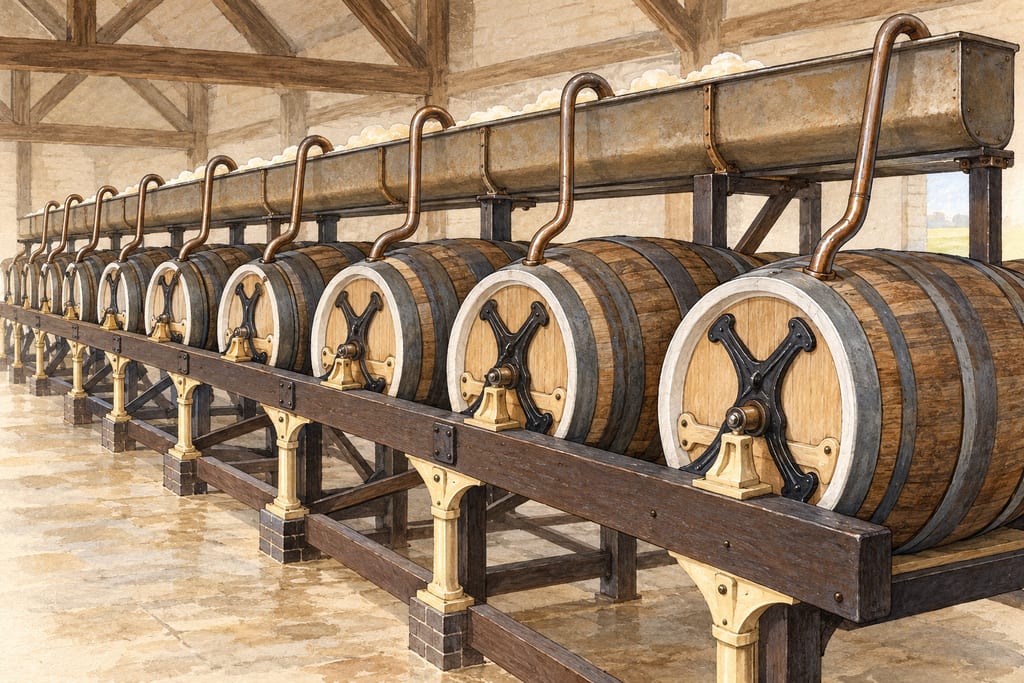
A Burton Union is a connected set of horizontal wooden beer casks, swan-neck pipes and shared troughs. Fermentation lifts yeast-rich foam into the trough; beer drains back to the casks, leaving yeast behind.
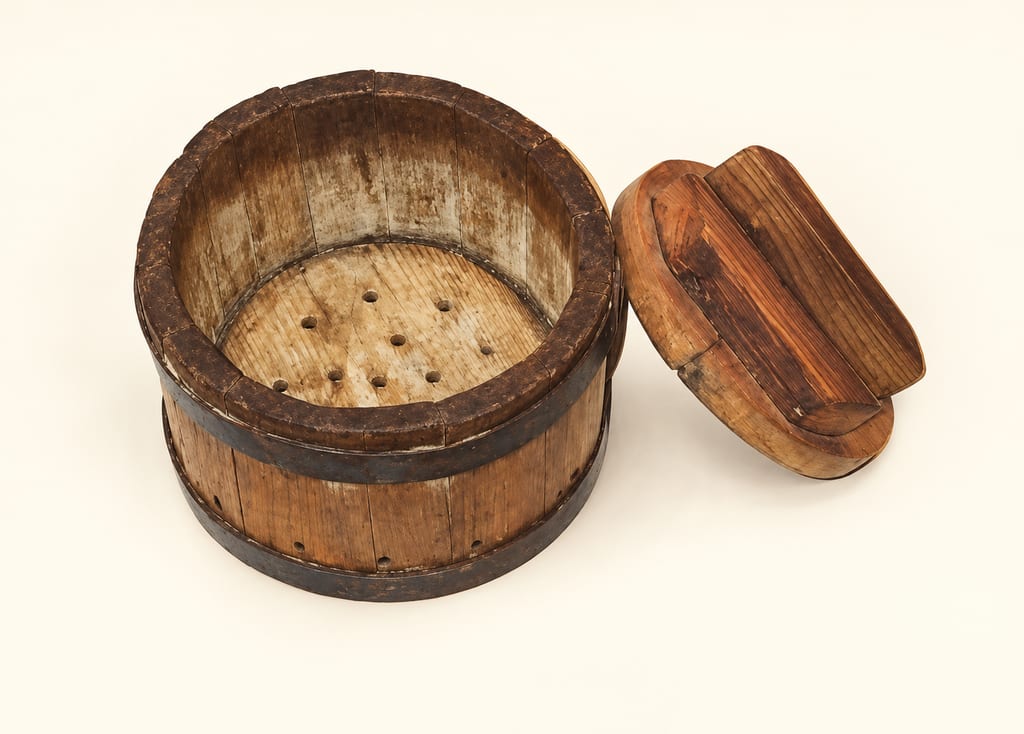
A cheese press applies weight or mechanical force to curds in a draining vat or mould. Tiree’s wooden fiodhan, stone weights, screw presses and a documented New Zealand lever press show distinct forms, not one standard design.
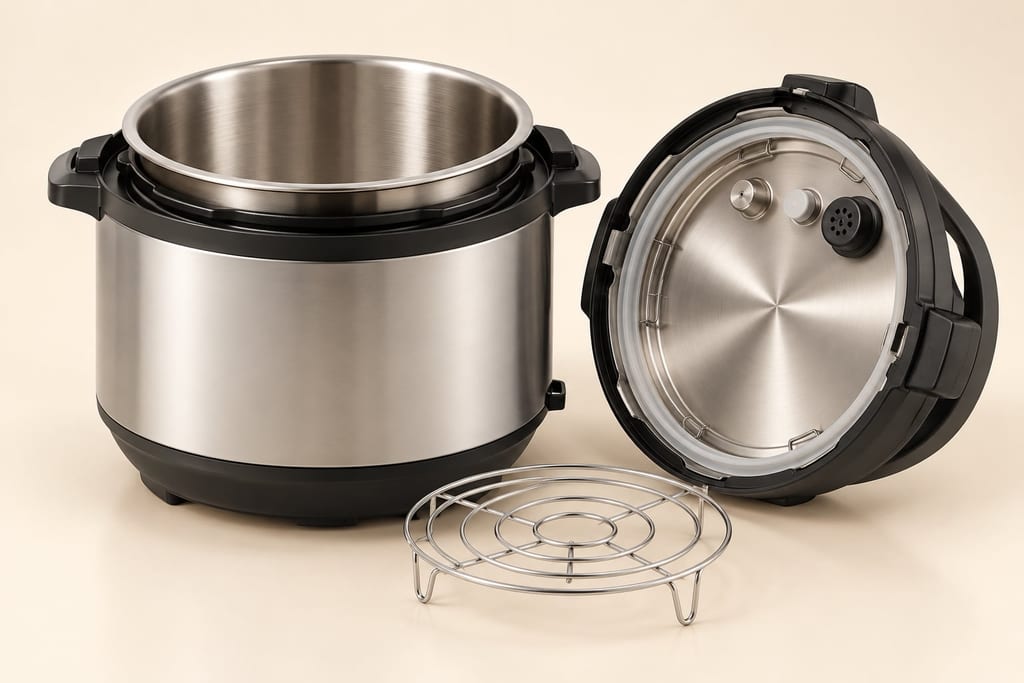
A countertop electric cooker combines pressure cooking with model-specific functions such as sautéing, slow cooking, rice cooking and low-temperature programs. Settings do not transfer to pressure canning.
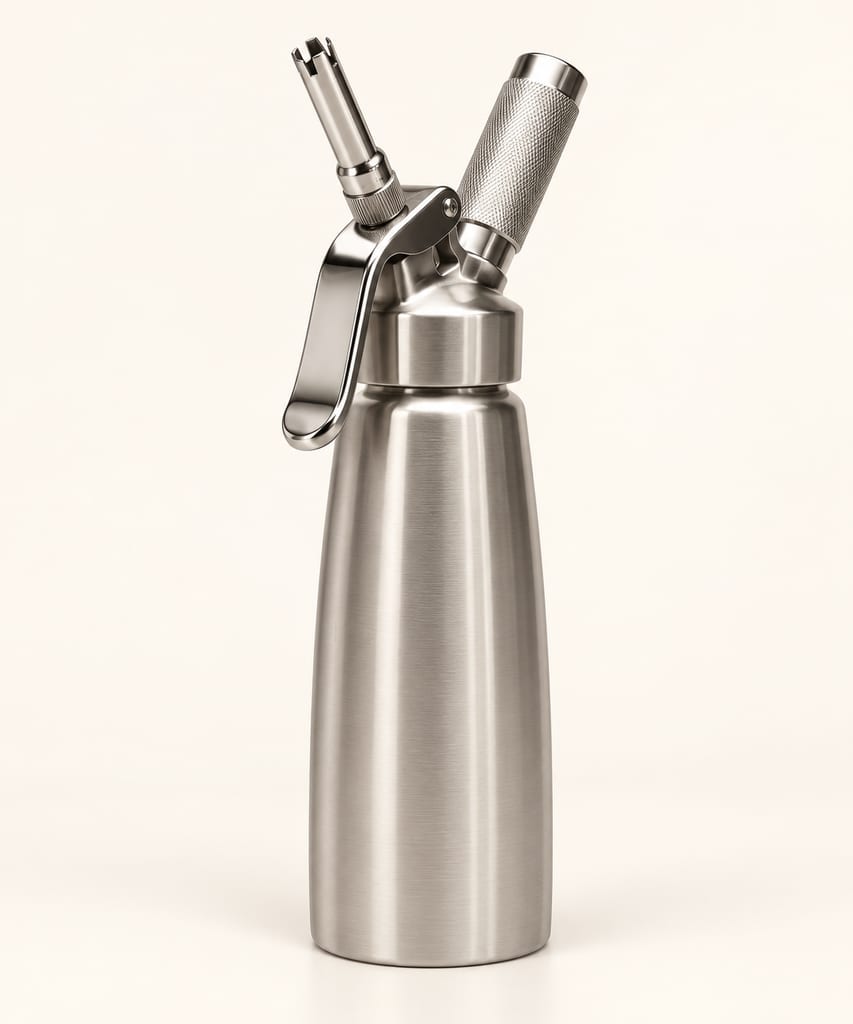
A food-rated pressure canister with a dispensing head and gas-cartridge holder. Cream whippers aerate or dispense foods and, with a compatible rapid-infusion attachment, can speed botanical flavour extraction into liquid.
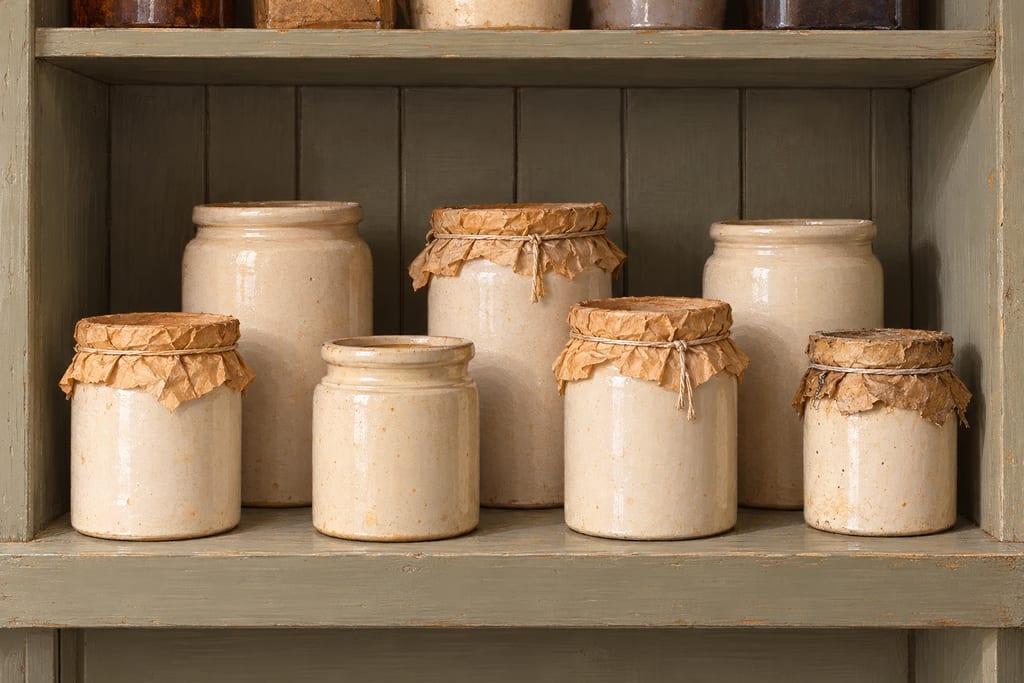
Three dated jam labels at Glasgow’s Tenement House record household preserves: Victoria plum (1947), strawberry (1961), and rhubarb and ginger (1963). They document storage and domestic history, not a recoverable recipe.
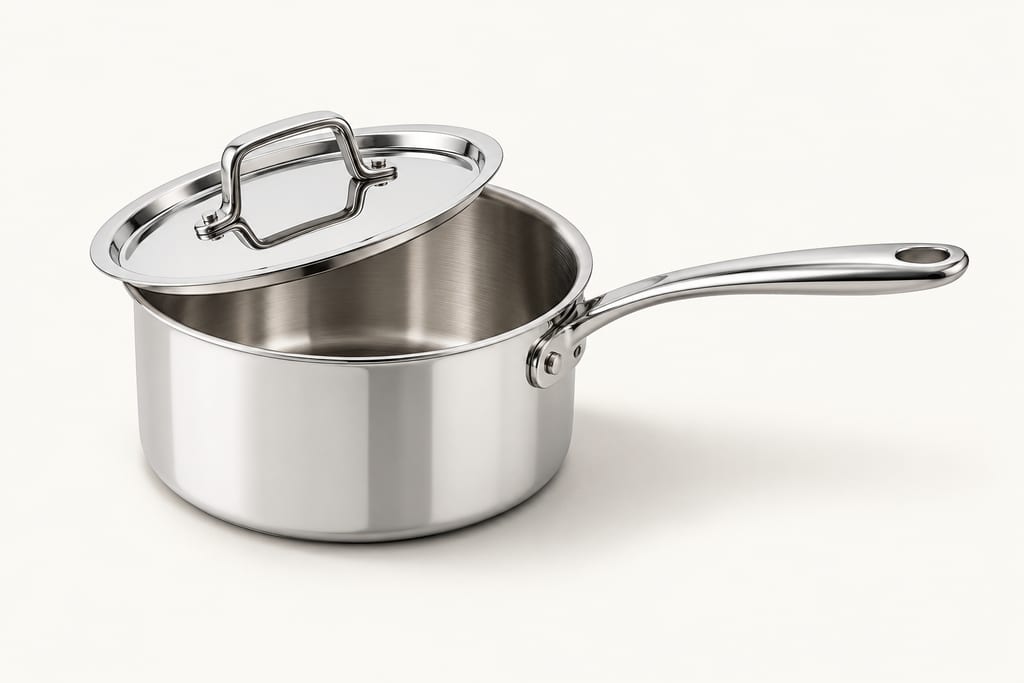
A modern, portable stovetop pan with a stainless-steel cooking surface for sauces and other small simmering jobs. Size, cladding, lid, compatibility and care vary by model.
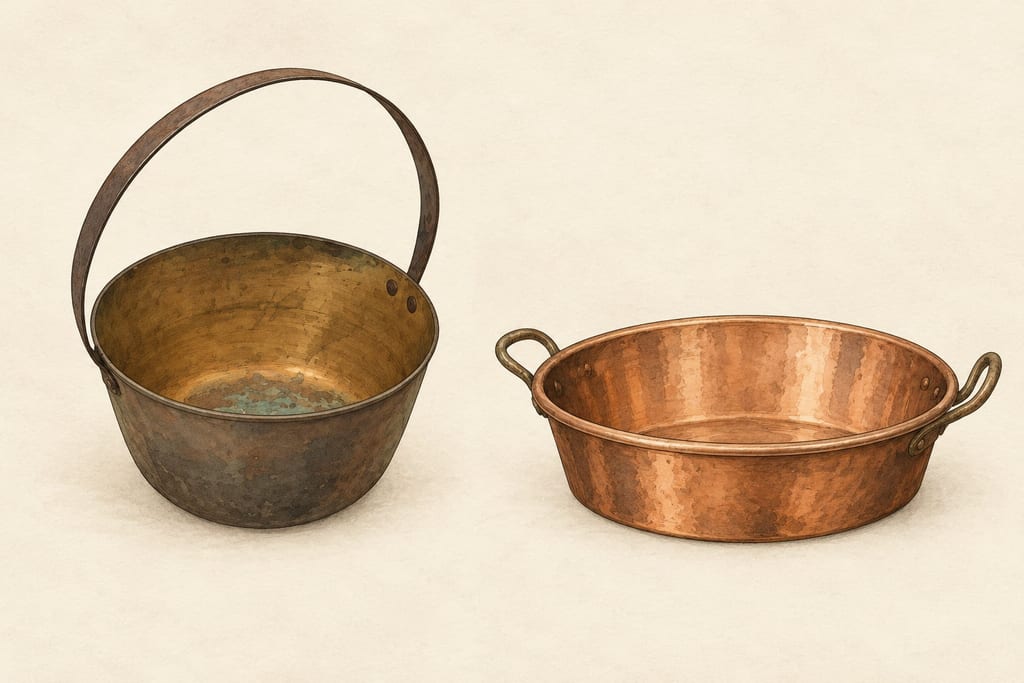
Open, heated pans cooked fruit into preserves before transfer to jars. Historical records document copper and enamelled cast-iron forms, while museum objects show variation in material and shape.

A gelling polysaccharide extracted from red seaweeds, sold as kanten strips or powder; it sets firm at a low concentration and stays solid until about 85 °C.

A Dominican table and seasoning condiment of sour orange juice, mixed with lime and salt and bottled raw; garlic, oregano or a hot pepper may be added for meat or a spicier bottle.

Cicerbita alpina is an alpine perennial whose tender shoots and leaves have been eaten raw or cooked. Sámi milk preparations and modern Carnian dishes are distinct uses, with serious identification and preservation limits.

Japanese skipjack tuna cooked, then repeatedly smoked and dried over a wood fire by the hand-fired tebiyama method into a hard block for shaving into dashi: the first stage of katsuobushi.

A Swedish-style spirit vinegar made by fermenting neutral alcohol with live vinegar bacteria, with a separate guide to commercial ättika strengths.

A yeast-raised wheat ring shaped from a firm dough, briefly boiled and baked. This source-batch formula gives a gently malted crust and a chewy crumb.

A warm dip of garlic, anchovy and olive oil, often enriched with butter, that Piedmont serves over a flame with raw and cooked vegetables and bread.

Bechamel is a white sauce of milk thickened with a butter and flour roux, one of the French mother sauces, and the base from which Mornay and other cheese and cream sauces are made.
No community contributions have been published for this entry yet.
Sign in to contribute. Published comments and photos are free to read.
National Museum of BermudaEquipment use · History · Image reference
Whipping up a 17th-century feastThe Ship Biscuit & Salted Beef project studied more than 100 animal bones from the Warwick, which sank in Castle Harbour, Bermuda, in 1619, and used that work with other archaeological and historical evidence to reconstruct shipboard provisions.
In 2017, the team recreated salted beef using John Collins's 1682 Salt and Fishery; its account describes beef and salt layered in a barrel, followed by a brine-filled stage.
The museum caption identifies its barrel photograph as meat being dry-cured in August 2017; it is an experimental reconstruction, not a seventeenth-century artifact.
Cited in: A cask for salted provisions; An English recipe in an Atlantic setting; The barrel's role and its limits
Cambridge University Press, BJHS ThemesHistory · Equipment · Experimental archaeology
Bay salt in seventeenth-century meat preservation: how ethnomicrobiology and experimental archaeology help us understand historical tastesThe article describes early modern maritime reliance on salted provisions and discusses Collins's 1682 treatise as a source for shipboard meat preservation.
The researchers used new seasoned oak casks for their experimental salted beef and identify that material as part of their modern reconstruction, not a universal historical standard.
The article distinguishes experimental reconstruction from archaeological evidence and includes a photograph of a filled beef cask.
Cited in: A cask for salted provisions; An English recipe in an Atlantic setting; The barrel's role and its limits
Institute of Nautical ArchaeologyHistorical context · Equipment
Ship Biscuit and Salted Beef Research ProjectThe project describes reproducing seventeenth-century ship provisions from archaeological and historical evidence and storing the foods in casks during a simulated trans-Atlantic voyage.
Cited in: The barrel's role and its limits
Wellcome CollectionPrimary text · History
Salt and fishery: a discourse thereofThe Wellcome Collection record identifies John Collins's book as printed in London in 1682 and lists salting flesh and preserving food among its subjects.
Cited in: An English recipe in an Atlantic setting