A name for a particular brewery system
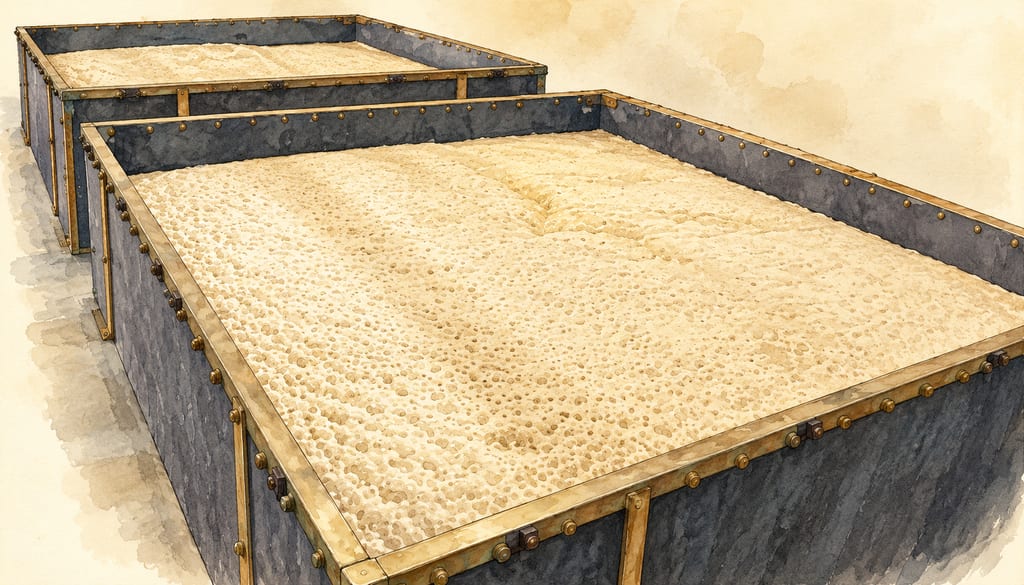
A Yorkshire square is a brewery fermentation vessel associated with a particular way of handling yeast-rich foam during fermentation. It should not be used as a catch-all label for any square tank. The clearest current first-party description inspected here is Samuel Smith’s account of the equipment at its Old Brewery in Tadcaster. The brewery calls those vessels stone Yorkshire squares and says they are built from solid blocks of slate. Its current description applies to that brewery’s plant; it does not establish that every vessel bearing the name is made in the same way.
The name is geographical, but the evidence used for this page does not identify a first inventor, workshop, or date of origin. Tadcaster is a documented place of use, not a proven birthplace. A 2024 Brewery History Society visit report independently records the equipment at Samuel Smith’s and describes a large fermentation room with twelve squares, each reported at 80 barrels, alongside further rooms. Those figures characterize the visited brewery, not a standard size for the type. The report does not define its barrel measure, so the figure is retained as reported rather than converted.
Sources for this section
Foam, yeast, and rousing
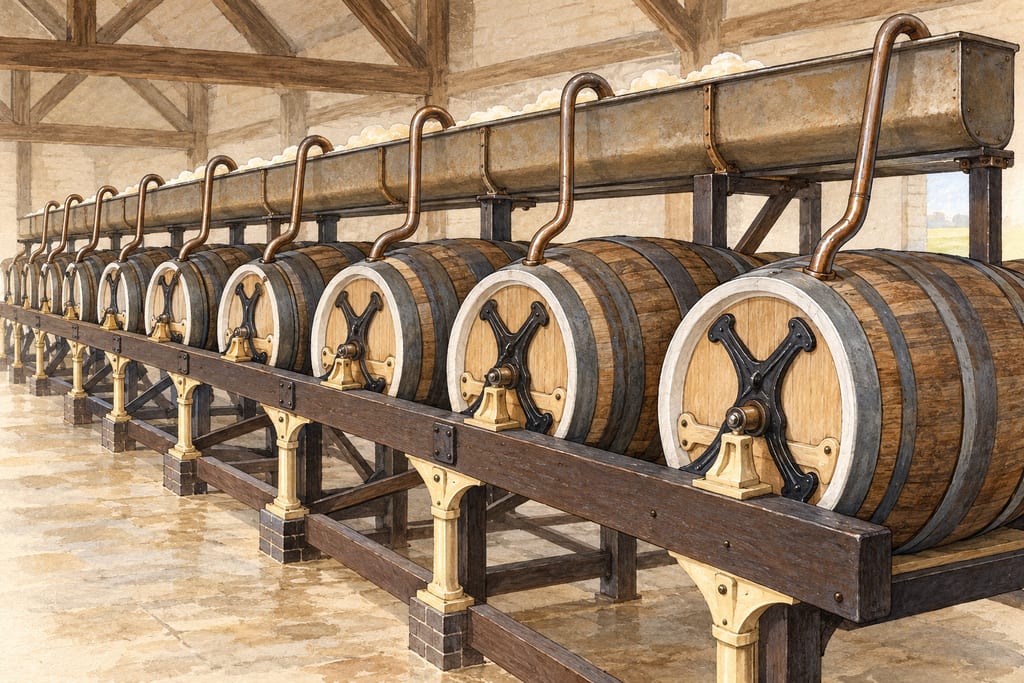
Samuel Smith explains that yeast rises and foams in the upper part of its square during fermentation. Brewers rouse the yeast to bring oxygen to yeast beneath the roof of the vessel. This detail matters: the square is part of a working fermentation arrangement, and the yeast strain and the way it is handled belong to the account of how that brewery uses the vessel. Samuel Smith links the system to a full-bodied, rich, malty beer, but this is the brewery’s description of its own ales and stouts, not a guarantee of taste for all beers fermented in square vessels.
The Brewery History Society’s 2024 visitors saw rousing underway at Samuel Smith’s: the report says some squares were roused for five minutes every two hours and fermentation took four days. The report also describes the specific structure they saw: a lower chamber for wort with cooling coils and a further area above its roof where yeast collects. These are valuable observations of the Tadcaster installation. They should not be turned into universal timings or a fixed blueprint for every Yorkshire square.
Sources for this section
Material and maintenance in one documented brewery
The official photograph and text from Samuel Smith show broad, open, rectangular fermentation squares with a pale foam head and dark vessel partitions. The brewery specifies slate blocks. The visitor report adds that lids above the squares could be moved between vessels to seal them for clean-in-place cleaning; before that arrangement, a brewer recalled entering each square to clean its chambers manually. This is evidence of a particular brewery’s current access and cleaning setup, not a recommendation to enter a vessel or a safe-work procedure.
The sources do not give a maker, dimensions, construction date, precise slate origin, or a general maintenance schedule. They also do not show that all squares have the same openings, lids, cooling arrangements, or capacity. A brewery considering the name should therefore consult evidence for its own system rather than copy Samuel Smith’s details as a standard.
Sources for this section
History
The inspected sources do not establish when the Yorkshire square was invented or when the name was first used. Samuel Smith’s current brewery page describes its own stone squares and says its yeast strain has been used since the 1800s; that dates the brewery’s strain claim, not the vessel or the system. A Brewery History Society visit report records the squares in operation at Tadcaster in June 2024. Its report is a dated observation of one brewery, not a universal history of the equipment.
Equipment details
CapacityThe Brewery History Society’s 2024 report gives a site-specific figure of 80 barrels for each of twelve squares it saw at Samuel Smith’s; it does not define the barrel measure, so no litre conversion is stated here.
PowerNot established The sources describe manual yeast rousing and, at Samuel Smith’s, cooling coils, but do not establish a power source for the vessel or its cooling system.
How you get oneNot established The sources describe a brewery installation but do not identify its maker, construction date, or acquisition route.
CareAt Samuel Smith’s, a movable lid is used to seal squares for clean-in-place cleaning, according to a 2024 visitor report. That describes one present-day brewery installation; it is not a universal cleaning specification.
Made of
- Slate — vessel construction at Samuel Smith’s Old Brewery
Samuel Smith’s describes its own stone Yorkshire squares as made from solid blocks of slate. This is a source-specific description, not a claim about every vessel called a Yorkshire square.
Limits
A square is a vessel within a fermentation system, not a complete recipe or a guarantee of a particular flavour by itself; Samuel Smith attributes its result to the system of fermentation and its established yeast strain.
Source →The sources do not establish one standard geometry, capacity, or construction material for every brewery’s Yorkshire square. The 80-barrel capacity and slate construction reported here are specific to the cited Samuel Smith installation.
Source →Places
Tadcaster
Documented use · Locality evidenceThis records Samuel Smith’s documented use at its Tadcaster brewery; it does not claim Tadcaster as the system’s place of invention.