
Agar / kanten
A gelling polysaccharide extracted from red seaweeds, sold as kanten strips or powder; it sets firm at a low concentration and stays solid until about 85 °C.
 FermenteaWhere food goes to change
Mushrooms
Entoloma sarcopum is a large, bitter autumn mushroom reported as food in Japan. Older sources call it Entoloma crassipes; related poisonous Entoloma make identification a serious concern.
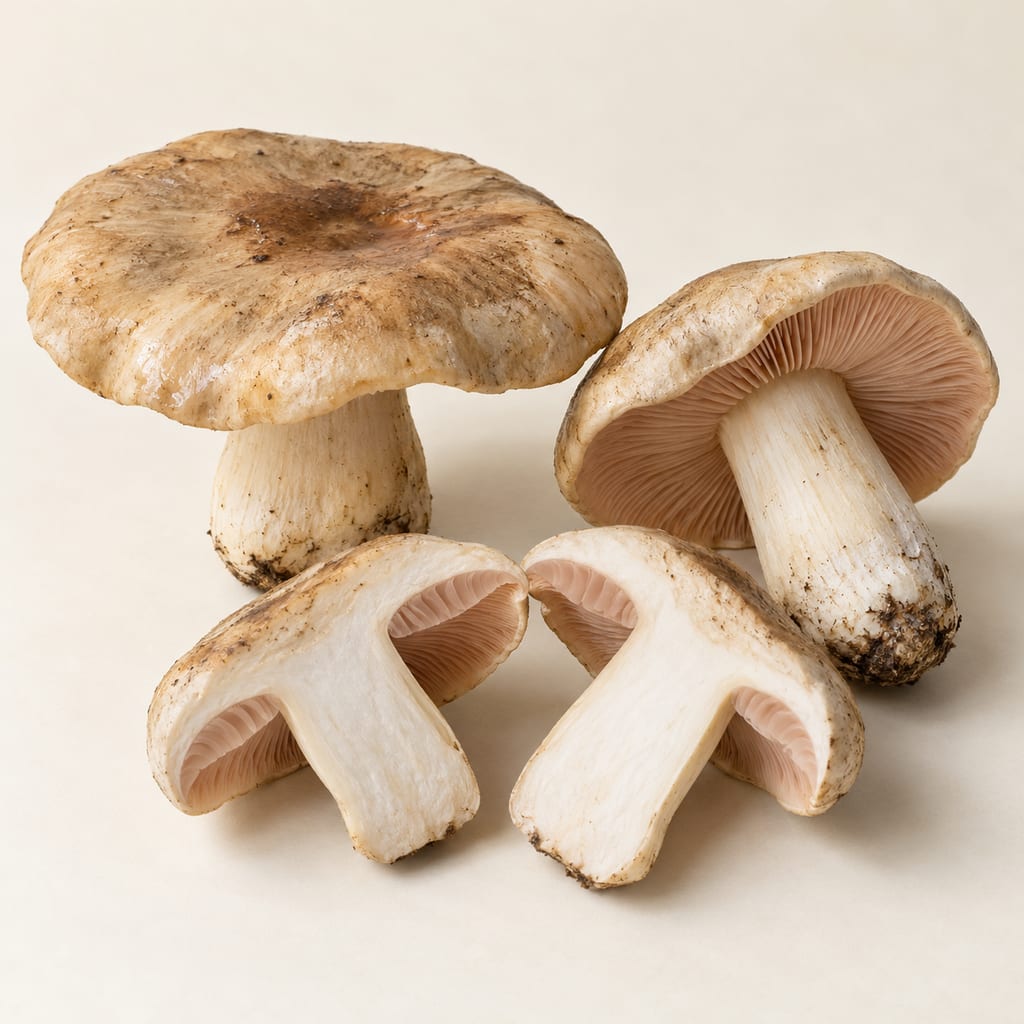
The current name used here is Entoloma sarcopum Nagas. & Hongo. A Japanese forest bulletin described the species in 1954 as E. crassipes; that name was later replaced because it was a homonym. Rhodophyllus crassipes is also included in the synonymy. Regional mushroom guides may therefore use E. crassipes, while scientific sources use E. sarcopum. The Japanese name ウラベニホテイシメジ is used for this mushroom in local guides.
Descriptions characterize the fruit body as large and robust, with a broad brownish cap, pale gills that become pinkish as spores mature, and a thick, solid stem. The molecular study gives a cap around 8–10 cm for its reference description and notes larger specimens in some treatments. Size alone does not establish identity: the paper specifically warns that smaller E. sarcopum may be difficult to distinguish from related E. rhodopolium-group mushrooms.
The molecular study records E. sarcopum in moist mixed forest near Japanese oaks, including Quercus serrata and Q. acutissima, and Japanese red pine. Its specimens fruited in late September and October. A regional guide likewise gives autumn as the season and broad-leaved woods as habitat. These are Japanese observations and should not be generalized into a calendar for other hemispheres or climates.
Dated community observations in the linked gallery document the species name in Chiba, Tokyo, and Shizuoka. The photographed locations add occurrence leads; they do not define the entire range, establish local food use, or replace expert taxonomic verification.
FAO’s Annex 3 includes E. crassipes in a cross-regional list of fungi described as edible. FAO explains that the list draws on more than 140 sources and that mycological literature does not always make clear whether an “edible” species was actually eaten. It is a useful historical lead, not a stand-alone proof of safe use or a recipe.
Japanese regional sources provide more direct food evidence. Ishikawa Prefecture categorizes the mushroom under its edible species guide. A Chiba mushroom society describes it as food and says it is popular in Miyagi Prefecture, noting a pronounced bitterness and firm texture. These accounts document food use in specific Japanese contexts; they do not establish a preparation method, toxicology profile, or safety outside expert-confirmed identification.
This entry is not foraging guidance. Japan’s Ministry of Health describes E. rhodopolium as poisonous and notes that it can be confused with edible E. sarcopum. The molecular study likewise addresses the close relationship and the identification challenge, including small specimens that may be difficult to separate. A bitter taste is reported in the Japanese food descriptions, but taste-testing is not a safe identification method and this page does not recommend it.
The available sources support a regional food history but do not supply a modern toxicological safety evaluation of E. sarcopum, a validated consumer identification protocol, or a preparation process that resolves the risk. The record therefore preserves the food reports and the poisonous-congener warning together; it does not advise collecting or eating wild specimens.
The regional mushroom society says the mushroom is popular in Miyagi; this does not give a locality or establish universal safety.
The prefectural guide identifies the species as edible; it is not a toxicological safety assessment.
A gelling polysaccharide extracted from red seaweeds, sold as kanten strips or powder; it sets firm at a low concentration and stays solid until about 85 °C.

Akahatsu, Lactarius akahatsu, is a wild milkcap of East Asian pine and mixed forests that is sold in Yunnan markets, with its edibility and identity still needing species-level review.

The almond mushroom, Agaricus subrufescens, was cultivated in eastern North America in the 1800s, lost its market, and returned as a cultivated mushroom from Brazil, where it is grown under several names.
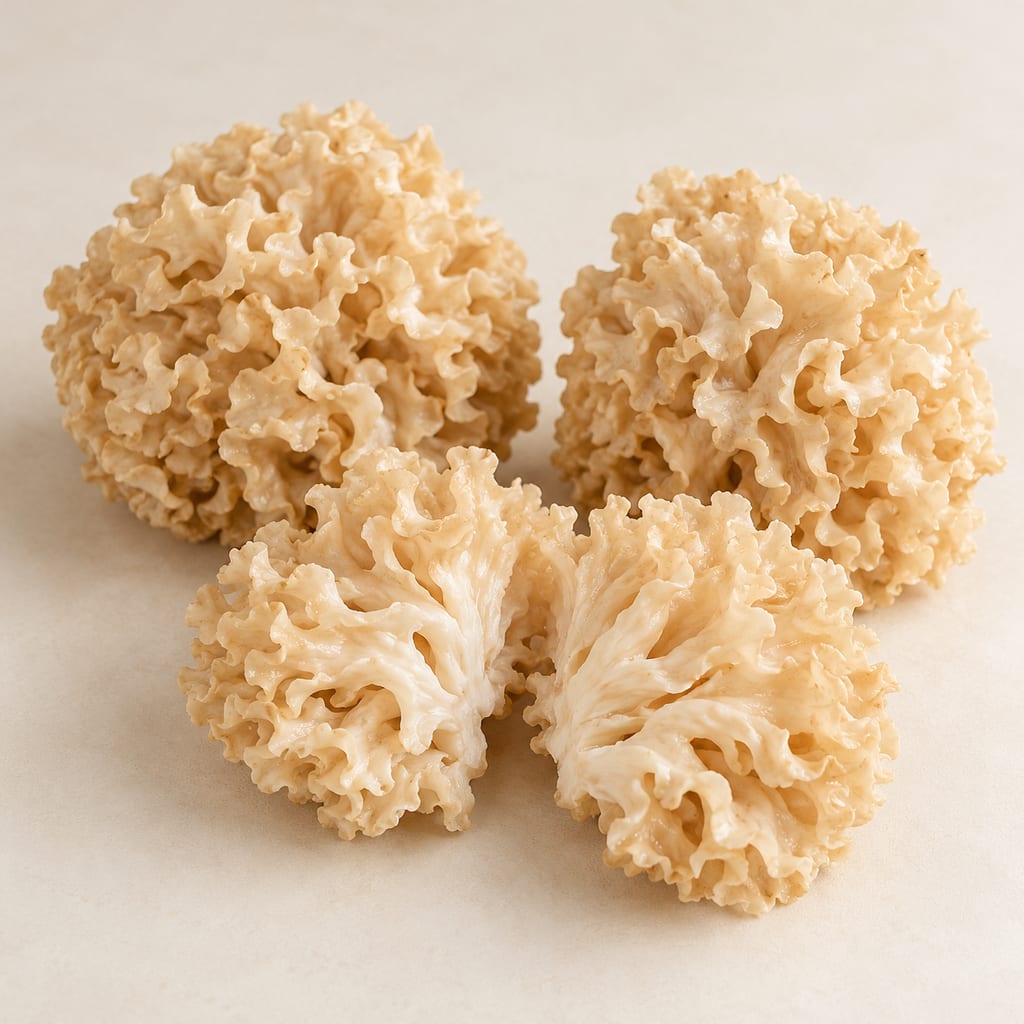
The Asian cauliflower mushroom, Sparassis latifolia, is a cultivated fungus with a frilled, fronded form that is eaten in China, Japan and Korea. Many Asian records under the name Sparassis crispa refer to this species.
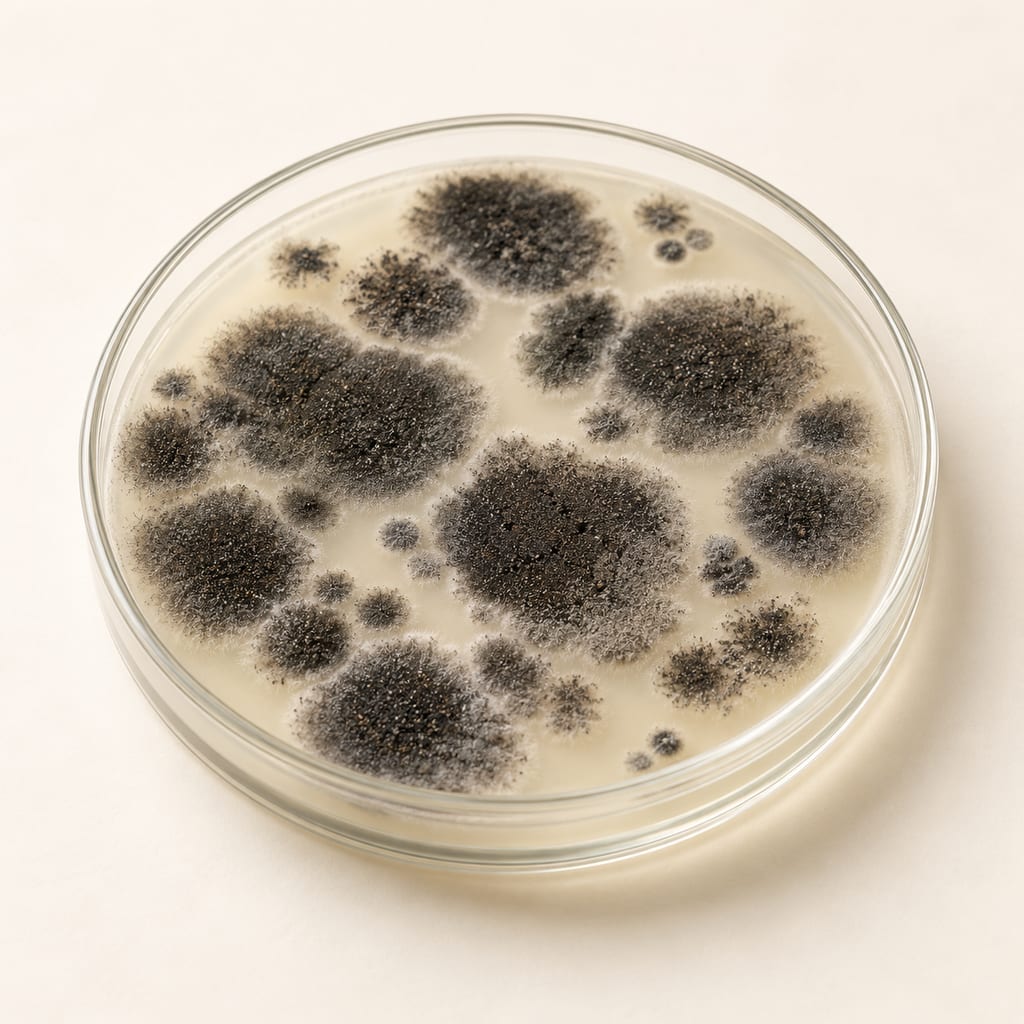
Aspergillus luchuensis is the black koji mould used in Japanese shochu and awamori, valued for the citric acid it makes alongside the starch-converting enzymes of koji.
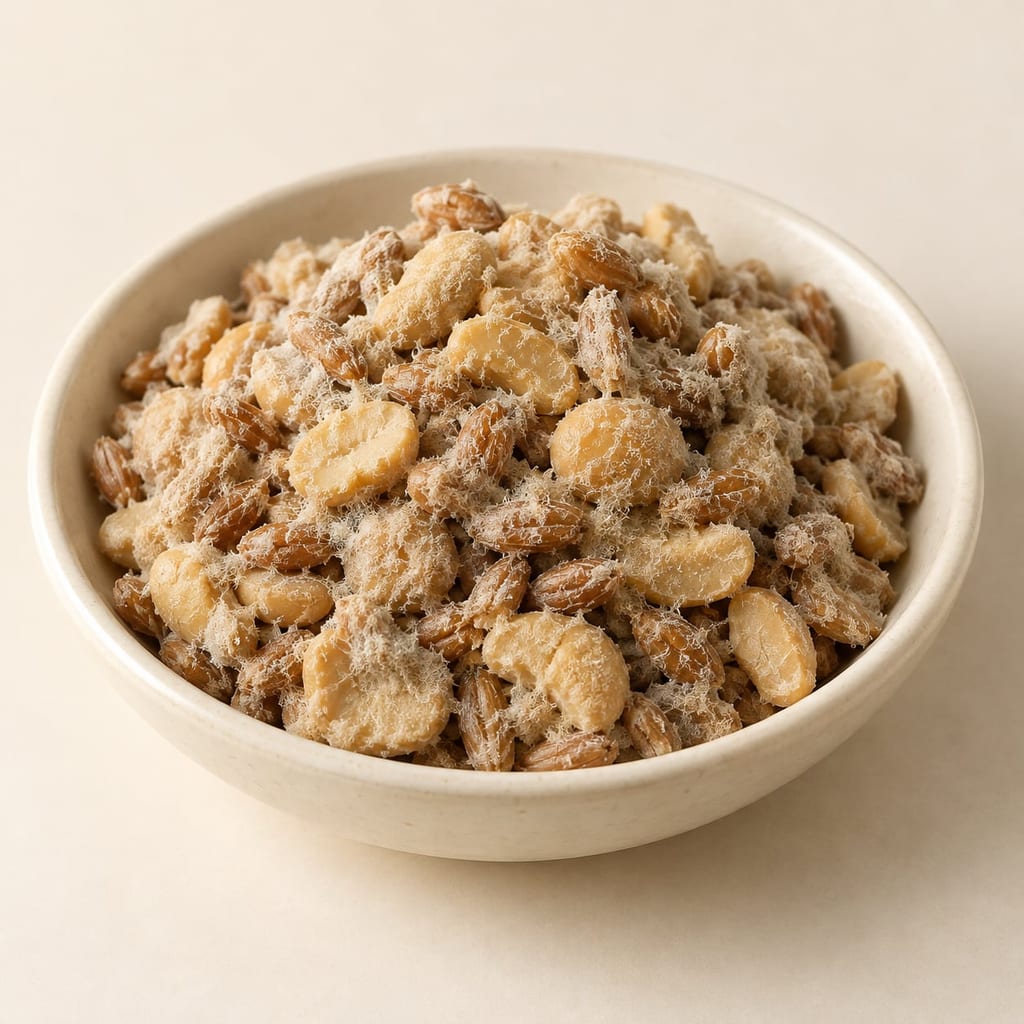
Aspergillus sojae is a koji mould of the Aspergillus flavus group, closely related to A. oryzae, used as a starter in soybean fermentations such as Korean meju, doenjang and ganjang.
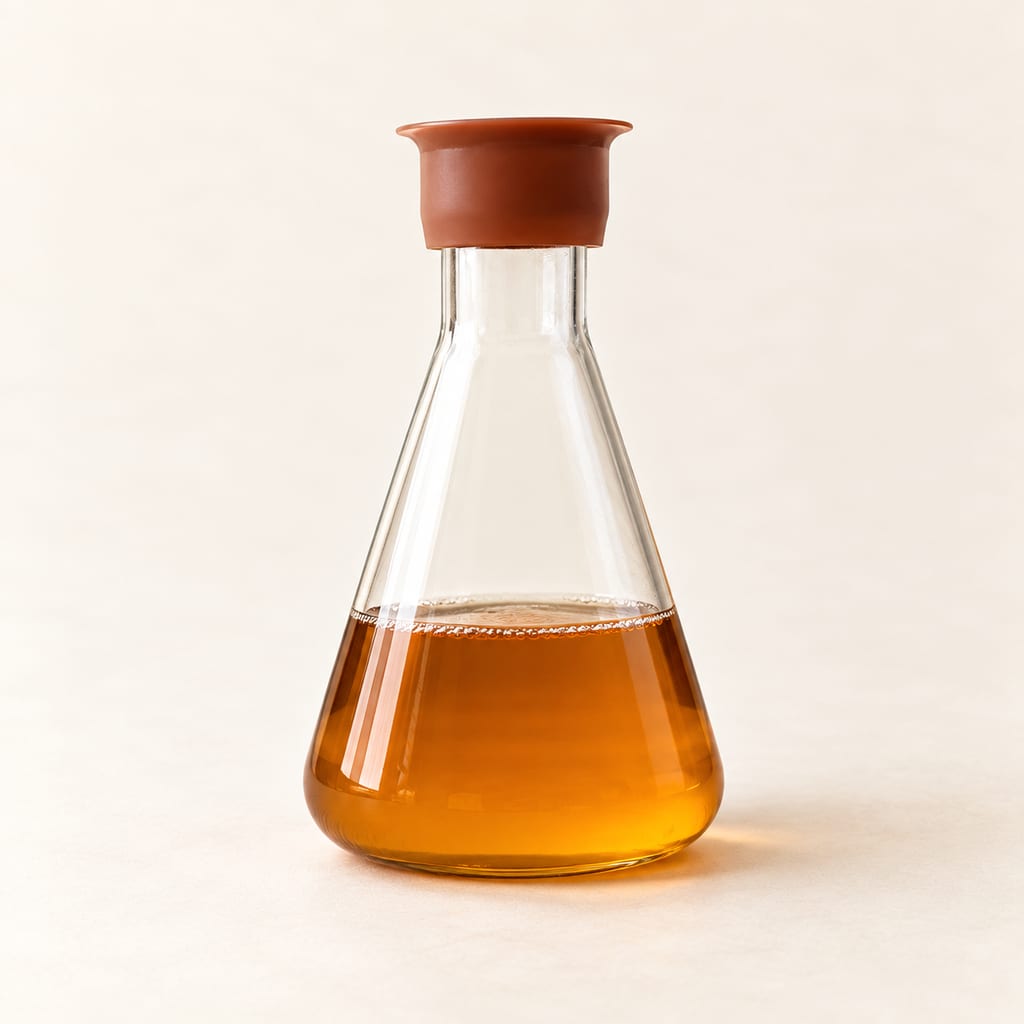
Awamori yeast ferments sugar released from rice koji in the Okinawan spirit’s mash. Sakimoto names the ingredient but gives no strain, form, supplier or dose.

Bamboo shoots are the young culms of many bamboo species, eaten after boiling or leaching in Asia, and fermented into sour and preserved foods in the Himalayas, northeast India and Burma.

Soft, spreadable Calabrian pork sausage made with a great deal of red chilli and fatty pork, stuffed into natural casings, sometimes smoked and matured while staying soft.

A way to add independent temperature logging to an existing food dehydrator without changing its built-in controls or protections. It is a monitoring method, not a rewiring plan.

Pleurotus cystidiosus is the abalone mushroom, a cultivated oyster-type fungus with dark brown caps that grows more slowly and is more demanding than other Pleurotus species.

A dark, balanced vinegar from Emilia-Romagna made by combining cooked or concentrated grape must with wine vinegar, then acetifying and refining it in wood under a protected specification.

A living dairy inoculum that starts controlled cream fermentation, developing acidity and aroma before sour cream or cultured butter is finished.

A small electric incubator holds jars at a selected temperature for yogurt and other documented warm food preparations. Controls, capacity and vessel arrangement vary by model.

Adygean salt is a seasoned table salt associated with Adygea and the wider North Caucasian culinary tradition. Salt is blended with garlic and a variable selection of herbs and spices; the exact mix depends on the named style and maker.

The African Caesar-group mushroom, Amanita masasiensis, is a wild ectomycorrhizal species of central and southern African woodlands, eaten locally. The genus contains deadly poisonous species, so identification needs care.
No community contributions have been published for this entry yet.
Sign in to contribute. Published comments and photos are free to read.
FAOFood history
Wild edible fungi: a global overview of their use and importance to people, Annex 3Annex 3 lists Entoloma crassipes as edible among a cross-regional compilation of records from more than 140 sources; the FAO cautions that inclusion does not always establish that a listed mushroom was eaten.
Cited in: Regional food reports, not a universal recommendation
Scientific ReportsTaxonomy · Ecology · Season · Safety
Molecular phylogenetic analysis of new Entoloma rhodopolium-related species in Japan and its identification method using PCR-RFLPIdentifies Entoloma sarcopum as the replacement name for E. crassipes Imazeki & Toki (1954) and Rhodophyllus crassipes; describes autumn fruiting in late September–October in mixed forests near Quercus and Pinus; documents difficulty distinguishing small E. sarcopum from E. rhodopolium relatives.
Cited in: A name change within a difficult group; Autumn fruiting in Japanese broad-leaved woods; Identification and safety remain the limiting issue
Ishikawa Prefectural GovernmentFood use · Season · Ecology
ウラベニホテイシメジIdentifies the species as Entoloma crassipes and classifies it as edible, with autumn fruiting beneath broad-leaved trees; regional food-use guidance, not a toxicological safety study.
Cited in: Regional food reports, not a universal recommendation
Chiba Association for Japanese Mushrooms and PlantsFood use · Season · Appearance
ウラベニホテイシメジ / Entoloma sarcopumNames E. sarcopum; describes autumn fruiting in broad-leaved woods, strong bitterness, and popular edible use in Miyagi Prefecture; provides dated images from Aoba Ward, Sendai.
Cited in: A name change within a difficult group; Autumn fruiting in Japanese broad-leaved woods; Regional food reports, not a universal recommendation; Identification and safety remain the limiting issue
Ministry of Health, Labour and Welfare, JapanSafety
自然毒のリスクプロファイル:クサウラベニタケ (Entoloma rhodopolium)Identifies E. rhodopolium as poisonous and describes it as easily confused with edible E. sarcopum; distinguishes it by features including bitterness, but this is not a reliable consumer identification protocol.
Cited in: Identification and safety remain the limiting issue
iNaturalistImages · Range
Entoloma sarcopum observationsPhoto and observation leads used only as community science documentation; each selected image is individually CC BY and retains its photographer attribution.
Cited in: Autumn fruiting in Japanese broad-leaved woods