
Agar / kanten
A gelling polysaccharide extracted from red seaweeds, sold as kanten strips or powder; it sets firm at a low concentration and stays solid until about 85 °C.
 FermenteaWhere food goes to change
Mushrooms
Hon-shimeji is the cultivated Japanese mushroom Lyophyllum shimeji, prized for its firm texture and clean, nutty flavour, and one of the few ectomycorrhizal mushrooms grown commercially without a host tree.
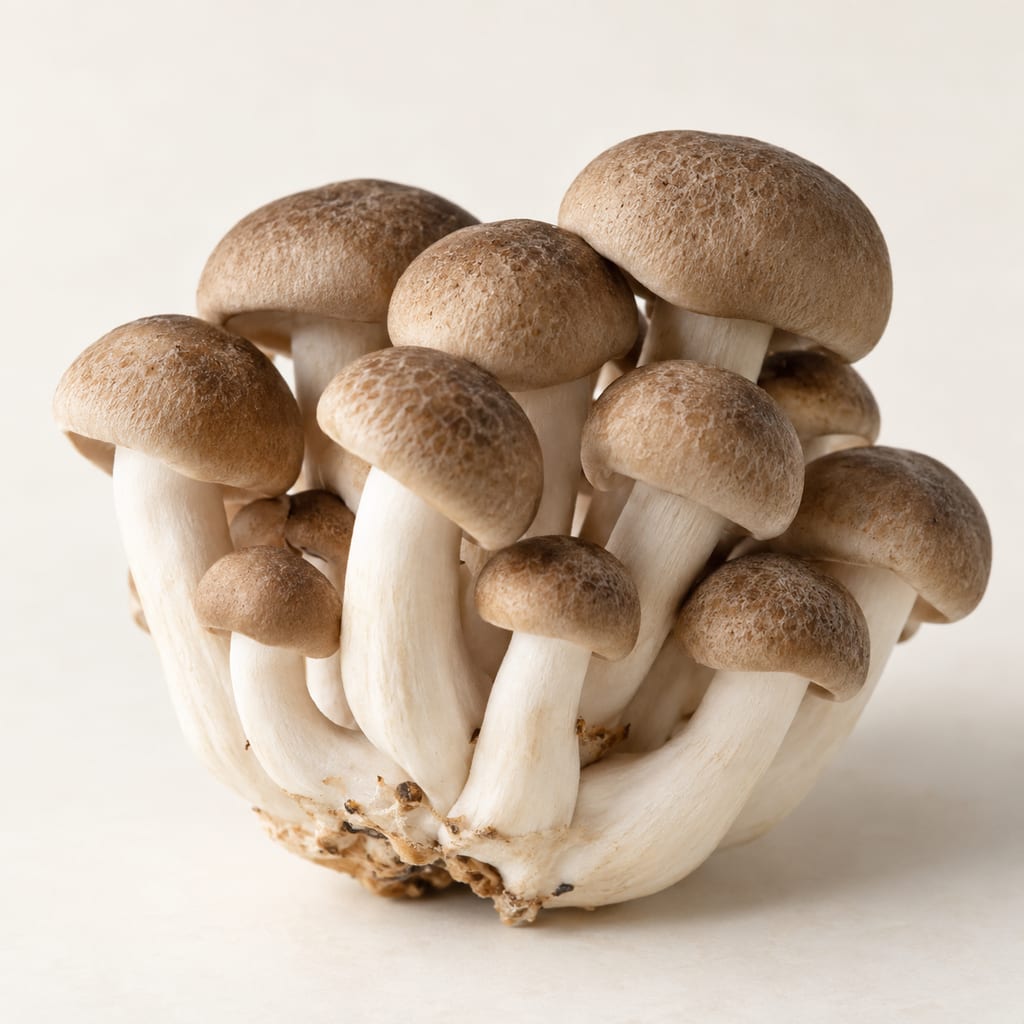
Hon-shimeji is the Japanese name for Lyophyllum shimeji (ホンシメジ). The catalogue lists it under that binomial and the Japanese name. Shop labels in Japan and elsewhere can confuse it with buna-shimeji, which the catalogue distinguishes as a different supermarket mushroom (Hypsizygus). The two should not be treated as the same product.
The sources reviewed for this page do not describe the fruiting body's appearance, texture or flavour in detail, so this page does not supply a sensory profile. Anything written about the look or taste of the mushroom would need a source that describes it.
In nature the species lives as an ectomycorrhizal partner of trees in the families Pinaceae and Fagaceae, according to the catalogue and the review. The mushroom is the visible fruiting part of a fungus whose main body lives in the soil and the tree's root zone. The cultivated product on sale is grown from pure culture on a prepared substrate, not gathered from the forest.
The species is recorded in Japan and East Asia. The review's evidence on wild gathering is not dated, so this page does not claim a history of wild collection. What the sources do establish is the cultivation history, which is what makes the mushroom a regular market item.
The review by Yamada, Furukawa and Yamanaka (2017) on edible ectomycorrhizal mushrooms in Japan dates the first attempts to grow Lyophyllum shimeji on artificial nutrient media without a host plant to the 1970s. A basic cultivation system followed in the early 1990s. The review cites Ohta (1994) for fruiting in pure culture, in which the fungus produced fruiting bodies without a tree. Work on inoculating forest trees with the mycelium began in the mid-1980s. Some fruiting occurred, but the review notes that mycorrhiza formation and mycelial growth in those trials were poorly documented.
The breakthrough was the host-free system. The review states that Lyophyllum shimeji is one of the few ectomycorrhizal mushrooms that has been commercially cultivated without its host plant. Commercial supply in Japan is recorded from 2004. Several companies grow it, though the review says only one had recently produced large commercial quantities. The same review reports a retail price of roughly 200 to 300 yen per 100 g, one to three times the price of shiitake, enokitake, oyster and button mushrooms. That price sets hon-shimeji apart from the everyday mushrooms of the shop.
Cultivation depends on a starch-based nutrient medium rather than glucose. The review explains that most ectomycorrhizal fungi grow poorly on glucose, whereas Lyophyllum shimeji breaks down starch readily and can use it as its sole carbon source. Starch does not raise osmotic pressure at high concentration in the way glucose does, so a starch-based solid medium feeds the fungus steadily over the months it takes to grow and fruit. The same review reports that such media support both mycelial growth and fruiting in pot cultivation.
The review gives no temperature, humidity or light figures for the commercial process, and this page does not supply them. The growing conditions are not established by the sources as a household method, and a home grower should not treat the starch-medium principle as a recipe.
Breeding has shaped the crop. Mating tests on cultivated fruiting bodies guide the selection of strains. The review proposes two breeding aims: higher starch-degrading activity, which would help mass production, and strains that work better when inoculated into forest soil. It also reports that the Japanese population includes at least two groups that do not interbreed, which the review describes as two different biological species, and it calls for taxonomic revision. DNA markers can separate the groups. A grower or buyer should therefore not assume that every cultivated strain or every wild collection is the same organism.
The review does not describe the cooking behaviour or flavour of hon-shimeji, so this page does not make claims about how it cooks or tastes. Those would need a source written by cooks or food researchers.
In the market it is positioned as a premium mushroom. The review's price comparison places it above shiitake, enokitake, oyster and button mushrooms, and that difference is the practical reason it is used for special dishes rather than as a bulk ingredient.
Hon-shimeji is eaten as a fresh cooked mushroom. The sources reviewed do not describe it as a starter culture or a fermentation organism, so it does not drive lactic or alcoholic activity in a preparation. Any preserved or fermented preparation that uses it belongs on that preparation's own page.
Buy hon-shimeji from a source that names the species, and keep the buna-shimeji confusion in mind. The sources reviewed do not describe the appearance of good or poor cultivated clusters, and they give no storage life, so this page gives neither.
Safety wording: the sources reviewed describe the cultivated mushroom as a food and do not provide a safety assessment for wild collection of this species. No edibility verdict for wild material follows from this page, and no one should identify a wild mushroom from a photograph or a description. Wild picking needs an expert identification, and the wild form is not the item this page describes. Several mushroom families contain species that look similar and are dangerous, so the cultivated product is the only basis for cooking presented here.
Allergen and dietary context: the sources do not record a specific allergen profile for this mushroom. Ordinary mushroom caution applies to anyone with known sensitivities to fungi.
The main variation is between the wild fruiting body and the cultivated product. Commercial hon-shimeji is grown on starch-based media, while the wild form is ectomycorrhizal and grows with trees. The two are the same species name in the catalogue but are different supply chains, and this page treats them as one subject only where the evidence supports that.
Commercial hon-shimeji should not be confused with buna-shimeji (Hypsizygus), which is a separate cultivated mushroom in the same Japanese market. Shiitake, enokitake, oyster and button mushrooms are the everyday comparisons, and the review's price comparison places hon-shimeji above all four.
Allergen and dietary context: the sources reviewed do not record an allergen profile for this mushroom. Ordinary caution about fungi applies to anyone with a known sensitivity.
Country-level. Documents commercial cultivation and market price in Japan; no single origin claimed.
Regional catalogue context only; the review evidence is Japanese.
A gelling polysaccharide extracted from red seaweeds, sold as kanten strips or powder; it sets firm at a low concentration and stays solid until about 85 °C.
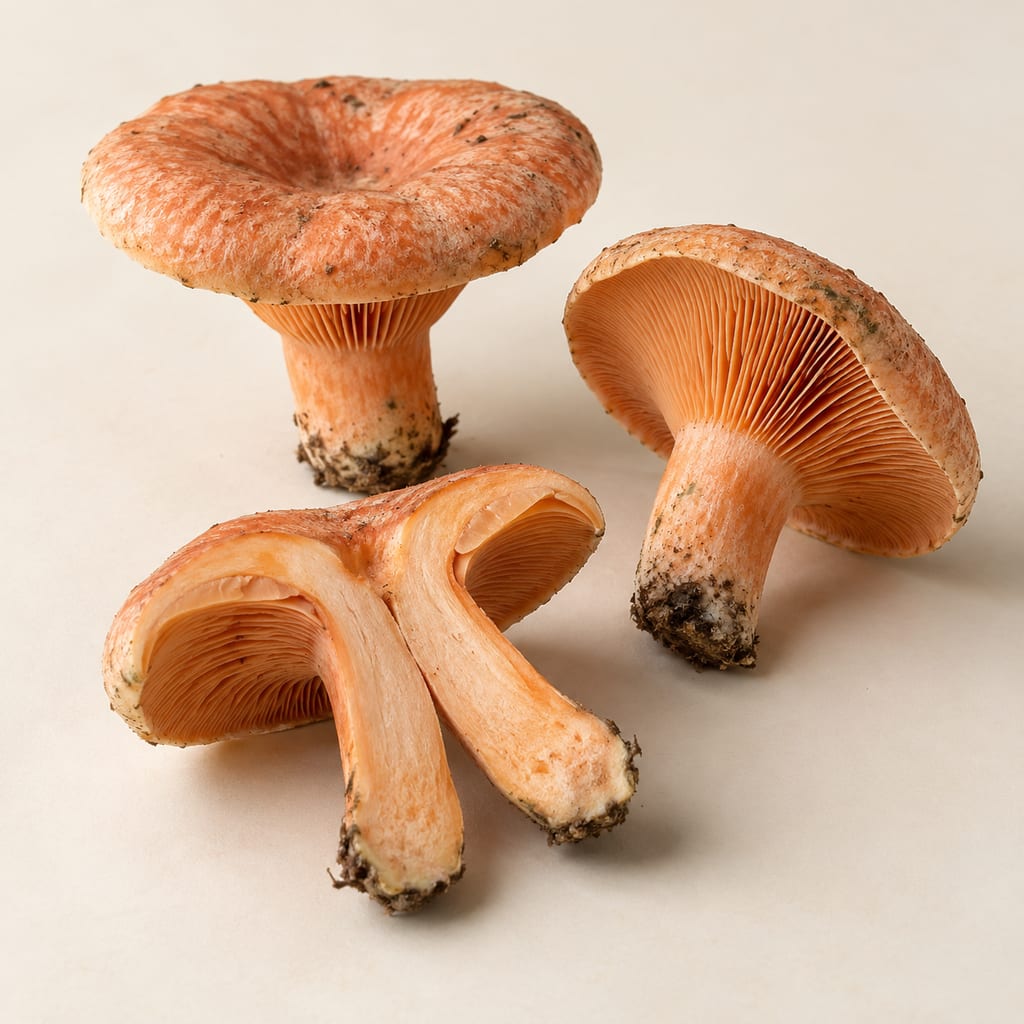
Akahatsu, Lactarius akahatsu, is a wild milkcap of East Asian pine and mixed forests that is sold in Yunnan markets, with its edibility and identity still needing species-level review.

The almond mushroom, Agaricus subrufescens, was cultivated in eastern North America in the 1800s, lost its market, and returned as a cultivated mushroom from Brazil, where it is grown under several names.
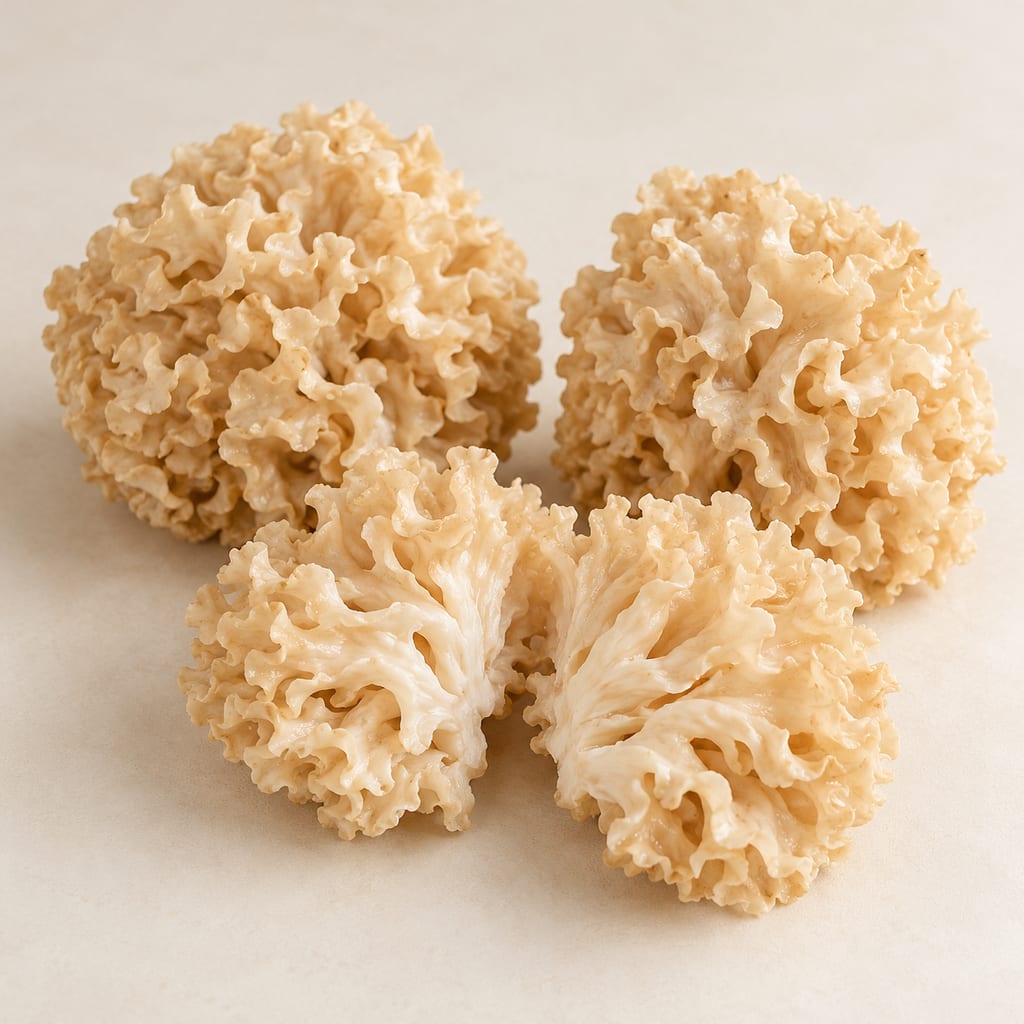
The Asian cauliflower mushroom, Sparassis latifolia, is a cultivated fungus with a frilled, fronded form that is eaten in China, Japan and Korea. Many Asian records under the name Sparassis crispa refer to this species.
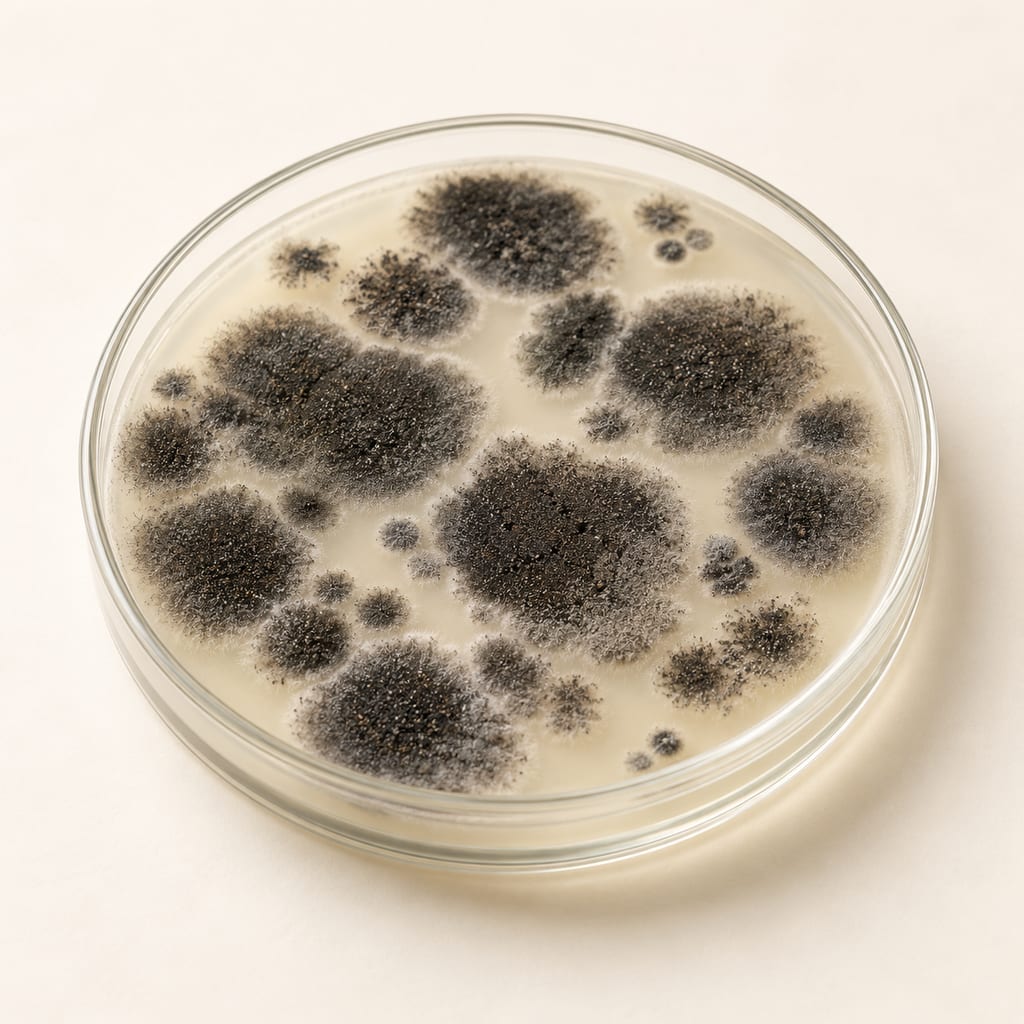
Aspergillus luchuensis is the black koji mould used in Japanese shochu and awamori, valued for the citric acid it makes alongside the starch-converting enzymes of koji.
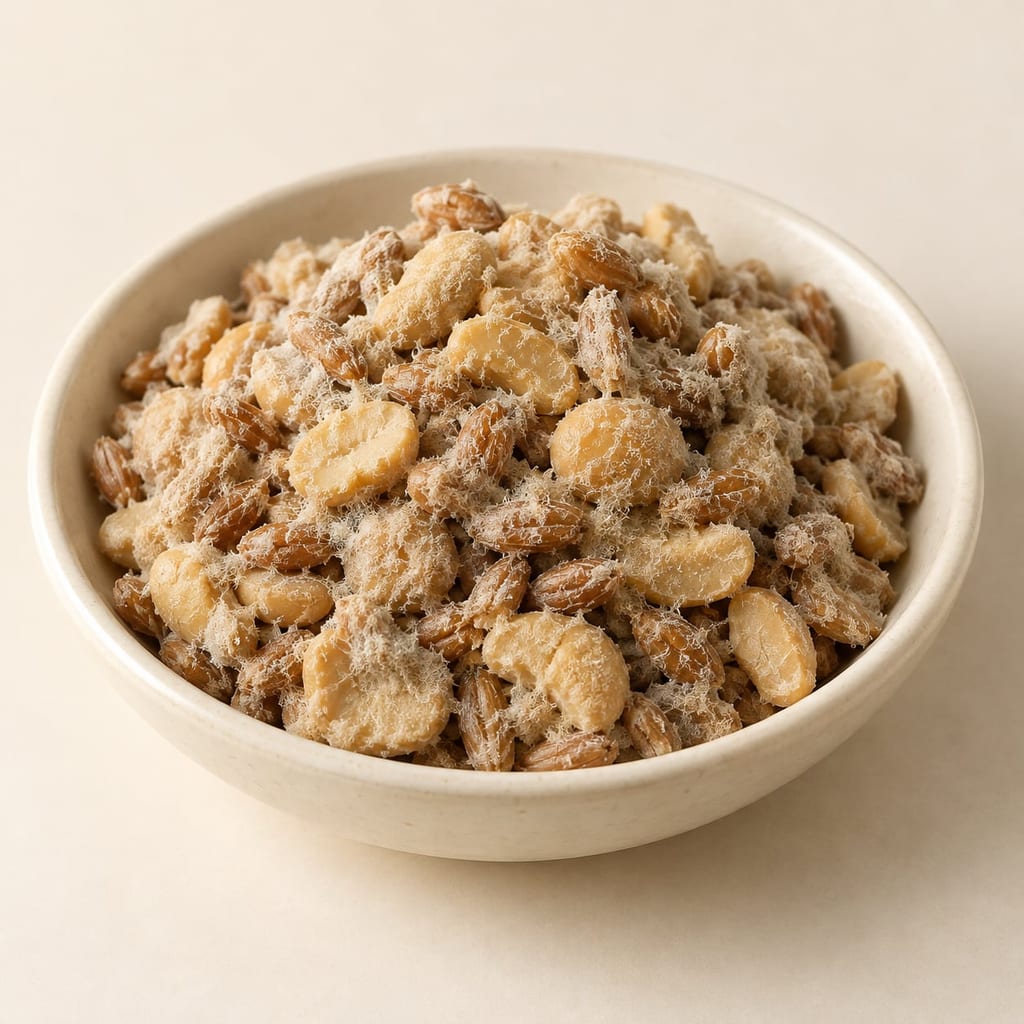
Aspergillus sojae is a koji mould of the Aspergillus flavus group, closely related to A. oryzae, used as a starter in soybean fermentations such as Korean meju, doenjang and ganjang.
Awamori yeast ferments sugar released from rice koji in the Okinawan spirit’s mash. Sakimoto names the ingredient but gives no strain, form, supplier or dose.

Bamboo shoots are the young culms of many bamboo species, eaten after boiling or leaching in Asia, and fermented into sour and preserved foods in the Himalayas, northeast India and Burma.

Soft, spreadable Calabrian pork sausage made with a great deal of red chilli and fatty pork, stuffed into natural casings, sometimes smoked and matured while staying soft.

A way to add independent temperature logging to an existing food dehydrator without changing its built-in controls or protections. It is a monitoring method, not a rewiring plan.

Pleurotus cystidiosus is the abalone mushroom, a cultivated oyster-type fungus with dark brown caps that grows more slowly and is more demanding than other Pleurotus species.

A dark, balanced vinegar from Emilia-Romagna made by combining cooked or concentrated grape must with wine vinegar, then acetifying and refining it in wood under a protected specification.

A living dairy inoculum that starts controlled cream fermentation, developing acidity and aroma before sour cream or cultured butter is finished.

A small electric incubator holds jars at a selected temperature for yogurt and other documented warm food preparations. Controls, capacity and vessel arrangement vary by model.

Adygean salt is a seasoned table salt associated with Adygea and the wider North Caucasian culinary tradition. Salt is blended with garlic and a variable selection of herbs and spices; the exact mix depends on the named style and maker.

The African Caesar-group mushroom, Amanita masasiensis, is a wild ectomycorrhizal species of central and southern African woodlands, eaten locally. The genus contains deadly poisonous species, so identification needs care.
No community contributions have been published for this entry yet.
Sign in to contribute. Published comments and photos are free to read.
RedalycHistory · Method · Safety
Cultivation of edible ectomycorrhizal mushrooms in JapanGrowing Lyophyllum shimeji on artificial nutrient media without a host plant was studied from the 1970s; a basic cultivation system was developed in the early 1990s.
Starch-based media support growth and fruiting; the fungus breaks down starch as its sole carbon source.
Commercial cultivation without the host plant in Japan; supply recorded from 2004; price about 200 to 300 yen per 100 g.
Japanese population includes at least two incompatible groups; taxonomic revision called for.
Cited in: What it is; Where it comes from and how it became a crop; How it is grown; What it does in the kitchen; Choosing, storing and handling it; Variations and related items
Wikimedia CommonsImage
File:Lyophyllum shimeji.jpg (image)Reference photograph of cultivated Lyophyllum shimeji, labelled as cultivated bed-grown product.