
Agar / kanten
A gelling polysaccharide extracted from red seaweeds, sold as kanten strips or powder; it sets firm at a low concentration and stays solid until about 85 °C.
 FermenteaWhere food goes to change
Mushrooms
Nameko is a small Japanese mushroom with amber caps and a naturally slippery surface, eaten fresh in soups and other dishes and cultivated on wood-based media.
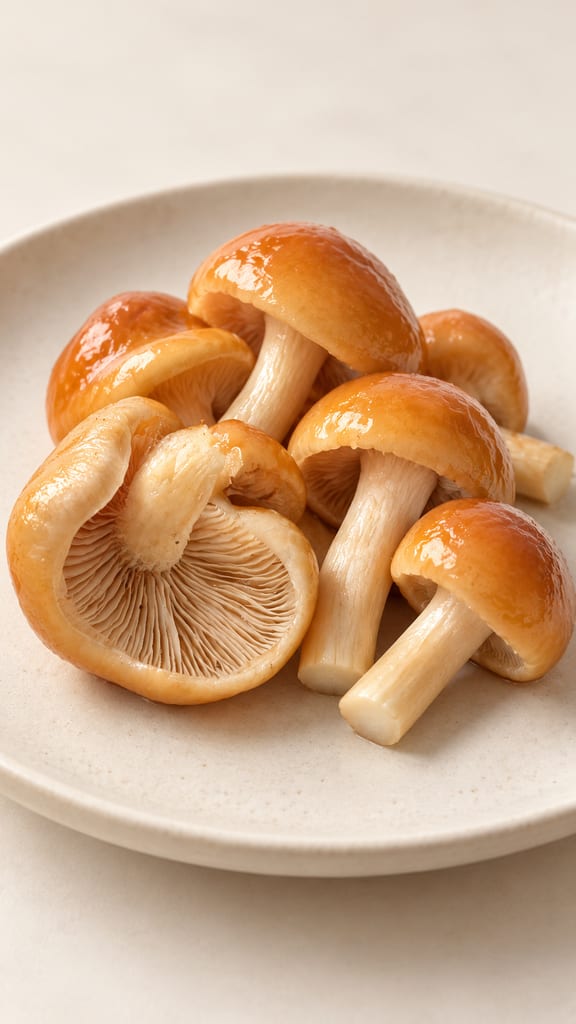
Nameko is the Japanese common name for an edible wood-decaying mushroom now called Pholiota microspora. Its small fruit bodies usually appear in clusters on deciduous wood. The caps range from yellow-brown to amber and become visibly glossy or slippery when moist. Pale gills darken as spores mature; the stem is lighter than the cap. The conspicuous mucilage on the cap is the feature that gives the mushroom its familiar Japanese sense of a “slippery” or “viscid” mushroom. The slippery feel is part of the edible mushroom itself, rather than a sauce or a sign that the food has been coated after harvest.
A Japanese government crop-name list uses the older name Pholiota nameko, while the Japanese Standard Tables of Food Composition identify raw nameko as Pholiota microspora. The difference reflects nomenclature rather than two market mushrooms. The 2008 taxonomic revision compares the historical name-bearing material and concludes that the Himalayan Pholiota microspora and Japanese nameko are the same species; under the rules of botanical naming, the older species name has priority. Nameko remains the ordinary Japanese food name, while Pholiota nameko is a familiar synonym in older and continuing food literature.
The word nameko has not always pointed to one clearly bounded species. In a 1933 paper, mycologist Sanshi Imai described it as a Japanese local name used for several mushrooms with viscid or gelatinous caps, including fungi then assigned to Collybia, Pholiota and Flammula. Imai distinguished the edible mushroom sold in Fukushima from those other fungi and placed it in Pholiota. That history explains why older records can use different scientific names and why a vernacular label alone should not be treated as a taxonomic identification.
The 2008 revision revisited this problem by examining the history of Collybia nameko and the surviving original illustration used to anchor that name. The specimens themselves could no longer be located in the herbaria considered by the author, so the original plate served as the lectotype. Its depicted details supported identification with the mushroom then called Pholiota nameko, rather than the velvet shank mushroom now known as Flammulina velutipes. Comparing that Japanese nameko with the Himalayan Pholiota microspora led the author to treat them as one species. Later food and forestry sources do not all use the same Latin name, so both scientific names are useful search terms; the common name refers here to the Japanese edible mushroom, not every sticky-capped fungus once called nameko.
In the wild, Pholiota microspora is a white-rot fungus: it obtains food from dead or decaying deciduous wood rather than living as a plant root partner. Research describes its East Asian range from the Himalayas and China to Japan, in cool-temperate deciduous forest. A nameko fruit body is the brief, visible part of a longer fungal life in wood. The mycelium, the fine network that digests the substrate, remains largely hidden in the log or cultivation bed.
Cultivation in Japan first used logs. A 2022 study traces artificial log cultivation to the Tōhoku region in 1921 and the start of sawdust-based cultivation to 1930. Wooden trays and other systems expanded commercial growing in the 1960s and 1970s; climate-controlled sawdust production later enabled year-round supply. The change from logs to prepared wood-based media brought the fungus into more controlled indoor production and made large-scale supply less dependent on finding naturally colonised trunks. In present-day Japanese production, sawdust-based beds are the dominant method. A Chiba Prefecture forestry page describes the usual bed as broadleaf-wood powder mixed with water and a nutrient supplement such as rice bran, packed in heat-tolerant bottles or bags and sterilised before cultivation. These are producer conditions, not instructions for casual home handling.
Logs remain important to the story, but not every nameko described as log-grown is wild. The Yamagata tourism account describes cultivated logs as a regional product and contrasts them with bed cultivation. It says local eaters regard the log-grown mushrooms as darker and more slippery and chewy. That is a place-specific comparison, not a universal test of quality: cultivar, age at harvest and growing conditions also shape appearance and texture, and the account does not measure their independent effects.
The move to sawdust culture also shaped which strains consumers encounter. Hirao and colleagues compared 50 cultivated strains with 73 wild strains from Japan using microsatellite markers. The cultivated samples were significantly less genetically diverse than the wild collection and clustered into one closely related group. The authors conclude that Japanese sawdust-grown nameko derives from a single domestication event and a severe genetic bottleneck. Their paper traces the strain history to a wild mushroom collected in Fukushima in 1962, while acknowledging the sparse records of nameko domestication.
This finding concerns sampled Japanese sawdust cultivars; it does not mean every wild or internationally cultivated nameko is genetically identical. The same species can grow on logs and prepared wood media, and production strains are selected for traits useful in cultivation. The distinction matters when reading descriptions of texture or yield: one commercial cultivar is not a complete description of all wild nameko. Nor does the paper establish that a particular appearance or cultivation method gives a better flavour. Its contribution is a documented account of how a commercial crop’s genetic diversity narrowed, not a tasting ranking.
The surface mucilage gives nameko a smooth, slightly gelatinous feel and helps set it apart from drier-capped cultivated mushrooms. Research on nameko mucilage has isolated water-soluble polysaccharides, carbohydrates and small amounts of amino-acid-containing material from the fruit body. A 1967 chemical study reported mannose, xylose and galactose as prominent sugars in one cold-water-soluble fraction, with smaller amounts of other sugars. This is a description of extracted material, not a complete account of the mushroom’s nutrition or a reason to assign a health effect.
In cooking, the surface material becomes part of the dish’s texture. Nameko is commonly simmered in soup, where its slippery coating disperses into the surrounding liquid and gives each bite a soft, slick quality. It does not function as a fermenting culture or a fermentable base in the sources consulted here. When served with miso soup, the nameko is the mushroom ingredient; the miso is the fermented seasoning. Keeping those roles distinct prevents the mushroom’s natural mucilage from being mistaken for fermentation or for evidence that the soup itself has undergone a new fermentation.
Work on nameko polysaccharides continues for food-science reasons as well as description. A recent review discusses extraction and structural characterisation of polysaccharide fractions. Such laboratory work concerns isolated materials and their potential technical applications; it does not show that eating nameko produces a medical effect. For a kitchen, the directly observable point remains simpler: the coating is part of the mushroom and it changes the mouthfeel of the liquid in which the mushrooms are cooked.
The most frequently documented use is in soup. Nameko is added to miso soup and other clear or seasoned soups, where the small caps and stems remain distinct while their mucilage gives the broth body. A Japanese food reference also describes stews and rice porridge, and notes fresh, canned and brined forms. A local tourism account for Ōe in Yamagata lists miso soup, soba accompaniments and ohitashi, a briefly cooked vegetable or mushroom dish served cool. The examples show how the mushroom’s texture can suit both a warm broth and a simple side dish; they are not a single canonical recipe.
Older Japanese food naming also signals the importance of texture: nameko is associated with the viscid cap. The mushroom is prized for that quality as well as its mild, pleasant flavour. It is not a substitute for firm, dry mushrooms where a recipe depends on a seared surface or a chewy large cap. Its size and coating work naturally in spoonable dishes and small accompaniments. A 1933 taxonomic account already described the mushroom as common and highly prized among edible agarics in Japan, while distinguishing the strict species from the wider local use of the word. These records support a longstanding Japanese culinary identity, but do not establish a single birthplace or exact date when people first ate it.
In Akita, a regional forest-support account lists a wider range of uses, including nattō-jiru, a soup with fermented soybeans, simmered taro dishes, noodle toppings, pickles and tempura. It describes nameko miso soup as a straightforward way to appreciate the mushroom flavour and notes that local recipes may use more mature caps. The list demonstrates that the mushroom is not restricted to miso soup. It also shows how the same slippery texture can be welcomed in soup, balanced in a vinegar-seasoned dish or contrasted with a crisp batter. These are documented regional preparations; the sources do not show that every form is equally common throughout Japan.
Fresh nameko is sold in the Japanese market, and the food reference notes that it does not keep well. The naturally wet, delicate surface is part of the product, so a fresh pack is best used while it still looks intact and clean. The sources consulted do not establish a universal home-storage duration or a species-specific spoilage test; use the date and handling directions supplied with a commercial pack rather than judging safety from the mushroom’s natural slipperiness.
Nameko is also sold canned and preserved in brine, forms that make the mushroom available beyond its fresh season. These products are already processed and should be used according to their own package instructions. A Japanese sensory study compared fresh mushrooms with briefly frozen nameko served in rice porridge and found the frozen sample similar in taste to fresh in its tests. The paper does not give a general household shelf-life recommendation, so the result supports freezing as a studied format, not a precise storage period. Drying is also described in recent nameko literature, but the fresh, canned and brined forms have stronger support in the food references consulted here.
For selecting fresh mushrooms, the sources offer fewer formal grade standards than they do for identity and production. A visual check can confirm that the caps are intact and the package is clean, but it cannot identify the species or establish safety. Wild nameko is closely tied to decaying wood in the ecological literature, while a market pack is usually a product of cultivation; labels and trusted sourcing are therefore more meaningful than trying to identify a mushroom from the common name alone. No source consulted here establishes a home method for distinguishing edible nameko from lookalikes or for declaring wild mushrooms safe.
Commercial nameko links forest products to a highly controlled food crop. The Japanese cultivation history begins with forest logs, then moves through sawdust beds, bottles or bags, and indoor climate control. The substrate’s wood base reflects the fungus’s ecology as a decomposer; a nutrient supplement supports production in the prepared medium. Reuse of agricultural residues has also been studied as a way to reduce reliance on sawdust, but experimental substitutions are not interchangeable production standards. Cultivation papers report specific strains and media precisely because the fungus responds to substrate and growing conditions.
The crop expanded beyond Japan during the twentieth century. The 2022 study reports that cultivation was introduced to Liaoning in China in the mid-1970s and describes China as the largest producer in the period covered by the paper. Those historical production findings should not be read as a current global ranking. They do show that nameko’s present availability is not limited to Japan, even though the Japanese common name and culinary use remain central to its identity. For the reader, the practical result is a mushroom sold fresh and in preserved forms, produced through both wood-log and intensive substrate systems, with a texture that makes it recognisable in the bowl.
Documents Japanese culinary use and commercial cultivation records; it does not claim Japan as the species' exclusive native range or birthplace.
The source reports commercial cultivation introduced to southern Liaoning; this is a documented cultivation association, not a claim of origin.
A gelling polysaccharide extracted from red seaweeds, sold as kanten strips or powder; it sets firm at a low concentration and stays solid until about 85 °C.

Akahatsu, Lactarius akahatsu, is a wild milkcap of East Asian pine and mixed forests that is sold in Yunnan markets, with its edibility and identity still needing species-level review.

The almond mushroom, Agaricus subrufescens, was cultivated in eastern North America in the 1800s, lost its market, and returned as a cultivated mushroom from Brazil, where it is grown under several names.
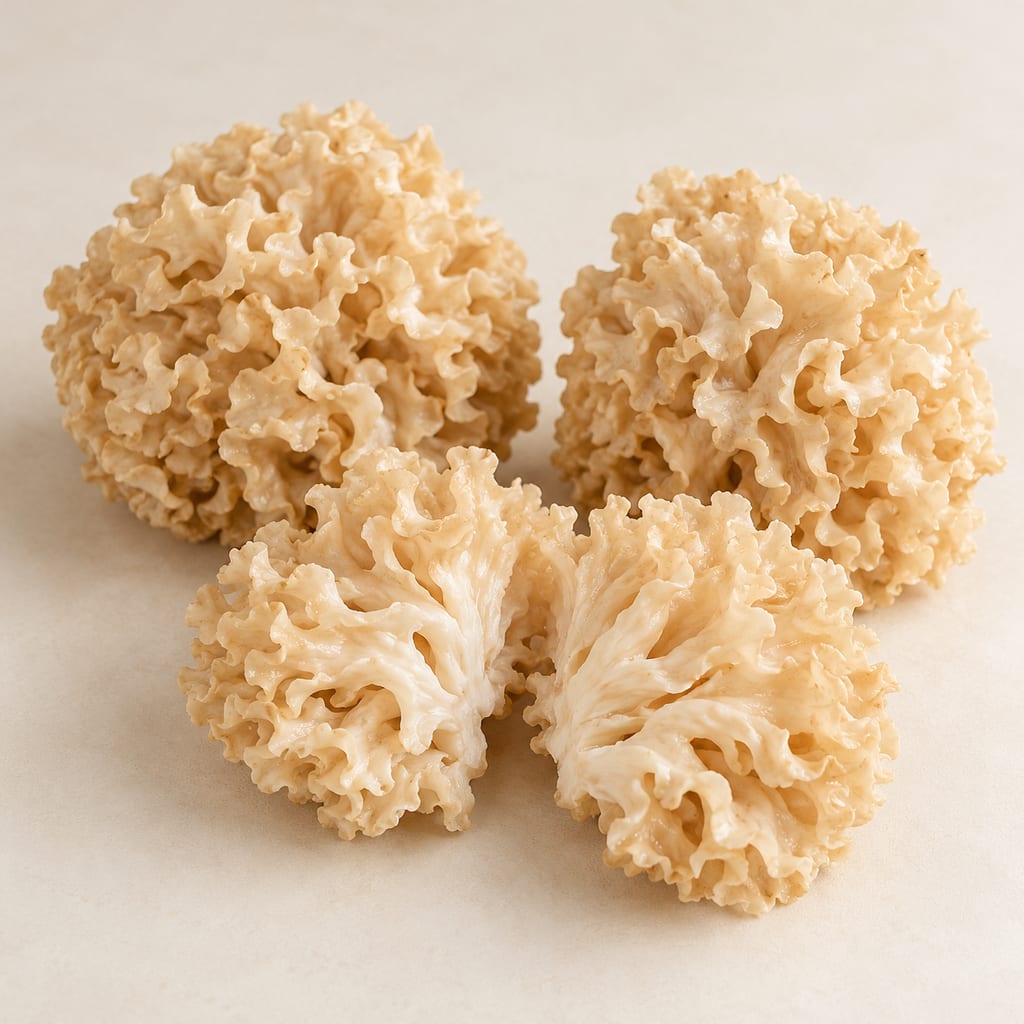
The Asian cauliflower mushroom, Sparassis latifolia, is a cultivated fungus with a frilled, fronded form that is eaten in China, Japan and Korea. Many Asian records under the name Sparassis crispa refer to this species.
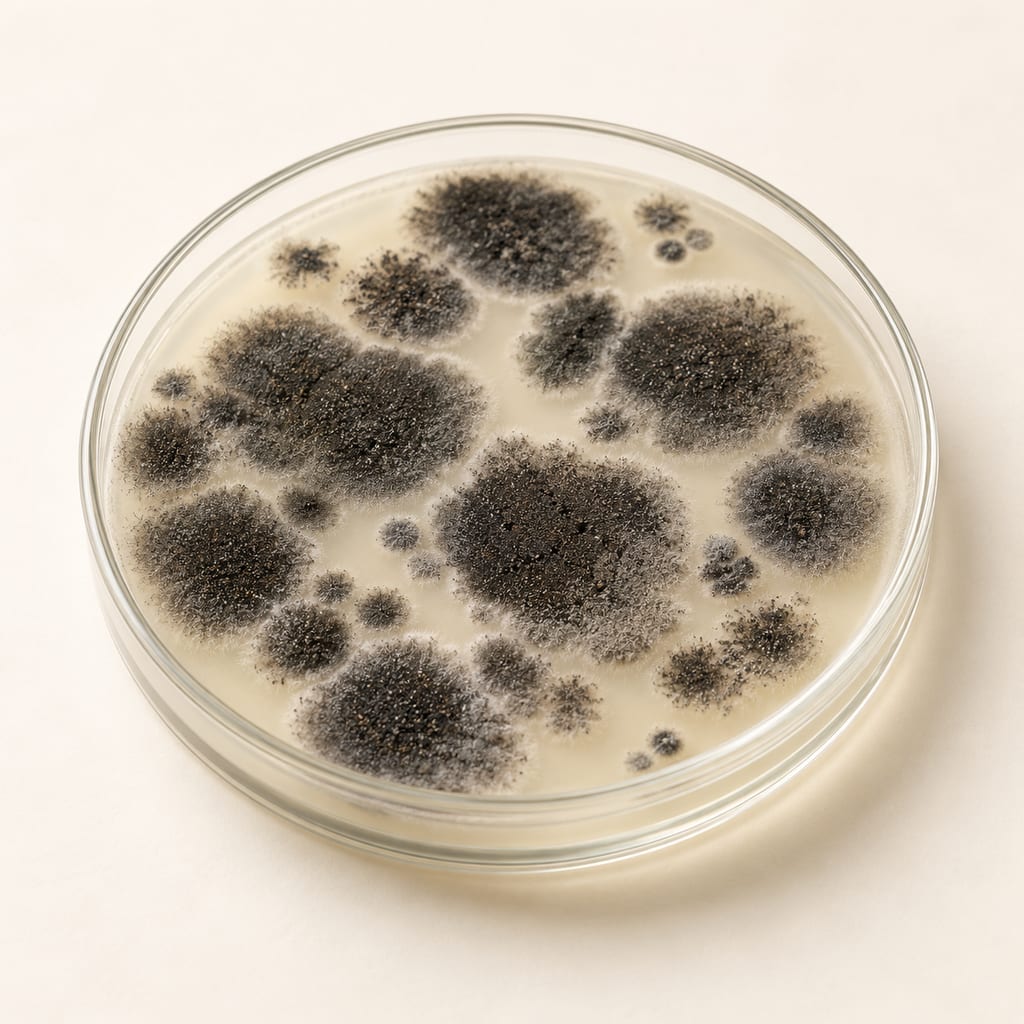
Aspergillus luchuensis is the black koji mould used in Japanese shochu and awamori, valued for the citric acid it makes alongside the starch-converting enzymes of koji.
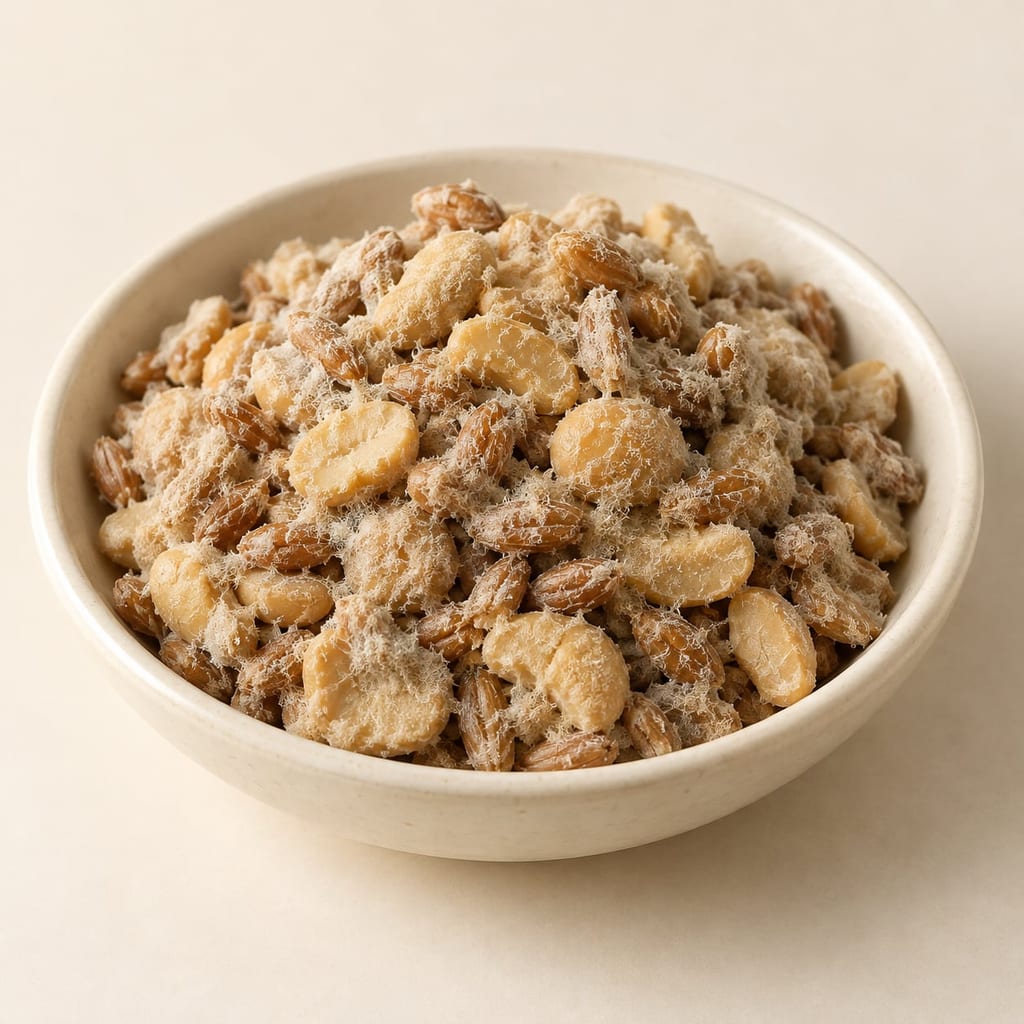
Aspergillus sojae is a koji mould of the Aspergillus flavus group, closely related to A. oryzae, used as a starter in soybean fermentations such as Korean meju, doenjang and ganjang.
Awamori yeast ferments sugar released from rice koji in the Okinawan spirit’s mash. Sakimoto names the ingredient but gives no strain, form, supplier or dose.
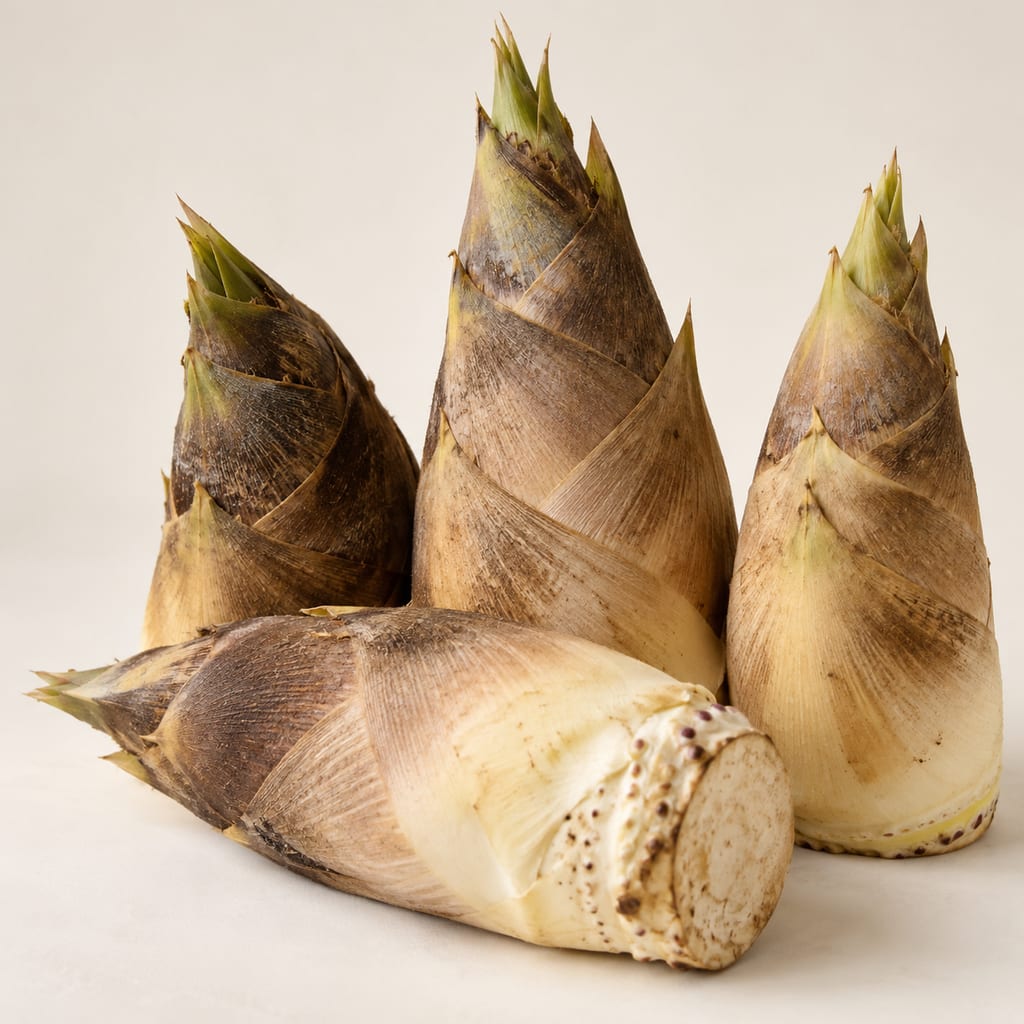
Bamboo shoots are the young culms of many bamboo species, eaten after boiling or leaching in Asia, and fermented into sour and preserved foods in the Himalayas, northeast India and Burma.

Soft, spreadable Calabrian pork sausage made with a great deal of red chilli and fatty pork, stuffed into natural casings, sometimes smoked and matured while staying soft.

A way to add independent temperature logging to an existing food dehydrator without changing its built-in controls or protections. It is a monitoring method, not a rewiring plan.

Pleurotus cystidiosus is the abalone mushroom, a cultivated oyster-type fungus with dark brown caps that grows more slowly and is more demanding than other Pleurotus species.

A dark, balanced vinegar from Emilia-Romagna made by combining cooked or concentrated grape must with wine vinegar, then acetifying and refining it in wood under a protected specification.

A living dairy inoculum that starts controlled cream fermentation, developing acidity and aroma before sour cream or cultured butter is finished.

A small electric incubator holds jars at a selected temperature for yogurt and other documented warm food preparations. Controls, capacity and vessel arrangement vary by model.

Adygean salt is a seasoned table salt associated with Adygea and the wider North Caucasian culinary tradition. Salt is blended with garlic and a variable selection of herbs and spices; the exact mix depends on the named style and maker.

The African Caesar-group mushroom, Amanita masasiensis, is a wild ectomycorrhizal species of central and southern African woodlands, eaten locally. The genus contains deadly poisonous species, so identification needs care.
No community contributions have been published for this entry yet.
Sign in to contribute. Published comments and photos are free to read.
Mycoscience / The Mycological Society of JapanTaxonomy · History
Correct name for “nameko”Examines the changing use of nameko in taxonomic literature and concludes Pholiota nameko is a synonym of the older Pholiota microspora.
Uses the original plate as lectotype after type specimens could not be located; distinguishes nameko from Flammulina velutipes.
Cited in: A mushroom named for its slick surface; One common name, a complicated record; Fresh, preserved and frozen
The Botanical Society of JapanTaxonomy · History · Culinary use
On the Taxonomy of Nameko-fungus in JapanIn 1933, nameko was described as a common local label for several viscid-cap fungi.
Distinguishes the strict Pholiota species, including fresh market material from Hokkaido and Yamagata and canned nameko sold in Fukushima.
Cited in: One common name, a complicated record; A place in Japanese cooking
Mycoscience / The Mycological Society of JapanHistory · Cultivation · Taxonomy
Japanese “nameko” mushrooms (Pholiota microspora) produced via sawdust-based cultivation exhibit severe genetic bottleneck associated with a single founderDescribes white-rot ecology and East Asian distribution, and reports log cultivation in Tōhoku from 1921 and sawdust cultivation from 1930.
Reports expansion to year-round sawdust cultivation in Japan, introduction to Liaoning in the 1970s, and findings of a genetic bottleneck among sampled Japanese sawdust-cultivated strains.
Cited in: One common name, a complicated record; From fallen wood to cultivated beds; Cultivation changed the population; Why the cap feels slippery; A crop as well as a wild mushroom
Chiba Prefectural GovernmentCultivation
Chiba namekoDescribes modern nameko beds made from broadleaf sawdust, water and rice bran or another supplement, packed in bottles or bags and heat sterilised; log cultivation remains small-scale.
Cited in: From fallen wood to cultivated beds; A crop as well as a wild mushroom
CiNii Research / Japan Society of Nutrition and Food ScienceComposition · Texture
Studies on the Mucilage of “Nameko” (Pholiota Mutabilis FRIES) (Part 1)A 1967 study describes extracted nameko mucilage as multiple polysaccharide fractions, with cold-water-soluble fractions containing mannose, xylose, galactose and smaller quantities of other sugars.
Cited in: Why the cap feels slippery
The Oxford Companion to Food, via CKBKCulinary use · Forms · Handling
NamekoDescribes the Japanese mushroom’s viscid surface, flavour, use in miso soup and stews, and fresh, canned and brined forms; notes that fresh mushrooms do not keep well.
Cited in: Fresh, preserved and frozen
Ōe Town Tourism and Products AssociationCulinary use · Cultivation
Log-grown Nameko MushroomDescribes local log-grown nameko in Yamagata, its slippery and chewy texture, and uses in miso soup, soba accompaniments and ohitashi.
Cited in: From fallen wood to cultivated beds; A place in Japanese cooking
Akita Forest Support CenterCulinary use
Mushroom collecting series: NamekoLists regional uses including miso soup, nattō-jiru, taro soup, noodle toppings, pickling and tempura.
Cited in: A place in Japanese cooking
Japanese Journal of Dietetics / The Japanese Society of Nutrition and DieteticsHandling
Use of household refrigerator for mushroom storageA sensory study found short-term frozen nameko in rice porridge similar in taste to fresh samples; it does not establish a general storage duration.
Cited in: Fresh, preserved and frozen
Ministry of Education, Culture, Sports, Science and Technology, JapanIdentity · Composition
Mushrooms: Nameko, rawIdentifies raw nameko as Pholiota microspora in the Japanese Standard Tables of Food Composition.
Cited in: A mushroom named for its slick surface
Ministry of Agriculture, Forestry and Fisheries, JapanIdentity
Edible fungi: crop names and nomenclatureLists the Japanese crop name なめこ (Nameko) under the scientific name Pholiota nameko.
Cited in: A mushroom named for its slick surface
PubMed CentralForms
Extraction, structure and bioactivities of polysaccharides from Pholiota nameko: a reviewReview notes fresh Pholiota nameko can be dried; the page only uses this to identify a reported dried form.
Cited in: Why the cap feels slippery; Fresh, preserved and frozen