






















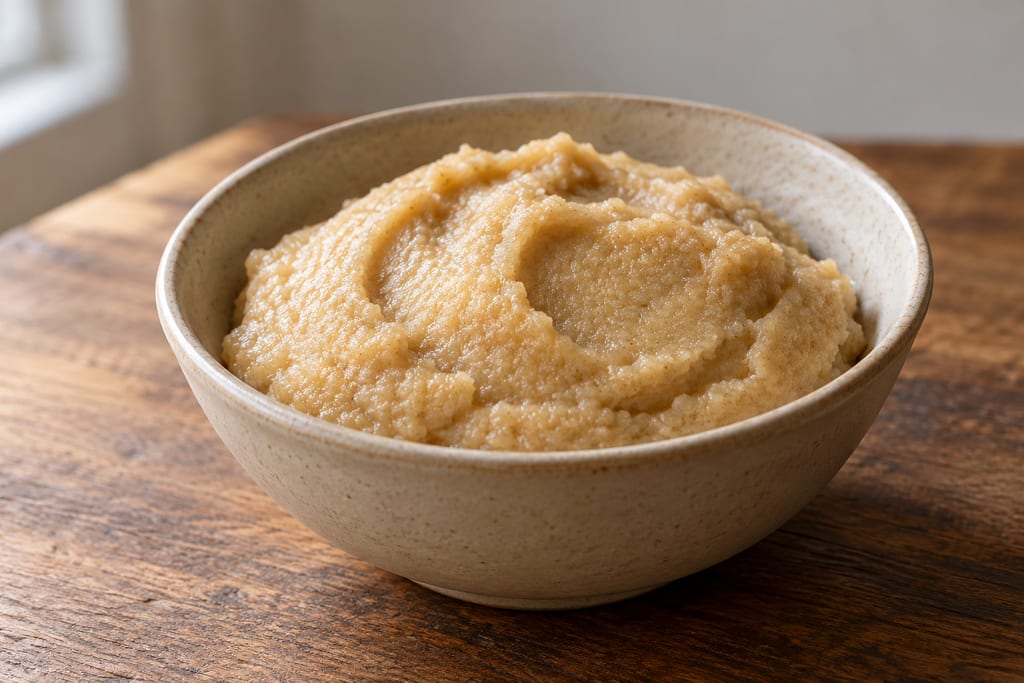














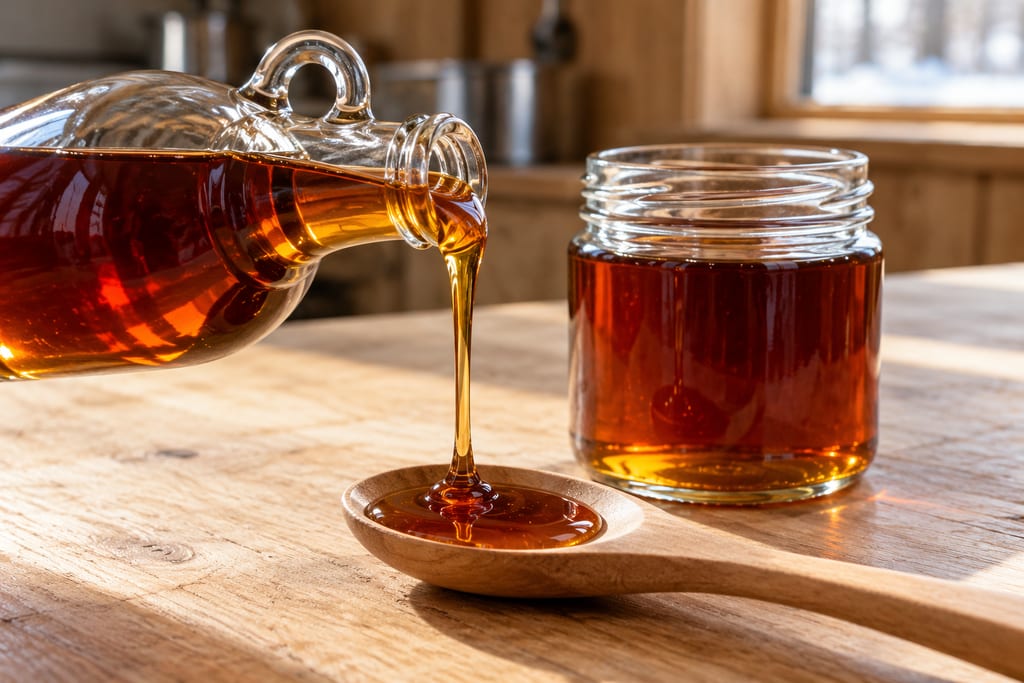
Maple syrup (batch method)
Maple sap of about two percent sugar boiled down in a shallow pan until it reaches syrup density, the sugar concentration the standard defines, then filtered hot and packed hot.
 FermenteaWhere food goes to change
1504 records with their sources, across 11 categories.
 Fermented, enzyme-ripened and mixed seasonings286
 Fruit preserves10
 Adjacent and excluded7
 Legume, seed and plant-protein ferments6
 Acid and oil pickles3
 Dairy ferments2
 Garum and fish sauces2
 Smoked salted and dried foods2
 Cheese1
 Not yet classified1
 Vegetable lactic1
Maple sap of about two percent sugar boiled down in a shallow pan until it reaches syrup density, the sugar concentration the standard defines, then filtered hot and packed hot.
Zacusca is a Romanian and Moldovan spread of roasted eggplant and sweet peppers cooked down with onion, tomato and oil, made in quantity in autumn and kept in jars for winter.
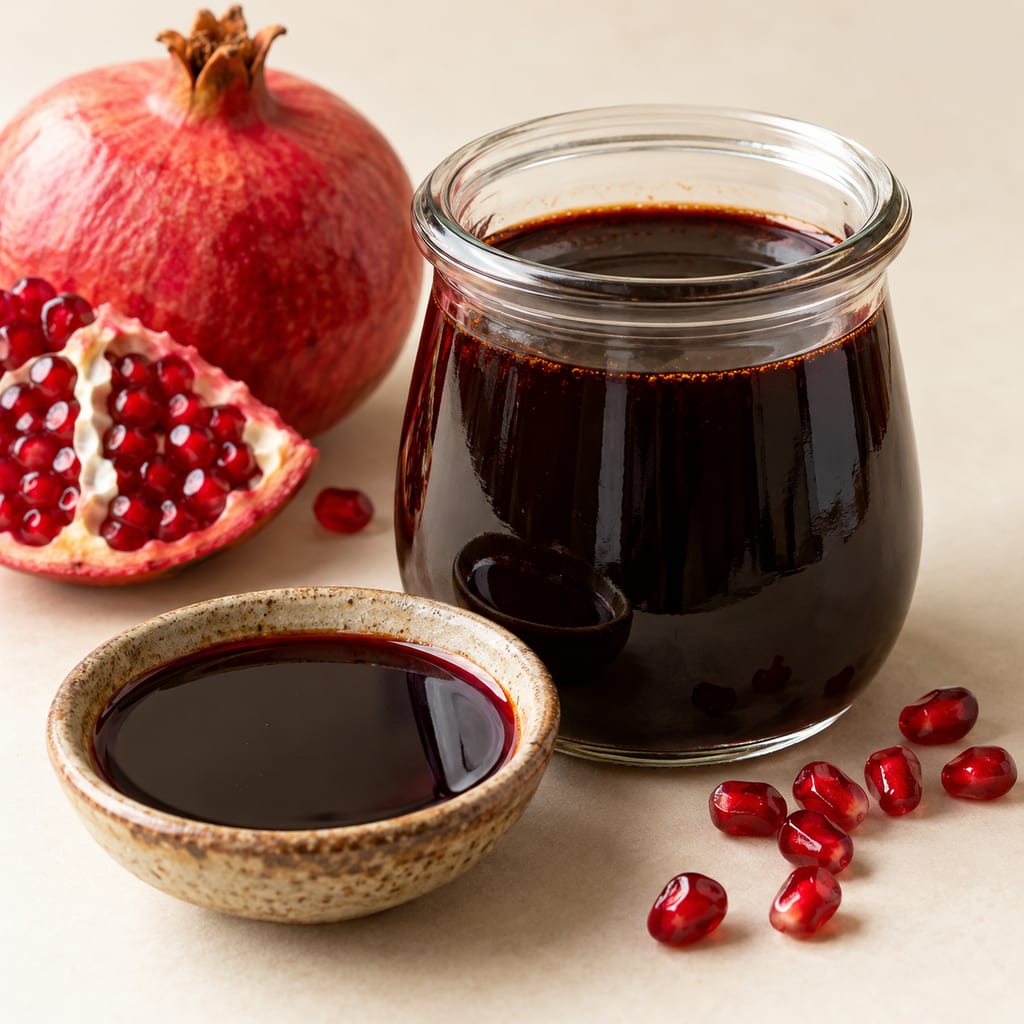
A thick, sour condiment made by reducing pomegranate juice over heat until it is concentrated, used across the Middle East, the South Caucasus and the Balkans in dressings, stews and grilled dishes.
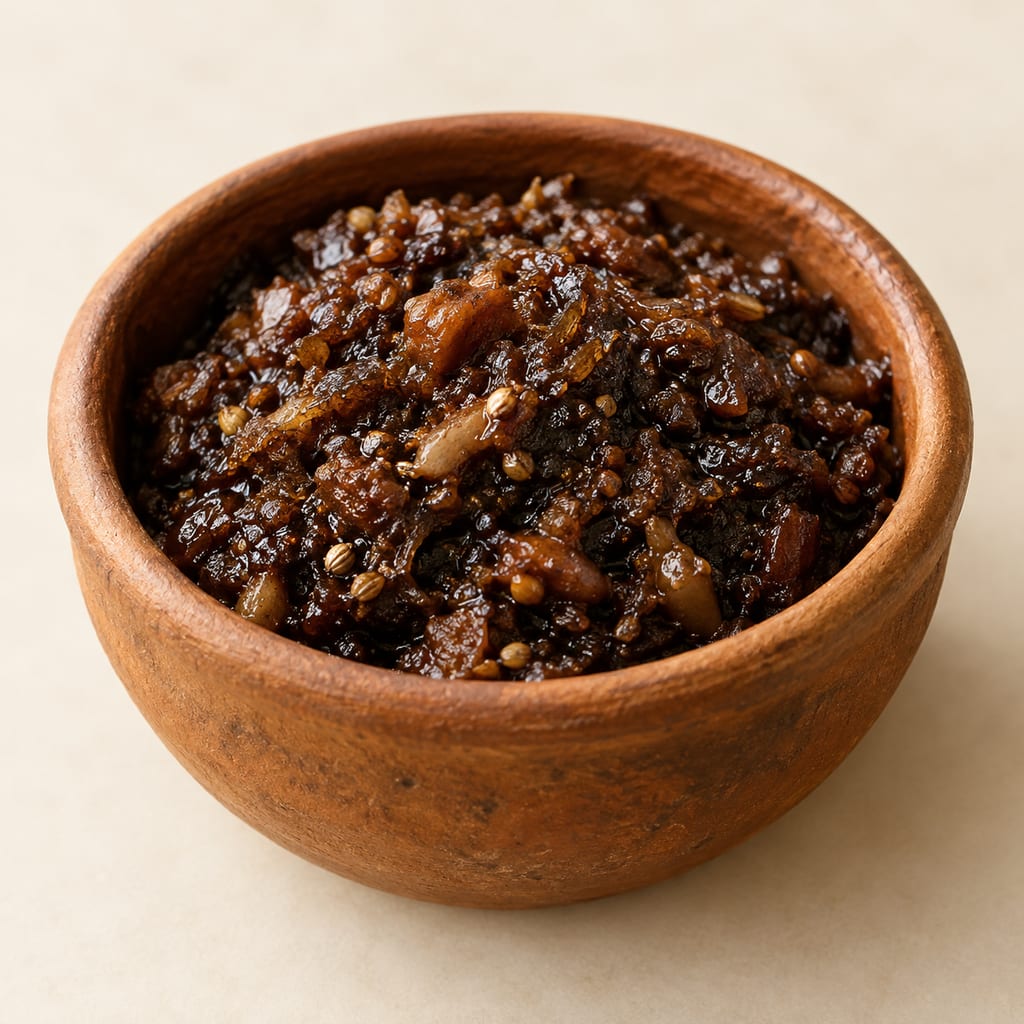
Must murri was a medieval Andalusi and North African seasoning of baked wheat dough, grape must and aromatics, cooked slowly in an oven.
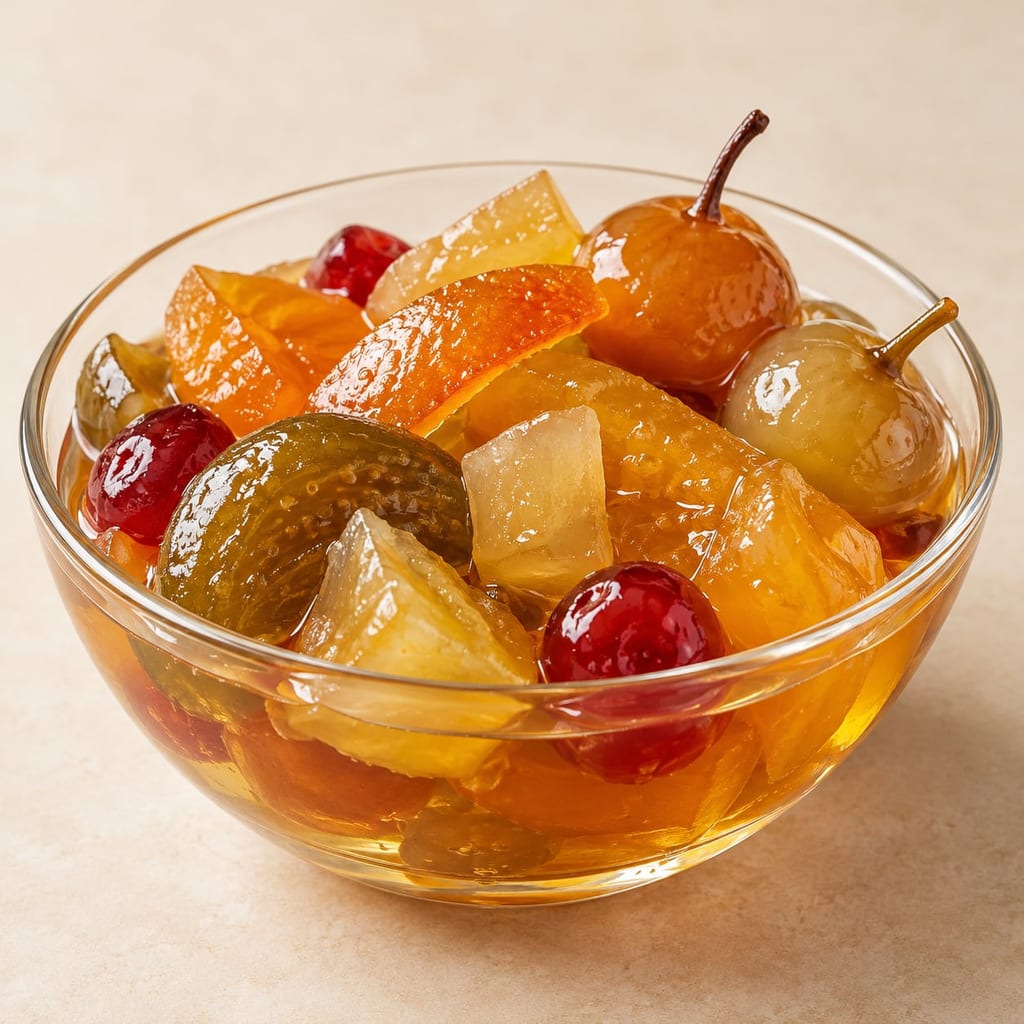
A northern Italian condiment of candied fruit in syrup, flavoured with mustard. Its earliest documented link to Cremona is an 1604 printed recipe, which dates the record, not the invention.
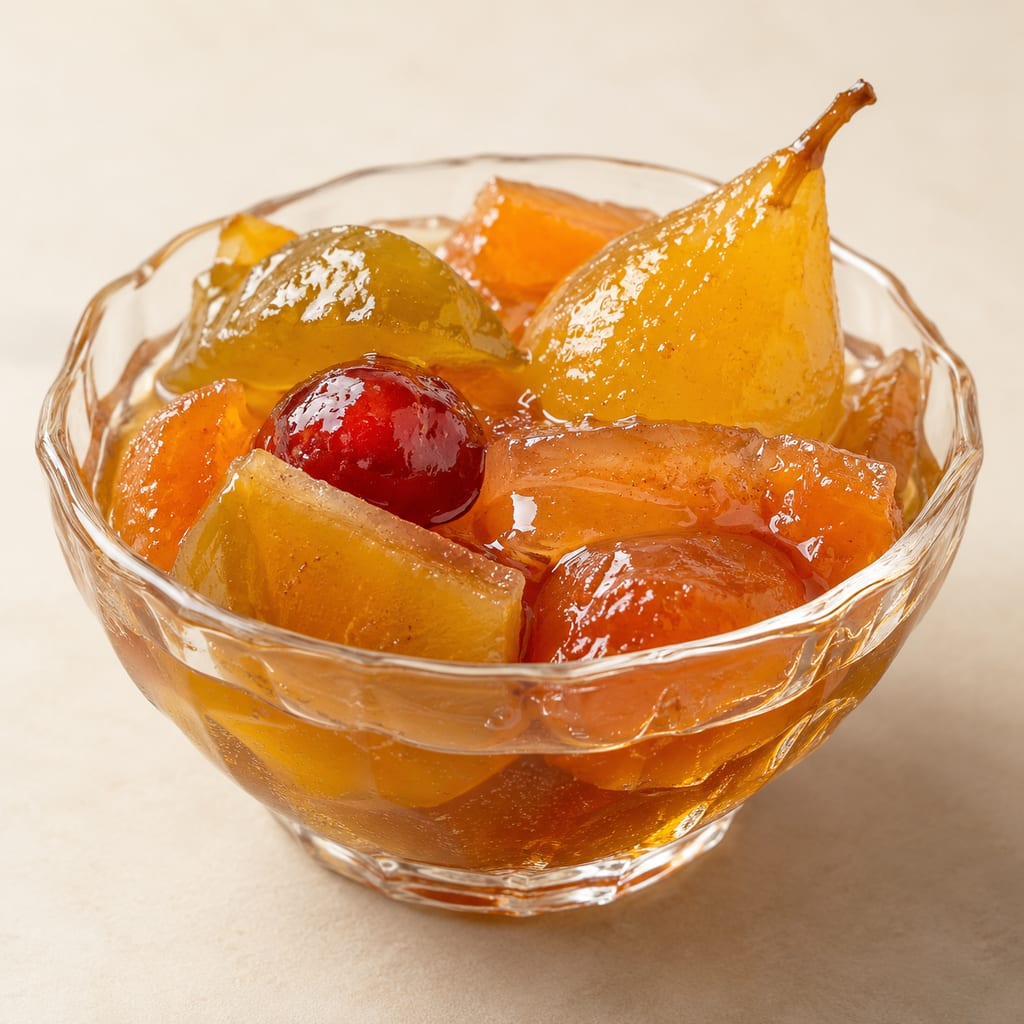
Mostarda is a northern Italian condiment of candied fruit in a mustard-flavoured syrup, served with boiled meats and cheeses.
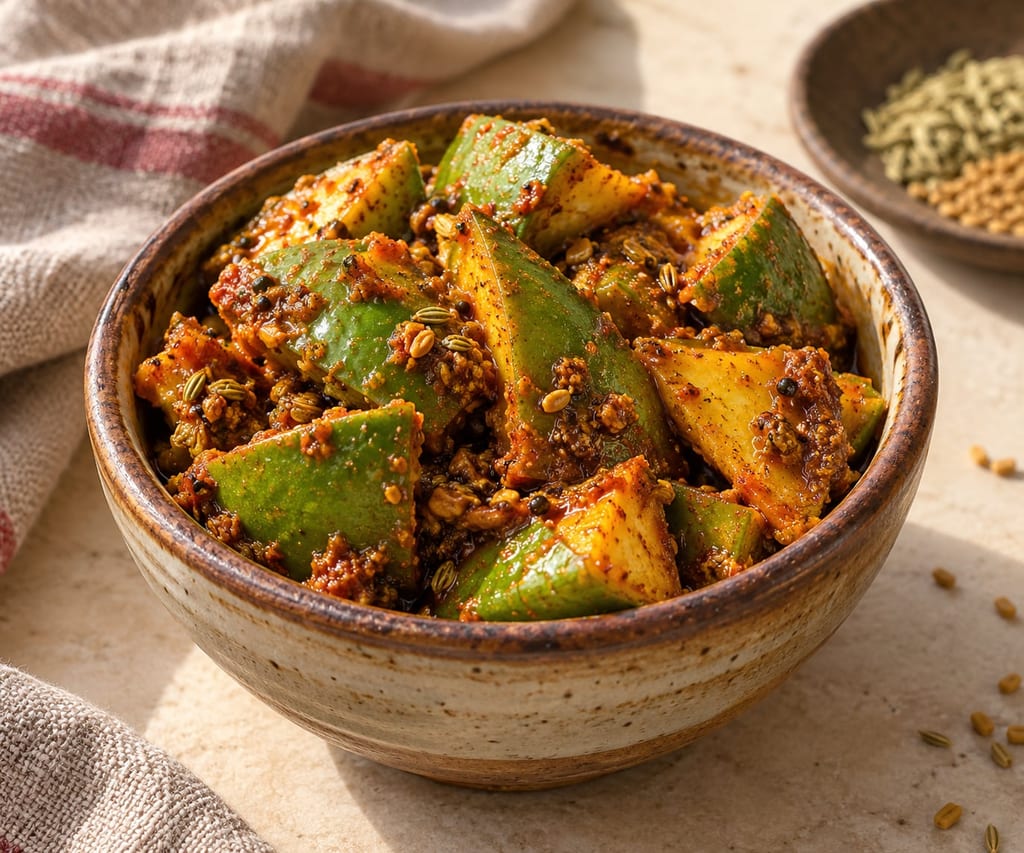
This Pakistani pickle coats firm green mango with chilli, turmeric, fenugreek, fennel and mustard oil. Its published sun-exposure schedule records a household method, but does not validate shelf-stable storage.

Adrak murabba preserves young ginger in sugar syrup, a sweet South Asian preparation recorded in Indian cookery and food-processing sources.
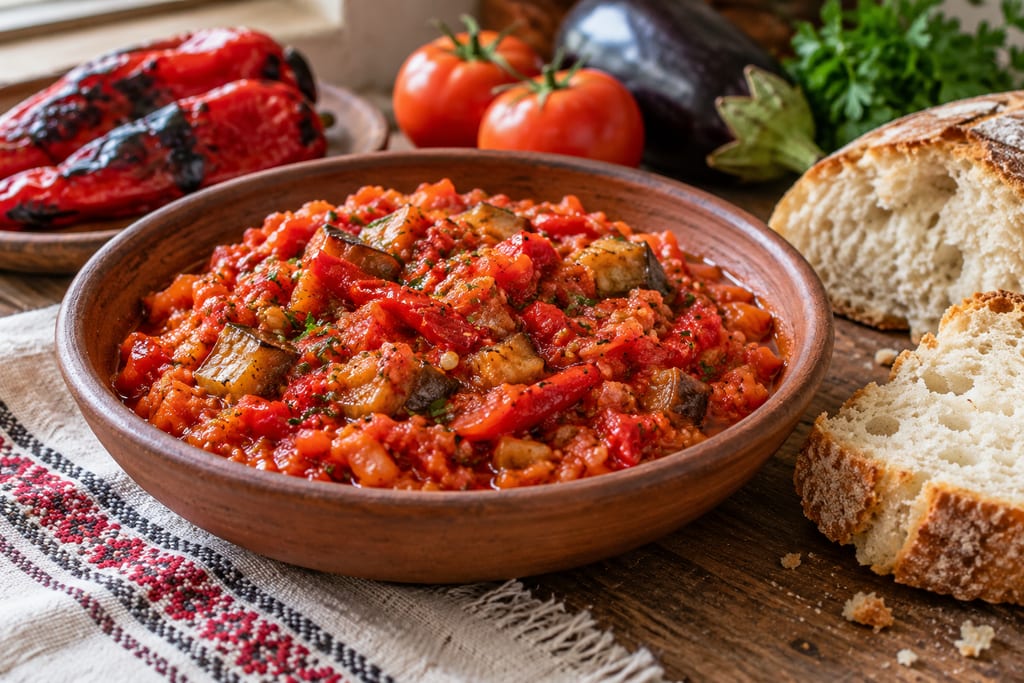
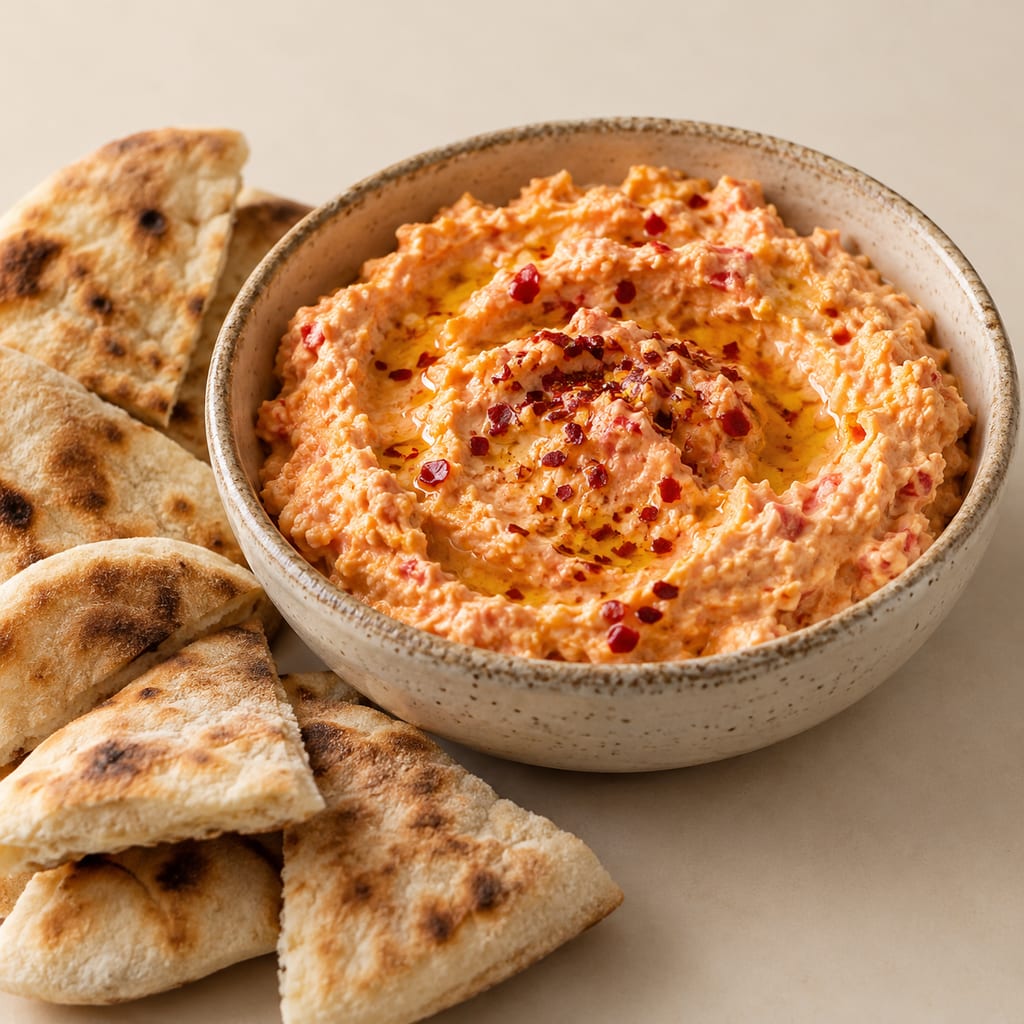
A Balkan relish of roasted red peppers and tomatoes, often with aubergine and garlic, cooked down into a spread for the winter store.
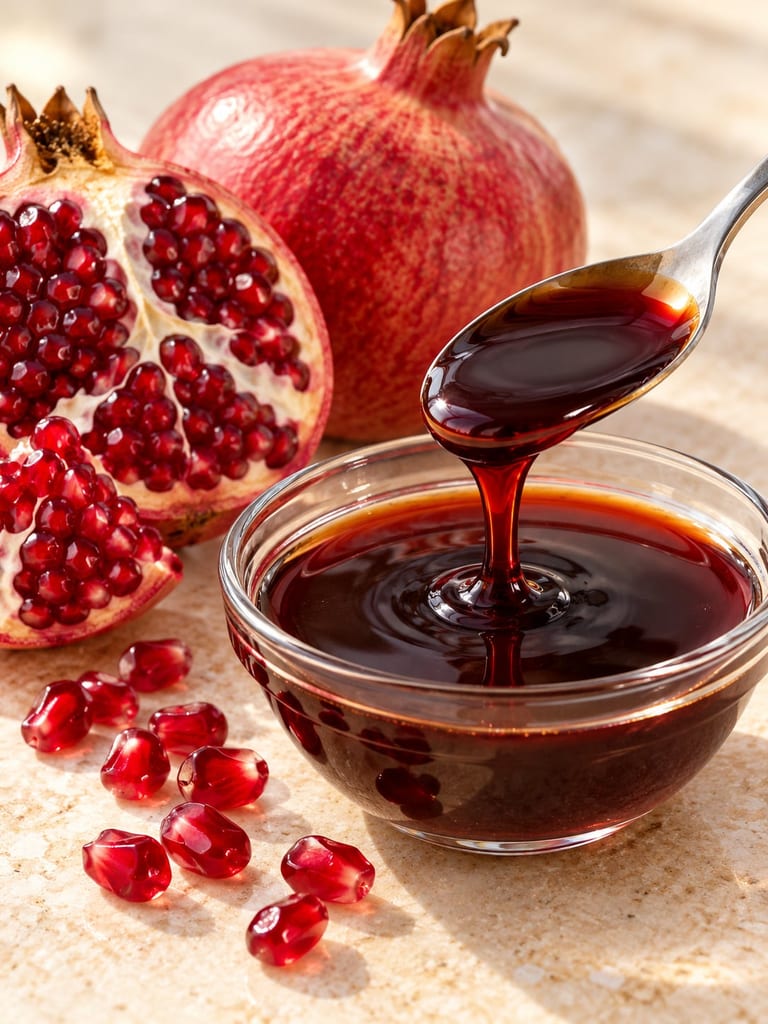
The registered Hatay method presses pomegranate arils and slowly concentrates the strained juice. Its 100 kg source batch and experienced-producer endpoint are retained; no home-scale time or shelf-life is inferred.