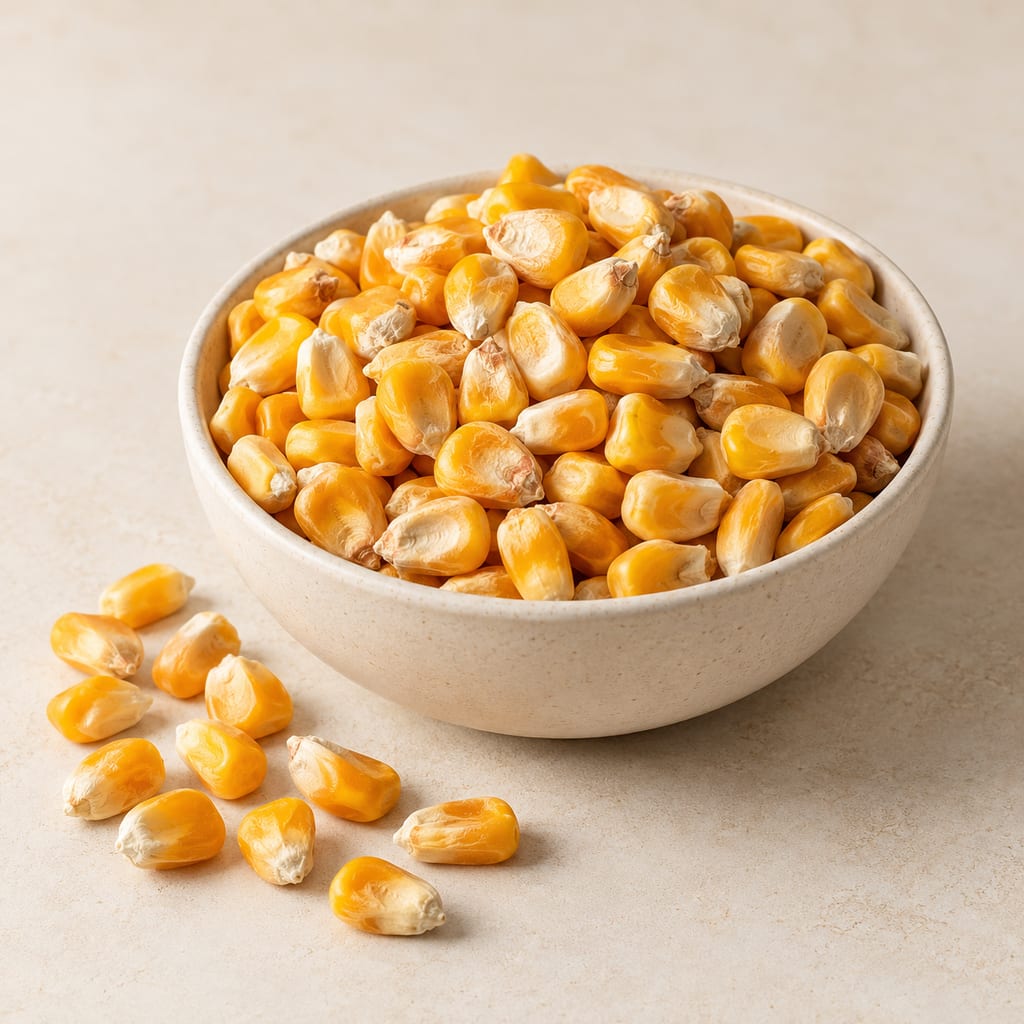
Maize
Maize is the foundational grain of Andean fermentation. Its role in brewing chicha de jora depends on germination into jora, a malted form generating enzymes and sugars necessary for alcoholic fermentation.
 FermenteaWhere food goes to change
Traditional method
Fuba fermentada · Fermented maize fuba
Fermented fuba is an Umbundu maize-flour preparation made by lactic fermentation of dehulled, degermed kernels before milling, sun-drying and sieving.
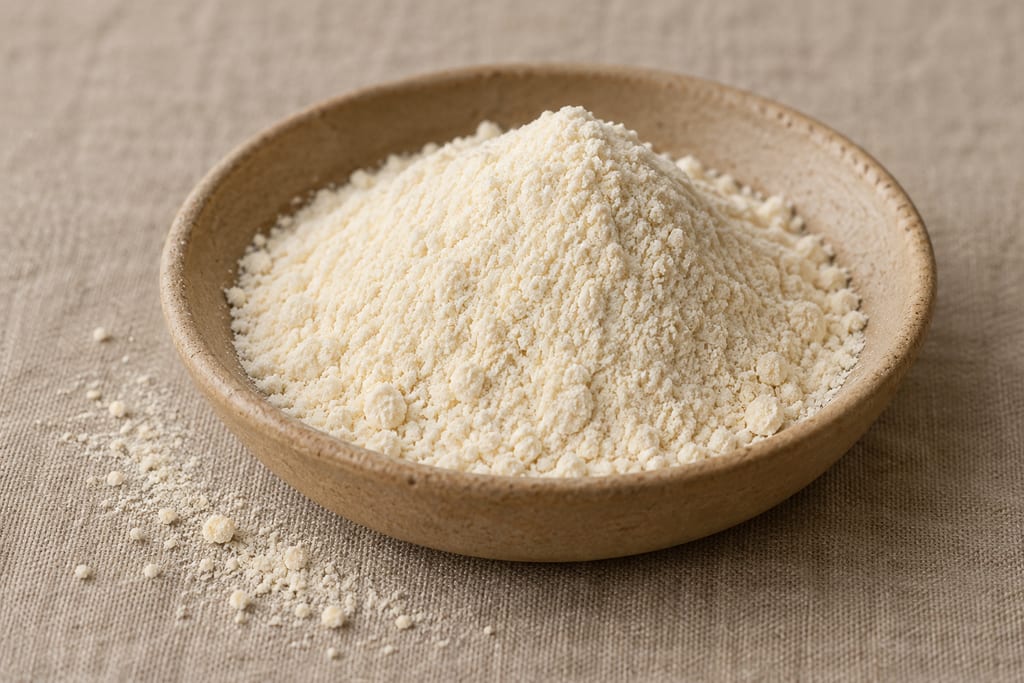
This record follows a specific Umbundu maize-flour preparation in which kernels ferment before they are milled and dried. Fuba is a broad name for flour; the source does not imply that all fuba is fermented.
A 2025 article reviewing Umbundu foods summarizes the process studied in 1971. It reports dehusked and degermed maize, lactic fermentation in water, milling, sun-drying and sieving. The account supports a historical process outline, not a validated modern batch formula.
The kernels are immersed in water in a clay pot for 18–24 hours at ambient temperature, then milled, sun-dried and sieved. No water-to-maize ratio, batch size, measured fermentation temperature, milling specification or drying endpoint is reported.
The 1970 project and 1971 study dates describe the research record rather than the origin of fuba. The source associates the preparation with traditional Umbundu foods in Angola but gives no narrower production locality.
The source does not validate a household fermentation endpoint, drying criterion or storage life. The reported duration should not be treated as proof that another batch is safe.
Maize grain can carry mycotoxin hazards before or during storage. Codex guidance addresses cereal handling and storage risk reduction; it does not establish that fermentation or sun-drying detoxifies contaminated grain or validates this process.
The 2025 article reports that the maize-fuba technology study concluded in 1971 as part of a project on traditional Umbundu foods begun in 1970. Those dates describe the research, not the origin of the preparation.
Scaling: source batch only
This process uses maize; cereal contamination can originate before harvest or during storage. The cited historical account does not assess grain quality or test fuba for toxins.
Hazard sourceThe source gives an 18–24-hour ambient fermentation and sun-drying sequence but no pathogen-control validation, measured endpoint, drying criterion or storage limit.
Hazard sourceUse sound, properly handled cereal and potable water. The Codex cereal code discusses good agricultural, storage and handling practices for mycotoxin risk; it does not validate this fermentation or make contaminated grain safe.
Control sourceNo source-backed household fermentation endpoint, drying target or safe storage condition was established. Do not infer safety from sourness, elapsed time, appearance or a home measurement.
Control sourceThe 18–24-hour interval is a historical process description, not a validated household safety limit.
The source does not establish a drying endpoint or storage life for the flour.
A 2025 account of Umbundu traditional foods summarizes a 1971 study of maize fuba technology. It supports an Umbundu association in Angola but does not identify a narrower production locality or birthplace.
Maize is the foundational grain of Andean fermentation. Its role in brewing chicha de jora depends on germination into jora, a malted form generating enzymes and sugars necessary for alcoholic fermentation.
From sour breads and milk to savoury seeds, cassava staples and living beers, African fermentation follows the crop, the community and the work of transformation.
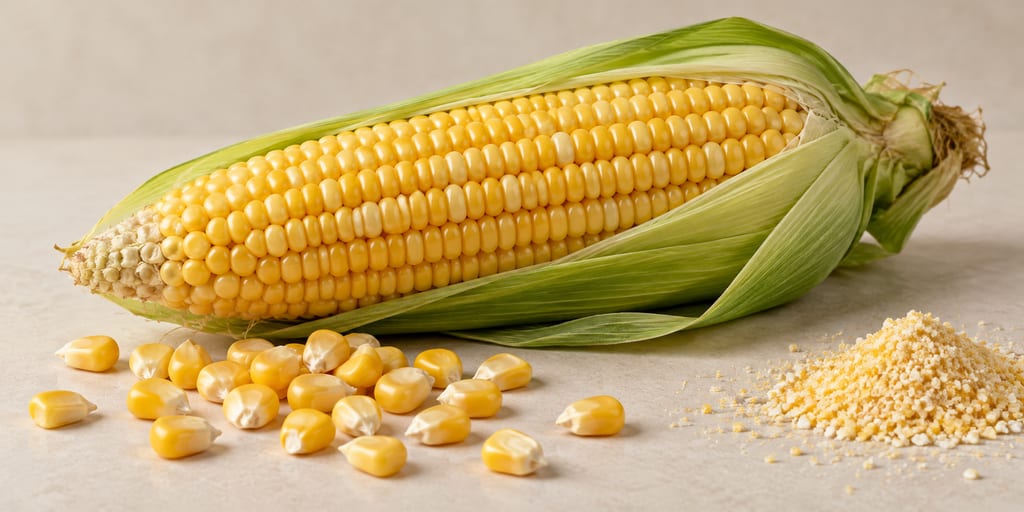
Quimbombo is a maize beer made in an Umbundu tradition in Angola. The documented Huambo method stages malt saccharification, lactic souring, a second boil and yeast fermentation.
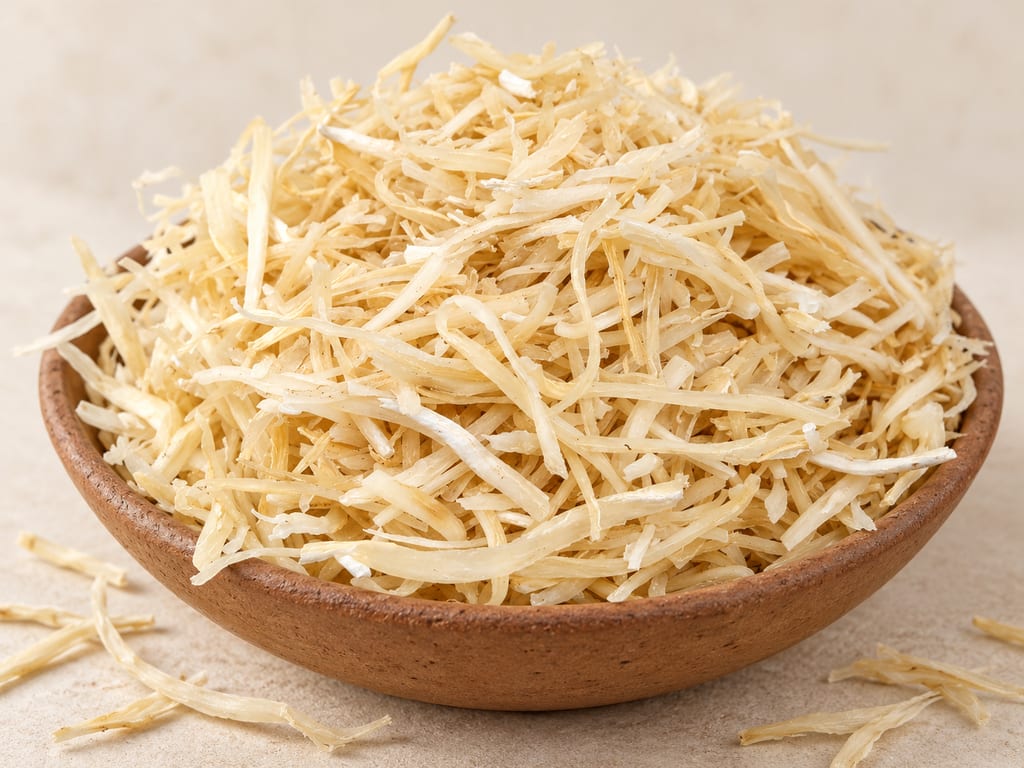
Abacha is a fermented cassava-strip preparation from southeastern Nigeria, sold wet or dried and later rehydrated for meals such as African salad.
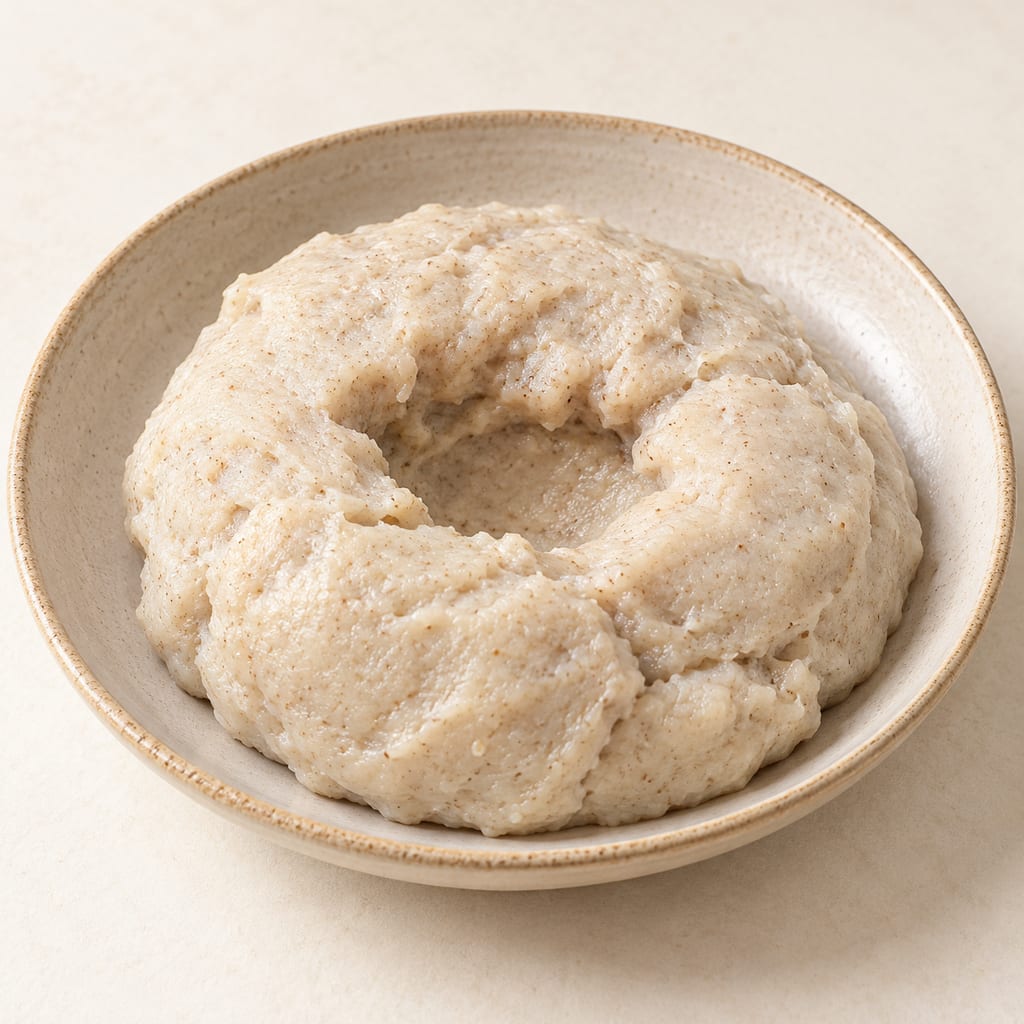
Aceda is Sudan’s firm cereal porridge, commonly made from sorghum and shaped into a smooth mound. Some versions use fermented dough; fermentation is not universal.
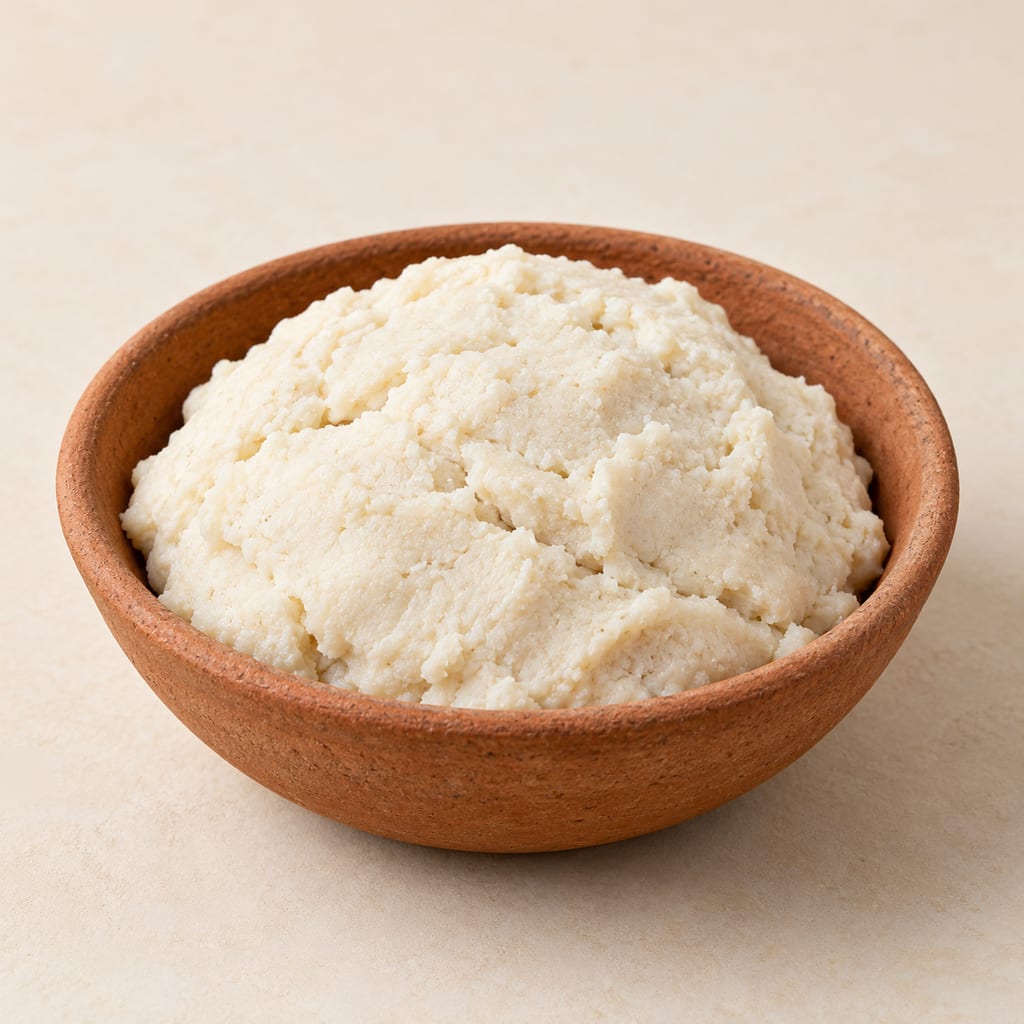
Ghanaian sour cassava dough fermented with traditional inoculum and drained during fermentation. It is used as a base for cooked foods such as banku and akple; process variants and safety outcomes differ.

Appam, or hoppers, are South Indian and Sri Lankan rice pancakes made from a fermented coconut-and-rice batter and cooked in a curved pan to a crisp lacy rim and a soft, spongy centre.
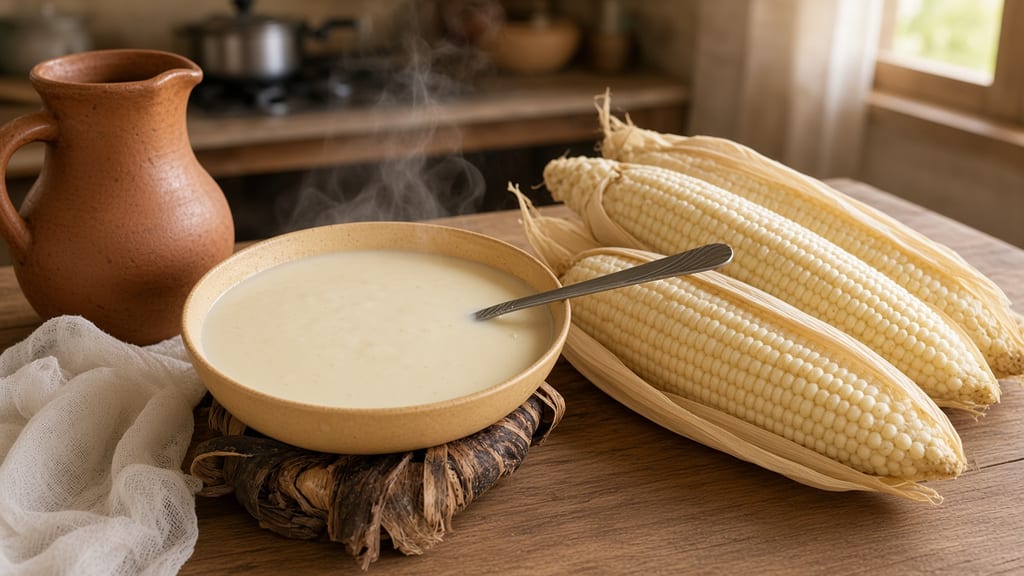
A hot, sour maize drink from Tabasco made from maize that is not lime-cooked. The ground grain sours for half a day, then makers strain it and boil it until thick.
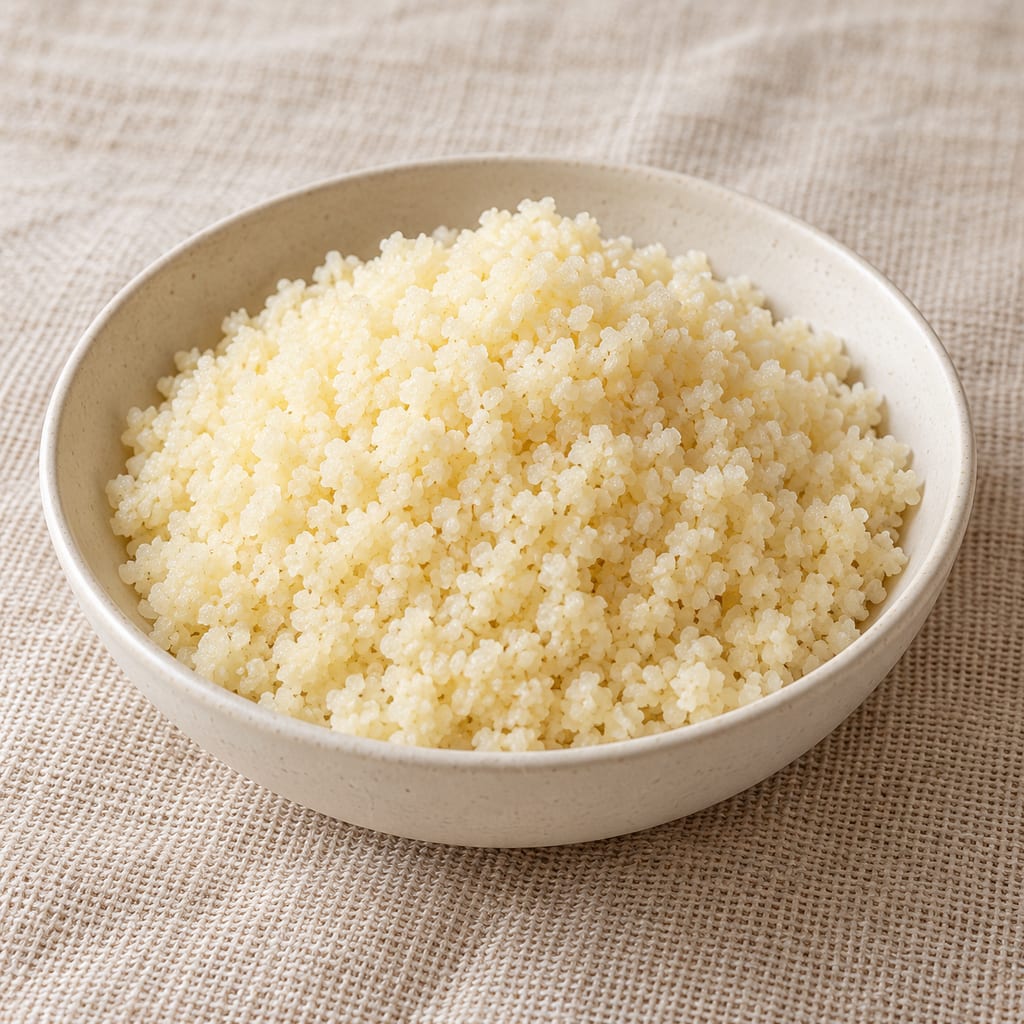
Ivorian cassava semolina: grated cassava is fermented overnight with a traditional inoculum, pressed, sieved into granules, dried and steamed. Documented in a 2006 field study; no sole original process is established.
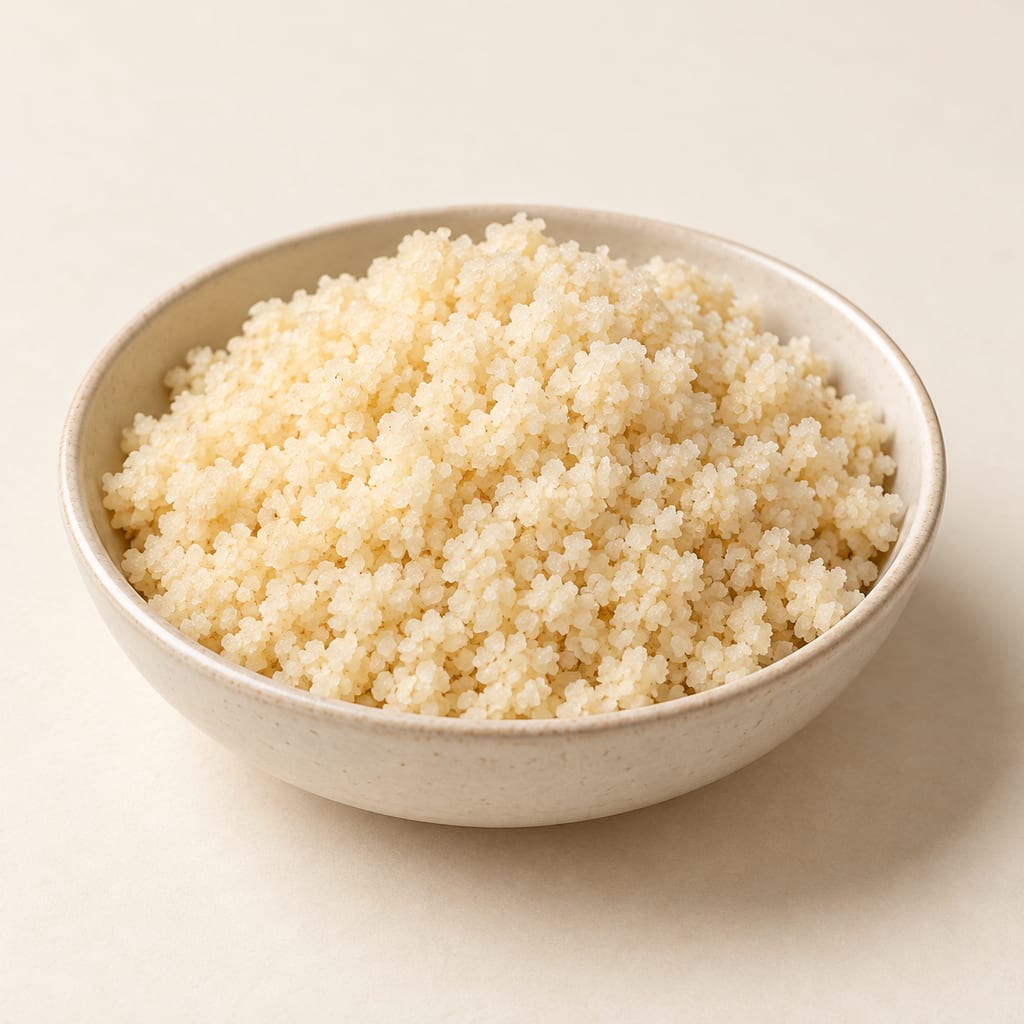
Attiéké is an Ivorian staple of grated cassava fermented with a traditional inoculum, then pressed, sieved, granulated, dried and steamed into fine couscous-like grains.

Crushed or milled barley cooked in water until the starch softens and the mixture thickens, the plainest way a northern household turned stored grain into a meal, here with apple and hazelnut.
No community contributions have been published for this entry yet.
Sign in to contribute. Published comments and photos are free to read.
RAC: Revista Angolana de Ciências; Associação Multidisciplinar de Investigação Científica and Universidade Rainha Njinga a MbandeMethod · Geography · History
Bebidas do povo Umbundo (Angola): Quissângua e QuimbomboThe introduction says a study of traditional maize-fuba technology concluded in 1971 as part of the 1970 IIA project on traditional Umbundu foods.
Describes maize dehusked and degermed, immersed in a clay pot where lactic fermentation occurs for 18–24 hours at ambient temperature, then milled, sun-dried and sieved.
Does not state grain or water quantities, measured ambient temperature, fermentation endpoint, drying criterion or validated storage/safety controls.
Cited in: Fermented maize flour, not every kind of fuba; The documented sequence and its limits; Safety evidence remains incomplete
Codex Alimentarius Commission, FAO and WHOSafety
Code of Practice for the Prevention and Reduction of Mycotoxin Contamination in Cereals (CXC 51-2003)Covers mycotoxin risks in cereal grains and risk-reduction practices before and after harvest and during handling/storage.
Does not validate fermented fuba or establish a household fermentation or drying endpoint.
Cited in: Safety evidence remains incomplete