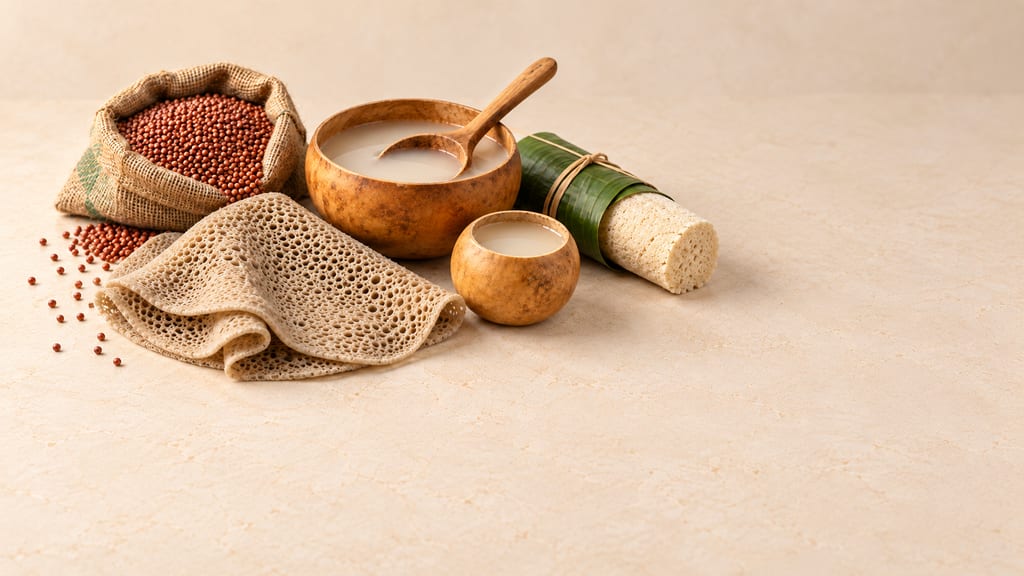
African fermented foods, drinks and preservation
From sour breads and milk to savoury seeds, cassava staples and living beers, African fermentation follows the crop, the community and the work of transformation.
 FermenteaWhere food goes to change
Traditional method
Bili-bili · mbalwelli (Fufuldé) · ïmadédigui (Tupuri) · mbasla (Giziga) · nyimiyan (Moundang) · zoum (Mafa) · mahai (Mufu)
An alcoholic, opaque and bitter sorghum beer from Maroua, northern Cameroon, made from malted sorghum and fermented with a chai starter.
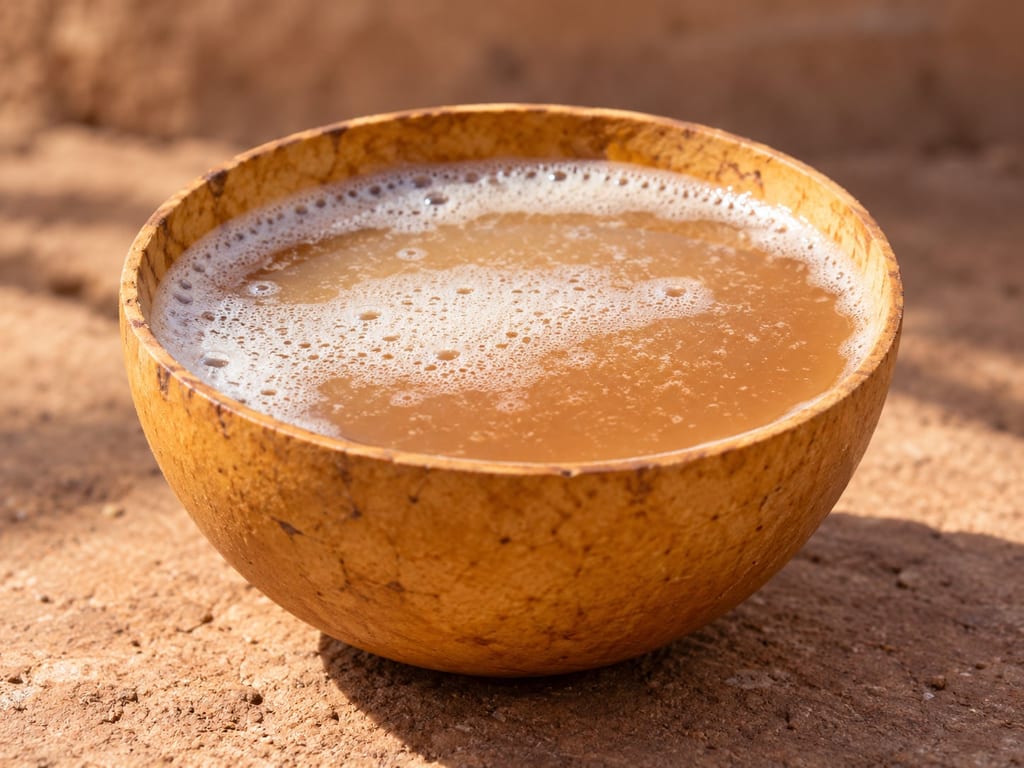
Bili-bili, also written bil-bil, is a traditional opaque sorghum beer produced and consumed in northern Cameroon and neighbouring areas of Chad.
It is made using malted sorghum and a multi-stage process involving soaking, germination, milling, cooking, cooling and fermentation.
A characteristic Maroua style has a bitter flavour.
Other versions can be sweeter or more acidic depending on processing and fermentation.
Bili-bili is produced commercially on a small scale by traditional brewers, particularly women, and is widely consumed in the region.
The beverage differs from industrial lager in its grain processing, microbial culture, filtration and storage.
Name — Community or context
Bili-bili / Bil-bil — Common northern Cameroon name
Mbalwelli — Fulfulde
Ïmadédigui — Tupuri
Mbasla — Giziga
Nyimiyan — Moundang
Zoum — Mafa
Mahai — Mofu, as recorded in the source
Djigari — Related cereal-beer terminology
Sorghum — Sorghum bicolor
The traditional names are preserved as transcribed in the research. Their spellings should not be normalized into invented indigenous scripts.
Sorghum is an important crop across the Sahel and northern Cameroon.
Its ability to grow in relatively dry conditions makes it a major food grain.
Traditional sorghum brewing provides another use for the harvest.
Beer production also contributes to household income and local trade.
A 2023 survey documented preparation and sale in different neighbourhoods of Maroua.
The research treated bitter bili-bili as the prevalent style among the sampled producers.
That does not establish Maroua as its place of invention.
Related sorghum beers are produced throughout West and Central Africa, including beverages called dolo, pito, burukutu and tchapalo.
They share broad technological features, but should not all be classified as identical recipes.
Ingredient — Documented quantity
Sorghum grain — Total batch quantity not specified
Water — 6 L per kg sorghum
Traditional chai starter — Quantity not specified
The process uses malted sorghum.
The source does not define a full household batch, starter dose or measured final yield.
Therefore, the water ratio alone is insufficient to reconstruct a reliable recipe.
Sorghum grain contains starch.
Yeast cannot directly ferment ordinary intact starch into ethanol.
Germination activates enzymes that can break down storage carbohydrates.
Malting takes advantage of this natural process.
The grain is soaked, germinated and dried.
Drying limits further sprout development and prepares the malt for storage or milling.
If the grain is dried too aggressively, enzyme activity may be reduced.
The traditional process therefore relies on both the successful development of the sprout and suitable handling afterward.
Soak the grain in water.
The research describes soaking at room temperature but does not establish one complete numeric schedule for every producer.
Allow the soaked grain to sprout.
The exact duration varies with local conditions.
Dry the germinated grain in the sun.
Producer reports include 7–48 hours of drying, depending on weather, sunlight and wind.
This large variation is important. A fixed drying time cannot be imposed without accounting for the moisture of the grain and local conditions.
Grind the dried malted sorghum into flour.
Combine the malted flour with water at 6 L per kilogram of sorghum.
Leave the mixture for three to four hours.
The solids settle, producing a denser lower portion and a more liquid upper portion.
Decant and reserve the supernatant.
Retain the flour-rich sediment.
Cook the thick lower fraction for three to four hours, until the characteristic red colour develops.
The source does not specify a numerical cooking temperature.
Add the reserved liquid back to the cooked sediment.
Allow cooling for approximately 11 hours at room temperature.
Carry out the subsequent cooking stage described by the traditional process.
The survey establishes that further cooking occurs, but the extracted record does not supply a complete unambiguous temperature-and-time schedule for this stage.
Allow a further five to six hours of cooling.
Add the local chai starter.
The starter amount and detailed microbial composition are not specified.
Ferment for nine to ten hours.
The source gives no universal fermentation temperature or guaranteed final alcohol concentration.
The finished beer is opaque and may retain cereal-derived body.
Its bitter character distinguishes the named Maroua style.
The brewing stages perform distinct functions.
Malting generates enzyme activity.
Settling separates fractions with different starch concentrations.
Precooking gelatinizes starch and changes colour and flavour.
Recombining the liquid and solid fractions creates the wort.
Fermentation then converts available sugars into acids, ethanol, carbon dioxide and other metabolites.
Traditional sorghum beers commonly contain lactic acid bacteria and yeasts.
Their populations can vary considerably between producers.
The chai culture is a local fermentation inoculum, but the source does not establish a standardized commercial strain composition.
It cannot safely be replaced with an arbitrary microbial culture merely because both produce alcohol.
The 2023 survey found the following mean values in sampled bili-bili:
Measurement — Reported mean
pH — 2.99
Titratable acidity — 1.1%
Alcohol — 3.8%
Soluble solids — 6.94 °Brix
Dry matter — 6.4%
These are measured observations from sampled products, not mandatory targets for the recipe.
A batch cannot be assumed to reach 3.8% ABV or pH 2.99 solely because it fermented for ten hours.
Bili-bili can be sweet, sour, bitter or highly bitter.
Longer fermentation can change acidity and residual sweetness.
Differences in grain variety, malting and cooking also influence colour and flavour.
The bitter variety is the main subject of this entry.
Related beers in neighbouring Chad and across the Sahel belong to a wider cereal-beer tradition, but their local names and processing sequences should remain distinct.
Bili-bili is consumed socially and sold by local brewers.
Its opaque appearance is characteristic.
It is generally drunk fresh.
The beverage can be substantial because of remaining cereal-derived compounds.
It is alcoholic, even where marketed informally as a traditional drink.
Insufficient germination may reduce useful malt-enzyme activity.
Scorching during the thick-mash cooking stage can damage flavour.
Poor sanitation or contaminated cooling vessels can introduce undesirable microorganisms.
The Maroua survey identified microbiological concerns in sampled products and reported unsanitary production conditions.
A low pH in one analyzed sample does not prove that all samples were safe.
The process has no documented validated pathogen-reduction endpoint.
Protect the cooked wort during long cooling stages, sanitize equipment and avoid unsuitable fermentation containers.
No verified shelf life is established for this precise method.
A 2023 producer survey in Maroua records bitter bili-bili as the common standard style and lists several language-specific names. Related names and methods are reported across northern Cameroon and Chad; this entry does not assert a single origin.
Scaling: source batch only
A Maroua survey found microbial counts above its study thresholds in sampled bili-bili and described unsanitary production; those samples were not this batch.
Hazard sourceClean and sanitize brewing-contact equipment. This source method has no validated pathogen-reduction or finished-acidity endpoint, so sanitation alone does not validate it.
Control sourceThis is an alcoholic, spontaneously variable regional beer inoculated with an unquantified chai culture; alcohol content cannot be predicted from the listed times.
A Maroua study found microbial concerns in sampled products. It does not establish a validated household control schedule or storage duration for this method.
Keep equipment clean and protect cooked wort during cooling; elapsed time, aroma, foam and taste do not prove safety.
A producer survey recorded bili-bili production across Maroua neighborhoods; no birthplace is inferred.
The article records related practices in both countries and cautions that names and methods are not exclusive to Cameroon.
From sour breads and milk to savoury seeds, cassava staples and living beers, African fermentation follows the crop, the community and the work of transformation.

An alcoholic rice beer from Maroua, Cameroon, brewed from boiled rice flour with some malt and started with chai or bili-bili.

A deep amber-red American ale brewed from pale, Munich, CaraVienne and chocolate malts, bittered with Columbus hops and finished with Amarillo.

A source-specific modern extract adaptation of Düsseldorf Altbier, with specialty malts, two hop additions and an ale yeast. It is distinct from a brewery's commercial Altbier process and from Kölsch.
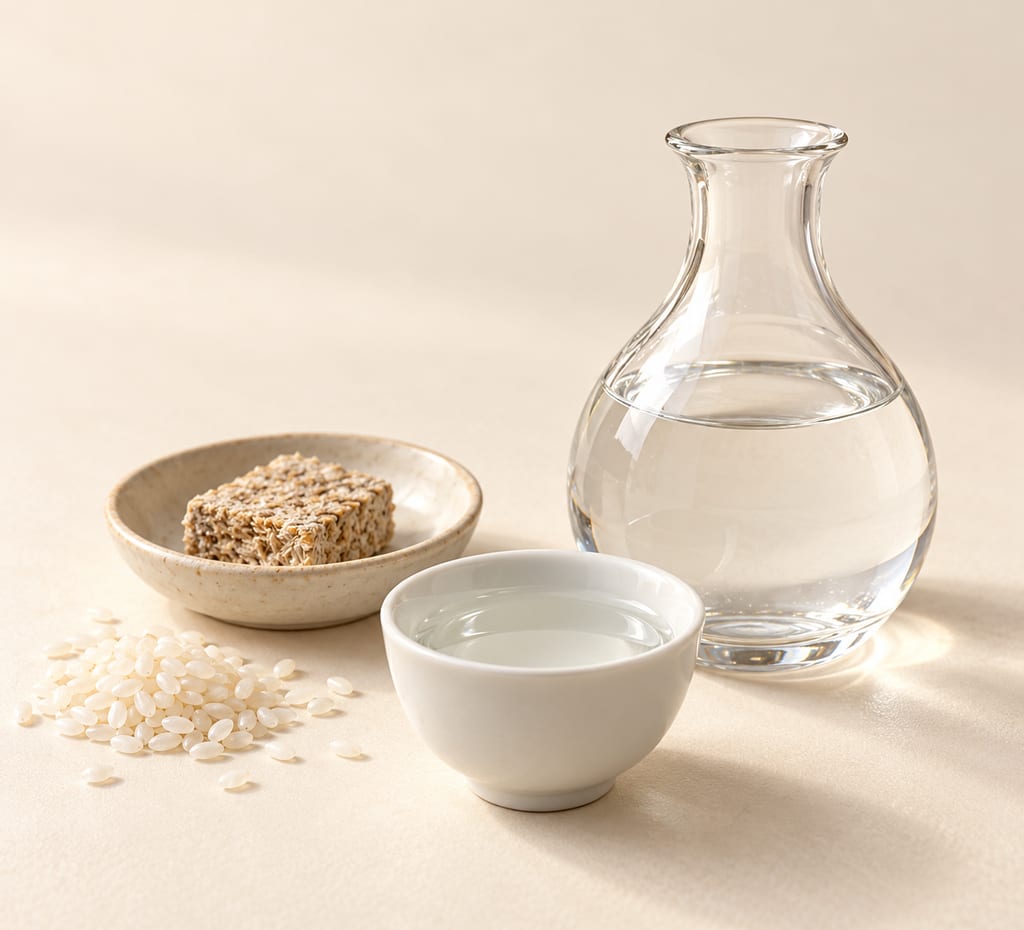
Andong soju is a rice spirit from North Gyeongsang, distilled from steamed rice and wheat nuruk. This method makes the starter before fermenting the rice mash in a jar.

Angami rice beer from Nagaland. A surveyed method mixed cooked rice with piazu, fermented it for about four days in summer or a week in winter, then added water and filtered it. The starter ratio leaves the rice-weight basis unclear.
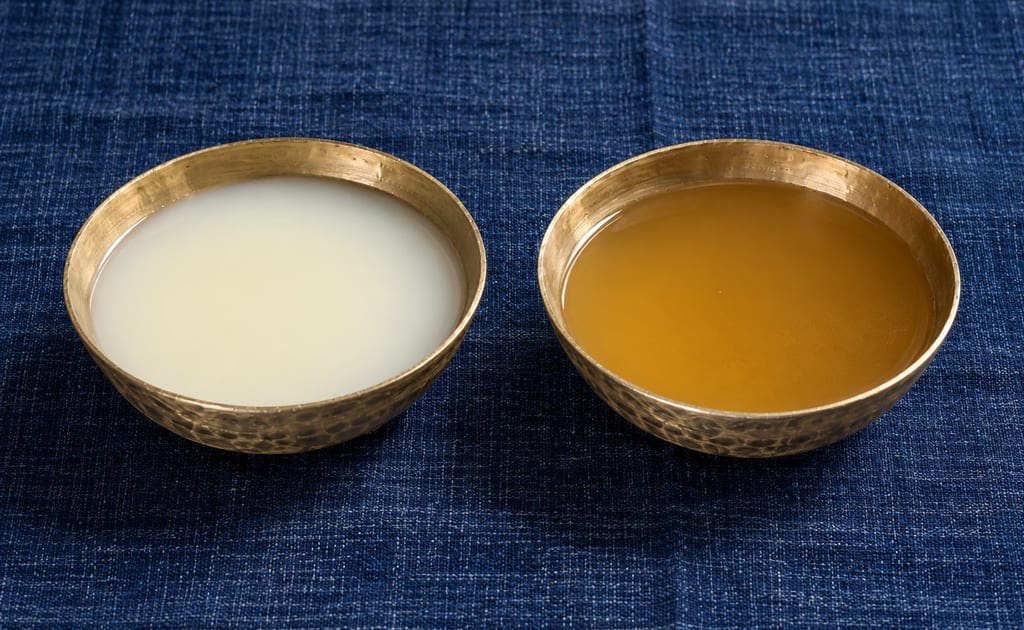
Apong names Mising rice beverages in Assam, including pale Nogin and ash-associated Po:ro. Sources describe distinct preparations and do not establish one unified household recipe or validated safety endpoint.
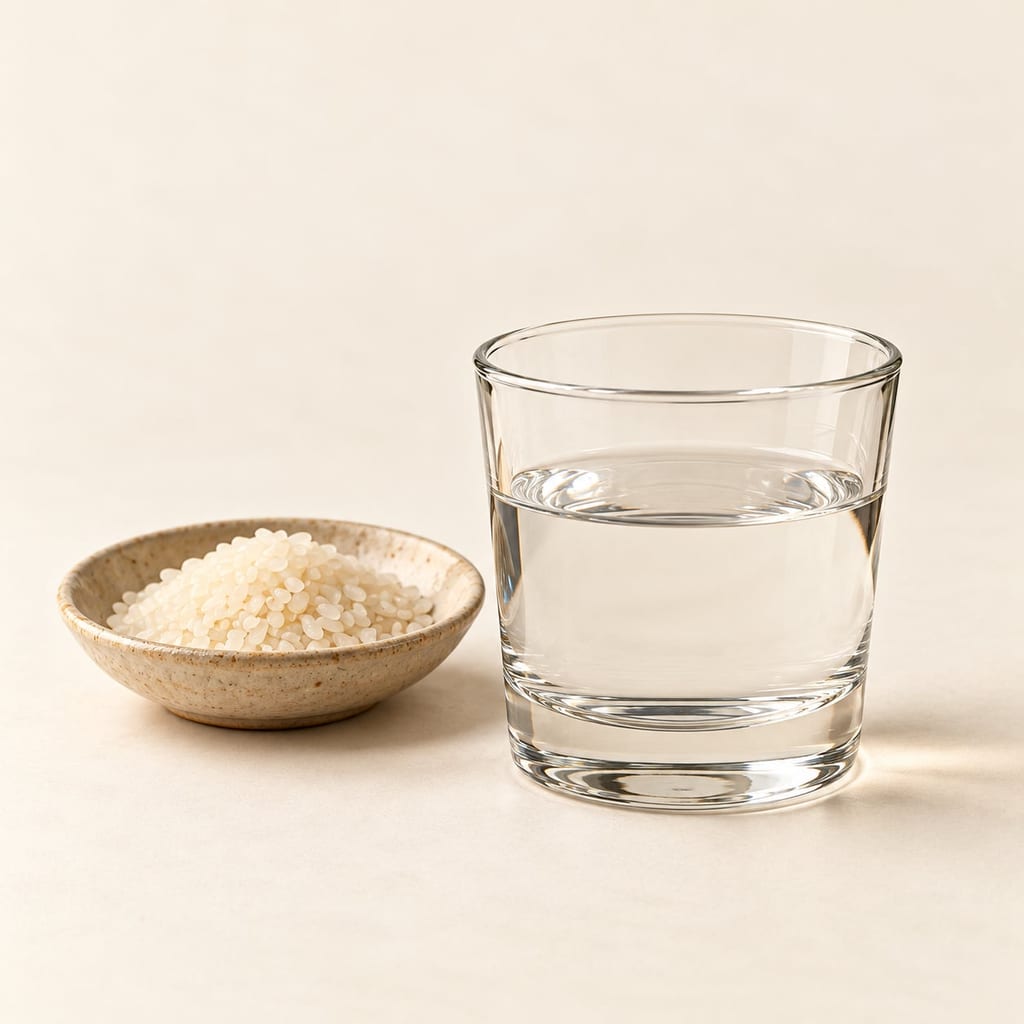
An Okinawan rice spirit made by turning all the rice into black koji, fermenting it with water and yeast, then pot-distilling and maturing the spirit.

This is a process overview, not a complete batch recipe: key quantities, yield and packaging directions are absent. The AHA tutorial uses Hop Hammer Imperial IPA as an example; this page is not that full formulation.
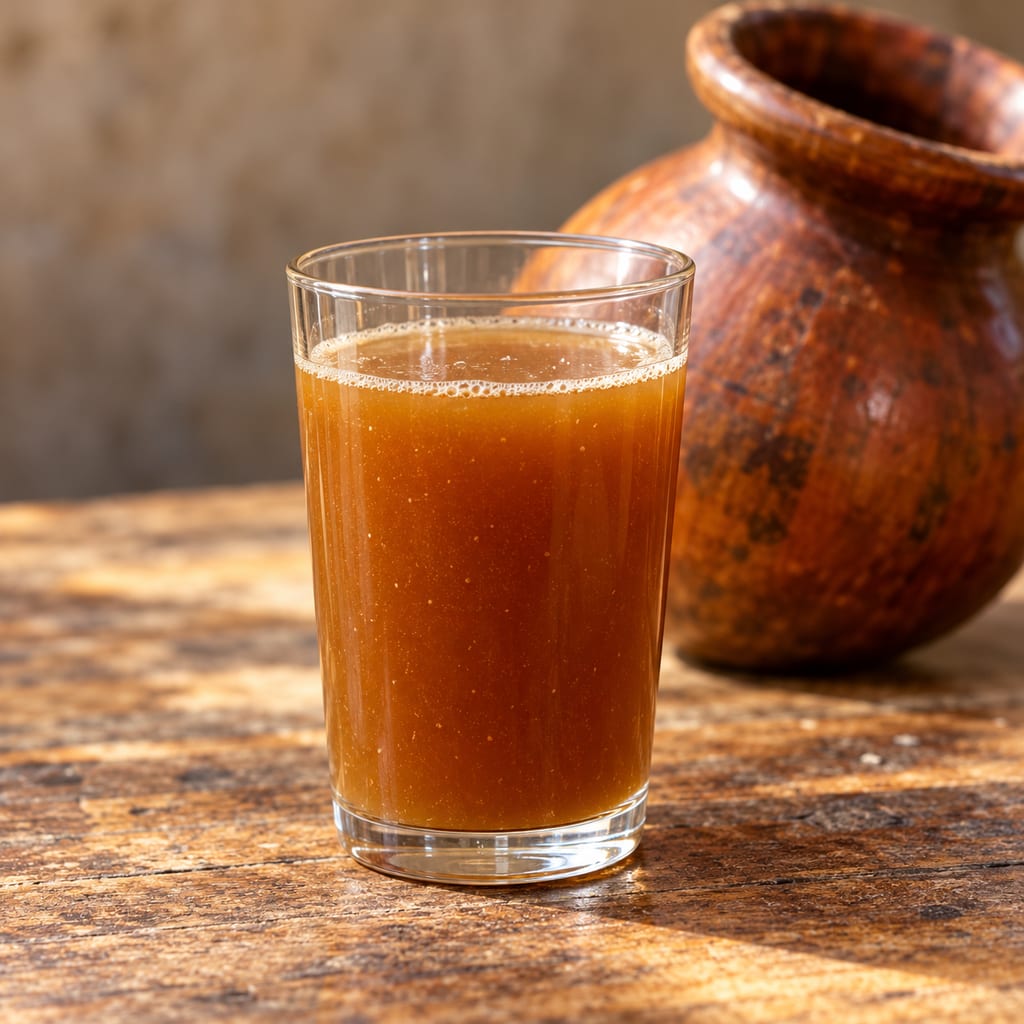
A darker Ethiopian maize tella, brewed from maize baked into a hot, dry kita pancake and then fermented in three stages with barley malt, gesho and water.
No community contributions have been published for this entry yet.
Sign in to contribute. Published comments and photos are free to read.
Journal of Food Quality / WileyInspiration · Process · History · Location · Safety
Production and Biochemical, Phytochemical, Sensory, and Microbiological Characterization of “Bili-Bili” and “Cochette,” Two Traditional Beers Produced from Sorghum and RiceMaroua survey records bitter bili-bili as the standard and lists language-specific names.
The study reports grain soaking and malting, 6 L/kg water, 3–4 h settling and pre-cooking, 11 h cooling, further cooking, 5–6 h cooling, chai inoculation and 9–10 h fermentation.
Surveyed products had microbial counts above study thresholds; this does not validate the recipe's safety.
Cited in: A bitter cereal beer of northern Cameroon; Names and local terminology; Historical and social background; Ingredients; Why sorghum must be malted; Stage 1 — Soak the sorghum; Stage 2 — Germinate; Stage 3 — Sun-dry; Stage 4 — Mill; Stage 5 — Add water; Stage 6 — Settle; Stage 7 — Separate the fractions; Stage 8 — Precook the sediment; Stage 9 — Recombine and cool; Stage 10 — Continue cooking; Stage 11 — Cool again; Stage 12 — Inoculate; Stage 13 — Final fermentation; Stage 14 — Serve; Chemistry and microbiology; Measured composition in Maroua; Flavour and regional variation; How it is consumed; Problems and food safety
Clemson Cooperative ExtensionSafety
Cleaning and Sanitation for the HomebrewerHomebrewing equipment sanitation reduces contamination risk but does not validate a fermentation process.
Cited in: Problems and food safety
History · Method
FAO AGRIS — Research record and composition resultsCited in: Names and local terminology; Historical and social background