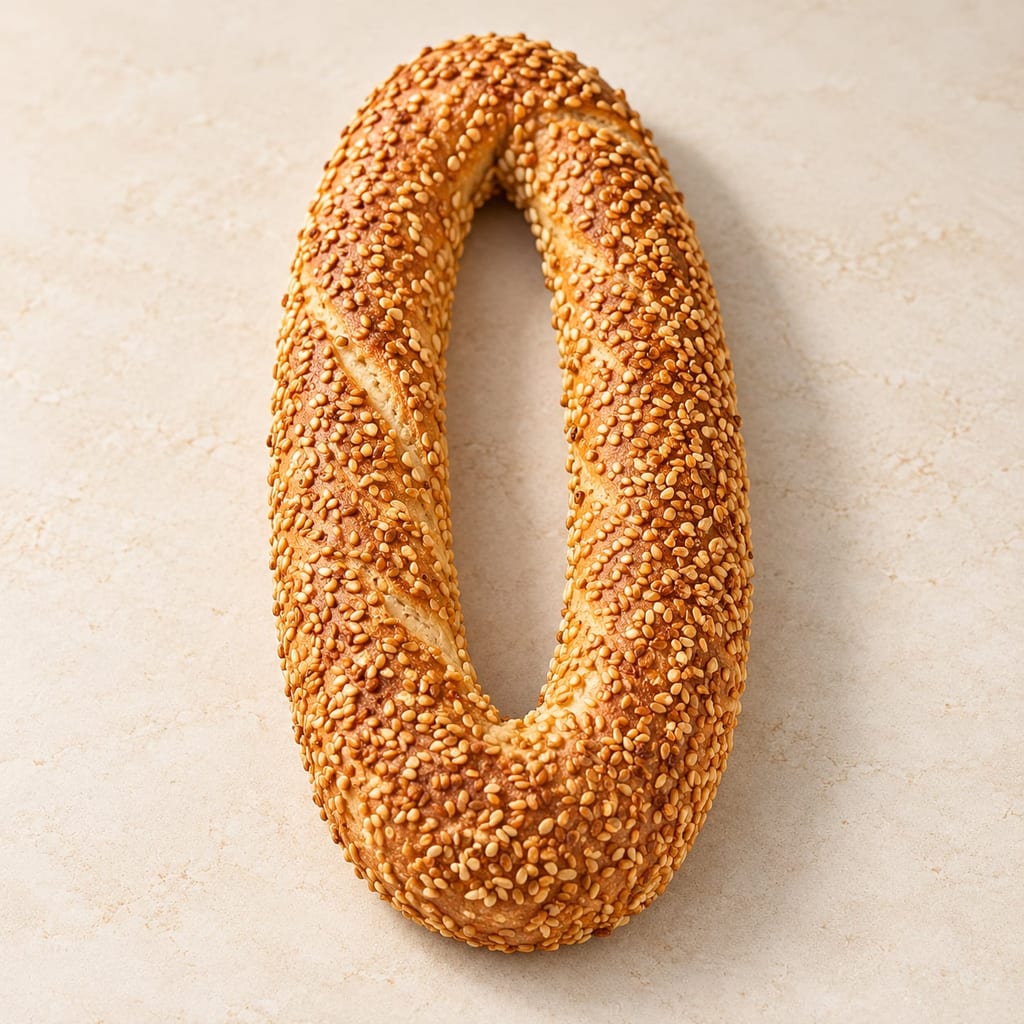
Ka’ak al-Quds (sesame ring bread)
Palestinian milk-enriched wheat rings coated in sesame and grape molasses, shaped into long ovals and baked without a bagel-style boil.
 FermenteaWhere food goes to change
شطة · Filfil mat’hoon · Palestinian chilli paste · Red shatta
Shatta is a Palestinian chilli paste with many household forms. Abeer Najjar’s family-inspired version oven-dries salted fresh chillies, then mixes them with vinegar and olive oil for a source-described room-temperature ferment.
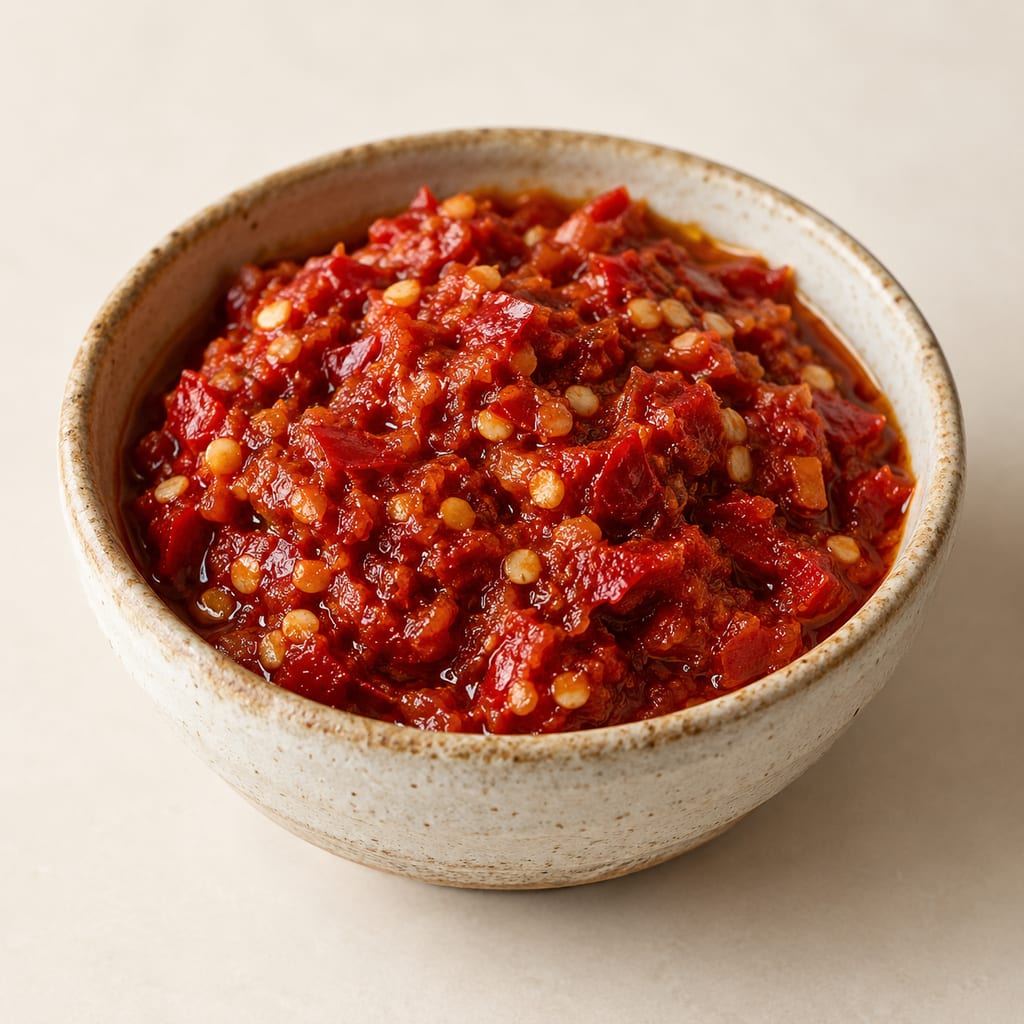
Shatta is a hot chilli paste associated with Palestinian foodways. Its colour, heat and texture vary from household to household and producer to producer. Abeer Najjar describes a family meal of bread, labneh, olives, pickles and a bowl of shatta; she remembers using the bread to scoop olive oil and paste. A Palestinian producer likewise describes shatta as a chilli sauce eaten with meals, including breakfast with labaneh and olive paste.
Najjar's post is both a first-person family story and a written recipe. She explains that her aunt sun-dries the paste, while Najjar developed an oven-dried version suited to her Chicago home. She says her recipe is not identical to her aunt's. That distinction matters: the record represents one contemporary family-inspired method, not a single canonical shatta formula.
Fresh red or green chillies form the base. Some versions add garlic, vinegar or oil; others follow a different route. Mawasem's commercial ingredient list is red pepper, salt and acetic acid, while Najjar's recipe combines salt-dried chillies with vinegar, olive oil and optional garlic. These are related products with different formulations, not interchangeable instructions.
Najjar's story begins with a visit to her mother's extended family and a meal with her aunts and cousins. She recalls the family table and her aunt's preserved foods, then explains how repeated conversations and experiments helped her write a version that readers outside the family could follow. The post dates that written adaptation to 2020; it does not date shatta's origin.
Laila El-Haddad and Maggie Schmitt's The Gaza Kitchen identifies filfil mat’hoon/shatta as a Gaza chilli paste made with fresh rather than dried peppers. The Gaza Kitchen describes its place alongside meats or mixed with cheese and labna with flatbread. Together with the Palestinian producer page, this supports a Palestinian association and a Gaza connection without pinning the entire food family to one town or invention date.
The sources show why a condiment name can carry family and regional variation. A home method developed for a Chicago oven, an aunt's sun-dried practice and a commercial Ramallah product each tell us something different. None should be silently merged into an invented formula. The history remains undated in the sources inspected.
In Najjar's method, the fresh chillies are washed, chopped with salt, pulsed and spread on a tray. Low oven heat removes much of their moisture before vinegar and oil are mixed in. Drying changes the paste's concentration and texture, but the recipe gives no moisture or water-activity measurement. A visual cue such as 'most moisture has dried' cannot establish a preservation endpoint.
The author then describes a room-temperature ferment over one to four weeks. Najjar does not identify the organisms involved, measure acidity or state a tested endpoint for the batch. Fermentation can involve useful microbes and produce acids, but it is not possible to infer a safe process from the word 'ferment' or from a preferred time window. Najjar's 55–75°F (13–24°C) range is her recommendation, not a validated control for this recipe.
Vinegar contributes tang and olive oil adds richness, but neither the measured spoon of vinegar nor the later oil addition proves that the whole mixture reaches a safe acidity. Salt also influences microbial growth, yet a tablespoon by volume paired with a pound of chillies does not give a validated salt concentration because pepper moisture, packing and drying vary. No critical pH, salt or water-activity value is added here.
Najjar lists one pound of roughly chopped chillies, one tablespoon of salt, one tablespoon of apple cider vinegar and half a cup of extra-virgin olive oil. One or two smashed garlic cloves are optional. She prefers red chillies but allows green, mild or hot peppers according to availability and preference. Pepper count is not specified because peppers vary in size.
The ingredients each affect the result. Chilli variety and ripeness shape colour and pungency. Capsaicin content varies, so the same weight can taste hotter or milder from one batch to another. Salt is mixed into the raw pepper before drying, drawing out moisture. Vinegar supplies a sharp note. Olive oil rounds the taste and makes the finished paste richer. Garlic is an optional savoury addition, not part of every commercial or household version.
Najjar's ingredient list uses household measures and says the batch fills a 16-ounce jar or larger, but that is a suggested container size rather than a measured final yield. Moisture loss during oven drying and the starting chillies determine how much paste remains.
Najjar begins with the oven at 150°F (66°C), or a dehydrating setting. She washes and drains the chillies, chops them roughly and pulses them with the salt toward a purée. The pepper mixture is spread on parchment and baked for about one to one and a half hours. Every 20 to 30 minutes she checks and redistributes it to dry more evenly. These are Najjar's instructions, not independently tested process parameters.
After the paste cools, Najjar combines it with apple cider vinegar and olive oil and packs it in a glass jar. A light towel or paper towel covers the top during fermentation. Najjar says a tightly closed jar can build pressure; she periodically stirs the ferment with a clean spoon. The recipe mentions smelling and tasting changes, but this Fermentea record explicitly rejects either as a safety check. They can describe flavour only after a validated process has established safety.
Najjar says to close the jar and refrigerate when the desired flavour stage is reached. The page claims the finished paste keeps refrigerated up to one year. No validation is cited for that duration, so this record does not adopt it. This entry documents the procedure while telling readers that it has not been independently validated as a safe home-preservation process.
Najjar's family meal pairs shatta with bread, olive oil, labneh, olives, pickles and fresh vegetables. The Mawasem producer also suggests toasted bread and describes serving its commercial chilli sauce with meals that include labaneh and olive paste. The Gaza Kitchen records other uses, including alongside meat or mixed with cheese and flatbread. These are distinct documented contexts rather than a universal serving rule.
A spoonful can bring chilli heat and sharpness to a mild or rich accompaniment. A jarred commercial sauce may have a different texture or acidity from a home ferment. The name alone does not tell the diner whether the paste is fresh, dried, fermented, acidified or commercially processed, so the product formulation matters.
Najjar's method has an ambient ferment, a salt measure stated by volume, variable fresh chillies and added oil. Her method does not report a measured final pH, water activity, validated ferment endpoint or tested storage life. University of Minnesota Extension advises using a research-based tested recipe for home produce fermentation and explains that acidity, temperature, oxygen and time all matter. That general guidance does not validate this particular shatta formula.
FoodSafety.gov lists improperly home-preserved foods among botulism sources and says not to taste food to determine whether it is safe. This entry therefore does not use bubbling, a pleasant smell or a desired flavour as a safety endpoint. The recipe is not presented as shelf-stable, and Najjar's one-year refrigerated claim is not a verified storage duration.
For preserved shatta, use a commercial product or a separately validated method that matches the ingredients and process. Do not can this recipe. The name, vinegar, drying step and fermentation duration cannot supply missing process evidence. If using the documented method for culinary study, keep its unvalidated status clear and do not treat this page as safety approval.
Shatta is documented in Palestinian family and commercial food contexts, with household variations in colour, seasoning and drying practice. Abeer Najjar's 2020 post documents a family-inspired version and distinguishes it from her aunt's sun-dried preparation; neither source dates the condiment's origin.
Yield 16 oz jar · Scaling: source batch only
The source recipe gives a salt measure by volume, uses variable fresh chillies, includes oil and vinegar, and supplies no measured final pH or validated endpoint. A named ferment duration and sensory stage do not establish safety.
Hazard sourceFor safe home fermentation, use a research-based tested recipe and follow its specified process; this source's batch has not been independently validated, so it is not endorsed here as a preservation method.
Control sourceDo not use smell, taste, bubbles or appearance to decide that an unvalidated batch is safe. FoodSafety.gov lists improperly home-preserved foods among botulism sources and says not to taste food to determine safety.
Control sourceWear gloves if desired when handling hot chillies and wash hands with soap and water before touching the face or eyes.
Control sourceThis formula and its 1–4 week ambient fermentation have not been validated for food safety. No final pH, water activity, tested process or safe storage duration is established.
Do not use this entry as a shelf-stable or home-canning recipe. The source's claim of up to a year refrigerated is not adopted as a validated duration.
Do not rely on smell, taste, bubbling or appearance as a safety test.
The family account and a Palestinian producer page document shatta in Palestinian foodways; neither establishes a unique birthplace or precise locality for this recipe.
Palestinian milk-enriched wheat rings coated in sesame and grape molasses, shaped into long ovals and baked without a bagel-style boil.
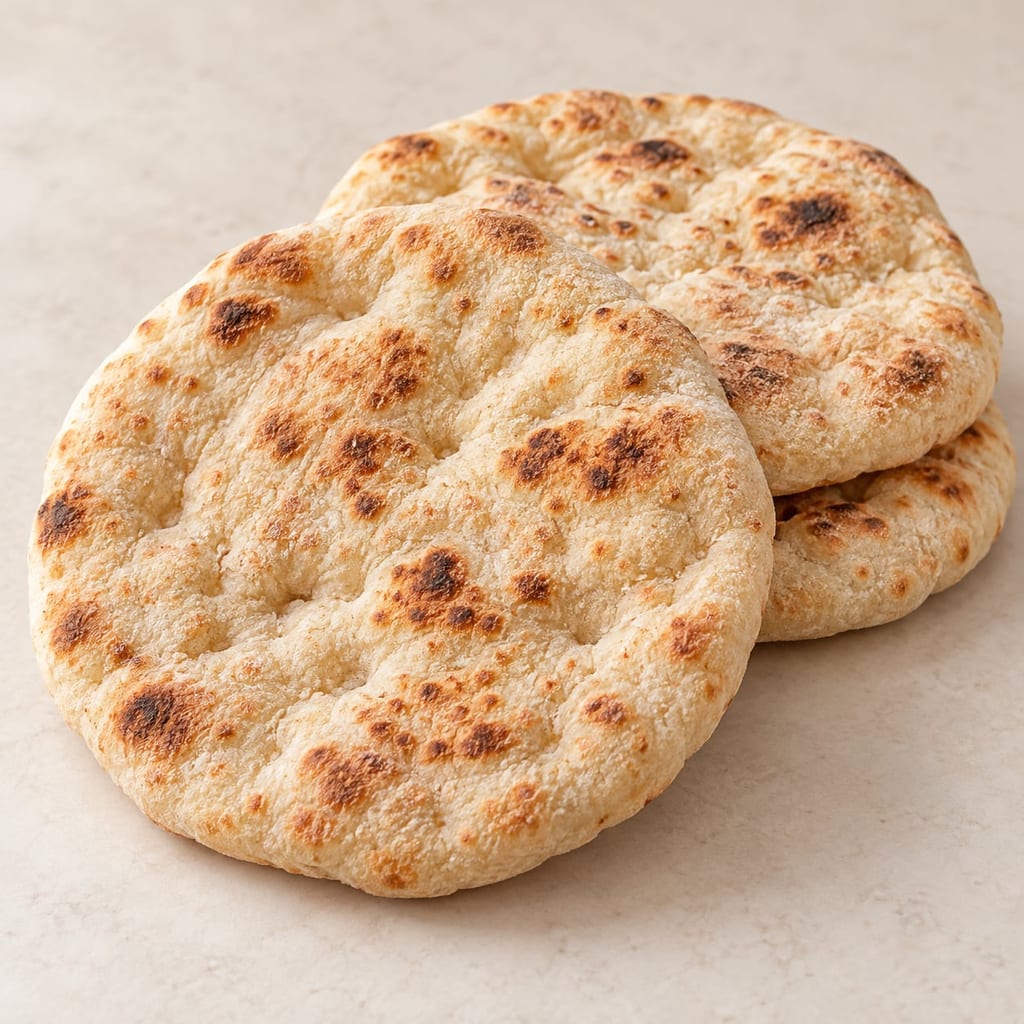
This Palestinian taboon method makes six small wheat flatbreads with a sticky yeast dough, fingertip dimples and a very hot domestic oven surface.
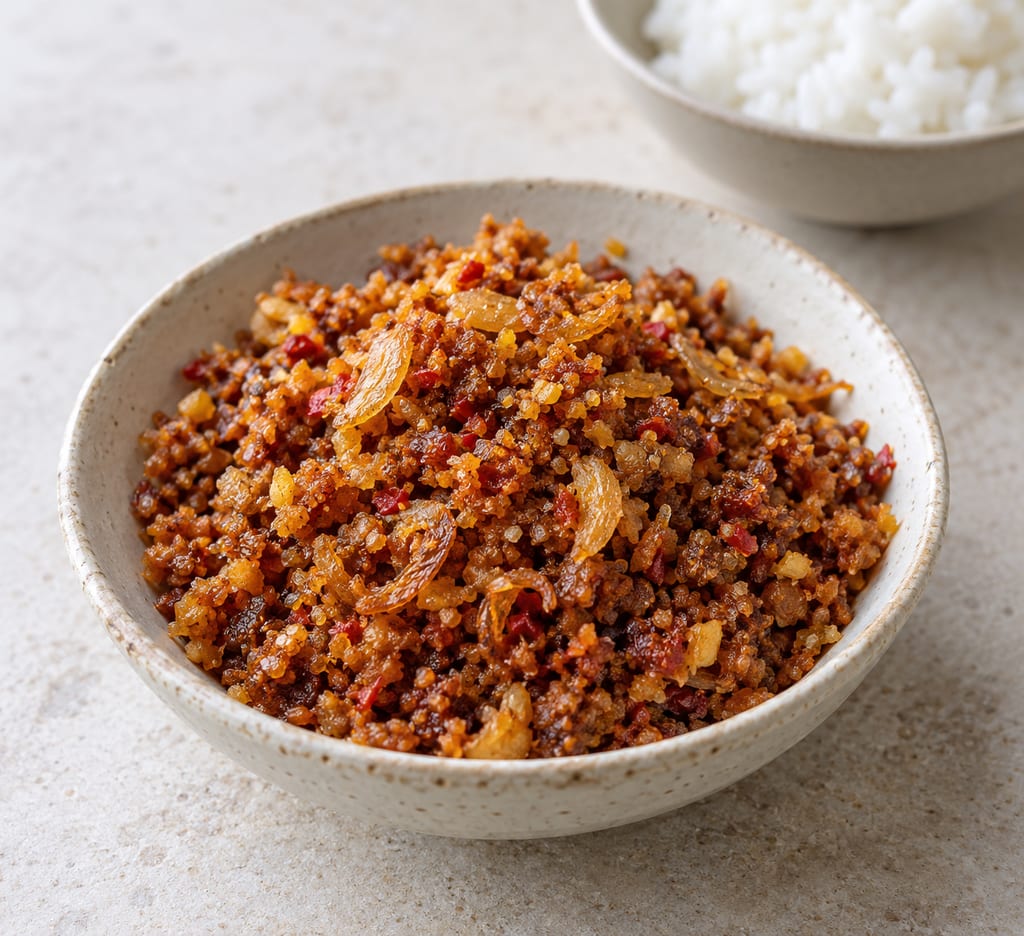
A Myanmar relish of dried shrimp, fried eschalot and garlic, chilli, turmeric, tamarind and ngapi. Naomi Duguid’s published recipe makes about 1 cup; it contains crustacean shellfish.
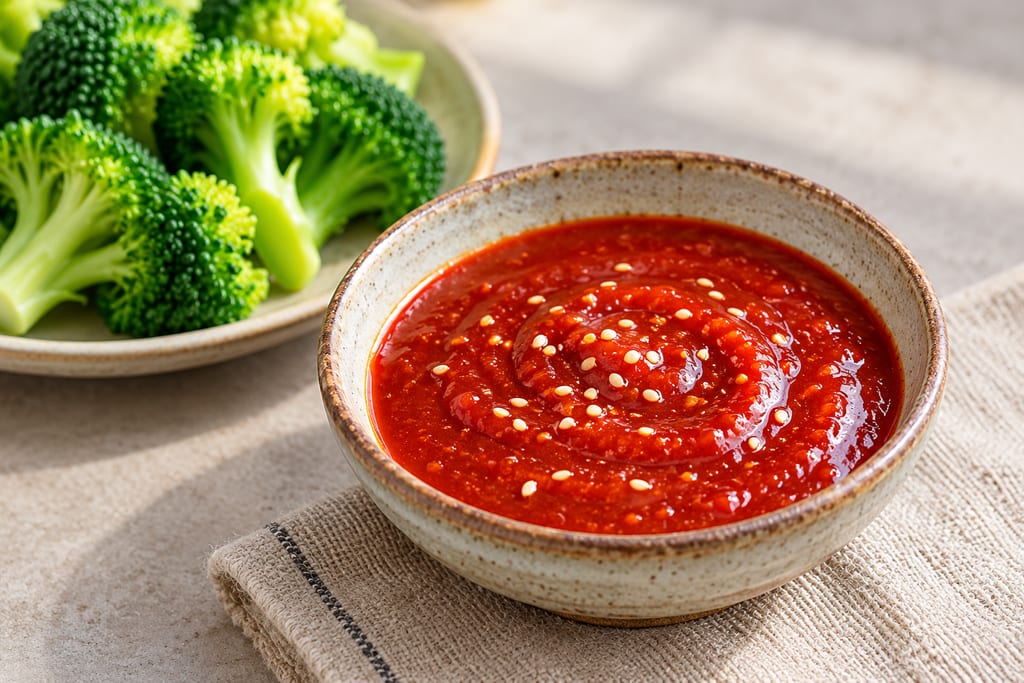
Chogochujang is a Korean sweet-sour sauce made by seasoning gochujang with vinegar and sugar. This development batch adds water and toasted sesame seeds, with optional garlic for the portion being served.
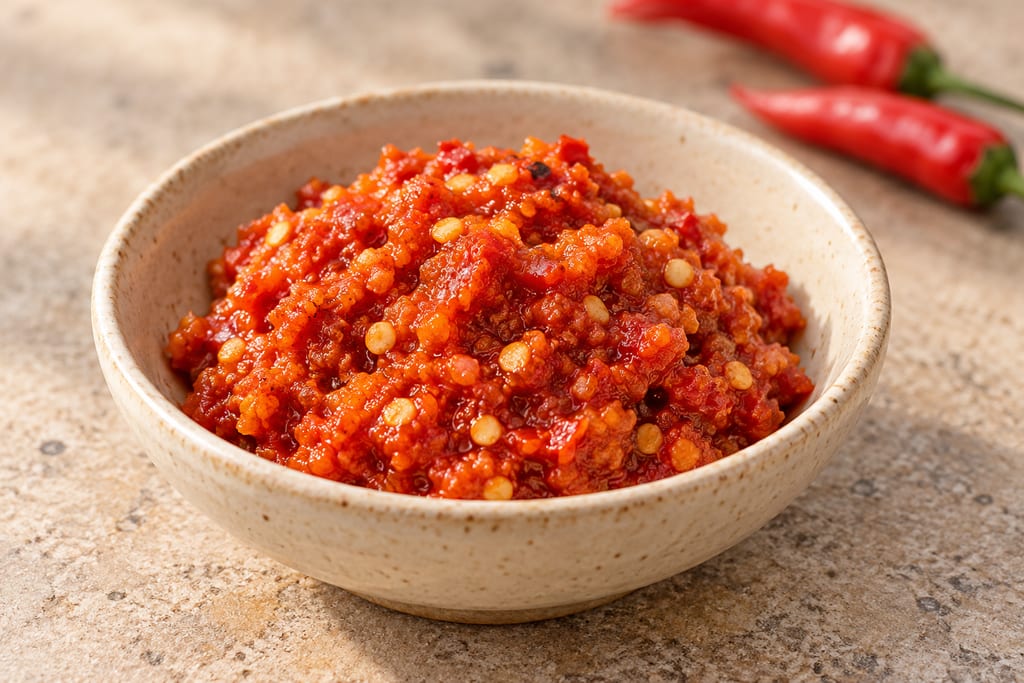
Dinanche, or donne' dinanche, is a Chamorro hot pepper paste of crushed chillies that Guam cooks use on its own or stir into fina'denne'. Its versions range from pepper alone to ones with eggplant, miso or coconut milk.
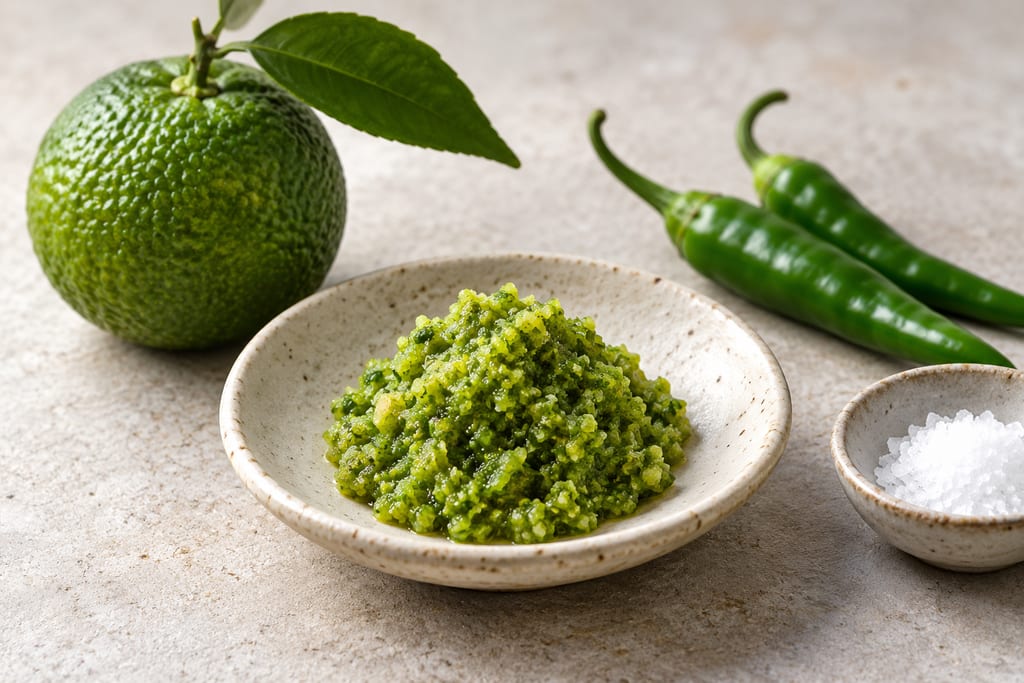
A fresh, uncooked yuzu and green chilli paste inspired by Kyushu’s yuzu kosho, made here as an untested small-batch seasoning rather than a preservation formula.
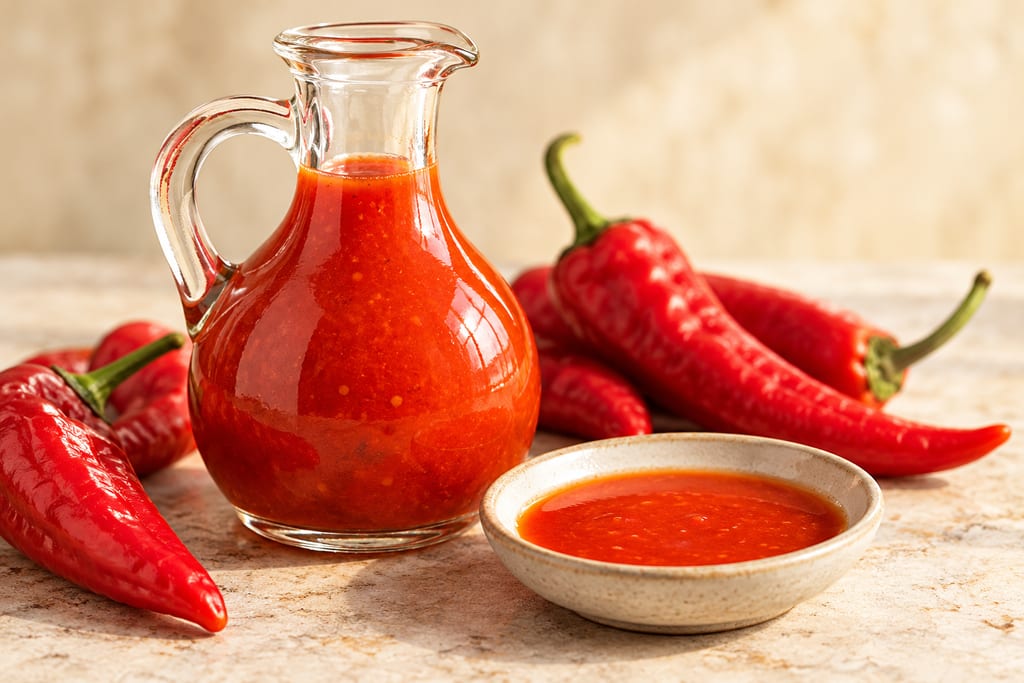
Fresh hot peppers ferment beneath a measured salt brine, then become a bright, tangy sauce blended from the peppers and their liquor.
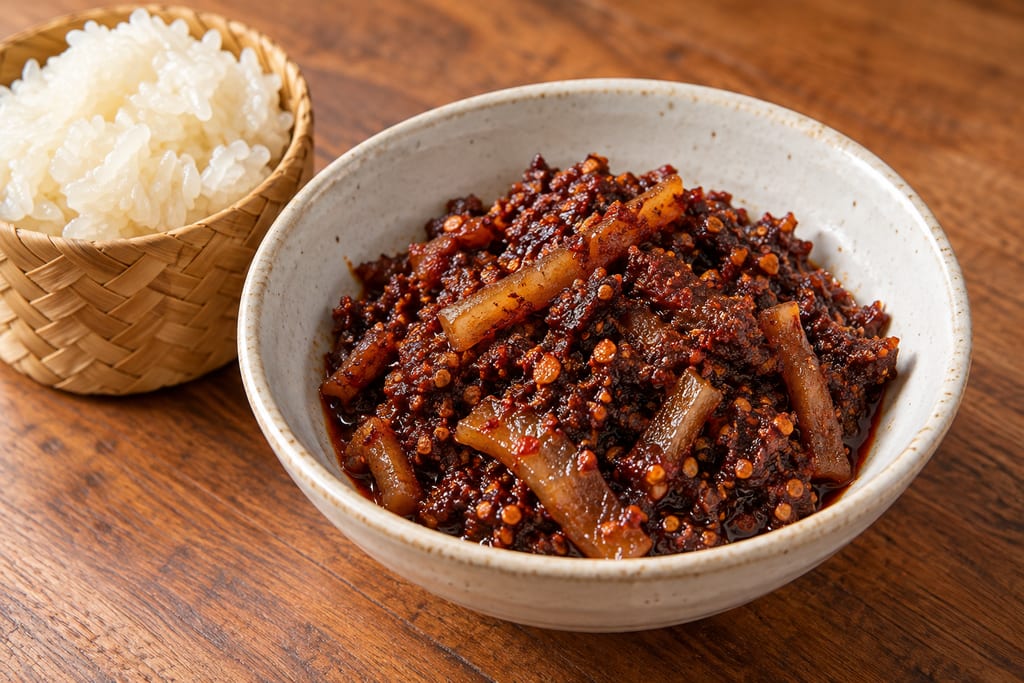
Jeow bong is a Lao paste of dried chilli, shallot, garlic and galangal cooked with buffalo or cow skin, a Luang Prabang specialty eaten with sticky rice and grilled meat.
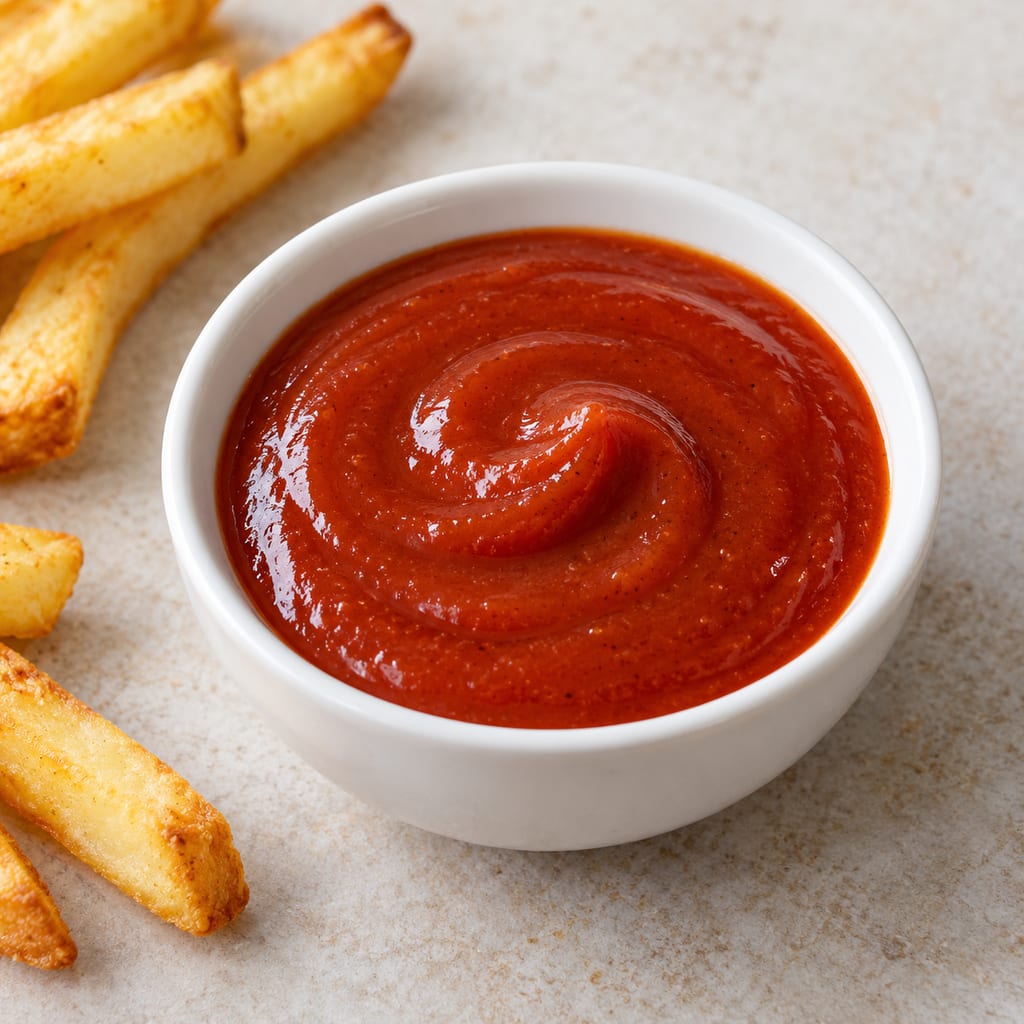
A modern tomato condiment sharpened with the spicy, savoury tang associated with kimchi; this measured version whisk-mixes prepared ketchup and commercial kimchi seasoning.
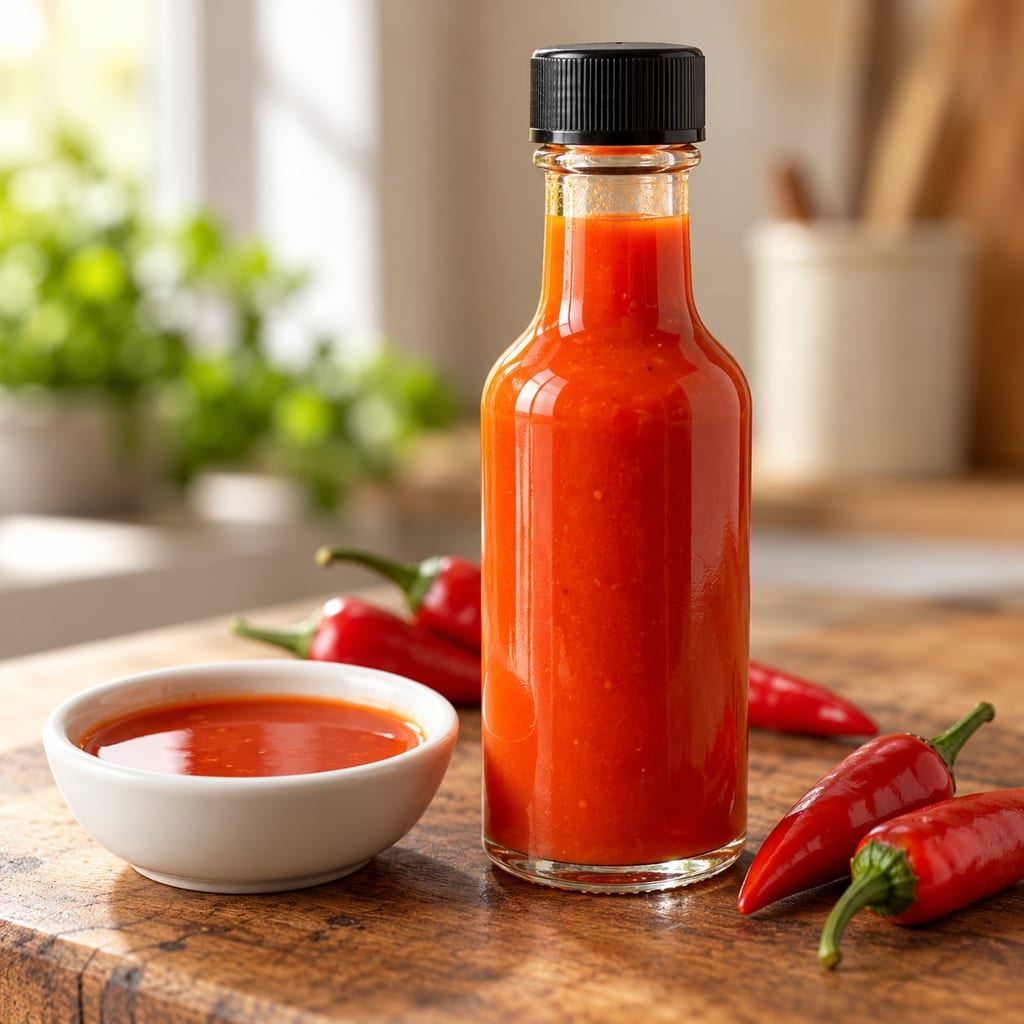
Documentary account of Louisiana pepper sauces, using TABASCO's published barrel-aged commercial process as one specific example; the source does not provide a validated home recipe.
No community contributions have been published for this entry yet.
Sign in to contribute. Published comments and photos are free to read.
Abeer NajjarInspiration · Process · Use · Geography · History
Shatta | Homemade Chili PasteNajjar describes shatta with a family meal that included bread, labneh, olives and pickles, and says her aunt sun-dries her own version.
Her own adaptation uses fresh chillies, salt, apple cider vinegar, olive oil and optional garlic; it oven-dries the chilli paste and describes a 1–4 week ferment at 55–75°F (13–24°C).
The post says green or red chillies may be used and gives a sensory description and a refrigerated storage claim; the latter is not independently validated here.
Cited in: Shatta is a family of chilli pastes; Family memory and Gaza context; What drying and fermentation do; The recorded ingredient batch; How the source prepares its version; Eating shatta; Safety limits of this method
Mawasem. Natural taste of PalestineIdentity · Geography · Use · Variation
Chili SauceThe producer describes shatta as a Palestinian chilli sauce made from red pepper, salt and acetic acid, and says it is eaten with meals including breakfast with labaneh and olive paste.
The commercial product uses a different ingredient list from Najjar's home method.
Cited in: Shatta is a family of chilli pastes; Family memory and Gaza context; The recorded ingredient batch; Eating shatta
The Gaza Kitchen / ckbkIdentity · Geography · Use · Variation
Fermented Chili Paste (Filfil Mat’hoon/Shatta)The source identifies filfil mat’hoon/shatta as a Gaza chilli paste made with fresh rather than dried chillies and describes accompaniment uses.
This book context supports Gaza foodways but does not validate the separate Abeer Najjar formula recorded here.
Cited in: Family memory and Gaza context; Eating shatta
University of Minnesota ExtensionSafety
Preserving Food at Home: FermentationThe guide recommends research-based tested recipes for produce fermentation and explains the roles of acidity, oxygen, temperature and time.
Its general process guidance does not validate this shatta recipe.
Cited in: What drying and fermentation do; Safety limits of this method
FoodSafety.govSafety
Bacteria and VirusesLists improperly home-preserved foods among botulism sources and says not to taste food to determine safety.
Cited in: Safety limits of this method