Merissa
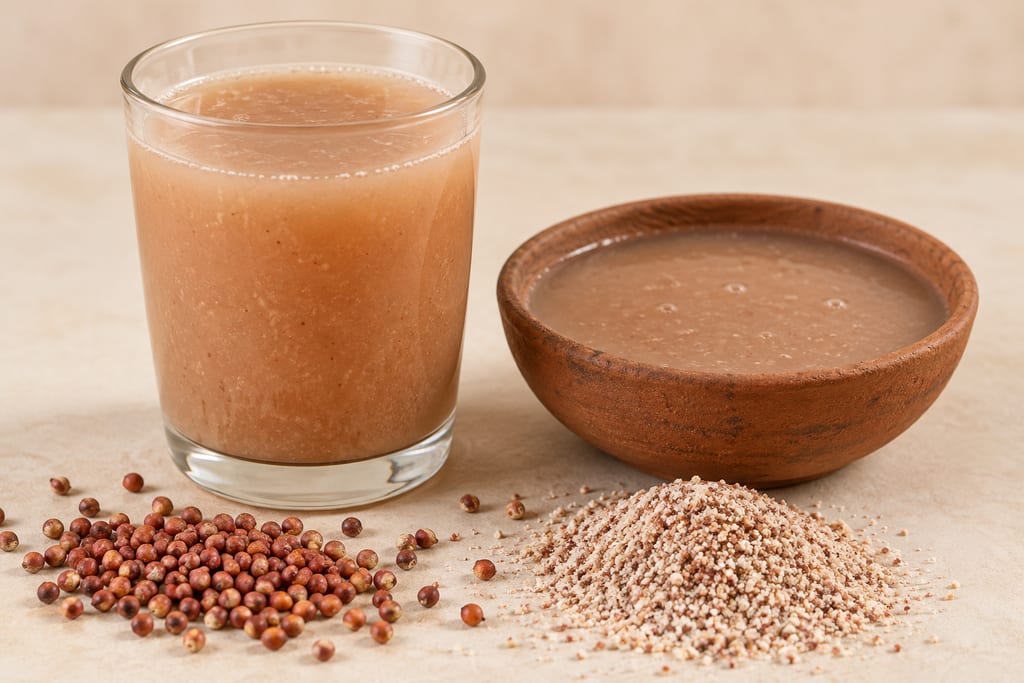
Sudanese opaque sorghum beer made from soured, toasted, cooked and malted grain through three linked fermentations, drunk fresh while still fermenting.
 FermenteaWhere food goes to change
Traditional method
Doro · Chibuku
A cloudy Zimbabwean beer brewed from malted red sorghum, given a two-day lactic souring and then a longer alcoholic fermentation.
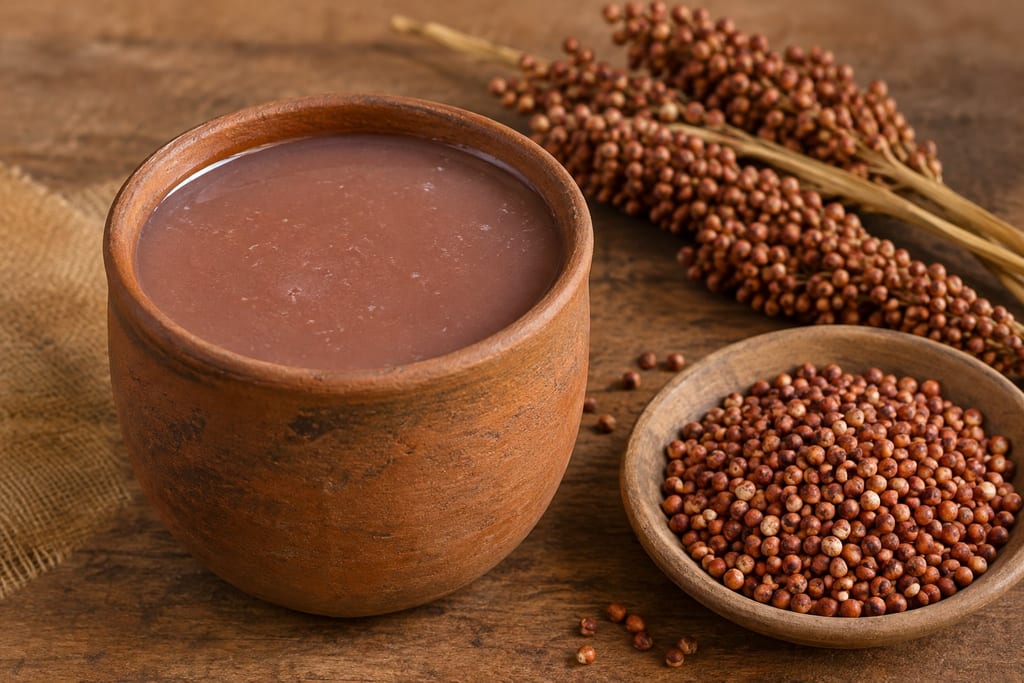
Chibuku is a well-known name associated with opaque sorghum beer in Zimbabwe and elsewhere in southern Africa.
Traditional beer of this general kind is also called doro in Shona, where the word means beer. Related names and styles occur in several languages and regions.
The principal cereal in this documented process is red sorghum, Sorghum bicolor (L.) Moench.
The beer is distinct from a filtered lager. It retains suspended cereal material, often producing a cloudy or porridge-like appearance.
Its flavour combines the characteristics of cooked malted grain, lactic acidification and alcoholic fermentation.
It is also important to distinguish traditional doro from modern packaged Chibuku, which is a commercial beer brand.
They are connected through the wider opaque-beer tradition, but the existence of a commercial product does not prove that it follows the precise 7 kg red-sorghum formulation discussed here.
Both names are worth keeping and worth distinguishing: doro and chibuku are closely related but are not exact synonyms in every context.
Southern African communities have a long tradition of producing fermented cereal drinks.
Sorghum was an important staple before the widespread introduction and cultivation of maize in many areas.
Its use in porridge and beer reflects its agricultural value and ability to grow in varied environments.
Traditional beer was used during social gatherings, household occasions and community events.
The precise age of the named Zimbabwean doro process is not established.
Modern Chibuku production belongs to a later industrial history of opaque beer.
Commercial breweries adapted traditional cereal beverages for manufacture and distribution on a larger scale.
The resulting beers are familiar in southern Africa, but may differ in formulation, fermentation management and packaging from local household preparations.
The present record is grounded in a published review of traditional cereal-beer production, which summarises a Zimbabwean process using red sorghum malt.
What the evidence supports is a documented traditional process, rather than a reconstruction of an identifiable ancient recipe or a disclosure of the commercial Chibuku formula.
Sorghum is a cereal crop with starch-rich grains.
Red varieties contain pigments and other compounds that may influence the beer's colour and flavour.
Different cultivars can vary in tannin content, starch behaviour and enzyme potential.
Malting changes the grain.
During germination, enzymes become available that can help break down starch.
The malt is subsequently dried and milled.
The resulting material supplies both the cereal flavour and the biochemical capacity needed to prepare fermentable sugars.
Red sorghum malt therefore cannot be treated as interchangeable with raw unmalted grain.
A producer changing the grain variety would need to reassess its milling, extract and fermentation behaviour.
Documented Zimbabwean process
The source does not state whether the second fermentation stage uses a deliberately added previous-batch starter, a prepared yeast culture or another specific inoculation method.
It identifies the stage but not a transferable starter quantity.
That gap must remain visible.
No additional sugar, salt or flavourings are specified for this particular formula.
The final beer volume is not reported, and the prolonged boiling stage can cause substantial evaporation.
Consequently, a 24 L starting-water quantity must not be presented as 24 L finished beer.
Malted red sorghum — 7 kg — Cereal substrate
Water — 24 L — Hydration, extraction and brewing liquid
Microbial population for lactic fermentation — Not quantified — Acidification
Yeast or traditional alcoholic-fermentation inoculum — Not quantified — Produces ethanol and carbon dioxide
Malting and fermentation perform different functions.
During malting, the grain germinates and develops biochemical activity associated with starch mobilisation.
Mashing and cooking prepare the starch for conversion into smaller carbohydrates.
During fermentation, microorganisms metabolise available sugars.
Lactic acid bacteria contribute organic acids.
Yeasts can convert fermentable sugars into alcohol and carbon dioxide.
The sequence is important because yeast does not normally convert intact cereal starch directly into alcohol at the rate required for brewing.
The grain's starch must first be made accessible through cooking and enzymatic breakdown.
The exact effectiveness of conversion depends on malt quality and process conditions.
The original review does not provide a laboratory measurement of the wort's sugar concentration for this specific batch.
Boiling 3–5 hours · Lactic fermentation 48 hours · Alcoholic fermentation 5–7 days
These stages describe the literature's Zimbabwean brewing process. They are not a complete, independently validated household brewery specification.
Lactic acid bacteria are important in traditional sorghum beer production.
They can convert available carbohydrates into organic acids.
Reported organisms associated with Zimbabwean opaque beers include Lactiplantibacillus plantarum, historically named Lactobacillus plantarum, and other lactic acid bacteria.
These organisms can influence the beer's sourness.
The original scientific review also lists Lactococcus, Leuconostoc and related groups in the broader microbial ecology.
A mixed spontaneous fermentation can contain multiple species, and not all organisms detected are necessarily desirable.
The fact that a species was isolated from a traditional beer is not evidence that it should be intentionally added as a starter.
In particular, reports of Bacillus cereus in some related product investigations require caution rather than incorporation into the recipe.
The present record contains no validated microbial release criteria for its 48-hour acidification stage.
The alcoholic stage is associated with yeasts, particularly Saccharomyces cerevisiae.
As yeast consumes fermentable sugars, it produces ethanol and carbon dioxide.
The beer's character changes further during the reported 5–7-day fermentation.
This is considerably longer than the 9–14-hour alcoholic fermentation interval described for some Burkina Faso dolo production methods.
The distinction is significant and should not be removed by treating all African sorghum beers as one generic process.
The original review contains a value of approximately 4.0% ABV for a published doro/chibuku sample.
That is an analytical observation from the literature, not a guaranteed alcohol strength for this particular 7 kg and 24 L batch.
Without initial and final gravity measurements or an alcohol assay, the precise result is unknown.
Traditional opaque beers may retain considerable suspended material.
Some starch fragments and dextrins remain after fermentation.
Proteins, yeast cells and fine cereal particles can also contribute to the appearance.
The result is physically different from a clarified beer.
Cloudiness is therefore expected rather than automatically a defect.
The solids influence mouthfeel, giving the beer a more substantial texture.
Their presence also means that the beer may separate or settle if left standing.
However, grain sediment must not be confused with signs of spoilage.
Unwanted surface mould or putrid decomposition is not an ordinary feature of a well-controlled process.
Zimbabwean doro can vary according to household and community methods.
The cereal may differ, as can the treatment of the malt and the precise fermentation conditions.
Other opaque beers in southern Africa may use sorghum alongside maize or other grains.
Commercial Chibuku products vary between markets and product lines.
Some are packaged in cartons, while other contemporary versions use different containers or formulations.
The familiar commercial brand should be discussed as part of modern opaque-beer culture.
But a photograph of Chibuku packaging does not establish the formula inside the package, nor does it prove that the commercial beer follows the traditional schedule documented here.
Traditional opaque beer has an important social role.
It may be shared during gatherings and offered as part of community events.
The drink is typically consumed relatively fresh.
The beer's grainy character and sourness distinguish it from clear lager.
Modern packaged Chibuku is consumed as a commercial alcoholic beverage.
The serving vessel and presentation vary, ranging from traditional containers to contemporary packaging.
The user-facing recipe should avoid assigning one exact serving temperature because none is specified in the source.
The historical role of drinking with others can be described without inventing a universal ritual.
A characteristic product may be opaque, slightly sour and alcoholic.
Its texture depends on the cereal solids retained.
However, neither cloudiness nor sourness proves safety.
A weak alcoholic fermentation could reflect unsuitable yeast activity or insufficient fermentable sugar.
Unexpected gas accumulation in sealed packaging may result from continued fermentation.
Visible unwanted mould, putrid odours or other evidence of deterioration are serious warning signs.
No exact quantitative endpoint is supplied for these assessments.
This is an alcoholic beverage, and the finished strength has not been measured for the source batch.
The method also lacks numerical incubation temperatures, microbial inoculation quantities and validated packaging conditions.
The presence of cereal material and microorganisms can affect stability.
The 5–7-day alcoholic stage does not establish that fermentation has finished or that packaged beer will remain stable.
A commercial brewery would require appropriate controls and analytical measurements.
The record should therefore be published as a source-documented process requiring validation, rather than a guaranteed complete home-brewing recipe.
The review identifies doro/chibuku as a Zimbabwean malted red-sorghum beer and summarizes a reported process; no origin date is assigned.
Scaling: source batch only
The review documents sequential lactic and alcoholic fermentation but provides no temperature, acidity, inoculum or final alcohol endpoint for this record.
Hazard sourceUse this as a source record only; the cited review does not provide enough process control or validation to establish a safe home-brew schedule.
Control sourceThis beer can contain alcohol; no ABV is given for this formula.
Temperature, starter dose, acidity and storage conditions are unknown. Do not infer completion or safety from smell, taste or bubbles.
The review assigns the documented doro/chibuku process to Zimbabwe; it does not identify a narrower locality.
Sudanese opaque sorghum beer made from soured, toasted, cooked and malted grain through three linked fermentations, drunk fresh while still fermenting.

From sour breads and milk to savoury seeds, cassava staples and living beers, African fermentation follows the crop, the community and the work of transformation.
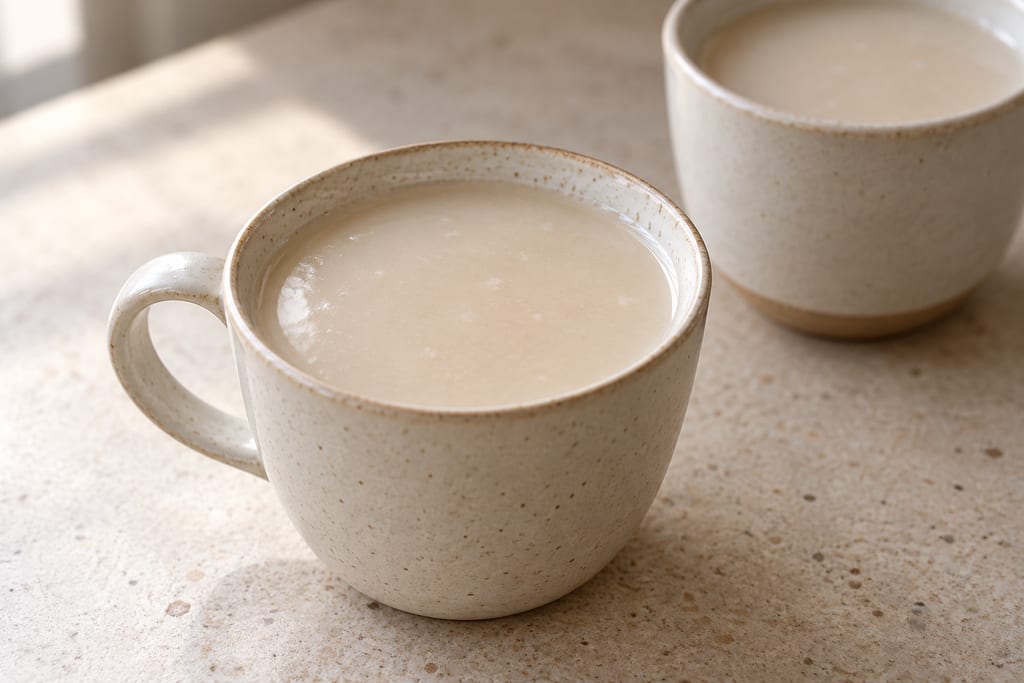
A documentary account of Zimbabwean mahewu and one producer's formula. Its quantities exceed the stated vessels, and research does not validate it as a safe home method.
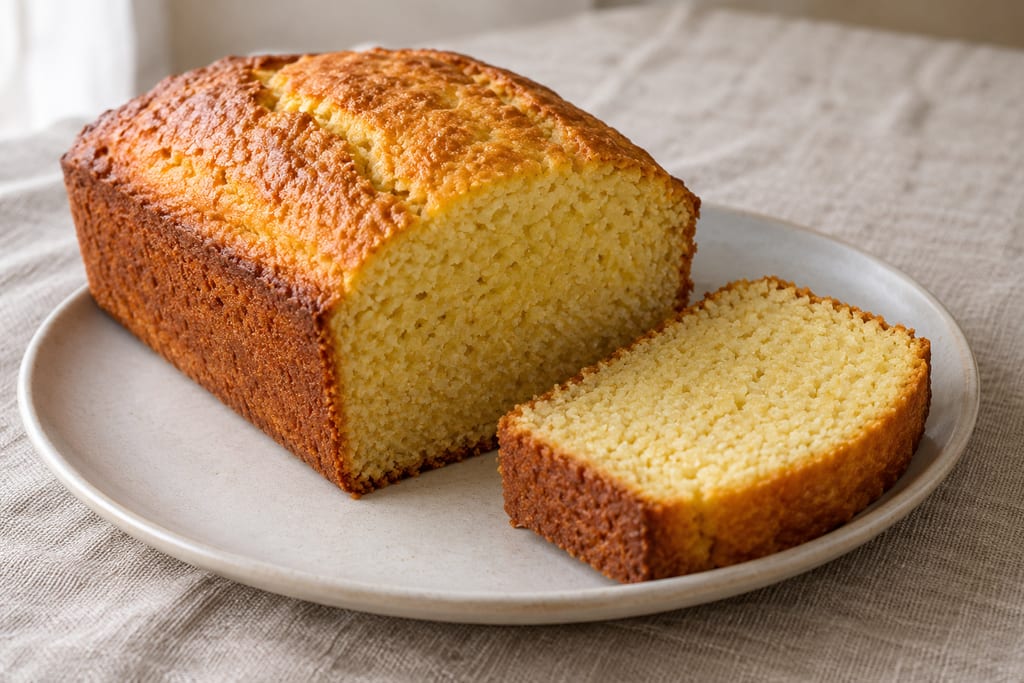
A Zimbabwean maize-meal bread, baked with buttermilk and served plain or with a spread.
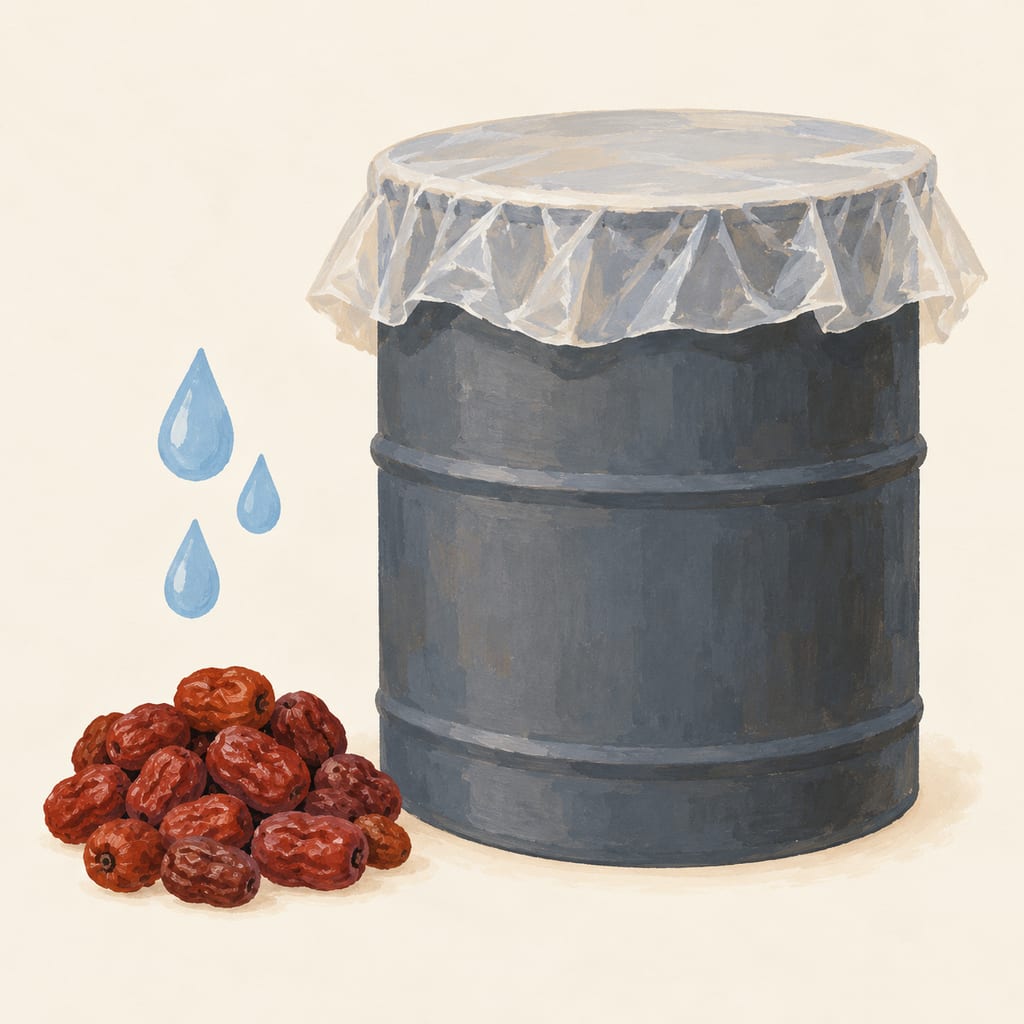
A Zimbabwean spontaneous ferment of dried masau fruit pulp used as a kachasu distillation base; the fermented pulp itself is not consumed.

A deep amber-red American ale brewed from pale, Munich, CaraVienne and chocolate malts, bittered with Columbus hops and finished with Amarillo.

A source-specific modern extract adaptation of Düsseldorf Altbier, with specialty malts, two hop additions and an ale yeast. It is distinct from a brewery's commercial Altbier process and from Kölsch.

Andong soju is a rice spirit from North Gyeongsang, distilled from steamed rice and wheat nuruk. This method makes the starter before fermenting the rice mash in a jar.
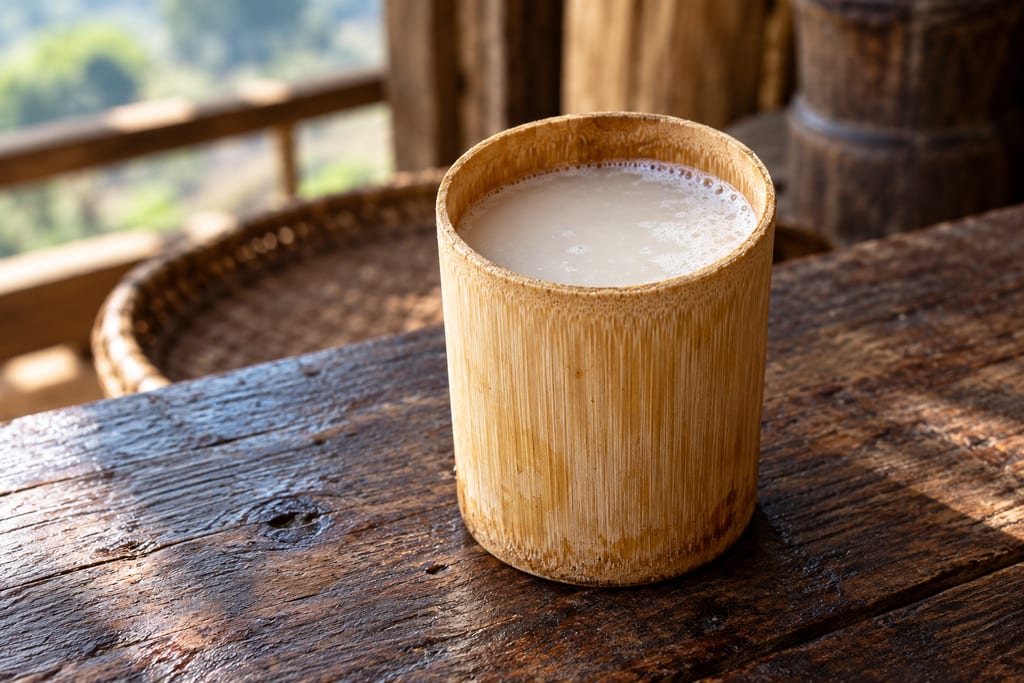
Angami rice beer from Nagaland. A surveyed method mixed cooked rice with piazu, fermented it for about four days in summer or a week in winter, then added water and filtered it. The starter ratio leaves the rice-weight basis unclear.
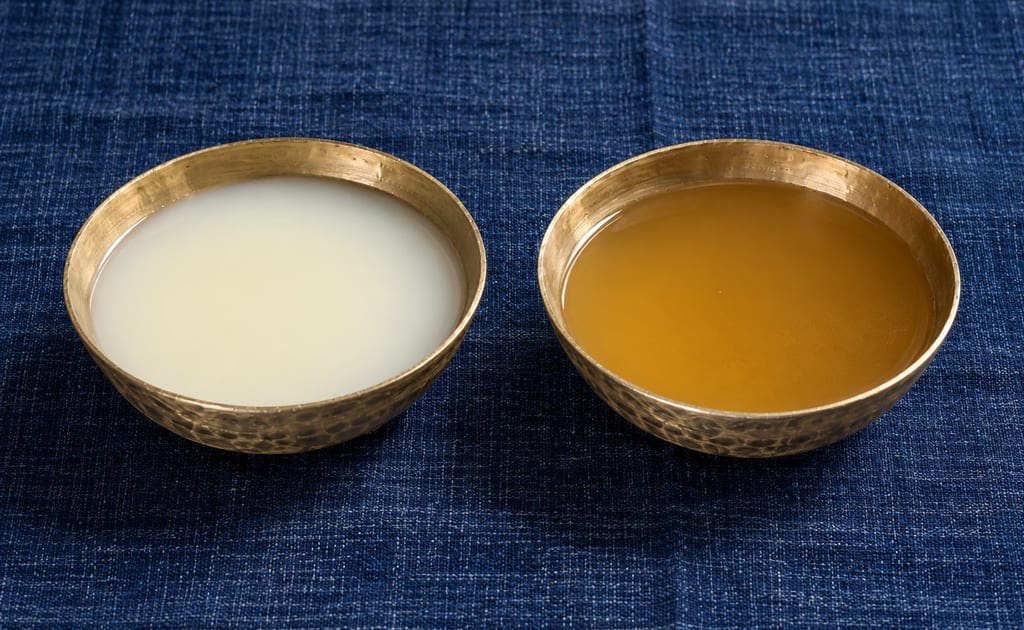
Apong names Mising rice beverages in Assam, including pale Nogin and ash-associated Po:ro. Sources describe distinct preparations and do not establish one unified household recipe or validated safety endpoint.

An Okinawan rice spirit made by turning all the rice into black koji, fermenting it with water and yeast, then pot-distilling and maturing the spirit.

This is a process overview, not a complete batch recipe: key quantities, yield and packaging directions are absent. The AHA tutorial uses Hop Hammer Imperial IPA as an example; this page is not that full formulation.
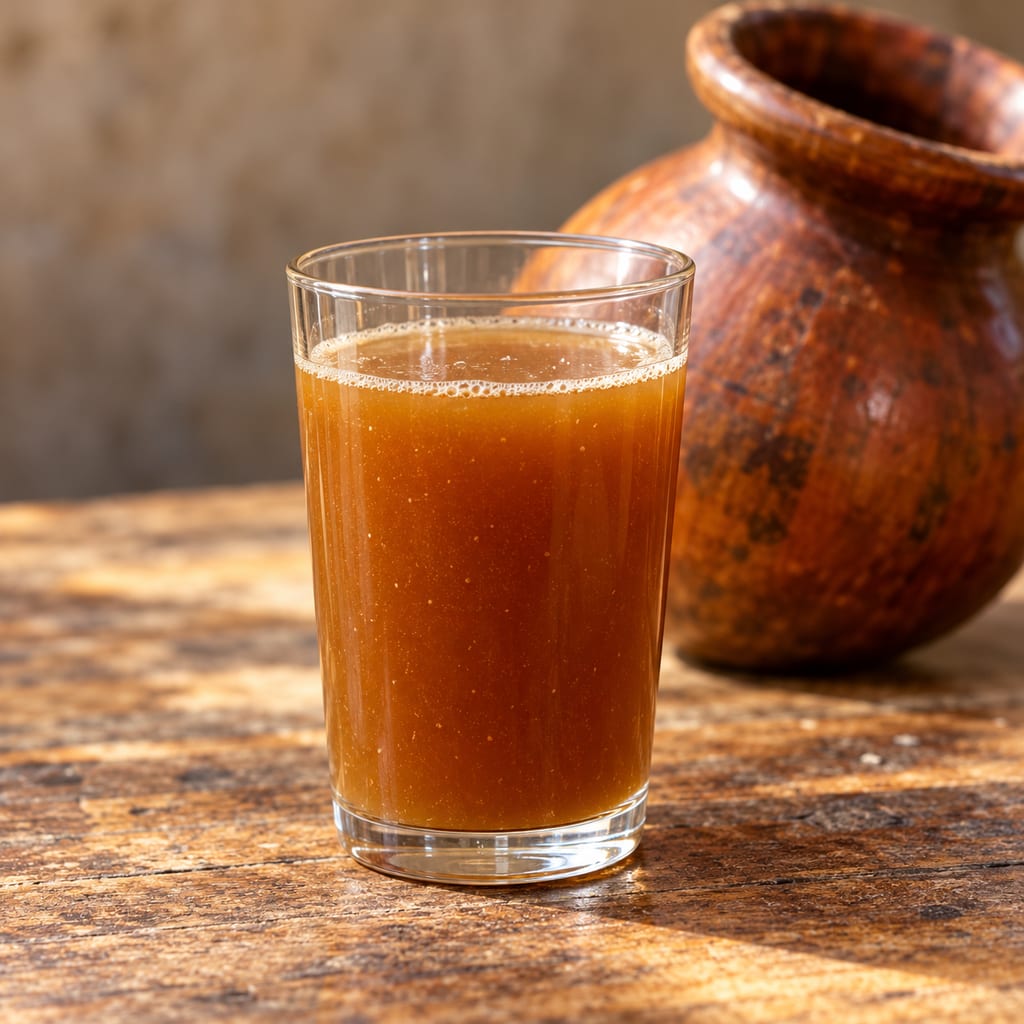
A darker Ethiopian maize tella, brewed from maize baked into a hot, dry kita pancake and then fermented in three stages with barley malt, gesho and water.
No community contributions have been published for this entry yet.
Sign in to contribute. Published comments and photos are free to read.
Frontiers in Sustainable Food SystemsInspiration · Process · History · Safety
Sustainable Production of African Traditional Beers With Focus on Dolo, a West African Sorghum-Based Alcoholic BeverageTable 3 reports Zimbabwe doro/chibuku from malted red sorghum, 7 kg malt to 24 L water, 3–5 h boiling, 48 h lactic fermentation and 5–7 days alcoholic fermentation
Review lists microbes reported in associated studies but provides no home validation, process temperatures or final alcohol data
Cited in: A cloudy beer made from red sorghum; Historical development; Why red sorghum?; Ingredients; The relationship between malting and fermentation; The documented brewing method; The lactic fermentation stage; Alcoholic fermentation and the role of yeast; Opaque beer and grain solids; Regional and commercial variations; How the beer is consumed; Recognising quality and problems; Safety and storage