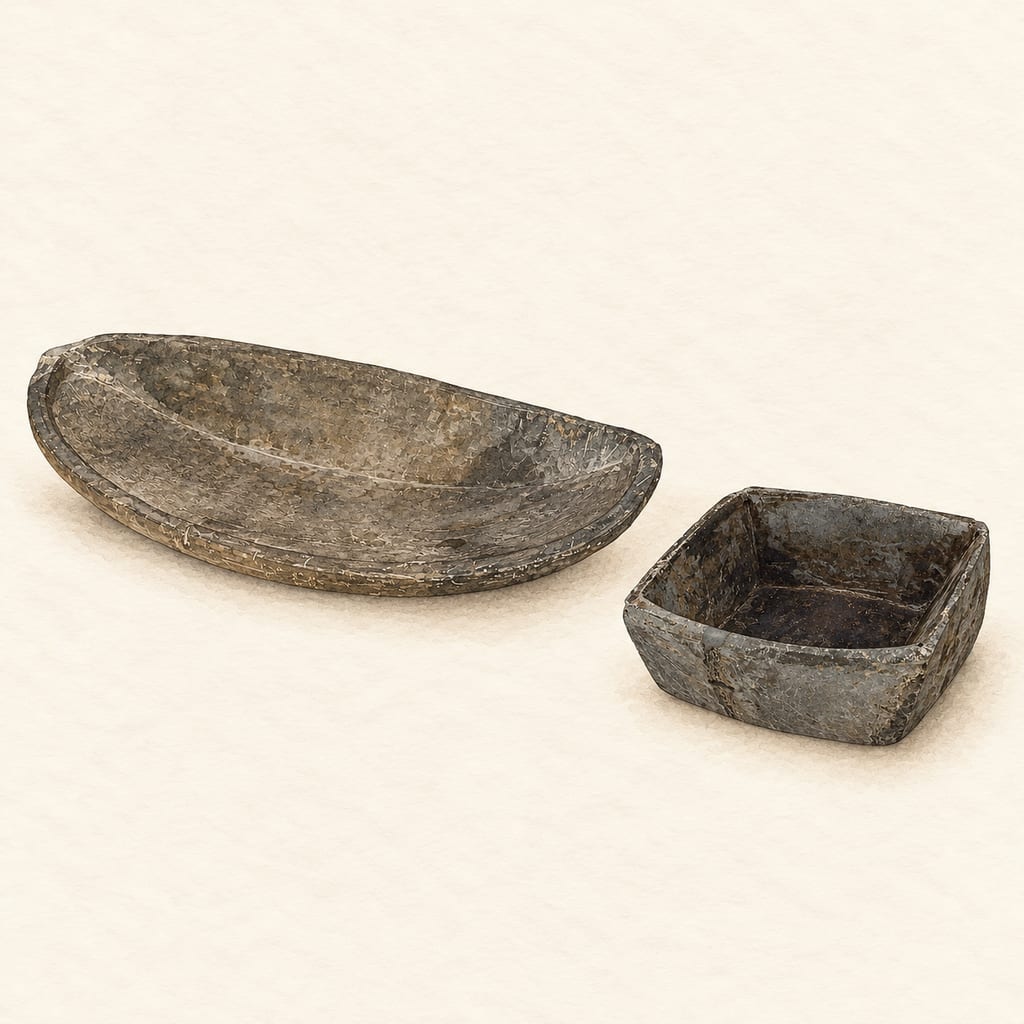
Qulliq and ukkusik
A qulliq oil lamp and a separate ukkusik cooking pot form an Inuit heat-processing pair. Sources document soapstone forms, animal-oil lighting and cooking uses, and museum objects from the Eastern Arctic.
 FermenteaWhere food goes to change
Equipment · Historical object · Lamps and burners
A Rocky Cree clay lamp dated approximately 1200–1500 is recorded from Southern Indian Lake, northern Manitoba. The Manitoba Museum links this lamp tradition to cooking, drying, heating and lighting lodges.
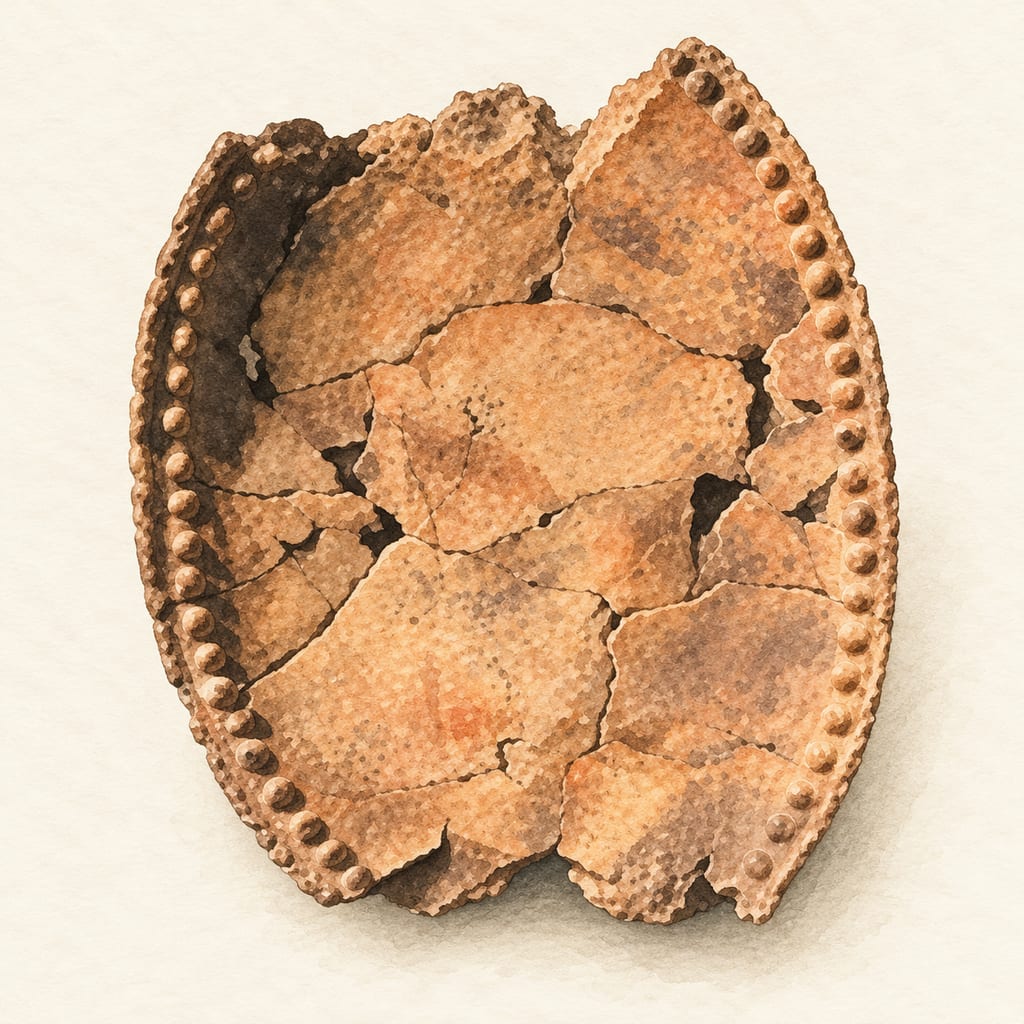
The Manitoba Museum records a Rocky Cree ceramic lamp dated approximately 1200–1500 and associates its use with the Asiniskaw Inthinew (Rocky Cree) living around Southern Indian Lake in northern Manitoba. Its account describes oil-fuelled lamps as tools for cooking, drying, heating and lighting lodges. The date belongs to the museum object; it is not an invention date for lamps or a claim that this practice began or ended within those years.
The collection account places this object in a specific history of exchange and adaptation. It says Rocky Cree neighbors learned lamp technology from Kivallirmiut (Caribou Inuit) communities to the east along the Hudson Bay coast. Inuit Kudlik or Qulliq lamps were carved from soapstone; similar-shaped Cree lamps appear to have been molded from clay. The comparison is about a related lamp form and transferred technology, not identical construction or a single shared cultural tradition. The museum describes this adoption as the only occurrence in Canada where Cree people took up lamp technology.
The surviving object shows that clay could be used for a lamp in a northern setting, where a soapstone precedent is recorded among neighbouring Inuit communities. It is a broad, shallow, oval piece with substantial wear and missing or fragmented areas, so it is a damaged museum object rather than a complete technical drawing. Its measurements, forming and firing process, oil source, wick material, flame control, supports and the arrangement used for cooking above it are not known.
The documented functions bring light and household heat together with food work: one lamp technology served cooking and drying as well as heating and illumination. The collection page does not describe a single recipe, a particular food, or a standardized operating procedure, so this equipment record does not prescribe fuel, wick, vessel placement, or firing practice. It is most useful as evidence that Cree makers adopted a neighboring technology and expressed it in clay, while the museum's approximate date and wording should remain attached to that particular object and account.
The museum associates Rocky Cree lamp use with this area; the object date is approximate, and the entry does not claim the place as the technology's sole origin.
A qulliq oil lamp and a separate ukkusik cooking pot form an Inuit heat-processing pair. Sources document soapstone forms, animal-oil lighting and cooking uses, and museum objects from the Eastern Arctic.
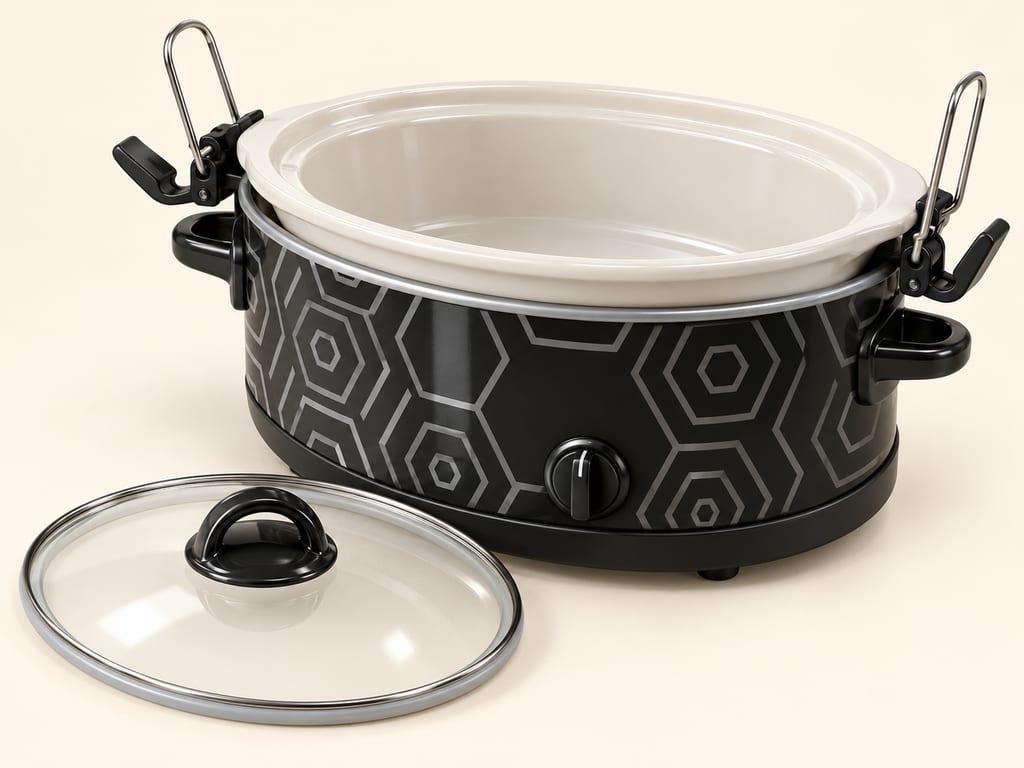
The SCCPVL500FB is listed by Crock-Pot as a French Bull-pattern Cook & Carry manual slow cooker. Its stoneware crock and heated base cook on Low or High; the WARM setting is only for already-cooked food, not fermentation or cooking.
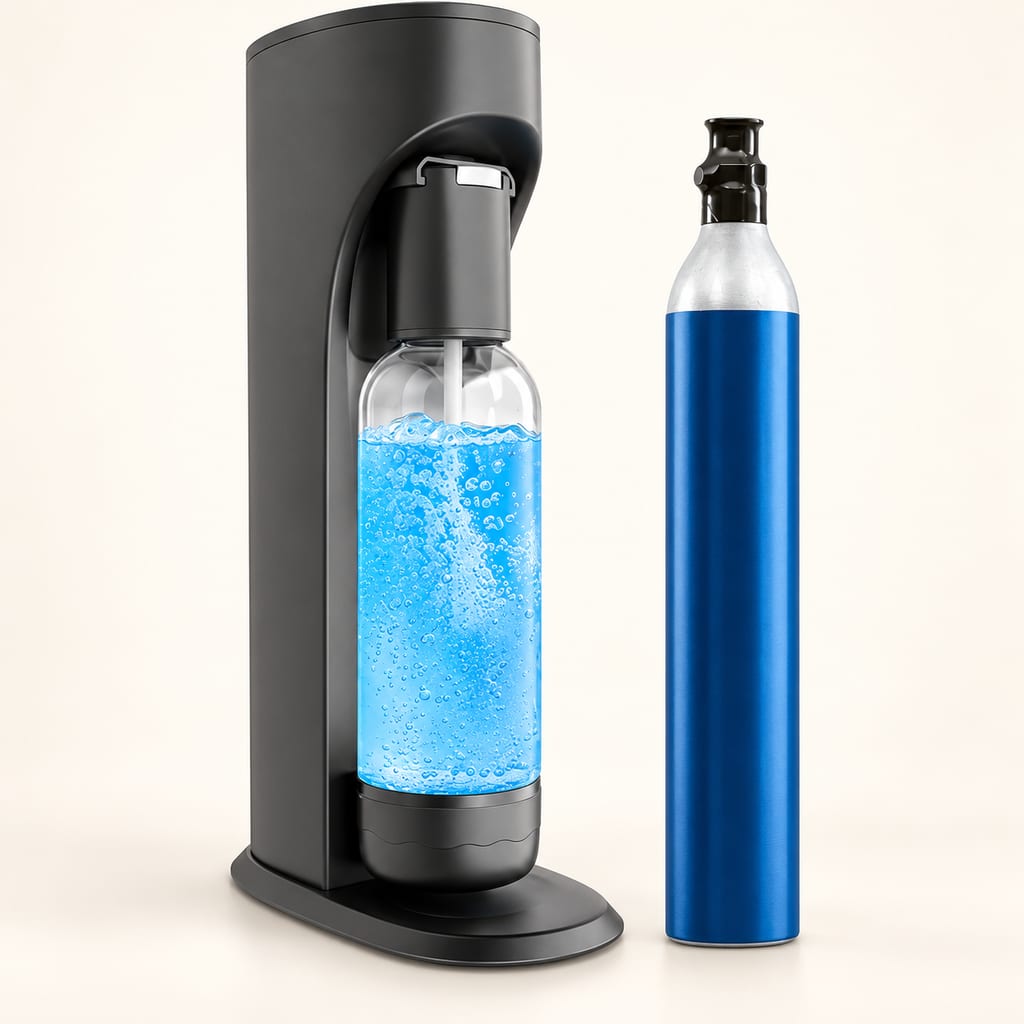
Drinkmate’s Fizz Infuser lets its countertop carbonators add carbon dioxide to cold drinks directly, with a controlled release valve for foamy liquids. Models and bottle systems vary; a 2025 recall applies to specific one-litre bottles.
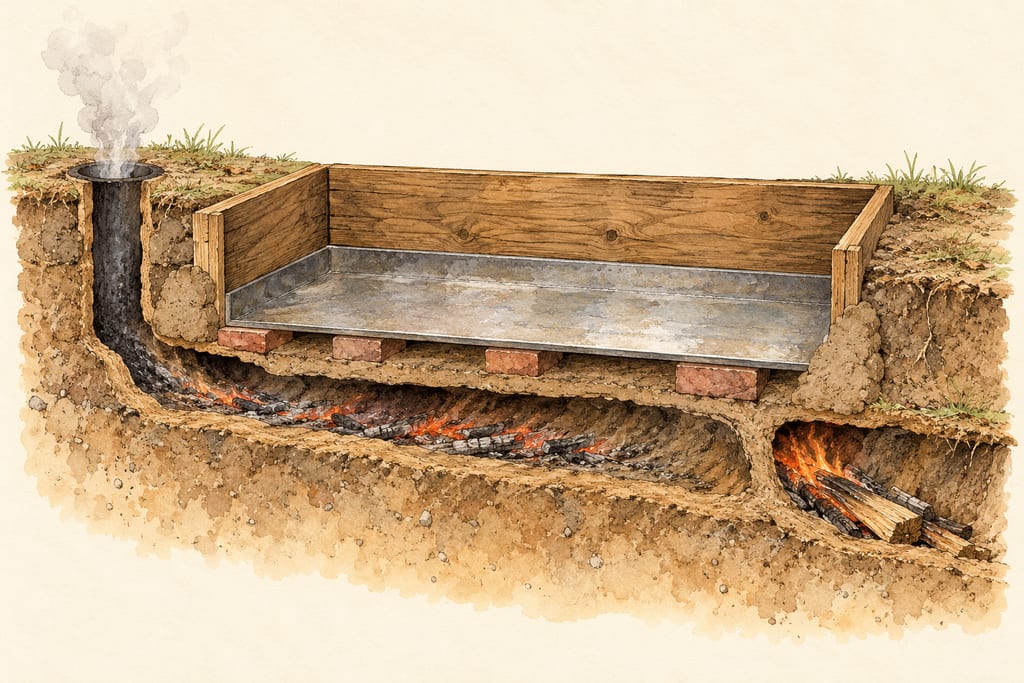
A separate cooking box heats ripened eulachon so grease rises for skimming. Nuxalk sources describe wooden or cedar sides, a metal bottom and, in one setup, a fire trench beneath the box.
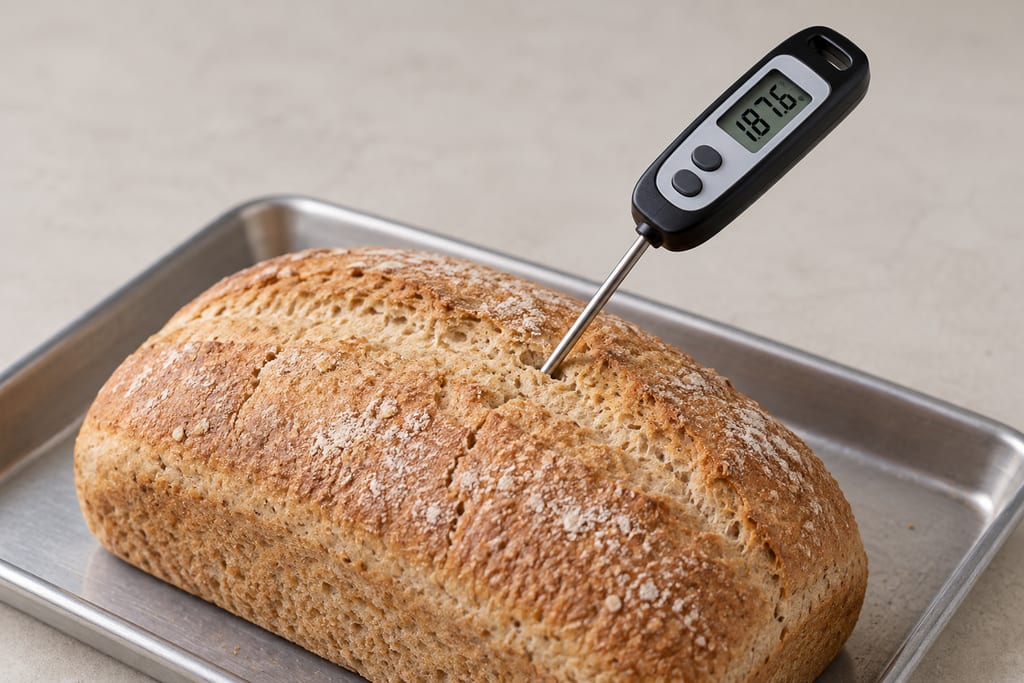
A probe thermometer measures the temperature of food at its sensing tip. It answers a different question from a kettle, oven or water-bath display, and from a pH meter.
Puurtaq is a sewn skin bag documented as a vessel for igunaq, the ageing of marine-mammal meat and fat in Inuit foodways. Nunavik research describes skin pouches alongside other containers; the pouch does not guarantee food safety.
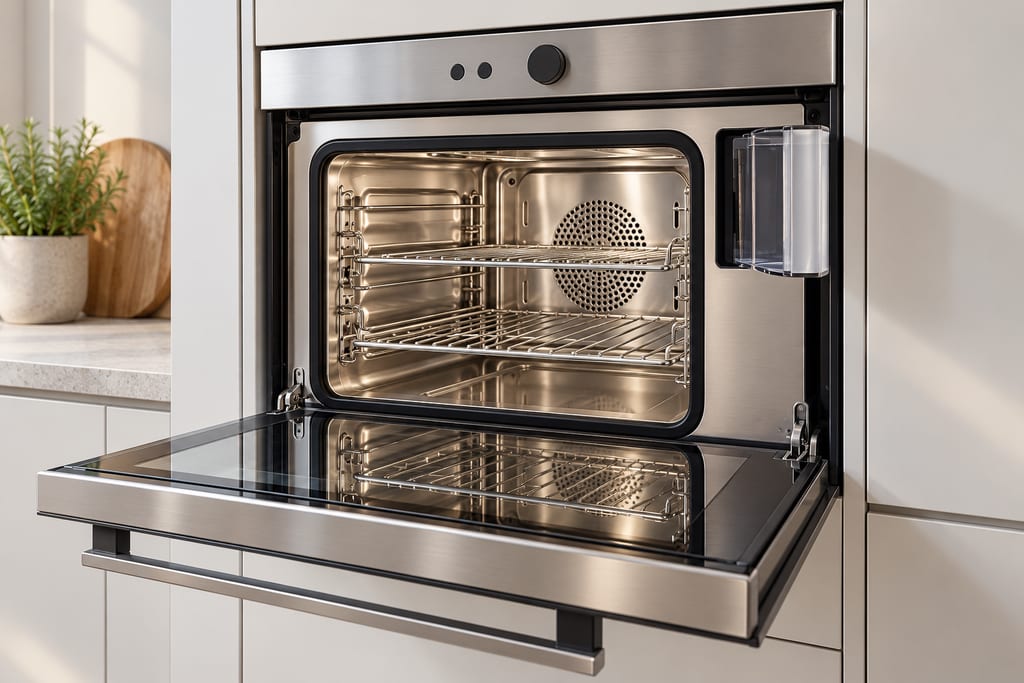
A steam oven cooks with water vapour; a combi oven pairs steam with circulating dry heat. Their modes and temperature controls differ by model, so a documented yogurt programme cannot be assumed for every oven.

Protected Italian vinegar made only from cooked grape must, fermented and aged in a battery of wooden barrels for at least 12 years: sweet, sharp and syrupy.
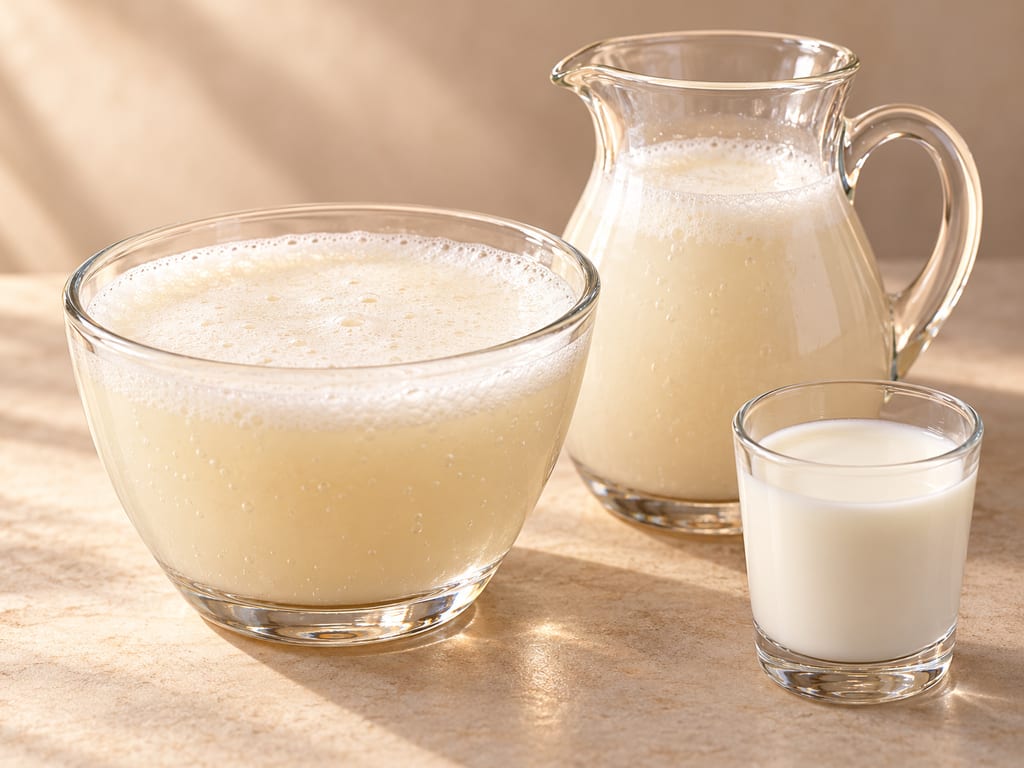
Airag is Mongolia’s fermented mare’s-milk drink, traditionally churned with saved starter in a reusable cowhide khokhuur.

Appam, or hoppers, are South Indian and Sri Lankan rice pancakes made from a fermented coconut-and-rice batter and cooked in a curved pan to a crisp lacy rim and a soft, spongy centre.
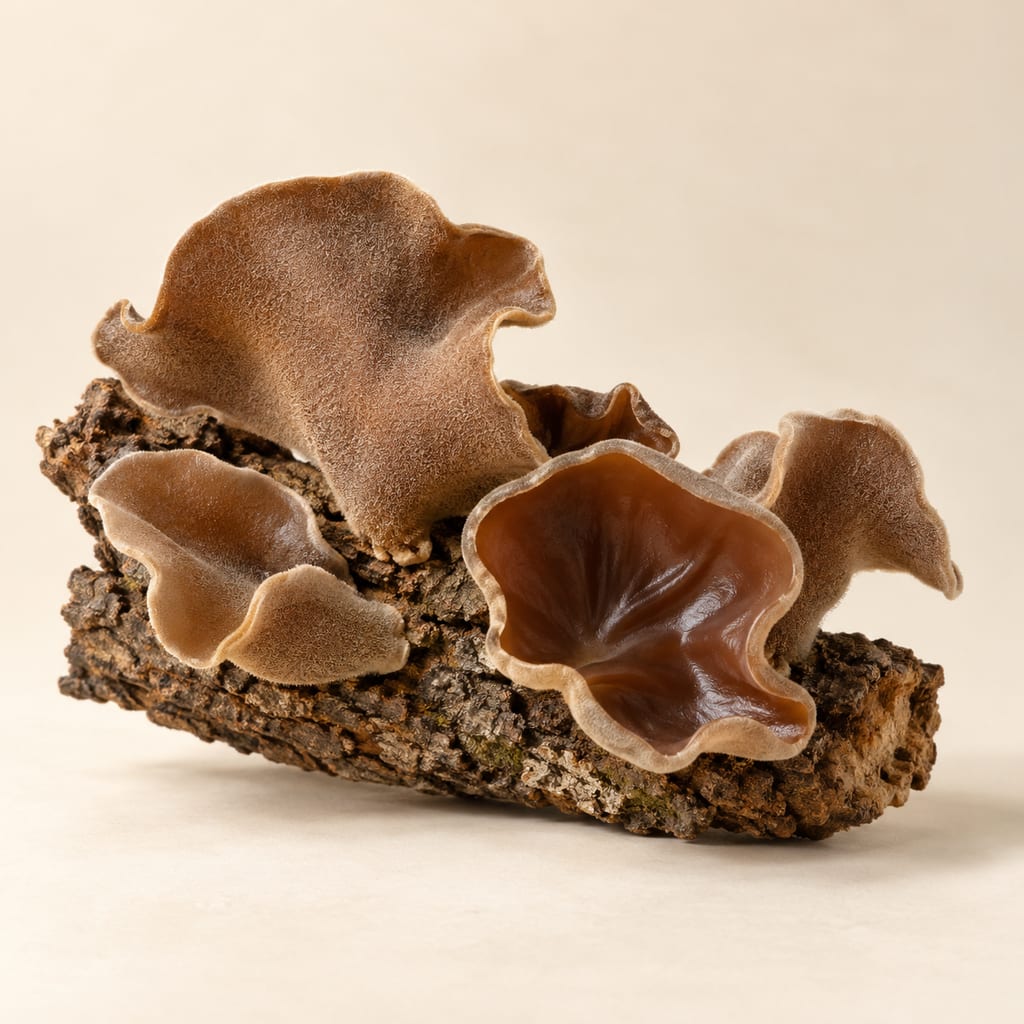
Auricularia tremellosa is a wood ear fungus of the genus that supplies most dried wood ear sold in China; its own food record is thin, and the culinary practice described here comes from the closely related wood ear species.

Ayran is Turkey’s cold, savoury yogurt drink: plain yogurt is loosened with water and lightly salted, then whisked smooth or aerated into a soft cap of foam.
A thin stone griddle used over an open hearth. Norwegian archaeology documents the established tradition from the early Middle Ages; a Viking-period origin is only a cautious suggestion linked to Shetland.

Crushed or milled barley cooked in water until the starch softens and the mixture thickens, the plainest way a northern household turned stored grain into a meal, here with apple and hazelnut.
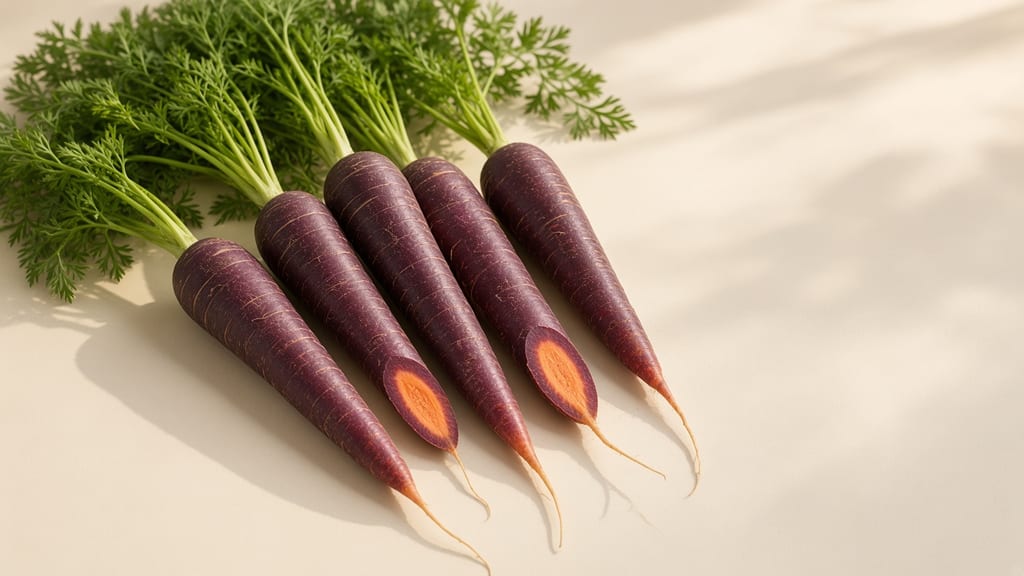
Black carrot is the anthocyanin-pigmented Eastern carrot (Daucus carota var. atrorubens), the purple root that preceded orange types and still colours kanji and şalgam.
No community contributions have been published for this entry yet.
Sign in to contribute. Published comments and photos are free to read.
The Manitoba Museum; Association of Manitoba MuseumsHistory · Material · Geography · Use · Comparative context
Ceramic LampThe museum dates a Rocky Cree ceramic lamp approximately 1200–1500.
The account associates Asiniskaw Inthinew (Rocky Cree) oil-lamp use for cooking, drying, heating and lighting lodges with the Southern Indian Lake area of northern Manitoba.
The museum says Kivallirmiut (Caribou Inuit) neighbors to the east along Hudson Bay shared lamp technology; Inuit lamps were carved from soapstone, while similar-shaped Cree lamps appear molded from clay.
The museum describes this as the only occurrence in Canada where lamp technology was adopted by Cree people.
Cited in: A clay lamp in northern Manitoba; A related form made in another material; What the record establishes; Use and interpretation