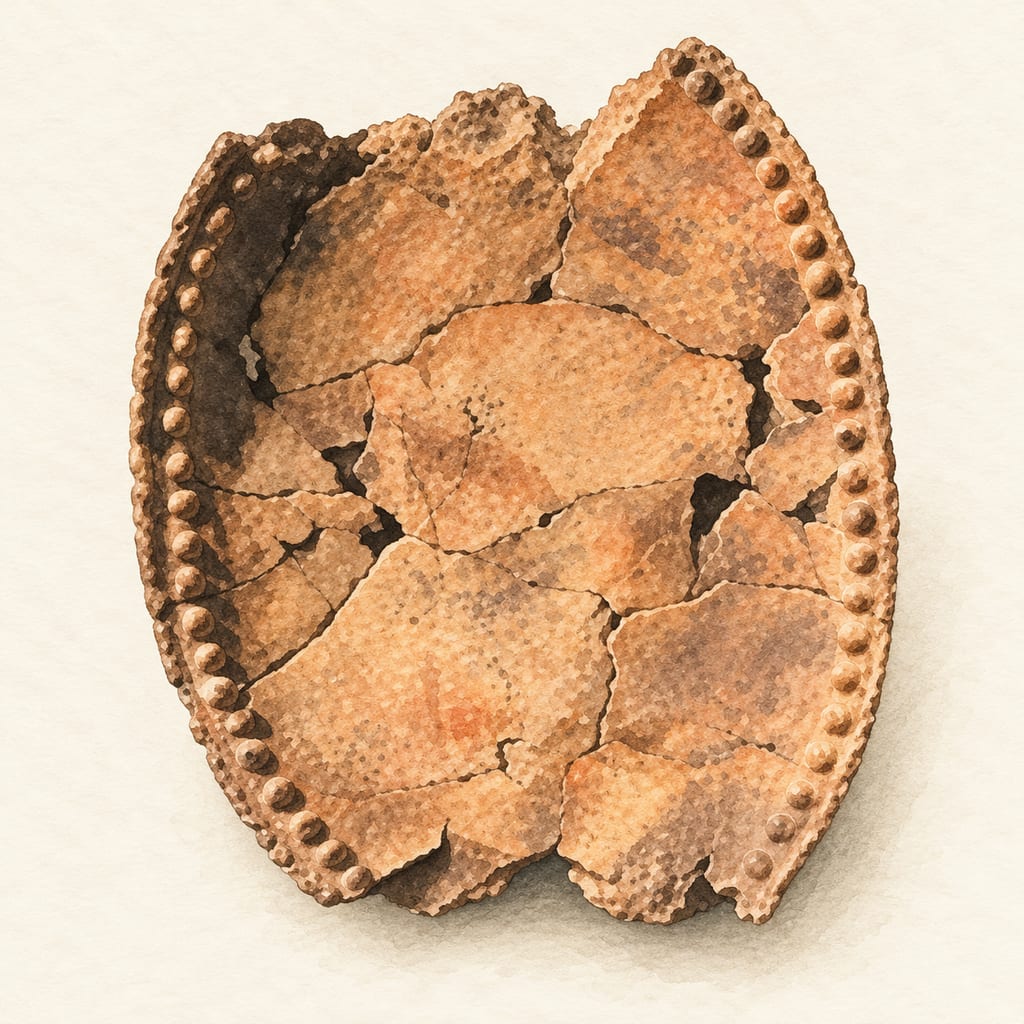
Ceramic cooking lamp
A Rocky Cree clay lamp dated approximately 1200–1500 is recorded from Southern Indian Lake, northern Manitoba. The Manitoba Museum links this lamp tradition to cooking, drying, heating and lighting lodges.
 FermenteaWhere food goes to change
Equipment · Lamps and burners
A qulliq oil lamp and a separate ukkusik cooking pot form an Inuit heat-processing pair. Sources document soapstone forms, animal-oil lighting and cooking uses, and museum objects from the Eastern Arctic.
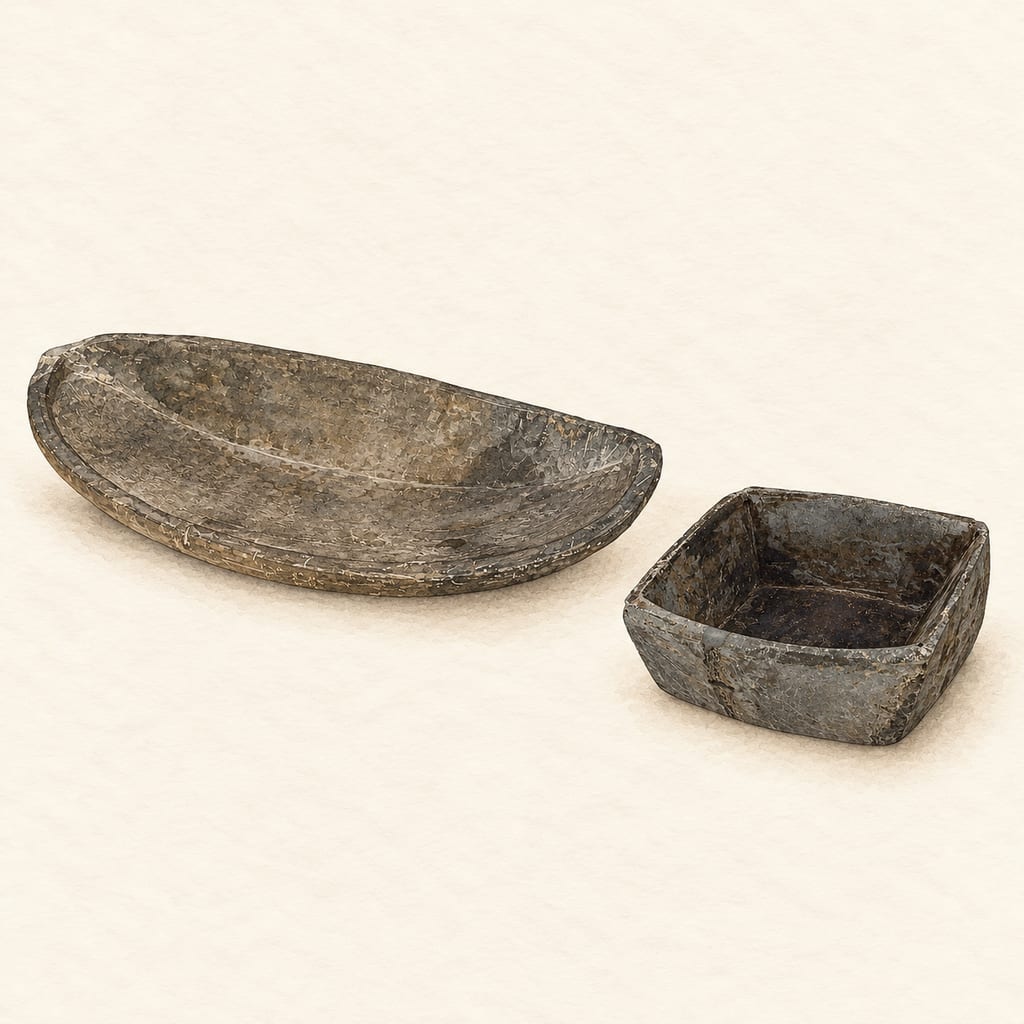
Qulliq and ukkusik name different things. A qulliq is an oil lamp; ukkusik is glossed as a cooking pot in a Nunatsiavut Inuktut glossary. The Canadian Museum of Nature's account of Early Inuit objects lists a soapstone qulliq and an ukkusik together in an archaeological-era collection. This page treats them as a documented heat-processing pair, not a single joined appliance or a standard kit. Each object can be moved independently, and the sources do not establish one universal size, shape or arrangement.
Museum and Inuit educational sources describe qulliiit as carved soapstone lamps. Examples vary: the Québec heritage register documents an Inuit-period lamp from Kangirsuk with a flared rectangular outline and slightly curved base, while a Royal Ontario Museum photograph shows a long shallow form. The name refers to a technology with regional forms, not one exact silhouette. A qulliq holds animal oil in its shallow basin. Moss or Arctic cotton can form a wick along the edge; it draws oil into the flame. Avataq's account describes tending the wick and refilling the lamp as part of its use.
Ukkusik means cooking pot in the Nunatsiavut glossary. The Smithsonian's Kalaallit collection records a carved steatite pot from North Greenland. Its photograph shows a deep, rectangular bowl; archaeological descriptions and other museum collections show that stone cooking vessels vary rather than follow a single template. The Canadian Museum of Nature dates a group of Early Inuit objects, including an ukkusik and a qulliq, broadly to 800–350 years ago. That date belongs to the artifacts and collection account, not to the invention of the pot or lamp.
Avataq describes the qulliq as a source of light and heat and records uses that include melting snow, preparing water and tea, boiling meat, making bannock, and drying clothing or hides. The Québec heritage register also records former cooking and drying uses and notes that the flame required close attention. The paired-item account in the Canadian Museum of Nature's research material describes a pot cooked over the lamp, but the inspected object records do not show a standard support, spacing or cooking rig. The image here therefore keeps the two tools distinct and does not turn an inferred arrangement into a reconstruction.
The records place these technologies across Inuit communities rather than at a single point of origin. Québec's heritage inventory documents a qulliq from Kangirsuk in Nunavik; the Canadian Museum of Nature presents Early Inuit lamp and pot artifacts; and the Smithsonian records a Kalaallit soapstone pot from Greenland. A separate Smithsonian record documents a qulliq commissioned from the Inullariit Society of Igloolik in 2003, showing that the lamp continues to be made in contemporary Inuit life. That contemporary object does not show that the paired soapstone-pot arrangement remains in everyday use, and no source here dates when the paired cooking practice began or ended.
The inspected sources do not provide a standard volume, dimensions, cooking temperature, fuel quantity, or complete step-by-step setup for this paired equipment. The museum photograph's metal display supports are not part of the qulliq. This account describes documented objects and uses; it is not a practical fuel-handling or cooking guide, and it does not claim that all Inuit households used identical forms or arrangements.
The sources place Inuit lamp use and objects in Nunavik and the Eastern Canadian Arctic; this country-level association does not claim a single Canadian origin or that every pot and lamp formed one fixed assembly.
The Smithsonian documents a Kalaallit soapstone cooking pot from North Greenland. This locates the pot example, not the origin of qulliqs or the whole paired practice.
The NMAI records a soapstone qulliq commissioned from the Inullariit Society of Igloolik; this documents contemporary making of the lamp component, not a contemporary paired cooking-pot setup.
A Rocky Cree clay lamp dated approximately 1200–1500 is recorded from Southern Indian Lake, northern Manitoba. The Manitoba Museum links this lamp tradition to cooking, drying, heating and lighting lodges.
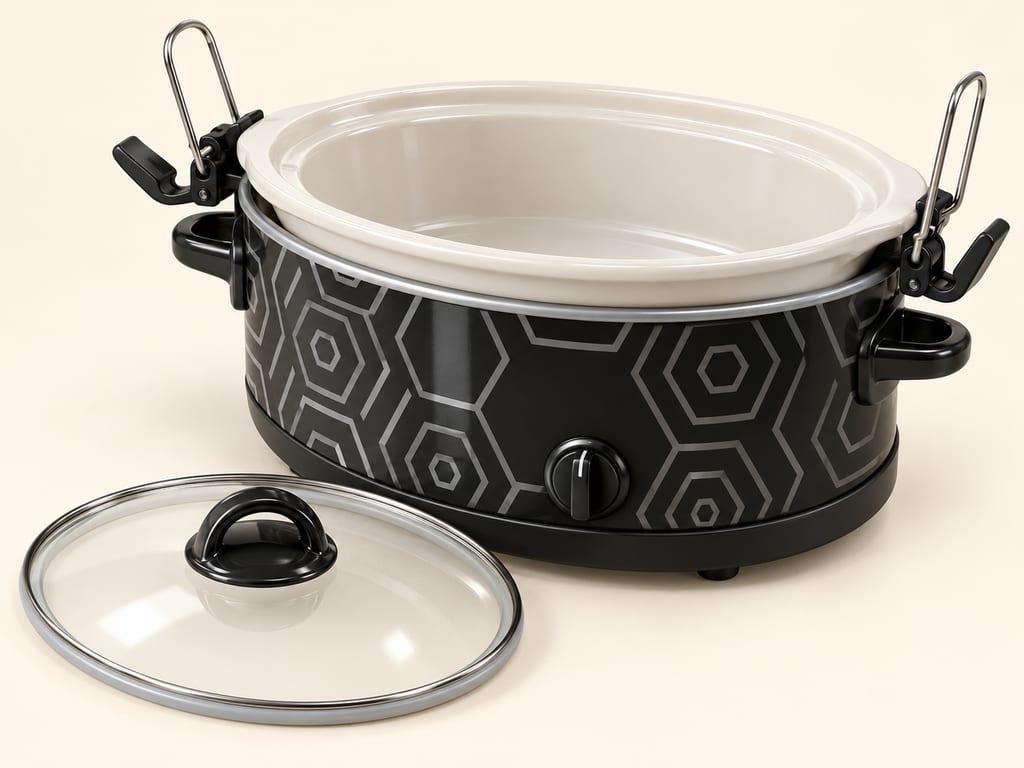
The SCCPVL500FB is listed by Crock-Pot as a French Bull-pattern Cook & Carry manual slow cooker. Its stoneware crock and heated base cook on Low or High; the WARM setting is only for already-cooked food, not fermentation or cooking.
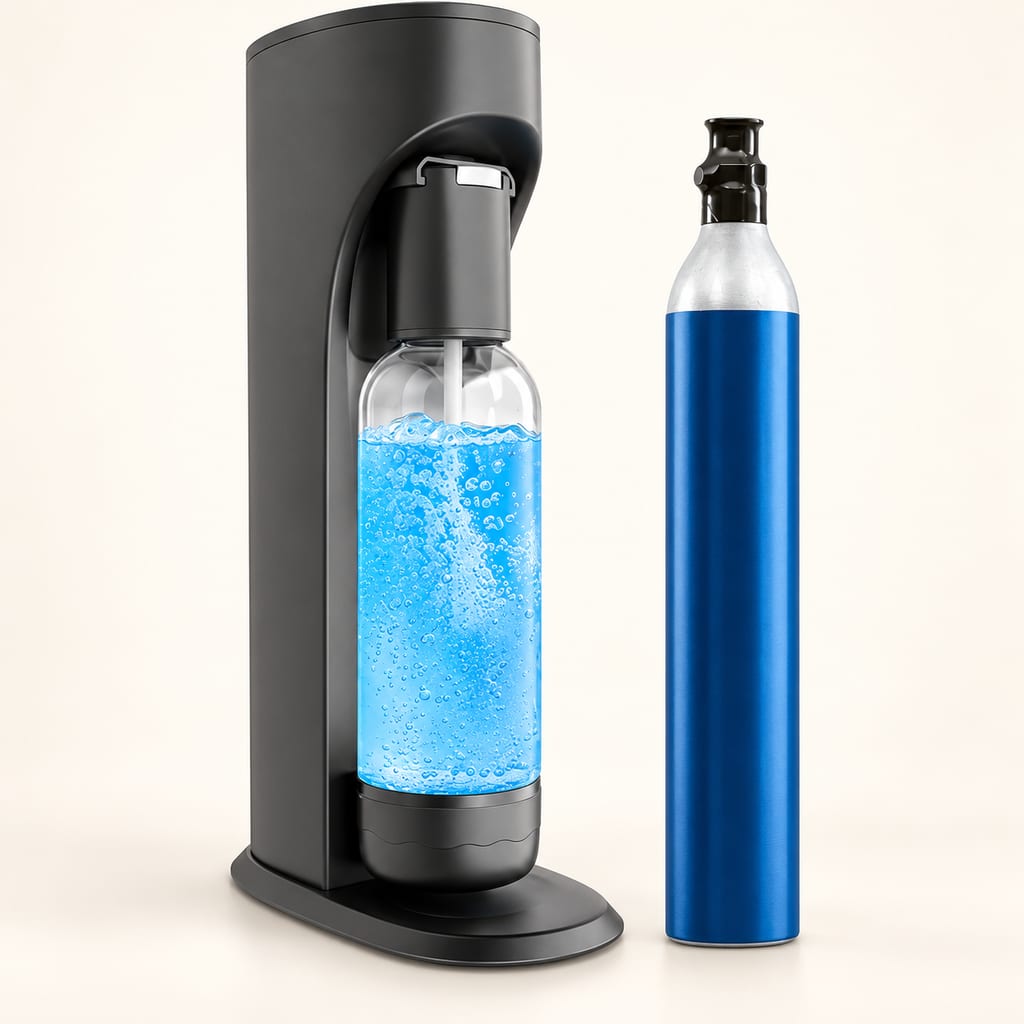
Drinkmate’s Fizz Infuser lets its countertop carbonators add carbon dioxide to cold drinks directly, with a controlled release valve for foamy liquids. Models and bottle systems vary; a 2025 recall applies to specific one-litre bottles.
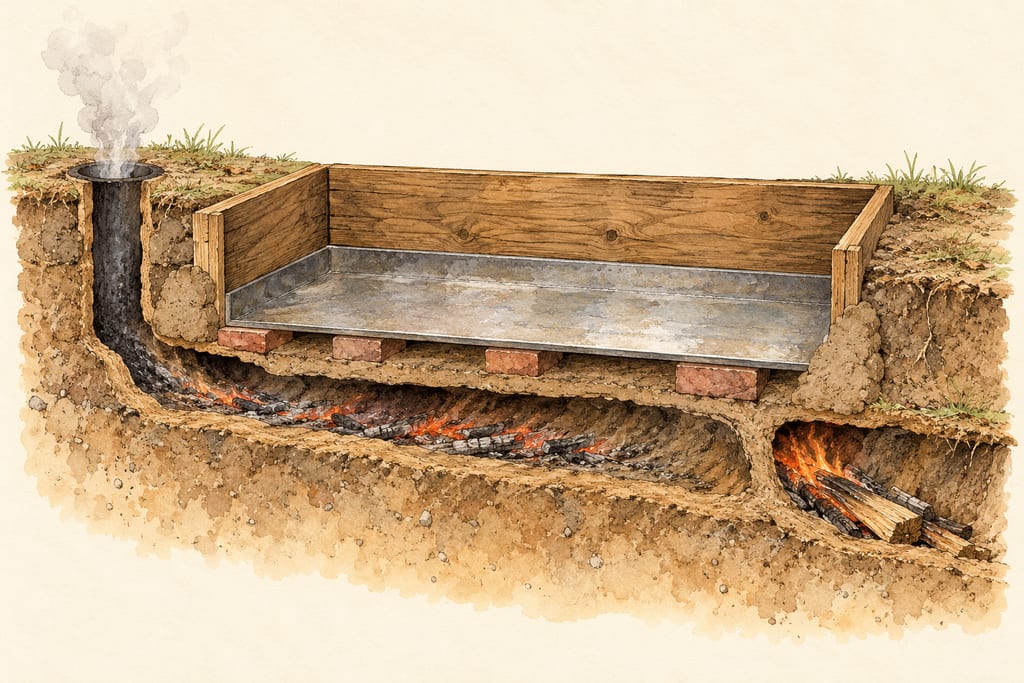
A separate cooking box heats ripened eulachon so grease rises for skimming. Nuxalk sources describe wooden or cedar sides, a metal bottom and, in one setup, a fire trench beneath the box.
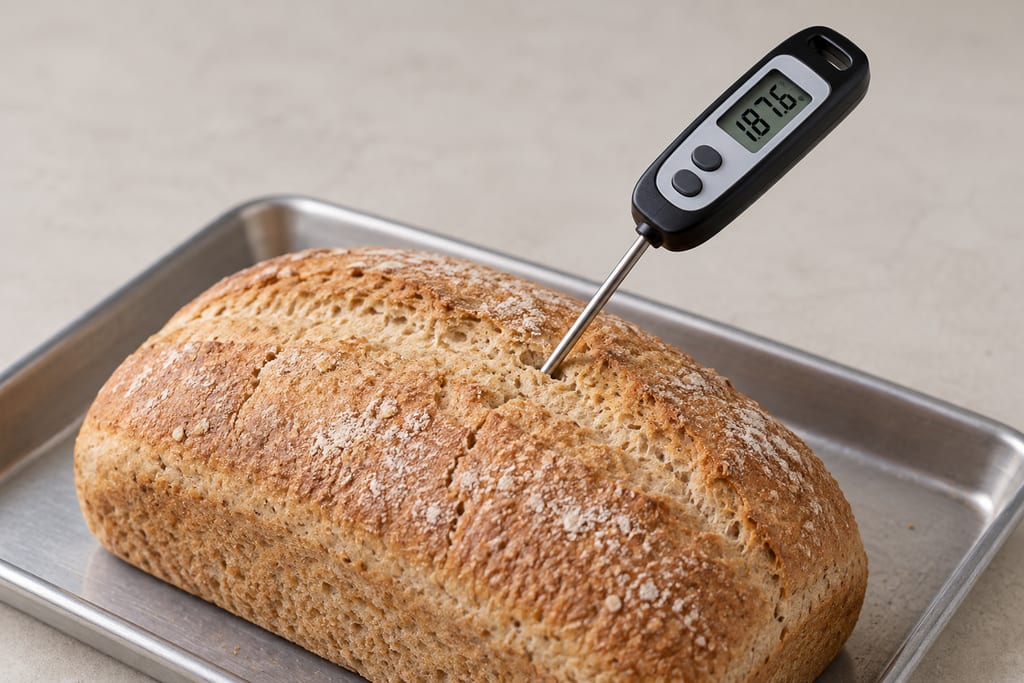
A probe thermometer measures the temperature of food at its sensing tip. It answers a different question from a kettle, oven or water-bath display, and from a pH meter.
Puurtaq is a sewn skin bag documented as a vessel for igunaq, the ageing of marine-mammal meat and fat in Inuit foodways. Nunavik research describes skin pouches alongside other containers; the pouch does not guarantee food safety.
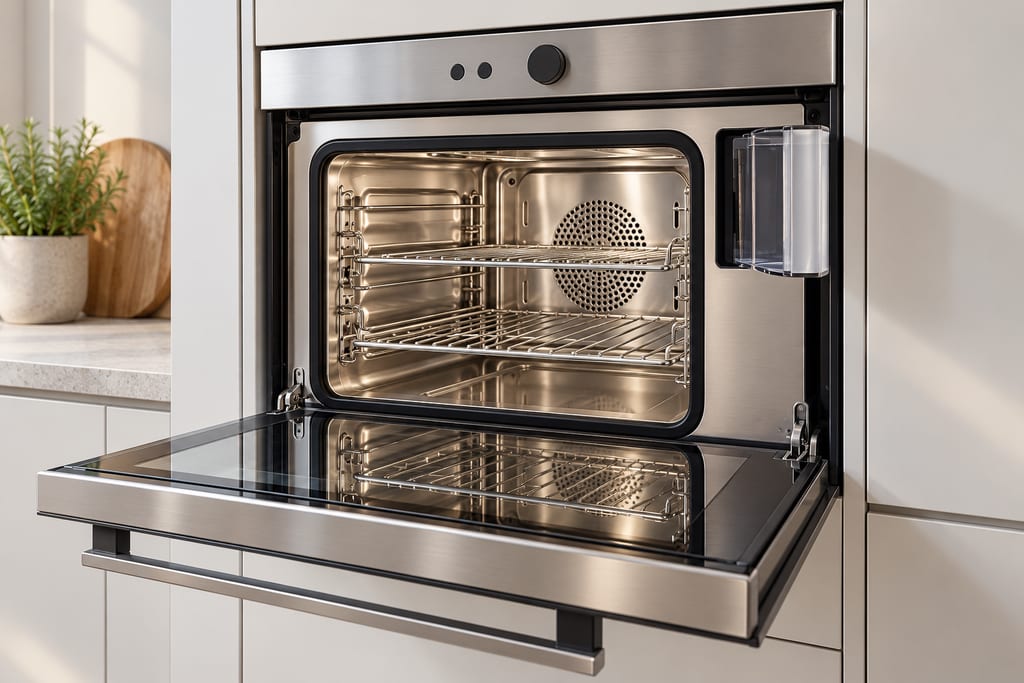
A steam oven cooks with water vapour; a combi oven pairs steam with circulating dry heat. Their modes and temperature controls differ by model, so a documented yogurt programme cannot be assumed for every oven.

Protected Italian vinegar made only from cooked grape must, fermented and aged in a battery of wooden barrels for at least 12 years: sweet, sharp and syrupy.

Airag is Mongolia’s fermented mare’s-milk drink, traditionally churned with saved starter in a reusable cowhide khokhuur.

Appam, or hoppers, are South Indian and Sri Lankan rice pancakes made from a fermented coconut-and-rice batter and cooked in a curved pan to a crisp lacy rim and a soft, spongy centre.

Auricularia tremellosa is a wood ear fungus of the genus that supplies most dried wood ear sold in China; its own food record is thin, and the culinary practice described here comes from the closely related wood ear species.

Ayran is Turkey’s cold, savoury yogurt drink: plain yogurt is loosened with water and lightly salted, then whisked smooth or aerated into a soft cap of foam.
A thin stone griddle used over an open hearth. Norwegian archaeology documents the established tradition from the early Middle Ages; a Viking-period origin is only a cautious suggestion linked to Shetland.

Crushed or milled barley cooked in water until the starch softens and the mixture thickens, the plainest way a northern household turned stored grain into a meal, here with apple and hazelnut.

Black carrot is the anthocyanin-pigmented Eastern carrot (Daucus carota var. atrorubens), the purple root that preceded orange types and still colours kanji and şalgam.
No community contributions have been published for this entry yet.
Sign in to contribute. Published comments and photos are free to read.
Canadian Museum of NatureHistory · Object pairing · Geography
Our Land, Our ArtThe museum describes Early Inuit objects broadly dated 800–350 years ago, including both an ukkusik cooking pot and a soapstone qulliq oil lamp.
The exhibit account does not date the invention of either object or specify a standard arrangement for using them together.
Cited in: Two separate tools, sometimes considered together; The ukkusik: a separate stone cooking vessel; Light, warmth and food work; Place, date and continuity; What the evidence does not establish
Répertoire du patrimoine culturel du Québec; Institut culturel Avataq; Pointe-à-CallièreHistory · Materials · Form · Use · Geography
Lampe à l'huile (Qulliq), KangirsukThe register describes an Inuit-period soapstone qulliq from Kangirsuk, western Ungava Bay, with a flared rectangular form and curved underside.
It describes seal grease along a wick, monitored use to limit smoke and manage flame, and former functions including melting snow, cooking and drying clothes.
Its period classification includes Thule and historical Inuit periods; the artifact's recorded date does not establish an invention date.
Cited in: The qulliq: a carved stone oil lamp; Light, warmth and food work; Place, date and continuity; What the evidence does not establish
Nunatsiavut Government, TusâllangaTerminology · Geography
Inuktut Glossary: UThe Nunatsiavut Inuktut glossary translates ukkusik as “cooking pot,” a language-specific lexical record rather than a technical description of one uniform vessel.
Cited in: Two separate tools, sometimes considered together; The ukkusik: a separate stone cooking vessel
Avataq Cultural InstituteUse · Fuel · Wick · Maintenance · Cultural context
Tell Me a Story: UnikkaangualaurtaaAvataq explains that a qulliq is carved soapstone and was an important light and heat source in Inuit life.
Its educational account describes animal oils as fuel, Arctic cotton or moss as wick, and uses that include cooking, melting snow, boiling meat, making tea and bannock, and drying clothes and hides.
The account mentions regional differences in oils and practice; it does not provide a universal operation schedule.
Cited in: The qulliq: a carved stone oil lamp; Light, warmth and food work
National Museum of the American Indian, Smithsonian InstitutionMaterials · Form · Geography · Object record
Cooking pot, NMAI_179393The collection record identifies a carved steatite/soapstone cooking pot associated with Kalaallit people in North Greenland.
The photographed pot is a separate, rectangular, deep-sided vessel; its particular object record should not be generalized into a single universal pot form.
Smithsonian image-use restrictions are stated on the collection page; the photograph is linked to its source only.
Cited in: The ukkusik: a separate stone cooking vessel; Place, date and continuity
National Museum of the American Indian, Smithsonian InstitutionModern continuity · Materials · Geography
Lamp for whale or seal oil, NMAI 26/3292The NMAI record documents a soapstone qulliq commissioned from the Inullariit Society of Igloolik in 2003, identifying an Inuit maker and place in Nunavut.
The modern collected/commissioned object shows contemporary qulliq making; it does not establish continued everyday use of the paired soapstone cooking pot.
Cited in: Place, date and continuity
Wikimedia Commons; photograph by Thomas QuineImage reference
Qulliq Inuit seal oil lamp (41160427352).jpgThe image shows a shallow, elongated soapstone qulliq displayed at the Royal Ontario Museum in 2017; the thin supports visible beneath it belong to the museum display, not the lamp.
Commons records this photograph as CC BY 2.0; its linked gallery attribution is Thomas Quine.
Cited in: The qulliq: a carved stone oil lamp; What the evidence does not establish
Wikimedia CommonsImage reference
Qulliq image originalImage bytes linked to Commons file record, used privately as a subject reference.