Built structures
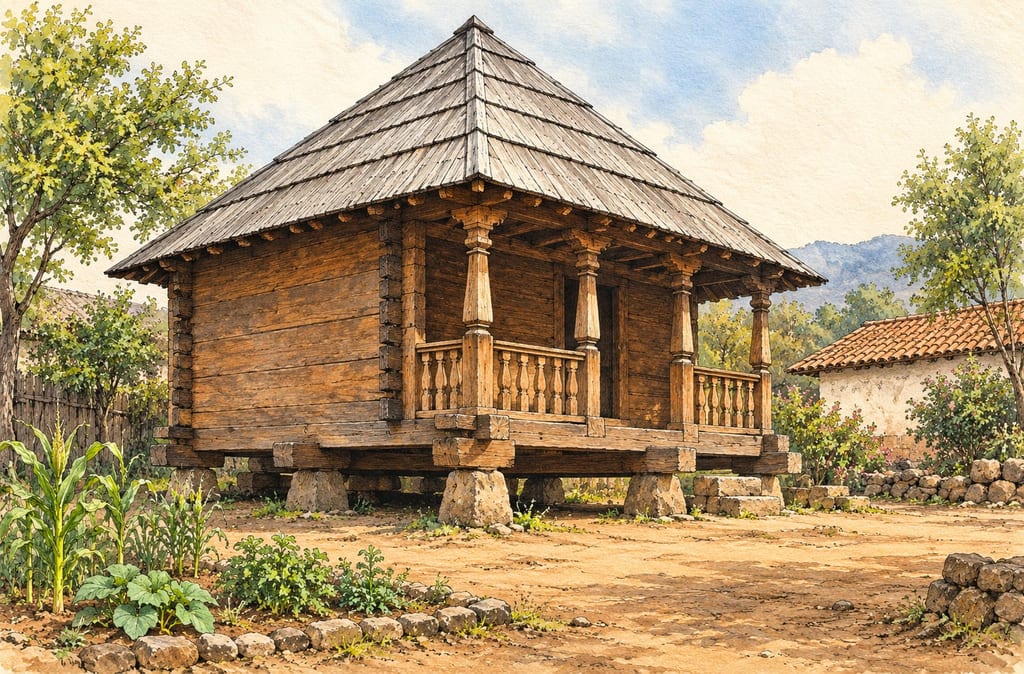
Purépecha troje
A Purépecha troje is a timber household dwelling with a raised loft for grain and seeds. Its portal, room and tapanco combine family life, food work and storage in a single structure.
 FermenteaWhere food goes to change
626 sourced equipment pages: vessels, tools, appliances and built structures.
A Purépecha troje is a timber household dwelling with a raised loft for grain and seeds. Its portal, room and tapanco combine family life, food work and storage in a single structure.
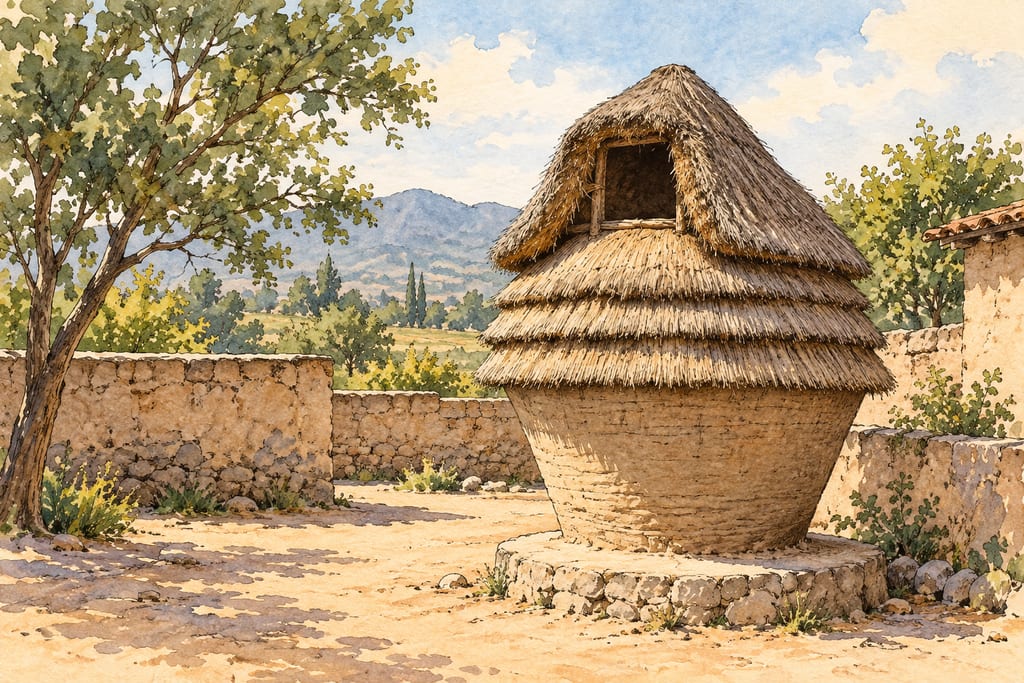
A cuexcomate is a fixed household granary of central Mexico: a hollow earthen body with a dry-grass roof, used chiefly to store maize. Its shape and construction vary by region.
A CIMAV industrial chipotle oven combines solar-heated water and recirculated air with auxiliary gas heat and a separate wood smoker. It differs from Camargo’s traditional open masonry cocedores; reports describe capacity differently.
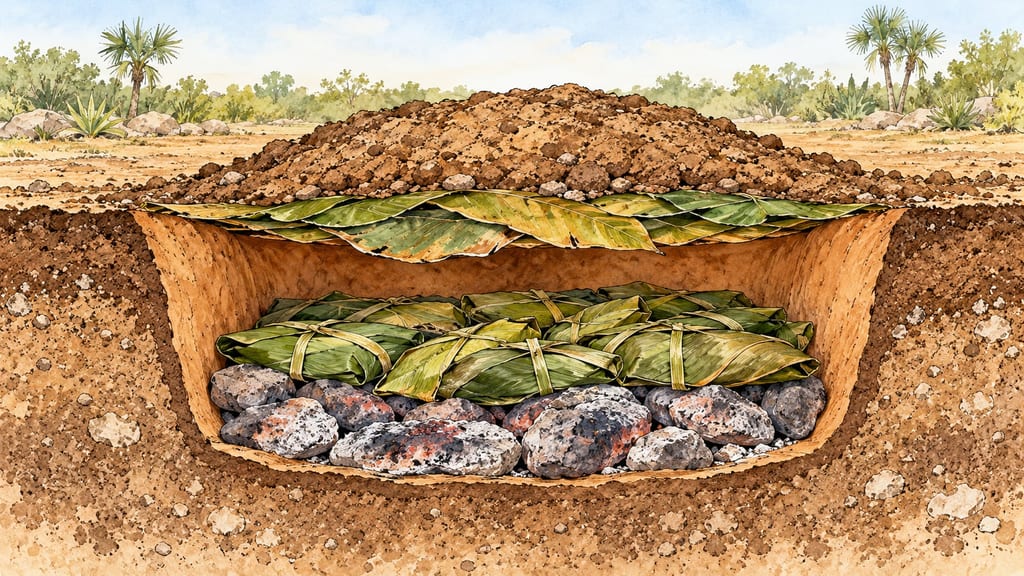
An in-ground Yucatecan Maya oven that uses fire-heated stones and a covered pit to cook food slowly. Documented pit depth, coverings and loading sequence vary; this page presents sourced examples rather than one standard design.
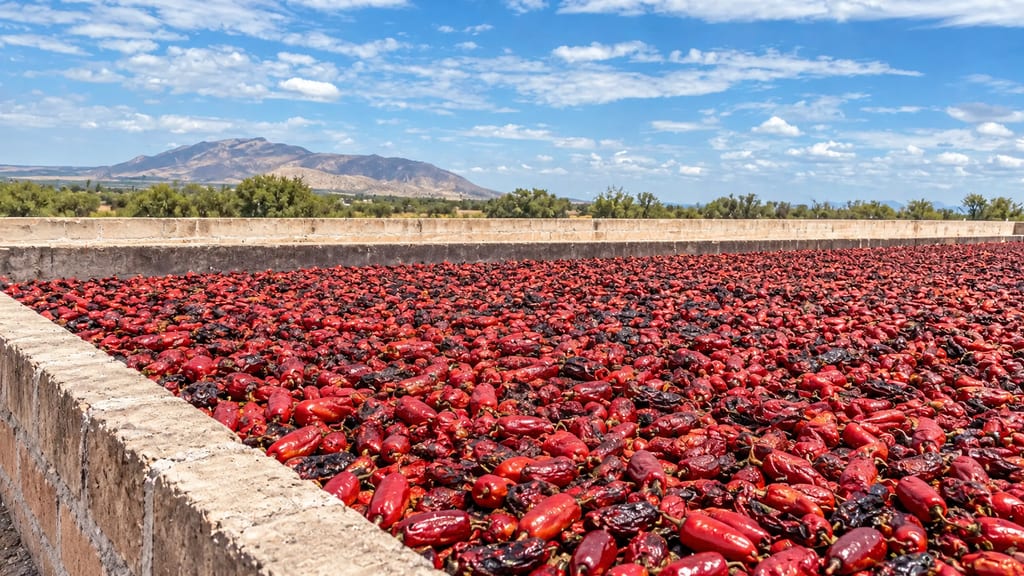
A fixed masonry-and-wood structure used in Camargo to smoke and dry ripe jalapeños into chipotle. Sources give regional dimensions and one separate experimental oven, not a safe construction plan.
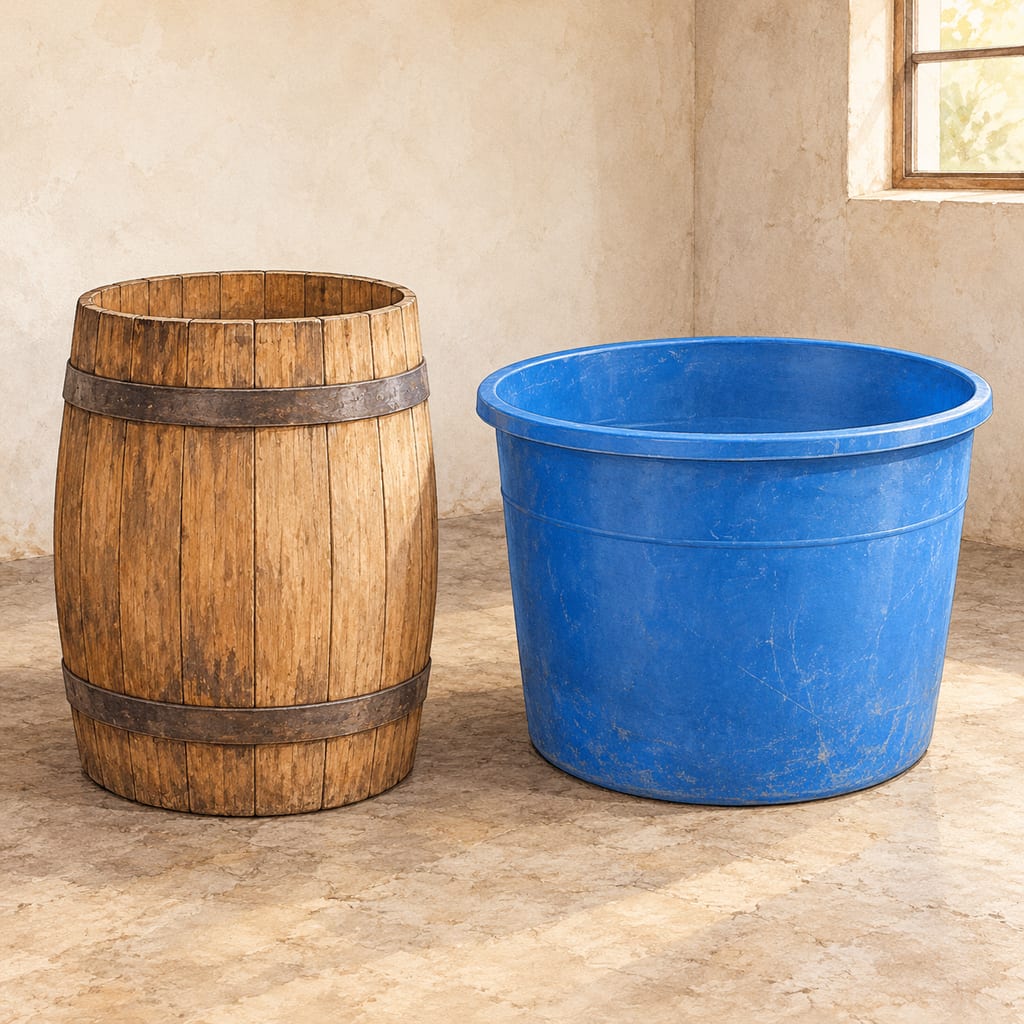
Pulque fermentation may use a wooden barrel or a modern plastic or fibreglass tub. The tinacal is the room or place where the vessels stand, not a name for either container.
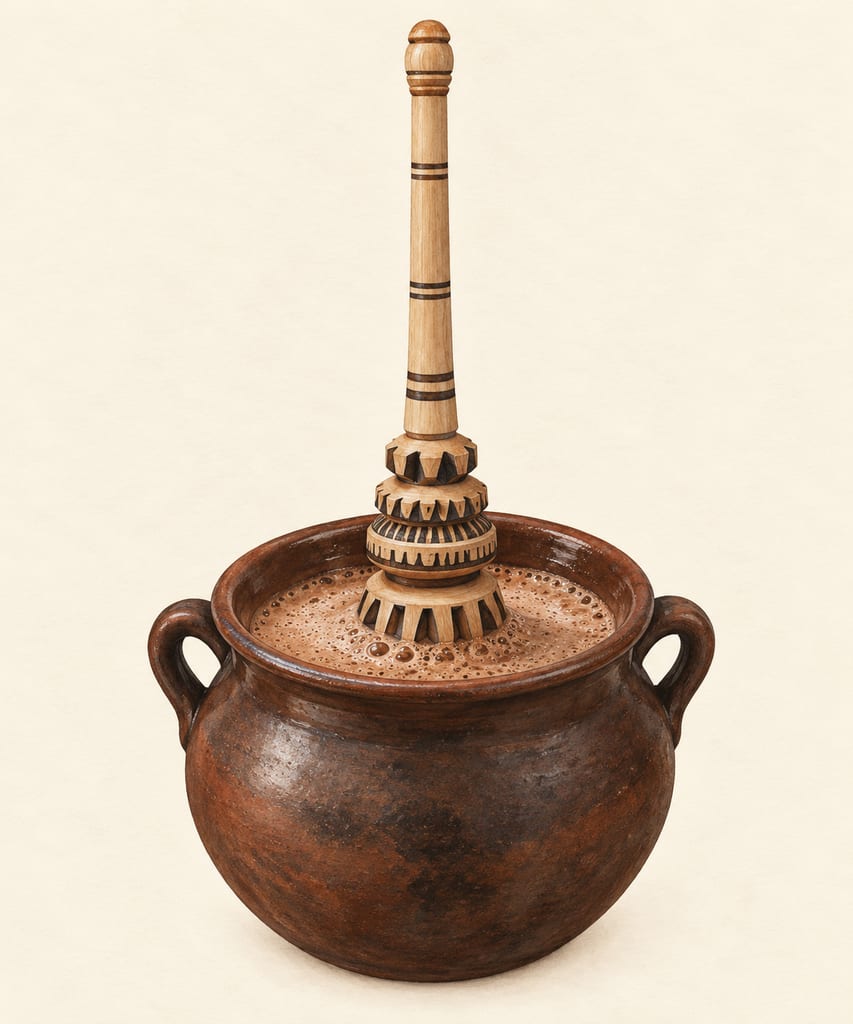
A molinillo is a hand-turned whisk used to beat drinking chocolate to a froth. Its carved wooden head works in the pot as the handle turns between the palms.
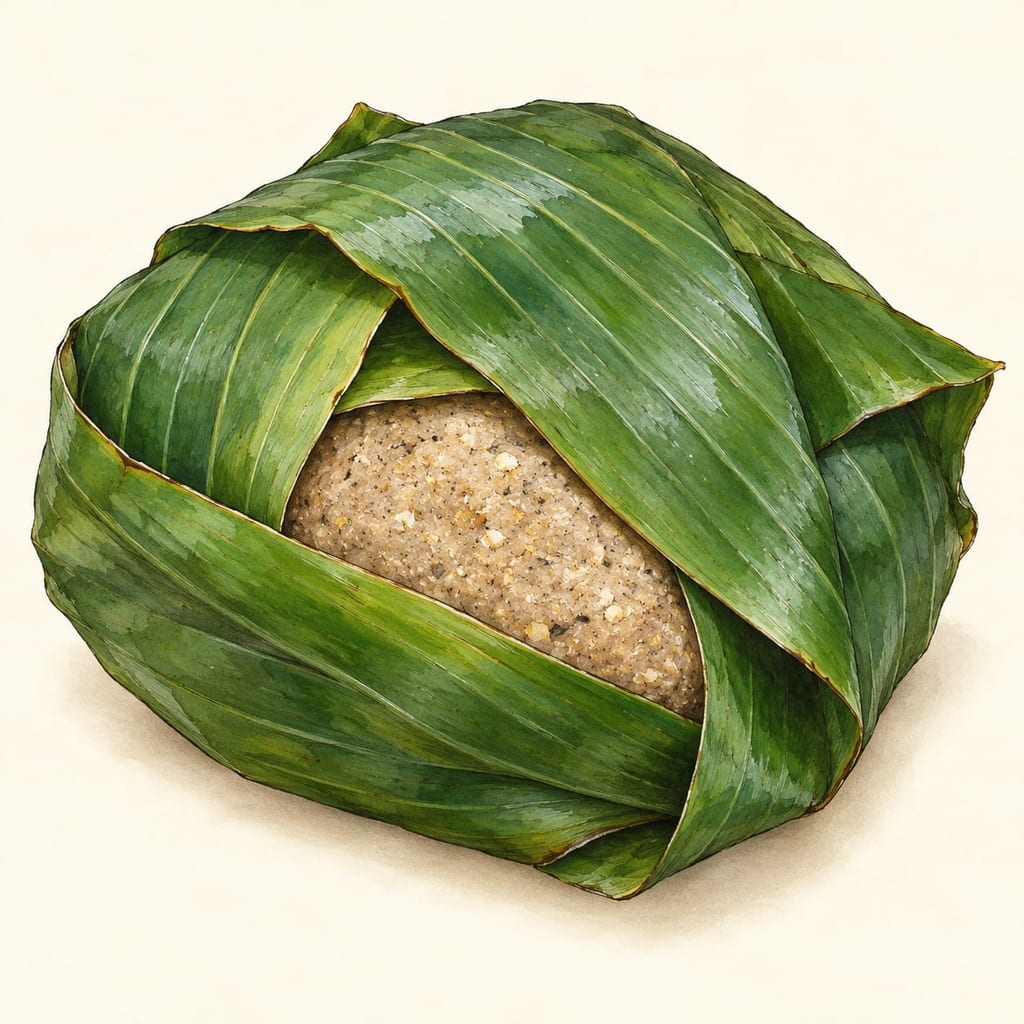
Plantain leaves wrap pozol’s nixtamalized maize dough during fermentation, limiting drying and keeping portions portable in southeastern Mexico.
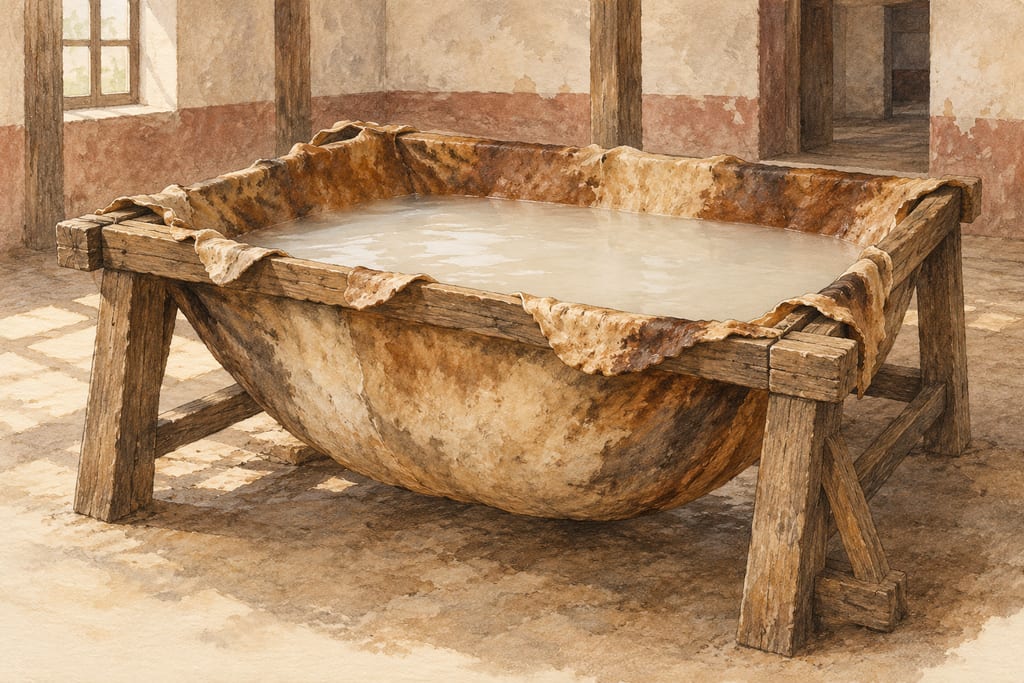
A framed hide vat is cattle hide fixed around a timber frame and sagging into a basin. In a tinacal it holds aguamiel and its ferment as they become pulque; it is distinct from the room, the acocote and a carrying skin.
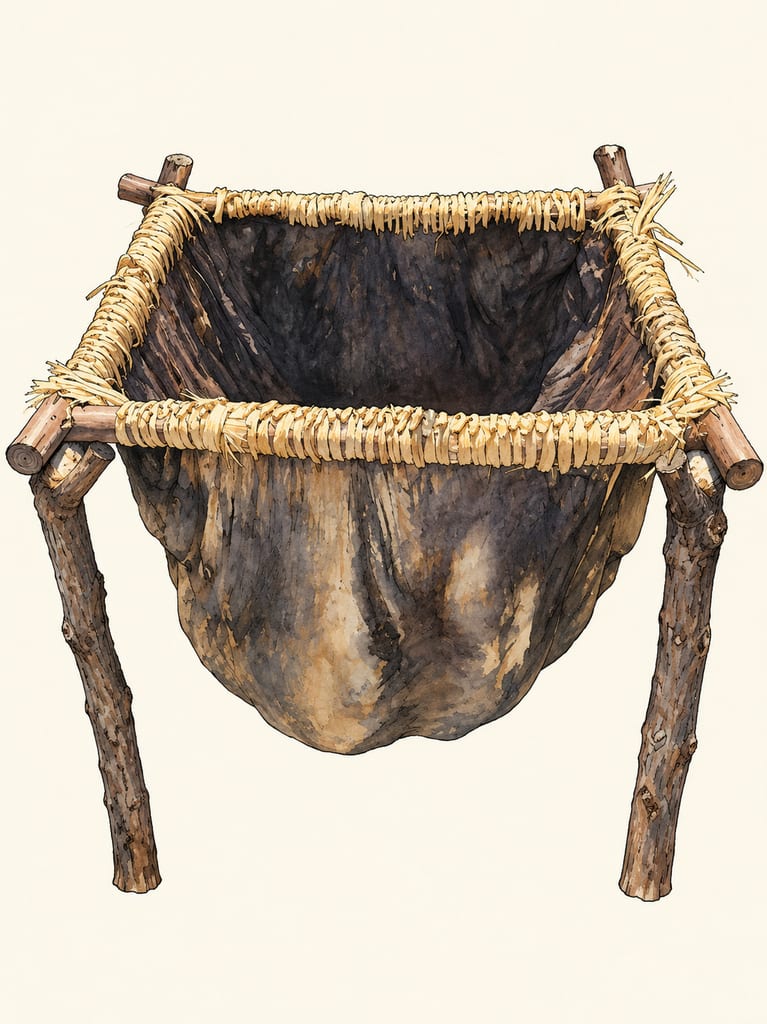
A hide stretched over a timber support forms an open, hanging basin for agave fermentation. Contemporary accounts document examples in Puebla and Oaxaca; the sources do not establish the form's pre-contact chronology.
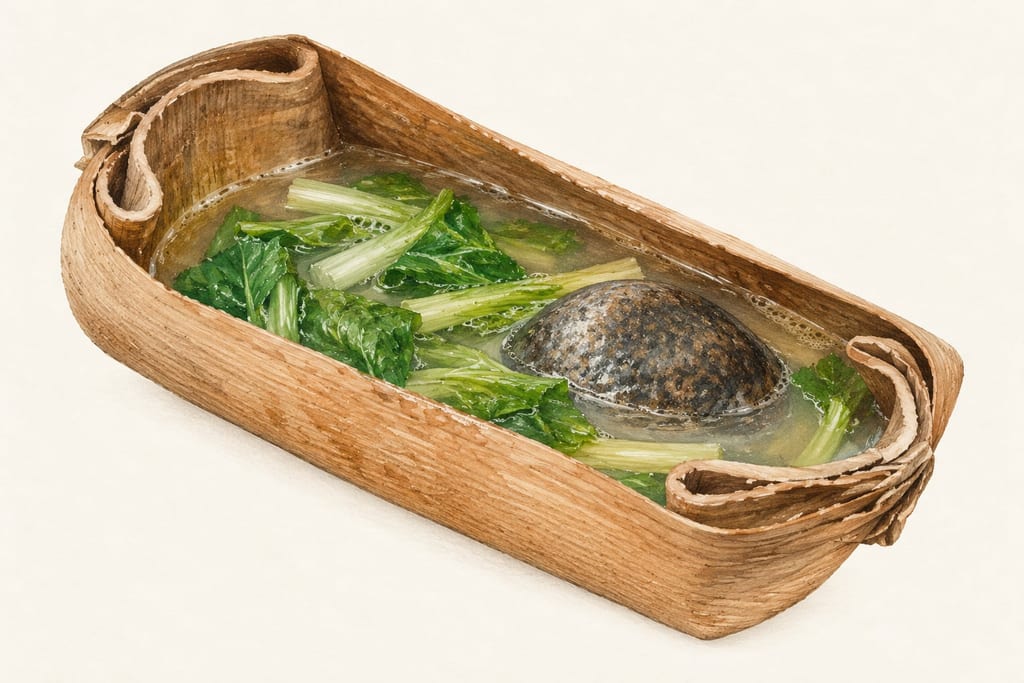
Stone boiling heats food in a vessel with stones warmed separately in a fire. Amis leaf sheaths, Chinantec jícaras and Northwest Coast cooking baskets are distinct regional forms, not one universal pot.

The acocote is a long, hollowed and dried gourd used to draw aguamiel from a mature maguey. It is a harvesting tool: the sap is transferred to a separate vessel before it ferments into pulque.
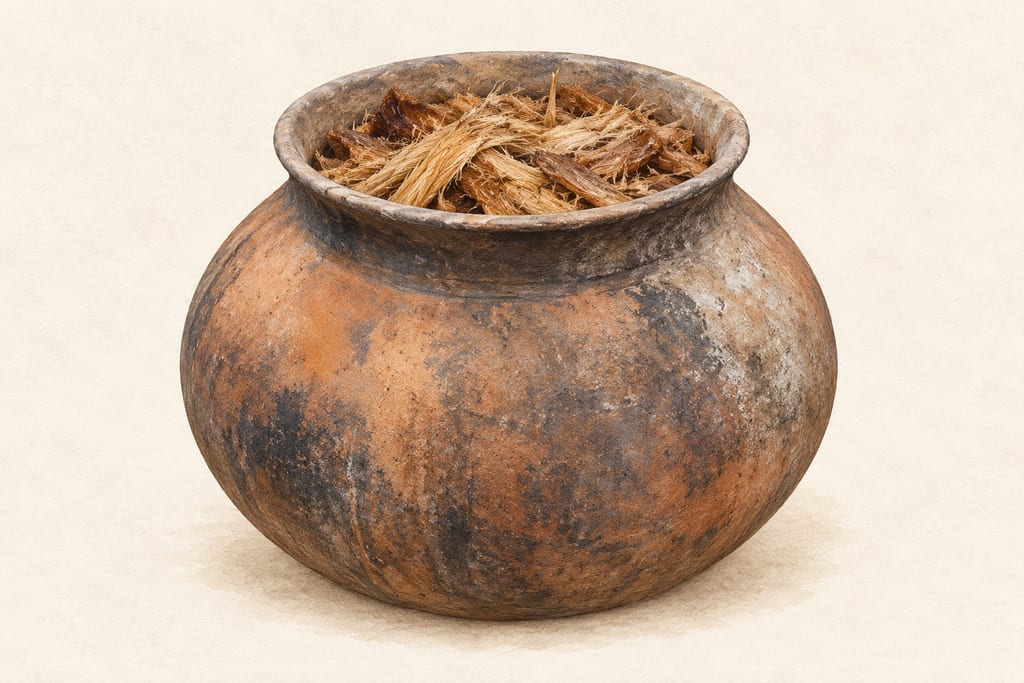
An open earthenware vessel for fermenting cooked agave mash before distillation, documented in Mexican mezcal production. It is distinct from the clay pot still used to distil the fermented mash.
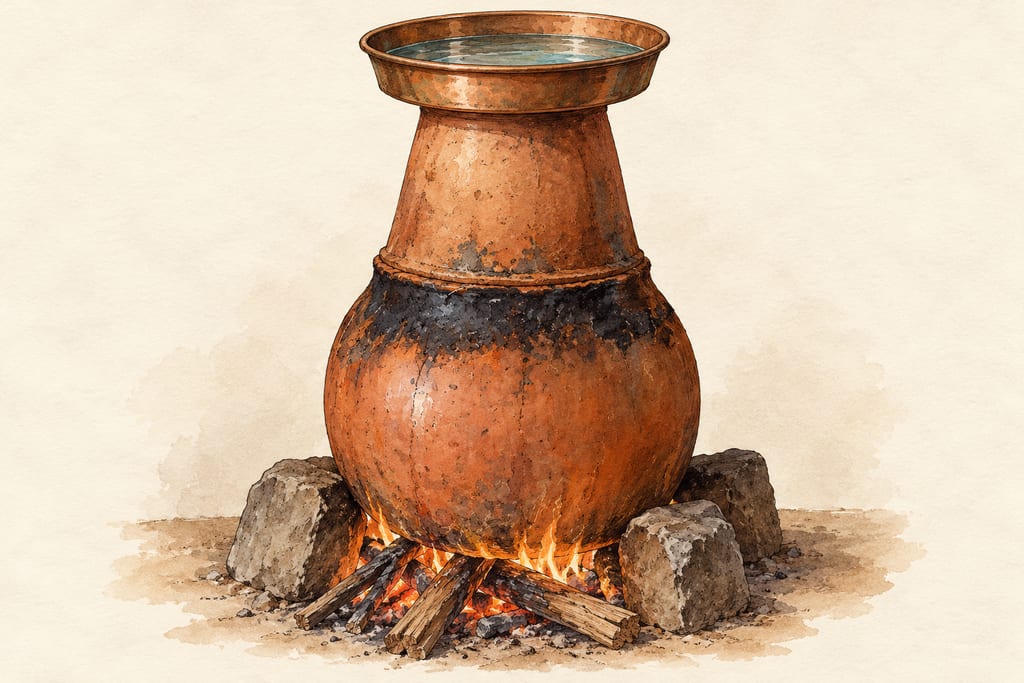
A fired-clay vessel assembly used to distil fermented agave must in several Mexican mezcal traditions. Its arrangement varies by region and producer; the sources document both clay or wooden vapour passages and particular cooling vessels.