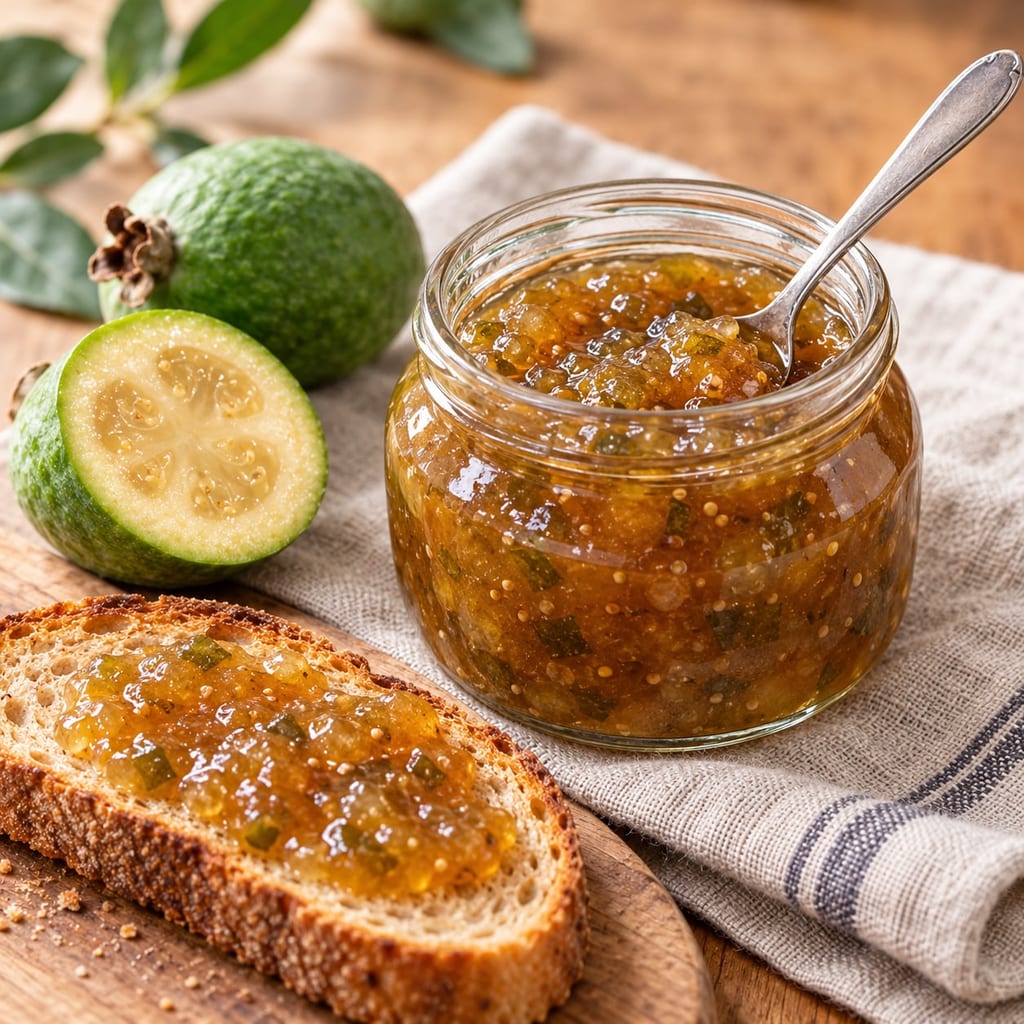
Feijoa jam
Blended whole feijoas simmer into a skin-on jam with lemon, sugar and vanilla. The skins remain for a more textured finish; keep this batch refrigerated or frozen because its method has no validated shelf-stable canning process.
 FermenteaWhere food goes to change
Substrates
The feijoa, Acca sellowiana, is a perfumed green fruit from southern Brazil and Uruguay. It reached France in 1890, the Black Sea in 1900 and New Zealand soon after, and is kept as cordial, geleia and raw sugar preserve.
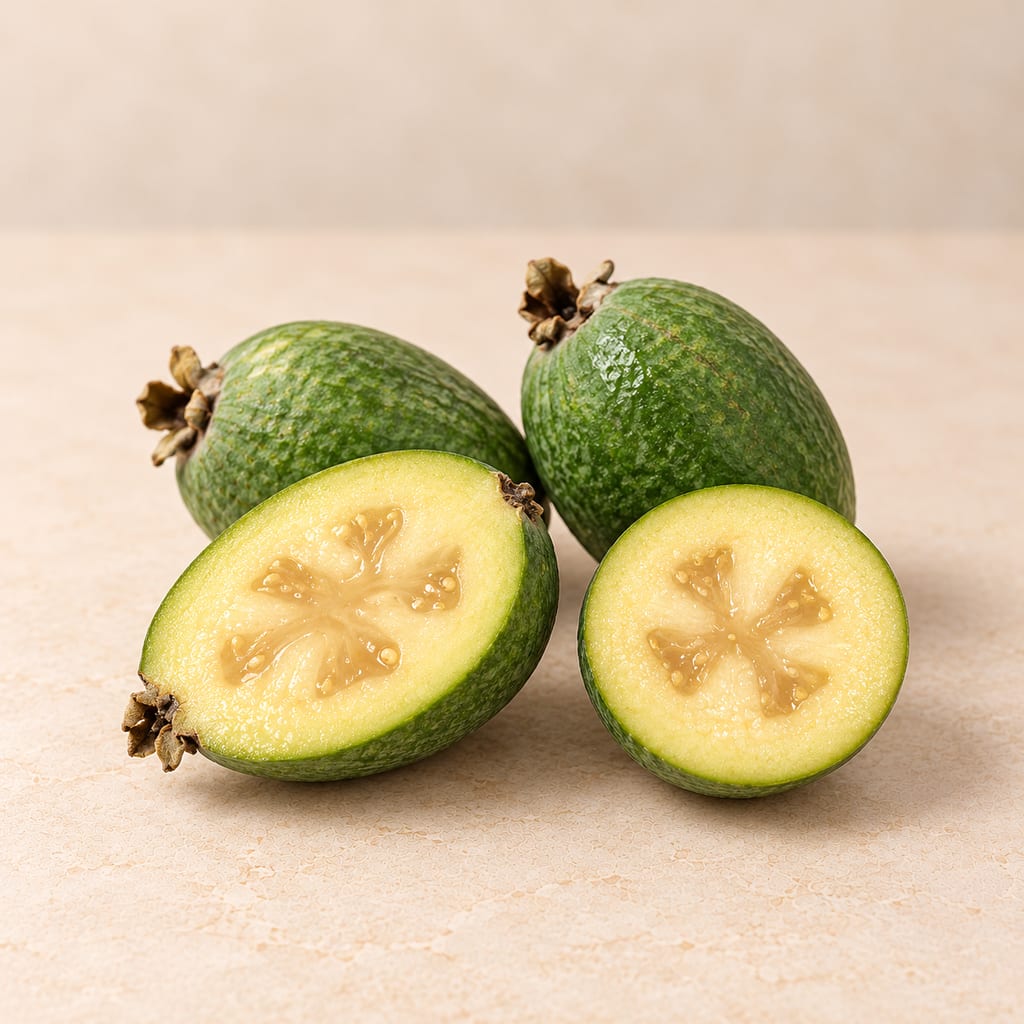
The feijoa is the fruit of Acca sellowiana, a small evergreen tree of the myrtle family. Te Ara, the Encyclopedia of New Zealand, places its home in south-eastern Brazil and Uruguay. The Uruguayan research institute INIA files it alongside eucalyptus and pitanga, two other members of the same family.
The fruit is an oblong green berry. A 2024 Brazilian survey from the Federal University of the Southern Frontier (UFFS) gives its size as 3 to 5 cm across and 4 to 10 cm long, with a weight anywhere between 20 and 250 g. The skin can be smooth, slightly wrinkled or rough. Inside, the pulp is the colour the Brazilian authors call cor gelo, ice white, around a jelly-like centre that holds small seeds. The same authors describe the taste as doce-acidulado, sweet with a sour edge, and the aroma as penetrating. Only 15 to 50 per cent of the fruit's weight is pulp, which is why cooks who make cordial from the flesh need a good pile of fruit for one bottle.
The tree is frost-hardy, Te Ara notes, but fruits best in temperate and subtropical climates. That is how it came to be a garden fruit in New Zealand, on the Black Sea coast and on the French Riviera.
In Brazil the fruit is goiaba serrana, mountain guava, or goiaba do mato, bush guava, according to the UFFS chapter. In Uruguay it is guayabo del pais, guava of the country, the name INIA uses in its publications. In Russian, Georgian and Abkhaz kitchens it is feikhoa, written фейхоа, and in New Zealand and Australia it is simply feijoa.
The botanical history of the name is set out in a 2020 monograph from the Subtropical Scientific Centre of the Russian Academy of Sciences in Sochi, by M. D. Omarov, Z. M. Omarova and N. N. Karpun. The German botanist Friedrich Sellow met the plant in southern Brazil. In 1854 Otto Karl Berg described it as Orthotemon sellowianus. Robert Brown had already used Orthotemon for another plant, so Berg renamed the genus Feijoa, after Joao da Silva Feijo, a naturalist who later directed a natural history museum in Brazil. The species name still honours Sellow.
The Russian spelling comes from a misreading. The monograph quotes Z. I. Korotkova, writing in 1937: many people take Feijo for a Spanish surname and so read the letter j as the Russian kh. The name is Portuguese, she wrote, and the most authoritative pronunciation is fey-zho-a, with the stress on the middle syllable, the way it was said in France and in European botanic gardens. Russian speakers kept the Spanish-style kh anyway, and feikhoa it remains.
The UFFS authors place the wild feijoa on the southern Brazilian plateau and in north-eastern Uruguay. In Brazil it grows mainly in the high grasslands of Rio Grande do Sul and the Planalto Sul Catarinense, most often between 400 and 1800 metres. The Sochi monograph adds Paraguay and northern Argentina to the wild range and describes the habitat as shrubland and mixed forest with mild winters and cool summers.
According to the monograph, the Indigenous peoples of South America gathered the fragrant fruit from wild bushes and valued it, while cultivation began only in the second half of the nineteenth century. The Brazilian authors note that wild fruit is still grown in home orchards across the south and processed on a small scale, especially in agroindustrias familiares, family-run food workshops. In 2011 the Brazilian Ministry of the Environment listed the feijoa among its plantas para o futuro, native food plants of the south with economic potential.
Brazilian breeding is centred on Santa Catarina. The state agricultural research company Epagri has studied the feijoa since 1986, selecting promising wild genotypes. In 2007 and 2008 it registered four cultivars: Alcantara, Helena, Mattos and Nonante. Helena and Nonante come from crosses, Alcantara from seedlings and Mattos is a clone of a wild plant that stood out in the germplasm bank. Their seasons are staggered, from Alcantara in March to Nonante in early May. Commercial growing is still small: the UFFS chapter cites about 240 tonnes from 12 hectares of orchard in the municipality of Sao Joaquim.
Uruguay followed a parallel path. A June 2020 article in Revista INIA by Facundo Ibanez and Virginia Ferrari describes twenty years of joint work by INIA, the agriculture ministry MGAP and the Faculty of Agronomy on prospecting and selecting native fruit. In 2018 three selections of guayabo del pais were entered in the national cultivar register under the codes FAS RN 3 VIII5, ILB 154 and CLA F3P17. The article compares the fruit with the banana for its sugars, low acidity, pale pulp and soft texture.
Europe met the feijoa as a garden novelty. The Sochi monograph, drawing on Korotkova's 1937 book, records that the botanist and fruit grower Edouard Andre brought a young plant from South America in 1890 and planted it in his garden on the shore of the Golfe-Juan, on the French Riviera. He studied it for years and in 1907 published an article recommending it as a subtropical fruit. Growers along the Riviera responded, and the next year a large number of seedlings were planted.
Andre was not alone. In 1899 the Besson brothers, amateur gardeners working independently of him, ordered seed from Montevideo in Uruguay, and most of their plants grew on the Mediterranean shore at Nice. Between 1903 and 1914 a Professor Tommasi introduced the feijoa to several parts of Italy, including Portici, and the plant reached California in 1901, sent for by a Santa Barbara botanist of French origin. Californians often grew it as a hedge.
The feijoa reached the Black Sea in 1900. The Sochi authors record that the engineer Berthier de Lagarde brought several bushes from France to Yalta, where they were planted in the seaside park as ornamentals. In the same year it appeared at Sukhum, in Abkhazia. The monograph also quotes papers left by Professor V. V. Markovich, director of the Sukhum experimental station, who brought five bushes from France in 1903 and planted them in the Sukhum botanic garden.
Markovich's report for 1908 is the first close description of the fruit in Russian. The fruit, he wrote, ripens in October and November and falls as it ripens. Once noticeably soft it is very tasty and sweet, with a light acidity and a strong aroma; among our fruits it recalls the strawberry, and among tropical ones the pineapple or banana. The plant had come through five winters, including a February frost of minus 6.1 degrees, and he recommended it to landowners as both a fruit and an ornamental.
Plantations followed. The engineer A. V. Griboedov laid out the first, with 121 plants, at Sukhum in 1915. A. N. Krasnov planted the second, 200 seedlings, in the Batumi botanic garden in 1928. From Abkhazia the crop spread across Transcaucasia, and the monograph lists Russia, Georgia and Azerbaijan among the countries that grow it today. In Crimea a second batch of seedlings came from Sukhum in 1936 and 1937, and the Nikitsky Botanical Garden selected cultivars from them such as Nikitskaya 3, Aromatnaya and Yaltinskaya 42.
Te Ara records that feijoas were first introduced to New Zealand in the early 1900s as ornamental shrubs; the Sochi monograph gives the year as 1903. Because the bushes stood up to coastal winds, they were often planted as low shelter belts. The plant breeder Hayward Wright imported and bred varieties between 1929 and the early 1950s, and his work became the basis of the industry. In the late 1970s government scientists ran a breeding programme for self-fertility and fruit quality, and its cultivars Apollo and Gemini are the main orchard varieties.
By 2002, Te Ara reports, 198 hectares of feijoas grew in about 200 orchards, all in the North Island. A tree stays productive for 30 to 40 years. The domestic market was worth 1.7 million dollars in 2004 and exports only 100,000 dollars in 2006. The season runs from March to May.
Te Ara describes two ways of harvesting. In home gardens, fruit is gathered after it falls from the tree. For commercial sale it is touch-picked: the picker pulls gently, and a mature fruit comes away from its stalk. Fallen fruit goes for processing. Markovich made the same observation at Sukhum in 1908, that the fruit drops as it ripens and should be eaten once noticeably soft.
The Brazilian authors class the feijoa as climacteric. Ethylene production rises at the end of growth, so the fruit can be picked as ripening begins and finish ripening off the tree. They give 4 degrees C as the storage temperature, at which the fruit keeps for about 21 days, against only two days at 20 degrees C. The Sochi monograph cites New Zealand work by Klein and Thorp from 1987: Apollo, Gemini and Triumph have a commercial storage life of four weeks at 4 degrees C followed by five days at 20 degrees C. Fallen fruit left at room temperature should be used within a day or two, or chilled.
Feijoas are acidic. The UFFS chapter gives an average of 10.12 per cent soluble solids for the Brazilian cultivars, from 8.93 per cent in Alcantara to 11.16 in Mattos, and an average pH of about 2.88; Helena, Mattos and Nonante measured 2.45, 2.67 and 2.56. Alcantara is the mild one, at pH 3.68. Vitamin C ranged from 38.7 mg per 100 g in Helena to 92.5 mg in Alcantara. Their own analysis of wild pulp found 85.9 per cent moisture, pH 3.21 and 89.76 mg of vitamin C per 100 g.
The Uruguayan selections tested by INIA were milder: pH 3.1 to 4.0, soluble sugars 11.2 to 12.1 per cent and vitamin C from 17.3 to 34.0 mg per 100 g. INIA calculates that 100 g of pulp supplies 40 to 50 per cent of the recommended daily vitamin C.
The scent has been traced to one compound. The Sochi monograph cites Soviet work from 1969 identifying up to 69 components in the fruit's essential oils and naming methyl benzoate as the source of its typical smell. The same book points out a defect cooks notice: stone cells in the flesh, like those of some pears, which leave a gritty feel that is most noticeable in processed products. Thin-skinned forms have few of them; thick-skinned fruit has many.
In Russian-speaking countries the feijoa has a reputation as an iodine fruit. The Sochi monograph traces it to L. V. Sergeev, who in 1933 and 1934 reported about 3 mg of iodine per 100 g of fruit, far more than in any other plant or animal food. The monograph then notes that several later authors, from Vorontsov and Areshkina in 1950 to Belous and colleagues in 2014 and Prichko and colleagues in 2015, found the iodine content of the fruit to be insignificant.
The belief lives on in home kitchens. Under a Georgian-style raw feijoa recipe on the Russian site Eda, one reader advises a tablespoon morning and evening as the daily dose of iodine. The research summarised by the Sochi centre does not support that, and this page treats the feijoa as a fruit to enjoy for its taste.
Every feijoa country preserves the fruit with sugar, each in its own way. The Sochi monograph lists compotes, jams, marmalades and soft drinks among the products made from it, and mentions fruit puréed with sugar, protertye s sakharom. That raw preserve is the everyday Georgian and Russian form. The recipe on Eda, filed under Georgian cuisine, takes 1 kg of feijoas and 800 g of sugar. Wash the fruit, trim off the dry flower remains, put it through a mincer with the skin, mix with the sugar, pack into pasteurised jars and keep in the refrigerator. A reader asks why it is called varenye, cooked jam, when nothing is cooked.
In Brazil the fruit goes into geleia. The UFFS chapter gives a traditional formula of 800 g feijoa pulp, 500 g sugar and 100 mL water, flavoured with clove, cinnamon and anise. The sugar, water and spices are reduced first, the pulp is added and the mixture is cooked until it reaches pH 3.0 to 3.2 and 67.5 degrees Brix. Hot jars are then boiled for 10 minutes. The peel has a use too: dried and ground, it is sold as farinha da casca de goiaba serrana for cookies, cakes and bread.
New Zealand makes cordial. Plant to Plate Aotearoa, a school cooking programme, heats 3 cups of mashed flesh with 2 1/2 cups of sugar, 3 cups of water, 4 tablespoons of lemon juice and 3 teaspoons each of citric and tartaric acid until just boiling, then strains it through muslin. Love Food Hate Waste New Zealand, in a recipe by Alessandra Zecchini, uses only the skins of 12 to 14 feijoas with 1 litre of water, a lemon, 1 teaspoon of tartaric acid and 600 g of sugar, simmered for about five minutes. The skins can be frozen and made into cordial later. Both recipes, with an Australian lilly pilly cordial, are on our page for antipodean cordials. Homemade cordials like these carry no preservative; the University of Maine Cooperative Extension advises keeping homemade flavoured syrups in sterilised jars in the refrigerator, labelled and dated, for up to one month.
Use fruit that has fallen or comes away from the branch at a light touch, as Te Ara describes, and that gives slightly when pressed, the softness Markovich described. Wash it if the skin is going into the pot, as it does in the Love Food Hate Waste cordial and the raw Georgian preserve. The Eda recipe trims off the dry remains of the flower at the tip before mincing.
For a clear cordial, strain through muslin, as Plant to Plate does, which takes out the seeds and pulp.
Arrival in New Zealand: Te Ara says the early 1900s; the Sochi monograph gives 1903. Arrival at Sukhum: the monograph's introduction gives 1900, and its history chapter also quotes Markovich bringing five bushes from France in 1903. Keeping: the Brazilian chapter gives about 21 days at 4 degrees C; Klein and Thorp, as cited in the monograph, give four weeks for New Zealand cultivars.
Native range and Epagri cultivars; Sao Joaquim orchards.
High grasslands of the native range.
Guayabo del pais; INIA selections registered 2018.
Edouard Andre planted a feijoa here in 1890.
Botanic garden plants from 1900 and 1903; first plantation 1915.
Plantation of 200 plants in the botanic garden, 1928.
Introduced early 1900s; cordial from flesh or skins.
Blended whole feijoas simmer into a skin-on jam with lemon, sugar and vanilla. The skins remain for a more textured finish; keep this batch refrigerated or frozen because its method has no validated shelf-stable canning process.
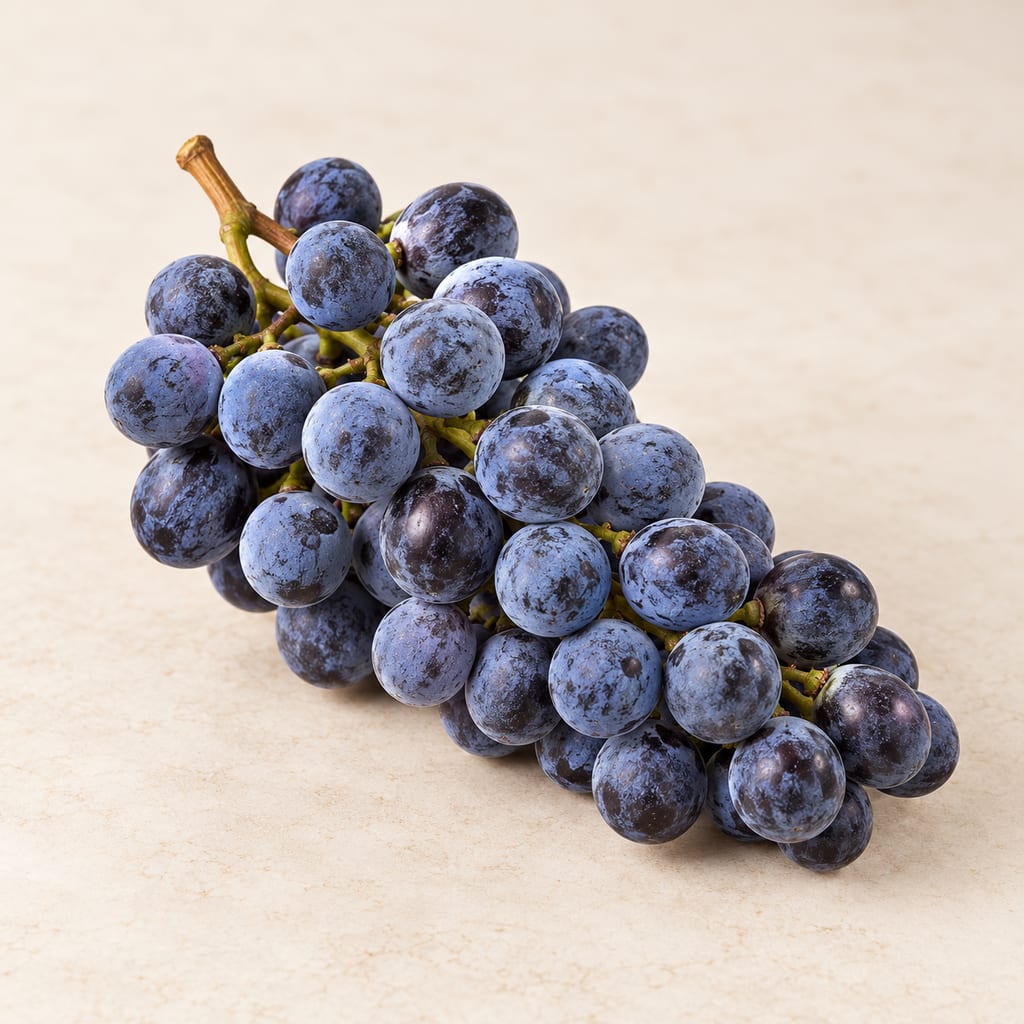
Concord is a seeded, blue-black slip-skin grape with a distinctive aroma, used fresh and in juice, preserves, pies and wine.
Agaricus meijeri is a Brazilian wild edible mushroom recorded in Paraná and Rio Grande do Sul. Its season and preparation are undocumented.
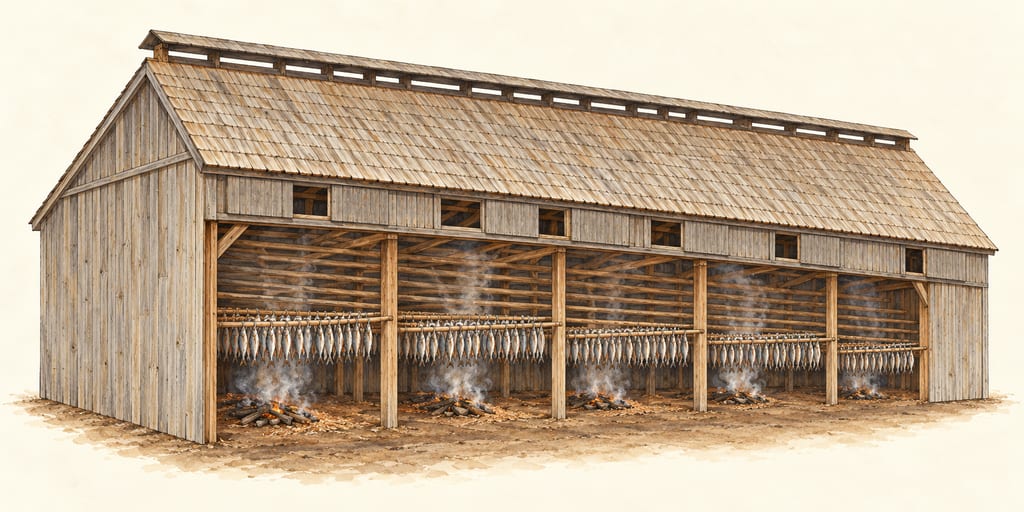
A Cap-Pelé boucanière is an Acadian herring-smoking building. The documented Willie Niles example is a one-storey wood-frame structure with a ridge smoke vent and interior bays for hanging fish-bearing cannes.
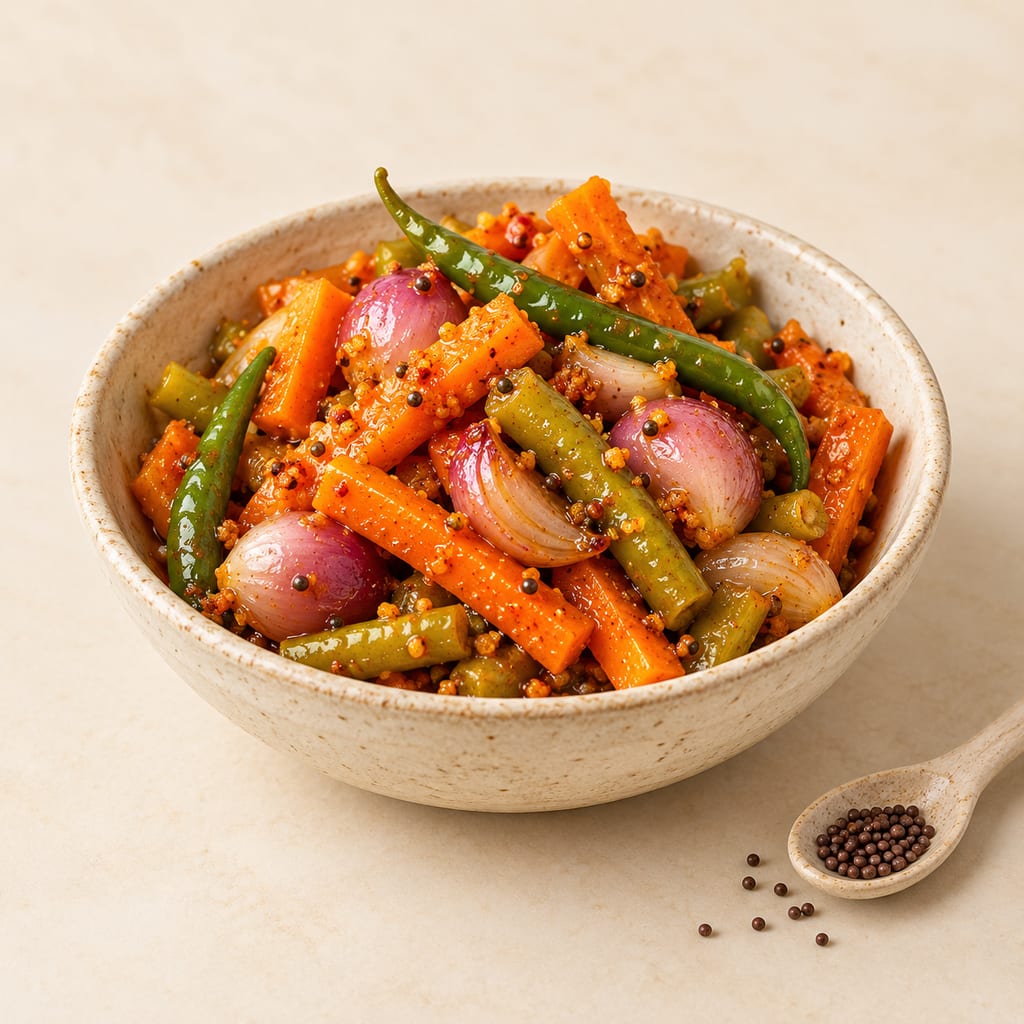
Achcharu is a family of Sri Lankan vinegar pickles made with mixed vegetables or seasonal fruit and a piquant spice dressing. This version is a quick, refrigerated, non-fermented mixed-vegetable pickle.
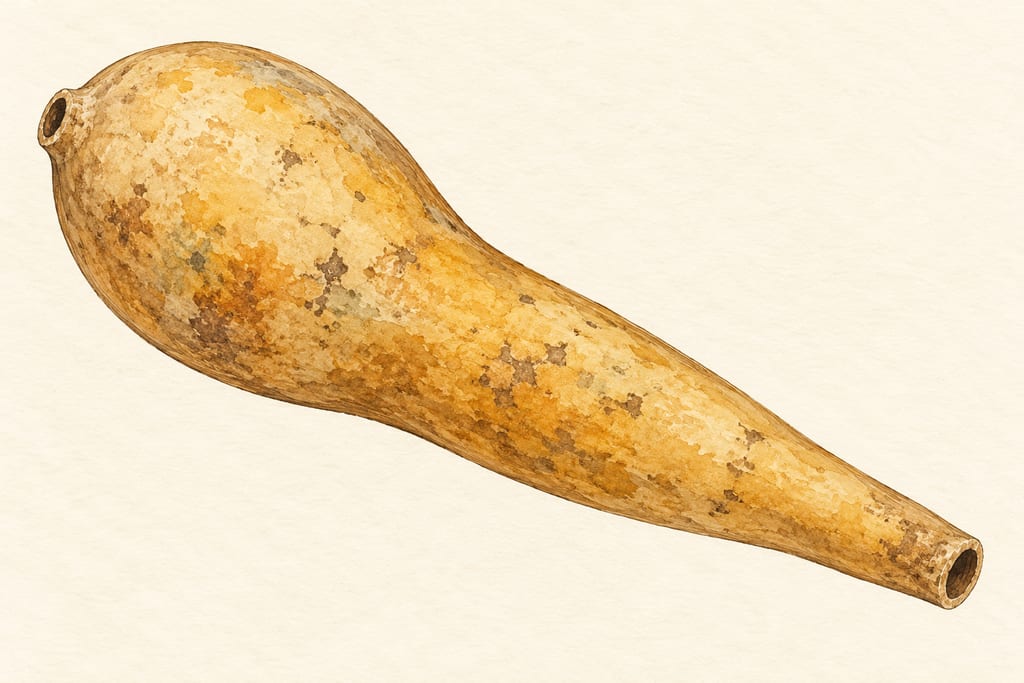
The acocote is a long, hollowed and dried gourd used to draw aguamiel from a mature maguey. It is a harvesting tool: the sap is transferred to a separate vessel before it ferments into pulque.
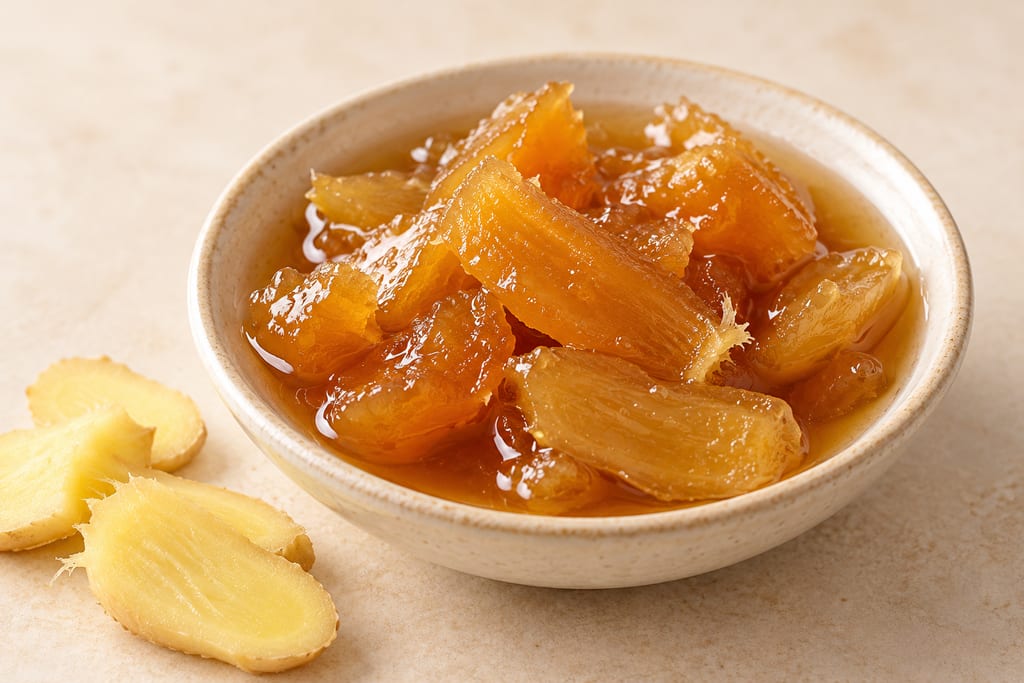
Adrak murabba preserves young ginger in sugar syrup, a sweet South Asian preparation recorded in Indian cookery and food-processing sources.
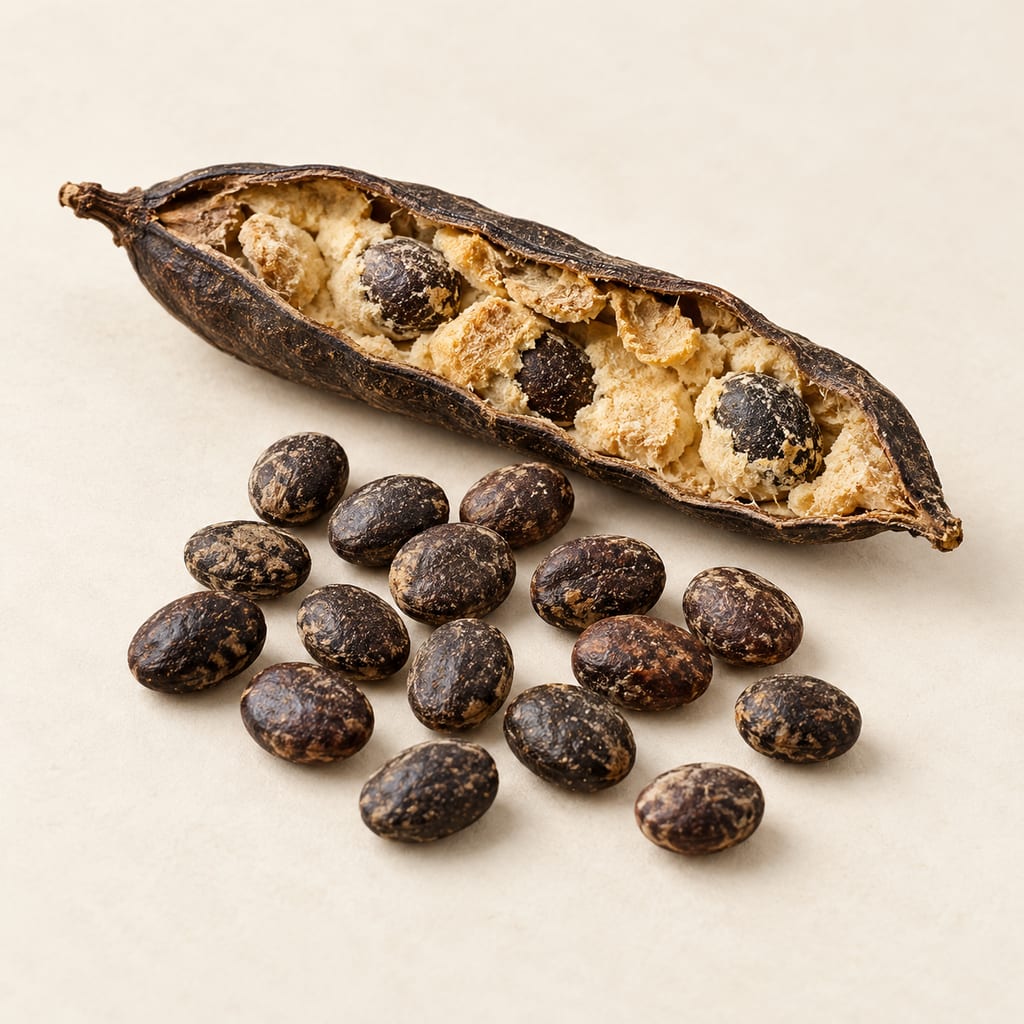
Parkia biglobosa seeds are fermented into regional West African seasonings, including nététou, iru, dawadawa and soumbala. The yellow fruit pulp is a separate food, and names and methods vary by place.
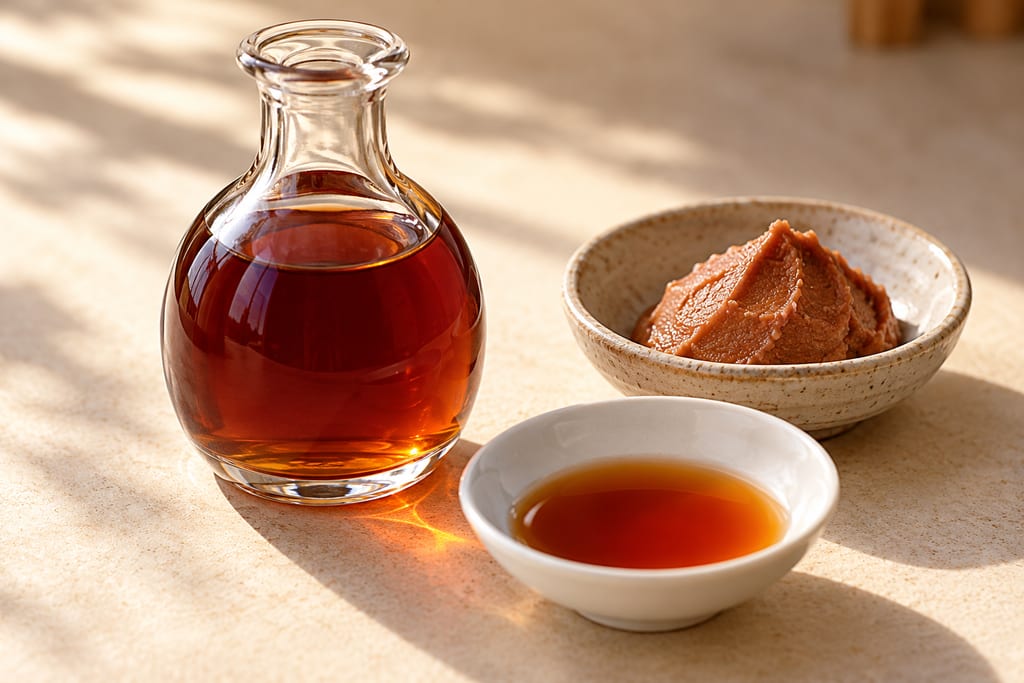
Japanese reddish-brown vinegar from sake lees matured about three years, turned to vinegar by acetic bacteria; the vinegar of Handa and Edomae sushi rice.
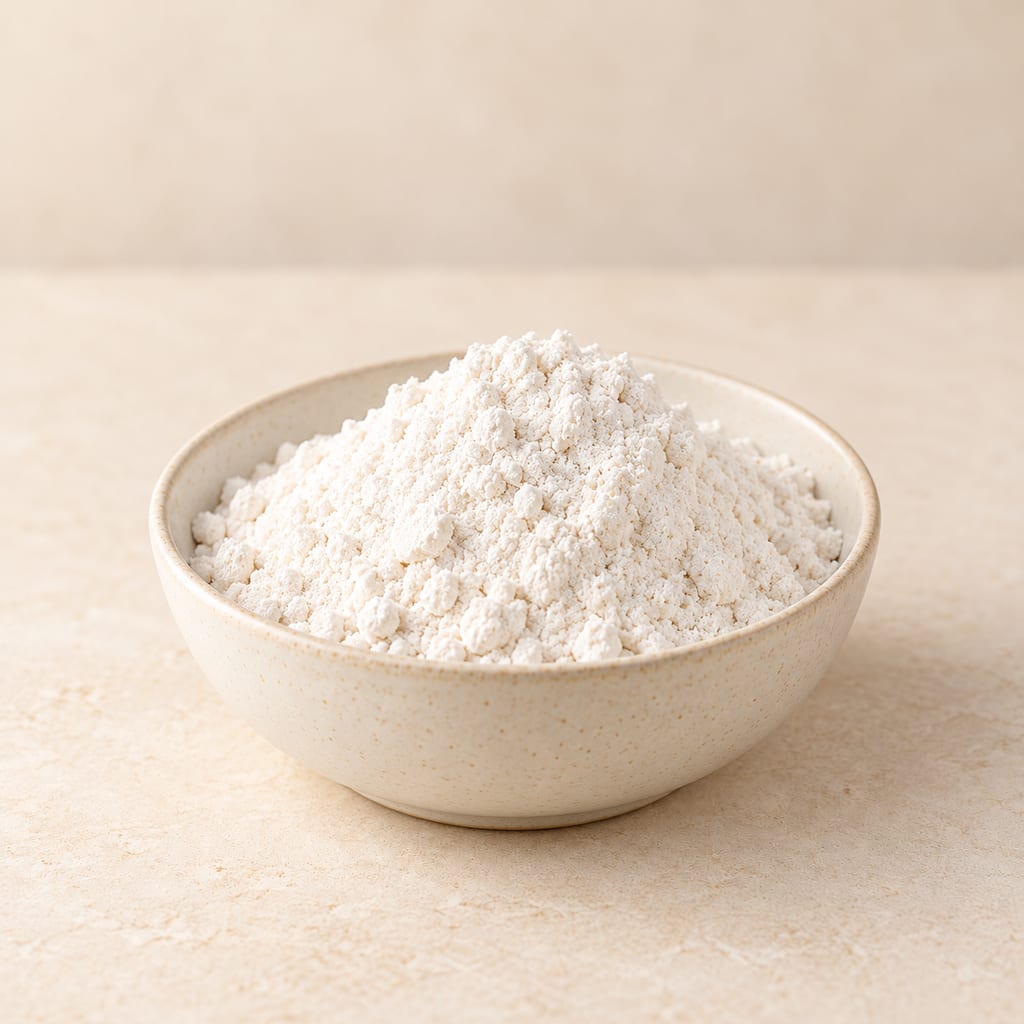
A refined common-wheat flour blended for a broad range of baking; its protein and behavior vary with wheat, milling and market.
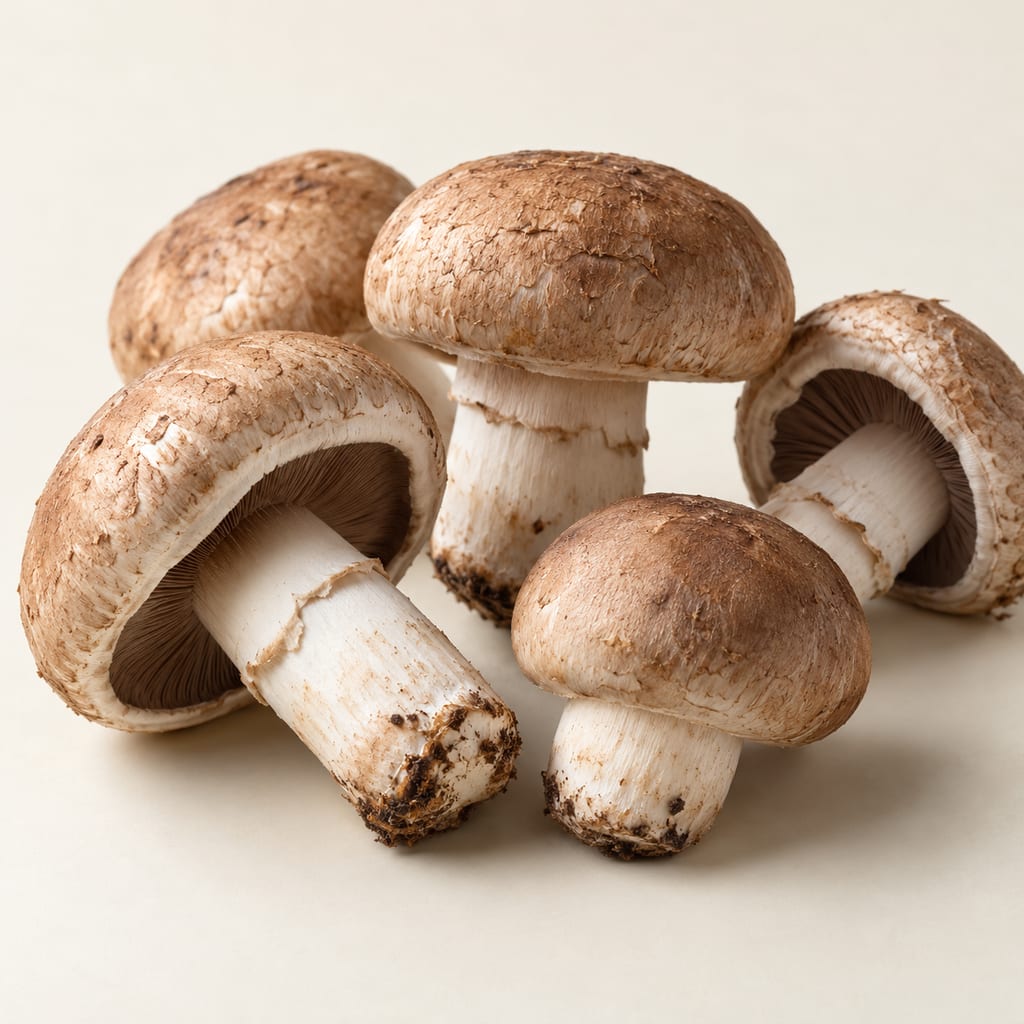
The almond mushroom, Agaricus subrufescens, was cultivated in eastern North America in the 1800s, lost its market, and returned as a cultivated mushroom from Brazil, where it is grown under several names.
No community contributions have been published for this entry yet.
Sign in to contribute. Published comments and photos are free to read.
Te Ara, the Encyclopedia of New Zealand
Citrus, berries, exotic fruit and nuts, page 3: Tamarillos, passionfruit and feijoasNative to south-eastern Brazil and Uruguay; introduced to New Zealand early 1900s as shelter-belt shrubs; Hayward Wright 1929 to 1950s; Apollo and Gemini; 198 ha in 2002; touch-picked; harvest March to May.
Cited in: What a feijoa is; The New Zealand feijoa; Ripeness, picking and keeping; Choosing and preparing fruit for syrup; Where the sources disagree
Editora UFFS / SciELO Books, 2024
Feijoa, Goiaba-Serrana (chapter 4 of Materias-primas regionais do sul do Brasil)Goiaba serrana; native range 400 to 1800 m; fruit size and pulp yield; Epagri cultivars 2007-2008; 240 t from 12 ha at Sao Joaquim; 21 days at 4 C, 2 days at 20 C; pH and vitamin C; peel flour; geleia formula 800 g pulp, 500 g sugar, 100 mL water, spices, 67.5 Brix.
Cited in: What a feijoa is; Names in many languages; Wild fruit of the southern plateau; Brazilian and Uruguayan cultivars; Ripeness, picking and keeping; Flavour, sugar and acid; Feijoa in syrups, cordials and preserves; Where the sources disagree
Subtropical Scientific Centre of the Russian Academy of Sciences, Sochi, 2020
Kultura feikhoa vo vlazhnykh subtropikakh Rossii (Feijoa growing in the humid subtropics of Russia)Berg 1854 and the genus name after Feijo; Korotkova 1937 on pronunciation; Andre 1890, Besson 1899, Italy, California 1901, New Zealand 1903; Yalta and Sukhum 1900, Markovich 1903 and 1908, plantations 1915 and 1928; methyl benzoate; stone cells; iodine claim of 1933-34 not confirmed by later authors; puree with sugar; Klein and Thorp storage.
Cited in: Names in many languages; Wild fruit of the southern plateau; From Golfe-Juan to Nice and California; The Black Sea feijoa; The New Zealand feijoa; Ripeness, picking and keeping; Flavour, sugar and acid; The iodine story; Feijoa in syrups, cordials and preserves; Choosing and preparing fruit for syrup; Where the sources disagree
Revista INIA no. 61, June 2020
Las superfrutas nativas del UruguayGuayabo del pais selections registered 2018; vitamin C 17.3 to 34.0 mg per 100 g, pH 3.1 to 4.0, sugars 11.2 to 12.1 per cent.
Cited in: What a feijoa is; Names in many languages; Brazilian and Uruguayan cultivars; Flavour, sugar and acid
Plant to Plate Aotearoa (Kids Can Cook), 14 May 2020
Feijoa Cordial3 cups feijoa flesh, 2 1/2 cups sugar, 3 cups water, 4 tablespoons lemon juice, 3 teaspoons citric acid, 3 teaspoons tartaric acid; heat to just boiling, strain through muslin, bottle.
Cited in: Feijoa in syrups, cordials and preserves; Choosing and preparing fruit for syrup
Love Food Hate Waste New Zealand
Feijoa CordialSkins of 12 to 14 feijoas, 1 litre water, juice of 1 lemon, 1 teaspoon tartaric acid, 600 g sugar; simmer about five minutes; skins can be frozen for later.
Cited in: Feijoa in syrups, cordials and preserves; Choosing and preparing fruit for syrup
Eda (Rambler)
Varene iz feikhoa (Georgian cuisine)1 kg feijoa, 800 g sugar; wash, trim the dry flower remains, mince, mix with sugar, pack into pasteurised jars and keep in the refrigerator; reader comments on the name varenye and on iodine.
Cited in: The iodine story; Feijoa in syrups, cordials and preserves; Choosing and preparing fruit for syrup
University of Maine Cooperative Extension
Drinks from the GardenFlavoured simple syrup: label, date and store in a sterilised jar in the refrigerator for up to 1 month.
Cited in: Feijoa in syrups, cordials and preserves