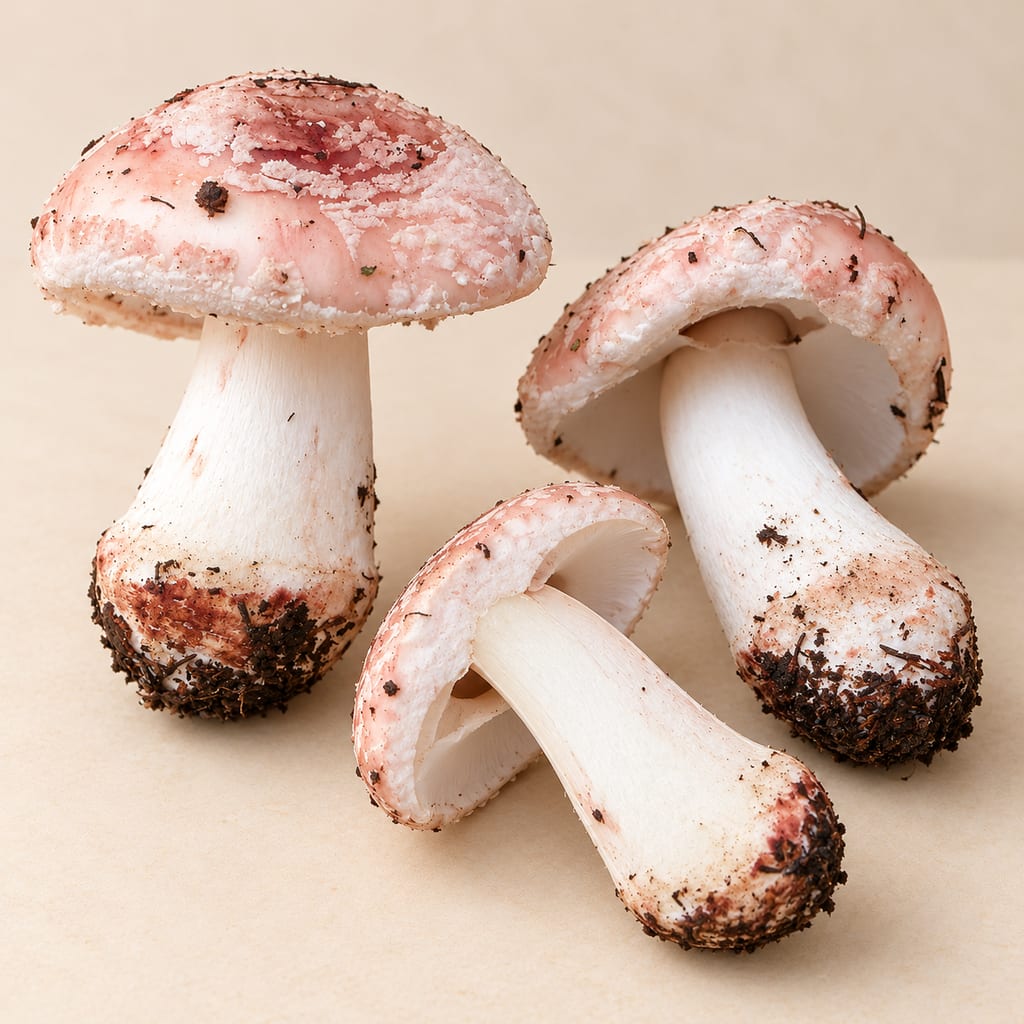
American blusher
Amanita novinupta is a western North American blusher, a forest mushroom recorded as food in Mexico, and one that must be cooked because its raw flesh is toxic.
 FermenteaWhere food goes to change
Substrates
Huitlacoche is the grey gall of the maize smut fungus Ustilago maydis, gathered and eaten in Mexico, where it is also a crop disease.
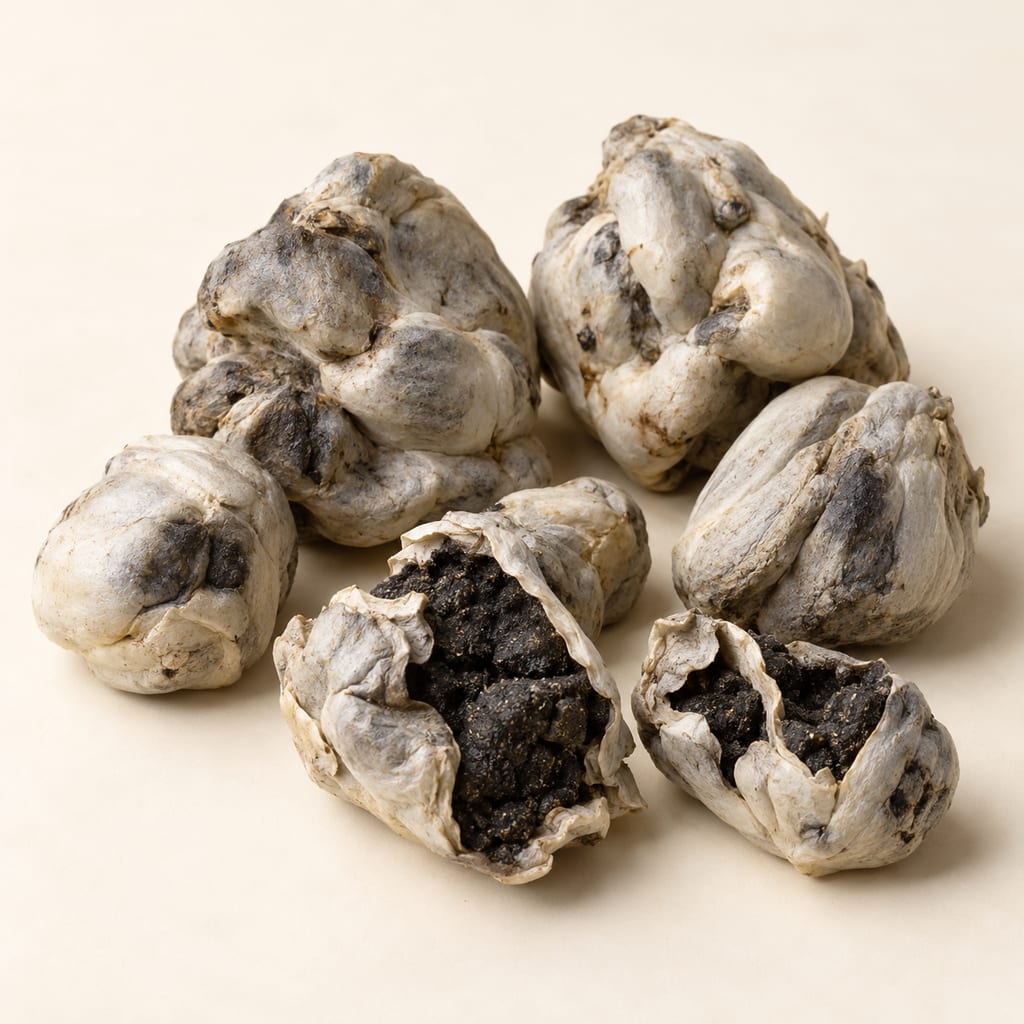
Huitlacoche, also spelled cuitlacoche, is the gall that the smut fungus Ustilago maydis forms on the ears of maize. The fungus is a pathogen of the crop: the review it appears in counts it among crop losses as well as among edible fungi.
The name is Nahuatl in origin. The Spanish form is huitlacoche; one source attributes the spelling to Spanish pronunciation of the Nahuatl word.
The gall is eaten in Mexico, where the 2023 review calls it an iconic edible fungus of Mexican culture and cuisine. The review's summary reports that it is eaten by 21 ethnic groups. Accounts describe it in quesadillas, tamales, soups and sauces.
Commercial production has also been studied. A research paper on controlled production of the galls for human consumption used wild-type isolates from Mexico, and it compared the productivity and flavour of different genotypes.
Protein content of the gall is commonly reported at about 12 percent of dry matter. The review also reports fibre, fatty acids, minerals and vitamins, and antioxidant and antimicrobial activity in extracts. Nutrient values differ between studies and between galls, so no single table is given here.
The review's summary also records use in traditional medicine for 55 diseases. These are traditional uses, not clinical findings.
The summary of the 2023 review records that huitlacoche is considered safe in Mexico but has not been recognised as safe by the European Food Safety Authority or the United States Food and Drug Administration. Its safety rests largely on long traditional use rather than on controlled clinical studies.
One study reports that mycotoxins have been detected in some canned galls. The sources reviewed do not give a shelf life or storage limit for fresh galls, and they do not support a verdict that any gathered gall is safe to eat. Anyone who buys or gathers galls should follow a tested local preparation and should not treat this page as a safety guide.
The record does not settle when the gall was first deliberately encouraged on maize, and the claim that the Aztecs inoculated their crop was not confirmed in the sources reviewed. The protein figure and the safety status need checking against the primary literature before they are relied on.
Named in the 2023 review as an iconic edible fungus of Mexican culture and cuisine; the review reports it is eaten by 21 ethnic groups in the summary of the same review.
Amanita novinupta is a western North American blusher, a forest mushroom recorded as food in Mexico, and one that must be cooked because its raw flesh is toxic.

Ripe avocado flesh is the soft, buttery, fat-rich pulp of Persea americana, eaten raw. It is low in acid, so it is a fresh ingredient that needs care in chilled dishes.
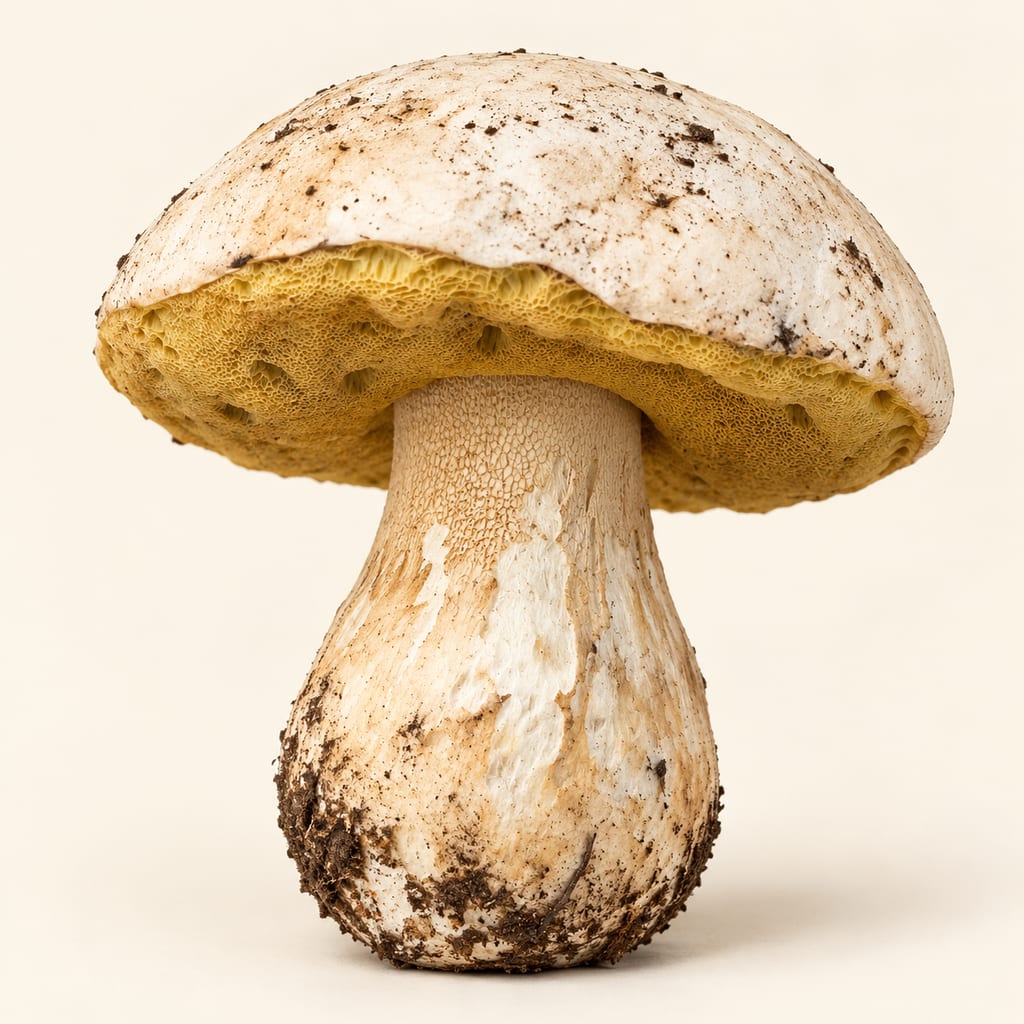
Boletus barrowsii, the white king bolete, is a western porcini relative with documented local food use in Mexico. Its pale cap and netted stem are not enough for field identification.
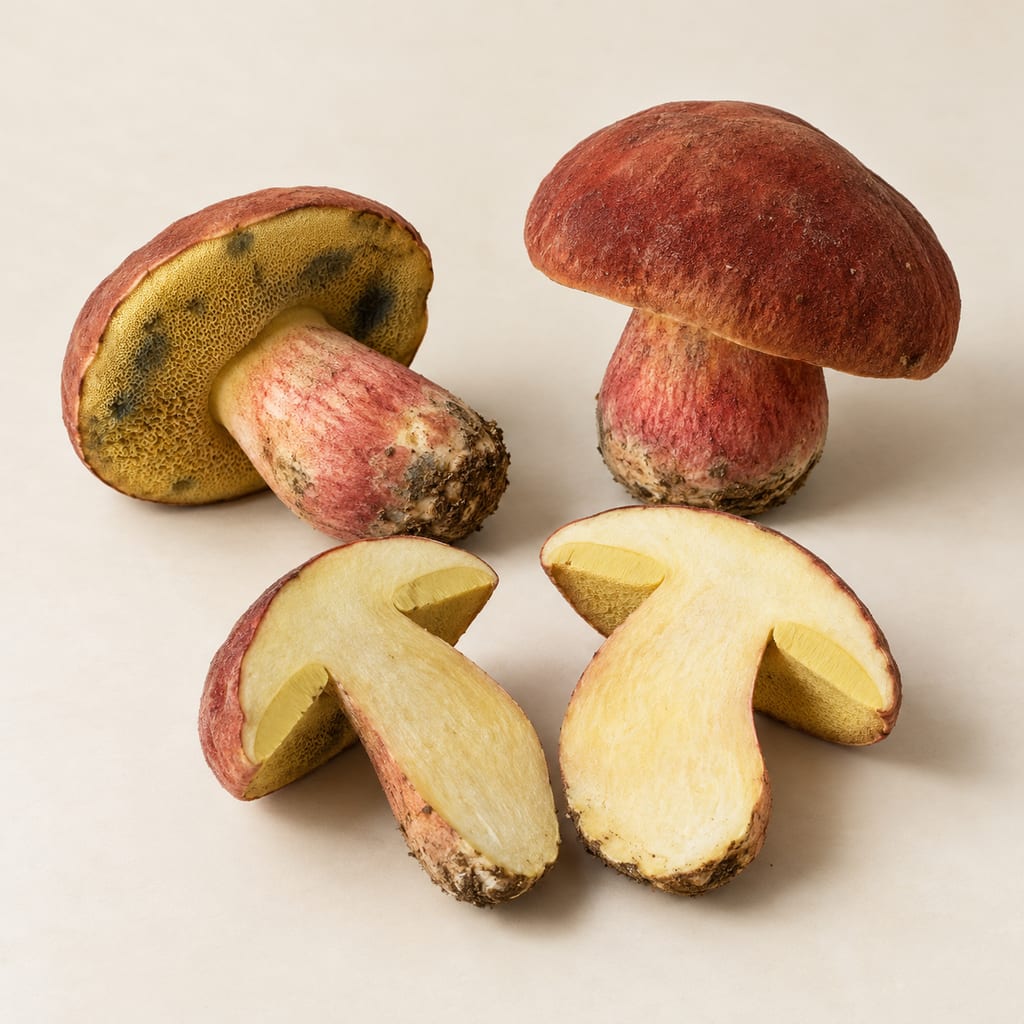
A red-and-yellow bolete described from Michigan and also listed in Mexican fungal records. Historical sources classify it as food, but its species limits, Mexican range and safe food use need careful qualification.
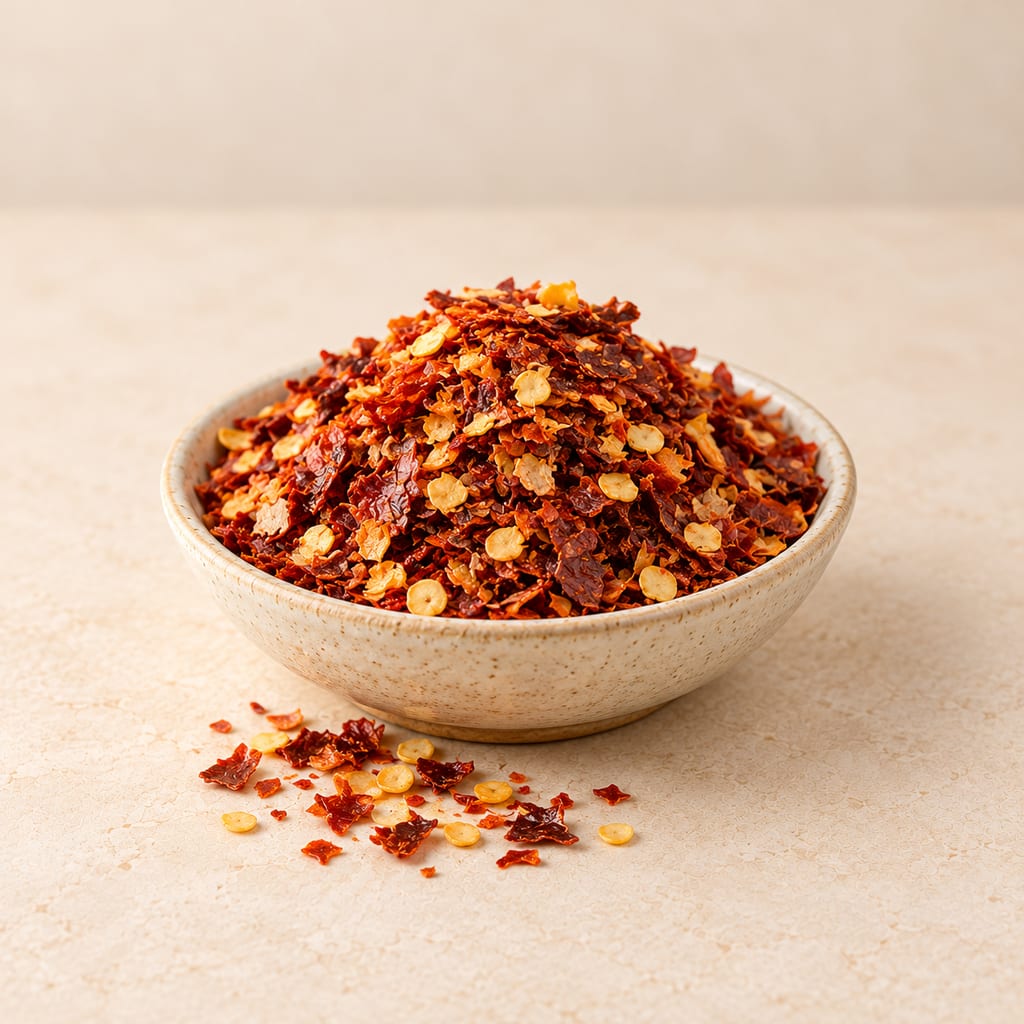
Calabrian pepper flakes are dried red Capsicum annuum from Calabria, crushed into coarse pieces; Peperoncino di Calabria is a protected geographical indication.
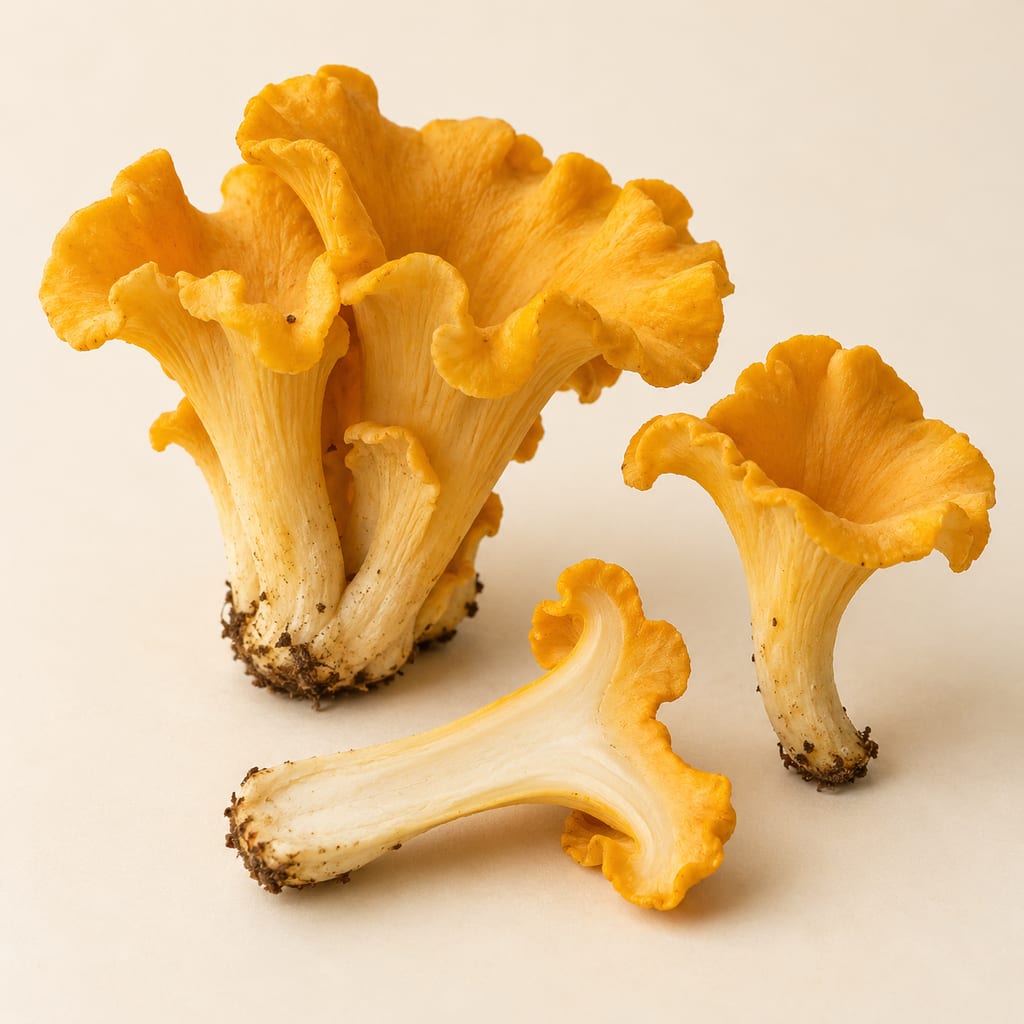
Cantharellus odoratus, the fragrant chanterelle, is a North American and Central American oak-woodland fungus. It was sold in a Veracruz market in the 1980s and in Guatemala in 2002, and its name is still disputed.
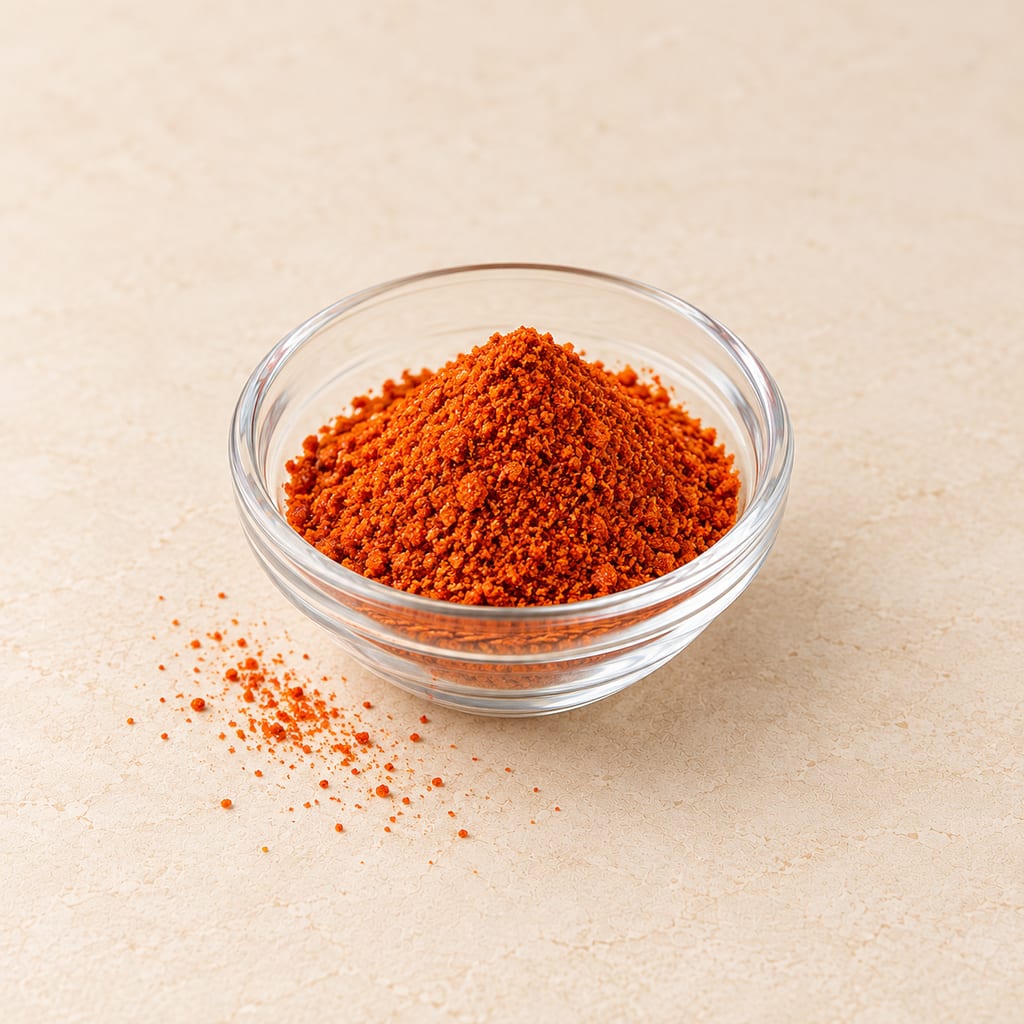
Cayenne is a very pungent red powder from dried, ground hot chilli pods, mostly Capsicum annuum, and the name of the long red peppers it comes from.
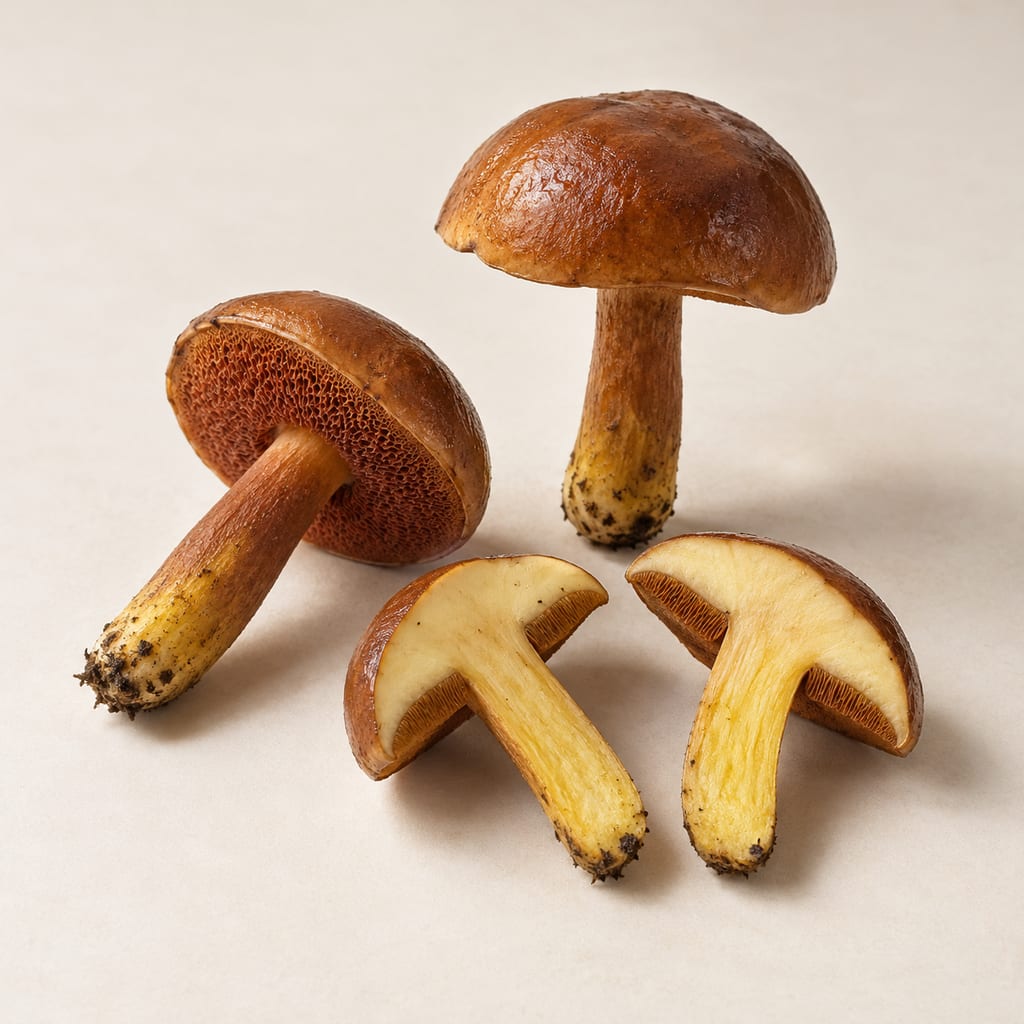
A peppery woodland bolete with historical edible labels and reported condiment use in Querétaro. Current mycological references call its edibility suspect or unestablished; this entry does not recommend consumption.

A gelling polysaccharide extracted from red seaweeds, sold as kanten strips or powder; it sets firm at a low concentration and stays solid until about 85 °C.

A Dominican table and seasoning condiment of sour orange juice, mixed with lime and salt and bottled raw; garlic, oregano or a hot pepper may be added for meat or a spicier bottle.

Cicerbita alpina is an alpine perennial whose tender shoots and leaves have been eaten raw or cooked. Sámi milk preparations and modern Carnian dishes are distinct uses, with serious identification and preservation limits.

Japanese skipjack tuna cooked, then repeatedly smoked and dried over a wood fire by the hand-fired tebiyama method into a hard block for shaving into dashi: the first stage of katsuobushi.

A Swedish-style spirit vinegar made by fermenting neutral alcohol with live vinegar bacteria, with a separate guide to commercial ättika strengths.

A yeast-raised wheat ring shaped from a firm dough, briefly boiled and baked. This source-batch formula gives a gently malted crust and a chewy crumb.

A warm dip of garlic, anchovy and olive oil, often enriched with butter, that Piedmont serves over a flame with raw and cooked vegetables and bread.

Bechamel is a white sauce of milk thickened with a butter and flour roux, one of the French mother sauces, and the base from which Mornay and other cheese and cream sauces are made.
No community contributions have been published for this entry yet.
Sign in to contribute. Published comments and photos are free to read.
Journal of Fungi / PMCIdentity · History · Food use · Nutrition · Safety
Huitlacoche (Ustilago maydis), an Iconic Mexican Fungal Resource: Biocultural Importance, Nutritional Content, Bioactive Compounds, and Potential Biotechnological ApplicationsMaize pathogen causing economic losses and an iconic edible fungus of Mexican culture and cuisine
Biocultural importance, nutritional content and bioactive compounds reviewed
Cited in: What it is; Food use; Open questions
BohriumFood use · Safety
Huitlacoche (Ustilago maydis), an Iconic Mexican Fungal Resource (summary)Eaten by 21 ethnic groups and used in traditional medicine for 55 diseases, as reported in the review summary
Considered safe in Mexico; not recognised as safe by EFSA or FDA
Cited in: Nutrition and traditional medicine; Safety and limits
ResearchGateNutrition · Safety
Nutritional value of huitlacoche, maize mushroom caused by Ustilago maydisProtein commonly reported at about 12 percent
Mycotoxins detected in some canned galls
Cited in: Nutrition and traditional medicine; Safety and limits
ScienceDirectCultivation
Productivity and flavor of diverse genotypes of Ustilago maydis cuitlacoche for human consumptionControlled production of galls for human consumption studied with wild-type isolates from Mexico
Cited in: Food use