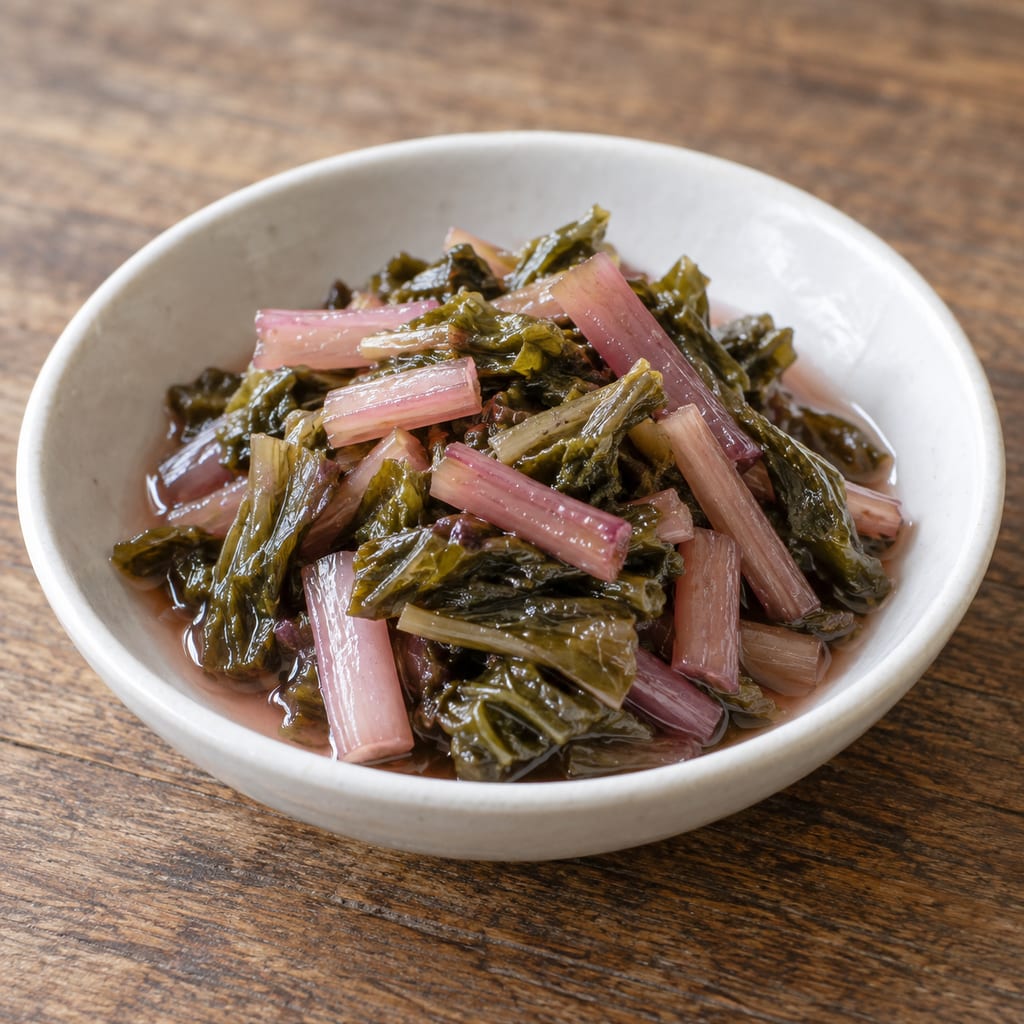
Sunki
Sunki is a salt-free pickle from Japan's Kiso valley: red-turnip leaves fermented with a retained starter from the previous year's batch.
 FermenteaWhere food goes to change
Substrates
Red turnips are the heritage turnips of Japan's Kiso valley; their stems and leaves are fermented without salt into sunki, a sour amber pickle.
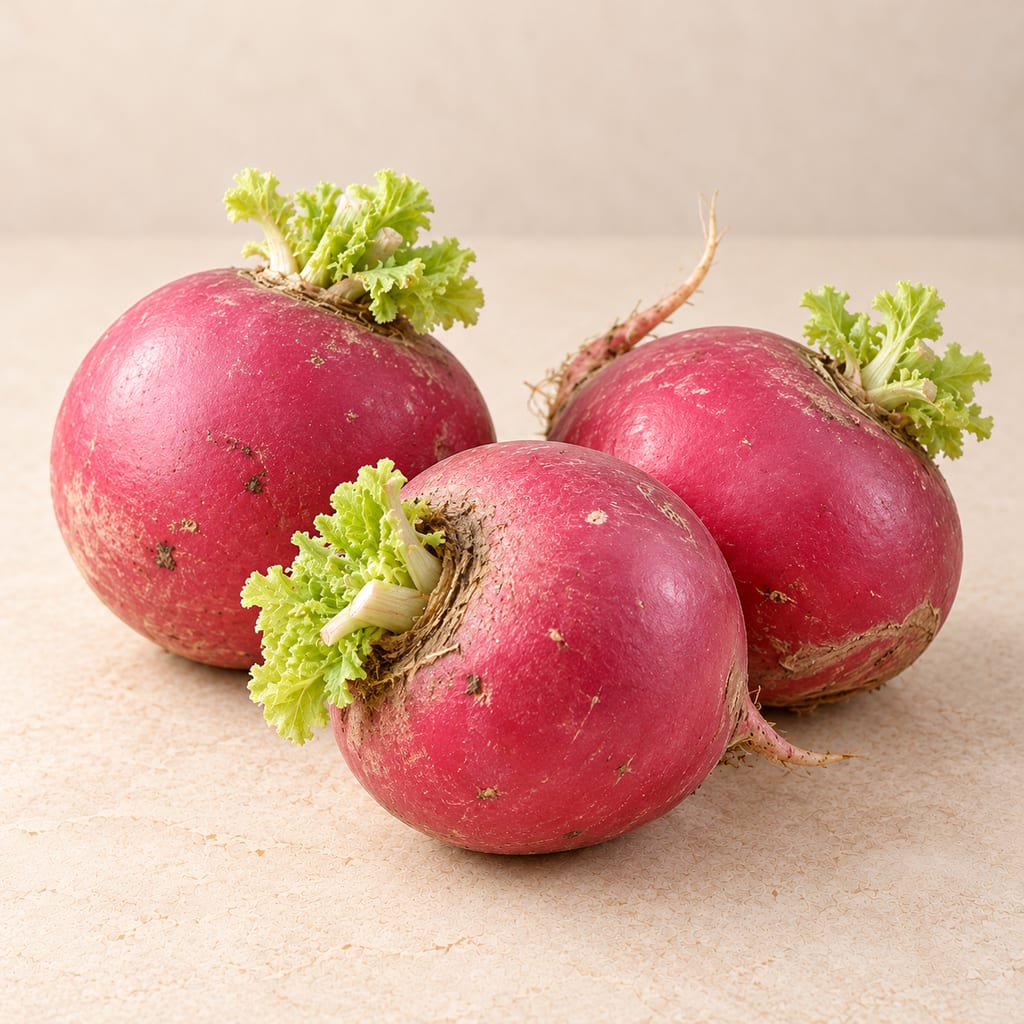
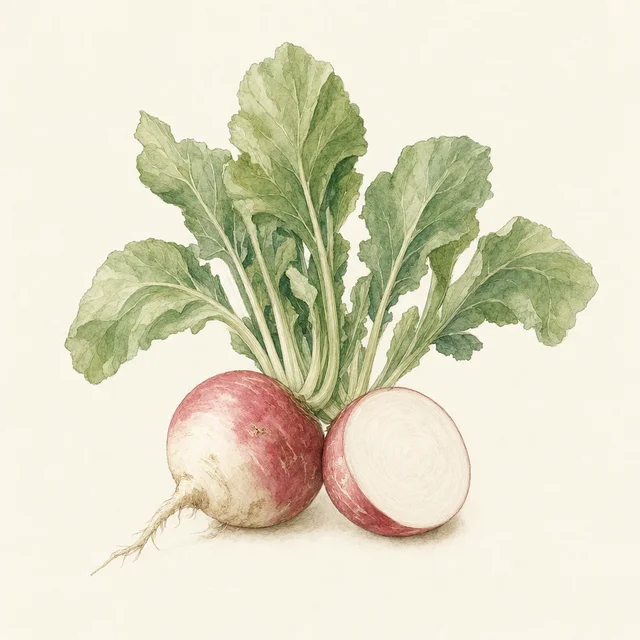
The red turnip behind sunki is the traditional local vegetable of the Kiso district of Nagano Prefecture in the Japanese Alps. Several local varieties are named: Kaida-kabu, Otaki-kabu, Hosojima-kabu and Yoshino-kabu, along with the leafy kisona, also called Fukushimana. Records of Otaki-kabu and Kaida-kabu go back about 300 years. For sunki only the leaves and stems are used, harvested in the cold weeks after the first frosts, and the roots are not the point of the crop. The shape, size and exact colour of the two heritage roots are not recorded in the food-heritage descriptions, which are about the greens.
The turnip is Brassica rapa subsp. rapa, a root vegetable grown in temperate climates for its fleshy taproot. Ordinary turnips have white skin except for the upper one to six centimetres, which is purple, red or greenish where the root stands in sunlight, and entirely white flesh; roots are roughly globular, 5 to 20 centimetres across and lack side roots. The species Brassica rapa has been bred into many crops, including napa cabbage, bok choy, komatsuna and rapini, and like other brassicas it contains glucosinolates, which deter herbivores. Turnips grow best in cool weather, and heat makes the roots woody and bitter, which suits a crop grown above 1,000 metres.
Where the turnip was first cultivated is still debated. The usual account places the domestication of the edible turnip in Central Asia several thousand years ago, and a modelling study suggests that the ancestral Brassica rapa arose about 4,000 to 6,000 years ago in the Hindu Kush; against this, one summary says edible turnips were possibly first cultivated in northern Europe. The long history of cultivation and the scarcity of archaeological seeds make the origin hard to pin down. The root spread to Europe and East Asia, became important in the Hellenistic and Roman worlds, and reached Japan by 700 CE.
The red turnip of Kiso originates at 1,000 to 1,300 metres of altitude in a very cold region. Ōtaki Village, in the Kiso Mountains, has warm, humid summers and cold winters with very heavy snowfall, an average annual temperature of 8.1 degrees Celsius and a January average of about minus 4.3 degrees Celsius, with Mount Ontake, at 3,067 metres, on its northern border. One or two frosts around October and November, just before harvest, give a better raw material, and the leaves are pickled after two or three frosts in late October to November, when their sweetness increases. In the wider Japanese mountains the European-type turnip is noted for its excellent cold resistance, and the neighbouring Nagano leaf crop nozawana is likewise grown in cold mountain areas, where frost is said to remove bitterness and make the leaves sweeter and softer.
The crop cycle of the neighbouring leaf crops shows how the season runs in these mountains. Nozawana is sown in September and thinned, with the thinnings eaten as pickles; its leaves are harvested from October through December, it flowers in spring, and its seeds are collected in June, and at Nozawa Onsen it is grown on former hemp fields. The Kiso turnips follow the same autumn rhythm, with the leaves and stems cut in the weeks of late October and November, when frost has sweetened them.
Kiso is an inland mountain area far from the sea, and salt was scarce; the local saying is to lend rice but never salt. A pickle that needs no salt, made from a crop that the cold favours, suited the place, and the best sunki is made only in the coldest areas, Kaida and Otaki, because warmer parts of Kiso produce too much acid and soft stems. Sunki was eaten daily from the Edo period, which began in 1600, and a haiku of the Genroku era mentions it.
The stems and leaves are blanched briefly in boiling water, for one to two minutes, drained lightly and packed while still hot into a wooden barrel or tub with a starter. The base is trimmed, but some of the red root is kept, because it carries lactic acid bacteria and turns the brine pink. The barrel is weighted and wrapped in vinyl or newspaper to keep it warm, and left indoors overnight; once good fermentation is seen it moves to a cold place, traditionally an outdoor pickling hut or storehouse. The pickle can be eaten after about a week; the usual cold ferment runs about a month, and a more aged pickle is left for about two months.
The starter is dried sunki, rehydrated in water, called sunki-boshi, and the brine of a previous batch. Producers also add the fruit of crab apple, zumi, and of wild grape, which acidify the brine early in the fermentation and are not microbial starters. Several types of plant lactic acid bacteria do the work, and many producers now use frozen sunki from the previous year or a brine with added bacteria. Because the starter is the previous winter's pickle, each barrel descends from the one before. The finished pickle is amber, the colour the Japanese call tortoiseshell, strongly sour from lactic acid and not salty, and it keeps for a long time.
Without salt, temperature and acid carry the preservation. Low temperature is important for quality: when the average temperature rises above 0 degrees Celsius, quality declines. The best flavour is reported at a finished pH of about 4.5. In warmer conditions the pH can fall to about 3.0 within roughly nine weeks, and the pickle then turns greenish-grey and loses flavour and keeping quality. Lactic acid and cold together suppress spoilage bacteria.
Blanching has a second job. It inactivates the protein-degrading enzymes of the leaves, so most of the crude protein is preserved, and sunki was valued as a winter source of protein when diets were thin. The same fermentation has been studied for its bacteria: a lactic acid bacterium strain from sunki suppressed allergic diarrhoea in a mouse study, though a human epidemiological study found no significant link between eating sunki and allergic disease, and sunki bacteria have been used to develop a yoghurt. These are research findings, not health claims for the pickle.
Sunki belongs to a small group of salt-free lactic ferments. Sinki, the Himalayan fermented radish, ferments wilted, shredded roots packed in a jar for twelve days at about 30 degrees Celsius while the pH falls from 6.7 to 3.3. Gundruk, made from the leaves of mustard, radish and cauliflower, ferments in warm water for about a week, with its pH falling to about 4.0 and its acid rising to about 1 percent by the sixth day. In Niigata, izekomina and yudekomina were another salt-free pickle, now barely produced. The Kiso pickle is cold-fermented, where sinki and gundruk are warm-fermented. The timing differs sharply from a salted cabbage ferment: sauerkraut takes three to four weeks at 21 to 24 degrees Celsius, whereas sunki can be eaten after about a week in the cold, and the salted kimchi of Korea is ready in a day or two at 20 to 22 degrees. Cold, not salt, sets the pace of the Kiso ferment.
The descriptions of sunki do not name the bacteria in the barrel beyond calling them plant lactic acid bacteria, but related ferments suggest the pattern. In kimchi, Leuconostoc dominates early because it tolerates low salt and low acidity, and Lactobacillus and Weissella take over as acidity rises. In pickles generally Leuconostoc mesenteroides tends to dominate at low salt and low temperature, Lactobacillus plantarum at higher temperatures, and many pickles start with Leuconostoc and shift to Lactobacillus as the acid builds. The crab apple and wild grape that Kiso makers add acidify the brine from the start.
The closest Japanese comparison is nozawana-zuke, the pickle of another Nagano turnip-family leaf. Nozawana was first grown from Tennoji turnip seed brought from Kyoto to the village of Nozawa Onsen in 1756, and at about 600 metres the turnips did not develop but the leaves and stems grew well. Its leaves are packed with salt in barrels and weighted overnight, and after about two weeks the pickles can be eaten; those aged over a month blend better and slightly sour is the preferred stage. Fresh shallow pickles are bright green, and aged ones turn amber, the same bekkō colour as sunki. Sunki also resembles nozawana in appearance, but it uses no salt. Kyoto's suguki is a different pickle again: it uses salt and warmth to speed fermentation. Where salted kraut and kimchi are cured in brine at 20 degrees or more, sunki is the cold, saltless end of the family.
Sunki is chopped into miso soup, where it is refreshing and appetite-stimulating, or eaten as it is with shaved bonito flakes and soy sauce over rice, as a tea-time snack, stir-fried or simmered. It goes onto soba and udon: sunki soba is served over buckwheat noodles with a broth of dried shimeji mushrooms and niboshi, and the buckwheat-dough noodle sunki kishimen comes from Kaida village. In spring the pickle can be dried and kept as a preserved food, or soaked in water to cook with. More recently it appears in nori rolls, inari sushi, salads, pasta, on toast and in gyoza and spring rolls, where its sourness and texture are used.
Recognition came in steps. Nagano Prefecture designated sunki an intangible folk cultural property in 1983, Kiso Town made it the first product of its brand in 2011 and passed a fermented-food promotion ordinance in 2014, and it was registered as a geographical indication on 26 May 2017 for producers in Kiso Town, Agematsu Town, Nagiso Town, Kiso Village, Otaki Village, Okuwa Village and part of Shiojiri City. An annual sunki contest is held in Kiso, events such as the Sunki Festa and the Sunki de Genki Fair promote it, and the pickle is listed in Slow Food's Ark of Taste. Families made it at home until 1972, when a pickle processing plant was built and the local agricultural cooperative began selling it.
In the torshi of the Middle East, the Caucasus and the Balkans, turnips are among the vegetables pickled with cucumbers, onions, carrots and olives, mostly in vinegar; in Egypt the pickled vegetables, called torshi or mekhalel, are a staple of breakfast spreads. In southern Turkey the purple carrot drink şalgam is flavoured with aromatic turnip, çelem, and fermented in barrels with ground bulgur and rock salt. A vinegar pickle is preserved by acid added to the jar and a salt-brine pickle by lactic fermentation under salt; sunki is preserved by lactic fermentation with neither.
The useful part is the leaf and stem of a red turnip grown in the cold and harvested after repeated frosts. Warm-grown leaves turn out too acid and soft, and the fermentation wants a cold, steady place and a starter kept from the previous winter. The bitterness that frost removes from leaf crops of this family, and the sweetness it adds, are what the pickler is buying.
Home of sunki and the heritage red turnips; the geographical indication covers a defined set of Kiso district towns and villages and part of Shiojiri.
Modelled origin of Brassica rapa and domestication area of the edible turnip; not a precise birthplace.
Sunki is a salt-free pickle from Japan's Kiso valley: red-turnip leaves fermented with a retained starter from the previous year's batch.

A gelling polysaccharide extracted from red seaweeds, sold as kanten strips or powder; it sets firm at a low concentration and stays solid until about 85 °C.

Akahatsu, Lactarius akahatsu, is a wild milkcap of East Asian pine and mixed forests that is sold in Yunnan markets, with its edibility and identity still needing species-level review.

The almond mushroom, Agaricus subrufescens, was cultivated in eastern North America in the 1800s, lost its market, and returned as a cultivated mushroom from Brazil, where it is grown under several names.
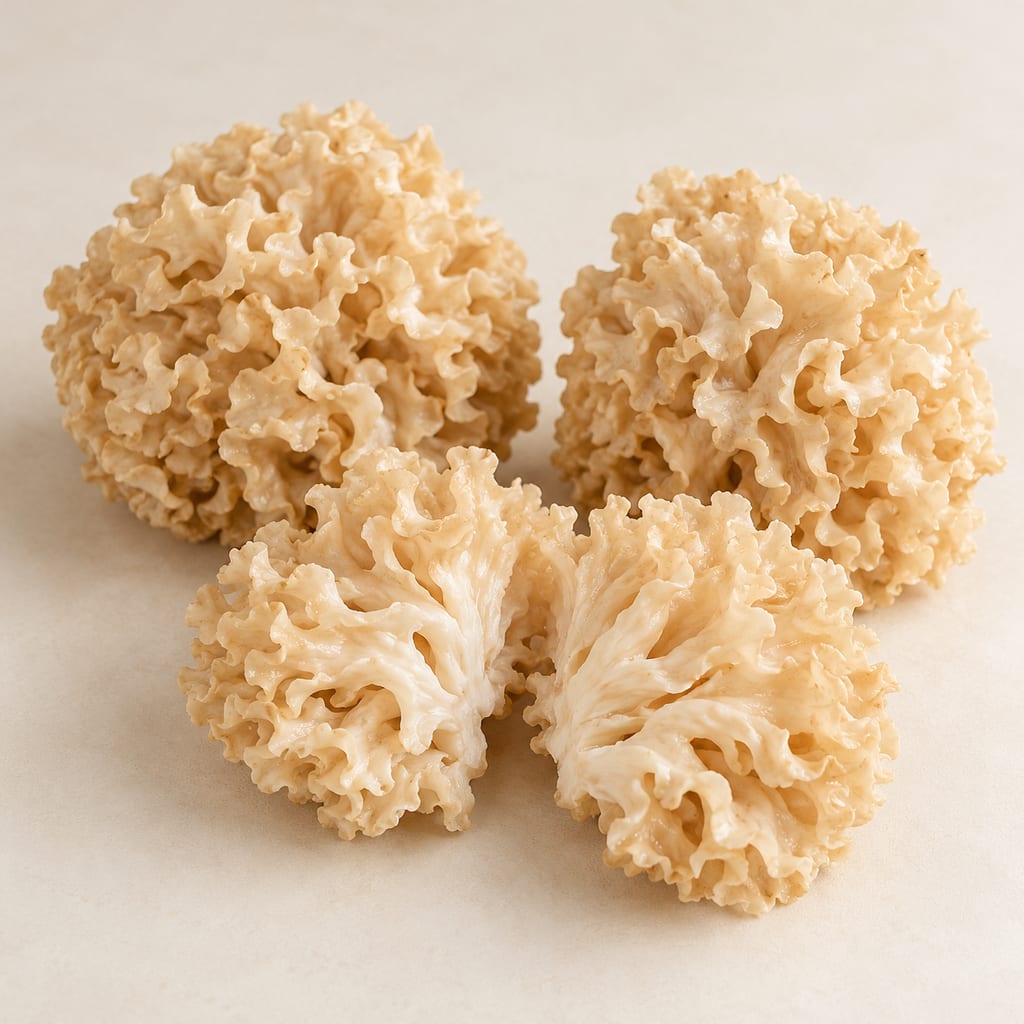
The Asian cauliflower mushroom, Sparassis latifolia, is a cultivated fungus with a frilled, fronded form that is eaten in China, Japan and Korea. Many Asian records under the name Sparassis crispa refer to this species.
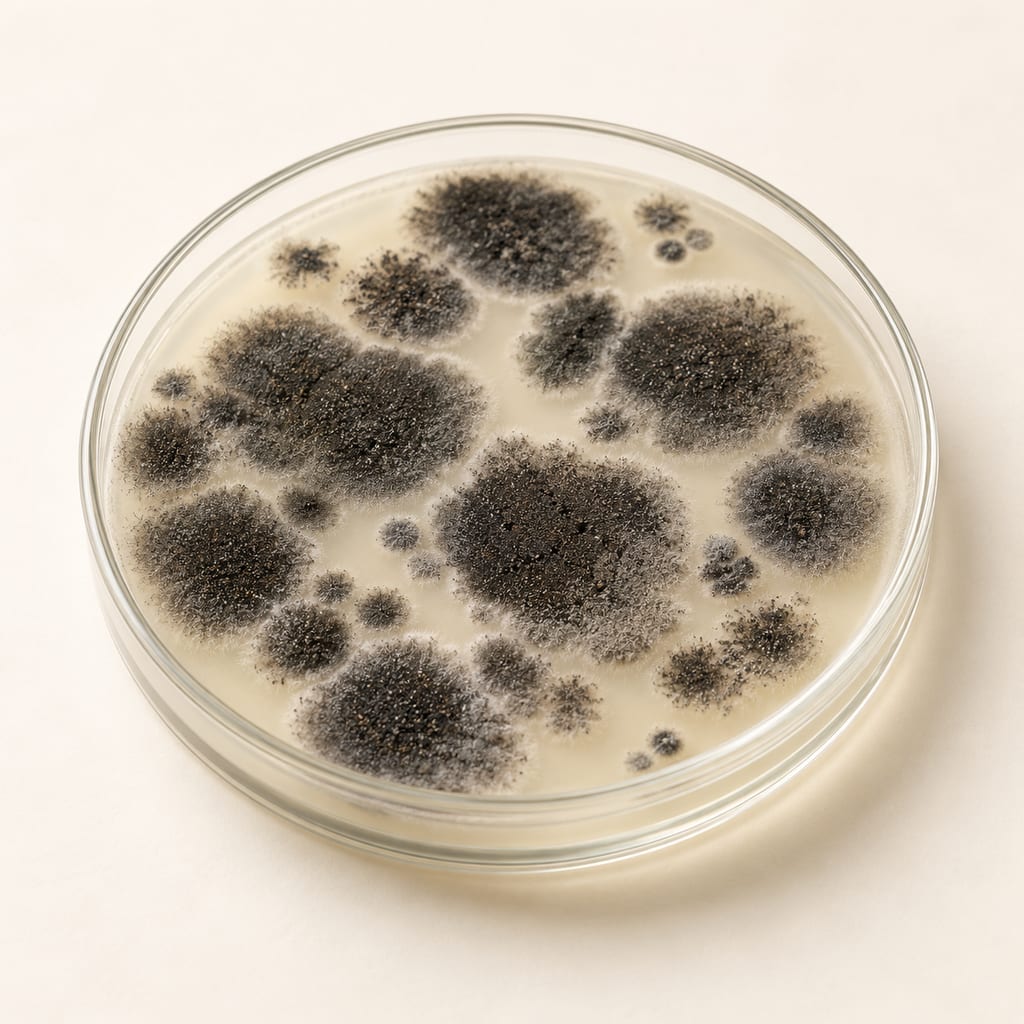
Aspergillus luchuensis is the black koji mould used in Japanese shochu and awamori, valued for the citric acid it makes alongside the starch-converting enzymes of koji.
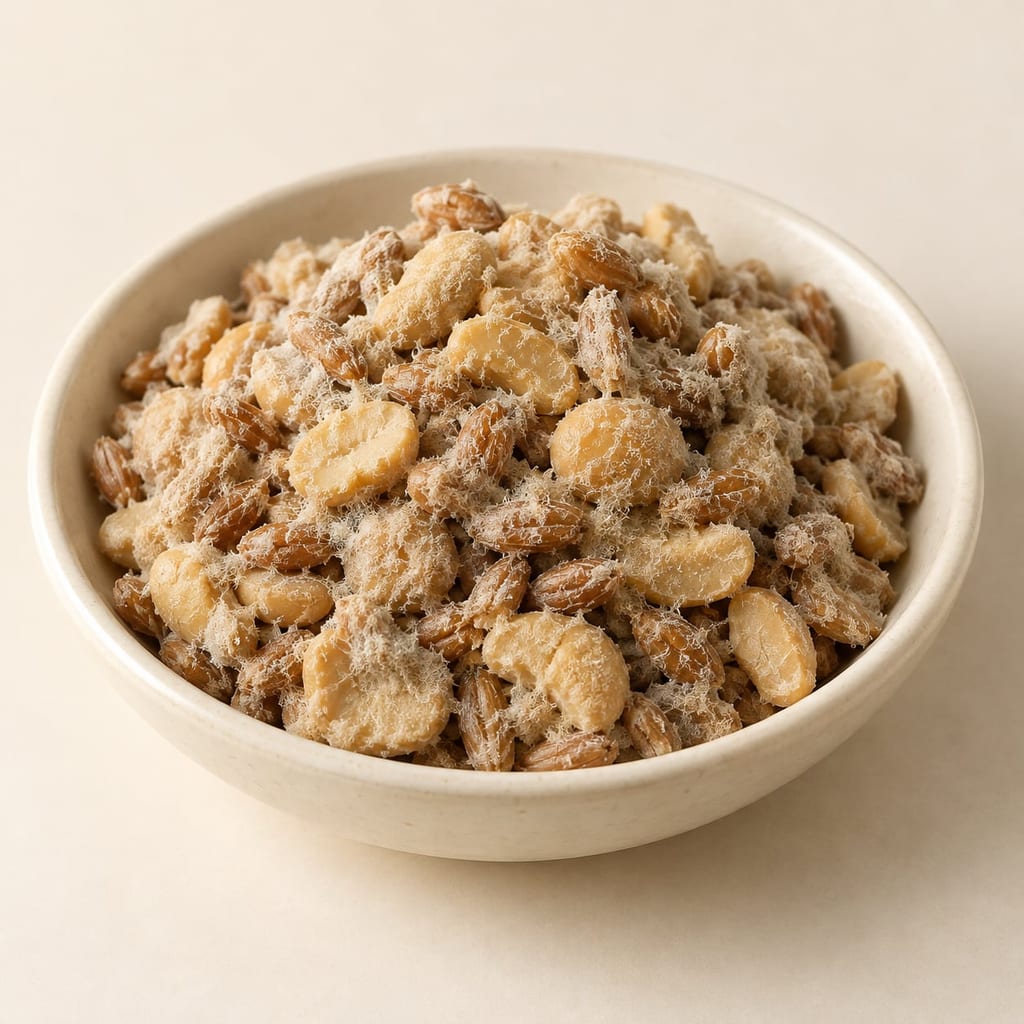
Aspergillus sojae is a koji mould of the Aspergillus flavus group, closely related to A. oryzae, used as a starter in soybean fermentations such as Korean meju, doenjang and ganjang.
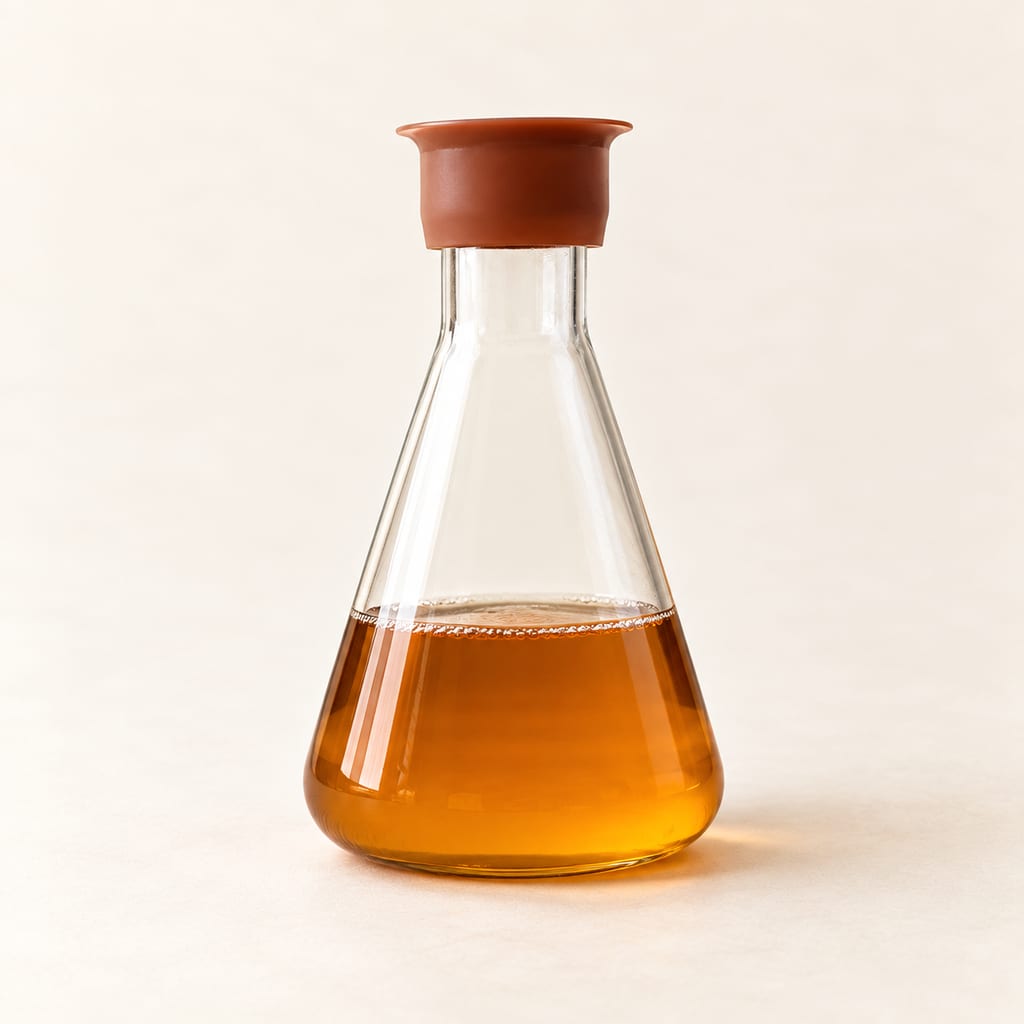
Awamori yeast ferments sugar released from rice koji in the Okinawan spirit’s mash. Sakimoto names the ingredient but gives no strain, form, supplier or dose.

Bamboo shoots are the young culms of many bamboo species, eaten after boiling or leaching in Asia, and fermented into sour and preserved foods in the Himalayas, northeast India and Burma.
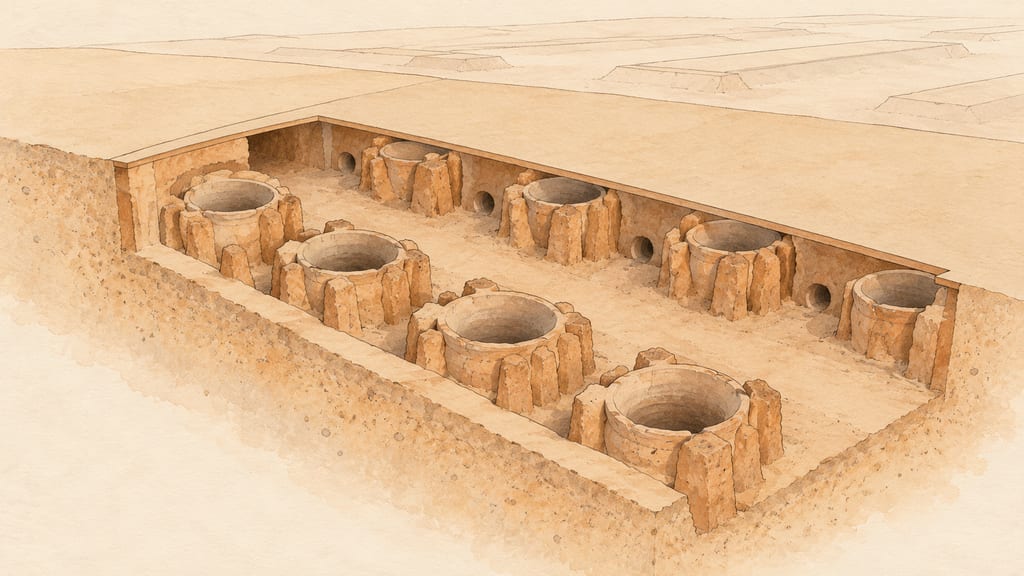
At North Abydos in Egypt, a fixed early Dynastic brewery comprised parallel semi-subterranean installations with rows of ceramic mash vats; excavation reports revise their number, scale and estimated batch capacity.
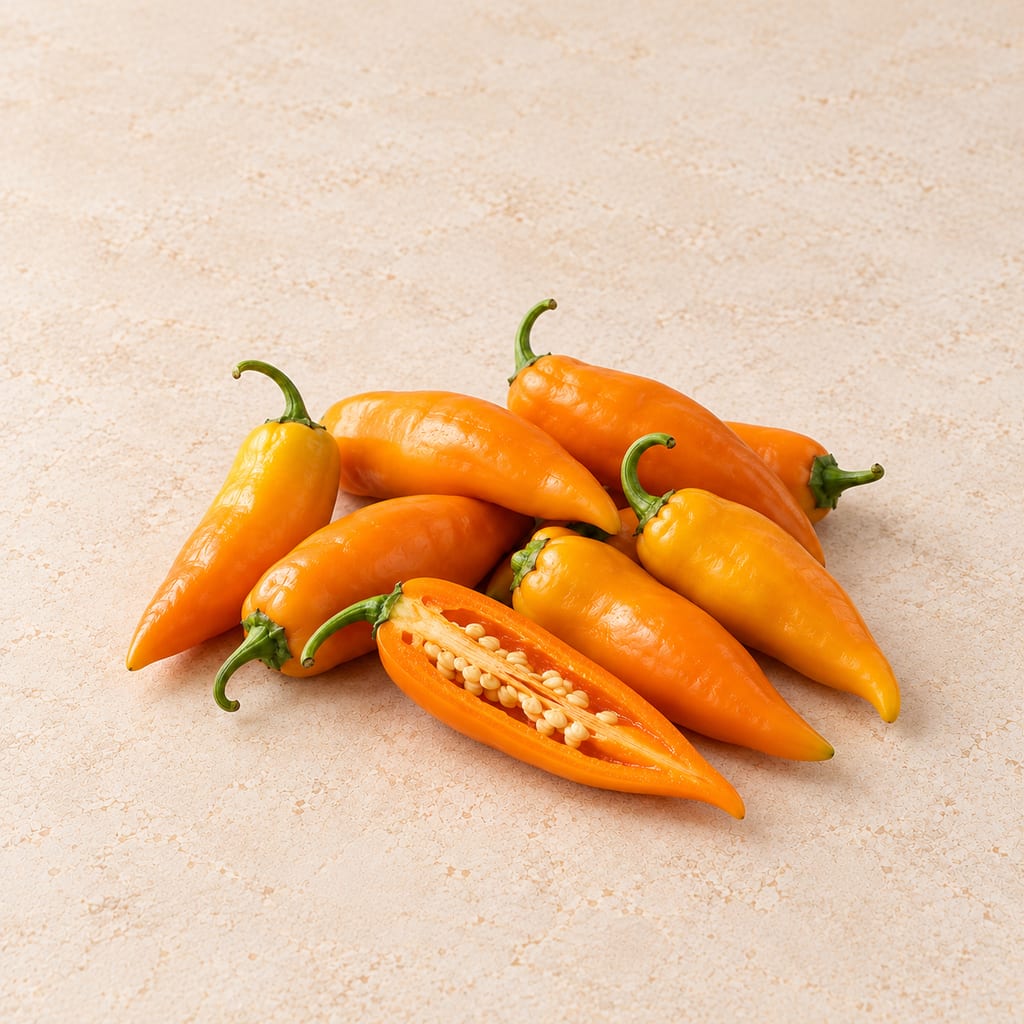
Ají amarillo is the orange-yellow Peruvian chilli cultivar group of Capsicum baccatum, used to colour and season huancaína sauce and ají de gallina. Published heat estimates do not establish one range for the named cultivar.

Toasted almonds are whole sweet almond kernels dry-roasted until golden to brown. Heat replaces their marzipan note with a roasted, nutty one; they thicken and flavour romesco.

Kodiak salmon, halibut and cod cut as seg'aq and hung on an initaq rack to become tamuuq, with kac'amaasaq and kupcuunaq named as different results.
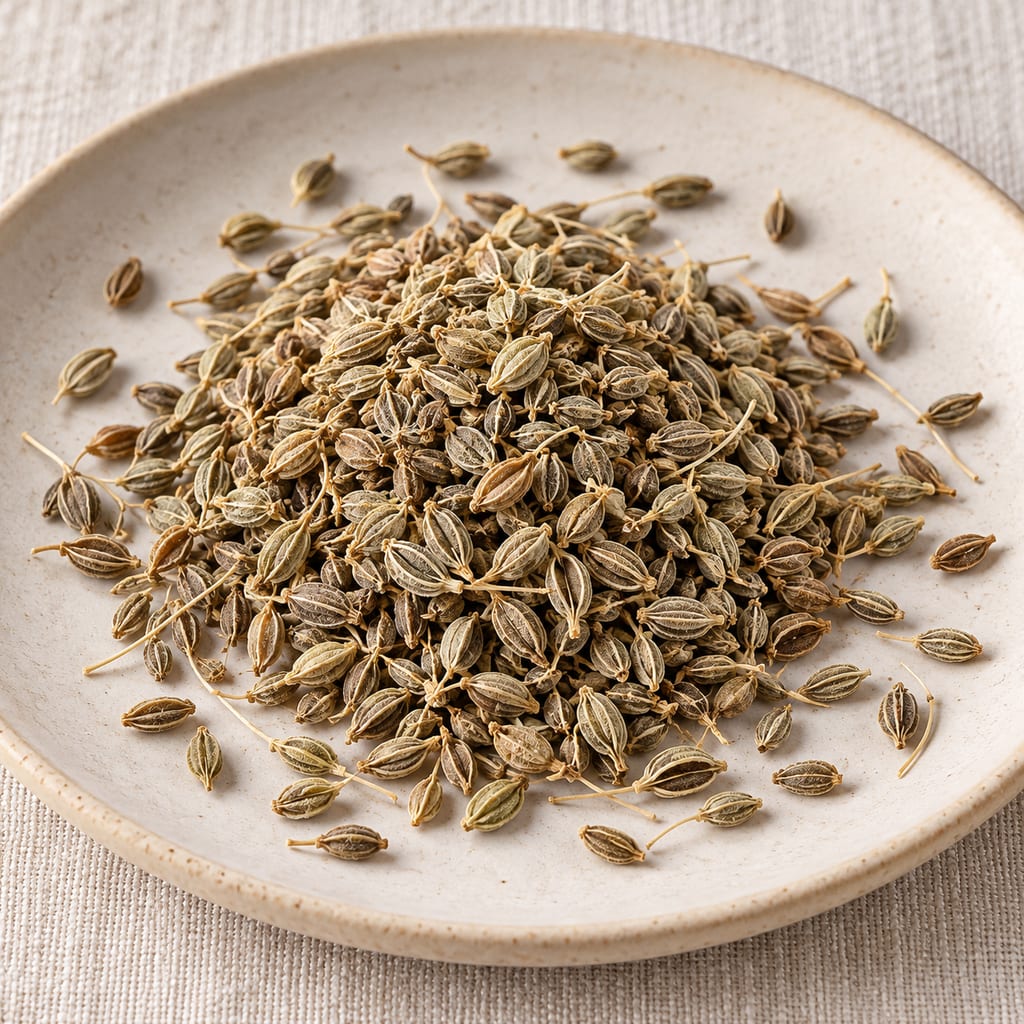
Aniseed is the dried ripe fruit of Pimpinella anisum, an aromatic Apiaceae spice commonly called a seed. It adds a sweet, warm aroma to breads such as Moroccan krachel and South African mosbolletjies, and is distinct from star anise.
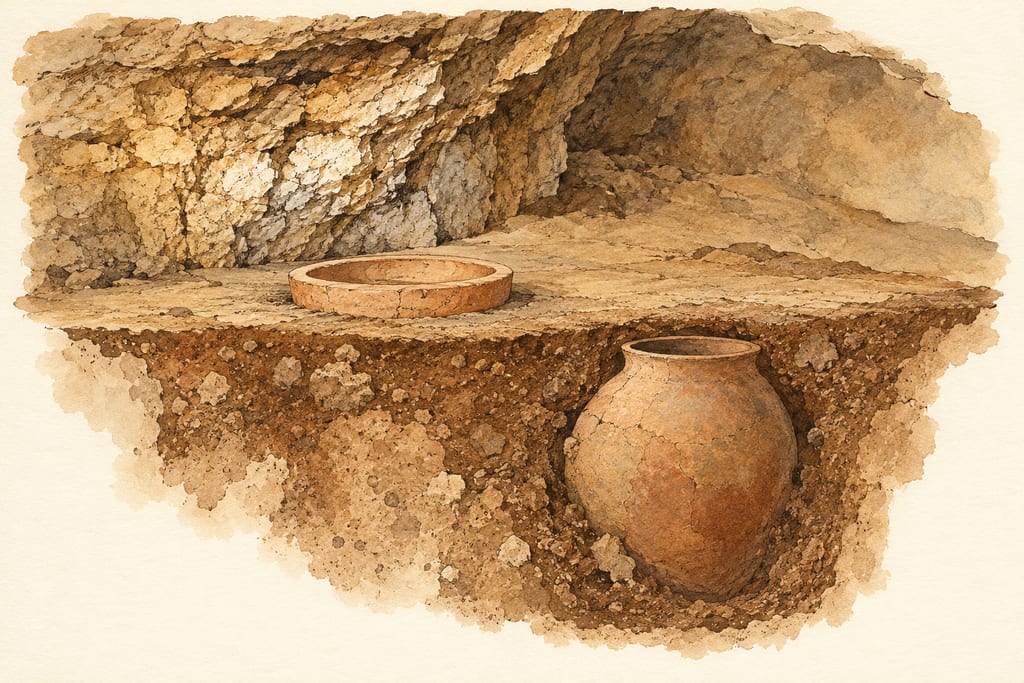
A fixed Late Chalcolithic installation in Areni-1 cave combined a shallow clay pressing basin with a large jar set into the cave floor and storage vessels nearby.

Ripe avocado flesh is the soft, buttery, fat-rich pulp of Persea americana, eaten raw. It is low in acid, so it is a fresh ingredient that needs care in chilled dishes.
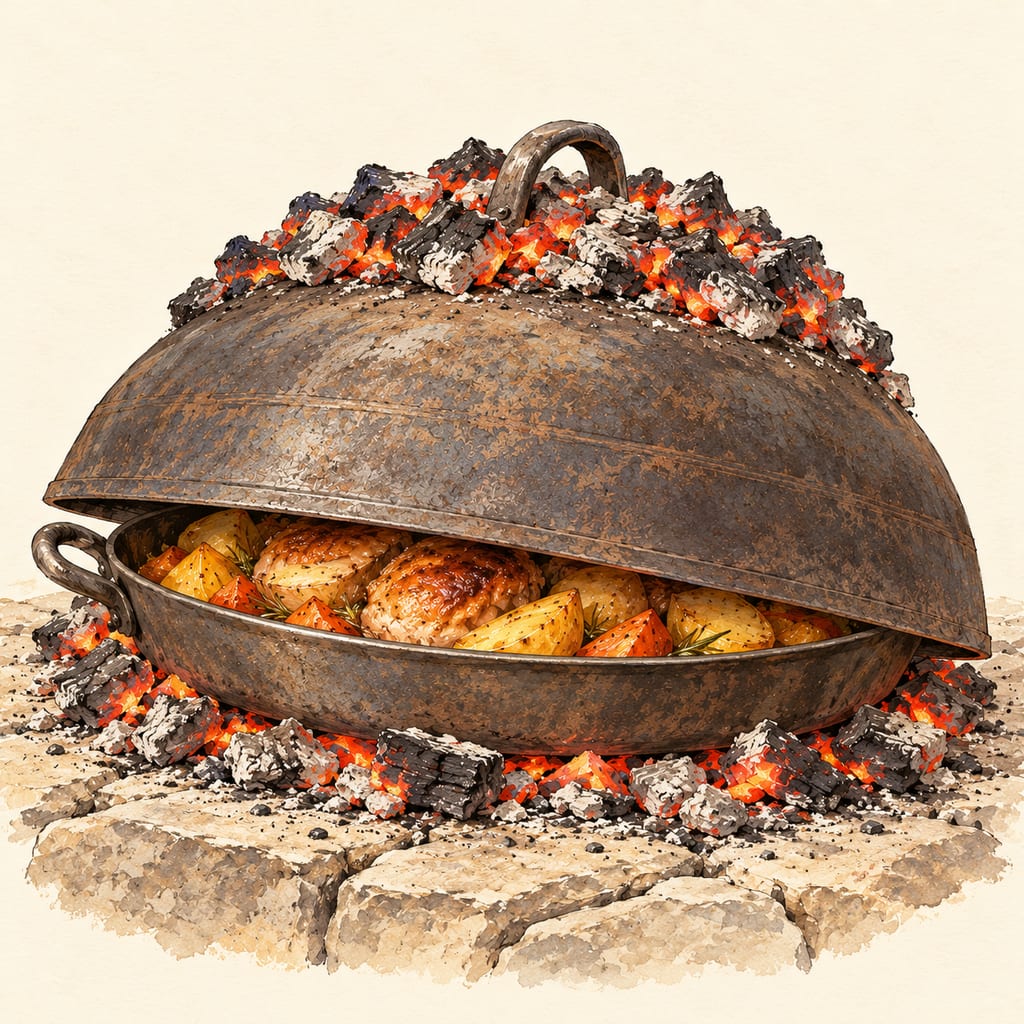
A portable dome and pan used over a hearth, with embers on the lid and heat from below. Regional peka and saç forms share this principle while differing in materials, pan shape and how the food is cooked.
No community contributions have been published for this entry yet.
Sign in to contribute. Published comments and photos are free to read.
WikipediaIdentity · History · Nutrition
TurnipDescription of the turnip, domestication and spread, cultivation, nutrition of roots and greens
Cited in: The Kiso red turnip; Where turnips came from; Choosing the turnip for sunki
WikipediaIdentity · History
Brassica rapaCrops of Brassica rapa, chromosome number, origin 4,000 to 6,000 years ago in the Hindu Kush
Cited in: The Kiso red turnip; Where turnips came from
Japan Geographical Indication information site (Ministry of Agriculture, Forestry and Fisheries)Method · History
Sunki, geographical indication registration no. 34Protected 26 May 2017; production area; red turnip stems and leaves; salt-free lactic fermentation with a starter handed down
Altitude of 1,000 to 1,300 metres, frosts before harvest, Edo-period use, 1972 plant
Cited in: A cold valley and a salt-poor kitchen; How sunki is made; Sunki beside other pickles; Eating sunki
Ministry of Agriculture, Forestry and Fisheries, JapanMethod · History · Use
Sunki (traditional foods of Japan)Otaki-kabu and Kaida-kabu, blanching, sunki-boshi starter, overnight warm then one month cold
History of over 300 years, recognition and uses
Cited in: The Kiso red turnip; A cold valley and a salt-poor kitchen; How sunki is made; Eating sunki; Turnips in other pickles
National Center for Home Food PreservationComparison
SauerkrautSauerkraut fermented with salt in 3 to 4 weeks at 70 to 75 degrees Fahrenheit
Cited in: Sunki beside other pickles
WikipediaComparison
KimchiVegetables salted first to draw out water and inhibit harmful microbes
Cited in: Sunki beside other pickles
Food and Agriculture Organization of the United NationsComparison
Fermented fruits and vegetables: a global perspective, Chapter 6: Typical products of bacterial fermentationsSinki: salt-free radish ferment, 12 days at about 30 degrees Celsius, pH 6.7 to 3.3
Cited in: Sunki beside other pickles
WikipediaComparison
GundrukSalt-free fermentation of leaves, pH about 4.0, acid about 1 percent by day six
Cited in: Sunki beside other pickles
WikipediaFermentation
PicklingSuccession of Leuconostoc and Lactobacillus in pickles, pH 4.6 or lower
Cited in: Turnips in other pickles
WikipediaScience
RadishGlucosinolates and myrosinase form allyl isothiocyanates; pelargonidin and cyanidin in red and purple radishes
WikipediaGeography
Otaki, NaganoClimate and setting of Ōtaki Village in the Kiso Mountains
Cited in: A cold valley and a salt-poor kitchen
WikipediaUse
TorshiTurnips among torshi vegetables; Egyptian torshi or mekhalel
Cited in: Turnips in other pickles
WikipediaUse
ŞalgamŞalgam flavoured with aromatic turnip, fermented with bulgur and rock salt
Cited in: Turnips in other pickles
Wikipedia (Japanese)Method · Use · History
すんき (sunki)Named Kiso turnip varieties; starter of dried sunki, previous brine, crab apple and wild grape
Ready in about a week, aged two months; temperature, pH 4.5 and 3.0
Blanching and protein; uses; recognition since 1983; comparison with salt-free and salted pickles
Cited in: The Kiso red turnip; A cold valley and a salt-poor kitchen; How sunki is made; Why the cold matters: acid, enzymes and protein; Sunki beside other pickles; Eating sunki; Choosing the turnip for sunki
Ministry of Agriculture, Forestry and Fisheries, JapanComparison
Nozawana-zuke (traditional foods of Japan)Nozawana from Tennoji turnip seed in 1756; salted pickle; aged pickles amber
Cited in: A cold valley and a salt-poor kitchen; Sunki beside other pickles
WikipediaComparison
NozawanaNozawana as Brassica rapa leaf crop of cold Nagano mountain areas
Cited in: A cold valley and a salt-poor kitchen; Sunki beside other pickles