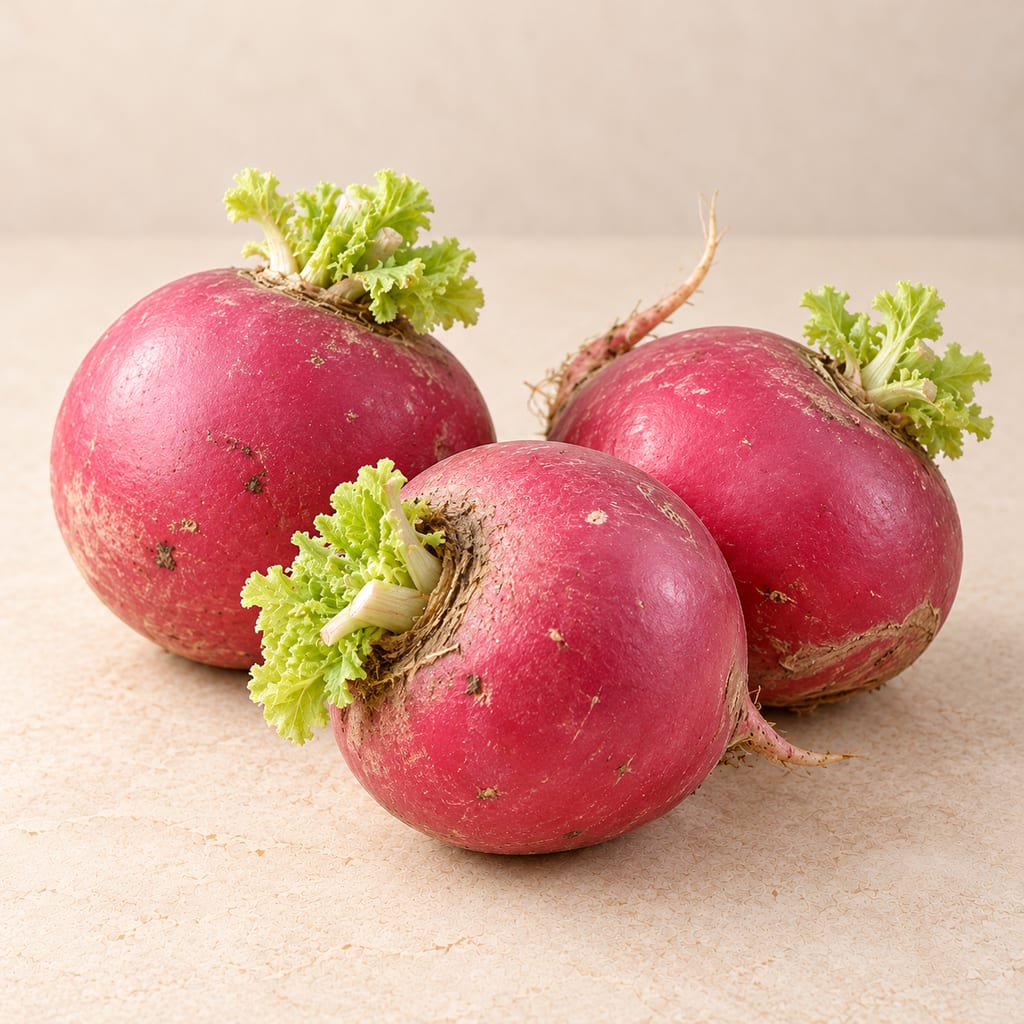
Red turnip
Red turnips are the heritage turnips of Japan's Kiso valley; their stems and leaves are fermented without salt into sunki, a sour amber pickle.
 FermenteaWhere food goes to change
Traditional method
Sunki is a salt-free pickle from Japan's Kiso valley: red-turnip leaves fermented with a retained starter from the previous year's batch.
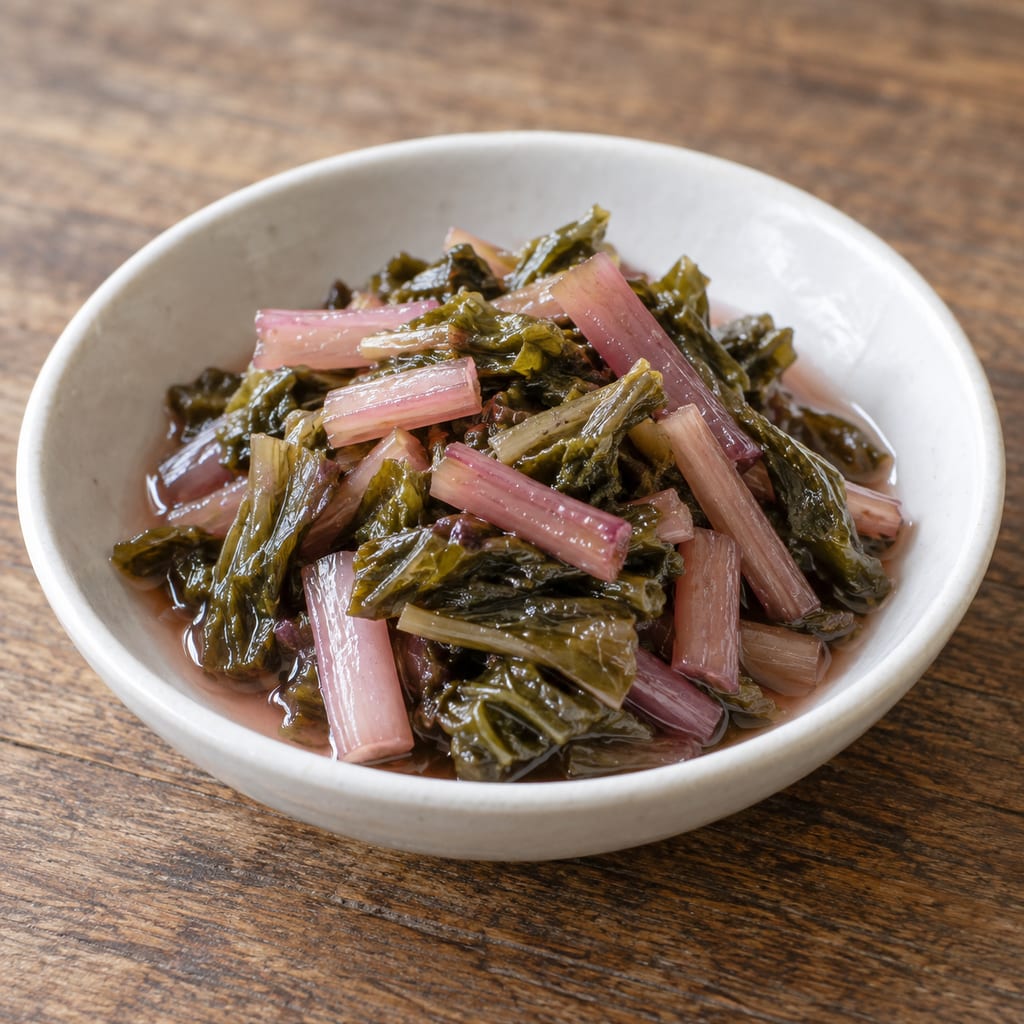
Sunki, also known as sunki-zuke, is a traditional fermented pickle made from the leaves and stems of regional red turnips grown in the Kiso Valley of Nagano Prefecture.
It is distinguished by its complete absence of added salt.
Most familiar Japanese vegetable pickles belong to the broader family called tsukemono. Many depend on salt, vinegar, rice bran, miso or other preserving ingredients.
Sunki instead relies on lactic-acid fermentation.
The result is distinctly sour, with a characteristic olive-brown or amber colour and a savoury fermented flavour.
The leaves and stems are more important to this food than the swollen roots.
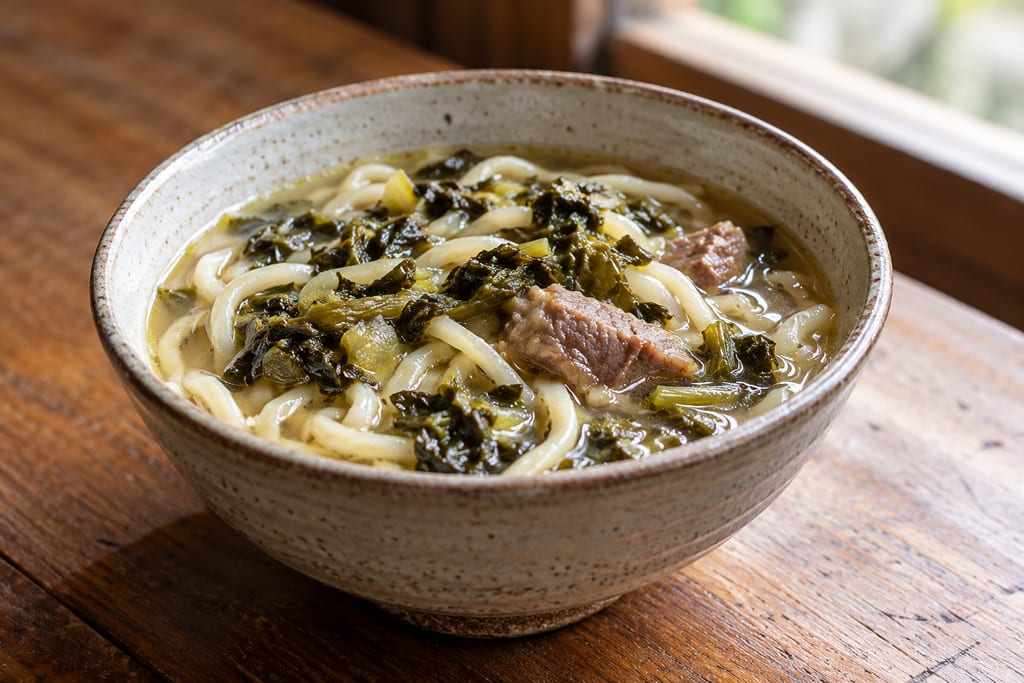
Sunki is consumed as a vegetable accompaniment and an ingredient in soups and noodle dishes, especially sunki soba and sunki-jiru.
The Kiso Valley lies in a mountainous part of central Japan.
The region's altitude and cold winters shaped agricultural production and food storage.
Some settlements associated with traditional sunki production lie approximately 1,000–1,300 metres above sea level.
Cold conditions historically restricted fresh vegetable availability during winter.
The region was also distant from convenient coastal salt production.
Transporting salt inland involved cost and effort.
This made a preservation process without salt economically attractive.
One local saying captured the importance of the commodity: rice could be lent, but salt was too valuable to lend casually.
This does not establish that salt was completely unavailable. Rather, it explains why avoiding its use could be a practical advantage.
Sunki therefore represents a distinctive adaptation to regional geography, agriculture and trade.
Sunki is officially described as a tradition extending back more than 300 years.
Japanese agricultural records identify references in poetry from the Genroku period, 1688–1704.
This provides an unusually specific historical reference for a traditional fermented vegetable.
It does not prove that the exact modern production procedure was established during those years.
Nevertheless, it demonstrates that a recognisable local food existed in the early modern period.
Sunki was traditionally made by households.
Families maintained their own preferred methods and fermentation starters.
The product's association with autumn red-turnip harvests meant its production followed the agricultural calendar.
During the twentieth century, household production increasingly coexisted with organised commercial production.
Local cooperative activity expanded from 1972, helping make sunki available beyond the producing households.
In 2011, it received recognition as a Kiso town brand product.
On 26 May 2017, Sunki was registered under Japan's geographical indication system as registration number 34.
This registration protects the regional identity of the product and recognises its traditional characteristics.
The registered geographical area includes designated municipalities of the former Kiso District and part of Shiojiri.
DEFRA
The traditional vegetables are regional red turnips.
Their leaves and stems are selected for fermentation, often with a small amount of the red root base retained.
This has several effects.
The leafy material supplies plant carbohydrates and fibre.
The stems provide structure.
The retained red root may release pigments into the fermentation liquid, sometimes giving it a pale pink appearance.
Local experience also identifies frost before harvest as desirable.
The Japanese agricultural ministry records a traditional belief that exposure to frost improves the sweetness and quality of the turnip greens.
The plants are generally harvested around late October and November.
These are regional agricultural observations, not an instruction to freeze every batch artificially.
Different cultivars may produce different leaf textures, sweetness and pigmentation.
Substituting generic supermarket turnip tops changes the raw material and cannot automatically reproduce protected Kiso sunki.
The MAFF Nagano regional recipe gives one batch: 3 kg turnip greens (kabuna) and 700 g of Sunki starter.
The starter is called sunki-zuke no tane. The page describes a salt-free ferment and does not list salt as an ingredient.
The numbered recipe gives no quantity for the warming water. It says to reuse enough of that water to cover the greens.
This is one local source batch. The page notes that regional and household recipes differ.
Sunki lacks the salt-based selective environment of ordinary salted vegetable pickles.
Without salt, a wider range of organisms may initially be capable of growing.
Adding a starter introduces a population of microorganisms already associated with successful fermentation.
This can help the desired acid-producing organisms establish themselves more rapidly.
The process is a form of backslopping: transferring part of an established fermentation to a fresh batch.
Backslopping occurs in many traditional fermented foods, including sourdough, some fermented cereal beverages and certain dairy preparations.
However, the microbial population of a starter can change during storage or repeated propagation.
A visibly sour starter is not necessarily free of undesirable organisms.
Successful commercial production therefore requires appropriate starter management and monitoring rather than assuming every inherited culture is equally suitable.
The following steps summarize the one-batch method attributed to the Nagano Prefectural Furusato Experience Center on MAFF's regional page.
1. Wash 3 kg turnip greens, leave a little turnip at the stem base, separate the turnip and stems, and cut them 1–2 cm wide.
2. Quickly warm the cut greens in a large pot. The numbered method gives no time or temperature. The page's separate narrative temperature figures are not specified as controls in these steps.
3. In a polystyrene container lined with a plastic bag, alternate layers of warm greens and 700 g Sunki starter.
4. Add enough of the warming water to cover the greens, expel air and close the bag.
5. Cover the container and leave it in a warm place for one day.
6. The source suggests a next-morning taste check and then 2–3 additional days in a cool place before cool storage. These are source-specific customary cues, not validated safety endpoints or storage limits.
The source does not state a measured fermentation temperature, finish criterion, storage temperature or shelf life.
A 2018 study described sunki preparation involving a warm fermentation stage around 38°C for 24 hours.
This was a specific investigated method rather than a universal instruction that every household ferment must reach 38°C.
The published trial identified four notable lactic-acid bacterial species using the names current at the time:
Lactobacillus fermentum, Lactobacillus delbrueckii, Lactobacillus plantarum and Lactobacillus parabuchneri.
Several of these organisms have since been assigned to different genera.
The revised names include Limosilactobacillus fermentum, Lactiplantibacillus plantarum and Lentilactobacillus parabuchneri.
Their identification helps explain why sunki has a flavour different from simply soaking vegetables in acid.
The microorganisms generate acids and other metabolites from the available vegetable carbohydrates.
Different bacterial species contribute differently to the result.
Sunki provides a particularly interesting example of fermentation producing savouriness alongside sourness.
Lactic acid contributes the characteristic acidic taste.
But the fermentation liquid also contains succinic acid.
Succinic acid can contribute an umami-like savoury impression.
The 2018 study identified contributions from L. fermentum and L. parabuchneri to succinic-acid production.
This helps explain why the liquid is valued in soup.
The fermented greens contribute acidity, while the liquid can add depth to a broth.
The traditional pairing with miso is therefore chemically interesting.
Miso supplies glutamate-rich savouriness, while sunki contributes acidity and other fermentation-derived compounds.
The combination creates a more complex broth than would be obtained by adding a generic sour ingredient alone.
J-STAGE
Traditional sunki production involves two distinct temperature phases.
The initial warm period encourages microbial growth and acid production.
The subsequent cold period slows fermentation and allows flavour to develop more gradually.
The Japanese agricultural ministry describes transferring the vessel from the house to a cooler storage building after the first night.
It also records traditional maturation extending toward a month.
This differs from the shorter regional recipe's suggested initial use after several days.
Both accounts are meaningful.
One describes a practical short recipe; another describes a longer seasonal storage tradition.
The FAO's older summary even describes fermentation and storage extending 1–2 months.
These reports should remain separate because they are not necessarily measuring the same endpoint.
A pickle ready for cooking after the initial acidification stage may continue changing during winter storage.
Sunki is often compared with nozawana-zuke, another famous Nagano pickle.
Both use long leafy greens and can develop an amber-brown colour.
But the methods differ fundamentally.
Nozawana-zuke normally uses salt to extract liquid and control fermentation.
Sunki does not.
The distinctive starting vegetables also differ.
Sunki uses Kiso red-turnip greens, while nozawana-zuke uses nozawana.
A reference site should therefore classify them as separate preparations, despite their overlapping geography and appearance.
One of the characteristic dishes is sunki soba.
Warm buckwheat noodles are topped with fermented turnip greens.
The sour vegetable contrasts with the earthy flavour of buckwheat.
A related dish is sunki-jiru, a soup incorporating the fermented greens.
Sunki can also be added to miso soup.
The cooking method is relatively simple, but the result depends heavily on the flavour of the fermented ingredient.
Some households eat sunki directly as a pickle.
Modern regional promotion has encouraged further uses.
The Japanese agricultural ministry mentions sushi preparations, including inarizushi and rolled sushi, together with salads, pasta, toast and fillings for dumplings or spring rolls.
These are contemporary culinary applications rather than evidence that every version has centuries of history.
They demonstrate that the acidic ingredient can be used in different food systems.
Good sunki has a recognisable sour flavour and the expected amber or olive-brown appearance.
Pinkish liquid may result from pigments released by the retained turnip base.
These colours are not automatically signs of spoilage.
Poor acidification, unusual slime, visible mould or putrefaction are warning signs.
The starter's microbiological quality matters, especially when material from previous years is reused.
Sunki should not be considered safe solely because it resembles an established regional product.
Salt-free fermentation removes one of the microbial controls used in many pickles.
The starter, temperature and rate of acidification therefore become especially important.
A successful laboratory result does not validate every household arrangement.
The 24-hour warm period and subsequent cool maturation must be understood as parts of particular processes.
A commercial product requires appropriate validation of acidification, handling, storage and shelf life.
The general pH guidance for fermented vegetables remains relevant, but Sunki's protected geographical status does not itself constitute a microbiological safety certificate for arbitrary homemade batches.
The MAFF household account's sourness/taste cue is not a validated safety endpoint. The source does not provide a safety review, measured endpoint, storage temperature or shelf-life evidence for this batch.
Sunki is recorded as a salt-free Kiso valley ferment with an Edo-period tradition behind it.
Scaling: source batch only
Poor brine coverage or inadequate acidity monitoring can allow spoilage; recipe-specific validated limits are not established.
Hazard sourceUse clean food-grade equipment, keep produce submerged and monitor acidity; no universal endpoint is supplied for this recipe.
Control sourceThe source supports this broad area and no precise location.
Red turnips are the heritage turnips of Japan's Kiso valley; their stems and leaves are fermented without salt into sunki, a sour amber pickle.
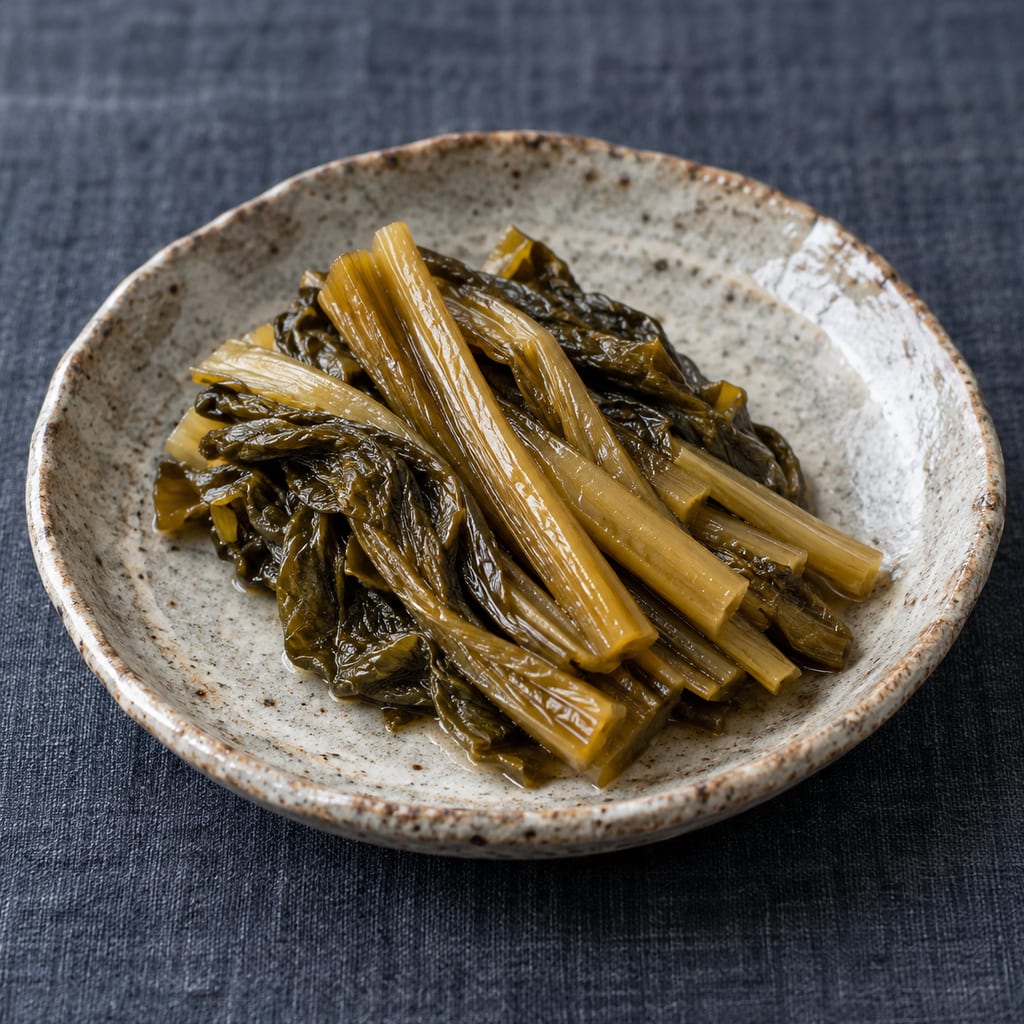
Takana mustard greens from Aso in Kumamoto are salted and pressed into a fresh spring pickle, or aged into a sour furuzuke that is fried and mixed into takana rice.
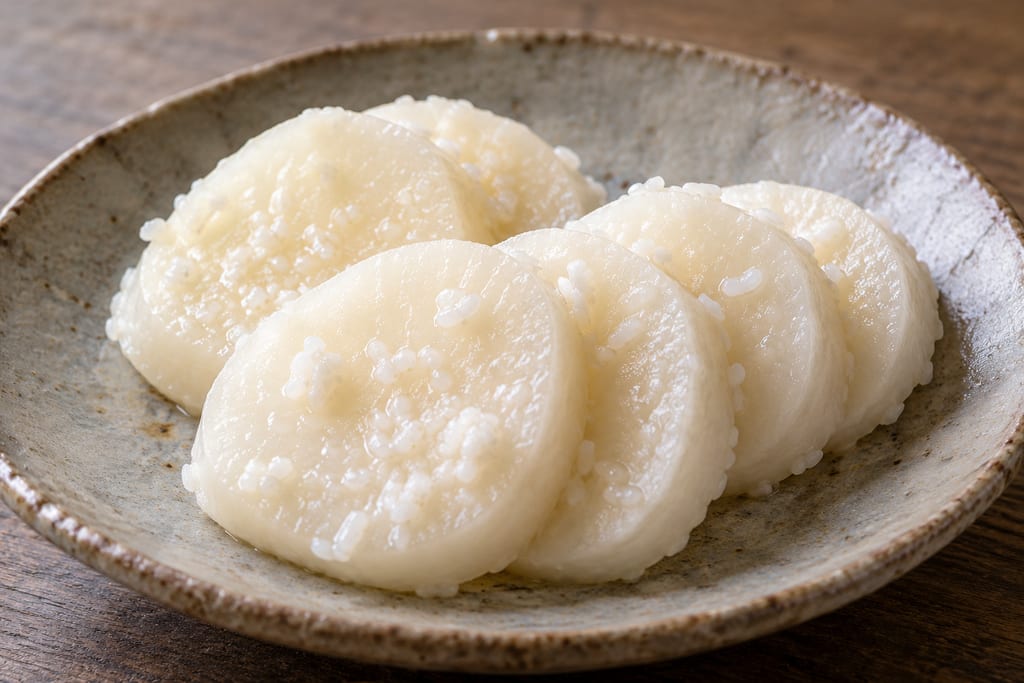
A sweet, crisp Japanese daikon pickle from Tokyo's Nihonbashi district, made by salting fresh radish and dressing it in rice koji, sugar or koji amazake without the heavy drying used for takuan.
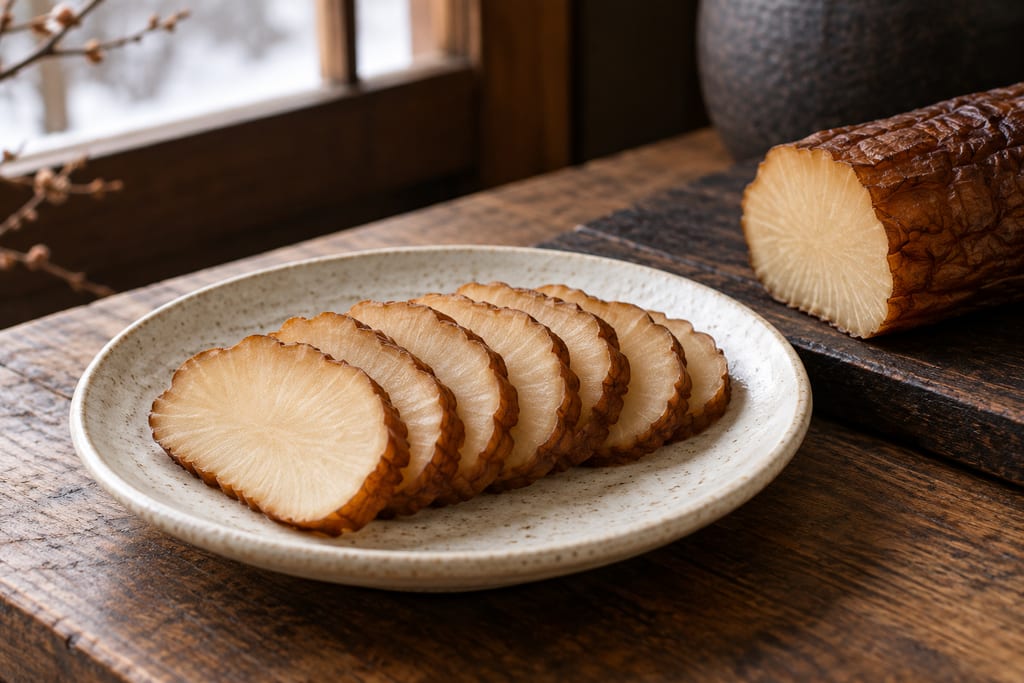
Iburigakko is Akita pickled daikon dried with smoke before it is fermented in rice bran.
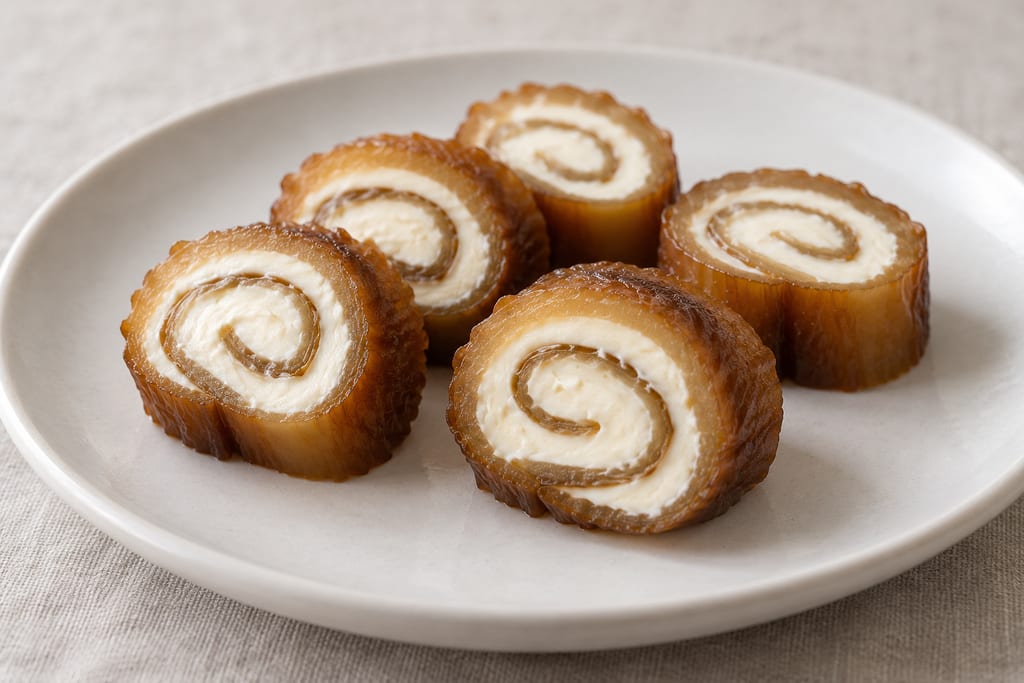
A Morinaga snack pairs thin ribbons of iburigakko with cream cheese, then chills the roll before cutting it into portions.
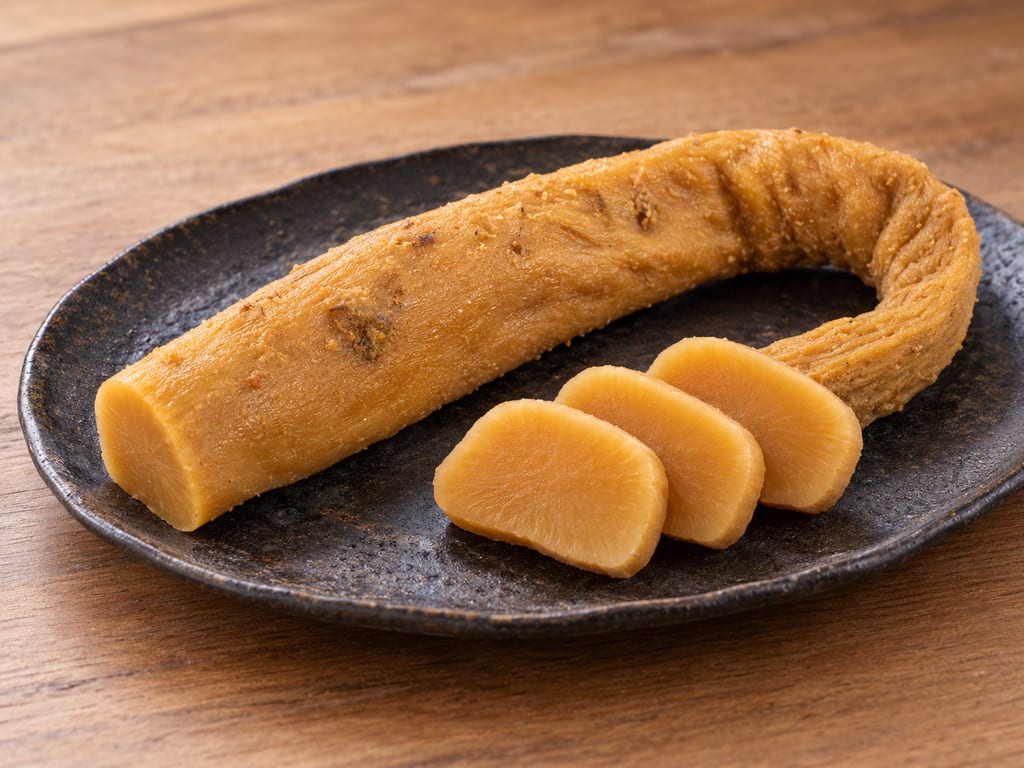
Regional takuan from Ise City, Mie, made with Misono daikon dried on a rack, then matured in a weighted barrel of rice bran and salt for months to years.
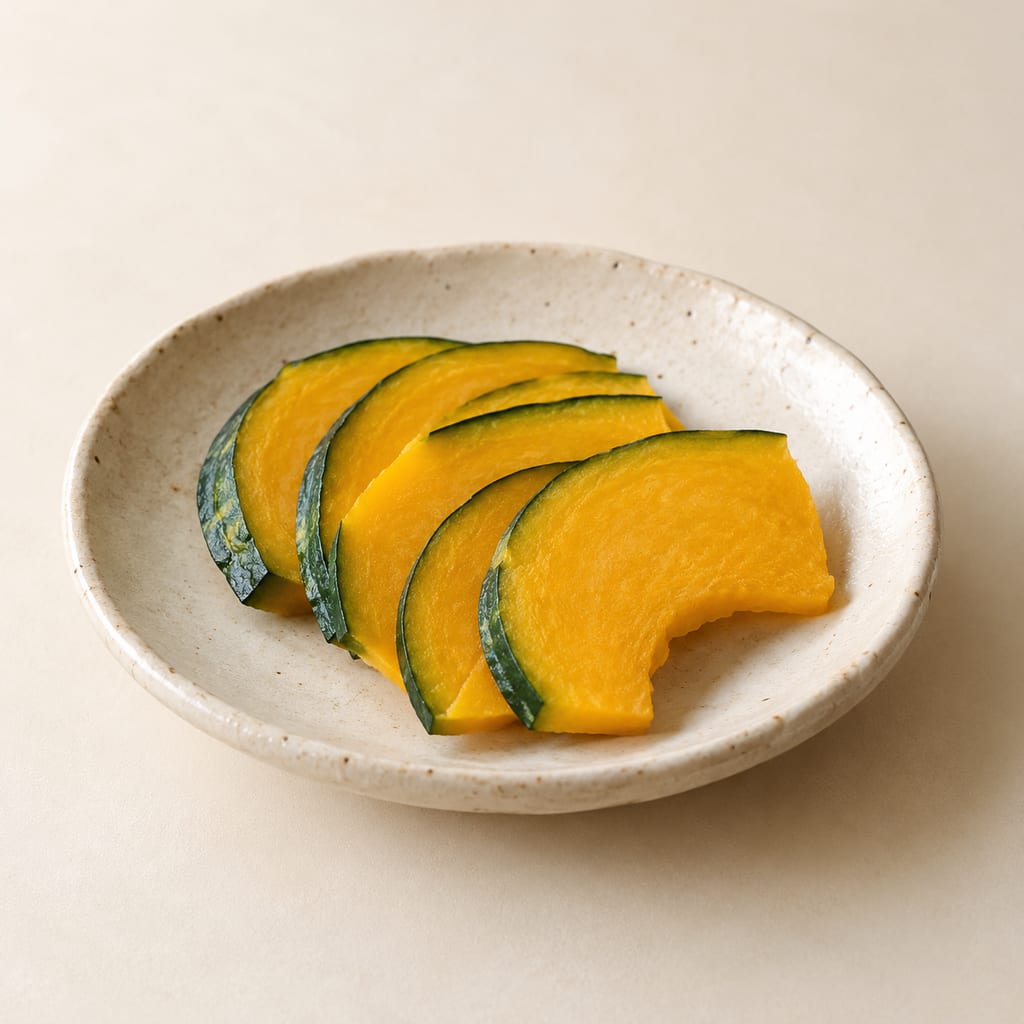
Kabocha no nukazuke: Refrigerated commercial fermented bed; use removed portions the same day.

Foods embedded in salty fermented miso paste, which transfers salt and fermentation products into them; misozuke uses an already transformed medium rather than a fresh vegetable brine.
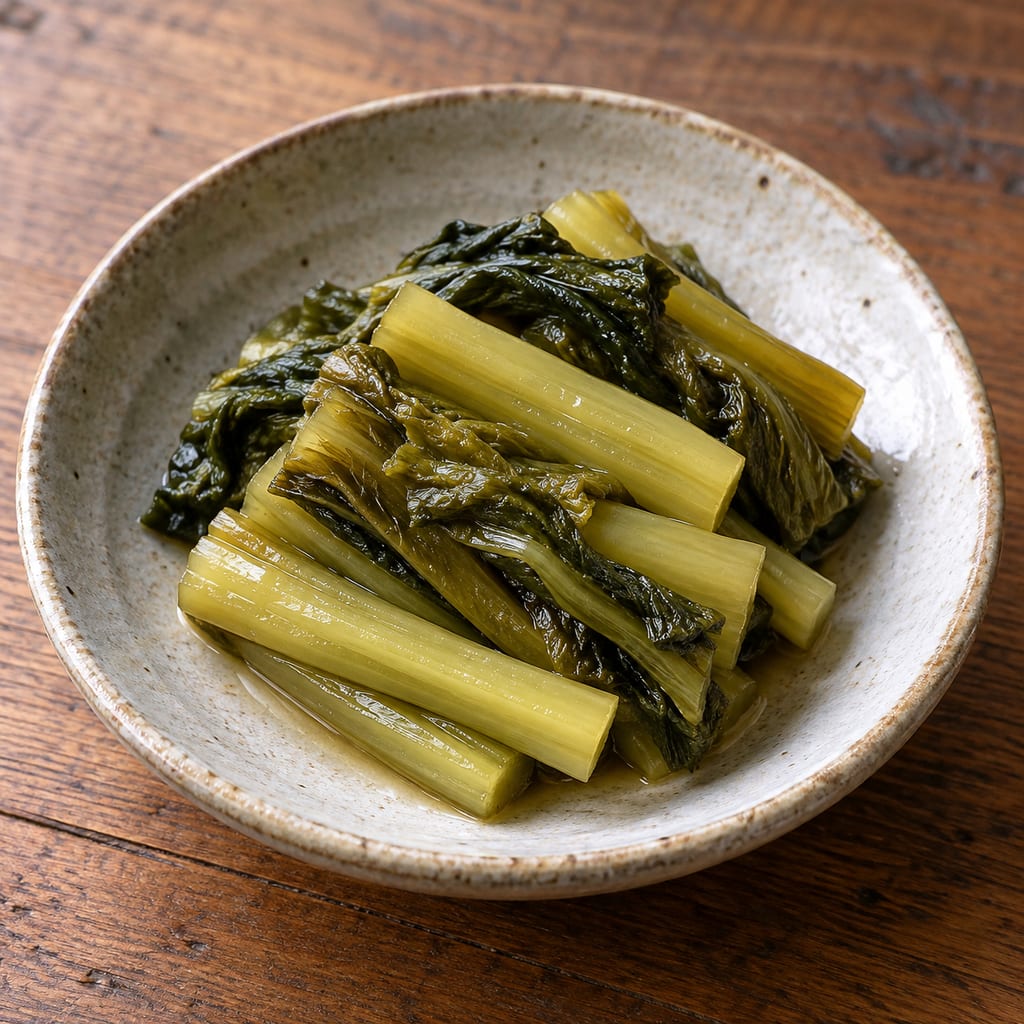
Nozawana greens salted in a barrel and weighted overnight, a Nagano household pickle sampled after about two weeks and soured by a month.
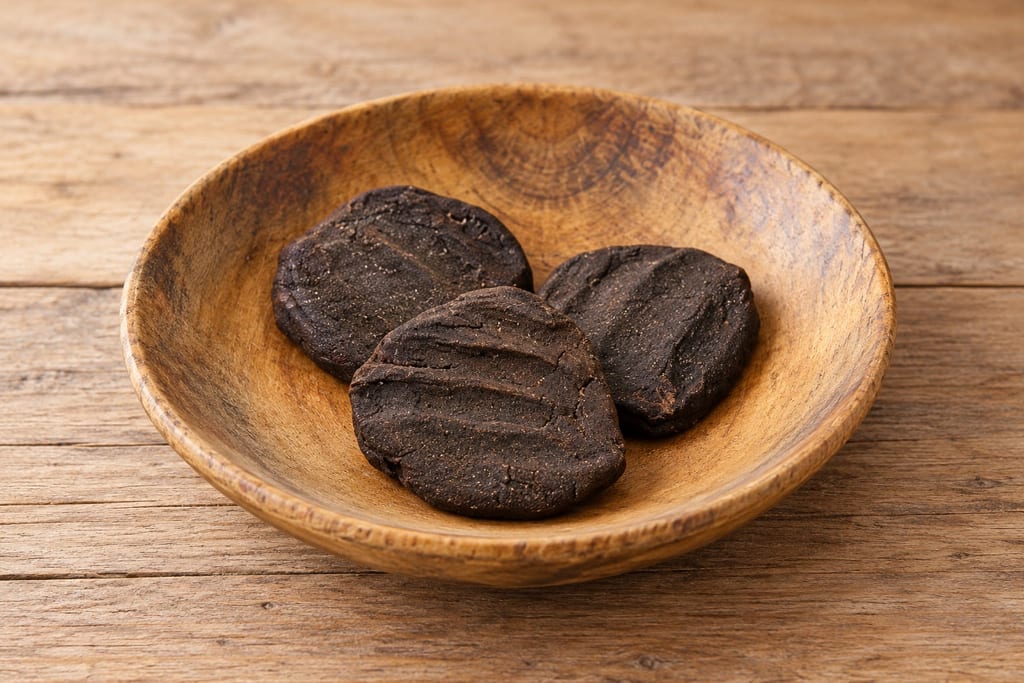
Dried cakes of pounded taro leaves from the Ao Naga in Nagaland, yellowed in a bag, then dried by hot ash or sun and used to flavour meat dishes.
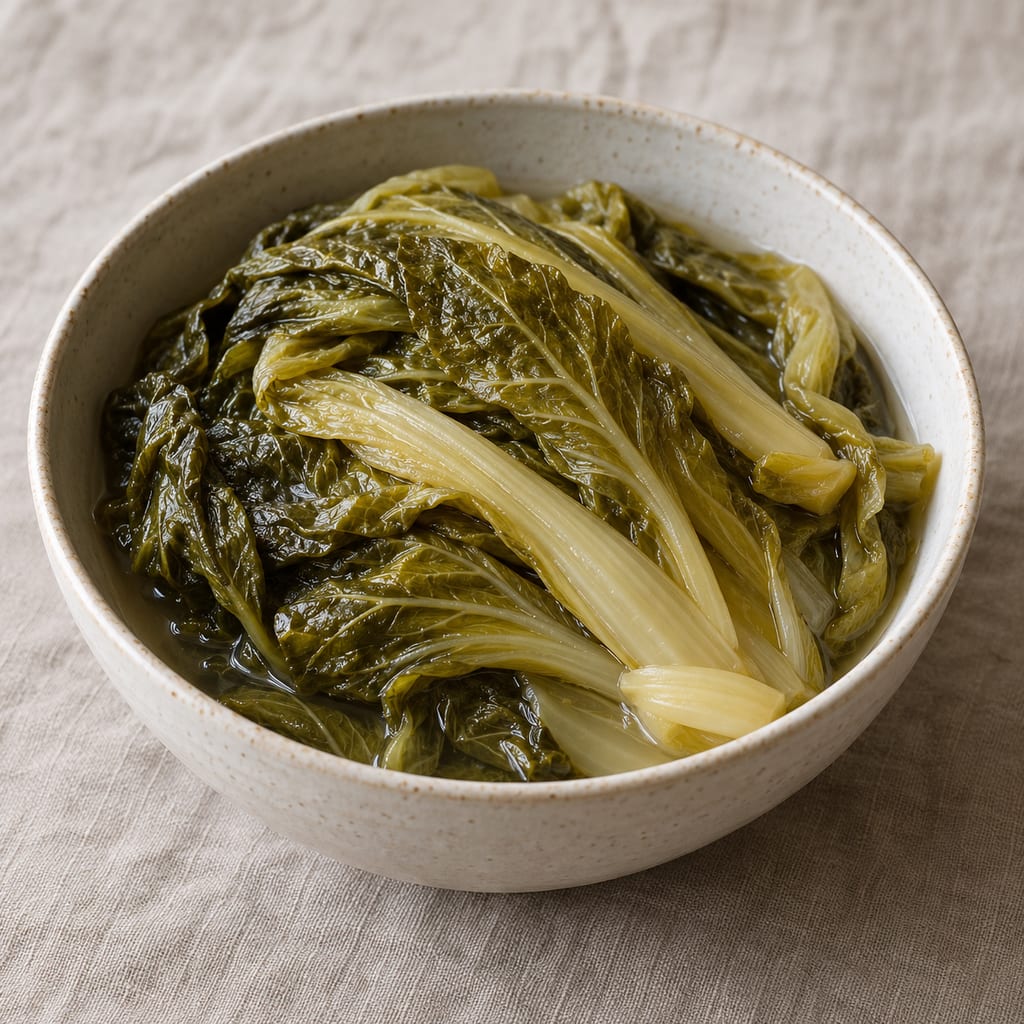
Wilted flat mustard leaves ferment with rice water and salt as a Filipino appetizer and cooking ingredient.
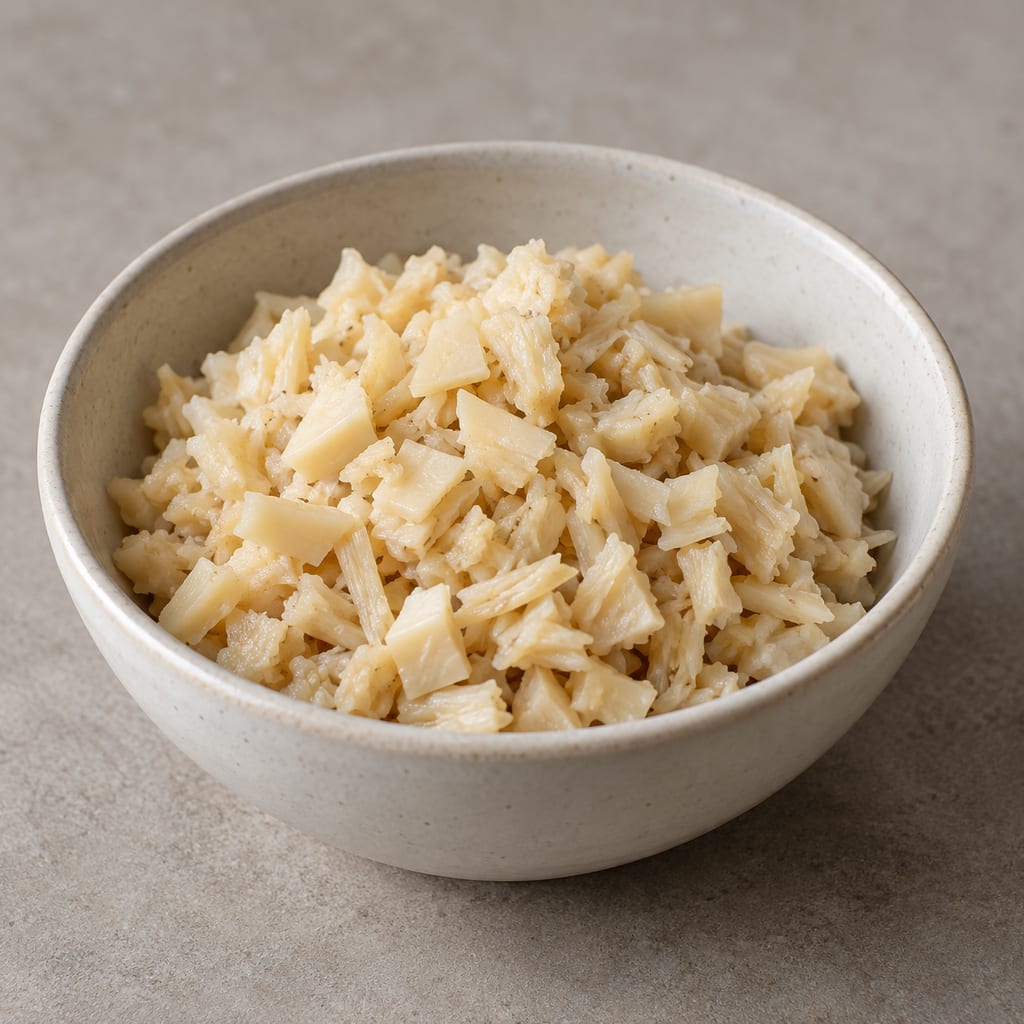
Finely chopped young bamboo shoots packed in leaf-lined baskets, sealed in a forest pit and weighted for one to three months, from Arunachal Pradesh.

Pit-fermented bamboo shoots from Arunachal Pradesh, cut smaller and sun-dried for five to ten days, used in curries.
Goyang is a Sherpa fermented wild leafy food of the Darjeeling hills and Sikkim. Rainy-season magane-saag leaves are packed in a bamboo basket, held at room temperature for about a month, then eaten fresh or dried and used in soup.
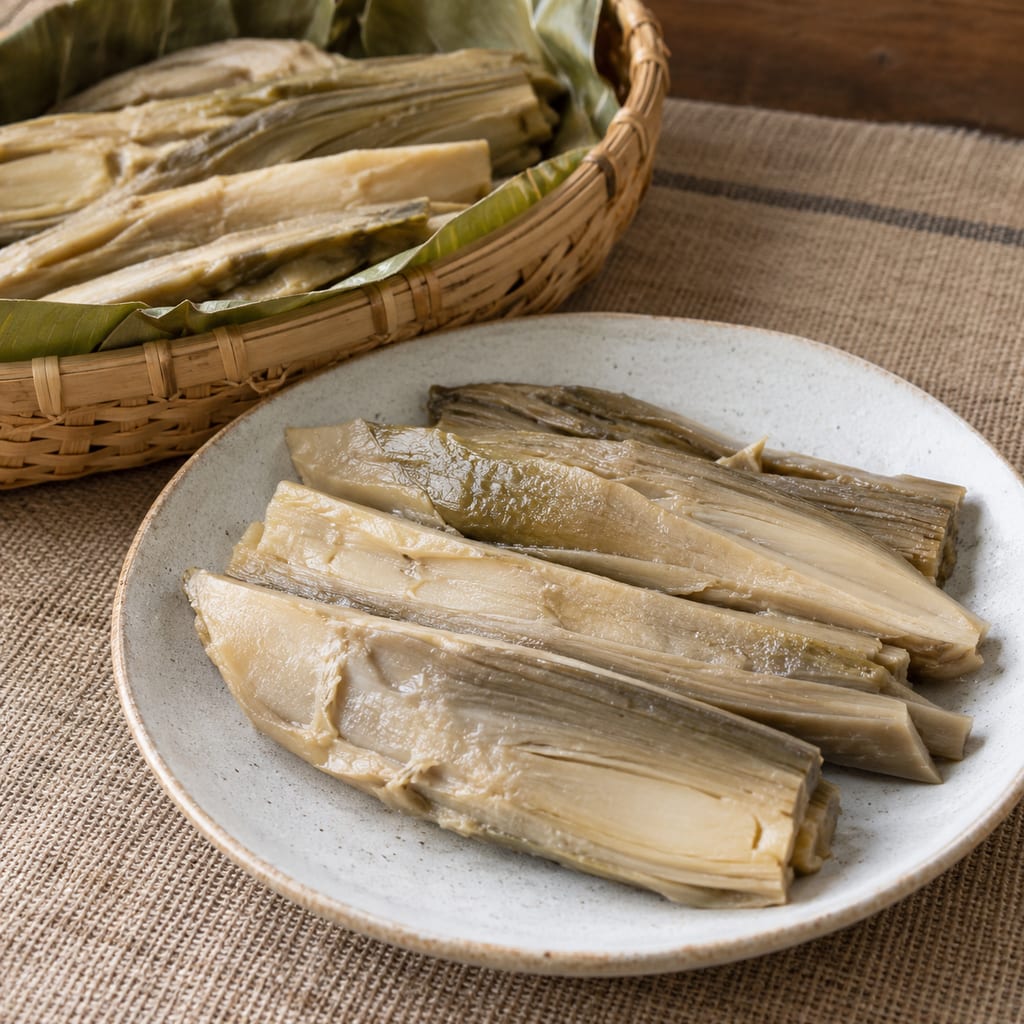
Upper tender bamboo-shoot tips, split or flattened, pit-fermented one to three months in Arunachal Pradesh and eaten in curries.
The original Polish barszcz: young hogweed leaves soured in warm water for a few days, then boiled into soup with egg, butter, cream or millet. Recorded from 1595, with warnings about the sap and lookalikes.
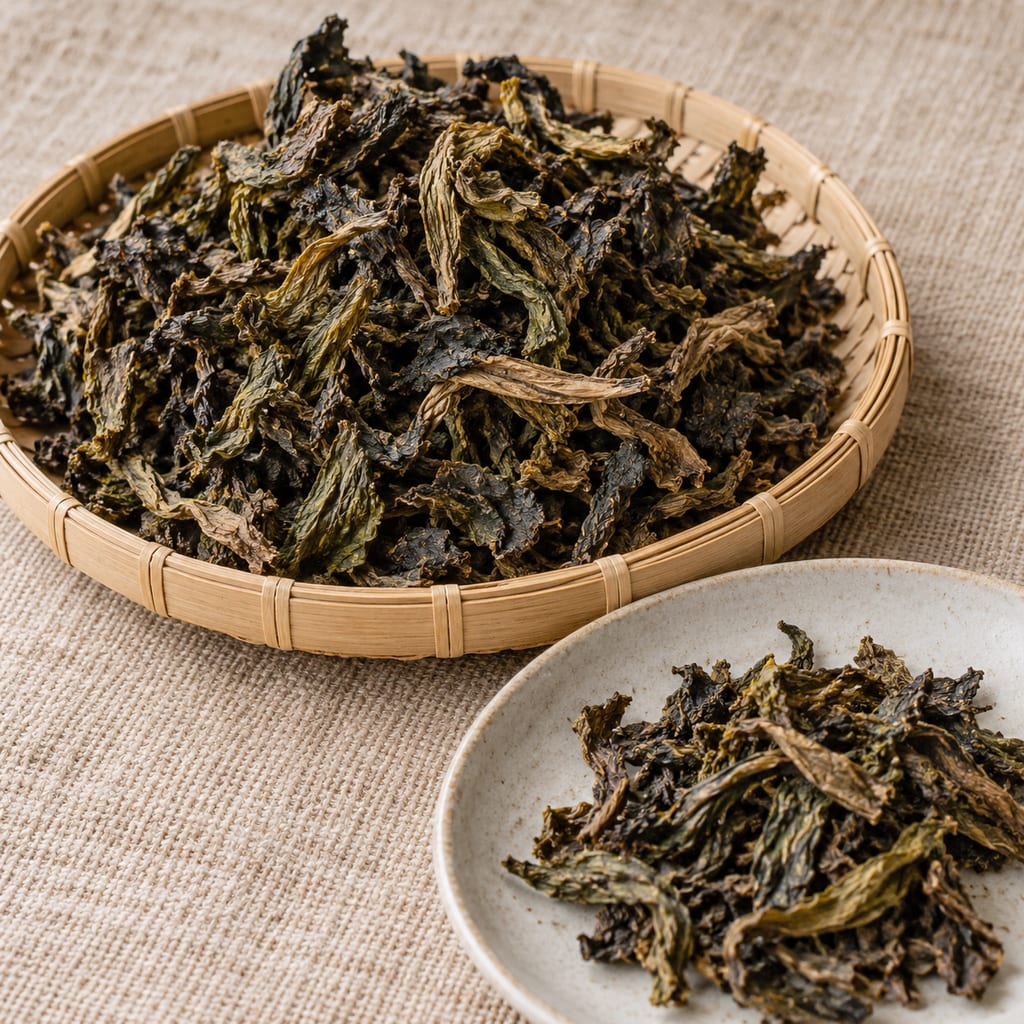
Inziangsang is a Naga fermented food of mustard leaves from Nagaland and Manipur. Crushed, soaked and squeezed leaves ferment for 7 to 10 days, then dry in the sun. A squeezed liquid can be boiled to a concentrate.

A gelling polysaccharide extracted from red seaweeds, sold as kanten strips or powder; it sets firm at a low concentration and stays solid until about 85 °C.

A Dominican table and seasoning condiment of sour orange juice, mixed with lime and salt and bottled raw; garlic, oregano or a hot pepper may be added for meat or a spicier bottle.

Cicerbita alpina is an alpine perennial whose tender shoots and leaves have been eaten raw or cooked. Sámi milk preparations and modern Carnian dishes are distinct uses, with serious identification and preservation limits.

Japanese skipjack tuna cooked, then repeatedly smoked and dried over a wood fire by the hand-fired tebiyama method into a hard block for shaving into dashi: the first stage of katsuobushi.

A Swedish-style spirit vinegar made by fermenting neutral alcohol with live vinegar bacteria, with a separate guide to commercial ättika strengths.

A yeast-raised wheat ring shaped from a firm dough, briefly boiled and baked. This source-batch formula gives a gently malted crust and a chewy crumb.

A warm dip of garlic, anchovy and olive oil, often enriched with butter, that Piedmont serves over a flame with raw and cooked vegetables and bread.

Bechamel is a white sauce of milk thickened with a butter and flour roux, one of the French mother sauces, and the base from which Mornay and other cheese and cream sauces are made.
No community contributions have been published for this entry yet.
Sign in to contribute. Published comments and photos are free to read.
Japan GI information siteInspiration
Sunki GI recordSunki region, history and process
Cited in: What is sunki?; The Kiso Valley setting; History and documented continuity; The vegetables behind sunki; Scientific investigation of the fermentation; Lactic acid, succinic acid and umami; Warm start and cold maturation; The relationship with other Japanese pickles; How sunki is eaten; Quality and deterioration
University of Minnesota ExtensionSafety
Preserving food at home: FermentationProduce fermentation equipment, acidity monitoring and submersion controls.
Cited in: How sunki is eaten; Safety and preservation
MAFFReference
MAFF — Sunki Traditional FoodCited by the written account of this record.
Cited in: History and documented continuity
MAFFReference
MAFF — Sunki-zuke Regional RecipeCited by the written account of this record.
Cited in: How sunki is eaten
MAFFReference
MAFF — Geographical Indication Registration No. 34Cited by the written account of this record.
Cited in: History and documented continuity; Ingredients — documented regional recipe; Why the starter matters; How sunki is eaten; Safety and preservation
Okada, 2018Reference
Okada, 2018 — Traditional Fermented Vegetable Sunki of Kiso and Its FlavourCited by the written account of this record.
Cited in: History and documented continuity
FAOReference
FAO — Sunki and Non-Salted Vegetable FermentationsCited by the written account of this record.
Cited in: How sunki is eaten
Ministry of Agriculture, Forestry and Fisheries (MAFF), JapanReference
すんき漬け 長野県 [Sunki-zuke, Nagano Prefecture]The 3 kg turnip greens and 700 g starter source batch; cut size, brief warming, layered bag-lined polystyrene vessel, reused warming water, one warm day, and a further 2–3 cool days; recipe variation and missing validated endpoint/storage limits.
Cited in: Ingredients — documented regional recipe; Documented preparation; Safety and preservation