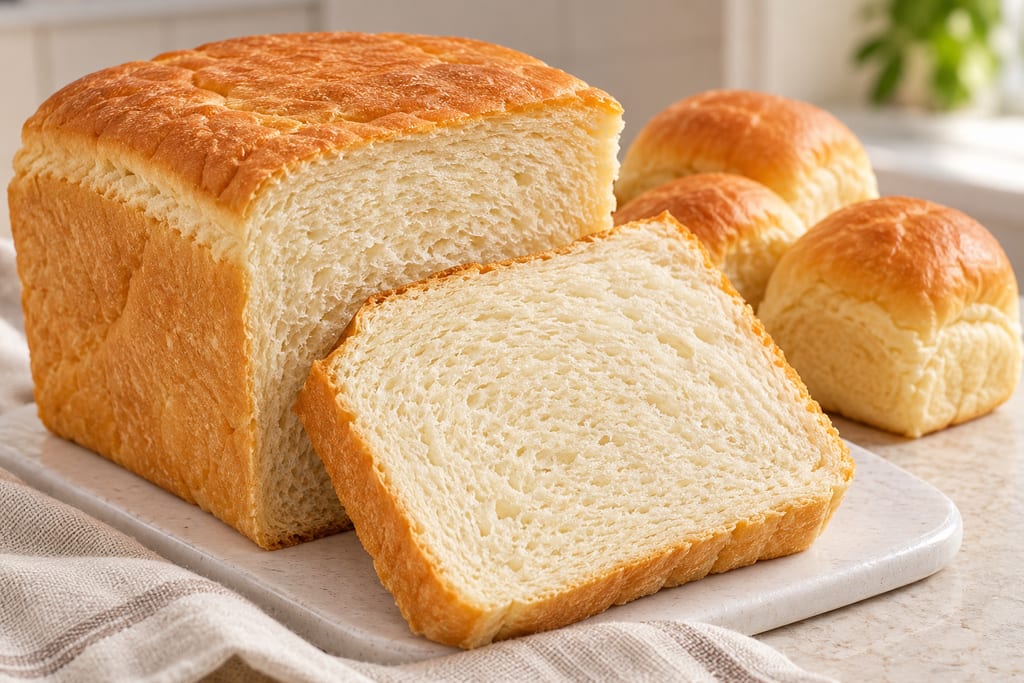
Agege bread (soft home-style variation)
This softer home-style Agege bread uses a scalded flour paste, an enriched yeast dough and a 9×5-inch loaf pan, with rolls from the extra dough.
 FermenteaWhere food goes to change
Modern method
mollete de Antequera · mollete
A soft, flattened wheat roll from Antequera, baked pale and often toasted for breakfast or filled as a snack.
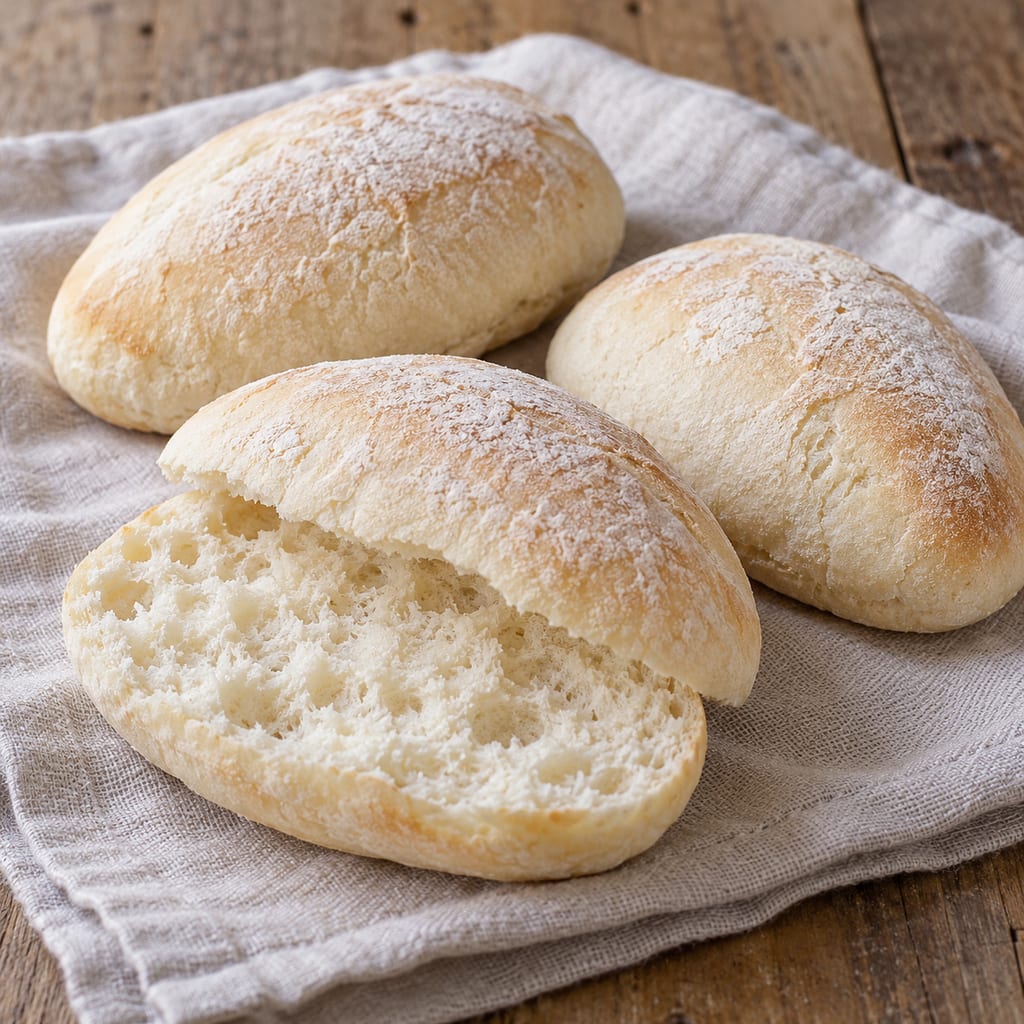
Mollete de Antequera is a wheat roll shaped as a flattened, irregular oval and baked lightly. The European product specification describes a soft, moist crumb, pale ivory crust, low profile and traces of flour from shaping. It permits low-strength wheat flour, water, sea salt and biological yeast; sourdough may supplement or replace the yeast. Wheat bran is an optional declared variation under the specification.
The registered name refers to a product made in the defined area under inspection and traceability controls. The application sets out commercial stages such as mechanical mixing, dividing and rounding, resting, shaping, controlled proofing, short baking, cooling and packaging. It specifies flour strength and finished-product characteristics that a home baker cannot establish from ordinary flour labels or visual judgment. This kitchen recipe is a separate home adaptation; making it does not confer IGP status.
The specification’s historical account cites records and makes a cautious suggestion about earlier flatbreads, but it does not prove a direct continuous lineage from medieval bread. It describes Antequera production becoming established at scale in the mid-20th century and links the pale, soft roll with breakfast, especially after toasting.
Miriam García’s EL PAÍS recipe adapts an earlier formula by Eulalia W. Petit and simplifies its flour choice to ordinary bread flour. It makes eight rolls from 500 g flour, 325 ml water, 10 g salt, 3 g dried yeast or 10 g fresh yeast, and 50 ml extra-virgin olive oil. The olive oil is part of this home formula; it is not listed among the IGP application’s permitted basic ingredients.
The method uses short kneading intervals separated by rests to work the oil into a tacky dough without adding more flour. It relies on the dough doubling for the first rise and gives at least an hour for the shaped pieces to expand. Those are source cues rather than fixed fermentation limits, so room conditions affect the schedule. The flattened shape and restrained bake aim for a tender, pale roll instead of a crisp, deeply browned loaf.
The source places the rolls on a baking stone or oven floor at 220°C and bakes them for 12–15 minutes, until they begin to take on color. It does not give a validated internal-temperature or storage control. Cool the rolls on a rack; the article suggests eating them plain or toasted and filled.
The product application recounts documentation from 1539 and 1775 and says commercial production became established at scale in Antequera from the mid-20th century. Its suggestion of a medieval Al-Andalus antecedent is explicitly remote and does not establish direct continuity.
Yield 8 rolls, approximately 110 g each · Scaling: source batch only
Flour can carry harmful bacteria; uncooked dough should not be tasted.
Hazard sourceBake the rolls before eating; keep raw flour and dough away from ready-to-eat food, and wash hands, utensils and work surfaces after handling.
Control sourceDo not taste raw flour or dough. The source gives no validated storage period for this home batch; the product-quality period mentioned in the IGP application is not a safety limit.
Junta registration-announcement account; this is not an unsupported origin claim.
This softer home-style Agege bread uses a scalded flour paste, an enriched yeast dough and a 9×5-inch loaf pan, with rolls from the extra dough.
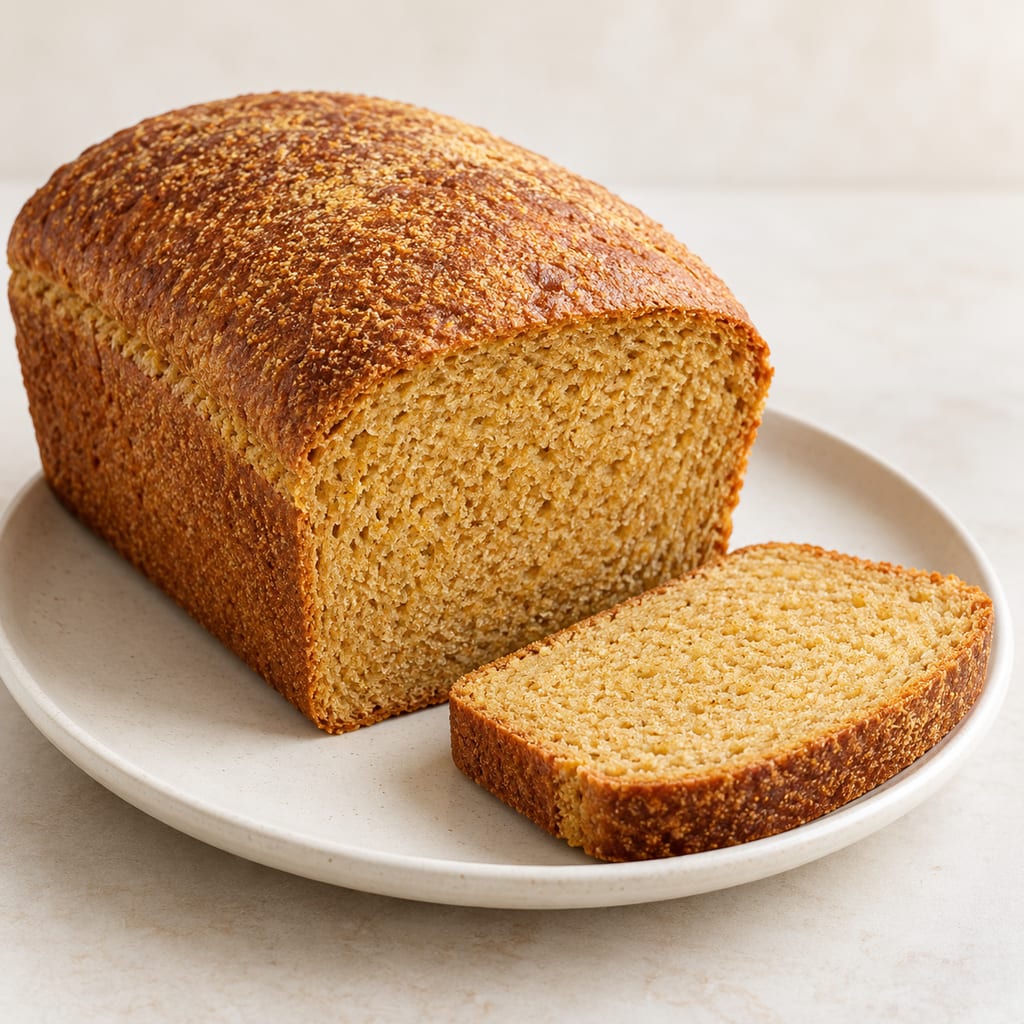
Anadama is a New England yeast loaf made with wheat flour, cornmeal and molasses. Scalded cornmeal enriches the dough, while molasses lends sweetness and a dark crust; it is especially good toasted or beside soup and baked beans.

A yeast-raised wheat ring shaped from a firm dough, briefly boiled and baked. This source-batch formula gives a gently malted crust and a chewy crumb.

Three long, crusty wheat loaves made with an overnight yeast poolish, shaped by hand and baked with steam for a crisp crust.
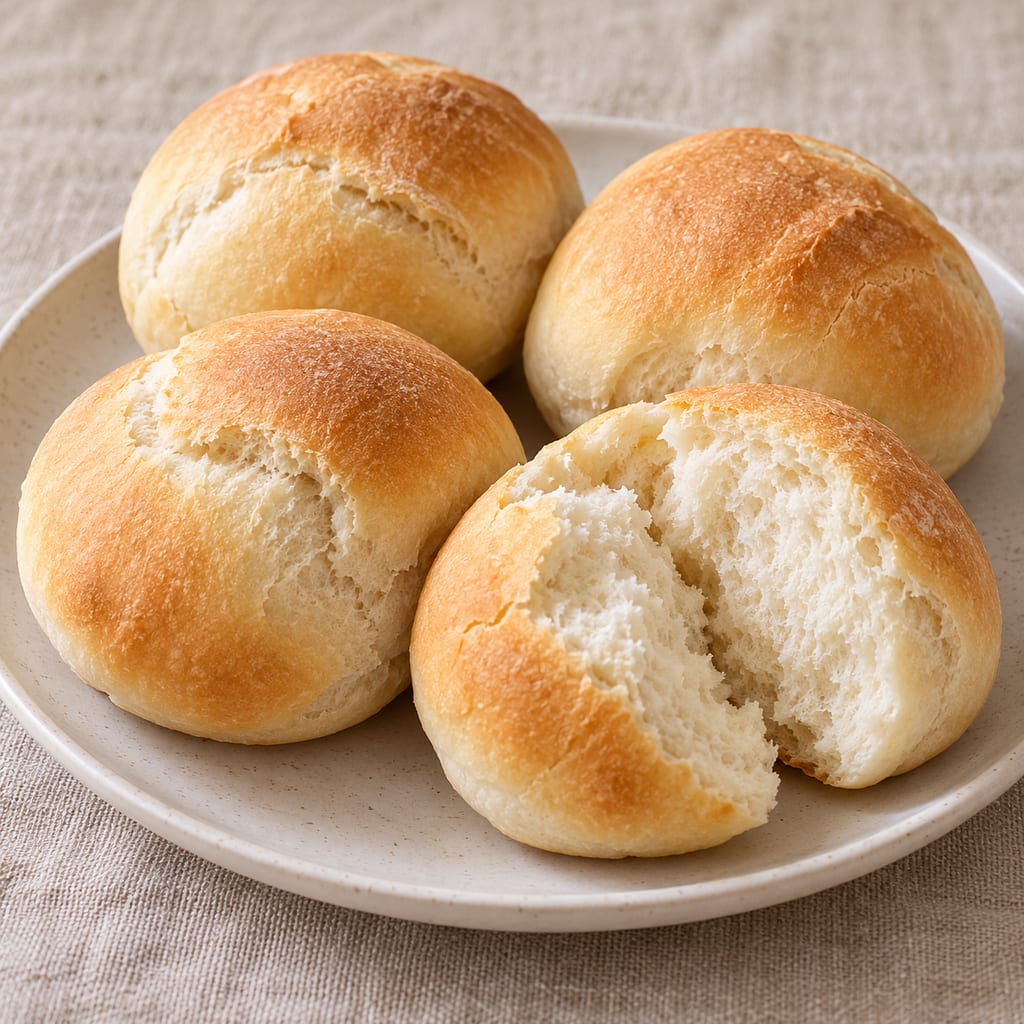
A lightly salted, yeast-raised Barbadian roll, baked in a dozen-roll home batch and often split for cutters.
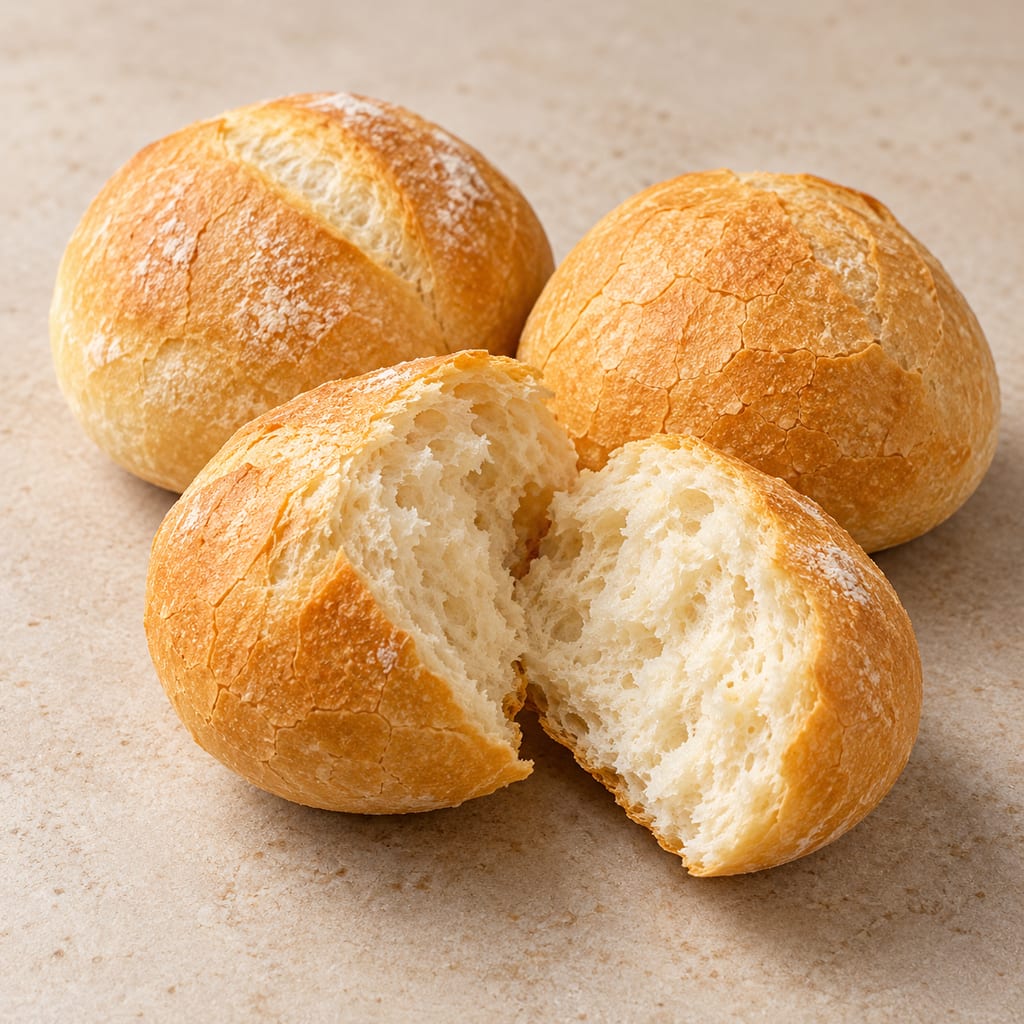
A crisp Belgian roll made from a supplier’s Croc-flour dough, mixed by hand or machine, proofed in rounds and baked with steam.
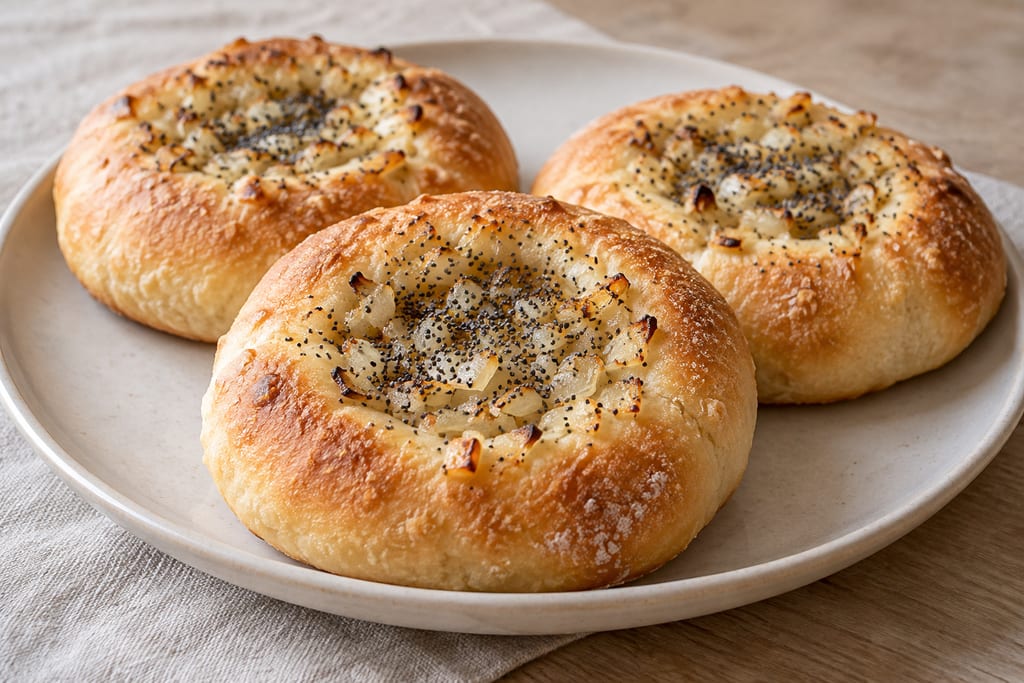
Bialys are soft, yeasted wheat rolls baked without boiling, each shaped with an onion-filled central depression instead of a hole.
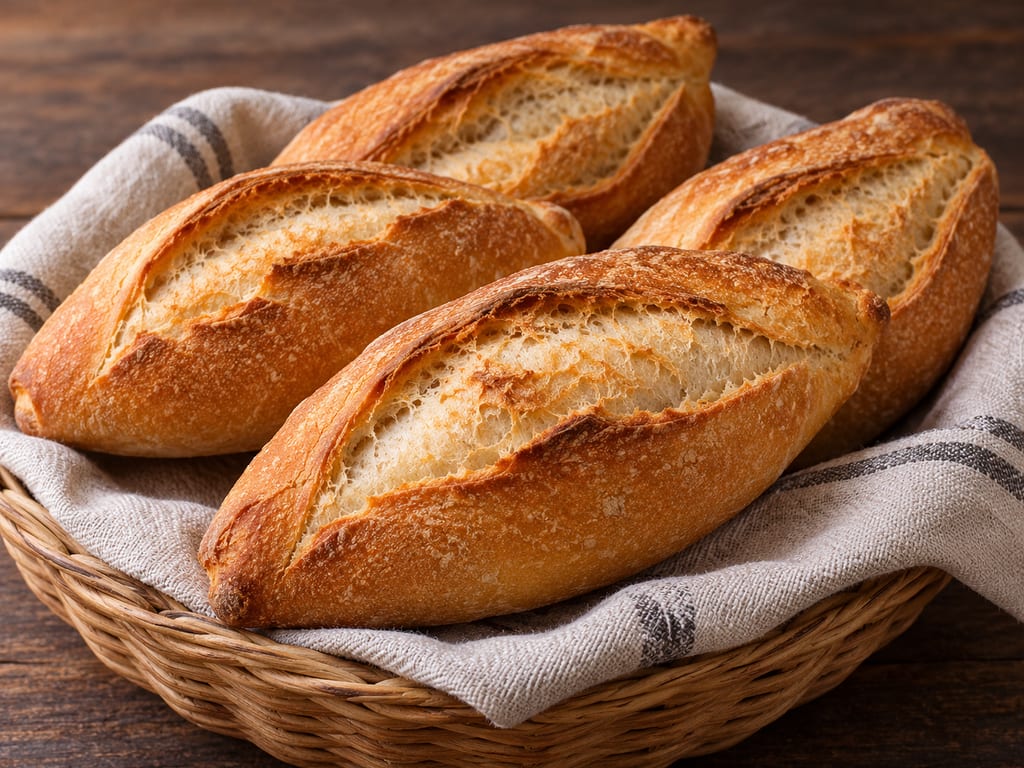
A measured, commercial-yeast home method for Guadalajara-style birote salado, with a six-hour preferment, shaped rolls and a two-temperature steam bake. This formula contains no egg.
No community contributions have been published for this entry yet.
Sign in to contribute. Published comments and photos are free to read.
European Commission, Official JournalProtected product application
Application for registration of “Mollete de Antequera”Protected product identity and commercial process stages
application-reported historic account and area
uses/storage claims as applicant-stated
Cited in: A soft roll with a protected name
Miriam García, EL PAÍS / El ComidistaHome adaptation
Molletes de AntequeraEL PAÍS home batch quantities and ordered method
contemporary shape, breakfast/merienda and toasting context
the article’s note that origin is difficult to trace
Cited in: The EL PAÍS home batch
Guía RepsolHome adaptation from local baker · Serving/context description
Receta de molletes de Antequera (“La Molletería”)Báez-attributed formula quantities, timing and ordered home method
source-attributed local shape and toasting discussion
Junta de Andalucía, Consejería de Agricultura, Pesca y Desarrollo RuralRegional government registration announcement; applicant history summary
La IGP Mollete de Antequera da un nuevo paso hacia su inscripción en el registro comunitario de figuras de calidadAnnouncement locates origin in Antequera and elaboration/packing in Antequera and Fuente de Piedra.
It recounts an Al-Andalus antecedent, a 1539 “molletes reales” archive item, a 1775 commercial record, and mid-20th-century growth.
It associates toasted mollete with breakfast.
Cited in: A soft roll with a protected name
U.S. Food and Drug AdministrationFood safety
Handling Flour Safely: What You Need to KnowFlour is raw and can carry harmful bacteria; do not taste raw flour or dough; cooking is needed for foods made with flour; clean hands, utensils and work surfaces after handling raw flour.