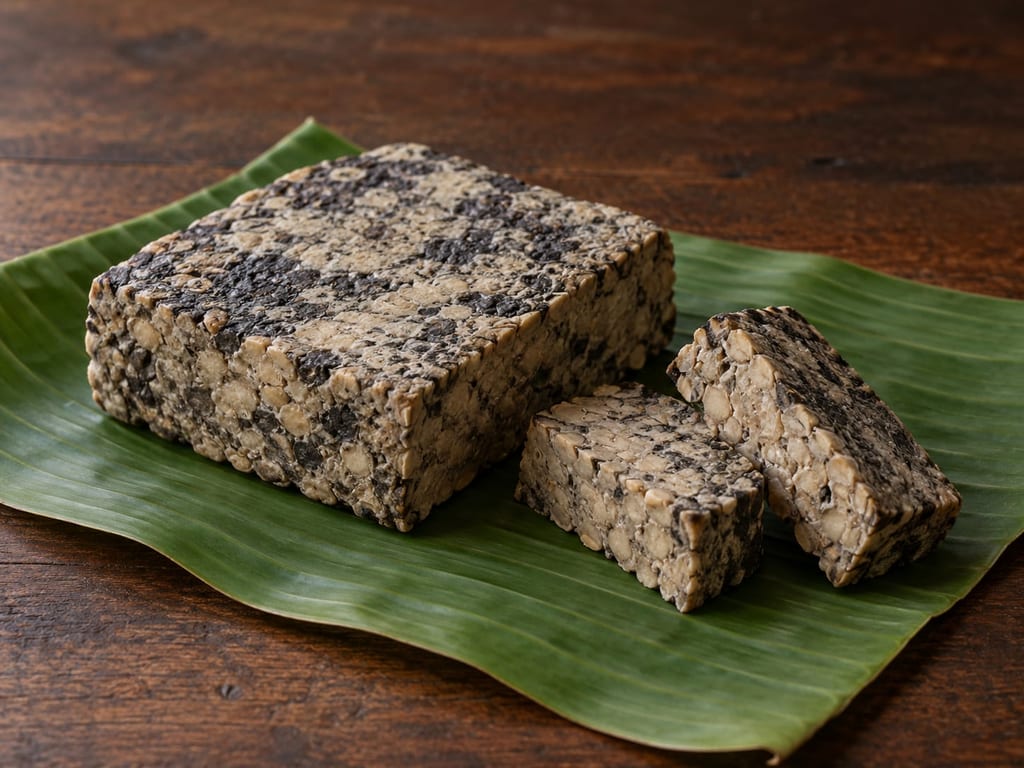
Black oncom from defatted peanut cake
Black oncom is a mould-fermented cake made from defatted peanut cake, pressed to about 2 cm, steamed and then incubated for a day at ambient temperature.
 FermenteaWhere food goes to change
Modern adaptation
Roti buaya · Crocodile bread
Hypeabis’s mini version shapes a sweet yeast dough into one crocodile, fills its body and feet with chocolate sprinkles, and bakes it at 150°C.
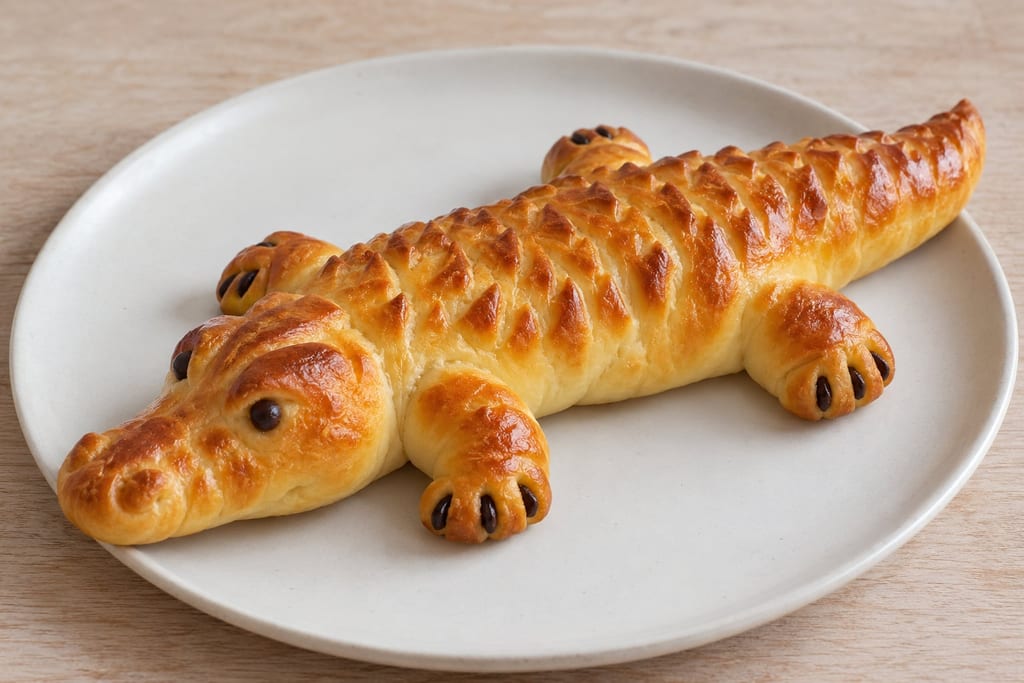
Roti buaya is associated with Betawi wedding customs in Jakarta. Indonesia's Ministry of Tourism describes a crocodile-shaped loaf used in wedding ceremonies and contrasts older dense, slightly dry symbolic breads with softer modern versions made to eat. Hypeabis presents a separate mini home recipe from Jessica Bakery. This page follows that modern filled yeast version; it does not treat it as a reproduction of the dense ceremonial form.
The Hypeabis batch lists 500 g high-protein flour, 50 g milk powder, four egg yolks, 100 g margarine, 100 g sugar, 11 g instant yeast, chocolate sprinkles and 200 ml water. The source does not specify a yield or give separate amounts for the yolk-and-water glaze. It also leaves the oven instruction at 150°C for 10–15 minutes, followed by the vague direction to bake until done.
Dissolve instant yeast in the listed water, stir in the yolks, then mix with flour, milk powder, sugar and margarine. Knead until smooth, cover and let the dough rise for one hour. Divide it into one large body piece and four leg pieces. Flatten and fill the body and legs with chocolate sprinkles, fold and roll them back into cylinders, then join the sections into a crocodile. Mark the scales with scissor tips and rest the assembled loaf for 15 minutes before glazing.
Because yolks are in the dough from the start, count unrefrigerated time from adding them. FDA general advice limits room-temperature exposure of perishable foods to two hours, or one hour above 90°F/32°C. Include kneading, the one-hour rise, shaping and the final rest. The source's rise alone uses the entire one-hour allowance for hot air, before shaping; this warm-proof method is unsuitable above 32°C/90°F. If the time limit is reached before baking, discard the dough.
Bake at 150°C for 10–15 minutes, as the Hypeabis recipe directs. That time is only a starting point: the body is thicker than the limbs, and the source provides no measured endpoint. USDA advises cooking egg dishes to an internal temperature of 160°F/71°C, checked with a food thermometer. Apply that general guidance to the thickest part of this yolk-containing loaf, away from the chocolate filling, and continue at 150°C until the centre reaches the target. The USDA recommendation is a general egg-dish control, not a test conducted on this specific shape.
Raw flour and yolks can carry harmful germs. Do not taste the unbaked dough or glaze; wash hands and clean bowls, tools, scissors and work surfaces after handling them. The quantities given, four yolks and 200 ml water, do not say whether they also cover the glaze.
The crocodile is a Betawi wedding symbol, and edible soft breads, fillings and sizes vary. Fillings include chocolate, cheese and jam, and a mini version uses chocolate sprinkles. The chocolate-filled mini loaf is distinct from the traditional dense symbolic form. The custom’s first attestation and a single origin point are not established.
Jakarta's provincial intangible-cultural-heritage list includes roti buaya among its named cultural works. The document credits the cultural-values and history division of the city's tourism and culture office in 2019. This places the bread within Jakarta's documented heritage record; it does not date the beginning of the wedding custom or establish the age of this mini chocolate-filled recipe.
The 2010 detikFood post associates crocodile-shaped bread with Betawi weddings and reports a loyalty symbolism attributed there to rotibuaya.com. The 2023 Hypeabis article says older forms were hard and plain and contrasts today’s softer variants. These secondary sources do not establish when the custom began. Hypeabis’s Jessica Bakery mini recipe is a separate modern version, not a scaled version of the incomplete Bogasari formula reproduced by detikFood. The Indonesian Ministry of Tourism also describes the wedding-procession use and distinguishes a dense symbolic form from softer modern edible variants; this cultural account supplies no baking method.
Yield 1 mini crocodile loaf · Scaling: source batch only
The dough contains uncooked flour and yolks before baking; raw flour and eggs may carry harmful germs.
Hazard sourceThe recipe's one-hour rise, shaping and 15-minute rest all occur after yolks are added; time varies with hand-shaping.
Hazard sourceThe crocodile's body is thicker than its limbs and contains egg yolks; a 10–15-minute source time alone does not establish centre doneness.
Hazard sourceTrack cumulative unrefrigerated time from adding yolks until the loaf enters the oven. Keep it below 2 hours, or below 1 hour if air is above 32°C/90°F; discard if the cap is reached before baking. This is general FDA guidance, not roti buaya-specific validation.
Control sourceBake at the source's 150°C and check the thickest part of the body with a clean food thermometer. Continue baking until it reaches 71°C/160°F, applying USDA's general endpoint for egg-containing dishes.
Control sourceDo not taste raw dough or glaze. Wash hands, bowls, utensils, scissors and counters after contact with raw flour or yolk.
Control sourceThe source's 150°C for 10–15 minutes is not a doneness endpoint. Check the thickest part of the body and continue baking until 71°C/160°F.
The yolk dough must enter the oven within the general room-temperature time limit. The 1-hour limit above 32°C/90°F conflicts with the source's one-hour rise, so do not make this warm-proof method in that heat.
Hypeabis gives no glaze quantity or separate allocation of its four listed yolks and 200 ml water; do not invent extra amounts.
Both sources associate roti buaya with Betawi; detikFood identifies Betawi with Jakarta. This regional association is not a claim of origin.
Black oncom is a mould-fermented cake made from defatted peanut cake, pressed to about 2 cm, steamed and then incubated for a day at ambient temperature.
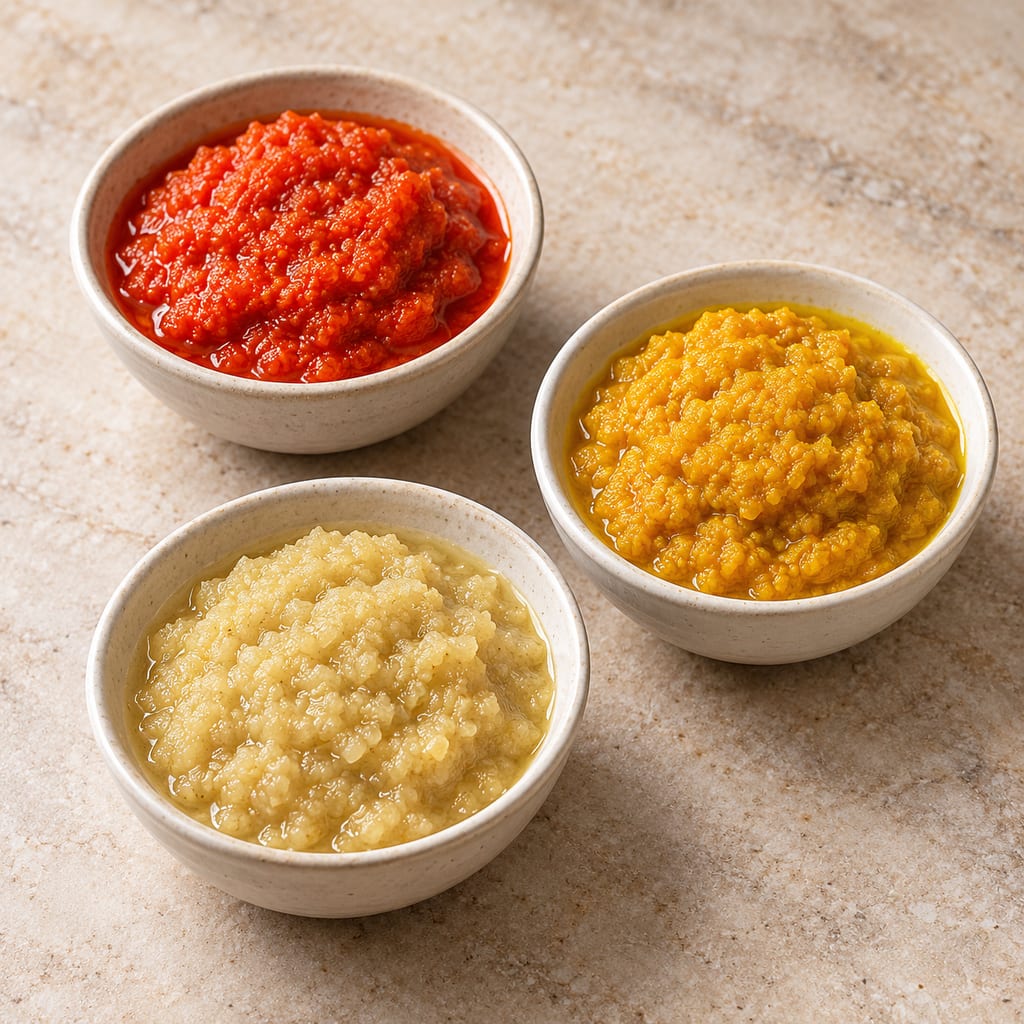
Bumbu dasar are the ground spice bases of Indonesian cooking: a white paste of shallot, garlic and salt, with chile added for red and turmeric for yellow, cooked into dishes.
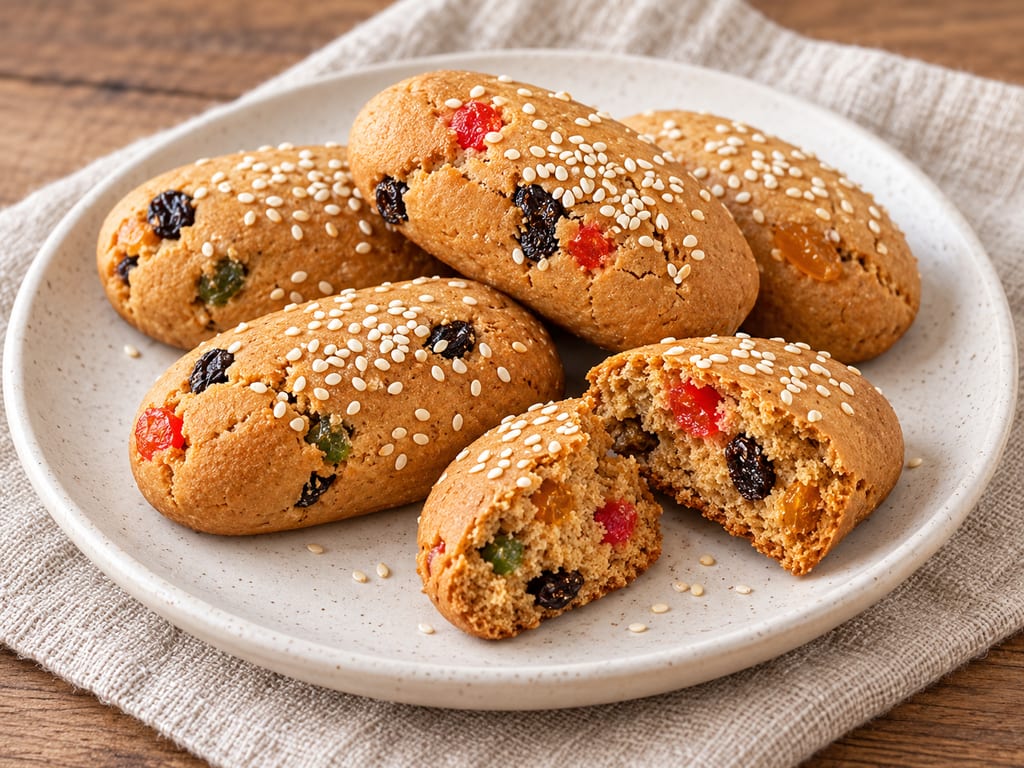
An Indonesian palm-sugar and cinnamon quick bread with dried fruit and sesame.
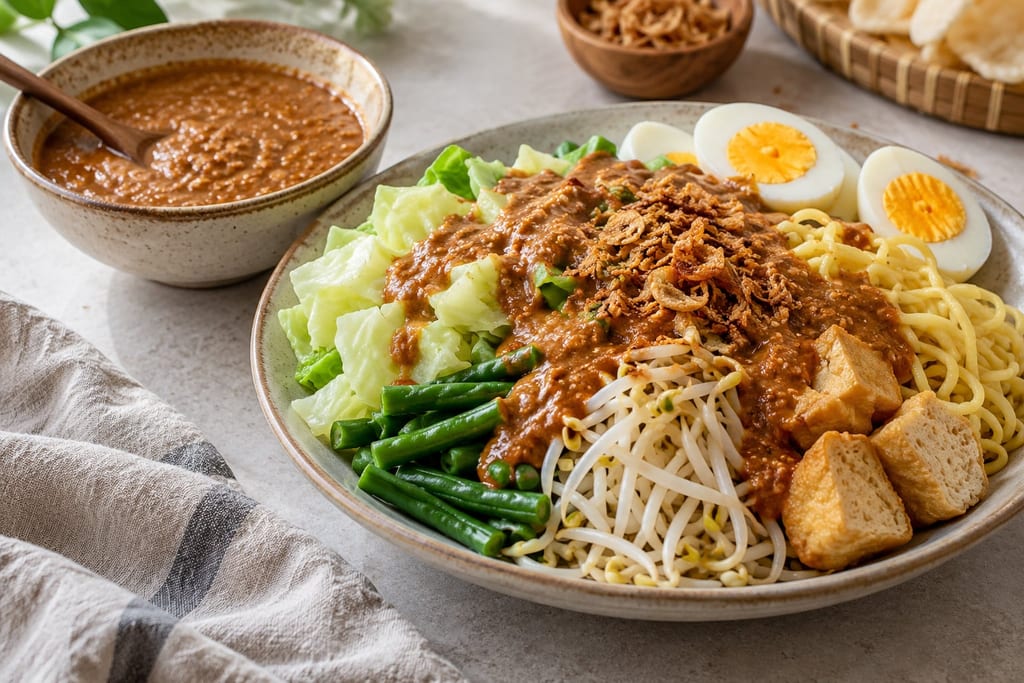
A cooked peanut sauce of ground roasted peanuts, aromatics, shrimp paste and coconut cream, as made for gado-gado; pecel and Malaysian satay sauces are close relatives with different formulas.
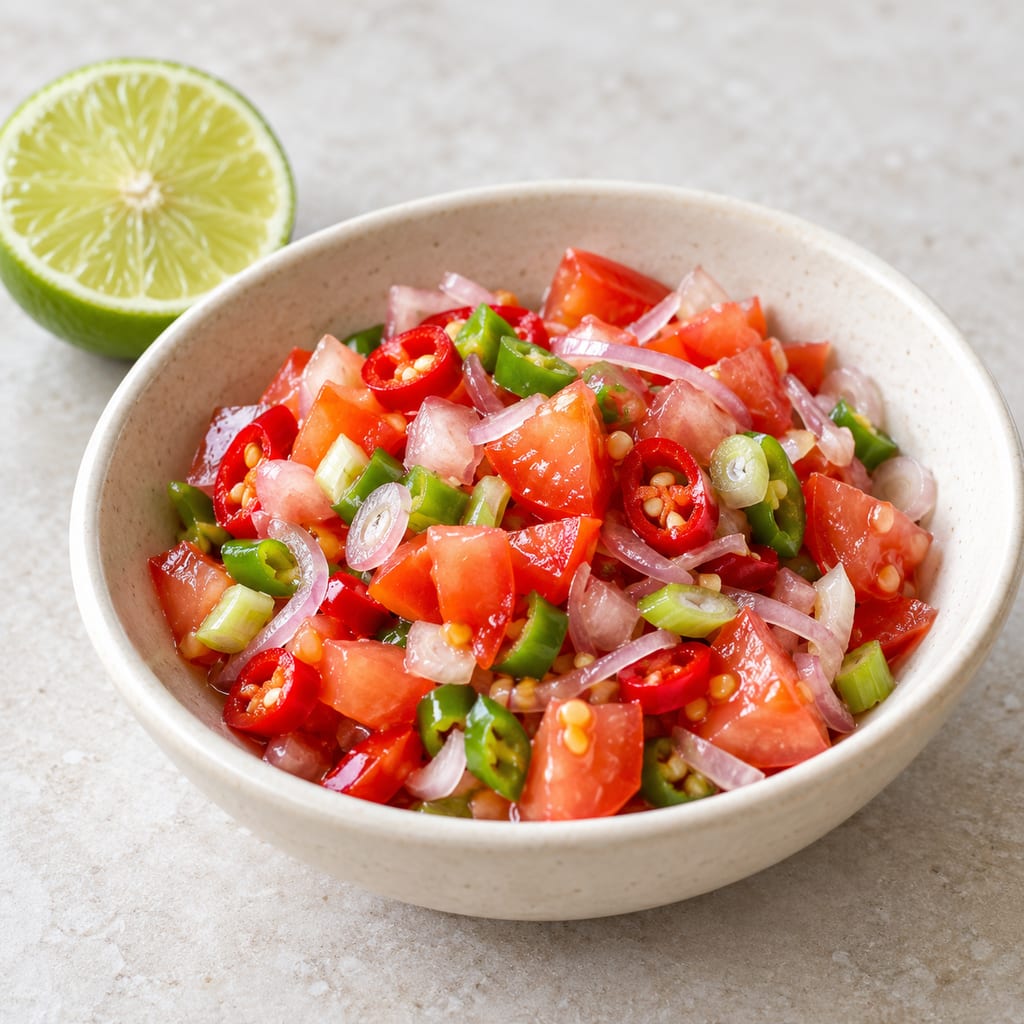
Dabu-dabu is a raw North Sulawesi relish of chopped chillies, shallot, scallion and tomato, dressed with salt and lime juice or coconut oil.
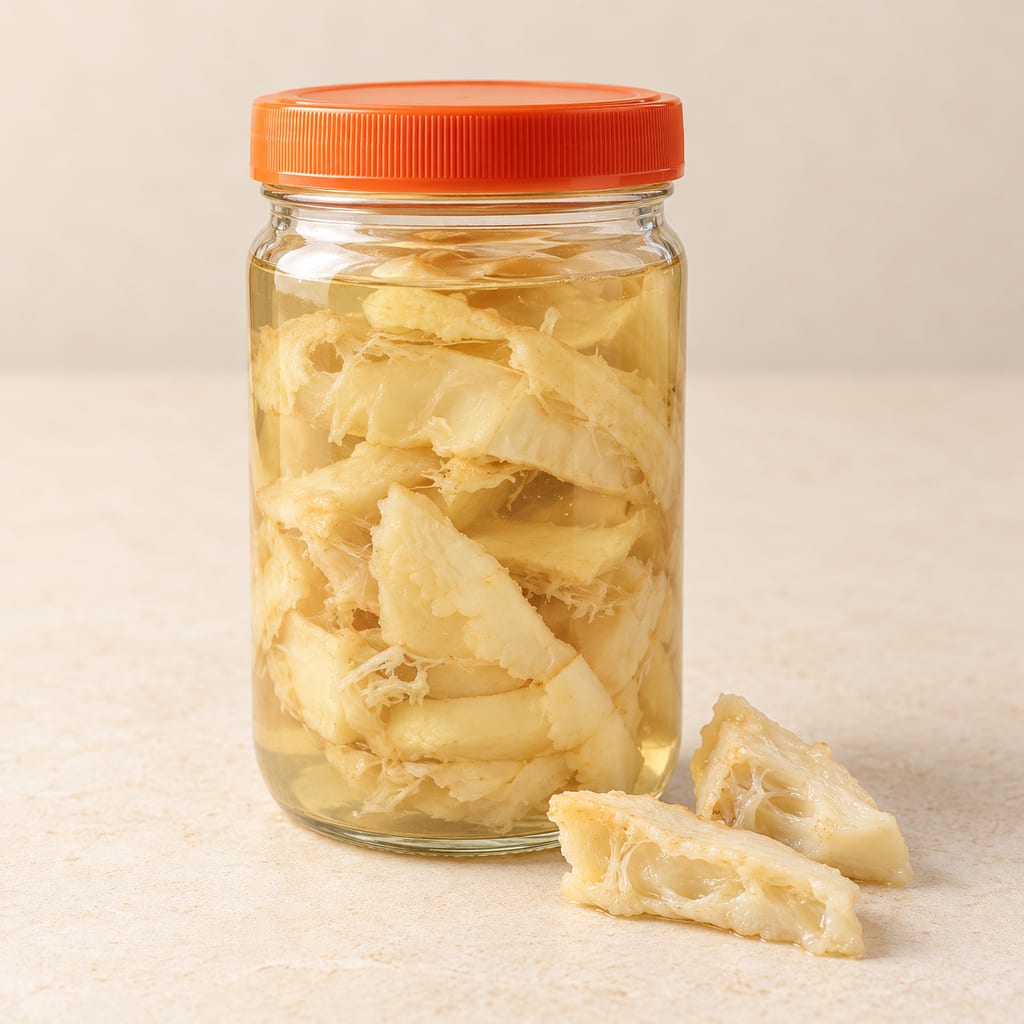
Cempedak inner rind is cut, salted and submerged in water for a short spontaneous fermentation used in Kalimantan home cooking.
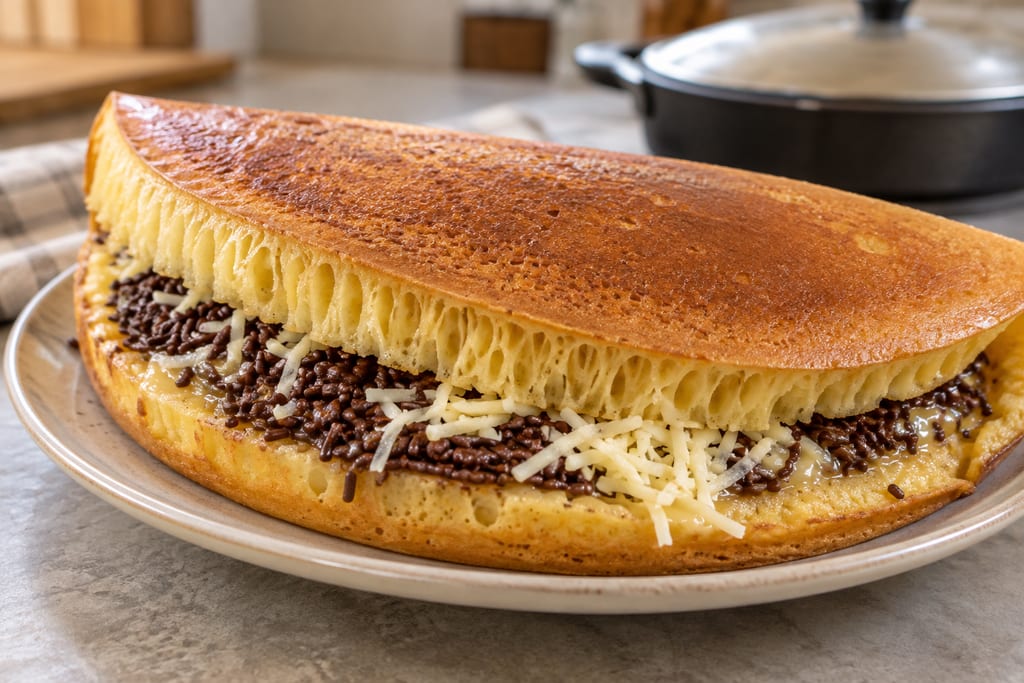
Martabak manis is a thick Indonesian griddle pancake with a porous, honeycomb crumb, cooked under a lid and finished with butter and sweet toppings.
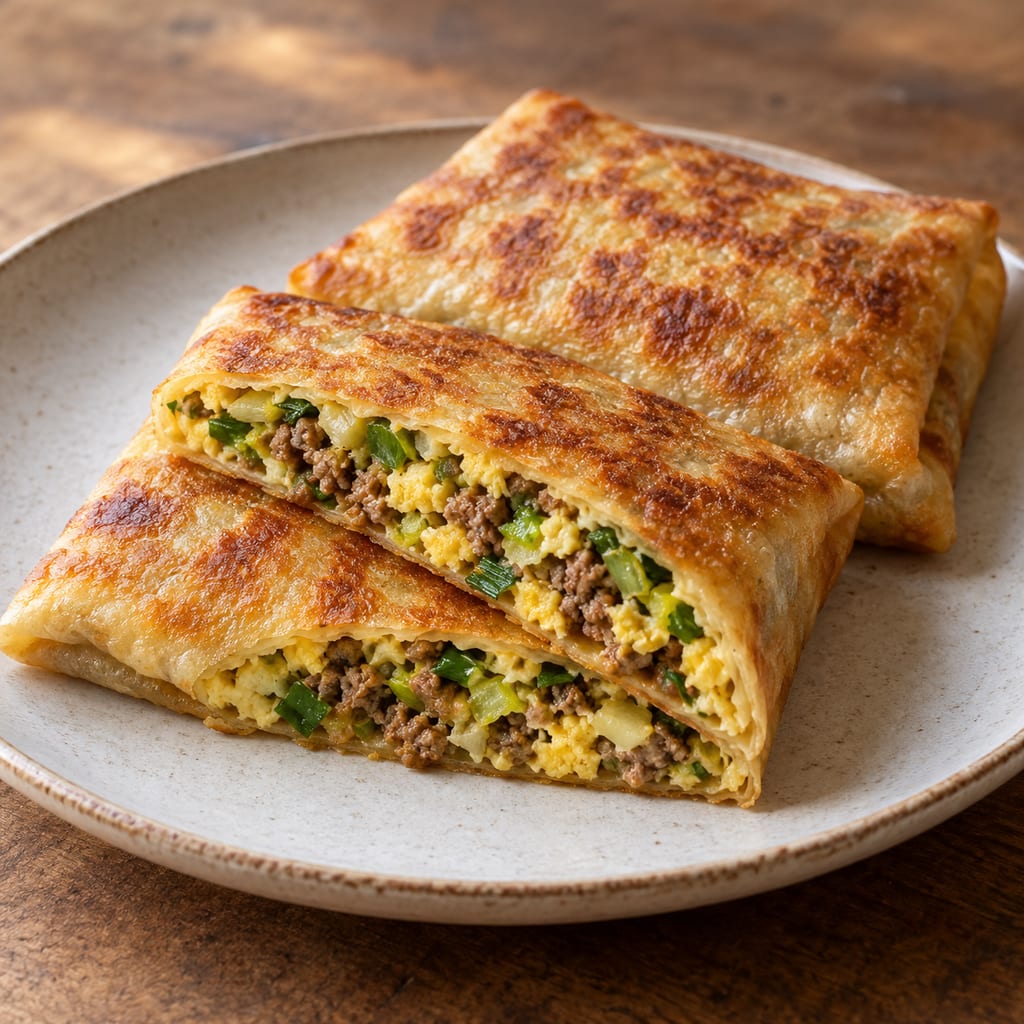
A Javanese-style Indonesian savoury parcel of thin rested wheat dough folded around curry-seasoned beef and egg, then cooked in an oiled skillet.
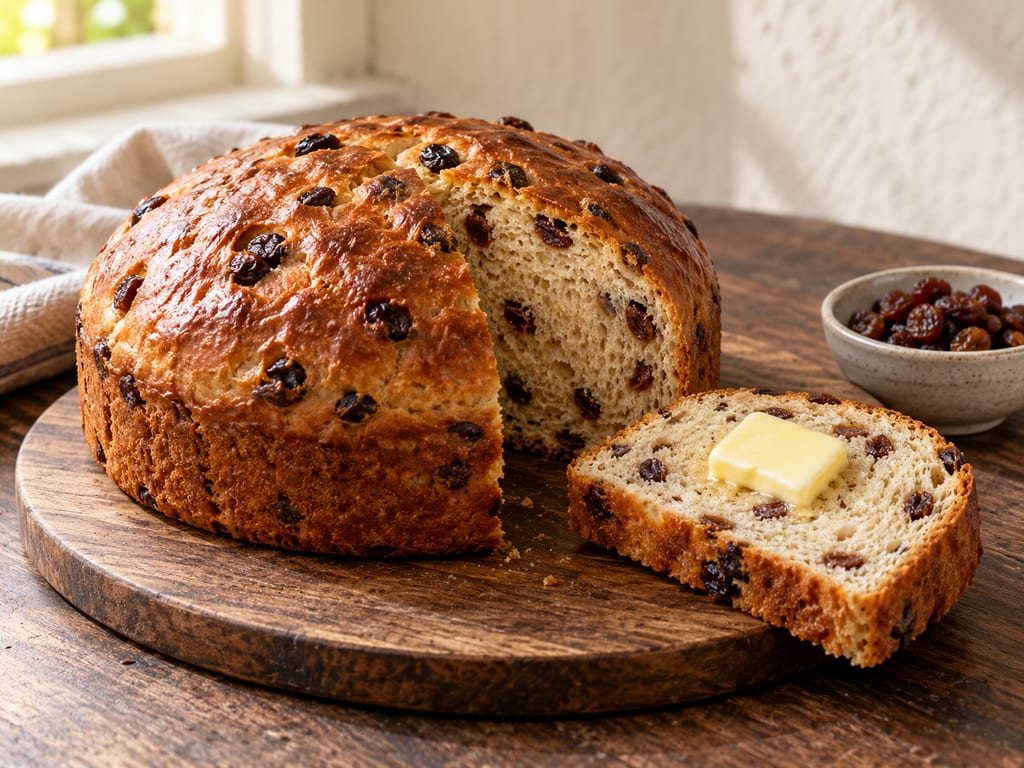
An Irish fruit-studded yeast loaf, associated in a contemporary cultural account with Halloween and often served fresh or toasted with butter.
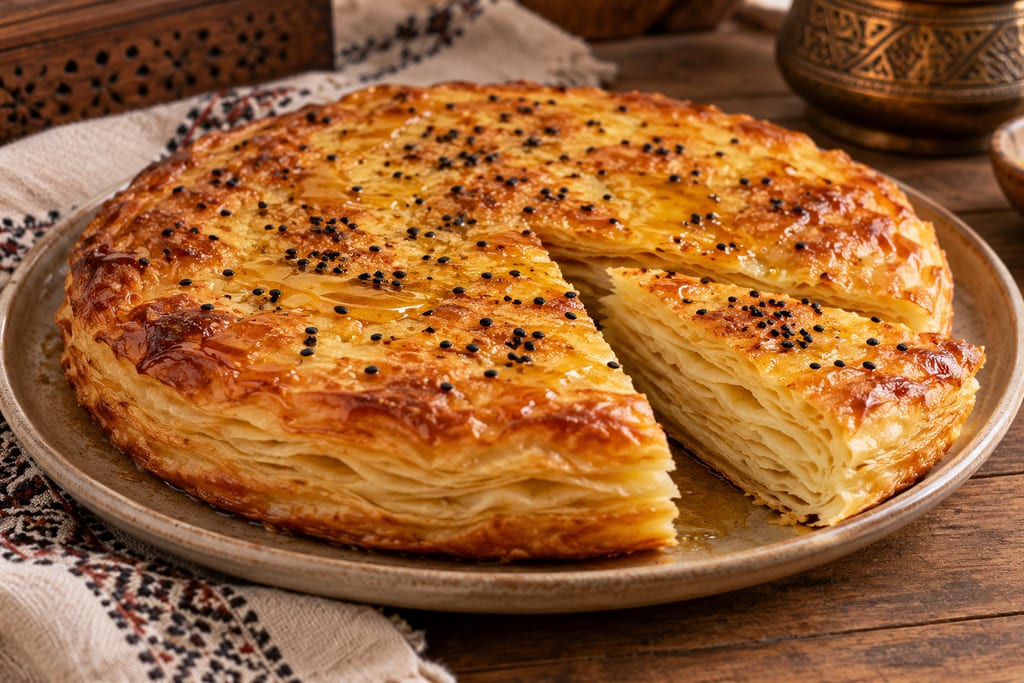
Bint al-sahn is a Yemeni celebration and home bread built from thin, egg-rich yeast dough layers brushed with ghee or butter. This source-specific version makes one round cake, baked until golden and served warm with honey.
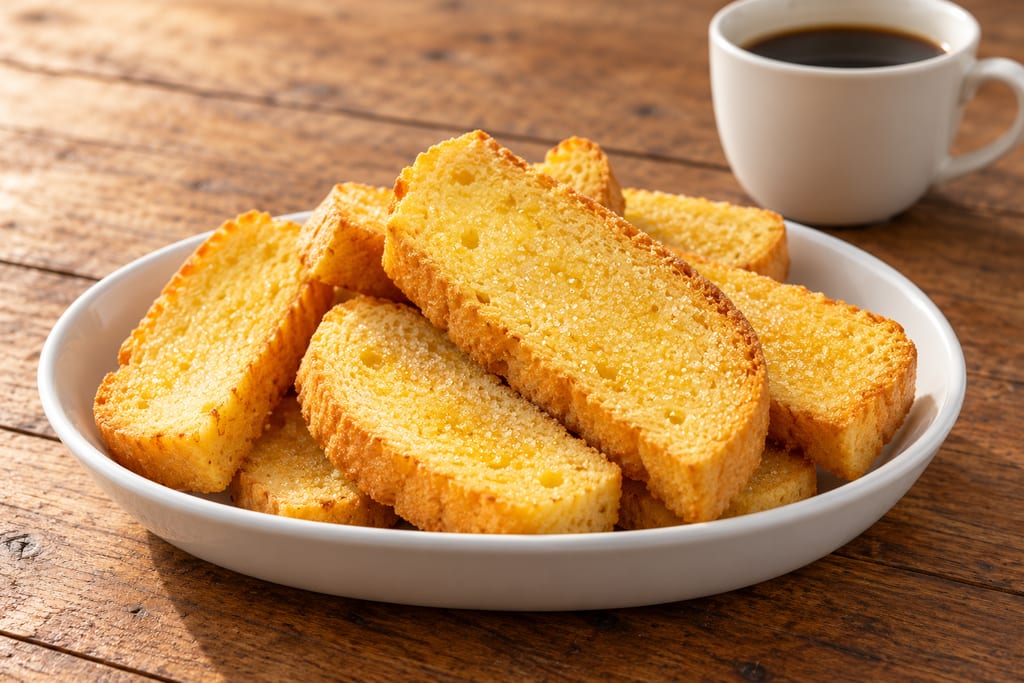
PagkainPinoy’s 24–30 piece version twice-bakes day-old soft bread with a thin butter-and-sugar coating.
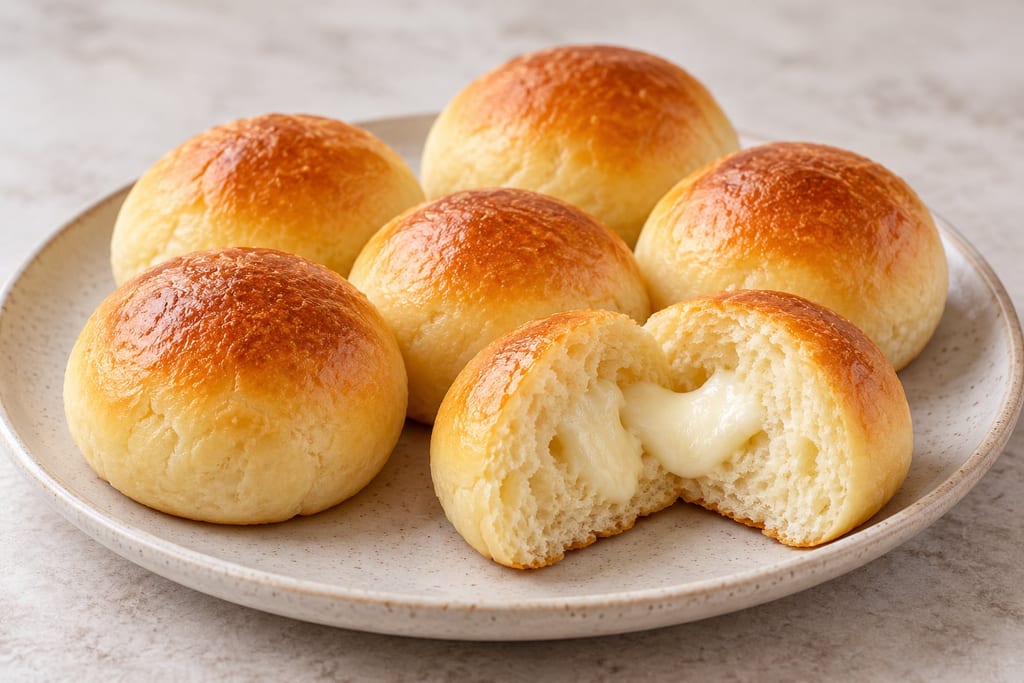
Soft Brazilian yeast rolls use cooked mashed potato in an enriched dough, with mozzarella cubes enclosed before baking.
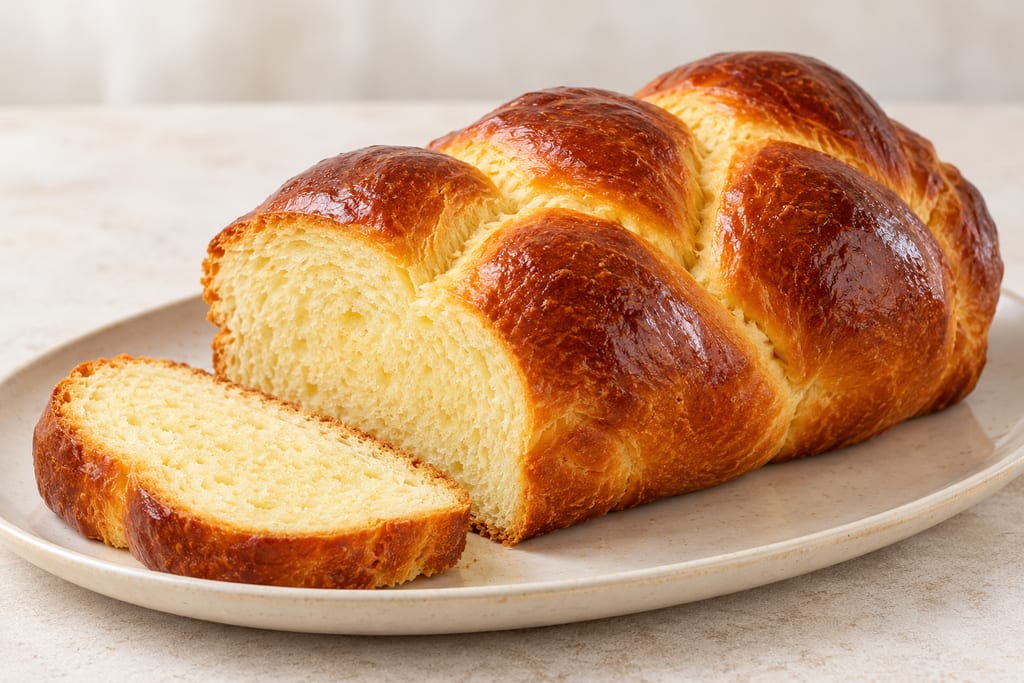
An egg-and-butter-rich yeast dough shaped as one round loaf, two loaves or twelve small brioches, with baking paths that vary by shape.
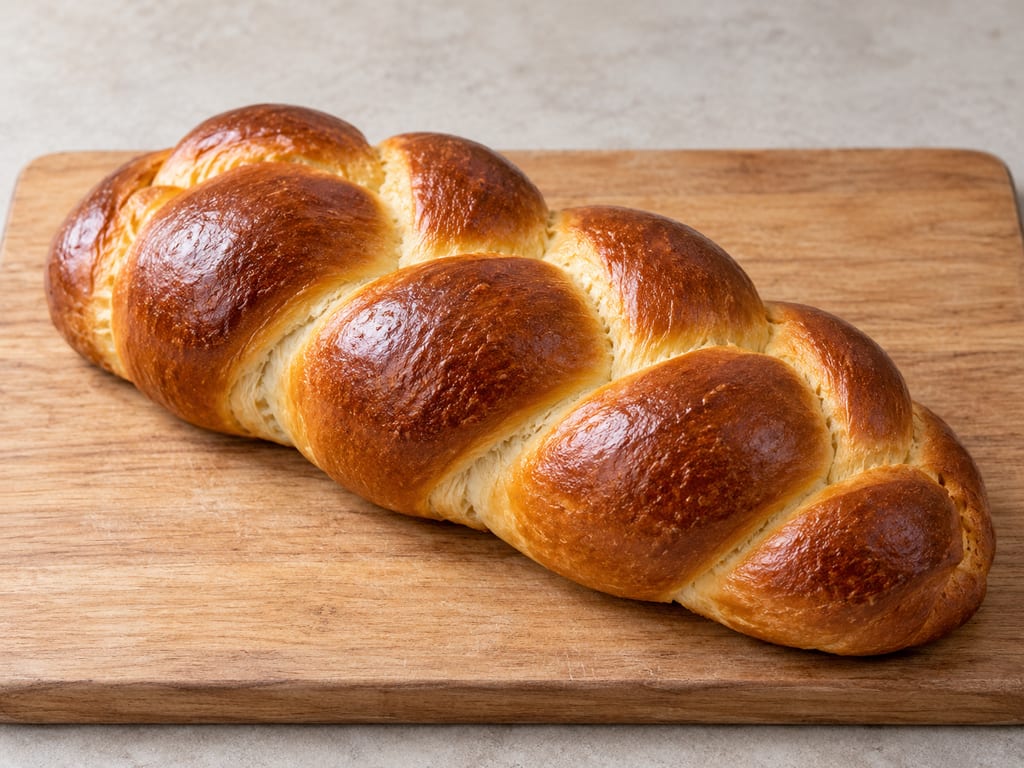
A three-strand yeast-raised challah with flour, salt, yeast, water, neutral oil, honey and egg, based on a Jewish Museum Vienna home recipe.
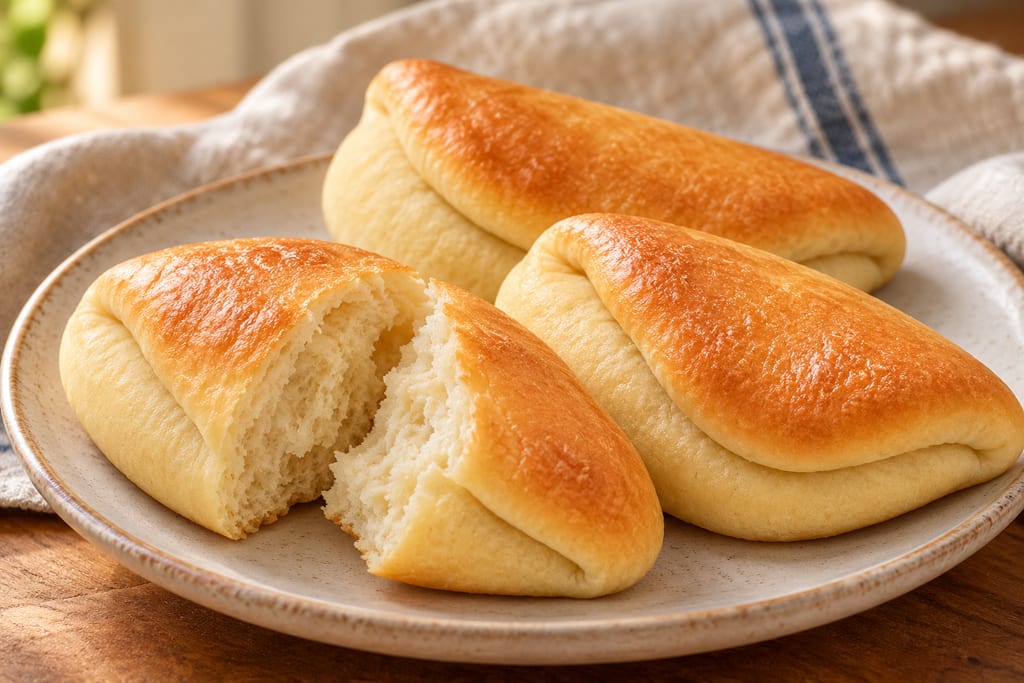
Jamaican-style folded rolls made from sweet coconut-milk yeast dough and brushed with butter.
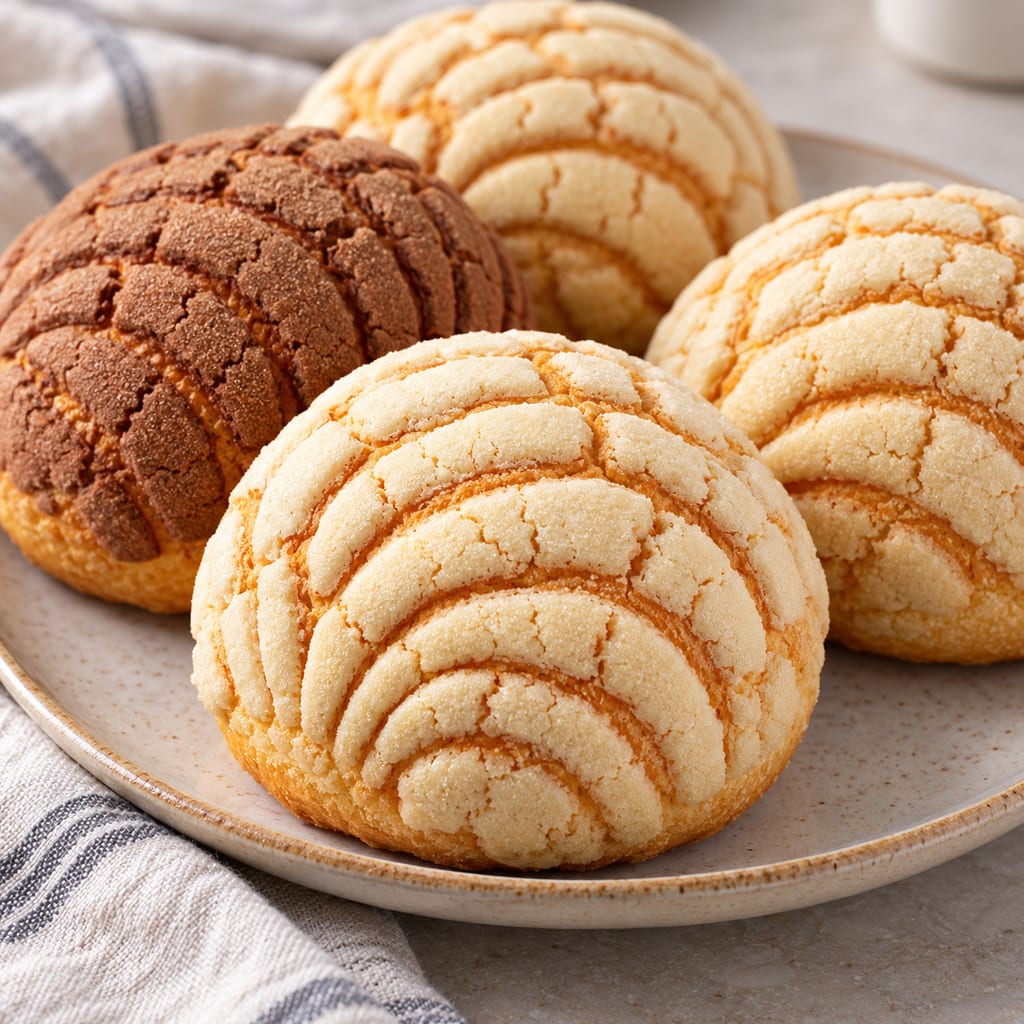
Mexican sweet rolls with a soft enriched yeast dough and a separate scored sugar-flour topping shaped like a shell. This version makes 15 rolls and uses a chilled dough rest before final proofing.
No community contributions have been published for this entry yet.
Sign in to contribute. Published comments and photos are free to read.
HypeabisInspiration · Recipe · Identity · Geography
Kuliner Khas Betawi, Cek Resep Roti Buaya Mini YukDirectly inspected the Jessica Bakery mini formula: 500 g high-protein flour, 50 g milk powder, four yolks, 100 g margarine and sugar, 11 g yeast, chocolate sprinkles and 200 ml water; one-hour first rise, five structural parts, 15-minute final rest and 150°C bake for 10–15 minutes. The source does not state yield or glaze quantities.
Cited in: A Betawi crocodile loaf; Shape and proof; Bake to the centre; A ceremonial shape with modern variations
detikFoodIdentity · Geography · Historical context · Variant context
Resep Roti: Roti Buaya2010 modern account says roti buaya is served at Betawi traditional weddings and reports loyalty symbolism; it reproduces a Bogasari formula without bake temperature, duration or yield, and advises a final fermentation of at most 30 minutes to hold the form. That incomplete formula is not merged with the Hypeabis mini recipe.
Cited in: A ceremonial shape with modern variations
Centers for Disease Control and PreventionSafety
Raw Flour and DoughRaw flour and eggs can carry germs; avoid raw dough and clean after handling.
Cited in: Bake to the centre
Ministry of Tourism, Republic of IndonesiaIdentity · Historical context · Variant context
Roti BuayaOfficial tourism page identifies roti buaya as Betawi wedding-procession bread with a crocodile form. It distinguishes the dense, slightly dry symbolic form from modern softer edible variations and mentions small and large sizes and chocolate, cheese or jam fillings. It gives no recipe or baking controls.
Cited in: A Betawi crocodile loaf; A ceremonial shape with modern variations
U.S. Food and Drug AdministrationSafety
Are You Storing Food Safely?FDA general guidance limits room-temperature exposure of foods requiring refrigeration, including eggs, to two hours or one hour above 90°F/32°C; applied conservatively to the cumulative time of yolk-containing dough before baking, not as a product-specific fermentation validation.
Cited in: Shape and proof
USDA Food Safety and Inspection ServiceSafety
By what methods can you cook eggs safely?USDA recommends cooking casseroles and other dishes containing eggs to an internal temperature of at least 160°F/71.1°C measured with a food thermometer; applied conservatively to the thickest part of this egg-yolk loaf, with a note that this is a general recommendation and not roti buaya-specific validation.
Cited in: Bake to the centre
DKI Jakarta; Bidang Nilai Budaya dan Sejarah DisparbudCultural context
Warisan Budaya Takbenda Provinsi DKI JakartaThe one-page provincial intangible-cultural-heritage list includes Roti Buaya. Its source credit names the cultural-values and history division of Jakarta's tourism and culture office (2019). This documents official cultural recognition, not the custom's first appearance.
Cited in: Recognition in Jakarta
Wikimedia CommonsImage rights research
Roti Buaya.JPGGunawan Kartapranata's own-work photograph is explicitly CC BY-SA 3.0, not public domain or CC0. Excluded from the project's qualifying reference count; no original downloaded or visual acceptance claimed.
Wikimedia CommonsImage rights research
Roti Buaya Mini.jpgTumanisme's own-work photograph is explicitly CC BY-SA 4.0, not public domain or CC0. Excluded from the qualifying reference count; no original downloaded or visual acceptance claimed.
Wikimedia CommonsImage rights research
Bánh mì cá sấu (Crocodile bread).jpgKhả Vân Đại Hãn's photograph is explicitly CC BY-SA 4.0, not public domain or CC0. Its Vietnamese category also prevents treating a crocodile shape alone as evidence of the Betawi recipe. Excluded; no original downloaded or visual acceptance claimed.