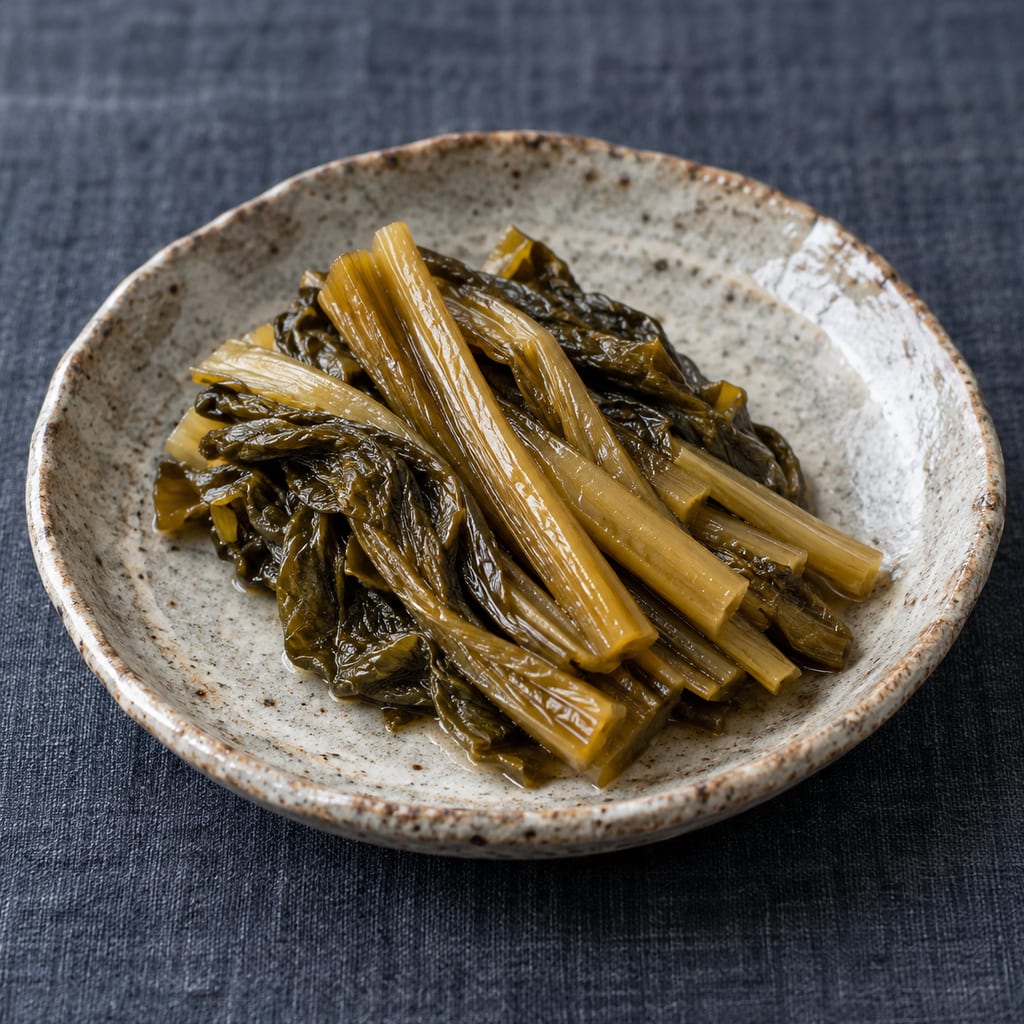
Aso takanazuke
Takana mustard greens from Aso in Kumamoto are salted and pressed into a fresh spring pickle, or aged into a sour furuzuke that is fried and mixed into takana rice.
 FermenteaWhere food goes to change
たくあん漬け · Takuan · たくあん
Japanese pickle of daikon roots dried for about two to three weeks, then matured for months in rice bran and salt under weight. Yamagata is its named association.
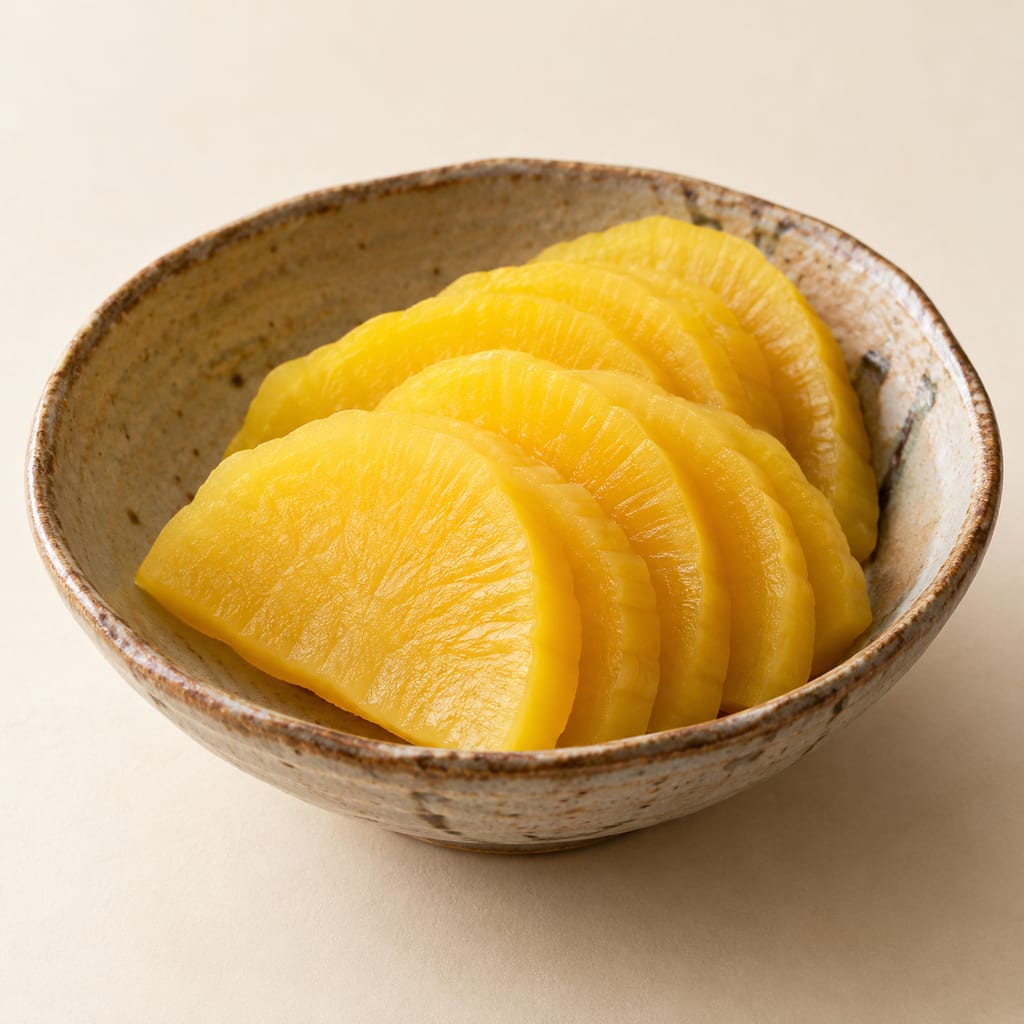
Takuan-zuke (たくあん漬け) is a family of Japanese daikon pickles. The roots are dried before they are cured in rice bran and salt, and the result is a long-matured, pliable, firmly textured pickle. The Ministry of Agriculture, Forestry and Fisheries (MAFF) account describes takuan as widely eaten across Japan and names Kaminoyama in Yamagata as its particular association.
The name has several explanations in the MAFF account. The best-known story links it to the monk Takuan and to preserved daikon. The account presents that story as a tradition, not as proof that one person invented the food, and no single dated first attestation is established.
The MAFF description places root drying in autumn and winter. The Yamagata account gives about 14 to 20 days of drying until the roots become pliable rather than brittle. That drying step is separate from the maturation that follows.
The Yamagata account then describes layering the dried roots whole in a barrel with rice bran and salt, with a light weight on the layers, and maturing them for 6 to 12 months. It is a historical reconstruction for 50 daikon at 15 to 17 percent salt. It is evidence for the reconstruction only. It is not a tested household formula and not a safety validation. The sources give no controlled temperature, no measurement endpoint, no finished storage period and no failure criteria, so a complete home method is not established.
MAFF describes takuan served with rice, and used in tartar sauce or potato salad. It separates older, saltier whole-root products from newer, milder or flavoured packaged products.
Rapidly seasoned commercial daikon should not be merged with long-matured takuan only because both carry the name. The product boundary matters when a recipe or a reader compares them.
The source names a barrel or crock and a weight. It does not give food-contact material requirements, capacity guidance, cleaning instructions or load specifications. A drying rack for hanging roots is plausible, but its construction is not described in the inspected material. No heating chamber or custom build is evidenced, and no do-it-yourself design is proposed here.
The catalogue already holds a modern takuan recipe, veg-0055, which describes a different adaptation. It is a related family link, not a confirmed reproduction of the MAFF reconstruction or of the Ise variant.
MAFF associates takuan with Kaminoyama in Yamagata and describes it as widely eaten in Japan. It gives several accounts of the name's origin. The story of the monk Takuan is one of these accounts and does not prove that one person invented the food. MAFF describes drying the roots in autumn and winter.
Scaling: source batch only
The source gives no validated endpoint, safety limit or shelf life for a household batch.
Hazard sourceWeight the layers as the source describes, and keep the roots under the bran and salt layer.
Control sourceThe historical reconstruction is not a tested household formula.
Smell, taste or appearance do not establish safety.
MAFF names Kaminoyama as the association; it also says the name has several origin accounts.
MAFF describes takuan as widely eaten in Japan.
Takana mustard greens from Aso in Kumamoto are salted and pressed into a fresh spring pickle, or aged into a sour furuzuke that is fried and mixed into takana rice.
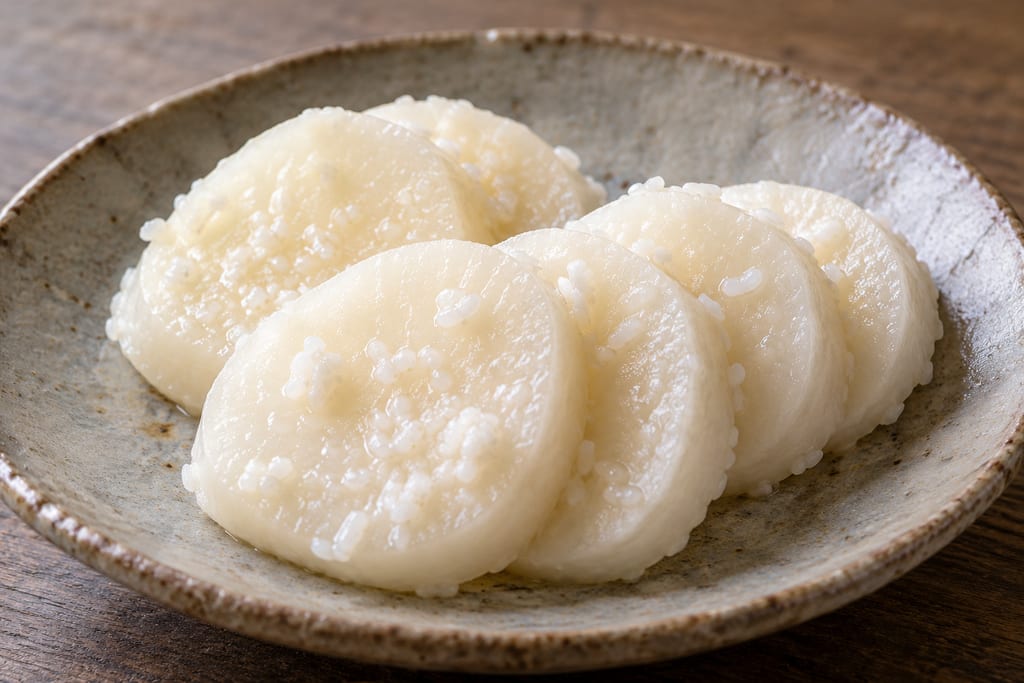
A sweet, crisp Japanese daikon pickle from Tokyo's Nihonbashi district, made by salting fresh radish and dressing it in rice koji, sugar or koji amazake without the heavy drying used for takuan.
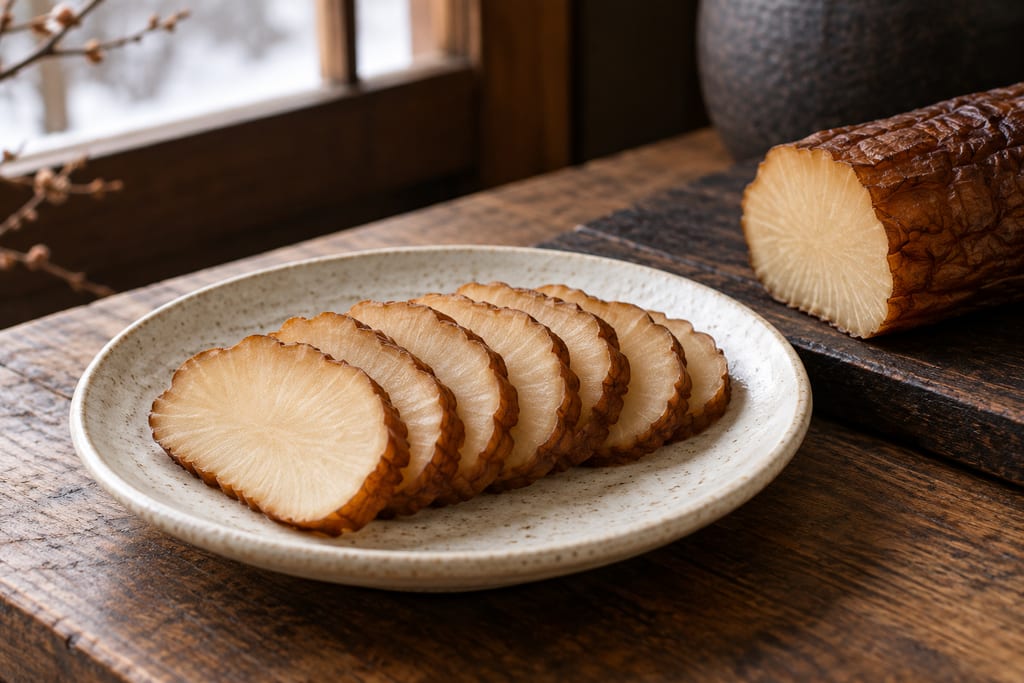
Iburigakko is Akita pickled daikon dried with smoke before it is fermented in rice bran.
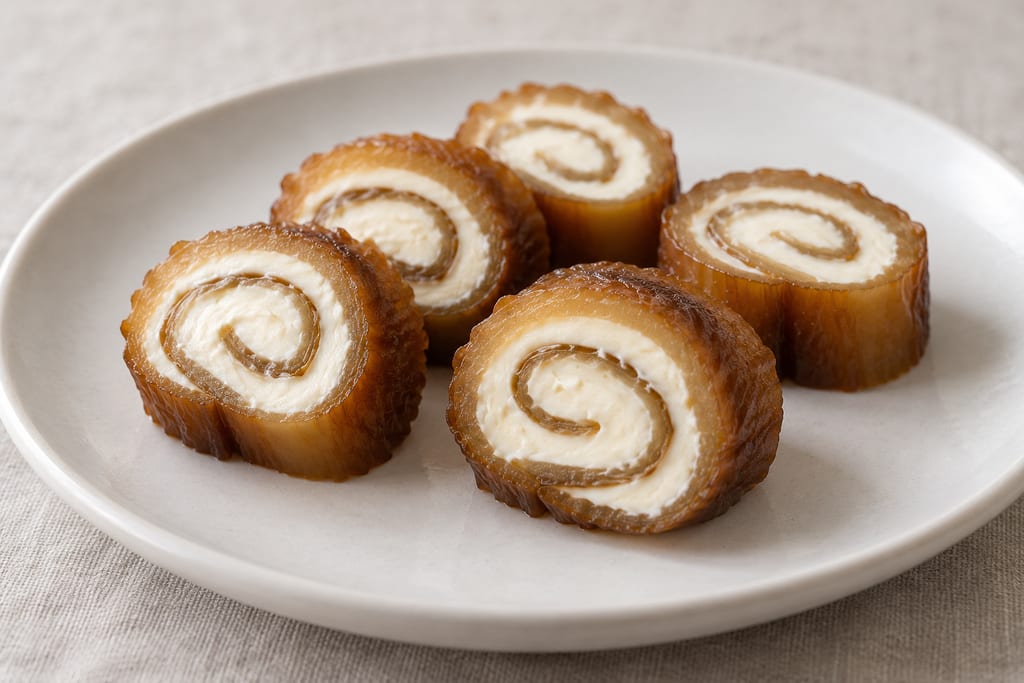
A Morinaga snack pairs thin ribbons of iburigakko with cream cheese, then chills the roll before cutting it into portions.
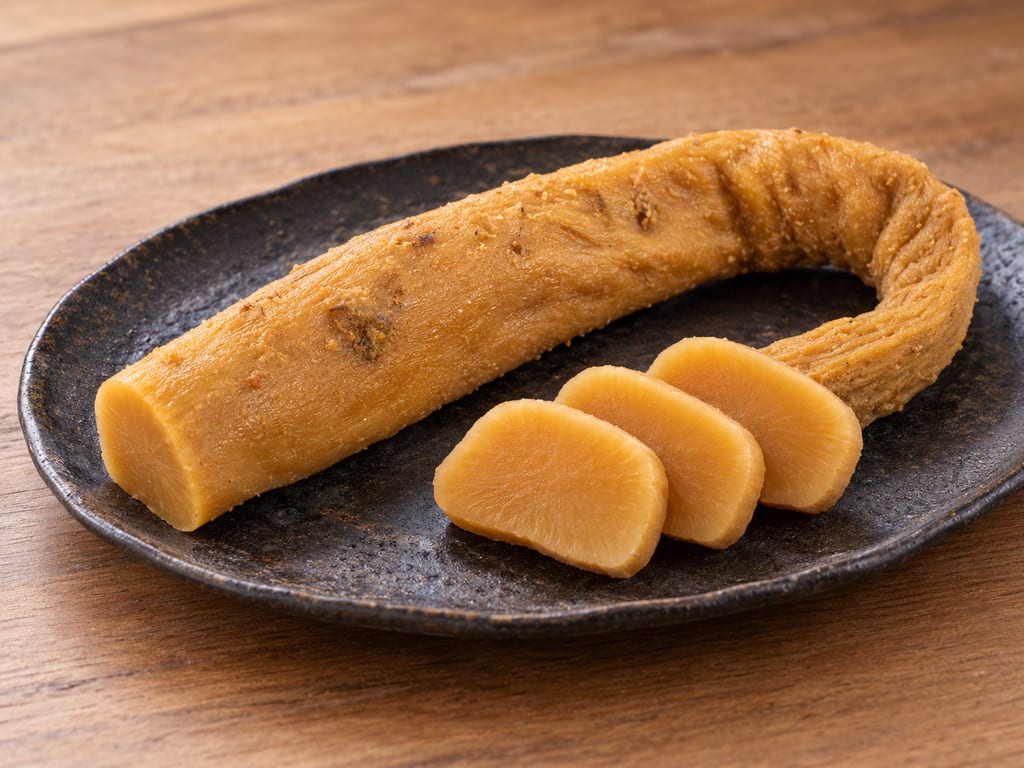
Regional takuan from Ise City, Mie, made with Misono daikon dried on a rack, then matured in a weighted barrel of rice bran and salt for months to years.
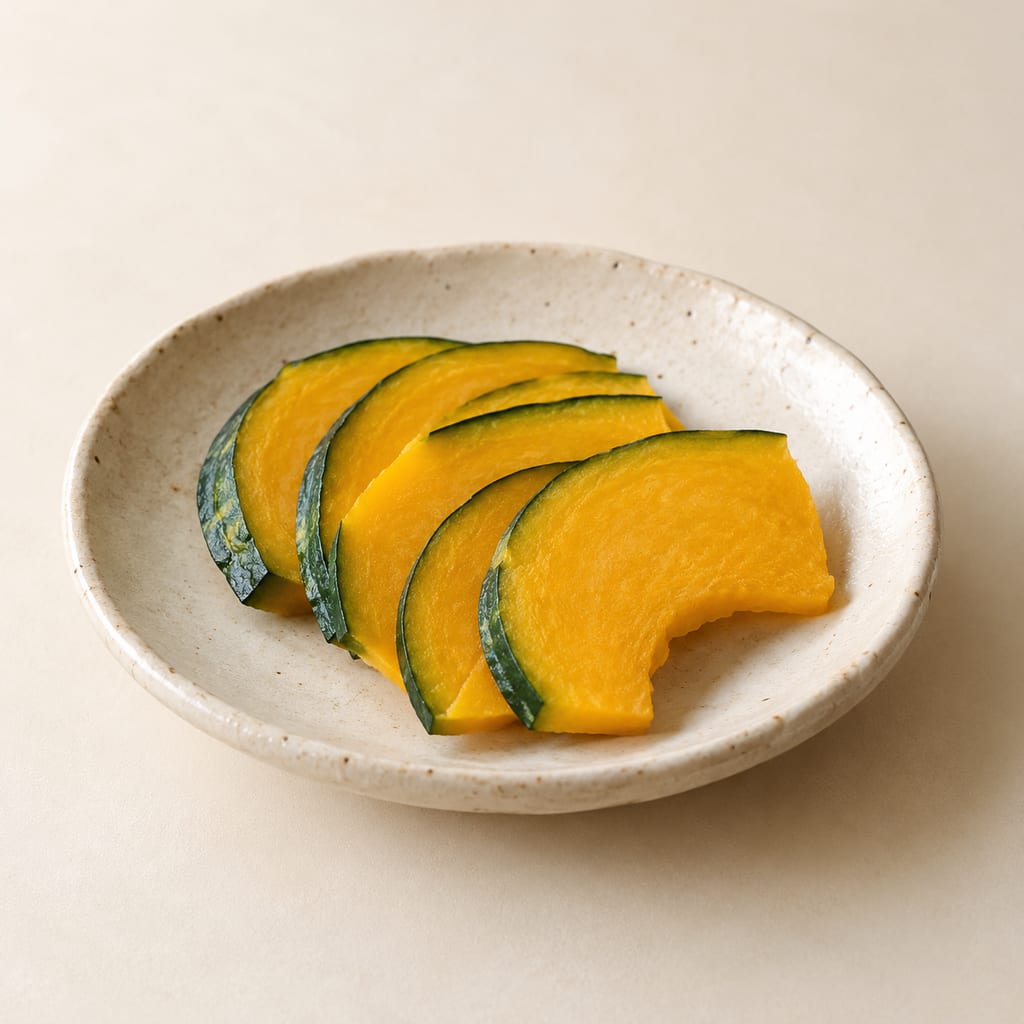
Kabocha no nukazuke: Refrigerated commercial fermented bed; use removed portions the same day.

Foods embedded in salty fermented miso paste, which transfers salt and fermentation products into them; misozuke uses an already transformed medium rather than a fresh vegetable brine.
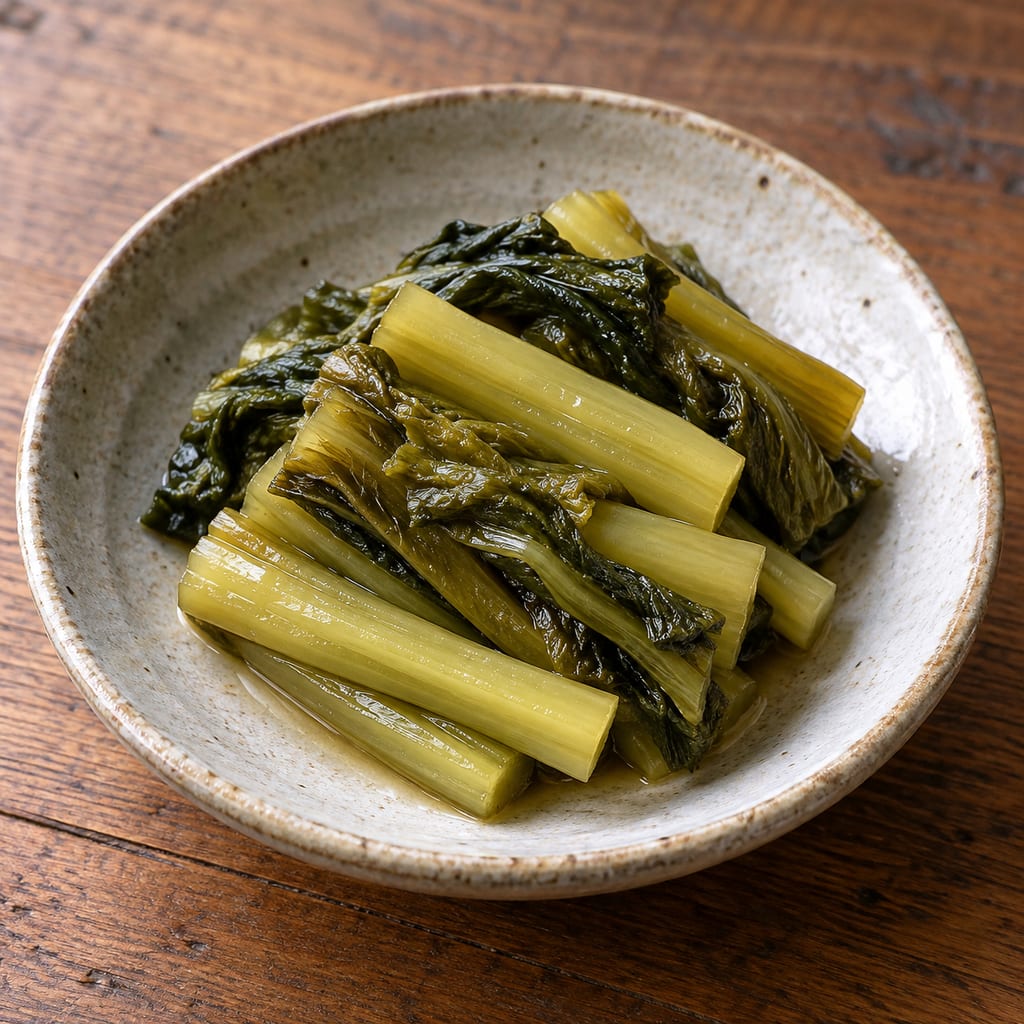
Nozawana greens salted in a barrel and weighted overnight, a Nagano household pickle sampled after about two weeks and soured by a month.
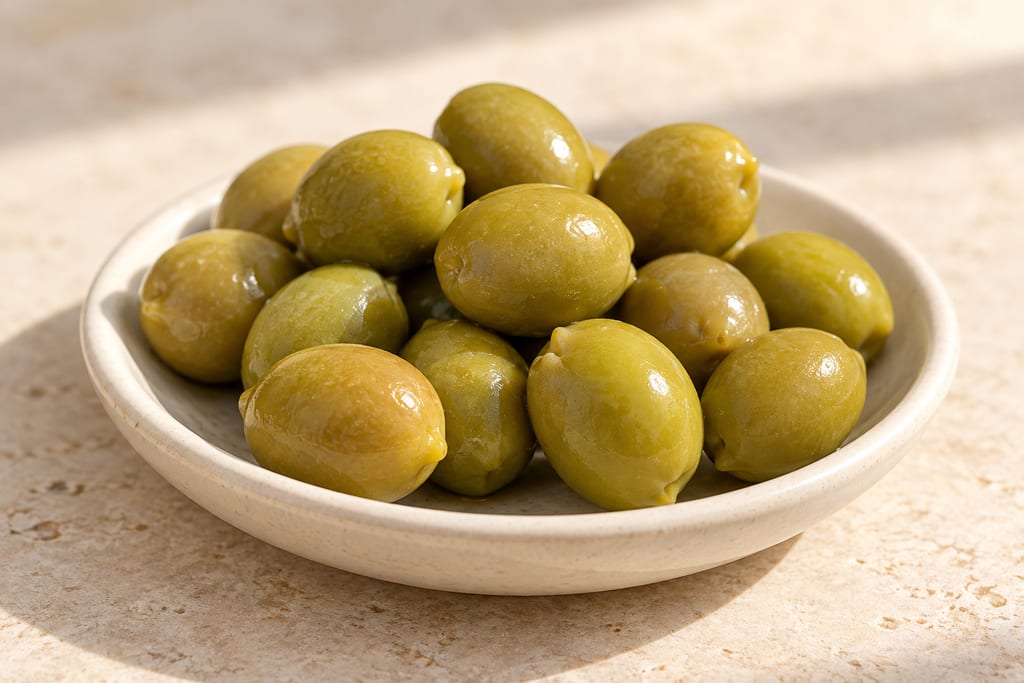
A Portuguese table-olive product from the Negrinha cultivar in northeastern Portugal, sold in three commercial styles, two of them brined fermentations and one oxidised to black.
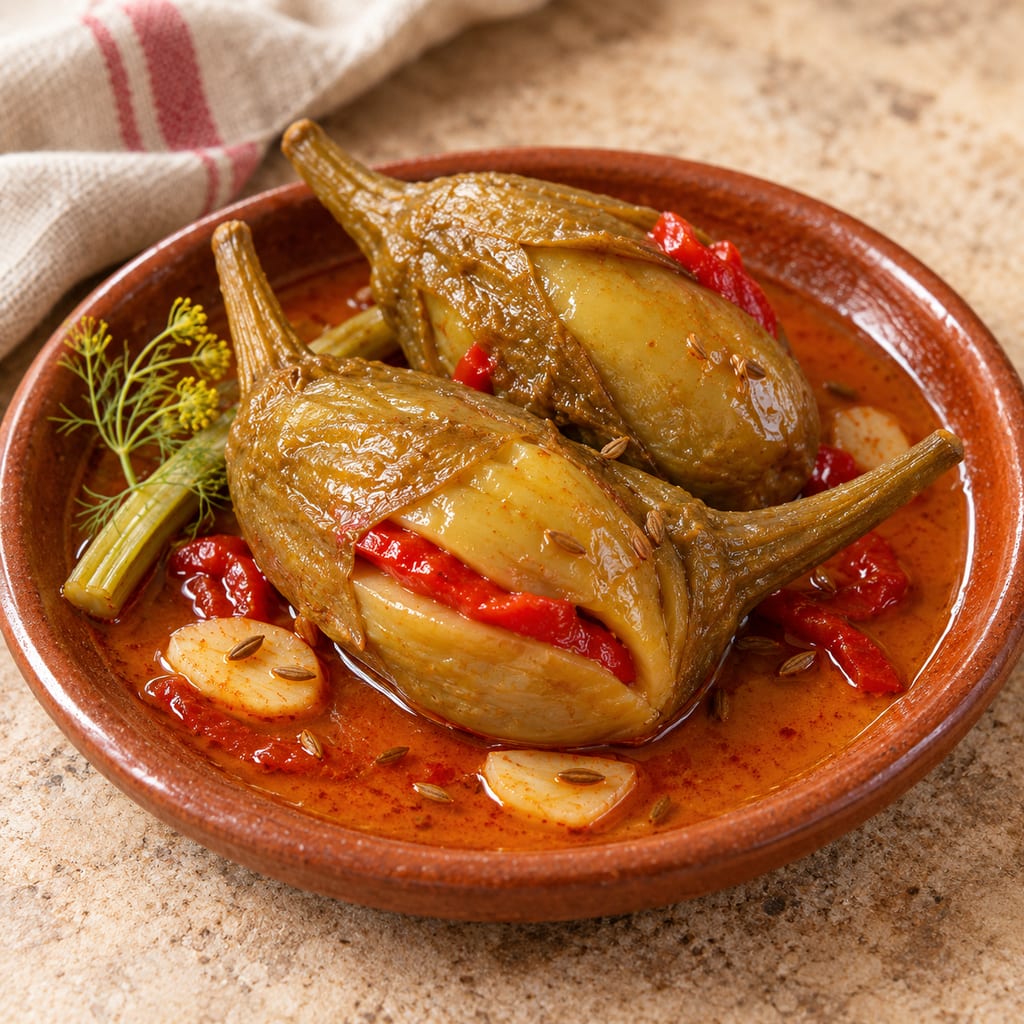
A protected aubergine preserve from Ciudad Real in Spain: tender fruit of the local Dealmagro variety, cooked briefly and then fermented in a vinegared, paprika-seasoned dressing.
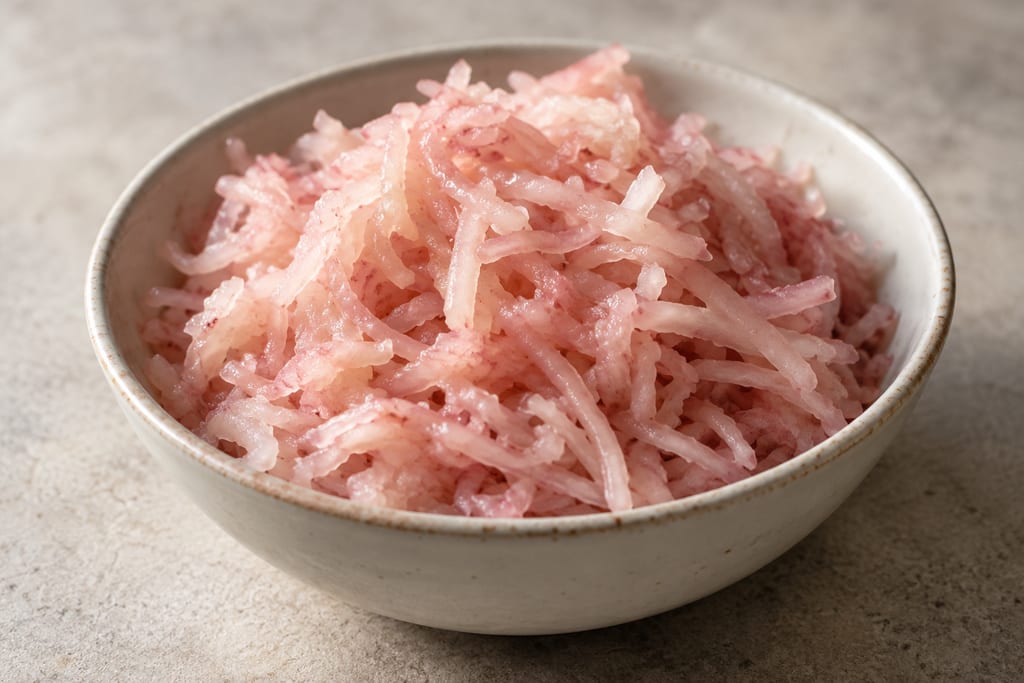
Source-specific Brovada DOP producer method for Friuli Venezia Giulia turnips and red-grape marc. This records a regulated producer process; it is not a validated home-scale recipe.
An industrial fermentation patio places factory-made fiberglass-reinforced polyester olive tanks below floor level, with drainage and transfer infrastructure arranged around the buried vessels.
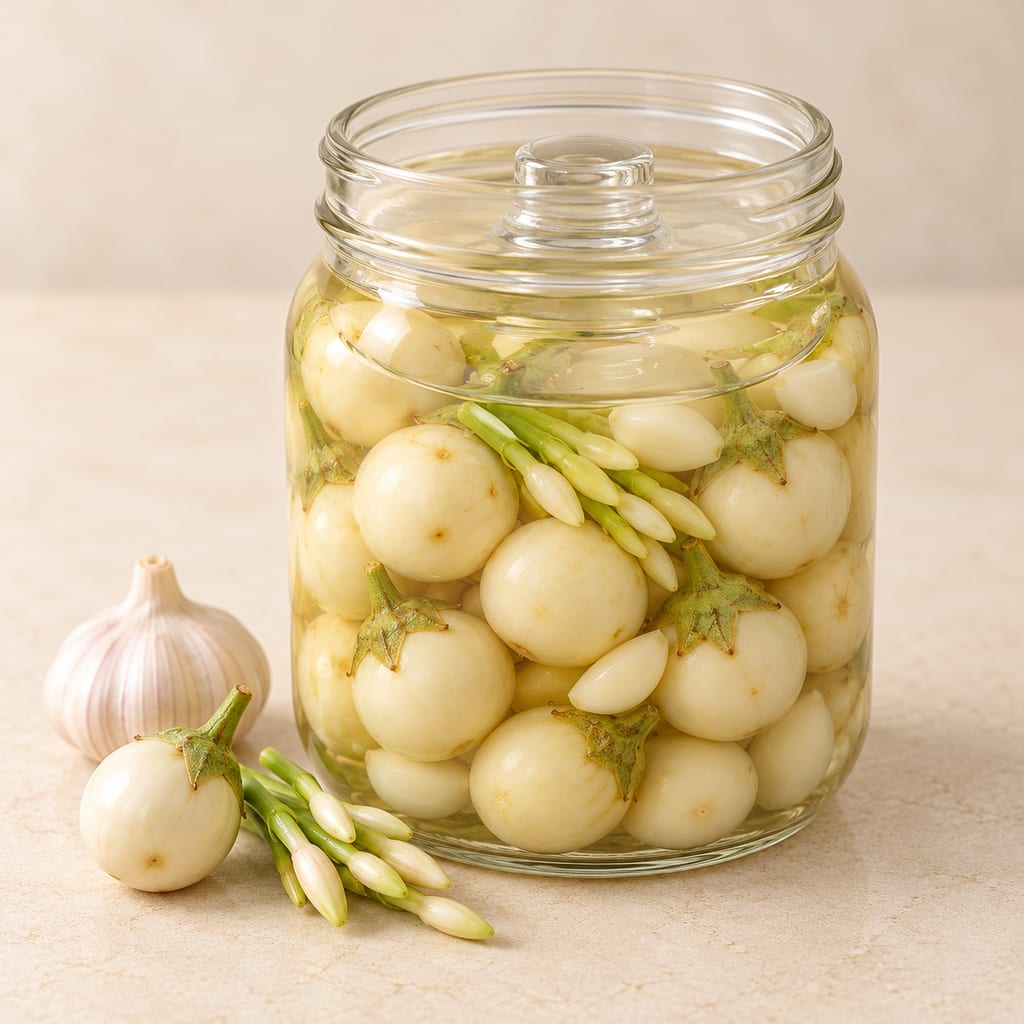
Vietnamese salted and fermented small eggplant, dried on the day of purchase, then held submerged in warm salty water with garlic and galingale flower for a week or longer.
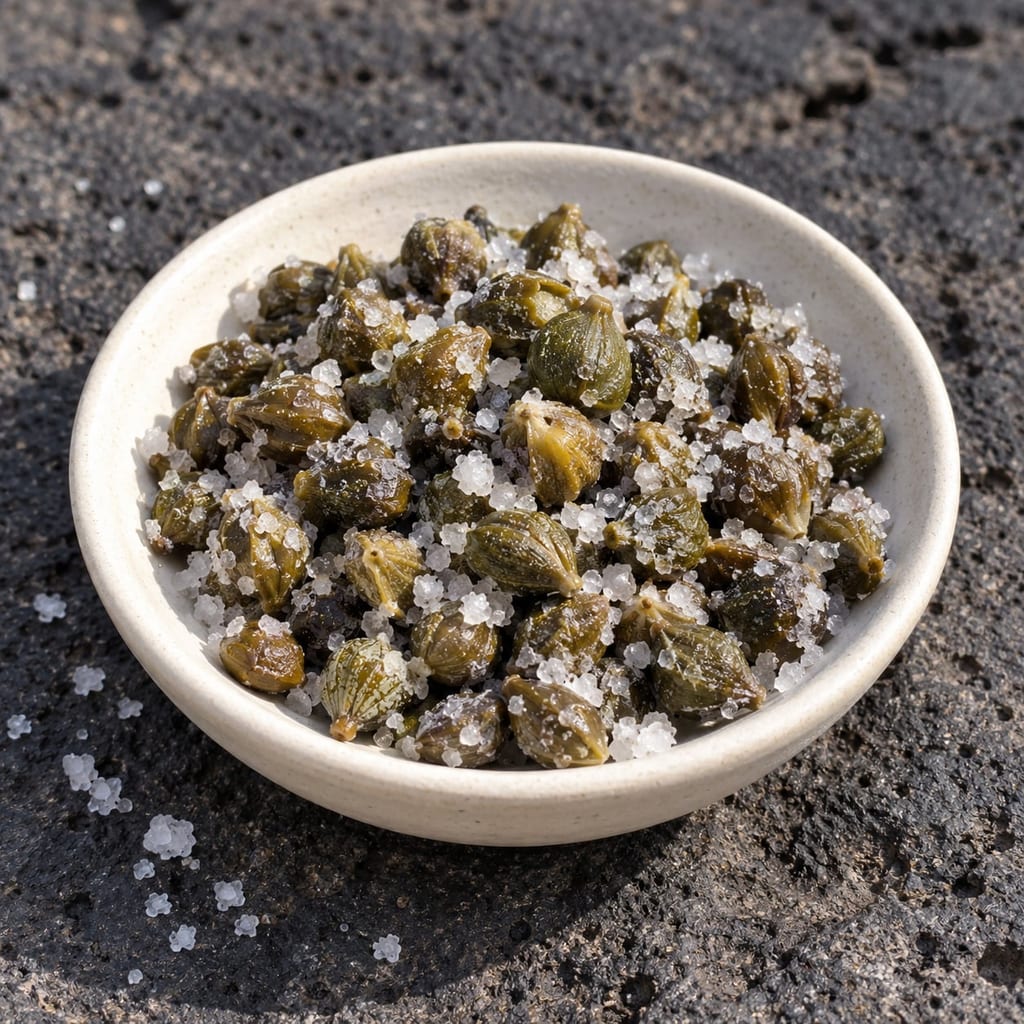
A protected Sicilian product: unopened caper buds from the island of Pantelleria, dry-salted with sea salt in a two-stage process that encourages lactic fermentation.
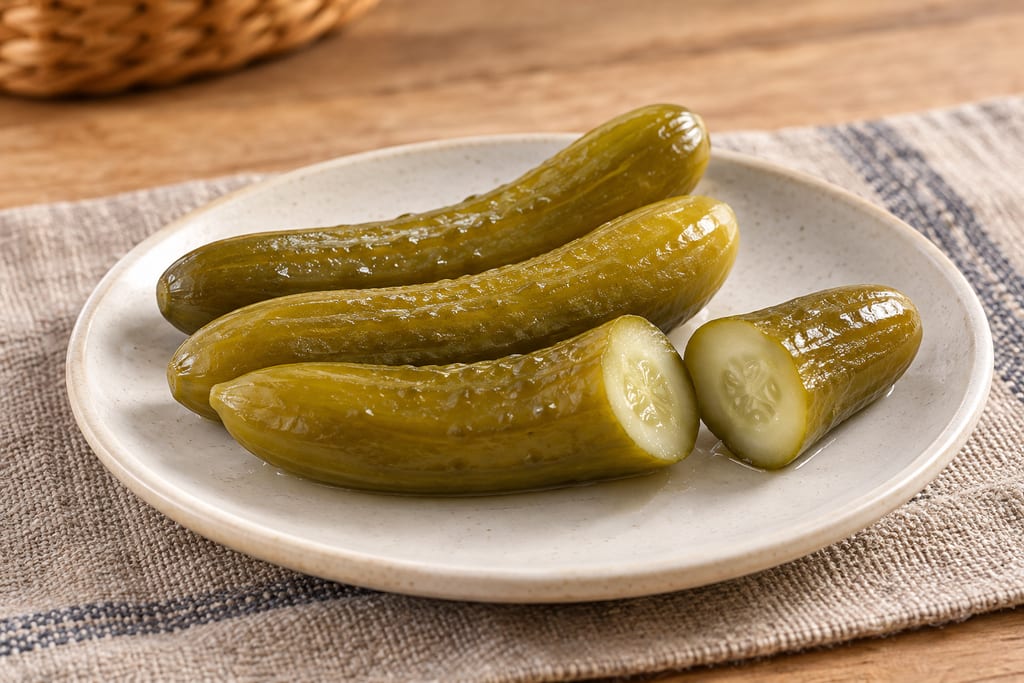
Çubuk turşusu is a registered pickle from Çubuk district in Ankara. Its cucumber variant is sold as Salatalık Turşusu, and a commercial specification sets its brine and room-temperature period.
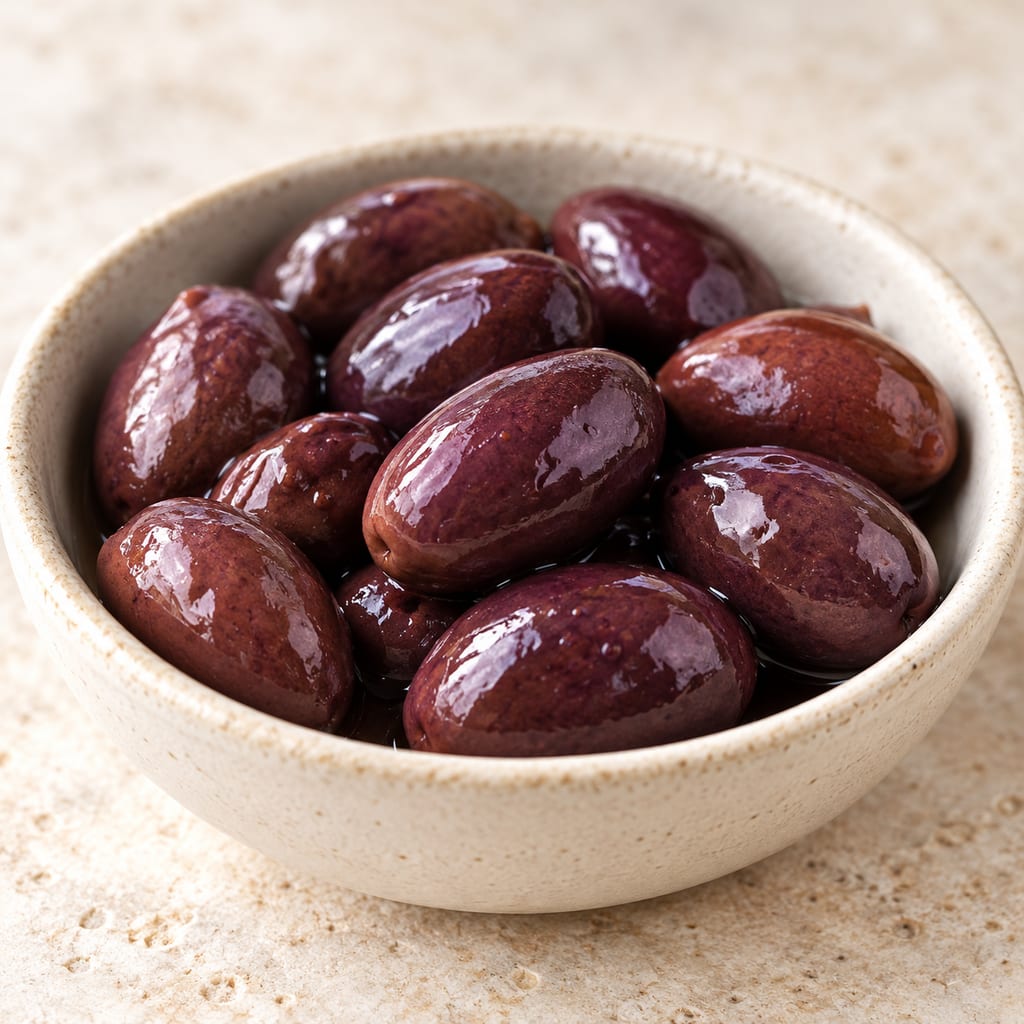
Elia Kalamatas is a Messinia table olive of the Kalamon variety, picked before full ripeness and fermented in brine for six to nine months; it is a PDO product, not a generic black olive.
No community contributions have been published for this entry yet.
Sign in to contribute. Published comments and photos are free to read.
Ministry of Agriculture, Forestry and Fisheries (MAFF), JapanHistory · Method · Uses
たくあん漬け (Takuan-zuke), traditional food menuTakuan is associated with Kaminoyama, Yamagata, and has several origin accounts.
Roots dried about 14 to 20 days in autumn and winter, then layered with rice bran and salt, matured 6 to 12 months (historical reconstruction).
Served with rice; used in tartar sauce or potato salad.
Cited in: Story and name; Drying and curing; Uses and product boundaries; Equipment and home feasibility