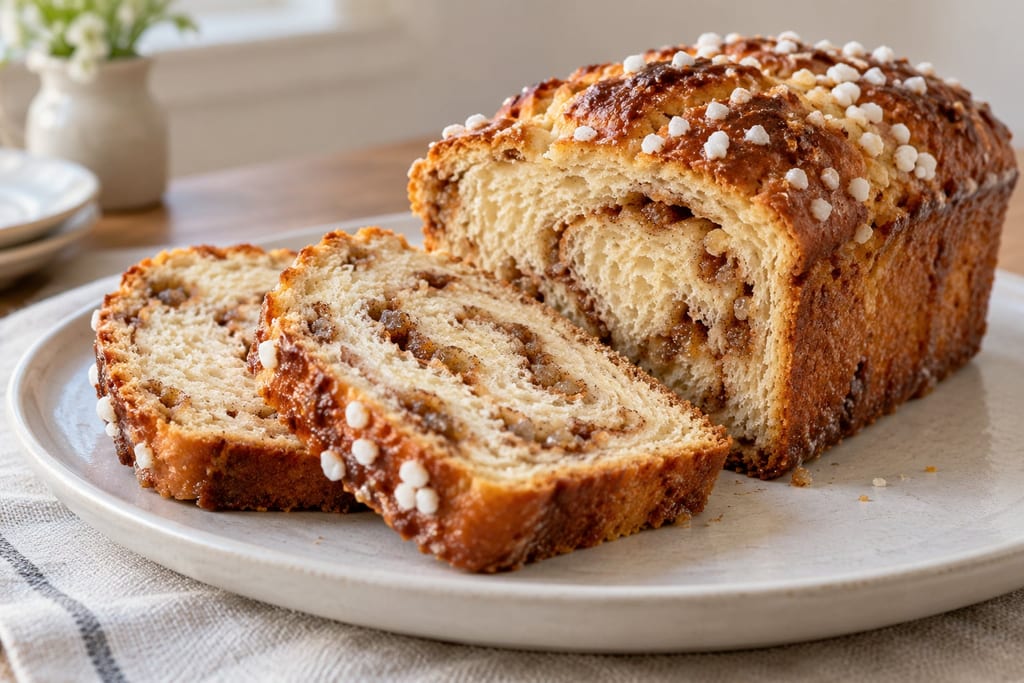
Frisian suikerbrood: Toine's version
Yeasted sugar bread with cinnamon, pearl sugar and ginger syrup, shaped into two standard loaves or three paper-pan loaves.
 FermenteaWhere food goes to change
Dutch sauerkraut
Dutch zuurkool is white cabbage salted and fermented in bulk. The only documented process in the available record is one North Holland producer’s commercial method from 2016.
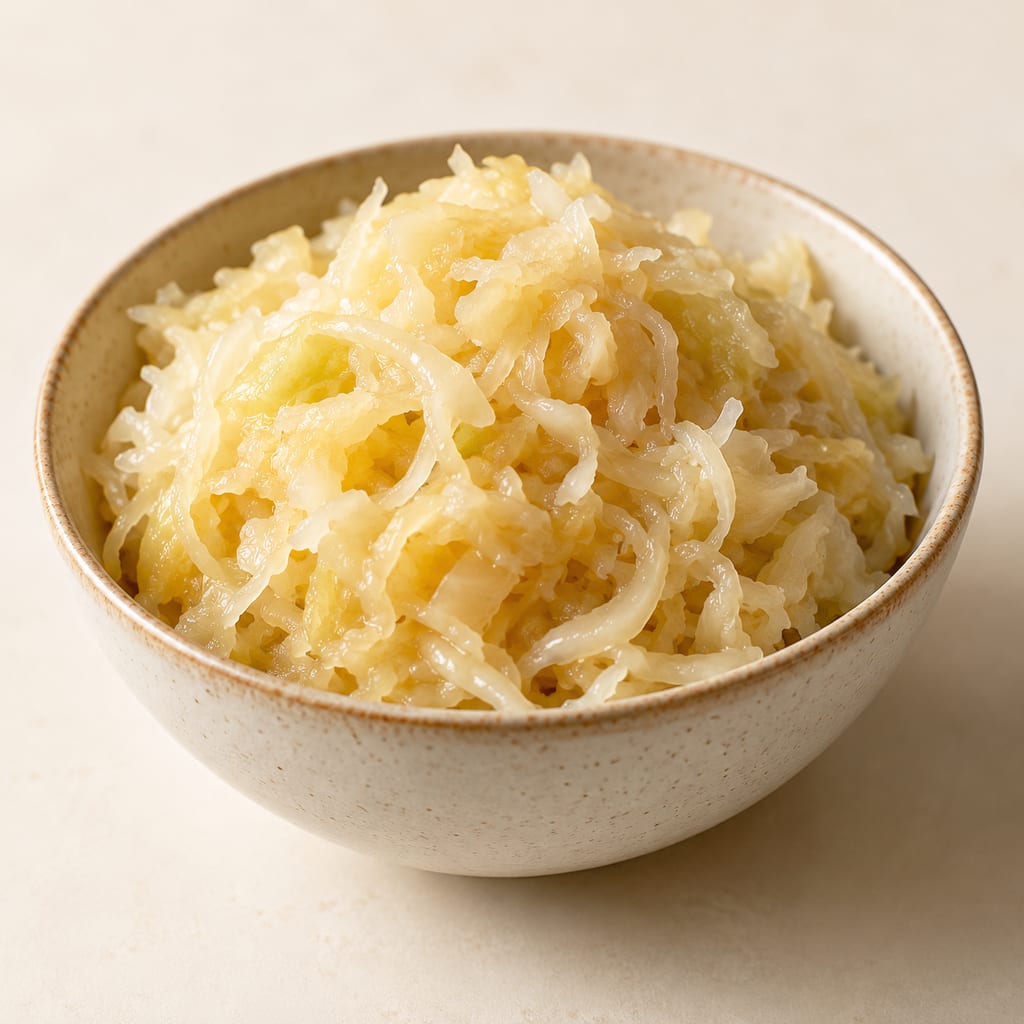
Zuurkool is the Dutch name for fermented white cabbage. Like sauerkraut in English-speaking countries, it is made by salting shredded cabbage so that naturally present lactic acid bacteria turn the sugars in the leaves into acid. The name is broad. The detailed record available for this entry describes one commercial process rather than a national standard.
A 2016 trade report on Kramer’s Zuurkool describes how the company works. White cabbage is cored, checked and finely sliced, then salted at 1.5 percent. The shredded cabbage goes into large storage pits, which are sealed and weighted with water-filled plastic sacks. The producer account explains the souring as lactic acid bacteria converting cabbage sugars into lactic acid, and it attributes the presence of these organisms to the air. That is the company’s explanation, not independent microbiological evidence.
The company processed cabbage from late July until shortly before Christmas, with fresh cabbage delivered from the fields during that season. The report gives three to eight weeks in fermentation, depending on temperature and on the structure of the cabbage.
The report places the producer in the Langedijk area of North Holland and says its cabbage comes from growers in Langedijk and from deliveries from Opperdoes, with the white cabbage grown on North Holland soil. These statements describe one supply chain. They do not establish that all Dutch zuurkool is made from North Holland cabbage.
The same report recalls that many households once fermented covered, pressed cabbage in a Keulse pot in the cellar. One company representative describes this from personal experience in a gardening family. It is a modern recollection and does not date the practice or show how widespread it was.
The 1.5 percent salt figure and the three-to-eight-week interval belong to one industrial operation. They are not safe limits for a home batch. No pH endpoint, temperature range or household storage period is established in this record, and appearance, smell or taste do not show that a batch is safe. Home makers who want to ferment cabbage should work from a tested sauerkraut method, such as the general guidance from the National Center for Home Food Preservation and the University of Minnesota Extension listed in the sources.
The 2016 report recalls that households once fermented covered, pressed cabbage in a Keulse pot in the cellar. The report presents this as a recollection, not a dated source. It also says the producer had existed for 125 years by 2015. That company history does not date zuurkool in the Netherlands.
Scaling: source batch only
The record describes one commercial process. It gives no household salt rate, endpoint or validated storage control.
Hazard sourceUse a separately validated fermentation method for salt rate, endpoint and storage. Smell, taste and appearance do not establish safety.
Control sourceThe producer’s metal-detector and laboratory checks are commercial controls and do not transfer to a home batch.
No pH endpoint, temperature range or storage limit for a household batch is established.
The producer draws on Langedijk growers and cabbage from Opperdoes. This is a producer-specific sourcing statement, not a national boundary for zuurkool.
Yeasted sugar bread with cinnamon, pearl sugar and ginger syrup, shaped into two standard loaves or three paper-pan loaves.
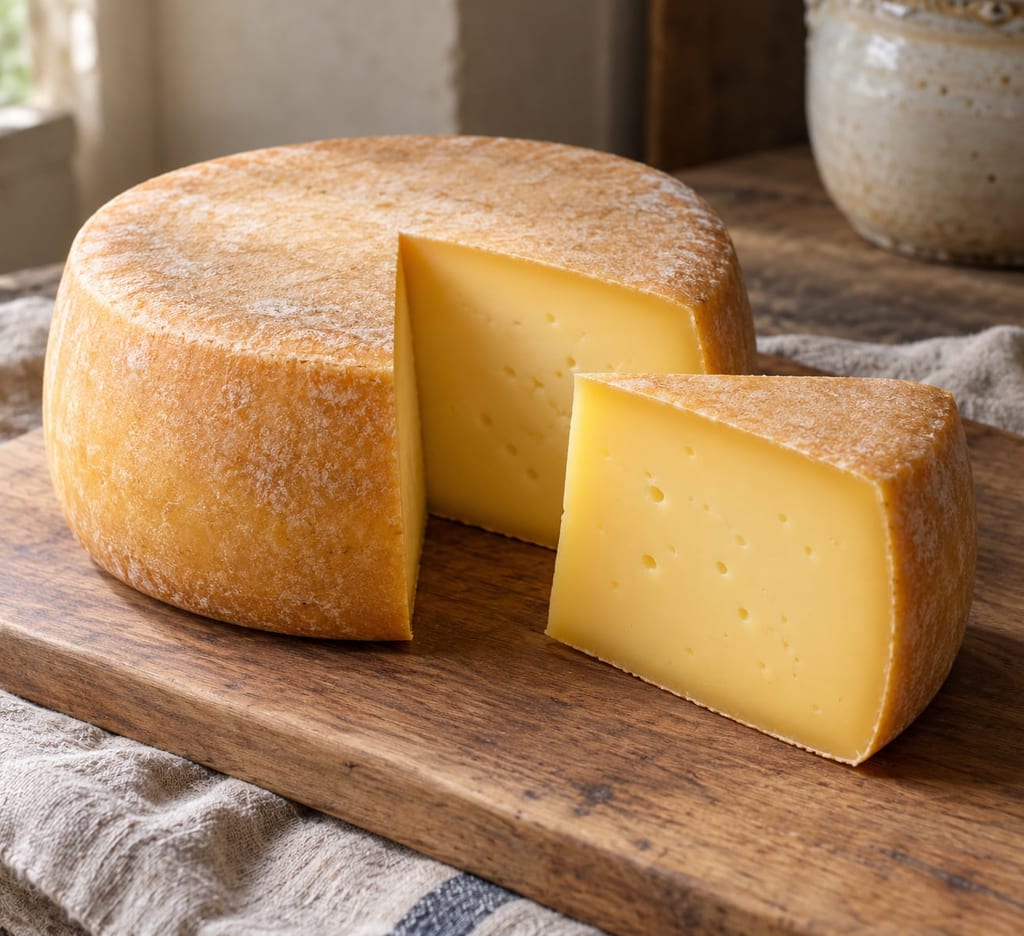
A pressed, brined cheese in which a third of the whey is replaced with hot water, washing out lactose so the cheese ends less acidic before months of ageing.
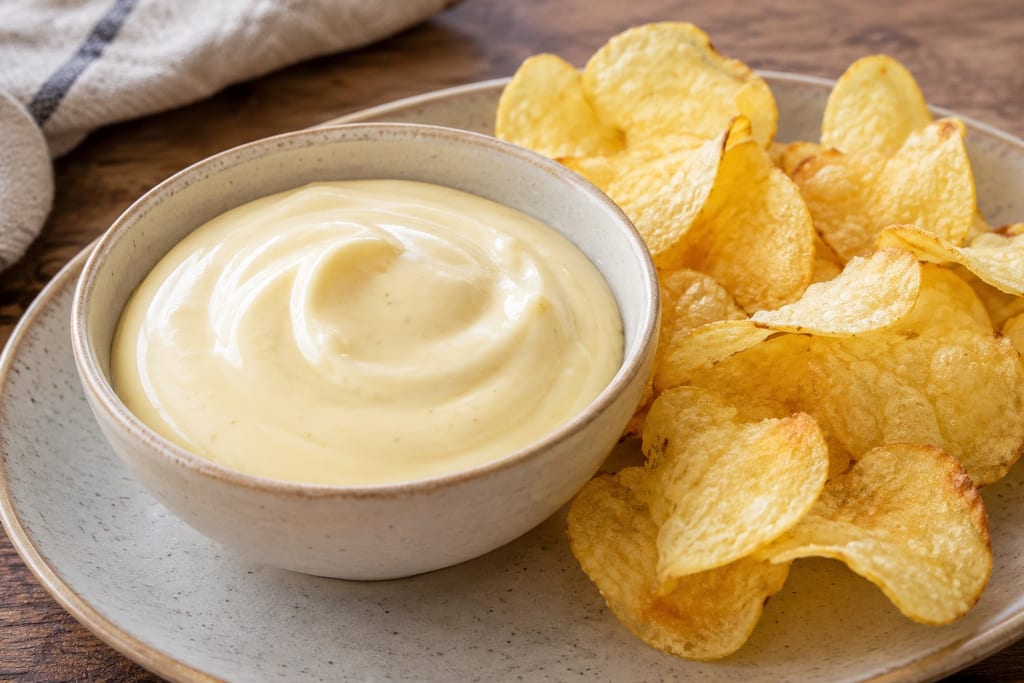
Lower-oil, starch-thickened fritessaus-inspired sauce derived from M13, not a Remia replica. Nominal yield 291 g before cooking loss.
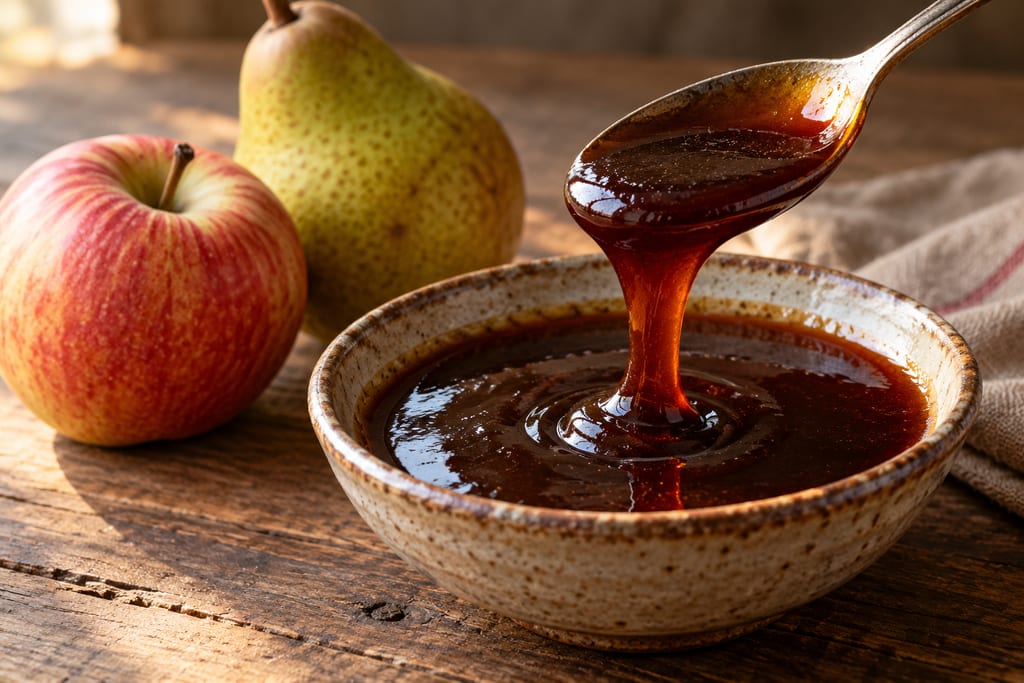
Limburgse stroop is a regional family of cooked fruit syrups from Dutch and Belgian Limburg. Producers blend apples, pears and beet differently, so no single formula exists.
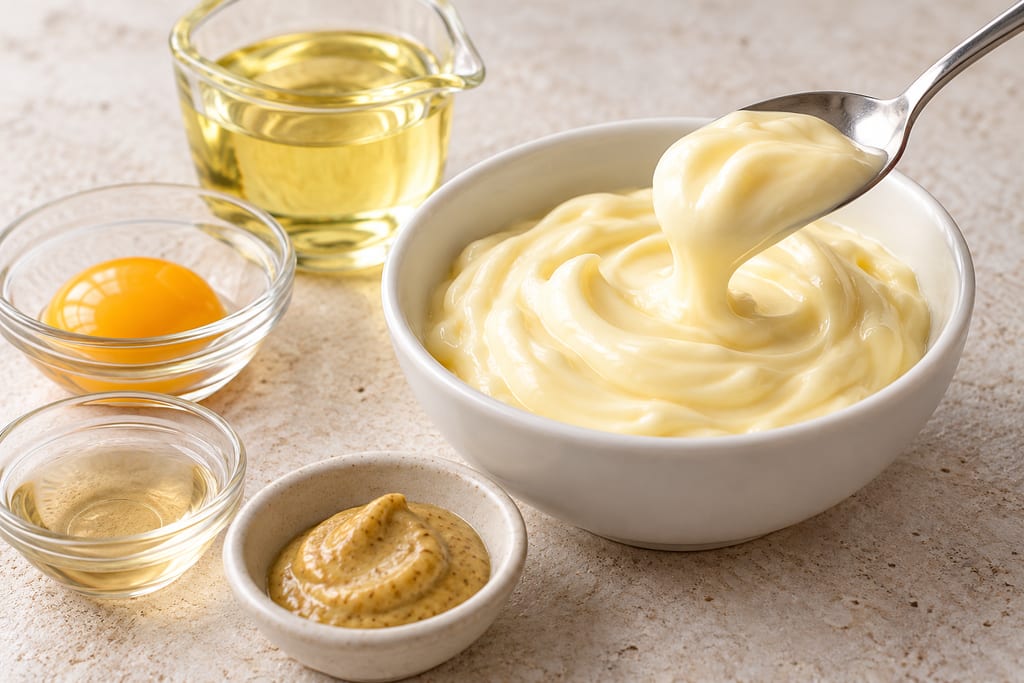
A plain mayonnaise of 200 g refined neutral oil emulsified into pasteurised yolk, vinegar, water and a little Dijon mustard: a clean base for tasting, comparing and flavouring.
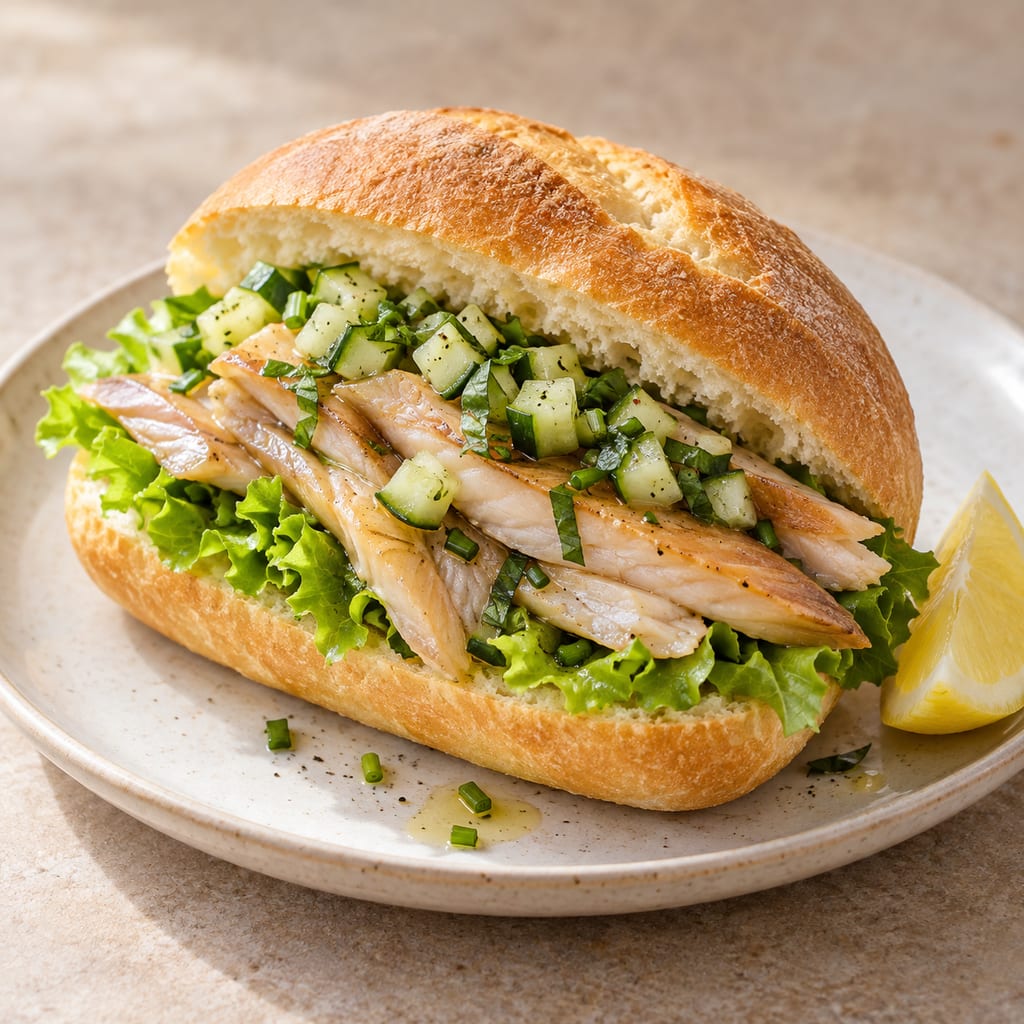
This Dutch lunch roll combines purchased smoked eel with cucumber, basil, lemon dressing and lettuce.
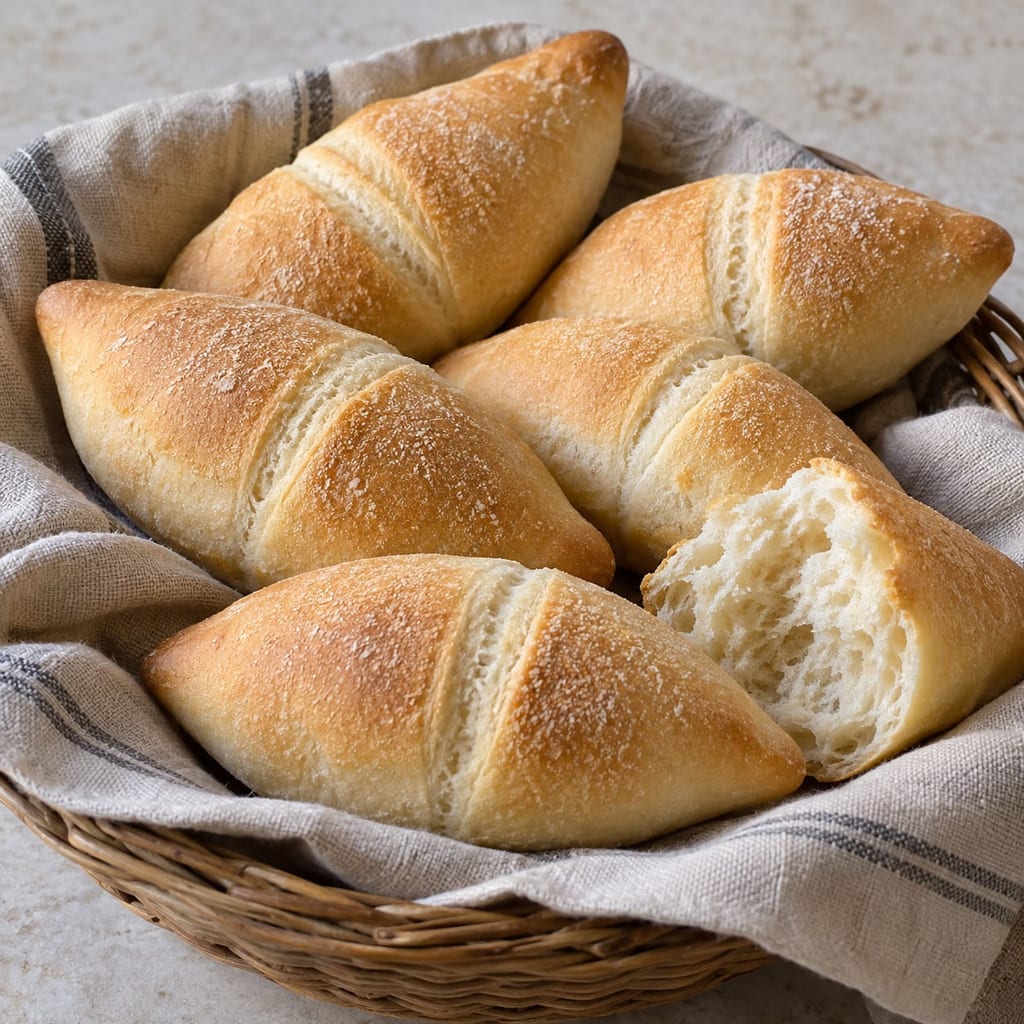
Pointed, yeast-raised Surinamese rolls with a light crumb and a thin crust, shaped with a pressed seam and baked with a semolina coating.
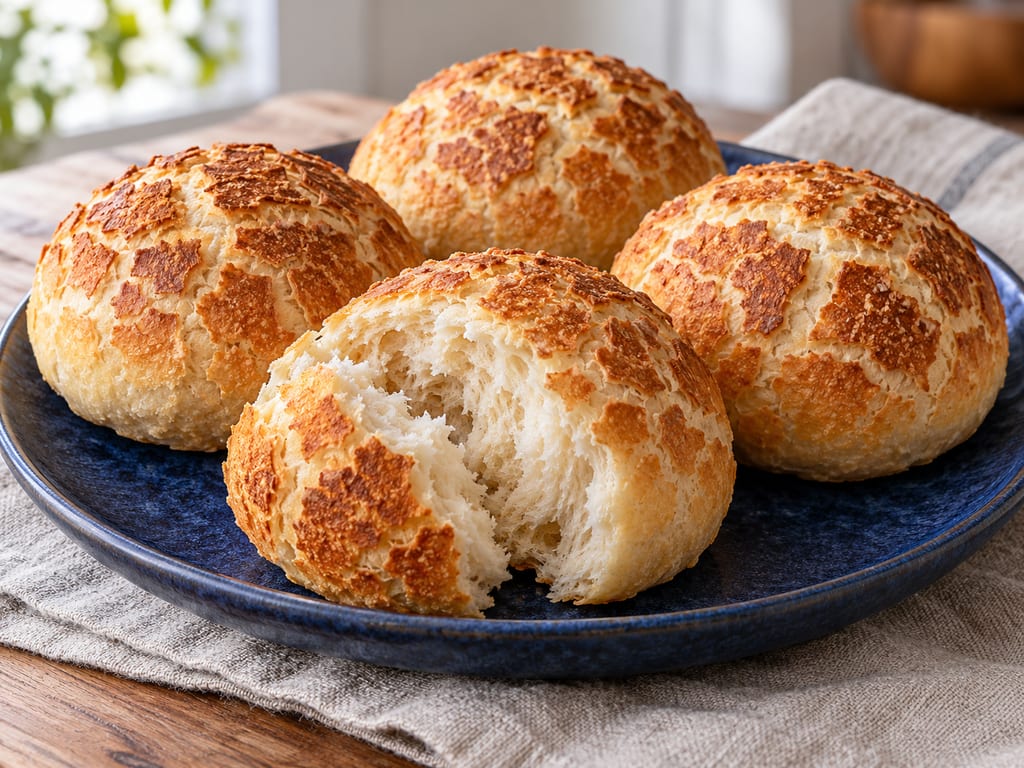
These Dutch-associated wheat rolls carry a yeast-raised rice-flour paste that dries into a split, crunchy crust.
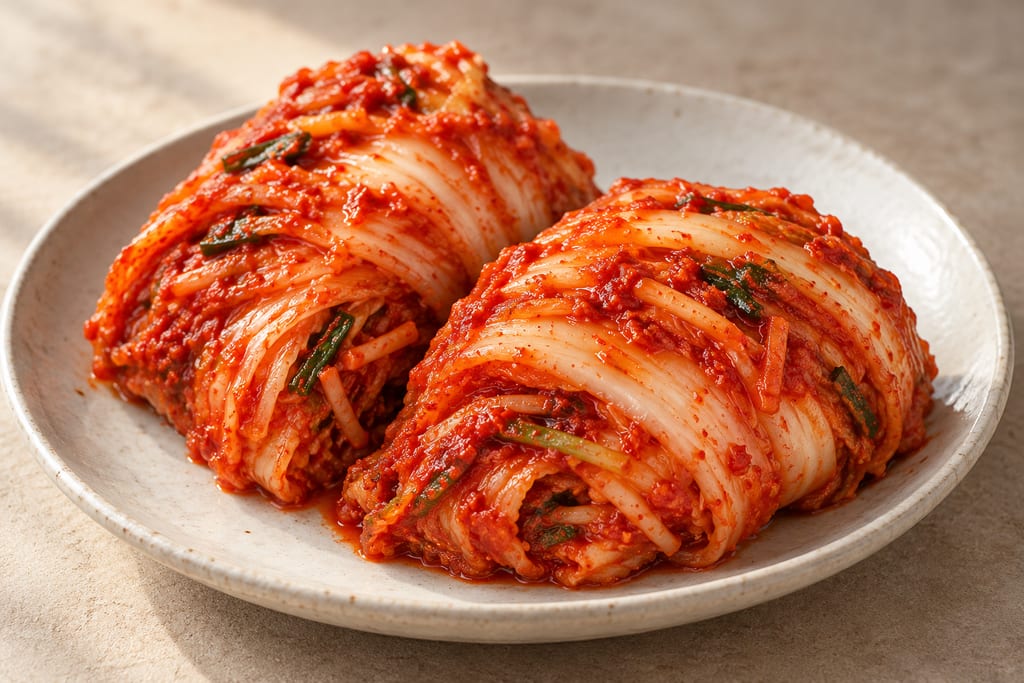
Napa cabbage salted, seasoned with a paste of gochugaru, garlic, ginger and salted seafood, and left to sour through lactic fermentation; Korea's everyday winter preserve.
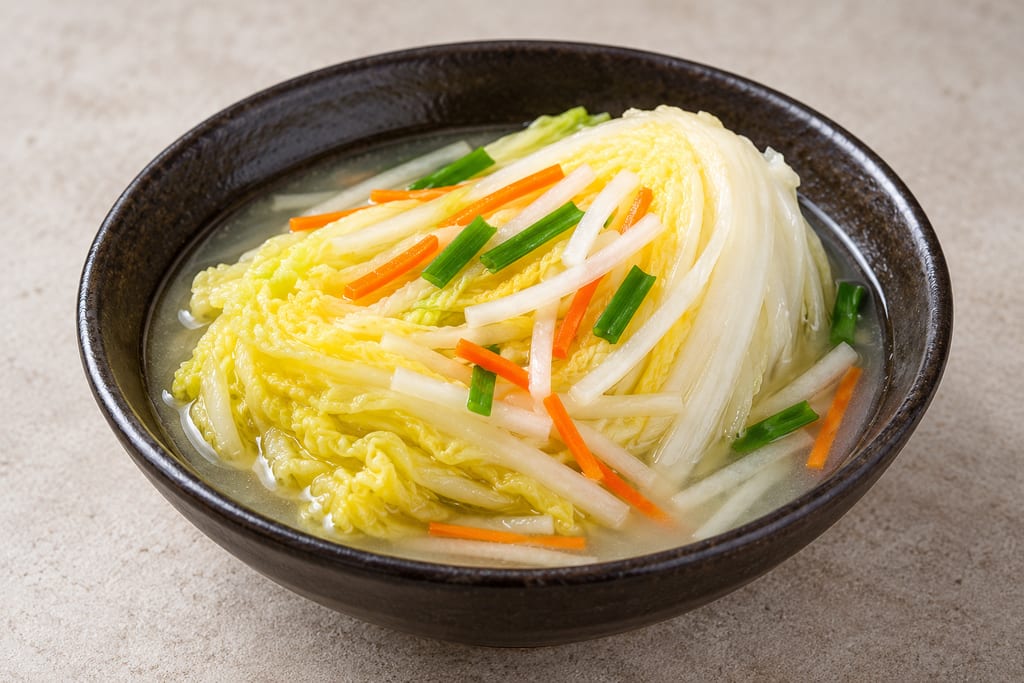
Napa cabbage is brined and filled with pear, radish, alliums, chives and fruit; this Korean kimchi omits red pepper flakes.
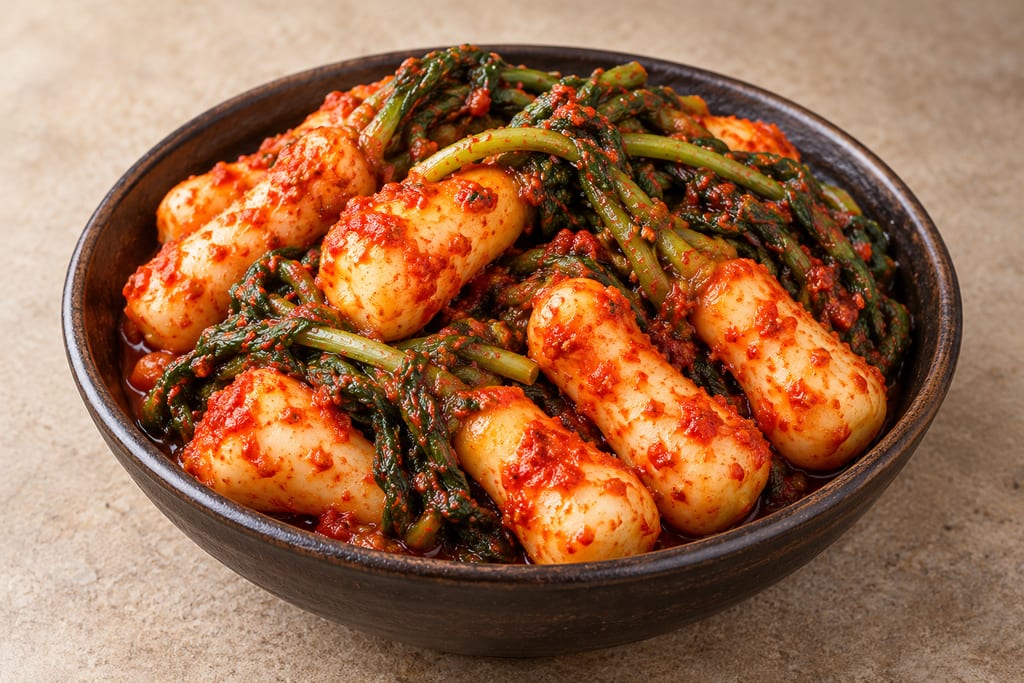
Small ponytail radishes keep their greens attached and ferment in a flour-and-chile seasoning paste.
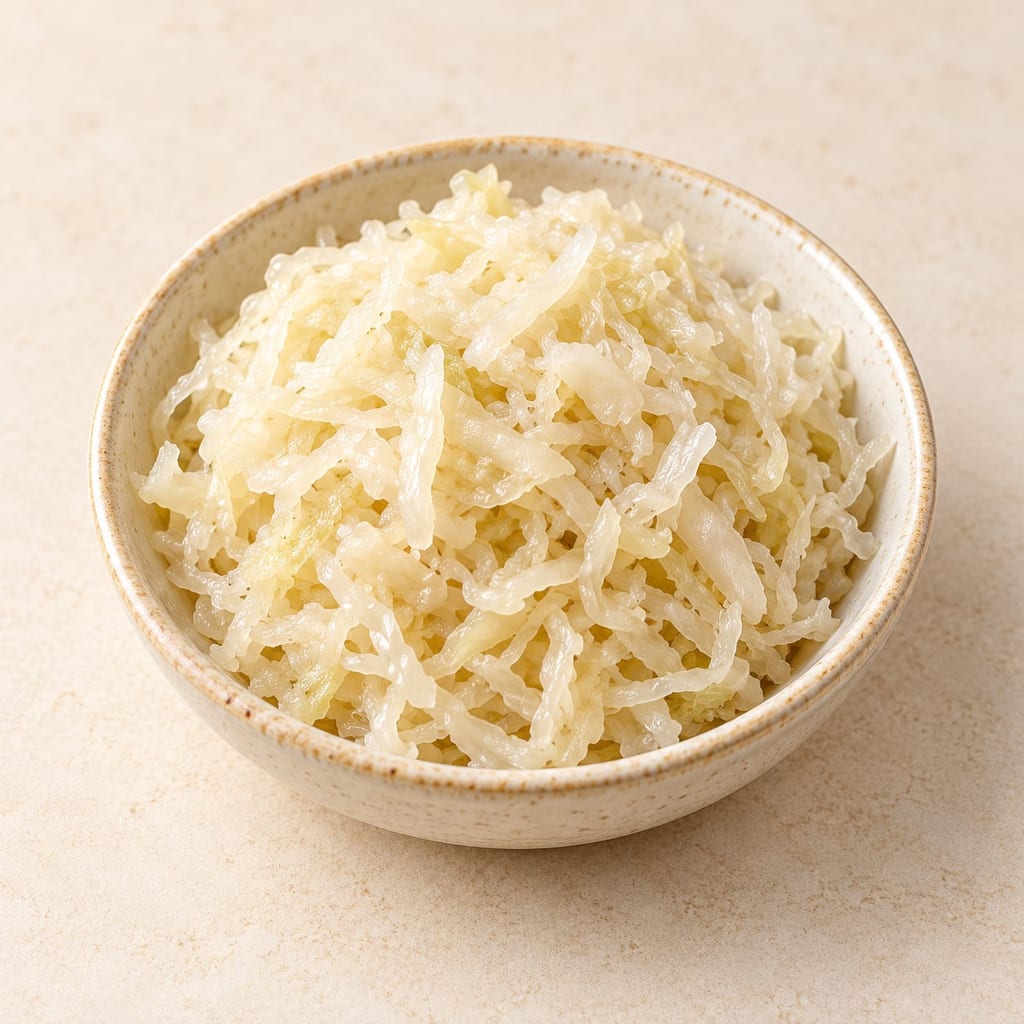
Finely cut cabbage fermented with salt in vats by natural lactic fermentation, a protected Alsatian product sold raw or cooked after fermentation.
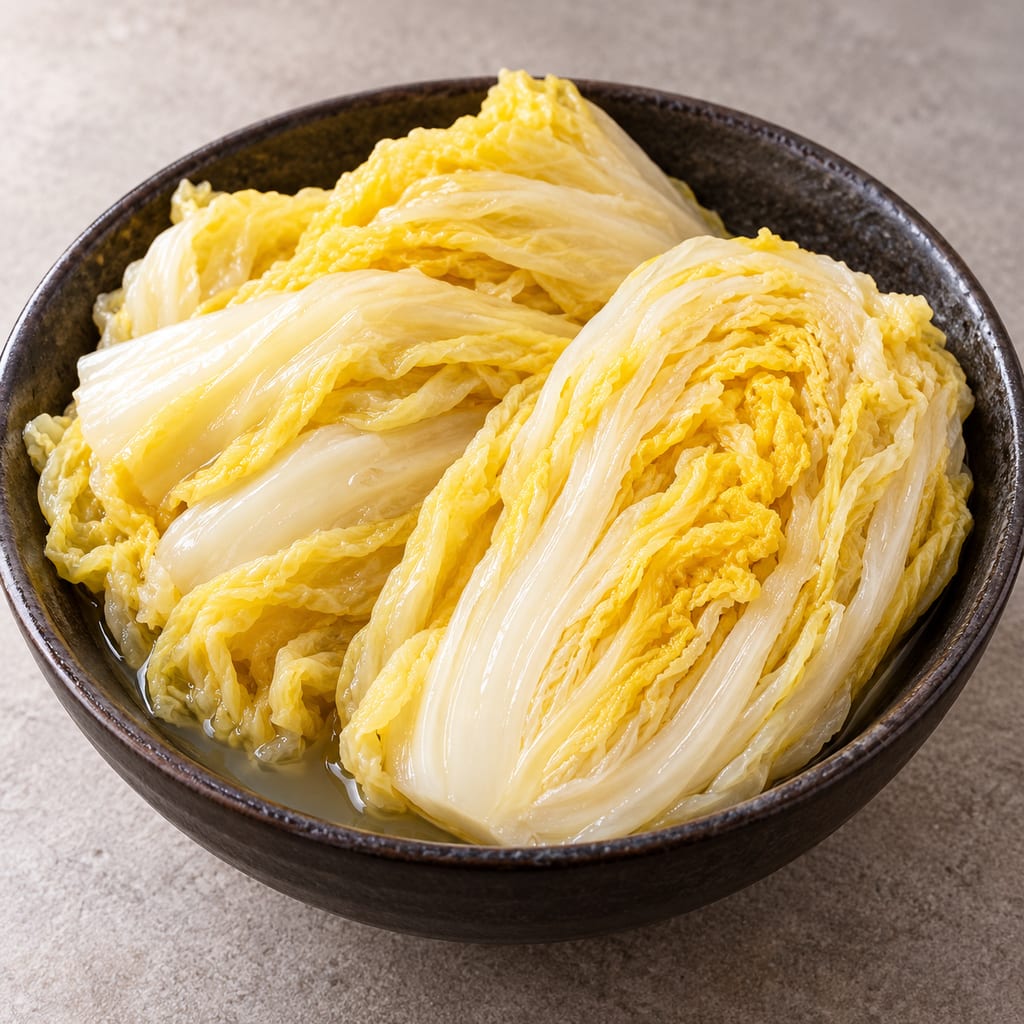
Napa cabbage fermented in a salt brine in Northeast China, traditionally in large ceramic or glass jars, until it turns sour.
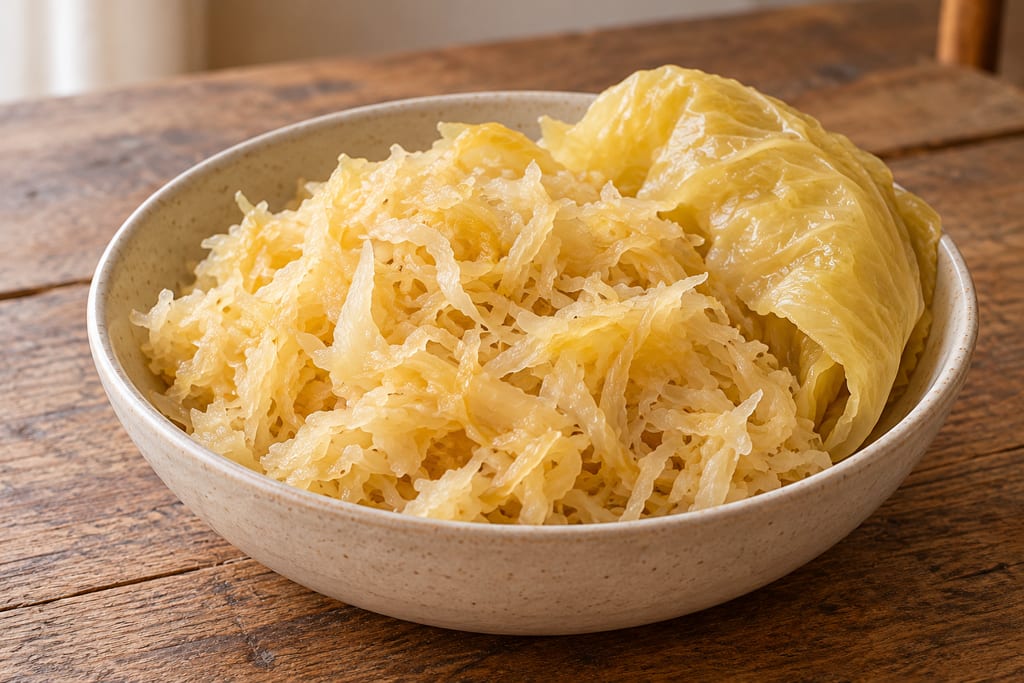
Serbian sour cabbage from the Futog area, made from the autochthonous Futoški cabbage population and registered as a protected product in 2008. It is a subset of general Serbian kiseli kupus.
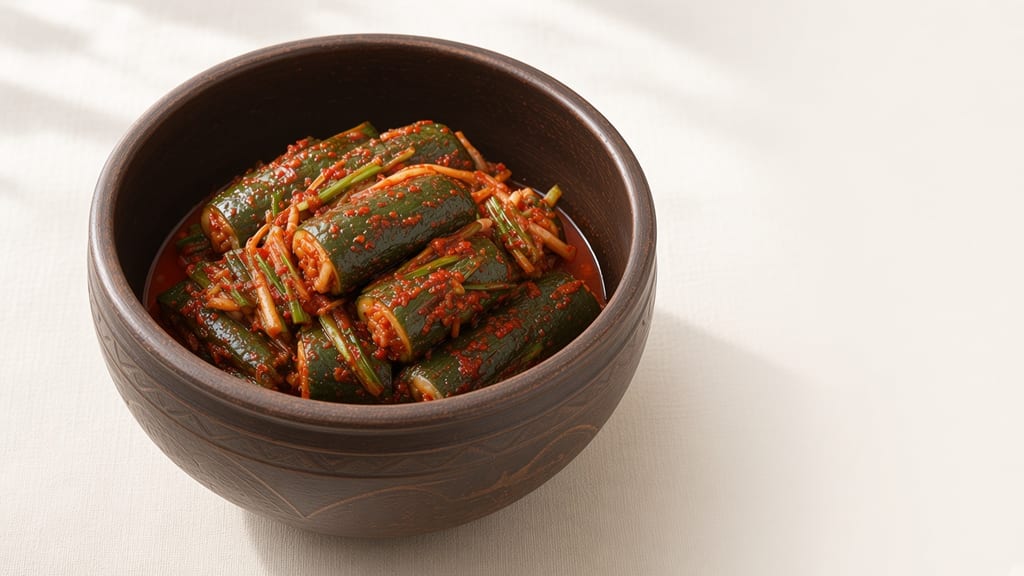
Hwanggwa damjeo is a cucumber kimchi from Yu Jung-rim's Jeungbo sallim gyeongje of 1766. Slit cucumbers are packed with chilli powder and garlic, scalded with hot salted water and sealed overnight.
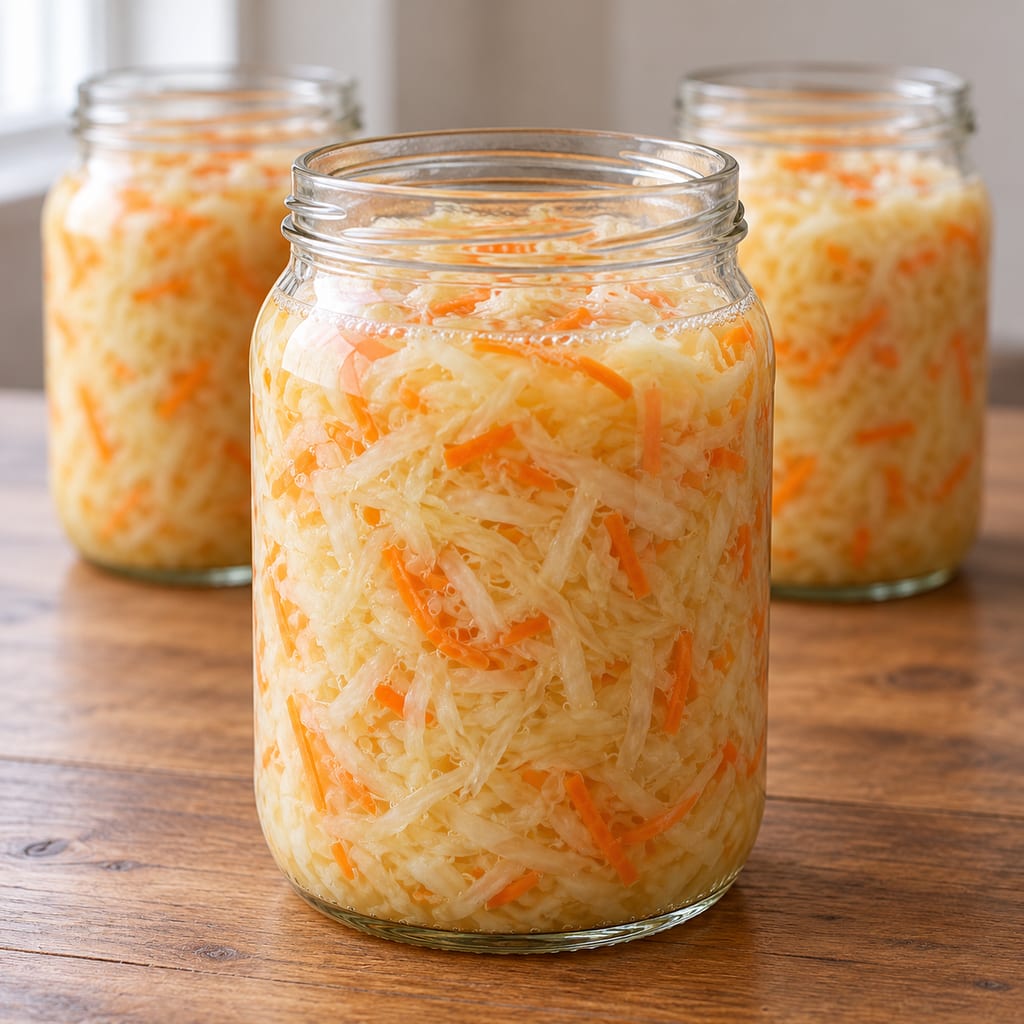
Shredded cabbage and grated carrot are salted to 20 g/kg, rested, packed into three jars and monitored during a creator-reported eight-day fermentation; measured temperature is not given.
No community contributions have been published for this entry yet.
Sign in to contribute. Published comments and photos are free to read.
AKKER, archived by Wageningen University & Research (WUR)Method · History · Geography
Werkgever: Kramer’s ZuurkoolCabbage salted at 1.5 percent in the producer process
Spontaneous fermentation in sealed pits weighted with water-filled sacks
Three to eight weeks in fermentation, depending on temperature and cabbage structure
Cited in: Overview; A commercial process in North Holland; Sourcing; The household tradition; Limits of the record
Algemeen Nederlands Woordenboek (Instituut voor de Nederlandse Taal)Name
zuurkoolDutch word for fermented cabbage
Cited in: Overview
National Center for Home Food Preservation, University of GeorgiaSafety
SauerkrautGeneral fermentation guidance; a tested method is required for home sauerkraut
Cited in: Limits of the record
University of Minnesota ExtensionSafety
Preserving food at home: FermentationGeneral home fermentation guidance
Cited in: Limits of the record