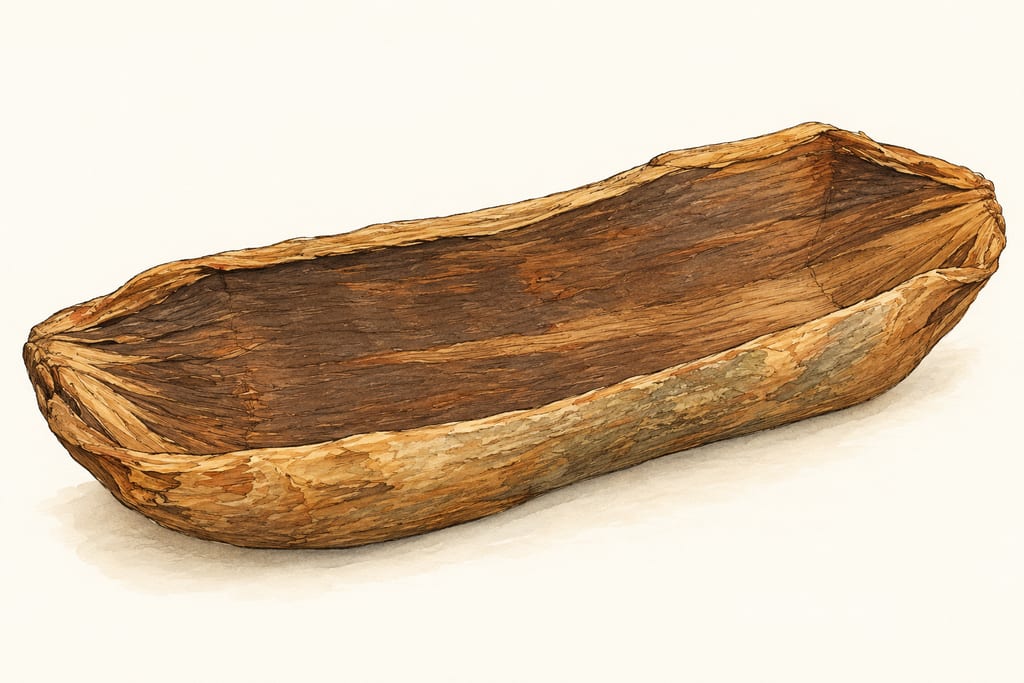
Coolamon
A wooden carrying dish used in Aboriginal food, water and seed work. Western Desert examples are called piti or ngurti; the general term does not imply one uniform form or fermentation use.
 FermenteaWhere food goes to change
Equipment · Cold stores and coolers
Coolgardie cooler · Coolgardie cooling chest
An Australian food cupboard cooled by water evaporating from wet hessian panels, which draws heat from the air inside. It dates from the goldfields of Western Australia in the 1890s.
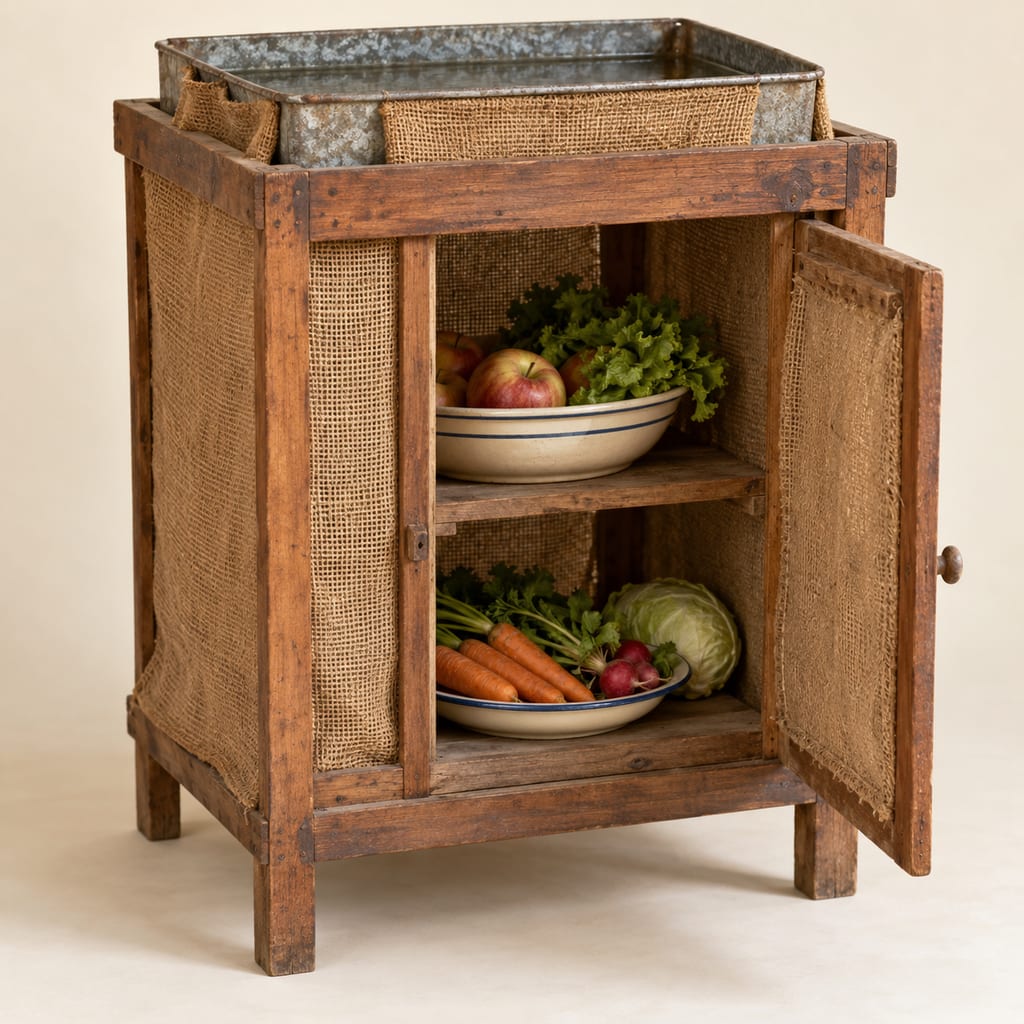
A Coolgardie safe is a cupboard with panels of wet hessian on its sides. Water is fed to the cloth, and as it evaporates it draws heat from the air inside. Food stored inside stays cooler than the air outside.
The principle is evaporative cooling, the same one used in clay pot coolers. Its effect depends on dry air and some movement of air through the wet panels.
The safe is credited to Arthur Patrick McCormick, a contractor in Coolgardie, Western Australia. The town was remote, and food was scarce and expensive, so keeping fresh food from spoiling and from scavengers was a priority. The cupboard was named after the town where it was made.
Museum records place its common form in the 1890s. Commercial examples were made later in other states: Museums Victoria holds a Trafalgar model made by W. J. Rawling in South Australia around 1915, credited to McCormick's design.
Water wets the hessian panels. When air moves through the wet cloth, the water evaporates, and the energy it takes from the air cools the cupboard. A shaded position and a steady breeze help it work.
The feet of the cupboard were usually set in a tray of water to keep ants away.
The cupboard's cooling is modest and weather-dependent. In humid or still air it does little, and in cold weather it is not needed. Historical use does not establish a modern safe temperature for any food.
A modern version should be built with contemporary food-contact and cleaning choices, and tested against the local ambient temperature and humidity. Evaporative cooling is not a meat refrigerator.
Coolgardie safes were used widely until refrigerators became common, when food was kept cool with ice or salted and cured. Surviving examples are held in museums and collections, and the form remains a reference for low-power food cooling.
The Coolgardie safe is credited to Arthur Patrick McCormick, a contractor in Coolgardie, Western Australia, and later mayor of Narrogin. It was named after the goldfields town where it was made. Households used such safes widely until refrigerators became common.
Evaporative cooling does not reach a safe refrigeration temperature in humid air, so foods that need cold storage will spoil.
Hazard sourceStore only foods suited to a cool, dry, ventilated cupboard, and measure the internal temperature
Control sourceDo not treat a Coolgardie safe as a refrigerator. Test the actual temperature against the food's safe range before storing perishable food.
Cooling depends on dry air and a breeze. The Coolgardie safe cools less in humid or still conditions.
Source →Historical use shows the tradition of the cupboard, not that it holds food at a modern safe temperature. Modern storage of meat or dairy needs measured temperatures.
Source →Named for Coolgardie, Western Australia, where it is credited to Arthur Patrick McCormick. Surviving examples are held across the country.
A wooden carrying dish used in Aboriginal food, water and seed work. Western Desert examples are called piti or ngurti; the general term does not imply one uniform form or fermentation use.
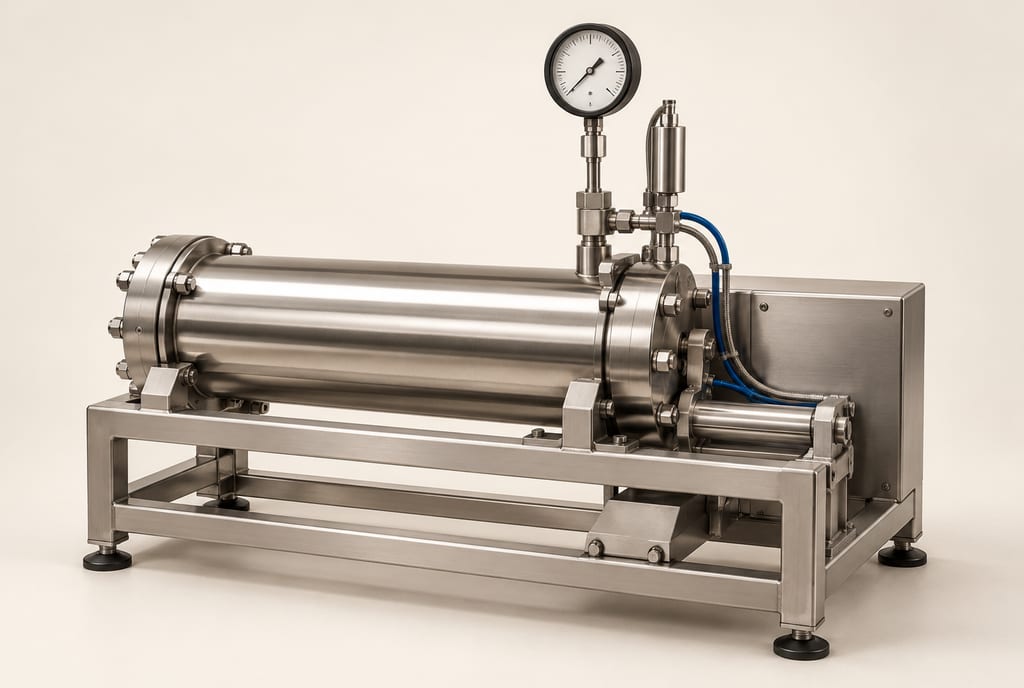
A pressure-rated vessel holds food in water while a high-pressure system applies a controlled hydrostatic treatment. Food, packaging and process conditions determine the result; ordinary HPP does not sterilize every product.
A Museums Victoria catalogue documents a Wangkangurru lukomb or kowapp, a rabbit-skin bag used to carry water around Lake Eyre. Its account describes skin preparation and tanning, while dating and image rights require care.
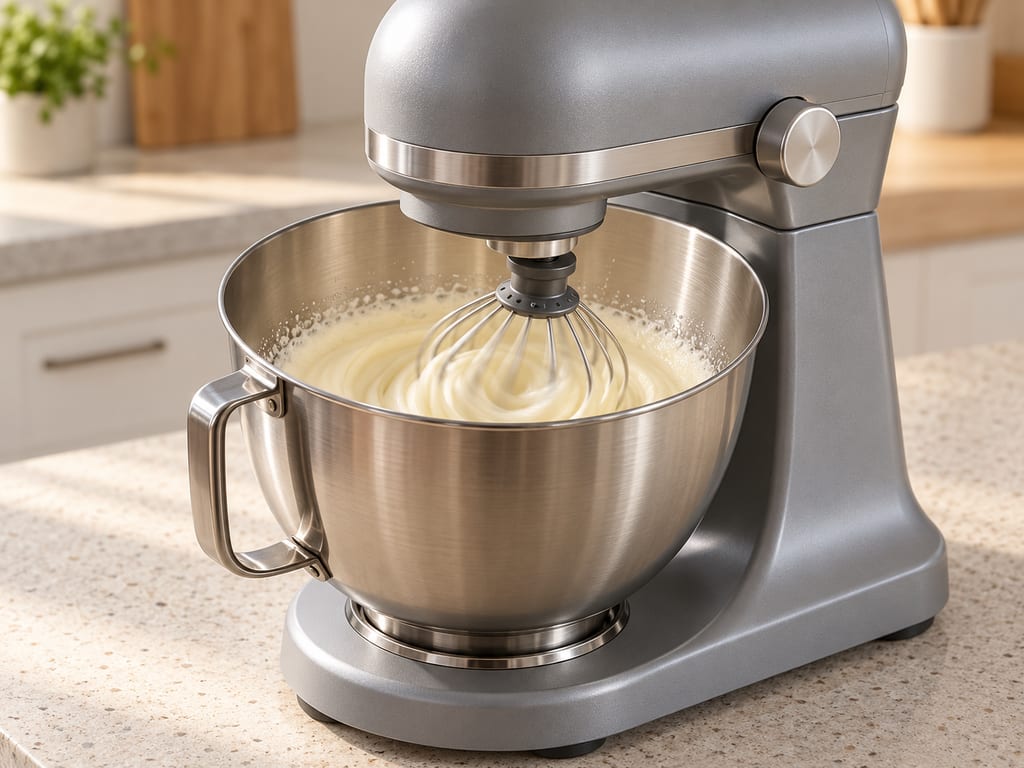
A stand mixer is a powered mixing machine built around a stationary base, a supported bowl and a driven beater or other tool. It can stir, beat, whip and knead; particular models may also accept separate accessories for other jobs.
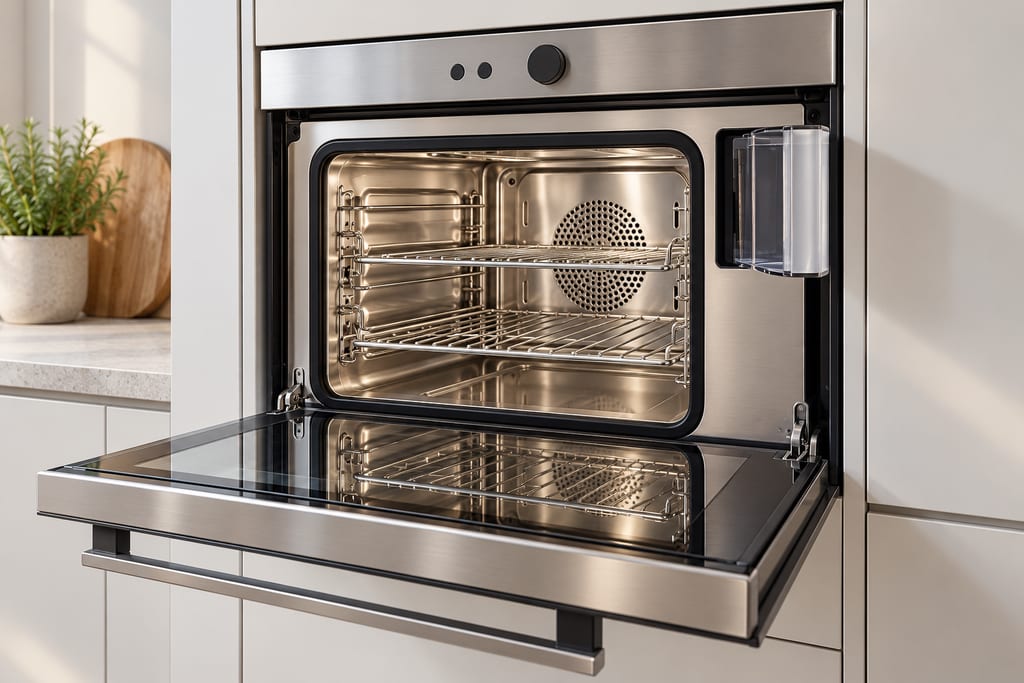
A steam oven cooks with water vapour; a combi oven pairs steam with circulating dry heat. Their modes and temperature controls differ by model, so a documented yogurt programme cannot be assumed for every oven.
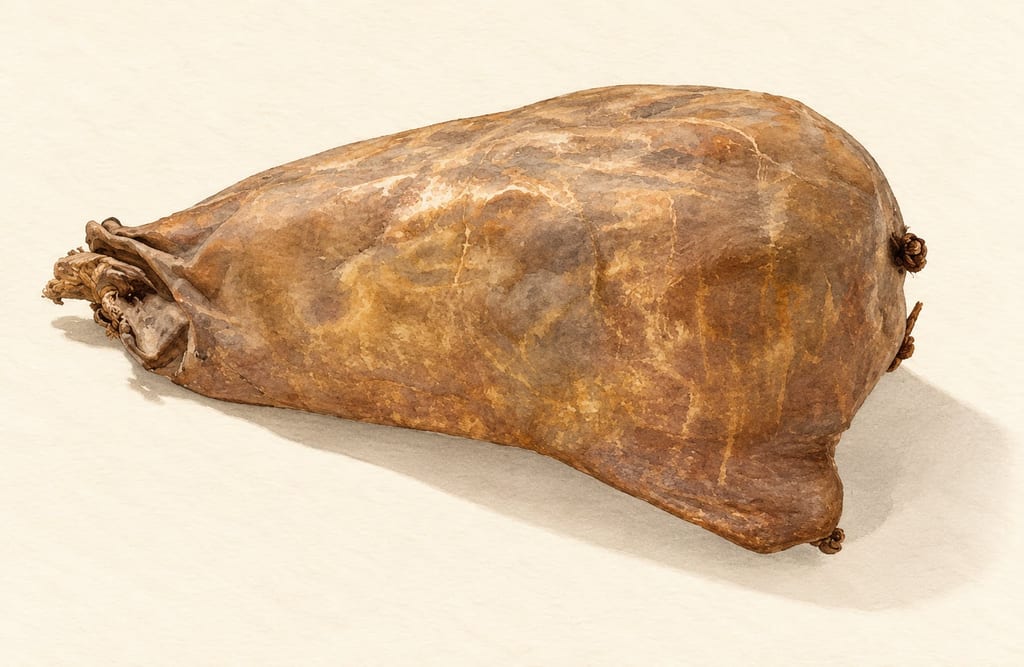
A surviving Australian Museum wallaby-skin water carrier made from a single hide, with a knotted, resin-tanned base and tied neck. Purchased in 1885; its maker, specific community and making date are not recorded.
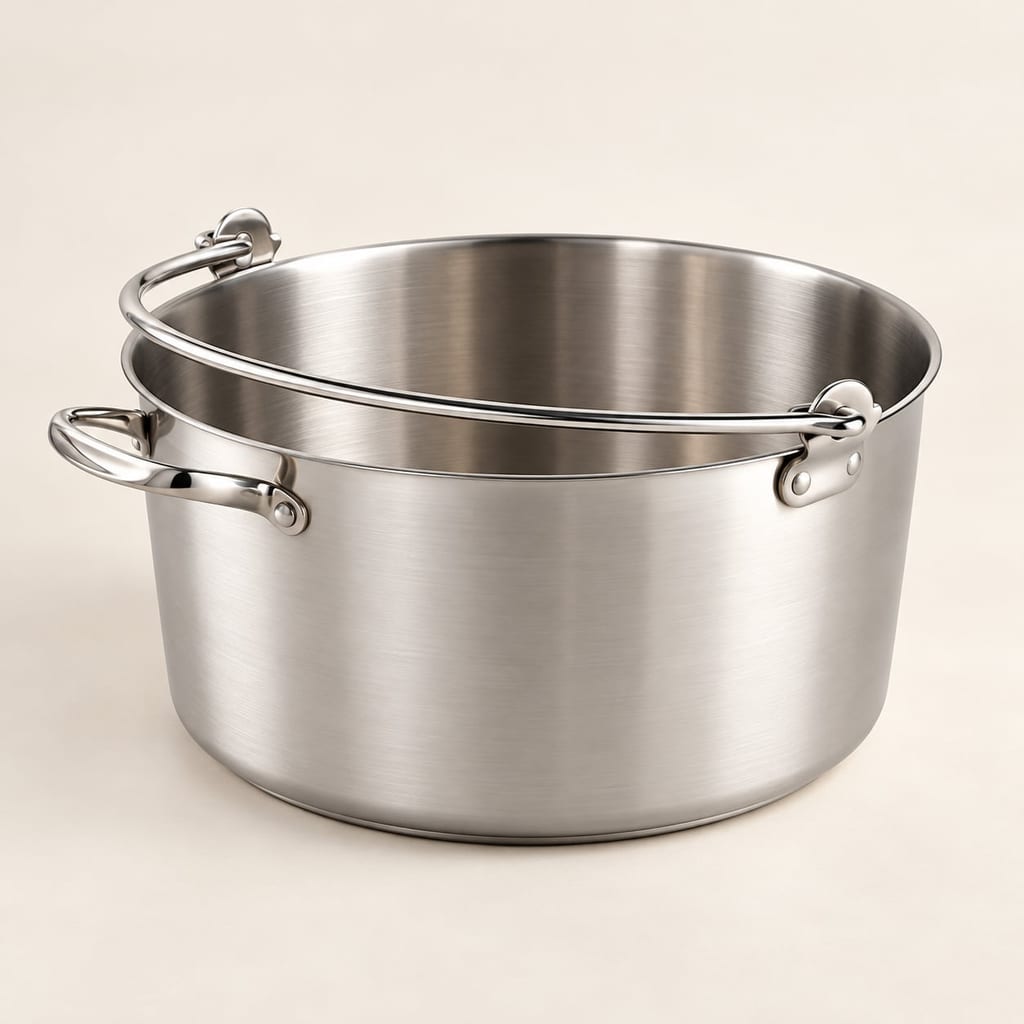
A contemporary, wide-mouthed stainless-steel pan for heating fruit mixtures into jams, marmalades, chutneys and other preserves. Its open surface supports evaporation, while base thickness, capacity and handles vary by model.

A Cap-Pelé boucanière is an Acadian herring-smoking building. The documented Willie Niles example is a one-storey wood-frame structure with a ridge smoke vent and interior bays for hanging fish-bearing cannes.

Achcharu is a family of Sri Lankan vinegar pickles made with mixed vegetables or seasonal fruit and a piquant spice dressing. This version is a quick, refrigerated, non-fermented mixed-vegetable pickle.

The acocote is a long, hollowed and dried gourd used to draw aguamiel from a mature maguey. It is a harvesting tool: the sap is transferred to a separate vessel before it ferments into pulque.

Adrak murabba preserves young ginger in sugar syrup, a sweet South Asian preparation recorded in Indian cookery and food-processing sources.

Parkia biglobosa seeds are fermented into regional West African seasonings, including nététou, iru, dawadawa and soumbala. The yellow fruit pulp is a separate food, and names and methods vary by place.

Japanese reddish-brown vinegar from sake lees matured about three years, turned to vinegar by acetic bacteria; the vinegar of Handa and Edomae sushi rice.

A refined common-wheat flour blended for a broad range of baking; its protein and behavior vary with wheat, milling and market.

The almond mushroom, Agaricus subrufescens, was cultivated in eastern North America in the 1800s, lost its market, and returned as a cultivated mushroom from Brazil, where it is grown under several names.
No community contributions have been published for this entry yet.
Sign in to contribute. Published comments and photos are free to read.
Museums Victoria CollectionsOrigin · Method · History
Coolgardie safe (article)Credited to Arthur Patrick McCormick; named after Coolgardie, Western Australia; 1890s; hessian panels cool by evaporation; households used them until refrigerators became common.
Cited in: Overview; Origin on the goldfields; How it works; Limits; Use today
Museums Victoria CollectionsCommercial example
Coolgardie Safe, Cooling ChestA commercial Trafalgar model made by W. J. Rawling in South Australia around 1915, credited to McCormick's design.
Cited in: Origin on the goldfields