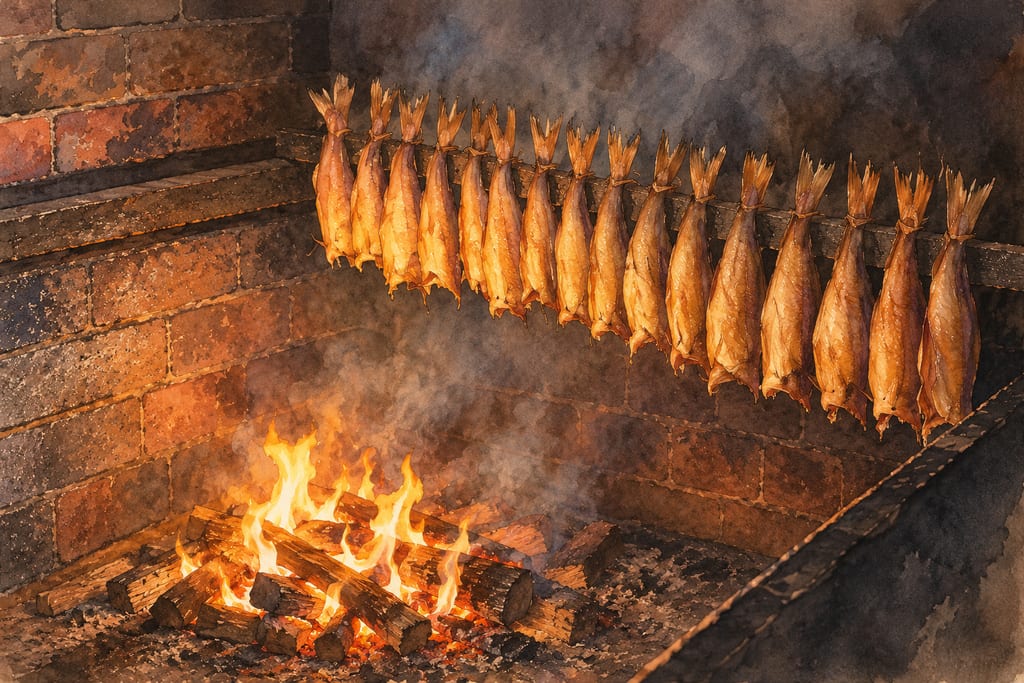
Arbroath smoking barrel
The Arbroath “barrel” is a hardwood-fired smoking pit with triangular rails and a cover. Its documented form belongs to the traditional hot-smoking of haddock around Arbroath and Auchmithie, Scotland.
 FermenteaWhere food goes to change
Built structures · Pits and cavities
saiva · saiva · Evenki meat-storage ditch
A saiva is an Evenki log-lined ditch used to hold meat containers at summer reindeer camps. Contemporary fieldwork documents its use in Buryatia and Zabaikal, but gives no standardized plan or food-safety validation.
Saiva is the Evenki term recorded for a special ditch lined with logs and used for storing meat containers. In the ethnographic account, meat could be placed in an aluminum can and buried in the ground; sometimes those cans were placed in log-lined ditches. The source does not describe a standardized building plan, fixed dimensions or a permanent cellar.
The ditches are reported at summer reindeer-herding camps and near log huts. They are part of a camp landscape rather than a freestanding above-ground store. This record uses saiva only for the specific log-lined meat-storage ditch described here, not for every underground meat pit.
Field research on contemporary nomadic Evenki foodways in the Zabaikal region and Buriatia took place from 2004 to 2012. Meat was shared among households, and warm-weather transport could require initial preservation. The saiva appears as one storage option alongside other meat-handling practices.
The reported two-to-four-week interval belongs to these specific ethnographic observations. It is not a tested shelf life, food-safety limit or present-day preservation recommendation; no temperature or sanitation records are provided.
The documented form is limited to log lining, buried cans, a summer-camp setting and proximity to log huts. No ditch depth, width, soil, drainage, cover, lining pattern or capacity is specified. No construction sequence or safe-entry procedure is documented.
These observations are contemporary, not an excavated archaeological feature. No origin date is established.
Descriptive ethnography only; the reported storage interval is not food-safety validation or a modern preservation recommendation.
No construction measurements, excavation instructions, safe-entry procedure or temperature records are supplied.
The ethnographic article locates its fieldwork in Zabaikal and Buriatia but does not identify the named camp containing any particular saiva.
The Arbroath “barrel” is a hardwood-fired smoking pit with triangular rails and a cover. Its documented form belongs to the traditional hot-smoking of haddock around Arbroath and Auchmithie, Scotland.

Crisp battered white fish in warm corn tortillas with shredded cabbage, lime and fresh salsa. This home version draws on the Ensenada style without claiming to be a definitive historic formula.

Baked milk is an Eastern European preparation of milk held at high heat for hours until it turns cream-coloured with a cooked, mildly sweet flavour, without any fermentation.
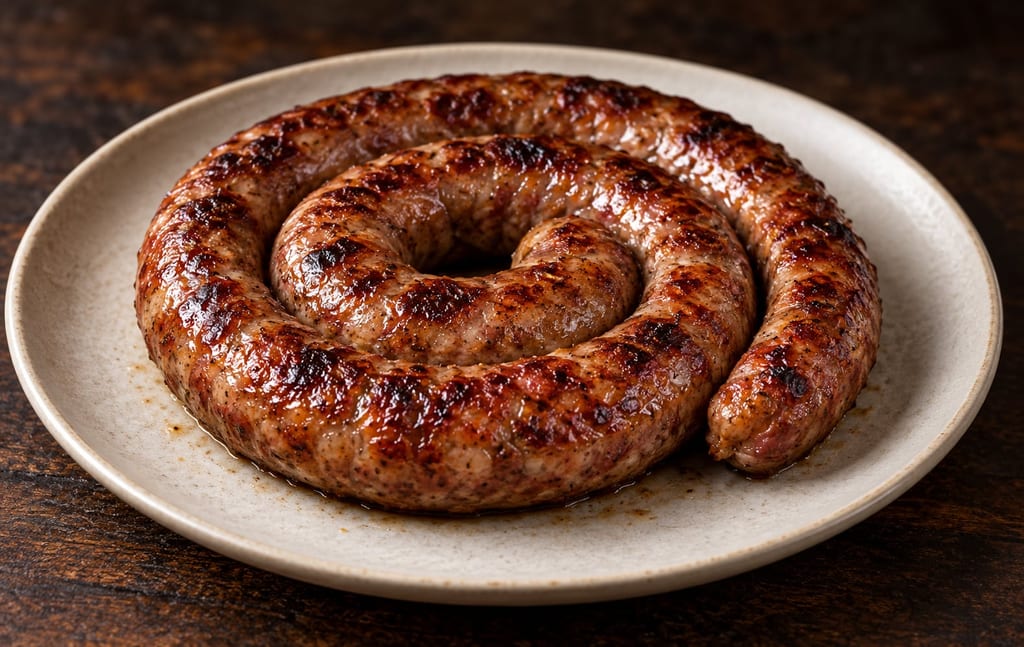
A coarse South African farmhouse sausage of beef with pork or mutton fat, defined by its coriander seasoning and cooked fresh over coals rather than preserved.
A flood-season pit store described for Omagua communities along the Amazon: manioc tubers were buried before inundation and recovered as waters receded. Its shape and lining are not recorded.
A temporary, in-place earthen oven used to cook camas with heat retained by fire-heated stones. The dimensions described here belong to one Kalispel-supervised reconstruction, not a universal form.

Chuño negro is a source-documented Andean potato-preservation practice. This entry records producer tradition; it is not a validated household process for making potentially toxic bitter potatoes safe.
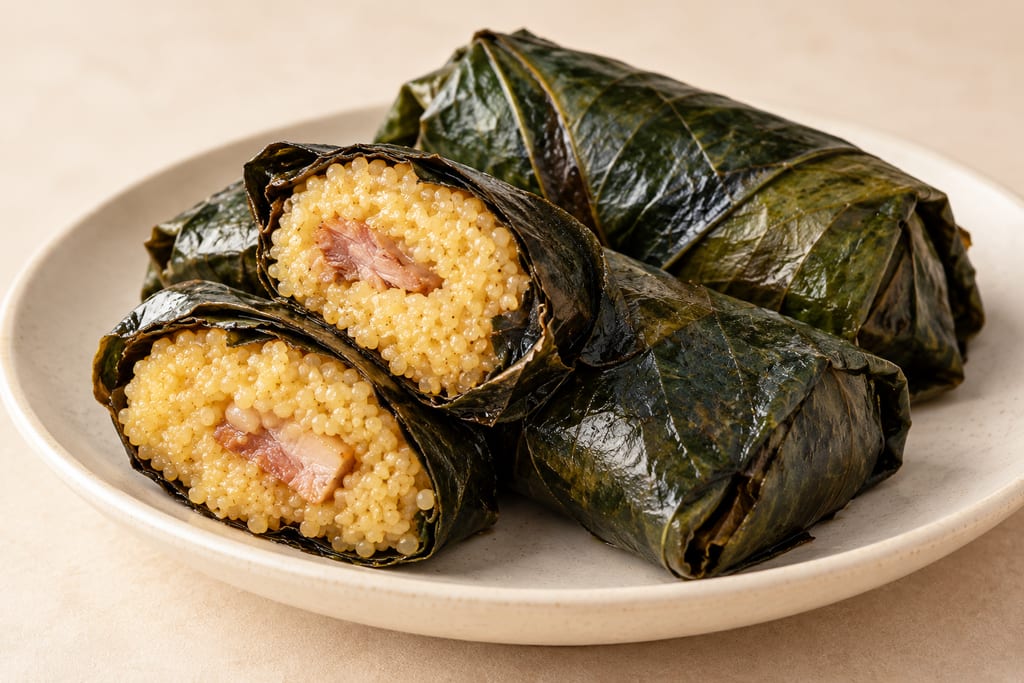
Cinavu is a Paiwan leaf-wrapped parcel built around millet or taro, meat and locally gathered leaves. It belongs to a food culture of harvest, hospitality and shared work, with village recipes differing in both filling and cooking time.

Soft, spreadable Calabrian pork sausage made with a great deal of red chilli and fatty pork, stuffed into natural casings, sometimes smoked and matured while staying soft.

A way to add independent temperature logging to an existing food dehydrator without changing its built-in controls or protections. It is a monitoring method, not a rewiring plan.

Pleurotus cystidiosus is the abalone mushroom, a cultivated oyster-type fungus with dark brown caps that grows more slowly and is more demanding than other Pleurotus species.

A dark, balanced vinegar from Emilia-Romagna made by combining cooked or concentrated grape must with wine vinegar, then acetifying and refining it in wood under a protected specification.

A living dairy inoculum that starts controlled cream fermentation, developing acidity and aroma before sour cream or cultured butter is finished.

A small electric incubator holds jars at a selected temperature for yogurt and other documented warm food preparations. Controls, capacity and vessel arrangement vary by model.

Adygean salt is a seasoned table salt associated with Adygea and the wider North Caucasian culinary tradition. Salt is blended with garlic and a variable selection of herbs and spices; the exact mix depends on the named style and maker.

The African Caesar-group mushroom, Amanita masasiensis, is a wild ectomycorrhizal species of central and southern African woodlands, eaten locally. The genus contains deadly poisonous species, so identification needs care.
No community contributions have been published for this entry yet.
Sign in to contribute. Published comments and photos are free to read.
Etnografia, 2022, issue 1 (15), pp. 28–55Ethnographic description · Structure · Geography · Storage limits
Good to Eat and Good to Dream About: What Do Nomadic Evenki Eat in Taiga?Describes aluminum cans of meat buried in the ground, sometimes in special ditches lined with logs, identified as Ev. saiva.
Places such ditches in summer reindeer herders' camps near log huts and reports a 2–4 week storage interval for the observed practice.
The article is based on fieldwork among contemporary nomadic Evenki communities in the Zabaikal Region and Buriatia during 2004–2012; it does not date the origin of the structure or give dimensions.
Cited in: A ground store in a reindeer camp; What the field account records; Limits of the record