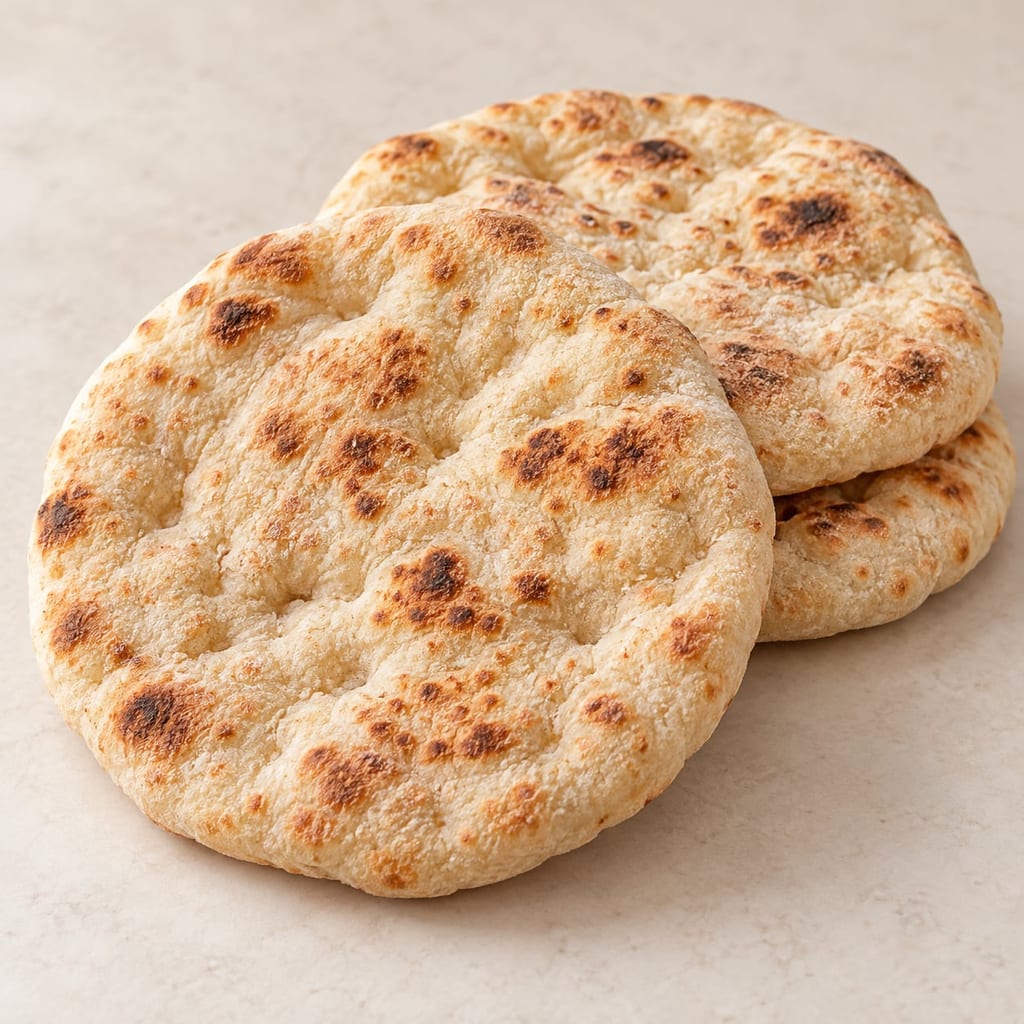
Taboon bread (Palestinian home method)
This Palestinian taboon method makes six small wheat flatbreads with a sticky yeast dough, fingertip dimples and a very hot domestic oven surface.
 FermenteaWhere food goes to change
Built structures · clay-bread-ovens
ṭābūn · tabun · ṭābūn
A Palestinian fixed clay bread oven, broad and low rather than tall, with a closeable top opening and a heated floor; sources distinguish pebble-floor baking from wall-baking in the tannur.
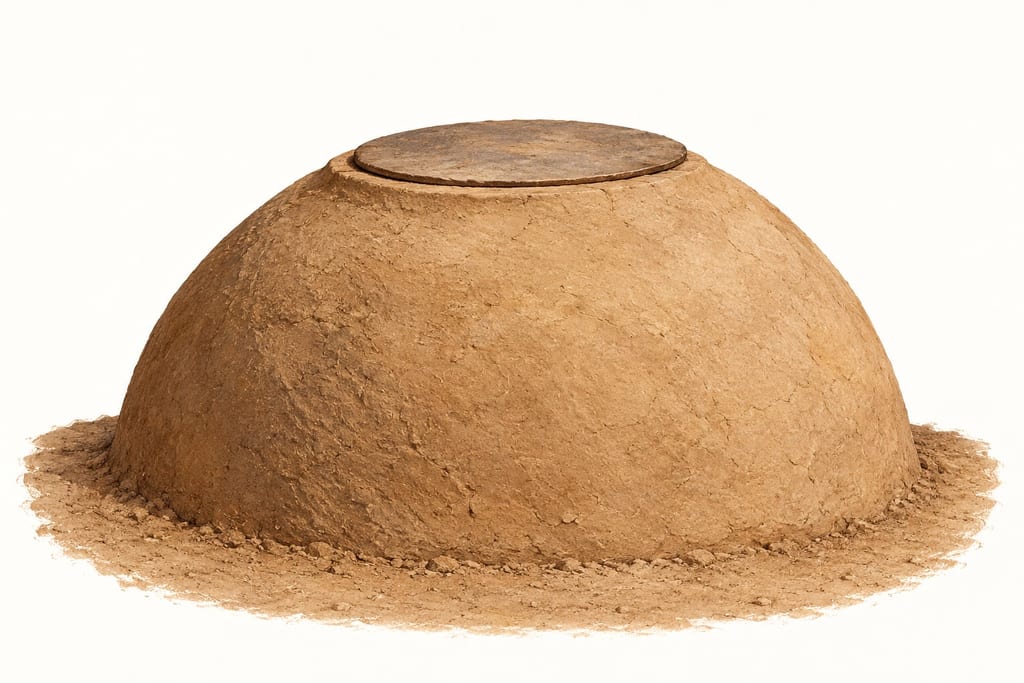
The tabun described by Bethlehem University is a fixed oven made from unbaked clay. Small stones called ruddef cover the bottom inside, while dry manure is spread over the outer surface. The upper opening closes with an iron lid or a cover with a wooden handle. This broad, low enclosure is not simply a tall tannur under a different name.
Dalman’s 1935 drawing distinguishes Western and Eastern Palestinian forms. The Western diagram shows pebbles across the floor; the Eastern diagram shows a different interior floor arrangement. That variation matters: the images do not support one universal cross-section or exact size, and this page does not treat them as interchangeable.
The 2022 Mediterranean flatbread review characterizes the tabun as igloo-shaped, wider than tall, and of Palestinian origin. It says that bread is placed on the oven floor, usually over hot pebbles, near embers. It contrasts this with the tannur, where dough is pressed onto the oven’s inner wall.
Bethlehem University lists wood, dried animal manure, and pressed olive residues among the materials used as fuel around the clay shell. The source’s description of fuel surrounding the oven and its closeable opening should not be turned into a measured firing plan: the inspected records give no standard dimensions, clay mixture, temperature, clearance, or construction sequence validated for modern use.
The documentation is Palestinian, while the 2022 review also records tabun use in Jordan and links its presence there to Palestinian communities. That is evidence of use across two present-day countries, not proof that every Jordanian oven has the same construction or that Jordan is the oven’s point of origin.
The 1935 Dalman illustration is included as a historical reference, not as a photograph or an archaeological excavation record. It is attributed on Wikimedia Commons to Gustaf Dalman and marked public domain, with the Commons page noting that some jurisdictions may apply longer copyright terms.
Dalman’s 1935 illustration labels Western and Eastern Palestinian tabun forms. The sources inspected do not establish the oven’s first appearance or a precise date of origin.
A build is made where it stands: moving it means building it again.
The descriptions include wood, dried manure and olive-press residues as fuel around a clay oven.
Hazard sourceTreat the historical descriptions as context, not a construction plan; the sources do not establish modern clearances, structural loads or validated dimensions.
Control sourceNo measurements or modern fire-clearance guidance are supplied; this page does not specify a safe build.
Bethlehem University describes the Palestinian tabun, and Dalman’s 1935 illustration labels Western and Eastern Palestinian forms; not a claim that every local design is identical.
The reviewed flatbread overview reports tabun use in Jordan, including through Palestinian diaspora; not an origin claim.
This Palestinian taboon method makes six small wheat flatbreads with a sticky yeast dough, fingertip dimples and a very hot domestic oven surface.
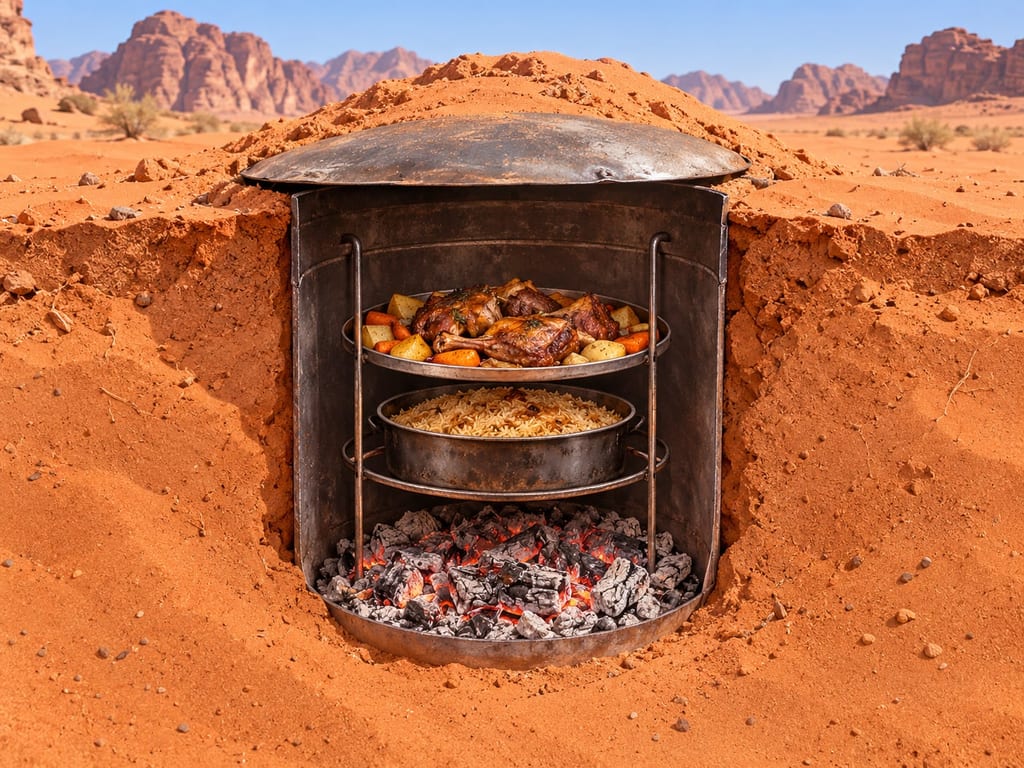
The zarb is a ground-built oven used by Bedouin cooks in Jordan. A fire heats the bottom of a broad pit; food is then lowered on a rack, covered and slow-cooked with the surrounding earth helping retain heat.
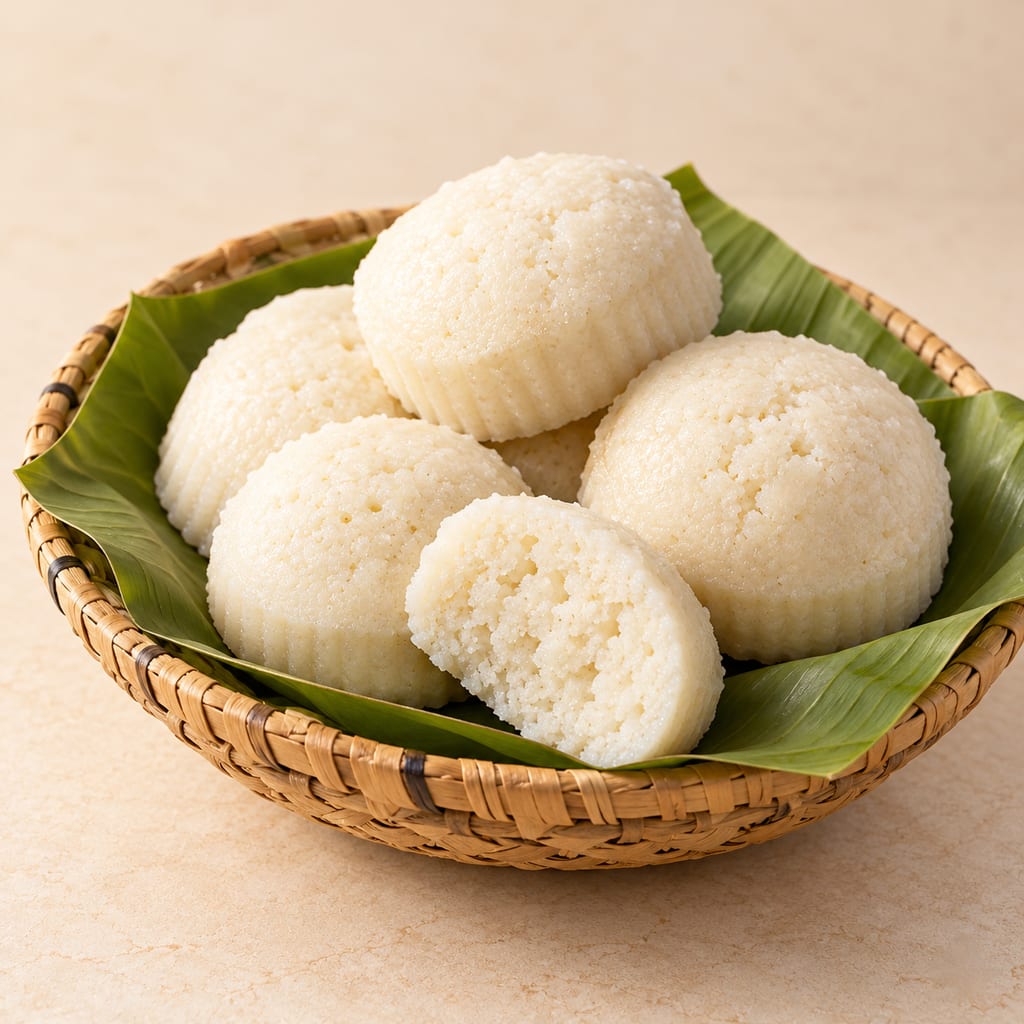
Soft, lightly tangy steamed cereal bread documented across Benin and Togo. This page gives one measured rice-flour research method; maize-based Ablo and mixed-grain versions remain distinct traditions.
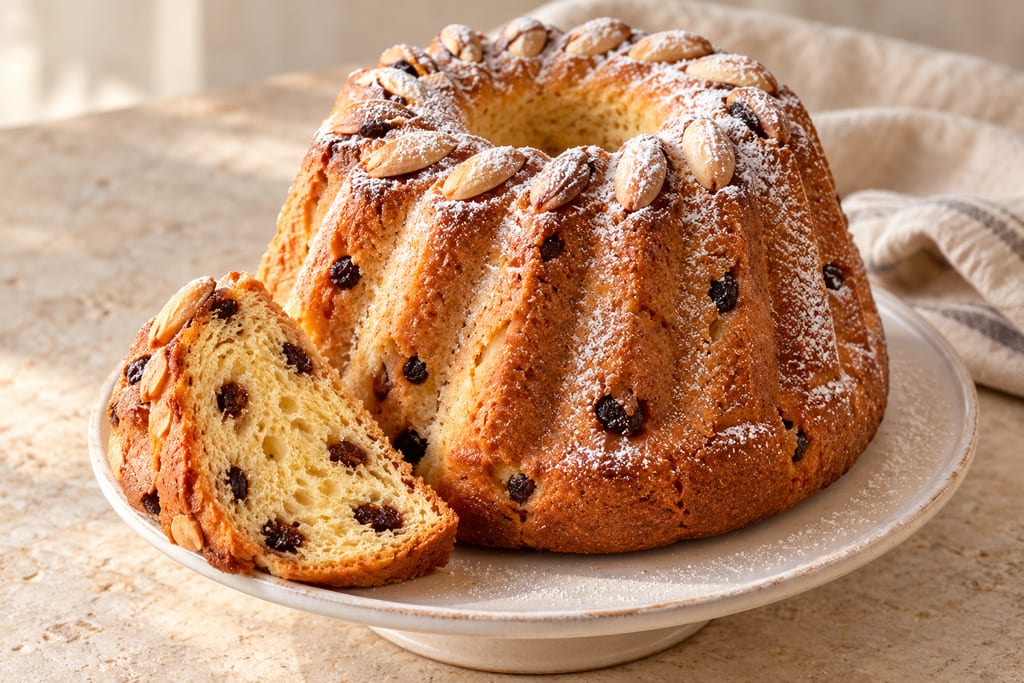
An enriched Alsatian yeast ring with raisins and almonds, kneaded with butter, proofed in a fluted mould and baked until browned.

Anpan is a soft wheat bun filled with sweet red-bean paste and finished with egg wash and black sesame. This dough rises with commercial instant yeast.
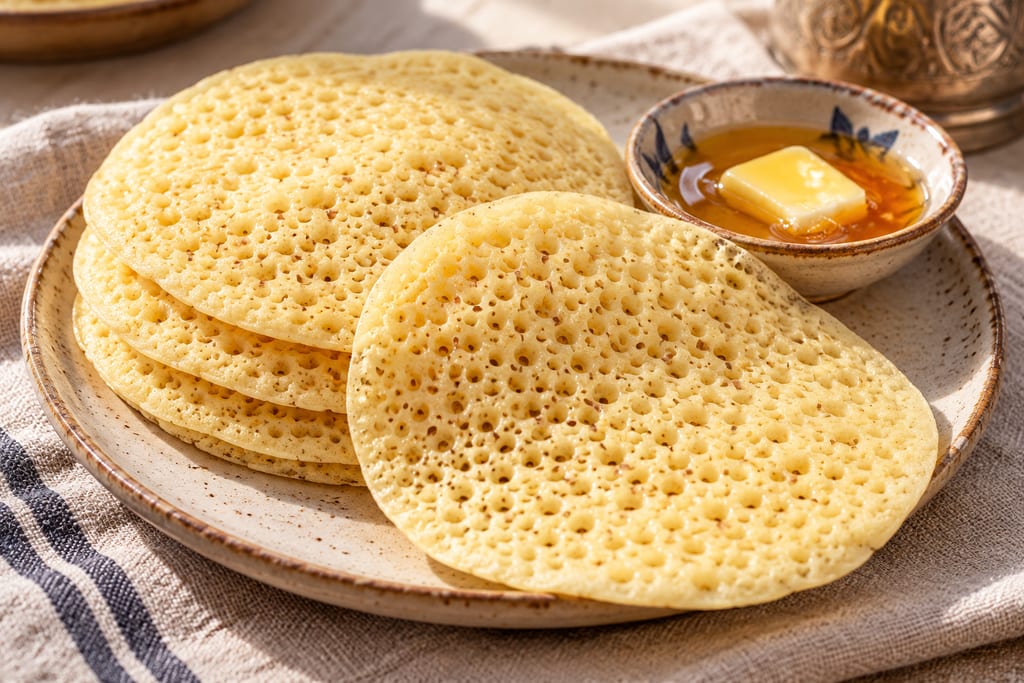
Moroccan semolina pancakes made from a thin yeast batter, rested until foamy and cooked on one side until the surface sets with a honeycomb of holes. This source-specific batch makes sixteen 5-inch pancakes.
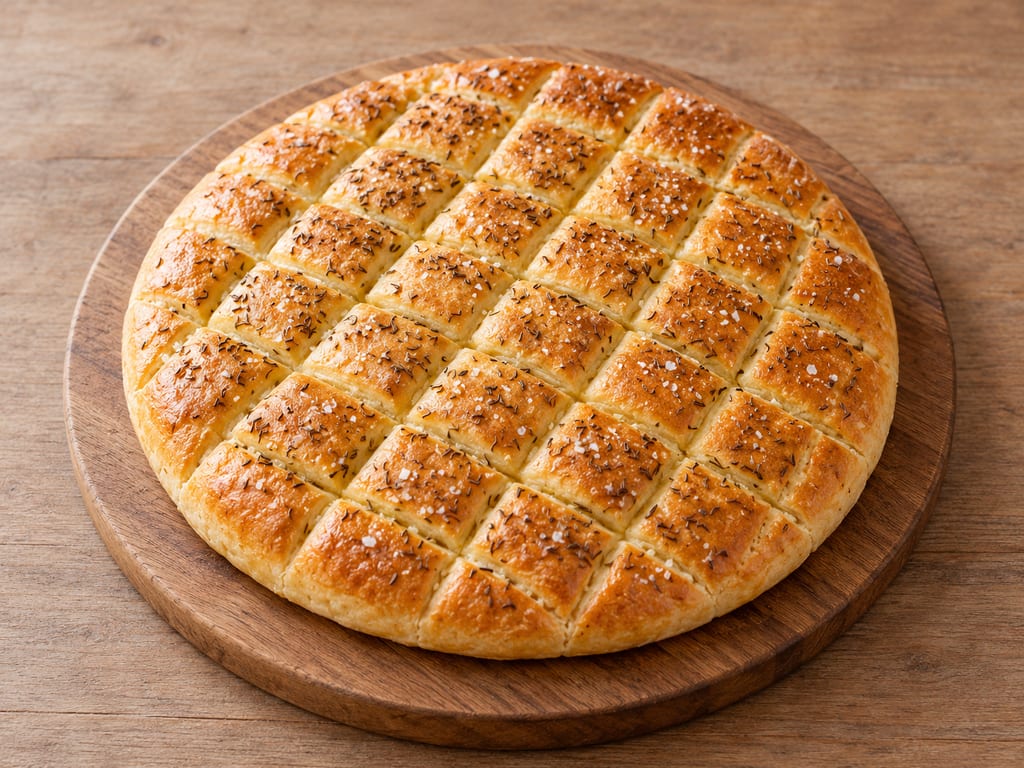
A round Slovenian flatbread scored in a grid and topped with caraway and coarse salt.
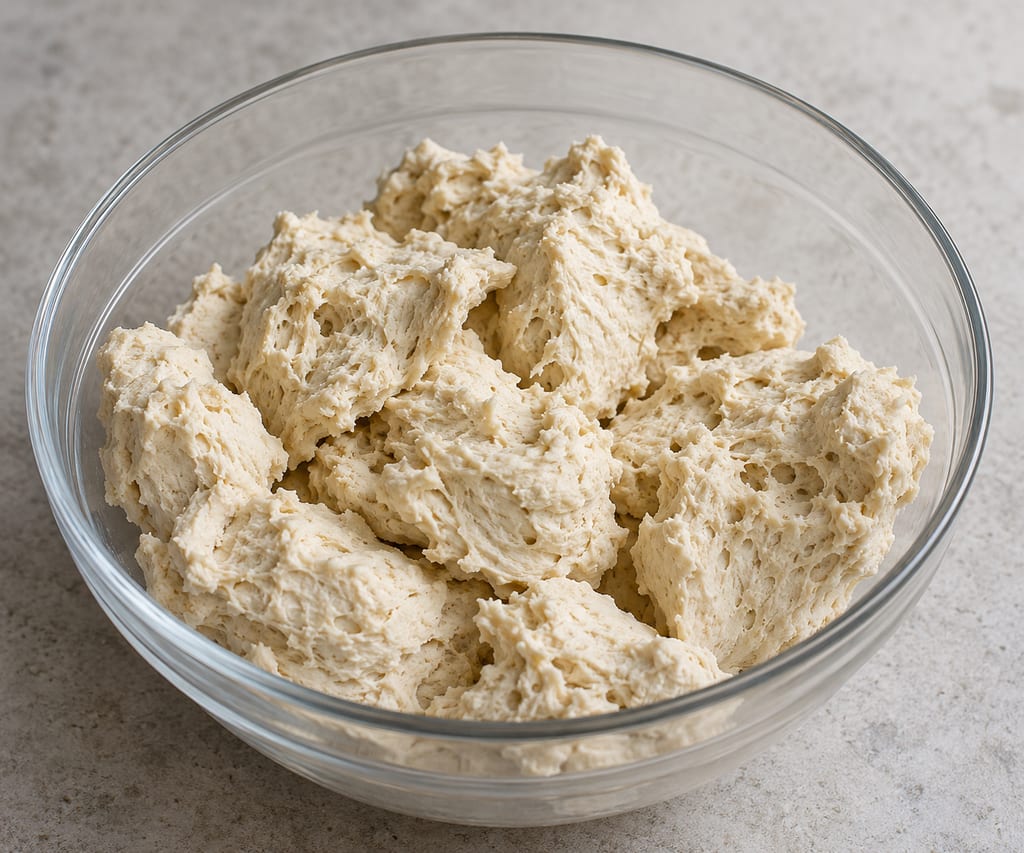
Biga is an Italian bread preferment of flour, water and a little yeast, usually a stiff unsalted mass of about 45 per cent water, fermented ahead and then mixed into the final dough.
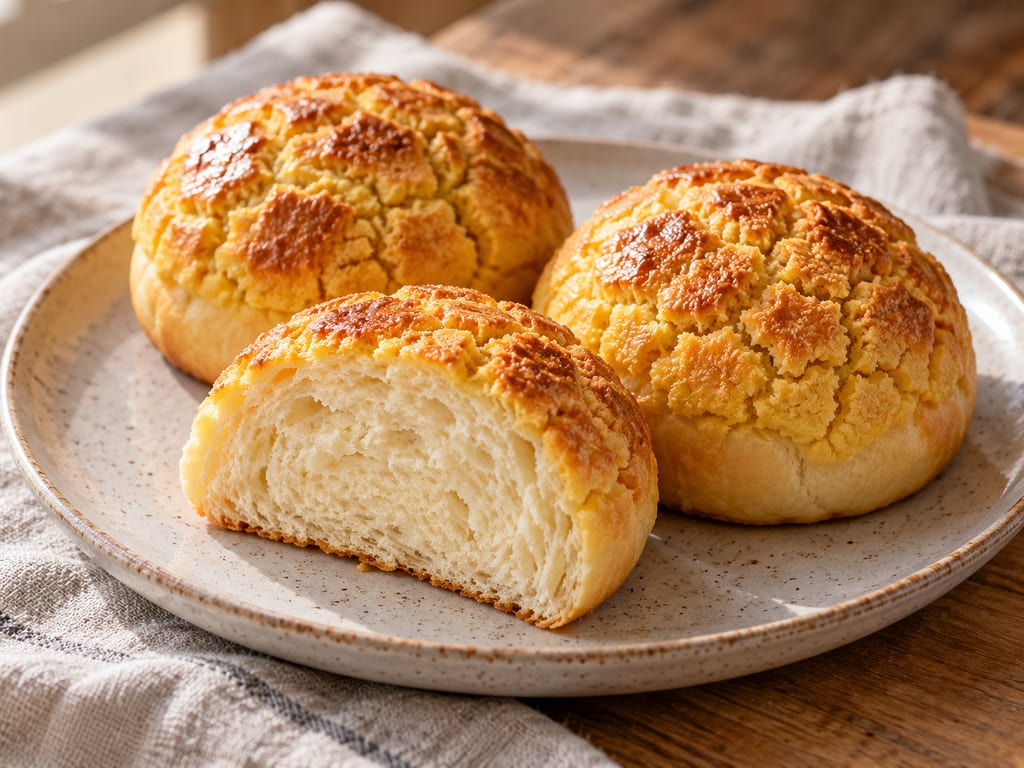
Hong Kong-style pineapple buns have soft yeast dough beneath a crisp, sweet pastry topping.
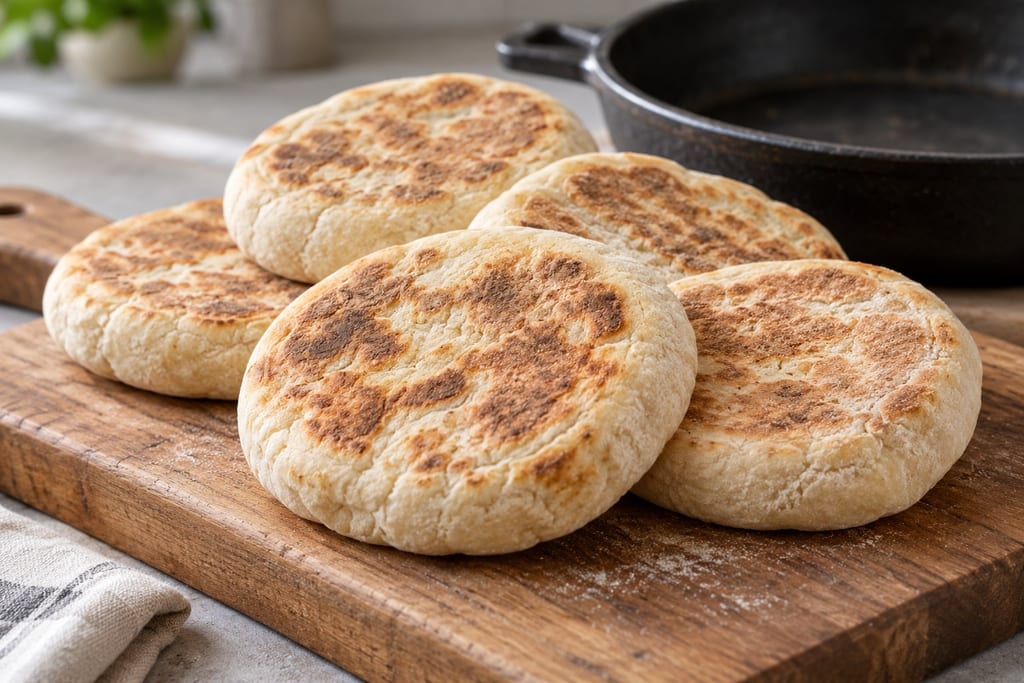
Sweet-potato wheat breads with fresh yeast, browned in a pan and finished in the oven. This is the bread component of Teleculinária's scrambled-egg dish.

Soft, spreadable Calabrian pork sausage made with a great deal of red chilli and fatty pork, stuffed into natural casings, sometimes smoked and matured while staying soft.

A way to add independent temperature logging to an existing food dehydrator without changing its built-in controls or protections. It is a monitoring method, not a rewiring plan.

Pleurotus cystidiosus is the abalone mushroom, a cultivated oyster-type fungus with dark brown caps that grows more slowly and is more demanding than other Pleurotus species.

A dark, balanced vinegar from Emilia-Romagna made by combining cooked or concentrated grape must with wine vinegar, then acetifying and refining it in wood under a protected specification.

A living dairy inoculum that starts controlled cream fermentation, developing acidity and aroma before sour cream or cultured butter is finished.

A small electric incubator holds jars at a selected temperature for yogurt and other documented warm food preparations. Controls, capacity and vessel arrangement vary by model.

Adygean salt is a seasoned table salt associated with Adygea and the wider North Caucasian culinary tradition. Salt is blended with garlic and a variable selection of herbs and spices; the exact mix depends on the named style and maker.

The African Caesar-group mushroom, Amanita masasiensis, is a wild ectomycorrhizal species of central and southern African woodlands, eaten locally. The genus contains deadly poisonous species, so identification needs care.
No community contributions have been published for this entry yet.
Sign in to contribute. Published comments and photos are free to read.
Bethlehem UniversityForm · Materials · Fuel · Use
Traditional Palestinian Tabun “Oven”Describes the tabun as an unbaked-clay oven; its exterior is covered with dry manure, its interior bottom with small stones called ruddef, and the source lists wood, dried dung and olive-press residues as fuels applied around it.
Describes a closeable upper opening and bread/cooking use.
Cited in: Form and regional distinctions; Fuel, use, and geographic record
Foods (MDPI) via PubMed CentralForm · Use · Comparison · Geography
The Large and Diverse Family of Mediterranean Flat Breads: A DatabaseDescribes the Palestinian-origin tabun as a low igloo-shaped clay oven, wider than tall, with an upper opening and a lid.
Says loaves are placed on the floor near embers, usually on hot pebbles, and distinguishes tabun floor baking from tannur wall baking.
Reports tabun presence in Jordan, including through Palestinian refugees.
Cited in: Form and regional distinctions; Fuel, use, and geographic record
Wikimedia Commons, from Arbeit und Sitte Palästina, vol. 4Historical illustration · Form · Rights
Tabun of Palestine – 1935The illustration labels Western and Eastern Palestinian tabun forms; the Western form is shown with small stones at the floor, while the eastern diagram shows a different floor arrangement.
The Commons page attributes the work to Gustaf Dalman and marks the faithful reproduction of the two-dimensional public-domain work Public Domain Mark 1.0, with jurisdictional caveats.
Cited in: Form and regional distinctions; Fuel, use, and geographic record