Alutiiq clay-lined subfloor pit
A large clay-lined depression built beneath some Alutiiq house floors in the Kodiak region, documented in Koniag contexts for food storage and possibly fermentation.
 FermenteaWhere food goes to change
Built structures · Smoking ovens, kilns and cabinets
A plywood smoking chamber fed from a separate firebox made of a 55-gallon drum, designed in 1960 at a Pascagoula, Mississippi, fisheries laboratory for smoking mullet.
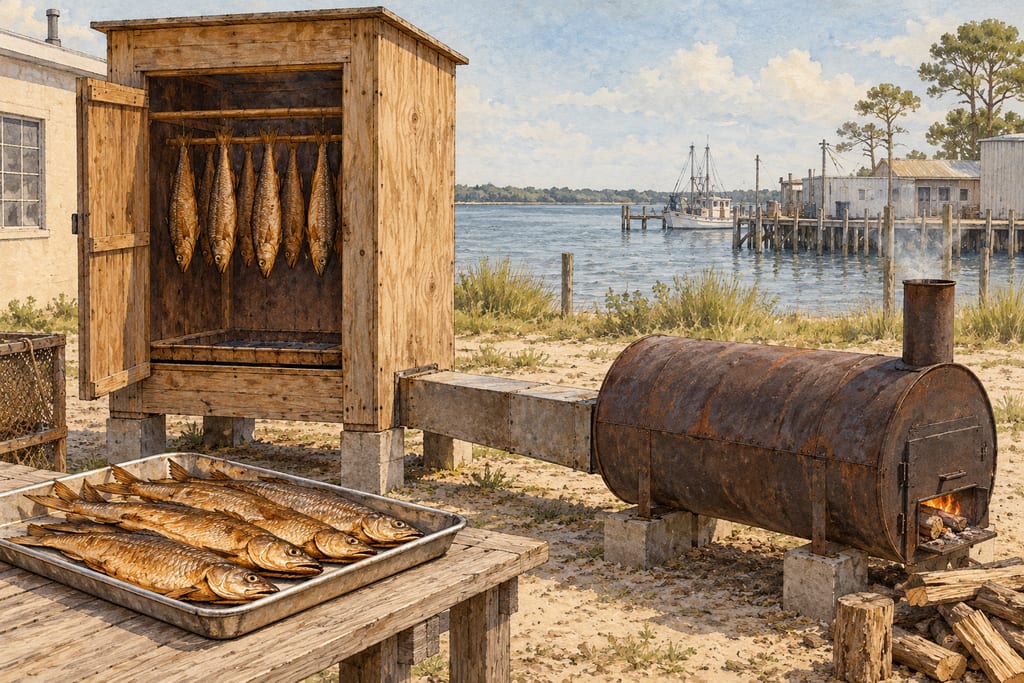
The Waters-Bond smoker separates the fire from the food. A 55-gallon drum serves as the firebox and sends its smoke through galvanised stovepipe into the bottom of a plywood chamber, which measures 4 by 4 by 4 feet. The fish hang inside the chamber on hooks. The design was made to keep the fire outside the chamber, so the heat and the smoke can be managed apart from the food.
The article describes the smoker as a mullet design from the Bureau of Commercial Fisheries laboratory at Pascagoula.
The article lists three sheets of quarter-inch exterior plywood, 38 nominal 2 by 2 by 4 foot framing pieces, the drum with its 8 by 10 inch door and 6 inch outlet, eight feet of galvanised stovepipe with an elbow, four concrete blocks, sixteen square feet of half-inch mesh, hinges, hooks, sealer and stainless-wire hooks. Its construction took 16 hours of unskilled labour with common hand tools.
The article's list of parts is the only material schedule the research found. It has no cut list, no joint details and no drawing of the flue connection, so a builder would need the original figures before copying the frame. The tools the article names for the drum and pipe cuts are a cold chisel and a hand hacksaw.
The article is a historical trial record. It does not establish a current material approval, a fire clearance for a backyard, or a household batch size. The trial load was large, and the article gives no safe scale-down. Its statements about fire hazard and temperature control are the designers' reasoning, not verified engineering.
The smoker is recorded here as a documented design. Any use for food needs a current fish-safety process, reviewed materials and fire design, and a validated batch, none of which the source provides.
M. E. Waters and D. J. Bond published the design in the Commercial Fisheries Review in August 1960. It was built for a trial of smoked mullet, with 240 fish weighing about 150 pounds. The article does not place the design in any earlier tradition.
A build is made where it stands: moving it means building it again.
The article says the separate firebox reduces fire hazard and helps control temperature. That is the design's rationale, and it is not checked against modern fire codes or current materials approval.
The article is from the US Bureau of Commercial Fisheries laboratory in Pascagoula. It does not describe the smoker in use anywhere else.
A large clay-lined depression built beneath some Alutiiq house floors in the Kodiak region, documented in Koniag contexts for food storage and possibly fermentation.
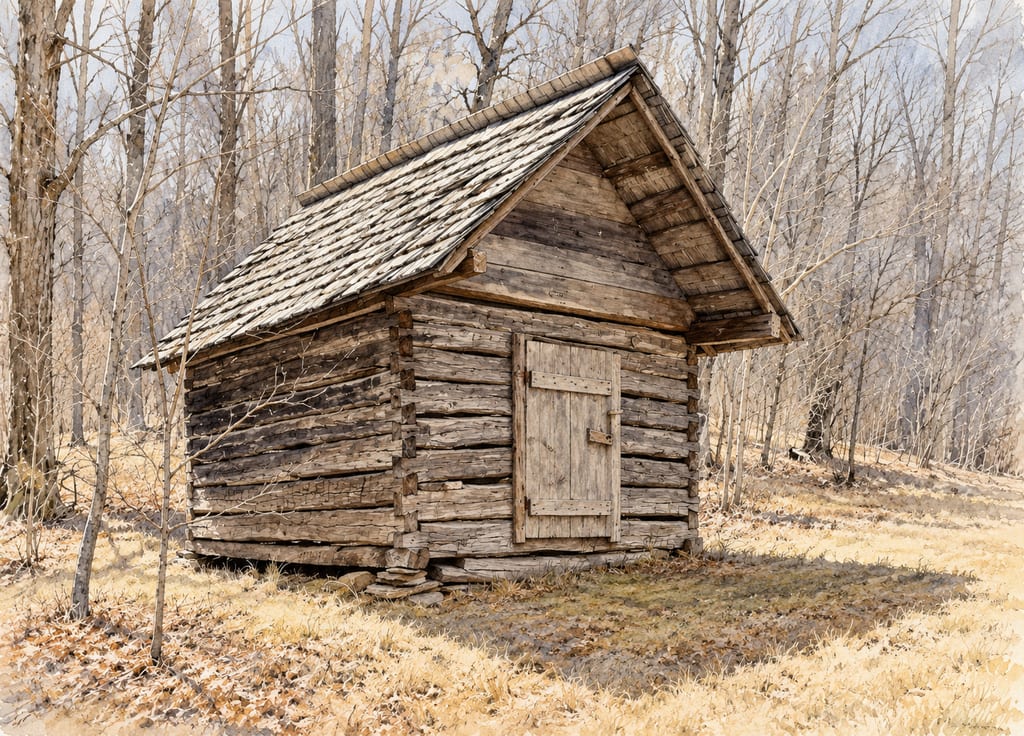
A source-based account of Appalachian meat-curing outbuildings, centered on the Henry Whitehead Place smokehouse at Cades Cove, Tennessee. Regional practice and this one building are kept distinct.
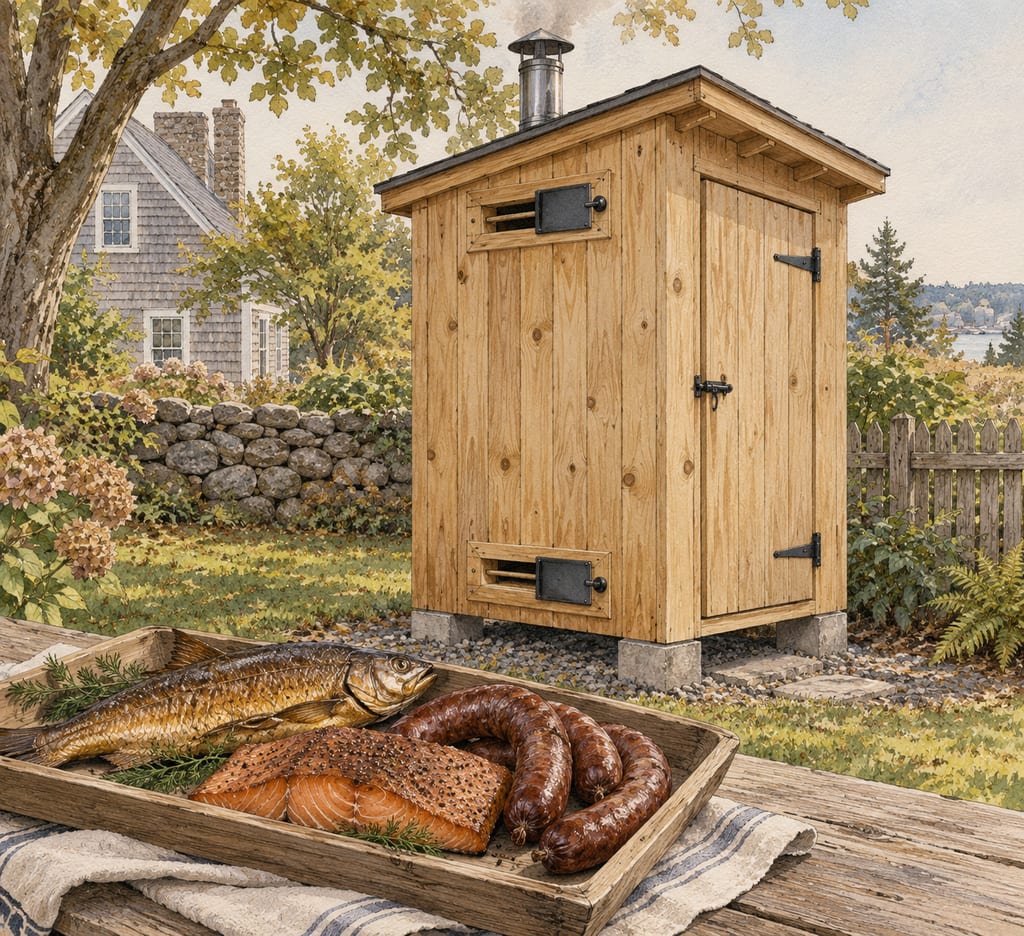
A wood-framed backyard smokehouse built from pine tongue-and-groove boards, with a sloped roof, vent dampers and a door, set out in a Connecticut Extension guide for smoking fish, pork, turkey, jerky and sausage.
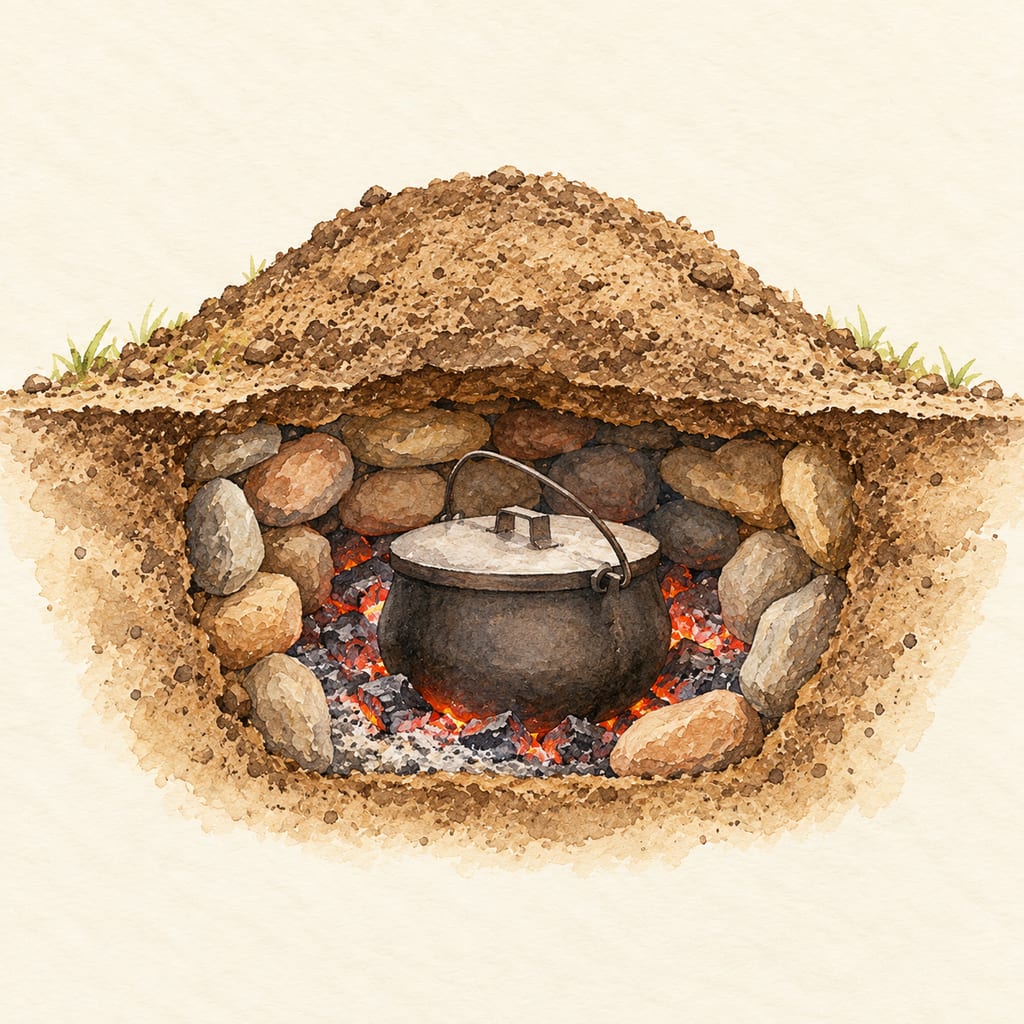
A Maine bean hole is a fixed, stone-lined pit that holds a covered iron pot among coals beneath earth. Logging-camp testimony and present-day demonstrations document related local practices.
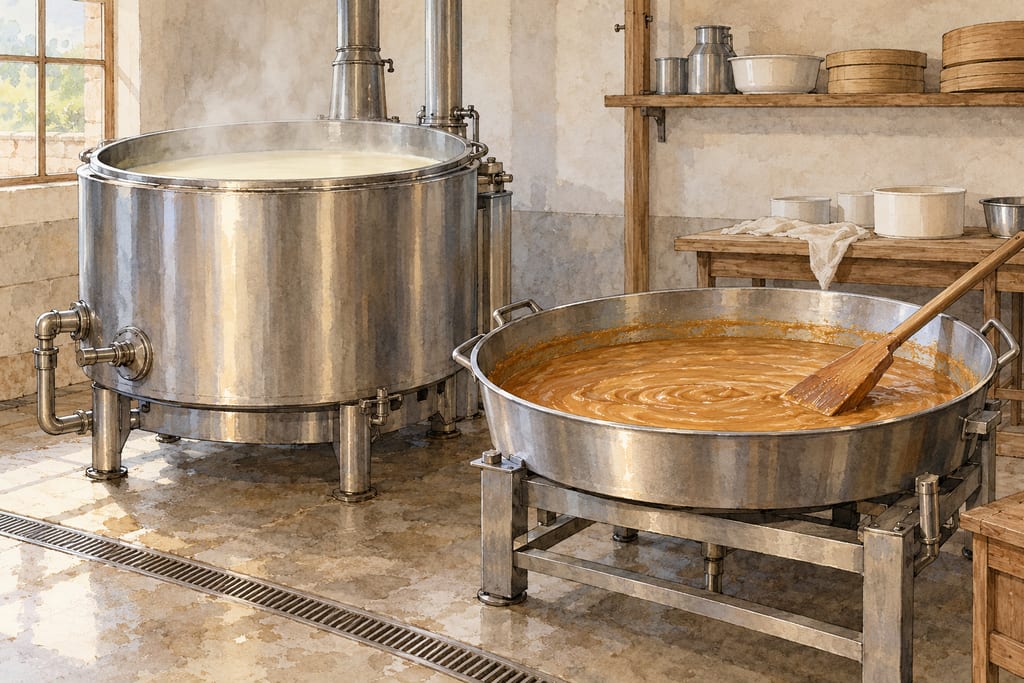
The kettle heats and reduces a large volume of thin liquid such as whey; before it nears the brewer's minimum fill the batch moves to a wide pan for the thick, stirred finish.
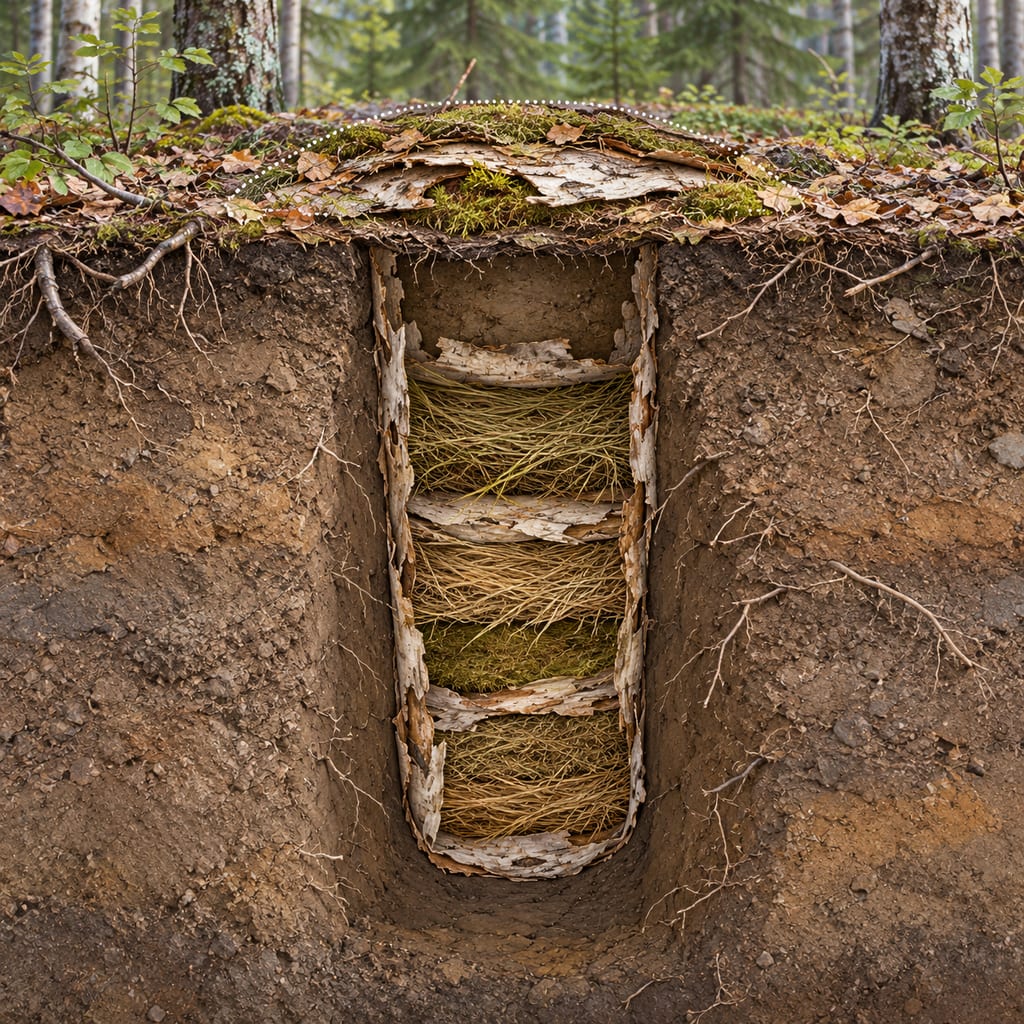
A Dene cache pit at Upper Cook Inlet, Alaska, initially dated to around 1,000 years ago. JBER documents a below-ground feature lined with birch bark and grasses; exact contents and construction details remain under study.
CDC guidance depicts fish heads in a grass-lined hole in the ground and describes it as a traditional Alaska Native food-preparation method; it names no specific Nation or community.
George Washington’s Mount Vernon ice house stored winter-cut Potomac ice in a hillside dry well for use in warmer months. The official description and 1798 estate inventory give distinct details of its form.

A Cap-Pelé boucanière is an Acadian herring-smoking building. The documented Willie Niles example is a one-storey wood-frame structure with a ridge smoke vent and interior bays for hanging fish-bearing cannes.

Achcharu is a family of Sri Lankan vinegar pickles made with mixed vegetables or seasonal fruit and a piquant spice dressing. This version is a quick, refrigerated, non-fermented mixed-vegetable pickle.

The acocote is a long, hollowed and dried gourd used to draw aguamiel from a mature maguey. It is a harvesting tool: the sap is transferred to a separate vessel before it ferments into pulque.

Adrak murabba preserves young ginger in sugar syrup, a sweet South Asian preparation recorded in Indian cookery and food-processing sources.

Parkia biglobosa seeds are fermented into regional West African seasonings, including nététou, iru, dawadawa and soumbala. The yellow fruit pulp is a separate food, and names and methods vary by place.

Japanese reddish-brown vinegar from sake lees matured about three years, turned to vinegar by acetic bacteria; the vinegar of Handa and Edomae sushi rice.

A refined common-wheat flour blended for a broad range of baking; its protein and behavior vary with wheat, milling and market.

The almond mushroom, Agaricus subrufescens, was cultivated in eastern North America in the 1800s, lost its market, and returned as a cultivated mushroom from Brazil, where it is grown under several names.
No community contributions have been published for this entry yet.
Sign in to contribute. Published comments and photos are free to read.
US Bureau of Commercial Fisheries, Commercial Fisheries ReviewEquipment · Method · History
A remote-firebox smoker for mullet (Commercial Fisheries Review, vol. 22, no. 8)The smoker is a 4 × 4 × 4 ft plywood chamber fed from a 55-gallon drum firebox through 6 inch galvanised stovepipe.
The parts list gives three sheets of quarter-inch exterior plywood, 38 nominal 2 × 2 × 4 ft pieces, 16 square feet of half-inch mesh, and four concrete blocks.
Construction took 16 hours of unskilled labour with common hand tools; the trial batch was about 150 pounds of mullet.
Cited in: A remote firebox; The parts and the build; What the design cannot show