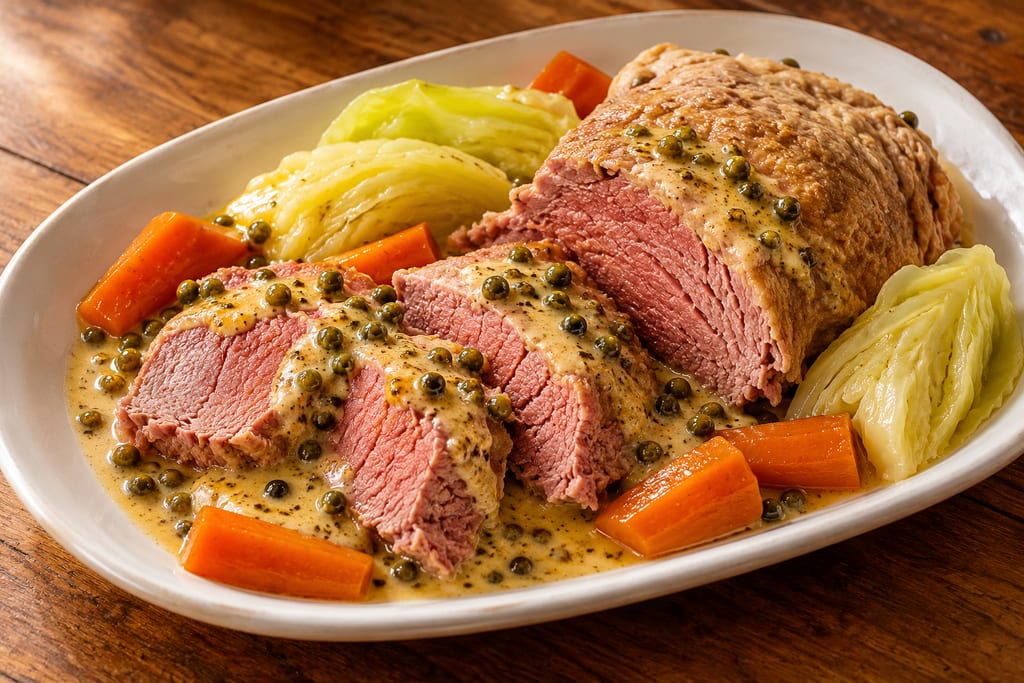
Salt beef with green peppercorn and mustard sauce
A Karoo-style festive dish of already cured salt beef simmered with vegetables and aromatics, served with a cream sauce of brined green peppercorns and wholegrain mustard.
 FermenteaWhere food goes to change
Spices and aromatics
Bay leaf is the dried leaf of the bay laurel, Laurus nobilis. It goes whole into long-cooked dishes and hot drinks, and is taken out before serving.
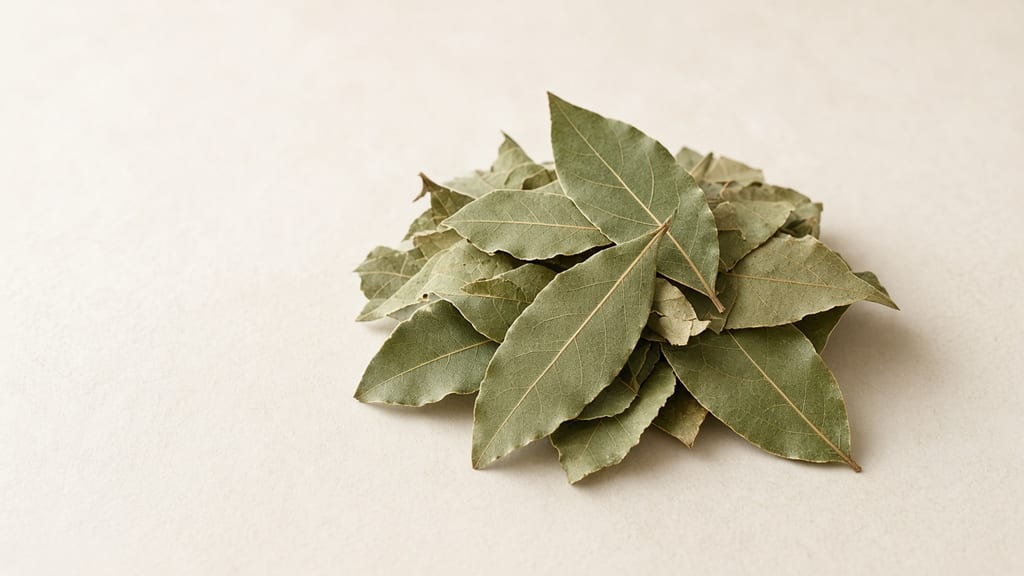
Bay leaf comes from Laurus nobilis, an evergreen tree or shrub in the laurel family, Lauraceae. It is native to the Mediterranean region and is grown widely elsewhere. The leaves are glossy, dark green and leathery. They are 3 to 4 inches long, about 8–10 cm, lance-shaped, with a strong midrib and wavy, finely toothed edges.
The plants are dioecious, with male and female flowers on separate trees. Female trees bear small purplish-black berries, each with one seed. Wisconsin Horticulture warns that other trees are also called bay. The leaves and twigs of the bay rum tree, Pimenta racemosa, are distilled for perfumery and bay rum, an aftershave or hair tonic that is not a beverage. Laurus canariensis, from the Canary Islands and Madeira, has longer, broader and less aromatic leaves.
Leaves can be picked through the growing season as needed. Illinois Extension says the larger, older leaves have the strongest flavour. Wisconsin Horticulture says that leaves picked in mid summer give the most flavour.
The sources disagree about fresh leaves. Wisconsin Horticulture says mature leaves can be used fresh, but that drying concentrates the oils. A review chapter by Batool and colleagues says fresh bay leaves taste bitter and pungent, and should be dried before use. It gives 48–72 hours of drying after picking, and says traditional open-air drying takes 10–12 days. Sun drying costs the leaf some colour and oil, and the chapter names hot-air drying at 60 °C as the best method. It advises against picking wet leaves. Illinois Extension says to dry the leaves before storing them in sealed containers.
The leaves hold a camphor-like volatile oil, which the review chapter lists among the leaf's constituents.
Wisconsin Horticulture describes dried bay leaf as a herb for dishes with a long cooking time, such as stews, roasts, casseroles and soups. It is also used in pickling, marinades and teas. Illinois Extension lists meat, fish and poultry dishes, soups and stews.
Bay leaf is one of the herbs in a bouquet garni. The review chapter gives one version with whole celery seed, whole cloves, peppercorns, dried parsley and thyme. The chapter also lists herbs and spices that go with bay leaf in soups, stews and with fish, vegetables and meat: cloves, thyme, tomato, mustard, parsley, paprika, sage and pepper.
Ya. I. Basin's 1799 description of the Russian sbiten seller says the drink is boiled from honey. For smell and better taste the cooks put in bay leaf, or other wholesome herbs. Some pepper or ginger is also added.
Kommersant quotes two later recipes. An instruction for officers marching recruit parties in 1852 names bay leaf as a substitute if lemon balm or lime blossom was short. O. N. Shamanskaya's recipe for condensed sbiten boils honey or molasses with ginger, cardamom, mace and bay leaf until the mixture is dark and thick. The sbiten recipe on this site lists bay leaf in both the plain drink and the concentrate.
Wisconsin Horticulture records that in its native region the tree had a reputation for protecting against lightning and other natural disasters. Its branches made the laurel wreaths worn by ancient poets, athletes, soldiers and Roman emperors as a sign of victory or achievement.
Basin and Kommersant write only "bay leaf" and do not name the species. They do not give the amount of leaf per pot of sbiten. None of the sources here states how long a leaf should stay in a pot or whether a dried leaf is safe to eat whole.
Native range of Laurus nobilis according to Wisconsin Horticulture; the food-use sources are not tied to one place.
Bay leaf appears in a street sbiten described in 1799 and in a condensed sbiten recipe quoted in 2015. The sources do not name the species.
A Karoo-style festive dish of already cured salt beef simmered with vegetables and aromatics, served with a cream sauce of brined green peppercorns and wholegrain mustard.
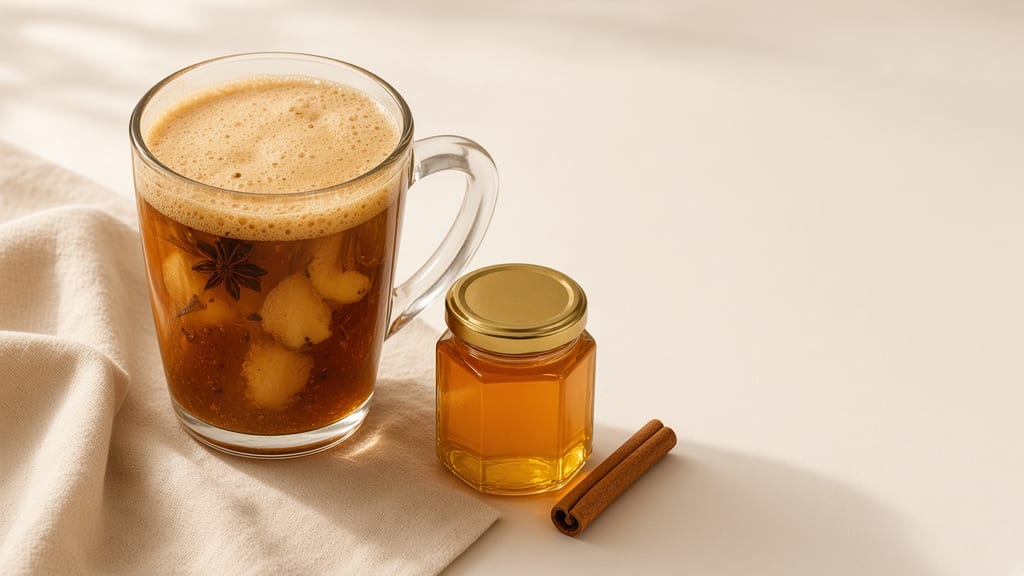
Hot Russian street drink of honey boiled with spices: a plain cup, the 1799 milk finish and a dark honey concentrate kept in a jar for a spoonful per glass.
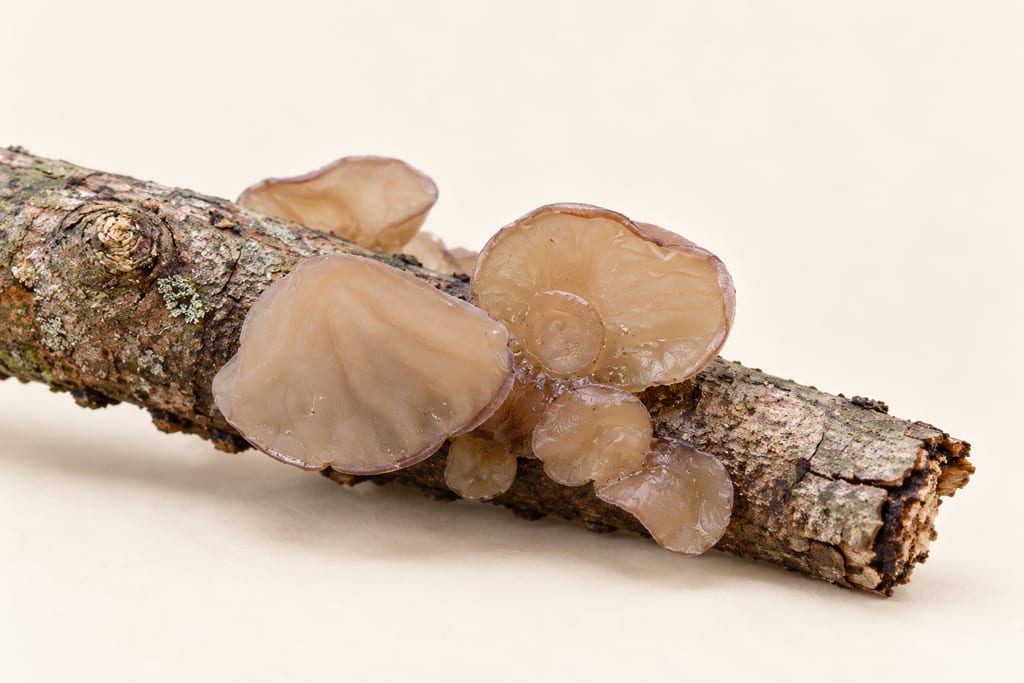
A small wood-decaying jelly fungus recognized as a distinct East Asian species. A Chinese edible-fungi catalogue lists it as edible, but species-specific preparation and safety evidence remain limited.
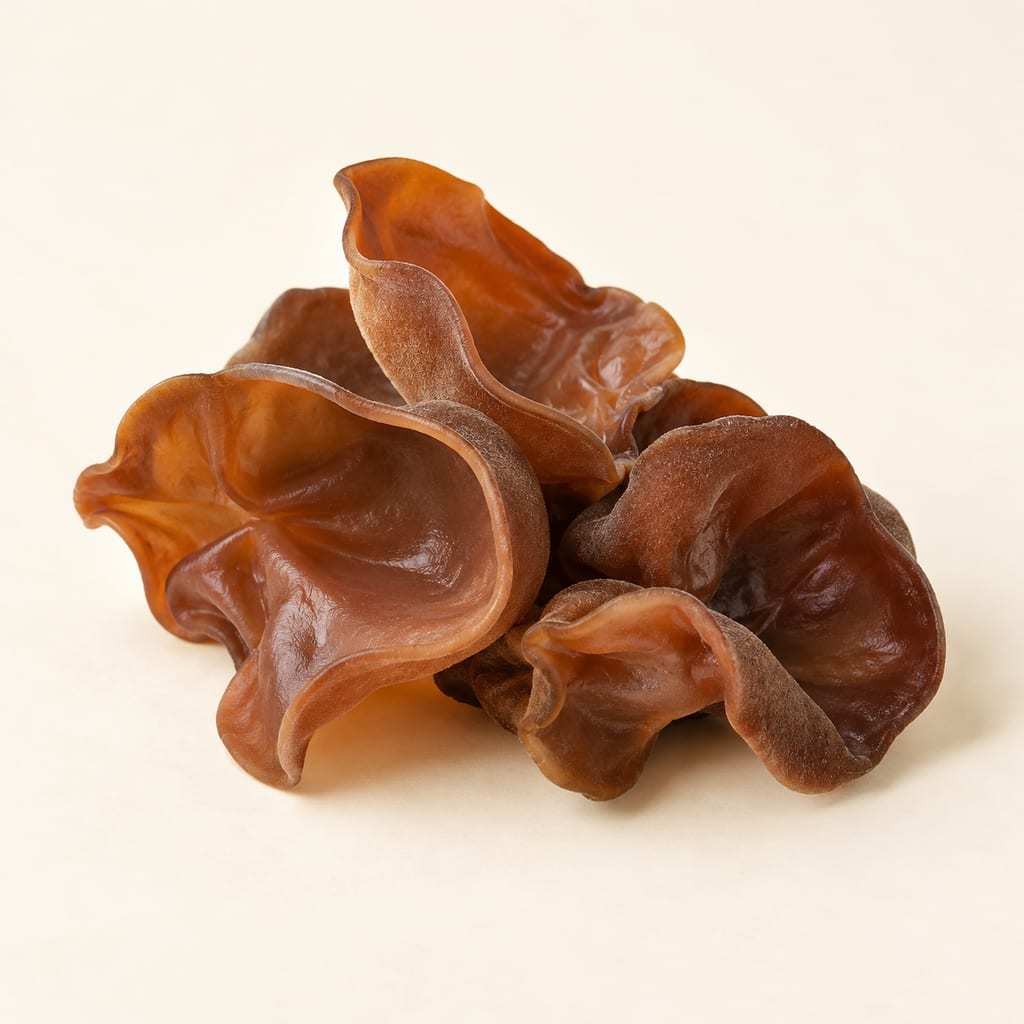
Auricularia villosula, the short-haired wood ear, is an Asian wood fungus that China lists as edible and that is cultivated in Inner Mongolia. It is easily confused with the cultivated black wood ear, so a market label does not settle the species.
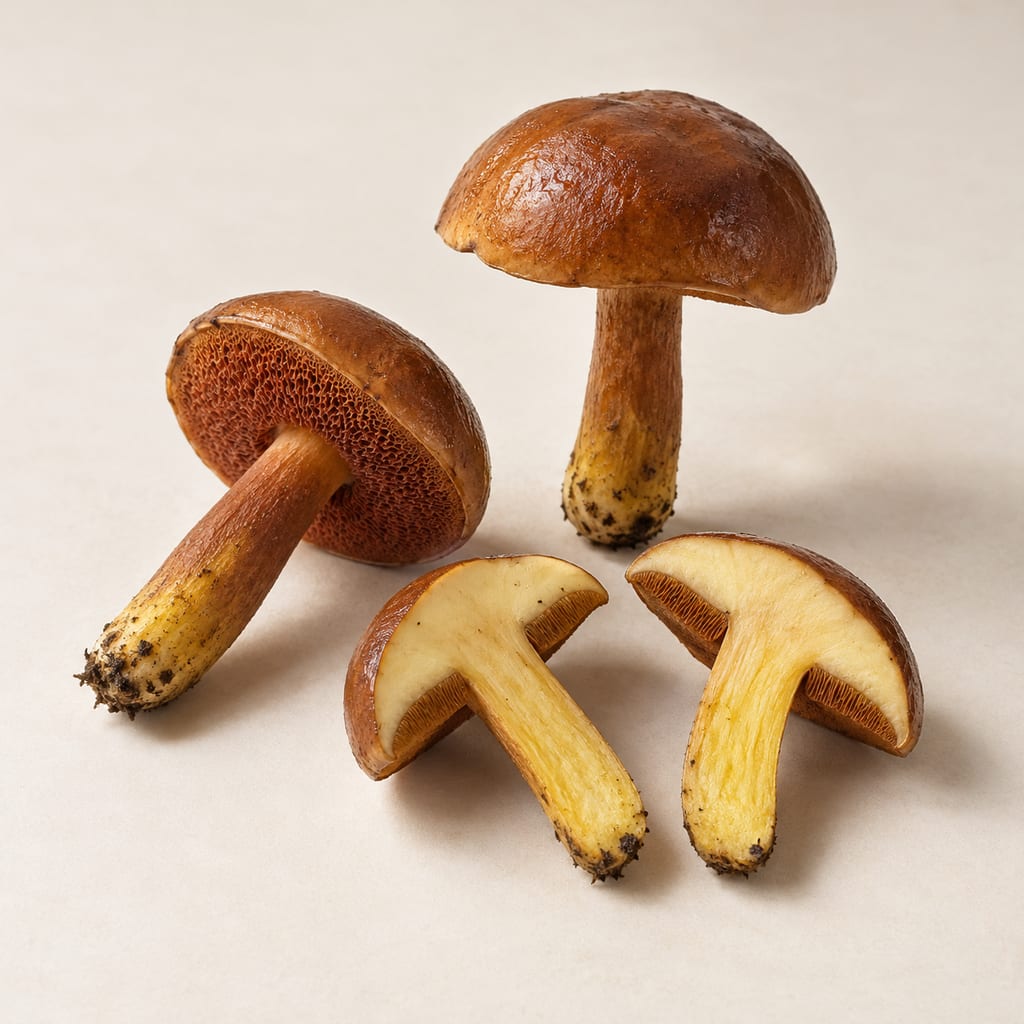
A peppery woodland bolete with historical edible labels and reported condiment use in Querétaro. Current mycological references call its edibility suspect or unestablished; this entry does not recommend consumption.
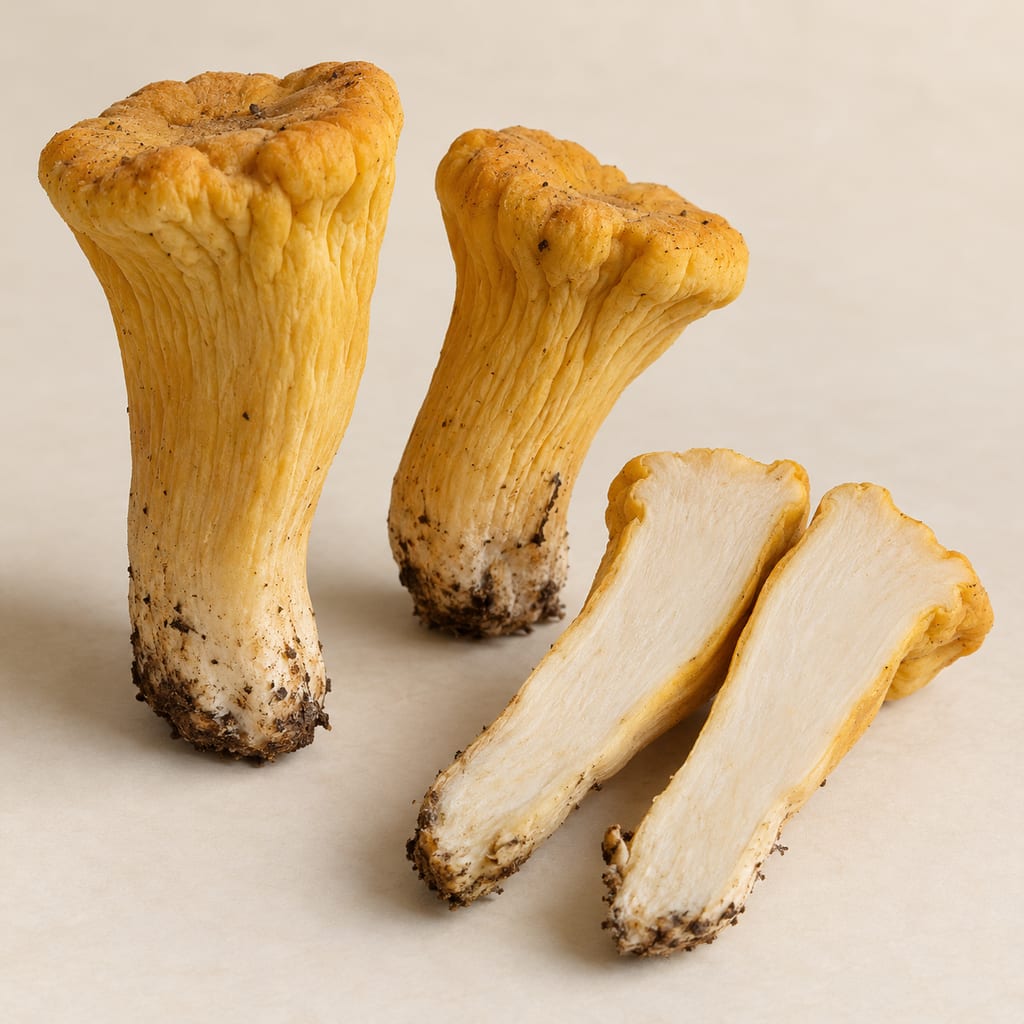
A yellow to ochre club fungus reported as food in parts of Mexico and in historical country lists. Local acceptance and taxonomy vary, and some Chinese records may refer to Clavariadelphus amplus.
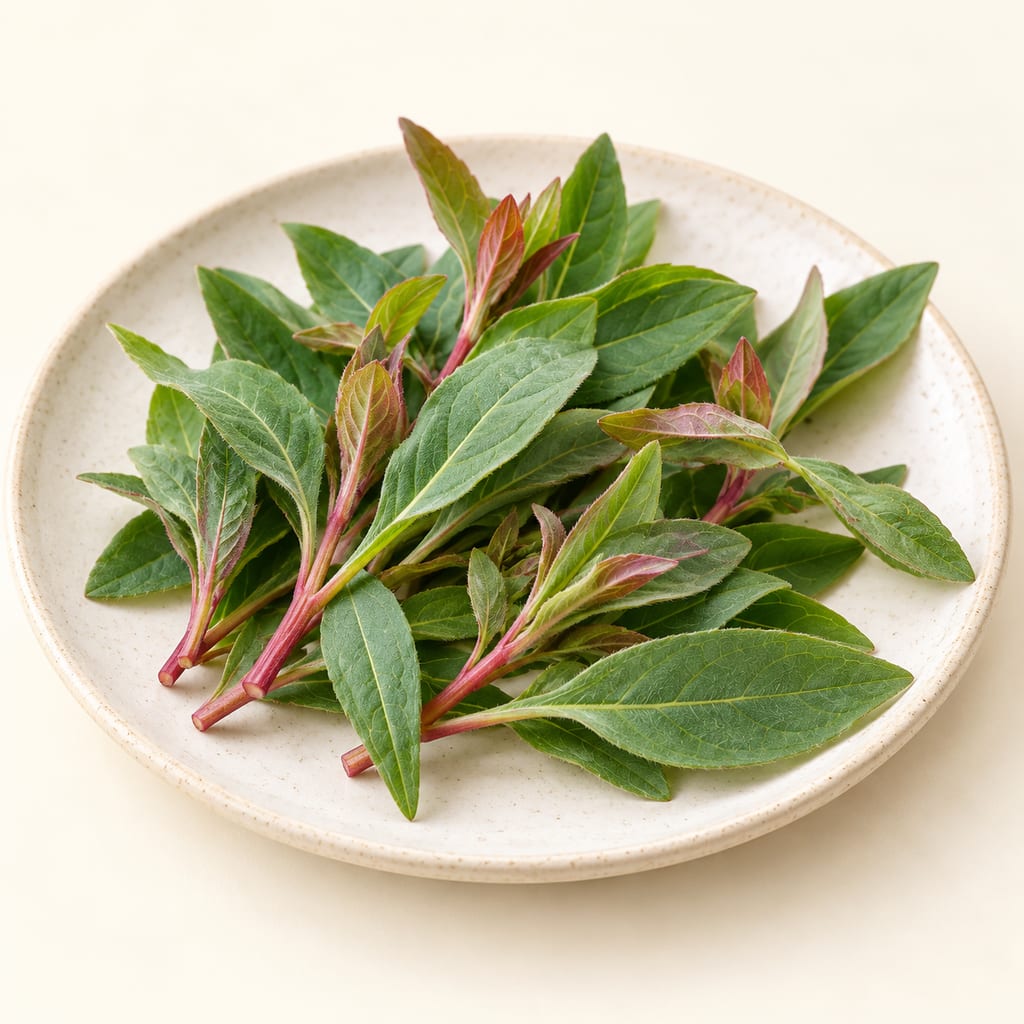
Dwarf fireweed (Epilobium latifolium) is a northern wild herb whose tender leaves and flowers appear in distinct Arctic food traditions.
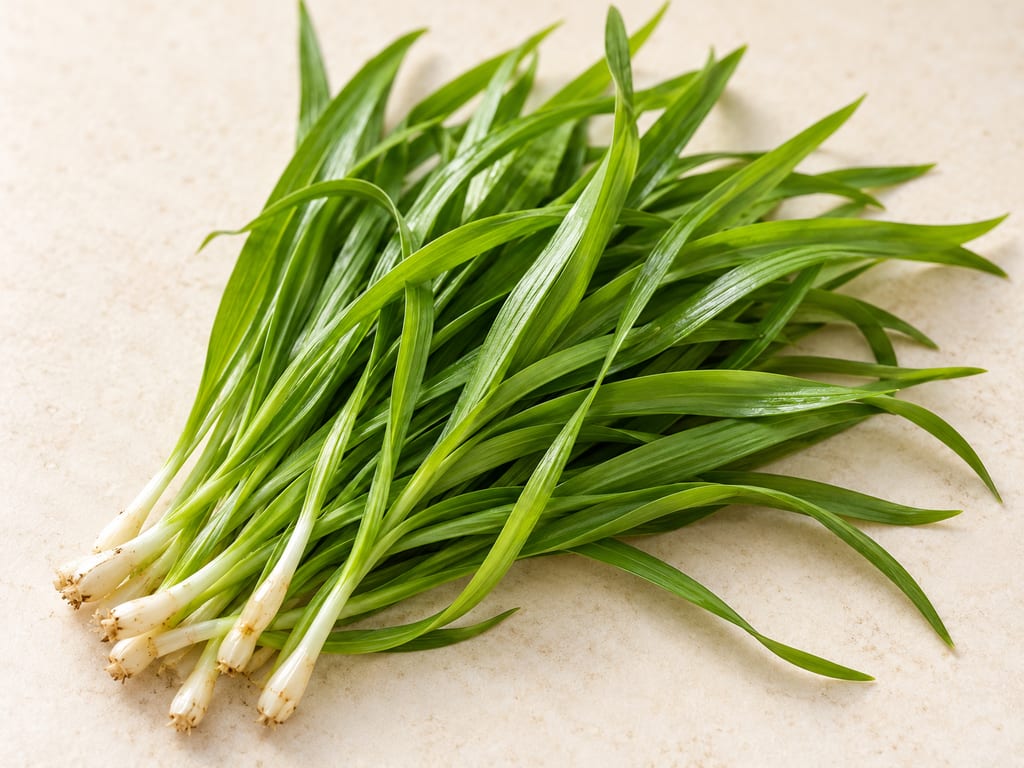
Few-flowered garlic (Allium paradoxum) is a bulbous perennial native from eastern Ukraine through the Caucasus to Iran. Its leaves and, in some documented traditions, stems, bulbs or bulbils are eaten fresh, cooked or preserved.
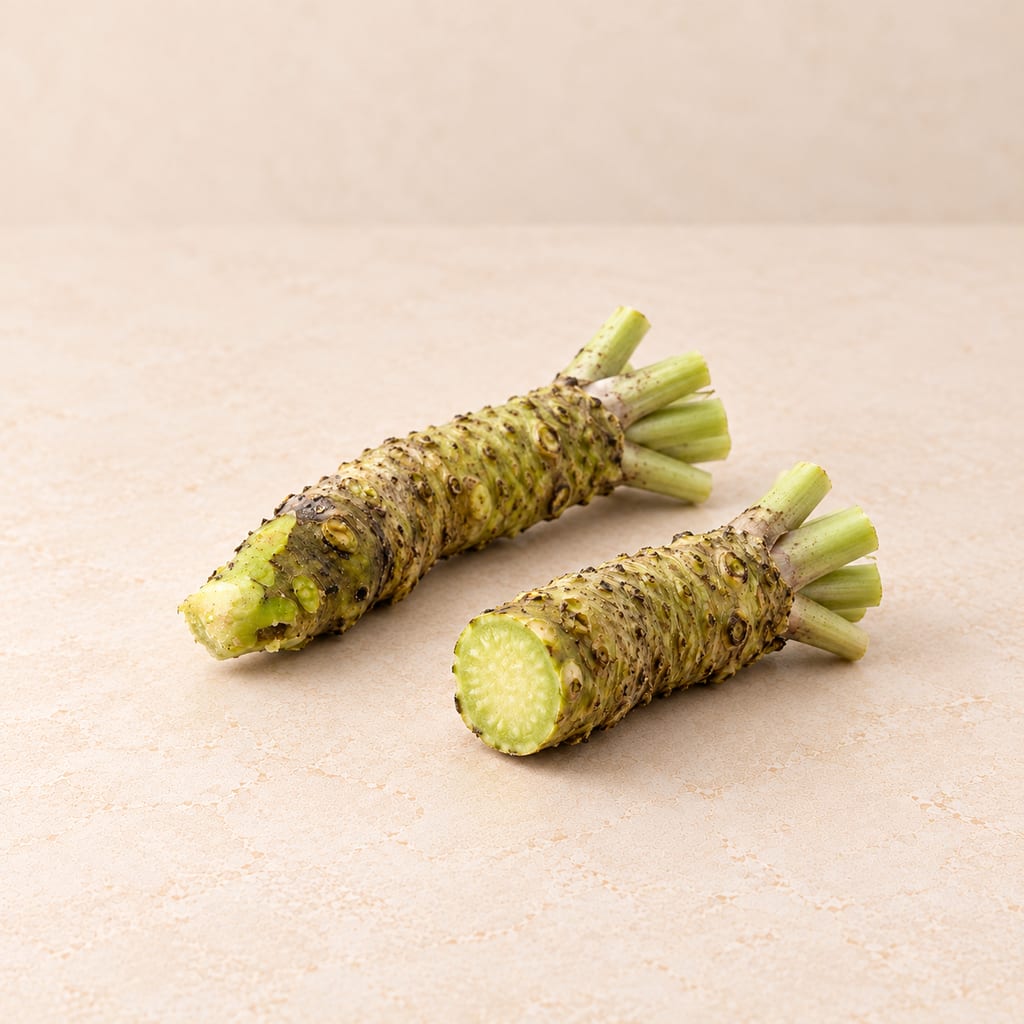
Wasabi is the enlarged stem of Eutrema japonicum, a pungent perennial in the mustard family. Fresh rhizome is grated as a Japanese condiment; powder and prepared paste are separate products.
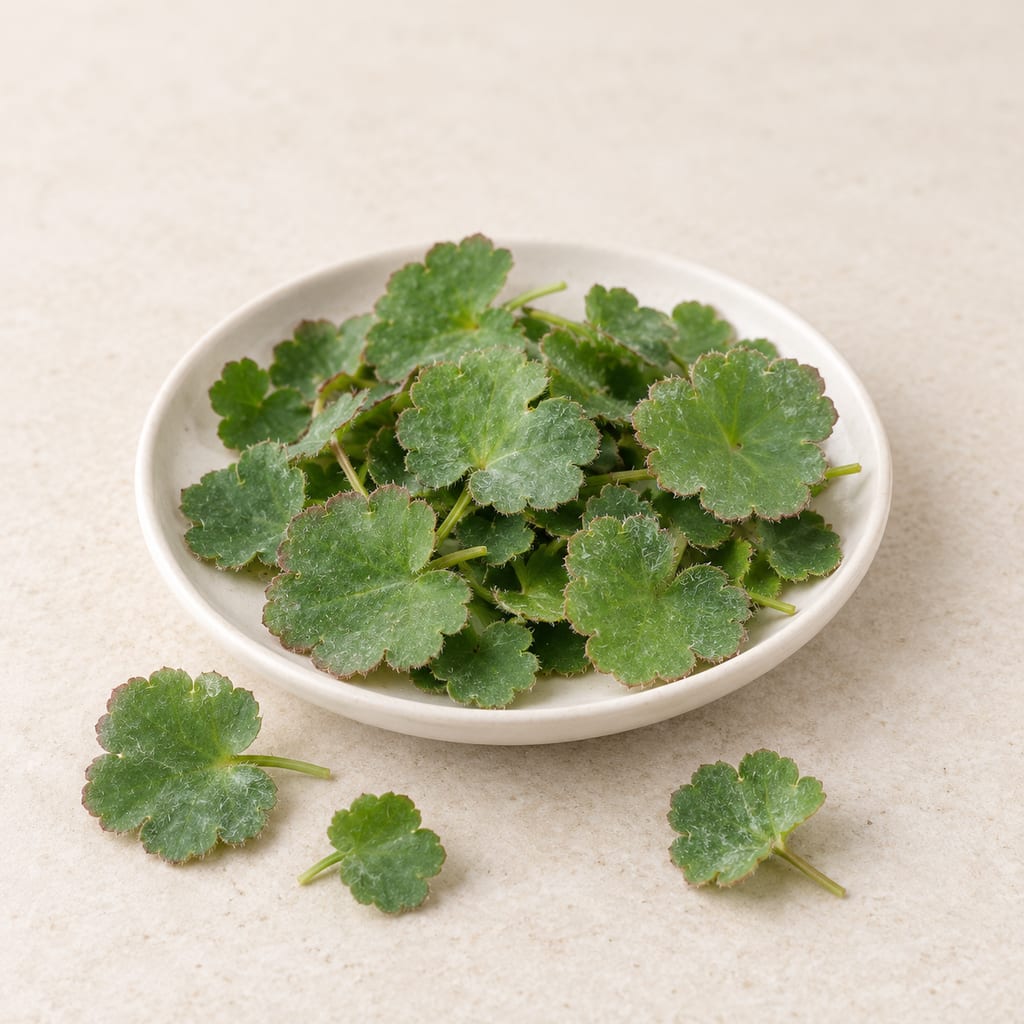
Heartleaf saxifrage is a small Arctic perennial whose soft, toothed leaves are recorded as food among Naukan and Chukchi communities. The botanical name appears as Micranthes nelsoniana and Saxifraga nelsoniana in different references.
No community contributions have been published for this entry yet.
Sign in to contribute. Published comments and photos are free to read.
University of Wisconsin–Madison Extension, Wisconsin HorticultureUniversity extension plant reference
Sweet Bay, Laurus nobilisLaurus nobilis is in the family Lauraceae and is native to the Mediterranean region
leaf size, shape and colour
plants are dioecious, with purplish-black berries on female plants
other trees called bay: California laurel, bay rum tree, Laurus canariensis
harvest in mid summer for flavour
fresh or dried use, dried oils more concentrated
use in stews, roasts, casseroles, soups, pickling, marinades and teas
laurel wreaths and lightning reputation
Cited in: The leaf and the tree; Picking and drying; In the kitchen; Laurel and its reputation
University of Illinois Extension, HerbsUniversity extension plant reference
Bay Laurellarger, older leaves have the strongest flavour
dry leaves before storing in sealed containers
use in meat, fish, poultry, soups and stews
an ingredient of bouquet garni
Cited in: Picking and drying; In the kitchen
Elsevier book chapter, 2020; hosted by PubMed CentralReview chapter
Bay Leaffresh leaves are bitter and pungent and are dried before use
48–72 hours of drying after picking, 10–12 days open-air, hot air at 60 °C
sun drying loses colour and oil
avoid harvesting wet leaves
bouquet garni with celery seed, cloves, peppercorns, parsley and thyme
camphor-like volatile oil
Cited in: Picking and drying; In the kitchen
Ya. I. Basin, Moscow, 1799 (transcription on coollib.net)Primary text, Russian original
Национальныя изображенія промышленниковъ, снятыя съ натуры въ Санктпетербургѣ (Збитенщикъ)The sbiten seller's drink is boiled from honey with bay leaf or other herbs for smell and taste, plus some pepper or ginger
Cited in: Bay leaf in sbiten; What the sources do not establish
Kommersant, 13 July 2015Secondary article quoting Russian sources
«Стали важничать да барничать»: почему исчез самый любимый русский горячий напиток1852 recruit-party recipe names bay leaf as one option
Shamanskaya's condensed sbiten recipe names honey or molasses, ginger, cardamom, mace and bay leaf
Cited in: Bay leaf in sbiten; What the sources do not establish