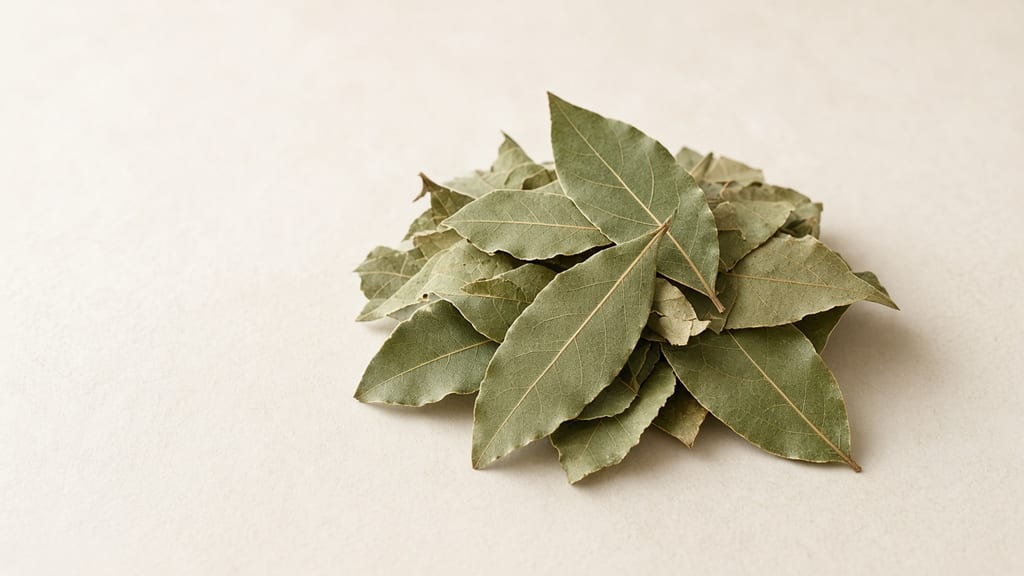
Bay leaf
Bay leaf is the dried leaf of the bay laurel, Laurus nobilis. It goes whole into long-cooked dishes and hot drinks, and is taken out before serving.
 FermenteaWhere food goes to change
сбитень · сбитень · sbiten'
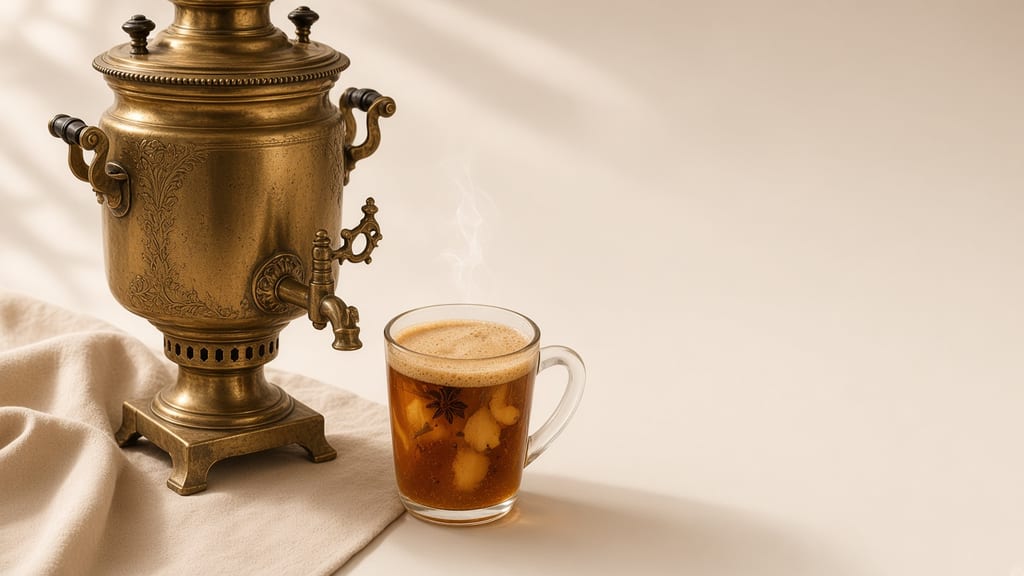
Hot Russian street drink of honey boiled with spices: a plain cup, the 1799 milk finish and a dark honey concentrate kept in a jar for a spoonful per glass.
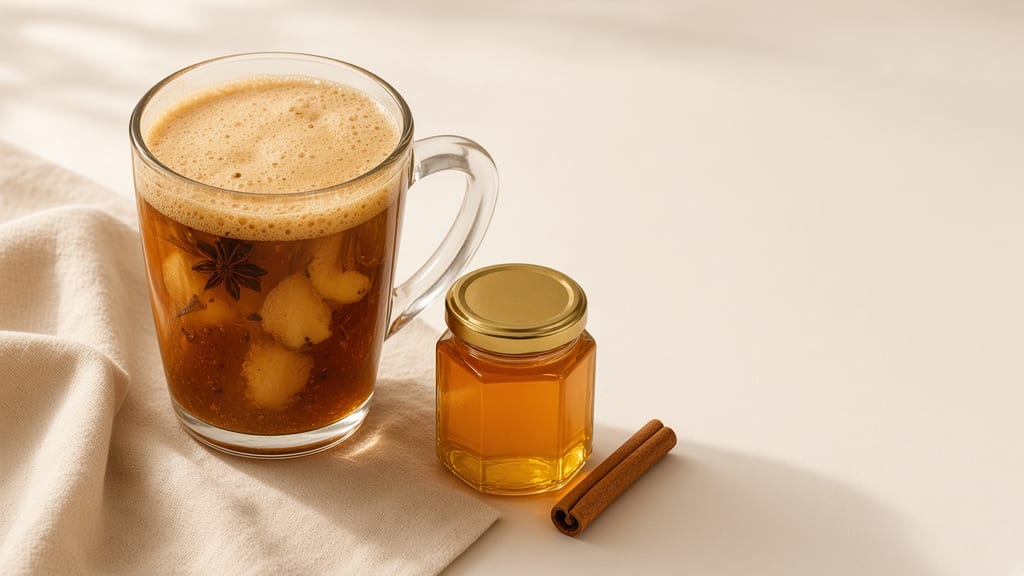
Sbiten is a hot drink of honey, water and spice. The honey is dissolved and boiled, the spices go in, and the drink is strained and served at once. For most of the eighteenth and nineteenth centuries it was the cheap hot drink of Russian towns, sold by the glass in the street to cabbies, shop clerks, soldiers and students.
The street drink was not fermented. Mead, which shares its honey, is fermented; sbiten is boiled and drunk within the hour. Tea took its place in the nineteenth century, and by the end of that century the street sellers had mostly gone.
This page gives a plain boiled cup, a milk finish recorded in 1799, and a boiled-down concentrate that keeps in a jar and is stirred into boiling water a spoonful at a time.
The name comes from the verb sbit, to beat or pound, for the spices crushed in a mortar.
Vasily Levshin's cookbook Russian Cookery of 1816 uses the word for the spice mix itself. His "kitchen sbiten for keeping" is a dry powder: a quarter pound each of pepper and ginger and 8 zolotniks each of cloves, nutmeg and cinnamon, pounded separately, mixed, sifted, bottled, stoppered and kept dry. In metric that is about 102 g each of pepper and ginger and 34 g each of the other three. The same book seasons a fish soup with "sbiten of all spices" and bay leaf.
Levshin had a patriotic point to make. Powders of dried herbs, field mushrooms and honey fungus, he wrote, could replace "sbiten from foreign spices" for anyone not set on buying only what was dear.
Vladimir Dahl's dictionary, in its second edition, defines sbiten as a hot drink "of scorched honey with spices". It records two sellers' cries, "Sbiten hot, the clerks drink it!" and "Sbiten, little sbiten, the dandy drinks it!", and the sbitenny kuren, the hut where sbiten was boiled and sold.
The household manual Domostroi, from the sixteenth century, has a short article headed "On sbiten". In the 1867 edition printed from manuscripts in the Imperial Public Library it reads, in Russian: a glass vessel of wine, a glass vessel of vinegar, a quarter of pepper, a pound of patoka (a sugar syrup), "three grivenki", and as much foreign wine as anyone happens to have, all boiled with honey "so that it does not boil over". When it has boiled, it is left to settle and poured off into a vessel.
This sbiten was strong. The wine went in at the start, so the alcohol came from the wine and nothing in the pot fermented. The vinegar is a surprise to modern cooks, and it sits next to an article on making vinegar from wort, honey and patoka left on the stove for weeks.
Editions disagree on the details. The 2017 English translation in Russian Life adds a bottle of beer, which the 1867 Russian text does not contain. The 1867 editor also notes that this article and those after it are missing from the Arkhivsky and Tsarsky copies, two of the oldest manuscripts of Domostroi.
Yakov Basin's 1799 book on the street trades of St Petersburg gives the fullest early account. Sbiten, he writes, is a hot drink taken "like tea" by common people in winter, boiled from honey with bay leaf or other herbs and a little pepper or ginger.
The seller was hired for the winter on a fixed wage and had to sell three baklagi a day, at 150 kopecks a baklaga. A baklaga was a wooden vessel; wrapped in felt and canvas and carried on the shoulder, it kept the drink hot from morning to midday in hard frost. The owner took back whatever was left at half price, and sales above the quota earned extra.
On days that were not fast days the seller carried a bottle of milk in his left hand and poured some into a customer's glass on request. Pretzel-shaped krendeli hung from a strip of bast, with buns or kalachi, and the glasses rode in a hard leather case like a soldier's cartridge pouch.
Sbiten kept better than beer, and the state used it. On 6 July 1750 the Senate ordered ships on long voyages to carry sbiten in place of beer, because sbiten did not spoil. For the Epiphany parade of 1758, each soldier standing in the frost was issued two charki of vodka, two glasses of sbiten and a warm kalach.
An 1852 instruction for officers marching parties of recruits gives a recipe for 25 men: 30 pounds (or glasses) of water brought to the boil, half a pound of sage and an ounce of lemon balm, or lime blossom or bay leaf if those were short; at the second boil, honey stirred in a little at a time up to one pound; then a zolotnik of cinnamon or cloves, a quarter of an hour off the heat, and a strainer. Counted by weight, the honey comes to about 33 g a litre of water, which makes a thin, herbal drink.
In besieged Sevastopol the sick and wounded drank sbiten made to a ratio of 25 pounds of water, one and a half pounds of honey and 3 zolotniks of pounded ginger or 2 of black pepper. That is about 60 g of honey a litre.
Schools ran on it too. A Vladimir church-school pupil of the 1840s remembered the sbiten seller coming to students' lodgings each morning with a hot urn, kalachi at his side and glasses in his belt: two glasses for a semitka, 2 kopecks, and on credit, tallied with notches on sticks.
Tea began as a luxury. In 1785 the best green tea cost 100 roubles a chest of 2.73 kg. Schools and academies moved from sbiten to tea as they could afford it, and memoirists recorded the dates. On 27 October 1847 the Holy Synod allowed the St Petersburg Theological Academy to serve its students tea with sugar and rolls at breakfast in place of sbiten and a roll.
Then tea became cheap. In 1801–1810 Russia imported 75,000 poods of tea, about 1,230 tonnes. From 1 April 1862 tea could arrive by sea as well as overland through Kyakhta, and in 1862–1871 imports reached 1,614,000 poods, about 26,400 tonnes. Honey moved the other way, growing dearer as forests were cut and forest beekeeping shrank.
Tea stayed dear by European standards. In 1898 the cheapest black tea cost 1 rouble 42 kopecks a pound in Russia and 18–20 kopecks in London, because of high import duties, and Russians drank 0.87 pounds a head a year against 5.8 in England.
The sellers' urns went over to tea. By the late nineteenth century the sbitenshchik had largely gone from city streets, though Moscow's Okhotny Ryad market still had sellers pouring hot sbiten at a kopeck a glass for cabbies and clerks freezing in unheated shops. In summer the kvass sellers took their place.
When Russia banned the sale of vodka at the start of the First World War, doctors went back to sbiten. The Moscow physician V. F. Snegirev developed a dry sbiten in small pressed tablets: one tablet dropped in a glass of hot water made a glass of spiced sbiten. Each cost one and a half kopecks, and a soldier's packet of 15 lasted a week.
For home use O. N. Shamanskaya published a condensed sbiten. Five pounds of patoka or honey, about 2 kg, are boiled in a clean enamel pan with 6 cloves, half a vershok of cinnamon, 2–3 ginger roots, 5–6 peeled cardamom pods, a pinch of mace and 2 bay leaves until dark and thick. It is cooled, put into a glass jar and kept somewhere cool. One tablespoon in a glass of boiling water makes a cup, with sugar added for a sweeter drink.
Neither product brought sbiten back. Honey kept getting dearer and tea cheaper.
Most sbiten was never fermented. One older method pounds herbs and spices in a mortar, mixes in honey or molasses and leaves the paste to ferment slightly before boiling water is stirred in, giving a lightly alcoholic drink. Street sellers generally sold the unfermented drink. Wine, brandy or vodka went into the tavern versions, and some street sellers sold vodka on the side with a policeman's unspoken leave.
Russian cookbooks kept honey ferments in a separate chapter. Elena Molokhovets's household manual of 1901 gives sugar meads, raspberry and blackcurrant meads, an orange mead and a monastery drinking mead as recipes 3552–3557, next to kvass and beer. It has no recipe called sbiten.
No source used here gives quantities, times or temperatures for the slightly fermented paste, so this page gives no method for it. For honey fermented with yeast, see mead.
Honey sold as honey may hold no more than 20% water under the Codex standard, and must not be heated so far that its composition changes. Sbiten does exactly that. Boiling honey in water breaks down sugars and browns them through caramelisation and the Maillard reaction, and both reactions make hydroxymethylfurfural, or HMF, which honey graders use as a marker of heat and age. The Codex limit for honey is 40 mg/kg.
The browning is part of the drink. Dahl's "scorched honey" and Shamanskaya's instruction to boil the concentrate "until dark" both describe it. Boiling honey and water also throws up a foam, which the modern stovetop method skims off during the first ten minutes.
The Domostroi warning against letting the pot boil over still applies.
The sources agree on honey and heat and on little else. Bay leaf with pepper or ginger appears in 1799. Sage, lemon balm, lime blossom, cinnamon and cloves appear in the army recipe of 1852, ginger or black pepper in Sevastopol, and cloves, cinnamon, ginger, cardamom, mace and bay in Shamanskaya's concentrate. A modern magazine recipe adds star anise. Herbs such as St John's wort and sage were also used.
One historical tip is still useful: when medicinal herbs were used, the herbal tea was made in one pot and the honey and spice in another, and the two were mixed at the end.
The recipe below uses two tablespoons of mixed whole spices and dried herbs per litre, chosen from that list.
Serve sbiten hot, in glasses as the street sellers did. In 1799 they added milk on request on non-fast days and sold krendeli and kalachi with it. In summer sbiten was also drunk cold.
Do not give honey drinks to babies under 1 year old. Honey occasionally carries bacteria that can produce toxins in a baby's gut and cause infant botulism.
Sbiten survives in small production. An artel near Torzhok, in Tver region, brews sbiten from honey, northern berries, herbs and spices, up to 500 litres a month, mostly to order.
The equipment survives in museums. The sbitennik held the drink in one chamber and burning fuel in another, and it is counted as the forerunner of the samovar.
Domostroi contains a sbiten recipe boiled with honey, wine, vinegar, pepper and patoka. In the eighteenth and nineteenth centuries sbiten was the hot street drink of Russian towns, issued to soldiers and sailors and served in schools. Cheap tea after 1862 and dearer honey ended its street trade; First World War prohibition prompted tablets and concentrates.
Yield 1 litre · Scaling: scale linear
Honey occasionally contains bacteria that can cause infant botulism; do not give it to children under 1 year.
Hazard sourceDo not serve to babies under 1 year
Control sourceDo not give honey drinks to babies under 1 year old.
Sbiten sold at a kopeck a glass in Okhotny Ryad.
Street sellers described by Basin.
Small artel brewing sbiten to order.
Bay leaf is the dried leaf of the bay laurel, Laurus nobilis. It goes whole into long-cooked dishes and hot drinks, and is taken out before serving.
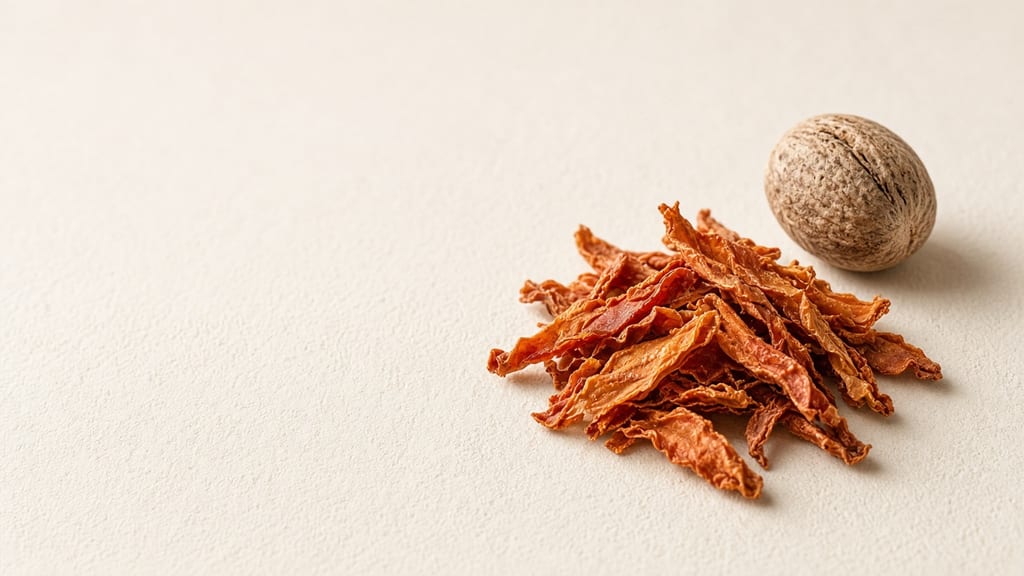
Mace is the dried red aril that wraps the nutmeg seed, Myristica fragrans. It is sold as flat orange blades or ground, and tastes like nutmeg but lighter.
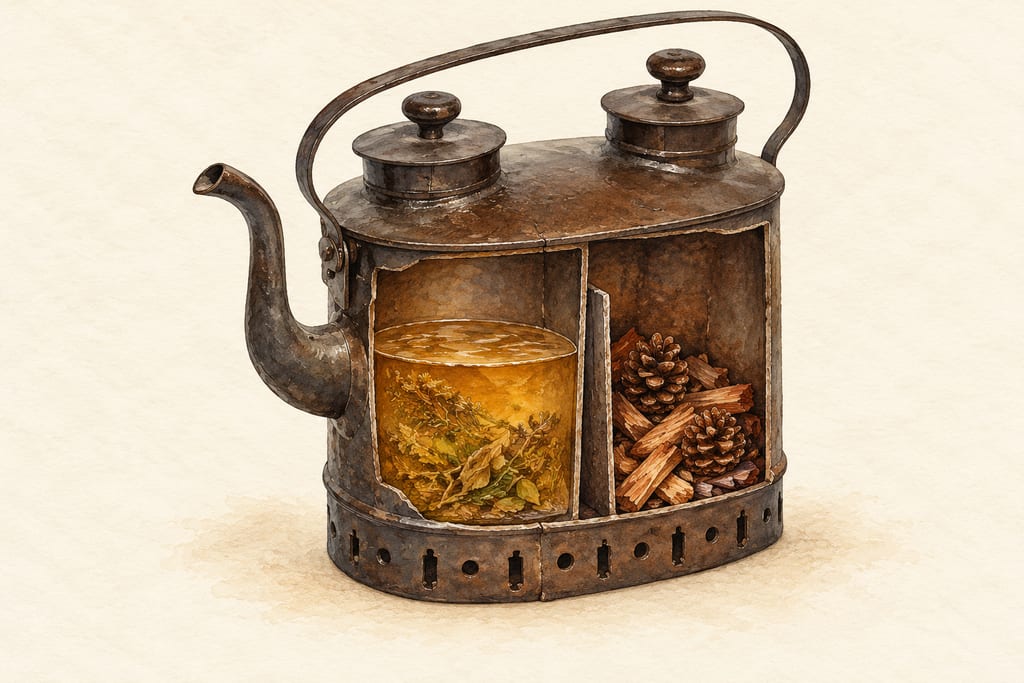
A sbitennik is a portable vessel for heating and pouring sbiten. Museum records show a divided fire-and-liquid chamber and several nineteenth-century forms, from Nevyansk ironwork to copper and brass examples.
A 1799 quota of three hot barrels a day, a recipe missing from Domostroi's oldest copies, an opera hero and a wartime tablet: how Russia's street honey drink lost to tea.
A Buryat milk spirit distilled from khurenge, the backslopped sour dairy ferment, in a cauldron still: a distillate that keeps milky and cheese-like aromas from the dairy it came from.
A two-stage Altai dairy preparation: sour chegen is heated into soft aarchi, then portions are drained, pressed and traditionally smoked into firm kurut.

Adygean salt is a seasoned table salt associated with Adygea and the wider North Caucasian culinary tradition. Salt is blended with garlic and a variable selection of herbs and spices; the exact mix depends on the named style and maker.
Baked milk is an Eastern European preparation of milk held at high heat for hours until it turns cream-coloured with a cooked, mildly sweet flavour, without any fermentation.
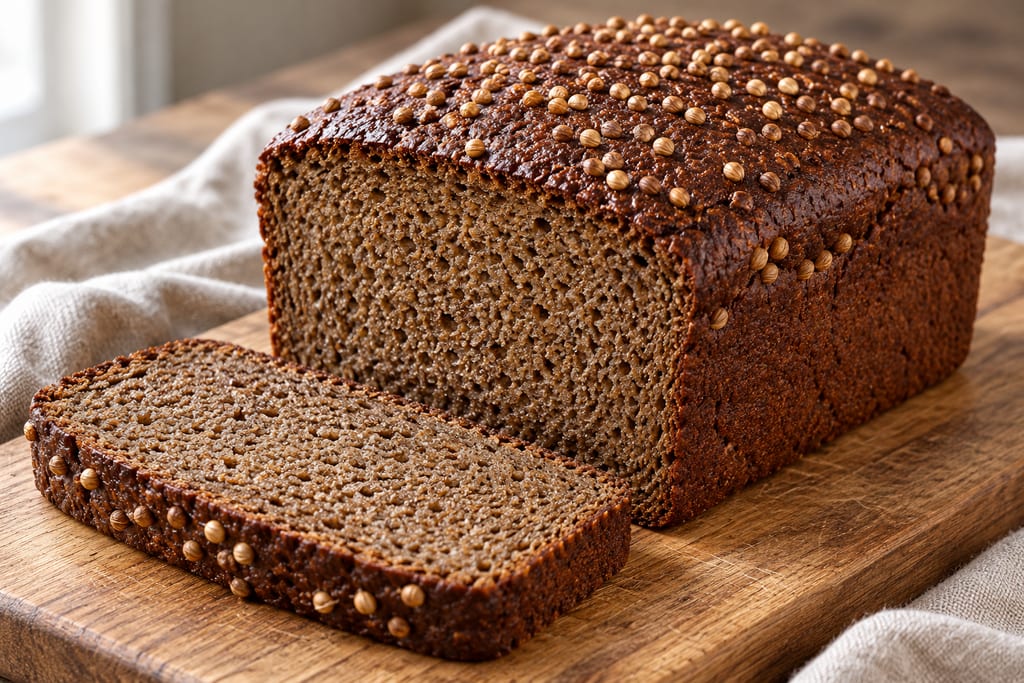
A dark rye sourdough with coriander and roasted barley-malt scald, based on Lily McCann's measured Borodinsk-ish home formula.
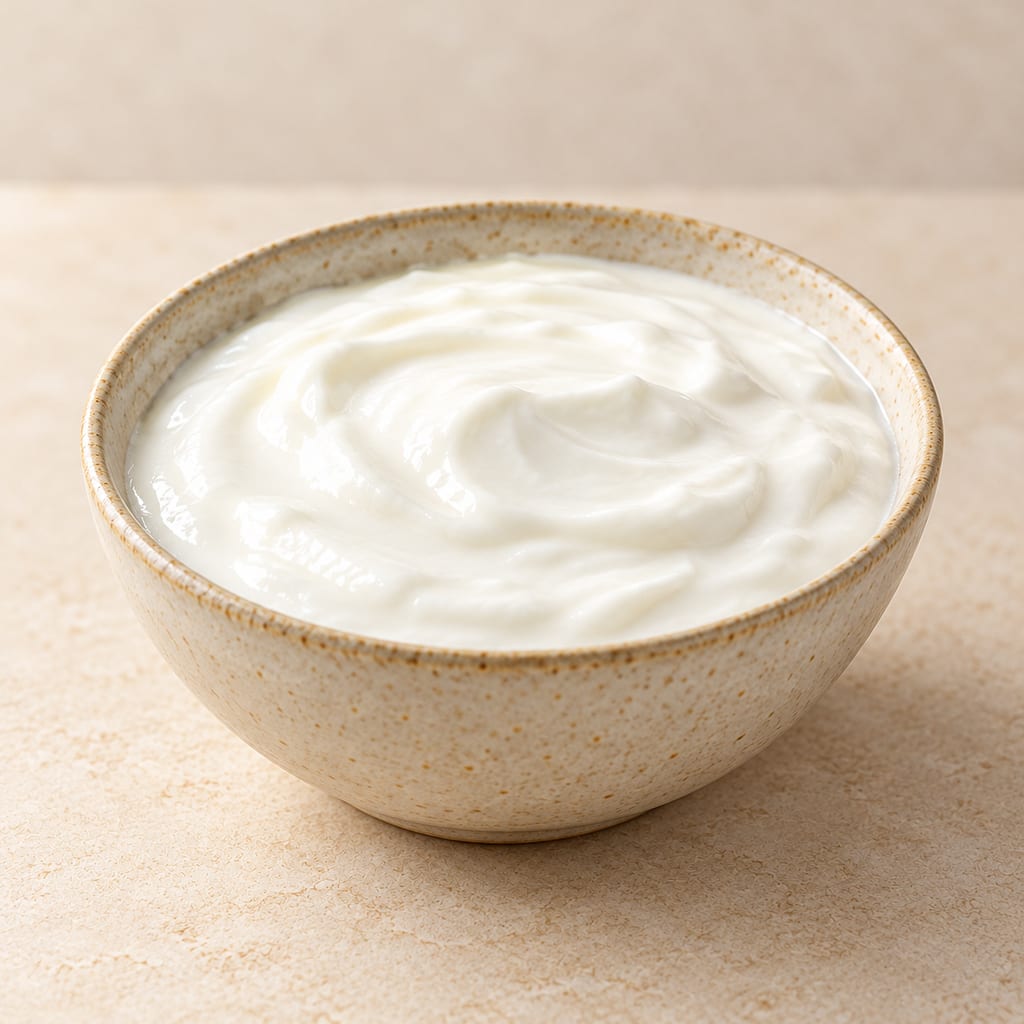
Katyk is a traditional fermented milk of Turkic-speaking peoples, made by souring heated milk with lactic bacteria, often with a spoonful of the last batch, into a thick, sour curd.
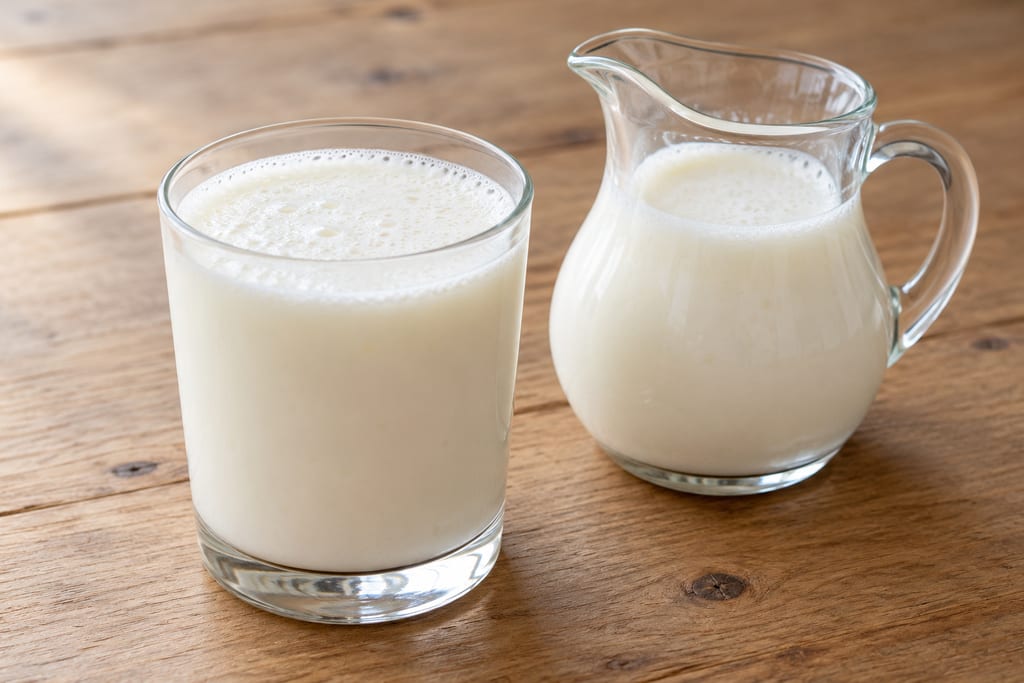
Khurunga is a traditional Buryat fermented milk made with a kept mixed bacteria-and-yeast starter, giving a sour, lightly alcoholic and often fizzy drink that is also the base for milk spirit and curds.

Mochenye yabloki are whole apples held under prepared liquid for several weeks. Russian sources from 1892 and 1959 describe the method. It is not the same as vinegar pickling.
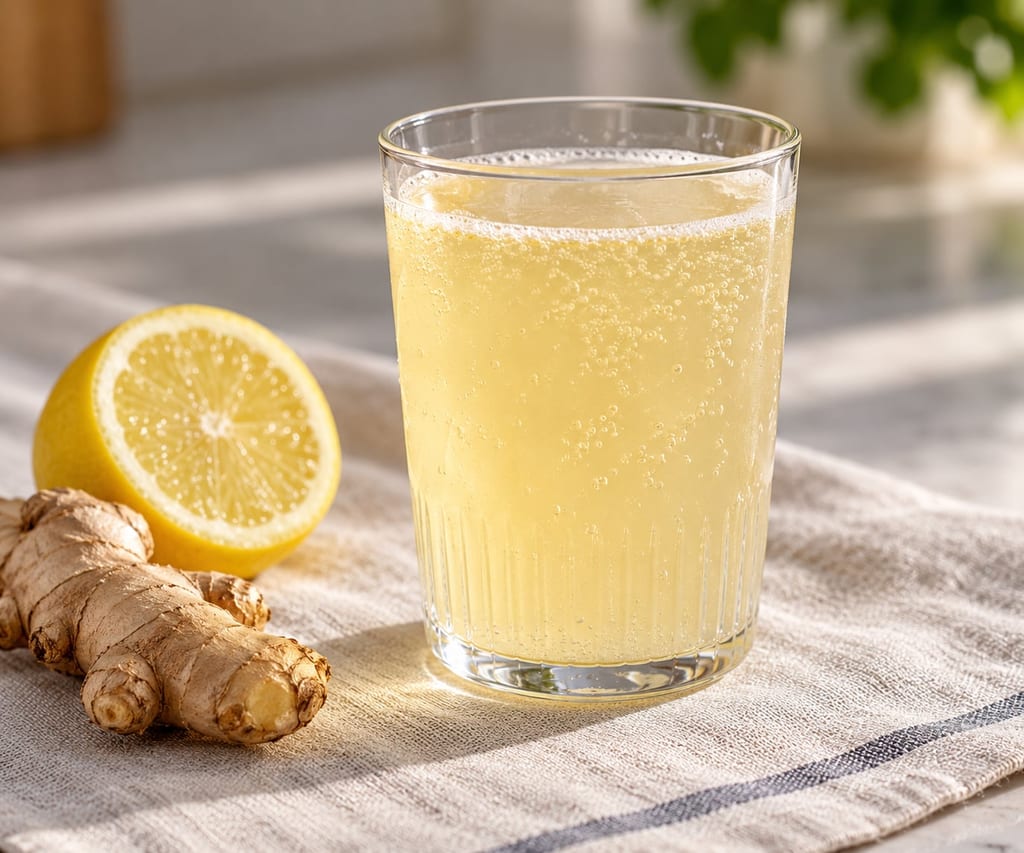
A one-liter teaching recipe ferments bruised ginger, lemon, sugar and cream of tartar with measured baker’s or ale yeast, then conditions the drink briefly in PET bottles before refrigeration.
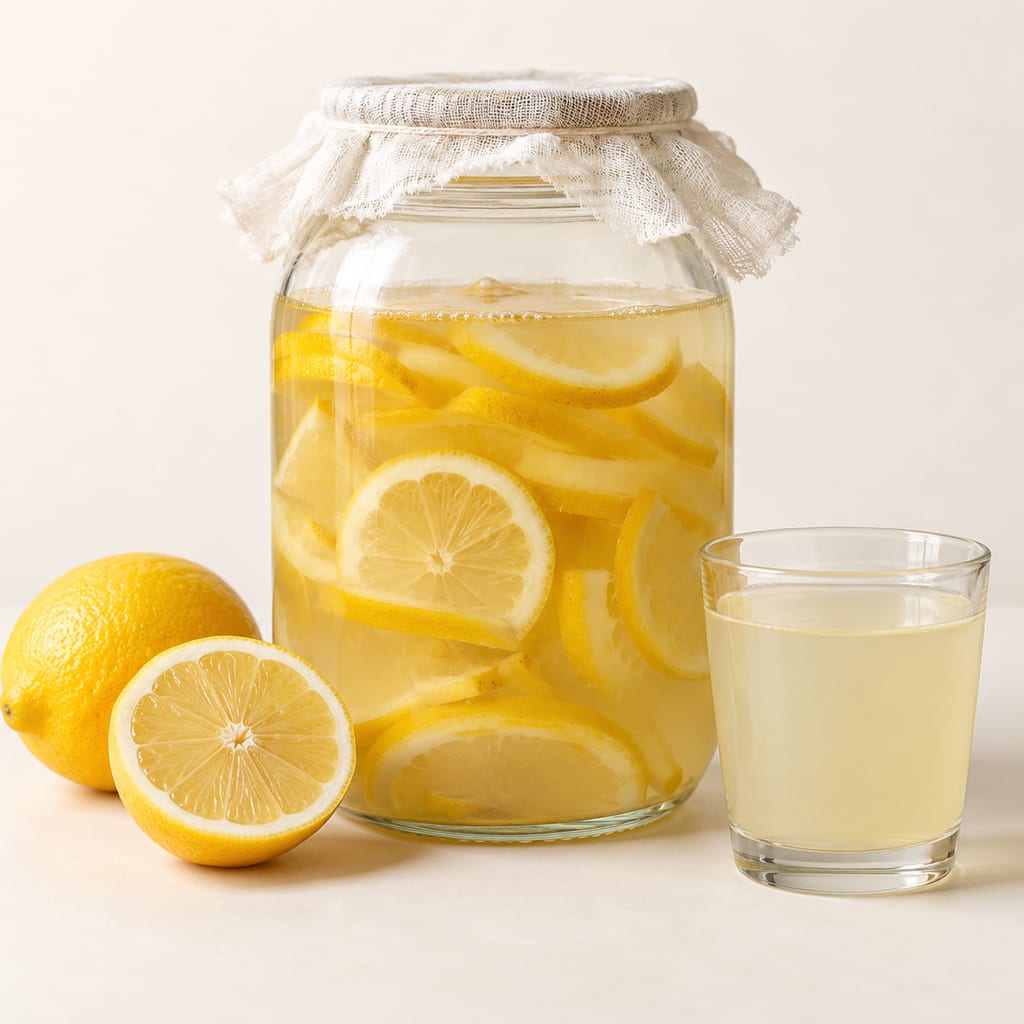
A lightly fizzy lemon drink made from peel-on lemons, water and sugar, held in a covered jar, bottled and kept going with small sugar and peel additions.
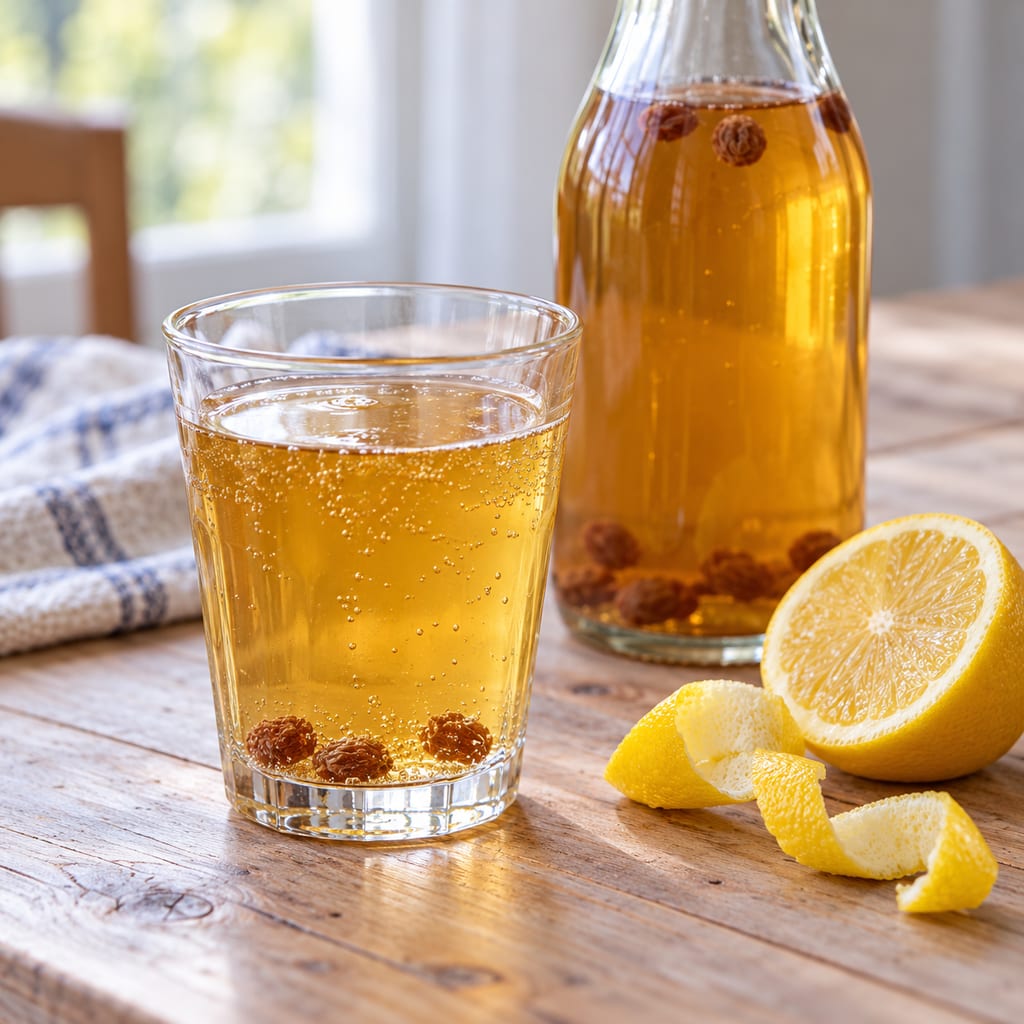
A lightly fermented Finnish May Day drink of lemon, white and brown sugar and a little yeast, bottled with raisins that rise as the carbonation builds.
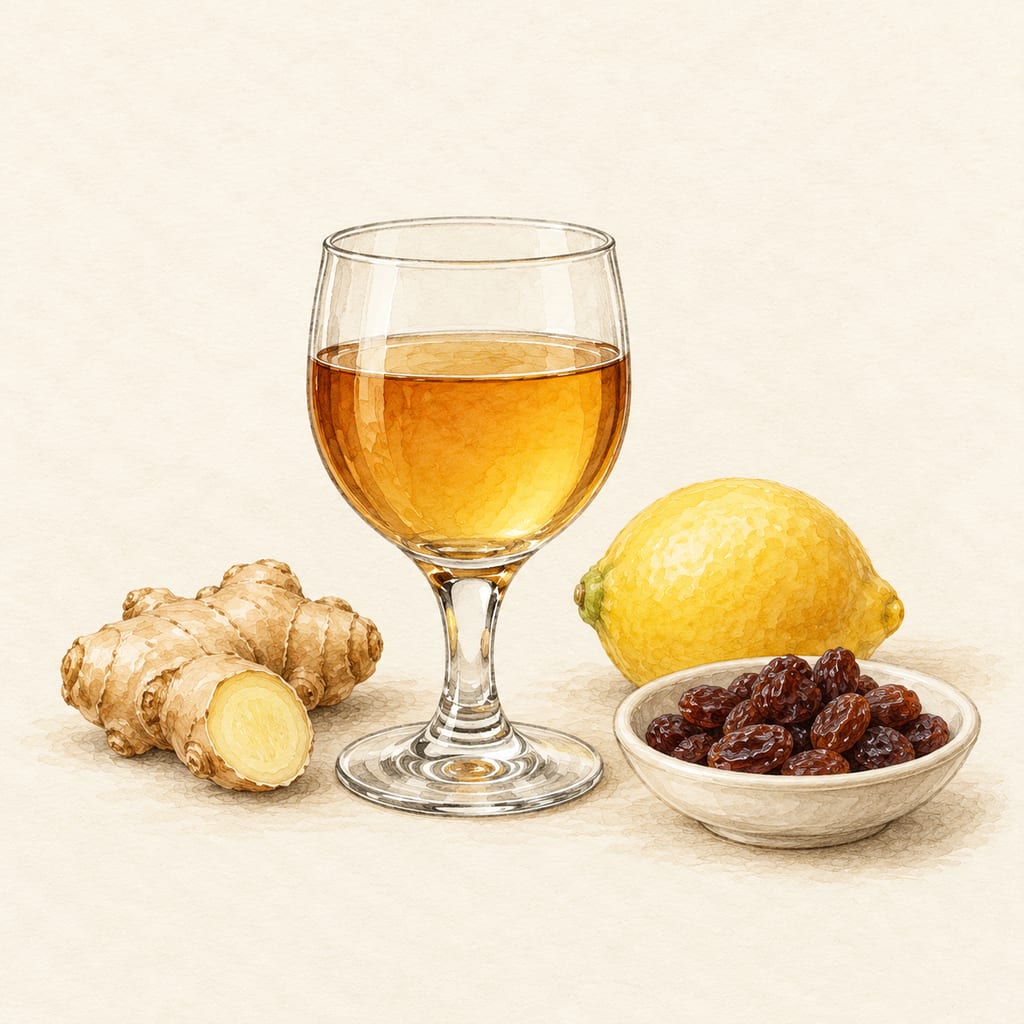
A Victorian household wine of boiled sugar, lemon and bruised ginger, worked on raisins in a cask for a fortnight and finished with brandy, made nine gallons at a time.

Jun is a fermented tea drink made with green tea and honey instead of the sweetened tea of kombucha. Its culture identity and origin are not established, and sealed bottles can build pressure and alcohol.
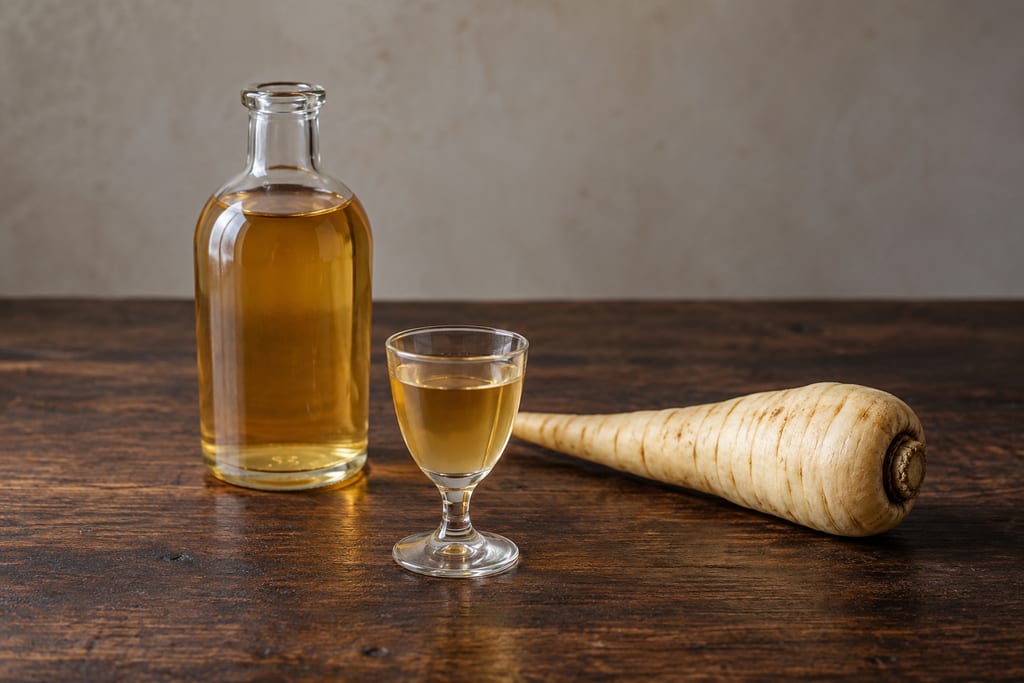
Wright's 1909 compilation records a parsnip wine made from boiled roots, sugar and a little yeast. The liquor spends ten days in a tub, then twelve months in a cask topped up daily only while the wine works over.
An Oregon State food-science lab formula ferments pineapple skin and piloncillo with jalapeño and warm spices for three to five days, then strains and refrigerates it. The handout reports wide alcohol variability.
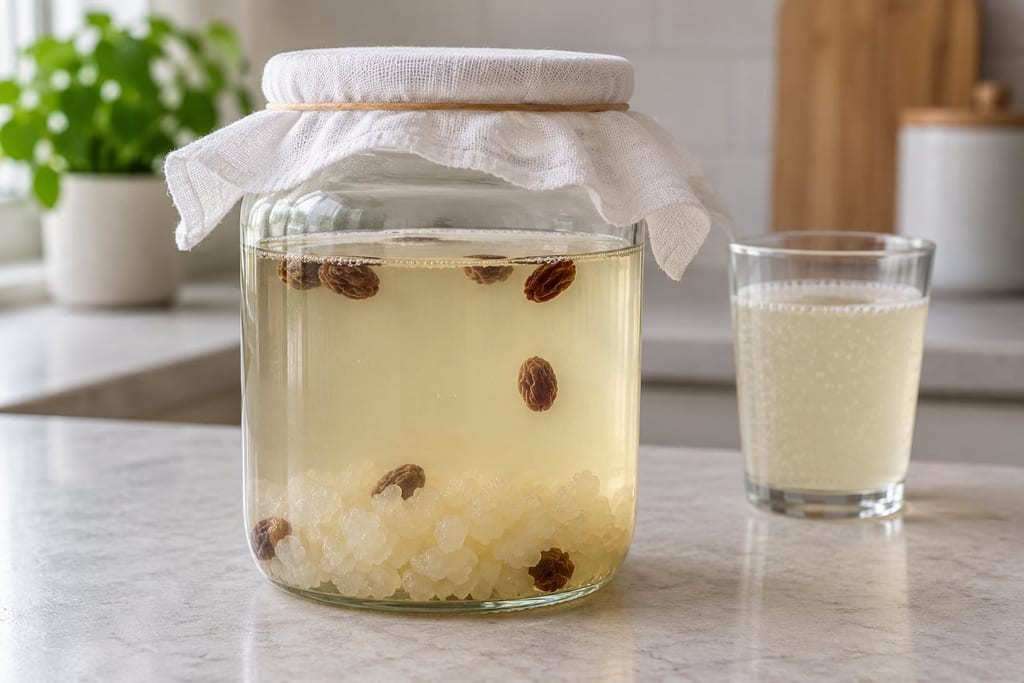
Water kefir grains culture lightly sweetened water into a tart, faintly fizzy drink, with raisins added as an optional dried-fruit nutrient. Alcohol, acidity and fermentation rate vary batch to batch.

A gelling polysaccharide extracted from red seaweeds, sold as kanten strips or powder; it sets firm at a low concentration and stays solid until about 85 °C.

A Dominican table and seasoning condiment of sour orange juice, mixed with lime and salt and bottled raw; garlic, oregano or a hot pepper may be added for meat or a spicier bottle.

Cicerbita alpina is an alpine perennial whose tender shoots and leaves have been eaten raw or cooked. Sámi milk preparations and modern Carnian dishes are distinct uses, with serious identification and preservation limits.

Japanese skipjack tuna cooked, then repeatedly smoked and dried over a wood fire by the hand-fired tebiyama method into a hard block for shaving into dashi: the first stage of katsuobushi.

A Swedish-style spirit vinegar made by fermenting neutral alcohol with live vinegar bacteria, with a separate guide to commercial ättika strengths.

A yeast-raised wheat ring shaped from a firm dough, briefly boiled and baked. This source-batch formula gives a gently malted crust and a chewy crumb.

A warm dip of garlic, anchovy and olive oil, often enriched with butter, that Piedmont serves over a flame with raw and cooked vegetables and bread.

Bechamel is a white sauce of milk thickened with a butter and flour roux, one of the French mother sauces, and the base from which Mornay and other cheese and cream sauces are made.
No community contributions have been published for this entry yet.
Sign in to contribute. Published comments and photos are free to read.
Russian Life, January 2003Method · History
A Honey of a Winter DrinkCited in: What sbiten is; The name and the pounded spice; How tea replaced it; Fermented or not; Choosing the spices
Russian Life, November 2017Method · History
Sweet SomethingsCited in: What sbiten is; The oldest written recipe; Honey and heat; Choosing the spices; Serving; Sbiten today
Nevyansk State Historical and Architectural Museum, Artefact (culture.ru)Equipment · History
СбитенникCited in: Sbiten today
ed. D. Yakovlev, St Petersburg 1867 (Internet Archive)History · Method
Домострой по рукописям Императорской Публичной библиотекиCited in: The oldest written recipe; Honey and heat
Ya. I. Basin, Moscow 1799 (transcription, CoolLib)History · Method
Национальныя изображенія промышленниковъ, снятыя съ натуры въ Санктпетербургѣ (1799), ch. III ЗбитенщикCited in: Street sbiten in 1799; Choosing the spices; Serving
XVIII век, сб. 31, 2024 (CyberLeninka)History
Вокруг книги Я. И. Басина «Национальные изображения промышленников» (1799)Cited in: Street sbiten in 1799
WikisourceHistory
Толковый словарь Даля, 2-е изд.: Сбивать (сбитень)Cited in: The name and the pounded spice; Honey and heat
WikisourceHistory · Preservation
Русская поварня (1816): Запасание разных столовых и поваренных приправCited in: The name and the pounded spice
Kommersant, 13 July 2015History · Method · Preservation
«Стали важничать да барничать»: почему исчез самый любимый русский горячий напитокCited in: What sbiten is; Rations for soldiers, sailors and students; How tea replaced it; Concentrates and tablets; Honey and heat; Choosing the spices
Elena Molokhovets (Internet Archive)History
Подарокъ молодымъ хозяйкамъ, ч. 2 (1901)Cited in: Fermented or not
New Zealand Beekeeper, September 2019Chemistry
HMF: the effects of aging and heat treatment of honeyCited in: Honey and heat
Store norske leksikonUnits
russiske masseenheterCited in: The name and the pounded spice; Rations for soldiers, sailors and students; How tea replaced it; Concentrates and tablets
Torzhok Museum-Reserve, 2025Modern
Сбитенная артель: как под Торжком варят десертный напитокCited in: Sbiten today