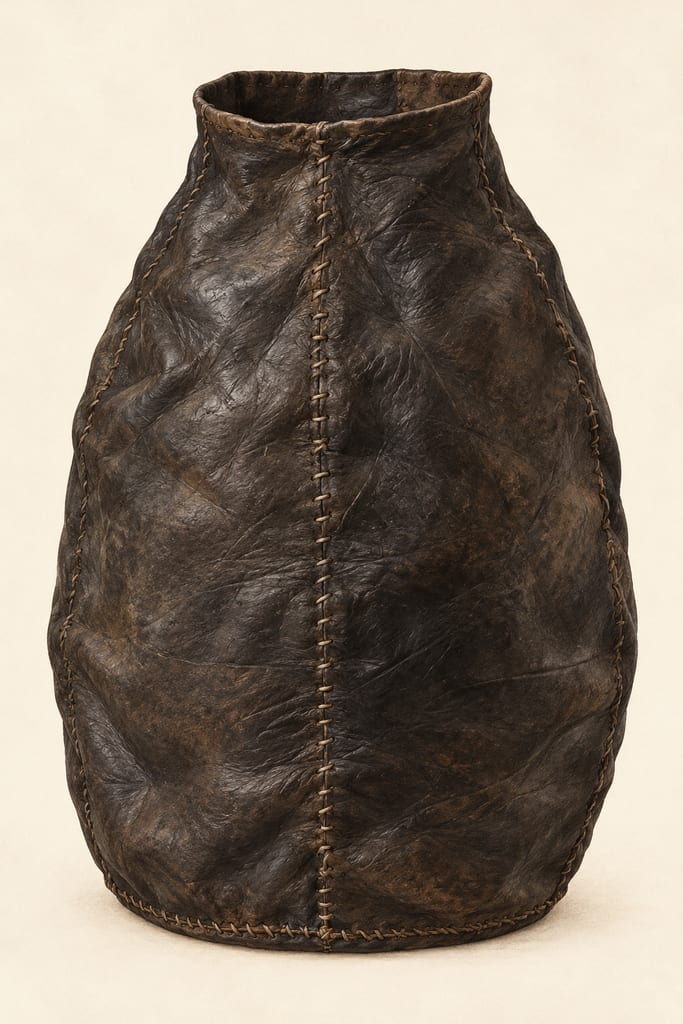
Altai arkhyt (chegen vessel)
Arkhyt is a traditional Altai sewn-hide vessel used to hold and periodically mix chegen. Sources describe a very large vessel, but do not establish one standard shape, measured capacity, or dimensions.
 FermenteaWhere food goes to change
Equipment · Kettles, coppers and boilers
A sbitennik is a portable vessel for heating and pouring sbiten. Museum records show a divided fire-and-liquid chamber and several nineteenth-century forms, from Nevyansk ironwork to copper and brass examples.
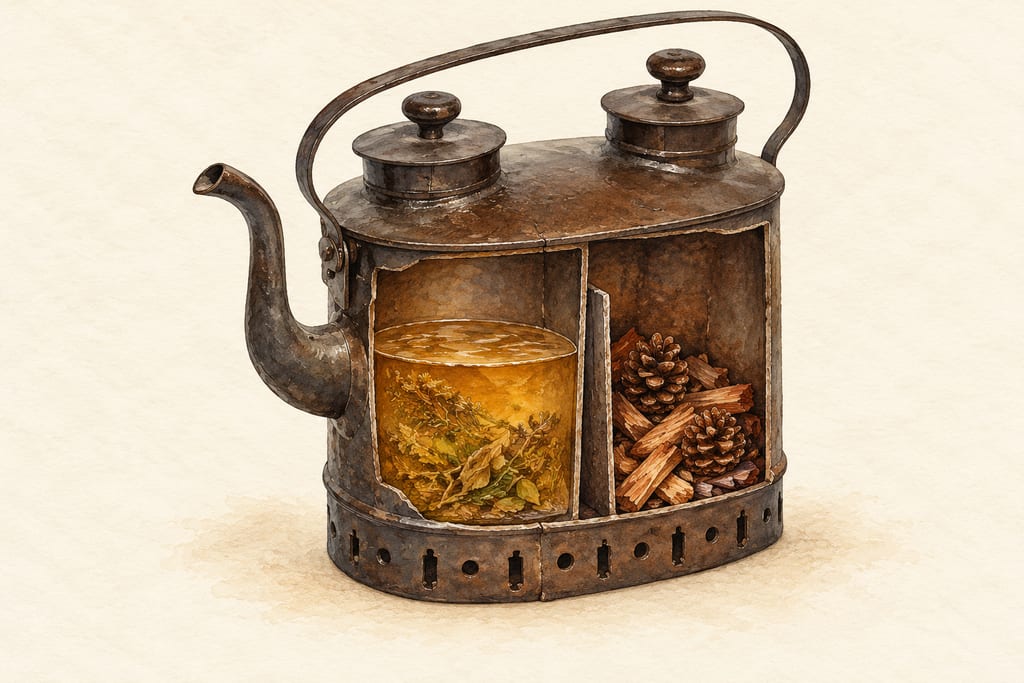
A sbitennik (сбитенник) is a vessel made to heat and serve sbiten, a honey-and-herb drink. The Nevyansk Historical and Architectural Museum describes its operation as similar in principle to a samovar, but emphasizes a carrying handle and a pouring spout like a kettle. The name therefore identifies a particular portable drink-heating vessel, not an ordinary samovar or a generic teapot.
The museum’s late-nineteenth-century Nevyansk object measures 14.5 × 24 × 14.5 cm, though its record does not say which axis each figure represents. It lists iron and wood and the techniques of beating and turning. The photograph shows a compact, dark vessel with an arched handle, a curved spout, two top openings and a perforated band around the lower fire chamber. Those details describe this surviving example, not a mandatory pattern for every sbitennik.
The Nevyansk museum explains that an internal partition divided the vessel into two isolated compartments. Honey, aromatic herbs and water went in the reservoir beside the spout. The neighboring chamber held small pieces of wood and cones, which were lit to warm the drink compartment. The fire and liquid remained separate; the heater was built into the portable vessel rather than placed in a separate stove.
The arrangement helps explain the object's distinctive form. Its handle made it possible to carry, while its spout served the heated drink. The museum compares the principle with a samovar but documents a different object with its own internal division and portability. A separate nineteenth-century copper sbitennik in the Unecha collection is described with a blower and chimney; those features belong to that record and should not be projected onto the Nevyansk iron example.
The surviving museum examples vary in material, shape and fittings. The Nevyansk piece is listed as iron and wood. The Unecha object is copper, with its own recorded height and diameters. A separate museum catalogue describes a first-half nineteenth-century example with a rounded brass body, wooden grips, a hinged handle, decorated spout, short firebox neck and three feet. It names no maker and gives Tula only as a possible manufacturing place.
This variation matters when interpreting the word sbitennik: it names a type of vessel, but the evidence does not support one universal size, material or set of fittings. The museum record for Nevyansk dates its individual artifact to the late nineteenth century, while the other catalogue dates a different piece to the first half of that century. These dates document particular objects, not the first appearance or end of the broader equipment tradition.
The Nevyansk museum's account places hot-sbiten sellers in crowds at fairs and public festivities. It describes vendors carrying a sbitennik in one hand, with bundles of small baked goods over a shoulder and a belt for cups, moving through the crowd rather than waiting at a fixed stall. This describes the trade around the drink; it does not identify the owner or use history of the specific museum vessel.
Nevyansk's record also sets the object beside the region's ironworks and blacksmithing: the town's foundry and ironworks left metal that local smiths could use, and craftsmen sold goods at fairs and weekly markets. The museum does not name the maker of its sbitennik, so this context is not proof that this particular vessel was made at the plant. Museum collections preserve examples of the equipment, but the records do not establish a general present-day supplier, capacity, care routine or food-contact certification.
Museums record several nineteenth-century sbitenniki. The Nevyansk museum dates one iron-and-wood artifact to the late nineteenth century; separate copper and brass examples show that there was no single material or silhouette. These surviving objects attest to the equipment's history but do not establish its first invention or continuous modern manufacture.
Museum records document several distinct builds and materials; no single silhouette, alloy, set of fittings or dimensions can be treated as universal.
Source →The historical object record does not certify a museum artifact for present-day food contact or use.
Source →This is the collection and local historical context of one documented artifact, not a claim that the individual object was made in Nevyansk.
Collection location for a separate artifact; its catalogue gives the Russian Empire as the place of creation.
Arkhyt is a traditional Altai sewn-hide vessel used to hold and periodically mix chegen. Sources describe a very large vessel, but do not establish one standard shape, measured capacity, or dimensions.
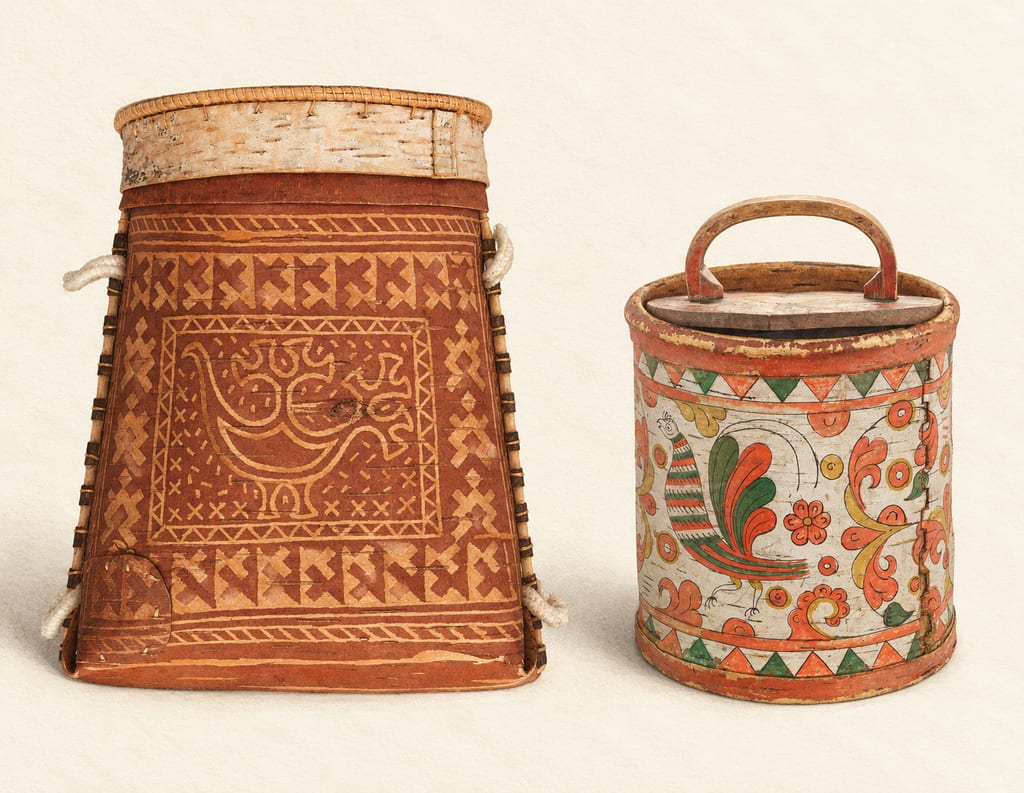
Ket sources describe frozen lingonberries in birch-bark containers; Shor sources describe salted wild garlic in birch-bark tuyes. Their exact forms are not documented.
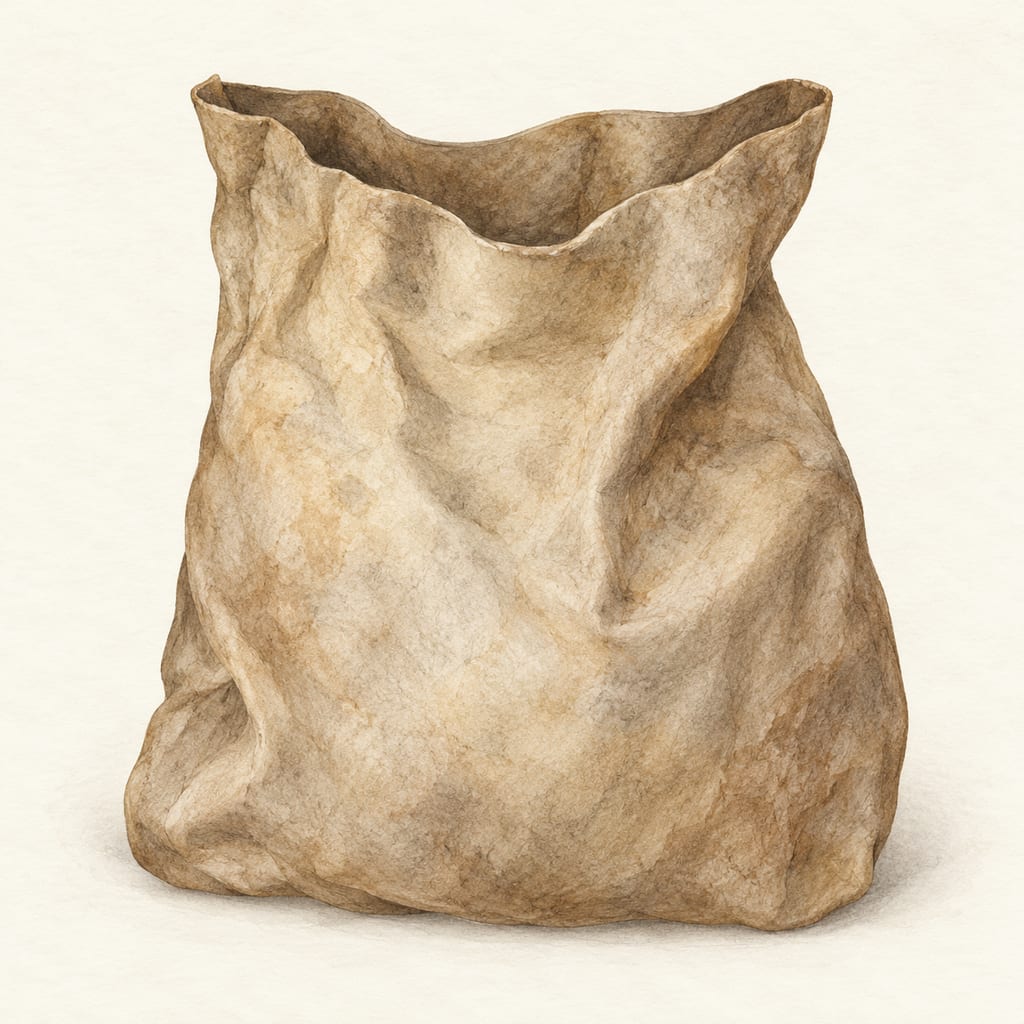
A Kalmyk interview describes dried sheep meat packed into calfskin bags for winter. The account identifies the material and storage use, but not the bag’s construction or dimensions.
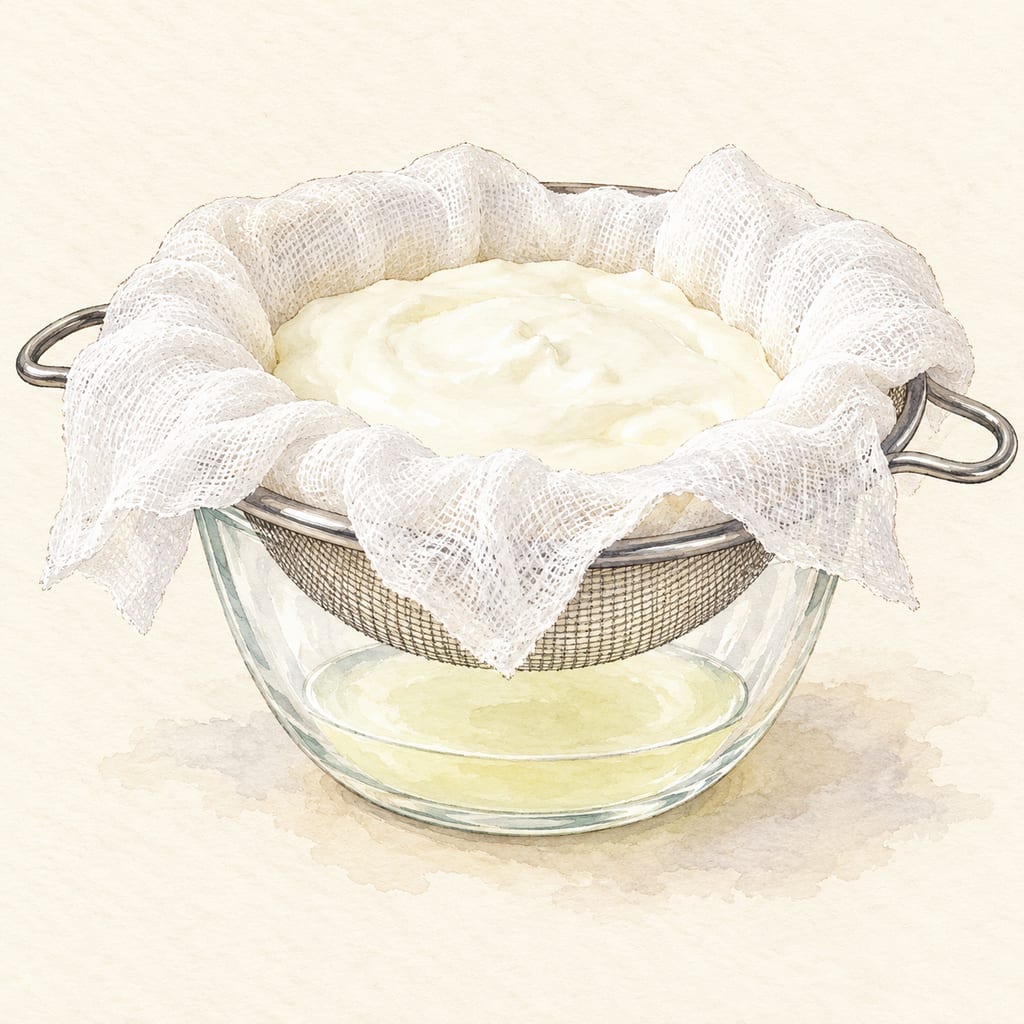
A kitchen strainer lined with cloth holds soft curd while whey passes through into a bowl. It is a modern, general-purpose setup; Sakha sources record strained suorat but do not specify this tool or its materials.
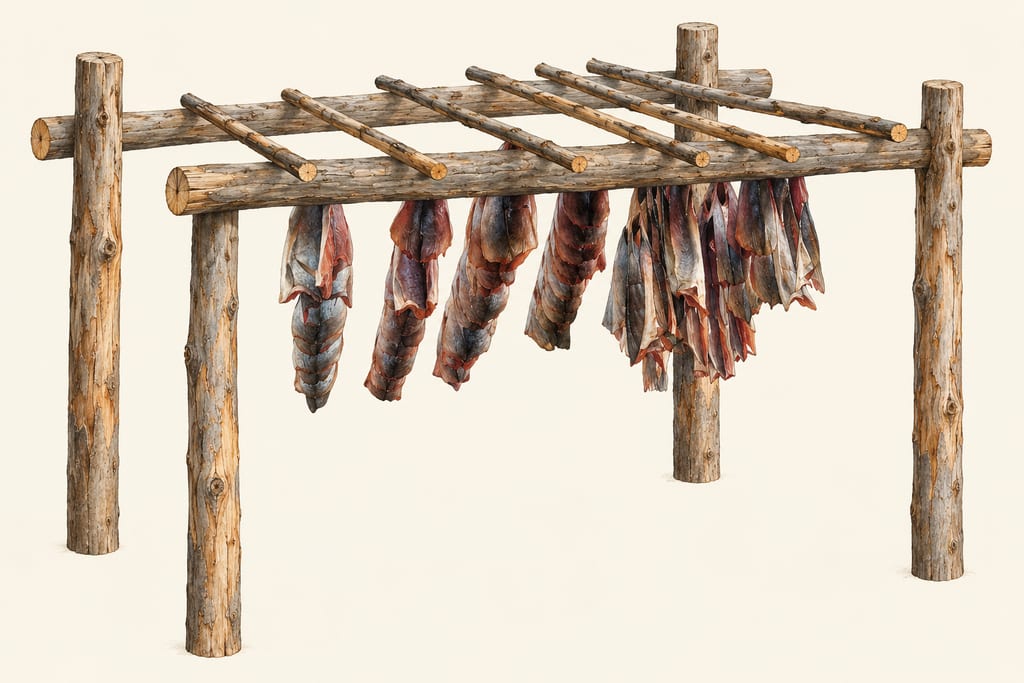
Daguma is an Udege open-air rack for hanging fish to dry, including yukola. The documented frame has four upright posts, two rails and cross-poles; its dimensions are not recorded.
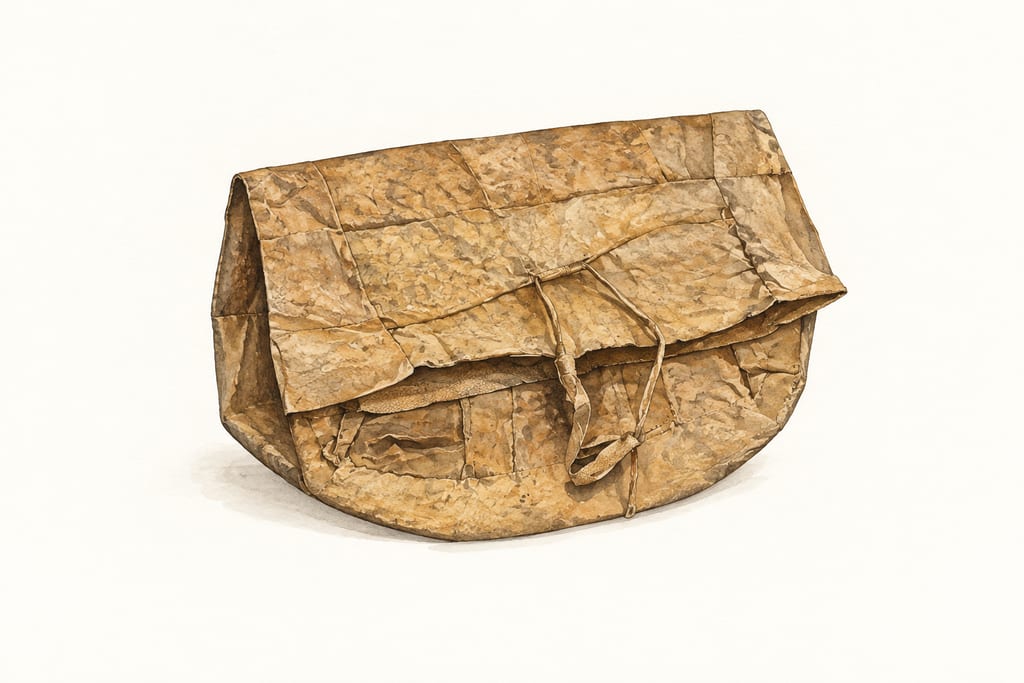
An Enets account records fish meal called porsa stored in burbot-skin bags. Museum records from the Yenisei and Ob regions document related fish-skin sacks, while keeping each community’s object and use distinct.
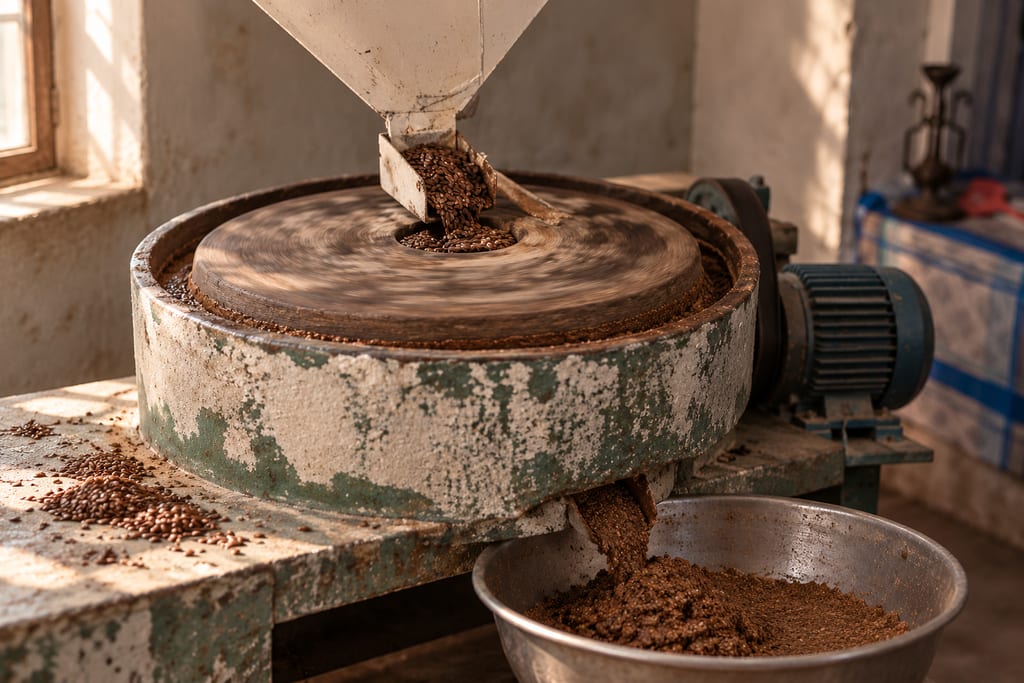
Mills grind seeds, nuts and grain into flour, meal or oil-rich paste. Stone, feed and power arrangements differ by tradition and model; the Dagestani example is one documented form, not a universal design.
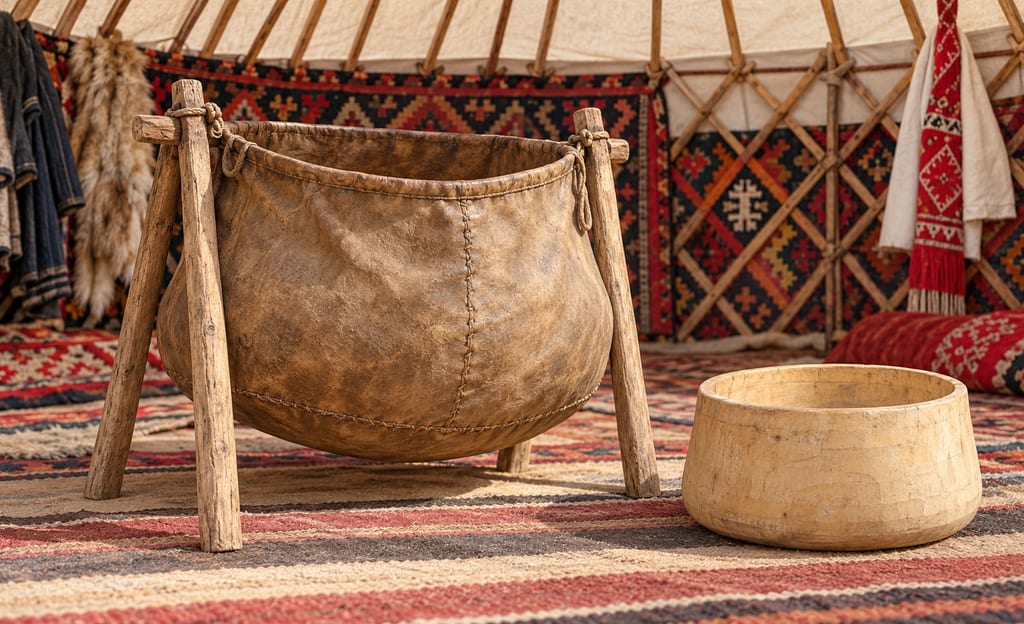
A Bashkir household account describes a large leather һаба for kumys, with one or two limewood tubs as alternatives; exact vessel dimensions and schedule are unspecified.

A Cap-Pelé boucanière is an Acadian herring-smoking building. The documented Willie Niles example is a one-storey wood-frame structure with a ridge smoke vent and interior bays for hanging fish-bearing cannes.

Achcharu is a family of Sri Lankan vinegar pickles made with mixed vegetables or seasonal fruit and a piquant spice dressing. This version is a quick, refrigerated, non-fermented mixed-vegetable pickle.

The acocote is a long, hollowed and dried gourd used to draw aguamiel from a mature maguey. It is a harvesting tool: the sap is transferred to a separate vessel before it ferments into pulque.

Adrak murabba preserves young ginger in sugar syrup, a sweet South Asian preparation recorded in Indian cookery and food-processing sources.

Parkia biglobosa seeds are fermented into regional West African seasonings, including nététou, iru, dawadawa and soumbala. The yellow fruit pulp is a separate food, and names and methods vary by place.

Japanese reddish-brown vinegar from sake lees matured about three years, turned to vinegar by acetic bacteria; the vinegar of Handa and Edomae sushi rice.

A refined common-wheat flour blended for a broad range of baking; its protein and behavior vary with wheat, milling and market.

The almond mushroom, Agaricus subrufescens, was cultivated in eastern North America in the 1800s, lost its market, and returned as a cultivated mushroom from Brazil, where it is grown under several names.
No community contributions have been published for this entry yet.
Sign in to contribute. Published comments and photos are free to read.
Nevyansk Historical and Architectural Museum via Artefact / Culture.RFDesign · Materials · Dimensions · History · Geography · Use
Sbitennik (сбитенник)The museum dates its iron-and-wood object to the late nineteenth century and records dimensions of 14.5 × 24 × 14.5 cm, without specifying axis order.
The museum describes a portable vessel resembling a samovar in principle, with a carrying handle, pouring spout and two isolated internal compartments.
The compartment beside the spout held honey, aromatic herbs and water; the other held wood chips and cones used to heat the adjacent section.
The museum describes sbiten sellers moving through fairs and gives a Nevyansk ironworks and local blacksmith context, without naming the maker of this individual vessel.
Cited in: A portable heater and pourer for sbiten; Two chambers, one vessel; A family of forms rather than one blueprint; Carried through fairs and preserved in museums
Unecha Local History Museum via Artefact / Culture.RFMaterials · Dimensions · History · Geography · Design
Copper sbiten-makerThe museum records a nineteenth-century copper sbitennik, 30 cm high with a 21 cm body diameter and a 14 cm bottom diameter; these dimensions apply to that item only.
Its description documents a divided liquid-and-fire vessel, with a blower and chimney on that example, and notes variation in legs and overall form.
Cited in: Two chambers, one vessel; A family of forms rather than one blueprint; Carried through fairs and preserved in museums
Museum of Samovars and Boiltoffs, Tula RegionDesign · Materials · History
Сбитенник, KB 273A separate museum catalogue describes a first-half nineteenth-century sbitennik with a rounded body, hinged handle, decorated spout, three feet and removable parts.
The catalogue lists brass and wood and identifies the maker as unknown; Tula is suggested only as a possible place of manufacture.
Cited in: A family of forms rather than one blueprint; Carried through fairs and preserved in museums