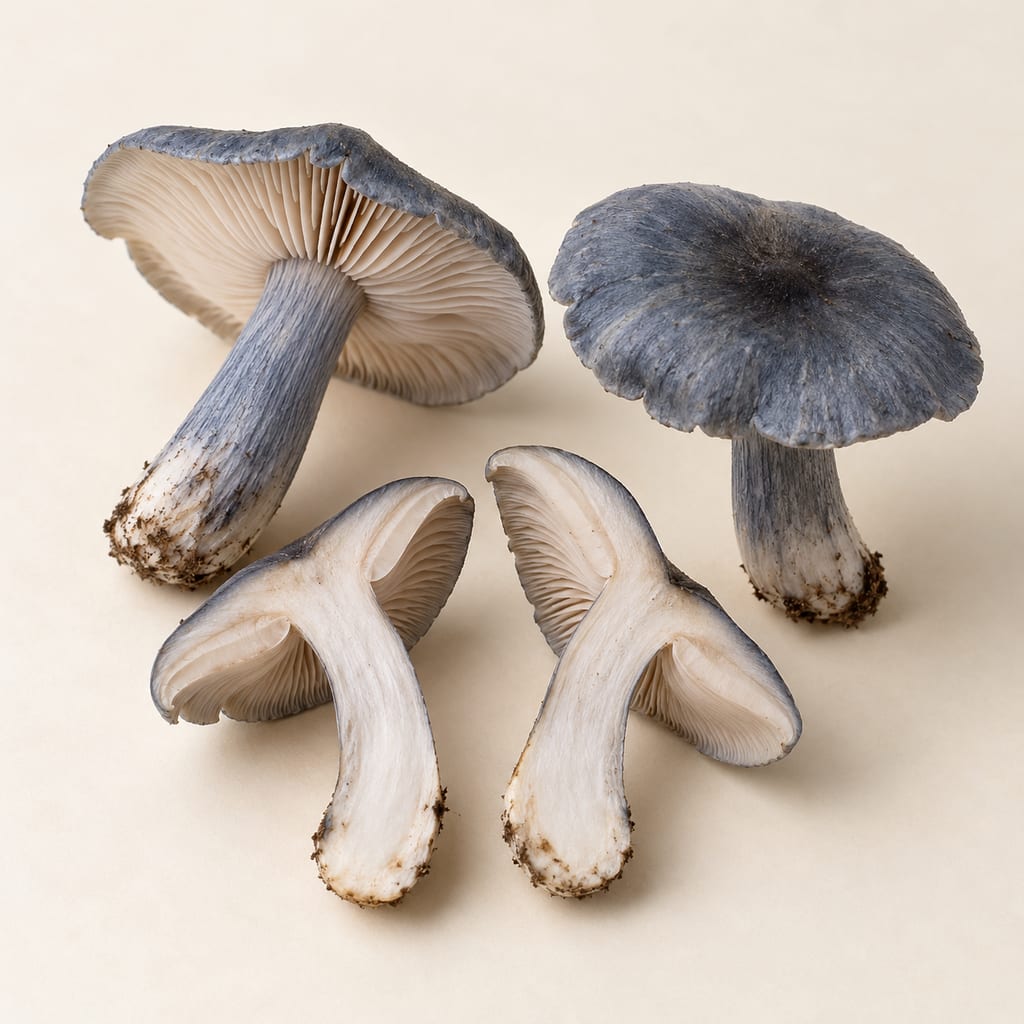
Bloxam's entoloma
Bloxam's entoloma is a rare pink-gilled mushroom of old grasslands. Historical sources call it edible, but food-use evidence and older identifications remain uncertain; this does not recommend gathering or eating it.
 FermenteaWhere food goes to change
Substrates
The common medlar, Mespilus germanica, is a small tree whose hard, sour fruit is eaten only after it has bletted, softening through decay into a sweet, apple-sauce-like pulp.
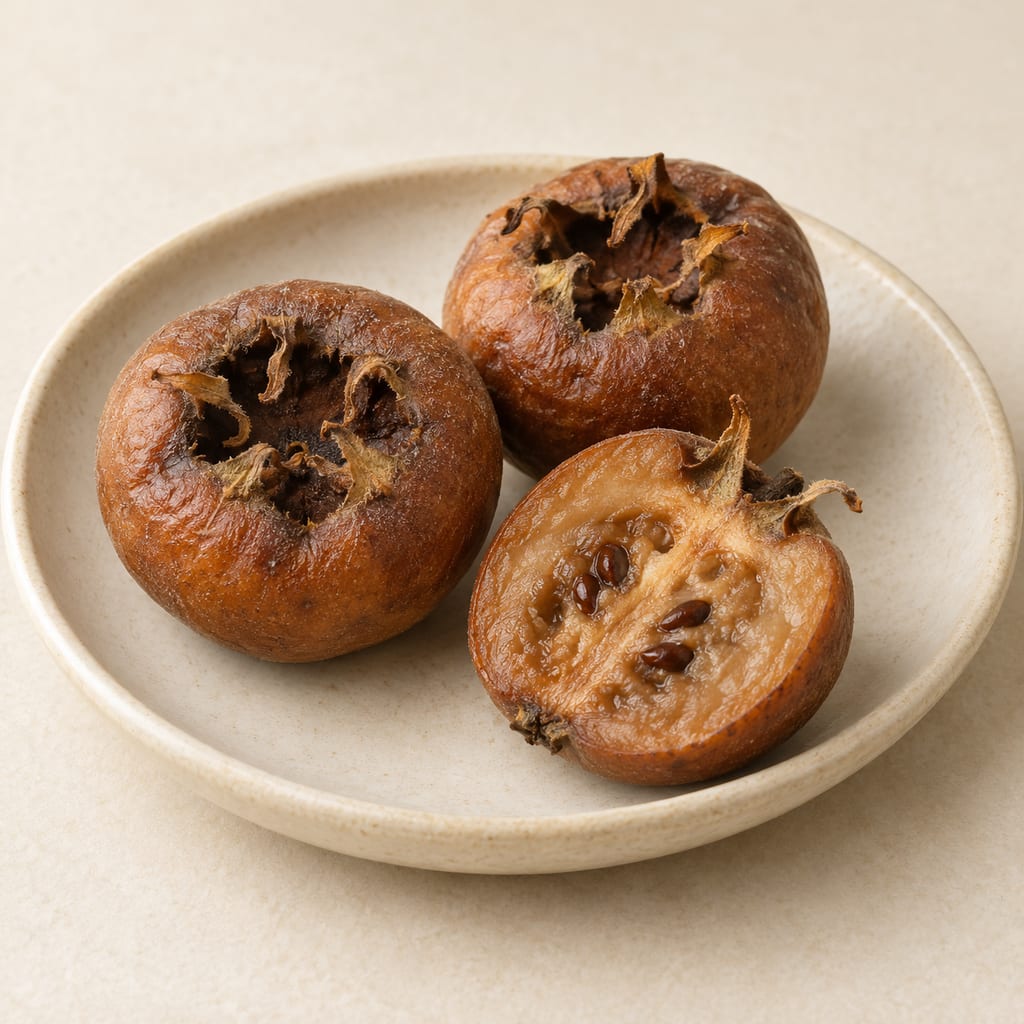
The medlar is Mespilus germanica, a small Rosaceae tree described by Linnaeus in 1753. Under a classification that merges Mespilus into Crataegus, the same plant is called Crataegus germanica. A second species, Mespilus canescens, was recorded in North America in 1990. The loquat, sometimes called the Chinese or Japanese medlar, is only distantly related.
The fruit is a pome with a large open calyx, and it looks like a small brown apple with a flat crown of sepals. In the past it was known under coarse English names that refer to that shape. Ripe fruit on the tree is hard, acidic and astringent, and it is not pleasant to eat until it has been softened.
The Wikipedia article places the true homeland of the tree in the southeastern Balkans, Asia Minor, the Caucasus, Crimea, northern Iran and possibly Turkmenistan. It also grows along the Black Sea coasts of Bulgaria and Turkey, and fossils have been found in Italy and Germany. It is rare in southern Europe and naturalised in some woods in southeast England.
The tree may have been cultivated for about 3,000 years. Strabo mentions it, and it reached Greece around 700 BCE and Rome around 200 BCE. It was important in Roman and medieval times, and by the seventeenth and eighteenth centuries other fruits had largely replaced it in gardens and kitchens.
Bletting is the process that makes medlars edible. Frost or natural storage softens the fruit, lowers its tannins and acids, raises its sugar, and darkens and wrinkles the skin. The softened flesh has the texture and look of apple sauce, which can make it appear spoiled to someone who has not seen it before. The Wikipedia article notes that pomes are among the few fruits that can be eaten in winter.
Because the process depends on softening rather than heat, bletting is a storage stage rather than a fixed time. The article gives no duration, so this page gives none.
Bletted fruit is eaten raw, sometimes with sugar and cream, or made into medlar jelly. Medlar cheese, a curd of pulp, eggs and butter that resembles lemon curd, is another documented preparation. Unripe fruit is high in tannin and has been used for tanning and for clarifying wine. Saarland in Germany makes a schnapps from the fruit.
Research has explored the kernel oil as a biodiesel source, leaf-derived activated carbon for removing heavy metals and silver nanoparticles with antibacterial properties. These are laboratory studies described in the article, not food uses.
The sources give no yields, no sugar or acid measurements for bletted fruit, no safe storage time and no recipe quantities. The medlar cheese and jelly are named but not quantified. This page gives none of those figures.
The Wikipedia article gives this region as the true homeland of the tree; the source does not give a locality.
Documented use: a schnapps made from the fruit.
Naturalised in some woods in southeast England; the source gives no food record for the region.
Bloxam's entoloma is a rare pink-gilled mushroom of old grasslands. Historical sources call it edible, but food-use evidence and older identifications remain uncertain; this does not recommend gathering or eating it.
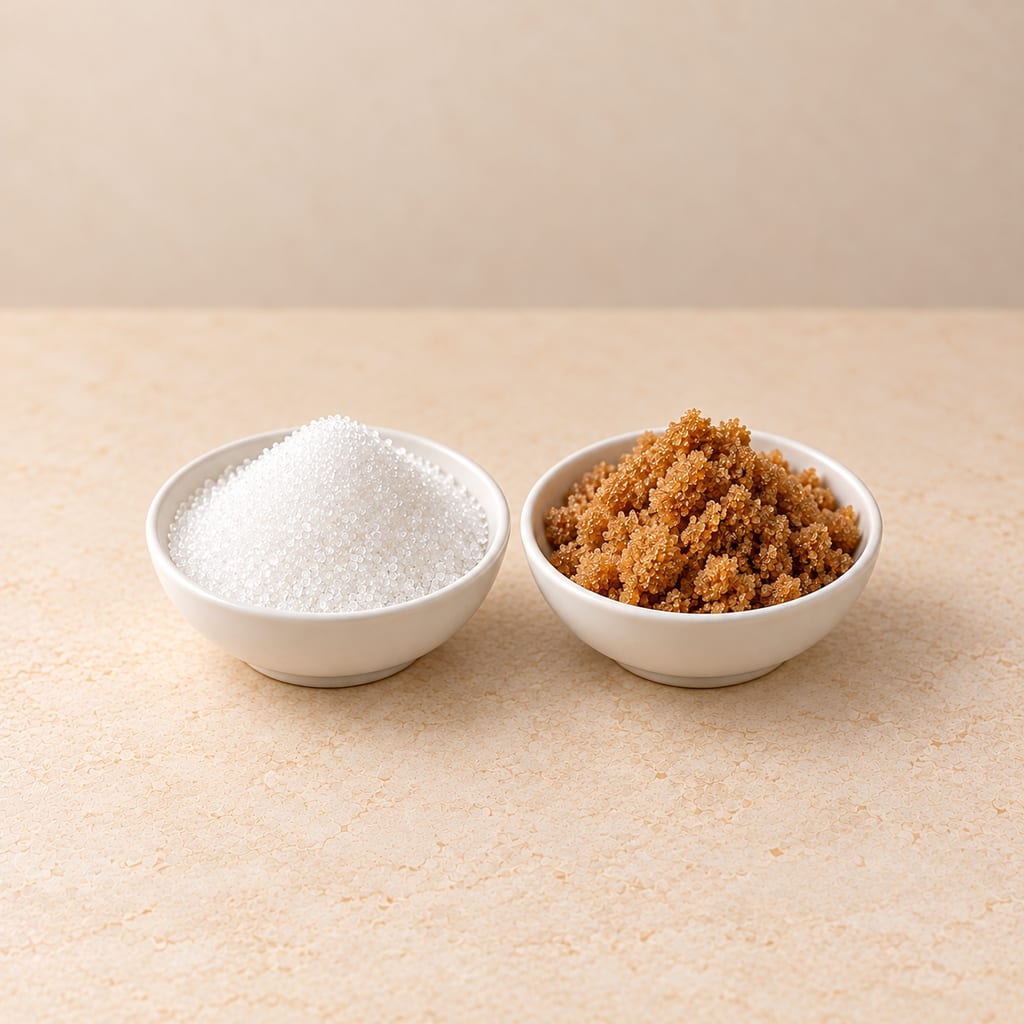
White sugar is refined sucrose, almost pure; brown sugar is sucrose with molasses, left in or added back. Molasses makes brown sugar moister, darker and more strongly flavoured.
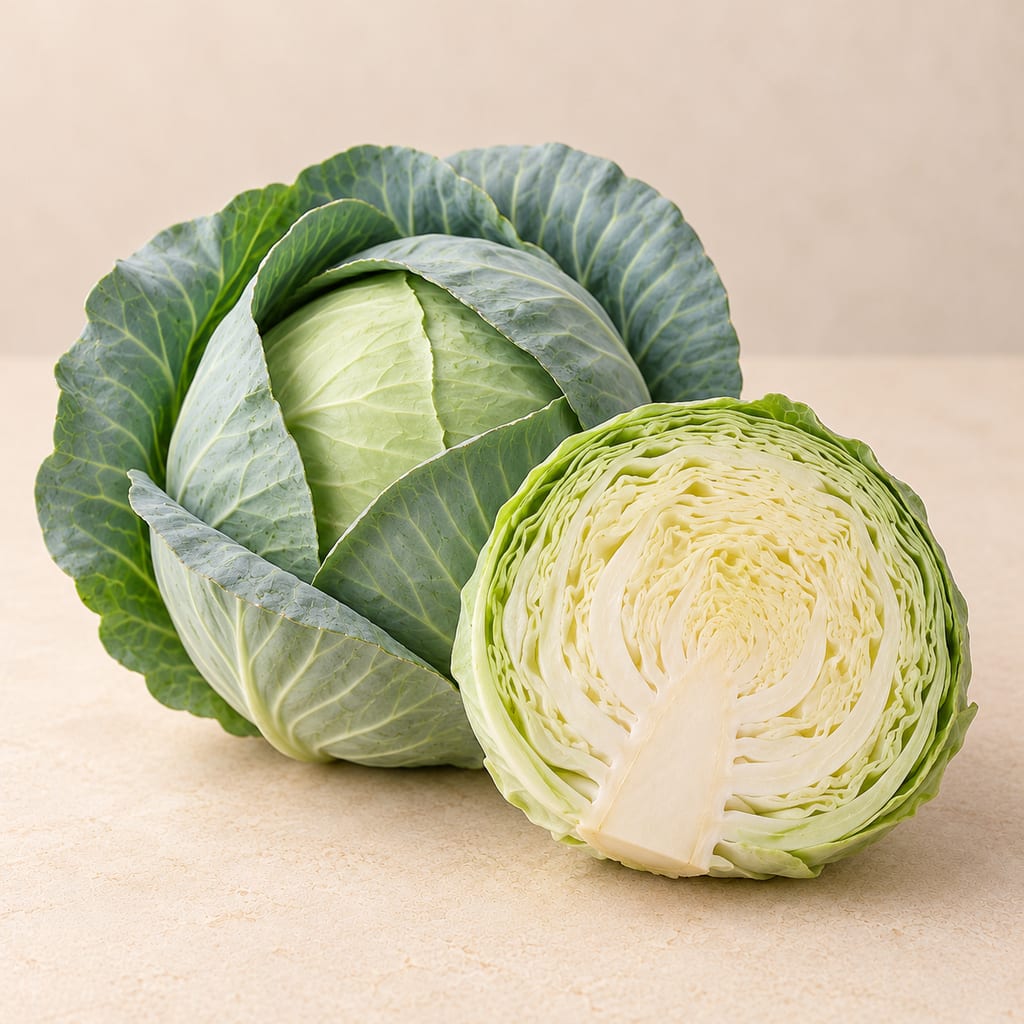
Cabbage is the dense leafy head of Brassica oleracea, a European vegetable that keeps for months and is the classic raw material for sauerkraut, with napa cabbage the base of kimchi.
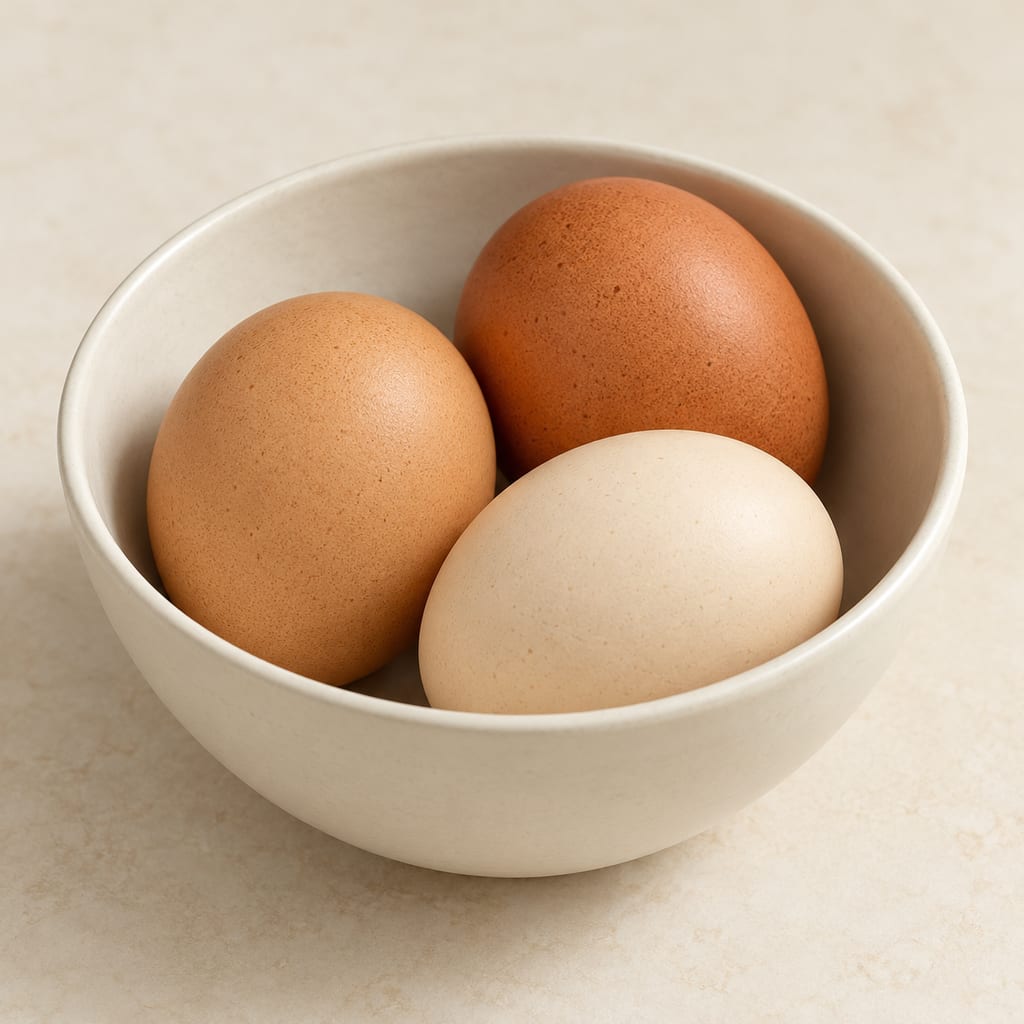
Chicken eggs supply proteins and yolk fats that set and emulsify. Atlas breads use them in enriched doughs, surface washes and a sourdough pancake batter mixed after fermentation.
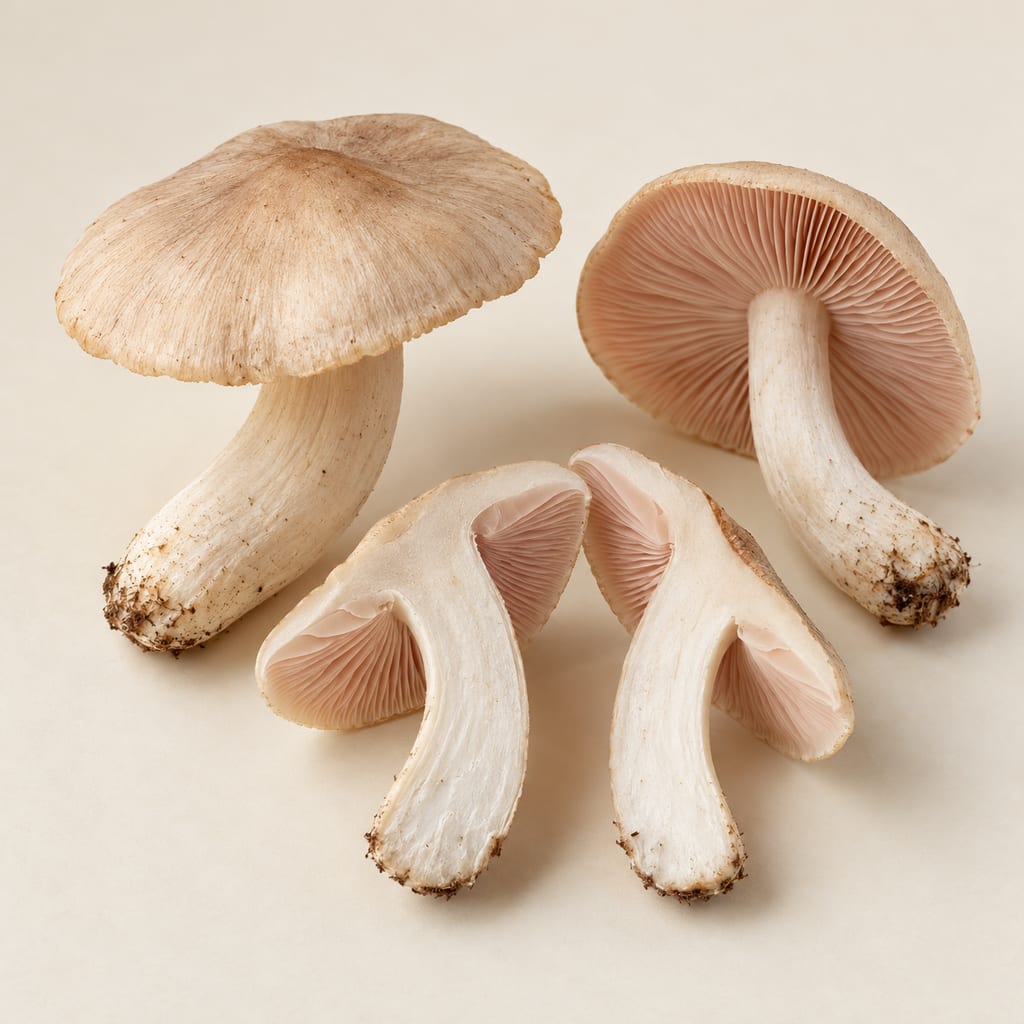
Entoloma sepium is a spring pinkgill associated with Rosaceae. Chinese and European sources list it as edible or conditionally edible, while taxonomic uncertainty and a poisonous lookalike warrant caution.
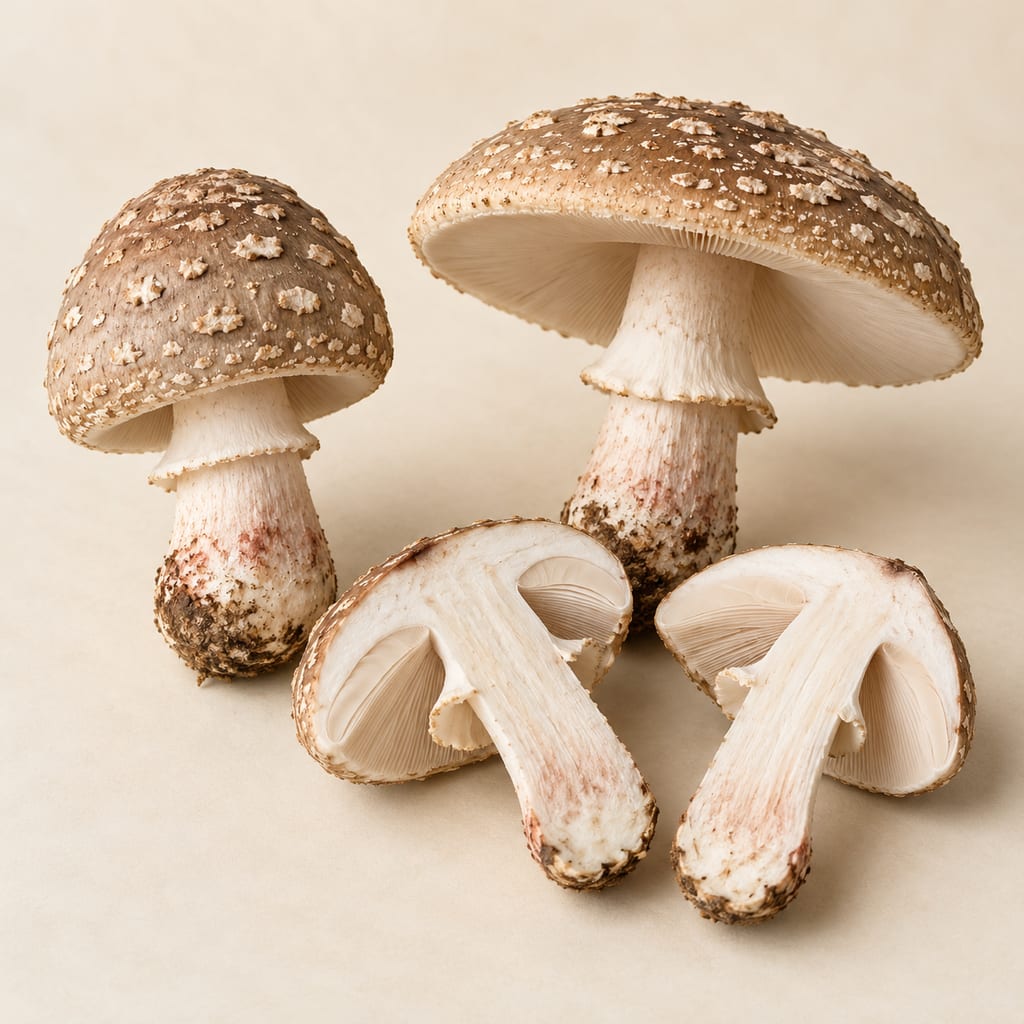
The European blusher, Amanita rubescens, is a woodland amanita whose flesh turns pink when cut. It is eaten only well cooked and is easily confused with the poisonous panthercap.
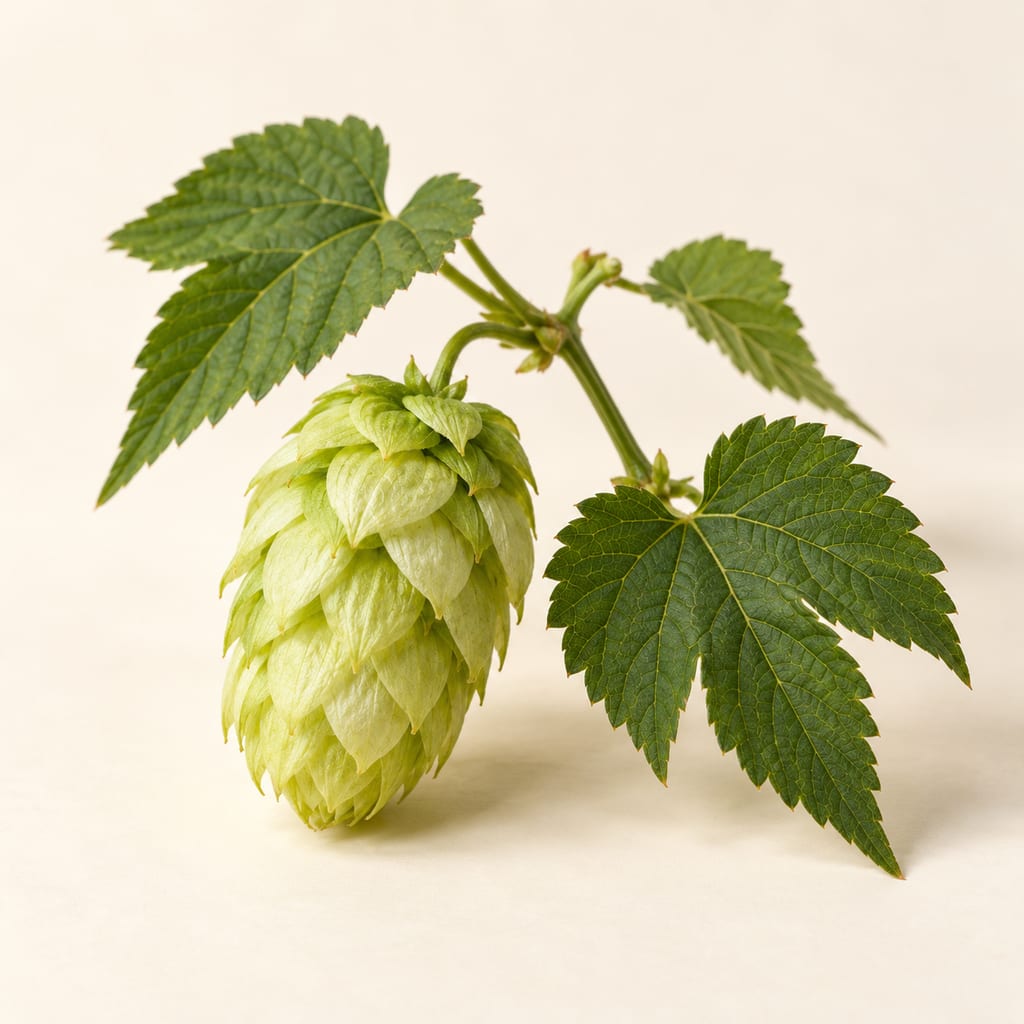
A traditional German aroma-hop land variety, associated with the Hallertau and described with herbal, spicy and floral notes. Cultivar identity, crop analysis and the growing place of a particular lot remain separate facts.
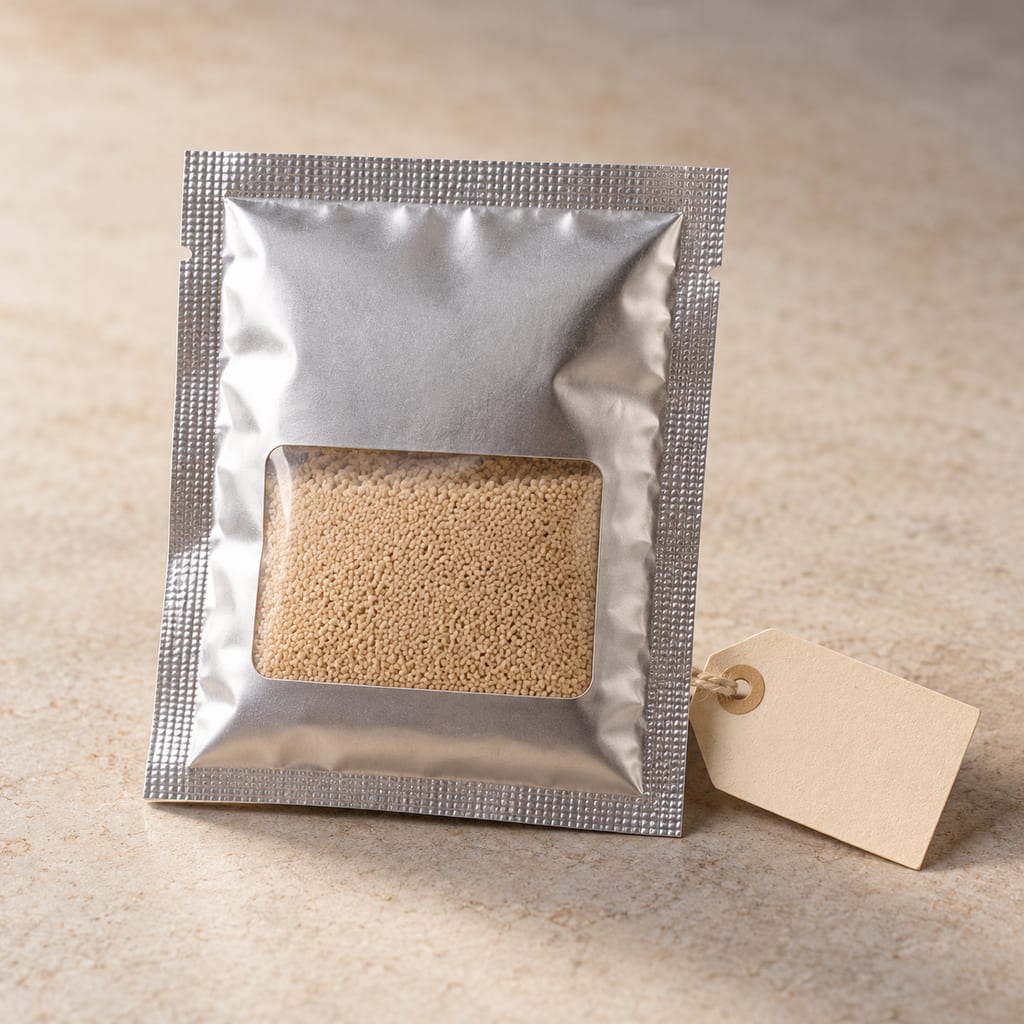
Lager yeast is the bottom-fermenting brewing yeast Saccharomyces pastorianus, a hybrid of S. cerevisiae and S. eubayanus, sold and kept as named strains that are not interchangeable.

At North Abydos in Egypt, a fixed early Dynastic brewery comprised parallel semi-subterranean installations with rows of ceramic mash vats; excavation reports revise their number, scale and estimated batch capacity.

Ají amarillo is the orange-yellow Peruvian chilli cultivar group of Capsicum baccatum, used to colour and season huancaína sauce and ají de gallina. Published heat estimates do not establish one range for the named cultivar.

Toasted almonds are whole sweet almond kernels dry-roasted until golden to brown. Heat replaces their marzipan note with a roasted, nutty one; they thicken and flavour romesco.

Kodiak salmon, halibut and cod cut as seg'aq and hung on an initaq rack to become tamuuq, with kac'amaasaq and kupcuunaq named as different results.

Aniseed is the dried ripe fruit of Pimpinella anisum, an aromatic Apiaceae spice commonly called a seed. It adds a sweet, warm aroma to breads such as Moroccan krachel and South African mosbolletjies, and is distinct from star anise.

A fixed Late Chalcolithic installation in Areni-1 cave combined a shallow clay pressing basin with a large jar set into the cave floor and storage vessels nearby.

Ripe avocado flesh is the soft, buttery, fat-rich pulp of Persea americana, eaten raw. It is low in acid, so it is a fresh ingredient that needs care in chilled dishes.

A portable dome and pan used over a hearth, with embers on the lid and heat from below. Regional peka and saç forms share this principle while differing in materials, pan shape and how the food is cooked.
No community contributions have been published for this entry yet.
Sign in to contribute. Published comments and photos are free to read.
WikipediaLead · Identity · History · Culinary
Mespilus germanicaLinnaeus 1753; Crataegus germanica under the merged classification; M. canescens 1990
Native range in the southeastern Balkans, Asia Minor, Caucasus, Crimea, northern Iran
Cultivation about 3,000 years; Greece around 700 BCE, Rome around 200 BCE
Bletting lowers tannins and acids and raises sugar
Raw with sugar and cream, medlar jelly, medlar cheese, Saarland schnapps
Cited in: What it is; Native range and early cultivation; Bletting; Uses; Limits of the sources