








































































Suān zhǎ ròu (酸鲊肉)
A Tujia sour pork preparation documented in southeastern Chongqing. Its rice-flour pork method is distinct from the wider suān ròu forms; a sixth-century pork-zha text is an earlier attestation, not proof of direct continuity.
1504 records with their sources, across 11 categories.
Fermented, enzyme-ripened and mixed seasonings328
Fruit preserves10
Legume, seed and plant-protein ferments10
Garum and fish sauces8
Adjacent and excluded7
Koji, mold starters and mold-ripened ferments4
Acid and oil pickles3
Fermented fruit and fruit-derived foods3
Vegetable lactic3
Dairy ferments2
Smoked salted and dried foods2
Cheese1
Not yet classified1
Smoked salted and dried foods41
Fermented sausage and meat17
Adjacent and excluded14
Condiments and enzymatic seasonings2
Garum and fish sauces1
Not yet classified1
Vegetable lactic1A Tujia sour pork preparation documented in southeastern Chongqing. Its rice-flour pork method is distinct from the wider suān ròu forms; a sixth-century pork-zha text is an earlier attestation, not proof of direct continuity.


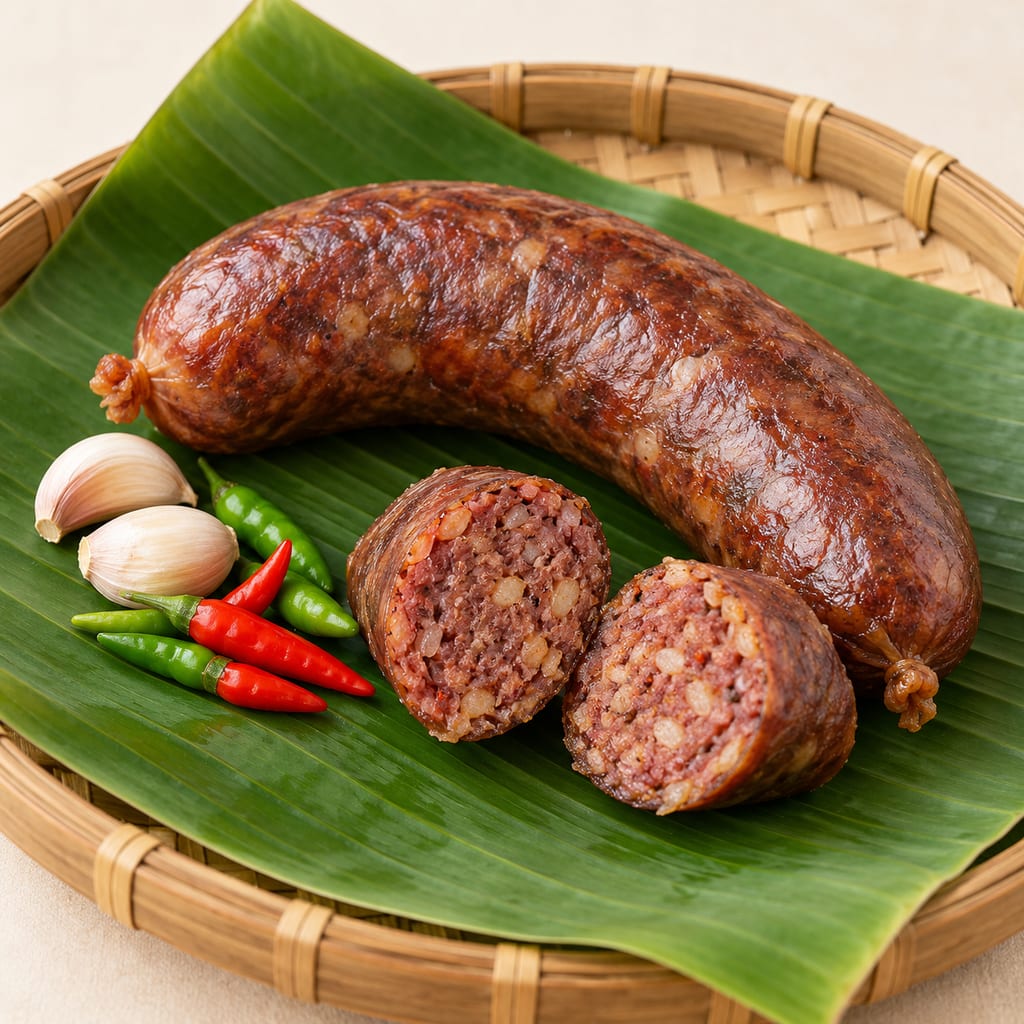
Naem is a Thai sour pork preparation made with minced pork, rind or ear, glutinous rice, garlic and salt. Its documented room-temperature method has no validated food-safety endpoint.

Mum is a Thai family of fermented meat preparations with distinct pork Mam-moo and beef Mam-neua forms. Sources document ingredients, casing and serving traditions, but not a validated home process.

A 2023–2025 proof-of-concept made separate fermented extracts from beef heart and lung with Staphylococcus xylosus and protease. It reports supervised pilot findings, not a validated household method or a blended heart-and-lung formula.