Recipes

1504 records with their sources, across 11 categories.

All fruit63Fruit preserves37Fermented fruit and fruit-derived foods9Adjacent and excluded4Acid and oil pickles3Condiments and enzymatic seasonings3Grain and starch ferments2Vegetable lactic2Garum and fish sauces1Smoked salted and dried foods1Tea cocoa and coffee ferments1
Filtered to

Recipes

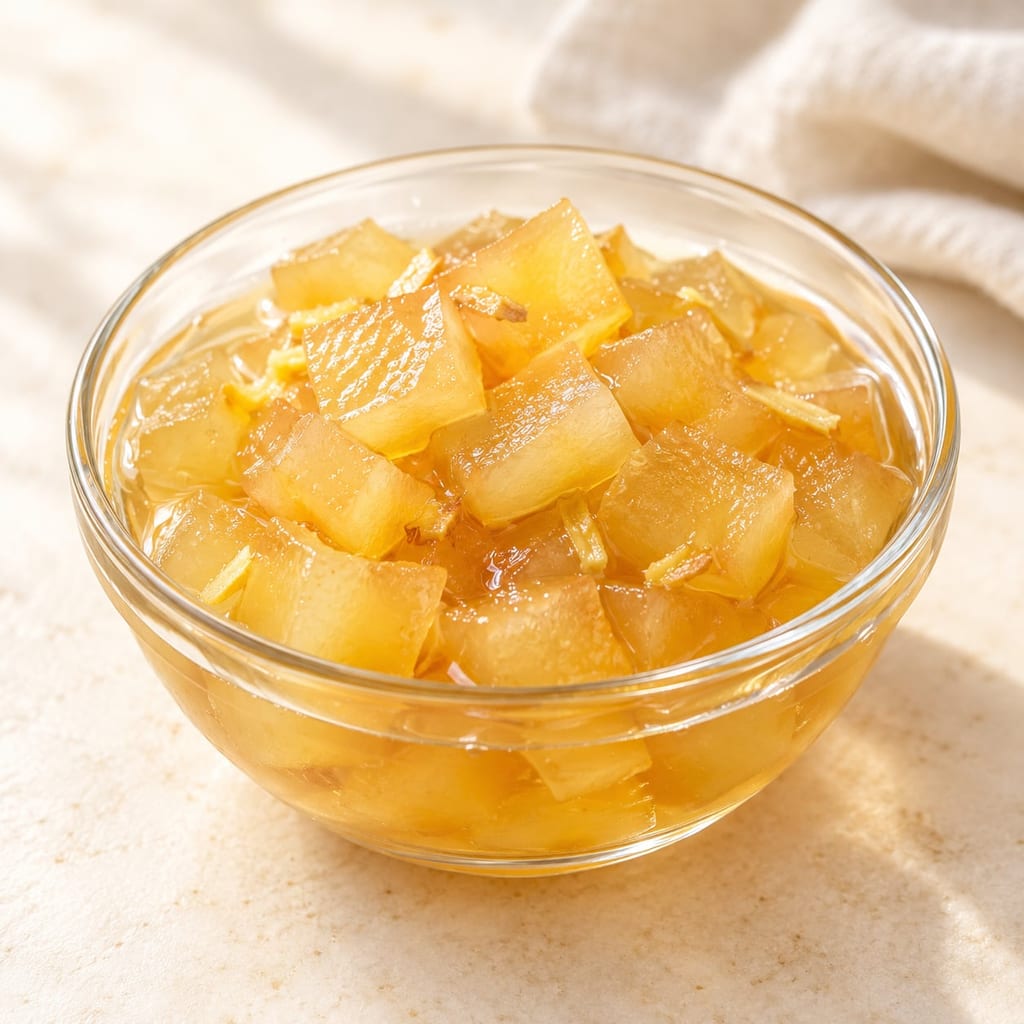
Illustrative refrigerated preserve made from ordinary watermelon-rind cubes in light lemon-ginger syrup; inspired by, but distinct from, traditional makataan konfyt.

Refrigerated watermelon-rind preserve inspired by makataan

A measured, refrigerated prototype cooks ordinary watermelon’s white rind in lemon, ginger and sugar syrup. It is inspired by makataan konfyt but does not reproduce the traditional fruit or its lime-water treatment.
Modern adaptation
· Fruit
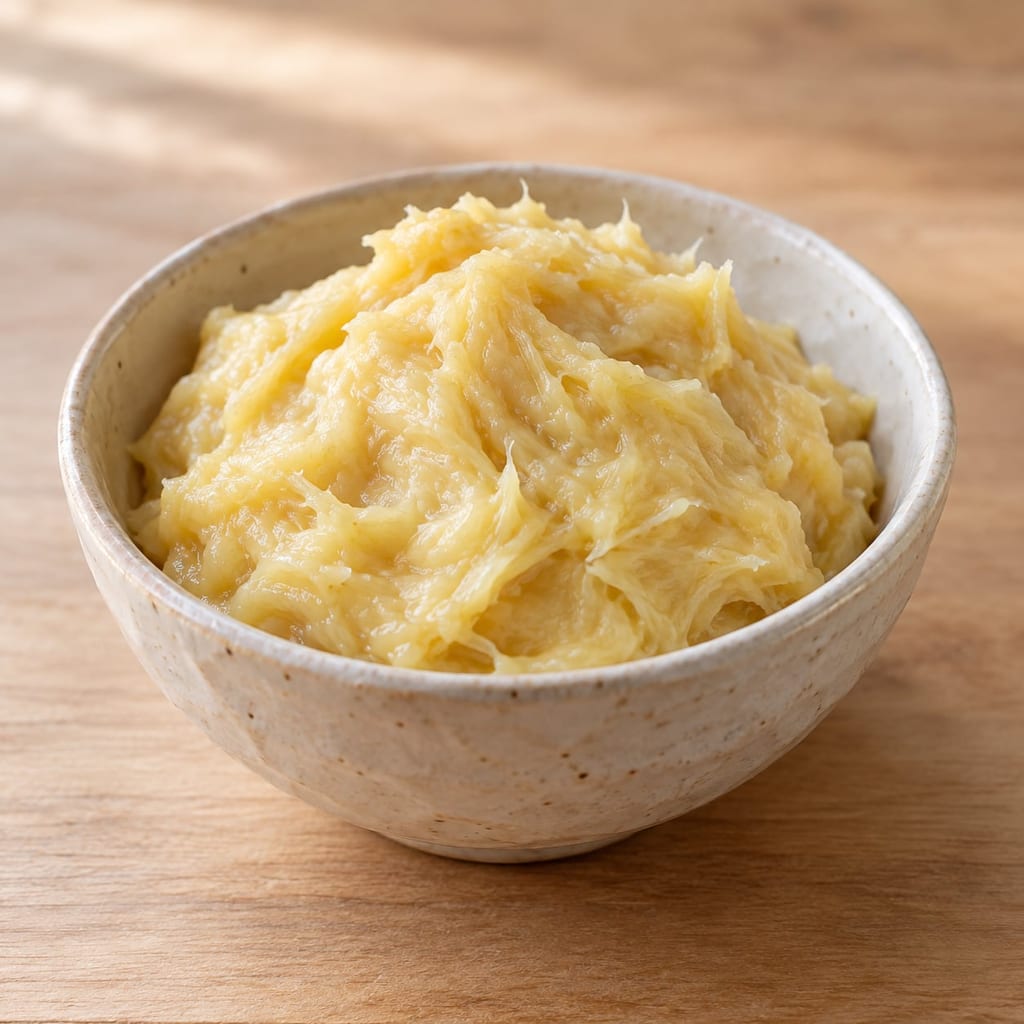
A small ivory ceramic bowl of thick pale yellow tempoyak, with a softly mashed, subtly fibrous texture, representing the fermented durian paste itself.

Tempoyak (fermented durian paste)

Durian flesh is mashed with salt and fermented in a covered container as a Malay condiment or cooking ingredient.

Indonesian Malay communities · Traditional method
· Fruit
Illustrative Himalayan Galgal pickle: short rectangular pieces of large yellow citrus in a mustard-oil, spice and jaggery pickle, served in a plain ceramic bowl with whole Galgal fruit nearby.

Galgal pickle

Ripe Himalayan galgal is boiled, sun-dried and cooked with mustard oil, spices and jaggery before a further rest in a ceramic jar.

Western Himalayas · Modern method
Fruit
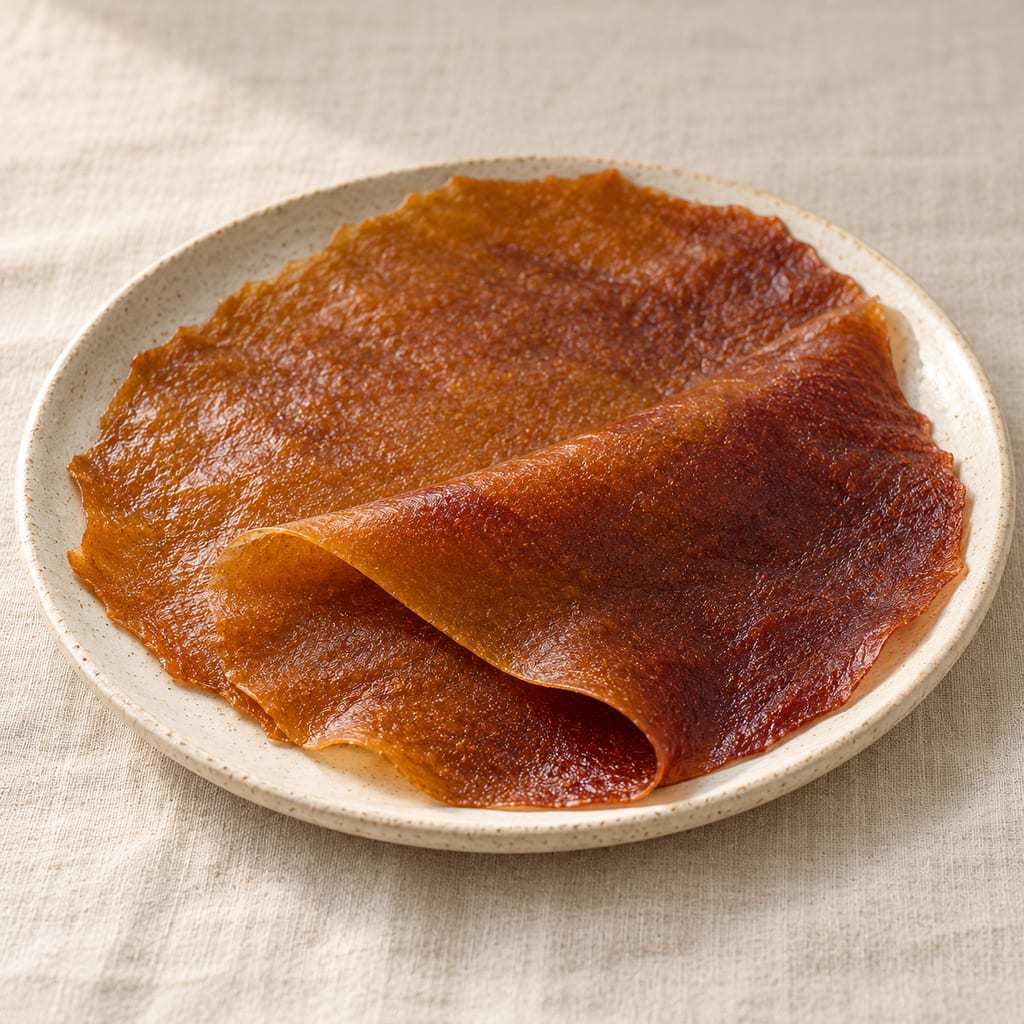
A thin, flexible amber-brown mulberry tklapi sheet loosely folded on a pale ceramic plate.

Meskhetian mulberry tklapi

A reported Khizabavra household method cooks mulberry juice with wheat flour into a thin porridge before drying it on cloth; batch measures and a measured endpoint are absent.

Khizabavra, Aspindza · Traditional method
Fruit
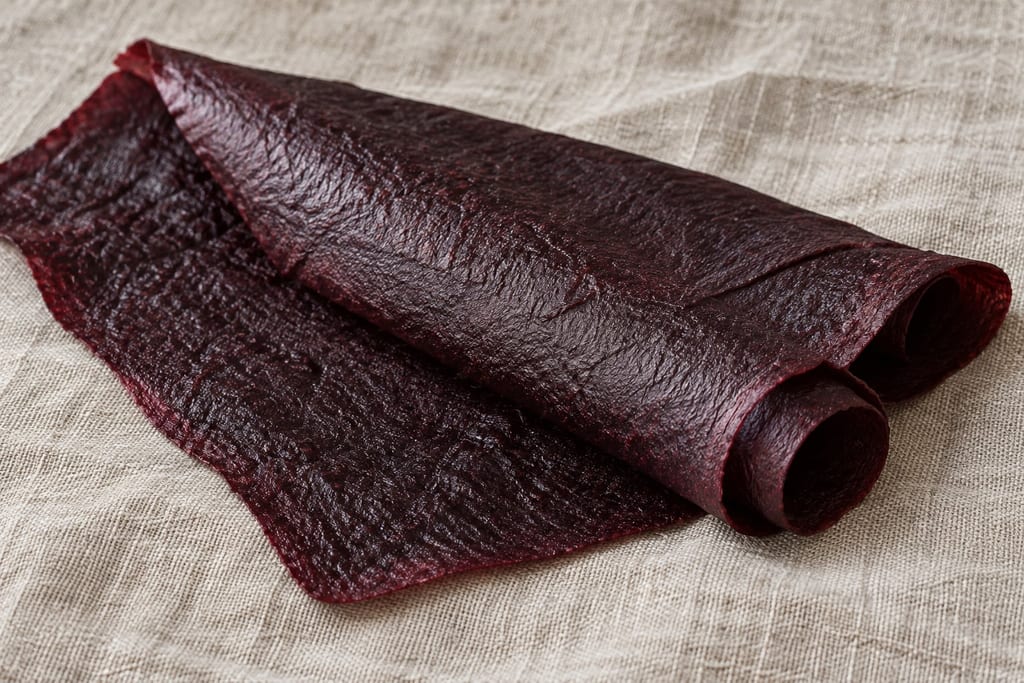
Illustrative rolled sheet of dark mulberry tklapi, the dried fruit sheet described in the FAO Georgian recipe; not a historical photograph.
Elevated risk

Mulberry tklapi

Georgian field notes describe mulberry tklapi with wheat flour but omit how the paste is cooked. FDA warns raw flour can carry harmful bacteria; this incomplete account is documentary, not a home recipe.

Georgia · Traditional method
Fruit
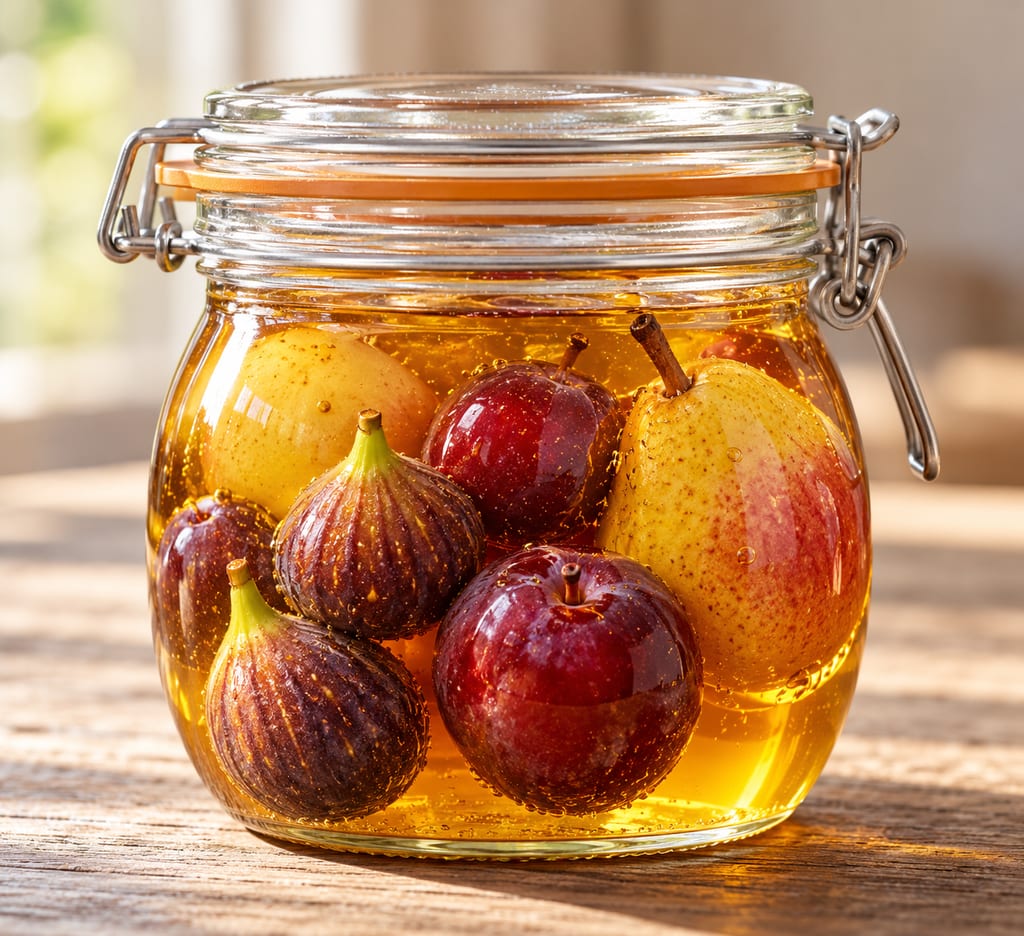
Whole figs, plums, and other fruit surrounded by golden honey in a clear glass vessel, illustrating the fruit-in-honey practice.

Fruit preserved in honey

Fruit and some other foods were placed in honey in ancient Mediterranean kitchens. The honey's concentrated sugar does the preserving, and wet ingredients weaken it.

Mediterranean
Fruit
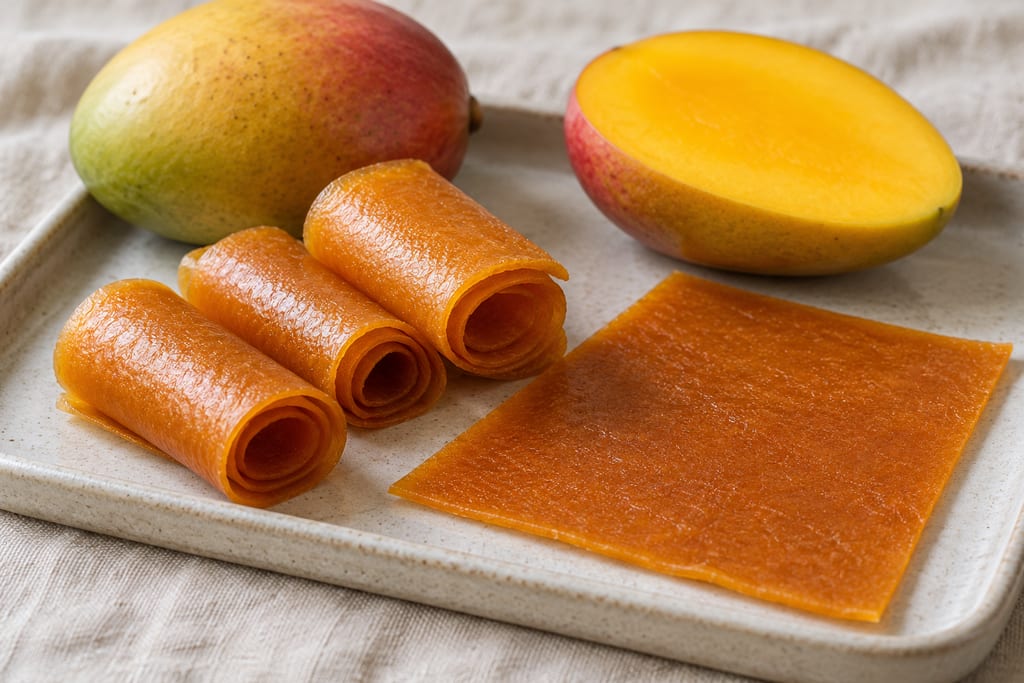
Deep amber mango leather shown as flexible rolled strips and one flat sheet beside fresh mango; an illustrative finish, not a claim of shelf-stable storage.

Mango leather

Sieved mango purée with honey and warm spices, spread a quarter inch thick and dried at 140 °F (60 °C) for about 10 hours into a flexible fruit sheet.

Modern method
· Fruit
Photograph of Pracharanda.

Pracharanda

Pracharanda is finely reduced dried pear used as a topping on porridge, dumplings and cakes in Czech sources. Accounts of its preparation differ.

Czech Republic
Fruit
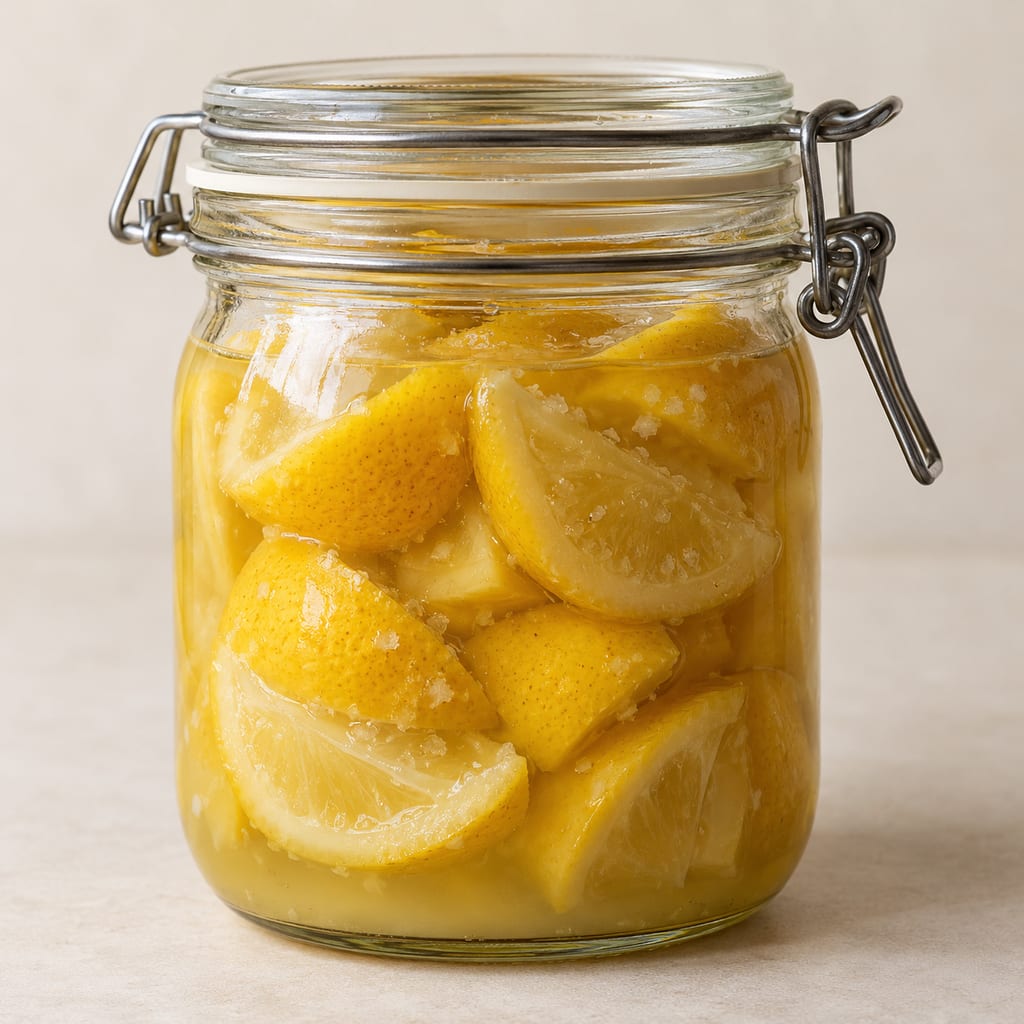
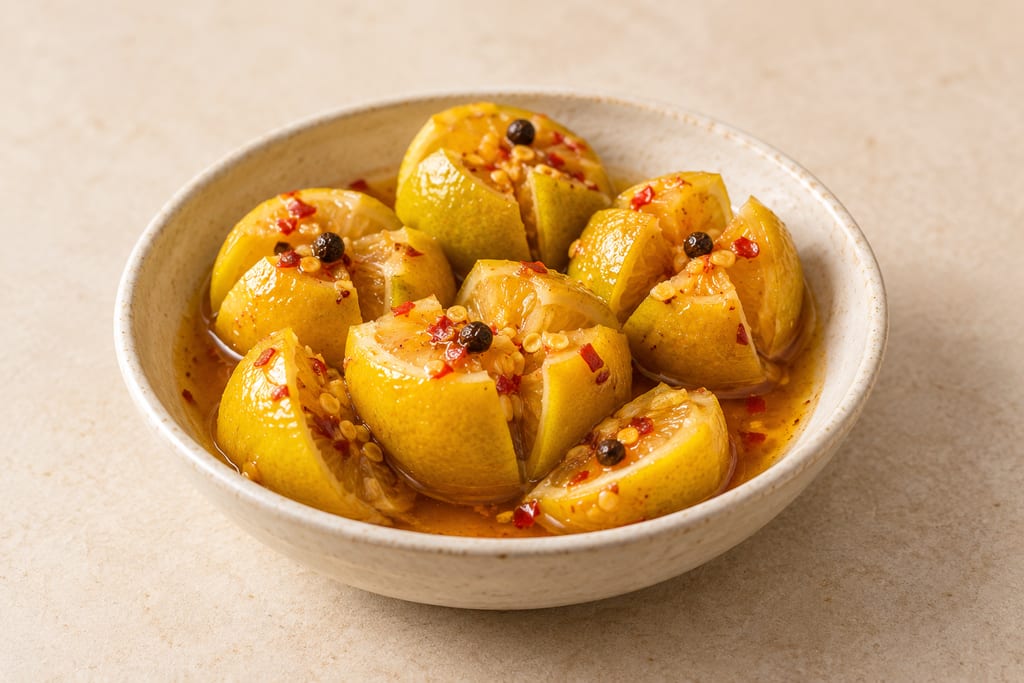
Photograph of Preserved lemons in their own juice.

Preserved lemons in their own juice

Lemon wedges are salt-cured under their own juice until the rind softens. Fermentation may begin, but the precise microbial process and safe storage limits for this formula are not established.

North Africa
· Fruit
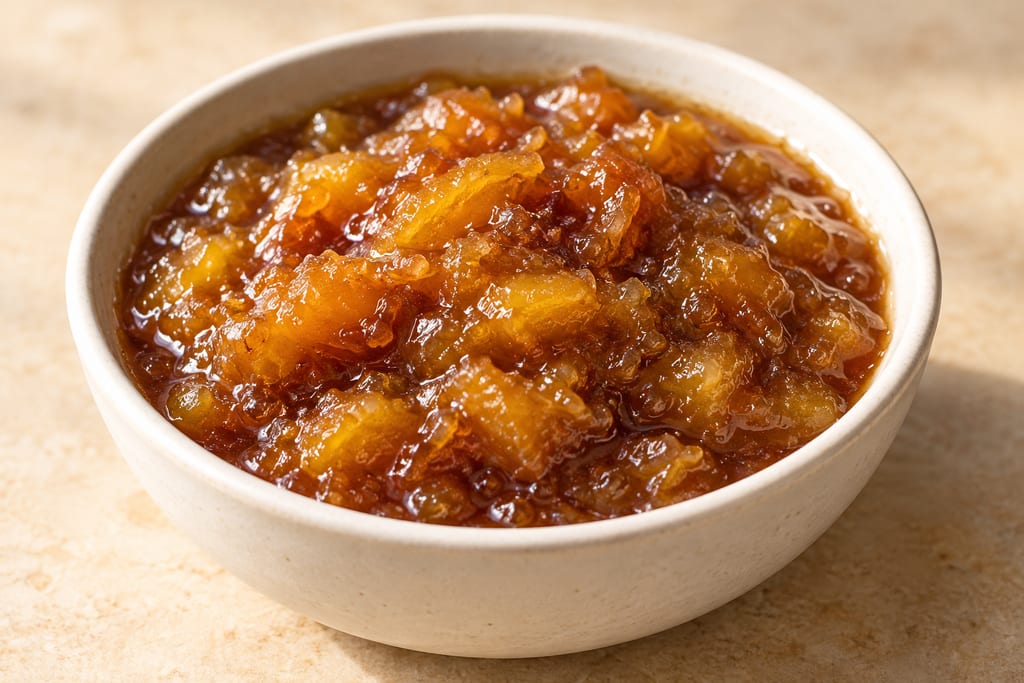
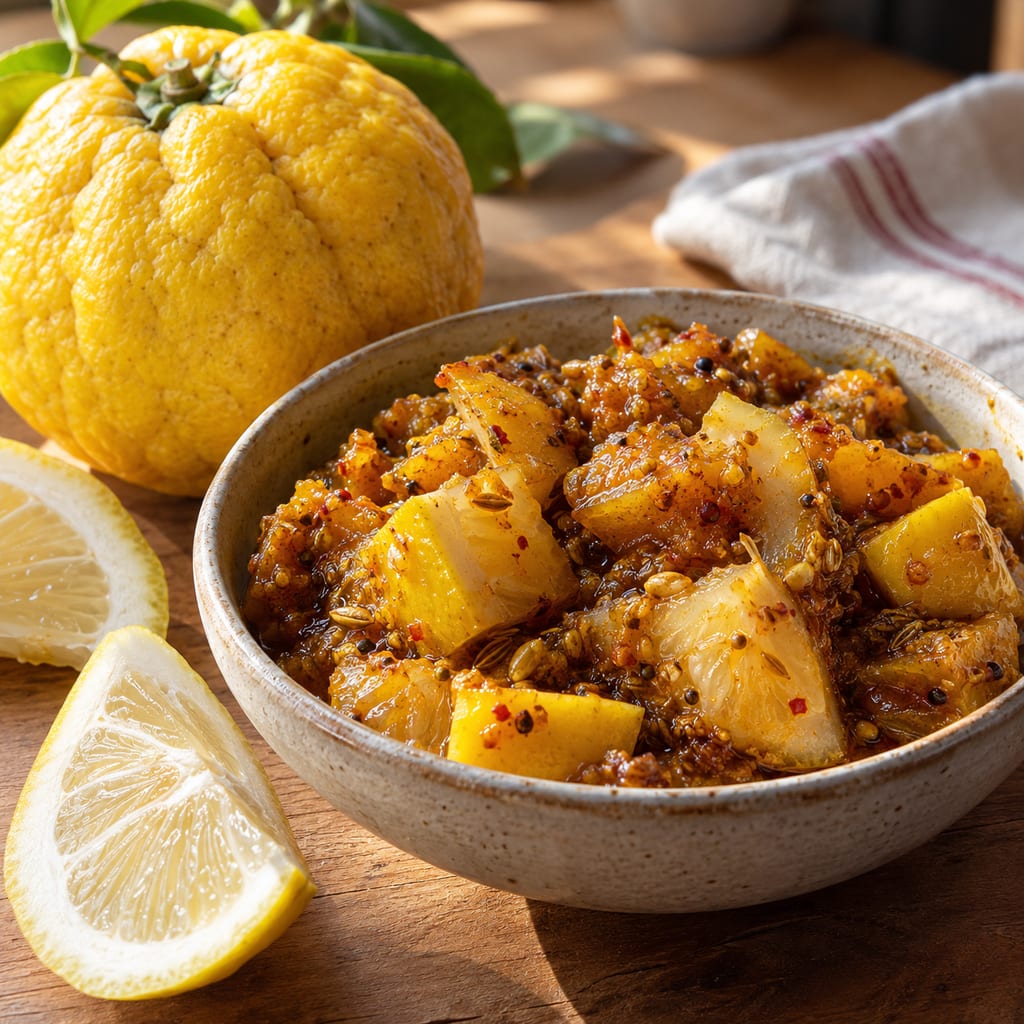
Chunky galgal pickle in amber-red mustard oil with fennel and thyme seeds, shown as a conservative illustration of the Himachal survey method.

Galgal pickle with fennel and thyme

In a surveyed Himachal method, ripe galgal is blanched, sun-dried, cooked with mustard oil, fennel and thyme, then left to ferment.
Kullu district, Himachal Pradesh · Traditional method
Fruit
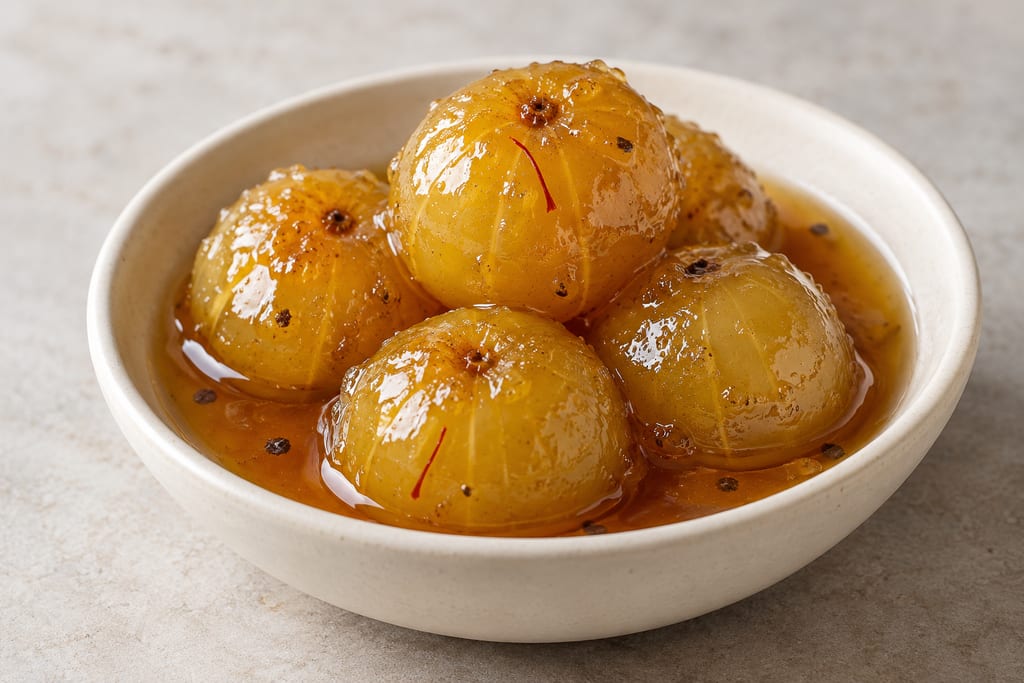
Whole golden amla murabba fruits in amber sugar syrup in a ceramic serving bowl; illustrative serving image, not a shelf-stability claim.

Amla murabba

Amla murabba preserves whole Indian gooseberries in a heavy sugar syrup scented with cardamom and sharpened with pepper and black salt. This household method soaks the fruit before cooking.

Panna District · Modern method
Fruit
Illustrative finished Lunu dehi: light-brown whole salted limes with visible cuts, chilli and peppercorns in a little vinegar-lime juice, served in an open bowl.

Lunu dehi

Lunu dehi is Sri Lankan salted lime pickle. This version sun-dries cut, salt-stuffed ripe limes, then packs them with dried lime juice, chillies, spices and vinegar.

Sri Lanka · Traditional method
Fruit
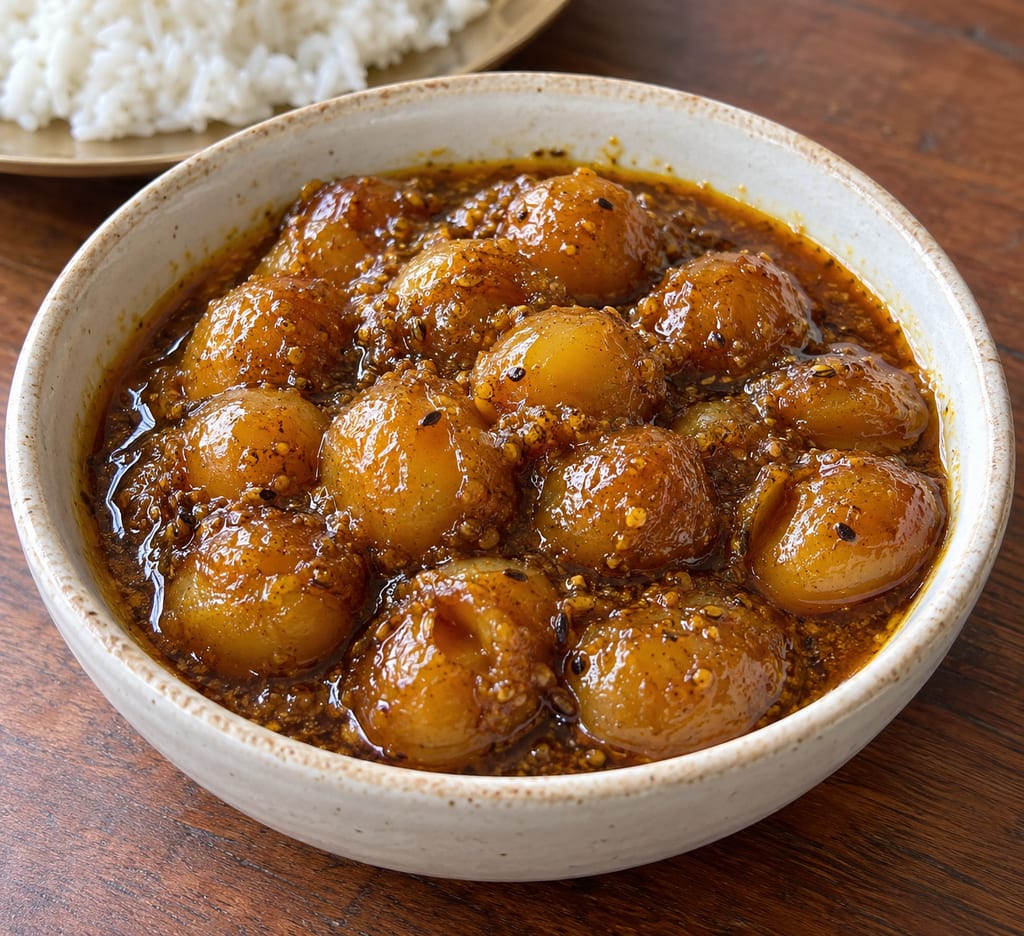
A bowl of cooked Nepali lapsi ko achar with whole softened fruit in a thick mustard-oil, sugar and roasted-spice sauce, made in the published Nirmala cuisine style.

Lapsi ko achar with mustard oil

Ripe Nepali lapsi is boiled, peeled and cooked with mustard oil, salt, sugar and roasted spices to make a sweet-sour achar served alongside a meal.

Kathmandu · Modern adaptation
· Fruit
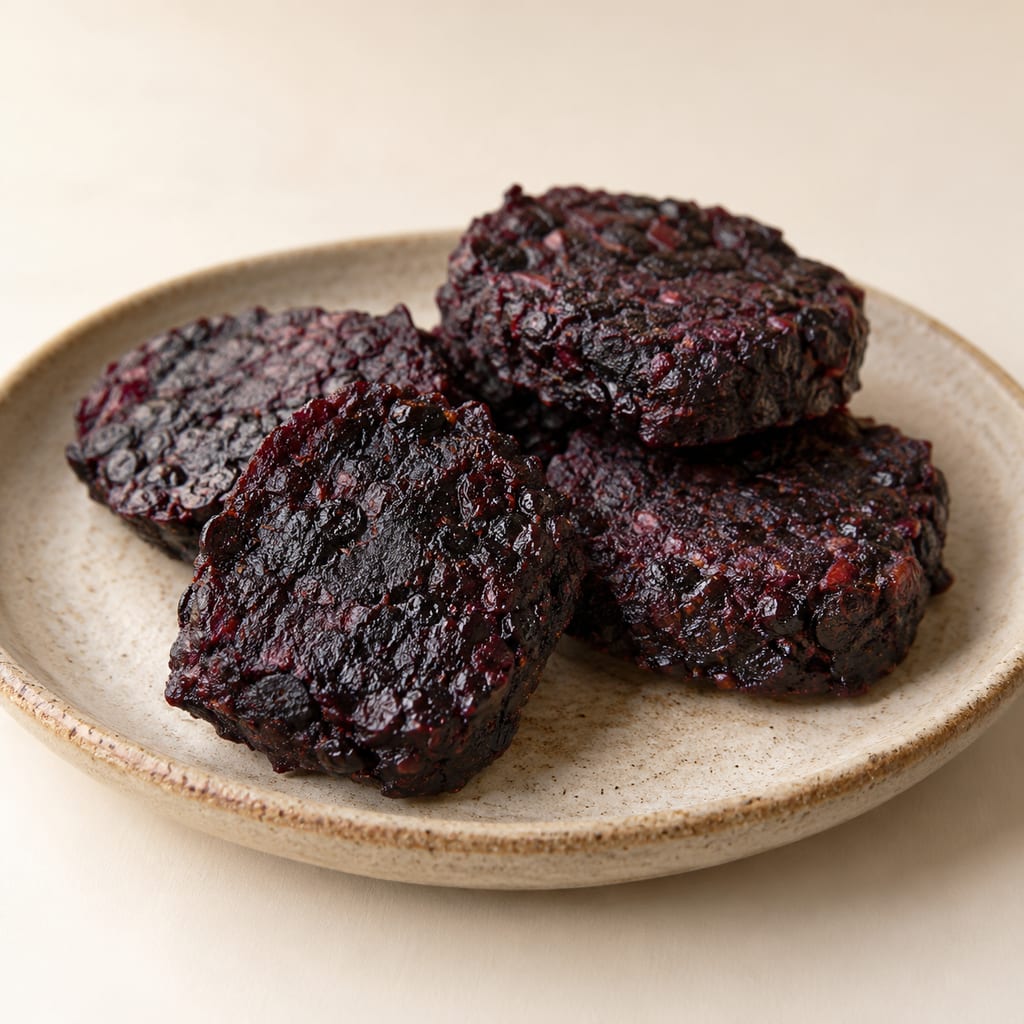
Photograph of Salal berry cakes.

Salal berry cakes

Salal berries pulped, formed into cakes and dried, a compact berry reserve of the northwestern American coast.

Northwestern American coast
Fruit
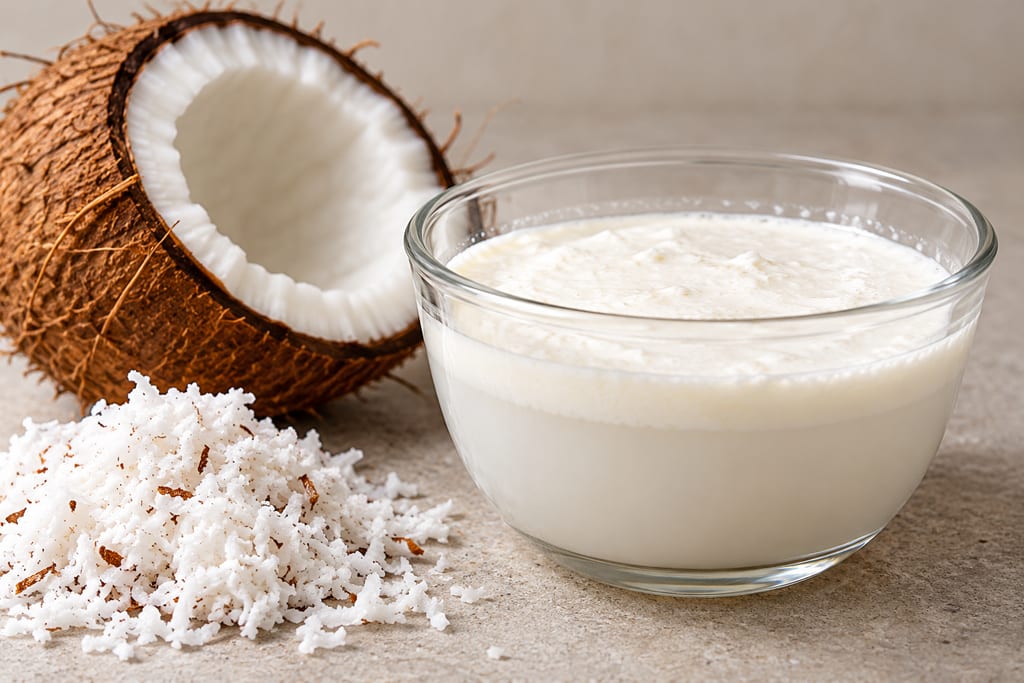
Illustrative coconut milk with a natural cream layer separating on top, beside mature coconut and freshly grated flesh.

Coconut milk and cream

Grated or shredded coconut extracted with water and squeezed or strained into a milky emulsion; left to stand, it separates into cream and a watery layer.

Malaysia · Modern adaptation
Fruit
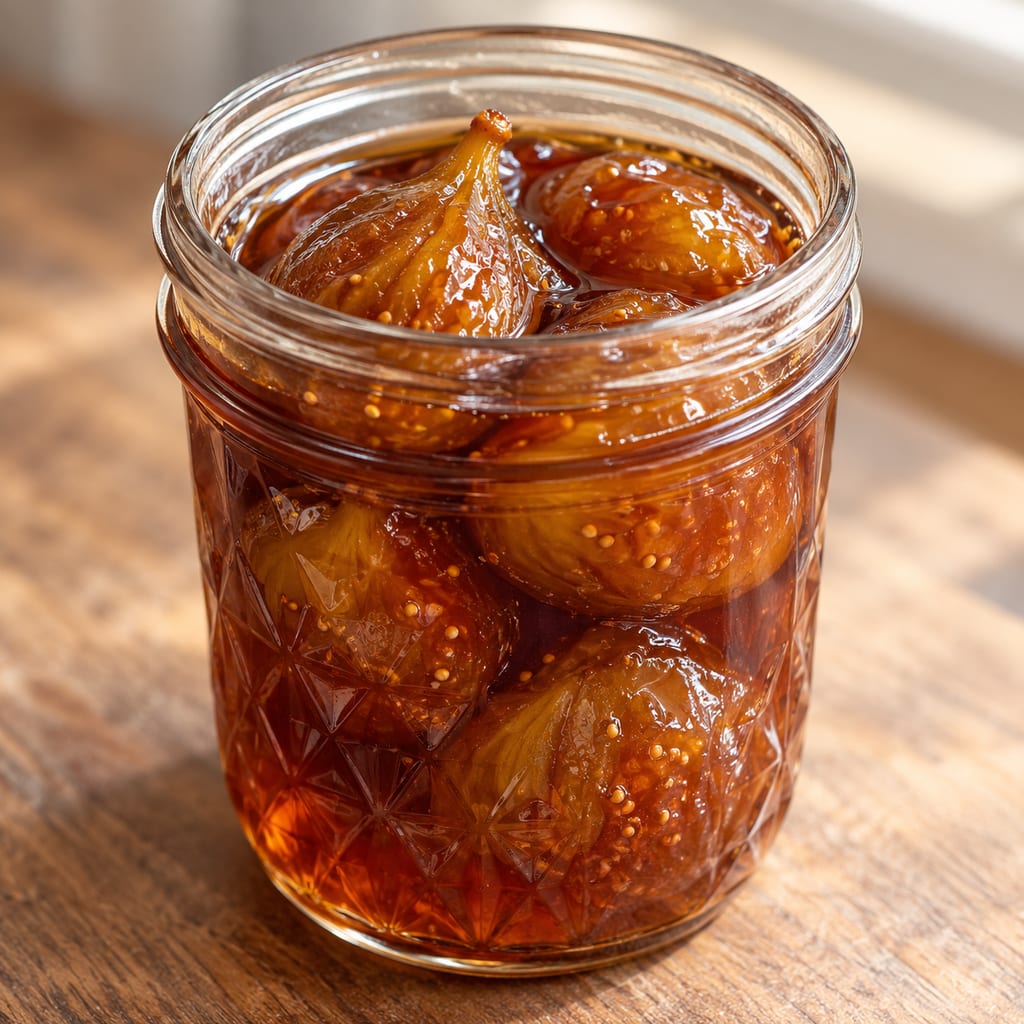
Whole fig preserves packed in glossy amber syrup in a clear glass jar.

Whole fig preserves

Whole figs are softened, cooked in a measured sugar syrup, rested in the refrigerator, then reheated and canned. This NCHFP formula specifies the fruit and syrup quantities, optional lemon and elevation-adjusted water-bath schedule.


· Fruit
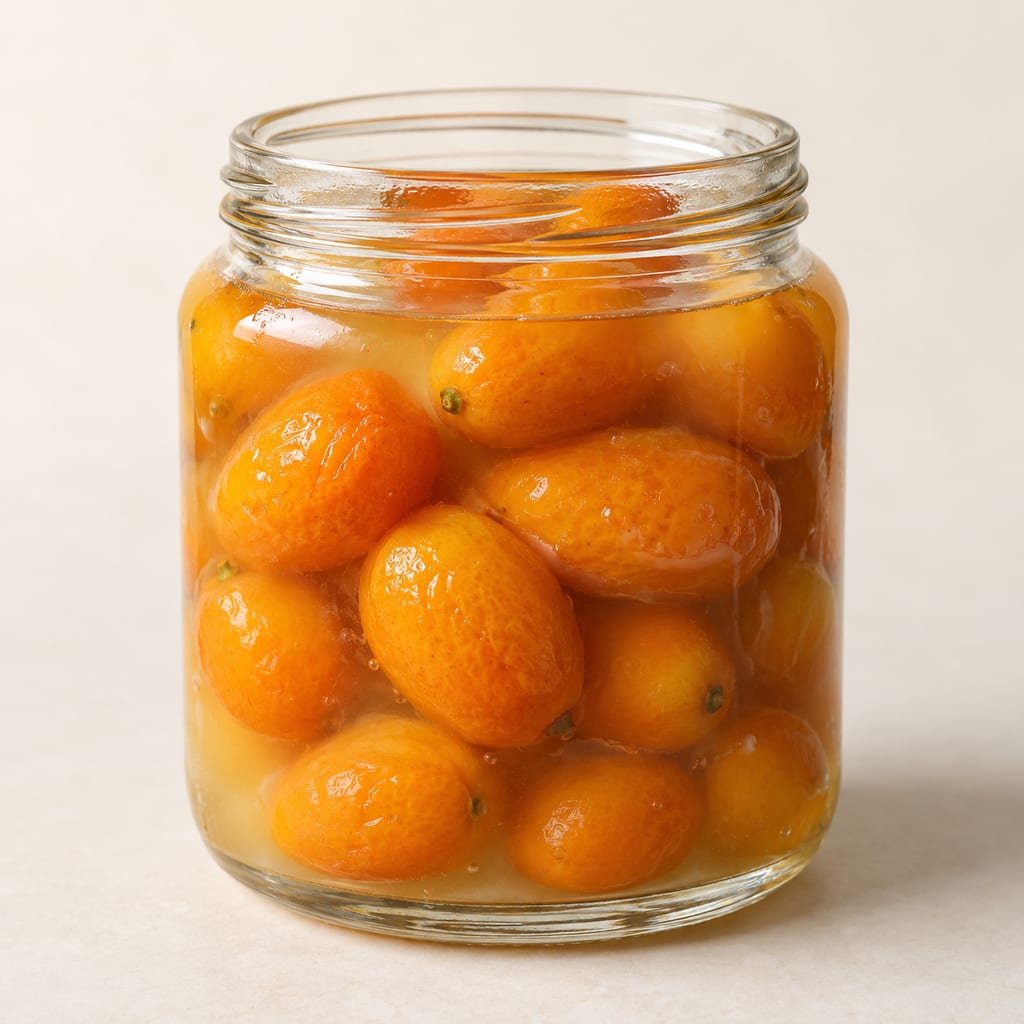
Photograph of Salt-preserved kumquats.

Salt-preserved kumquats

Whole kumquats are salted and covered with lemon juice, then refrigerated for two weeks. This distinct whole-fruit process is not a renamed lime pickle.


· Fruit
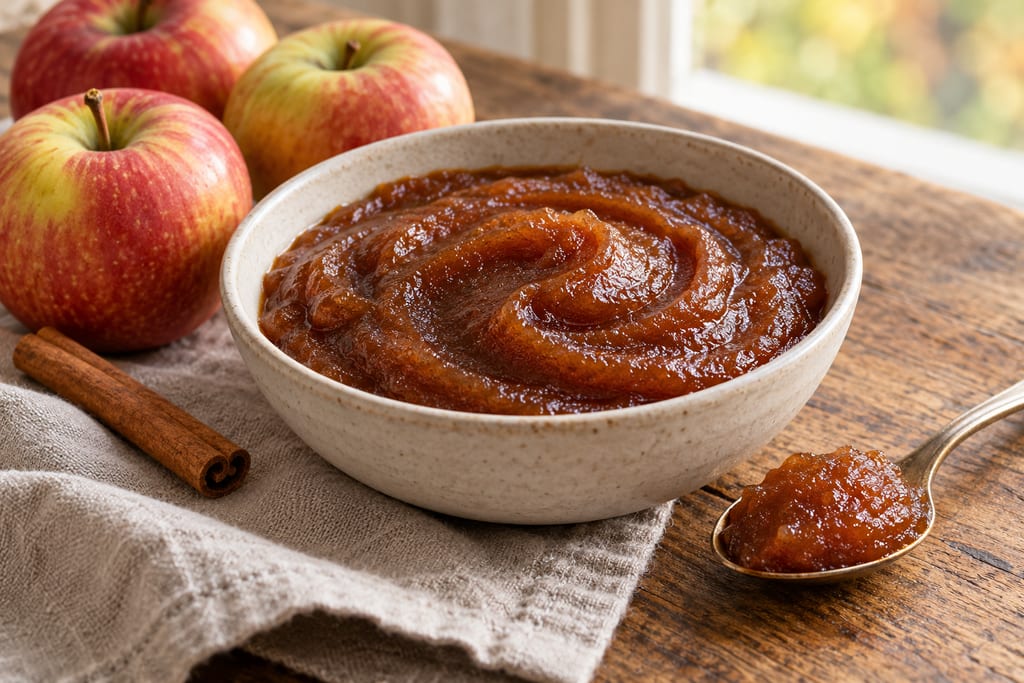
Smooth, thick amber apple butter in a ceramic bowl with fresh apples and cinnamon; an illustrative image, not a representation of a canned batch.

Fruit butter (appliance routes)

A smooth fruit pulp cooked down with sugar and spice until it holds its shape on a spoon, made by three documented routes in a slow cooker, a microwave or an electric multicooker.

United States · Modern adaptation
Fruit
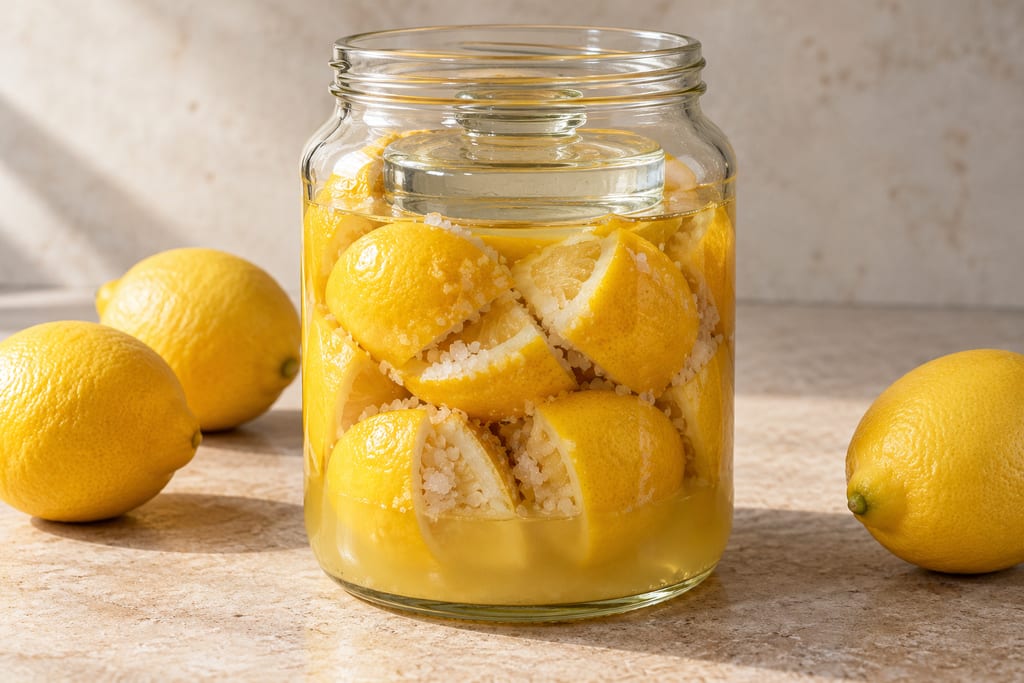
Salted yellow lemon pieces beneath their own juice in a plain glass jar with a glass weight.

Preserved lemon

Preserved lemon is salted lemon packed in a jar until it releases its own juice. The sources give no fermentation duration, salt amount or measured endpoint.

Fruit
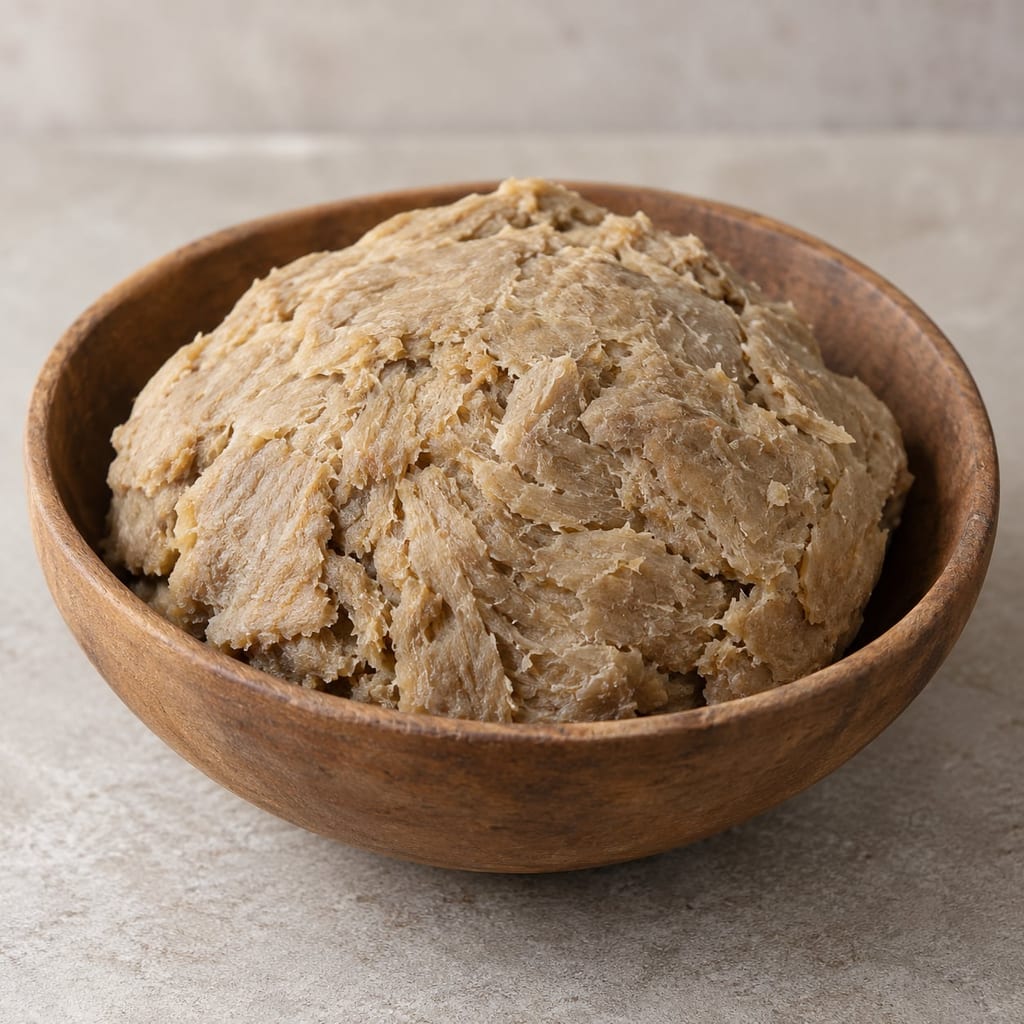
Illustrative finished Pohnpeian mahr, a dense kneaded breadfruit paste; the source does not establish a precise finished appearance.

Pohnpeian mahr (fermented breadfruit)

Pohnpeian mahr is breadfruit preserved in an earthen pit as an off-season reserve, then kneaded and prepared as bread. The FAO and NTBG accounts give no validated method or storage limit.
Pohnpei
Fruit
Illustrative editorial image of mochenye yabloki: whole apples held beneath pale liquid with leaf layers in a plain vessel.
Mочёные яблоки

Mochenye yabloki are whole apples held under prepared liquid for several weeks. Russian sources from 1892 and 1959 describe the method. It is not the same as vinegar pickling.

Russia
Fruit
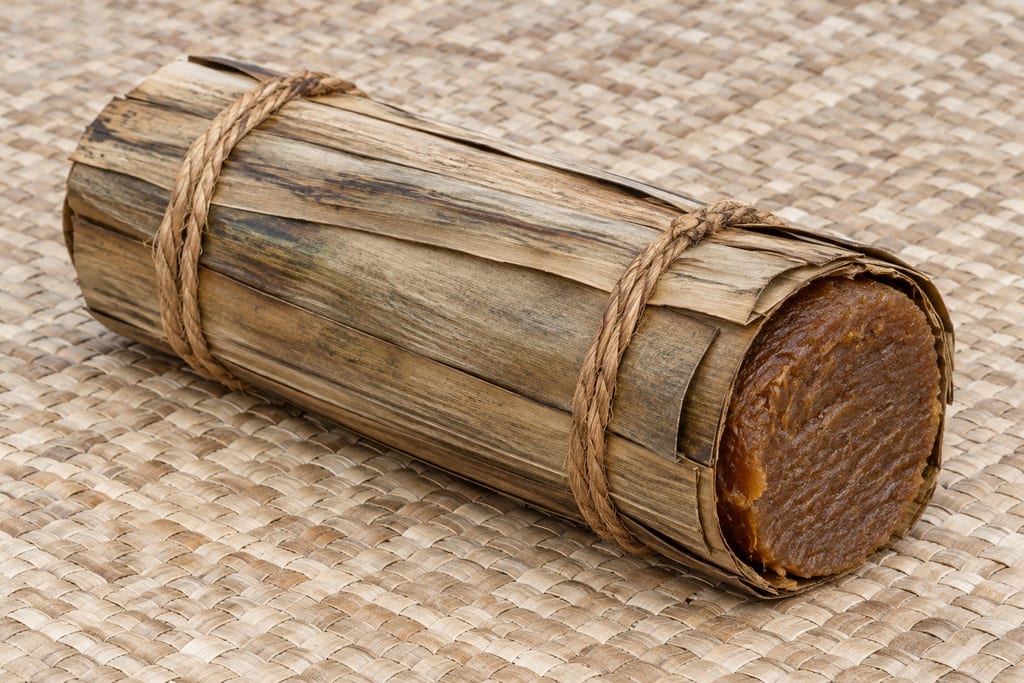
A compact dried pandanus-paste roll wrapped in pandanus leaves and tied with coconut-fibre cord, with its dense amber-brown interior visible at one end.

Mokan (Marshallese pandanus cakes)

Pandanus fruit cooked, pulped and dried in the sun, then dried further with heat and wrapped for storage in the Marshall Islands.

Marshall Islands
Fruit
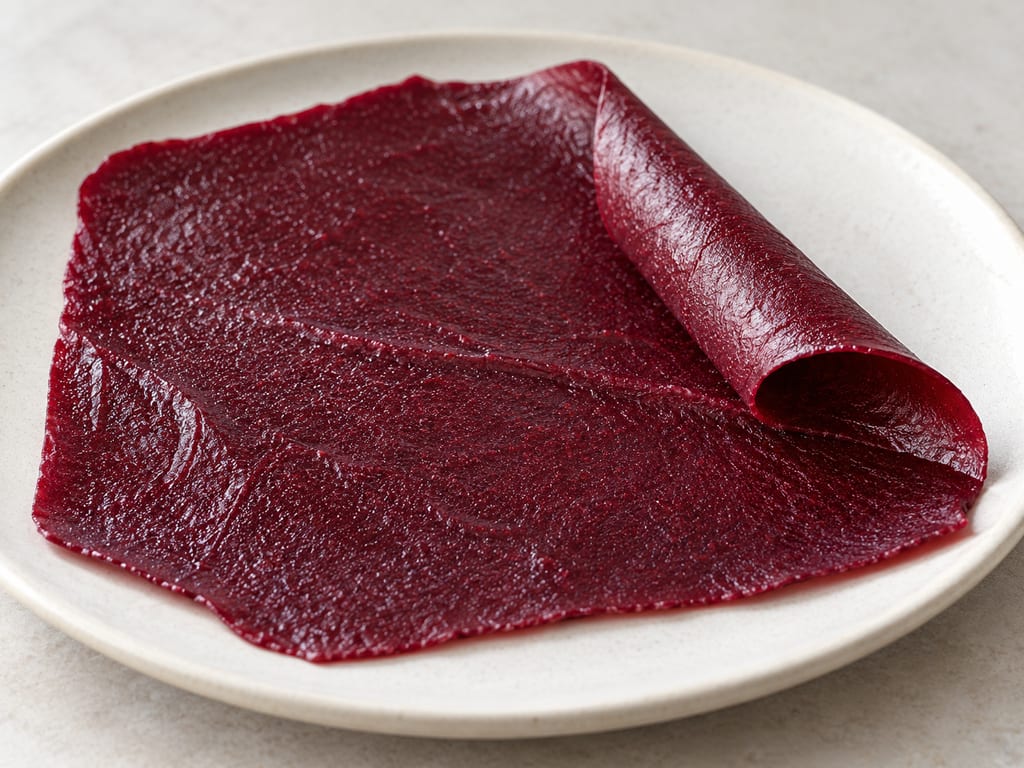
A thin dark fruit-leather sheet on a pale plate, with one edge rolled back to show its flexible dried texture.

Fruit leather

Fruit pulp spread into thin sheets or shaped into cakes and dried, a compact, portable way of keeping fruit in western and central Asia and among Indigenous North Americans.

Western and central Asia
Fruit
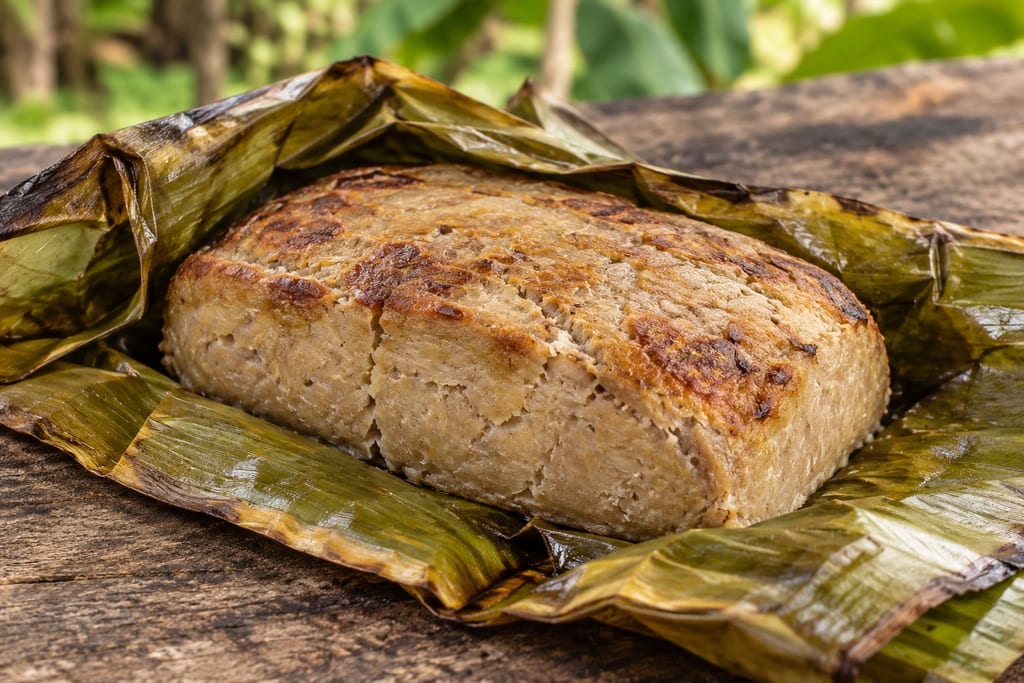
Illustrative baked Samoan masi ʻulu, a bread-like loaf formed from fermented breadfruit paste and wrapped in leaves; exact appearance is not established by the source.

Masi ‘ulu (Samoan fermented breadfruit)

Masi ʻulu is a Samoan breadfruit paste fermented in a leaf-lined pit, kneaded, formed into loaves, wrapped in leaves and baked. A secondary FAO account describes the method; no household batch is established.

Western Samoa
Fruit
Illustrative baked Samoan masi faʻi, a bread-like loaf formed from fermented unripe banana paste and wrapped in leaves; exact appearance is not established by the source.

Masi fa‘i (Samoan fermented banana paste)

Masi fa‘i is a Western Samoan paste made by fermenting unripe banana in leaf-lined pits, later formed into loaves and baked. A secondary FAO account describes the method; no modern household batch is established.

Western Samoa
Fruit
Illustrative dense breadfruit paste representing Marquesan ma; exact appearance is not established by the historical source.
High risk

Ma (Marquesan fermented breadfruit)

Marquesan ma is fermented breadfruit paste stored in pits and prepared as popoi. The source describes the process and dishes but gives no validated household method.

Marquesas Islands, French Polynesia
Fruit
Illustrative reconstruction of pale pear liquamen based on Palladius; its exact historical appearance and vessel are unknown.

Liquamen ex piris (Palladius' pear liquamen)

A late-antique Roman recipe in which very ripe pears are crushed with salt, matured for three months and drained, giving a pale liquid called liquamen.

Roman world
· Fruit
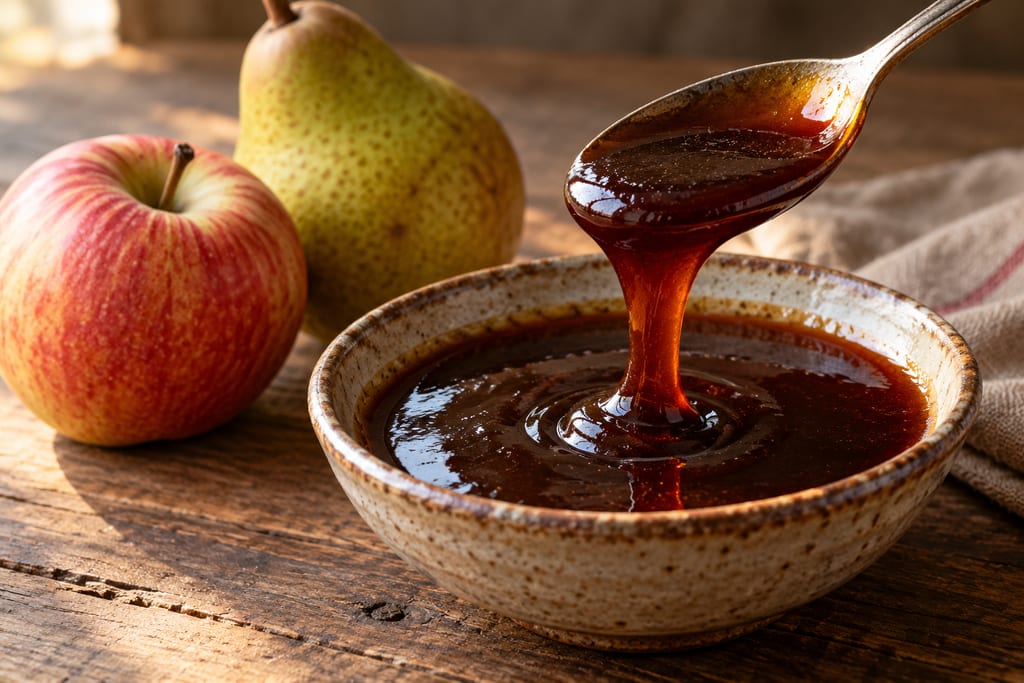
A bowl of finished Limburgse stroop, a glossy dark apple-and-pear fruit syrup, with a pear and apple nearby.

Limburgse stroop

Limburgse stroop is a regional family of cooked fruit syrups from Dutch and Belgian Limburg. Producers blend apples, pears and beet differently, so no single formula exists.

Limburg (Netherlands)
Fruit
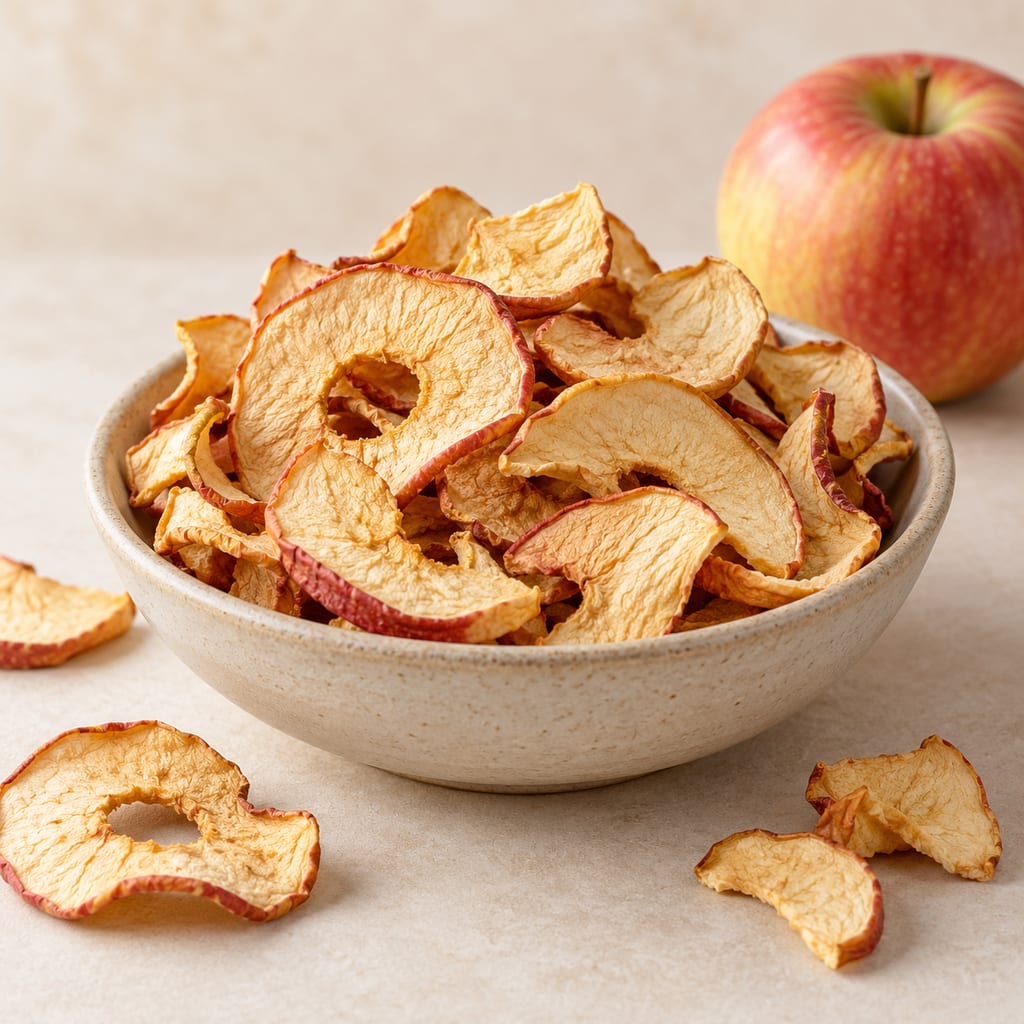
Illustrative editorial image of Czech křížaly: dried apple rings in a plain ceramic bowl beside one fresh apple.

Křížaly

Křížaly are Czech dried apple or pear pieces. The name has regional meanings beyond apple slices, and drying practice varies by place and dryer.

Czech Republic
Fruit
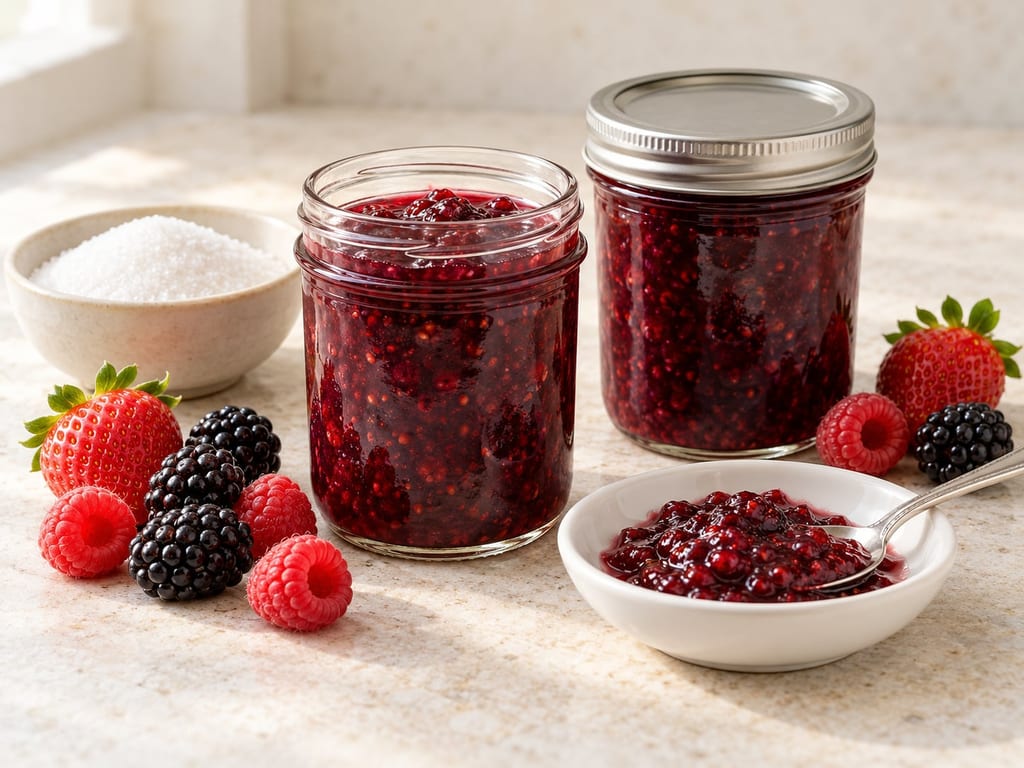
Open jar and dish of glossy mixed-berry jam with visible fruit pieces.

Jam

Jam is fruit cooked with enough sugar and concentration to reduce the water available to microbes. Jelly uses clarified juice and firmer fruit pastes lose still more moisture.

Western Asia
Fruit
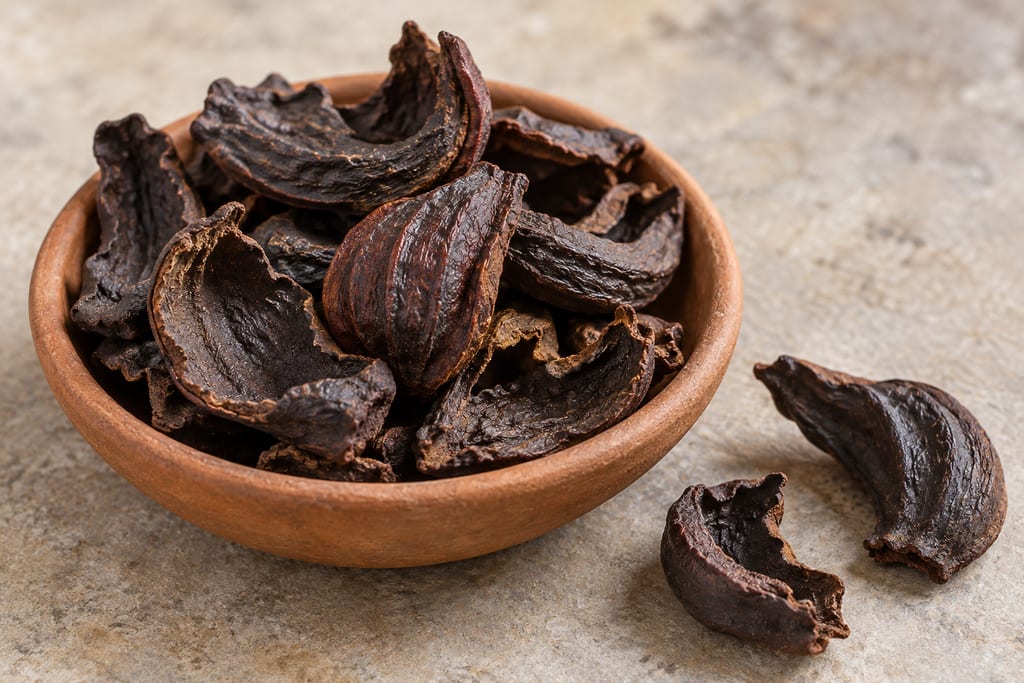
Illustrative dark dried Goraka rind pieces in a plain earthenware dish; the species identification follows the cited Sri Lankan government crop source.

Goraka

Goraka is the dried rind of Garcinia quaesita, a souring ingredient for Sri Lankan curries. Its drying is documented, but no complete household method is.

Sri Lanka
Fruit
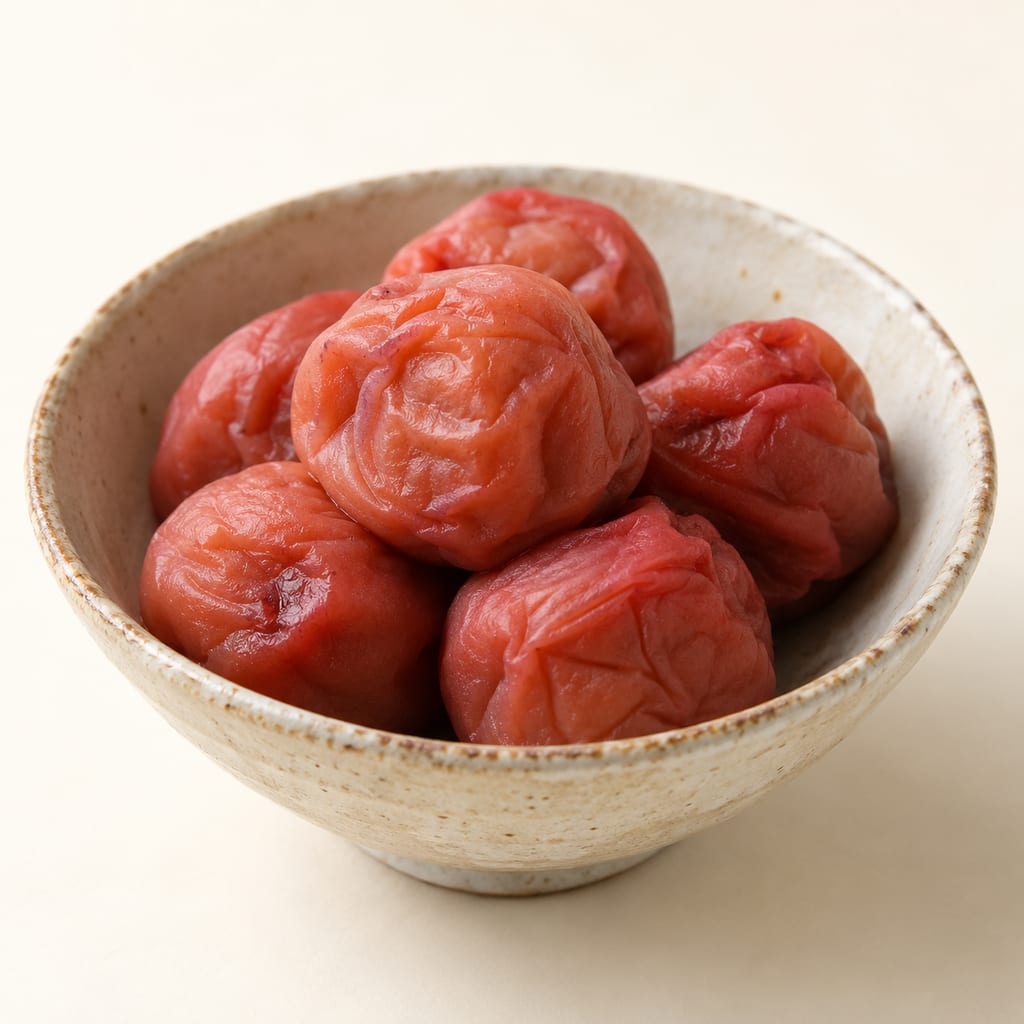
Photograph of Umeboshi.

Umeboshi

Naturally acidic ume fruit salted and sometimes dried in Japan; the salt, the fruit’s own acidity and the loss of moisture supply the preservation, and the preparation is not always fermented.

Japan · Traditional method
· Fruit
A shallow ivory bowl of smooth ruby-red raspberry coulis with a small pitcher, fresh raspberries and a lemon wedge on a warm ivory surface.

Fruit coulis

A smooth, pourable fruit sauce made by cooking or pureeing fruit with sugar and lemon juice, then pressing it through a sieve to remove the seeds.


· Fruit
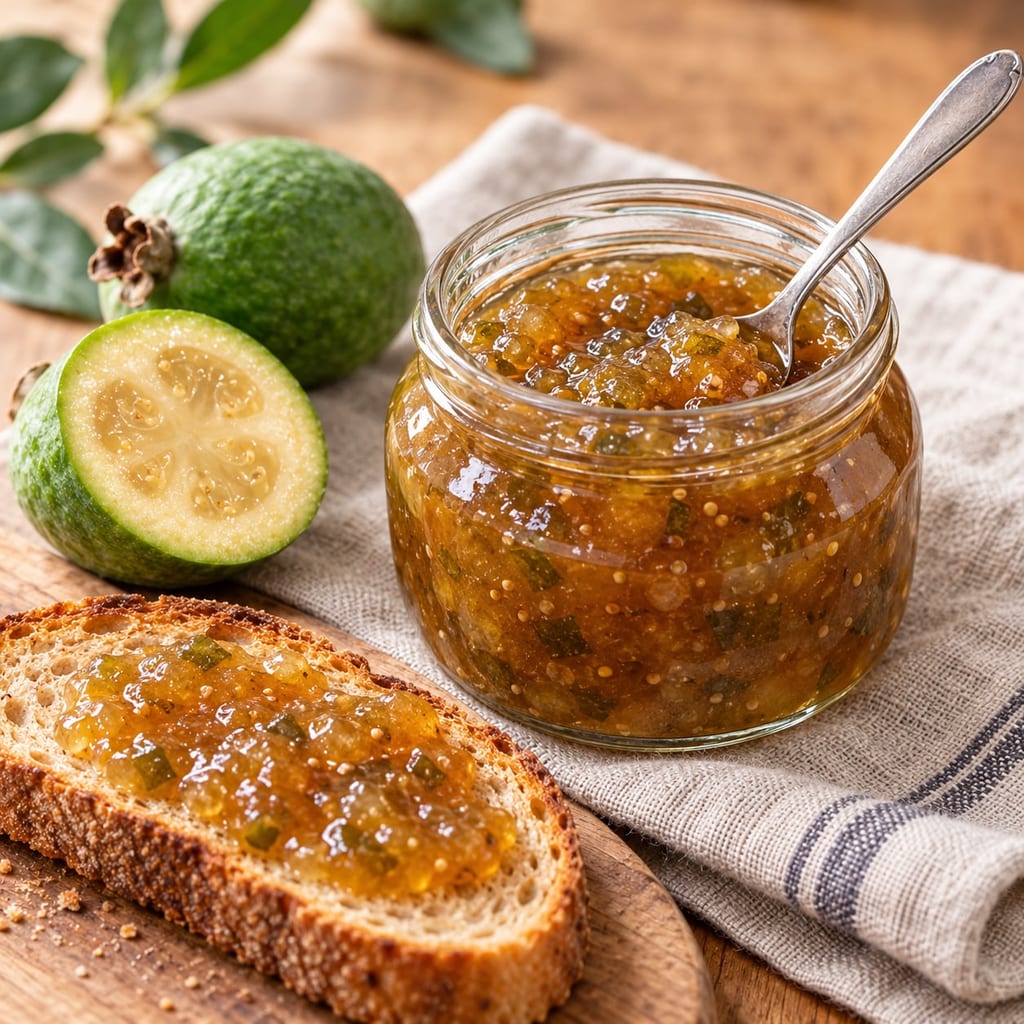
Open jar of chunky feijoa jam with a spoon, fresh whole and cut feijoas, and toast spread with jam.

Feijoa jam

Blended whole feijoas simmer into a skin-on jam with lemon, sugar and vanilla. The skins remain for a more textured finish; keep this batch refrigerated or frozen because its method has no validated shelf-stable canning process.

New Zealand
· Fruit
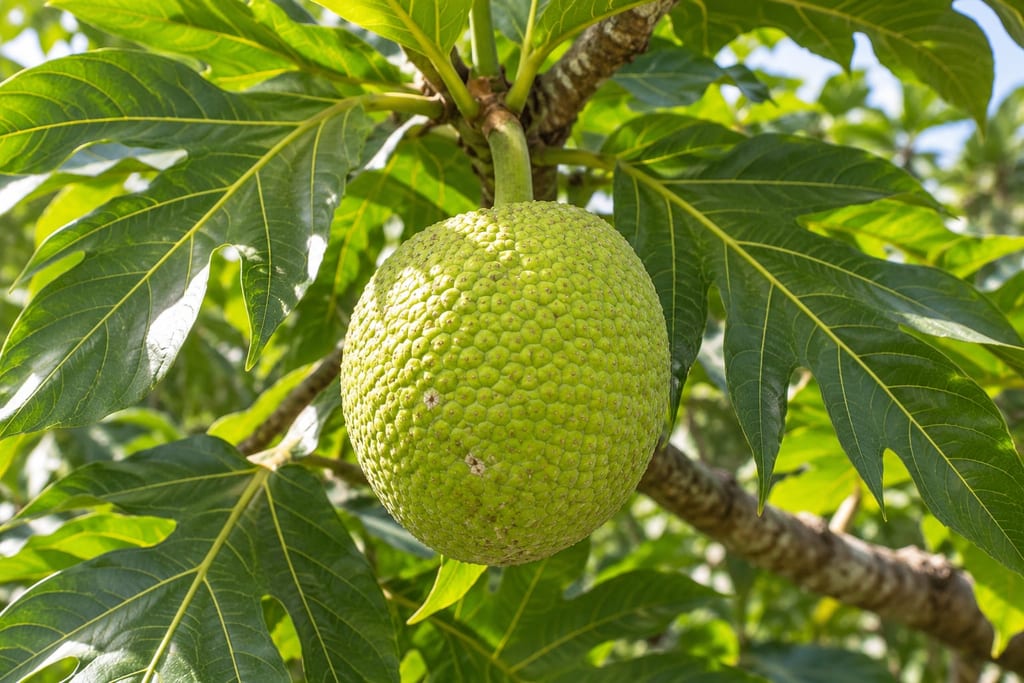
Breadfruit growing on its tree, shown as ingredient context for the documented Kosraean furo tradition; the exact appearance is not established by sources.
High risk

Furo (Kosraean preserved breadfruit)

Kosraean preserved breadfruit called furo in a 1919 ethnographic monograph. Two historical pit methods are recorded; the sources give no validated household process.

Kosrae, Federated States of Micronesia
Fruit
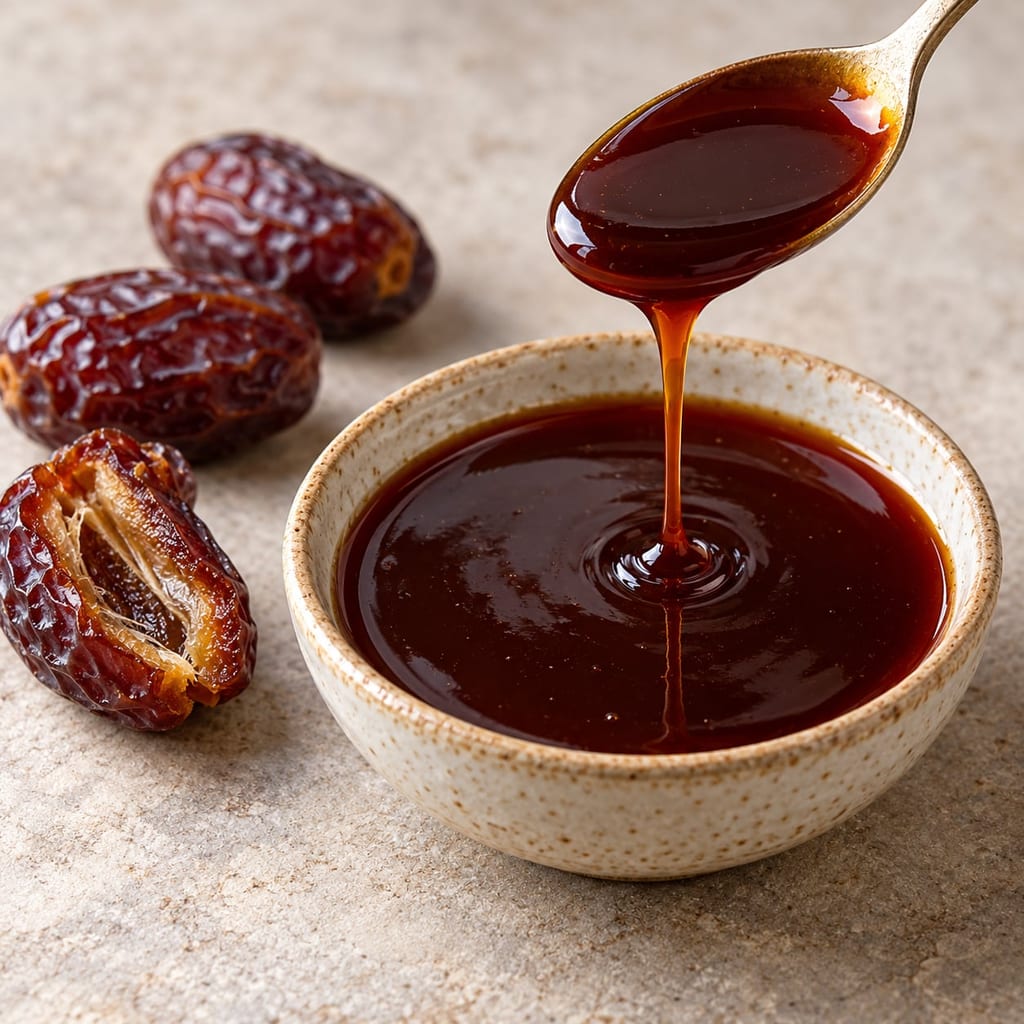
Thick dark date syrup drizzling from a spoon into a ceramic bowl beside whole dates.

Date syrup and date pulp (dibs, silan family)

A thick, dark, very sweet syrup made from dates, known as dibs, rub, silan or date molasses. It sweetens tahini and desserts and glazes or sauces savoury dishes across the Middle East and North Africa.

Iraq
Fruit
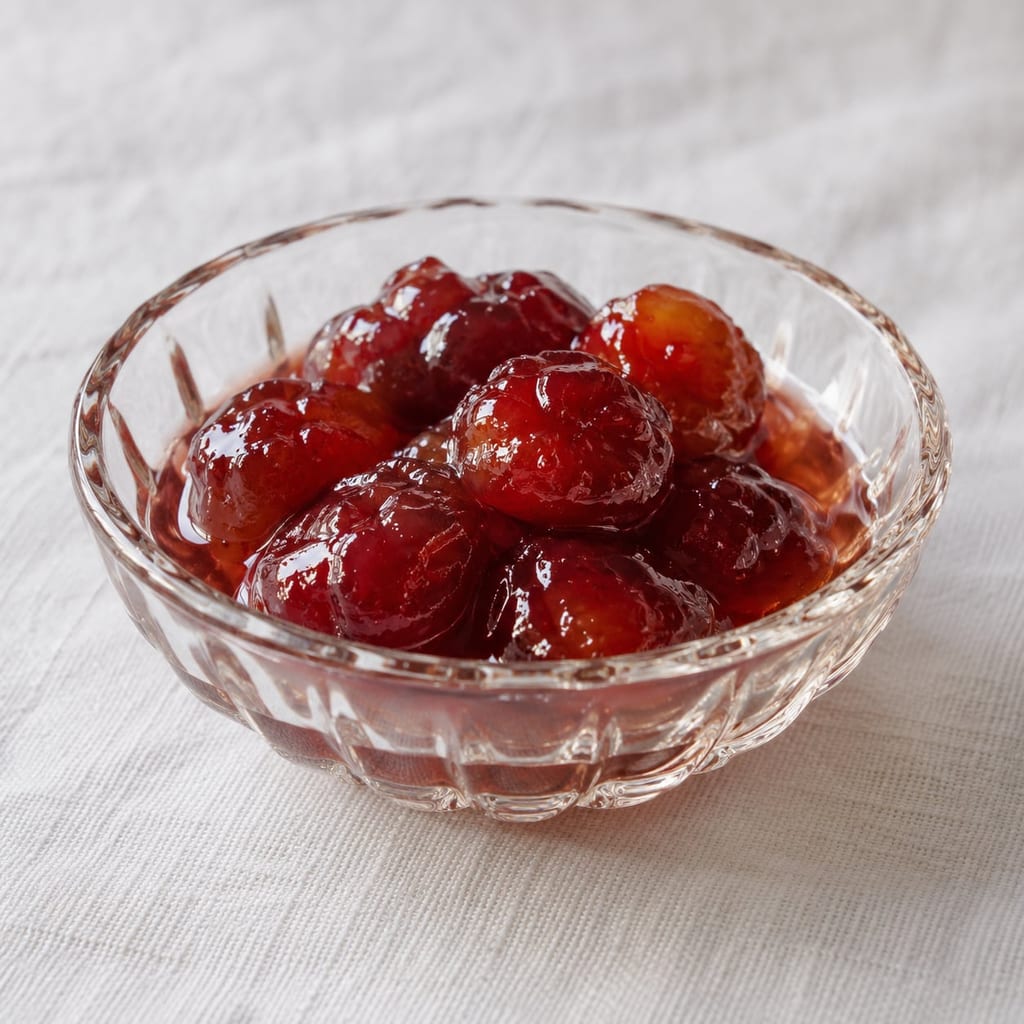
Whole glossy cherries in red amber syrup in a small clear glass dish

Cypriot-style cherry spoon sweet

Cypriot cherry glyka made by layering firm pitted cherries with sugar, briefly boiling them, chilling overnight, and boiling again to concentrate the syrup. This version is refrigerated and has no shelf-stable canning process.

Cyprus
· Fruit
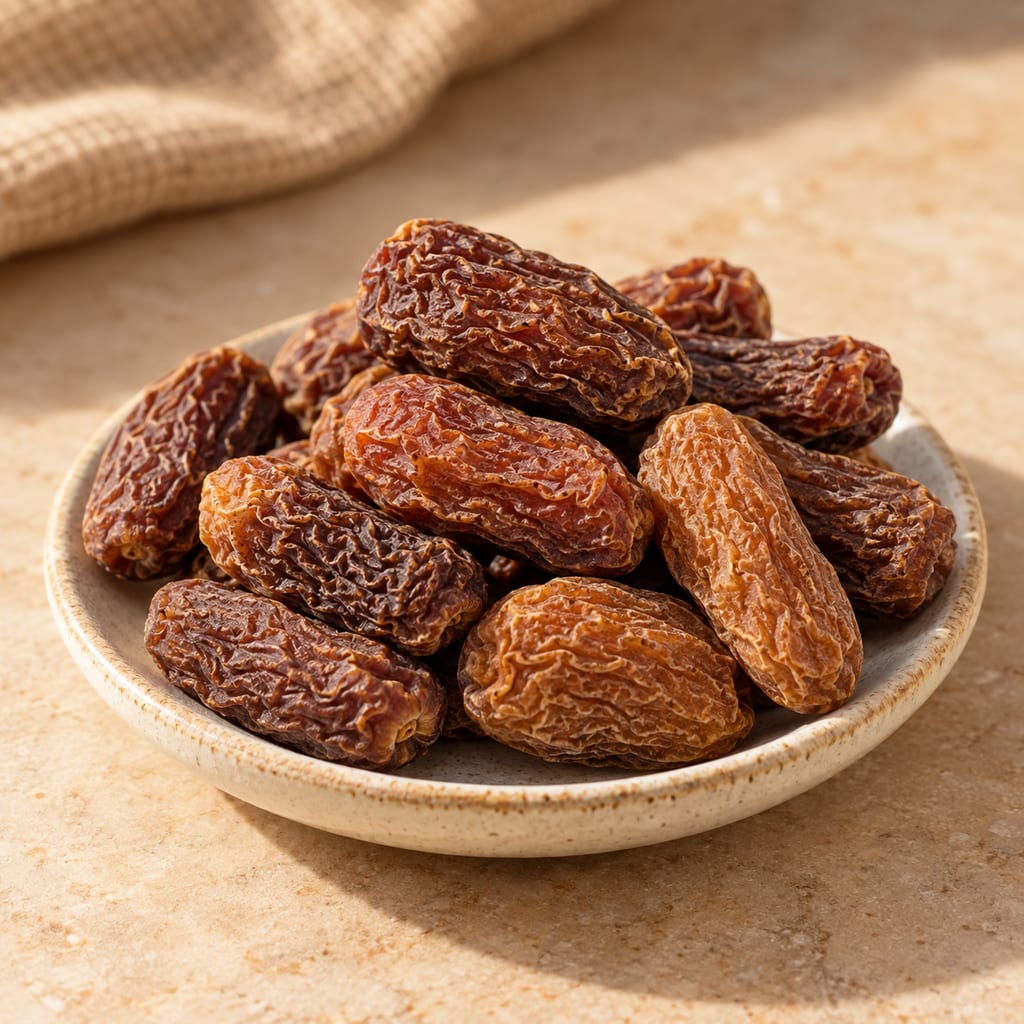
A shallow ceramic dish holding firm, wrinkled dark-brown and amber dried chuhara dates.

Chuhara

Chuhara is a processed dried-date product named in Pakistani date-production studies, distinct from other dried dates. Its household method is not established.

Pakistan
Fruit
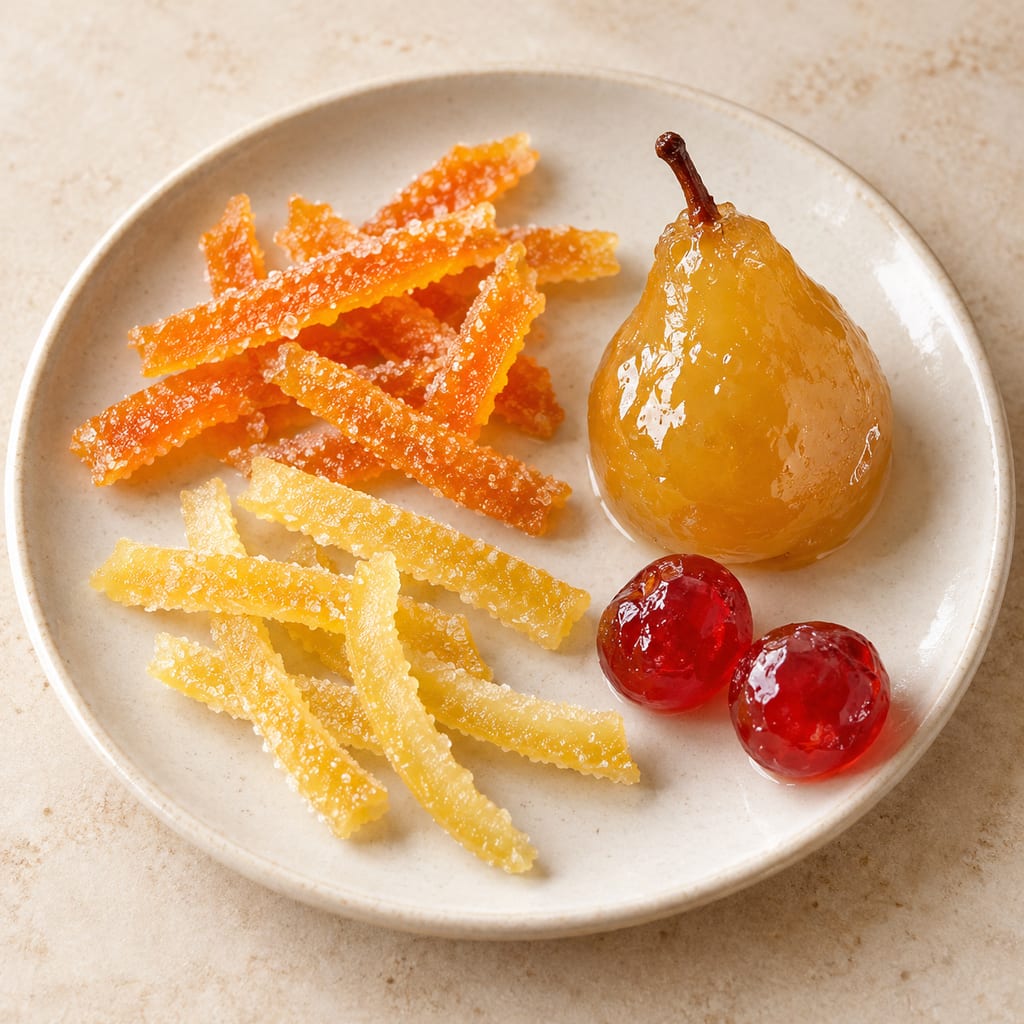
Illustrative assortment of candied citrus peel and glacé fruit, showing examples from the broader syrup-steeping technique rather than one specific batch.

Candied and glacé fruit

Candied fruit is fruit that has been repeatedly steeped in concentrated sugar syrup, which replaces part of its water with sugar, often followed by drying. It differs from fruit served in a thin syrup.

Asia
Fruit
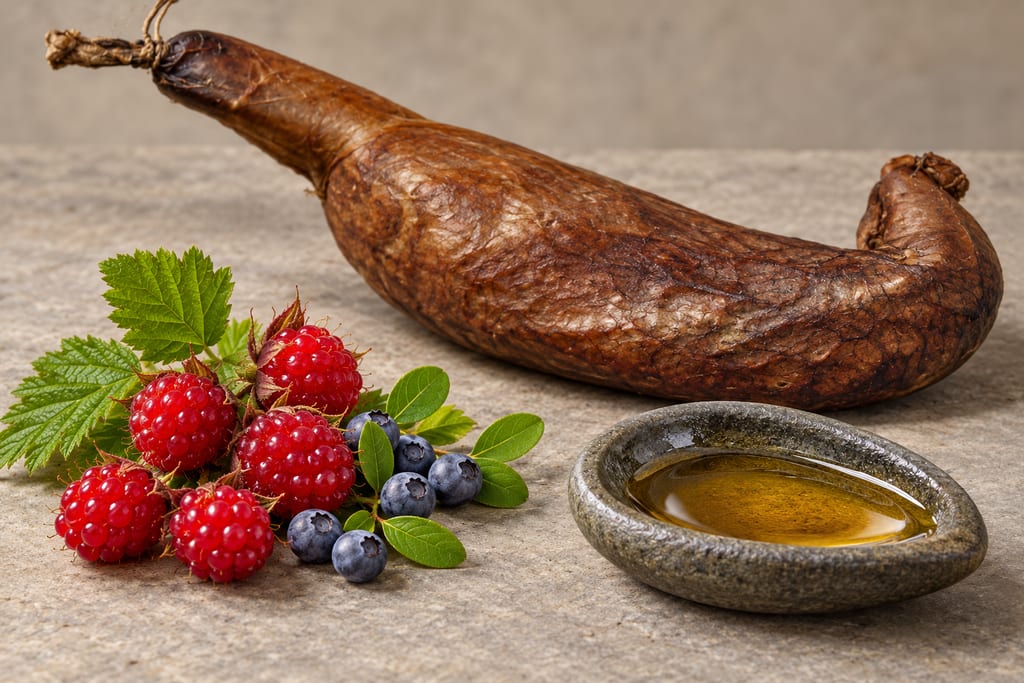
Illustrative context for Alutiiq berry storage: salmonberries, seal oil and a seal-stomach container; sources do not establish the final mixture's appearance.

Berries stored in seal oil

Berries, greens and fish eggs were kept in seal oil by Indigenous Alaskan communities. The oil seals the food from air, and the result depends on preparation and the surrounding conditions.

Kodiak Archipelago, Alaska
Fruit
Open and sealed jars of deep ruby berry jam, shown with fresh berries and sugar.

Berry jam without added pectin

A NCHFP berry jam made without added pectin: crushed berries and sugar are cooked to the desired gel point, hot-filled into sterile half-pint or pint jars, and processed in a boiling-water canner.

United States
· Fruit
Softened, quarter-cut golden lime pickle in a shallow ivory bowl.

Lime pickle (Peter Kuruvita)

Peter Kuruvita’s published lime pickle stuffs 20 limes with rock salt, then simmers them in vinegar, sugar and chilli before a two-week rest.

Sri Lanka · Modern method
· Fruit
Illustrative image of Suryabinayak-style cooked lapsi pulp achar in sugar syrup; the municipal source does not record the batch's exact appearance.

Lapsi ko achar, Suryabinayak pulp method

A Suryabinayak municipal recipe cooks ripe lapsi pulp in sugar syrup with cloves, cardamom, cinnamon, sukumel and ginger juice to make a sweet Nepali achar.

Suryabinayak Municipality · Modern method
· Fruit
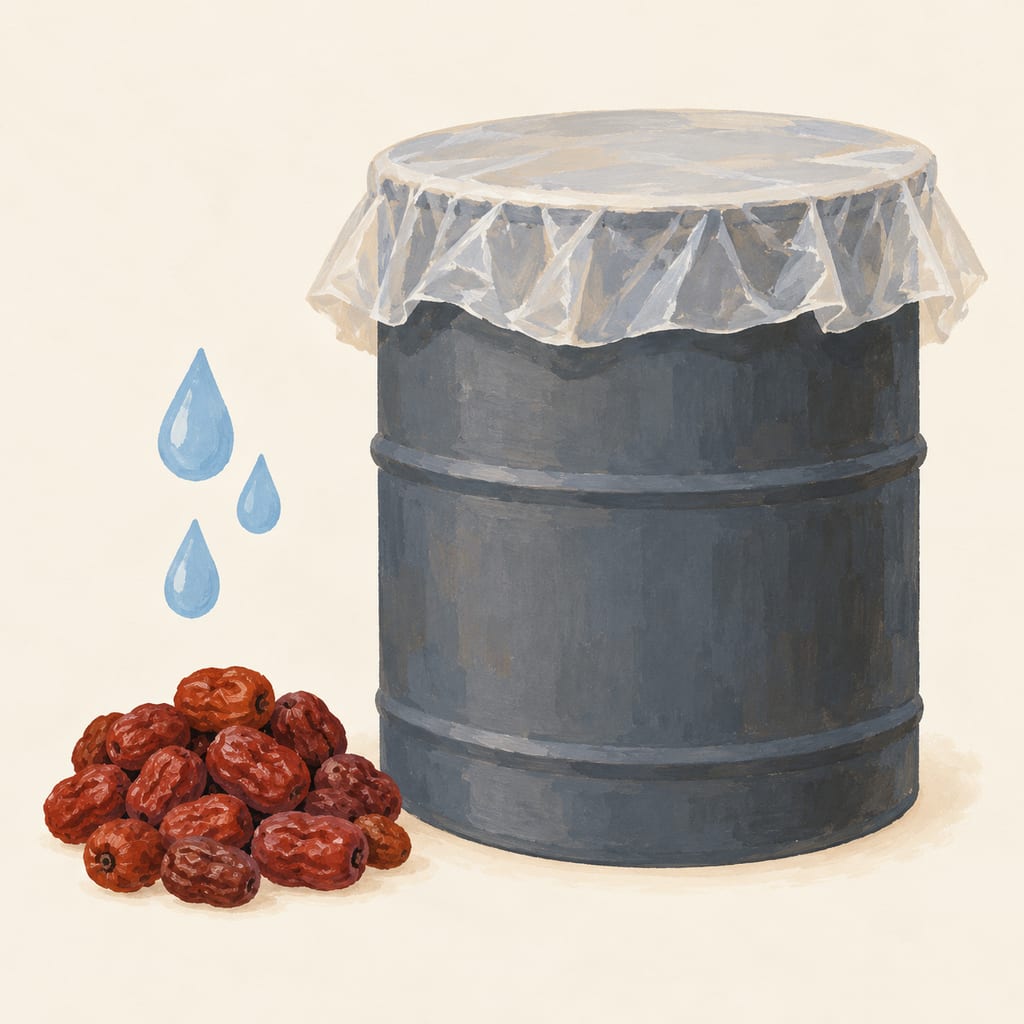
Source-based illustration of dried Masau and a plastic-sheet-covered fermentation drum; the documented fermented pulp's appearance is unknown and is not shown.
Elevated risk

Fermented masau pulp

A Zimbabwean spontaneous ferment of dried masau fruit pulp used as a kachasu distillation base; the fermented pulp itself is not consumed.

Zimbabwe · Traditional method
· Fruit
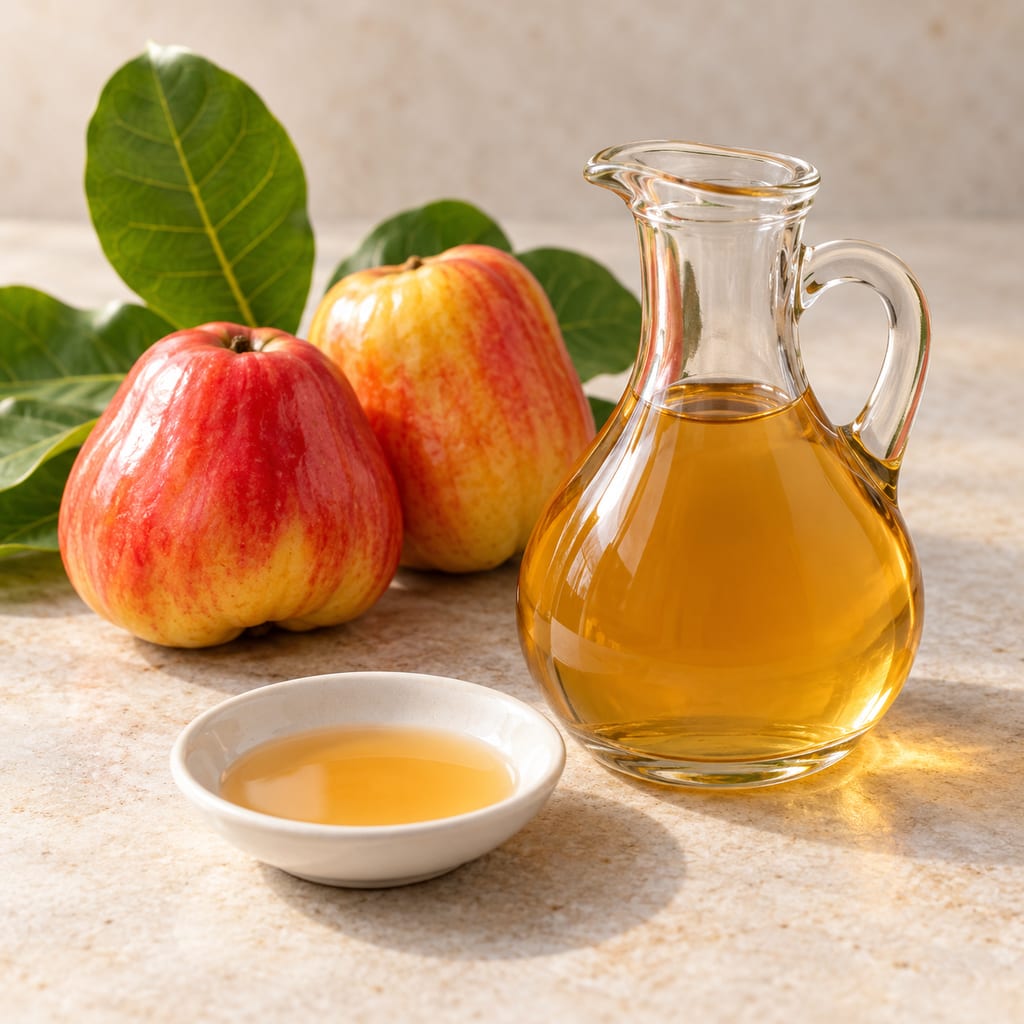
Golden-amber cashew-apple vinegar in a clear glass cruet beside ripe red and yellow cashew apples and a small tasting dish.

Cashew-apple vinegar

Vinagre de caju is made by fermenting cashew-apple juice into an alcoholic base, then aerating it so acetic bacteria can convert ethanol into acid. Brazilian guidance records the sequence, but not a complete home-scale formula.

Brazil · Modern method
· Fruit
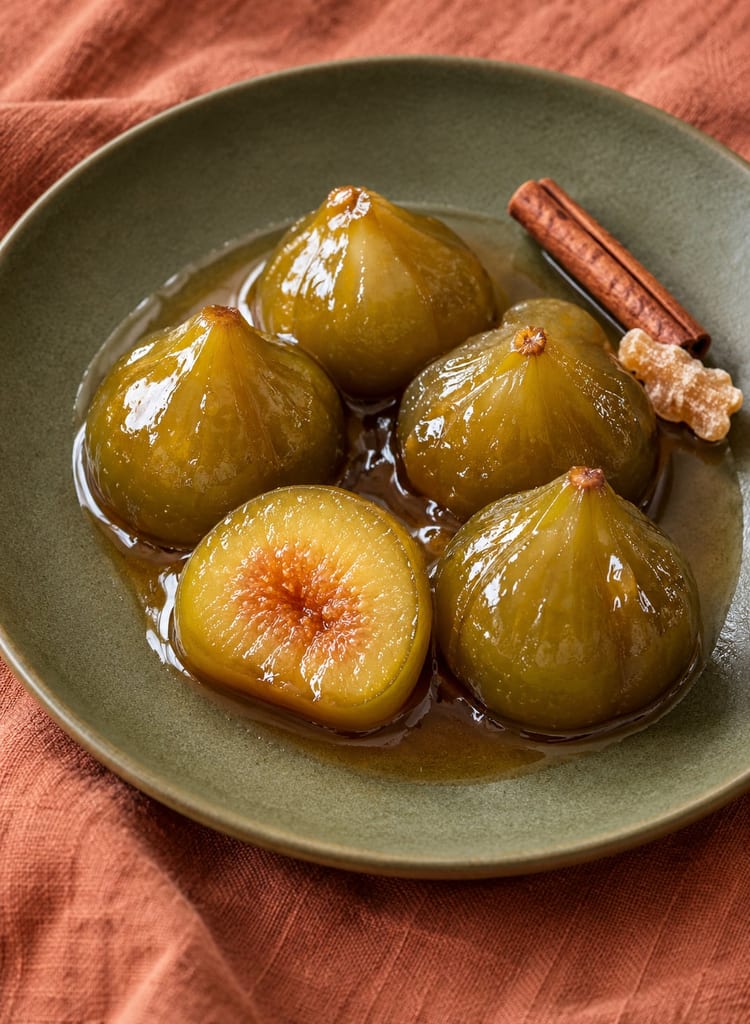
Whole tender green figs cooked in golden syrup with cinnamon and dried ginger, served on an olive-green plate.

Green-fig konfyt

Whole unripe figs are softened and cooked in cinnamon and ginger syrup as a refrigerator-only South African konfyt; this method does not provide a shelf-stable canning process.

Cape · Modern method
· Fruit
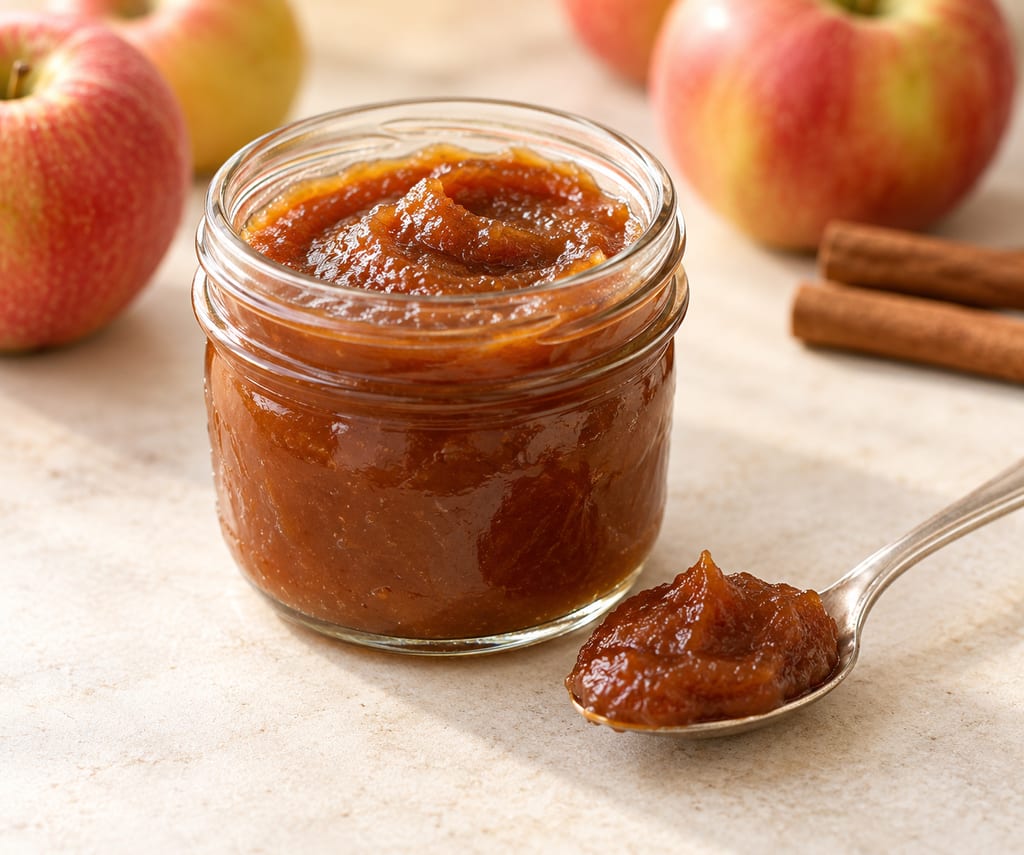
Finished apple butter, smooth and deep amber brown, in an open glass jar with a spoonful beside it and apples and cinnamon in the background.
Elevated risk

Apple butter, tested canning method

Apple butter is a smooth, concentrated apple preserve cooked with cider, vinegar, two sugars and spices, then hot-filled and processed in a boiling-water canner using the published jar-size and elevation schedule.

United States
· Fruit
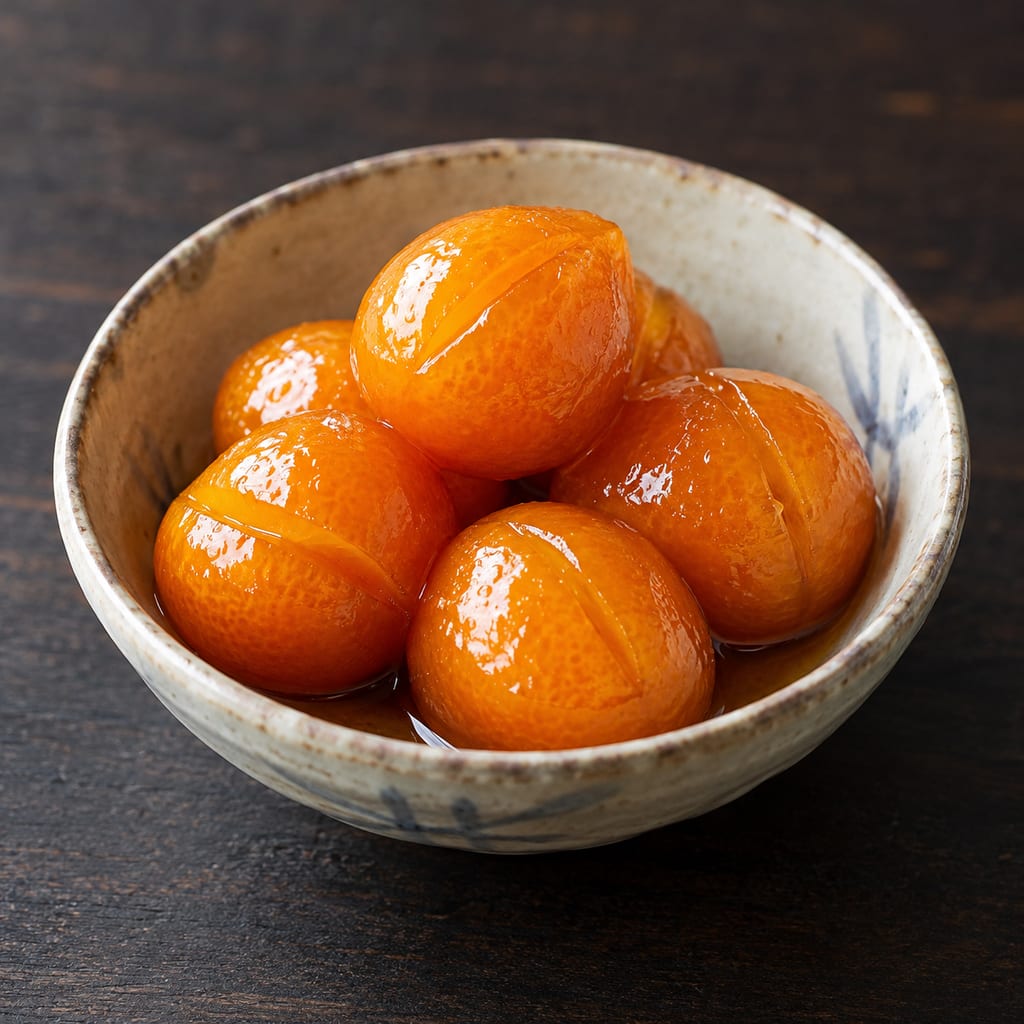
Glossy whole kumquats gently simmered in sugar syrup, served in a ceramic bowl.

Kinkan no kanroni: sweet-simmered kumquats

Whole kumquats are slit, blanched and simmered gently in fresh water and sugar until the peel softens and the liquid thickens. This Imari municipal recipe gives a sugar range rather than a fixed ratio.

Imari City
· Fruit
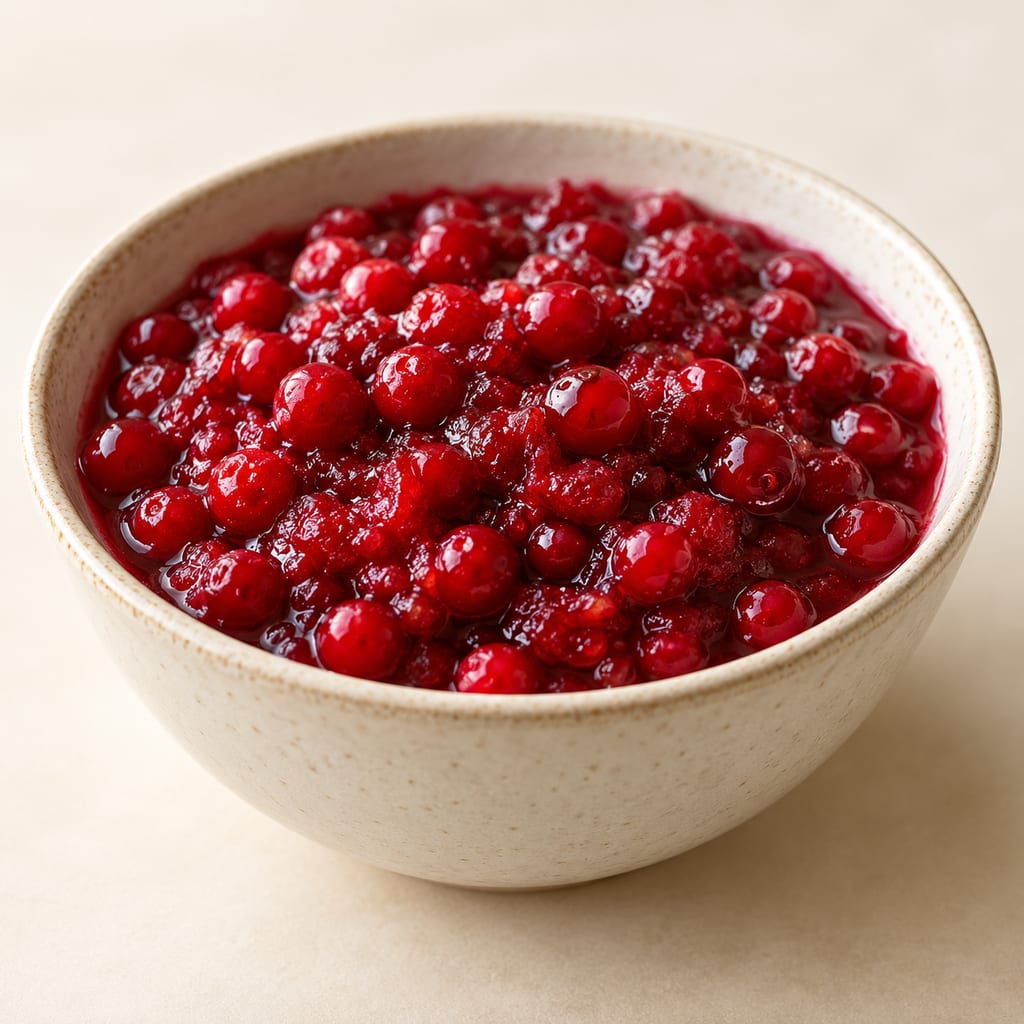
Photograph of Rårörda lingon.

Rårörda lingon

A Swedish uncooked lingonberry accompaniment: frozen berries are mixed with granulated sugar and thawed, with occasional stirring, until the sugar dissolves.

Sweden · Modern method
· Fruit
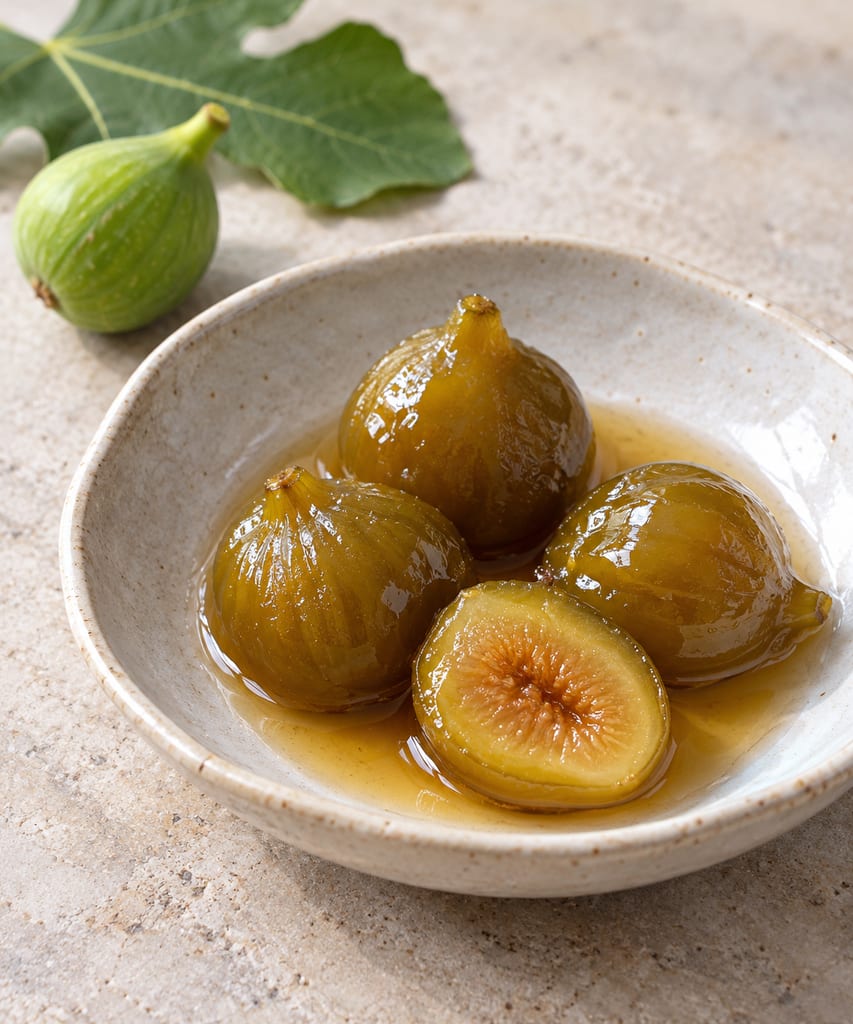
Whole unripe green figs cooked tender in golden syrup, served in a shallow dish with a fresh green fig alongside.

Green-fig konfyt without lime soak

Hard green figs are parboiled and cooked whole in a lemon-sharpened sugar syrup as a refrigerator-only South African konfyt; the method does not establish shelf-stable canning.

South Africa · Modern method
· Fruit