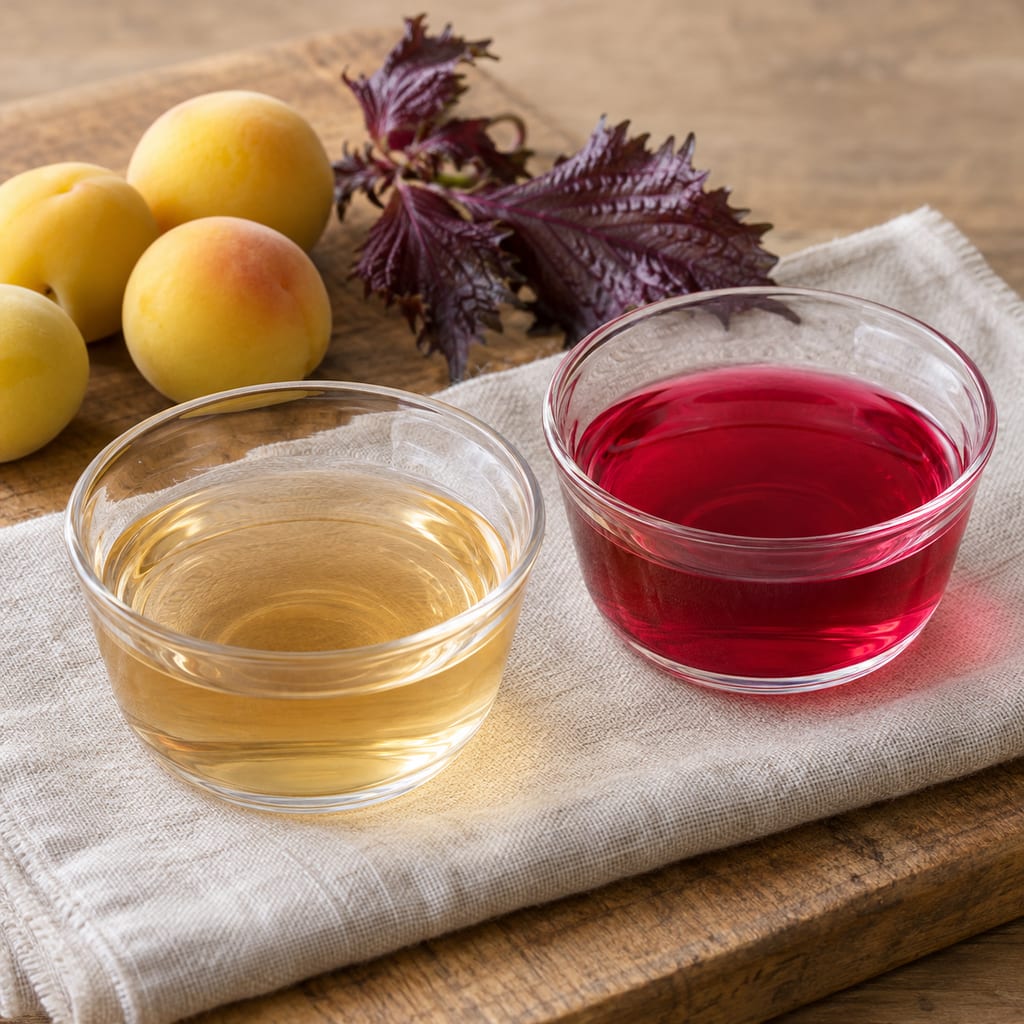
Umezu (ume pickling liquid)
The very salty, sour liquid drawn out of Japanese ume fruit by salt during umeboshi making: acidity from the fruit's citric and malic acid, not from acetic fermentation; white, or red with shiso.
 FermenteaWhere food goes to change
Traditional method
梅干し · Ume-boshi · Salted ume · Pickled ume plum
Naturally acidic ume fruit salted and sometimes dried in Japan; the salt, the fruit’s own acidity and the loss of moisture supply the preservation, and the preparation is not always fermented.
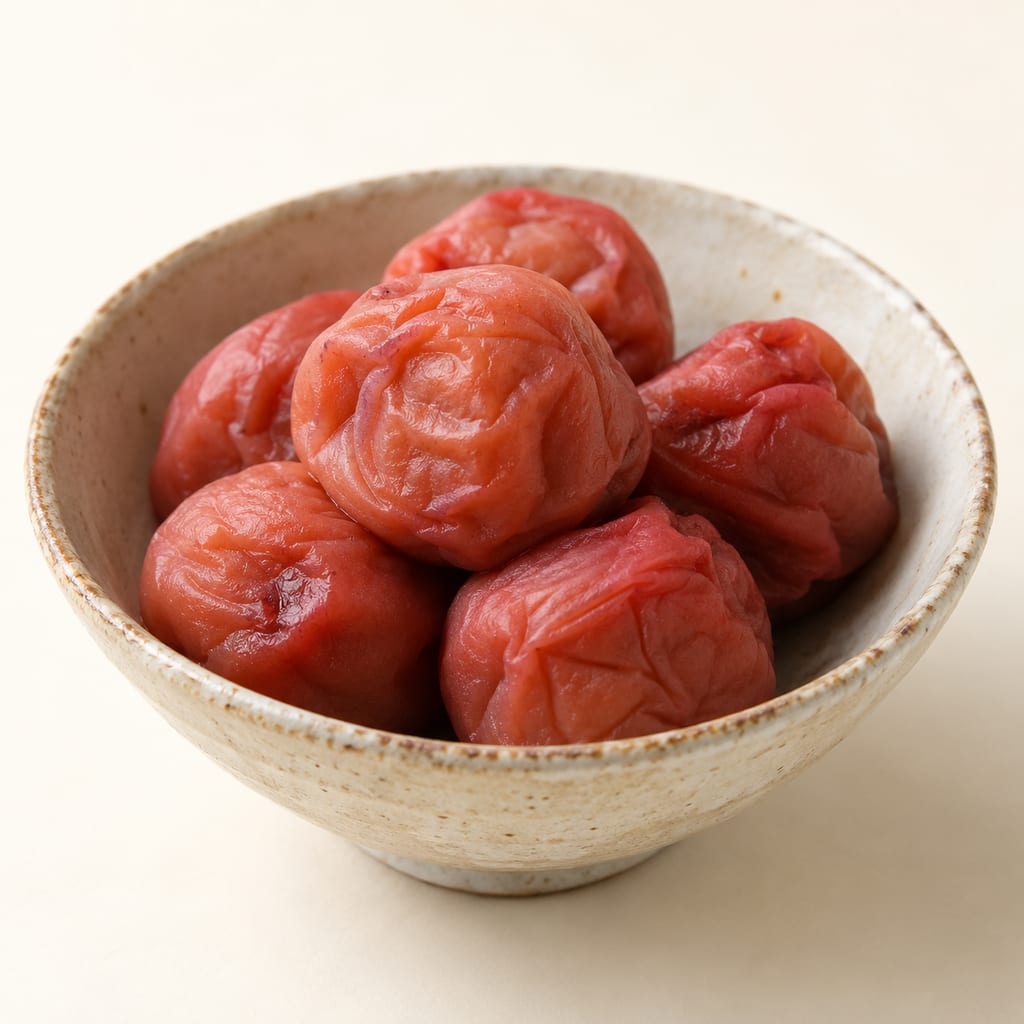
Umeboshi are ume fruits that have been salted and sometimes dried. The ume is naturally acidic, and the salt draws water out of the fruit. Together these give a preserved fruit that is firm, sour and salty.
The record places umeboshi with other salt-and-acid fruit preparations, such as preserved citrus in North Africa. The record notes that not every such preparation is fermented; the fermentation status of umeboshi is not established by these sources.
Three factors are named: the salt, the acidity of the fruit and the reduction of moisture. The record does not separate their contributions, and the sources do not give salt levels, drying times or storage limits.
Without tested salt and acid levels and a recorded storage limit, the historical method is not a validated home process. The page does not supply those figures.
Naturally acidic fruits were salted and sometimes dried, as with preserved citrus and umeboshi. Salt, the fruit’s acidity and moisture reduction may supply the preservation; not every such preparation is fermented.
Scaling: source batch only
The sources give no salt level, acidity target or storage limit for umeboshi, and the preservation depends on those factors.
Hazard sourceUse a tested recipe that sets the salt level and storage conditions; do not rely on the historical account alone.
Control sourceThe sources record historical practice only. They are not a tested home method.
Traditional Japanese pickling; the source does not give a precise regional origin for umeboshi.
The very salty, sour liquid drawn out of Japanese ume fruit by salt during umeboshi making: acidity from the fruit's citric and malic acid, not from acetic fermentation; white, or red with shiso.
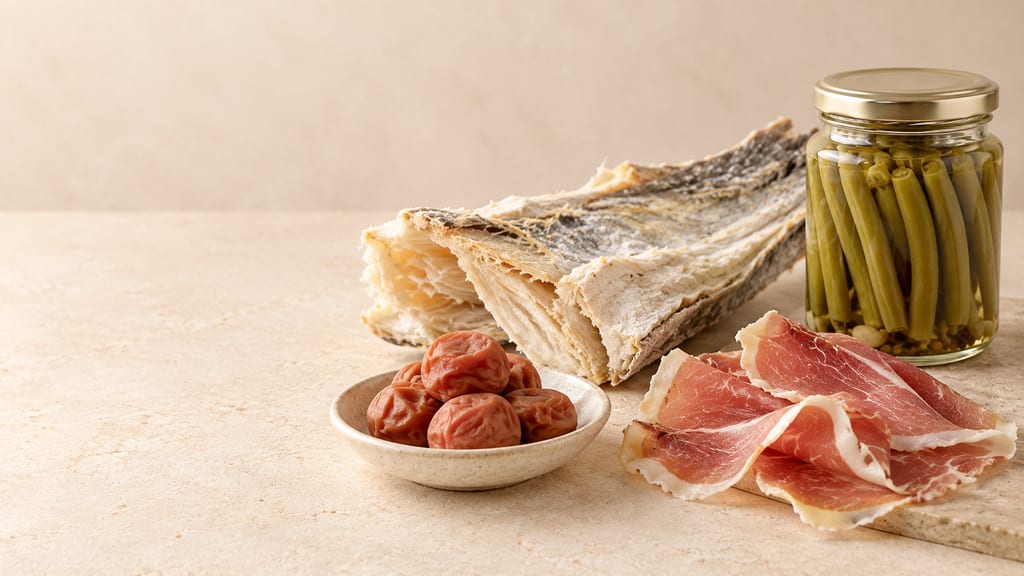
Every preserved food is a stack of barriers against microbes, enzymes, air and time. This is how they work, what a recipe's numbers measure, and how cooks worldwide build them.
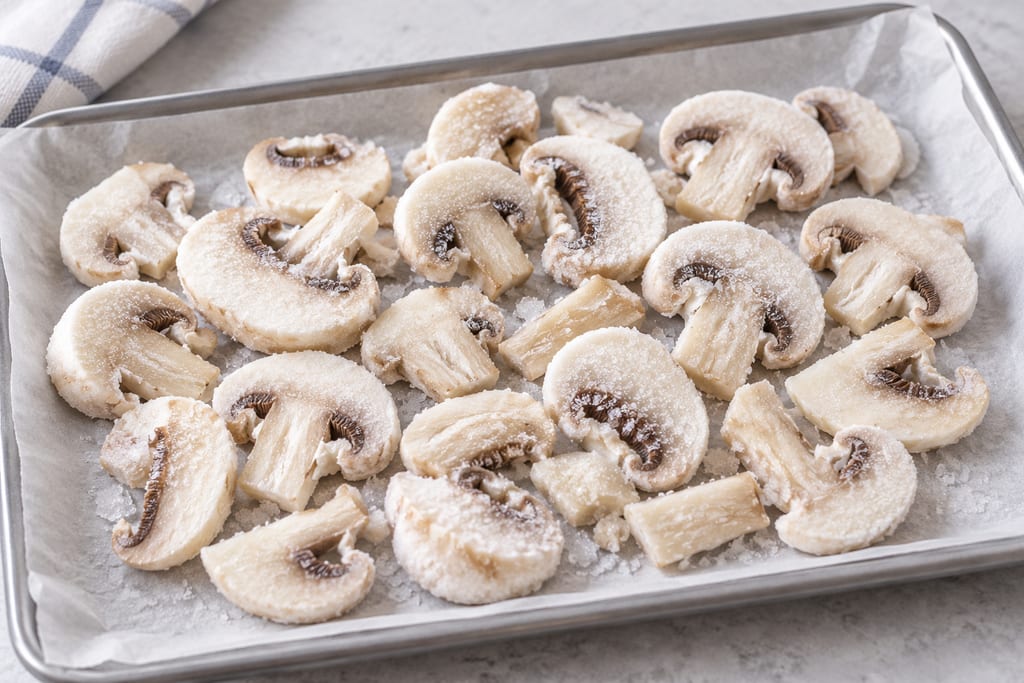
Frozen raw mushrooms are cleaned mushrooms frozen without a preheating step, the variant a Japanese forest-volunteer manual describes beside its cooked version.
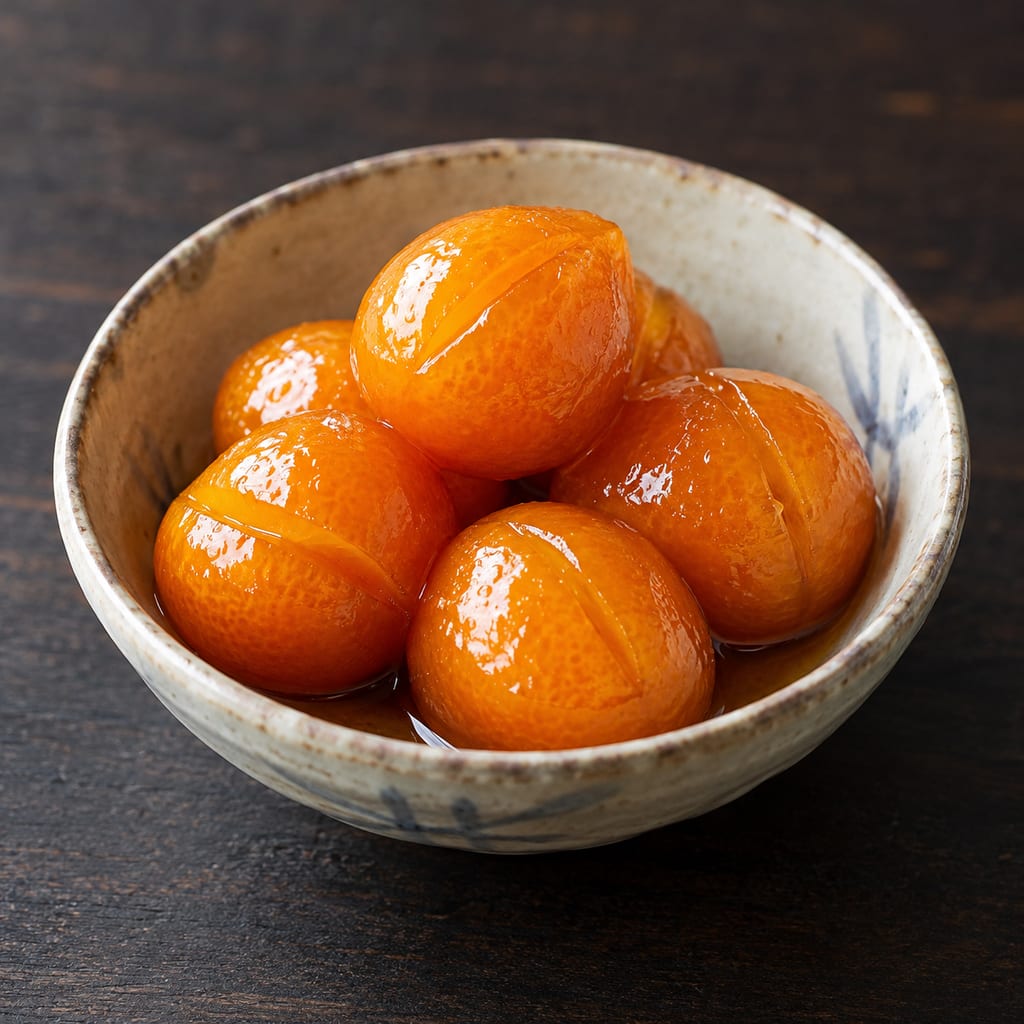
Whole kumquats are slit, blanched and simmered gently in fresh water and sugar until the peel softens and the liquid thickens. This Imari municipal recipe gives a sugar range rather than a fixed ratio.

Salted mushrooms are a traditional wild-mushroom preserve, especially of Finnish and Russian milk caps, made by layering boiled mushrooms with coarse salt or keeping them under brine, and kept cold.

Japanese reddish-brown vinegar from sake lees matured about three years, turned to vinegar by acetic bacteria; the vinegar of Handa and Edomae sushi rice.

A thick, naturally sweet rice-and-koji preparation used to add body and sweetness to marinades, dressings and sauces. This method follows a published Marukome home recipe and is an enzyme-conversion hold, not a way to grow koji mould.
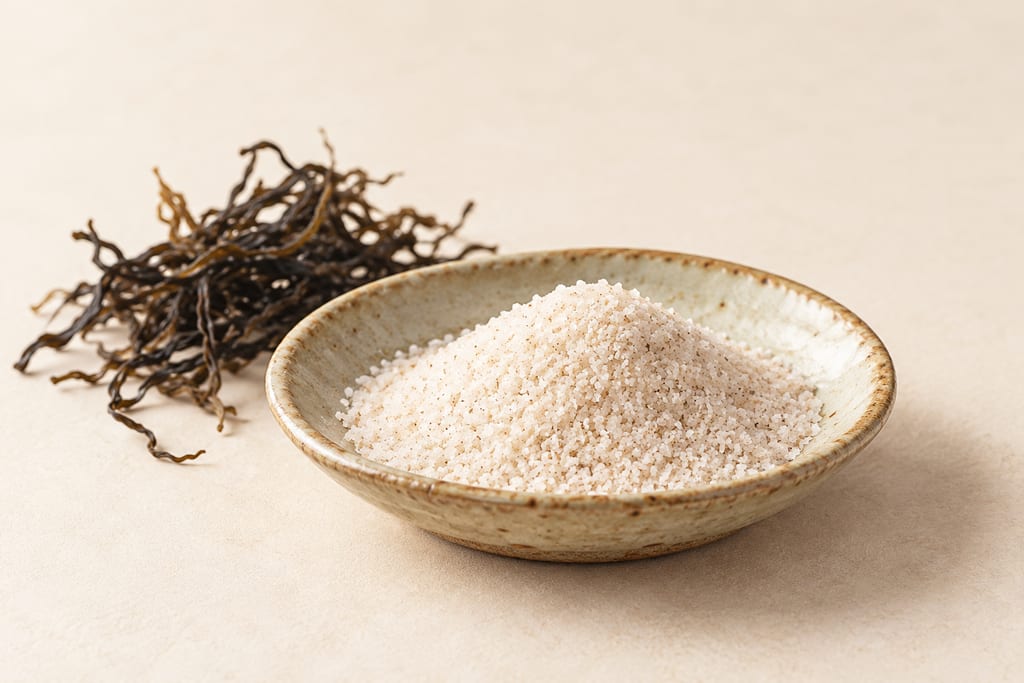
Amabito no Moshio is a modern, pale beige Japanese seaweed salt made from Seto Inland Sea water and hondawara seaweed. Its documented factory method concentrates filtered brine in kettles, then separates and dries the salt.

Anpan is a soft wheat bun filled with sweet red-bean paste and finished with egg wash and black sesame. This dough rises with commercial instant yeast.

Japanese skipjack tuna cooked, then repeatedly smoked and dried over a wood fire by the hand-fired tebiyama method into a hard block for shaving into dashi: the first stage of katsuobushi.
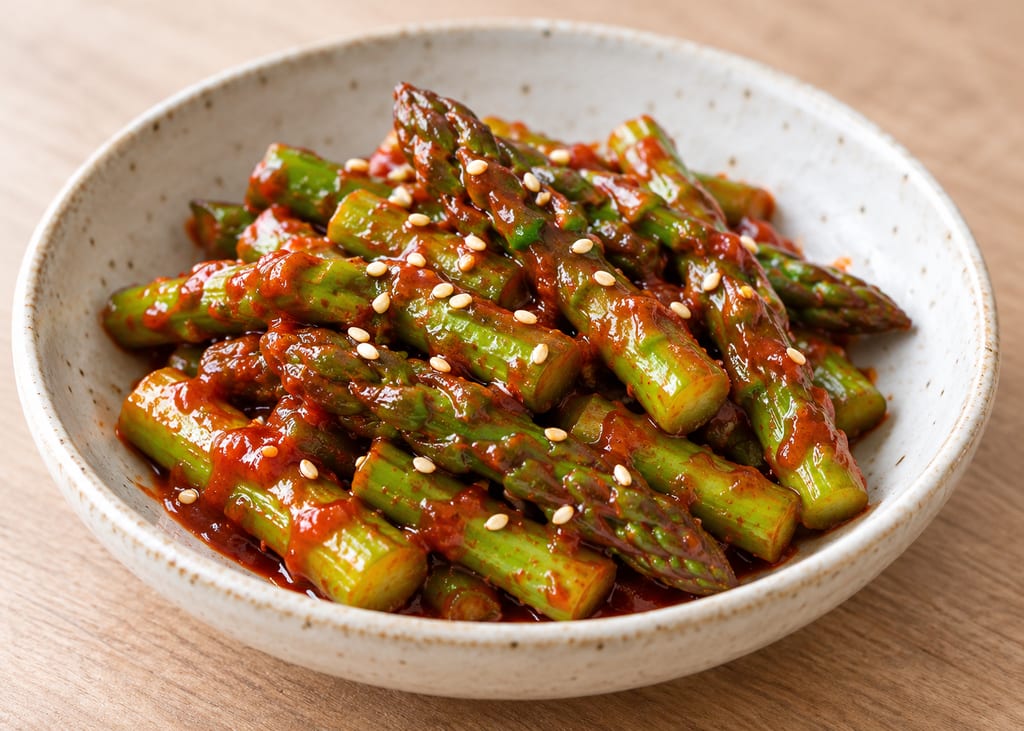
A Korean banchan of blanched asparagus dressed with a sweet-sour cho-gochujang sauce; Hyosun's version cools the spears in ice water before tossing.
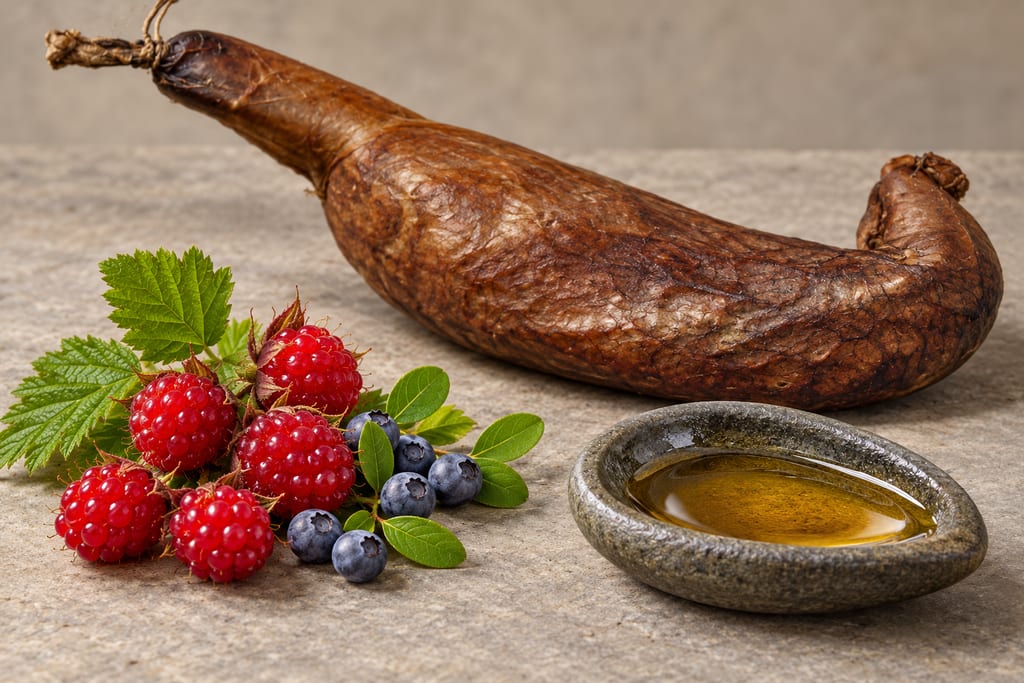
Berries, greens and fish eggs were kept in seal oil by Indigenous Alaskan communities. The oil seals the food from air, and the result depends on preparation and the surrounding conditions.
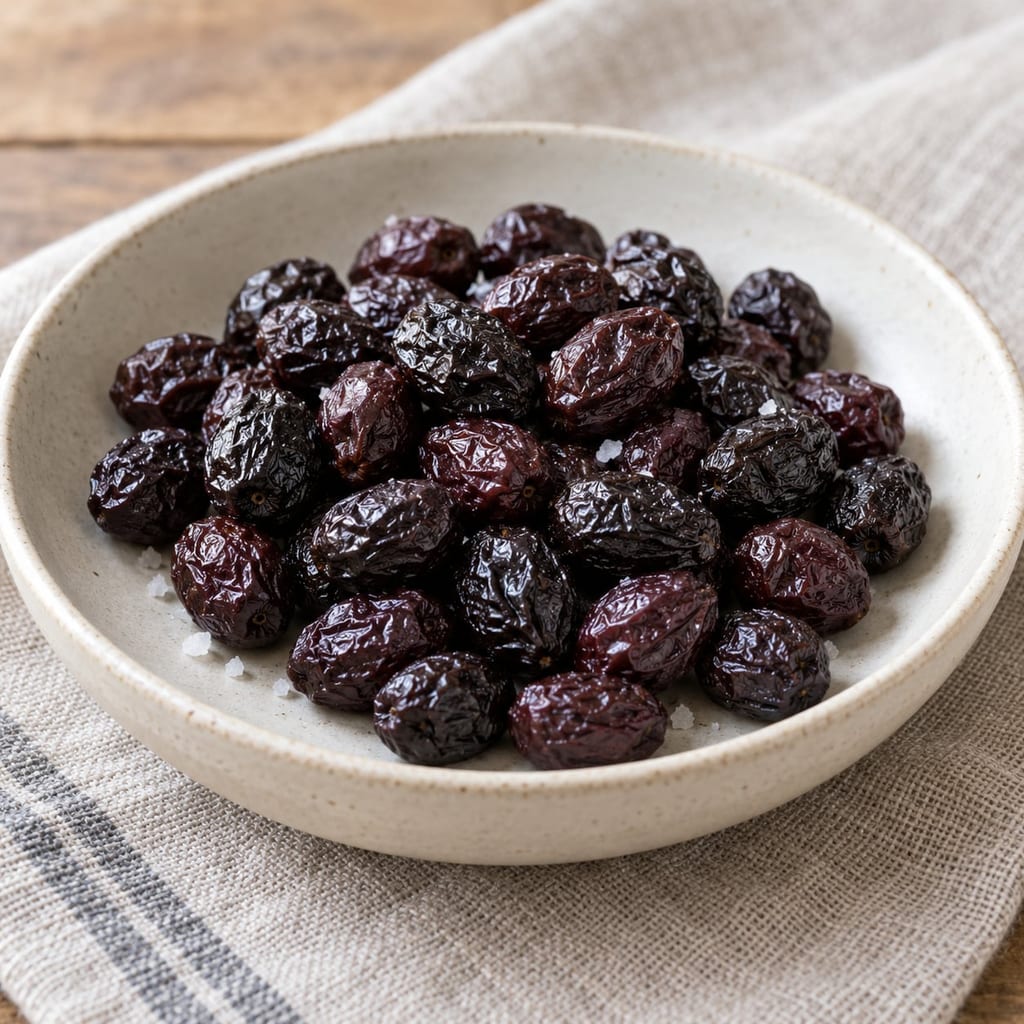
Fully ripe dark olives are mixed with salt and turned weekly as salt draws out moisture. Distinct from existing brine-fermented and lye-treated olives.
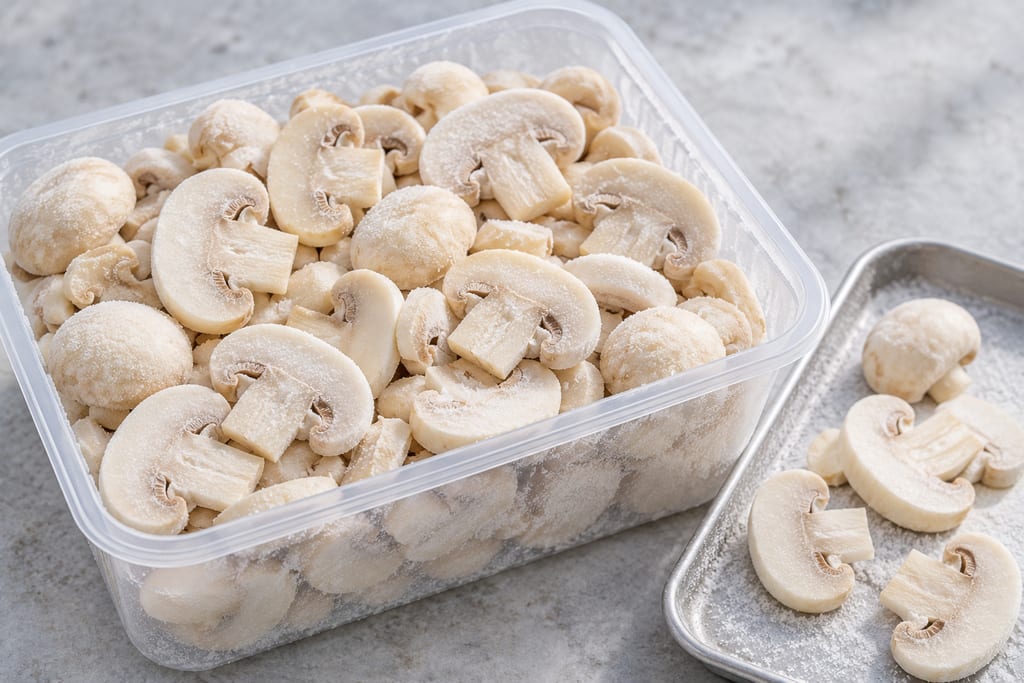
Steam-blanched frozen mushrooms are whole, button, quartered or sliced mushrooms given a short steam treatment, cooled promptly, packed with headspace and kept frozen.
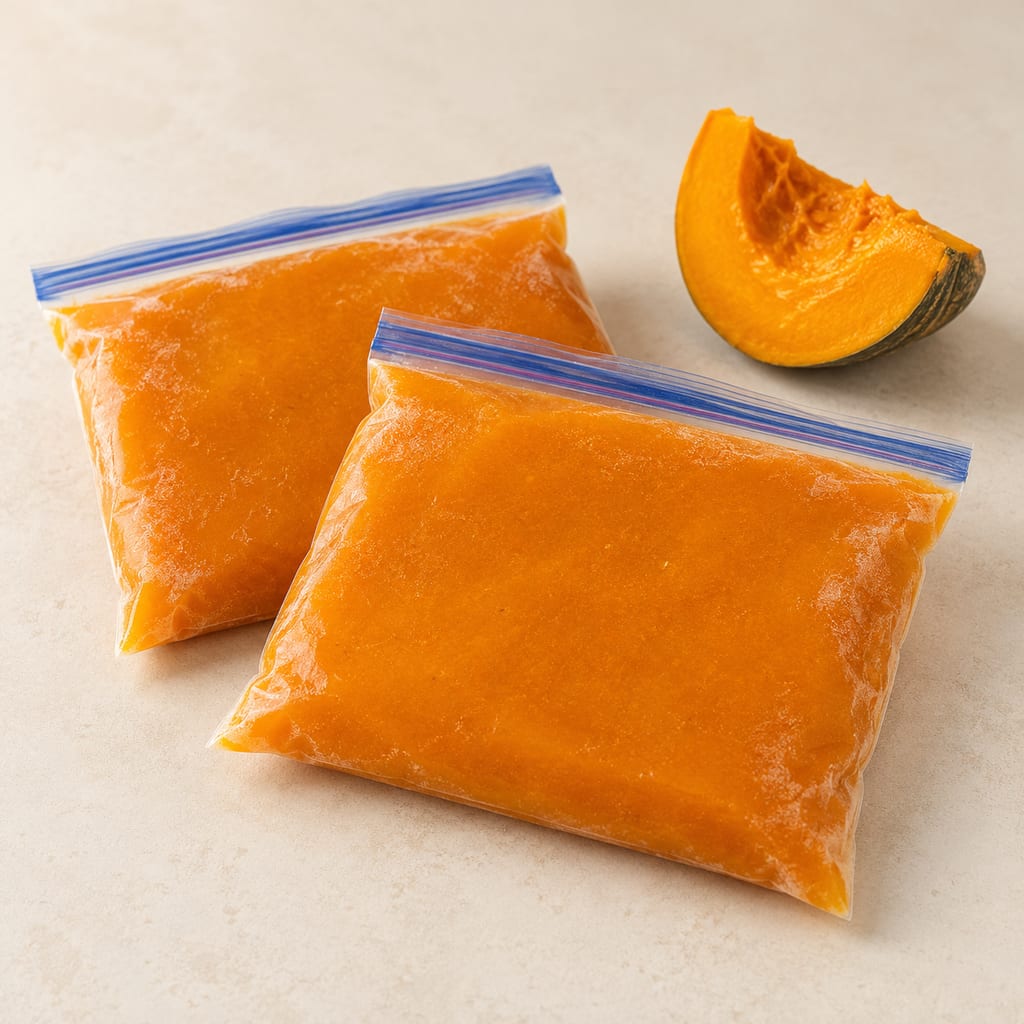
Cooked pumpkin mashed, cooled and frozen in portions: a plain base for pies, soups and baking without canning a dense purée.
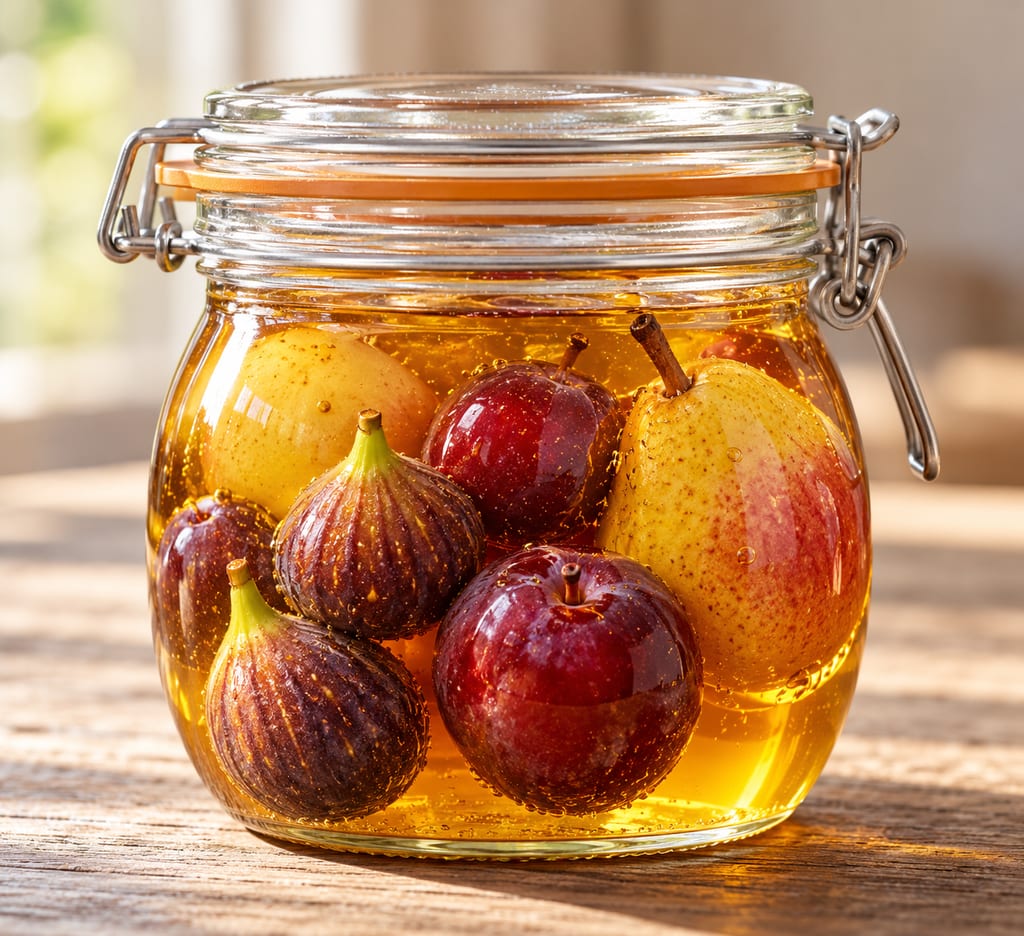
Fruit and some other foods were placed in honey in ancient Mediterranean kitchens. The honey's concentrated sugar does the preserving, and wet ingredients weaken it.
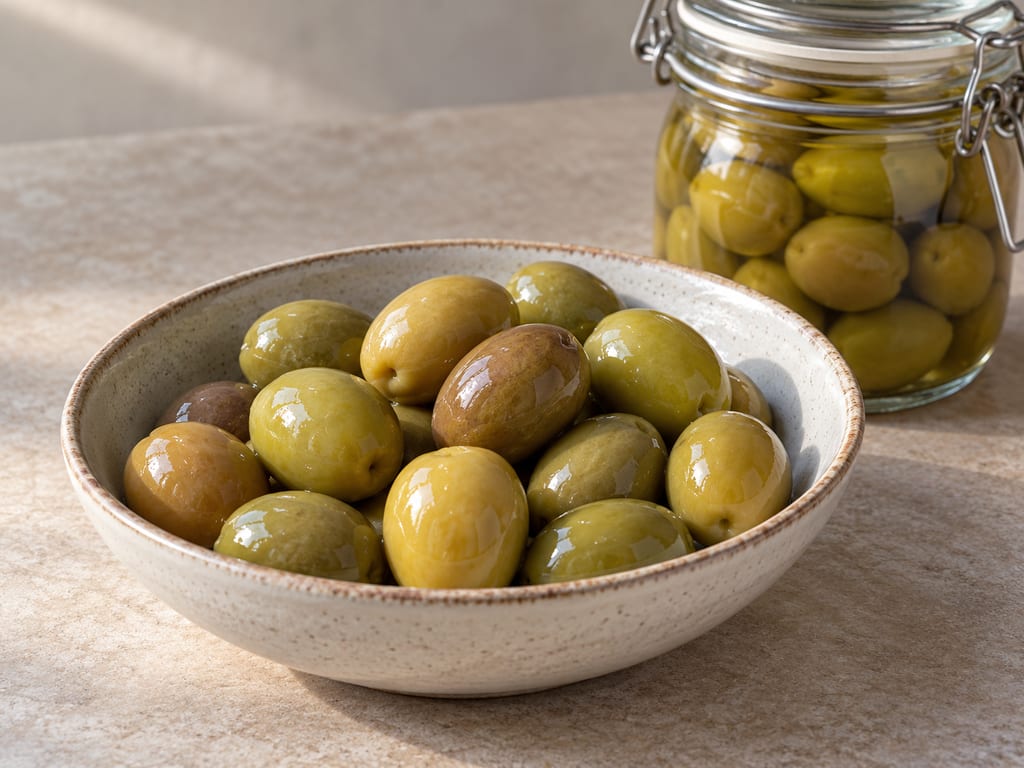
Green olives debittered in a sodium hydroxide solution, then rinsed repeatedly and held in brine, by the University of California's published home-pickling method.
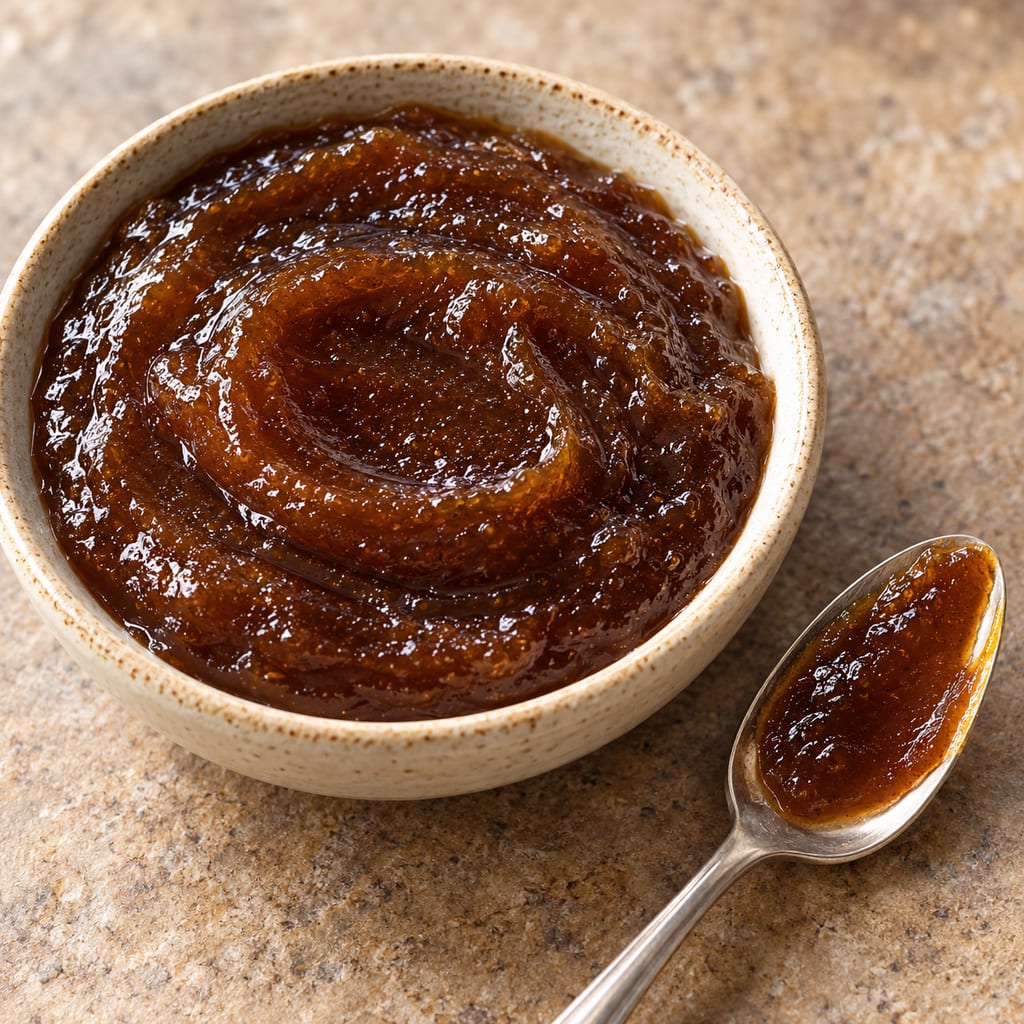
An experimental sweet mushroom preserve developed in Indian food-processing research, made by cooking mushroom pulp with sugar, added pectin and citric acid until concentrated into a thick, spreadable jam.
No community contributions have been published for this entry yet.
Sign in to contribute. Published comments and photos are free to read.
FAOMethod
https://www.fao.org/4/x0560e/x0560e11.htmNaturally acidic fruits salted and sometimes dried, as with preserved citrus and umeboshi
Cited in: What it is; Where it sits among fruit preserves; What does the preserving; Limits of the record
Ministry of Agriculture, Forestry and Fisheries of JapanMethod · History
https://www.maff.go.jp/e/policies/market/dento_syoku/bunrui/tukemono.htmlUmeboshi as a traditional Japanese pickled product