
Akazu (red sake-lees vinegar)
Japanese reddish-brown vinegar from sake lees matured about three years, turned to vinegar by acetic bacteria; the vinegar of Handa and Edomae sushi rice.
 FermenteaWhere food goes to change
からし · Karashi · からし · 辛子 · Japanese hot mustard · Wagarashi · Chinese restaurant hot mustard paste
Karashi is Japan's hot mustard: powder stirred with a little water into a stiff paste, covered for a few minutes so the heat develops, and served in small dabs with oden, natto and fried food.
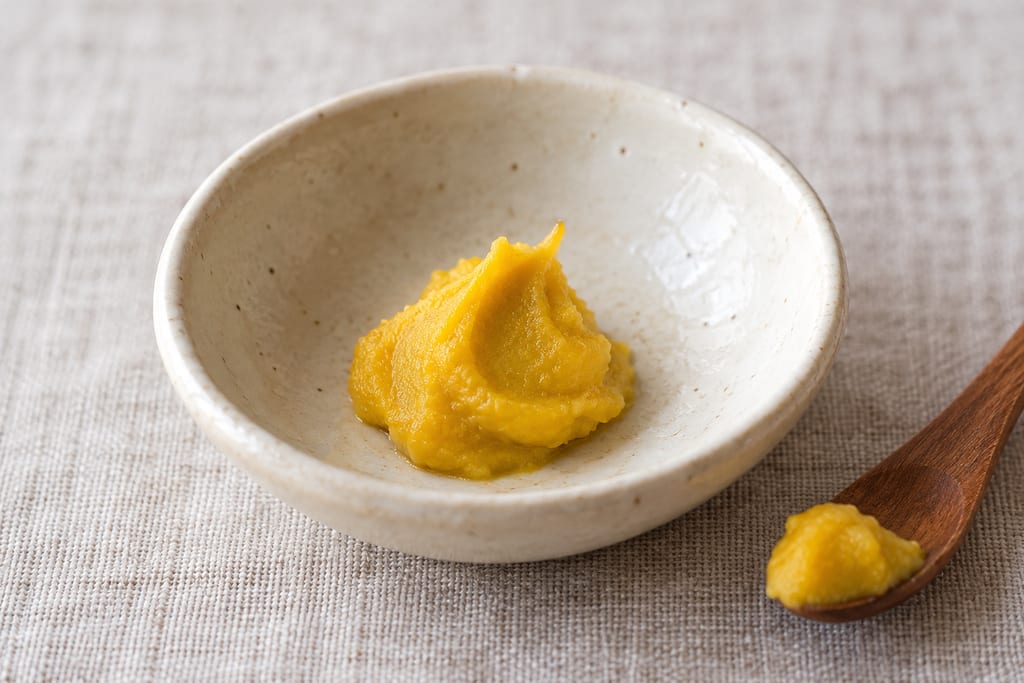
Karashi (からし, 辛子) is Japanese hot mustard, a yellow paste with a sharp, nose-clearing heat. It is made by wetting a powder of ground mustard seed, and in Japan it is mostly bought as a ready-made paste in a tube. It is hotter than Western mustard, which is blended with vinegar and sugar, and Just One Cookbook calls it spicier and more potent than mild yellow mustard.
It should not be confused with wasabi. Wasabi comes from the grated rhizome of Eutrema japonicum; karashi comes from mustard seed. The two sit side by side in tubes at the shop and both sting the nose, but the plants and the paste-making are different, and tube products can be blends of mustard and horseradish.
Dry mustard powder has almost no heat. The pungency develops when the powder is wetted: enzymes in the ground seed act on compounds in the seed once they are mixed with water, and the sharp volatile flavour follows. That is why every maker tells you to stir the powder with water and then wait. S&B specifies four to five minutes for its powder; Just One Cookbook covers the bowl and leaves it for five minutes. A bowl turned over a cover traps the volatile compounds and gives them time to build rather than escape.
The water matters less than the wait. Kikkoman says the powder can be kneaded with warm or cold water, and S&B's own guidance allows water at about 40 C. Brands differ in seed and fineness, so the package time beats any rule of thumb.
Karashi is served in small dabs. Kikkoman names oden hot pot, aemono (vegetables dressed with a paste) and natto; Just One Cookbook adds gyoza and tonkatsu. English mustard powder or Chinese hot mustard powder can stand in when karashi powder is not available, according to the same site.
The variation recorded with this page comes from the other side of the Pacific: Chinese-American restaurants serve a hot mustard with fried food, and The Woks of Life describes one made from English dry mustard powder with water, oil, vinegar and seasonings. The vinegar mellows the heat. That recipe documents a restaurant style, not one Chinese national formula.
The inspected pages give small-batch directions for activating powder. They do not establish a single standard ratio for karashi, the full range of mustard and horseradish blends in tubes, or a storage life for homemade paste. Kikkoman keeps the powder away from heat and humidity and refrigerates opened tube paste because the flavour fades. None of this proves a safe holding time, so the paste is made fresh for the meal. Mustard is a listed allergen.
The sources describe current Japanese use and sale; none dates the first karashi or the powder-and-water method.
Scaling: source batch only
Mustard is a listed allergen; check the powder label for added ingredients.
Hazard sourceIdentify mustard on the label and check the powder for additional ingredients.
Control sourceMustard is a listed allergen.
Make it fresh for the meal. No storage life is established for the homemade paste; Kikkoman says commercial tube paste is refrigerated after opening because the flavour fades, which does not give a keeping time for a homemade paste.
Kikkoman notes that large amounts can cause tears and irritate the stomach.
Current Japanese use and sale in tubes; the sources give no origin date or place.
Japanese reddish-brown vinegar from sake lees matured about three years, turned to vinegar by acetic bacteria; the vinegar of Handa and Edomae sushi rice.
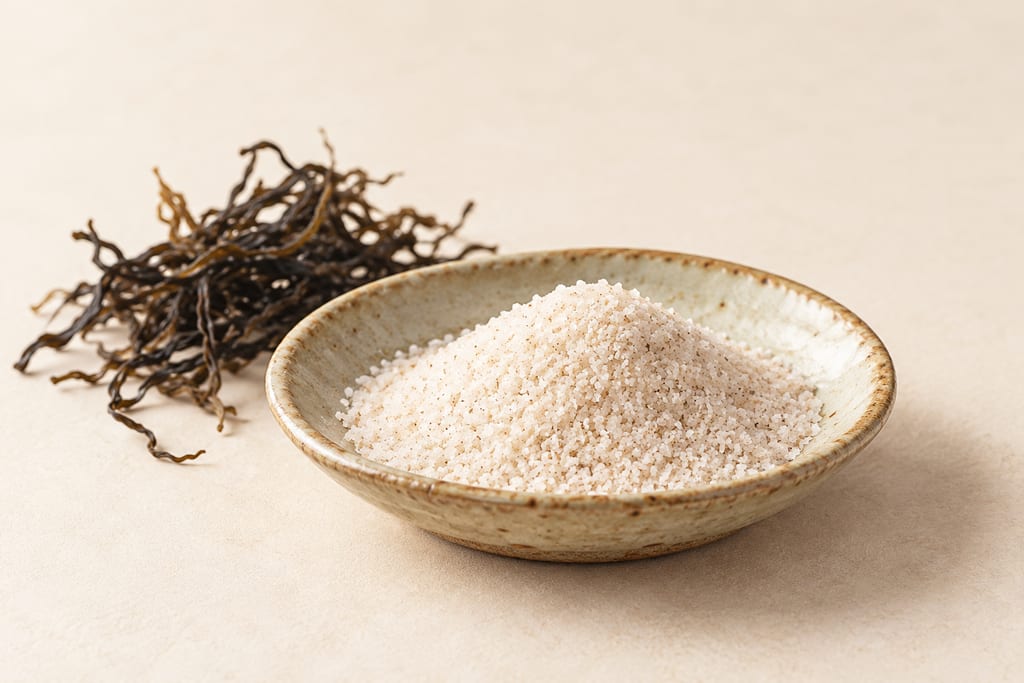
Amabito no Moshio is a modern, pale beige Japanese seaweed salt made from Seto Inland Sea water and hondawara seaweed. Its documented factory method concentrates filtered brine in kettles, then separates and dries the salt.
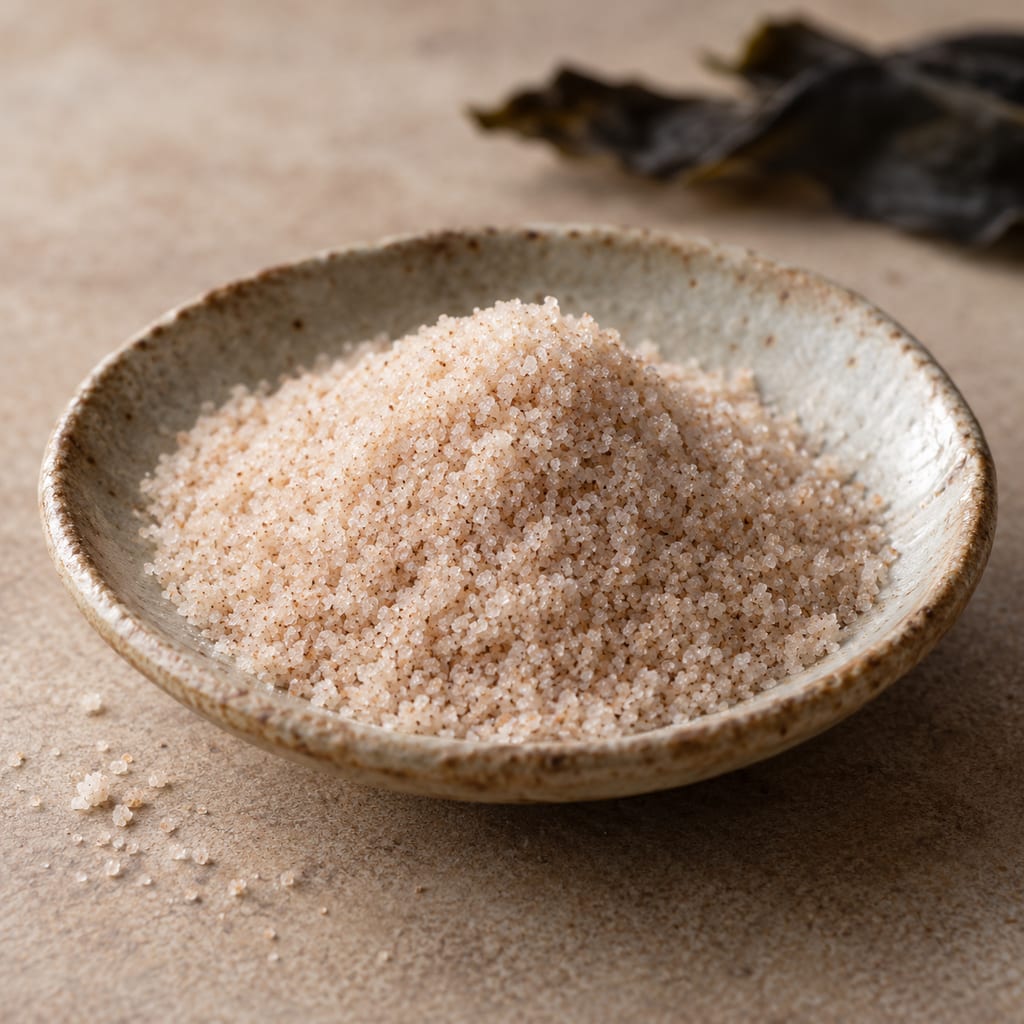
Awaji moshio is a modern Japanese seaweed salt made by TaDa PHILOSOPHY from Awaji Island seawater and seaweed. Its premium process concentrates brine, extracts seaweed flavor, then crystallizes, separates, dries and grades the salt.
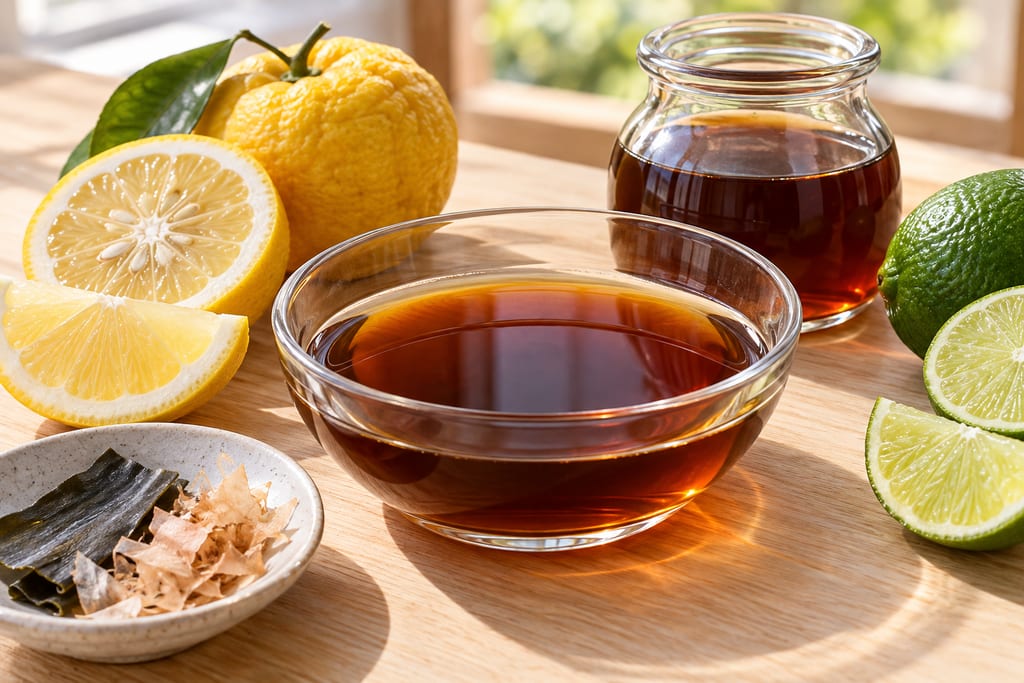
This fresh ponzu-shoyu mixes Japanese koikuchi soy sauce with yuzu or a lemon-lime blend, rice vinegar, water and sugar; optional kombu and bonito give a short chilled infusion.
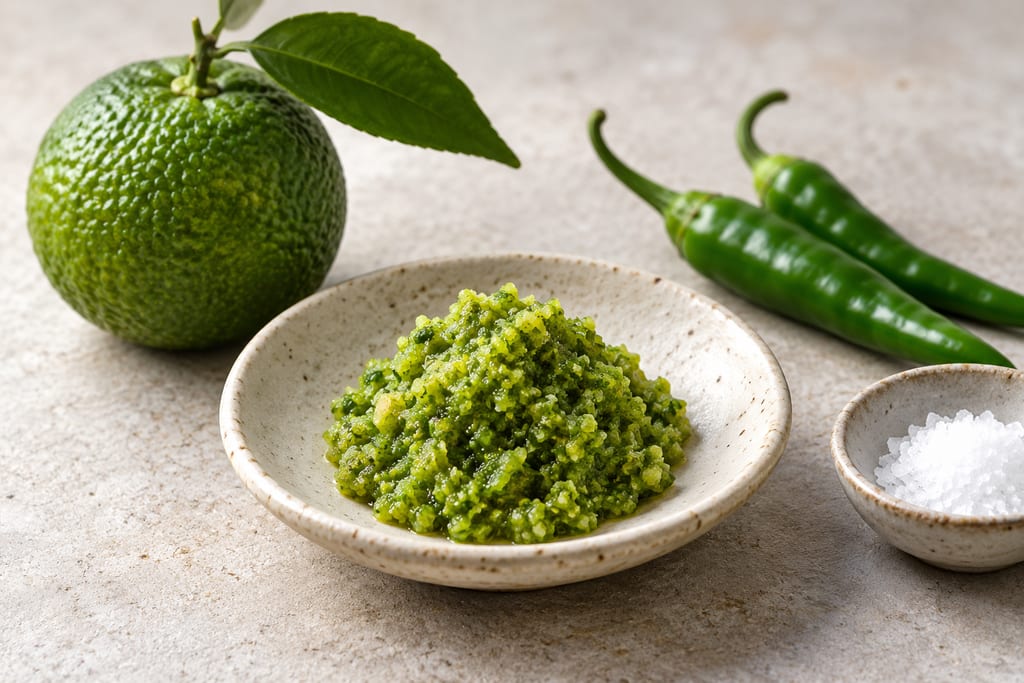
A fresh, uncooked yuzu and green chilli paste inspired by Kyushu’s yuzu kosho, made here as an untested small-batch seasoning rather than a preservation formula.
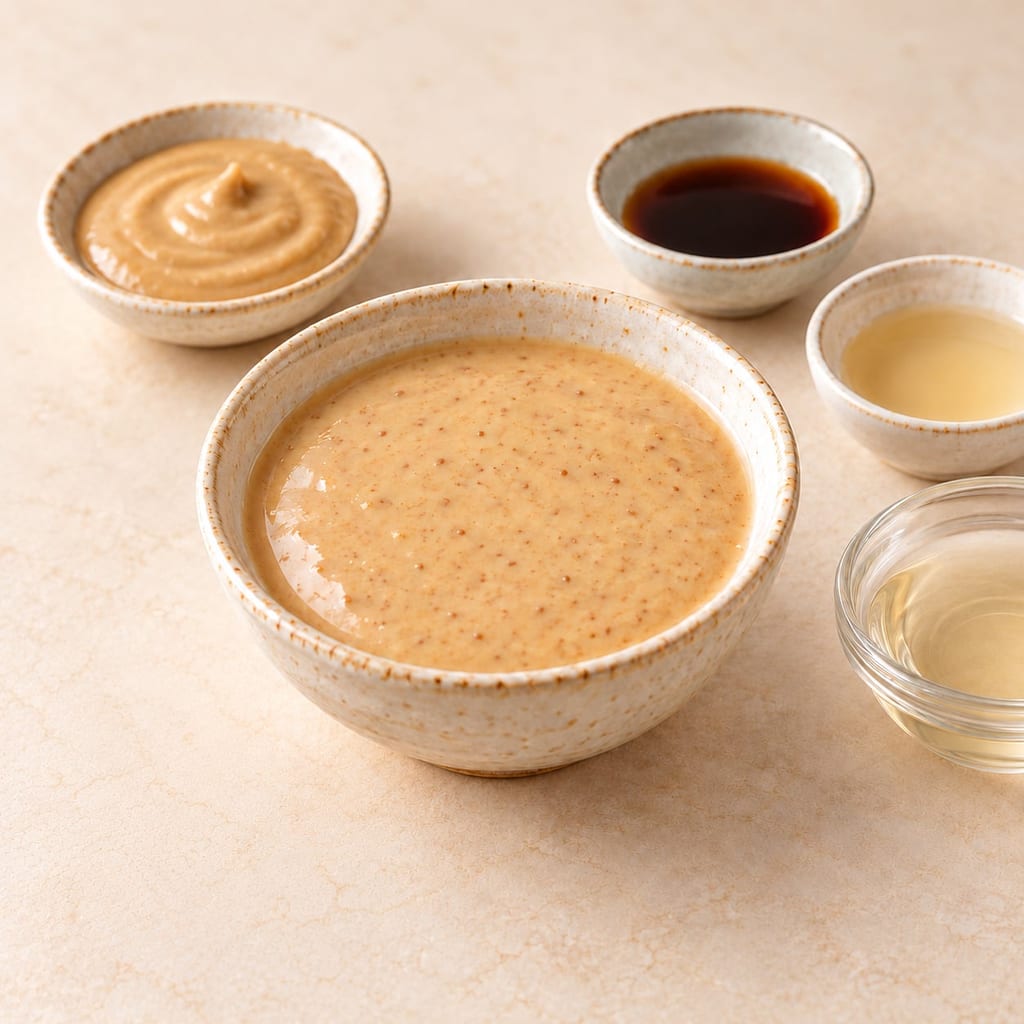
A creamy Japanese sesame dipping sauce with soy, rice vinegar and dashi. Gradual mixing turns the thick sesame paste into a smooth sauce.
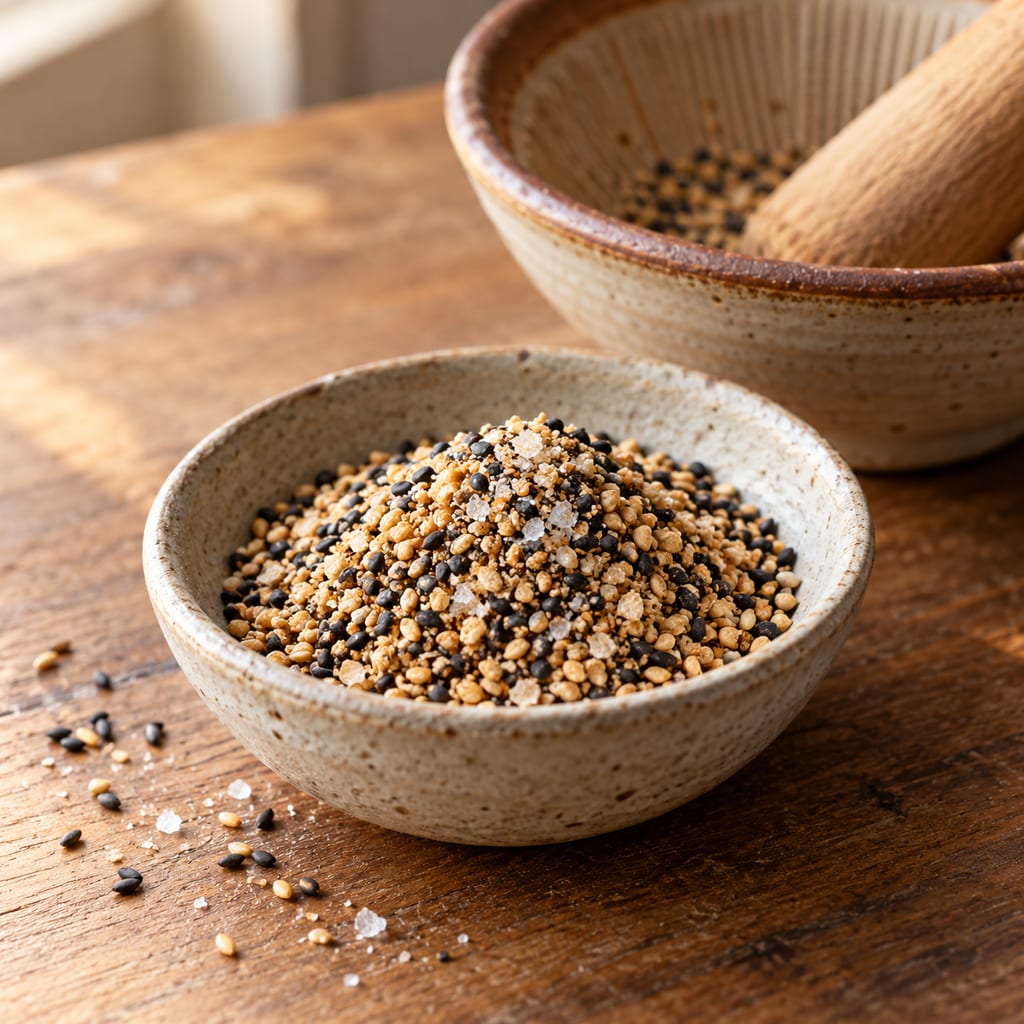
Toasted sesame seeds and sea salt are ground together into a coarse seasoning for rice. This small pan-roasted batch keeps most of the seed texture.
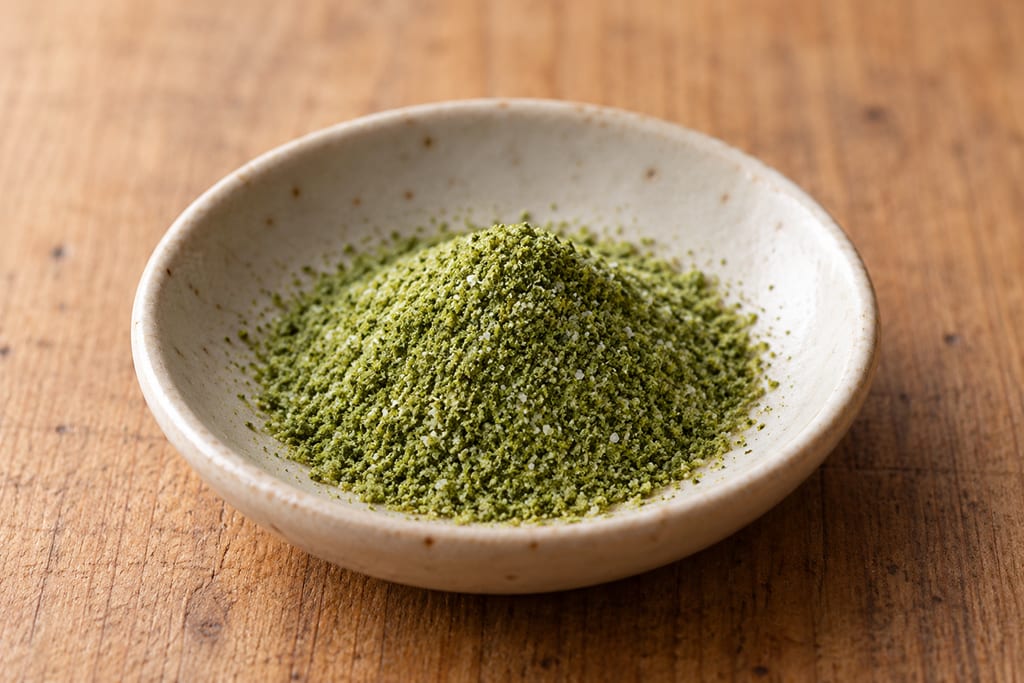
Green tea leaf salt is a dry seasoning made by grinding tea leaves, sieving them and mixing the powder with fine salt. This Japanese-style version follows a documented equal-parts method.
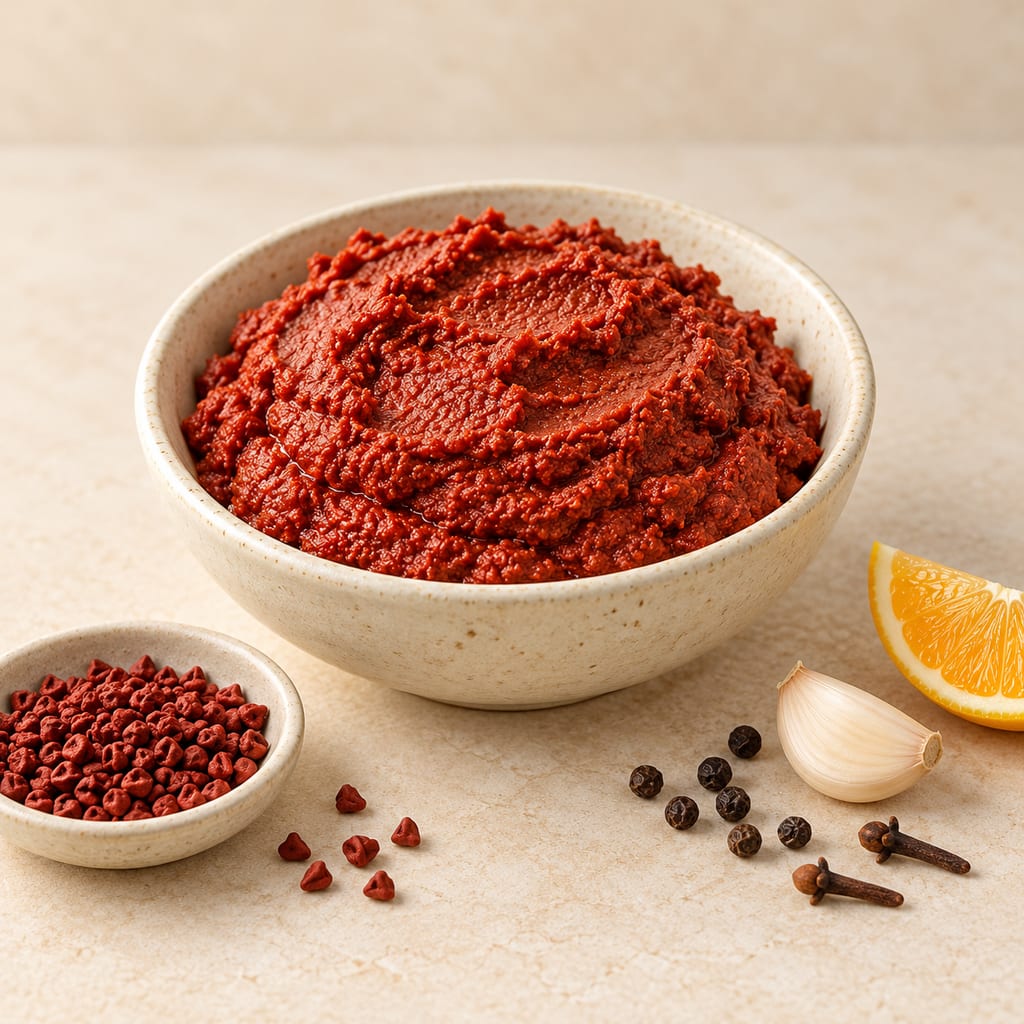
A Yucatecan recado rojo is a brick-red seasoning paste built on annatto seed, garlic and sour orange. This measured home version shows one route into a much wider family of market and household recados.
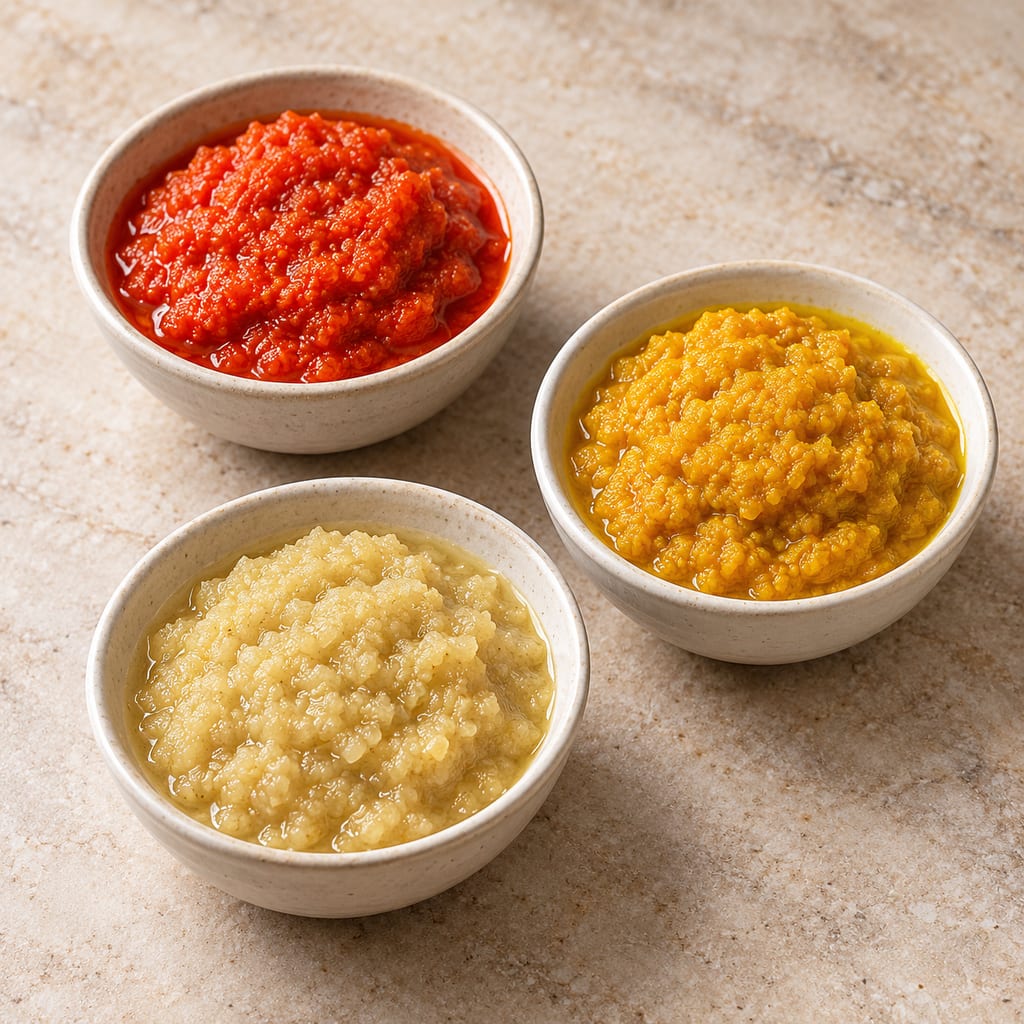
Bumbu dasar are the ground spice bases of Indonesian cooking: a white paste of shallot, garlic and salt, with chile added for red and turmeric for yellow, cooked into dishes.
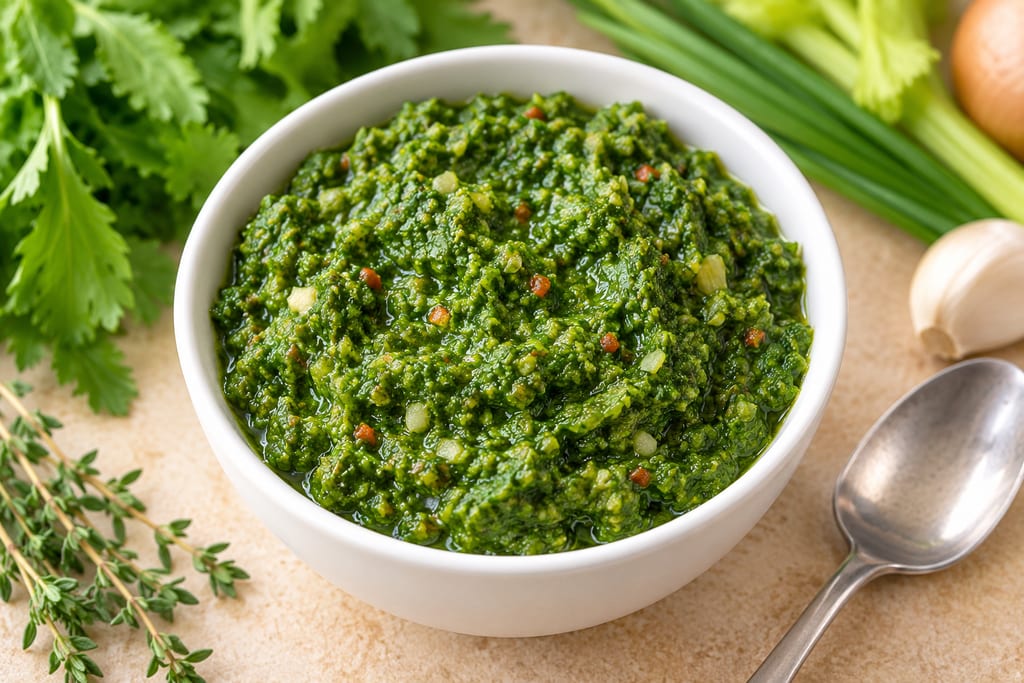
A fresh herb and aromatic paste of chadon beni (culantro), thyme, chives, celery, onion, garlic and peppers, blended with vinegar and water and used as the base for Trinidadian cooking.
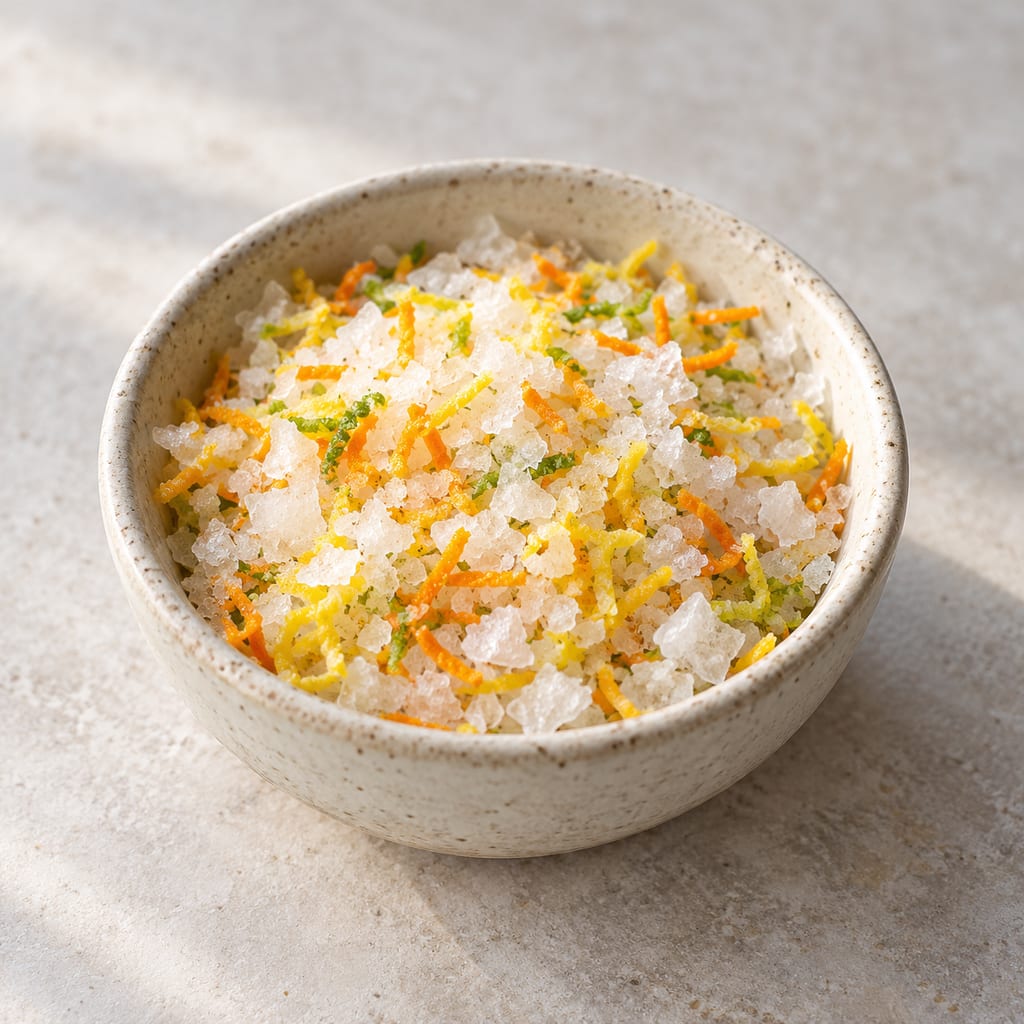
Citrus zest is rubbed into coarse or flake salt and dried on a tray. This peel-based seasoning preserves the chosen citrus aroma without adding juice.
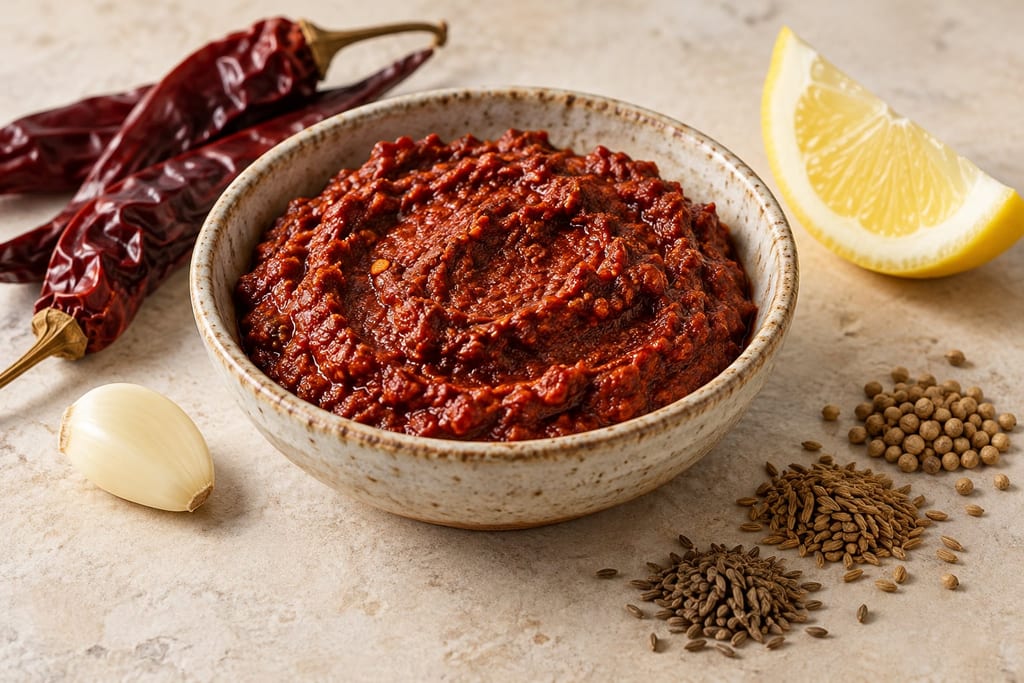
A fresh chilli paste made from rehydrated dried red peppers, garlic, olive oil, lemon and warm spices; this small-batch formula adapts the harissa family rather than reproducing a tested Tunisian method.
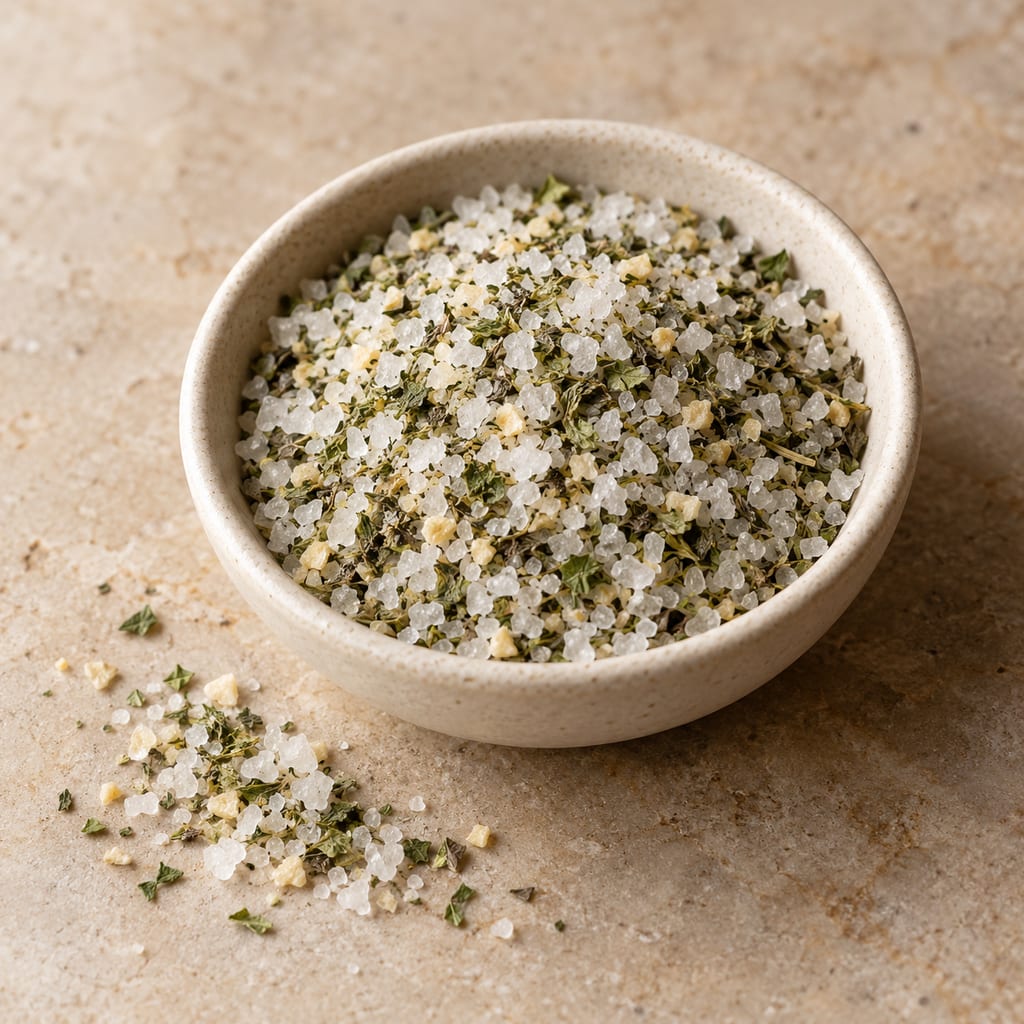
Fresh garlic and pungent herbs are chopped with kosher salt, then dried in the warmth of a switched-off oven. The blend keeps the selected herbs together in one seasoning.
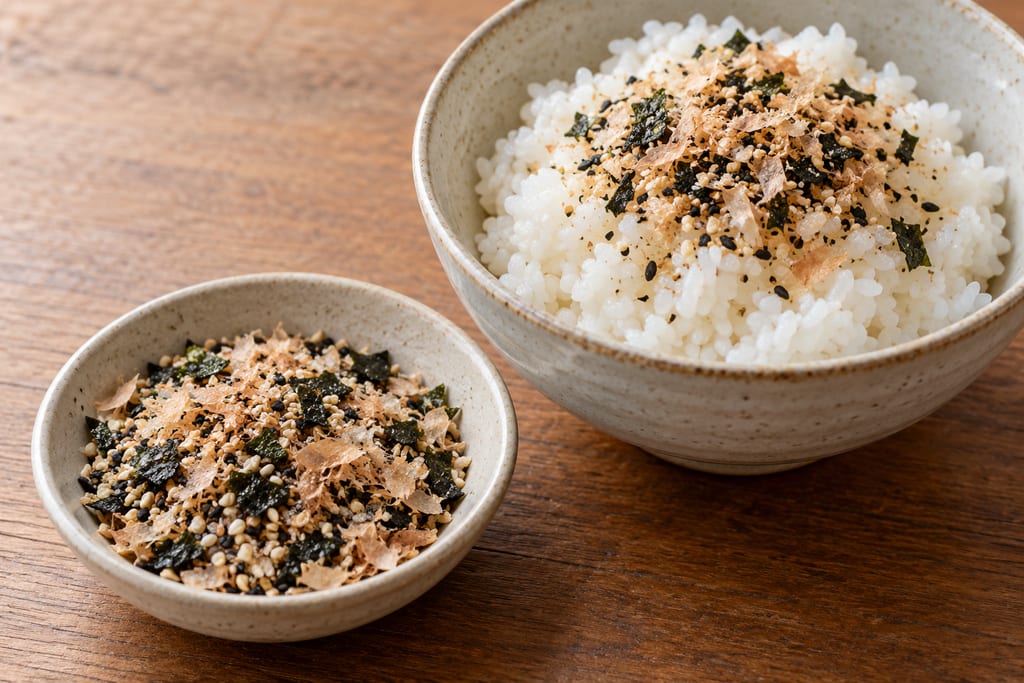
A dry Japanese rice seasoning of sesame, bonito, nori, sugar and salt. This documented home blend is one specific formula within a varied category with several early product histories.
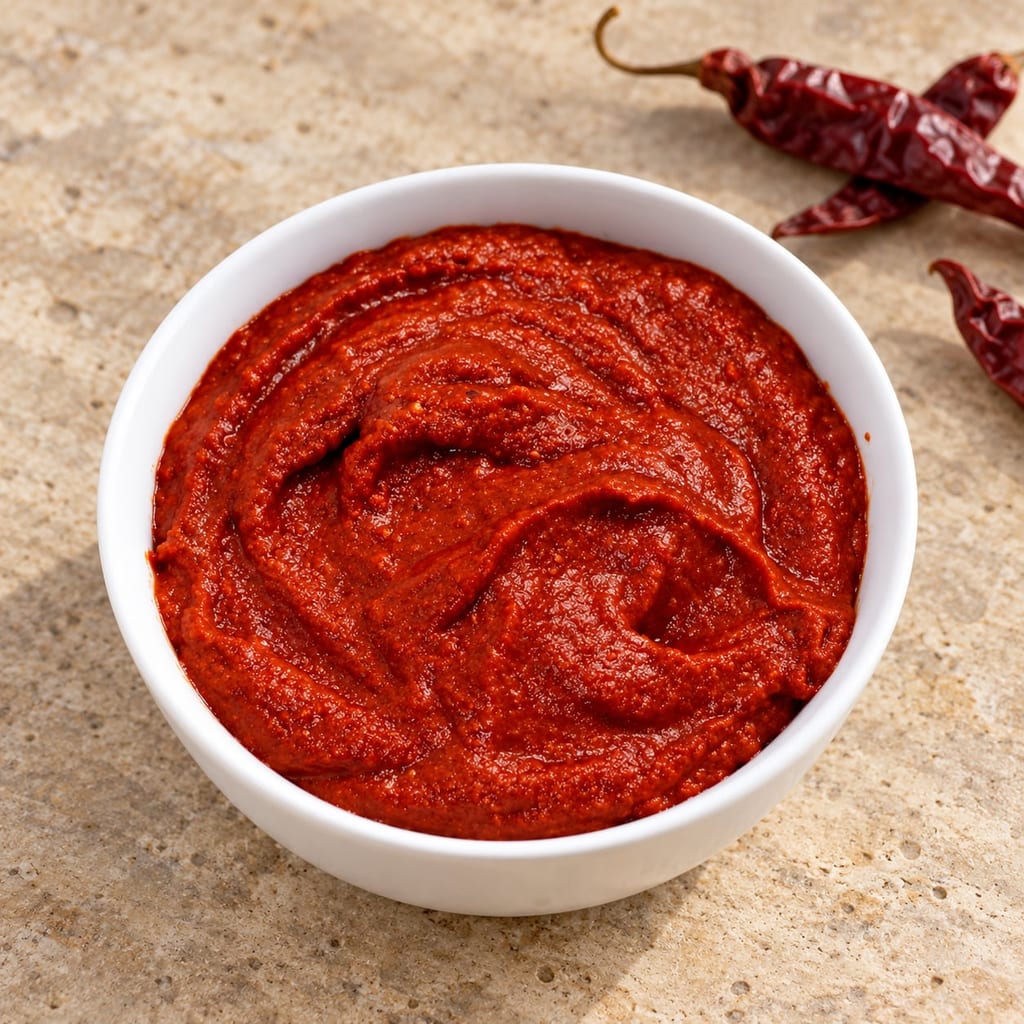
Recheado is a red Goan spice paste of Kashmiri chillies, garlic and spices ground in vinegar, best known as the stuffing for fried fish such as mackerel.
No community contributions have been published for this entry yet.
Sign in to contribute. Published comments and photos are free to read.
S&B FoodsMethod
粉わさび・粉からしの練り方Two teaspoons of powder with one teaspoon of water or warm water (about 40 C), covered for four to five minutes.
Cited in: How the heat appears
Just One CookbookIdentity · Method · Use
Karashi (Japanese Hot Mustard)Karashi is described as made from crushed Brassica juncea seed and horseradish, sold as powder or tube paste; used with oden, gyoza and tonkatsu.
1 teaspoon powder with half a tablespoon of hot water, covered and inverted for 5 minutes; English or Chinese hot mustard powder as substitutes.
Spicier and more potent than mild yellow mustard.
Cited in: What karashi is; How the heat appears; Using it
KikkomanIdentity · Use · Storage
Japanese Mustard (Wagarashi)Made from powdered Japanese mustard seeds mixed or kneaded with warm or cold water; mostly sold in tubes.
Used with oden, aemono and natto; hotter than Western mustard, which is blended with vinegar and sugar.
Powder is kept away from heat and humidity; paste is refrigerated after opening because its flavour fades.
Cited in: What karashi is; How the heat appears; Using it; Limits of the evidence
S&B Foods GlobalMethod
Mustard Powder 400gS&B says to mix its mustard powder with water and leave for 4 to 5 minutes.
The Woks of LifeMethod
Chinese Hot MustardA Chinese-American restaurant-style hot mustard uses water, oil, vinegar and seasonings; evidence for a restaurant-style variation, not a universal national style.
Cited in: Using it
Food Standards AgencySafety
Allergen guidance for food businessesMustard, including mustard powder, is one of the 14 listed allergens.
Cited in: Limits of the evidence