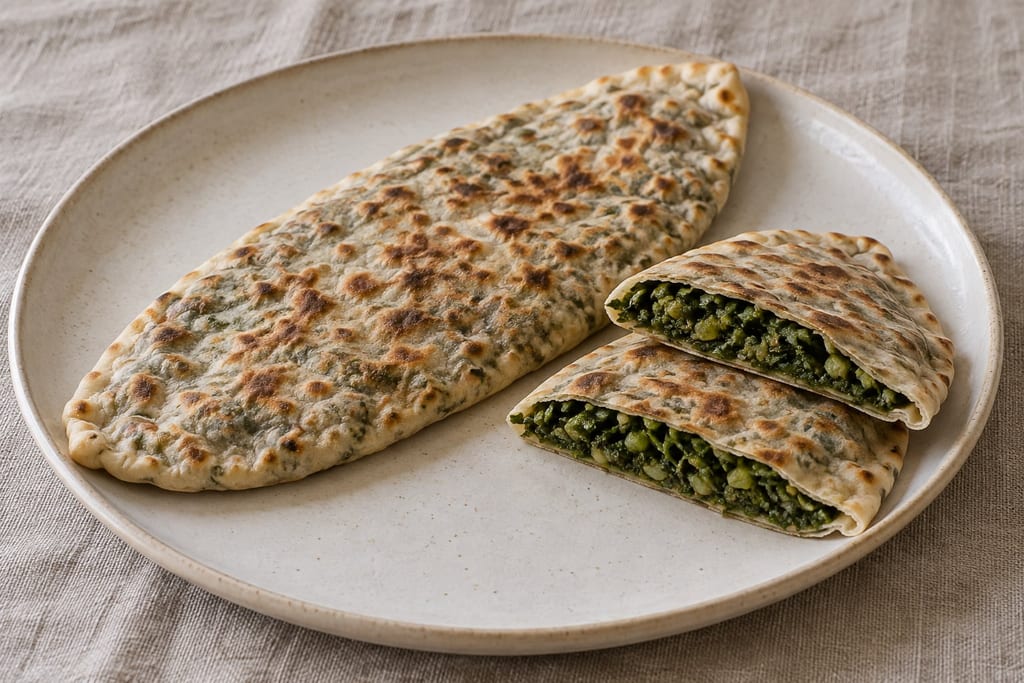
Zhingyalov hats (greens-filled flatbread)
An unleavened Armenian flatbread filled with mixed greens and herbs, sealed into an oval and cooked on a griddle.
 FermenteaWhere food goes to change
Armenian fingerprint flatbread
A soft Armenian oval bread with a glossy surface and deep finger grooves, made here with a rye or whole-wheat flour scald and an overnight cold fermentation.
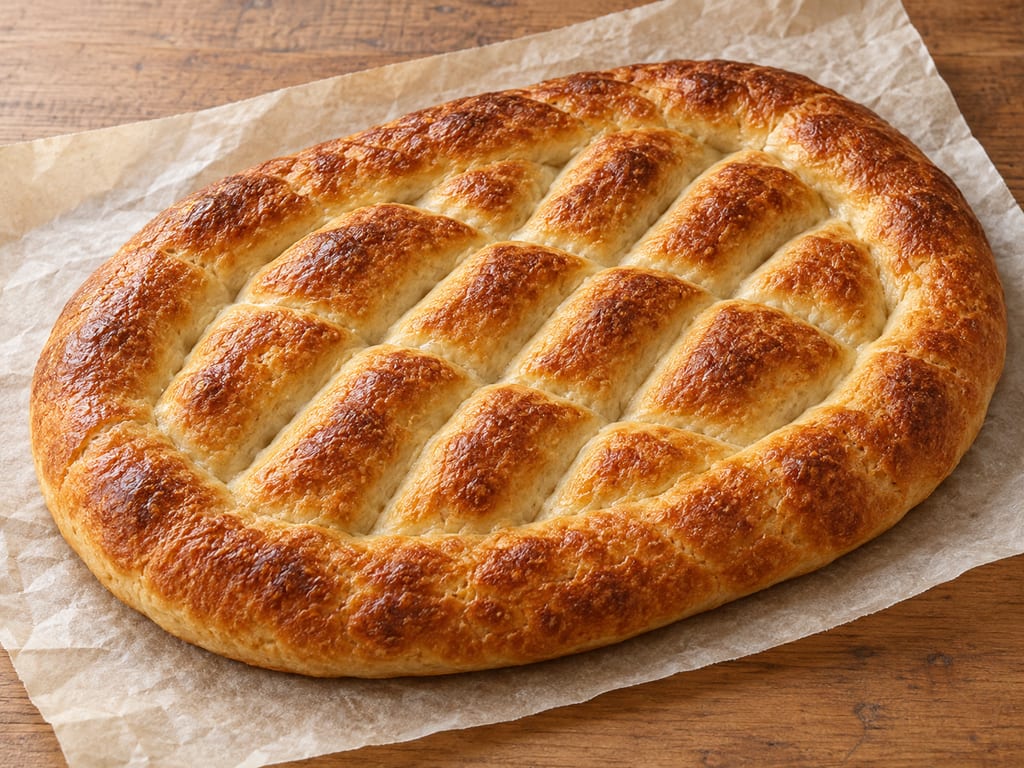
Matnakash is an oval Armenian wheat bread marked by deep finger-made grooves. This recipe follows Andrew Janjigian's modern home-oven version for King Arthur Baking. It makes two large flatbreads with a soft, open crumb and browned, glossy surface; the loaves can be torn or sliced and served with a meal.
The recipe is one baker's adaptation, not a single definitive formula for all Armenian matnakash. Janjigian describes sourdough as the traditional leaven and notes that many current versions use commercial yeast. His recipe adds a rye or whole-wheat flour scald and shapes the soft dough in baskets before dimpling it. Those are choices for this method, not requirements for every regional bread.
The dough starts with 465 g all-purpose flour and 322 g cool water, rested for an hour after mixing. Separately, pour 95 g boiling water over either 53 g medium rye flour or 57 g whole-wheat flour. Stir the paste until thick and let it cool fully. The scald adds moisture and softness, but the source does not make it a universal traditional ingredient.
Add 2 teaspoons table salt and half a teaspoon instant yeast after the scald has cooled. The topping is 43 g plain yogurt or 57 g Greek yogurt whisked with one large egg. It browns quickly in the hot oven, so the recipe uses a high temperature and a short bake.
The first hour is an autolyse: flour and cool water rest together before salt, yeast and scald are added. After kneading, the dough rests in a covered bowl and receives three sets of folds at 30-minute intervals. The recipe looks for about a 50 percent increase in volume after the folds, with an additional 30 to 60 minutes if needed; it then spends 15 to 24 hours in the refrigerator.
The next day, divide the dough into two pieces of about 460 g, round them gently and rest for 20 minutes. Proof the shaped rounds seam-side up in well-floured bannetons or towel-lined bowls. The source estimates 1 to 3 hours at room temperature and uses visible puffiness and a roughly 50 percent increase in volume as cues.
Heat a baking stone or steel at 475°F / 246°C for 45 minutes. Turn one proofed round onto floured parchment and stretch it gently into an oval, keeping its outside edge thicker. Spread half the yogurt-and-egg wash over the top while leaving a thin rim bare.
Press a border furrow, then make several lengthwise grooves and a crossing diagonal set. Press through the dough to the parchment and repeat the pattern so the lines remain visible after baking. Gently draw the outer edge outward until the bread is about 12 by 8 inches. Transfer it with a peel or inverted baking sheet; repeat with the second loaf.
Bake each flatbread on the hot stone or steel until evenly golden, about 10 to 12 minutes. Cool it on a rack for 30 minutes before slicing. Serve warm or at room temperature; the source suggests olives, pickled vegetables and Armenian string cheese.
The publisher says the bread is best the day it is baked, but wrapped leftovers keep for several days at room temperature and may be frozen for longer storage. These are the source's household storage suggestions, not a tested shelf-life study.
King Arthur Baking describes matnakash as Armenian and Andrew Janjigian's article distinguishes the Republic of Armenia-associated eastern form from his family's western Armenian background. The exact bread and modern recipe are not treated as proof of a precise origin. Janjigian describes sourdough as traditional and notes that many modern recipes use yeast; his own home-oven version uses a flour scald, banneton and yogurt-and-egg wash, which he identifies as practical choices rather than universal traditional requirements.
Yield 2 large flatbreads · Scaling: source batch only
The formula uses boiling water for the flour scald and a stone or steel preheated to 475°F / 246°C.
Hazard sourceUse a heatproof bowl for the boiling-water scald, let the paste cool fully before mixing, and use dry oven mitts and a suitable peel or inverted baking sheet when handling the hot stone or steel.
Control sourceThe yogurt-and-egg wash is handled raw before baking; wash hands and utensils after contact and bake the bread fully until golden as directed.
King Arthur presents matnakash as Armenian bread. This modern home recipe supports an Armenian association, not a precise birthplace or a universal formula.
An unleavened Armenian flatbread filled with mixed greens and herbs, sealed into an oval and cooked on a griddle.
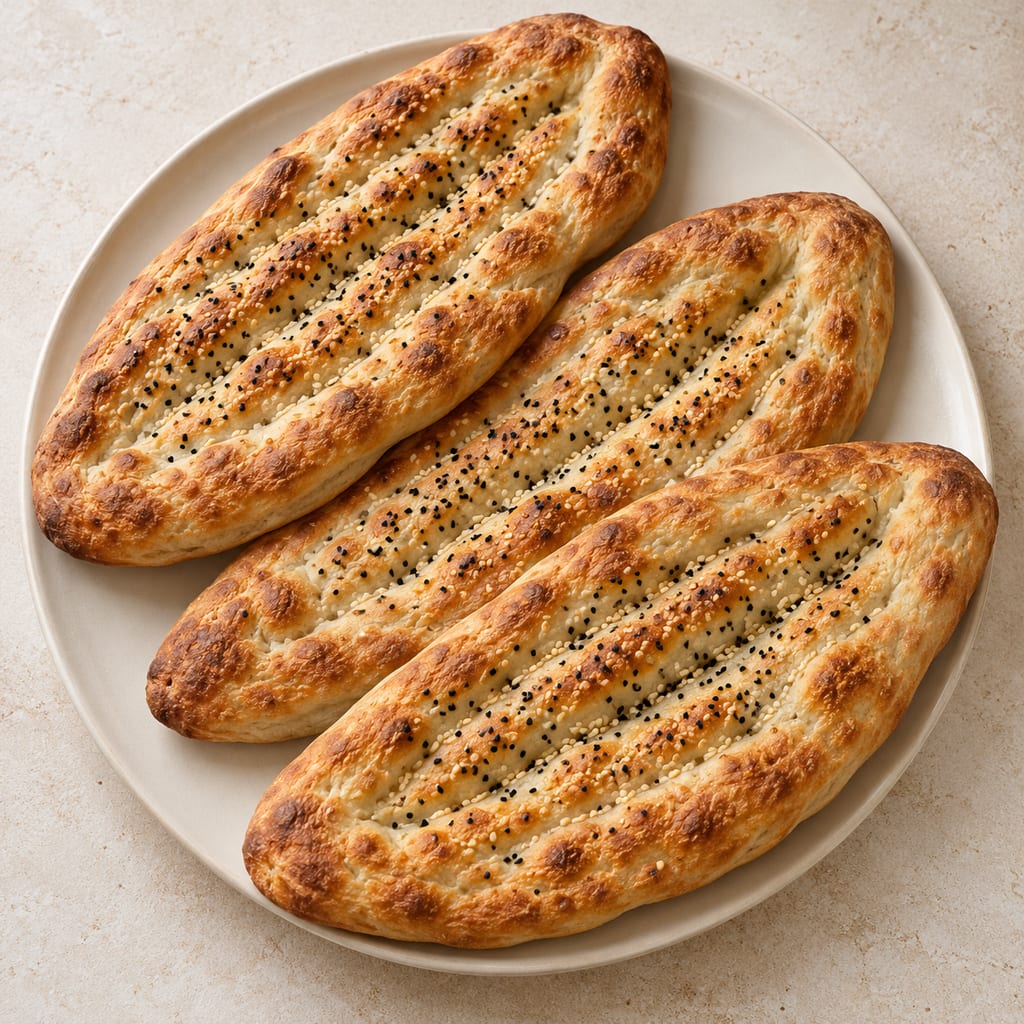
A long oval Afghan wheat bread, leavened with yeast, grooved along its length and baked until crisp outside and chewy within.
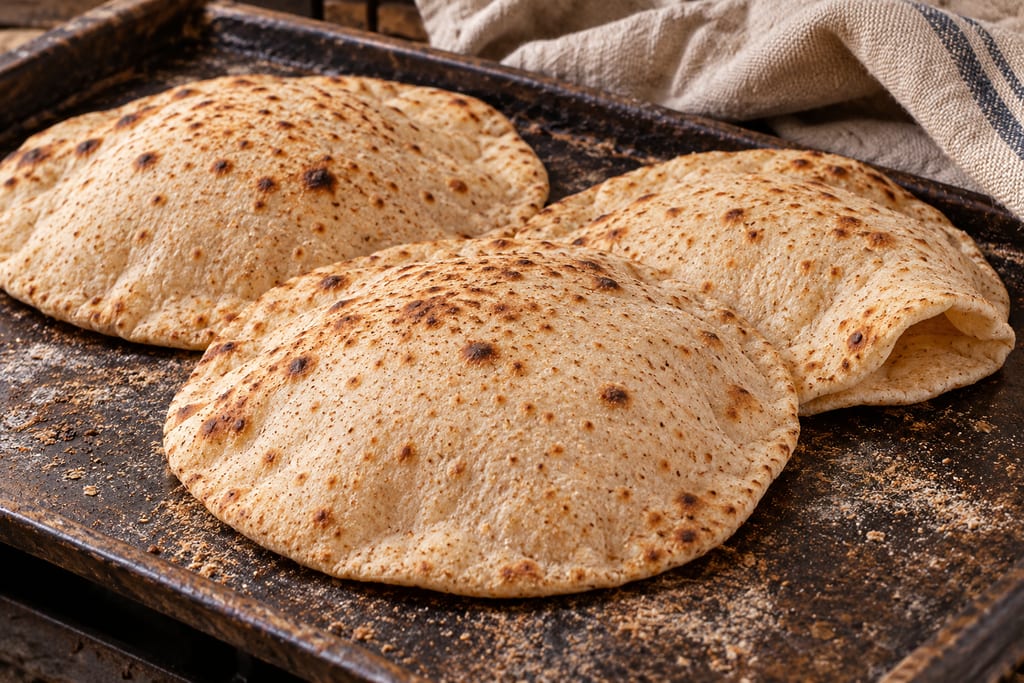
This home adaptation of Egyptian aish baladi uses a refrigerated yeast biga, whole-wheat dough, bran dusting and a very hot baking surface to make 16 pocketed rounds.
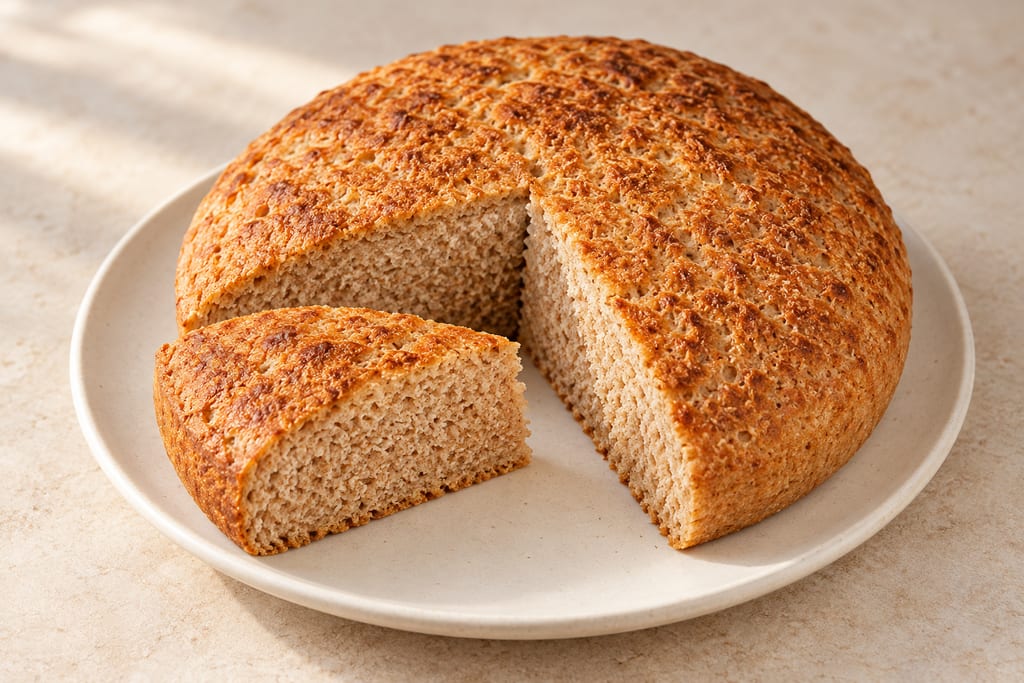
This oven-baked Amdo balep uses yeast, whole-wheat and white flour, a long covered rise and a two-sided bake in a heavy oven-safe pot.
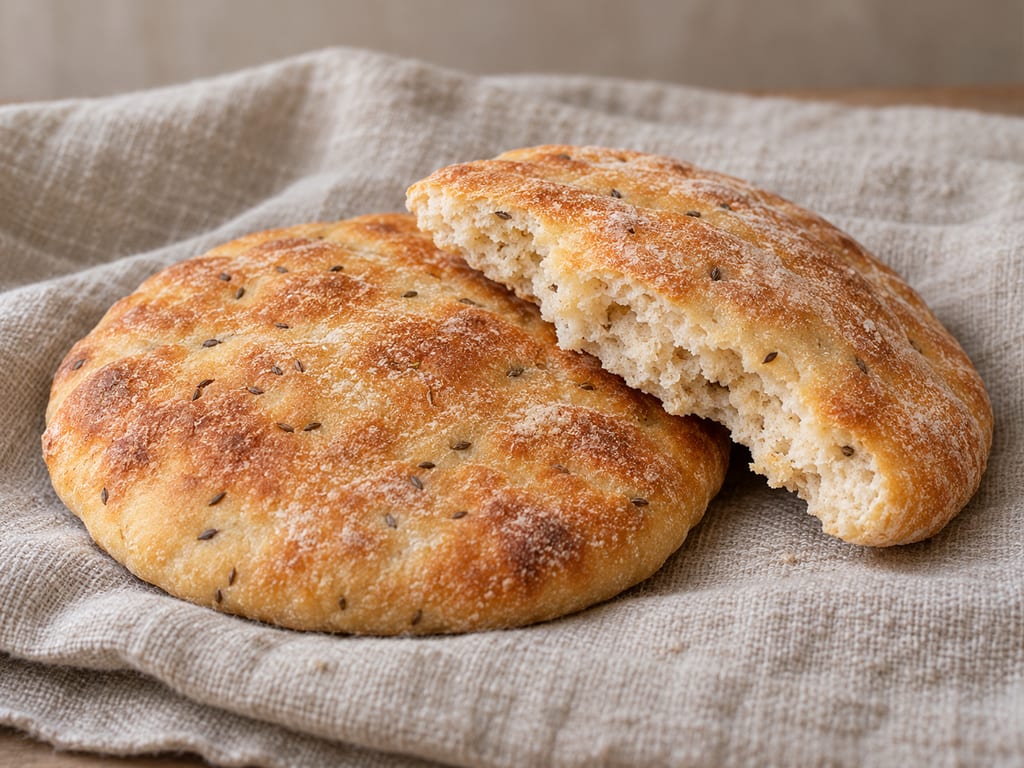
A measured, yeast-raised Ayacucho chapla home method shared by Thermomix Peru presenter Roxanna Salaverry. It makes thin, anise-scented rounds baked at 240°C; the historic qunchu-leavened form is documented separately.
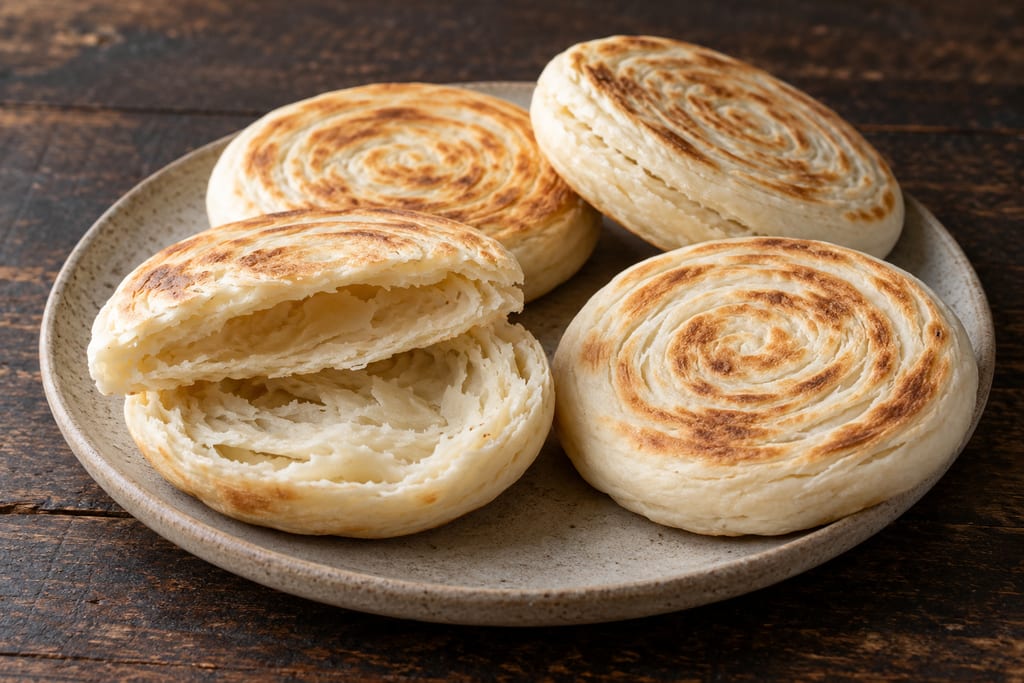
This Shaanxi-associated yeast flatbread uses a simple water dough, coiled shaping and a skillet bake. It is the bread used in roujiamo, not the filled meat dish.
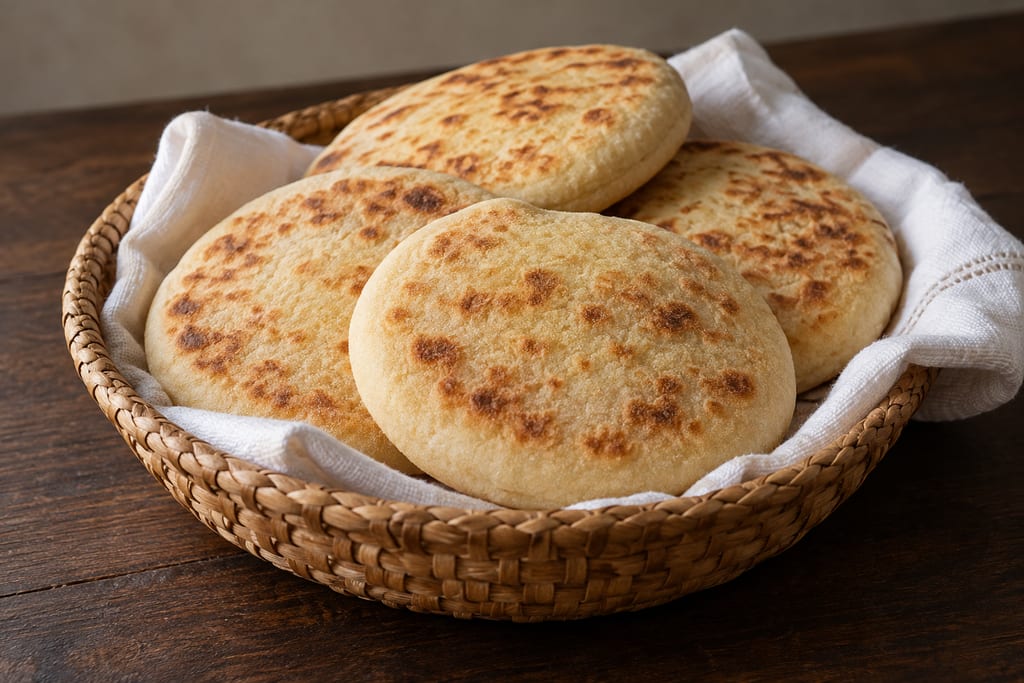
A Moroccan yeast-raised semolina pocket bread cooked on a dry pan or griddle; this measured batch makes about twenty 4-inch rounds.
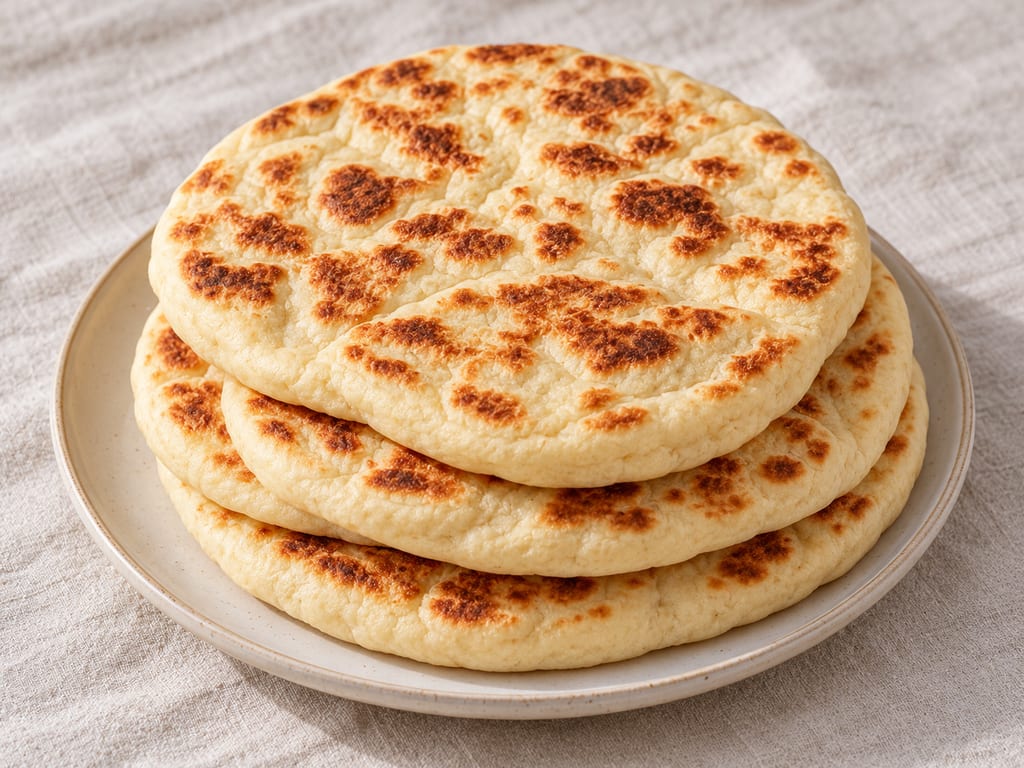
This Turkish bazlama uses yeast, plain yogurt and olive oil for a soft dough cooked in a skillet. Shape it into twelve small or six larger rounds, flip as bubbles appear, and wrap the breads to keep them soft.
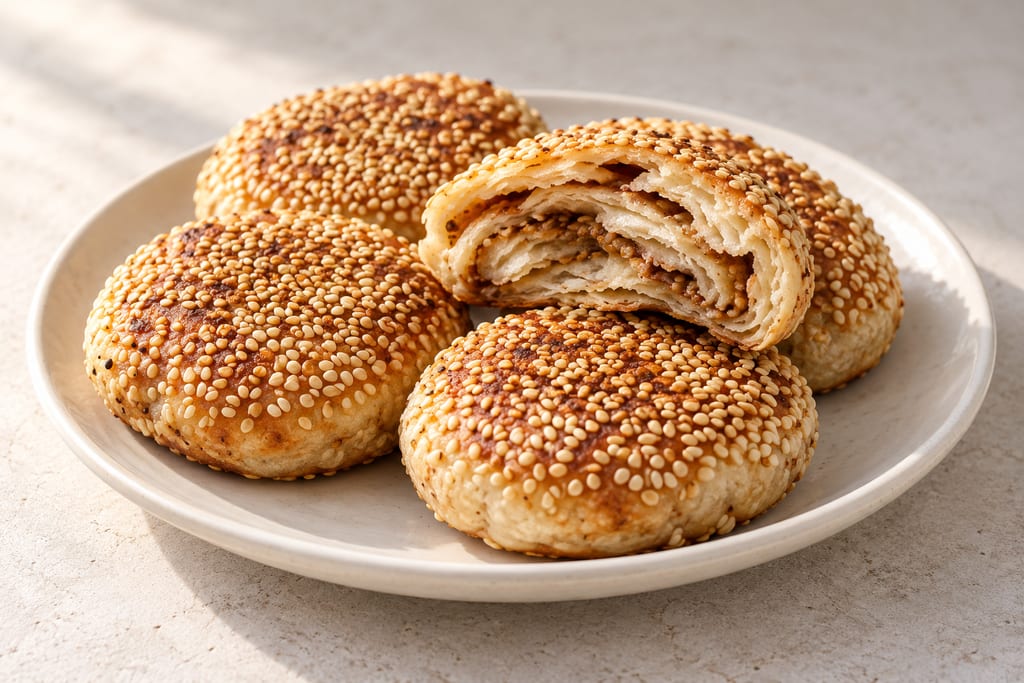
A Beijing-style yeast dough is layered with seasoned sesame paste, sealed into small buns, briefly pan-fried, seeded, and baked.
No community contributions have been published for this entry yet.
Sign in to contribute. Published comments and photos are free to read.
King Arthur BakingRecipe · Method · Ingredients · Geography · Modern use
Matnakash (Armenian Fingerprint Flatbread)The source formula makes two flatbreads from 465 g all-purpose flour, 322 g cool water, a rye or whole-wheat flour scald made with 53 g rye or 57 g whole-wheat flour and 95 g boiling water, salt, instant yeast, yogurt and egg wash.
The method uses an hour autolyse, three folds with 30-minute rests, a 15–24-hour refrigerated rest, a final 1–3-hour proof, and baking at 475°F on a preheated stone or steel for about 10–12 minutes.
The recipe forms an oval, brushes it with yogurt and egg, presses parallel and diagonal grooves through to the parchment, and serves the bread warm or room temperature.
The author frames this as an accessible modern home-oven recipe; the dough scald, banneton and yogurt-egg wash are adaptations rather than claims about every traditional method.
Cited in: A grooved Armenian table bread; Ingredients and the scald; Build strength, then give the dough time; Shape with deep furrows; Bake and serve
King Arthur BakingHistory · Method context
Armenian “fingerprint flatbread” is chewy, crusty, and very fun to makeJanjigian distinguishes eastern Armenian matnakash in the Republic of Armenia from his western Armenian family background in modern Turkey.
The author says matnakash was traditionally fermented with sourdough while many modern recipes use yeast and describes this formula's scald, banneton and yogurt-and-egg wash as his practical home-baking choices.
Cited in: A grooved Armenian table bread; Ingredients and the scald; Shape with deep furrows